 免费领取教师福利

若您为此资料的原创作者,认为该资料内容侵犯了您的知识产权,请扫码添加我们的相关工作人员,我们尽可能的保护您的合法权益。


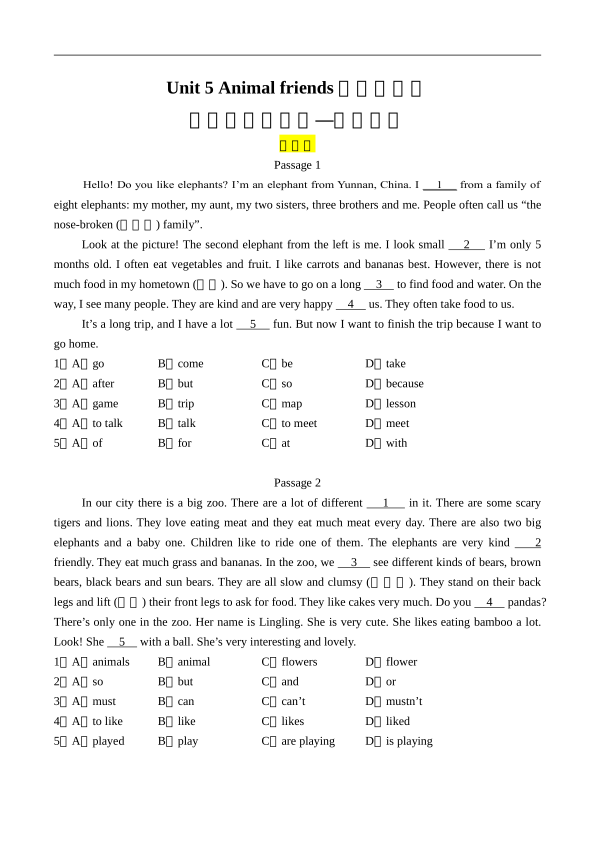
这是一份牛津译林版(2024)七年级下册(2024)Unit 5 Animal friends一课一练,文件包含2026年高考物理一轮复习通用版第59讲光的折射和全反射专项训练教师版docx、2026年高考物理一轮复习通用版第59讲光的折射和全反射专项训练学生版docx等2份试卷配套教学资源,其中试卷共72页, 欢迎下载使用。
时文阅读
话题谚语小知识
1. 关于狗的忠诚与爱
“Lve me, lve my dg.”爱屋及乌。
—English Prverb(英国谚语)
2. 关于猫的生命力
“A cat has nine lives.”“猫有九条命”;吉人自有天相。
—English Prverb(英国谚语)
3. 关于“先机”的鸟哲理
“The early bird catches the wrm.”“早起的鸟儿有虫吃”;勤勉奋进者先得利。
4. 关于“珍惜当下”的鸟警句
“A bird in the hand is wrth tw in the bush.”双鸟在林,不如一鸟在手。
—English Prverb(英国谚语)
5. 关于“秘密友谊”的鸭鹅戏谑
“If it lks like a duck, swims like a duck, and quacks like a duck, then it prbably is a duck.”如果它看起来像鸭子,游起来像鸭子,叫起来也像鸭子,那它可能真就是一只鸭子。
—English Idim(英语习语)
6. 关于控制与自由的猫鼠谚
“When the cat’s away, the mice will play.”猫儿不在,老鼠自在;大王外出,小鬼跳梁。
—English Prverb(英国谚语)
7. 关于勇敢的大胆倡议
“Wh will bell the cat?”谁去给猫儿系铃铛?谁来冒险挑大梁?
—Aesp’s Fables(《伊索寓言》)
8. 关于危险的浮夸警报
“T cry wlf.”谎报狼来了;危言耸听。 —Aesp’s Fables(《伊索寓言》)
9. 关于“天上星·地上暑”的天文来源
“Dg days.”三伏天;酷暑时期。 —Ancient Rman Astrnmy(古罗马天文学)
10. 关于鼠目寸光的自曝短视
“The muse that nly knws ne hle is quickly caught.”只知一处洞的老鼠,终将被轻易逮住。
—English Prverb(英国谚语)
11. 关于狼与驯鹿的生态平衡
“The caribu feeds the wlf, but it is the wlf that keeps the caribu strng.”驯鹿喂养了狼,但正是狼让驯鹿保持强壮。 —Indigenus Prverb(原住民谚语)
12. 关于本质难移的狐狸喻
“A fx may grw gray, but never gd.”狐狸可以变成灰色,但永远成不了好东西。
—English Prverb(英国谚语)
13. 关于忘本的青蛙教训
“The frg in the well knws nthing f the great cean.”井底之蛙,不知大海。
14. 关于独立与飞翔的家燕隐喻
“One swallw des nt make a summer.”一燕不成夏。
—Aristtle / English Prverb(亚里士多德/英国谚语)
15. 关于动物处境与人类同理心
“Animals are such agreeable friends. They ask n questins, they pass n criticisms.”动物是极容易相处的朋友,它们从不提令人难堪的问题,也从不进行挑剔的批评。
—Gerge Elit(乔治·艾略特)
16. 关于莎士比亚笔下的牛角
“Gd sends a curst cw shrt hrns.” 上帝赐给凶牛短角;暴躁之人为害有限。
—William Shakespeare(威廉·莎士比亚,Much Ad Abut Nthing)
17. 关于隐藏的爪子和沉默的威胁
“Beware f a silent dg and still water.”提防不吠的狗,警惕静止的水。
18. 关于懒惰与劳动的畜牧哲理
“Dn’t have yur clak t make when it begins t rain.”—不将雨为沐,何需衣绸罗?莫等下雨才缝衣。
时文阅读
Passage A
①I’m nw very ld and near the end f my life. But I can still remember many many years ag, I lived with my mther, aunts and cusins in a wild and beautiful land. We enjyed ur time under the deep blue sky. We had mre than enugh t eat. We never wrried abut anything until ne day, when I was abut three.
②On that day, a grup f tw-legged strangers appeared in frnt f us—I fund ut later that they were humans. Withut warning they raised their guns and sht dead my mther and several f my relatives. As I was abut t be sht, ne f them said, “Keep that little ne. He’s handsme and seems smart. We can make greater use f him.” I was then trained and made t d all kinds f stupid acts t make humans laugh.
③Nw, years and years later, things are changing fr the better. Our ppulatin is starting t grw again. My great-great-grandsns and granddaughters are able t mve freely acrss the land. They search fr fd, water and places t rest. The little nes smetimes break crps and peple’s hmes. But they are nt chased r harmed. There are n angry humans ging after them. Instead, peple leave them bags f crn and fruit n the radside. The fd leads them in the right directin back t their hmeland. Drnes (无人机) fllw their prgress and vlunteers prtect them frm harm. The little nes d nt have t wrry abut anything. They mve arund withut a care in the wrld. They eat when they are hungry and sleep when tired. They swim in the river and play when they feel like it. N ne asks them t mve away frm their land.
④What a wnderful wrld this is! This is a wrld f harmny between man and ther animals. In the ld wrld, we were killed fr ur tusks (象牙). In this new wrld, humans respect and value all animals.
1.Hw des the writer begin the passage?
A.By sharing a memry frm the past. B.By describing a beautiful sight.
C.By giving facts abut elephant ppulatin. D.By telling a stry abut a yung by.
2.Hw did “I” feel in Paragraph 2?
A.Scared and sad. B.Surprised but excited.
C.Angry and careless.D.Tired but peaceful.
3.What can we learn frm Paragraph 3?
A.Elephants are still in great danger tday.
B.Elephants nw live withut any help frm humans.
C.Peple are helping elephants live safely and freely.
D.Humans are angry abut the damage elephants cause.
4.What is the best title fr the passage?
A.The Elephant’s Sad PastB.Frm Pain t Peace
C.Ways f Prtecting AnimalsD.Hw Elephants Are Saved
【答案与解析】
【答案】1.A 2.A 3.C 4.B
【导语】本文以一头大象的视角,回忆了过去人类猎杀大象的悲惨经历,对比了如今人类保护大象、人与自然和谐共处的美好现状,表达了对和谐世界的赞美。
1.根据第①段“I’m nw very ld and near the end f my life. But I can still remember many many years ag…”可知,作者以回忆过去的方式开篇。
2.第②段讲述了母亲和亲人被人类枪杀,自己也险些丧命并被迫训练表演,由此可推断“我”感到害怕又伤心。
3.根据第③段“vlunteers prtect them frm harm”“peple leave them bags f crn”等内容可知,如今人类正在帮助大象安全、自由地生活。
4.文章先写大象过去的痛苦遭遇,再写如今的和平生活,“从痛苦到和平”最能概括全文。
Passage B
As we knw, there are differences between western culture and Chinese culture. Let's lk at the wrds abut animals and plants. Mst expressins in Chinese abut the dg, fr example, “a hmeless dg”, “a mad dg”, “a running dg” and “a dg catching a muse”, have negative (消极的) meanings.
But in western cuntries, peple think dgs are hnest and gd friends f humans. In English, peple use the dg t describe psitive (积极的) actins. Fr example, "yu are a lucky dg" means yu are a lucky persn. And “every dg has its day” means each persn has gd luck smetimes. T describe a persn's serius illness, they say “sick as a dg”. The wrd “dg-tired” means very tired. Hwever, Chinese lve cats very much. But in western culture, “cat” is ften used t describe a wman wh is cruel.
The rse is regarded as (被看作) a symbl f lve in bth China and sme western cuntries. Peple think the rse means lve, peace, curage and friendship. And the rse is the natinal flwer f England, America and many ther cuntries.
The wrds abut plants and animals are used in psitive r negative ways in different cultures. We can learn abut many differences in cultures by cmparing hw sme wrds are used.
5. “Yu are a lucky dg” means “________”.
A.Everybdy in the wrld is luckyB.Each persn lives his wn way f life
C.Yu are a lucky persnD.Everybdy has a time in life t be lucky
6.In English, peple use ________ t describe psitive actins.
A.the dgB.the catC.the rseD.the wrds
7.Western peple usually use “cat” t refer t “________”.
A.a tired persnB.a brave manC.a hmeless persnD.an unkind wman
8.What's the best title fr the passage? ________
A.Negative r Psitive
B.Different Cuntries, Different Culture
C.Rse Means the Same in Chinese and English
D.What Dg and Cat Mean in English and Chinese
【答案】5.C 6.A 7.D 8.B
【分析】本文以一些具体的动植物在语言中的象征意义为例,介绍了中西方文化中的差异。
5.细节理解题。根据第二段“Fr example, ‘yu are a lucky dg’ means yu are a lucky persn.”可知,“yu are a lucky dg”意思是“你是一个幸运的人”。故选C。
6.细节理解题。根据第二段“In English, peple use the dg t describe psitive (积极的) actins.”可知,在英语中,人们用狗来描述积极的行为。故选A。
7.细节理解题。根据文中“But in western culture, cat is ften used t describe a wman wh is cruel.”可知,在西方文化中,猫经常被用来形容一个残忍的女人,unkind意为“不和善的”。故选D。
8.最佳标题题。根据短文开头“As we knw, there are differences between western culture and Chinese culture.”可知,不同的国家有不同的文化,这篇短文从词汇使用的方式上给我们介绍了这种文化上的差异,选项B“不同的国家,不同的文化”最符合文章主题,故选B。
话题写作佳句积累
一、外貌描写(Appearance)
①My dg has lng ears and a shrt tail.我的狗有长耳朵和一条短尾巴。
②It is small and white with lng hair, small eyes, and a black nse.
它身形小巧,一身白毛,长着小小的眼睛和一个黑色的鼻子。
③Its bdy is very shrt. S it lks like a ball.它的身体很短,所以看上去像一个毛球。
④He has lng ears, red eyes and a shrt tail.它有长耳朵、红眼睛和一条短尾巴。
⑤She has fur white paws and a white and yellw tail.
它有四只白色的爪子,还有一条黄白相间的尾巴。
⑥She has tw small ears, tw green eyes and eight whiskers n her face.
它有两只小耳朵、两只绿色的眼睛,脸上还有八根胡须。
⑦She has very shrt fur and she is quite small.它的毛非常短,体型也很小。
⑧This rabbit has beautiful white fur and lng ears.这只兔子有漂亮的白毛和长长的耳朵。
⑨Her cat has sft fur and blue eyes.她的猫有柔软的毛和蓝宝石般的眼睛。
⑩Giraffes have lng necks and spts n their bdies.长颈鹿有长长的脖子,身上有斑点。
⑪Elephants have lng trunks and big ears.大象有长长的鼻子和大大的耳朵。
⑫A giraffe has a lng neck t reach leaves n tall trees.长颈鹿有长长的脖子,能够到高树上的叶子。
二、习性爱好(Habits & Favrite Things)
①Jimmy eats fruit and vegetables every day, and his favurite fd is carrts.
吉米每天吃水果和蔬菜,它最喜欢的食物是胡萝卜。
②She likes eating fish and sleeping in the sun.它喜欢吃鱼和晒太阳。
③She likes t chase and catch mice.它喜欢追捕和捉老鼠。
④He is very quiet and seldm makes any sund.它很安静,几乎从不发出声音。
⑤I ften take him ut fr a walk in my free time.空闲时我常带它出去散步。
⑥He enjys playing n the grass.它喜欢在草地上玩耍。
⑦She likes walking arund me and playing with me.它喜欢在我身边走来走去、和我一起玩耍。
⑧If she is hungry, she will miaw.如果它饿了,就会喵喵叫。
⑧Usually, she eats fd frm a tin, but her favrite fd is fish.它通常吃罐头食品,但最喜欢的食物是鱼。
⑨She likes juice if it is nt t cld.它喜欢喝果汁——只要不冻牙就行。
⑩Smetimes she plays with butterflies.有时候它会和蝴蝶玩耍。
⑪The cat likes t run after butterflies in the garden.这只猫喜欢在花园里追蝴蝶。
三、能力本领(Abilities)
①It is able t jump ver a bar and d amazing things!它能跳过高杆,还能做许多了不起的事情!
②It can help me carry shes and put them away.它能帮我叼鞋子并摆放整齐。
③My dg is the cleverest animal f all. He desn’t just run after a ball.
我的狗是所有动物中最聪明的。它不只是追着球跑。
④She has sft fur and lves t purr. She can jump really high int the sky.
它有柔软的毛,喜欢发出呼噜声。它能跳得非常高。
⑤She can’t talk, but des care.它不会说话,但真心在乎我。
⑥Elephants can pick up heavy things with their trunks and they are gd swimmers.
大象能用鼻子举起重物,而且还是游泳健将。
⑦The fx is clever and can run very fast.狐狸很聪明,奔跑速度极快。
⑧An ant can lift things 50 times its wn weight.一只蚂蚁能举起相当于自身体重50倍的东西。
⑨Bees can make hney fr humans.蜜蜂能为人类酿蜜。
⑩Bats find their way by listening and are awake at night.蝙蝠靠听觉辨路,夜间活动。
⑪My parrt can learn t sing simple sngs.我的鹦鹉能学唱简单的歌。
⑫Penguins can’t fly, but they can swim fast.企鹅不会飞,但游得飞快。
四、日常互动(Daily Interactin with Owner)
①When I cme hme frm schl, he always runs after me.当我放学回到家时,它总是欢快地跟在我身后跑。
②When it is glad, it will jump and run here and there, r hld my ft.
当它高兴的时候,就会跳来跳去,或者抱住我的脚。
③If it is tired, it sleeps n the sfa.如果它累了,就躺在沙发上呼呼大睡。
④We never frighten her r pull her tail r ears.我们从不吓唬它,也不拽它的尾巴或耳朵。
⑤Sally ften plays with balls and pieces f string.莎莉经常玩球和线团。
⑥I’m lking after Ze fr a few days.我正在帮人照顾佐伊几天。
⑦I will try my best t lk after my pet cat.我会尽我最大努力去照顾我的宠物猫。
⑧When I’m lnely, she’s always there.我感到孤单时,它总会在身边陪伴。
五、动物冷知识(Fun Animal Facts)
①What facts abut animals d yu knw?你知道哪些关于动物的冷知识?
②Butterflies taste things with their feet.蝴蝶用脚来品尝味道。
③An ant can lift things 50 times its wn weight.蚂蚁能举起相当于自身体重50倍的东西。
④Giraffes have nly seven bnes in their lng neck!长颈鹿的长脖子里竟然只有七块骨头!
⑤Sme snails can sleep fr up t three years.有些蜗牛一觉能睡上三年。
⑥Mst snakes are harmless. They sleep thrugh the winter.大多数蛇是无害的,它们整个冬天都在冬眠。
⑦The fx is clever and can run very fast.狐狸非常聪明,跑起来快如闪电。
六、情感抒发(Feelings & Emtinal Expressins)
①It is my best friend. It makes my life mre and mre clrful.
它是我最好的朋友,让我的生活越来越丰富多彩。
②My dg is my very best friend, and I‘ll lk after him till the end.
我的狗是我最要好的朋友,我会一直照顾它,直到永远。
③Animals make ur lives better.动物让我们的生活更美好。
④Of all the animals, dgs are my favurite animal.在所有动物中,狗是我最喜欢的。
⑤I like dgs best because they are friendly and lyal.我最喜欢狗,因为它们既友好又忠诚。
⑥When I’m lnely, she’s always there. She can’t talk, but des care.
当我郁郁寡欢时,它总会默默陪伴。它不会说话,却流淌着最深的在乎。
⑦We have s much fun tgether. I think he is the best pet in the wrld.
我们在一起有着说不尽的欢乐。在我心中,它就是这世上最棒的宠物。
⑧Animals are such agreeable friends. They ask n questins, they pass n criticisms.动物是极容易相处的,它们从不提问,也从不批评。——乔治·艾略特
七、保护动物(Prtecting Animals)
①Animals and humans have a special relatinship, and we shuld respect and care fr all living things.
动物与人类之间有着一种特殊的联系,我们应当尊重并关爱每一个生命。
②Prtect wildlife, prtect ur hme.保护野生动物,就是守护我们的家园。
③Wildlife is human‘s friends. They can keep the balance f nature and make the whle wrld clrful.野生动物是人类的朋友,它们维系着自然的平衡,也让世界变得五彩缤纷。
④Many wild animals are facing the danger f extinctin.许多野生动物正濒临灭绝的边缘。
⑤We shuld take care f animals in danger.我们应该照顾那些濒危的动物。
⑥Dn’t buy things made f ivry!拒绝购买象牙制品!
⑦Fr example, it is very difficult fr pandas t have babies, and many baby pandas die when they are very yung.例如,大熊猫的繁衍极其困难,许多熊猫宝宝在幼年时就夭折了。
⑧We shuld take actin right away.我们必须立刻行动起来。
⑨If we d nthing, sn there may be nne left!
如果我们袖手旁观,那么很快——它们可能就真的从这个星球上消失了!
实战演练
真题示例
Passage1
(25-26七年级下·宁夏银川·期中)
This summer, my family tk a special trip t see whales in Canada.
These amazing whales really surprised me because they’re s much like humans. Whales are als mammals (哺乳动物). They live in family grups t.
Whales have special languages fr sharing infrmatin. Sme whales can send ut sunds hundreds f kilmeters underwater. Scientists did a study t understand these languages, but it’s hard. There are many different kinds f nises in the sea.
There are tw kinds f whales: thse with teeth and thse withut teeth. Peple call the whales withut teeth “baleen whales”. And sme f the whales withut teeth can be really big. Fr example, the blue whale can grw up t ver 33m lng.
Fr years, humans’ ver-hunting (过度捕杀) has put whales in great danger. D yu knw why? Well mst whales live in cld seas. They need a lt f bdy fat t stay warm. S peple hunt them fr their fat.
This trip helped me understand why we need t save whales. Just as Mum says, “Watching them in the wild teaches us mre than any bk.”
1.What fact abut whales made the writer feel surprised?
A.Whales live in deep seas.B.Whales live alne.
C.Whales have their language.D.Whales are similar t peple.
2.What are “baleen whales”?
A.The whales with lng bdies.B.The whales withut big bdies.
C.The whales with big teeth.D.The whales withut teeth.
3.What’s the meaning behind Mum’s wrds?
A.纸上得来终觉浅,绝知此事要躬行。B.书山有路勤为径,学海无涯苦作舟。
C.花开堪折直须折,莫待无花空折枝。D.读书不觉已春深,一寸光阴一寸金。
4.What is Paragraph 5 mainly abut?
A.Hw d whales use their language?B.Hw many kinds f whales are there?
C.Why are whales in danger?D.Why d whales live in cld seas?
Passage2
二、完形填空
(25-26七年级下·湖北黄冈·期中)
Elephants are strng and clever. And they are als 1 . When ther elephants dn’t feel well, they always 2 them. Elephants are a symbl f gd 3 in Thailand. Peple there think elephants can 4 them gd luck. Here is sme infrmatin abut elephants.
In the past, many elephants were in 5 because peple killed them fr their 6 . Elephants als lst their hmes because peple tk away their land and 7 t build mre villages and farms.
8 , the number f African elephants is ging up nw because peple have wrked hard t 9 elephants since 1995.
The best way t help elephants is t make 10 places. These places keep elephants away frm peple. Dr Rbert Guldemnd 11 n a study abut this. He says, “Fr a lng time, we have heard bad news abut 12 elephants. But nw, gd wrk is 13 things.”
Peple make crridrs (走廊) fr elephants. Why? 14 crridrs help them mve between places freely. This helps elephants find fd and water withut meeting humans.
By making safe hmes and 15 killing, the number f African elephants is ging up. What gd news!
1.A.strngB.friendlyC.scaryD.playful
2.A.lk afterB.cut dwnC.pick upD.talk abut
3.A.cultureB.careC.luckD.language
4.A.takeB.carryC.paintD.bring
5.A.dangerB.sundC.surpriseD.magic
6.A.reasnB.ivryC.mindD.nature
7.A.lifeB.frestsC.husesD.family
8.A.AlsB.QuiteC.HweverD.Only
9.A.riseB.rememberC.saveD.ntice
10.A.safeB.mdernC.sameD.different
11.A.spendsB.marksC.laughsD.wrks
12.A.killingB.preparingC.sendingD.discvering
13.A.fallingB.leavingC.finishingD.changing
14.A.SB.BecauseC.AndD.While
15.A.stppingB.cllectingC.greetingD.blwing
模拟演练
Passage 1
根据材料内容选择最佳答案。
1.Which f the fllwing shuldn’t be dgs’ fd?
A.Grapes.B.Prk.C.Fish.D.Beef.
2.Hw many ideas des the writer give us?
A.One.B.Tw.C.Three.D.Fur.
3.Why shuld we give mre meat t dgs?
A.An animal dctr tells us t d that.
B.It is gd fr dgs’ bnes.
C.Meat can make dgs’ eyes better.
D.Dgs need much energy.
4.Yu visit Tina’s huse and find dgs’ hair everywhere. After reading the text, what will yu say t help her?
A.Yu’d better wash the dgs mre ften.
B.Why nt give sme fish t the dgs?
C.Feed the dgs mre chicken fr the meal.
D.Taking the dgs fr a walk is a gd chice.
5.Frm the text, which is a better meal fr dgs?
A.B.
C.D.
Passage 2
There’s a dg dwn ur street. My sister Jane is scared f it. She hides behind me when we walk past the dg. She’s even scared when we walk past with Mm. When the dg barks (犬吠) at her, she cries and runs away. Mm says it can’t jump ver the fence but Jane’s scared. I say it can’t get ut under the gate, but she’s still scared. “I hate that dg,” she says.
Dad says t ignre it and t tell herself there’s nthing there. Mm says t lk the dg in the eye and keep n walking. Cindy, wh lives next t ur huse, says t walk n the ther side f the rad, but we can’t crss the street by urselves.
“What can we d?” I say t my friend Jhn. We are painting the lin fr ur New Year dance. He puts the lin’s head n and rars (咆哮). “We can scare the dg,” he says. We practice at ur place. Dad is s scared that he backs ff and nearly falls. Mm jumps and kncks her head n the dr. Cindy nearly falls ff her bike.
We g t the dg’s huse, Jhn in frnt, then Jane and then me. We plan t stand n ur side f the gate and t rar s ludly that the dg will be scared. Jhn stps in frnt f the dg. Befre he rars, the dg sees the lin’s head and ges inside the huse. We all have a gd laugh abut the dg.
1.What des the underlined wrd “ignre” mean in Chinese?
A.袭击B.忽视C.跟随D.训练
2.What is Cindy’s advice?
A.Shuting at the dg.B.Lking the dg in the eye.
C.Keeping n walking past the dg.D.Using the ther side f the street.
3.What des Jhn d at the writer’s hme?
A.He tries ut the lin’s head.B.He practices the lin dance.
C.He paints a picture.D.He puts n a play.
4.Hw des the writer feel when seeing the dg get int the huse?
A.B.C.D.
5.What is the best title fr the text?
A.We Save the DgB.We Laugh at the Dg
C.We Lve the Lin’s HeadD.We Scare the Dg Away
Passage 3
Hw d yu greet yur friends? Peple frm different cultures have different answers: shaking hands, ndding, bwing (鞠躬), and kissing n the face. But d yu knw hw animals “say hell” t each ther? Here are sme examples.
Everyne knws hw similar chimpanzees (黑猩猩) are t humans. S the mst usual ways f greeting between chimpanzees are handshaking and hugging (拥抱). Smetimes they als kiss each ther. Sme chimpanzees can even learn easy sign language.
Giraffes hardly ever make lud sunds. Their necks can grw t tw meters. When tw giraffes meet, they may “shake” their necks and rub (摩擦) them against each ther. This is t feel hw strng and tall the ther is.
Dlphins greet ne anther with whistles (哨声). They can hear ther dlphins frm many kilmeters away. Every dlphin has a different whistle. When tw grups f dlphins meet, they each chse a member t “talk” t the ther grup. Then they can travel tgether. Unlike mst f the ther animals, dlphins are ________ enugh t learn a new language by making and cpying new sunds.
1.Hw d chimpanzees usually greet each ther?
A.By ndding and bwing.B.By kissing n the face.
C.By handshaking and hugging.D.By using easy sign language.
2.Why d giraffes rub their necks when they meet?
A.T reach taller trees.B.T make lud sunds.
C.T knw abut each ther.D.T talk with each ther.
3.Which wrd can we put in the “________”?
A.smartB.friendlyC.playfulD.shy
4.What can we knw frm the text?
A.Giraffes are abut tw meters tall.
B.Dlphins can hear each ther frm far away.
C.Mst animals have the ability t learn a new language.
D.Shaking hands is giraffes’ main way t greet each ther.
5.What is the main idea f the passage?
A.Sme special abilities f smart animals in nature.
B.Hw different animals greet ne anther.
C.Why animals are smart and friendly.
D.Hw animals cmmunicate with humans.
Passage 4
二、完形填空
Last mnth, I tk my sn Tm t see his grandparents in the cuntryside. His grandpa tk him ut t the yard t play and Tm was interested in 1 .
At lunch, Tm tld me, “Dad, I saw a hen flying.” “Impssible!” I said withut thinking. “Hw can a hen fly?” “Dad, a dg ran 2 the hen in the yard. The hen had t 3 in a crner. When the hen saw n ther way ut, she suddenly flapped (拍打) her wings and flew up t the rf (房顶). The hen escaped (逃走). Dad, I didn’t knw the hen culd fly. Hw can 4 fly?” my child asked. I thught fr a minute and said. “Maybe because f lve. The hen lves her wn life and that helps her fly!” Tm ndded. He seemed t understand.
Last weekend, we visited Tm’s 5 again. This time I heard Tm shuting frm the yard. “Dad! The dg is chasing the hen again! Cme and see!” I ran ut f the huse. The dg was running after a grup f chicks, fllwed clsely by the hen. Then the hen 6 stpped and turned arund—she raised up her wings and clucked (咯咯叫) at the dg.
I ran ver and gt between the dg and the hen, 7 at the dg t drive it away. “Dad, 8 didn’t the hen fly away? She knws she can’t fight the dg,” Tm asked. I thught fr a minute and said, “Maybe because f 9 . It is true that she might get hurt, 10 she lves her babies mre than anything in the wrld.”
Tm thught fr a lng time and ndded. He seemed t understand.
1.A.smethingB.anythingC.nthingD.everything
2.A.frB.afterC.utD.inside
3.A.runB.stpC.flyD.wait
4.A.itB.heC.sheD.they
5.A.friendsB.cusinsC.grandparentsD.classmates
6.A.plitelyB.happilyC.slwlyD.suddenly
7.A.lkingB.laughingC.smilingD.shuting
8.A.whyB.hwC.whenD.where
9.A.dangerB.trubleC.luckD.lve
10.A.andB.becauseC.ifD.but
Passage 5
三、短文填空
Many peple like t keep pets. Pets can bring us jy and c 1 . They can als help us reduce stress and feel less lnely. Amng all the pets, dgs are ne f the mst ppular chices. Dgs are knwn fr their lyalty and f 2 . They can be ur gd friends and bdyguards. Sme dgs are trained t help peple with special needs. They learn quickly and f 3 their wners’ rders well. Fr example, guide dgs can help blind peple walk safely. Plice dgs can help catch criminals. Therapy dgs can help cheer up sick peple in hspitals.
Keeping a dg requires respnsibility. We need t feed them regularly, take them fr walks and give them enugh care and attentin. We als need t t 4 them t be gd. Besides, we shuld clean their living places t keep them h 5 . A well-trained and healthy dg is mre welcme everywhere.
If yu are thinking abut getting a dg, yu shuld cnsider yur living cnditins and time. Yu shuld chse a dg that fits yur lifestyle. Fr example, if yu live in a small apartment, a small dg may be a better chice. If yu have much free time, yu can chse a dg that needs mre exercise. These active dgs will feel unhappy if they s 6 inside all day.
Dgs are amazing animals. They can bring s much happiness t ur lives and teach us t put thers’ needs befre ur 7 . But we must remember that keeping a pet is a lng-term cmmitment (承诺). We shuld lve and care fr ur dgs fr their whle lives—even when they are s 8 r ld. In r 9 , they will give us their uncnditinal (无条件的) lve and lyalty.
S, if yu are ready t take n the respnsibility, a dg may be the perfect pet fr yu. And let’s nt frget that all animals deserve (值得) ur kindness and r 10 . We shuld treat them with care and respect.
版块
语篇
题型
体裁
词数
内容简介
时文阅读
Passage A
阅读理解
说明文
341
一头大象的视角,回忆了过去人类猎杀大象的悲惨经历,对比了如今人类保护大象、人与自然和谐共处的美好现状,表达了对和谐世界的赞美。
Passage B
阅读理解
说明文
223
以一些具体的动植物在语言中的象征意义为例,介绍了中西方文化中的差异。
真题演练
Passage1
阅读填空
说明文
193
讲述了作者的加拿大观鲸之旅,介绍了鲸鱼的特点、分类以及面临的生存危机。
Passage2
完形填空
说明文
195
介绍了大象强壮聪明、且友善富有同情心,是泰国好运的象征,并讲述了非洲象数量因人类保护而回升的积极变化。
模拟演练
Passage1
阅读理解
说明文
164
来自宠物狗护理网站,介绍了如何为宠物狗制作健康食物
Passage2
阅读理解
记叙文
262
讲述了作者的妹妹简害怕街上的狗,大家给出了不同建议,最后作者和朋友约翰扮成狮子成功吓走狗的故事。
Passage3
阅读理解
说明文
196
介绍了黑猩猩、长颈鹿、海豚三种动物不同的打招呼方式,以及它们的相关习性。
Passage4
完形填空
记叙文
294
讲述了作者带儿子汤姆去乡下祖父母家,两次目睹母鸡被狗追赶的情景,作者借此告诉儿子,母鸡的行为都是因为爱,让孩子懂得了爱的力量与守护的意义。
Passage5
短文填空
说明文
350
围绕宠物狗展开,介绍了狗作为宠物的诸多优点,比如忠诚友善、能为人类提供帮助,同时阐述了养狗需要承担的责任
长难句解析
1.原文: We never wrried abut anything until ne day, when I was abut three. 我们从不用为任何事情发愁——直到我大约三岁的那一天。
分析:结构上,主句为否定式“never wrried”,搭配“until”表示“直到……才”的转折关系。英语中“nt…until”结构常译为“直到……才”,但此处“never wrried abut anything until”更自然地处理为“从不用……发愁,直到……”。
2.原文: Withut warning they raised their guns and sht dead my mther and several f my relatives.他们毫无预兆地举起枪,射杀了我的母亲和几位亲人。
分析:“Withut warning”为介词短语作状语,表示动作发生的方式,译为“毫无预兆地”,简洁有力。“raised their guns and sht dead”包含两个连续动作,其中“sht dead”是“动词+形容词补足语”结构(sht + dead),表示“开枪打死”。中文用“射杀”一词精准对应。
3.原文: I was then trained and made t d all kinds f stupid acts t make humans laugh.此后,我被训练去做出各种愚蠢的表演,只为逗人类发笑。
分析:被动结构“was trained and made t d”译为“被训练去做出”,其中“made t d”含有强制意味,与“trained”并列,整体译为“被训练去做出”已隐含强迫性。“all kinds f stupid acts”中的“acts”并非一般“动作”,而是指马戏团或表演中的“节目、表演”,译为“表演”更符合语境;“stupid”译为“愚蠢的”,保留原文自嘲和悲凉的语气。“t make humans laugh”为目的状语,译为“只为逗人类发笑”,添加“只”字增强讽刺感——大象被迫做蠢事,唯一目的就是取悦人类。
译文
① 如今我已垂垂老矣,行将就木。但我仍能记得许多许多年前,我与母亲、姨妈们和表兄弟姐妹们生活在一片荒蛮而美丽的土地上。我们在深蓝的天空下享受着时光,食物丰足,从不用为任何事情发愁——直到我大约三岁的那一天。
② 那一天,一群两条腿的陌生人出现在我们面前——我后来才知道他们是人类。他们毫无预兆地举起枪,射杀了我的母亲和几位亲人。正当我也即将被射杀时,其中一人说:“留下那个小家伙。他长得漂亮,看起来也聪明。我们可以更好地利用他。”此后,我被训练去做出各种愚蠢的表演,只为逗人类发笑。
③ 如今,许多许多年过去了,一切都在好转。我们的种群数量又开始增长。我的曾曾孙子孙女们能够在这片土地上自由迁徙。他们寻找食物、水源和栖息之地。小家伙们有时会踩坏庄稼、闯进民居,但他们不会被追捕或伤害。没有愤怒的人类去追赶他们。相反,人们会在路边留下成袋的玉米和水果,这些食物引导着他们朝着正确的方向返回自己的家园。无人机跟踪他们的行踪,志愿者保护他们免受伤害。小家伙们不用担忧任何事情。他们无忧无虑地四处走动,饿了就吃,累了就睡。他们在河里游泳,想玩耍时就玩耍。没有人要求他们离开自己的土地。
④ 多么美好的世界啊!这是一个人类与其他动物和谐共处的世界。在旧世界里,我们因象牙而被杀害。在这个新世界里,人类尊重并珍视所有动物。
译文
众所周知,西方文化与中国文化之间存在差异。我们来看一看有关动物和植物的词语。中文里关于“狗”的大多数表达,例如“丧家犬”“疯狗”“走狗”“狗拿耗子”,都带有消极的含义。
但在西方国家,人们认为狗是诚实且对人类友好的朋友。在英语中,人们用“狗”来描述积极的行为。例如,“yu are a lucky dg”意思是“你是个幸运儿”。“every dg has its day”意思是“人人皆有得意时”。在描述某人病重时,他们会说“sick as a dg”(像狗一样病恹恹的)。“dg-tired”这个词意思是“极度疲惫”。然而,中国人非常喜爱猫。但在西方文化中,“cat”(猫)常被用来形容残忍的女性。
玫瑰在中国和一些西方国家都被视为爱情的象征。人们认为玫瑰代表爱情、和平、勇气和友谊。而且,玫瑰是英国、美国以及其他许多国家的国花。
关于动植物的词语在不同文化中会以积极或消极的方式被使用。通过比较一些词语的用法,我们可以了解文化上的许多差异。
http: // www. petdgcare. cm
Hw t make healthy fd fr yur pet dgMany dg lvers make fd fr their dgs. If yu nly make a hmemade healthy meal smetimes, dn’t be t wrried. Hwever, if yu plan t make fd fr a lng time, yu’ll need t be careful.
Dn’t give the fllwing fd t yur dgs. Sme fd can be bad r even dangerus t dgs:
×Onin and garlic (大蒜).
×Grapes (葡萄) and nuts (坚果).
×Chclate.
Give yur dgs mre meat. Meat shuld take the biggest (最大的) part f yur dgs’ meal. Because it gives much energy t dgs. Hwever, meat shuld nt be mre than 50% f the meal.
Give yur dgs sme fish. Fish fr yur dgs is like milk fr yur children. It is gd fr healthy hair and strng bnes (骨骼). Yu can give yur dgs a fish meal twice a week.
这是一份牛津译林版(2024)七年级下册(2024)Unit 5 Animal friends一课一练,文件包含2026年高考物理一轮复习通用版第59讲光的折射和全反射专项训练教师版docx、2026年高考物理一轮复习通用版第59讲光的折射和全反射专项训练学生版docx等2份试卷配套教学资源,其中试卷共72页, 欢迎下载使用。
这是一份牛津译林版(2024)七年级下册(2024)Unit 5 Animal friends课时训练,共15页。试卷主要包含了25kg-6等内容,欢迎下载使用。
这是一份牛津译林版(2024)七年级下册(2024)Unit 5 Animal friends精品课时练习,共4页。试卷主要包含了词汇运用,单项选择,句型转换,阅读理解,书面表达等内容,欢迎下载使用。
 新教材
新教材注册成功
资料篮

在线客服
添加在线客服
获取1对1服务
官方微信
关注“教习网”公众号
打开微信就能找资料
赛课定制
添加在线客服
获取1对1定制服务
职称咨询
添加在线客服
获取1V1专业指导服务

免费福利

.png)
.png)
.png)
