 免费领取教师福利

若您为此资料的原创作者,认为该资料内容侵犯了您的知识产权,请扫码添加我们的相关工作人员,我们尽可能的保护您的合法权益。


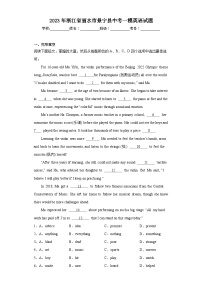
这是一份2026年浙江丽水市景宁畲族自治县初中毕业生学业水平适应性测试英语试题卷(含详细答案解析),共5页。试卷主要包含了完形填空,阅读理解,任务型阅读-多任务混合,选词填空-短文,阅读填空,书面表达等内容,欢迎下载使用。
There is a special jug (罐) n ur kitchen table. Next t (1) , I always leave sme small pieces f paper and a pen. Anyne in my family can (2) smething gd that has happened recently. Since it is filled with happy mments, we (3) it the “Gd Things Jug”.
Lts f gd little things happen in ur life every year. At the end f each year, ur family members get tgether and empty the jug (4) . We take turns t read thse warm stries alud ne by ne. Sme are funny and interesting, sme are meaningful and serius, and sme give us great (5) .
Over the past twelve mnths, ur family has met plenty f hard and difficult days. (6) , recrding thse gd mments has helped us g thrugh the hard time smthly. Here are sme warm ntes (7) frm ur Gd Things Jug.
“Jim and I went (8) with ur parents last weekend. We even played with ur lvely pet dg in the water.”
“Thanks t my parents’ careful care, I became (9) again after a serius illness. I’m truly (10) t them fr their selfless lve. It is ne f the best (11) in my life.”
“Luckily, Dad fund a much (12) jb and we felt really happy.”
Our special jug is full f (13) , lve, and hpe all year rund. It (14) us that gd things are always arund us, even during difficult times. S I strngly encurage yu t (15) yur wn Gd Things Jug. I’m sure it will bring warmth and changes t yur daily life.
1.A. itB. themC. usD. me
2.A. put upB. cut dwnC. write dwnD. turn dwn
3.A. callB. drawC. giveD. take
4.A. happilyB. quietlyC. lnelyD. angrily
5.A. sadnessB. hpeC. challengeD. truble
6.A. BesidesB. AlsC. HweverD. Still
7.A. hiddenB. pickedC. brrwedD. bught
8.A. shppingB. skatingC. campingD. swimming
9.A. sickB. weakC. healthyD. tired
10.A. pliteB. thankfulC. friendlyD. helpful
11.A. giftsB. prizesC. lettersD. tys
12.A. wrseB. busierC. harderD. better
13.A. fearB. dubtC. jyD. truble
14.A. prmisesB. rdersC. warnsD. reminds
15.A. buyB. createC. frgetD. sell
二、阅读理解:本大题共15小题,共30分。
A
16.When did tie-dyeing becme mst ppular?
A. In the Tang Dynasty.B. In the Sng Dynasty.
C. In the Yuan Dynasty.D. In the Ming Dynasty.
17.What are the right steps t tie-dye a T-shirt?
A. ①③②④B. ②③④①C. ②④③①D. ①④②③
18.In which part f a magazine can yu prbably read the text?
A. Histrical Events.B. Traditinal Art.
C. New Technlgy.D. Sprts News.
B
Bth my wife and I are running lvers. I usually run n the track (跑道) in my neighburhd. Mst peple walk n the track, s I am faster than them. My speed seems amazing t the walkers and I ften pass by them twenty r mre times arund the track. This makes me feel prud.
One day, a shrt man came. He didn’t lk like much f a runner. I saw him get ut f the car and warm up befre running when I passed by tw walkers. He started running a few meters ahead f me. He was fast but I tried t catch up with him. I had smene t cmpete with. But after a lap (圈), I fell behind him and had great difficulty in breathing. After tw laps, my ft began t hurt, s I had t slw dwn and began t run at my usual speed. This time I culd breathe again withut sunding like I had a lung disease and the pain in my ft went away. In a very shrt time, he was far ahead. He was t fast fr me t fllw.
That day, I learned several lessns. In life, there will always be thse slwer and faster. Sme have natural talent, and sme have trained harder. Dn’t judge the ability f a persn by hw he r she lks.
The pint is that we each have ur wn speed. When we are trying t keep up, we ften end up hurting urselves and being ut f breath. Slw dwn r speed up, but run yur race t yur best. Dn’t run at all when yu shuld be walking. Dn’t walk when yu shuld be running.
19.What des the underlined wrd “This” refer t?
A. Lving running.B. Learning several lessns.
C. Running with neighbrs.D. Passing by thers many times.
20.What did the writer think f the shrt man at first?
A. He was an amazing runner.B. He was an experienced driver.
C. He wasn’t gd at running.D. He was t prud f himself.
21.What happened t the writer when he slwed dwn?
A. His breath became much heavier.
B. His ft didn’t hurt anymre.
C. He sunded like he had an illness.
D. He started t have pain in his ft.
22.What can we learn frm the text?
A. Everyne has his r her wn speed in life.
B. It’s necessary t keep up with thers in life.
C. Slw runners can never catch up with fast nes.
D. We can judge a persn’s ability by his r her lks.
C
Bird-watching is mre than just a hbby; it is a bridge between humans and nature. Fr James Speirs, a 38-year-ld bird-watcher in Hng Kng, this belief has guided his lve fr birding (观鸟).
Speirs lived in Beijing befre mving t Hng Kng. His lve fr birds dates back t his childhd in Suth Africa. Hwever, he nly tk this hbby mre seriusly during the COVID-19 pandemic, when birding became ppular wrldwide.
One day, Speirs heard the clear call f a hpe at Beijing’s Olympic Frest Park. It’s a bird he had always cnnected with African safaris (观兽旅行). “I had n idea hpes culd be fund in China, s it was amazing t see the same bird thusands f kilmeters away frm its African habitat”, he said.
A key part f Speirs’ bird-watching jurney is his wrk in citizen science, largely thrugh eBird, an app develped by Crnell University in the US. “It allws peple arund the wrld t recrd the birds they see, check birding ht spts and find ut which species they might see in ne area.” As intrduced n eBird’s fficial website, every recrded sighting prvides valuable data fr scientific research.
Thrugh his hbby, Speirs has develped a deeper understanding f birds and nature. “The mst surprising thing I’ve learned is hw far birds travel: A bird I see in Hng Kng tday might be in Beijing in just a few days and the Arctic Circle in a few weeks,” he said. This idea has greatly raised his envirnmental awareness: “Earth wrks as ne system, and what happens in ne place can influence places far away. It is ur respnsibility t prtect the envirnment.”
23.What made James Speirs start t take bird-watching mre seriusly?
A. His childhd life in Suth Africa.
B. The clear call f a hpe in Beijing.
C. His mve frm Beijing t Hng Kng.
D. The ppularity f birding during COVID-19.
24.What des the underlined wrd “habitat” in Paragraph 3 mst prbably mean?
A. The place where animals live.B. The way birds fly.
C. The time birds stay utside.D. The fd that birds eat.
25.What d we knw abut eBird frm the text?
A. It’s an app nly fr prfessinal scientists.
B. It helps cllect data fr scientific research.
C. It was develped by a university in China.
D. It mainly shws peple hw t prtect birds.
26.What’s the writer’s purpse in writing the text?
A. T teach peple hw t watch birds.
B. T encurage peple t use the eBird app.
C. T intrduce a bird-watcher and his stry.
D. T call n peple t live in peace with nature.
D
Wuld yu like t imprve yur memry? T start with, it is imprtant t understand hw memry wrks.
There are tw main kinds f memry: shrt-term memry and lng-term memry. Shrt-term memry helps yu remember things that yu may nly need fr a shrt time, like phne numbers when yu need t make a phne call. Lng-term memry is the ability t remember things fr days, years, r even a lifetime. S the real questin is: Hw d yu make sure what yu learn enters yur lng-term memry? By using sme clever memry techniques and leading a healthy life, yu will see sme great results. Let’s take a lk.
First, pay attentin. Hwever, yu might fail t remember all the details. S, try taking ntes and writing dwn key pints. After all, it is easier t remember a summary than every wrd in a passage.
Secnd, use it r lse it. The mre yu review what yu learn, the mre likely yu will remember it. Hwever, yu shuld nt wear ut yur brain. Try studying fr 40 minutes, and then take a break. Yu can als review infrmatin by discussing it with thers r by teaching thers.
A third way is t make use f senses. Create images by using tables, graphs, and mind maps t rganize infrmatin. Yu can als create a stry with infrmatin and view it in yur mind like a film. In additin, make use f yur ther senses. Fr example, listening t recrded infrmatin can be very helpful.
Last but nt least, imprve yur memry by staying healthy.
• Sleep well. While yu sleep, yur brain rganizes yur memries. Bad sleep makes it harder fr new infrmatin t enter yur lng-term memry.
• Eat well. Yur brain needs fd like an engine needs fuel. Healthy fd and drink will help yur brain wrk much better.
• Exercise. A healthy and active bdy imprves bth yur memry and yur mind.
Many mre memry techniques can be fund in bks r nline. Try sme different methds t see which nes wrk best fr yu. Yu are sure t imprve yur memry!
27.Hw des the writer lead in the tpic?
A. By telling a stry.B. By asking a questin.
C. By listing numbers.D. By cmparing tw facts.
28.Which f the fllwing belngs t lng-term memry?
A. Remembering a speech text fr next week.
B. Remembering an address befre writing it dwn.
C. Remembering a stranger’s face fr a shrt time.
D. Remembering a phne number befre making a phne call.
29.Hw many memry techniques are mentined accrding t the passage?
A. Tw.B. Three.C. Fur.D. Five.
30.Which can be the best title fr the passage?
A. Healthy Life and Memry
B. Hw t Imprve Yur Memry
C. Different Kinds f Memry
D. The Advantages f Lng-term Memry
三、任务型阅读-多任务混合:本大题共1小题,共10分。
31.Gd news fr students in China! Many schls are making changes t their class breaks. Many primary and secndary schls in different Chinese cities have made class breaks lnger, frm 10 t 15 minutes, starting frm 2025. (1) In the past, schls in China usually had 10-minute breaks between classes. This was nt enugh time fr students, particularly thse in tall buildings, t g utside and play. Smetimes, schls even stpped students frm leaving the classrm during breaks fr safety reasns.
Nw, lcal educatin departments are trying t make schl schedules better, s students can d at least 30 minutes f physical exercise every day. Cities like Beijing, Tianjin, and Qingda have already made breaks lnger. In Beijing, students nw get lnger breaks. (2) Primary kids still start and finish at the same time. Secndary schl students just finish 5 minutes later.
Schls in Yunyan District and Nanming District, Guiyang, als have 15-minute breaks nw. (3) Students must d at least 100 minutes f physical exercise at schl each day. This helps them d mre utdr activities and scialize. The educatin department there als says n t starting classes t early and stpping students frm ding things during breaks. (4)
These changes are great fr students’ health and happiness. Mre utdr activities and exercise will make schl life mre fun and enjyable!
A.But their schl day desn’t change much.
B.It wants t give break time back t the students.
C.Students dn’t like t study in tall buildings during breaks.
D.They als make sure students have ne P.E. class every day.
E.This change is t encurage students and teachers t d mre utdr activities.
(1)
A. AB. BC. CD. DE. E
(2)
A. AB. BC. CD. DE. E
(3)
A. AB. BC. CD. DE. E
(4)
A. AB. BC. CD. DE. E
(5) What d yu usually d during 15-minute breaks between classes? (不超过15词)_______________________________
四、选词填空-短文:本大题共1小题,共6分。
32.
My mum is my rle mdel. She’s always cheerful abut life, and makes (1) an amazing persn bth at hme and at wrk.
At hme, she (2) ur family with great lve. She knws everyne’s taste and cks delicius meals. She likes t spend time with us whenever pssible and makes everyne warm, (3) and happy. She’s patient and listens t me when I need smene t talk t.
At wrk, peple really like her because she is always helpful and easy t wrk with. She never says “n” t difficult tasks. (4) , she thinks f creative ways t cmplete it. She keeps learning new (5) t stay updated with knwledge.
I’m (6) t have such a rle mdel. Mum shws me hw t be psitive. I admire her a lt and want t be like her when I grw up.
(1)
(2)
(3)
(4)
(5)
(6)
五、阅读填空:本大题共2小题,共19分。
33.阅读下面短文,根据括号内所给汉语注释写出单词的正确形式。(每空一词)
Chinese culture is ne f the ldest in the wrld, full f rich traditins and beliefs. Many things yu see, hear r even taste in China carry special (1) (意义).
Dragns are a key symbl. In many Western stries, dragns are scary mnsters. Hwever, peple in China are nt (2) (害怕) f them at all. Instead, they see dragns as a symbl f pwer and gd luck. Chinese dragns are s ppular that yu can find them (3) (到处) — n vases, buildings, mney, clthes, and paintings. The wrd fr “dragn” even (4) (出现) in peple’s names. Fr example, the phrase “t hpe that ne’s children becme dragns” means parents wish their children a bright and (5) (成功) future. Chinese peple are s prud f this symbl that they call themselves “the descendants f the dragn”.
Red is (6) (另一) pwerful symbl. In China, it is believed that red brings gd luck and (7) (财富). Yu will see red decratins like paper-cuts, cuplets and lanterns during festivals such as the Chinese New Year. Peple als wear red clthes at celebratins, (8) (尤其) at traditinal weddings. Red als stands fr (9) (重要性) such as red carpets in many situatins.
(1)
(2)
(3)
(4)
(5)
(6)
(7)
(8)
(9)
34.In a small village called Wuying in Shangqiu, a warm stry has tuched many peple nline. A yung painter called Wu Chengyan used his art t help village elders realize a dream they had kept (1) many years.
Many ld peple in the village always wanted t visit Tian'anmen Square, (2) because f age and health, they culd nt travel far. After knwing abut their stries, Wu decided (3) (paint) Tian'anmen n a village wall. He (4) (spend) five days finishing a huge wall painting that was 18 meters lng and 8 meters high. He (5) (careful) painted the red flags, the buildings, and the grand view.
When the painting (6) (finish), Wu invited the elders t see it first. Sme f (7) (they) smiled, and sme were even mved t tears. (8) 81-year-ld man said he finally felt his wish had cme true. Sn, mre (9) (visit) came t the village t take phts and share the stry nline.
This was nt the (10) (ne) time Wuying Village became famus. Earlier, Wu's Nezha wall painting als attracted many turists. But this time, it was nt nly abut beauty. It was abut care, dreams, and lve.
Thrugh simple paintings, Wu Chengyan shwed that art can warm hearts and help villages grw strnger.
(1)
(2)
(3)
(4)
(5)
(6)
(7)
(8)
(9)
(10)
六、书面表达:本大题共1小题,共20分。
35.假设你是李华,你正在参加学校英文报刊主题为“An Unfrgettable Experience”的征文活动。请你根据提示信息,结合自身体验,选择其中一项活动经历完成稿件。
注意:
(1)结合所提供信息,可适当发挥;
(2)文中不能出现真实的人名、学校等信息;
(3)词数80左右。
An Unfrgettable Experience
____________________________________________________________________________________________________________________________________________________________________________________________________________________________________________________________________________________________________________________________________________________________________________________________________________________________________________________________________________________________________________________________________________________________________________________________________________________________________________________________________________________________________________________________________________________________________________________________________________________________________________________________
答案和解析
1~15.【答案】A、C、A、A、B、C、B、D、C、B、A、D、C、D、B
【解析】【导语】本文介绍了作者家里的“好事罐”传统,家人记录快乐时刻,年底分享,以此度过难关,感受生活中的爱与希望,并鼓励他人尝试。
1.
句意:在它旁边,我总是留一些小纸片和一支笔。
根据“Next t... I always leave...”及前文“a special jug”,可知此处用it指代单数物体“罐子”。
2.
句意:家里的任何人都可以写下最近发生的好事。
根据“leave sme small pieces f paper and a pen”可知,是用笔纸记录,write dwn“写下”。put up忍受;cut dwn砍伐;turn dwn拒绝,与场景不符。
3.
句意:我们称它为“好事罐”。
根据“Gd Things Jug”可知,是给它命名,call sth. sth.“把……叫做……”。
4.
句意:每年年底,家庭成员聚在一起,快乐地把罐子倒空。
根据“ur family members get tgether”和“warm stries”可知,氛围温馨,happily“快乐地”符合家庭分享快乐故事的积极语境。
5.
句意:有些故事给了我们巨大的希望。
根据“gd little things”和“warm stries”可知,是积极影响,hpe“希望”与gd things呼应,表示正能量。
6.
句意:然而,记录那些美好时刻帮助我们顺利度过了艰难时期。
根据“hard and difficult days”和“helped us g thrugh the hard time smthly”可知,前后句表示转折,Hwever“然而”,连接困难与帮助克服困难的事实。
7.
句意:这里有一些从我们的好事罐里挑选出来的温馨纸条。
根据“frm ur Gd Things Jug”和“read thse warm stries”可知,是取出纸条,picked意为“挑选/取出”,符合从罐中拿纸条的动作。
8.
句意:吉姆和我上周末和父母去游泳了。
根据“played with ur lvely pet dg in the water”可知,是在水里活动,swimming“游泳”符合在水中玩耍的场景。
9.
句意:多亏父母的细心照顾,重病之后我又变得健康了。
根据“after a serius illness”和“ careful care”可知,此处指恢复健康,healthy“健康的”表示病愈后的状态,符合逻辑。
10.
句意:我真的非常感激他们无私的爱。
根据“Thanks t...”和“selfless lve”可知,此处是在表达感恩之情,thankful“感激的”,符合对父母悉心照顾的情感反馈。
11.
句意:这是我生命中最好的礼物之一。
根据“parents’ careful care”和“selfless lve”可知,作者将爱比作礼物(gifts)。
12.
句意:幸运地是,爸爸找到了一份更好的工作,我们感到很高兴。
根据“we felt really happy”和“Luckily”可知,工作是向好的方向发展,better“更好的”符合高兴和幸运的逻辑。
13.
句意:我们的特殊罐子里全年充满了快乐、爱和希望。
根据“lve, and hpe”及全文基调可知,此处是积极词汇并列,jy“快乐”与lve/hpe构成积极情感排比。
14.
句意:我们的特殊罐子里全年充满了快乐、爱和希望。
根据“lve, and hpe”及全文基调可知,此处是积极词汇并列,jy“快乐”与lve/hpe构成积极情感排比。
15.
句意:所以我强烈鼓励你创建你自己的好事罐。
根据“yur wn Gd Things Jug”和全文倡导的传统可知,是开始做这件事,create“创建/建立”,指建立这个习惯或装置。
16~18.【答案】A、C、B
【解析】【导语】本文是一篇说明文,主要介绍了扎染这一传统艺术的历史、所需材料工具以及制作步骤。
1. 文章“Histry”部分提到“Tie-dyeing is an ld art with a histry f ver 1,500 years, and it became mst ppular in the Tang Dynasty.”,直接说明扎染在唐代最受欢迎。
2. 文章“Hw t make it”部分的步骤为:1. Twist a piece f clth and tie it with thread. (拧布并扎紧,对应图②)→2.Put the clth int a big bwl f dye and mve it arund. (放入染料,对应图④)→3. Take the clth ut and let it dry in the sun. (取出晾晒,对应图③)→4. Untie the clth and see the patterns. (解开布料,对应图①)。因此,顺序是②④③①。
3. 全文围绕扎染这一传统艺术展开,介绍其历史与制作方法,因此最可能出现在杂志的“Traditinal Art”板块。
19~22.【答案】D、C、B、A
【解析】【导语】本文是一篇记叙文。作者通过自己在跑道上跑步时遇到一位身材矮小但速度极快的陌生人的经历,感悟到每个人都有自己的节奏,不应以外表评判他人,也不必盲目追赶他人。
1. 文章第一段最后两句“My speed seems amazing t the walkers and I ften pass by them twenty r mre times arund the track. This makes me feel prud.”指出,作者经常在跑道上多次超过步行者,这件事让他感到自豪,因此This指代的是“多次超过其他人”。
2. 文章第二段前两句“One day, a shrt man came. He didn’t lk like much f a runner.”指出,作者起初看到这位矮个子男人时,觉得他看起来不太像一个跑步的人,也就是认为他不擅长跑步。
3. 文章第二段“I had t slw pain in my ft went away”指出,当作者放慢速度后,脚不再疼了。
4. 文章最后一段第一句“The pint is that we each have ur wn speed.”以及全文的感悟指出,生活中每个人都有自己适合的速度和节奏,不必强求与他人保持一致。
23~26.【答案】D、A、B、C
【解析】【导语】本文是一篇记叙文。介绍了观鸟爱好者James Speirs的观鸟经历、参与的公民科学项目以及他的环保感悟。
1. 文章第二段第三句“he nly tk this hbby mre seriusly during the COVID-19 pandemic, when birding became ppular wrldwide”指出,疫情期间观鸟的流行让他更认真对待观鸟。
2. 文章第三段提到斯皮尔斯在北京听到了戴胜鸟的叫声,他本以为这种鸟只在非洲出现,没想到在中国也能看到同一种鸟,而且距离其非洲的“habitat”有数千公里之遥。结合语境,habitat指的是动物自然生活的栖息地。
3. 文章第四段最后一句“every recrded sighting prvides valuable data fr scientific research”指出,eBird上记录的每一次观鸟数据都为科学研究提供了宝贵资料,说明该App有助于收集科研数据。
4. 文章通篇讲述了斯皮尔斯的观鸟经历:从童年到疫情期间认真观鸟,再到使用eBird参与公民科学,以及他从中获得的环境感悟。因此,作者写作目的是介绍这位观鸟者及其故事。
27~30.【答案】B、A、C、B
【解析】【导语】本文是一篇说明文。文章介绍了记忆的两种类型,并提供了多种改善记忆的技巧,包括注意力、复习、利用感官以及保持健康的生活方式。
1. 文章第一段第一句“Wuld yu like t imprve yur memry?”指出,作者通过一个问句引出话题。
2. 文章第二段第三句“Lng-term memry is the ability t remember things fr days, years, r even a lifetime.”指出,长期记忆能保持数天、数年甚至一生。记住下周要用的演讲稿属于长期记忆,而其他选项均为短期记忆。
3. 文章第三到六段提到了以下记忆技巧:第一,集中注意力(pay attentin);第二,使用它或失去它(use it r lse it);第三,利用感官(make use f senses);第四,保持健康(staying healthy)。共四种技巧。
4. 文章通篇围绕如何改善记忆力展开,分别介绍了理解记忆类型、使用记忆技巧以及保持健康生活方式,因此最佳标题是“如何改善你的记忆力”。
31.【答案】【小题1】
E
【小题2】
A
【小题3】
D
【小题4】
B
【小题5】
I usually g utside t play with my friends.
【解析】1. 【导语】本文主要介绍了国内中小学延长课间休息时间的新规,说明了变化的目的、各地实施情况及对学生健康和校园生活的积极影响。
前文提到“2025年起,国内多个城市的中小学将课间休息时间从10分钟延长至15分钟”,后文说明“过去,中国学校通常只有10分钟课间休息,学生没有足够时间外出活动”。E项“This change is t encurage students and teachers t d mre utdr activities.”点明了延长课间休息的目的,承接前文的变化并引出下文对过去情况的对比,符合语境。
2. 前文提到“在北京,学生现在有更长的课间休息时间”,后文说明“小学生的上下学时间不变,中学生仅晚放学5分钟”。A项“But their schl day desn’t change much.”承接前文的北京新规,说明延长课间并未大幅改变学生在校时间,与后文的时间变化细节衔接紧密。
3. 前文提到“贵阳云岩区和南明区的学校现在也有15分钟课间休息”,后文说明“学生每天必须在校进行至少100分钟的体育锻炼”。D项“They als make sure students have ne P.E. class every day.”承接前文的贵阳学校新规,补充说明当地保障学生体育活动的措施,与后文的锻炼要求呼应,逻辑连贯。
4. 前文提到“当地教育部门也反对过早上课和课间限制学生活动”。B项“It wants t give break time back t the students.”承接前文的教育部门规定,点明这些措施的核心——把课间时间还给学生,收束本段内容,符合语境。
5. 本题是开放性试题,答案不唯一,结合自身课间活动合理作答即可,注意字数不超过15词。
32.【答案】【小题1】
herself
【小题2】
takes care f
【小题3】
relaxed
【小题4】
Instead
【小题5】
things
【小题6】
lucky
【解析】1. 【导语】本文是一篇记叙文,讲述了作者的妈妈在家庭和工作中的优秀表现,是作者的榜样。
句意:她总是对生活充满热情,并且无论在家还是工作,她本人就是一个了不起的人。此处缺宾语,表示“她自己”,用反身代词herself。
2. 句意:在家里,她满怀爱心地照顾我们的家庭。此处缺谓语动词,根据常识,母亲照顾家庭,表示“照顾”,需选takes care f,上下文均为一般现在时,主语为第三人称单数,动词用第三人称单数形式takes care f。
3. 句意:她让我们每个人感到温暖、放松和快乐。此处与warm和happy并列作宾语补足语,用形容词relaxed表示“放松的”。
4. 句意:相反,她会想出创造性的方法来完成它。前文说她从不拒绝困难任务,此处表示转折,用副词Instead表示“相反”,位于句首首字母大写。
5. 句意:她不断学习新事物以跟上知识的更新。此处缺少名词作宾语,表示“事物”,用可数名词thing,表示泛指用复数形式things。
6. 句意:我很幸运能有这样一位榜样。拥有这样一个榜样是幸运的,此处作表语,表示“幸运的”,用luck的形容词形式lucky。
33.【答案】【小题1】
meanings
【小题2】
afraid
【小题3】
everywhere
【小题4】
appears
【小题5】
successful
【小题6】
anther
【小题7】
wealth
【小题8】
especially
【小题9】
imprtance
【解析】1. 【导语】本文介绍了中华文化中龙和红色两大经典象征及其承载的特殊寓意与文化内涵。
句意:在中国,你所见、所闻乃至所品尝的诸多事物都承载着特殊的意义。special后接名词;“意义”对应英文名词“meaning”,此处用复数形式表示泛指。
2. 句意:然而,中国人一点也不惧怕龙。固定搭配:be afraid f意为“害怕……”。
3. 句意:中国龙十分受欢迎,你在各处都能见到它们——花瓶上、建筑物上、钱币上、衣服上以及画作上。此处缺少副词作状语,“到处、处处”对应英文“everywhere”,符合语境。
4. 句意:“龙”这个字甚至还会出现在人们的名字里。句中缺少谓语动词,“出现”对应英文为“appear”,全文为一般现在时,主语“The wrd”是单数,谓语动词用第三人称单数形式appears。
5. 句意:比如“望子成龙”,意思是父母期盼他们的孩子拥有光明且成功的未来。修饰名词future需用形容词,“成功”对应的英文形容词为successful。
6. 句意:红色是另一个强有力的象征。“另一”对应英文“anther”,后接单数名词,表示“三者及以上中的另一个”。
7. 句意:在中国,人们认为红色能带来好运与财富。“财富”对应英文“wealth”,and连接并列名词,wealth为不可数名词。
8. 句意:人们在庆典上也会穿红衣,尤其是在传统婚礼上。此处需用副词作状语,“尤其”对应英文“especially”。
9. 句意:红色也象征着重要性,比如各类场合中的红地毯。介词fr后接名词,“重要性”对应英文名词为“imprtance”,为不可数名词。
34.【答案】【小题1】
fr
【小题2】
but
【小题3】
t paint
【小题4】
spent
【小题5】
carefully
【小题6】
was finished
【小题7】
them
【小题8】
An
【小题9】
visitrs
【小题10】
first
【解析】1. 【导语】本文讲述了在商丘吴营村,年轻画家吴承言得知村里老人因年龄和健康无法远行去天安门,便在村墙上画了一幅巨大的天安门墙画,完成后邀请老人观看,老人十分感动,此事在网上传播,吴营村再次受到关注,体现了艺术温暖人心和助力村庄发展的作用。
句意:一位名叫吴承言的年轻画家,用他的艺术帮助村里老人实现了他们珍藏多年的梦想。“realize a dream they had years.”说明此处需要填入介词,“fr + 时间段”表示一段时间,“many years”是时间段,所以填fr。
2. 句意:村里的许多老人一直想去天安门广场,但由于年事已高且身体欠佳,他们无法长途跋涉。前半句说很多老人一直想去参观天安门广场,后半句说因为年龄和健康原因他们不能远行,前后是转折关系,填but。
3. 句意:在了解了他们的故事后,吴决定在村庄的一面墙上绘制天安门(的图案)。decide t d sth.是固定用法,意为“决定做某事”,所以填t paint。
4.
句意:他花了五天时间完成了一幅长18米、高8米的巨型壁画。文章整体讲述过去发生的事情,用一般过去时,spend的过去式是spent。
5. 句意:他仔细地绘制了红旗、建筑物和壮丽的景色。这里需要用副词修饰动词painted,careful的副词形式是carefully。
6. 句意:画作完成后,吴首先邀请村里的长辈们前来观看。绘画是被完成,要用被动语态,且是过去发生的事情,一般过去时的被动语态结构是was/were + 过去分词,主语the painting是单数,所以填was finished。
7. 句意:他们中的一些人露出了笑容,还有一些人甚至感动得流下了眼泪。f是介词,后接宾格,they的宾格是them。
8. 句意:一位81岁的老人说,他终于感到自己的愿望实现了。“81-year-ld”以元音音素开头,且这里表示“一位”81岁的老人,要用不定冠词an,句首字母大写。
9. 句意:很快,越来越多的游客来到这个村子拍照,并且把相关故事分享到网上。mre后接名词,根据语境可知是更多的游客来到村子,填复数形式,visitr的复数形式是visitrs。
10. 句意:这并不是吴营村第一次出名。这里表示这不是吴营村第一次出名,the + 序数词表示“第几次”,ne的序数词是first。
35.【答案】An Unfrgettable Experience
I had an unfrgettable experience last mnth. My classmates and I went t a lcal nursing hme fr a cmmunity visit.
When we gt there, we did many things fr the ld peple. First, we cleaned their rms and washed their clthes. Then, we sang sngs and tld jkes t them. We had a lt f fun tgether.
This experience was unfrgettable because I learned hw t care fr thers. Seeing their big smiles made me feel prud. I hpe I can d mre meaningful things in the future.
【解析】【详解】写作步骤
[第一步:审题立意]
确定文体:记叙文,以一般过去时为主
明确要点:介绍一次难忘的经历(活动、时间、地点、同行者、具体行为);阐述经历难忘的原因(如收获、感悟、成长);传递积极主题
确定人称:第一人称(I)和第一人称复数(we)
注意事项:词数80左右;包含所有提示信息;可适当发挥;不得出现真实人名、学校等信息
[第二步:构思布局]
三段式结构:
开头段:点明难忘的经历,交代背景(时间、活动、同行者)
主体段:描述经历的具体过程(做了什么、细节行为)
结尾段:阐述经历难忘的原因,点明收获与感悟
[第三步:要点展开]
要点一:开头引入(点明经历背景)
背景说明:I had an unfrgettable experience last mnth. My classmates and I went t a lcal nursing hme fr a cmmunity visit./Last mnth, I tk part in a cmmunity visit with my classmates, and it became my mst unfrgettable experience.等
要点二:描述经历的具体过程
过程描述:First, we cleaned their rms and washed their clthes./Then, we sang sngs and tld jkes t them. We had a lt f fun tgether./We cleaned the ld peple’s rms, washed their clthes, sang sngs and tld jkes fr them. We all enjyed the time tgether.等
要点三:阐述经历难忘的原因与收获
原因:This experience was unfrgettable because I learned hw t care fr thers./I learned t care fr thers and felt the jy f helping peple.等
收获:Seeing their big smiles made me feel prud./I hpe I can d mre meaningful things in the future./The ld peple’s smiles made me realize hw meaningful the activity was.等
Histry
Tie-dyeing is an ld art with a histry f ver 1,500 years, and it became mst ppular in the Tang Dynasty.
Tday, in sme parts f Yunnan Prvince, lcal peple still use traditinal tie-dyeing methds t make different prducts like scarves, clthes and bags.
Tie-dyeing
Hw t make it
1. Twist (拧) a piece f clth and tie it with thread.
2. Put the clth int a big bwl f dye and mve it arund in the dye fr a few minutes.
3. Take the clth ut f the dye and let it dry in the sun.
4. When it is dry, untie the clth and see the amazing patterns.
Materials & Tls
* a piece f clth
* rlls f thread (线)
* a bwl f ht water
* natural dyes frm plants
instead herself luck take care f thing relaxed
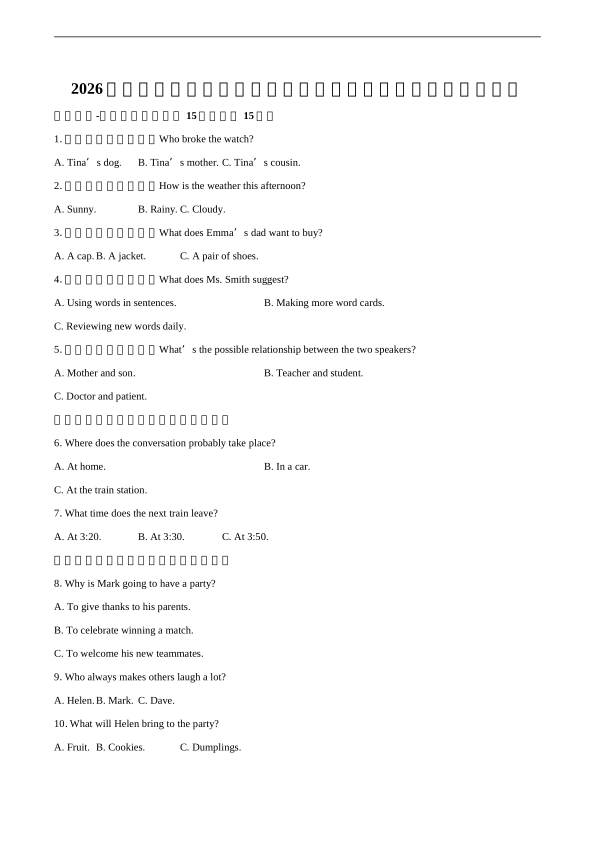
这是一份2026年浙江丽水市景宁畲族自治县初中毕业生学业水平适应性测试英语试题卷(含详细答案解析),共5页。试卷主要包含了完形填空,阅读理解,任务型阅读-多任务混合,选词填空-短文,阅读填空,书面表达等内容,欢迎下载使用。
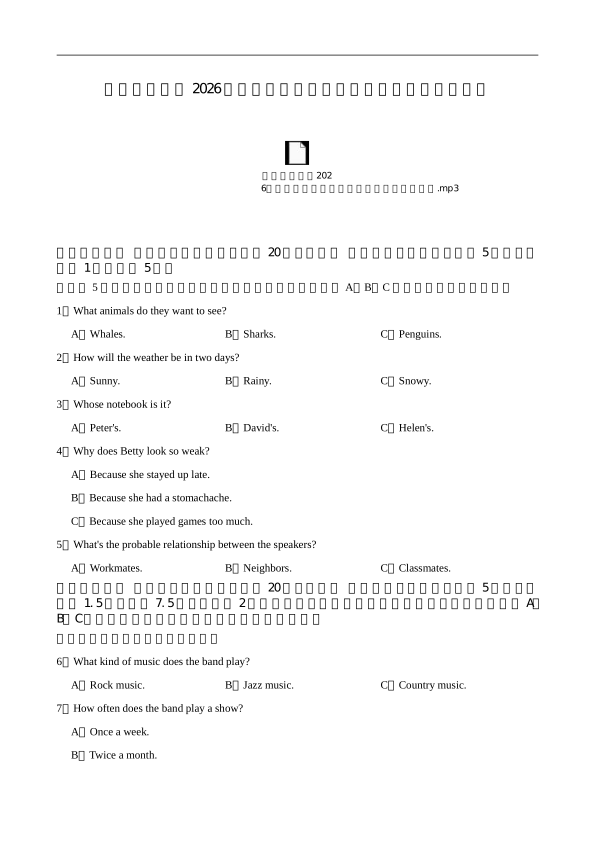
这是一份2026年浙江义乌市初中毕业生学业水平考试适应性试卷 英语(含详细答案解析),共5页。试卷主要包含了听力-选择题,完形填空,阅读理解,任务型阅读-多任务混合,选词填空-短文,阅读填空,书面表达等内容,欢迎下载使用。
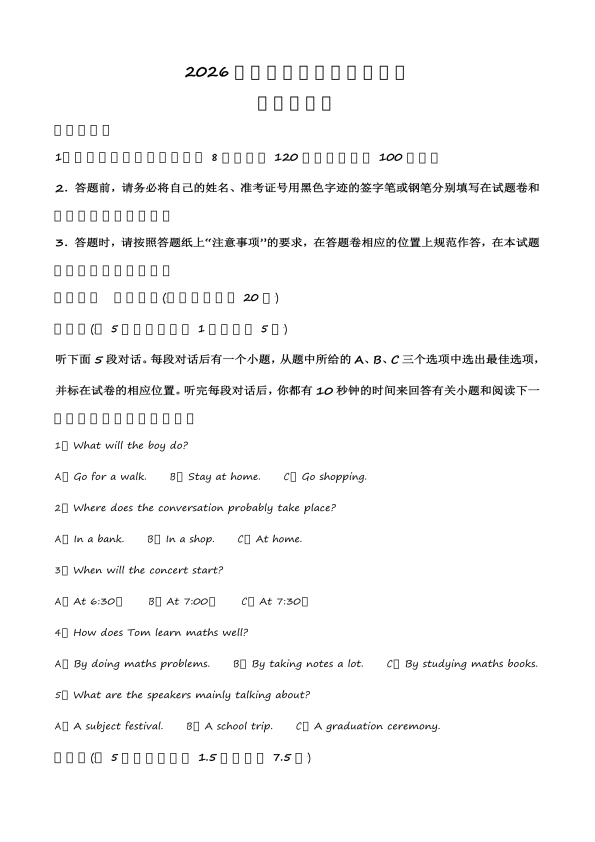
这是一份2026年浙江省宁波市宁海县初三适应性考试英语二模试题卷(含详细答案解析),共5页。试卷主要包含了听力-选择题,完形填空,阅读理解,任务型阅读-多任务混合,选词填空-短文,阅读填空,书面表达等内容,欢迎下载使用。
注册成功
资料篮

在线客服
添加在线客服
获取1对1服务
官方微信
关注“教习网”公众号
打开微信就能找资料
赛课定制
添加在线客服
获取1对1定制服务
职称咨询
添加在线客服
获取1V1专业指导服务

免费福利

.png)
.png)
