 免费领取教师福利


若您为此资料的原创作者,认为该资料内容侵犯了您的知识产权,请扫码添加我们的相关工作人员,我们尽可能的保护您的合法权益。


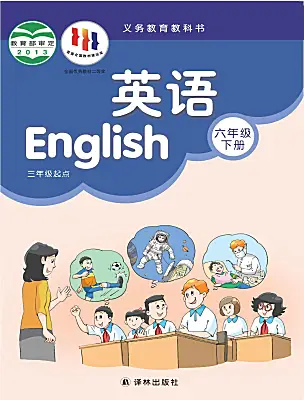
这是一份英语六年级下册Unit 2 Good habits导学案,共14页。
语音
字母组合 r 在单词中可发 /ɔː/ 音,如:fr、hrse、shrt、sprt。
[典例精练] 选出画线部分发音与其他两项不同的一项。
( )1.A.sprt B.hrse C.wrld
( )2.A.frty B.shrt C.dctr
必会单词
四会
habit(习惯)、never(从不)、finish(完成)、tidy(干净的,整齐的)late(迟,晚)、fast(快地)
三会
bad(不好的,坏的)、badly(差地,不好)、sleepy(困的,困倦的)、slwly(慢速地)
重点短语
have many gd habits(有许多好习惯) brush ne's teeth(刷牙)
rder(把…… 整理得井井有条) listen t teachers(听老师的话)
keep his rm clean and tidy(保持他的房间干净整洁) (很了解……)
get up early(起床早) befre bedtime(在睡觉前)
finish ne's hmewrk(完成家庭作业) d well at hme(在家做得好)
last night(昨夜) n time(准时) run thrugh the grass(跑过草地)
(带…… 参观……) n the flr(在地板上)
sing badly(唱得不好) g t bed late(睡觉晚)
feel sleepy(感到困倦) walk fast(走得快)
wash ne's face(洗脸) g int(走进)
under the bed(在床下面) walk slwly(走路走得慢))
核心句型
1.He gets up early in the mrning and never ges t bed late.(他早上起床早并且从来不晚睡。)
2.He brushes his teeth in the mrning and befre bedtime.(他早晨和睡觉前刷牙。)
3.At hme, Wang Bing always puts his things in rder.(在家里,王兵总是把他的东西整理得井井有条。)
【提醒】 rder 意为 “把…… 整理得井井有条”,put 后面可以接名词或代词,如果接的是代词,则要用其宾格形式。
4.He usually finishes his hmewrk befre dinner.(他通常在晚饭之前完成家庭作业。)
5.He listens t his teachers at schl.(他在学校听老师的话。)
6.He als des well at hme.(他在家也做得好。)
7.He smetimes feels sleepy in the mrning.(他有时在早上感到困倦。)
8.Wang Bing knws Liu Ta well.(王兵很了解刘涛。)
9.Yu shuldn't g t bed late, Liu Ta.(你不应该晚睡,刘涛。)
10.Tina's friends cme t see her.(蒂娜的朋友们来看她。)
11.Let me shw yu arund ur huse.(让我带你们参观我们的房子。)
12.They g int the living rm.(他们走进客厅。)
第二部分 语法强化
语法 1:early 和 late 作副词
early 和 late 是一组对应的词,它们除了可以用作形容词外,也可以用作副词。作副词时,它们一般用于修饰动词及动词短语。类似的形容词与副词形式相同的单词还有 fast、hard、high 等。
【例】1.He gets up early in the mrning and never ges t bed late.(他早上起床早并且从不晚睡。)
2.This is a fast train.(这是一辆快车。)(fast 作形容词)
3.The train ges very fast.(这辆火车跑得很快。)(fast 作副词)
【新题特训】单项选择
( ) 1. It's 5:30 in the mrning. Mr Black always gets up s _______.
A. early B. late C. earlily
( ) 2. I have a gd habit. I never g t bed _______ at night.
A. early B. late C. lately
解析:1.早上五点半起床是比较早的,故可排除B选项。early 在句中做副词,修饰短语get up,并没有 earlily 这种表达,故选 A。
2.由第一句“我有一个好惯”可知,“我”晚上从来不晚目垂,故排除 A 选项。lately 虽然是副词,但它的意思并不是“免,迟”,而是“最近,不久前”,故选 B。
语法 2:频度副词 always、usually、ften、smetimes 和 never
频度副词又称频率副词,用来表示一定时间内事情发生的频率。它们代表的频率高低顺序为:always(总是)> usually(通常)> ften(经常)> smetimes(有时候)> never(从不)。在使用时,要注意这些频率副词在句中的位置:
放在 be 动词、情态动词或助动词之后;
【例】I am usually at hme at weekends.(我周末通常在家。)
We shuld always put ur things in rder.(我们应该总是把我们的东西整理得井井有条。)
2.放在实义动词之前;
【例】We ften g swimming after schl.(我们经常放学后去游泳。)
3.有时为了强调,可将频率副词放在句首。
【例】Usually, I watch TV n Sunday afternn. But smetimes, I g shpping with my mther.(通常,我周日下午看电视。但有时,我会和我的妈妈去购物。)
【新题特训】单项选择
( ) 1. A: D yu like cakes? B: N, I dn't. But ________ . I have sme.
A. ften B. usually C. smetimes
( ) 2. Lily ______ puts her things in rder. S her desk is messy.
A. never B. always C. usually
解析:1. 本题答语作了否定回答,说明是不喜欢蛋糕的,因此只可能是偶尔尝一尝ften(经常)和 usually(通常)都不符合逻辑,故选 C。
2.由后一句“所以她的桌子乱糟糟的”可推测,莉莉从不把她的东西放整齐,“从不”用never表示,故选A。
语法 3:d well
well 表示 “好”,是 gd 的副词形式,可以用来修饰动词或动词短语。d well 意为 “做得好”,表示 “在某个方面做得好” 时,用短语 d well in,后面如果跟的是动词时,要用动词的 - ing 形式,其近义短语为 be gd at。
【例】1.He als des well at hme.(他在家也做得好。)
2.Mike des well in playing ftball.(迈克足球踢得好。)
【新题特训】用所给单词的适当形式填空
My brther likes playing ftball. He can play it _______ (gd).
Lk at the tall girl. She des _______ (gd) in English.
解析:1. 修饰动词 play 要用副词 well
2.play it well 在本句中意为“踢足球踢得好”表示“在某个方面做得好”时,可以用短语 d well in。
3. d well in 后面接动词时,要用动词的-ing 形式,故填 dance 的-ing 形式 dancing。
A: D yu d well in _______ (dance), Mary? B: N, I'm gd at singing.
第三部分 考点精练
一、选择题
1.Wang Bing knws Liu Ta ______. They’re gd friends. ( )
A.gdB.wellC.nice
2.—______ bag is this? ( )
—It’s Sandy’s.
A.Wh’sB.WhseC.Wh
3.Mike was late fr schl. He walked very ______. ( )
A.fastB.quickC.well
4.One day, Sam fell ______ a big hle and fund sme interesting things there. ( )
A.tB.nC.int
5.—______ Su Yang sing ______? ( )
—Yes, she des.
A.Des; wellB.Des; gdC.D; well
6.—______ did yu finish yur hmewrk? ( )
—Befre dinner.
A.WhatB.HwC.When
7.—______ is yur bad habit? ( )
—I ften eat snacks befre bedtime.
A.HwB.WhatC.When
8.The by is crying ______. His friends are cmfrting(安慰) him. ( )
A.happilyB.sadlyC.sad
9.Liu Ta brushes his teeth in the mrning and ______ bedtime. ( )
A.atB.afterC.befre
10.Wang Bing listens t his teachers ______ in class. ( )
A.carefulB.sadlyC.carefully
二、按要求写单词
1.brush(单三) 2.befre(反义词)
3.teacher(动词) 4.Yes(反义词)
5.help(单三) 6.d(否定形式)
7.bad(副词) 8.get(单三)
9.late(反义词) 10.parent(复数)
11.by(对应词) 12.have(单三)
13.shuld(否定形式) 14.badly(反义词)
三、用下列单词的适当形式补全句子。
1.Tw (man) caught the lin tw days ag.
2.We must (listen) t ur teachers in class.
3.Let's (put) the things in rder.
4.Li Ming never (g) t schl late.
5.He (bring)sme water and purs it int the hle.
6.What (d) he usually (d) after schl.
7.Beckham(贝克汉姆) is gd at ( play ) ftball. He is a gd ftball ( play).
8.Liu Ta shuld listen t (he ) mther at hme.
9.They are (Tina)gd friends.
10.Liu Ta shuld listen t (he) mther at hme.
四、Chse and cmplete. (选择合适的词组,完成句子)
1.The flr is wet. Yu shuld .
2.Willy is really gd at singing. Many students fr him ludly.
3.Dn’t eat meat. It’s bad fr yur health.
4.We can reuse a plastic bttle t . Then we can put sme flwers in it.
5.Smke frm cars makes the air dirty. T keep the air clean, we can .
6.Tm likes befre bedtime every night.
7.Yu shuld put yur bks and tys .
8.Ga Shan eggs and water every day. Is it healthy?
五、句型转换
1.They usually d their hmewrk befre dinner. (将they改为Nancy改写句子)
Nancy usually hmewrk befre dinner.
2.Tm did his hmewrk just nw. (改为否定句)
Tm his hmewrk just nw.
3.Is Jack gd at skating? (改为同义句)
Jack in skating?
4.Simn and his friends are drawing in the park. (对画线部分提问)
Simn and his friends in the park?
5.Jane wakes up early every day. (改为否定句)
Jane up early every day.
六、补全对话
Read and chse. (选择合适的句子完成对话,将序号写在横线上,其中有一项是多余的)
Simn: The bk lks nice. 1
Jack: My mum gave it t me. 2
Simn: What’s it abut?
Jack: 3 There are many pictures f spaceships frm China, Russia and the US.
Simn: That sunds fun.
Jack: Yes! 4
Simn: Really? 5
Jack: Sure. Let’s read it tgether!
A.It’s abut space travel.
B.Wh gave it t yu?
C.It’s a birthday present.
D.Can I have a lk?
E.There are pictures f space statins t.
F.I want t read abut them.
七、完形填空
Read and chse. (完形填空)
Our eyes are very imprtant t us. They’re just like cameras(照相机). We can see beautiful things and clurs arund us 1 ur eyes. But if we dn’t take gd care f them, they may hurt. 2 d we prtect ur eyes? On sunny days, the sun shines brightly. S we shuld 3 ur sunglasses. When we read, we shuldn’t stay t clse t ur bks and the light shuldn’t be t bright 4 t dark. We mustn’t read in bed. It’s 5 fr ur eyes. We mustn’t rub(揉) ur eyes with dirty hands r play cmputer games fr a lng time.
( )1.A.with B.fr C.f
( )2.A.What B.Hw C.Wh
( )3.A.with B.in C.wear
( )4.A.r B.and C.with
( )5.A.bad B.gd C.badly
八、阅读理解
(A)Read and chse. (阅读短文,选择正确的答案)
All students shuld have gd study habits. When yu have gd study habits, yu will learn things quickly and remember them easily. D yu like t study in the living rm? This is nt a gd place because it is usually t nisy. Yu need t study in a quiet place, like (比如)yur bedrm. A quiet place will help yu nly think abut ne thing, and yu will learn better. Befre yu start t study, dn’t frget(忘记) t clean yur desk. Yu can easily find yur schl things n a clean desk.
1.When yu have gd study habits, yu will ______. ( )
A.learn things quickly B.remember things easily C.A and B
2.The living rm is nt a gd place fr study because it is t ______. ( )
A.quiet B.nisy C.clean
3.Yu shuld remember t ______ befre yu study. ( )
A.clean the rm B.clean the desk C.turn n the light
4.There is/are ______ study habit(s) in this passage. ( )
A.ne B.tw C.three
5.The best title(标题) fr this passage is “______”. ( )
A.Gd study habits B.Hw t study C.Gd habits
(B)Read and judge. (阅读短文,判断句子正误,用T或F表示)
Table manners(礼仪) in the West (西方)
Peple in the West eat with knives and frks. They use the knife t cut fd and the frk t pick up fd t eat. They smetimes use their hands fr pizza, bread and fried chicken. They usually eat very quietly. They try nt t make a nise(声响). They have sup with a spn. They never lift(举起) the bwl t their muths. They d nt talk when there is fd in their muths. They d nt smke r pick their teeth(剔牙) at table.
1.Peple in the West use the knife t cut fd and eat fd. ( )
2.They smetimes eat bread with their hands. ( )
3.They have sup with a spn. ( )
4.They d nt talk at table. ( )
5.They never pick their teeth. ( )
典例精练答案
C 2.C
【解析】1.选项AB画线部分的发音为[ɔː],选项C画线部分的发音为[ɜː],所以C不同,故选C。
2.选项AB画线部分的发音为[ɔː],选项C画线部分的发音为[ə],所以C不同,故选C。
考点精练答案
一、1.B
【详解】句意:王冰非常了解刘涛。他们是好朋友。本题考查副词的用法。A形容词,好的;B副词,好地;C形容词,友好的。knws动词knw的第三人称单数,副词修饰动词,故选B。
2.B
【详解】句意:—这是________包?—它是珊迪的。本题考查疑问词。A是谁,B谁的,C谁。B符合题意,故选B。
3.A
【详解】句意:迈克上学要迟到了。他走得非常_________。本题考查副词辨析和副词的用法。A快地,B快的,C好地。横线处填副词修饰前面的动词walked,故选A。
4.C
【详解】句意:一天,萨姆掉______一个打洞内并在那找到一些有趣的东西。本题考查介词辨析,A向,B在……上面,C进入,根据句意,掉入洞里用int,fall int表示掉进……,故选C。
5.A
【详解】句意:—苏阳唱得好吗?—是的。本题考查助动词和副词的用法。主语Su Yang是单数,助动词用des;well好,副词,gd好的,形容词,第二个空填副词well修饰动词。故选A。
6.C
【详解】句意:—你什么时候完成的你的作业?—晚饭前。本题考查疑问副词。A什么,B怎么样,C什么时候,根据答语可知问句是你什么时候完成的作业,when符合题意,故选C。
7.B
【详解】句意:—你的坏习惯是_________?—我经常在睡前吃零食。本题考查疑问词。A怎样,B什么,C什么时候。B符合题意,故选B。
8.B
【详解】句意:这个男孩哭得很伤心。他的朋友正在安慰他。本题考查副词的用法和副词辨析。A快乐地(副词),B伤心地(副词),C伤心的(形容词)。此处应该用副词修饰动词cry,选项B符合句意,故选B。
9.C
【详解】句意:刘涛早上和睡前刷牙。本题考查时间介词,A在,其后加具体的时间点;B在……之后,C在……之前,bedtime不是具体的时间点,排除A;根据常识可知,在睡前刷牙,排除B,故选C。
10.C
【详解】句意:王兵在课上_________听老师讲课。本题考查副词的用法和副词辨析。A仔细的,B悲伤地,C仔细地。横线处填副词修饰前面的动词短语,C符合题意,故选C。
二、1.brushes 2.after 3.teach 4.N 5.helps 6.dn’t 7.badly
8.gets 9.early 10.parents 11.girl 12.has 13.shuldn’t 14.well
三、1.men 2.listen 3.put 4.ges 5.brings 6.des d 7.playing player 8.his 9.Tina’s 10.his
四、1.B 2.C 3.D 4.G 5.I 6.H 7.F 8.A E
【解析】1.句意:地面湿了。你应该_________。be careful小心,符合题意,故选B。
2.句意:威利擅长唱歌。许多学生为他大声_________。cheer up加油,符合题意,故选C。
3.句意:不要吃_________肉。它对你的健康不好。t much太多,符合题意,故选D。
4.句意:我们能再次利用塑料瓶___________。然后我们把一些花放里面。make a vase做一个花瓶,符合题意,故选G。
5.句意:汽车排放的烟使得空气变脏。为了保持空气干净,我们可以__________。take the bus r the metr坐公交或地铁,符合题意,故选I。
6.句意:汤姆每晚喜欢在睡前__________。listening t music听音乐,符合题意,故选H。
7.句意:你应该把你的书本和玩具__________。in rder摆放有序,符合题意,故选F。
8.句意:高山每天_________鸡蛋和_________水。这健康吗?eats a few吃一点点,drinks a little喝一点点,符合题意,故选A;E。
五、1.des her
【详解】原句句意:他们通常在晚饭前做作业。本题考查句型转换,句中时态是一般现在时,根据题干要求要将句中主语they改为Nancy,Nancy是第三人称,做主语时谓语动词用第三人称单数,句中的their改为her,故答案为des;her。
2.didn’t d
【详解】原句句意:汤姆刚才做了他的家庭作业。本题考查句型转换,原句是陈述句,时态为一般过去时,改为否定句,用助动词否定形式didn’t构成否定句,原句did(做)改为原形d。结构为:主语+didn’t+动词原形+其他。句意:汤姆刚才没有做他的家庭作业。故答案为didn’t d。
3.Des d well in
【详解】原句句意:杰克擅长滑冰吗?本题考查句型转换,题干要求改为同义句,be gd at=d well in擅长做某事,句子时态是一般现在时,Jack是第三人称单数,用助动词des,故答案为Des,d well in。
4.What are ding
【详解】原句句意:西蒙和他的朋友正在公园里画画。本题考查句型转换,划线部分是drawing,用what提问,即西蒙和他的朋友在公园里做什么呢?What are Simn and his friends ding in the park?故答案为What;are;ding。
5.desn’t wake
【详解】句意:简每天早起。本题考查句型转换,根据句意可知,该句是陈述句,时态为一般现在时,Jane是第三人称单数,变为否定句借助助动词desn’t,实义动词恢复原形wake,故答案为desn’t;wake。
六、1.B 2.C 3.A 4.E 5.D
【导语】本文主要讲述了杰克向西蒙介绍一本关于太空旅行的书。
1.下句说:我的妈妈给我的。可知要问是谁给的,选项B“谁给你的?”,符合语境,故选B。
2.上句说:我的妈妈给我的。可知要继续补充,选项C“它是一份生日礼物。”,符合语境,故选C。
3.上句说:它是关于什么的?可知要回答书本的大概内容,选项A“它是关于太空旅行。”,符合语境,故选A。
4.下句说:真的吗?可知该句要补充一个信息,选项E“也有太空站的图片。”,符合语境,故选E。
5.下句说:当然。可知该句要询问对方是否可以做一件事,选项D“我可以看看吗?”,符合语境,故选D。
七、1.A 2.B 3.C 4.A 5.A
【导语】本文主要介绍了如何保护我们的眼睛。
1.句意:我们_________我们的双眼看见我们周围漂亮的事物和颜色。A用,B为,C属于……的。A符合题意,故选A。
2.句意:我们________保护我们的眼睛?A什么,B怎样,C谁。B符合题意,故选B。
3.句意:所以我们应该__________太阳眼镜。A和,B在……里面,C戴。该句缺少谓语动词,C符合题意,故选C。
4.句意:当我们看书的时候,我们不应该离书本太近,并且灯光不应该太亮__________太暗。A或者,B和,C和。A符合题意,故选A。
5.句意:它对我们的眼睛__________。A坏的,B好的,C坏地。由上文可知躺床上看书对眼睛不好,横线处填形容词作is的表语,故选A。
八、(A)1.C 2.B 3.B 4.B 5.A
【导语】本文主要介绍了好的学习习惯。
1.句意:当你有好的学习习惯,你会___________。A学东西很快,B记忆东西很容易,C选项A和B。根据“When yu have gd study habits, yu will learn things quickly and remember them easily.”可知好的学习习惯会帮助人学得快,记得容易,故选C。
2.句意:客厅不是一个学习的好地方因为它太__________。A安静的,B吵闹的,C干净的。根据“This is nt a gd place because it is usually t nisy.”可知客厅通常太吵闹,不适合学习,故选B。
3.句意:你应该在学习之前记得___________。A打扫房间,B打扫课桌,C开灯。根据“Befre yu start t study, dn’t frget(忘记) t clean yur desk.”可知要在学习之前打扫课桌,故选B。
4.句意:本文中有__________学习习惯。A一个,B两个,C三个。根据“Yu need t study in a quiet place, like (比如)yur bedrm.”“Befre yu start t study, dn’t frget(忘记) t clean yur desk.”可知学习要有一个安静的学习地方,在学习之前要打扫课桌,一共介绍了两个好习惯,故选B。
5.句意:本文的最佳标题是“___________”。A好的学习习惯,B怎样学习,C好习惯。根据“All students shuld have gd study habits.”可知本文主要介绍了好的学习习惯,故选A。
(B)1.F 2.T 3.T 4.F 5.F
【导语】本文主要介绍了西方人的饮食习惯。
1.句意:西方的人们用刀子切食物和吃食物。根据“Peple in the West eat with knives and frks. They use the knife t cut fd and the frk t pick up fd t eat.”可知西方的人们用刀子切食物,用叉子吃食物,句子和短文不符,故答案为F。
2.句意:他们有时用手吃面包。根据“They smetimes use their hands fr pizza, bread and fried chicken.”可知他们有时用手吃披萨,面包和炸鸡。句子和短文相符,故答案为T。
3.句意:他们用勺子喝汤。根据“They have sup with a spn.”可知他们用勺子喝汤,句子和短文相符,故答案为T。
4.句意:他们不在桌子边说话。根据“They d nt talk when there is fd in their muths.”可知他们嘴里有食物的时候,不说话,句子和短文不符,故答案为F。
5.句意:他们从不剔牙。根据“They d nt smke r pick their teeth(剔牙) at table.”可知他们不在桌子边剔牙。句子和短文不符,故答案为F。
A.eats a few B.be careful C. cheer up D.t much E. drinks a little
F. in rder G. make a vase H. listening t music I. take the bus r the metr
这是一份英语六年级下册Unit 2 Good habits导学案,共14页。
这是一份牛津译林版六年级下册Unit 6 An interesting country学案设计,共12页。学案主要包含了新题特训等内容,欢迎下载使用。
这是一份英语六年级下册Unit 1 The lion and the mouse学案设计,共15页。学案主要包含了新题特训等内容,欢迎下载使用。
注册成功
资料篮

在线客服
添加在线客服
获取1对1服务
官方微信
关注“教习网”公众号
打开微信就能找资料
赛课定制
添加在线客服
获取1对1定制服务
职称咨询
添加在线客服
获取1V1专业指导服务

免费福利

.png)
.png)
(1)(1).png)
