免费领取教师福利


若您为此资料的原创作者,认为该资料内容侵犯了您的知识产权,请扫码添加我们的相关工作人员,我们尽可能的保护您的合法权益。

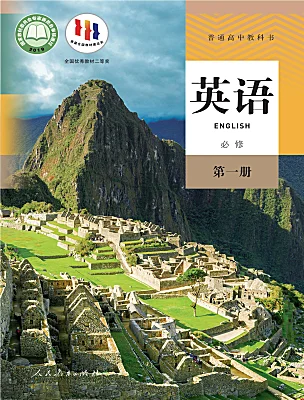
这是一份高中英语Unit 5 Languages around the world学案及答案,共11页。
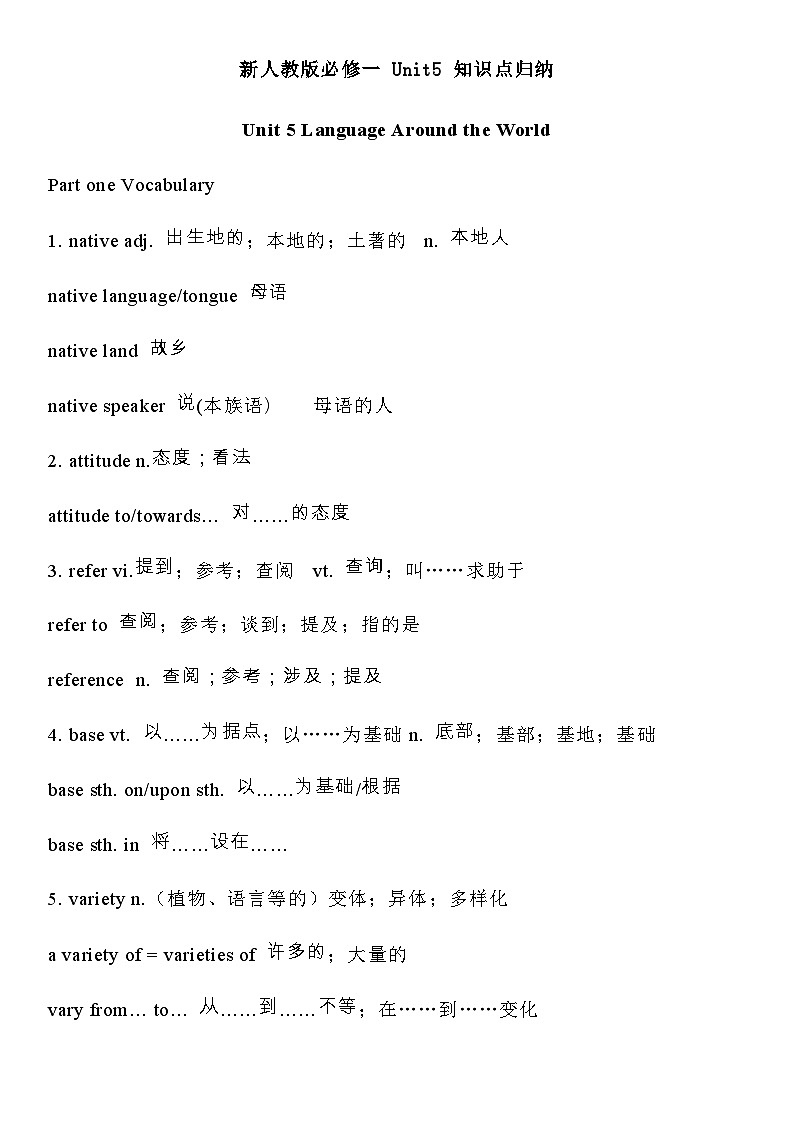
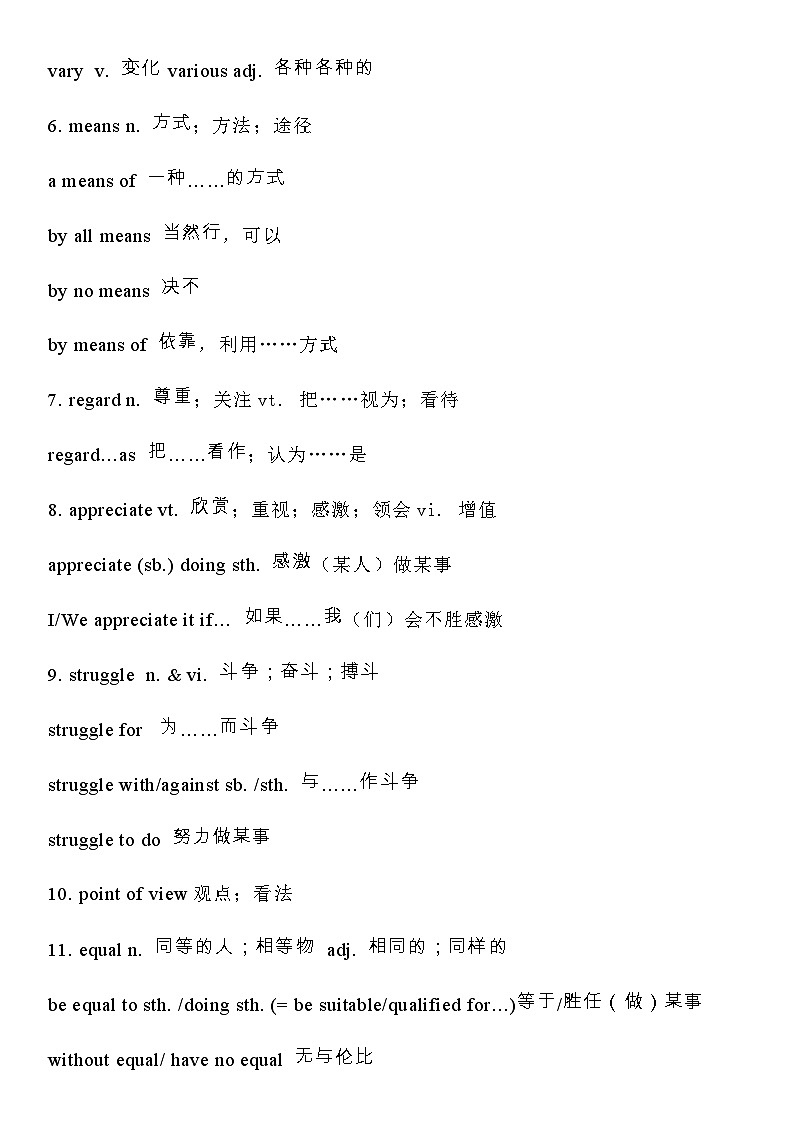
Part ne Vcabulary
1. native adj. 出生地的;本地的;土著的 n. 本地人
native language/tngue 母语
native land 故乡
native speaker 说(本族语) 母语的人
2. attitude n.态度;看法
attitude t/twards… 对……的态度
3. refer vi.提到;参考;查阅 vt. 查询;叫……求助于
refer t 查阅;参考;谈到;提及;指的是
reference n. 查阅;参考;涉及;提及
4. base vt. 以……为据点;以……为基础 n. 底部;基部;基地;基础
base sth. n/upn sth. 以……为基础/根据
base sth. in 将……设在……
5. variety n.(植物、语言等的)变体;异体;多样化
a variety f = varieties f 许多的;大量的
vary frm… t… 从……到……不等;在……到……变化
vary v. 变化 varius adj. 各种各种的
6. means n. 方式;方法;途径
a means f 一种……的方式
by all means 当然行,可以
by n means 决不
by means f 依靠,利用……方式
7. regard n. 尊重;关注vt. 把……视为;看待
regard…as 把……看作;认为……是
8. appreciate vt. 欣赏;重视;感激;领会vi. 增值
appreciate (sb.) ding sth. 感激(某人)做某事
I/We appreciate it if… 如果……我(们)会不胜感激
9. struggle n. & vi. 斗争;奋斗;搏斗
struggle fr 为……而斗争
struggle with/against sb. /sth. 与……作斗争
struggle t d 努力做某事
10. pint f view观点;看法
11. equal n. 同等的人;相等物 adj. 相同的;同样的
be equal t sth. /ding sth. (= be suitable/qualified fr…)等于/胜任(做)某事
withut equal/ have n equal 无与伦比
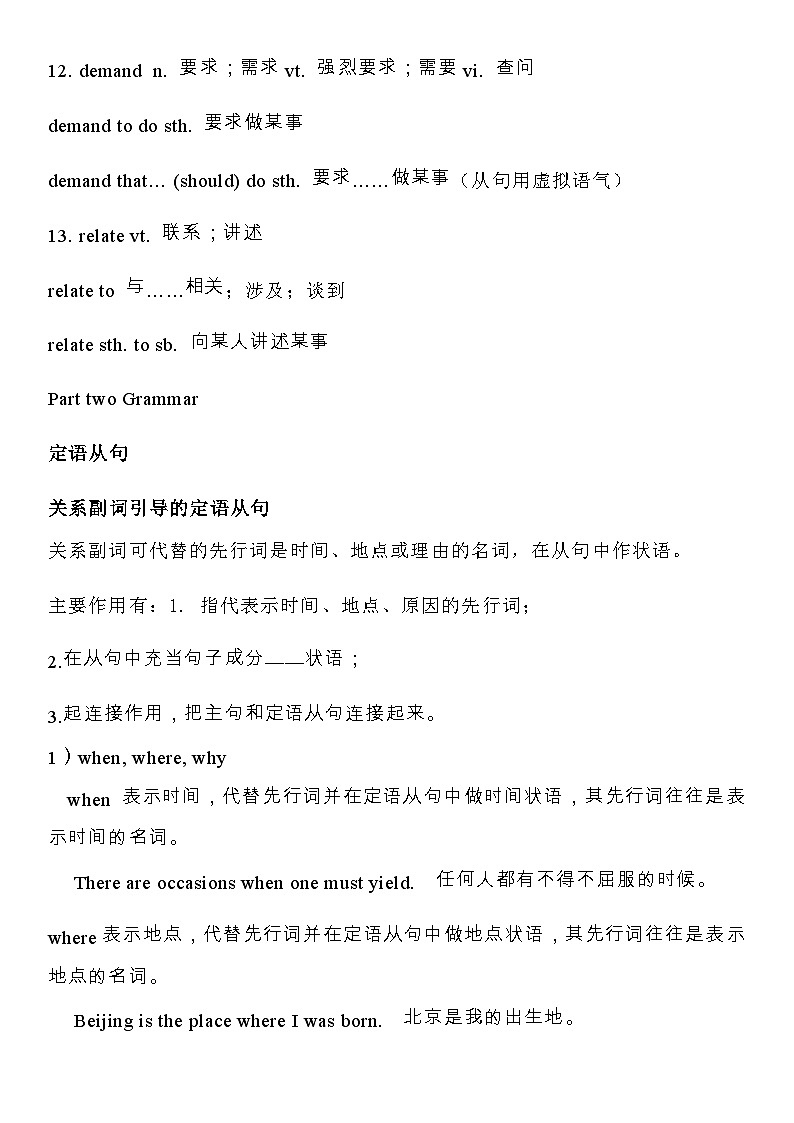
12. demand n. 要求;需求vt. 强烈要求;需要vi. 查问
demand t d sth. 要求做某事
demand that… (shuld) d sth. 要求……做某事(从句用虚拟语气)
13. relate vt. 联系;讲述
relate t 与……相关;涉及;谈到
relate sth. t sb. 向某人讲述某事
Part tw Grammar
定语从句
关系副词引导的定语从句
关系副词可代替的先行词是时间、地点或理由的名词,在从句中作状语。
主要作用有:1. 指代表示时间、地点、原因的先行词;
2.在从句中充当句子成分——状语;
3.起连接作用,把主句和定语从句连接起来。
1)when, where, why
when 表示时间,代替先行词并在定语从句中做时间状语,其先行词往往是表示时间的名词。
There are ccasins when ne must yield. 任何人都有不得不屈服的时候。
where表示地点,代替先行词并在定语从句中做地点状语,其先行词往往是表示地点的名词。
Beijing is the place where I was brn. 北京是我的出生地。
why表示原因,代替先行词并在定语从句中做原因状语,其先行词往往是表示理由的名词如reasn。
Is this the reasn why he refused ur ffer? 这就是他拒绝我们帮助他的理由吗?
2)that代替关系副词
that可以用于表示时间、地点、方式、理由的名词后取代when, where, why和"介词+ which"引导的定语从句,在口语中that常被省略,例如:
His father died the year (that / when / in which) he was brn. 他父亲在他出生那年逝世了。
He is unlikely t find the place (that / where / in which) he lived frty years ag. 他不大可能找到他四十年前居住过的地方。
关系代词与关系副词的选用
方法一:用关系代词,还是关系副词完全取决于从句中的谓语动词。及物动词后面无宾语,就要用关系代词;而不及物动词则要求用关系副词。例如:
This is the muntain village that/which I visited last year.
I'll never frget the days when I wrked tgether with yu.
方法二:准确判断先行词在定语从句中的成分(主、谓、宾、定、状),也能正确选择出关系代词/关系副词。
若关系词在从句中做主语或宾语,用关系代词;做状语则用关系副词。
Is this the museum that/which yu visited a few days ag?
Is this the museum where the exhibitin was held?
“介词+关系代词”引导的定语从句
1.由“介词+关系代词”引导的定语从句主要用于正式文体,在非正式文体中通常将介词放至句末。如:
This is the man t whm I referred. 我指的就是这个人。
This is the man (whm) I referred t. 我指的就是这个人。
2. 直接用于介词后作宾语的关系代词which不能换成that,直接用于介词后作宾语的关系代词whm不能换成wh。但若介词用于句末,则用作宾语的which, whm也可换成that, wh,或者省略不同。如:
这是一个我们讨论了许多的问题。
This is a subject abut which we have talked a lt. (which不能换成that,也不能省略)
This is a subject which we have talked abut a lt. 这是一个我们讨论了许多的问题。(which可以换成that,也可以省略)
3.关系副词when, where, why根据情况有时可换成“介词+关系代词”。
如:That is the day when [=n which] he was brn. 那就是他出生的日子。
That is the huse where [=in which] he lived. 那就是他住过的房子。That is the reasn why [=fr which] he must aplgize. 那就是他必须道歉的原因。
4.在很正式的文体中,“介词+关系代词”引导的定语从句可紧缩成“介词+关系代词+不定式”结构。如:在那儿孩子们有个玩耍的花园。
正:There the children had a garden in which t play. (很正式)
正:There the children had a garden in which they culd play. (较正式)
正:There the children had a garden t play in. (较口语化)
注:这类“介词+关系代词++不定式”结构中的介词不能没有,也不能放在句末。如不能说
There the children had a garden which t play in.
Part three Sentence
1. There are many reasns why this has been pssible, but ne f the main factrs has been the Chinese writing system.
Reasn 后接定语从句
Reasn做先行词,后接定语从句:
(1)关系词在句中做状语,用why 或 fr which引导定语从句。
(2)如果关系词在句中做主语、宾语等,要用which 或that 引导定语从句,关系词作宾语可以省略。
2. Over the years, the system develped int different frms, as it was a time when the Chinese peple were divided gegraphically, leading t many varieties f dialects and characters.
“It was a time when… ” 句型意为“那段时间……”time 为先行词,when为关系副词,引导定语从句。
3. Even tday, n matter where Chinese peple live r what dialect they speak, they can all still cmmunicate in writing.
“N matter where/what + …” 引导让步状语从句
n matter what/where/when/hw/wh/which引导让步状语从句可换成whatever/ wherever/ whenever/ hwever/ whever/whichever
同步语法 | 新人教版•必修一Unit 5:"关系副词"及"介词+关系代词"
"关系副词"及“介词+关系代词”
引导的定语从句
一、关系副词引导的定语从句
关系副词的指代及功能
1.关系副词when引导定语从句时,先行词应是表示时间的名词,关系词在从句中作时间状语。
I still remember the time when I first travelled by plane.
我仍然记得第一次坐飞机旅行的时候。
We will never frget the year when the 29th Olympic Games were held in Beijing.
我们将永远不会忘记第29届奥运会在北京举办的那一年。
2.关系副词where引导定语从句时,先行词应是表示地点或抽象地点的名词,关系词在从句中作地点状语。
I'd like t live in the huse where there is plenty f sunshine.
我喜欢住在那个阳光充足的房子里。
3.关系副词why引导定语从句时,先行词常常为reasn,关系词在从句中作原因状语。
Can yu explain the reasn(=fr which)why yu dn't help him?
你能解释一下不帮助他的理由吗?
I dn't knw the reasn why he didn't turn t his gd friend fr help yesterday.
我不知道昨天他为什么没向他的好朋友求助。(why作原因状语)
I wn't listen t the reasn that/which yu have given us.
我坚决不听你提供给我们的那个理由。(定语从句中缺少宾语,所以用which/that,不用why)
二、“介词+关系代词”引导的定语从句
当关系代词在定语从句中作介词的宾语时,我们通常用“介词+关系代词”引导定语从句。如果指“人”,用“介词+whm”;如果指“物”,用“介词+which”;关系代词有时也用whse(作定语)。
选用介词的依据:
1.根据定语从句中谓语动词的搭配习惯(即固定短语)。
Yesterday we visited the West Lake fr which Hangzhu is famus.
昨天我们参观了西湖,杭州因其而出名。(be famus fr)
2.根据先行词的搭配习惯(约定俗成,不一定是短语)。
This is the camera with which he ften takes phts.
这就是他经常用来拍照的相机。(with the camera)
The bss in whse cmpany Mr. King wrked heard abut the accident.
金先生所工作的公司的老板听到了这起事故。(in the bss' cmpany)
3.根据句子的意思来选择。
The clurless gas withut which we cannt live is called xygen.
这种无色的、离了它我们就无法生存的气体是氧气。
4.表示“所有”关系或“整体中的一部分”时,通常用介词f。
I have abut 10 bks, half f which were written by M Yan.
我有大约10本书,其中一半是莫言写的。
学以致用
用适当的关系副词或关系代词填空
1. I still remember the day______ I first came t Beijing.
2. This is the rm ______ my grandparents lived last year.
3. D yu knw the reasn______ he refused t g t Mary’s birthday party.
4. China is a large cuntry ______ many different dialects are spken.
5. The factry ______ his father wrks is in the west f the city.
6. This is the hspital______ my mther wrks.
7. That is the reasn ______ I did the jb.
8. I dn’t knw the exact time ______ they will meet.
9. I still remember the place______ I met her fr the first time.
10. That’s ne f the reasns ______ I asked yu t cme.
11. Mr. Wang will fly t Beijing, ______ he will stay fr three mnths.
12. There cmes a time______ yu have t make a chice.
13. I am lking frward t the day _____ my daughter can knw my feelings fr her.
14. We’ll put ff the picnic until next week, ______ the weather may be better.
15. ______ we knw, this is the day______ the quake happened thirty-five years ag.
16. He wrks in a factry______ makes this type f iPhne.
17. This is the hspital ______ we visited the day befre yesterday.
18. Finally he reached a lnely island ________ was cmpletely cut ff frm the utside wrld.
19. I dubt the reasn ______ he gave us fr his being absent frm the meeting.
20. The way _____ ur chemistry teacher did the experiment was very interesting.
参考答案
1. when/ n which 2 where /in which 3. why/fr which 4. where /in which 5. where /in which
6. where /in which 7. why/ fr which 8. when/at which 9. where /in which 10. why/ fr which
11. where 12. when 13. when/ n which 14. when 15. As ; when/ n which 16. that /which
17. that /which 18. that /which 19. that /which 20. that /in which
关系副词
先行词
功能
when
表示时间的名词
时间状语
where
表示地点的名词
地点状语
why
reasn
原因状语
这是一份高中英语人教版 (2019)选择性必修 第一册Unit 1 People of Achievement学案设计,共14页。
这是一份人教版 (2019)必修 第二册Unit 3 The internet学案设计,共18页。
注册成功
资料篮

在线客服
添加在线客服
获取1对1服务
官方微信
关注“教习网”公众号
打开微信就能找资料
赛课定制
添加在线客服
获取1对1定制服务
职称咨询
添加在线客服
获取1V1专业指导服务

免费福利

.png)