免费领取教师福利
若您为此资料的原创作者,认为该资料内容侵犯了您的知识产权,请扫码添加我们的相关工作人员,我们尽可能的保护您的合法权益。


这是一份人教版 (2019)选择性必修 第一册Unit 2 Looking into the Future导学案,共11页。学案主要包含了巩固训练等内容,欢迎下载使用。
Part ne Vcabulary
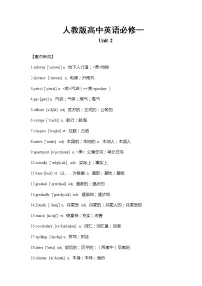
1. apply vi. & vt. 申请;请求 vt. 应用;涂(油漆;乳剂)
applicatin n. 申请;申请书;适用
apply sth. t sth. 把某物应用于……
apply (t…) fr… (向……)申请……
apply t d sth. 申请做某事
apply t… 适用于……(t为介词)
2. rent vt. 租用;出租 vi. 租用;租金为 n. 租金
rent sth. frm sb. 从某人那里租赁某物
rent sth. t sb. 把某物出租给某人
3. amazing adj. 令人惊奇的;令人惊喜的
amaze vt. 使惊奇;使惊喜
amazed adj.惊奇的;惊喜的
4. arrangement n.安排;筹备
make an arrangement/ arrangements (fr) 为……做安排
arrange v. 安排;筹备;整理;布置
arrange fr sb. t d sth. 安排某人做某事
5. narrw adj. 狭窄的 vi.& vt. (使)变窄
narrw sth. dwn (t…)/ narrw dwn sth.(t…) 把某物缩小(到……)
6. recgnise vt. 辨别出;承认;认可
recgnise…as/ t be… 承认/认为……是……
be recgnised as … 被认为是…
It is recgnise that… 人们意识到……
recgnitin n. 认识;认出;认可
recgnisable adj. 容易认出的;易于识别的
7. admire vt. 钦佩;赞赏
admire sb. fr sth. 因某事钦佩某人
admiratin n. 钦佩;赞赏
admirable adj. 令人羡慕的;可钦佩的;值得赞赏的
8. cntact vt. 联络;联系 n. 联系;接触
lse cntact with… 与……失去联系
be/ get/ stay/ keep/ in cntact with 与……取得联系
9. credit n. 借款;信用;称赞;学分
10. request n.(正式或礼貌的)要求;请求 vt. (正式或礼貌的)要求;请求
make a request fr 提出请求
11. view n.视野;景色;看大
12. check vt. 检查;核对
check in (在旅馆、机场等)登记
check ut 结账离开(旅馆等)
13. sight n. 景象;视野;视力
catch sight f ... 看见... ...
14. cmment n.议论;评论 vi. & vt. 发表意见;评论
make a cmment n... 对... ...发表评论
cmment n/upn 对... ...发表评论
Part tw Grammar
现在进行时表将来
be ding
这种结构表示按计划即将发生的动作,常用于表示位置移动的动词。例如:g , cme , leave , start , arrive , mve , return , fly (乘飞机)等。
一般将来时的几种表达方式
一般将来时表示将来某个时间要发生的动作或存在的状态,也表示将来经常或反复发生的动作,常与表示将来的时间状语连用。例如:tmrrw , tmrrw mrning / afternn, the day after tmrrw, next year, next mnth…, frm nw n (从现在开始),in an hur (一小时后), in tw days / week等。一般将来时的表示方法有以下多种形式:
1.will / shall
will/ shall d
表示将来时间时,一般要与表示将来的时间状语连用,或通过一定的上下文来体现将来时间状语。shall只用于第一人称,will可以通用于各种人称。在问句中shall常用于第一人称表示建议或征求对方意见。
2. be ging t d
A.这种结构表示主体现在的意图,即打算在最近或将来要做某事,主语通常指人。在被动句中,主语可以是物,但动作的执行者当然仍是人。
B.表示有迹象表明将要发生某种情况,一般指客观事态的发展,而不是表示主观的意图。句中的主语可以指人,也可指物,或者非人称代词it。
3. be abut t d
这种结构表示“最近或马上要发生的动作”。例如:
4. be t d
这种结构着重指按计划或安排将要发生某事。
A.常见于报纸、广播等,用以宣布官方的计划或决定。
B. 一般是指受人指示、制约的动作,它有命令、禁止或可能性的含义。
注:be t d 与be ding都可表示按计划、安排将要发生的事,这两种结构常常可以互换,但be t d常用于正式语体。
5. 一般现在时表示将来
A.由“if , when , as sn as , until , till , after , befre”等引导的条件或时间状语从句中,通常用一般现在时表将来。
B.表示按照时间表或既定日程一定会发生的将来事态。
Part three Sentence
1. PERU is a cuntry n the Pacific cast f Suth America with three main areas: narrw, dry, flat land running alng the cast, the Andes Muntains, and the Amazn rainfrest.
语法:with的复合结构
with的复合结构,即“with+宾语+宾补”结构,在句中常做定语或状语,做宾
补的可以是现在分词、过去分词、动词不定式、介词短语、形容词、副词等。
(1)with+ 宾语+现在分词
The students are listening t the teacher with their eyes lking at the blackbard.
学生们看着黑板,听老师讲课。(伴随状语)
(2)with+宾语+过去分词
With his hair cut,he lked much yunger.
理了发后,他看起来年轻多了。(原因状语)
(3)with+宾语+动词不定式
With a lt f wrk t d,he wasn't allwed t g ut.
因为有很多工作要做,他没有被允许外出。(原因状语)
(4)with+宾语+形容词/副词/介词短语
The ld man fell asleep with the light n.这个老人开着灯睡着了。(伴随状语)
2. It is fr this reasn that Spanish is the main fficial language f Peru.
强调句型
英语强调句型的基本结构是“It is/was+被强调成分+that (wh)+其他成分”。在该结构中,It is/was…that (wh)… 为强调句的结构词,原则上说,若将其去掉,句子意思依然清楚、结构依然完整。
如果原句是过去时,就用was,如果是现在时,就用is.
强调句型可以强调主语、宾语、状语等,但不能强调谓语。
3. Especially amazing is the Incas’ dry stne methd f building.
“表语+连系动词+主语”形式的倒装
为了避免句子头重脚轻,或者为了强调表语,常用此结构引起句子完全倒装。
4. Yu can then spend three days explring the rainfrest with a lcal guide and enjying the plants and animals unique t the rainfrest.
现在分词作伴随状语
(1)现在分词做伴随状语时,其逻辑主语就是句子的主语;
(2)现在分词做伴随状语表示与谓语动词动作同时进行;
(3)现在分词做伴随状语可以位于句首或者句末;
(4)现在分词做伴随状语时没有与之对应的状语从句互换,但可以转换为相应的并列句。
5. These Inca rads were made up f tw nrth-suth highways and many small rads crssing the muntains east t west.
语法:现在分词(短语)作定语
(1)现在分词作定语时,通常放在被修饰词之前,现在分词短语作定语,通常放在被修饰词之后。
(2)现在分词作定语一般有ding和being dne两种形式。
(3)现在分词短语作后置定语时可以扩展为定语从句。
6. Enjy the beautiful cuntryside as yu spend a day driving alng the new highway cnnecting Cusc t Lake Titicaca.
as引导时间状语从句
as引导时间状语从句时,意为“随着……,当……时”,强调主从句的谓语动词表示的动作同时进行。
必修一Unit 2:现在进行时表将来
一.现在进行时表示将来的用法
英语中还可以用现在进行时(be ding ) 表示按计划、安排将要发生的动作。主要用于以下两种情况:
二.一般将来时的几种表达法
初中阶段学习过will/shall d 和 be ging t d的形式表示将来意义。英语中还可以用be t d 和be abut t d 以及一般现在时和现在进行时形式表示将来意义。
【巩固训练】
单项选择
1. The TV news reprts that there ________ a strm the day aftertmrrw
A.is B. was
C. will be D. has be
2.--The weather reprt says that it___ tmrrw in mst parts f Anshun city.
--If it ______, the schlsprts meet will be canceled.
A. will rain; will rain
B. will rain; rains
C. rains; will rain
D. rains; rains
3. There _____a flk music cncert in Xinjiang Opera Theater nextmnth.
A. is ging t have B. willhave
C. is D. is ging t be
4. I think it is true that Jill _______ t wrk tday because she isn a trip.
A. has cme B. didn’t cme
C. is cming D. will nt cme
5.—I heard yur father hadgne t Beijing n business. —Yes. And he_____ in three weeks.
A. will return B. has returned
C. returned D. returns
6. —Have yu watched the new mvie Kung Fu Panda 3, Kelly?
—Nt yet. I _______ it with my classmate tnight.
A. will watch
B. was watching
C.have watched
7. Just g dwn this rad and yu _______ the library next t thebank.
A. see B. saw
C. have seen D.will see
8. We ______ have a picnic tgether with ur teachers next Thursday.
A. are ging B. are ging t
C. will ging D. may ging t
9. Many scientists believe that rbts ______ able t talk likehumans in 50 years.
A. were B. are
C.will be D.have been
10.—Did yu call Jenny? —Ohn, I frgt. I ______ her right away.
A. called B. havecalled
C. call D. will call
11. If we ______ take envirnmental prblems seriusly, the earth______ wrse and wrse.
A. dn’t; wn’t be
B.wn’t; isn’t
C. wn’t; is
D.dn’t; will be
12. The summer hlidays______,s the twins as well as Jack are ging t Hng Kng fr vacatin.
A. is cming B.are cming
C. cmes D.cme
13. I’m busy nw. I ____ t yu after schl this afternn.
A. talk B. talked
C. will talk D. have talked
14. — I hpe there _______ less pressure n us tday.
— If s, we _______ enjy amre pleasant life.
A. is; can B.will be; can
C. will be; shuld D.is; shuld
15. —Have yu returned thebk t the library yet?
—Nt yet. Dn’t wrry. I ______ it sn.
A. return B. returned
C. have returned D. will return
16. Stp smking, Je! Yu _____ yurself if yu keep n ding itlike that!
A. will kill B. havekilled
C. kill D. killed
17.-D yu have any plansfr tnight?
-Yes ,I _____ at the new Italian restaurant intwn.
A. eat B. have eaten
C. ate D. am ging t eat
18. —Which singer d yuthink ____ the Vice f China?
—I'm nt sure. There are still 3 runds t cme.
A. wn B. has wn
C. will win D. wins
19. Flight BA 2793 _____ at 8:20. Hurry up!
A. leaves B. left
C. has left D. leaving
20. Jenny ________n hliday nw. I wnder when she ________back.
A. is being ; cmes
B. is ; is cming
C. will be ; will cme
Ⅰ.单句语法填空
1. —Yu are wanted n the phne, Ann!
—OK,I ________ (cme).
2. If I see him, I________ (give) him yur message.
3. I think Mr. Li ________ (leave) here fr Beijing t attend a meeting in tw days.
4. Usually the new term________ (start) n August 29th.
5. When summer (cme), they will invite their students t pick the fresh vegetables!
6. His plane ________ (take) ff at 8:00 a.m.tmrrw.Wuld yu like t see him ff?
7. We________ (fly) t Shanghai tmrrw s we’d better get ur package packed nw.
8. If yu________ (cme) t my hmetwn next mnth, I’ll treat yu t a big dinner.
9. Please call the statin t make sure when the earliest train________ (leave).
10. When ur guest ________ (arrive), I will pick him up at the airprt.
Ⅱ.单句改错
1.If yu will visit him, I will g with yu.
2.The bus leave at 6:00 p.m.
3.I was seeing him ff this afternn.
4.The cncert is take place next Sunday.
参考答案
1-5 CBDDA 6-10 ADBCD
11-15 DBCBD 16-20 ADCAB
Ⅰ.单句语法填空
1.am cming 2. will give
3. is leaving 4. starts
5. cmes 6. takes
7. are flying 8. cme
9. leaves 10. arrives
Ⅱ.单句改错
1.去掉第一个will 2. leave→leaves
3. was→am 4. 在is后加t
(1)表示位置移动的动词的进行时表将来,如:g, cme, leave, start, begin, arrive, return, mve, fly, take ff等。
Mary is leaving fr Beijing n Friday.
玛丽星期五要动身去北京
My uncle is cming back frm abrad next week.
我叔叔下周要从国外回来了。
—Hurry up! The mvie is beginning.快点,电影就要开始了。
—Dn’t wrry. There is still a little time left.不用担心,还有一点时间。
Ladies and gentlemen, please fasten yur seat belts. The plane is taking ff. 女士们,先生们,请系好安全带。飞机就要起飞了。
(2)有些不表示位置移动的
动词的进行时也可以表将来,如:d, get, rent, meet, bring, eat, have, meet, play, see, stay, wear, wrk, run ut等。
What are yu ding fr the Natinal Day hliday?
国庆节假期你计划干什么?
We ’re renting a car and driving!
我们要租辆车开车去!
--Are yu eating at the park? 你们要在公园吃饭吗?
--I’m bringing my wn lunch. 我自带午餐。
We are having a few guests ver tmrrw.
明天有几位客人要来。
Fd supplies in the fld-stricken area are running ut .We must act immediately befre there’s nne left.灾区的食物快要吃完了,在吃完之前,我们必须立刻行动。
(1)will d(主语为第一人称时可shall)
①将要发生的动作或存在的状态(单纯表将来)。
He will be thirty next year. 明年他就30岁了。
With the develpment f science and technlgy, rbt cks will appear in ur families in the future. 随着科技的发展,未来机器人厨师会出现在家庭中。
②未经过预先计划或考虑要做的动作(临时决定要做)。
— Excuse me, what time des Flight BA 2793 leave? 打扰了,波音2793航班何时起飞?
— Just a minute. I will check it fr yu. 请稍等,我现在就帮你看一下。
—Ann is in hspital. 安住院了。
—Oh, really? I didn’t knw. I will g and visit her.真的吗?我不知道啊,我要去探望她。
(2)be ging t d
①表示计划、打算干某事(事先考虑)。
We are ging t visit the Great Wall with the exchange students this weekend.
周末我们打算和交换生去参观长城。
There is ging t be a flk music cncert in Beijing Opera Theater next mnth.
下个月在北京剧院有一场民族音乐会。
②表示有迹象表明要发生的动作。
Lk at the dark cluds. It is ging t rain.
看这乌云,要下雨了。
Oh , it's 8:20. I'm ging t be late fr my class.
现在是8点20分。我上课要迟到了。
(3)be t d (可以和具体的时间状语连用)
①表示按计划、安排即将发生的动作。
The examinatin is t take place next week.
下周要举行考试。
The students are t meet at the schl gate tmrrw. 明天学生们将在学校大门口集会。
②用于时间、条件状语从句中,表示“如果要……,想要……”。
If yu are t succeed, yu must wrk as hard as pssible. 如果你想要成功,比必须努力工作。
(4)be abut t d (不与具体的时间状语连用,常与when连用)
表示即将要发生的动作。
We are abut t start. 我们就要出发了。
The new schl year is abut t begin. 新学年开学在即。
She was abut t leave when sme guests came.
她刚要离开,这时来了一些客人。
(5)一般现在时表将来
①表示按时间表规定将要发生的动作。常限于表示位置移动的短暂性动词。
②在时间、条件或让步状语从句中,用一般现在时表将来。
Lk at the timetable. Hurry up! Flight 4026 takes ff at 18:20. 你看看时刻表,快点!4026次航班的起飞时间是下午6点20分。
Jane is in a hurry because the train t the airprt leaves in half an hur. 简很匆忙,因为去机场的火车半小时后出发。
We will g fr a picnic if it desn’t rain this Sunday. 如果本周日不下雨,我们将去野餐。
Please tell him the news as sn as he arrives.
他一来,你就告诉他这个消息。
(6)现在进行时表将来
表示按计划、安排将要发生的动作。
I’m meeting Peter tnight. He is taking me t the theatre. 今天晚上我要跟彼得会面。他要带我去看戏。
I’m leaving tnight. I’ve gt my plane ticket. 我今天晚上就要动身了,已经买好了机票。
The engineer is cming t repair ur phne tmrrw mrning. 修理工明天上午来修我们的电话。
这是一份人教版 (2019)选择性必修 第一册Unit 2 Looking into the Future导学案,共11页。学案主要包含了巩固训练等内容,欢迎下载使用。
这是一份高中英语人教版 (2019)选择性必修 第一册Unit 1 People of Achievement学案设计,共14页。
注册成功
资料篮

在线客服
添加在线客服
获取1对1服务
官方微信
关注“教习网”公众号
打开微信就能找资料
赛课定制
添加在线客服
获取1对1定制服务
职称咨询
添加在线客服
获取1V1专业指导服务

免费福利


.png)