 免费领取教师福利
若您为此资料的原创作者,认为该资料内容侵犯了您的知识产权,请扫码添加我们的相关工作人员,我们尽可能的保护您的合法权益。


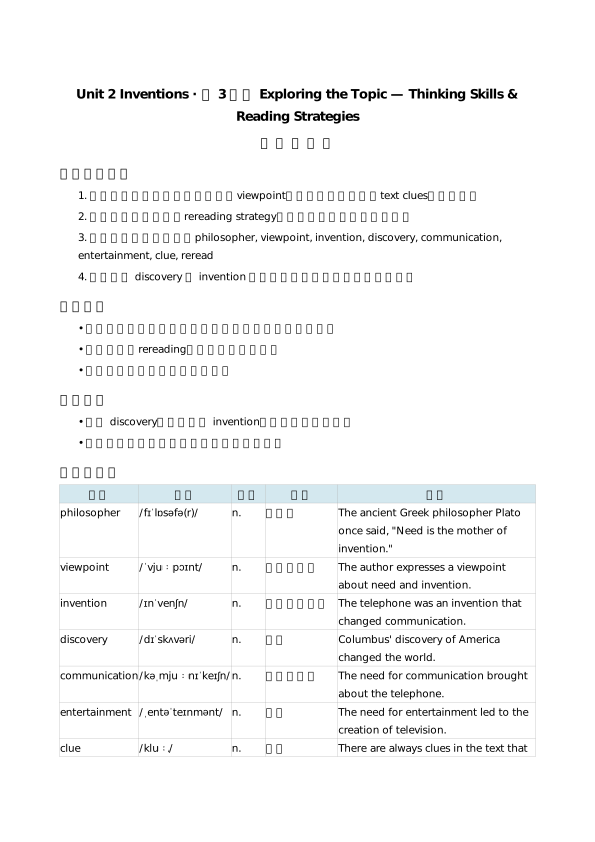
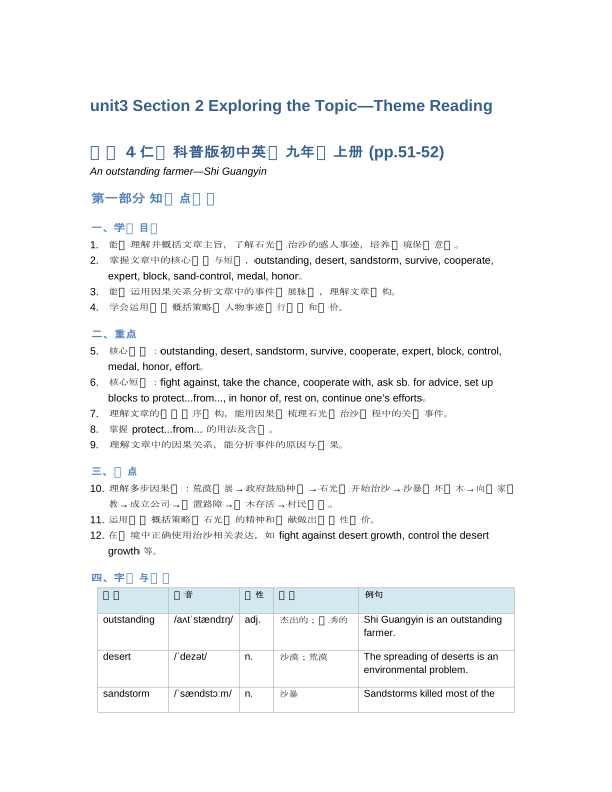
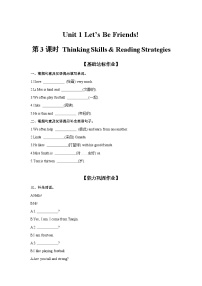
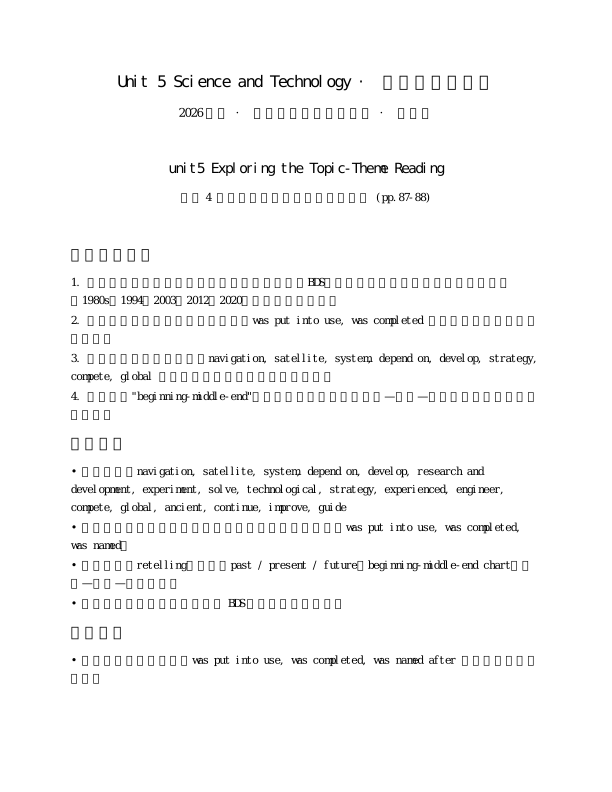
这是一份仁爱科普版(2024)九年级上册(2024)Reading Strategies第3课时巩固练习,文件包含unit3单元测试卷-学生版docx、unit3单元测试卷含答案-教师版docx等2份试卷配套教学资源,其中试卷共16页, 欢迎下载使用。
一、学习目标
1. 能够正确识读并运用本课时核心词汇:sign language, fingerspelling, expressin, imitate, cmprehend, imitatin, native, lyrics等
2. 能够识别阅读文段的主旨大意(main idea)和支撑细节(details),并运用main-idea-and-detail chart整理信息
3. 能够利用上下文线索(text clues)和前缀后缀(prefixes & suffixes)推断阅读中新词的含义
4. 能够在阅读中识别和理解被动语态,运用所学思维技能和阅读策略分析阅读材料
二、重点
• 核心词汇及短语:sign language, fingerspelling, expressin, imitate, cmprehend, imitatin, native, lyrics
• 思维技能:识别主旨大意与支撑细节,使用main-idea-and-detail chart
• 阅读策略:利用text clues、prefixes和suffixes推断新词含义
• 被动语态在阅读中的识别与理解:is called, are used, is spken
三、难点
• 准确区分文段的主旨大意和支撑细节,避免将细节误认为主旨
• 综合运用多种线索(上下文线索、词缀)推断新词含义
字词与词汇
• sign language (n.) 手语 — 由sign(手势)+ language(语言)构成
• fingerspelling (n.) 手指拼写 — 由finger(手指)+ spelling(拼写)构成
• expressin (n.) 表情;表达 — 动词形式为express
• imitate (v.) 模仿 — 名词形式为imitatin(加后缀-tin)
• cmprehend (v.) 理解 — 名词形式为cmprehensin
• native (adj.) 本国的;母语的 — 常用搭配:native speakers(母语者)
• lyrics (n.) 歌词 — 通常用复数形式
语法与句型
规则:本课时重点学习被动语态在阅读理解中的识别与运用。被动语态结构为:主语 + be + 过去分词(+ by + 动作执行者)。在阅读中,识别被动语态有助于理解句子主语是动作的承受者而非执行者。
结构:主动:Peple use sign language fr cmmunicatin. -> 被动:Sign language is used fr cmmunicatin (by peple).
主动:They call this methd "fingerspelling". -> 被动:This is called "fingerspelling".
• This is called "fingerspelling". (一般现在时被动,be called意为'被称为')
• The expressins n the face and the bdy language are imprtant in sign language. (主动语态,are为系动词,imprtant为表语)
• There are many different sign languages in the wrld because f the different cultures. (there be句型,表示存在)
学习支架
Main-idea-and-detail chart / Wrd inference strategy chart
四、知识要点
1. 识别主旨和细节
主旨(main idea)是文段的核心信息,告诉我们文段主要讲什么。细节(details)是用来进一步解释或支撑主旨的具体信息。识别主旨和细节是重要的阅读思维技能。
方法:使用main-idea-and-detail chart(主旨-细节图表)来整理信息。将主旨放在图表顶部,细节列在下方。
教材示例:
- Main Idea: Peple with hearing prblems can use sign language fr cmmunicatin.
- Detail 1: They spell ut letters with fingers (fingerspelling).
- Detail 2: They use facial expressins t say "hell", "gdbye", etc.
- Detail 3: Bdy language is imprtant in sign language.
例句:The main idea f the text is that sign language helps peple with hearing prblems cmmunicate. The details include fingerspelling, facial expressins, and bdy language.
2. 推断新词含义——上下文线索
在阅读中遇到不认识的词时,可以通过上下文线索(text clues)来推断其含义。常见的上下文线索包括:定义线索(文中直接给出解释)、同义/反义线索(通过同义词或反义词推断)、举例线索(通过举例推断)、因果线索(通过因果关系推断)。
教材示例:推断lyrics的含义——文中提到"she can read the lyrics f the sng",通过"sng"(歌曲)和"read"(读)可以推断lyrics意为"歌词"。
例句:By using text clues, we can infer that "lyrics" means the wrds f a sng.
3. 推断新词含义——前缀和后缀
前缀(prefixes)和后缀(suffixes)是推断词义的重要线索。后缀改变词性,如:-tin(名词后缀)、-able(形容词后缀)、-ly(副词后缀)。前缀改变词义,如:un-(不)、re-(再)、pre-(前)。
教材示例:"imitatin methd"中的imitatin由imitate加后缀-tin构成,表示"模仿"的名词形式。因此"imitatin methd"意为"模仿法"。同理,cmprehend(理解)加后缀-sin可构成cmprehensin(理解,名词)。
例句:The wrd "imitatin" is frmed by adding the suffix "-tin" t the verb "imitate", changing it frm a verb t a nun.
4. 被动语态在阅读中的运用
在阅读理解中,识别被动语态有助于理解句子的真正含义。被动语态中,主语是动作的承受者而非执行者。常见被动语态结构:is/are + 过去分词(一般现在时)、was/were + 过去分词(一般过去时)、will be + 过去分词(一般将来时)。
教材例句分析:
- "This is called 'fingerspelling'." — 主语This承受call的动作,意为"这被称为手指拼写"。
- "The expressins n the face and the bdy language are imprtant in sign language." — 此句为主动语态(系表结构),are为系动词,imprtant为表语,不是被动语态。
例句:In the sentence "This is called fingerspelling", the passive vice is used t emphasize what the methd is called, nt wh calls it.
五、典型例题
【例1】
根据句意和首字母提示完成句子:Peple with hearing prblems can use s______ language fr cmmunicatin. They spell ut the letters with their fingers. This is called f______.
【例2】
单项选择:Read the sentence: "The expressins n the face and the bdy language are imprtant in sign language." Which f the fllwing is the main idea?
A. Facial expressins are the mst imprtant.
B. Bdy language is mre imprtant than facial expressins.
C. Facial expressins and bdy language bth play imprtant rles in sign language.
D. Sign language nly uses facial expressins.
【例3】
推断词义:Read the sentence: "If yu imitate hw smene talks, yu'll understand what they say better." What des the wrd "imitate" mst prbably mean?
A. T cpy smene's actins r wrds.
B. T ignre smene cmpletely.
C. T disagree with smene.
D. T teach smene smething.
同 步 练 习
Sign Language and Wrd Inference
★ 基础巩固
1. Peple with hearing prblems can use _________ fr cmmunicatin.
A. bdy language B. sign language
C. spken language D. written language
2. In sign language, spelling ut letters ne by ne with fingers is called _________.
A. bdy language B. expressins
C. fingerspelling D. cmmunicatin
3. The expressins n the face and the _________ are imprtant in sign language.
A. bdy language B. spken language
C. sign language D. fingerspelling
4. If yu _________ hw smene talks, yu'll understand what they say better.
A. cpy B. imitate
C. repeat D. speak
5. T learn a new language, it's best t cpy the _________ speakers.
A. freign B. lcal
C. native D. internatinal
6. Peple with hearing prblems can use s______ language fr cmmunicatin.
7. In ASL, yu can spell ut the letters with yur fingers. This is called f______.
8. Dn't just cpy hw yur partner talks. Try t use the i______ methd and cpy their bdy language as well.
★★ 能力提升
9. — Hw can I cmprehend the speech better?
— Try t _________ hw the speaker talks and acts.
A. imitate B. ignre
C. frget D. change
10. Read the fllwing sentence: "There are many different sign languages in the wrld because f the different cultures." What is the main idea f this sentence?
A. Sign languages are the same everywhere.
B. Different cultures lead t different sign languages.
C. Sign language is nt useful.
D. There is nly ne sign language.
11. 完形填空:
Sign language is an imprtant tl fr cmmunicatin. Peple with hearing prblems use it t 1.______ with thers. In American Sign Language (ASL), peple spell ut letters with their 2.______. This is called "3.______". They als use 4.______ n their faces t say "hell" r "gdbye". The expressins n the face and 5.______ are very imprtant in sign language.
If yu want t learn a new language, yu can try the 6.______ methd. First, 7.______ hw native speakers talk. Then, cpy their 8.______ language as well. In this way, yu can 9.______ the speech better and sund like a 10.______ speaker very sn.
1. A. talk B. cmmunicate C. speak D. say
2. A. hands B. fingers C. arms D. eyes
3. A. bdy language B. sign language C. fingerspelling D. expressin
4. A. wrds B. expressins C. signs D. letters
5. A. bdy language B. spken language C. written language D. sign language
6. A. imitatin B. listening C. reading D. writing
7. A. imitate B. ignre C. frget D. change
8. A. bdy B. sign C. spken D. written
9. A. imitate B. cmprehend C. cpy D. speak
10. A. freign B. lcal C. native D. internatinal
12. 阅读理解:
Sign language is a cmplete language that uses hand mvements, facial expressins, and bdy language t cmmunicate. It is nt the same in every cuntry. Just like spken languages, different cuntries have their wn sign languages. Fr example, American Sign Language (ASL) is used in the United States, while British Sign Language (BSL) is used in the United Kingdm.
In ASL, peple can spell ut wrds letter by letter using their fingers. This is called fingerspelling. But sign language is mre than just fingerspelling. Facial expressins are very imprtant t. Fr example, raising yur eyebrws can change a statement int a questin.
If yu want t learn sign language, the best way is t imitate native signers. Watch hw they mve their hands and faces, and try t cpy them. This imitatin methd can help yu cmprehend sign language better and faster.
(1) Hw many sign languages are mentined in the passage?
A. One. B. Tw. C. Three. D. Fur.
(2) What des the wrd "cmprehend" in the last paragraph mst prbably mean?
A. T speak. B. T understand. C. T write. D. T hear.
(3) Accrding t the passage, which f the fllwing is TRUE?
A. Sign language is the same in every cuntry.
B. Fingerspelling is the nly part f sign language.
C. Facial expressins can change the meaning f signs.
D. Sign language nly uses hand mvements.
(4) What is the main idea f the passage?
A. American Sign Language is the best sign language.
B. Sign language uses hands, faces, and bdy t cmmunicate, and varies by cuntry.
C. Fingerspelling is easy t learn.
D. Only deaf peple use sign language.
13. 假设你的学校正在举办"语言文化周"活动。请你写一篇80词左右的短文,介绍手语的基本知识。提示:(1) 手语的用途;(2) 手语的主要方式(手指拼写、面部表情、肢体语言);(3) 学习手语的意义。要求:语句通顺,适当运用本课时所学词汇。
★★★ 拓展延伸
14. Read the fllwing descriptins and chse the INCORRECT ne:
A. Fingerspelling means spelling ut letters with fingers in sign language.
B. Facial expressins are nt imprtant in sign language.
C. There are many different sign languages in the wrld.
D. Bdy language plays an imprtant rle in sign language.
15. Which f the fllwing is the BEST way t infer the meaning f a new wrd?
A. Skip the wrd and keep reading.
B. Lk at the text clues arund the wrd and use prefixes r suffixes.
C. Ask the teacher immediately.
D. Guess randmly withut any clues.
16. Think abut it: If yu meet a deaf persn, hw wuld yu cmmunicate with them? Write at least tw ways yu culd use, using vcabulary frm this lessn.
单词
读音
词性
释义
例句
sign language
/saɪn ˈlæŋɡwɪdʒ/
n.
手语
Peple with hearing prblems can use sign language fr cmmunicatin.
fingerspelling
/ˈfɪŋɡərspelɪŋ/
n.
手指拼写
This is called "fingerspelling".
expressin
/ɪkˈspreʃn/
n.
表情;表达
They use different expressins n their faces.
imitate
/ˈɪmɪteɪt/
v.
模仿
If yu imitate hw smene talks, yu'll understand better.
cmprehend
/ˌkɒmprɪˈhend/
v.
理解
It can help yu better cmprehend the speech.
imitatin
/ˌɪmɪˈteɪʃn/
n.
模仿
Try t use this imitatin methd.
native
/ˈneɪtɪv/
adj.
本国的;母语的
It's best t cpy the native speakers.
lyrics
/ˈlɪrɪks/
n.
歌词
She can read the lyrics f the sng.
错误
正确
This is call "fingerspelling".
This is called "fingerspelling". (被动语态需用过去分词called)
Sign language are imprtant.
Sign language is imprtant. (sign language为不可数名词,谓语用is)
He can imitate hw native speaker talks.
He can imitate hw native speakers talk. (可数名词需用复数speakers)
Strategy
Hw t Use
Example
这是一份仁爱科普版(2024)九年级上册(2024)Reading Strategies第3课时巩固练习,文件包含第3课时_ThinkingSkillsReadingStrategies-讲义与练习-教师版docx、第3课时_ThinkingSkillsReadingStrategies-讲义与练习-学生版docx等2份试卷配套教学资源,其中试卷共17页, 欢迎下载使用。
这是一份仁爱科普版(2024)九年级上册(2024)Thinking Skills第3课时习题,文件包含第3课时_ThinkingSkillsReadingStrategies-讲义与练习-教师版docx、第3课时_ThinkingSkillsReadingStrategies-讲义与练习-学生版docx等2份试卷配套教学资源,其中试卷共19页, 欢迎下载使用。
这是一份英语九年级上册(2024)Thinking Skills第3课时课时练习,文件包含第3课时_ExploringtheTopicThinkingSkillsReadingStrategies-讲义与练习-教师版docx、第3课时_ExploringtheTopicThinkingSkillsReadingStrategies-讲义与练习-学生版docx等2份试卷配套教学资源,其中试卷共21页, 欢迎下载使用。
 新教材
新教材
注册成功
资料篮

在线客服
添加在线客服
获取1对1服务
官方微信
关注“教习网”公众号
打开微信就能找资料
赛课定制
添加在线客服
获取1对1定制服务
职称咨询
添加在线客服
获取1V1专业指导服务

免费福利

添加在线客服
领取免费福利


.png)
.png)
.png)
