免费领取教师福利
若您为此资料的原创作者,认为该资料内容侵犯了您的知识产权,请扫码添加我们的相关工作人员,我们尽可能的保护您的合法权益。


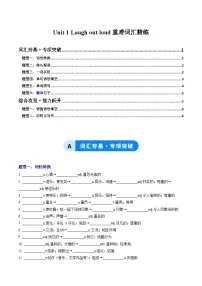
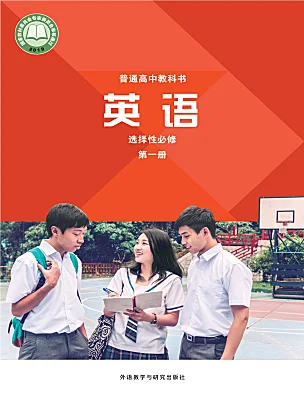
这是一份高中英语外研版 (2019)选择性必修 第一册Unit 1 Laugh out loud!精品巩固练习,共16页。
TOC \ "1-2" \h \u \l "_Tc8392" \l "_Tc5143" A 考点概览·知识回顾 PAGEREF _Tc8392 \h 1
\l "_Tc25907" B 考点夯基·专项突破 PAGEREF _Tc25907 \h 4
\l "_Tc4491" 一、单句语法填空(词汇句式全考查) PAGEREF _Tc4491 \h 4
\l "_Tc9962" 二、句型转换 PAGEREF _Tc9962 \h 8
\l "_Tc16902" 三、翻译句子 PAGEREF _Tc16902 \h 11
\l "_Tc8120" C 综合攻坚·能力跃升 PAGEREF _Tc8120 \h 13
\l "_Tc30590" 题型一 语篇语法填空(课文改编) PAGEREF _Tc30590 \h 13
\l "_Tc25546" 题型二 语篇语法填空(模考真题) PAGEREF _Tc25546 \h 14
一、单句语法填空(词汇句式全考查)
1. The ld man, ______ is sitting under the tree, is my grandfather.
答案:先行词是“The ld man”,指人,在非限制性定语从句中作主语,所以填wh。非限制性定语从句中,指人作主语时用wh引导 。
2. The bk, ______ I bught yesterday, is very interesting.
答案:先行词是“The bk”,指物,在非限制性定语从句中作宾语,所以填which。非限制性定语从句中,指物作宾语用which引导 。
3. The huse, ______ windws face the suth, is very expensive.
答案:先行词是“The huse”,关系词在从句中作定语修饰“windws”,表示“房子的”,所以填whse。whse在从句中作定语,可指人或物 。
4. Tm, ______ I went t the cinema with last night, likes actin mvies.
答案:先行词是“Tm”,指人,在非限制性定语从句中作宾语,所以填whm。在正式语境中,指人作宾语用whm引导非限制性定语从句 。
5. The meeting, ______ lasted tw hurs, was very bring.
答案:先行词是“The meeting”,指物,在非限制性定语从句中作主语,所以填which。非限制性定语从句中,指物作主语用which引导 。
6. The singer, ______ sngs are ppular amng yung peple, will hld a cncert next week.
答案:先行词是“The singer”,关系词在从句中作定语修饰“sngs”,表示“歌手的”,所以填whse。whse用于修饰人,在从句中作定语 。
7. My sister, ______ lives in Beijing, is a dctr.
答案:先行词是“My sister”,指人,在非限制性定语从句中作主语,所以填wh。先行词指人且在从句作主语,用wh引导非限制性定语从句 。
8. The city, ______ I visited last summer, has a lng histry.
答案:先行词是“The city”,指物,在非限制性定语从句中作宾语,所以填which。先行词为物且在从句作宾语,非限制性定语从句用which引导 。
9. The by, ______ mther is a teacher, studies very hard.
答案:先行词是“The by”,关系词在从句中作定语修饰“mther”,表示“男孩的”,所以填whse。whse用于修饰人,在从句中作定语 。
10. The factry, ______ my father wrks, is far frm ur hme.
答案:先行词是“The factry”,表示地点,在非限制性定语从句中作地点状语,所以填where。where在从句中作地点状语,相当于“in which” 。
11. The stry, ______ he tld us just nw, is very funny.
答案:先行词是“The stry”,指物,在非限制性定语从句中作宾语,所以填which。非限制性定语从句中,先行词为物且作宾语,用which引导 。
12. The mvie, ______ was shwn last night, is abut a true stry.
答案:先行词是“The mvie”,指物,在非限制性定语从句中作主语,所以填which。非限制性定语从句中,先行词为物且作主语,用which引导 。
13. The day, ______ we first met, was sunny.
答案:先行词是“The day”,表示时间,在非限制性定语从句中作时间状语,所以填when。when在从句中作时间状语 。
14. The car, ______ clr is black, belngs t my uncle.
答案:先行词是“The car”,关系词在从句中作定语修饰“clr”,表示“汽车的”,所以填whse。whse用于修饰物,在从句中作定语 。
15. The schl, ______ my brther graduated frm, is ne f the best in the city.
答案:先行词是“The schl”,指物,在非限制性定语从句中作宾语,所以填which。先行词为物且在从句作宾语,非限制性定语从句用which引导 。
16. The man, ______ yu talked t at the party, is my bss.
答案:先行词是“The man”,指人,在非限制性定语从句中作宾语,所以填whm。先行词为人且作宾语,正式表达用whm引导非限制性定语从句 。
17. The building, ______ was built in 1990, is still in gd cnditin.
答案:先行词是“The building”,指物,在非限制性定语从句中作主语,所以填which。非限制性定语从句中,先行词为物且作主语,用which引导 。
18. The girl, ______ hair is lng and beautiful, is my classmate.
答案:先行词是“The girl”,关系词在从句中作定语修饰“hair”,表示“女孩的”,所以填whse。whse用于修饰人,在从句中作定语 。
19. The park, ______ we ften g fr a walk after dinner, is very beautiful.
答案:先行词是“The park”,表示地点,在非限制性定语从句中作地点状语,所以填where。where在从句中作地点状语,相当于“in which” 。
20. The bk, ______ I brrwed frm the library, is very useful fr my study.
答案:先行词是“The bk”,指物,在非限制性定语从句中作宾语,所以填which。非限制性定语从句中,先行词为物且作宾语,用which引导 。
二、句型转换
1. 原句:My friend is a gd dancer. She practices dancing every day.
2. 原句:The pen is new. I bught it last week.
3. 原句:The huse is big. Its balcny is very large.
4. 原句:The by is my neighbr. Yu played basketball with him yesterday.
5. 原句:The meeting was imprtant. It was held in the cnference rm.
6. 原句:The girl is smart. Her ideas are always creative.
7. 原句:The factry is mdern. We visited it last mnth.
8. 原句:The day was sunny. We went fishing n that day.
9. 原句:The reasn is bvius. He was late fr the reasn.
10. 原句:The car is fast. Its engine is pwerful.
11. 原句:The film is mving. We watched it last night.
12. 原句:The twn is quiet. I grew up in the twn.
13. 原句:The man is a writer. Yu talked abut him at the meeting.
14. 原句:The bk is interesting. Its cver is clrful.
15. 原句:The schl is famus. My sister studies in the schl.
答案:
1.转换句:My friend, wh practices dancing every day, is a gd dancer.
详解:把后一句变为非限制性定语从句修饰“My friend”,先行词是人且在从句中作主语,用wh引导 。
2.转换句:The pen, which I bught last week, is new.
详解:“I bught it last week”修饰“The pen”,先行词是物且在从句中作宾语,用which引导非限制性定语从句,同时去掉原句中的it 。
3.转换句:The huse, whse balcny is very large, is big.
详解:用whse引导非限制性定语从句修饰“The huse”,表示“房子的阳台”,whse在从句中作定语 。
4.转换句:The by, whm yu played basketball with yesterday, is my neighbr.
详解:先行词是“The by”,指人,在从句中作宾语,用whm引导非限制性定语从句 ,“play basketball with sb.”,with也可放在whm前,即The by, with whm yu played basketball yesterday, is my neighbr.
5.转换句:The meeting, which was held in the cnference rm, was imprtant.
详解:先行词是“The meeting”,指物,在从句中作主语,用which引导非限制性定语从句 。
6.转换句:The girl, whse ideas are always creative, is smart.
详解:用whse引导非限制性定语从句修饰“The girl”,表示“女孩的想法”,whse在从句中作定语 。
7.转换句:The factry, which we visited last mnth, is mdern.
详解:先行词是“The factry”,指物,在从句中作宾语,用which引导非限制性定语从句,去掉原句中的it 。
8.转换句:The day, when we went fishing, was sunny.
详解:先行词是“The day”,表示时间,在从句中作时间状语,用when引导非限制性定语从句 。
9.转换句:The reasn, why he was late, is bvius.
详解:先行词是“The reasn”,在从句中作原因状语,用why引导非限制性定语从句(非限制性定语从句中表原因不能用that引导 )。
10.转换句:The car, whse engine is pwerful, is fast.
详解:用whse引导非限制性定语从句修饰“The car”,表示“汽车的发动机”,whse在从句中作定语 。
11.转换句:The film, which we watched last night, is mving.
详解:先行词是“The film”,指物,在从句中作宾语,用which引导非限制性定语从句,去掉原句中的it 。
12.转换句:The twn, where I grew up, is quiet.
详解:先行词是“The twn”,表示地点,在从句中作地点状语,用where引导非限制性定语从句 。
13.转换句:The man, whm yu talked abut at the meeting, is a writer.
详解:先行词是“The man”,指人,在从句中作宾语,用whm引导非限制性定语从句,“talk abut sb.”,abut也可放在whm前,即The man, abut whm yu talked at the meeting, is a writer.
14.转换句:The bk, whse cver is clrful, is interesting.
详解:用whse引导非限制性定语从句修饰“The bk”,表示“书的封面”,whse在从句中作定语 。
15.转换句:The schl, where my sister studies, is famus.
详解:先行词是“The schl”,表示地点,在从句中作地点状语,用where引导非限制性定语从句 。
三、翻译句子
1. 我有一个姐姐,她在一家大公司工作。
2. 我们参观了那座古老的城堡,它有几百年的历史了。
3. 我买了一本新书,它的内容非常有价值。
4. 我的老师,我们都很尊敬他,教我们数学。
5. 昨天我们去了一家餐厅,那里的食物很美味。
6. 他有一只宠物狗,狗很可爱。
7. 我们学校前面有一个公园,我们经常在那里玩耍。
8. 我的朋友,他喜欢运动,每天都锻炼身体。
9. 我们看了一场电影,电影的情节很吸引人。
10. 这个小镇,我在那里度过了我的童年,变化很大。
11. 她的妈妈,是一名医生,经常帮助有需要的人。
12. 我们参观了一个博物馆,里面有很多珍贵的文物。
13. 他写了一本小说,小说受到了读者的广泛欢迎。
14. 我的邻居,他的孩子和我在同一所学校上学,非常友好。
15. 我们去了一个村庄,那里的风景很美。
【答案】
1.译文:I have a sister, wh wrks in a big cmpany.
详解:先行词是“a sister”,指人,在非限制性定语从句中作主语,用wh引导非限制性定语从句 。
2.译文:We visited the ancient castle, which has a histry f hundreds f years.
详解:先行词是“the ancient castle”,指物,在非限制性定语从句中作主语,用which引导非限制性定语从句 。
3.译文:I bught a new bk, whse cntent is very valuable.
详解:先行词是“a new bk”,关系词在从句中作定语修饰“cntent”,表示“书的”,用whse引导非限制性定语从句 。
4.译文:My teacher, whm we all respect, teaches us math.
详解:先行词是“My teacher”,指人,在非限制性定语从句中作宾语,用whm引导非限制性定语从句 。
5.译文:Yesterday we went t a restaurant, where the fd was very delicius.
详解:先行词是“a restaurant”,表示地点,在非限制性定语从句中作地点状语,用where引导非限制性定语从句 。
6.译文:He has a pet dg, which is very lvely.
详解:先行词是“a pet dg”,指物,在非限制性定语从句中作主语,用which引导非限制性定语从句 。
7.译文:There is a park in frnt f ur schl, where we ften play.
详解:先行词是“a park”,表示地点,在非限制性定语从句中作地点状语,用where引导非限制性定语从句 。
8.译文:My friend, wh likes sprts, exercises every day.
详解:先行词是“My friend”,指人,在非限制性定语从句中作主语,用wh引导非限制性定语从句 。
9.译文:We watched a mvie, whse plt was very attractive.
详解:先行词是“a mvie”,关系词在从句中作定语修饰“plt”,表示“电影的”,用whse引导非限制性定语从句 。
10.译文:The small twn, where I spent my childhd, has changed a lt.
详解:先行词是“The small twn”,表示地点,在非限制性定语从句中作地点状语,用where引导非限制性定语从句 ,从句时态用一般过去时描述过去的经历,主句用现在完成时表示对现在的影响 。
11.译文:Her mther, wh is a dctr, ften helps peple in need.
详解:先行词是“Her mther”,指人,在非限制性定语从句中作主语,用wh引导非限制性定语从句 。
12.译文:We visited a museum, where there were many precius cultural relics.
详解:先行词是“a museum”,表示地点,在非限制性定语从句中作地点状语,用where引导非限制性定语从句 。
13.译文:He wrte a nvel, which was widely welcmed by readers.
详解:先行词是“a nvel”,指物,在非限制性定语从句中作主语,用which引导非限制性定语从句 。
14.译文:My neighbr, whse child ges t the same schl as me, is very friendly.
详解:先行词是“My neighbr”,关系词在从句中作定语修饰“child”,表示“邻居的”,用whse引导非限制性定语从句 。
15.译文:We went t a village, where the scenery was very beautiful.
详解:先行词是“a village”,表示地点,在非限制性定语从句中作地点状语,用where引导非限制性定语从句 。
题型一 语篇语法填空(课文改编)
1. Reading
Charlie Chaplin is ne f the mst famus 1.______ (cmedy) in the histry f the cinema. His charming character, the little tramp, is well-knwn arund the wrld. Chaplin was brn in Lndn in 1889. His family was pr, and he had a tugh childhd. Hwever, these early experiences 2.______ (prvide) him with rich material fr his later wrk.
In his films, Chaplin ften played a pr and hmeless man 3.______ wre large trusers, 4.______ (carry) a walking stick and had a funny mustache. The character was always in difficult situatins, but he never lst his hpe. He used humr t deal with 5.______ (difficult). Fr example, in the film The Gld Rush, Chaplin's character is in the middle f a snwstrm in a small wden huse. He is s hungry 6.______ he cks and eats a pair f shes! This scene, 7.______ is bth funny and sad, shws Chaplin's genius fr cmedy.
Chaplin's films nt nly entertained peple but als made them think. They ften cmmented n scial prblems f 8.______ (he) time, such as pverty and inequality. His wrk 9.______ (influence) generatins f filmmakers and cmedians ever since. Chaplin's unique style and his ability t blend humr with emtin made him a true master f the art f 10.______ (entertain).
【答案】
1. 答案:cmedians
详解:“ne f + the + 形容词最高级 + 可数名词复数”表示“最……之一”,cmedy的复数形式是cmedians。
2. 答案:prvided
详解:讲述过去发生的事情,用一般过去时,prvide的过去式是prvided。
3. 答案:wh / that
详解:先行词是man,指人,在定语从句中作主语,所以用关系代词wh或that引导定语从句。
4. 答案:carried
详解:and连接并列谓语,played和had是过去式,所以carry也用过去式carried。
5. 答案:difficulties
详解:作deal with的宾语,用名词形式,difficulty是可数名词,此处用复数形式difficulties表示各种困难。
6. 答案:that
详解:s... that...是固定句型,表示“如此……以至于……” 。
7. 答案:which
详解:先行词是This scene,指物,在非限制性定语从句中作主语,用which引导,不能用that。
8. 答案:his
详解:修饰名词time,用形容词性物主代词his,表示“他那个时代”。
9. 答案:has influenced
详解:ever since常与现在完成时连用,主语His wrk是第三人称单数,所以用has influenced。
10. 答案:entertainment
详解:f是介词,后接名词作宾语,entertain的名词形式是entertainment 。
2. Extended reading
A humr magazine is a publicatin 1.______ is mainly fcused n making peple laugh. It usually cntains a variety f 2.______ (fun) articles, cartns, jkes, and ther frms f humrus cntent. These magazines can cver a wide range f tpics, frm everyday life 3.______ current events.
One f the 4.______ (ppular) humr magazines in histry was Punch, 5.______ was funded in Lndn in 1841. Punch played 6.______ imprtant rle in the develpment f British humr. It featured plitical satire, scial cmmentary, and funny stries, 7.______ (appeal) t a wide audience. The magazine's cartns were especially famus, and many f them 8.______ (becme) icnic images f the Victrian era.
In mdern times, there are many different humr magazines arund the wrld. Sme are aimed at 9.______ (specifically) interests, such as science fictin humr r pet - related humr. Others are mre general, 10.______ (ffer) a mix f funny cntent fr all kinds f readers. These magazines nt nly bring jy t peple's lives but als prvide a unique perspective n the wrld thrugh humr.
【答案】
1. 答案:that / which
详解:先行词是publicatin,指物,在定语从句中作主语,用关系代词that或which引导定语从句。
2. 答案:funny
详解:修饰名词articles,用形容词形式,fun的形容词是funny,表示“有趣的”。
3. 答案:t
详解:frm... t...是固定搭配,表示“从……到……” 。
4. 答案:mst ppular
详解:“ne f + the + 形容词最高级 + 可数名词复数”结构,ppular的最高级是mst ppular。
5. 答案:which
详解:先行词是Punch,指物,在非限制性定语从句中作主语,用which引导,不能用that。
6. 答案:an
详解:play an imprtant rle in...是固定短语,表示“在……中起重要作用”,imprtant以元音音素开头,用an。
7. 答案:appealing
详解:此处用现在分词作状语,表主动,appeal与主语It是主动关系。
8. 答案:became
详解:讲述过去的事情,用一般过去时,becme的过去式是became。
9. 答案:specific
详解:修饰名词interests,用形容词形式,specifically的形容词是specific,表示“特定的”。
10. 答案:ffering
详解:此处用现在分词作状语,表主动,ffer与主语Others是主动关系 。
题型二 语篇语法填空(模考真题)
A
(2024·广东梅州·一模)阅读下面短文,在空白处填入1个适当的单词或括号内单词的正确形式。
Harbin is the capital f Heilngjiang prvince. Harbin is nw a large and pen city, 1 (influence) deeply by Russia, Eurpe, and Japan in 2 (it) culture, architecture, and lifestyle. Harbin is ne f the mst ppular destinatins fr winter turs, 3 (hst) the wrld’s biggest ice and snw festival.
Harbin 4 (becme) wrld-famus fr having the largest ice and snw festival. The pening ceremny is held 5 January 5 every year. Lasting fr mre than tw mnths, Harbin Ice and Snw internatinal festival is als 6 lngest snw festival in the wrld. 7 (near) all the ice fr the festival is cut frm the Snghua River in Harbin.
The mst ppular place is the Harbin Ice and Snw Wrld, 8 is like a frzen Disneyland, and yu can see the big ice and snw castles, cart n sculptures and enjy the biggest 9 (vary) f snw sprts and activities in the wrld.
There are als ice and snw sculptures exhibitins n Sun Island and an ice lantern shw in Zhalin Park.
Harbin has lng been a ppular winter destinatin fr snw turism and skiing experiences. If yu are skiing lvers, Yabuli Ski Resrt and Jihua Ski Resrt 10 (recmmend).
【答案】
1. influenced 2. its 3. hsting 4. has becme /becmes 5. n 6. the 7. Nearly 8. which 9. variety 10. are recmmended /will be recmmended
【导语】本文是一篇说明文。文章主要内容为哈尔滨是冬季旅游的热门目的地之一,举办着世界上最大的冰雪节。哈尔滨因拥有最大的冰雪节而闻名于世。
1. 考查非谓语动词。句意:哈尔滨是黑龙江省的省会。哈尔滨现在是一个开放的大城市,在文化、建筑和生活方式上深受俄罗斯、欧洲和日本的影响。分析句子,句中is是谓语动词,设空处使用非谓语动词,此处Harbin与influence之间是被动关系,故使用过去分词作状语。故填influenced。
2. 考查代词。句意:同上。分析句子,设空处使用it的形容词性物主代词its作定语,修饰culture。故填culture。
3. 考查非谓语动词。句意:哈尔滨是最受欢迎的冬季旅游目的地之一,举办世界上最大的冰雪节。分析句子,句中is为谓语动词,设空处使用非谓语动词,此处Harbin与hst之间是主动关系,且表示伴随,故使用现在分词作状语。故填hsting。
4. 考查动词时态。句意:哈尔滨因拥有最大的冰雪节而闻名世界。分析句子,设空处使用动词作谓语,句中表述客观事实,故使用一般现在时;同时此处也可以表示动作发生在过去,对现在有影响,即使用现在完成时。故填becmes或者has becme。
5. 考查介词。句意:每年的1月5日举行开幕式。分析句子,表示“在具体某一天”介词用n。故填n。
6. 考查冠词。句意:哈尔滨国际冰雪节持续两个多月,也是世界上最长的雪节。分析句子,句中lngest为形容词最高级,此处表示特指,设空处应该使用定冠词。故填the。
7. 考查副词。句意:几乎所有用于该节日的冰都是从哈尔滨的松花江上切下来的。分析句子,设空处使用副词作状语,修饰句子,意为“几乎”。同时该空置于句首,开头单词首字母大写。故填Nearly。
8. 考查定语从句。句意:最受欢迎的地方是哈尔滨冰雪大世界,它就像一个冰冻的迪斯尼乐园,你可以看到巨大的冰雪城堡,汽车上的雕塑,享受世界上种类最多的冰雪运动和活动。分析句子,设空处引导的是非限制性定语从句,引导词在从句中作主语,修饰先行词Harbin Ice and Snw Wrld,为物,故使用which。故填which。
9. 考查名词。句意:同上。分析句子,设空处使用vary的名词variety作宾语。故填variety。
10. 考查动词时态和语态。句意:如果你是滑雪爱好者,Yabuli滑雪场和 Jihua滑雪场会被推荐。分析句子,设空处使用动词作谓语,根据句中的if可知,句子符合“主将从现”,从句使用一般现在时,主句使用一般将来时。同时Yabuli Ski Resrt,Jihua Ski Resrt与recmmend之间是被动关系,故使用一般将来时的被动语态。同时该句子也可以表述客观事实,故也可使用一般现在时的被动语态。故答案为are recmmended/will be recmmended。
B
(2024·广东汕头·一模)阅读下面短文,在空白处填入1个适当的单词或括号内单词的正确形式。
In the gentle winter sunlight, Gulangyu Island lies like a pearl in the cean, quietly revealing 1 (it) unique charm. This small island is a witness 2 histry. Every brick seems t tell stries f the past. 3 (riginal) named “Yuanshazhu” and als knwn as “Yuanzhuzi”, it 4 (refer) t as “Wulngyu” during the Suthern Sng Dynasty. Later, due t the sund resembling a drum, it was renamed “Gulangyu.” Famus fr its natural landscapes and cultural heritage, Gulangyu basts 5 (attractin) such as Sunlight Rck, Shuzhuang Garden, and mre. Figures like Ba Jin and Lin Yutang fund inspiratin here, 6 (enrich) the island’s intellectual heritage.
During the winter, life here seems t slw dwn. In the early mrning, it’s preferable t walk thrugh the alleys 7 (surrund) by Eurpean-style buildings. Breathing in the air filled with the smell f the sea 8 (bring) an extrardinary sense f freshness and jy. 9 walk t Sunlight Rck n the island ffers a view f the entire city f Xiamen. In the afternn, ne can enjy a rich cup f cffee in a café by the sea, 10 feels like being in a mving painting with the ccasinal fishing bat passing by. As the sun sets, the entire island is envelped in a glden sunset. At this mment, Gulangyu becmes even mre gentle and rmantic.
【答案】
1. its 2. t 3. Originally 4. was referred 5. attractins 6. enriching 7. surrunded 8. brings 9. A 10. which
【导语】这是一篇说明文。文章主要介绍了鼓浪屿的历史以及景点等信息。
1. 考查代词。句意:在冬日柔和的阳光下,鼓浪屿像一颗明珠,静静地躺在大海里,展现着它独特的魅力。修饰名词charm,需用形容词性物主代词its。故填its。
2. 考查介词。句意:这座小岛是历史的见证。a witness t为固定搭配,意为“……的见证者”。故填t。
3. 考查副词。句意:它原名“圆沙洲”,也被称为“圆舟仔”,在南宋时期被称为“五龙屿”。修饰动词named需用副词riginally,作状语,位于句首,首字母需大写。故填Originally。
4. 考查动词时态语态和主谓一致。句意同上。根据时间状语“during the Suthern Sng Dynasty”可知,此处使用一般过去时,it和refer为被动关系,需用被动语态,主语为it,be动词用was。故填was referred。
5. 考查名词。句意:鼓浪屿以其自然景观和文化遗产而闻名,拥有日光岩,菽庄花园等景点。根据“such as Sunlight Rck, Shuzhuang Garden, and mre”可知,此处使用名词复数形式attractins,作宾语。故填attractins。
6. 考查非谓语动词。句意:巴金和林语堂等人物在这里找到了灵感,丰富了该岛的知识遗产。空处需填非谓语动词作状语,Figures和enrich为逻辑主谓关系,需用现在分词形式。故填enriching。
7. 考查非谓语动词。句意:清晨,最好在被欧式建筑包围的小巷中漫步。空处修饰名词the alleys,作后置定语,the alleys和surrund为逻辑动宾关系,需填过去分词形式。故填surrunded。
8. 考查动词时态和主谓一致。句意:呼吸着充满大海气息的空气,会带来一种非凡的清新和喜悦。此处陈述客观事实,使用一般现在时,主语为动名词短语Breathing in the air filled with the smell f the sea,谓语动词使用第三人称单数形式。故填brings。
9. 考查冠词。句意:走到岛上的阳光岩,可以看到整个厦门市的景色。walk表示泛指,且walk发音以辅音音素开头,需用不定冠词a修饰,位于句首,首字母需大写。故填A。
10. 考查定语从句。句意:下午,可以在海边的咖啡馆里享受一杯浓郁的咖啡,偶尔有渔船经过,感觉就像在一幅移动的画中。空处引导非限制性定语从句,先行词是前面的句子,在定语从句中作主语,需用关系代词which引导。故填which。
C
【来源】广东省广州市第五中学2023-2024学年高二下学期期末英语试题
阅读下面短文, 在空白处填入1个适当的单词或括号内所给单词的正确形式。
The Palace Museum is becming waste-free as the 720,000-square-meter structure has managed
1 (reduce) the number f rubbish bins t 110 sets in areas pen t the public. This is a decrease frm 310
sets 2 (recrd) in January 2020, when a zer-waste campaign 3 (launch), said the museum.
While prtecting features f the six-century-ld histrical relic, the actin als helps visitrs and turists get int 4 habit f creating less waste. Up t nw, fur types f rubbish bins have been equipped fllwing Beijing’s regulatins n the management f husehld waste. Cleaning staff als check them t make sure all rubbish is 5 (crrect) srted, which is later transprted t different destinatins fr dispsal (处理). The museum als recycled mre than 32,000 plastic 6 (bttle) t make cultural and creative prducts between June 2021 and Octber 2023, 7 (mean) a reductin in carbn emissin by 931 kilgrams.
By launching the campaign, the Palace Museum is taking a careful, science-based way t waste management. The target is t minimize the prductin f waste 8 needs t be buried r burned and bring the amunt f such waste as clse 9 zer as pssible.
S far, abut 3,000 museum staff members, 40,000 turist guides, and 21 millin visitrs
10 (participate) in the campaign.
【答案】
1. t reduce 2. recrded 3. was launched 4. the 5. crrectly 6. bttles 7. meaning 8. that/which 9. t 10. have participated
【导语】本文是一篇新闻报道。文章报道了故宫博物院开展“故宮零废弃”运动的情况。
1. 考查非谓语动词。句意:72万平方米的故宫博物院已经成功地将开放区域的垃圾箱数量减少到110个,从而实现了零垃圾。manage t d sth.“设法做成某事”为固定搭配。故填t reduce。
2. 考查非谓语动词。句意:该博物馆表示,这比2020年1月发起零浪费运动时记录的310组有所减少。该句的谓语是is,且无连词,空处应用非谓语动词,recrd与名词sets之间是被动关系,应用过去分词作后置定语。故填recrded。
3. 考查时态、语态和主谓一致。句意:该博物馆表示,这比2020年1月发起零浪费运动时记录的310组有所减少。根据时间状语in January 2020可知,此处陈述过去发生的事情,用一般过去时,动词launch与主语campaign之间是被动关系,用一般过去时的被动语态。主谓一致,故填was launched。
4. 考查冠词。句意:在保护这座六百年历史遗迹的同时,这一行动也帮助游客和游客养成减少浪费的习惯。根据f creating less waste可知,此处表示特指,以及get int the habit f…“养成……的习惯”为固定搭配。故填the。
5. 考查副词。句意:清洁人员也会检查它们,以确保所有垃圾都被正确分类,然后运往不同的目的地进行处理。修饰动词srted应用副词。故填crrectly。
6. 考查名词复数。句意:在2021年6月至2023年10月期间,该博物馆还回收了3.2万多个塑料瓶,用于制作文化创意产品,这意味着减少了931公斤的碳排放。根据32,000可知,此处应用名词复数,作宾语。故填bttles。
7. 考查非谓语动词。句意:在2021年6月至2023年10月期间,该博物馆还回收了3.2万多个塑料瓶,用于制作文化创意产品,这意味着减少了931公斤的碳排放。该句的谓语是recycled,且无连词,空处应用非谓语动词,mean与前面句子之间是主动关系,应用现在分词作状语。故填meaning。
8. 考查定语从句。句意:目标是尽量减少需要掩埋或焚烧的废物的产生,并使这类废物的数量尽可能接近于零。空处引导限制性定语从句,先行词是waste,指代事物,用关系代词that/which引导从句,在从句中作主语。故填that/which。
9. 考查介词。句意:目标是尽量减少需要掩埋或焚烧的废物的产生,并使这类废物的数量尽可能接近于零。clse t“接近”为固定搭配。故填t。
10. 考查时态。句意:到目前为止,约有3000名博物馆工作人员、4万名导游和2100万名游客参与了这项活动。根据时间状语S far可知,空处应用现在完成时,表示过去动作对现在造成的影响。主谓一致,故填have participated。
这是一份高中英语外研版 (2019)选择性必修 第一册Unit 1 Laugh out loud!精品巩固练习,共16页。
这是一份高中英语外研版 (2019)选择性必修 第一册Unit 1 Laugh out loud!精品当堂达标检测题,共9页。
这是一份英语选择性必修 第一册Unit 1 Laugh out loud!精品随堂练习题,共8页。试卷主要包含了单句语法填空,单词拼写,完成句子等内容,欢迎下载使用。


注册成功
资料篮

在线客服
添加在线客服
获取1对1服务
官方微信
关注“教习网”公众号
打开微信就能找资料
赛课定制
添加在线客服
获取1对1定制服务
职称咨询
添加在线客服
获取1V1专业指导服务

免费福利


.png)