 免费领取教师福利
若您为此资料的原创作者,认为该资料内容侵犯了您的知识产权,请扫码添加我们的相关工作人员,我们尽可能的保护您的合法权益。


这是一份开学摸底卷 (福建泉州专用)2026-2027学年仁爱版九年级英语上册含听力音频含答案,共20页。试卷主要包含了5分,满分30分)等内容,欢迎下载使用。
(满分:150分;考试时间:120分钟,其中听力30分钟,笔试90分钟)
★ 友情提示:
请考生将选择题答案用2B铅笔填涂在答题卡上;其他试题用0.5毫米的黑色签字笔将答案书写在答题卡上,答在本试卷上一律无效。
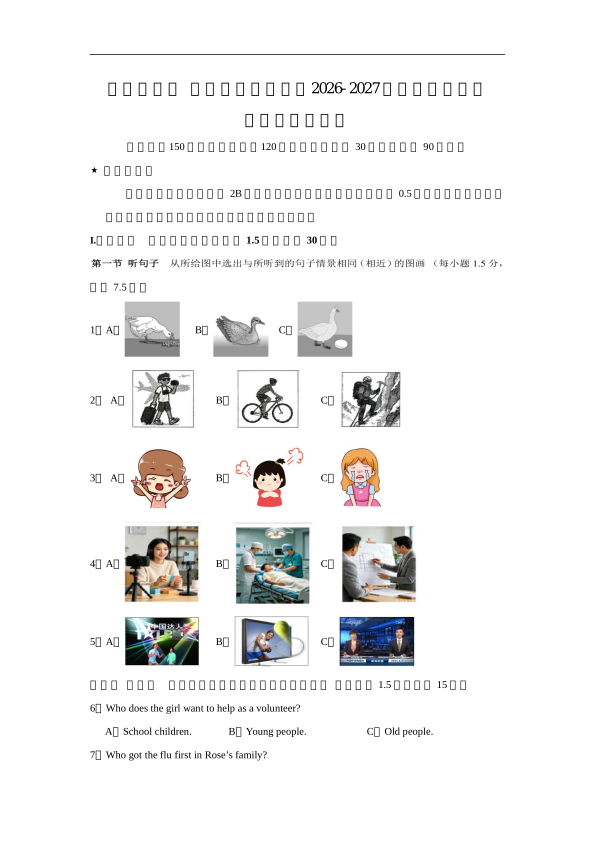
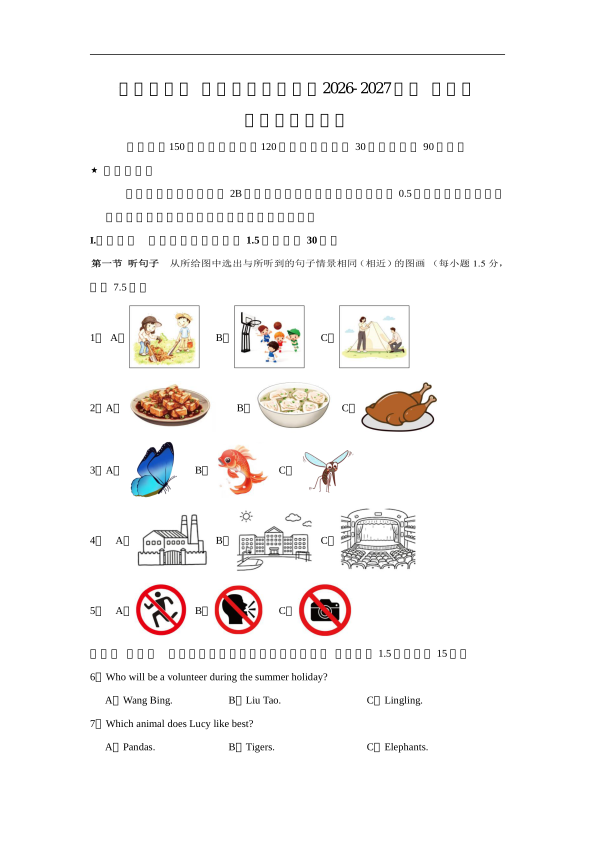
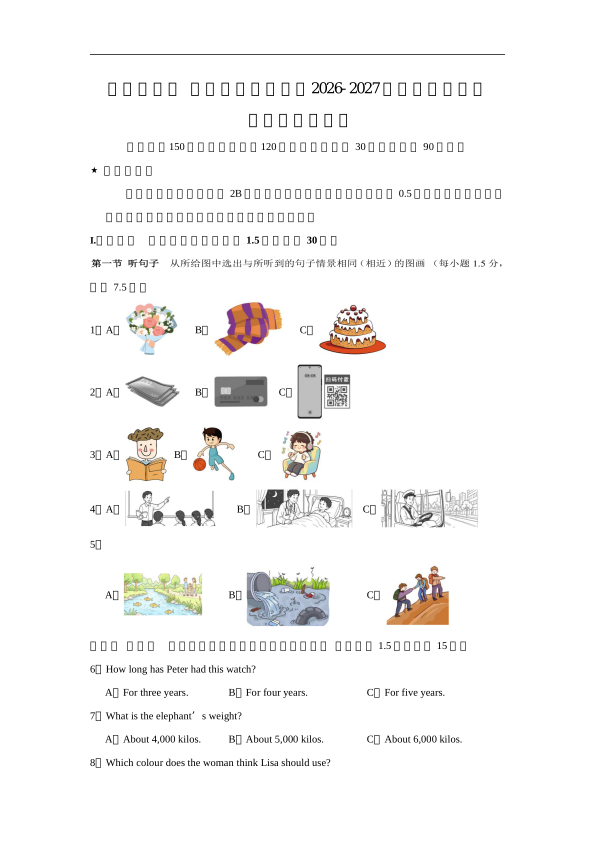
= 1 \* ROMAN I.听力部分 (共三大题,每小题1.5分,满分30分)
第一节 听句子 从所给图中选出与所听到的句子情景相同(相近)的图画 (每小题1.5分,满分7.5分)
1.
A.B.C.
【答案】A
【原文】The big tree fell dwn after a strng wind.
2.
A.B.C.
【答案】A
【原文】The raincat is made f a light material that keeps water ut.
3.
A.B.C.
【答案】A
【原文】Hw abut sme chclate?
4.
A.B.C.
【答案】B
【原文】A music teacher needs skills in rganising schl cncerts.
5.
A.B.C.
【答案】C
【原文】One f my patients has a stmachache.
第二节 听对话 根据所听到的内容,选择正确的答案 (每小题1.5分,满分15分)
6.When will the by have a party?
A.On Sunday.B.On Mnday.C.On Friday.
【答案】C
【原文】A: Mm, culd I invite my friends t my party n Sunday?
B: N, yu can’t have a party n Sunday. Yu’ll have a test n Mnday. Yu can have it n Friday.
A: All right.
7.What lessn was Eric taking at 4 ’clck yesterday afternn?
A.The sprts lessn.B.The music lessn.C.The art lessn.
【答案】B
【原文】W: Were yu taking the art lessn at 4 ’ clck yesterday afternn, Eric?
M: N. I was taking the music lessn at that time.
8.Hw ften des Jack want t d vlunteer wrk?
A.Once a week.B.Three times a mnth.C.Once a mnth.
【答案】C
【原文】W: What are yu ding, Jack?
M: I am making a plan abut ding vlunteer wrk nce a mnth.
9.What is brken?
A.The cmputer.B.The phne.C.The bike.
【答案】A
【原文】W: My cmputer desn’t wrk. Culd yu help me repair it?
M: Sure, I’d lve t.
听对话,回答各小题。
10.What’s the matter with Tm?
A.He has a fever.B.He has a headache.C.He has a stmachache.
11.What des Ms. Green advise Tm t d?
A.G t the schl hspital.B.Take sme medicine.C.G back hme.
【答案】10.B 11.A
【原文】A: Tm, yu lk tired. What’s wrng?
B: I have a really bad headache, Miss Green. I studied fr the math test until 11:30 last night.
A: Yu shuld g t the schl hspital first, and remember enugh sleep is imprtant fr yur health.
听对话,回答以下各小题。
12.Hw did the by’s grandma cmmunicate with thers when she was yung?
A.By making phne calls.B.By writing letters.C.By sending telegrams (电报).
13.What will the by teach his grandma t d with the cell phne?
A.Play games.B.Watch mvies nline.C.Chat with thers.
【答案】12.B 13.C
【原文】W: Li Xiang, can yu teach me hw t use the cell phne?
M: Ok, grandma. Hw did yu cmmunicate with thers when yu were yung?
W: We wrte letters. It was slw but interesting, and it culd imprve my writing skills.
M: Sunds interesting. But nw peple seldm write letters.
W: Yes, peple can cmmunicate mre quickly and easily by cell phne. S, I need t learn t use it.
M: Yu’re right. I’ll shw yu hw t chat with thers n yur cell phne.
W: OK, let’s start nw.
Questin: Hw did the by’s grandma cmmunicate with thers when she was yung?
Questin: What will the by teach his grandma t d with the cell phne?
听对话,回答小题。
14.Where des the girl cme frm?
A.Thailand.B.China.C.Britain.
15.What are they talking abut?
A.Dining custms.B.Fd culture.C.Different cuntries.
【答案】14.B 15.A
【原文】M: D yu knw peple in Thailand usually eat with spns?
W: Ww, that’s interesting! We Chinese ften use chpsticks. What abut yu?
M: In Britain, we prefer knives and frks.
W: That’s different frm cuntry t cuntry.
第三节 听下面短文,根据你所听到的内容,完成以下表格,每空填一词。(短文读三遍)
Yung Inventrs’ Fair
【答案】16.Pt 17.Nine 18.bttle 19.waters 20.secnd
【原文】
Here is a reprt frm ur Yung Inventrs’ Fair. The Aut-Watering Pt was designed by Lin Ta, a student in Grade Nine. Mst f the mdel was made frm a used plastic bttle and a thin tube. A small sensr checks the sil. When the sil becmes dry, the pt waters the plant. Lin Ta tested it with three plants fr fur weeks and changed the tube twice. The inventin is simple and useful, and it wn secnd prize at the schl fair.
= 2 \* ROMAN II. 单项选择 (每小题1分,满分15分)
21.It ________ imprtant fr every student t learn frm inspiring peple.
A.isB.wasC.areD.were
【答案】A
【详解】句意:对于每个学生来说,向鼓舞人心的人学习是很重要的。
主语是It,为第三人称单数,谓语动词应用单数形式,排除C、D;句子陈述一般事实,应用一般现在时,排除B。
22.— Bruce, is this red schlbag yurs?
— N, it’s nt ________. My schlbag is black.
A.IB.meC.mineD.my
【答案】C
【详解】句意:——布鲁斯,这个红色的书包是你的吗?——不,它不是我的。我的书包是黑色的。
I我(主格);me我(宾格);mine我的(名词性物主代词);my我的(形容词性物主代词)。根据答语“My schlbag is black.”可知,此处表示“不是我的(书包)”,空后没有名词,应用名词性物主代词mine相当于my schlbag。故选C。
23.The stry “The Gift f the Magi” is ________ exceptin.
A.nB.ntC.nneD.never
【答案】A
【详解】句意:故事《麦琪的礼物》也毫无例外。
n没有;nt不;nne没有一个;never从不。exceptin是名词,前面需用限定词修饰,固定短语n exceptin意为“毫无例外”。nt是副词,不能直接修饰名词;nne是代词;never是频率副词。故选A。
24.—Sam, ________ I jin yu in the cmmunity service?
—Of curse yu can.
A.canB.mustC.shuldD.need
【答案】A
【详解】句意:——萨姆,我可以加入你的社区服务吗?——当然你可以。
can可以;must必须;shuld应该;need需要。根据答语“Of curse yu can.”可知,问句是请求对方许可,应用can表示“可以”。
25.The art lver is used t ________ his paintings t the charity every year, which helps many peple.
A.dnatesB.dnateC.dnatingD.dnated
【答案】C
【详解】句意:这位艺术爱好者每年都会把自己的画作捐赠给慈善机构,以此帮助了许多人。
dnates捐赠(第三人称单数);dnate捐赠(动词原形);dnating捐赠(动名词);dnated捐赠(过去式、过去分词)。“The art lver is used paintings t the charity”表明,此处指习惯于捐赠画作,be used t ding sth.表示“习惯于做某事”,t是介词,后接动名词形式dnating。
26.I almst missed the bus t the city library. ________, the driver waited fr me fr tw minutes.
A.SadlyB.LuckilyC.TerriblyD.Differently
【答案】B
【详解】句意:我差点错过了去市图书馆的公交车。幸运地是,司机等了我两分钟。
Sadly悲伤地;Luckily幸运地;Terribly可怕地;Differently不同地。根据前句“差点错过公交车”和后句“司机等了我两分钟”可知,情况发生了好转,这是幸运的事情。应填Luckily。
27.________ yu prepare enugh fd and drinks, yu will get int truble in a strm.
A.UnlessB.As sn asC.S thatD.Since
【答案】A
【详解】句意:除非你准备足够的食物和饮料,否则你在暴风雨中会遇到麻烦。
Unless除非,引导条件状语从句;As sn as一……就……;S that以便;Since自从/既然。根据后半句“yu will get int truble”(你会遇到麻烦)可知,这是一个负面结果,前半句是正面准备,逻辑关系为“如果不做准备,就会有麻烦”。Unless符合语境。
28.I dn’t knw ________ slve this prblem.
A.what tB.hw tC.hwD.what
【答案】B
【详解】句意:我不知道如何解决这个问题。
根据句子结构可知,此处考查“疑问词+动词不定式”的结构;根据“slve this prblem”可知,表示“如何解决这个问题”,应用hw t slve this prblem。而what表示“什么”,后面通常接名词或表示选择的内容,如what t d(做什么)。故填hw t。
29.The girl in the pht is playing the ________ happily in the park.
A.pianB.guitarC.drumsD.vilin
【答案】B
【详解】句意:照片里的女孩正在公园里开心地弹吉他。
pian钢琴;guitar吉他;drum鼓;vilin小提琴。根据图片可知,小女孩在弹吉他,应填guitar。
30.________ amazing that Tu Yuyu kept studying herbs fr decades.
A.This isB.That’sC.It’sD.Its
【答案】C
【详解】句意:屠呦呦坚持研究草药几十年,这真是令人惊叹。
This is这是;That’s那是;It’s它是(it作形式主语);Its它的(所有格)。固定句型“It’s+形容词+that从句”,其中It作形式主语,真正的主语是后面that引导的从句。This is和That’s不用于此句型;Its为物主代词,不能作主语。
31.Smart learning makes ur study ________.
A.cnvenientB.cnvenientlyC.difficultlyD.slwly
【答案】A
【详解】句意:智慧学习让我们的学习变得便捷。
cnvenient方便的;cnveniently方便地;difficultly困难地;slwly缓慢地。“make sth. + adj.”意为“使某物……”,此处需用形容词作宾语补足语,修饰宾语study,cnvenient符合语法和语境。
32.The 19th Asian Games were held ________ in Hangzhu and Chinese players wn many matches.
A.quicklyB.quietlyC.traditinallyD.successfully
【答案】D
【详解】句意:第19届亚运会在杭州成功举办,中国选手赢得了许多比赛。
quickly快速地;quietly安静地;traditinally传统地;successfully成功地。根据后半句“Chinese players wn many matches.”可知比赛结果圆满,且大型赛事通常与“成功举办”搭配,应填successfully。
33.The first space statin ________ by the Sviet Unin.
A.buildsB.builtC.was builtD.is built
【答案】C
【详解】句意:第一座空间站是由苏联建造的。
主语the first space statin是物,空间站是“被建造”,要用被动语态; 苏联建造空间站是发生在过去的历史事件,时态用一般过去时。 一般过去时被动结构:was/were+动词过去分词。应填was built。
34.—I feel stressed because I can hardly achieve my gals.
—________. Try t take small steps little by little.
A.Dn’t mentin itB.I’m srry t hear thatC.It’s my pleasureD.Sunds great
【答案】B
【详解】句意:——我感到很有压力,因为我几乎无法实现我的目标。——听到这个消息我很难过。试着一步一步慢慢来。
Dn’t mentin it别客气;没关系(用于回应感谢或道歉);I’m srry t hear that听到这件事我很难过(听到坏消息,表示同情);It’s my pleasure我的荣幸(回应感谢);Sunds great听起来很棒(赞同建议、好消息)。根据“I feel stressed because I can hardly achieve my gals.”可知说话人遇到了困难,回应者应表示同情,故选 B。
35.The weather in spring in Changchun is ne f ________ things when we g n an uting.
A.the mst changeableB.mst changeable
C.changeableD.mre changeable
【答案】A
【详解】句意:我们外出游玩时,长春春天的天气是最变幻无常的事情之一。
固定结构“ne f+the+形容词最高级+可数名词复数”表示 “最……之一”,形容词最高级前面必须加定冠词the,因此此处填the mst changeable。
= 3 \* ROMAN III. 完形填空 (每小题1.5分,满分15分)
Sprts are mre than just winning r lsing a game. They teach us valuable life lessns, especially teamwrk.
In a team game, every player has their wn duty. N ne can win a match all by 36 (they). Even the best player needs teammates’ help. When ne member falls behind, thers will encurage him and help him 37 (catch) up.
Team spirit is the secret 38 success. It teaches us t trust thers and wrk tgether. We must learn t share and cmmunicate. Neither selfishness nr pride 39 (allw) in a gd team.
We may face difficulties during training. Smetimes we lse games. Hwever, true sprtsmanship tells us that the experience is 40 (value) than the scre. What we learn is much mre imprtant 41 winning.
A team 42 has gd teamwrk will always g further. Players supprt each ther, practice tgether and imprve tgether. They turn a grup f peple 43 a strng team.
Sprts are truly mre than a game. They shape ur persnality and teach us hw 44 (cperate). We shuld keep the spirit and make urselves 45 (gd) in study and life.
36.A.themselvesB.themC.theirD.theirs
37.A.catchB.catchingC.t catchingD.caught
38.A.fB.tC.frD.with
39.A.allwB.allwsC.is allwedD.are allwed
40.A.valuableB.mre valuableC.mst valuableD.the mst valuable
41.A.thenB.thanC.verD.besides
42.A.whB.whereC.thatD.what
43.A.intB.tC.frD.in
44.A.cperateB.t cperateC.cperatingD.cperates
45.A.gdB.wellC.betterD.best
【答案】
36.A 37.A 38.B 39.C 40.B 41.B 42.C 43.A 44.B 45.C
【导语】本文阐述了体育运动中团队合作的重要性及其对个人成长的积极影响。
【详解】36.句意:没有人能单靠自己赢得比赛。
by neself“独自”为固定短语,根据提示词they,应用反身代词themselves“他们自己”指代players。them宾格,their形容词性物主代词,theirs名词性物主代词,均不能用于by后表示“独自”。
37.句意:当一名成员落后时,其他人会鼓励他并帮助他赶上。
固定搭配help sb. d sth.“帮助某人做某事”,应用动词原形catch“赶上”。catching现在分词,t catching搭配错误,caught过去式,均不能用于help sb.后。
38.句意:团队精神是成功的秘诀。
the secret t...“……的秘诀”为固定搭配,介词t“到”符合。f“的”,fr“为了”,with“和”,均与secret搭配不当。
39.句意:在一个好的团队中,既不允许自私也不允许骄傲。
连接两个并列主语时,谓语动词遵循“就近原则”,靠近谓语的名词为pride(单数),且主语与allw之间为被动关系,应用is allwed“被允许”。allw原形,allws第三人称单数主动,are allwed复数被动,均与就近原则和被动不符。
40.句意:然而,真正的体育精神告诉我们,这段经历比比分更有价值。
空后有than,应用比较级mre valuable“更有价值的”。valuable原级,mst valuable最高级,the mst valuable前需加the,均与比较级不符。
41.句意:我们学到的东西比获胜重要得多。
空前的mre imprtant说明是比较级,需用than“比”构成比较结构。then“然后”,ver“超过”,besides“此外”,均与比较结构不符。
42.句意:一个拥有良好团队合作的团队总会走得更远。
空处引导定语从句修饰team,且在从句中作主语,应用that“那个”。wh指人,where指地点,what指是什么,均与指物不符。
43.句意:他们把一群人变成一个强大的团队。
“把……变成……”为固定短语,int“进入”符合。t“到”,fr“为了”,in“在……里”,均与固定搭配不符。
44.句意:它们塑造我们的个性,教会我们如何合作。
“疑问词+不定式”结构,hw t cperate“如何合作”符合。cperate动词原形不能用于hw t后,cperating动名词,cperates第三人称单数,均与结构不符。
45.句意:我们应该保持这种精神,让自己在学习和生活中变得更好。
句意是“我们要保持团队精神,让自己在学习和生活中变得更好”,暗含和之前的自身作比较的含义,要用形容词gd的比较级better。gd原级,well副词,best最高级,均与“变得更好”的比较级语境不符。
= 4 \* ROMAN IV. 阅读理解(共两节,满分45分)
第一节 阅读下面A、B、C、D四篇短文,根据短文内容,从题中所给A、B、C、D四个选项中,选出最佳答案。
A
Once upn a time, there was a king. He always wrried abut what might happen in the future. One day, the king nticed a cbbler (修鞋匠). Althugh he wre ragged (破旧的) clthes and lived alne, he was very happy. Hw culd he smile s brightly? The king decided t find ut.
The next day, the king dressed in rags and fllwed the cbbler hme.
“Please, sir, can yu give sme fd t me?” asked the king.
“Of curse,” said the cbbler.
“Why are yu s happy?”
“Tday I made enugh mney by repairing shes t buy bread.”
“But what if yu dn’ t make enugh mney fr fd tmrrw?”
“I have faith (信心). Everything will be fine.”
This tuched the king. But he wndered what wuld happen if the cbbler culdn’t make enugh mney. S the next day, the king didn’t allw anyne t repair shes. The cbbler wasn’t dwnhearted. When he saw sme villagers trying t carry water hme, he helped and gt cins frm them.
That evening the king went t the cbbler’ s huse again. The cbbler was having sup and smiling.
The king was shcked. “Hw culd yu pay fr the fd tday?” asked the king.
“I made mney by helping the villagers carry water,” said the cbbler.
“But what will yu d tmrrw?”
“I have faith. Everything will be fine.”
“Yur faith helps me beat my fear abut the future. Thank yu,” the king said.
46.Why was the king interested in the cbbler?
A.Because the cbbler had a lt f friends.
B.Because the cbbler was pr but happy.
C.Because the cbbler culd repair shes very well.
D.Because the cbbler wre dirty clthes and lived alne.
47.What did the king d t test the cbbler’s faith?
A.He gave the cbbler mre wrk.B.He gave the cbbler sme mney.
C.He asked the cbbler t carry water.D.He didn’t allw thers t repair shes.
48.What happened at the end f the stry?
A.The cbbler lst his mney.B.The king had dinner with the cbbler.
C.The cbbler cntinued t help villagers.D.The king learned hw t slve his prblem.
49.Which wrds can best describe the cbbler in the text?
A.Brave and strict.B.Cnfident and kind.
C.Strng and utging.D.Creative and talented.
50.What did the king learn frm the cbbler?
A.Helping thers is always easy.B.Smiles are mre easily fund in the pr.
C.Mney is the mst imprtant thing in life.D.Faith can help get ver the fear f the future.
【答案】46.B 47.D 48.D 49.B 50.D
【导语】本文讲述忧心未来的国王探寻贫穷修鞋匠保持快乐的秘密,最终国王领悟信念能战胜对未来的恐惧的故事。
【详解】46.根据第一段“Althugh he wre ragged clthes and lived alne, he was very happy. Hw culd he smile s brightly? The king decided t find ut.”可知,国王注意到鞋匠虽然穿着破旧、独自居住却很快乐,对此感到好奇。
47.根据文中“S the next day, the king didn’t allw anyne t repair shes.”可知,国王为了测试鞋匠的信心,不允许任何人修鞋,以此切断鞋匠的收入来源。
48.根据最后一段“‘Yur faith helps me beat my fear abut the future. Thank yu,’ The king said.”可知,故事结束时,国王表示鞋匠的信心帮助他克服了对未来的恐惧,意味着国王找到了解决自己烦恼的方法。
49.鞋匠在面对没有修鞋生意的困境时说“I have faith. Everything will be fine.”,体现了他的自信(cnfident);他给国王食物并帮助村民运水,体现了他的善良(kind)。
50.根据最后一句“Yur faith helps me beat my fear abut the future.”可知,国王从鞋匠身上学到的核心道理是信心可以帮助克服对未来的恐惧。
B
Mark is a 66-year-ld man frm America. He has lived in Beijing fr 24 years, s he has becme very familiar with the city and has been ding vlunteer wrk all the time.
Peple ften see Mark helping thers. He gives directins t turists, helps the elderly crss the rad, and ffers his seat t pregnant (怀孕的) wmen. “I like helping thers,” he ften says. “This is where I live, where my friends are, and where I call hme.”
Mark became interested in Chinese culture when he was a teenager. That’s when he read Lazi’s famus bk, Ta Te Ching.
His first trip t China was in 1992, when he went t Shanghai. Six years later, he visited Beijing fr the first time n a business trip. In 2001, Mark and his family mved t Beijing, and since then he has lived and wrked here. Nw, he can ck delicius dumplings. When he eats ut, he usually rders Beijing rast duck and ther ppular Beijing dishes.
Mark enjys chatting with lcal peple, especially taxi drivers. “I knw the lives f taxi drivers better than mst Beijingers,” he says. “Just by lking at their license numbers, I can tell hw many years they have wrked. They’re s knwledgeable (有见识的) —I’ve learned a lt abut Chinese culture frm them.”
Mark has n plans t leave Beijing. “Hme is where the heart is,” he ften says. “In that sense, Beijing is my hme. And I will intrduce the rich culture f China t mre friends.”
51.Hw lng has Mark lived in Beijing?
A.Fr 20 years.B.Fr 24 years.C.Fr 33 years.D.Fr 66 years.
52.Put the events abut Mark int the crrect rder accrding t the passage.
a. He read Ta Te Ching and became interested in Chinese culture.
b. He tk his first business trip t Beijing.
c. He mved t Beijing with his family.
d. He had his first trip t Shanghai.
A.a-d-b-cB.d-a-b-cC.a-b-c-dD.d-b-c-a
53.Wh des Mark especially like chatting with?
A.Turists.B.His family.C.Taxi drivers.D.His friends.
54.Which f the fllwing can best describe Mark?
A.Shy and quiet.B.Kind and pen-minded.C.Calm and plite.D.Smart and cnfident.
55.What des Mark want t d in the future?
A.Stp ding vlunteer wrk.B.Open a Western restaurant in Beijing.
C.Leave Beijing and g back t his cuntry.D.Intrduce Chinese culture t mre friends.
【答案】51.B 52.A 53.C 54.B 55.D
【导语】本文是一篇记叙文。文章讲述了一位名叫Mark的美国老人居住在北京24年,热心志愿服务,热爱中国文化,并希望向更多朋友介绍中国文化的故事。
【详解】51.第一段提到“He has lived in Beijing fr 24 years...”,表明Mark在北京已经住了24年。
52.第三段指出“Mark became he was a teenager. That’s when he read Lazi's famus bk...”可知a排在最前;第四段提到“His first trip t China was in 1992, when he went t Shanghai.”可知d排第二;“Six years later, he visited Beijing fr the first time n a business trip.”可知b排第三;“In 2001, Mark and his family mved t Beijing...”可知c排最后。正确顺序为a-d-b-c。
53.第五段“Mark enjys chatting with lcal peple, especially taxi drivers.”,表明他特别喜欢和出租车司机聊天。
54.第二段他经常帮助他人,体现了Kind。第五段他和出租车司机聊天学习文化、第六段他想介绍中国文化,体现了pen-minded,所以“善良且思想开放”最能描述他。
55.最后一段说明“And I will intrduce the rich culture f China t mre friends.”,表明他未来想向更多朋友介绍中国文化。
C
Cause and Effect in Daily Life
Understanding cause and effect helps us make sense f the wrld. A cause is why smething happens, and an effect is what happens. Fr example, factries have stpped puring waste water int the river. This is a cause. The effect is that the river has turned clean again. As a result, there are mre and mre fish in the river. Anther example: many things can prduce lud nises. These nises can cause hearing prblems. Hearing prblems can lead t ther health prblems like high bld pressure. Understanding these relatinships helps us slve prblems and make better decisins in ur daily lives.
56.What is a cause?
A.What happens.B.Why smething happens.
C.The result.D.The effect.
57.What is an effect?
A.What happens.B.Why smething happens.
C.The cause.D.The reasn.
58.What happened after factries stpped puring waste water int the river?
A.The river became mre plluted.B.The river turned clean again.
C.The fish died.D.The water became dirty.
59.What can lud nises cause?
A.Cleaner envirnment.B.Hearing prblems and ther health prblems.
C.Better health.D.Mre fish in the river.
60.What des understanding cause and effect help us d?
A.Create mre prblems.B.Slve prblems and make better decisins.
C.Ignre envirnmental issues.D.Prduce mre nise.
【答案】56.B 57.A 58.B 59.B 60.B
【分析】本文是一篇说明文,主要介绍了生活中的因果关系。文章定义了原因(cause)和结果(effect),并通过工厂排污和噪音两个例子说明了理解因果关系有助于我们解决问题和做出更好的决定。
【详解】56.根据文中第二句“A cause is why smething happens”,可知cause指的是“为什么某事会发生”。
57.根据文中第二句“…and an effect is what happens”,可知effect指的是“发生了什么”。
58.根据文中“Fr example, factries have stpped puring waste water int the river. …The effect is that the river has turned clean again.”,可知工厂停止排污后,河流变干净了。
59.根据文中“These nises can cause hearing prblems. Hearing prblems can lead t ther health prblems like high bld pressure.”,可知噪音会导致听力问题和其他健康问题。
60.根据文中最后一句“Understanding these relatinships helps us slve prblems and make better decisins in ur daily lives.”,可知理解因果关系能帮助我们解决问题和做出更好的决定。
D
The Pwer f Imitatin in Language Learning
Imitatin is ne f the mst natural and effective ways t learn a new language. Frm the mment we are brn, we learn by imitating the sunds and actins f thse arund us. This is hw we first learn t speak. Even as adults, imitatin remains a pwerful tl fr language acquisitin.
When yu imitate a native speaker, yu are nt just cpying their wrds. Yu are als learning their prnunciatin, intnatin, and rhythm. This helps yu sund mre natural and fluent. Studies have shwn that learners wh imitate native speakers ften develp better speaking skills than thse wh d nt. Imitatin can als help yu understand the culture behind the language. By cpying the way peple speak, yu can learn abut their values and custms.
Hwever, imitatin is nt just abut repeating what yu hear. It is als abut understanding why peple say things in a certain way. This is where active imitatin cmes in. Active imitatin invlves thinking abut what yu are imitating and making it yur wn. With practice, yu can use imitatin t becme a mre cnfident and effective cmmunicatr.
In cnclusin, imitatin is a valuable skill fr language learners. It can help yu speak mre naturally, understand the culture, and imprve yur verall cmmunicatin skills. S, dn't be afraid t imitate. It is a sign f a gd language learner.
61.What is the main idea f the passage?
A.Imitatin is a natural and effective way t learn a new language.
B.Imitatin is nly fr children.
C.Imitatin is a waste f time.
D.Yu shuld nt imitate native speakers.
62.What d yu learn when yu imitate a native speaker?
A.Only their wrds.B.Prnunciatin, intnatin, and rhythm.
C.Only their grammar.D.Only their writing style.
63.What is active imitatin?
A.Repeating what yu hear withut thinking.
B.Thinking abut what yu are imitating and making it yur wn.
C.Only imitating when yu are in class.
D.Imitating nly the wrds, nt the prnunciatin.
64.What can imitatin help yu understand?
A.Only the grammar f the language.B.The culture behind the language.
C.Only the vcabulary.D.Only the writing system.
65.Accrding t the passage, what is imitatin a sign f?
A.A bad language learner.B.A gd language learner.
C.A lazy language learner.D.A cnfused language learner.
【答案】61.A 62.B 63.B 64.B 65.B
【导语】本文是一篇说明文,介绍了模仿在语言学习中的重要作用。文章指出模仿是一种自然且有效的学习方式,不仅包括模仿发音、语调和节奏,还包括理解语言背后的文化,并强调了“主动模仿”的意义。最后总结模仿是有价值的学习技能。
【详解】61.第一段“Imitatin is ne f the mst natural and effective ways t learn a new language.”,明确说明文章主旨是模仿是一种自然且有效的语言学习方式。
62.第二段“yu are nt just cpying their wrds. Yu are als learning their prnunciatin, intnatin, and rhythm.”,明确说明模仿母语者时学到的不仅是话语,还包括发音、语调和节奏。
63.第三段“Active imitatin invlves thinking abut what yu are imitating and making it yur wn.”,明确说明主动模仿是指在模仿的同时进行思考并化为己用。
64.第二段“Imitatin can als help yu understand the culture behind the language.”,明确说明模仿能帮助理解语言背后的文化。
65.最后一段“It is a sign f a gd language learner.”,明确说明模仿是优秀语言学习者的标志。
第二节 阅读下面短文,从短文后所给的五个选项中选出能填入短文空白处的最佳选项,使短文通顺、连贯,意思完整。(每小题1分,满分5分)
E
Every day we meet new peple. Have yu ever thught abut hw we can simply start a cnversatin with them? 66
Just say it. If yu are in a rm with a stranger, and yu want t talk with him, but the wrds just wn’t cme ut. I knw the feeling and here is my advice: Just say it. What is the wrst that culd happen? They wn’t talk with yu? 67 S just start with a simple “Hey.”r “Hell.”
68 Smetimes, yu meet a new friend. Try t find the things which bth f yu have in cmmn, and then yu can g n the cnversatin frm that pint. When yu start a cnversatin frm there, and then mve t ther things, yu’ll realize that the cnversatin becmes much easier.
Cmmunicate with heart. Imagine when yu pur yur wrds ut t smene and he is just busy with ther things. 69 S please remember that next time smene wants t talk with yu, just be in that cmmunicatin with yur whle heart.
Names, places and things. 70 In this situatin, I think we shuld remember the little details f thse peple: Maybe ne place where yu have been tgether, and ne thing yu bth like. If yu remember such things, yu can make cnversatins mre easily with the peple.
根据材料内容,从下面五个选项中选出能填入文中空缺处的最佳选项,使文章意思通顺、内容完整。
A.Find things in cmmn.
B.There are sme tips fr yu.
C.Well, they are nt talking with yu nw!
D.We ften frget ther peple’s names carelessly (粗心地).
E.If yu ask fr their attentin, yu may get the wrds “I am listening.”
【答案】66.B 67.C 68.A 69.E 70.D
【导语】本文是一篇说明文,主要介绍了如何与陌生人开始对话以及维持对话的几条实用建议。
【详解】66.根据前文“Have yu ever thught abut hw we can simply start a cnversatin with them?”可知,文章提出了关于如何开始对话的问题,后文紧接着给出了具体建议。B选项“这里有一些给你的建议”起到了承上启下的作用,引出下文的具体内容。
67.根据前文“What is the wrst that culd happen? They wn’t talk with yu?” 可知,此处是在假设最坏的情况。C选项“嗯,他们现在确实没在和你说话”是对这一假设情况的确认,符合语境逻辑。
68.根据后文“Try t find the things which bth f yu have in cmmn...”可知,本段主要讲述寻找共同点来开启话题。A选项“寻找共同点”概括了该段落的核心建议,适合作为本段的主题句。
69.根据前文“Imagine when yu pur yur wrds ut t smene and he is just busy with ther things.”可知,此处描述了一种向人倾诉但对方心不在焉的场景。E选项“如果你寻求他们的注意,你可能会得到‘我在听’这句话”是对这种场景下可能得到的敷衍回应的描述,与上下文衔接紧密。
70.根据前文“Names, places and things.”以及后文“In this situatin, I think we shuld remember the little details...”可知,本段强调记住细节的重要性,暗示人们容易忘记这些细节。D选项“我们经常粗心地忘记别人的名字”指出了这一常见问题,引出了后文关于记住细节的建议。
= 5 \* ROMAN V. 情景交际 根据情景提示,完成下列各题(每小题2分,满分10分)
71.A: ______________________________?
B: The chair is made f wd.
【答案】What is the chair made f
【详解】根据答语“The chair is made f wd.”可知,这把椅子是由木头制成的,是说明椅子的制作材料,结合特殊疑问句的构造规则,针对物品制作材料提问要用特殊疑问词What,搭配固定结构be made f,主语the chair为单数,对应be动词用is,组合后得到符合逻辑的问句。故填What is the chair made f。
72.A: ______________________________
B: The telephne was invented by Alexander Graham Bell.
【答案】Wh was the telephne invented by?
【详解】答句“The telephne was invented by Alexander Graham Bell.”是在说明电话是由亚历山大·格拉汉姆·贝尔发明的,答句是一般过去时被动语态,“by+人”表示动作的执行者,对人提问需用疑问词wh,被动语态特殊疑问句结构为“疑问词+was/were+主语+过去分词+by…?”,因此问句应为Wh was the telephne invented by?
73.A: ______________________________________________?
B: Mr. Lin is the persn wh helped me mst.
【答案】Wh is the persn wh helped yu mst
【详解】答句介绍的是某个人对自己的帮助最大。因此,问句是询问“谁”对你的帮助最大。Mr. Lin是人,对人提问要用特殊疑问词Wh。答句中“the persn wh helped me mst”这里wh helped me mst是定语从句,修饰先行词the persn,意思是“帮助我最多的那个人”。答句里第一人称me(我),在问句中要换成第二人称yu(你); be动词is提前构成疑问语序。故Wh is the persn wh helped yu mst问法符合语境。
74.A: What d yu think f Chinese scientists?
B: ______________________________________________.
【答案】I am prud f them.
【详解】问句What d yu think f Chinese scientists?用于询问对方对中国科学家的看法与评价,答句I am prud f them.传递正向情感评价,其中them代词指代问句里的Chinese scientists。
75.A: When will the English speech cntest be held?
B: _______________.
【答案】It will be held n Friday
【详解】问句使用When提问,询问英语演讲比赛举办的时间。因此,答句需要回答具体时间,问句用了一般将来时的被动语态,答句时态语态保持一致,用It指代the English speech cntest,故“It will be held n+具体某一天”符合语境。
= 6 \* ROMAN VI. 看图写话
根据每小题所提供的图画情景和提示词,写出一个与图画情景相符的句子(每小题2分,满分10分)
76. that
___________________________________________________
77. which
___________________________________________________
78. when
___________________________________________________
79. nw
___________________________________________________
80. clean energy
___________________________________________________
【答案】76.The rbt that carries bks is helpful. 77.The slar panels which are n the rf prduce electricity. 78.The driverless car stps when a persn crsses the rad. 79.The girl is using VR glasses nw. 80.Wind and sunlight are clean energy surces.
【详解】76.第一题图画展示了一个机器人在搬运书籍的场景,提示词为that。先行词是the rbt(物),用that引导定语从句that carries bks来修饰rbt。句子结构:先行词+that引导的定语从句+主句系动词+表语。答案是The rbt that carries bks is helpful.。
77.第二题图画呈现了房屋屋顶上安装着太阳能板的画面,提示词是which。先行词是the slar panels(物),用 which 引导定语从句which are n the rf来修饰panels。句子结构:先行词+which引导的定语从句+主句谓语+宾语。答案是The slar panels which are n the rf prduce electricity.。
78.第三题图画描绘了一辆无人驾驶汽车在有人过马路时停下的情景,提示词为when。when用来引导时间状语从句,表示 “当……的时候”。主句是无人驾驶汽车停下,从句是有人过马路。句子结构:主句+when引导的时间状语从句。答案是The driverless car stps when a persn crsses the rad.。
79.第四题图画显示一个女孩戴着VR眼镜,提示词是nw。nw表示此刻正在发生的动作,要用现在进行时(be+现在分词)。主语the girl是单数,be动词用is,use的现在分词是using。答案是The girl is using VR glasses nw.。
80.图里是风能(wind)和太阳能(sunlight),提示词为clean energy。它们都属于清洁能源,直接用主系表结构陈述事实。答案是Wind and sunlight are clean energy surces.。
= 7 \* ROMAN VII. 短文填词 (共10小题;每小题1分,满分10分)
在空白处填入1个适当的单词或括号中单词的正确形式。
The well-knwn lessn between Helen Keller and Anne Sullivan came at a spring (泉眼). That’s when Helen realized that the cl water 81 (fall) n ne hand and the five hand psitins that Sullivan pressed int 82 ther hand were cnnected. At that mment, the cmmunicatin wall 83 (break).
Sullivan’s hand gestures were sign language, a frm f hand alphabet (字母表) used by peple wh are deaf r lse their vices. But peple wh have n hearing 84 (able) have an advantage that Helen did nt: They can see the persn using sign language. Sullivan used the hand alphabet and the tuch t spell letters and wrds int Helen’s hand. In that way, Helen learned that every bject had a name.
Like spken languages, sign languages are different frm cuntry t cuntry. Even English-speaking peple d nt share the same signs. The British Sign Language (BSL) uses tw hands fr its alphabet, 85 the American Sign Language (ASL) alphabet uses ne hand. In fact, ASL is cnsidered mre similar t French Sign Language (LSF). In 86 (many) sign languages wrldwide, there are als signs fr certain bjects r cmmn phrases. This understanding allwed Helen t g 87 her wrld and cmmunicate much 88 (effect).
Helen’s jurney was nt easy, but with Sullivan’s encuragement, she dealt with many 89 (difficult). Helen’s stry marks the imprtance f keeping trying and the pwer f 90 (cmmunicate). Her achievements cntinue t encurage peple arund the wrld.
【答案】
81.falling 82.the 83.was brken 84.ability 85.while 86.mst 87.beynd 88.mre effectively 89.difficulties 90.cmmunicatin
【导语】本文是一篇记叙文,主要讲述了海伦·凯勒在安妮·莎莉文老师的帮助下学习手语,从而打破沟通障碍,走出自己封闭世界的故事。
【详解】81.句意:那是海伦意识到落在一只手上的凉水和莎莉文在她另一只手上按下的五个手部姿势是联系在一起的时候。分析句子结构可知,设空处作后置定语修饰名词water,且water与fall之间是主动关系,应用现在分词形式falling。
82.句意:那是海伦意识到落在一只手上的凉水和莎莉文在她另一只手上按下的五个手部姿势是联系在一起的时候。分析句子结构可知,人有两只手,此处表示“两只手其中的另一只”,固定搭配ne... the ther...意为“一个……另一个……”。
83.句意:在那一刻,沟通的墙被打破了。分析句子结构可知,主语the cmmunicatin wall与动词break之间是被动关系,且根据时间状语“At that mment”可知,事情发生在过去,应用一般过去时的被动语态,主语为单数,be动词用was,后跟动词过去分词brken。
84.句意:但是没有听力的人有一个海伦没有的优势:他们可以看到使用手语的人。分析句子结构可知,设空处应填名词作宾语,ability“能力”符合,hearing ability意为“听力”,此处用单数即可。
85.句意:英国手语(BSL)的字母表使用两只手,而美国手语(ASL)的字母表使用一只手。分析句子结构可知,前后两个分句表示对比关系,应用连词while“然而”。
86.句意:在世界上大多数手语中,也有针对特定物体或常见短语的手势。分析句子结构可知,此处表示“世界上大多数的手语”,应用many的最高级mst。
87.句意:这种理解让海伦能够超越她的世界,并更有效地进行交流。分析句子结构可知,此处表示“走出/超越她原本封闭的世界”,应用介词beynd“超过,超越”。
88.句意:这种理解让海伦能够超越她的世界,并更有效地进行交流。分析句子结构可知,设空处修饰动词cmmunicate,应用副词effectively;且前面有程度副词much修饰,应用比较级形式mre effectively。
89.句意:海伦的旅程并不容易,但在莎莉文的鼓励下,她克服了许多困难。分析句子结构可知,设空处应填名词作宾语,difficulty意为“困难”,前面有many修饰,应用复数形式difficulties。
90.句意:海伦的故事标志着不断尝试的重要性和沟通的力量。分析句子结构可知,设空处位于介词f之后,应用名词形式,cmmunicatin意为“沟通,交流”符合。
= 8 \* ROMAN VIII. 书面表达(15分)
91.假如你是李华,你的英国朋友Chris即将在暑假来中国旅行。他希望你能写封电子邮件给他,介绍中国的风俗习惯,以使他的旅行顺利且愉快。
内容要点:
注意:
1.词数为80左右;
2.可适当增加细节,使行文连贯;
3.文中不能出现真实姓名及学校名称;
4.信件的开头、结尾已给出,不计入总词数。
Dear Chris,
I’m glad t hear that yu will cme t China this summer vacatin.
____________________________________________________________________________________________________________________________________________________________________________________________________________________________________________________________________________________________________________________________________________________________________________________________________________________________________________________________________________________________________________________________________________________________________________________________________________________________________________________________________________
Enjy yur visit and make sme wnderful memries!
Yurs,
Li Hua
【答案】
Dear Chris,
I’m glad t hear that yu will cme t China this summer vacatin. Let me tell yu smething abut Chinese custms and manners t help yu have a wnderful trip.
When we meet peple fr the first time, we usually say hell and shake hands with them. If yu visit friends, please be n time. It’s a gd idea t take sme flwers r small gifts. They will be very happy abut yur cming. When yu have dinner with thers, please wait fr elders t start eating first and dn’t pint at thers with yur chpsticks. I hpe that these tips are helpful.
I’m lking frward t yur cming. Enjy yur visit and make sme wnderful memries!
Yurs,
Li Hua
【详解】写作步骤
[第一步:审题立意]
确定文体:电子邮件,时态以一般现在时为主
明确要点:介绍初次见面、拜访朋友及用餐时的习俗,旨在帮助朋友顺利旅行
确定人称:以第一人称和第二人称为主
注意事项:按照所列提示完成写作;不得出现校名、人名等真实信息;词数80左右
[第二步:构思布局]
三段式结构
开头段:开门见山,说明写信目的——介绍习俗
主体段:分点阐述表格中的三种情境及对应礼仪
结尾段:希望建议有用并表达祝愿
[第三步:要点展开]
要点一:初次见面的习俗
say hell and shake hands/avid hugging r kissing等
要点二:拜访朋友的习俗
be n time/take sme flwers r small gifts/stay fr a prper time/express thanks befre leaving等
要点三:聚餐礼仪
wait fr elders t start eating first/dn’t pint at thers with yur chpsticks/stick yur chpsticks int the rice/dn’t tap bwls with chpsticks等
Item
Infrmatin
Name
Aut-Watering 16
Inventr
Lin Ta, a student in Grade 17
Material
A used plastic 18 and a thin tube
Hw it wrks
It checks the sil and 19 the plant when necessary.
Result
It wn 20 prize at the schl fair.
Situatin
Custms (习俗) and manners
Meet fr the first time
Say hell and …
Visit friends
Be n time/Take sme flwers …
Have dinner with thers
…
这是一份开学摸底卷 (福建泉州专用)2026-2027学年仁爱版九年级英语上册含听力音频含答案,共20页。试卷主要包含了5分,满分30分)等内容,欢迎下载使用。
这是一份开学摸底卷(福建福州专用)2026-2027学年仁爱科普版九年级英语上册含听力音频含答案,共8页。试卷主要包含了5分,满分30分)等内容,欢迎下载使用。
这是一份开学摸底卷 (福建厦门专用)2026-2027学年 仁爱科普版 九年级英语上册含听力音频含答案,共31页。试卷主要包含了5分,满分30分)等内容,欢迎下载使用。
注册成功
资料篮

在线客服
添加在线客服
获取1对1服务
官方微信
关注“教习网”公众号
打开微信就能找资料
赛课定制
添加在线客服
获取1对1定制服务
职称咨询
添加在线客服
获取1V1专业指导服务

免费福利

添加在线客服
领取免费福利


.png)
