免费领取教师福利

若您为此资料的原创作者,认为该资料内容侵犯了您的知识产权,请扫码添加我们的相关工作人员,我们尽可能的保护您的合法权益。


这是一份2026年秋人教版新教材九年级上册英语期中质量评价试卷(含答案),共9页。
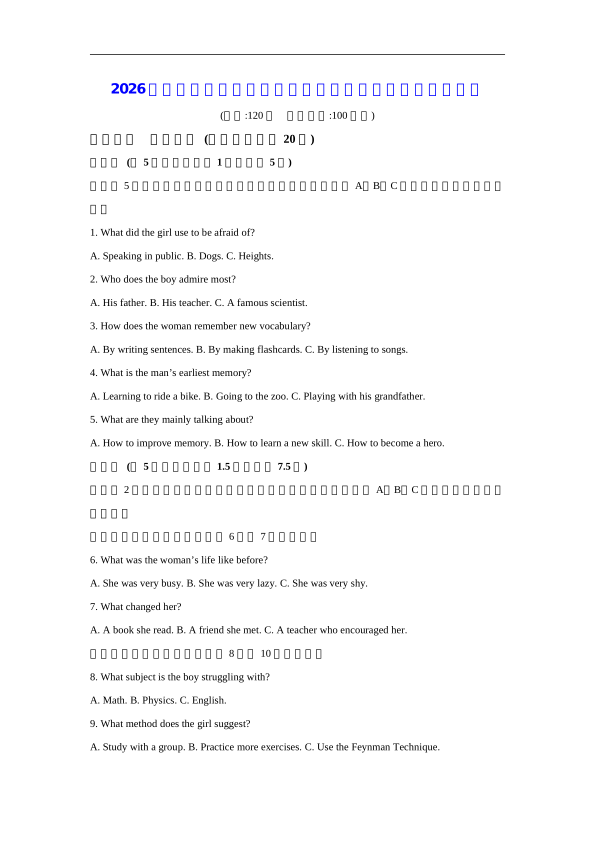
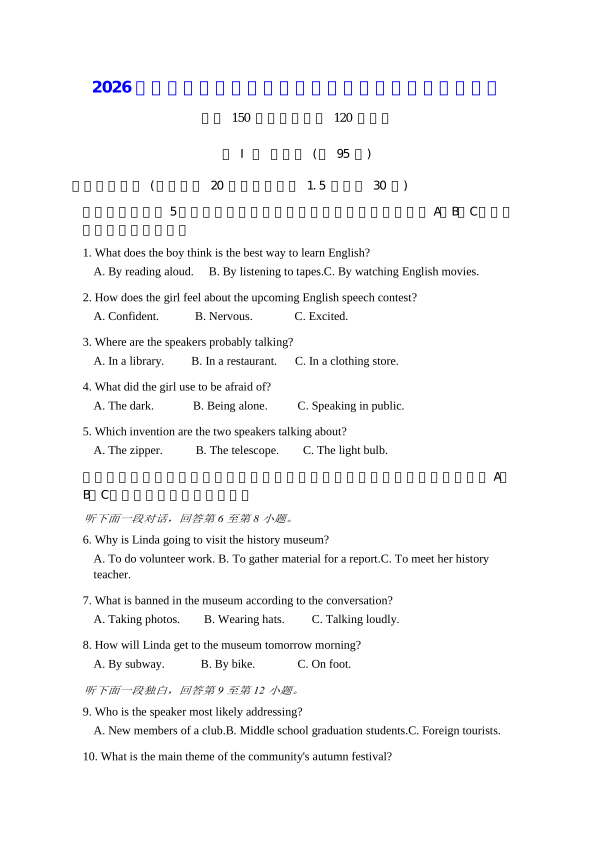
第一部分 听力理解 (共三节,满分20分)
第一节 (共5小题,每小题1分,满分5分)
听下面5段对话。每段对话后有一个小题,从题中所给的A、B、C三个选项中选出最佳选项。
1. What des the wman say abut true learning?
A. It is abut memrizing facts. B. It is abut challenging existing beliefs.
C. It is abut repeating infrmatin.
2. What des the man’s her teach him?
A. That success cmes frm luck. B. That character is mre imprtant than achievement. C. That fame is the ultimate gal.
3. What is the wman’s apprach t prblem-slving?
A. She avids prblems at all csts. B. She sees prblems as pprtunities t learn.
C. She relies n thers t slve them.
4. What is the man’s view n frgetting?
A. It is a malfunctin f the brain. B. It is a necessary part f learning.
C. It shuld be prevented with technlgy.
5. What are they mainly discussing?
A. Hw persnal grwth requires discmfrt. B. Hw t avid making mistakes.
C. Hw t becme famus quickly.
第二节 (共5小题,每小题1.5分,满分7.5分)
听下面2段较长对话。每段对话后有几个小题,从题中所给的A、B、C三个选项中选出最佳选项。
听下面一段较长对话,回答第6和第7两个小题。
6. What was the man’s life like befre?
A. He was highly successful. B. He felt aimless and unsatisfied.
C. He was always happy.
7. What changed his perspective?
A. A bk he read. B. A cnversatin with a friend. C. A vlunteer experience.
听下面一段较长对话,回答第8至第10三个小题。
8. What is the girl’s main difficulty?
A. She desn’t have enugh time t study. B. She can’t remember what she studies.
C. She finds the material t bring.
9. What des the by suggest she d?
A. Use visual aids like mind maps. B. Study with a grup every day.
C. Read the textbk repeatedly.
10. What des the girl decide t try?
A. The by’s suggested technique. B. A cmpletely different methd.
C. Giving up n the subject.
第三节 (共5小题,每小题1.5分,满分7.5分)
听下面一段独白,独白后有5个小题,从题中所给的A、B、C三个选项中选出最佳选项。
11. What is the speaker’s prfessin?
A. A histrian. B. A philspher. C. A neurscientist.
12. What des the speaker say abut the relatinship between memry and identity?
A. Memry is irrelevant t identity. B. Memry is the fundatin f identity.
C. Identity is determined by genetics alne.
13. What case des the speaker mentin?
A. A persn wh lst all memry f their past. B. A persn wh had false memries implanted. C. A persn wh culd remember everything perfectly.
14. What is ne implicatin f the speaker’s pint?
A. Our memries are always accurate. B. Our sense f self is cnstantly evlving.
C. The past is mre imprtant than the present.
15. What is the speaker’s final message?
A. We shuld nt trust ur memries at all. B. We shuld be aware f hw memries shape us. C. We shuld try t frget the past cmpletely.
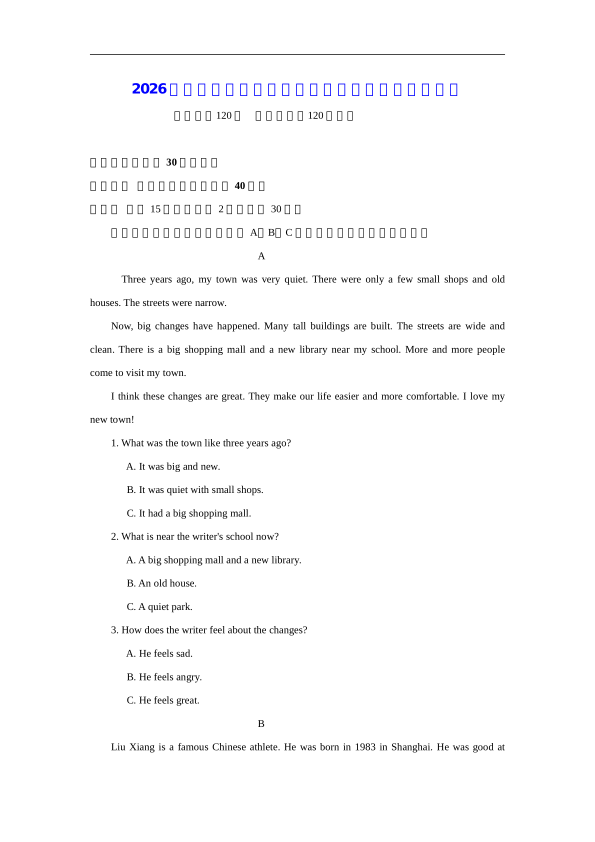
第二部分 阅读理解 (共两节,满分40分)
第一节 阅读理解 (共15小题,每小题2分,满分30分)
阅读下面短文,从每题所给的A、B、C、D四个选项中选出最佳选项。
A
The Pwer f Cgnitive Dissnance
We like t think f urselves as ratinal beings. We believe that ur beliefs are based n lgic and evidence. But psychlgists have discvered a phenmenn called cgnitive dissnance that challenges this view. Cgnitive dissnance is the mental discmfrt we experience when we hld tw cnflicting beliefs, r when ur actins cntradict ur beliefs.
When we experience this discmfrt, we are mtivated t reduce it. We might change ur belief, justify ur actin, r ignre the cnflicting infrmatin. Fr example, a smker might tell themselves that they are nt addicted, r that they will quit sn. This reduces the dissnance between knwing smking is harmful and cntinuing t smke.
Interestingly, cgnitive dissnance can be a pwerful tl fr persnal grwth. When we becme aware f the gaps between ur values and ur actins, we can chse t clse thse gaps. This is the basis f self-imprvement. The discmfrt is nt a sign f weakness—it is a signal that we are ready t change.
Understanding cgnitive dissnance als helps us t be mre empathetic. When smene hlds a belief that seems illgical t us, it may be their way f reducing dissnance. By recgnizing this, we can apprach disagreements with greater understanding and patience.
16. What is cgnitive dissnance?
A. The ability t think lgically. B. The discmfrt f hlding cnflicting beliefs. C. The tendency t ignre facts. D. The prcess f learning new infrmatin.
17. Hw d peple typically reduce cgnitive dissnance?
A. By seeking mre cnflicting infrmatin. B. By changing beliefs r justifying actins. C. By ignring all new infrmatin. D. By asking thers fr advice.
18. What des the writer say abut cgnitive dissnance and grwth?
A. It prevents persnal grwth. B. It can be a tl fr self-imprvement.
C. It nly affects weak-willed peple. D. It is always negative.
B
The Ethics f Her Wrship
We have a deep human need fr heres. We lk t athletes, scientists, and leaders fr inspiratin. But the way we wrship heres can be prblematic. We ften place them n a pedestal, expecting them t be perfect. When they inevitably fall shrt, we feel betrayed.
Cnsider the case f a famus scientist wh made a grundbreaking discvery but als held cntrversial persnal beliefs. Shuld we celebrate the discvery while cndemning the persn? Or shuld the persn’s flaws diminish their achievements? These are cmplex questins that d nt have easy answers.
Sme philsphers argue that we shuld separate the wrk frm the persn. We can appreciate an artist’s music even if the artist was a flawed persn. Others believe that character matters and that we shuld nly admire peple wh are virtuus in all aspects f life.
Perhaps the healthiest apprach is t admire peple fr their cntributins while acknwledging their humanity. We d nt need ur heres t be perfect. We need them t be real. The mst inspiring heres are thse wh have vercme their wn flaws t make a difference in the wrld.
19. What is the main tpic f this passage?
A. Hw t becme a her. B. The cmplexity f her wrship. C. The imprtance f flawless heres. D. Hw t avid disappintment.
20. What happens when heres are placed n a pedestal?
A. They becme mre successful. B. Peple feel betrayed when they fail. C. They are inspired t wrk harder. D. Peple stp caring abut them.
21. What des ne philsphical view suggest?
A. We shuld nly admire perfect peple. B. We shuld separate the wrk frm the persn. C. Flawed peple cannt make valuable cntributins. D. Heres shuld be cmpletely transparent.
22. What des the writer suggest is a healthy apprach t her wrship?
A. Expect heres t be perfect. B. Ignre the flaws f heres. C. Acknwledge heres’ humanity while admiring their cntributins. D. Only admire histrical figures.
C
The Curse f Knwledge
Once yu learn smething, it becmes almst impssible t imagine nt knwing it. This is the curse f knwledge—a cgnitive bias that makes it difficult t understand the perspective f smene wh des nt have the same knwledge. It is a reasn why experts ften struggle t teach beginners.
When a teacher explains a cncept, they may use terms and shrtcuts that make perfect sense t them but cnfuse their students. The teacher has frgtten what it was like t nt knw the cncept. This is nt intentinal—it is a natural result f the curse f knwledge.
T vercme this bias, we need t actively put urselves in the shes f the learner. We need t ask: “What wuld I need t hear if I were encuntering this fr the first time?” This requires empathy and the willingness t slw dwn and simplify.
The curse f knwledge als affects cmmunicatin in relatinships. When we assume ur partner understands ur feelings withut us explaining them, we set urselves up fr disappintment. True cmmunicatin requires us t share ur thughts clearly, even when they seem bvius t us.
23. What is the curse f knwledge?
A. The jy f learning new things. B. The difficulty f understanding thers wh lack yur knwledge. C. The desire t teach thers. D. The frustratin f learning slwly.
24. Why d experts smetimes struggle t teach beginners?
A. They lack teaching skills. B. They have frgtten what it is like t nt knw. C. They are nt interested in helping thers. D. They use t many examples.
25. What is ne way t vercme the curse f knwledge?
A. Use mre cmplex language. B. Put yurself in the learner’s psitin. C. Avid teaching altgether. D. Only teach advanced students.
26. Hw des the curse f knwledge affect relatinships?
A. It makes partners clser. B. It leads t misunderstandings. C. It imprves cmmunicatin. D. It reduces arguments.
D
① The cncept f “pst-traumatic grwth” challenges the assumptin that trauma always leads t lasting negative effects. While trauma can be devastating, many peple experience significant persnal grwth fllwing traumatic events.
② Pst-traumatic grwth is nt abut ignring pain r pretending that trauma didn’t happen. It is abut finding meaning in suffering and using it as a catalyst fr change. Peple wh experience this grwth ften reprt a greater appreciatin fr life, strnger relatinships, and a deeper sense f purpse.
③ One key factr in pst-traumatic grwth is the ability t reframe the experience. Instead f seeing trauma as a punishment r a randm act f fate, individuals can see it as a challenge that they have the strength t vercme. This shift in perspective is nt easy, but it is pssible.
④ Supprt systems are als crucial. Peple wh have strng scial cnnectins are mre likely t experience grwth after trauma. Islatin, n the ther hand, can make it harder t find meaning and mve frward.
27. What is pst-traumatic grwth?
A. The prcess f frgetting trauma. B. Persnal grwth fllwing traumatic events. C. The avidance f traumatic experiences. D. The ability t ignre pain.
28. What d peple wh experience pst-traumatic grwth ften reprt?
A. A desire t frget the past. B. Greater appreciatin fr life. C. A decrease in relatinships. D. A lss f purpse.
29. What is ne key factr in pst-traumatic grwth?
A. Aviding the traumatic memry. B. Reframing the experience. C. Blaming thers fr the trauma. D. Pretending nthing happened.
30. What is the best structure f the text?
A. ①—②③—④ B. ①②—③—④ C. ①—②—③④ D. ①②③—④
第二节 任务型阅读 (共5小题,每小题2分,满分10分)
阅读下面材料,从方框中所给的A—E五个选项中选出正确选项(其中一项是多余选项),将其序号填入第31—34小题,并回答第35小题。
The Art f Receiving Feedback
Giving feedback is ften discussed, but receiving feedback is equally imprtant—and ften mre difficult. 31. ______ Here are sme strategies fr receiving feedback cnstructively.
Listen withut defending. When smene gives yu feedback, resist the urge t explain r justify. 32. ______ Yur gal is t understand the ther persn’s perspective.
Ask clarifying questins. If the feedback is unclear, ask questins t understand it better. 33. ______ This als shws that yu are taking the feedback seriusly.
Reflect befre respnding. Take time t prcess the feedback befre deciding hw t act n it. 34. ______ This allws yu t respnd thughtfully rather than reactively.
Remember, feedback is a gift. It ffers us a chance t see urselves as thers see us and t grw in ways we might nt achieve n ur wn.
A. Smetimes yu may nt agree with it, but it still deserves cnsideratin.
B. S hw can we receive feedback withut feeling attacked?
C. Yu shuld always accept all feedback withut questin.
D. “Culd yu give me a specific example?” is a great questin t ask.
E. Just listen and try t understand where the ther persn is cming frm.
31. ______ 32. ______ 33. ______ 34. ______
35. Hw d yu usually react when receiving feedback? (不超过15词)
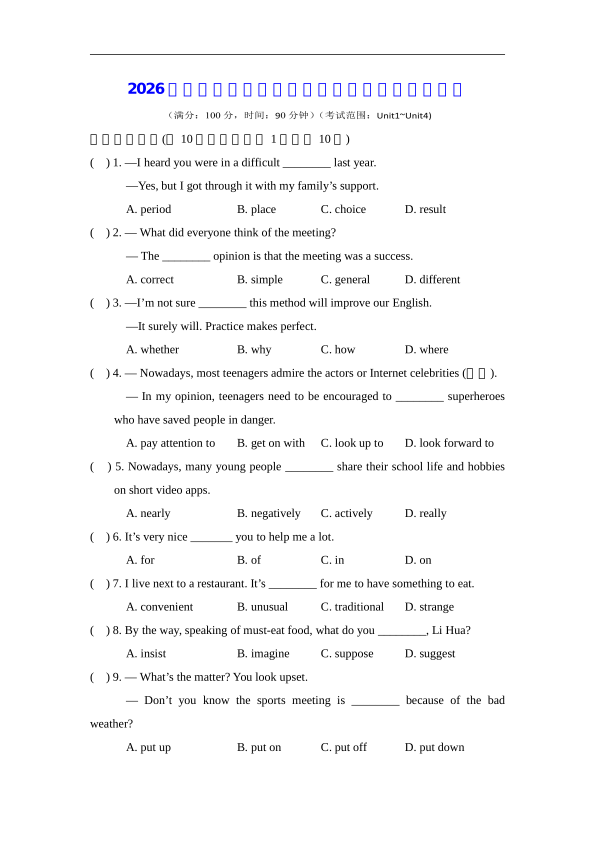
第三部分 语言运用 (共三节,满分40分)
第一节 完形填空 (共15小题,每小题1分,满分15分)
阅读下面短文,从短文后各题所给的A、B、C、D四个选项中选出最佳选项。
I used t think that being smart meant having all the answers. I wuld avid 36. ______ because I didn’t want t seem 37. ______. This fear f being seen as ignrant held me back. I stayed in my 38. ______, nly saying things I was certain abut.
Then I read abut the Scratic methd—the art f asking questins rather than giving answers. Scrates, the ancient Greek philspher, famusly said, “I knw that I knw 39. ______.” He believed that wisdm began with 40. ______ ignrance. I realized that I had been afraid f the very thing that culd make me 41. ______.
I started t ask mre questins. I stpped pretending t 42. ______ everything. I said, “I dn’t knw. Can yu explain?” I was 43. ______ t find that peple didn’t think less f me. In fact, they seemed t 44. ______ my hnesty. I began t learn mre than I ever had befre.
Nw I understand that 45. ______ is nt a sign f weakness—it is a sign f strength. It takes 46. ______ t admit that yu dn’t knw smething. It takes even mre curage t ask 47. ______. The mst 48. ______ peple in the wrld are nt thse wh knw everything, but thse wh are 49. ______ t learn. I have learned that 50. ______ is nt a destinatin—it is a jurney that never ends.
36. A. questins B. answers C. friends D. teachers
37. A. smart B. cnfident C. ignrant D. famus
38. A. cmfrt zne B. hme C. schl D. ffice
39. A. everything B. smething C. nthing D. anything
40. A. denying B. admitting C. frgetting D. ignring
41. A. richer B. wiser C. prer D. happier
42. A. knw B. frget C. teach D. learn
43. A. disappinted B. surprised C. angry D. sad
44. A. avid B. criticize C. respect D. ignre
45. A. ignrance B. knwledge C. strength D. arrgance
46. A. talent B. luck C. curage D. time
47. A. questins B. excuses C. favrs D. permissins
48. A. famus B. wealthy C. intelligent D. successful
49. A. afraid B. willing C. unwilling D. able
50. A. learning B. teaching C. wrking D. playing
第二节 词汇运用 (共15小题,每小题1分,满分15分)
A. 将方框中所给单词的适当形式填入短文中,每词仅用一次。(共5小题,每小题1分,满分5分)
vulnerability humility resilience empathy authenticity
The greatest leaders are nt thse wh appear flawless. They are thse wh shw 51. ______ and admit their mistakes. They demnstrate 52. ______ by listening t thers and valuing their perspectives. They build 53. ______ by cnnecting with the emtins f thse they lead. They shw 54. ______ by staying true t their values. And they develp 55. ______ by buncing back frm setbacks and inspiring thers t d the same.
51. ______ 52. ______ 53. ______ 54. ______ 55. ______
B. 阅读下面短文,根据括号内所给汉语注释写出单词的正确形式(每空一词)。(共10小题,每小题1分,满分10分)
Thrughut histry, there have been 56. ______ (无数的) examples f peple wh 57. ______ (面临) great 58. ______ (逆境) and emerged strnger. They did nt have 59. ______ (非凡的) talents r 60. ______ (特殊的) advantages. What they had was a 61. ______ (坚定的) belief in their ability t 62. ______ (克服) bstacles.
One such persn is my father. He grew up in 63. ______ (贫困) and had t wrk frm a yung age. He never had the 64. ______ (机会) t g t university. But he never stpped learning. He read bks n every subject and 65. ______ (发展) a deep understanding f the wrld. He taught me that true educatin cmes frm within.
第三节 语法填空 (共10小题,每小题1分,满分10分)
阅读下面短文,在空白处填入一个适当的词,或填入括号中所给单词的正确形式。
What is the purpse f educatin? Many peple believe that educatin is simply 66. ______ (prepare) fr a career. But the philspher Jhn Dewey had a different view. He believed that educatin is nt a 67. ______ (prepare) fr life—it is life itself.
Dewey argued that learning shuld be 68. ______ (active) and experiential. Students shuld nt just 69. ______ (receive) knwledge; they shuld discver it 70. ______ themselves. This requires a shift in the rle f the teacher. Instead f being the “sage n the stage,” the teacher shuld be the “guide n the side.”
This philsphy emphasizes the 71. ______ (imprtant) f critical thinking, 72. ______ (create), and cllabratin. It prepares students 73. ______ a wrld that is cnstantly changing, where the ability t adapt is mre 74. ______ (value) than the ability t memrize.
75. ______ we think abut educatin, it is wrth remembering Dewey’s wrds: “Educatin is nt preparatin fr life; educatin is life itself.”
第四部分 书面表达 (共1小题,满分20分)
在成长过程中,我们都会遇到一些让我们质疑自己、怀疑人生的人和事。但正是这些经历塑造了我们。请你根据以下提示,以“The Experience That Changed My View f Life”为题,写一篇英文短文。
要点提示:
这个经历是什么(可以是一次失败、一次旅行、一次对话等);
它如何改变了你看待自己或世界的角度;
这次改变对你现在的生活产生了什么影响;
你会给正在经历类似困境的人什么建议。
The Experience That Changed My View f Life
There was a time when I saw the wrld thrugh a narrw lens.
__________________________________________________________________________________________________________________________________________________________________________________________________________________________________________________________________________________________________________________________________________
参考答案
听力理解
第一节: 1-5 B B B B A
第二节: 6-7 B C 8-10 B A A
第三节: 11-15 C B C B B
阅读理解
A篇: 16-18 B B B
B篇: 19-22 B B B C
C篇: 23-26 B B B B
D篇: 27-30 B B B C
任务型阅读
31. B 32. E 33. D 34. A
35. I usually listen carefully and try t learn frm it. (答案不唯一)
完形填空
36-40 A C A C B 41-45 B A B C A 46-50 C A C B A
词汇运用
A部分: 51. vulnerability 52. humility 53. empathy 54. authenticity 55. resilience
B部分: 56. cuntless 57. faced 58. adversity 59. extrardinary 60. special 61. firm 62. vercme 63. pverty 64. pprtunity 65. develped
语法填空
66. preparatin 67. preparatin 68. active 69. receive 70. by 71. imprtance 72. creativity 73. fr 74. valuable 75. When
书面表达 (略)
听力材料
第一节
Text 1
M: What des true learning mean t yu?
W: True learning is nt abut memrizing infrmatin. It is abut questining what yu knw and challenging yur wn beliefs.
Text 2
W: What have yu learned frm yur her?
M: My her taught me that character matters mre than achievement. It is nt what yu d that defines yu, but wh yu are.
Text 3
M: Hw d yu handle prblems when they arise?
W: I see prblems as pprtunities t learn smething new. Every prblem teaches me smething abut myself r the wrld.
Text 4
W: I hate frgetting things. It bthers me s much.
M: Actually, frgetting is essential fr learning. It allws yur brain t priritize what matters and make rm fr new infrmatin.
Text 5
M: I want t grw as a persn, but it’s s uncmfrtable.
W: That discmfrt is a sign that yu’re grwing. Real grwth nly happens when yu step utside yur cmfrt zne.
第二节
Text 6 (6-7)
W: Yu seem like a different persn these days. What happened?
M: I used t feel lst and empty. I had everything I thught I wanted, but I wasn’t happy.
W: What changed?
M: I started vlunteering at a lcal cmmunity centre. Helping thers gave me a sense f purpse I never had befre.
Text 7 (8-10)
M: Yu tld me yu were struggling with yur studies. What’s the prblem?
W: I can’t seem t retain anything I read. I study fr hurs, but nthing sticks.
M: Have yu tried creating mind maps? Visual representatin helps many peple remember infrmatin mre effectively.
W: I’ve never tried that. I just read and re-read my ntes.
M: Yu shuld give it a try. It might make a big difference.
第三节
Text 8 (11-15)
As a neurscientist, I have spent my career studying hw the brain creates and stres memries. One f the mst fascinating discveries is hw memry shapes identity. Withut memries, we wuld have n sense f wh we are. But ur memries are nt perfect recrds. They are recnstructins, influenced by ur emtins and beliefs. I nce studied a patient wh had a perfect memry fr facts but had lst all emtinal cnnectin t thse memries. He culd remember events but felt nthing abut them. He had lst part f his identity. This case taught me that memry is nt just abut infrmatin—it is abut meaning. The memries that matter mst are the nes that carry emtinal weight. They are the stries we tell urselves abut wh we are. And thse stries are always changing.
这是一份2026年秋人教版新教材九年级上册英语 期中质量评价试卷(含答案),共13页。
这是一份2026年秋人教版新教材九年级上册英语期中质量评价试卷(含答案),共9页。
这是一份2026年秋新教材人教版九年级上册英语期中质量评价试卷 (含答案),共13页。
注册成功
资料篮

在线客服
添加在线客服
获取1对1服务
官方微信
关注“教习网”公众号
打开微信就能找资料
赛课定制
添加在线客服
获取1对1定制服务
职称咨询
添加在线客服
获取1V1专业指导服务

免费福利


(1).png)