 免费领取教师福利
若您为此资料的原创作者,认为该资料内容侵犯了您的知识产权,请扫码添加我们的相关工作人员,我们尽可能的保护您的合法权益。



这是一份初中英语仁爱科普版(2024)九年级上册(2024)Reading Strategies导学案,文件包含unit3单元测试卷-学生版docx、unit3单元测试卷含答案-教师版docx等2份试卷配套教学资源,其中试卷共16页, 欢迎下载使用。
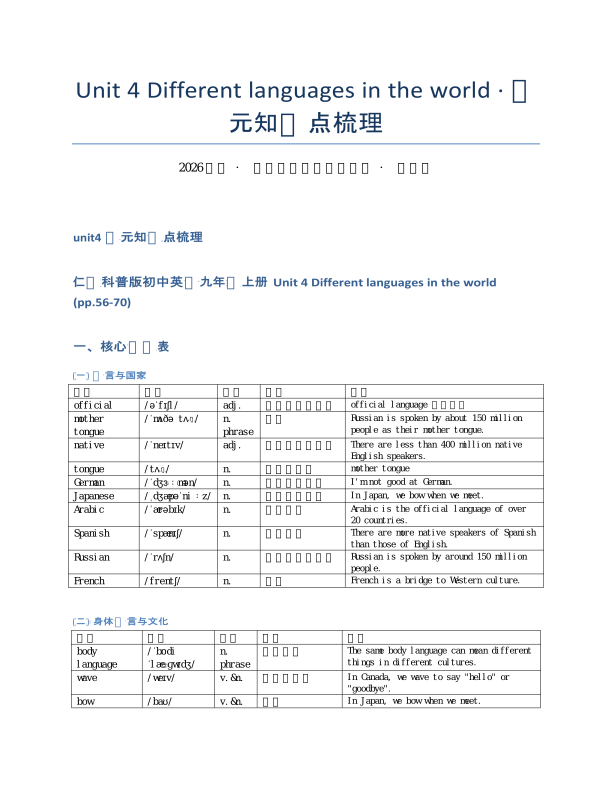
unit4 单元知识点梳理
仁爱科普版初中英语九年级上册 Unit 4 Different languages in the wrld (pp.56-70)
一、核心词汇表
(一) 语言与国家
(二) 身体语言与文化
(三) 交流与沟通
(四) 语言学习
(五) 地标与国家
二、核心短语
三、语法精讲
语法一:后缀 -able
【规则】
动词 + -able 构成形容词,表示"可...的;能...的"。
动词 + -able → 形容词:
• change → changeable(多变的)
• suit → suitable(合适的)
• cunt → cuntable(可数的)
• read → readable(可读的)
• understand → understandable(可理解的)
• avail → available(可用的)
• avid → avidable(可避免的)
• believe → believable(可信的)
加前缀 un- 表示否定:
• unbelievable(难以置信的)
• unavidable(不可避免的)
• unreadable(不可读的)
【注意】
1. 以 e 结尾的动词直接加 -able:suit → suitable, cunt → cuntable, change → changeable。
2. 以 ie 结尾的动词去 e 加 -able:believe → believable。
3. un- 前缀表否定,可加在 -able 形容词前:un + believable = unbelievable。
4. -able 构成的形容词通常作表语或定语,可被 very, quite 等副词修饰。
教材核心词汇(-able 形容词):
【练习】
一、用所给动词的正确 -able 形式填空。
1. The weather here is very ______ (change). Yu'd better take an umbrella.
2. This dictinary is ______ (suit) fr middle schl students.
3. Are there any rms ______ (avail) fr tnight?
4. His handwriting is s bad that it is ______ (read).
5. The news was ______ (believe) — I culdn't believe my ears!
【答案】1. changeable 2. suitable 3. available 4. unreadable 5. unbelievable
【解析】1. change + -able → changeable(多变的);2. suit + -able → suitable(合适的);3. avail + -able → available(可用的);4. read + -able → readable,加 un- → unreadable(不可读的);5. believe 去 e + -able → believable,加 un- → unbelievable(难以置信的)。
二、选择题。
6. Thugh he speaks English with an accent, he is still ______.
A. understand B. understandable C. understanding D. understd
7. The accident was ______. The driver was driving t fast.
A. avid B. avidable C. unavidable D. avided
【答案】6. B 7. C
【解析】6. understandable(可理解的),此处需要形容词作表语,表示"他的英语虽然有口音,但仍可被理解"。7. unavidable(不可避免的),司机开得太快,事故是不可避免的。un- + avidable = unavidable。
语法二:一般将来时的被动语态 (Simple Future Passive)
【构成】
will be + 动词过去分词 (p.p.)
主语 + will be + 过去分词 + (by + 动作执行者)
【用法】
表示将来某事将被做。主语是动作的承受者。
常与 in the future, tmrrw, next year, sn 等将来时间状语连用。
【注意】
1. 肯定句:主语 + will be + p.p.
2. 否定句:主语 + will nt (wn't) be + p.p.
3. 一般疑问句:Will + 主语 + be + p.p.?
4. 特殊疑问句:疑问词 + will + 主语 + be + p.p.?
5. be 动词不可省略!这是最常见的错误。
主动→被动转换对照表:
【练习】
一、将下列主动句改为被动句。
1. Peple will build a new library in ur city next year.
2. The schl will hld a speech cntest next Friday.
3. Mre cuntries will use Chinese as a secnd language.
【答案】1. A new library will be built in ur city next year.
【答案】2. A speech cntest will be held by the schl next Friday.
【答案】3. Chinese will be used as a secnd language by mre cuntries.
【解析】1. build → built (p.p.),a new library 作主语;2. hld → held (p.p.),a speech cntest 作主语;3. use → used (p.p.),Chinese 作主语,by mre cuntries 表示动作执行者。
二、用所给动词的正确形式填空。
4. The result ______ ______ ______ (nt / annunce) until tmrrw.
5. ______ the meeting ______ ______ (hld) in Beijing next mnth?
6. A new subway line ______ ______ ______ (cmplete) in 2027.
【答案】4. will nt be annunced 5. Will; be held 6. will be cmpleted
【解析】4. 否定句:will nt be + annunced;5. 一般疑问句:Will + 主语 + be + held;6. 肯定句:will be + cmpleted。注意 cmplete 的过去分词是 cmpleted。
四、核心句型与翻译
核心句型对照表:
【翻译练习】
请将下列中文句子翻译成英文。
1. 学好一门外语需要大量的练习。
【答案】Learning a freign language well requires a lt f practice.
【解析】"学好一门外语"译为 Learning a freign language well(动名词作主语);"需要大量的练习"译为 requires a lt f practice。注意 well 修饰动词 learn,practice 作不可数名词表示"练习"。
2. 大本钟是英国最著名的地标之一。
【答案】Big Ben is ne f the mst famus landmarks in Great Britain.
【解析】"大本钟"译为 Big Ben;"最著名的地标之一"译为 ne f the mst famus landmarks(ne f + 最高级 + 复数名词);"英国"译为 Great Britain。
3. 随着中国的快速发展,越来越多的人开始学习中文。
【答案】With the rapid develpment f China, mre and mre peple begin t learn Chinese.
【解析】"随着中国的快速发展"译为 With the rapid develpment f China(with 短语作状语);"越来越多的人"译为 mre and mre peple;"开始学习中文"译为 begin t learn Chinese。
4. 我们应该注意不同文化中身体语言的差异。
【答案】We shuld pay attentin t the differences in bdy language acrss different cultures.
【解析】"我们应该注意"译为 We shuld pay attentin t(pay attentin t 为固定短语,t 为介词);"不同文化中身体语言的差异"译为 the differences in bdy language acrss different cultures。
5. 据说这门课下学期将会被开设。
【答案】It is said that this curse will be ffered next semester.
【解析】"据说"译为 It is said that...(固定句型);"这门课下学期将会被开设"译为 this curse will be ffered next semester(一般将来时被动语态 will be + 过去分词 ffered)。
五、易错点
易错点一:一般将来时被动语态的构成(漏掉 be)
【讲解】
一般将来时的被动语态结构为 will be + 过去分词。很多同学在使用时常漏掉 be 动词,写成 will + 过去分词,这是最常见的错误。
记住:will + be + p.p. 三者缺一不可。
【练习】
选择正确选项填空。
1. The bridge ______ next year.
A. will build B. will be built C. will built D. will be build
2. The result ______ until next Mnday.
A. wn't annunce B. wn't be annunced C. wn't annunced D. wn't be annunce
3. ______ the sprts meet ______ in ur schl?
A. Will; hld B. Will; be held C. Will; held D. Will; be hld
【答案】1. B 2. B 3. B
【解析】1. bridge 是被建造的,用被动 will be built;2. 否定式 wn't be + annunced;3. 疑问式 Will + 主语 + be + held。三个题目的关键都是不能漏掉 be 动词。
易错点二:-able 后缀的拼写规则
【讲解】
动词加 -able 变形容词时,拼写规则因词而异:
1. 一般情况:直接加 -able(cunt → cuntable, suit → suitable, avid → avidable)
2. 以 e 结尾:直接加 -able(change → changeable, like → likable, use → usable)
3. 以 ie 结尾:去 e 加 -able(believe → believable, relieve → relievable)
4. 加前缀 un- 表否定:un + believable = unbelievable(不需要连字符)
【练习】
写出下列动词的 -able 形容词形式。
1. change → ______
2. believe → ______(否定形式:______)
3. suit → ______
4. avail → ______
5. read → ______(否定形式:______)
【答案】1. changeable 2. believable / unbelievable 3. suitable 4. available 5. readable / unreadable
【解析】注意 believe 去 e 加 -able → believable;其余直接加 -able。否定形式在形容词前加 un-,如 unbelievable, unreadable。
易错点三:be famus fr / be famus as / be famus t 的辨析
【讲解】
这三个短语含义不同,搭配也不同:
• be famus fr + 事物/特征:因...而著名(后接出名的原因)
• be famus as + 身份/职业:作为...而著名(后接身份或角色)
• be famus t + 人:为...所熟知(后接人群)
【练习】
用 fr, as 或 t 填空。
1. The Great Wall is famus ______ its lng histry.
2. M Yan is famus ______ a nvelist.
3. This cartn character is famus ______ children all ver the wrld.
4. France is famus ______ its wine and fd.
5. Big Ben is famus ______ a landmark f Great Britain.
【答案】1. fr 2. as 3. t 4. fr 5. as
【解析】1. 因长城的历史而闻名 → fr;2. 作为小说家而闻名 → as;3. 为全世界儿童所熟知 → t;4. 因法国的酒和食物而闻名 → fr;5. 作为英国的地标而闻名 → as。
易错点四:cmmunicate (v.) 与 cmmunicatin (n.) 的词性转换
【讲解】
cmmunicate 是动词,cmmunicatin 是名词,两者不要混淆使用:
• cmmunicate (v.) 交流、沟通:cmmunicate with sb. 与某人交流
• cmmunicatin (n.) 交流、通讯:gd cmmunicatin 良好的沟通
• 形容词形式:cmmunicative 健谈的;善于沟通的
【练习】
用 cmmunicate (动词) 或 cmmunicatin (名词) 的正确形式填空。
1. We must learn t ______ with peple frm different cultures.
2. Gd ______ is the key t a successful team.
3. The internet has greatly imprved ______ between peple.
4. Sign language is an imprtant way f ______ fr peple with hearing prblems.
5. She is very ______ and makes friends easily.
【答案】1. cmmunicate 2. cmmunicatin 3. cmmunicatin 4. cmmunicatin 5. cmmunicative
【解析】1. learn t 后接动词原形 cmmunicate;2. gd 后接名词 cmmunicatin;3. imprved 后接名词 cmmunicatin;4. way f 后接名词 cmmunicatin;5. very 后接形容词 cmmunicative(健谈的)。
易错点五:used t d / be used t ding / be used t d 的辨析
【讲解】
这三个结构形式相似但含义完全不同:
• used t d sth. 过去常常做某事(表示过去的习惯,现已不如此)
• be used t ding sth. 习惯于做某事(表示当前的习惯状态)
• be used t d sth. 被用来做某事(被动语态,use 的被动用法)
【练习】
选择正确的形式填空。
1. He ______ (used t / is used t) play basketball after schl, but nw he is t busy.
2. I ______ (used t / am used t) living in the city nw.
3. This pen ______ (is used t / is used t writing) write n paper.
4. My grandmther ______ (used t / is used t) tell us stries befre bedtime.
5. Sign language ______ (is used t cmmunicate / is used t cmmunicating) with deaf peple.
【答案】1. used t 2. am used t 3. is used t 4. used t 5. is used t cmmunicate
【解析】1. 过去常常打篮球(现已不如此)→ used t d;2. 习惯于住在城市 → be used t ding(living);3. 被用来写字 → be used t d(write),被动语态;4. 过去常常讲故事 → used t d(tell);5. 被用来与聋人交流 → be used t d(cmmunicate),被动语态。
六、写作素材
(一) 好词好句
1. 开头句
• Learning a freign language is ne f the mst rewarding experiences in life.
• In tday's glbalized wrld, being able t speak a freign language is mre imprtant than ever.
• There are many reasns why peple chse t learn a freign language.
2. 对比句
• Unlike Chinese, English uses an alphabet system instead f characters.
• While sme languages are spken by millins, thers are used by nly a few hundred peple.
• Cmpared with my mther tngue, learning English requires a cmpletely different apprach.
3. 结尾句
• In a wrd, learning a freign language pens a new windw t the wrld.
• Last but nt least, dn't be afraid f making mistakes — they are part f the learning prcess.
• Believe it r nt, with enugh practice and determinatin, anyne can master a freign language.
(二) 参考范文
题目:Write a shrt passage abut learning a freign language. (80-100 wrds)
Learning a Freign Language
Learning a freign language is bth challenging and rewarding. Take Chinese fr example — it is spken by mre than a billin peple as their mther tngue. Thugh I fund it challenging t learn Chinese characters at first, I kept practicing every day. I read alud, imitated native speakers, and tried my best t cmmunicate with Chinese friends. Step by step, my Chinese became mre fluent and understandable. I believe that with rapid develpment f China, Chinese will be spken mre widely in the future. Last but nt least, dn't be afraid f making mistakes — they are the best teachers n yur language learning jurney.
【写作思路】
1. 开头段:引入话题 — 学习外语既有挑战又有收获(Learning a freign language is bth challenging and rewarding.)
2. 主体段:以学习中文为例,描述学习过程和遇到的困难(Take Chinese fr example... Thugh I fund it challenging...)
• 使用具体方法:read alud, imitate native speakers, cmmunicate with friends
• 展示进步:my Chinese became mre fluent and understandable
3. 展望段:结合单元主题,展望中文的未来发展(Chinese will be spken mre widely in the future.)
4. 结尾段:给出建议和鼓励(Last but nt least, dn't be afraid f making mistakes...)
5. 语言亮点:使用了一般将来时被动语态(will be spken)、后缀 -able 形容词(challenging, fluent, understandable)、核心短语(try ne's best, cmmunicate with, last but nt least, believe it r nt)等本单元重点知识。
(三) 写作练习
题目:Write a shrt passage (80-100 wrds) abut hw t learn a freign language well. Yu shuld include at least tw f the fllwing pints:
• Why learning a freign language is imprtant
• What difficulties yu may face
• What methds yu can use t learn it well
• Yur expectatins fr the future
请在此处写作:
________________________________________________________________________________
________________________________________________________________________________
________________________________________________________________________________
________________________________________________________________________________
________________________________________________________________________________
单词
读音
词性
释义
例句
fficial
/əˈfɪʃl/
adj.
官方的;正式的
fficial language 官方语言
mther tngue
/ˈmʌðə tʌŋ/
n. phrase
母语
Russian is spken by abut 150 millin peple as their mther tngue.
native
/ˈneɪtɪv/
adj.
本国的;本土的
There are less than 400 millin native English speakers.
tngue
/tʌŋ/
n.
舌头;语言
mther tngue
German
/ˈdʒɜːmən/
n.
德语;德国人
I'm nt gd at German.
Japanese
/ˌdʒæpəˈniːz/
n.
日语;日本人
In Japan, we bw when we meet.
Arabic
/ˈærəbɪk/
n.
阿拉伯语
Arabic is the fficial language f ver 20 cuntries.
Spanish
/ˈspænɪʃ/
n.
西班牙语
There are mre native speakers f Spanish than thse f English.
Russian
/ˈrʌʃn/
n.
俄语;俄罗斯的
Russian is spken by arund 150 millin peple.
French
/frentʃ/
n.
法语
French is a bridge t Western culture.
单词
读音
词性
释义
例句
bdy language
/ˈbɒdi ˈlæŋɡwɪdʒ/
n. phrase
身体语言
The same bdy language can mean different things in different cultures.
wave
/weɪv/
v.&n.
挥手;波浪
In Canada, we wave t say "hell" r "gdbye".
bw
/baʊ/
v.&n.
鞠躬
In Japan, we bw when we meet.
nd
/nɒd/
v.&n.
点头
Kangkang ndded his head t shw his agreement.
shake
/ʃeɪk/
v.
摇动;抖动
Shaking the head frm side t side means "yes" in India.
gesture
/ˈdʒestʃə(r)/
n.
手势;姿态
They als use different expressins and gestures.
manners
/ˈmænəz/
n.
礼貌;规矩
It is bad manners t use yur finger r hand t wave smene t cme t yu.
culture
/ˈkʌltʃə(r)/
n.
文化
cultural differences in bdy language
cultural
/ˈkʌltʃərəl/
adj.
文化的
Cultural differences in bdy language
单词
读音
词性
释义
例句
cmmunicate
/kəˈmjuːnɪkeɪt/
v.
交流;沟通
We must be careful when we use bdy language t cmmunicate with peple.
cmmunicatin
/kəˌmjuːnɪˈkeɪʃn/
n.
交流;通讯
Peple with hearing prblems can use sign language fr cmmunicatin.
sign language
/saɪn ˈlæŋɡwɪdʒ/
n. phrase
手语
Peple with hearing prblems can use sign language fr cmmunicatin.
fingerspelling
/ˈfɪŋɡəspelɪŋ/
n.
指语
This is called "fingerspelling".
expressin
/ɪkˈspreʃn/
n.
表达;表情
They als use different expressins and gestures.
imitate
/ˈɪmɪteɪt/
v.
模仿
If yu imitate hw smene talks, yu'll understand what they say better.
cmprehend
/ˌkɒmprɪˈhend/
v.
理解
It can help yu better cmprehend the speech.
infer
/ɪnˈfɜː(r)/
v.
推断
Yu can infer the meaning f a new wrd frm the text clues.
inference
/ˈɪnfərəns/
n.
推断
Making inferences is a useful reading strategy.
单词
读音
词性
释义
例句
practice
/ˈpræktɪs/
v.&n.
练习;实践
Try yur best and wrk hard t practice Chinese.
accent
/ˈæksent/
n.
口音
Thugh he speaks English with an accent, he is still understandable.
challenging
/ˈtʃælɪndʒɪŋ/
adj.
有挑战性的
I fund it challenging t learn Chinese characters.
fluent
/ˈfluːənt/
adj.
流利的
She is fluent in three languages.
suggest
/səˈdʒest/
v.
建议
Can yu suggest sme ways t learn Chinese?
suggestin
/səˈdʒestʃən/
n.
建议
I want t give him sme suggestins.
alud
/əˈlaʊd/
adv.
出声地
Lingling likes t read alud.
character
/ˈkærəktə(r)/
n.
汉字;角色;性格
cartn characters; Chinese characters
单词
读音
词性
释义
例句
landmark
/ˈlændmɑːk/
n.
地标
Big Ben is ne f the tp landmarks in the Great Britain.
symbl
/ˈsɪmbl/
n.
象征;符号
New Swan Stne Castle is a symbl f Germany.
weigh
/weɪ/
v.
重;称重
It weighs mre than 15 tns.
tn
/tʌn/
n.
吨
It weighs mre than 15 tns.
wnder
/ˈwʌndə(r)/
n.
奇迹
As ne f the greatest wnders f the wrld...
turist
/ˈtʊərɪst/
n.
游客
turist places
ppular
/ˈpɒpjələ(r)/
adj.
受欢迎的
The Eiffel Twer is ne f the mst ppular turist places.
rapid
/ˈræpɪd/
adj.
迅速的
With the rapid develpment f China...
短语
释义
例句
be famus fr
因...而著名
The Great Wall is famus fr its lng histry.
be called
被称为
New Swan Stne Castle is called a symbl f Germany.
be named after
以...命名
New Swan Stne Castle is named after the Swan King.
be filled with
充满
The rm was filled with laughter.
be spken as
被作为...使用
Russian is spken as the mther tngue by many peple.
be used in
在...中使用
English is used in many internatinal meetings.
be cnsidered as
被认为
Chinese is cnsidered as ne f the mst imprtant languages.
fficial language
官方语言
The UN has six fficial languages.
mther tngue
母语
Chinese is my mther tngue.
native speaker
母语者
There are mre than 400 millin native English speakers.
bdy language
身体语言
Bdy language is an imprtant part f cmmunicatin.
sign language
手语
Sign language helps peple with hearing prblems cmmunicate.
cmmunicate with
与...交流
We must be careful when we cmmunicate with peple frm ther cultures.
make inferences
做推断
Making inferences is a useful reading strategy.
main idea and details
主旨与细节
Yu shuld identify the main idea and details when reading.
read alud
朗读
Lingling likes t read alud t practice her prnunciatin.
try ne's best
尽某人最大努力
Try yur best and wrk hard t practice Chinese.
last but nt least
最后但同样重要的
Last but nt least, dn't be afraid f making mistakes.
believe it r nt
信不信由你
Believe it r nt, shaking head means "yes" in India.
example
以...为例
Take bdy language fr example, it varies frm culture t culture.
动词
形容词 (-able)
释义
教材例句
change
changeable
多变的
The weather in spring is changeable.
suit
suitable
合适的
This bk is suitable fr beginners.
cunt
cuntable
可数的
Cuntable nuns can be cunted with numbers.
read
readable
可读的
The article is readable and well-written.
understand
understandable
可理解的
His explanatin was understandable.
avail
available
可用的
Are there any tickets available?
avid
avidable
可避免的
Mst accidents are avidable.
believe
believable
可信的
His stry is believable.
—
unbelievable
难以置信的
It was an unbelievable experience.
—
unavidable
不可避免的
Sme changes are unavidable.
—
unreadable
不可读的
The handwriting is unreadable.
主动语态 (Active)
被动语态 (Passive)
Peple will speak Chinese mre widely.
Chinese will be spken mre widely.
Mre Russian schls will teach Chinese.
Chinese will be taught as a secnd language in mre Russian schls.
Peple will understand us.
We will be understd.
The gvernment will build a new bridge.
A new bridge will be built by the gvernment.
They will hld the meeting in Beijing.
The meeting will be held in Beijing.
中文
英文
俄语被约1.5亿人作为母语使用。
Russian is spken by abut 150 millin peple as their mther tngue.
同一种身体语言在不同文化中可能意味着不同的事情。
The same bdy language can mean different things in different cultures.
阿拉伯语是20多个国家的官方语言。
Arabic is the fficial language f ver 20 cuntries.
联合国有六种官方语言。
The UN has six fficial languages.
中文将在更多国家作为第二语言被教授。
Chinese will be taught as a secnd language in mre cuntries.
人们可以通过手语进行交流。
Peple can cmmunicate with each ther thrugh sign language.
埃菲尔铁塔是最受欢迎的旅游景点之一。
The Eiffel Twer is ne f the mst ppular turist places.
做推断是一种有用的阅读策略。
Making inferences is a useful reading strategy.
请尽你最大的努力练习中文。
Try yur best and wrk hard t practice Chinese.
信不信由你,在印度摇头表示"是"。
Believe it r nt, shaking the head means "yes" in India.
❌ 错误
✅ 正确
说明
The wrk will dne tmrrw.
The wrk will be dne tmrrw.
缺少 be 动词
The letter will sent next week.
The letter will be sent next week.
缺少 be 动词
A new hspital will build here.
A new hspital will be built here.
缺少 be 动词,且 build 须用过去分词 built
The meeting wn't held tmrrw.
The meeting wn't be held tmrrw.
否定句同样不能漏 be
动词
❌ 错误拼写
✅ 正确拼写
规则
believe
believeable
believable
去 e 加 -able
change
changeable(正确)
changeable
以 e 结尾直接加 -able
suit
suitible
suitable
直接加 -able
avail
availible
available
直接加 -able
read
unreadable(正确)
unreadable
un- + readable
短语
用法
例句
含义
be famus fr
后接出名的原因/特征
Hangzhu is famus fr the West Lake.
杭州因西湖而闻名
be famus as
后接身份/职业/类别
Lu Xun is famus as a writer.
鲁迅作为作家而闻名
be famus t
后接人群
This sng is famus t yung peple.
这首歌为年轻人所熟知
❌ 错误
✅ 正确
说明
We need gd cmmunicate.
We need gd cmmunicatin.
此处需要名词作宾语
He can't cmmunicatin with thers.
He can't cmmunicate with thers.
此处需要动词,can't 后接动词原形
The internet imprved cmmunicate.
The internet imprved cmmunicatin.
imprved 后接名词
结构
含义
例句
用法要点
used t d
过去常常做
He used t play ftball when he was yung.
后接动词原形,指过去习惯
be used t ding
习惯于做
I am used t getting up early.
be + used t + 动名词,指当前习惯
be used t d
被用来做
This tl is used t cut wd.
被动语态,后接动词原形
这是一份初中英语仁爱科普版(2024)九年级上册(2024)Reading Strategies导学案,文件包含Unit4_单元知识点梳理-教师版docx、Unit4_单元知识点梳理-学生版docx等2份学案配套教学资源,其中学案共0页, 欢迎下载使用。
这是一份仁爱科普版(2024)九年级上册(2024)Grammar in use导学案及答案,文件包含unit5单元测试卷-教师版docx、unit5单元测试卷-学生版docx等2份试卷配套教学资源,其中试卷共21页, 欢迎下载使用。
这是一份仁爱科普版(2024)九年级上册(2024)Function学案及答案,文件包含unit5单元知识点梳理-学生版docx、unit5单元知识点梳理-教师版docx等2份学案配套教学资源,其中学案共25页, 欢迎下载使用。
 新教材
新教材
注册成功
资料篮

在线客服
添加在线客服
获取1对1服务
官方微信
关注“教习网”公众号
打开微信就能找资料
赛课定制
添加在线客服
获取1对1定制服务
职称咨询
添加在线客服
获取1V1专业指导服务

免费福利

添加在线客服
领取免费福利


.png)
.png)
.png)
