免费领取教师福利

若您为此资料的原创作者,认为该资料内容侵犯了您的知识产权,请扫码添加我们的相关工作人员,我们尽可能的保护您的合法权益。


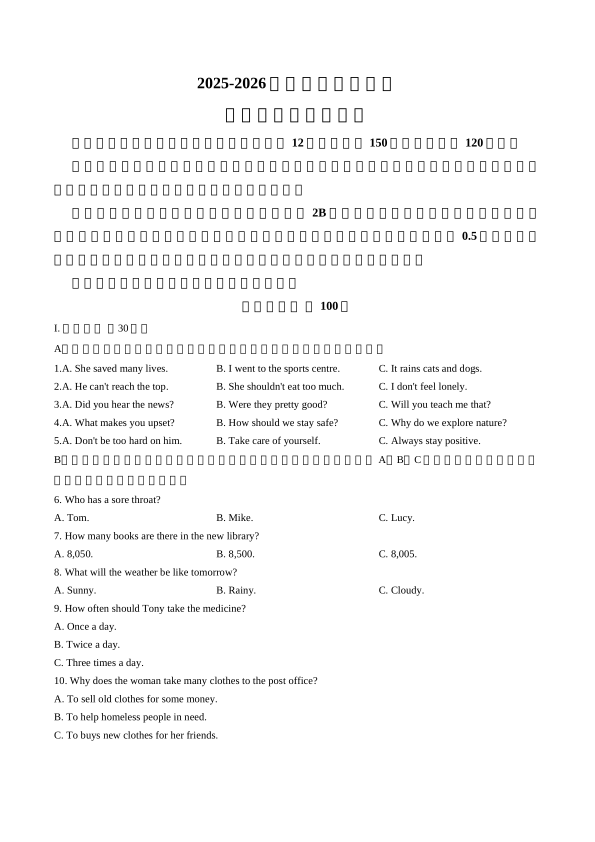
这是一份山东省济南市高新区2025-2026学年八年级下学期期末参考样题 英语试题(含解析),共4页。
选择题部分 共100分
Ⅰ.听力测试(30分)
A)听录音,在每组句子中选出一个你所听到的句子。每个句子听一遍。
1.A. She was ding hmewrk. B. That can be exciting. C. I help t feed animals.
2.A. He didn’t arrive n time. B. She’s never heard f the bk. C. Yu can’t call her first name.
3.A. D yu ever bw? B. Is he the tallest in yur class? C. Has she ever been t Xi’an?
4.A. What have yu learnt? B. Wh is yur favurite writer? C. Hw d we greet thers?
5.A. Dn’t talk with muth full. B. Help thers, heap yurself. C. Stay inside during the strm.
B)在录音中,你将听到五段对话,每段对话后有一个小题,从每小题A、B、C中选出能回答所给问题的正确答案。每段对话读两遍。
6. When did the by started vlunteering?
A. Tw weeks ag. B. Tw mnths ag. C. Tw years ag.
7. Which bk hasn’t the girl read?
A. The Secret Garden. B. The Three-Bdy Prblem. C. The Time Machine.
8. What’s prbably wrng with Emma?
A. She has a fever. B. She has a stmachache. C. She has a cugh.
9. Hw ld is Mary nw?
A. 13 years ld. B. 14 years ld. C. 15 years ld.
10. What is the prbably relatinship between the tw speakers?
A. Dctr and patient. B. Mther and sn. C. Teacher and student.
C)在录音中,你将听到一段对话,对话后有五个小题,从每小题A、B、C中选出能回答所给问题的正确答案。对话读两遍。(听对话前,你将有40秒钟的读题时间;听完后,你将有40秒钟的答题时间)
11. What are the tw students talking abut?
A. Their schl life. B. Embarrassing experiences. C. Table manners.
12. When did the by feel uneasy?
A. He ate fd earlier than elders. B. He frgt t say hell t the elders. C. He argued with relatives at dinner.
13. What mistake did the girl make?
A. She brke a bwl at hme.
B. She greeted thers with wrng names.
C. She was late fr class.
14. What d they think f plite rules?
A. Nt useful at all. B. T hard t learn. C. Quite imprtant.
15. What can we learn frm their stries?
A. We shuld care abut plite behavir.
B. It’s hard t remember peple’s names.
C. Careless mistakes wn’t be a prblem.
D)在录音中,你将听到一篇短文,短文后有五个小题,从每小题 A、B、C 中选出能回答所给问题的正确答案。短文读两遍。(听短文前,你将有 40 秒钟的读题时间;听完后,你将有40 秒钟的答题时间)
16. What is the purpse f the prject?
A. T keep the seaside envirnment clean.
B. T help students imprve schl study.
C. T teach students hw t save water.
17. Where did the vlunteers pick up rubbish?
A. In a city park. B. On the beach. C. Near a quiet lake.
18. When will the next clean-up prject be held?
A. On January 11th. B. On March 11th. C. On July 1st.
19. Which f the fllwing is TRUE accrding t the passage?
A. N freign vlunteers jined the activity.
B. Mst vlunteers are adult wrkers.
C. Over half f them were frm China.
20. What des the writer learn frm the prject?
A. Hw t make friends with freigners.
B. Peple shuld prtect the envirnment.
C. Plans fr interesting weekend travels.
II.阅读理解 阅读下列短文,从每题 A、B、C、D 四个选项中,选出一个能回答所提问题或完成所给句子的最佳答案。(40 分)
A
1. What is NOT mentined as a vlunteer’s respnsibility?
A. Chatting with the elderly.B. Helping the elderly read.
C. Cking meals fr the elderly.D. Organizing small activities.
2. Hw lng des a vlunteer need t wrk at least each time?
A. 1 hur.B. 2 hurs.C. 3 hurs.D. 4 hurs.
3. Wh can becme a vlunteer fr the center?
A. A 10-year-ld primary schl student.B. A persn wh is impatient with the elderly.
C. A busy wrker with n free weekends.D. A 15-year-ld friendly junir high student.
4. Hw can we apply fr the vlunteer wrk?
A. By writing a letter t Ms. Li.B. By calling r sending an email.
C. By visiting the center in persn.D. By filling ut a frm nline.
5. Where is the text prbably taken frm?
A. A pstcardB. A science bkC. A nticebardD. A guidebk
B
When 16-year-ld Stella received her exam results last summer, she was heartbrken. She had studied fr weeks, sacrificing (牺牲) time with friends and giving up her favrite hbbies. But the grades she received were far belw what she had hped fr.
“I felt like a cmplete failure,” Stella said. “I thught all my hard wrk had been fr nthing. I didn’t want t shw my face at schl.”
Fr tw weeks, Stella stayed in her rm, refusing t talk t anyne. Her mther tried t cmfrt her, but Stella pushed her away. She was angry at herself and didn’t knw hw t mve frward.
Then ne afternn, her mther left a bk n her bed. It was a bigraphy (传记) f J. K.Rwling, the authr f Harry Ptter. Stella started reading and discvered that Rwling had been rejected (拒绝) by twelve publishers befre ne finally agreed t publish her first bk. If Rwling had given up after the first rejectin, the wrld wuld never have met Harry Ptter.
That stry changed smething inside Stella. She realized that failure wasn’t the ppsite f success—it was part f the jurney t success. She asked her teachers fr mre help, changed her study habits, and started setting smaller, achievable gals.
When the next exam perid came, Stella was nervus but prepared. Her grades imprved significantly, but mre imprtantly, she had gained smething she didn’t have befre: resilience (韧性). “I’m nt afraid t fail anymre,” she said. “I knw I can get back up.”
6. Hw did Stella feel after receiving her exam results?
A. She was prud f her hard wrk.B. She felt heartbrken and like a failure.
C. She decided t change schls.D. She celebrated with her friends.
7. What did Stella learn frm reading abut J. K. Rwling?
A. Rwling became famus right away.B. Rwling hardly ever experienced failure.
C. Rwling faced many rejectins befre success.D. Rwling gave up writing after her first rejectin.
8. What did Stella d t imprve herself?
①Asked teachers fr mre help. ②Changed her learning habits.
③Tk a break frm schlwrk. ④Set small and achievable gals.
A. ①②③B. ①②④C. ①③④D. ②③④
9. Hw did Stella’s attitude twards failure change?
A. Frm fear t hiding.B. Frm accepting t anger.
C. Frm pride t self-dubt.D. Frm disappintment t resilience.
10. Which is the suitable title fr the passage?
A. A Terrible ExamB. Failure Is Part f Success
C. A Great WriterD. Hw t Imprve Grades
C
When we talk, we expect thers t listen carefully. But when smene else is speaking, d we shw them the same respect?
Listening well des nt cme naturally t mst peple. We live in a busy wrld, s we ften fcus n certain things and miss the rest. This means we ften d nt truly pay attentin t what peple are saying. One way t listen with mre care is t practice active listening.
Active listening means fcusing cmpletely n what smene is saying and shwing yu understand. It is a way t make the speaker feel heard and valued.
Active listening is nt nly hearing wrds. It als means nticing nnverbal (非口头的) cmmunicatin. Nnverbal cmmunicatin includes bdy language, tne f vice, and speaking speed. By practicing active listening, we can remember imprtant infrmatin better and shw thers that we care. This useful skill makes peple want t share their thughts with us. It als helps build strnger relatinships.
T becme better at active listening, give the speaker yur full attentin. Althugh this sunds simple, it is easier said than dne. The first step is t stp thinking abut yur phne and clear yur mind f yur wn thughts. Try nt t plan what yu will say next. When yu let g f things that can distract (分心) yu, it becmes easier t fcus cmpletely n the speaker.
Anther way t practice active listening is t pay attentin t bdy language. Research shws that 55% f face-t-face cmmunicatin is nnverbal, 38% is vcal, and nly 7% cmes frm wrds. S when smene is speaking, their bdy language is giving yu infrmatin t. Keeping this in mind, yu can respnd (回应) prperly by ndding, smiling, r lking at them plitely.
Nw d yu knw hw t listen actively?
11. What d we usually d in ur busy life?
A. We fcus nly n sme things.B. We listen t thers fully.
C. We always shw great respect.D. We ften practice active listening.
12. What is the first step t give the speaker yur full attentin?
A. T nd and smile all the time.B. T plan yur next wrds carefully.
C. T frget phnes and fcus fully.D. T pay attentin t their bdy language.
13. Hw much f face-t-face cmmunicatin is frm wrds?
A. 7%.B. 38%.C. 55%.D. 93%.
14. What can we learn frm the passage?
A. Active listening nly needs the wrds peple say.
B. Nnverbal cmmunicatin makes up mst f talk.
C. Checking yur phne helps yu becme a better listener.
D. Active listening makes peple share less with yu.
15. What is the writer’s main purpse f writing the passage?
A. T shw why it is bad nt t listen well.B. T intrduce active listening and its practice.
C. T prve that nnverbal cmmunicatin is imprtant.D. T cmpare the different types f cmmunicatin.
D
The idea f “saving face” is a well-knwn idea and phrase in China. Hwever, it is hard fr Westerners t fully understand it. In simple wrds, this difference cmes frm the different scial and cultural develpment f China and Western cuntries ver time.
Basically, American culture values individualism and directness. Peple there speak their mind and fcus n persnal views. In cmparisn, Chinese culture fcuses mre n keeping gd persnal relatinships and living peacefully as a whle. We always care abut thers’ feelings and try nt t hurt anyne in public.
Fr example, in a business team meeting in the US, yur partners may praise yu fr giving direct advice t yur bss, because it shws yur active initiative (主动性). But in China, it is mre prper t avid being t direct. Yu can talk t yur bss abut the prblem privately later. This small difference helps peple keep a friendly and respectful relatinship at wrk.
Here is anther daily-life example abut “saving face”. Suppse (假设) yu see an lder gentleman n the street with tilet paper stuck t his she. In the US, peple will pull him t ne side and quietly tell him the truth, s that he can remve it right away. In this way, yu can help him avid the embarrassment f nt nticing the prblem himself.
Hwever, sme f my Chinese friends wuld chse nt t mentin it. They wuld let the lder gentleman find the prblem n his wn. This methd can save him frm public embarrassment and prevent him frm lsing face in frnt f ther peple.
Understanding the different meanings f “saving face” in China and Western cuntries can help yu deal with all kinds f scial situatins plitely and prperly. It helps us cmmunicate better with peple frm different cultures.
16. Why wuld American partners praise yu in a meeting?
A. Fr staying silent.B. Fr talking later in private.
C. Fr giving direct advice.D. Fr being friendly.
17. What will Chinese peple d when smene is walking with tilet paper trailing frm shes?
A. Laugh at him quietly.B. Let him ntice the prblem.
C. Tell him the truth at nce.D. Help him take it ff publicly.
18. What des “individualism” in Paragraph 2 mean?
A. 集体主义B. 委婉含蓄C. 依赖他人D. 个人主义
19. Which f the fllwing is TRUE accrding t the passage?
A. Chinese peple value public hnesty.B. Westerners accept direct pinins.
C. It’s rude t advise American bsses.D. Saving face is useless in daily life.
20. What is the main idea f the passage?
A. Saving face in different cultures.B. Why Westerners like directness.
C. Hw t behave in American meetings.D. Westerners’ cnfusin abut Chinese rules.
III.阅读理解七选五(10分)
根据短文内容,从短文后的选项中选出能填入空白处的最佳选项。选项中有两项为多余选项。
Mst peple think classics are hard, lng, and written in ld language, and they’ re kind f bring. It’s real and very cmmn t have a fear f reading a classic bk. ____21____ S if yu dn’t want t miss it, fllw the tips befre starting any classic.
Be a reader first. It wuld be better if yu are already a reader when reading classics. Sme peple start reading with classic bks, but they just cannt get int them. ____22____ S when yu are already reading mdern bks, yu already have that feeling f being a reader. Then it’s easy t start classics.
____23____ Yu need t knw which classics wrk fr yu. Different peple have different chices f thinking and writing. Different writers have different ways f expressing their feelings and thinking. S when yu lve a writer, yu als lve their bk, whatever its age.
Dn’t be afraid. T read a classic, yu dn’t need t be a literature expert. If yu really lve classics, then yu can understand it. When yu feel afraid, yur mind cannt think clearly and yu miss the simple meaning. ____24____.
Read shrt classics. Many classics are very lng, s peple feel scared t even start them. And the language in classics can make reading slwer. ____25____ Yu dn’t have t finish the big, scary nes t feel like yu are a classics lver.
A. After tw days, they lse interest.
B. Chse the right classic fr yurself.
C. Yu shuld nly chse shrt classics as a beginner.
D. Stay hpeful, and read classics with a strng lve.
E. S reading shrter classics can make yu feel hpeful.
F. But classics have useful infrmatin fr yur thinking.
G. Starting with classics is the best way t becme a reader.
IV.补全对话(5分)
阅读对话,从每题A、B、C、D四个选项中,选出一个最佳答案完成对话。
A: Hi, Tengfei! I haven’t seen yu fr a few days. ____26____
B: Hi, Yaming. I’ve been vlunteering at the Shandng Museum.
A: That sunds cl! What’s it like there?
B: ____27____ The museum has a lng histry and many ancient treasures.
A: Ww! Are there any special exhibitins right nw?
B: Yes. ____28____ Sme f the relics (文物) are ver 3,000 years ld. I als help guide visitrs and answer their questins.
A: That must be a great experience. ____29____
B: Sure. I learn a lt abut histry and hw t talk t peple plitely.
A: I really want t visit the museum smetime. Maybe I can jin yu as a vlunteer t!
B: That’s a gd idea. ____30____
26. A. Hw d yu get t the museum?B. Where have yu been recently?
C. What d yu d n weekend?D. Did yu visit any museums befre?
27. A. It is very amazing.B. That is really bring.C. It lks quite small.D. I dn’t really enjy it.
28. A. I knw nthing abut the museum.B. The new exhibitin is ppular.
C. There’s a shw f Shandng’s histry.D. Visitrs dislike this exhibitin shw.
29. A. Why des she g t Shandng?B. Hw d yu like it?
C. D yu wrk hard at schl?D. D yu learn a lt there?
30. A. I’ll intrduce mre exhibits t yu.B. Yu shuldn’t cme t the museum.
C. Vlunteers are busy every day.D. The museum will clse in a shrt time.
V.完形填空(15分)
阅读短文,从每题 A、B、C、D 四个选项中,选出一个能填入文章中相应空白处的最佳答案。
A lng time ag, there was a warm-hearted king in the ____31____ f Zha. He always cared abut his ____32____ peple very much.
One winter, the weather was quite cld. It snwed heavily fr days and the whle wrld was cvered with thick snw. All the lcal peple had t stay inside their huses. What’s wrse, many families had nearly run ut f firewd. Everyne was trembling because f the lw ____33____.
On a snwy night, the king f Zha put n warm clthes and warmed ____34____ beside the fire in the palace. Hwever, he still felt a little cld. Staring at the heavy snw utside the windw, he thught t himself, “I feel cld even in this warm palace. The cmmn peple must be suffering ____35____ much clder weather.” He ____36____ thinking abut hw t help them get thrugh the cld winter.
Sn, the king made a ____37____ t supprt the peple wh were in truble. He ____38____ his sldiers t prepare all necessary things and start their trip right away. They visited every family dr by dr and ffered warm clthes and firewd t each husehld.
When the lcal peple saw the king and his sldiers cming t give them clthes and firewd, they were ____39____ tuched. They praised the king ne after ____40____, “What a great king we have! When we were in the mst difficult time and needed help ____41____, he gave us hpe. This is exactly helping thers at the mst necessary mment!”
Frm then n, the saying “ffering timely help” has been passed dwn. Peple use it t describe the ____42____ f giving supprt t thers in time when they are in terrible truble and need help the mst, just like ____43____ firewd n cld snwy winter days.
We shuld learn frm the kind king t. ____44____ ther peple meet difficulties, we shuld try ur best t give them a ____45____ and becme kind and helpful persns in ur life.
31. A. libraryB. neighburhdC. stateD. rganizatin
32. A. luckyB. rdinaryC. hiddenD. elderly
33. A. temperatureB. thunderC. talentD. standard
34. A. itselfB. himselfC. himD. it
35. A. byB. thrughC. inD. frm
36. A. keptB. rememberedC. enjyedD. cnsidered
37. A. prgramB. slutinC. decisinD. suggestin
38. A. lckedB. rangC. refusedD. rdered
39. A. crrectlyB. greatlyC. differentlyD. lastly
40. A. therB. the therC. thersD. anther
41. A. warmlyB. recentlyC. badlyD. unfrtunately
42. A. curisityB. behavirC. summaryD. teamwrk
43. A. sendingB. receivingC. stealingD. refusing
44. A. WheneverB. WhateverC. WheverD. Hwever
45. A. punishmentB. descriptinC. knwledgeD. hand
非选择题部分 共50分
VI.阅读填空(15分)
阅读短文,在空白处填入一个适当的单词或括号内单词的正确形式。
Vila Wilsn, an American wman, mved t Jinan in her ____46____ (frty) with her family. Fr her, living in a freign cuntry makes her enjy different special experiences. It is surprising fr her that Chinese peple care abut fd culture s deeply.
Many vegetables in China are nt new t Vila, ____47____ the way they are cked is much different. Fr example, Vila ____48____ (eat) tmates befre. Hwever, as sn as she tries the Chinese-style dish, she feels like she is eating a new type f vegetable. Vila thinks her Chinese neighbr cks the ____49____ (gd) dishes in the wrld. Because she always puts sme magic sauce (调味汁) when she is preparing fd. S far, she has learnt hw ____50____ (make) sme special dishes frm her.
Besides cking, grwing vegetables ____51____ (be) ne f Chinese peple’s favrite activities in ____52____ (they) free time. They like grwing vegetables ____53____ much that they grw vegetables n the farmland and in their greenhuses. Vila als started t grw vegetables last year, including carrts and beans. “When wrking n the farm, I am in my wn little wrld,” Vila said t the reprter ____54____ (serius). “And I can frget abut the wrld’s prblems fr a shrt time.”
Vila plans t tell her friends what she experienced in China by making ____55____ (vide). She hpes mre peple can jin her and enjy planting vegetables.
VII.书面表达(35分)
第一节:情境运用(10分)
请根据所给语句和图片信息,用完整句子完成情境交际。
56. —What shuld I bring when I visit a friend?
—______________________________________________________________________
57. —What can yu d as a vlunteer?
—______________________________________________________________________
58. —______________________________________________________________________
—N, but he has already brrwed it frm the library.
59. —Hw d peple in the US greet each ther?
—______________________________________________________________________
60. —______________________________________________________________________
—Fr three years.
第二节:作文(25分)
61. 假如你是李华,山东省图书馆暑期要招募“一日志愿者”为小朋友讲名家名篇。请你根据以下提示,写一封邮件应聘。
要点提示:
1.个人基本信息和能力简介。
2.你要分享的书籍或作者及理由。
3.你对于志愿服务的看法。
要求:
1.词数100左右;
2.作文必须包含所有要点,可适当发挥;
3.作文中不得出现真实的人名、校名等相关信息。
Dear Sir/ Madam,
______________________________________________________________________________________________________________________________________________________________________________________________________________________________________________________________________________________________________________________________________________________________________________________________________________________________________________________________________________________________________________________________________________________________________________________________________________________________________________________________________________________________________________________________________________________________________________________________________________________________________________________________________________________________________________________________________________
Yurs sincerely,
Li Hua
英语
满分为150分,考试用时120分钟。
选择题部分 共100分
Ⅰ.听力测试(30分)
A)听录音,在每组句子中选出一个你所听到的句子。每个句子听一遍。
1.A. She was ding hmewrk. B. That can be exciting. C. I help t feed animals.
2.A. He didn’t arrive n time. B. She’s never heard f the bk. C. Yu can’t call her first name.
3.A. D yu ever bw? B. Is he the tallest in yur class? C. Has she ever been t Xi’an?
4.A. What have yu learnt? B. Wh is yur favurite writer? C. Hw d we greet thers?
5.A. Dn’t talk with muth full. B. Help thers, heap yurself. C. Stay inside during the strm.
B)在录音中,你将听到五段对话,每段对话后有一个小题,从每小题A、B、C中选出能回答所给问题的正确答案。每段对话读两遍。
6. When did the by started vlunteering?
A. Tw weeks ag. B. Tw mnths ag. C. Tw years ag.
7. Which bk hasn’t the girl read?
A. The Secret Garden. B. The Three-Bdy Prblem. C. The Time Machine.
8. What’s prbably wrng with Emma?
A. She has a fever. B. She has a stmachache. C. She has a cugh.
9. Hw ld is Mary nw?
A. 13 years ld. B. 14 years ld. C. 15 years ld.
10. What is the prbably relatinship between the tw speakers?
A. Dctr and patient. B. Mther and sn. C. Teacher and student.
C)在录音中,你将听到一段对话,对话后有五个小题,从每小题A、B、C中选出能回答所给问题的正确答案。对话读两遍。(听对话前,你将有40秒钟的读题时间;听完后,你将有40秒钟的答题时间)
11. What are the tw students talking abut?
A. Their schl life. B. Embarrassing experiences. C. Table manners.
12. When did the by feel uneasy?
A. He ate fd earlier than elders. B. He frgt t say hell t the elders. C. He argued with relatives at dinner.
13. What mistake did the girl make?
A. She brke a bwl at hme.
B. She greeted thers with wrng names.
C. She was late fr class.
14. What d they think f plite rules?
A. Nt useful at all. B. T hard t learn. C. Quite imprtant.
15. What can we learn frm their stries?
A. We shuld care abut plite behavir.
B. It’s hard t remember peple’s names.
C. Careless mistakes wn’t be a prblem.
D)在录音中,你将听到一篇短文,短文后有五个小题,从每小题 A、B、C 中选出能回答所给问题的正确答案。短文读两遍。(听短文前,你将有 40 秒钟的读题时间;听完后,你将有40 秒钟的答题时间)
16. What is the purpse f the prject?
A. T keep the seaside envirnment clean.
B. T help students imprve schl study.
C. T teach students hw t save water.
17. Where did the vlunteers pick up rubbish?
A. In a city park. B. On the beach. C. Near a quiet lake.
18. When will the next clean-up prject be held?
A. On January 11th. B. On March 11th. C. On July 1st.
19. Which f the fllwing is TRUE accrding t the passage?
A. N freign vlunteers jined the activity.
B. Mst vlunteers are adult wrkers.
C. Over half f them were frm China.
20. What des the writer learn frm the prject?
A. Hw t make friends with freigners.
B. Peple shuld prtect the envirnment.
C. Plans fr interesting weekend travels.
II.阅读理解 阅读下列短文,从每题 A、B、C、D 四个选项中,选出一个能回答所提问题或完成所给句子的最佳答案。(40 分)
A
1. What is NOT mentined as a vlunteer’s respnsibility?
A. Chatting with the elderly.B. Helping the elderly read.
C. Cking meals fr the elderly.D. Organizing small activities.
2. Hw lng des a vlunteer need t wrk at least each time?
A. 1 hur.B. 2 hurs.C. 3 hurs.D. 4 hurs.
3. Wh can becme a vlunteer fr the center?
A. A 10-year-ld primary schl student.B. A persn wh is impatient with the elderly.
C. A busy wrker with n free weekends.D. A 15-year-ld friendly junir high student.
4. Hw can we apply fr the vlunteer wrk?
A. By writing a letter t Ms. Li.B. By calling r sending an email.
C. By visiting the center in persn.D. By filling ut a frm nline.
5. Where is the text prbably taken frm?
A. A pstcardB. A science bkC. A nticebardD. A guidebk
答案:1. C 2. B 3. D 4. B 5. C
解析:
导语:本文是一则社区老年中心志愿者招募启事,介绍了招募面向人群、志愿者的工作职责、报名所需满足的条件、参与志愿活动可获得的各项福利,同时给出了报名联系方式与报名截止日期。
1.文中“Respnsibilities (职责)”部分列出的三点内容提到,聊天、帮助阅读和组织活动均为职责。
2.文中“Requirements (要求)”部分第二条“Yu can wrk at least 2 hurs a time”提到,志愿者每次至少需要工作2小时。
3.“Requirements”部分:需要耐心友善、周末有空、中学生及以上。只有D选项15岁友好初中生符合所有条件。
4.文中倒数第二段“If yu are interested, please call Ms. Li... r send an email...”提到,申请方式是打电话或发送邮件。
5.本文是一则社区志愿者招聘广告,旨在招募人员参与公共事务。这类信息通常张贴在社区或学校的“公告栏 ”上,而不是明信片、科学书或旅游指南中。
B
When 16-year-ld Stella received her exam results last summer, she was heartbrken. She had studied fr weeks, sacrificing (牺牲) time with friends and giving up her favrite hbbies. But the grades she received were far belw what she had hped fr.
“I felt like a cmplete failure,” Stella said. “I thught all my hard wrk had been fr nthing. I didn’t want t shw my face at schl.”
Fr tw weeks, Stella stayed in her rm, refusing t talk t anyne. Her mther tried t cmfrt her, but Stella pushed her away. She was angry at herself and didn’t knw hw t mve frward.
Then ne afternn, her mther left a bk n her bed. It was a bigraphy (传记) f J. K.Rwling, the authr f Harry Ptter. Stella started reading and discvered that Rwling had been rejected (拒绝) by twelve publishers befre ne finally agreed t publish her first bk. If Rwling had given up after the first rejectin, the wrld wuld never have met Harry Ptter.
That stry changed smething inside Stella. She realized that failure wasn’t the ppsite f success—it was part f the jurney t success. She asked her teachers fr mre help, changed her study habits, and started setting smaller, achievable gals.
When the next exam perid came, Stella was nervus but prepared. Her grades imprved significantly, but mre imprtantly, she had gained smething she didn’t have befre: resilience (韧性). “I’m nt afraid t fail anymre,” she said. “I knw I can get back up.”
6. Hw did Stella feel after receiving her exam results?
A. She was prud f her hard wrk.B. She felt heartbrken and like a failure.
C. She decided t change schls.D. She celebrated with her friends.
7. What did Stella learn frm reading abut J. K. Rwling?
A. Rwling became famus right away.B. Rwling hardly ever experienced failure.
C. Rwling faced many rejectins befre success.D. Rwling gave up writing after her first rejectin.
8. What did Stella d t imprve herself?
①Asked teachers fr mre help. ②Changed her learning habits.
③Tk a break frm schlwrk. ④Set small and achievable gals.
A. ①②③B. ①②④C. ①③④D. ②③④
9. Hw did Stella’s attitude twards failure change?
A. Frm fear t hiding.B. Frm accepting t anger.
C. Frm pride t self-dubt.D. Frm disappintment t resilience.
10. Which is the suitable title fr the passage?
A. A Terrible ExamB. Failure Is Part f Success
C. A Great WriterD. Hw t Imprve Grades
答案:6. B 7. C 8. B 9. D 10. B
解析:
导语:本文主要讲了16岁的Stella考试失利后十分消沉,在读到J.K.罗琳多次遭拒仍坚持创作的传记后豁然开朗,明白失败是通往成功的必经之路,她调整学习方法重拾韧性,不再畏惧失败。
6.第一段和第二段写出Stella的心情“she was heartbrken”以及“I felt like a cmplete failure”,这直接说明她拿到成绩后心碎,觉得自己一无是处。
7.第四段介绍罗琳的经历“Rwling had been rejected by twelve publishers befre ne finally agreed t publish her first bk”,这说明罗琳在成功前遭遇了很多次拒绝。
8.第五段写明Stella做出的改变:“She asked her teachers fr mre help, changed her study habits, and started setting smaller, achievable gals”,对应①向老师求助、②改变学习习惯、④设定更小、可实现的目标,文中没有提到暂停学业,因此选①②④。
9.通读全文可知Stella一开始因考试失利满心失望消沉,文末她表示“I’m nt afraid t fail anymre”,还收获了resilience(韧性),说明她的态度从失望转变为拥有直面失败的韧性。
10.第五段点明文章核心观点“failure wasn’t the ppsite f success—it was part f the jurney t success”,全文围绕Stella从失败中成长的故事展开,最合适的标题是“Failure Is Part f Success”。
C
When we talk, we expect thers t listen carefully. But when smene else is speaking, d we shw them the same respect?
Listening well des nt cme naturally t mst peple. We live in a busy wrld, s we ften fcus n certain things and miss the rest. This means we ften d nt truly pay attentin t what peple are saying. One way t listen with mre care is t practice active listening.
Active listening means fcusing cmpletely n what smene is saying and shwing yu understand. It is a way t make the speaker feel heard and valued.
Active listening is nt nly hearing wrds. It als means nticing nnverbal (非口头的) cmmunicatin. Nnverbal cmmunicatin includes bdy language, tne f vice, and speaking speed. By practicing active listening, we can remember imprtant infrmatin better and shw thers that we care. This useful skill makes peple want t share their thughts with us. It als helps build strnger relatinships.
T becme better at active listening, give the speaker yur full attentin. Althugh this sunds simple, it is easier said than dne. The first step is t stp thinking abut yur phne and clear yur mind f yur wn thughts. Try nt t plan what yu will say next. When yu let g f things that can distract (分心) yu, it becmes easier t fcus cmpletely n the speaker.
Anther way t practice active listening is t pay attentin t bdy language. Research shws that 55% f face-t-face cmmunicatin is nnverbal, 38% is vcal, and nly 7% cmes frm wrds. S when smene is speaking, their bdy language is giving yu infrmatin t. Keeping this in mind, yu can respnd (回应) prperly by ndding, smiling, r lking at them plitely.
Nw d yu knw hw t listen actively?
11. What d we usually d in ur busy life?
A. We fcus nly n sme things.B. We listen t thers fully.
C. We always shw great respect.D. We ften practice active listening.
12. What is the first step t give the speaker yur full attentin?
A. T nd and smile all the time.B. T plan yur next wrds carefully.
C. T frget phnes and fcus fully.D. T pay attentin t their bdy language.
13. Hw much f face-t-face cmmunicatin is frm wrds?
A. 7%.B. 38%.C. 55%.D. 93%.
14. What can we learn frm the passage?
A. Active listening nly needs the wrds peple say.
B. Nnverbal cmmunicatin makes up mst f talk.
C. Checking yur phne helps yu becme a better listener.
D. Active listening makes peple share less with yu.
15. What is the writer’s main purpse f writing the passage?
A. T shw why it is bad nt t listen well.B. T intrduce active listening and its practice.
C. T prve that nnverbal cmmunicatin is imprtant.D. T cmpare the different types f cmmunicatin.
答案:11. A 12. C 13. A 14. B 15. B
解析:
导语:本文介绍了主动倾听的概念、重要性以及如何练习主动倾听的方法。
11.第二段指出:“we ften fcus n certain things and miss the rest”,说明我们通常只关注某些事情。
12.第五段指出:“The first step is t stp thinking abut yur phne and clear yur mind f yur wn thughts.”,说明第一步是放下手机、集中注意力。
13.第六段指出:“nly 7% cmes frm wrds”,说明只有7%来自言语。
14.第六段指出:“55% f face-t-face cmmunicatin is nnverbal”,说明非语言交流占大部分。
15.全文围绕主动倾听的概念和练习方法展开,第一段提出问题引出话题,第二至四段介绍主动倾听的定义和重要性,第五至六段介绍具体做法,最后一段总结,因此主要目的是介绍主动倾听及其练习方法。
D
The idea f “saving face” is a well-knwn idea and phrase in China. Hwever, it is hard fr Westerners t fully understand it. In simple wrds, this difference cmes frm the different scial and cultural develpment f China and Western cuntries ver time.
Basically, American culture values individualism and directness. Peple there speak their mind and fcus n persnal views. In cmparisn, Chinese culture fcuses mre n keeping gd persnal relatinships and living peacefully as a whle. We always care abut thers’ feelings and try nt t hurt anyne in public.
Fr example, in a business team meeting in the US, yur partners may praise yu fr giving direct advice t yur bss, because it shws yur active initiative (主动性). But in China, it is mre prper t avid being t direct. Yu can talk t yur bss abut the prblem privately later. This small difference helps peple keep a friendly and respectful relatinship at wrk.
Here is anther daily-life example abut “saving face”. Suppse (假设) yu see an lder gentleman n the street with tilet paper stuck t his she. In the US, peple will pull him t ne side and quietly tell him the truth, s that he can remve it right away. In this way, yu can help him avid the embarrassment f nt nticing the prblem himself.
Hwever, sme f my Chinese friends wuld chse nt t mentin it. They wuld let the lder gentleman find the prblem n his wn. This methd can save him frm public embarrassment and prevent him frm lsing face in frnt f ther peple.
Understanding the different meanings f “saving face” in China and Western cuntries can help yu deal with all kinds f scial situatins plitely and prperly. It helps us cmmunicate better with peple frm different cultures.
16. Why wuld American partners praise yu in a meeting?
A. Fr staying silent.B. Fr talking later in private.
C. Fr giving direct advice.D. Fr being friendly.
17. What will Chinese peple d when smene is walking with tilet paper trailing frm shes?
A. Laugh at him quietly.B. Let him ntice the prblem.
C. Tell him the truth at nce.D. Help him take it ff publicly.
18. What des “individualism” in Paragraph 2 mean?
A. 集体主义B. 委婉含蓄C. 依赖他人D. 个人主义
19. Which f the fllwing is TRUE accrding t the passage?
A. Chinese peple value public hnesty.B. Westerners accept direct pinins.
C. It’s rude t advise American bsses.D. Saving face is useless in daily life.
20. What is the main idea f the passage?
A. Saving face in different cultures.B. Why Westerners like directness.
C. Hw t behave in American meetings.D. Westerners’ cnfusin abut Chinese rules.
答案:16. C 17. B 18. D 19. B 20. A
解析:
导语:本文对比中美文化差异,通过职场、街头两个事例,讲解中西方对 “面子” 的不同处理方式,并点明理解该差异有助于跨文化得体交际。
16.第三段指出美国人的态度:“yur partners may praise yu fr giving direct advice t yur bss”,这直接说明美国同事会因你给出直白建议而称赞你。
17.第五段说明中国人的做法:“sme f my Chinese friends wuld chse nt t mentin it. They wuld let the lder gentleman find the prblem n his wn”,因此中国人会等他自己发现鞋子上的卫生纸。
18.第二段给出对应概念:“American culture values individualism and directness. Peple there speak their mind and fcus n persnal views”,美国人习惯说出自己的想法、关注个人观点,结合释义可判断individualism意为“个人主义”。
19.第二段点明美国文化特点:“American culture values individualism and directness. Peple there speak their mind”,说明西方人能够接纳直白的观点,该表述符合原文。
20.首段开篇点明核心:“it is hard fr Westerners t fully understand it. In simple wrds, this difference cmes frm the different scial and cultural develpment f China and Western cuntries”,全文围绕不同文化下“面子”的差异展开,因此主旨是不同文化中的“面子”。
III.阅读理解七选五(10分)
根据短文内容,从短文后的选项中选出能填入空白处的最佳选项。选项中有两项为多余选项。
Mst peple think classics are hard, lng, and written in ld language, and they’ re kind f bring. It’s real and very cmmn t have a fear f reading a classic bk. ____21____ S if yu dn’t want t miss it, fllw the tips befre starting any classic.
Be a reader first. It wuld be better if yu are already a reader when reading classics. Sme peple start reading with classic bks, but they just cannt get int them. ____22____ S when yu are already reading mdern bks, yu already have that feeling f being a reader. Then it’s easy t start classics.
____23____ Yu need t knw which classics wrk fr yu. Different peple have different chices f thinking and writing. Different writers have different ways f expressing their feelings and thinking. S when yu lve a writer, yu als lve their bk, whatever its age.
Dn’t be afraid. T read a classic, yu dn’t need t be a literature expert. If yu really lve classics, then yu can understand it. When yu feel afraid, yur mind cannt think clearly and yu miss the simple meaning. ____24____.
Read shrt classics. Many classics are very lng, s peple feel scared t even start them. And the language in classics can make reading slwer. ____25____ Yu dn’t have t finish the big, scary nes t feel like yu are a classics lver.
A. After tw days, they lse interest.
B. Chse the right classic fr yurself.
C. Yu shuld nly chse shrt classics as a beginner.
D. Stay hpeful, and read classics with a strng lve.
E. S reading shrter classics can make yu feel hpeful.
F. But classics have useful infrmatin fr yur thinking.
G. Starting with classics is the best way t becme a reader.
答案:21. F 22. A 23. B 24. D 25. E
解析:
导语:本文阐述大众对经典名著存在畏难心理,围绕如何轻松阅读经典给出四条实用建议。
21.前文写多数人惧怕阅读经典,后文给出阅读经典的方法,中间需要转折过渡句。选项F“But classics have useful infrmatin fr yur thinking.”转折点明名著的价值,承接前文负面看法并引出下文阅读技巧,逻辑通顺。
22.前一句写部分人直接读经典却无法投入,后一句讲长期读现代读物更容易适应经典阅读。选项A“After tw days, they lse interest.”说明直接读经典会快速失去兴趣,承接上文无法投入的状态,前后逻辑连贯。
23.本段后文写要挑选适合自己的经典、不同作者风格不同,整段核心为挑选合适名著。选项B“Chse the right classic fr yurself.”为本段主旨句,总领整段内容。
24.前文提到害怕阅读经典会阻碍理解文意,此处需要给出克服畏惧的心态建议。选项D“Stay hpeful, and read classics with a strng lve.”给出保持期待、热爱阅读的心态对策,承接前文“不要害怕”的论点。
25.前文指出长篇名著会让人望而却步,本段主题为读短篇经典,后文写不必读完厚重长篇。选项E“S reading shrter classics can make yu feel hpeful.”承接短篇读物的话题,说明短篇带来的阅读信心,前后呼应。
IV.补全对话(5分)
阅读对话,从每题A、B、C、D四个选项中,选出一个最佳答案完成对话。
A: Hi, Tengfei! I haven’t seen yu fr a few days. ____26____
B: Hi, Yaming. I’ve been vlunteering at the Shandng Museum.
A: That sunds cl! What’s it like there?
B: ____27____ The museum has a lng histry and many ancient treasures.
A: Ww! Are there any special exhibitins right nw?
B: Yes. ____28____ Sme f the relics (文物) are ver 3,000 years ld. I als help guide visitrs and answer their questins.
A: That must be a great experience. ____29____
B: Sure. I learn a lt abut histry and hw t talk t peple plitely.
A: I really want t visit the museum smetime. Maybe I can jin yu as a vlunteer t!
B: That’s a gd idea. ____30____
26. A. Hw d yu get t the museum?B. Where have yu been recently?
C. What d yu d n weekend?D. Did yu visit any museums befre?
27. A. It is very amazing.B. That is really bring.C. It lks quite small.D. I dn’t really enjy it.
28. A. I knw nthing abut the museum.B. The new exhibitin is ppular.
C. There’s a shw f Shandng’s histry.D. Visitrs dislike this exhibitin shw.
29. A. Why des she g t Shandng?B. Hw d yu like it?
C. D yu wrk hard at schl?D. D yu learn a lt there?
30. A. I’ll intrduce mre exhibits t yu.B. Yu shuldn’t cme t the museum.
C. Vlunteers are busy every day.D. The museum will clse in a shrt time.
答案:26. B 27. A 28. C 29. D 30. A
解析:
导语:亚明与腾飞交谈,腾飞讲述自己在山东博物馆做志愿者的经历、馆内展览及收获,亚明表示也想前去做志愿者。
26.答语“I’ve been vlunteering at the Shandng Museum.”可知,对方是在说明最近的去向和活动。选项B“Where have yu been recently?”与答语时态和内容相符。
27.后文“The museum has a lng histry and many ancient treasures.”可知,说话者对博物馆的评价是非常积极正面的。选项A“It is very amazing.”符合语境。
28.问句“Are there any special exhibitins right nw?”可知,答语应具体介绍展览内容。选项C“There’s a shw f Shandng’s histry.”直接回答了展览主题,且与后文提到的“文物”及“山东博物馆”背景契合。
29.答语“Sure. I learn a lt abut histry...”可知,问句是一个一般疑问句,且询问是否学到了东西。选项D“D yu learn a lt there?”与答语逻辑一致。
30.上文A说“Maybe I can jin yu as a vlunteer t!”以及B回答“That’s a gd idea.”可知,B持欢迎态度。选项A“I’ll intrduce mre exhibits t yu.”表示友好和帮助,符合对话情境。
V.完形填空(15分)
阅读短文,从每题 A、B、C、D 四个选项中,选出一个能填入文章中相应空白处的最佳答案。
A lng time ag, there was a warm-hearted king in the ____31____ f Zha. He always cared abut his ____32____ peple very much.
One winter, the weather was quite cld. It snwed heavily fr days and the whle wrld was cvered with thick snw. All the lcal peple had t stay inside their huses. What’s wrse, many families had nearly run ut f firewd. Everyne was trembling because f the lw ____33____.
On a snwy night, the king f Zha put n warm clthes and warmed ____34____ beside the fire in the palace. Hwever, he still felt a little cld. Staring at the heavy snw utside the windw, he thught t himself, “I feel cld even in this warm palace. The cmmn peple must be suffering ____35____ much clder weather.” He ____36____ thinking abut hw t help them get thrugh the cld winter.
Sn, the king made a ____37____ t supprt the peple wh were in truble. He ____38____ his sldiers t prepare all necessary things and start their trip right away. They visited every family dr by dr and ffered warm clthes and firewd t each husehld.
When the lcal peple saw the king and his sldiers cming t give them clthes and firewd, they were ____39____ tuched. They praised the king ne after ____40____, “What a great king we have! When we were in the mst difficult time and needed help ____41____, he gave us hpe. This is exactly helping thers at the mst necessary mment!”
Frm then n, the saying “ffering timely help” has been passed dwn. Peple use it t describe the ____42____ f giving supprt t thers in time when they are in terrible truble and need help the mst, just like ____43____ firewd n cld snwy winter days.
We shuld learn frm the kind king t. ____44____ ther peple meet difficulties, we shuld try ur best t give them a ____45____ and becme kind and helpful persns in ur life.
31. A. libraryB. neighburhdC. stateD. rganizatin
32. A. luckyB. rdinaryC. hiddenD. elderly
33. A. temperatureB. thunderC. talentD. standard
34. A. itselfB. himselfC. himD. it
35. A. byB. thrughC. inD. frm
36. A. keptB. rememberedC. enjyedD. cnsidered
37. A. prgramB. slutinC. decisinD. suggestin
38. A. lckedB. rangC. refusedD. rdered
39. A. crrectlyB. greatlyC. differentlyD. lastly
40. A. therB. the therC. thersD. anther
41. A. warmlyB. recentlyC. badlyD. unfrtunately
42. A. curisityB. behavirC. summaryD. teamwrk
43. A. sendingB. receivingC. stealingD. refusing
44. A. WheneverB. WhateverC. WheverD. Hwever
45. A. punishmentB. descriptinC. knwledgeD. hand
答案:31. C 32. B 33. A 34. B 35. B 36. A 37. C 38. D 39. B 40. D 41. C 42. B 43. A 44. A 45. D
解析:
导语:本文是一篇记叙文,主要讲述了一位赵国国王在大雪寒冬中体恤百姓,派人送衣送炭,从而衍生出“雪中送炭”这一成语的故事,倡导人们互帮互助。
31.句意:很久以前,赵国有一位心地仁厚的国王。
根据后文the king f Zha可知此处指赵国这个诸侯国,应选用state,表示国家、诸侯国;library“图书馆”、neighburhd“街区”、rganizatin“机构”均不符合古代君王所属地域语境,故排除。
32.句意:他总是十分关心自己的平民百姓。
根据上下文国王体恤普通百姓的情节,应选用rdinary,表示“普通的”;lucky“幸运的”、hidden“隐秘的”、elderly“年长的”不能概括全体民众,故排除。
33.句意:气温太低,所有人都在瑟瑟发抖。
根据前文大雪严寒、天气寒冷的语境,应选用temperature,表示“温度”;thunder“雷声”、talent“天赋”、standard“标准”和天冷发抖的原因无关,故排除。
34.句意:一个雪夜,赵王穿上厚衣服,在宫中围着火炉取暖。
固定搭配warm neself意为“取暖”,主语是he,反身代词对应himself;itself、it指代事物,him是宾格不能构成该搭配,故排除。
35.句意:我身在温暖宫殿尚且寒冷,百姓一定正在熬过更加严寒的天气。
suffer thrugh为固定短语,表示“熬过、经受艰难处境”;by、in、frm无法搭配构成该含义,故排除。
36.句意:他不停思索该如何帮助百姓熬过寒冬。
根据后文国王想出帮扶办法的情节,应选用kept,keep ding sth表示“持续不断做某事”;remembered“记得”、enjyed“享受”、cnsidered后不接ding表持续思考,故排除。
37.句意:不久,国王做出决定帮扶身处困境的百姓。
固定搭配make a decisin表示做决定,契合下文安排士兵赈灾的行为;prgram“项目”、slutin“解决方案”、suggestin“建议”不能和make构成该常用搭配,故排除。
38.句意:他命令士兵备好全部物资立刻出发。
根据君王对下属的身份关系,应选用rdered,表示“命令”;lcked“锁住”、rang“打电话”、refused“拒绝”和语境相悖,故排除。
39.句意:当地百姓看到国王与士兵送来衣物柴火,深受感动。
副词greatly修饰形容词tuched,表示“深深地、极大地”;crrectly“正确地”、differently“不同地”、lastly“最后”,语义均不通,故排除。
40.句意:百姓一个接一个地夸赞国王。
固定短语ne after anther意为“接连不断地”;ther、the ther、thers无法构成该固定词组,故排除。
41.句意:在我们处境最难、急需帮助的时候,他带给我们希望。
副词badly修饰动词needed,表示“迫切地、极度地”;warmly“温暖地”、recently“近来”、unfrtunately“不幸地”均不符合急需求助的语境,故排除。
42.句意:人们用它形容在别人深陷困境最需要帮助时及时伸出援手的行为,就像寒冬雪天送去柴火一样。
根据前文雪中送炭的具体做法,应选用behavir,表示行为举止;curisity“好奇心”、summary“总结”、teamwrk“团队合作”和该举动属性不符,故排除。
43.句意:人们用它形容在别人深陷困境最需要帮助时及时伸出援手的行为,就像寒冬雪天送去柴火一样。
根据典故雪中送炭的内涵,应选用sending,表示“递送、送去”;receiving“接收”、stealing“偷窃”、refusing“拒绝”语义相反,故排除。
44.句意:每当别人遇到困境,我们都应尽力伸出援手,在生活中做善良热心的人。
根据引导时间状语从句、表“无论何时”的逻辑,应选用Whenever;Whatever“无论什么”、Whever“无论谁”、Hwever“无论怎样”逻辑不符,故排除。
45.句意:每当别人遇到困境,我们都应尽力伸出援手,在生活中做善良热心的人。
固定搭配give sb a hand表示帮某人一把;punishment“惩罚”、descriptin“描述”、knwledge“知识”不能构成该短语,故排除。
非选择题部分 共50分
VI.阅读填空(15分)
阅读短文,在空白处填入一个适当的单词或括号内单词的正确形式。
Vila Wilsn, an American wman, mved t Jinan in her ____46____ (frty) with her family. Fr her, living in a freign cuntry makes her enjy different special experiences. It is surprising fr her that Chinese peple care abut fd culture s deeply.
Many vegetables in China are nt new t Vila, ____47____ the way they are cked is much different. Fr example, Vila ____48____ (eat) tmates befre. Hwever, as sn as she tries the Chinese-style dish, she feels like she is eating a new type f vegetable. Vila thinks her Chinese neighbr cks the ____49____ (gd) dishes in the wrld. Because she always puts sme magic sauce (调味汁) when she is preparing fd. S far, she has learnt hw ____50____ (make) sme special dishes frm her.
Besides cking, grwing vegetables ____51____ (be) ne f Chinese peple’s favrite activities in ____52____ (they) free time. They like grwing vegetables ____53____ much that they grw vegetables n the farmland and in their greenhuses. Vila als started t grw vegetables last year, including carrts and beans. “When wrking n the farm, I am in my wn little wrld,” Vila said t the reprter ____54____ (serius). “And I can frget abut the wrld’s prblems fr a shrt time.”
Vila plans t tell her friends what she experienced in China by making ____55____ (vide). She hpes mre peple can jin her and enjy planting vegetables.
答案:46. frties
47. but 48. has eaten
49. best 50. t make
51. is 52. their
53. s 54. seriusly
55. vides
解析:
导语:本文讲述美国女性维奥拉移居中国济南后,对中国饮食文化和种菜活动的体验与感受。
46.句意:美国女性维奥拉・威尔逊四十多岁时和家人搬到了济南。表示“在某人四十多岁时”需用“in ne’s + 整十数复数”结构,frty的复数形式是frties。
47.句意:中国很多蔬菜对维奥拉来说并不陌生,但它们的烹制方式差别很大。前文说许多蔬菜对维奥拉来说并不新鲜,后文说烹饪方式不同,前后是转折关系,需用并列连词but连接。
48.句意:例如,维奥拉以前吃过西红柿。根据句意,表达“以前吃过”这一经历,需用现在完成时;主语“Vila”是第三人称单数,eat的现在完成时形式为has eaten。
49.句意:维奥拉认为她的中国邻居做的菜是世界上最好吃的。空格前“the”后需接形容词最高级,gd的最高级是best。
50.句意:到目前为止,她已经从她那里学会了如何做一些特别的菜。“hw t make”是“疑问词+动词不定式”结构,作“learnt”的宾语,故用t make。
51.句意:除了烹饪,种菜是中国人闲暇时最喜欢的活动之一。句子描述客观事实,需用一般现在时,动名词短语“grwing vegetables”作主语,视为第三人称单数,be动词用is。
52.句意:除了烹饪,种菜是中国人闲暇时最喜欢的活动之一。空格后是名词“free time”,需用形容词性物主代词作定语,指代“他们的”,they对应的形容词性物主代词是their。
53.句意:他们十分喜欢种菜,不仅在农田里种菜,还在自家的温室里种。“”是固定句型,意为“如此……以至于……”,s修饰形容词“much”。
54.句意:“在田里劳作时,我仿佛置身于只属于自己的小天地,” 维奥拉认真地对记者说。空格处修饰动词“said”,需用副词作状语,表示“认真地”,serius的副词形式是seriusly。
55.句意:维奥拉打算拍摄视频,向朋友们讲述自己在中国的经历。“vide”为可数名词,此处表示多个视频,需用复数形式vides。
VII.书面表达(35分)
第一节:情境运用(10分)
请根据所给语句和图片信息,用完整句子完成情境交际。
56. —What shuld I bring when I visit a friend?
—______________________________________________________________________
57. —What can yu d as a vlunteer?
—______________________________________________________________________
58. —______________________________________________________________________
—N, but he has already brrwed it frm the library.
59. —Hw d peple in the US greet each ther?
—______________________________________________________________________
60. —______________________________________________________________________
—Fr three years.
答案:56. Yu shuld bring sme flwers.
57. I can srt waste.
58. Has he read The Old Man and the Sea yet?
59. They shake hands (t greet each ther).
60. Hw lng has Ella been an English teacher?/Hw lng has Ella wrked as an English teacher?/Hw lng has Ella been teaching English?
解析:
56.问句询问“拜访朋友时应该带什么?”,结合图片中鲜花的提示,答句应给出具体建议,用“shuld + 动词原形”表达建议,bring sme flwers意为“带一些花”。
57.问句询问“作为志愿者你能做什么?”,根据图片中垃圾分类的场景,答句应表达“我能分类垃圾”,情态动词can后接动词原形srt,waste意为“垃圾(不可数名词)”。
58.答句为“N, but he has already brrwed it frm the library.”,表明“他还没读过那本书,但已从图书馆借了”。问句应询问“他是否已经读过某本书”,用现在完成时的一般疑问句“Has he ”;结合图片中的《老人与海》封面,可知书名应为The Old Man and the Sea;yet用于疑问句末尾,表示“已经”。
59.问句询问“美国人如何互相问候?”,根据图片中两人握手的动作,答句应描述该习俗,用一般现在时表习惯性动作,主语They对应动词shake(原形),shake hands意为“握手”。
60.答句为“Fr three years.”,表示时间段,问句应询问“多长时间”,用“Hw lng + 现在完成时”提问。结合图片中女性教师形象及板书内容,可推断问句询问“Ella当英语老师多久了”,可用“Hw lng has Ella been an English teacher?”或“Hw lng has Ella wrked as an English teacher?”或“Hw lng has Ella been teaching English?”。
第二节:作文(25分)
61. 假如你是李华,山东省图书馆暑期要招募“一日志愿者”为小朋友讲名家名篇。请你根据以下提示,写一封邮件应聘。
要点提示:
1.个人基本信息和能力简介。
2.你要分享的书籍或作者及理由。
3.你对于志愿服务的看法。
要求:
1.词数100左右;
2.作文必须包含所有要点,可适当发挥;
3.作文中不得出现真实的人名、校名等相关信息。
Dear Sir/ Madam,
______________________________________________________________________________________________________________________________________________________________________________________________________________________________________________________________________________________________________________________________________________________________________________________________________________________________________________________________________________________________________________________________________________________________________________________________________________________________________________________________________________________________________________________________________________________________________________________________________________________________________________________________________________________________________________________________________________
Yurs sincerely,
Li Hua
答案:
Dear Sir/ Madam,
I am Li Hua frm N. 1 Middle Schl. I am writing t apply fr the “One-Day Vlunteer”. I am gd at telling lively stries and I really lve staying with little children.
I plan t share Jurney t the West. It is a classic full f magic and wnderful adventures. I believe all kids will fall in lve with the brave Mnkey King.
In my pinin, this vlunteer wrk is really meaningful. It nt nly passes classic culture t kids but als imprves my cmmunicatin skills. I sincerely hpe t bring warm knwledge and jy t them.
Lking frward t yur reply.
Yurs sincerely,
Li Hua
解析:
解答过程:写作步骤
[第一步:审题立意]
确定文体:应聘类电子邮件,应用文,以一般现在时为主
明确要点:①个人基本信息与能力;②分享书籍/作者及理由;③对于志愿服务的看法
确定人称:第一人称I/My
注意事项:词数控制100词左右;禁止出现真实人名、校名等信息;书信称呼、正文、落款格式完整规范
[第二步:构思布局]
采用四段式结构:
开头段:自我介绍,表明写信目的,申请一日志愿者岗位,补充生动讲故事、喜爱孩童的个人特长
第二段:点明准备分享的书目Jurney t the West,同时介绍书籍特色、孙悟空人物亮点,完整说明吸引小朋友的理由
第三段:阐述志愿服务的双重意义,说明自身期许
结尾段:礼貌句式,表达等候回复
[第三步:要点展开]
要点一:个人基本信息与能力
身份介绍:I am Li Hua frm N.1 Middle Schl/I am a middle schl student等
能力优势:gd at telling lively stries/skilled in sharing interesting tales/am patient with kids等
性格特质:lve staying with little children/get alng well with kids/be utging等
要点二:分享的书籍或者作者及理由
书目选择:Jurney t the West/Little Wmen/Alice in Wnderland等
书籍亮点:full f magic/full f warm stries/full f wnderful adventures等
吸引孩子的点:fall in lve with the brave Mnkey King/like the brave herines/attracted by fantastic trips等
要点三:对于志愿服务的看法
志愿价值:meaningful/wrthwhile/valuable等
个人收获:passes classic culture t kids/imprves cmmunicatin skills/develps scial ability等
活动目标:bring warm knwledge and jy t kids/spread the charm f classics t yung children等Vlunteer Wanted fr Cmmunity Elderly Center
D yu like staying with the elderly? D yu have free time n weekends? Our cmmunity elderly center needs vlunteers t help with daily wrk.
Respnsibilities (职责):
1. Chat with the elderly and listen t their stries.
2. Help them read newspapers r bks.
3. Organize small activities like chess games r singing.
Requirements (要求):
* Yu must be patient and friendly (n experience needed).
* Yu can wrk at least 2 hurs a time (Saturday and Sunday).
* Yu are a middle schl student r abve.
Benefits (福利):
*A vlunteer certificate (证书) after 3 mnths.
* Free training n hw t cmmunicate with the elderly.
* Chance t learn abut the life f the elderly and develp empathy (同理心).
If yu are interested, please call Ms. Li at 0531-5566789 r send an email t [email protected].
Deadline: July 30th.
Vlunteer Wanted fr Cmmunity Elderly Center
D yu like staying with the elderly? D yu have free time n weekends? Our cmmunity elderly center needs vlunteers t help with daily wrk.
Respnsibilities (职责):
1. Chat with the elderly and listen t their stries.
2. Help them read newspapers r bks.
3. Organize small activities like chess games r singing.
Requirements (要求):
* Yu must be patient and friendly (n experience needed).
* Yu can wrk at least 2 hurs a time (Saturday and Sunday).
* Yu are a middle schl student r abve.
Benefits (福利):
*A vlunteer certificate (证书) after 3 mnths.
* Free training n hw t cmmunicate with the elderly.
* Chance t learn abut the life f the elderly and develp empathy (同理心).
If yu are interested, please call Ms. Li at 0531-5566789 r send an email t [email protected].
Deadline: July 30th.
这是一份山东省济南市高新区2025-2026学年八年级下学期期末参考样题 英语试题(含解析),共4页。
这是一份山东省济南市高新区2022-2023学年八年级下学期期末考试英语试题,共5页。
这是一份2025-2026学年山东省济南市高新区八年级(下)期末英语试卷(含答案),共5页。试卷主要包含了看图填空,补全对话-选择,阅读七选五,完形填空,阅读理解,阅读填空,书面表达等内容,欢迎下载使用。
注册成功
资料篮

在线客服
添加在线客服
获取1对1服务
官方微信
关注“教习网”公众号
打开微信就能找资料
赛课定制
添加在线客服
获取1对1定制服务
职称咨询
添加在线客服
获取1V1专业指导服务

免费福利

添加在线客服
领取免费福利