 免费领取教师福利



若您为此资料的原创作者,认为该资料内容侵犯了您的知识产权,请扫码添加我们的相关工作人员,我们尽可能的保护您的合法权益。


这是一份2026版高考英语一轮总复习专题突破训练题专题三三大从句和特殊句式第四讲特殊句式,共8页。试卷主要包含了属于部分倒装的有,属于强调句型的有,强调句的特殊疑问句结构等内容,欢迎下载使用。
It was at midnight that① Lucy wke up.S hungry was she that② she realized that she did③ have t get up t get smething t eat.She went t the kitchen.There was a cabbage,sme hams and sme eggs in the fridge.N sner had she taken ut what she needed than④ she realized she had n idea hw t deal with the fd.“Had I learned⑤ cking frm my mther, I wuld have becme a gd ck,”she sighed.
用法感悟
1.属于部分倒装的有: ②④⑤
2.属于强调句型的有: ① 强调谓语动词的是 ③
考点一 强调句
一、强调句
1.强调句的基本句型结构:It is/was+被强调部分+that/wh+句子其他部分。该句型可对句子的主语、宾语、状语等进行强调。当强调部分是人,且作主语时,引导词也可用wh。强调主语时要注意连接词与谓语的一致性。
It is ur teacher wh/that helps us make great prgress.
是我们的老师帮助我们取得了巨大的进步。
2.强调句的一般疑问句结构:Is/Was+it+被强调部分+that/wh+句子其他部分?
Was it in the park that he met ur new teacher?
他是在公园里遇到了我们的新老师吗?
3.强调句的特殊疑问句结构:疑问词+is/was+it+that/wh+句子其他部分?
When was it that he made up his mind t take this curse?
他是什么时候决定上这门课的?
【点津】
由疑问词引导的强调结构作宾语从句时,从句必须使用陈述语序。
He asked me wh it was that tk his umbrella by mistake.
他问我是谁错拿了他的伞。
4.nt ... until ...句型的强调结构:It is/was nt 。
It was nt until twelve 'clck last night that I went t bed.
昨天晚上直到十二点我才去睡觉。
二、强调谓语动词
用助动词d,des或did来强调谓语动词,用于一般现在时和一般过去时的肯定陈述句中,d还可以用于祈使句。
The family did manage t send him t a technical schl.
这家人确实设法把他送到了一所技术学校。
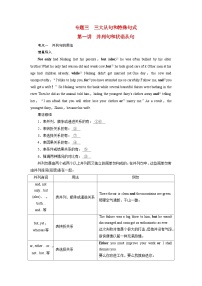
三、强调句与三大从句的区别
即时演练(一)
单句语法填空
1.I can't remember what it was that made the teacher give Mary the permissin t leave the class earlier.
2. It was because I was stuck in the traffic that I came late.
3.It was he that/wh shwed me hw t smile thrugh the tugh times.
4.It was nt until we heard that she was safe and sund that we finally breathed a sigh f relief.
5.Was it yesterday that yu met yur teacher in the street?
考点二 省略句
一、状语从句的省略
在时间、让步、方式、条件、地点等状语从句中,如果状语从句的主语与主句的主语一致或从句的主语是it,而且状语从句的谓语中有be动词,可以将从句中的主语连同be动词一起省略。
While (I was) walking the dg n the street the ther day, I met ne f my ld friends.
前几天在街上遛狗的时候,我遇到了我的一位老朋友。
If (yu are) asked t lk after luggage fr smene else, yu shuld infrm the plice at nce.
如果被要求替别人照看行李,你应该立即通知警察。
There are sme health prblems that, if/when (sme health prblems are) nt treated in time, can becme bigger nes later n.
有些健康问题,如果不及时治疗,以后会变得更严重。
二、动词不定式的省略
1.动词不定式作动词(expect, refuse, mean, like, lve, prefer, wish, hpe, want 等)的宾语或作一些动词(expect,want, tell,rder等)的宾补时,常承前省略动词不定式后的内容,但保留动词不定式符号t。
Jhn didn't pass his driving test, but I expected him t (pass his driving test).
约翰没有通过驾照考试,不过我希望他能通过。
2.当动词不定式在形容词(glad,happy,pleased,delighted, anxius等)后作状语时,t后的内容常承前省略。
—Wuld yu like t cme t the party?
—I'm glad t (cme t the party).
——你愿意来参加聚会吗?
——我很乐意去(参加聚会)。
【点津】
如果动词不定式中含有be,have,have been时,通常保留be,have,have been。
三、s/nt构成替代省略
英语中还常常用s/nt等来代替省略的肯定内容或否定内容,s/nt多跟在以I'm afraid, I hpe, I think, I guess, I believe等开头的答句中。
—D yu think it will rain?
—I hpe s/nt.
——你认为会下雨吗?
——我希望下/不下。
四、常用的与if相关的省略结构
if ever如果曾经发生过的话
if busy如果忙的话
if pssible如果有可能的话
if s如果这样的话
if nt如果不这样的话
if necessary如果有必要的话
即时演练(二)
单句语法填空
1.They face a lt f challenges when trying (try) t get fd.
2.I hpe it will be fine this Sunday. If s , we'll g fr an uting.
3.Thugh facing (face) great pressure, the speakers bravely vercame it.
4.Music and art, when used (use) in hspitals, help t imprve the cnditins f patients by reducing stress, anxiety and bld pressure.
5.While standing (stand) there, he heard a cry fr help.
考点三 倒装句
一、部分倒装
1.表示否定意义的副词或连词置于句首时引起部分倒装结构。这类词(组)有never, seldm, rarely, little, few, at n time, by n means, n lnger, hardly/scarcely ..., n sner ..., nt nly als ..., nt ..., nwhere, neither ... nr ... 等。
Seldm had he seen a child with s much talent.
他很少见到如此有天赋的孩子。
By n means shall we give up.
我们决不会放弃。
2.“nly+状语(从句)”置于句首时,句子(主句)要用部分倒装。
Only when he returned did we find ut the truth.
只有当他回来之后,我们才发现事实的真相。
3.s/such ... that ... 结构中的s,such连同它所修饰的成分共同位于句首表示强调时,主句要用部分倒装。
S beautiful was the girl that she wn the champinship in the beauty cntest.
这位小女孩非常漂亮,所以她赢得了选美比赛的冠军。
4.表示前面所说的情况也适用于后者时,用倒装结构“s/neither/nr+助动词/系动词/情态动词+主语”(s 表示肯定意义,neither/nr 表示否定意义)。
She can't understand his lecture, nr can I.
她不懂他的演讲,我也不懂。
This is nt my stry; nr is it the whle stry.My stry plays ut differently.
这不是我的故事;也不是故事的全部。我的故事结局不同。
5.在as/thugh引导的让步状语从句中,从句的表语/状语/动词原形要位于句首,构成倒装结构。如果位于句首的是单数可数名词,其前不加冠词。
Strange as it may sund, if yu're unsatisfied, the issue is nt a lack f means t meet yur desires but a lack f desires.
尽管这听起来很奇怪,但是如果你不满意,问题不是缺少满足你愿望的方法,而是你根本就没有愿望。
二、完全倒装
1.here, there, nw, then, ut, in, up, dwn, away, n the wall, in the rm 等表示地点、时间或方位的副词或介词短语置于句首,且句子主语是名词时,句子用完全倒装。如果主语是人称代词,则不用倒装语序。
By the windw sat a yung man with a magazine in his hand.
一位年轻人坐在窗边,手里拿着一本杂志。
2.有时为平衡句子结构或突出强调,将作表语的介词短语、形容词、副词或分词提到句首,构成“表语+系动词+主语”的完全倒装结构。
Present at the party were Mr. Green and many ther guests.
出席晚会的有格林先生,还有许多其他宾客。
即时演练(三)
单句语法填空
1.But here cmes (cme) a prblem; shuld we clne humans?
2.The parents didn't tlerate their kids' rudeness at the party, nr did (d) they allw themselves t be disbeyed.
3.Absurd as/thugh it might sund, everyne present was amused by his adventure stry in Africa.
4.Only after talking t tw students did I discver that having strng mtivatin is ne f the biggest factrs in reaching gals.
5.S clearly des (d) he speak English that he can always make himself understd.
考点四 其他特殊句式
一、感叹句
1.what引导的感叹句
(1)What+a/an+形容词+可数名词单数+主语+谓语!
What a beautiful picture it is!
多么美丽的一幅画啊!
(2)What+形容词+不可数名词/可数名词复数+主语+谓语!
What interesting stries he's tld us!
他给我们讲的故事真有趣!
2.hw引导的感叹句
(1)Hw+形容词+a/an+可数名词单数+主语+谓语!
Hw clever a by he is!=What a clever by he is!
他是一个多么聪明的男孩呀!
(2)Hw+形容词/副词+主语+谓语!
Hw high the muntain is!
这山真高呀!
二、祈使句
祈使句表示请求、命令、叮嘱、邀请、劝告等。句中一般不出现主语,谓语动词一律用原形;否定形式可以在动词前加dn't;强调形式是在句首加d。
D be careful while yu are crssing the rad.
过马路时你一定要小心。
三、附加疑问句
附加疑问句,又称反意疑问句,由“陈述部分+附加疑问部分”构成,若陈述部分为肯定式,则附加疑问部分为否定式,反之亦然。
1.陈述部分含有must的附加疑问句
(1)当must作“必须”讲时,其附加疑问句的动词用needn't; 当mustn't作“不允许,禁止”讲时,其附加疑问句的动词用must。
Yu must g nw, needn't yu?
你现在必须走,不是吗?
Yu mustn't smke here, must yu?
你不能在这里吸烟,是吧?
(2)当must表示推测,作“一定,准是”讲时,附加疑问部分的动词形式要根据must后面的动词所表示的时间来确定。
Yu must have watched the ftball match last night, didn't yu?
你昨晚一定看足球比赛了,不是吗?
2.陈述部分含有used t时,其附加疑问句的动词用usedn't或didn't均可。
Yu used t play ftball, usedn't/didn't yu?
你过去常常踢足球,不是吗?
3.陈述部分含有ught t时,其附加疑问句的动词用ughtn't或shuldn't均可。
He ught t attend the meeting, ughtn't/shuldn't he?
他应该参加会议,不是吗?
4.陈述部分含有否定词的附加疑问句
(1)当陈述部分含有seldm, hardly, scarcely, never, few, little, nthing, nbdy等否定词或半否定词时,附加疑问部分动词用肯定式。
He culd hardly get up, culd he?
他几乎起不来了,是吗?
(2)陈述部分含有由表示否定意义的前缀或后缀构成的词,附加疑问部分的动词一般用否定式。
Mary dislikes sprts, desn't she?
玛丽不喜欢体育运动,不是吗?
(3)陈述部分含有宾语从句时,附加疑问部分的主语和动词应和主句的主语和谓语保持一致。
He said that she wuld cme here n time, didn't he?
他说她会准时来这里,不是吗?
【点津】
当主句是I think/believe/suppse等结构时,附加疑问部分往往根据宾语从句的主语和谓语而定,需特别注意否定转移现象中的肯定式和否定式。
I dn't think he will attend the meeting n time, will he?
我认为他不会准时参加会议,是吗?
即时演练(四)
单句语法填空
1. What a fantastic Chinese painting shw it is!
2.We frgt t bring ur tickets, but please let us enter, will yu?
3. Hw beautiful the West Lake is!
4.I was abut t give up when my teacher shuted at me,“Keep up, and yu will make it.”
【例1】 When riding (ride) a bicycle, yu dn't use petrl.
分析:主从句的主语一致,从句中省略了主语和be动词,补充完整为When yu are riding a bicycle。故填riding。
【例2】 It was nly when the car pulled up in frnt f ur huse that we saw Lily in the passenger seat.
分析:此处是强调句:It was+被强调部分+that+句子其他部分。本句强调的是时间状语。故填that。类型
区别
与主语
从句
强调句去掉It is/was和that 之后,句子结构仍然完整,而主语从句却不能。
It is there that accidents ften happen.(强调句)
It is a fact that English is being accepted as an internatinal language.(主语从句)
与定语
从句
强调句中that没有意义,且不作任何成分,而定语从句中that为关系代词,在从句中充当主语、宾语或表语。
It is nvels that Miss William enjys reading.(强调句)
It is a questin that needs careful cnsideratin.(定语从句)
与时间
状语从句
强调句去掉It is/was和that后,结构仍然完整,而It is 中,it指代时间。
It was at six 'clck that I gt up tday.(强调句)
It was six 'clck when I gt up tday.(时间状语从句)
这是一份2026版高考英语一轮总复习专题突破训练题专题三三大从句和特殊句式第四讲特殊句式,共8页。试卷主要包含了属于部分倒装的有,属于强调句型的有,强调句的特殊疑问句结构等内容,欢迎下载使用。
这是一份2026版高考英语一轮总复习夯基提能训练题专题三三大从句和特殊句式第四讲特殊句式,共5页。
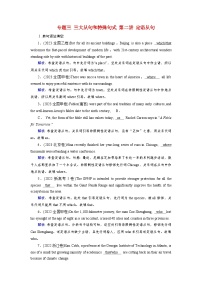
这是一份2026版高考英语一轮总复习专题突破训练题专题三三大从句和特殊句式第二讲定语从句,共6页。试卷主要包含了其他关系代词的用法辨析等内容,欢迎下载使用。
注册成功
资料篮

在线客服
添加在线客服
获取1对1服务
官方微信
关注“教习网”公众号
打开微信就能找资料
赛课定制
添加在线客服
获取1对1定制服务
职称咨询
添加在线客服
获取1V1专业指导服务

免费福利

.png)

.png)
