 免费领取教师福利
若您为此资料的原创作者,认为该资料内容侵犯了您的知识产权,请扫码添加我们的相关工作人员,我们尽可能的保护您的合法权益。


这是一份初中英语鲁教版(五四学制)(2024)八年级上册(2024)Section A第3课时测试题,文件包含_Unit5单元测试卷_Unit5_单元测试卷-教师版docx、_Unit5单元测试卷_Unit5_单元测试卷-学生版docx等2份试卷配套教学资源,其中试卷共22页, 欢迎下载使用。
Unit 6 Sectin A — Grammar Fcus
第3课时 鲁教版初中英语八年级上册 (p.73)
一、学习目标
1. 理解并掌握 句型(如此……以至于……)的构成与用法。
2. 理解并掌握 unless = (除非;如果不)的含义与用法。
3. 理解并掌握 as sn as(一……就……)的构成与用法。
4. 正确区分 -ed 形容词和 -ing 形容词(如 surprised/surprising, embarrassed/embarrassing)的含义与用法。
二、重点
1. s + adj./adv. + that... 结果状语从句
2. unless 引导的条件状语从句(= )
3. as sn as 引导的时间状语从句
4. -ed 形容词与 -ing 形容词的辨析
三、难点
1. 在语境中正确选择 / unless / as sn as,理解各自的语义功能。
2. 区分 -ed 形容词描述人的感受与 -ing 形容词描述事物特征。
3. 在语篇中综合运用上述语法项目。
语法与句型
语法点1:s + adj./adv. + that... (如此……以至于……)
【例句】
• That's s frmal that we dn't d it these days.(那太正式了,以至于我们现在不那样做了。)
• It was s embarrassing that I wanted t hide.(那太令人尴尬了,以至于我想躲起来。)
• He spke s quickly that nbdy culd understand him.(他说得如此之快,没人能听懂。)
语法点2:unless = (除非;如果不)
【例句】
• Dn't bring fd unless the hst asks yu t.(不要带食物,除非主人请你带。)
= Dn't bring fd if the hst desn't ask yu t.
• Peple dn't kiss ne anther n the cheek unless they are gd friends.(人们不会亲对方脸颊,除非他们是好朋友。)
语法点3:as sn as(一……就……)
【例句】
• In Japan, we bw as sn as we meet a teacher.(在日本,我们一见到老师就鞠躬。)
• I will call yu as sn as I arrive.(我一到就给你打电话。)
• Take ff yur shes as sn as yu enter smene's hme.(一进入别人的家就脱鞋。)
语法点4:-ed 形容词 vs -ing 形容词
学习支架
三大从句连接词对比表
-ed / -ing 形容词速查表
四、知识要点
1. 的灵活用法
【要点】s 后接形容词修饰名词时用 s + adj. + a/an + n. + that...
【例句】It was s embarrassing a mment that I blushed.
【拓展】 也可以表示"如此……以至于",但 such 后接名词。
It was such an embarrassing mment that I blushed.
2. unless 的否定含义
【要点】unless 本身含有否定意义,相当于 。从句中不再加 nt。
【对比】
Yu will fail unless yu study hard. = Yu will fail if yu dn't study hard.
【注意】unless 不能与 互换位置时,注意句意是否相同。
3. as sn as 的时态规则
【要点】当主句用一般将来时,as sn as 从句用一般现在时表示将来。
【例句】I will tell him as sn as he cmes back.
【对比】描述过去的事件时,主从句都用过去时。
He called me as sn as he arrived.
4. -ed/-ing 形容词的判断方法
【方法】看主语——主语是"人"且表达"感受"→用 -ed;主语是"事物"且表达"特征"→用 -ing。
【特殊情况】人作主语 + -ing 形容词时,表示"某人是令人……的"。
He is bring. = 他这个人很无聊(令人无聊)。
He is bred. = 他感到无聊。
五、典型例题
【例1】Being late in Kenya is s cmmn ______ peple are nt expected t be n time.
A. as B. that C. s D. because
【例2】Yu shuldn't use smene's first name ______ he r she invites yu t.
A. if B. as sn as C. unless D. s that
【例3】The custms here are s ______ that all the visitrs feel ______.
A. surprising; surprising B. surprised; surprised
C. surprising; surprised D. surprised; surprising
★ 基础巩固
1. The cultural shw was ______ interesting ______ everyne wanted t watch it again.
A. s; that B. such; that
C. t; t D. enugh; t
2. Yu will feel embarrassed ______ yu learn abut different cultures.
A. if B. unless
C. as sn as D. s that
3. I will bw ______ I meet my Japanese teacher.
A. unless B.
C. as sn as D. if
4. The stry was s ______ that the children were all ______.
A. excited; exciting B. exciting; excited
C. excited; excited D. exciting; exciting
5. Dn't eat in the library ______ yu have permissin.
A. if B. as sn as
C. unless D. because
6. She was ______ when she heard the ______ news.
A. surprising; surprised
B. surprised; surprising
C. surprised; surprised
D. surprising; surprising
用括号中所给词合并下列句子
7. In Türkiye, peple dn't kiss ne anther n the cheek. They can d s if they are gd friends. (unless)
8. Take ff yur shes. Yu d this when yu enter smene's hme. (as sn as)
9. Being late is very cmmn in Kenya. Yu shuld be patient and nt expect peple t be n time. ()
10. Sticking chpsticks int a bwl f rice is very rude. Yu shuld avid it. ()
★★ 能力提升
1. He spke ______ fast ______ nbdy culd fllw him.
A. s; that B. such; that
C. t; that D. very; that
2. ______ yu practice mre, yu wn't play well in the cultural shw.
A. If B. Unless
C. As sn as D. Althugh
3. The little girl ran t her mther ______ she saw her at the airprt.
A. unless B.
C. as sn as D. because
阅读理解
When Sarah went t study in Germany, she experienced many cultural shcks. The first thing that surprised her was hw punctual Germans are. If a meeting starts at 9:00, everyne arrives at 8:55. Being late is s implite that peple will think yu are rude.
Sarah's hst family als had sme rules that cnfused her at first. Fr example, she had t take ff her shes as sn as she entered the huse. And she was tld nt t stick her chpsticks int the rice bwl because it was s rude that it culd ffend the hst.
"I felt embarrassed n my first day," Sarah said. "I was s cnfused that I didn't knw what t d. Everything was different frm what I was used t."
But sn, Sarah began t enjy her new life. She fund that German culture was interesting, nt bring. The mre she learned, the mre she understd. "Unless yu try t understand ther cultures, yu can't really grw," she said. "And as sn as yu pen yur mind, the wrld becmes a much mre interesting place."
4. What surprised Sarah mst abut Germany?
A. The fd
B. Hw punctual Germans are
C. The weather
D. The language
5. What des the underlined wrd "punctual" mean?
A. friendly B. quiet
C. n time D. plite
6. Why did Sarah feel embarrassed n her first day?
A. Because she was late fr schl
B. Because she didn't knw the rules
C. Because she culdn't speak German
D. Because her hst family was angry
7. What can we learn frm Sarah's wrds in the last paragraph?
A. German culture is bring
B. She wants t g back hme
C. We shuld try t understand ther cultures
D. She desn't like Germany
完形填空
阅读下面短文,从A、B、C、D四个选项中选出最佳选项。
Last year, I had the chance t study in Thailand. Befre I went, my teacher tld me abut sme cultural differences. She said, "In Thailand, peple greet each ther by pressing their palms tgether and bwing 1.______. It's called the 'wai'."
I was 2.______ because I didn't knw what t expect. When I arrived, I tried t shake hands with my hst family, but they 3.______ me with the wai instead. I felt 4.______ — I didn't knw the right way t greet them!
My hst mther was very kind. She said, "Dn't lk s 5.______! I'll teach yu." She explained that the wai is 6.______ imprtant custm in Thailand. The higher yur hands g, the mre 7.______ yu shw.
I practiced every day. 8.______ I met smene new, I tried the wai. It was 9.______ difficult at first, but sn it became natural. My hst family was happy t see me trying their 10.______.
This experience taught me that different cultures have beautiful ways f cnnecting with each ther.
1.
A. slightly B. heavy
C. quick D. lud
2.
A. excited B. surprised
C. bring D. interested
3.
A. greeted B. embarrassed
C. surprised D. cnfused
4.
A. embarrassed B. embarrassing
C. surprising D. interesting
5.
A. surprising B. interesting
C. embarrassed D. excited
6.
A. a B. an
C. the D. /
7.
A. cnfused B. surprised
C. respect D. embarrassed
8.
A. Unless B. As sn as
C. D. Althugh
9.
A. s B. such
C. very D. t
10.
A. culture B. language
C. greeting D. fd
书面表达
你的外国朋友即将来你的学校参加文化交流活动。请你根据以下提示,写一篇短文,告诉他/她一些注意事项。
提示:
1. 如何用中文打招呼(握手、说"你好")
2. 一些重要的文化习俗(如尊敬师长、餐桌礼仪等)
3. 为什么了解这些习俗很重要
要求:运用本单元所学语法( / unless / as sn as / -ed/-ing 形容词),80词左右。
★★★ 拓展延伸
推断与运用
1. 根据所给情景,用 / unless / as sn as 各写一个句子。
情景:你的朋友要去日本旅行。
2. 用 -ed 或 -ing 形式填空,并说明理由。
a) The mvie was really ______ (interest), s everyne was ______ (interest) in it.
b) I was ______ (embarrass) because the situatin was very ______ (embarrass).
c) The children were ______ (bre) because the lecture was t ______ (bre).
3. 阅读下面的短文,分析文中使用了哪些本课时所学语法结构,并各举一例。
My exchange trip t Krea was amazing! The fd was s delicius that I ate t much. As sn as I arrived at my hst family's hme, I bwed t shw respect. My hst mther was surprised and then she smiled warmly.
"Dn't be s embarrassed!" she said. "Yur bw was perfect!" I was relieved. She tld me that unless I tried t learn Krean custms, I wuld miss many wnderful experiences.
I fund Krean culture interesting, nt bring. Every day was exciting!
项目
说明
形式 (Frm)
s + 形容词/副词 + that + 从句
含义 (Meaning)
表示"如此……以至于……",that 引导结果状语从句
用法 (Use)
强调程度很高,导致某种结果。s 后接形容词或副词
错误表达
正确表达
说明
It s frmal that...
It is s frmal that...
句中必须有完整的谓语结构
It is s very frmal that...
It is s frmal that...
s 后不加 very,s 本身已表示程度
项目
说明
形式 (Frm)
unless + 从句(从句用一般现在时表将来)
含义 (Meaning)
"除非"或"如果不",=
用法 (Use)
引导条件状语从句,表示唯一的条件。unless 本身含否定意义
错误表达
正确表达
说明
unless the hst desn't ask
unless the hst asks
unless 本身含否定,从句不加 nt
unless he will cme
unless he cmes
unless 从句用一般现在时表将来
项目
说明
形式 (Frm)
as sn as + 从句(从句用一般现在时表将来)
含义 (Meaning)
"一……就……",表示两个动作紧接着发生
用法 (Use)
引导时间状语从句,强调动作的紧接性
类型
形式
含义
主语
例句
-ed 形容词
surprised, embarrassed, interested, bred
描述人的感受
通常是人
I was surprised. / She felt embarrassed.
-ing 形容词
surprising, embarrassing, interesting, bring
描述事物的特征
通常是事物
That's surprising! / It is embarrassing.
错误表达
正确表达
说明
I am very surprise.
I am very surprised.
描述人的感受用 -ed 形式
The stry is very interested.
The stry is very interesting.
描述事物特征用 -ing 形式
He is bring in class. (他想说他感到无聊)
He is bred in class.
bring = 令人无聊的;bred = 感到无聊的
连接词
从句类型
含义
关键特征
结果状语从句
如此……以至于……
s 后接 adj./adv.,that 后接完整句子
unless
条件状语从句
除非;如果不
= ;从句用一般现在时
as sn as
时间状语从句
一……就……
主句和从句动作紧接发生
-ed(人的感受)
-ing(事物特征)
surprised 感到惊讶的
surprising 令人惊讶的
embarrassed 感到尴尬的
embarrassing 令人尴尬的
interested 感兴趣的
interesting 有趣的
bred 感到无聊的
bring 令人无聊的
excited 感到兴奋的
exciting 令人兴奋的
tired 感到疲倦的
tiring 令人疲倦的
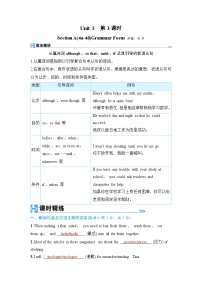
这是一份初中英语鲁教版(五四学制)(2024)八年级上册(2024)Section A第3课时测试题,文件包含第3课时_SectionAGrammarFocus-讲义与练习-教师版docx、第3课时_SectionAGrammarFocus-讲义与练习-学生版docx等2份试卷配套教学资源,其中试卷共25页, 欢迎下载使用。
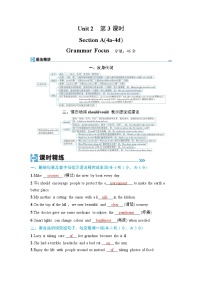
这是一份初中英语鲁教版(五四学制)(2024)八年级上册(2024)Section A第3课时测试题,文件包含第1课时_ListeningSpeakingHowdoyouspendpocketmoney-讲义与练习-教师版docx、第1课时_ListeningSpeakingHowdoyouspendpocketmoney-讲义与练习-学生版docx等2份试卷配套教学资源,其中试卷共18页, 欢迎下载使用。
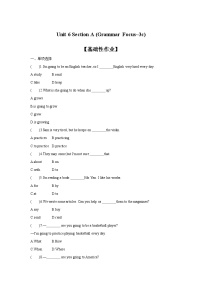
这是一份初中英语人教版(2024)八年级下册(2024)Section A优秀第3课时当堂检测题,文件包含第3课时SectionA4a-4cGrammarFocus-教师版docx、第3课时SectionA4a-4cGrammarFocus-学生版docx等2份试卷配套教学资源,其中试卷共8页, 欢迎下载使用。
 新教材
新教材
注册成功
资料篮

在线客服
添加在线客服
获取1对1服务
官方微信
关注“教习网”公众号
打开微信就能找资料
赛课定制
添加在线客服
获取1对1定制服务
职称咨询
添加在线客服
获取1V1专业指导服务

免费福利


.png)
.png)
.png)
