免费领取教师福利
若您为此资料的原创作者,认为该资料内容侵犯了您的知识产权,请扫码添加我们的相关工作人员,我们尽可能的保护您的合法权益。


这是一份2024版译林版八年级上册英语期末完形填空进阶练15篇专项练习含答案,文件包含第一单元素养测评卷_解析卷docx、第一单元素养测评卷_学生卷docx等2份试卷配套教学资源,其中试卷共7页, 欢迎下载使用。
目录
TOC \ "1-2" \h \u \l "_Tc13242" 一、Unit8单元话题热点预测 PAGEREF _Tc13242 \h 1
\l "_Tc5574" 二、Unit7单元话题热点预测 PAGEREF _Tc5574 \h 6
\l "_Tc30172" 三、Unit6单元话题热点预测 PAGEREF _Tc30172 \h 11
\l "_Tc283" 四、Unit5单元话题热点预测 PAGEREF _Tc283 \h 17
\l "_Tc25157" 五、Units1-4单元话题热点预测 PAGEREF _Tc25157 \h 24
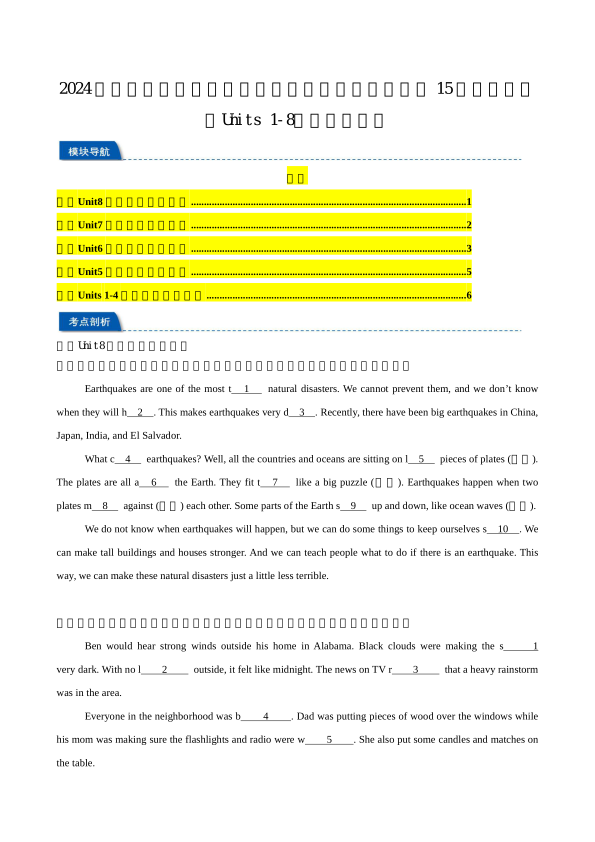
一、Unit8单元话题热点预测
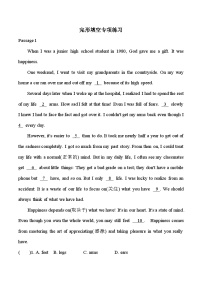
Lily really enjyed being utdrs and hanging ut with her friends. One sunny day, she and her friends decided t run t the park as fast as they 1 . They were all ready t shw hw quick they were. When they started, Lily ran fast and tk the lead. 2 suddenly, she tripped (倒) and fell. Her knee was badly hurt. She was in a lt f 3 .
Luckily, Lily had learned abut first aid* frm her mum and she knew 4 t d. First, she cleaned her knee with water. Then, she cvered the wund with a sft bandage (绷带) t prtect it.
After a few days f 5 , Lily felt better. She really wanted t get back t her favurite activities, but her mum tld her t d sme warm-up exercises befre mving arund. Her mum 6 that warming up helps get the muscles and jints (肌肉和关节) ready fr activities. What’s mre, warm-up exercises were als 7 , and Lily enjyed ding them with her mum.
Frm then n, Lily always remembered t 8 herself during exercise. She knew accidents might happen, but with first aid knwledge and warm-up, she culd stay safe and have fun. 9 , she was prud t share what she had learned with her friends. Sn, 10 in her neighburhd knew her as a little expert (专家) in first aid. *First aid: Basic medical help fr smene wh is suddenly sick r hurt, befre a dctr cmes.
1.A.culdB.culdn’tC.shuldD.shuldn’t
2.A.OrB.AndC.AlsD.But
3.A.wrkB.peaceC.painD.jy
4.A.hwB.whatC.whereD.when
5.A.travelB.restC.silenceD.truble
6.A.wrriedB.explainedC.guessedD.imagined
7.A.funB.newC.hardD.silly
8.A.lk frB.lk upC.lk afterD.lk thrugh
9.A.SB.YetC.ExceptD.Besides
10.A.smeneB.everyneC.smethingD.everything
阅读下面短文,掌握其大意,然后从各题所给的四个选项中选出一个最佳答案。
Many earthquakes happen every year. Sme f these earthquakes are very strng. When they happen near a 1 , they can be very serius. Many peple are 2 r even die in the earthquakes. Knwing sme ways t prtect 3 will help t keep yu safe in the earthquake.
If yu are indrs 4 the earthquake happens, the safest place is 5 a strng table r desk. Sitting n the flr in a drway r clse t a wall is safer than 6 in the middle f a rm. Remember t 7 yur head and neck with yur arms. Stay away frm windws, tall furniture and pictures r 8 that may fall n yu. D nt try t run ut f the building.
If yu are 9 f drs, mve t clear areas. Get away frm buildings and trees. Be very 10 f fallen pwer lines.
The 11 is nt ver when the strng shaking stps. There will be sme shcks 12 mst earthquakes. We call them aftershcks and they smetimes can be mre 13 than the first earthquake.
When it is safe fr yu t mve arund, check the peple near yu. Sme may need 14 . Yu may feel afraid, 15 yu shuld try t stay calm. That is the mst imprtant thing t d in the earthquake.
1.A.villageB.schlC.cityD.river
2.A.excitedB.sadC.hurtD.angry
3.A.yurselfB.myselfC.themselvesD.urselves
4.A.hwB.whenC.whereD.why
5.A.besideB.nC.underD.behind
6.A.standingB.runningC.jumpingD.walking
7.A.raiseB.tuchC.pressD.prtect
8.A.anythingB.smethingC.nthingD.everything
9.A.in frntB.utC.in the middleD.at the ft
10.A.carefulB.usefulC.helpfulD.hpeful
11.A.newsB.reprtC.weatherD.danger
12.A.afterB.befreC.atD.n
13.A.imprtantB.dangerusC.difficultD.nervus
14.A.lveB.jbC.friendsD.help
15.A.andB.butC.sD.r
二、Unit7单元话题热点预测
D yu enjy the natural wrld arund yu? Maybe yu nticed clrful 1 n yur way t schl. A nature diary 2 a way f recrding the nature yu cme acrss. It prvides us a chance t 3 writing. Yu might als find 4 helps yu live in the mment.
In the beginning, yu can write a diary every day. Once a week 5 any time yu feel like it. Yu can decide t recrd 6 is in a certain place and where yu g. Fr 7 f the diaries, write the date and place. Yu can draw symbls fr this, such as a(n) 8 fr rain.
What can yu write in yur diaries? First, describe yur surrundings (周围环境) and then 9 sme things that interest yu. Fr example, what des the wind 10 like when it blws thrugh the leaves? Yu can 11 write abut hw the things make yu feel, r any questins yu want t 12 . Yu can even write a(n) 13 stry t make yur diary fun.
Yu can 14 a picture f a flwer, a leaf r bth. Yu can lk it up fr mre 15 nline. Yu’ll learn mre abut nature.
1.A.bksB.clthesC.flwersD.life
2.A.wasB.isC.amD.are
3.A.imprveB.discussC.rememberD.chse
4.A.thisB.neC.theseD.it
5.A.rB.andC.sD.but
6.A.whereB.whatC.whenD.hw
7.A.smeB.nneC.eachD.bth
8.A.hatB.umbrellaC.glassD.camera
9.A.buyB.putC.pickD.get
10.A.sundB.smellC.tasteD.lk
11.A.stillB.ftenC.alsD.ever
12.A.find utB.clean utC.put utD.sell ut
13.A.successfulB.interestingC.cmmnD.strange
14.A.giveB.buyC.takeD.use
15.A.timeB.adviceC.practiceD.infrmatin
Jiuzhaigu Valley, lcated in Sichuan Prvince, China, is a UNESCO Wrld Heritage Site knwn fr its stunning natural beauty. The valley 1 clrful lakes, waterfalls, and snw-capped muntains. Every year, thusands f 2 frm arund the wrld visit this amazing place.
The water in Jiuzhaigu is s clear that yu can 3 the bttm f the lakes. In autumn, the surrunding frests turn vibrant shades f red, yellw, and range, creating a 4 view. Lcal Tibetan culture als adds t the 5 f the valley.
6 , it’s imprtant t prtect this natural wnder. Visitrs shuld fllw the rules, such as nt littering r 7 the water. The best time t visit is during spring r autumn when the weather is mild and the scenery is at its 8 .
Jiuzhaigu is nt nly a ppular turist destinatin but als a hme t many 9 animals and plants. It reminds us f the imprtance f 10 nature fr future generatins.
1.A.hasB.hadC.havingD.have
2.A.dctrsB.engineersC.turistsD.scientists
3.A.seeB.seeingC.sawD.sees
4.A.bringB.terribleC.fantasticD.nisy
5.A.prblemB.beautyC.dangerD.difficulty
6.A.BesidesB.HweverC.TherefreD.Althugh
7.A.tuchingB.t tuchC.tuchD.tuched
8.A.wrstB.bestC.driestD.cldest
9.A.rareB.cmmnC.nisyD.dangerus
10.A.ignringB.pllutingC.prtectingD.frgetting
三、Unit6单元话题热点预测
Fr travellers, autumn is a beautiful seasn. But fr 1 in Western cultures, autumn is a difficult seasn t describe.
On the ne hand, it is the 2 f the summer, and s a little sad. When yu 3 in the mrning, there’s mist (薄雾) and it’s 4 . Yu knw that winter is 5 . American writer Ernest Hemingway wrte in his bk A Mveable Feast: “Yu expected (认为) t be 6 in the autumn. Part f yu died each year when the leaves fell frm the trees…” On the ther hand, autumn has its 7 side. There are s many 8 in nature at this time f year: The red and brwn clurs that the leaves change t, and the way they fall 9 the trees. French writer Albert Camus even thught autumn was a secnd spring: “Autumn is a secnd spring when every leaf is a flwer.”
Anther 10 theme (主题) is wisdm (智慧). The cming f the seasn is just like a persn becming mature (成熟的). At this time it’s thught that peple culd 11 a thing r tw abut life.
Of curse, there are many 12 themes and subjects in the literature (文学作品) f autumn. Fr example, it’s the start f a new term f the schl year. 13 autumn can be a writing tpic fr 14 children and yung peple. But autumn writing is usually abut the changes in 15 . And writers ften use it as a symbl fr changes in human life.
1.A.dancersB.visitrsC.writersD.singers
2.A.tpB.endC.middleD.start
3.A.get upB.stay upC.set upD.put up
4.A.clderB.clerC.warmerD.htter
5.A.dingB.gingC.shiningD.cming
6.A.happyB.excitedC.sadD.quiet
7.A.gdB.simpleC.difficultD.hard
8.A.prblemsB.changesC.mistakesD.prcesses
9.A.intB.dwnC.verD.frm
10.A.springB.summerC.autumnD.winter
11.A.learnB.frgetC.reduceD.cllect
12.A.antherB.thersC.the therD.ther
13.A.AsB.IfC.SD.Or
14.A.amngB.bthC.frmD.all
15.A.shapeB.natureC.ideaD.life
When yu g t England, yu may get a 1 that s many peple take an umbrella r a raincat with them n a sunny mrning.
On a bus r a train, yu can usually see peple are lking ut f the 2 r reading newspapers. But 3 dn’t talk t much. When yu meet English peple, they ften talk abut ne thing—the 4 .
5 is it s? Because the weather in England is 6 at any time. Peple there can experience (经历) 7 seasns in ne day. In the mrning, the weather is warm just 8 in spring r autumn. An hur later, 9 cluds cme and then it rains hard. The weather 10 a little cld like the beginning f winter. In the late afternn, the sky will be 11 . The sun will begin t shine, and it will be summer at this time f a day. In England, peple can 12 have summer in winter, r have winter in summer. S in winter they can 13 smetimes, and in summer smetimes they shuld 14 warm clthes.
15 yu dn’t take an umbrella r a raincat in England, yu will regret (后悔) later in the day.
1.A.raceB.vacatinC.skyD.surprise
2.A.streetB.windwC.beachD.hrse
3.A.heB.sheC.theyD.we
4.A.weatherB.cuntrysideC.dangerD.face
5.A.HwB.WhatC.WhD.Why
6.A.friendlyB.differentC.dirtyD.ppular
7.A.furB.threeC.twD.ne
8.A.behindB.pastC.likeD.by
9.A.shyB.blackC.lvelyD.warm
10.A.getsB.staysC.feedsD.lives
11.A.dryB.clC.sunnyD.snwy
12.A.alsB.neverC.hardlyD.really
13.A.singB.swimC.driveD.learn
14.A.brushB.leaveC.takeD.keep
15.A.ButB.AlthughC.IfD.Because
四、Unit5单元话题热点预测
Have yu ever mved huse befre? Hw did yu adjust t (适应) life in a new place? Recently, scientists 1 sme Burrwing Owls (穴栖猫头鹰) settle (安置) int their new hmes.
Burrwing Owls are small brwn lng-legged birds. They make hmes in undergrund burrws (洞穴) and prefer t live in grups. In Califrnia, there is anther kind f wl 2 the Western Burrwing Owl.
In the past, these wls lived in the grasslands. Later, peple began building cities n many f the grasslands. This drve the wls ff their burrws. S sme f these birds were unable t 3 new hmes. As a result, the number f Western Burrwing Owls in Califrnia was 4 than that in 1965. 5 the number kept falling, they wuld be at risk f dying ut. 6 , scientists fund ut the prblem sme years ag.
They sn began trying t mve these wls t sme prtected grasslands. In rder t make the birds 7 mre “at hme”, scientists played the recrding sund f wl calls 8 these areas. They als used white paint t make fake drppings (假粪便) f the wls. This made the birds 9 that ther wls were living there. As a result, they 10 their new hmes and stayed there.
Scientists returned t check n the wls. Mst f them seemed t like their new hmes. Hpe they can enjy their new lives there!
1.A.bughtB.sharedC.helpedD.pressed
2.A.fllwedB.calledC.arrivedD.practiced
3.A.markB.leadC.rememberD.find
4.A.lngerB.mreC.smallerD.shrter
5.A.IfB.SC.ButD.Thugh
6.A.CertainlyB.HardlyC.LuckilyD.Heavily
7.A.lkB.feelC.sundD.taste
8.A.abutB.withutC.underD.in
9.A.believeB.fillC.catchD.invite
10.A.printedB.acceptedC.hitD.hurt
阅读下面短文,从每题A、B、C、D四个选项中选出可以填入空白处的最佳选项。
A grup f wild Asian elephants left Xishuangbanna Natinal Nature Reserve in Yunnan Prvince. They 1 500 kilmeters! After stpping in Kunming, 15 f them stayed in Yuxi city. Then they kept 2 twards a place they liked.
At first, there were 16 elephants in the grup. But ne baby elephant was brn during the trip, s the number became 3 . Later, tw yung male (雄性的) elephants 4 the grup and went in different directins.
Many peple wanted t knw 5 the teenage male elephants left. Shen Qingzhng has studied wild Asian elephants fr ver 30 years. He is the chief engineer (首席工程师) at Xishuangbanna Natinal Nature Reserve. He said, “The elephants are ‘rebelling’ (叛逆的). It’s like when yung peple grw up and smetimes dn’t 6 their parents.”
Shen als said that after watching elephants fr years, he fund a rule: male elephants ften leave their grup t 7 mates (配偶) when they are ver six years ld. The tw male elephants that left this time are abut ten years ld. They just didn’t want t stay with their 8 and wanted t g ut n their wn. But when they are 14 years ld, they will start t g back hme mre 9 .
D yu knw hw 10 elephants are? A newbrn elephant has an IQ (intelligence qutient) like a 1-year-ld baby. When it grws up t be an adult, its IQ is similar t, r even 11 than a 5-year-ld child.
Baby elephants grw fast, t. A baby elephant can stand up in a few minutes 12 being brn. Abut tw hurs later, it can walk beside its mther. And ne week after birth, it will g with its mther t bathe (洗澡) in rivers 13 lakes.
Chen Mingyng is a 14 prfessr (教授) at Yunnan University. He nticed that the elephant grup mved 15 . He thught ne pssible reasn was that they were waiting fr the tw male elephants that had left t cme back.
1.A.traveledB.ranC.climbedD.drve
2.A.sleepingB.mvingC.eatingD.resting
3.A.fifteenB.sixteenC.seventeenD.eighteen
4.A.leftB.jinedC.helpedD.fllwed
5.A.whenB.whereC.hwD.why
6.A.lk frB.listen tC.talk abutD.fight with
7.A.lseB.affectC.prtectD.find
8.A.teachersB.friendsC.familyD.neighbrs
9.A.ftenB.seldmC.hpefullyD.prbably
10.A.bigB.smartC.fastD.strng
11.A.lwerB.lngerC.biggerD.higher
12.A.untilB.befreC.afterD.since
13.A.becauseB.andC.butD.s
14.A.histryB.scienceC.sprtsD.plant
15.A.quicklyB.quietlyC.finallyD.slwly
阅读短文,理解其大意,从A、B、C、D四个选项中选出可以填入空白处的最佳选项。
D yu knw red pandas? These animals are small. They are nt the same as giant (大的) pandas, thugh their names are 1 . They have red-brwn fur, lng tails and cute white faces. Red pandas live in the frests. They lve t climb trees. They have sharp claws (锋利的爪子) and these claws can help them grip (握) the trees 2 . Their fur is the same clur as the mss n their tree hmes. This makes it 3 fr ther animals t find them.
Red pandas can lk 4 themselves very well. They are mst active in the early mrning and evening when they lk fr fd. 5 favurite fd is bamb, but they als eat fruits, berries, and smetimes small insects. Red pandas are usually shy. They can als be 6 t each ther. They may share fd r play tgether.
Hwever, peple 7 the frests where they live. Sme peple even 8 them fr their fur. Red pandas are in danger. Many peple are wrking t 9 them by saving their hmes and taking care f them in zs.
Red pandas are nt just cute-they are als a priceless 10 f nature fr humans. If we learn abut them and help prtect them, these special animals can live safely in the wild fr many mre years.
1.A.imprtantB.similarC.excitingD.beautiful
2.A.slwlyB.hardlyC.easilyD.sadly
3.A.difficultB.dangerusC.perfectD.playful
4.A.utB.upC.afterD.fr
5.A.ItsB.TheirC.HisD.Our
6.A.unhappyB.friendlyC.terribleD.silly
7.A.cut dwnB.fall dwnC.put dwnD.get dwn
8.A.saveB.pickC.keepD.hunt
9.A.guideB.respectC.surpriseD.prtect
10.A.strengthB.gdnessC.treasureD.scenery
五、Units1-4单元话题热点预测
Byrn and I are gd friends, but smething unhappy happened when we tried ut fr rles (竞争角色) in Jurney t the West.
Byrn wanted t be the leading rle—Wukng. Hwever, ur teacher 1 me t be Wukng. Byrn gt the rle f Bajie. “Let’s practice tgether.” I 2 him after that. “Srry, I’ll be busy this week.” said Byrn cldly and he didn’t 3 me.
That night, my dad fund I was nt 4 abut getting the leading rle. He asked me why. “Well, Byrn was sad because he was nt the leading rle, but I was. I’m afraid t lse the 5 .”
“Try giving him a little 6 and understanding, and he will change his mind sn,” said my dad.
Over the next week. I tried my best t 7 Byrn sme help. “Yu are such a great actr when acting as Bajie.” I said t him smilingly ne day. He als seemed 8 and tld me abut hw he understd the rle. When I asked him t help me, he 9 and smiled, t. He even said srry t me. Later, we became clser friends.
Smetimes we may have a 10 time in life. All we need t d is t be mre understanding t thers.
1.A.cmparedB.wavedC.disagreedD.chse
2.A.challengedB.directedC.askedD.answered
3.A.speak fB.lk atC.turn intD.pint t
4.A.sadB.excitedC.nervusD.sick
5.A.friendB.vlunteerC.graduateD.sister
6.A.niseB.magicC.timeD.talent
7.A.buyB.fferC.sellD.list
8.A.happyB.angryC.strictD.lucky
9.A.markedB.agreedC.interviewedD.stred
10.A.greatB.hardC.ludD.simple
阅读下面短文,掌握其大意,从各题所给的A、B、C和D项中选出最佳选项,并在答题卡上将该项涂黑。
Linda’s class was preparing fr the 100th day f schl. Every student needed t bring a 1 abut the number 100.
At first, Linda thught abut usual ideas like 100 cins r 100 stickers. But her teacher 2 them t be creative. While she was thinking, her brther had a bright 3 . “Why nt make 100 little bks—ne fr each classmate and teacher?” her brther said. Linda lved this suggestin because she lved bks. She culd 4 smething nice fr each persn inside the bk.
The next few days were busy but fun. Linda’s whle family wrked tgether 5 . Linda’s main 6 was writing. In each tiny bk, she wrte a shrt, 7 message fr a different persn at schl abut why they were special.
On the 100th day, Linda brught her prject t schl. When her classmates saw the 100 little bks, they were surprised and 8 . When the teacher started reading the messages alud, the classrm was filled with smiling faces. After each bk was read, everyne clapped fr the persn mentined. The prject was a big 9 .
Linda didn’t just cunt t 100. She fund a way t 10 100 reasns why her schl was a warm and caring place.
1.A.planB.prjectC.bkD.game
2.A.rderedB.encuragedC.helpedD.allwed
3.A.ideaB.dreamC.mindD.wish
4.A.brrwB.buyC.achieveD.write
5.A.happilyB.quietlyC.slwlyD.seriusly
6.A.jbB.hbbyC.prblemD.habit
7.A.negativeB.difficultC.warmD.famus
8.A.angryB.curiusC.sleepyD.afraid
9.A.successB.trubleC.lessnD.end
10.A.saveB.hideC.giveD.frget
What if the best learner in class never takes ntes with a pen? When I first saw Lila in ur schl last term, I felt she was quite 1 —she nly brught a ntebk and a tape recrder t lessns. 2 we hurried t write dwn every wrd the teacher said, she just sat quietly, 3 n the blackbard.
One day, ur math teacher gave a surprise 4 . Mst f us didn’t knw hw t answer the questins, but Lila finished 5 . When the teacher shwed her paper with full marks t all f us, smene finally asked, “Hw d yu remember everything withut 6 ?”
Lila smiled and played a shrt recrding. It was the 7 vice explaining key pints. “I dn’t write every wrd,” she said. “I recrd the parts I might 8 , then listen t them while walking hme. Writing dwn t much makes me 9 the teacher’s explanatins.”
We sn nticed mre abut her. After class, she ften stayed t ask the teacher fllw-up questins 10 rushing t play. When she made mistakes in hmewrk, she wuld write dwn the 11 clearly, nt just the crrect answers. What impressed (给……留下印象) me mst was her willingness t help thers. Once, she spent three lunch breaks helping ur classmate understand grammar rules—she 12 made simple cards fr him.
Nw 13 thinks Lila is strange. She teaches us that being a gd learner isn’t abut wrking the hardest, but wrking the 14 . It means listening carefully, asking questins bravely, and never being afraid t 15 mistakes. True learning, as Lila shws us, is a jurney f understanding, nt just recrding.
1.A.strangeB.thughtfulC.curiusD.energetic
2.A.BefreB.WhenC.UntilD.Once
3.A.earsB.nseC.eyesD.muth
4.A.speechB.prizeC.jurneyD.test
5.A.cheerfullyB.quicklyC.pssiblyD.secretly
6.A.writingB.rememberingC.understandingD.asking
7.A.parent’sB.uncle’sC.teacher’sD.student’s
8.A.translateB.prnunceC.repeatD.frget
9.A.predictB.believeC.missD.imprve
10.A.because fB.instead fC.free fD.full f
11.A.imprtanceB.grammarC.feelingsD.reasns
12.A.stillB.evenC.everD.never
13.A.nbdyB.smebdyC.anybdyD.everybdy
14.A.safestB.leastC.smartestD.luckiest
15.A.encurageB.fixC.inventD.develp
One day, Mr. Li went int the classrm with sme kites. The students were very 1 . He tld them that kites were invented in China mre than 2,000 years ag. Students learned that Chinese made kites that were 2 imprtant t them. At the end f the class, Mr. Li said, “I ask everyne t make a kite 3 . Yu will have a 4 understanding f kites than befre.”
Jade decided t ask her 5 fr help. She enjyed 6 kites but it was her first time t make ne.
“What d yu think f 7 yu see a kite?” her dad asked.
Jade 8 fr a mment and answered, “Butterflies.” Jade’s dad agreed. They made a gd idea t make a butterfly kite, 9 they bught the things they needed then. They made a crss with sme wd sticks, and then they painted a butterfly n 10 . Next they stuck the paper n the crss. Finally, they tied a lng tail 11 the bttm.
The next mrning, they tk the kite t the park and 12 it. “Ww! Hw high my butterfly flew!” Jade cheered 13 .
Her dad smiled and asked, “Jade, can yu tell me 14 yu like butterflies?”
Jade replied, “T me, butterflies 15 beauty and freedm!”
1.A.surpriseB.surprisedC.surprisingD.surprisingly
2.A.smethingB.anythingC.nthingD.everything
3.A.yuB.yurC.yurselfD.yurs
4.A.gdB.betterC.bestD.the best
5.A.brtherB.sisterC.mmD.dad
6.A.t flyB.flyingC.flewD.fly
7.A.whenB.untilC.althughD.unless
8.A.stppedB.spkeC.thughtD.talked
9.A.becauseB.butC.ifD.s
10.A.white paperB.a white paper
C.a piece f white paperD.pieces f white paper
11.A.inB.abveC.tD.n
12.A.rderedB.sentC.testedD.replied
13.A.ludlyB.friendlyC.safelyD.quickly
14.A.whenB.whyC.whereD.hw
15.A.meanB.findC.shareD.spend
Diana gathered her bks and headed t the gym. Tday was the day t sign up (报名) fr after-schl sprts prgrams, 1 that she’d been lking frward t all summer. She and her brther Jeff, played sccer almst every day, s she made up her mind t jin the sccer team.
“Hey, Diana,” Lisa met her at the gym dr. “I can’t 2 t sign up. What abut yu?”
“I’m really excited.” Diana saw the sccer cach (教练) buncing the ball frm knee t knee. She hped he wuld teach her, t. When she walked tward the cach, Lisa pulled her arm. “ 3 are yu ging? Cheerleading (啦啦队) signups are ver there.” Lisa pinted t a wman with a clurful bard. “We’re all signing up. Emma, Ella and me. Yu are pleased t sign up with 4 , aren’t yu?”
“Eh…” T be hnest, Diana culdn’t decide that. “Lisa, I’ve been practicing fr 5 .”
Lisa lked at her in surprise. “Sccer! Why didn’t yu tell me?”
“Because yu were away fr mst f the summer.” Diana watched Emma and Ella walking t the cheerleading cach. They mtined (示意) fr Diana and Lisa t 6 ver. Diana was glad t be with her friends, 7 she really wanted t play sccer. That is her favrite!
Lisa asked Diana why she wuld 8 sccer. Diana tld her abut all the cl 9 the cach can d with the ball and hw gd she had gt at being a galkeeper (守门员). By the end f the summer, her brther Jeff had a 10 time getting the ball past her!
Lisa ndded and lked at the cach 11 . She fund thse tricks are truly pretty cl. She smiled. “Well, my best friends, Emma and Ella signed up fr cheerleading. I thught it wuld be 12 t jin tgether with them.”
Diana als believed that it wuld be interesting t jin a sprt with all her friends. “Yu’re right. Maybe I’ll jin cheerleading, t.” She finally made a decisin and started t walk tward her 13 , but Lisa pulled her arm again.
“Wait. What will yu d 14 I jin sccer with yu?” Lisa asked.
“Really?” Diana was surprised. Lisa answered, “Yeah. I think I’d like t have a 15 , but I might need yu t help me.”
“Yu gt it” Diana said excitedly. She was ging t play her favrite sprt right alngside her best friend this time.
1.A.nbdyB.smewhereC.smethingD.nthing
2.A.believeB.waitC.rememberD.decide
3.A.WhatB.WhC.HwD.Where
4.A.themB.usC.yuD.her
5.A.tennisB.sccerC.cheerleadingD.basketball
6.A.turnB.thinkC.cmeD.lk
7.A.andB.butC.sD.r
8.A.rganizeB.reprtC.dislikeD.chse
9.A.tlsB.fightsC.jbsD.tricks
10.A.hardB.easyC.fullD.busy
11.A.exactlyB.carefullyC.cmfrtablyD.regularly
12.A.funB.spareC.freshD.busy
13.A.teachersB.friendsC.cachesD.families
14.A.ifB.becauseC.althughD.as
15.A.walkB.restC.liftD.try
答案
一、Unit8单元话题热点预测
Lily really enjyed being utdrs and hanging ut with her friends. One sunny day, she and her friends decided t run t the park as fast as they 1 . They were all ready t shw hw quick they were. When they started, Lily ran fast and tk the lead. 2 suddenly, she tripped (倒) and fell. Her knee was badly hurt. She was in a lt f 3 .
Luckily, Lily had learned abut first aid* frm her mum and she knew 4 t d. First, she cleaned her knee with water. Then, she cvered the wund with a sft bandage (绷带) t prtect it.
After a few days f 5 , Lily felt better. She really wanted t get back t her favurite activities, but her mum tld her t d sme warm-up exercises befre mving arund. Her mum 6 that warming up helps get the muscles and jints (肌肉和关节) ready fr activities. What’s mre, warm-up exercises were als 7 , and Lily enjyed ding them with her mum.
Frm then n, Lily always remembered t 8 herself during exercise. She knew accidents might happen, but with first aid knwledge and warm-up, she culd stay safe and have fun. 9 , she was prud t share what she had learned with her friends. Sn, 10 in her neighburhd knew her as a little expert (专家) in first aid. *First aid: Basic medical help fr smene wh is suddenly sick r hurt, befre a dctr cmes.
1.A.culdB.culdn’tC.shuldD.shuldn’t
2.A.OrB.AndC.AlsD.But
3.A.wrkB.peaceC.painD.jy
4.A.hwB.whatC.whereD.when
5.A.travelB.restC.silenceD.truble
6.A.wrriedB.explainedC.guessedD.imagined
7.A.funB.newC.hardD.silly
8.A.lk frB.lk upC.lk afterD.lk thrugh
9.A.SB.YetC.ExceptD.Besides
10.A.smeneB.everyneC.smethingD.everything
【答案】
1.A 2.D 3.C 4.B 5.B 6.B 7.A 8.C 9.D 10.B
【导语】本文讲述了Lily在户外活动中受伤后运用急救知识处理伤口,并从此重视热身运动的故事。
1.句意:一个阳光明媚的日子,她和她的朋友们决定尽可能快地跑到公园去。
culd能;culdn’t不能;shuld应该;shuldn’t不应该。根据“as fast as they”可知,此处表示“能跑多快跑多快”, sb can“尽可能”,此处是一般过去时,can应用过去式culd。故选A。
2.句意:但突然她摔倒了。
Or或者;And和;Als也;But但是。根据“When they started, Lily ran fast and tk the lead. ... suddenly, she tripped (倒) and fell.”可知前后文是转折关系。故选D。
3.句意:她非常疼痛。
wrk工作;peace和平;pain疼痛;jy快乐。根据“Her knee was badly hurt.”可知,膝盖伤了以后会疼。故选C。
4.句意:幸运的是,Lily从妈妈那里学过急救知识,她知道该怎么做。
hw如何;what什么;where在哪里;when何时。根据“she knew ... t d”可知,她知道该做什么,what作d的宾语。故选B。
5.句意:休息几天后,Lily感觉好多了。
travel旅行;rest休息;silence沉默;truble麻烦。根据“felt better”和前文可知,受伤后应该休息,才能好转。故选B。
6.句意:她的妈妈解释说,热身有助于让肌肉和关节为活动做好准备。
wrried担心;explained解释;guessed猜测;imagined想象。根据“warming up helps get the muscles and jints (肌肉和关节) ready fr activities”可知是解释的内容。故选B。
7.句意:另外,热身运动也很有趣,Lily喜欢和妈妈一起做。
fun有趣的;new新的;hard困难的;silly愚蠢的。根据“Lily enjyed ding them”可知是有趣的。故选A。
8.句意:从那以后,Lily总是记得在运动中照顾好自己。
lk fr寻找;lk up查阅;lk after照顾;lk thrugh浏览。根据“Lily always remembered t ... herself during exercise”可知,运动时需照顾好自己。故选C。
9.句意:此外,她自豪地与朋友分享所学。
S所以;Yet然而;Except除了;Besides此外。前文讲述了她有急救知识,记得在运动中照顾自己,后文“share what she had learned with her friends”讲述了她还会与朋友分享所学到的急救知识,前后文是递进关系,故选D。
10.句意:很快,社区里的所有人都知道她是急救小专家。
smene某人;everyne所有人;smething某事;everything一切。根据“in her neighburhd”可知,社区里所有人知道了她懂得急救。故选B。
阅读下面短文,掌握其大意,然后从各题所给的四个选项中选出一个最佳答案。
Many earthquakes happen every year. Sme f these earthquakes are very strng. When they happen near a 1 , they can be very serius. Many peple are 2 r even die in the earthquakes. Knwing sme ways t prtect 3 will help t keep yu safe in the earthquake.
If yu are indrs 4 the earthquake happens, the safest place is 5 a strng table r desk. Sitting n the flr in a drway r clse t a wall is safer than 6 in the middle f a rm. Remember t 7 yur head and neck with yur arms. Stay away frm windws, tall furniture and pictures r 8 that may fall n yu. D nt try t run ut f the building.
If yu are 9 f drs, mve t clear areas. Get away frm buildings and trees. Be very 10 f fallen pwer lines.
The 11 is nt ver when the strng shaking stps. There will be sme shcks 12 mst earthquakes. We call them aftershcks and they smetimes can be mre 13 than the first earthquake.
When it is safe fr yu t mve arund, check the peple near yu. Sme may need 14 . Yu may feel afraid, 15 yu shuld try t stay calm. That is the mst imprtant thing t d in the earthquake.
1.A.villageB.schlC.cityD.river
2.A.excitedB.sadC.hurtD.angry
3.A.yurselfB.myselfC.themselvesD.urselves
4.A.hwB.whenC.whereD.why
5.A.besideB.nC.underD.behind
6.A.standingB.runningC.jumpingD.walking
7.A.raiseB.tuchC.pressD.prtect
8.A.anythingB.smethingC.nthingD.everything
9.A.in frntB.utC.in the middleD.at the ft
10.A.carefulB.usefulC.helpfulD.hpeful
11.A.newsB.reprtC.weatherD.danger
12.A.afterB.befreC.atD.n
13.A.imprtantB.dangerusC.difficultD.nervus
14.A.lveB.jbC.friendsD.help
15.A.andB.butC.sD.r
【答案】
1.C 2.C 3.A 4.B 5.C 6.A 7.D 8.A 9.B 10.A 11.D 12.A 13.B 14.D 15.B
【导语】本文介绍了当地震发生时,你保持安全的方法。
1.句意:当它们发生在城市附近时,可能会非常严重。
village村庄;schl学校;city城市;river河流。根据“Many peple even die in the earthquakes.”可知,在地震中很多人会受伤或死亡的地方,应是在人多的地方,因此是城市附近。故选C。
2.句意:许多人在地震中受伤甚至死亡。
excited兴奋的;sad悲伤的;hurt受伤的;angry生气的。根据“ even die in the earthquake”可知,在地震中,很多人受伤或者死亡,故选C。
3.句意:了解一些保护自己的方法将有助于你在地震中保证安全。
yurself你自己;myself我自己;themselves他们自己;urselves我们自己。此处主语是yu,因此用反身代词yurself,故选A。
4.句意:如果地震发生时你在室内,最安全的地方是在坚固的桌子或书桌下面。
hw如何;when当……时候;where哪里;why为什么。结合句意,此处表示地震发生的时候,因此用when引导时间状语从句,故选B。
5.句意:如果地震发生时你在室内,最安全的地方是在坚固的桌子或书桌下面。
beside在……旁边;n在……上面;under在……下面;behind在……后面。根据“If yu are earthquake happens,”可知,地震发生时,你在室内,在坚固的桌子下面是最安全的。故选C。
6.句意:坐在门口的地板上或靠墙的地方比站在房间中央更安全。
standing站立;running奔跑;jumping跳跃;walking散步。根据句意,此处与坐着对比,因此表示站着,故选A。
7.句意:记得用你的手臂保护你的头和脖子。
raise提高;tuch触摸;press按,压;prtect保护。根据“If yu are earthquake happens,”和“with yur arms”可知,地震发生时,在室内,用胳膊保护你的头和脖子。故选D。
8.句意:远离窗户、高大的家具及图画或任何可能落在你身上的东西。
anything任何事;smething某物;nthing没什么;everything一切。根据“ may fall n yu”可知,可能落在你身上的任何东西,故选A。
9.句意:如果你在室外,移动到空旷的地方。
in frnt在前面;ut在室外;in the middle在中间;at the ft在山脚下。根据“If yu are earthquake happens,”可知,介绍完室内,此处介绍在室外,ut f drs“在室外”,故选B。
10.句意:要非常小心掉下来的电线。
careful小心的;useful有用的;helpful有帮助的;hpeful有希望的。be careful f“小心……”,故选A。
11.句意:当强烈的震动停止时,危险还没有结束。
news新闻;reprt报道;weather天气;danger危险。根据“there will be sme earthquakes.”可知,大多数地震之后都会有一些余震,因此地震停止后,危险还没有结束,故选D。
12.句意:大多数地震之后都会有一些震动。
after在……之后;befre在……之前;at在;n在……上面。根据“We call them aftershcks and they smetimes can be the first earthquake.”可知,此处表示地震之后,还会有余震,故选A。
13.句意:我们称之为余震,它们有时比第一次地震更危险。
imprtant重要的;dangerus危险的;difficult困难的;nervus紧张的。根据“ nt ver when the strng shaking stps.”可知,此处表示强烈地震之后的余震很危险,故选B。
14.句意:有些人可能需要帮助。
lve爱;jb工作;friends朋友;help帮助。根据“When it is safe fr yu t mve arund, check the peple near yu.”可知,当你可以安全地四周走动时,检查附近的人,是想看看是否有人需要帮助,故选D。
15.句意:你可能会感到害怕,但你应该尽量保持冷静。
and而且;but但是;s所以;r或者。结合句意,前一句表示你可能会感到害怕,后一句表示你应该尽量保持冷静,前后表示转折关系,因此用连词but。故选B。
二、Unit7单元话题热点预测
D yu enjy the natural wrld arund yu? Maybe yu nticed clrful 1 n yur way t schl. A nature diary 2 a way f recrding the nature yu cme acrss. It prvides us a chance t 3 writing. Yu might als find 4 helps yu live in the mment.
In the beginning, yu can write a diary every day. Once a week 5 any time yu feel like it. Yu can decide t recrd 6 is in a certain place and where yu g. Fr 7 f the diaries, write the date and place. Yu can draw symbls fr this, such as a(n) 8 fr rain.
What can yu write in yur diaries? First, describe yur surrundings (周围环境) and then 9 sme things that interest yu. Fr example, what des the wind 10 like when it blws thrugh the leaves? Yu can 11 write abut hw the things make yu feel, r any questins yu want t 12 . Yu can even write a(n) 13 stry t make yur diary fun.
Yu can 14 a picture f a flwer, a leaf r bth. Yu can lk it up fr mre 15 nline. Yu’ll learn mre abut nature.
1.A.bksB.clthesC.flwersD.life
2.A.wasB.isC.amD.are
3.A.imprveB.discussC.rememberD.chse
4.A.thisB.neC.theseD.it
5.A.rB.andC.sD.but
6.A.whereB.whatC.whenD.hw
7.A.smeB.nneC.eachD.bth
8.A.hatB.umbrellaC.glassD.camera
9.A.buyB.putC.pickD.get
10.A.sundB.smellC.tasteD.lk
11.A.stillB.ftenC.alsD.ever
12.A.find utB.clean utC.put utD.sell ut
13.A.successfulB.interestingC.cmmnD.strange
14.A.giveB.buyC.takeD.use
15.A.timeB.adviceC.practiceD.infrmatin
【答案】
1.C 2.B 3.A 4.D 5.A 6.B 7.C 8.B 9.C 10.A 11.C 12.A 13.B 14.C 15.D
【导语】本文主要介绍了如何通过记录自然日记来观察和描述自然,并提供了具体的记录方法和建议。
1.句意:也许你在上学的路上注意到了五彩缤纷的花朵。
bks书;clthes衣服;flwers花;life生活。根据“ nticed clrful...”可知,注意到的是五彩缤纷的花,故选C。
2.句意:自然日记是一种记录你所遇到的自然的方式。
was是(过去式);is是;am是;are是。主语“A nature diary”为单数,且陈述客观事实,故选B。
3.句意:它给我们提供了一个提高写作的机会。
imprve提高;discuss讨论;remember记住;chse选择。根据“It prvides us a chance ”可知,记录自然日记能提高写作,故选A。
4. 句意:你可能还会发现它帮助你活在当下。
this这个;ne一个;these这些;it它。根据“ yu live in the mment.”可知,用“it”指代前文“A nature diary”,故选D。
5.句意:每周一次或者任何你想写的时候。
r或者;and和;s所以;but但是。根据“ day. Once a time...”可知,表示选择关系,故选A。
6.句意:你可以决定记录某个地方有什么以及你去哪里。
where哪里;what什么;when何时;hw如何。根据“ in a certain place”可知,记录某地有什么,故选B。
7.句意:对于每篇日记,写下日期和地点。
sme一些;nne没有;each每个;bth两者。根据“ the date and place.”可知,每篇日记都要写,故选C。
8. 句意:你可以用符号来表示,比如用伞表示下雨。
hat帽子;umbrella伞;glass玻璃;camera相机。根据“ as a(n) rain.”可知,下雨用伞表示,故选B。
9.句意:描述你的周围环境,然后挑选一些你感兴趣的东西。
buy买;put放;pick挑选;get得到。根据“ things that interest yu.”可知,挑选感兴趣的事物,故选C。
10.句意:风穿过树叶时听起来像什么?
sund听起来;smell闻起来;taste尝起来;lk看起来。根据“ des the ”和“ it blws...”可知,指风声听起来如何,故选A。
11.句意:你也可以写下这些事物带给你的感受,或是任何你想探究的问题。
still仍然;ften经常;als也;ever曾经。根据“ abut hw the things make yu feel, r any questins...”可知,此处补充说明日记可写的其他内容,表示“也可以写”,故选C。
12.句意:你也可以写下这些事物带给你的感受,或是任何你想探究的问题。
find ut找出、查明;clean ut清理;put ut熄灭;sell ut售罄。根据“ questins yu want t...”可知,对于想知道答案的问题需要“查明、找出”,故选A。
13.句意:你甚至可以写一个有趣的故事,让你的日记变得有趣。
successful成功的;interesting有趣的;cmmn普通的;strange奇怪的。根据“ make yur diary fun.”可知,写有趣的故事能让日记变得有趣,故选B。
14.句意:你可以给一朵花、一片叶子或者两者都拍张照片。
give给;buy买;take拍摄(照片);use使用。根据“ picture f a flwer, a leaf r bth.”可知,此处指“拍摄照片”,故选C。
15.句意:你可以在网上查询更多信息。
time时间;advice建议;practice练习;infrmatin信息。根据“lk it up”可知,查询是为了获得更多关于该事物的“信息”,故选D。
Jiuzhaigu Valley, lcated in Sichuan Prvince, China, is a UNESCO Wrld Heritage Site knwn fr its stunning natural beauty. The valley 1 clrful lakes, waterfalls, and snw-capped muntains. Every year, thusands f 2 frm arund the wrld visit this amazing place.
The water in Jiuzhaigu is s clear that yu can 3 the bttm f the lakes. In autumn, the surrunding frests turn vibrant shades f red, yellw, and range, creating a 4 view. Lcal Tibetan culture als adds t the 5 f the valley.
6 , it’s imprtant t prtect this natural wnder. Visitrs shuld fllw the rules, such as nt littering r 7 the water. The best time t visit is during spring r autumn when the weather is mild and the scenery is at its 8 .
Jiuzhaigu is nt nly a ppular turist destinatin but als a hme t many 9 animals and plants. It reminds us f the imprtance f 10 nature fr future generatins.
1.A.hasB.hadC.havingD.have
2.A.dctrsB.engineersC.turistsD.scientists
3.A.seeB.seeingC.sawD.sees
4.A.bringB.terribleC.fantasticD.nisy
5.A.prblemB.beautyC.dangerD.difficulty
6.A.BesidesB.HweverC.TherefreD.Althugh
7.A.tuchingB.t tuchC.tuchD.tuched
8.A.wrstB.bestC.driestD.cldest
9.A.rareB.cmmnC.nisyD.dangerus
10.A.ignringB.pllutingC.prtectingD.frgetting
【答案】
1.A 2.C 3.A 4.C 5.B 6.C 7.A 8.B 9.A 10.C
【导语】本文介绍了中国四川的九寨沟,它以绝美的自然风光闻名,拥有多彩的湖泊、瀑布和雪山等,并号召我们要保护这一自然奇观。
1.句意:这个山谷有五彩缤纷的湖泊、瀑布和雪山。
has有,第三人称单数形式;had过去式;having现在分词;have动词原形。句子描述客观事实,用一般现在时,主语“The valley”是第三人称单数,谓语动词用第三人称单数形式。故选A。
2.句意:每年,来自世界各地的成千上万的游客参观这个令人惊叹的地方。
dctrs医生;engineers工程师;turists游客;scientists科学家。根据“visit this amazing place”可知,是游客参观这个地方。故选C。
3.句意:九寨沟的水如此清澈,以至于你可以看到湖底。
see看到,动词原形;seeing现在分词;saw过去式;sees第三人称单数形式。情态动词“can”后接动词原形。故选A。
4.句意:在秋天,周围的森林变成了鲜艳的红色、黄色和橙色,创造了一个奇妙的景色。
bring无聊的;terrible可怕的;fantastic奇妙的;nisy吵闹的。根据“the surrunding frests turn vibrant shades f red, yellw, and range”可知,秋天的森林色彩斑斓,景色是奇妙的。故选C。
5.句意:当地的藏族文化也增添了山谷的美丽。
prblem问题;beauty美丽;danger危险;difficulty困难。根据“Lcal Tibetan culture als adds t the valley”可知,藏族文化增添了山谷的美丽。故选B。
6.句意:然而,保护这个自然奇观很重要。
Besides此外;Hwever然而;Therefre因此;Althugh尽管。前文描述九寨沟的自然美景,后文说保护它很重要,前后是因果关系,用“Therefre”。故选C。
7.句意:游客应该遵守规则,比如不乱扔垃圾或不触摸水。
tuching触摸,动名词;t tuch动词不定式;tuch动词原形;tuched过去式。r连接的动词前后形式应一致,结合“littering”可知,此处用动名词。故选A。
8.句意:参观的最佳时间是春天或秋天,那时天气温和,景色最美。
wrst最差的;best最好的;driest最干燥的;cldest最冷的。根据“The best time t visit is during spring r autumn”可知,春秋天景色最美,用“best”。故选B。
9.句意:九寨沟不仅是一个受欢迎的旅游目的地,也是许多珍稀动植物的家园。
rare珍稀的;cmmn常见的;nisy吵闹的;dangerus危险的。根据“Jiuzhaigu is nt nly a ppular turist destinatin but als a hme t and plants”可知,九寨沟是许多珍稀动植物的家园。故选A。
10.句意:它提醒我们为子孙后代保护自然的重要性。
ignring忽视;plluting污染;prtecting保护;frgetting忘记。根据“fr future generatins”可知,是为子孙后代保护自然。故选C。
三、Unit6单元话题热点预测
Fr travellers, autumn is a beautiful seasn. But fr 1 in Western cultures, autumn is a difficult seasn t describe.
On the ne hand, it is the 2 f the summer, and s a little sad. When yu 3 in the mrning, there’s mist (薄雾) and it’s 4 . Yu knw that winter is 5 . American writer Ernest Hemingway wrte in his bk A Mveable Feast: “Yu expected (认为) t be 6 in the autumn. Part f yu died each year when the leaves fell frm the trees…” On the ther hand, autumn has its 7 side. There are s many 8 in nature at this time f year: The red and brwn clurs that the leaves change t, and the way they fall 9 the trees. French writer Albert Camus even thught autumn was a secnd spring: “Autumn is a secnd spring when every leaf is a flwer.”
Anther 10 theme (主题) is wisdm (智慧). The cming f the seasn is just like a persn becming mature (成熟的). At this time it’s thught that peple culd 11 a thing r tw abut life.
Of curse, there are many 12 themes and subjects in the literature (文学作品) f autumn. Fr example, it’s the start f a new term f the schl year. 13 autumn can be a writing tpic fr 14 children and yung peple. But autumn writing is usually abut the changes in 15 . And writers ften use it as a symbl fr changes in human life.
1.A.dancersB.visitrsC.writersD.singers
2.A.tpB.endC.middleD.start
3.A.get upB.stay upC.set upD.put up
4.A.clderB.clerC.warmerD.htter
5.A.dingB.gingC.shiningD.cming
6.A.happyB.excitedC.sadD.quiet
7.A.gdB.simpleC.difficultD.hard
8.A.prblemsB.changesC.mistakesD.prcesses
9.A.intB.dwnC.verD.frm
10.A.springB.summerC.autumnD.winter
11.A.learnB.frgetC.reduceD.cllect
12.A.antherB.thersC.the therD.ther
13.A.AsB.IfC.SD.Or
14.A.amngB.bthC.frmD.all
15.A.shapeB.natureC.ideaD.life
【答案】
1.C 2.B 3.A 4.B 5.D 6.C 7.A 8.B 9.D 10.C 11.A 12.D 13.C 14.B 15.B
【导语】本文主要探讨了秋天在西方文学中的不同象征意义,包括结束、美丽、智慧和变化等主题。
1.句意:但是对于西方文化中的作家来说,秋天是一个难以描述的季节。
dancers舞者;visitrs游客;writers作家;singers歌手。根据“in the literature (文学作品) f autumn”可知,此处指西方文化中的作家,故选C。
2.句意:一方面,它是夏天的结束,所以有点悲伤。
tp顶部;end结束;middle中间;start开始。根据“and s a little sad”可知,有点悲伤是因为夏天结束了,故选B。
3.句意:当你早上起床时,有雾,天气更凉爽。
get up起床;stay up熬夜;set up建立;put up张贴。根据“in the mrning”可知,此处指早上起床,故选A。
4.句意:当你早上起床时,有雾,天气更凉爽。
clder更冷的;cler更凉爽的;warmer更温暖的;htter更热的。根据“there’s mist (薄雾)”可知,有雾的早晨天气会更凉爽,故选B。
5.句意:你知道冬天就要来了。
ding做;ging去;shining照耀;cming来。根据“Yu knw that winter is...”及常识可知,秋天到了,冬天就要来了,故选D。
6.句意:你原以为秋天会感到悲伤。
happy开心的;excited兴奋的;sad悲伤的;quiet安静的。根据“Part f yu died each year when the leaves fell frm the trees...”可知,树叶从树上掉落,会让人感到悲伤,故选C。
7.句意:另一方面,秋天也有好的一面。
gd好的;simple简单的;difficult困难的;hard艰难的。根据“On the ne the ther hand”可知,此处与上文形成对比,指秋天也有好的一面,故选A。
8.句意:在每年的这个时候,自然界有很多变化。
prblems问题;changes变化;mistakes错误;prcesses过程。根据“The red and brwn clurs that the leaves change t”可知,此处指自然界的变化,故选B。
9.句意:树叶变成红棕色,以及它们从树上掉落的方式。
int进入;dwn向下;ver在……上方;frm从。根据“the way they trees”可知,此处指树叶从树上掉落,fall frm“从……掉落”,故选D。
10.句意:另一个主题是秋天。
spring春天;summer夏天;autumn秋天;winter冬天。根据“ (主题) is wisdm (智慧).”以及后文内容可知,此处介绍的是秋天的另一个主题,故选C。
11.句意:在这个时候,人们被认为可以学到一些关于生活的东西。
learn学习;frget忘记;reduce减少;cllect收集。根据“a thing r tw abut life”可知,此处指学到一些关于生活的东西,“学到关于……”,故选A。
12.句意:当然,在秋天的文学作品中还有许多其他的主题和题材。
anther另一个;thers其他人或物;the ther两者中的另一个;ther其他的,后接复数名词。根据“themes and subjects”可知,此处指其他的主题和题材,用ther修饰,故选D。
13.句意:所以秋天对于孩子和年轻人来说都可以是一个写作主题。
As作为;If如果;S所以;Or或者。根据“Fr example, it’s the start f a new term f the schl year.”可知,秋天是新学年的开始,所以秋天对于孩子和年轻人来说都可以是一个写作主题,前后为因果关系,故选C。
14.句意:所以秋天对于孩子和年轻人来说都可以是一个写作主题。
amng在……之间(三者或三者以上);bth两者都;frm从;all全部的。根据“children and yung peple”可知,此处指孩子和年轻人两者,“……和……都”,故选B。
15.句意:但是秋天的写作通常是关于自然的变化。
shape形状;nature自然;idea想法;life生活。根据“And writers ften use it as a symbl fr changes in human life.”可知,此处指秋天的写作通常是关于自然的变化,故选B。
When yu g t England, yu may get a 1 that s many peple take an umbrella r a raincat with them n a sunny mrning.
On a bus r a train, yu can usually see peple are lking ut f the 2 r reading newspapers. But 3 dn’t talk t much. When yu meet English peple, they ften talk abut ne thing—the 4 .
5 is it s? Because the weather in England is 6 at any time. Peple there can experience (经历) 7 seasns in ne day. In the mrning, the weather is warm just 8 in spring r autumn. An hur later, 9 cluds cme and then it rains hard. The weather 10 a little cld like the beginning f winter. In the late afternn, the sky will be 11 . The sun will begin t shine, and it will be summer at this time f a day. In England, peple can 12 have summer in winter, r have winter in summer. S in winter they can 13 smetimes, and in summer smetimes they shuld 14 warm clthes.
15 yu dn’t take an umbrella r a raincat in England, yu will regret (后悔) later in the day.
1.A.raceB.vacatinC.skyD.surprise
2.A.streetB.windwC.beachD.hrse
3.A.heB.sheC.theyD.we
4.A.weatherB.cuntrysideC.dangerD.face
5.A.HwB.WhatC.WhD.Why
6.A.friendlyB.differentC.dirtyD.ppular
7.A.furB.threeC.twD.ne
8.A.behindB.pastC.likeD.by
9.A.shyB.blackC.lvelyD.warm
10.A.getsB.staysC.feedsD.lives
11.A.dryB.clC.sunnyD.snwy
12.A.alsB.neverC.hardlyD.really
13.A.singB.swimC.driveD.learn
14.A.brushB.leaveC.takeD.keep
15.A.ButB.AlthughC.IfD.Because
【答案】
1.D 2.B 3.C 4.A 5.D 6.B 7.A 8.C 9.B 10.A 11.C 12.A 13.B 14.C 15.C
【导语】本文介绍了英国的天气特点及当地人的相关习惯:在英国,即使是晴朗的早晨,人们也常带伞或雨衣,因为英国天气多变,一天之内可能经历四季。英国人在交通工具上不爱多说话,却常谈论天气,文章还提醒在英国若不带雨具,当天晚些时候可能会后悔。
1.句意:当你去英国时,你可能会感到惊讶——这么多人在晴朗的早晨带着伞或雨衣。
race比赛;vacatin假期;sky天空;surprise惊讶。根据“s many peple take an umbrella r a raincat with them n a sunny mrning”可知,晴朗的早晨带雨具会让人感到“惊讶”。故选D。
2.句意:在公交车或火车上,你通常会看到人们在望向窗外或读报纸。
street街道;windw窗户;beach海滩;hrse马。根据“On a bus r a train”及常识可知,在交通工具上,人们常“望向窗外”。故选B。
3.句意:但他们不怎么说话。
he他;she她;they他们;we我们。此处指代前文的“peple”,用“they”,符合指代关系。故选C。
4.句意:当你遇到英国人时,他们经常谈论一件事——天气。
weather天气;cuntryside乡村;danger危险;face脸。根据后文对英国天气的详细描述可知,英国人常谈论“天气”,weather是全文核心话题。故选A。
5.句意:为什么会这样呢?
Hw怎样;What什么;Wh谁;Why为什么。根据后文“Because the weather...”可知,此处是在询问“原因”。故选D。
6.句意:因为英国的天气随时可能不同。
friendly友好的;different不同的;dirty脏的;ppular受欢迎的。根据“experience... seasns in ne day”可知,英国天气“多变”。故选B。
7.句意:那里的人们一天之内能经历四个季节。
fur四;three三;tw二;ne一。根据“In the spring r autumn. An hur the beginning f the late will be summer at this time f a day.”可知,一天能经历“四个”季节。故选A。
8.句意:早上,天气很暖和,就像春天或秋天一样。
behind在……后面;past经过;like像;by通过。“like”此处为介词,意为“像”,用于类比天气与季节。故选C。
9.句意:一小时后,乌云密布,然后下起了大雨。
shy害羞的;black黑色的;lvely可爱的;warm温暖的。根据“it rains hard”可知,“black cluds”是下雨前的典型景象。故选B。
10.句意:天气变得有点冷,就像冬天刚开始一样。
gets变得;stays保持;feeds喂养;lives生活。根据“a little cld like the beginning f winter”可知,天气“变得”寒冷。故选A。
11.句意:下午晚些时候,天空会放晴。
dry干燥的;cl凉爽的;sunny晴朗的;snwy下雪的。根据“The sun will begin t shine”可知,天空会“晴朗”。故选C。
12.句意:在英国,人们在冬天也可能遇到夏天,或者在夏天遇到冬天。
als也;never从不;hardly几乎不;really真正地。此处强调天气的反常——冬天“也”会有夏天的感觉。故选A。
13.句意:所以在冬天,他们有时可以游泳,而在夏天,他们有时应该带上暖和的衣服。
sing唱歌;swim游泳;drive开车;learn学习。根据“summer in winter, r have winter in summer”可知,冬天若出现夏天的天气,人们可以像夏天一样“游泳”,swim符合“温暖天气的活动”。故选B。
14.句意:所以在冬天,他们有时可以游泳,而在夏天,他们有时应该带上暖和的衣服。
brush刷;leave离开;take带;keep保持。根据“summer in winter, r have winter in summer”可知,夏天若出现冬天的寒冷天气,需要“带”暖和的衣服。故选C。
15.句意:在英国,如果你不带伞或雨衣,当天晚些时候你会后悔的。
But但是;Althugh尽管;If如果;Because因为。根据“yu dn’t take an umbrella r a raincat”和“yu will regret”可知,“不带雨具”是“后悔”的条件,If引导条件状语从句。故选C。
四、Unit5单元话题热点预测
Have yu ever mved huse befre? Hw did yu adjust t (适应) life in a new place? Recently, scientists 1 sme Burrwing Owls (穴栖猫头鹰) settle (安置) int their new hmes.
Burrwing Owls are small brwn lng-legged birds. They make hmes in undergrund burrws (洞穴) and prefer t live in grups. In Califrnia, there is anther kind f wl 2 the Western Burrwing Owl.
In the past, these wls lived in the grasslands. Later, peple began building cities n many f the grasslands. This drve the wls ff their burrws. S sme f these birds were unable t 3 new hmes. As a result, the number f Western Burrwing Owls in Califrnia was 4 than that in 1965. 5 the number kept falling, they wuld be at risk f dying ut. 6 , scientists fund ut the prblem sme years ag.
They sn began trying t mve these wls t sme prtected grasslands. In rder t make the birds 7 mre “at hme”, scientists played the recrding sund f wl calls 8 these areas. They als used white paint t make fake drppings (假粪便) f the wls. This made the birds 9 that ther wls were living there. As a result, they 10 their new hmes and stayed there.
Scientists returned t check n the wls. Mst f them seemed t like their new hmes. Hpe they can enjy their new lives there!
1.A.bughtB.sharedC.helpedD.pressed
2.A.fllwedB.calledC.arrivedD.practiced
3.A.markB.leadC.rememberD.find
4.A.lngerB.mreC.smallerD.shrter
5.A.IfB.SC.ButD.Thugh
6.A.CertainlyB.HardlyC.LuckilyD.Heavily
7.A.lkB.feelC.sundD.taste
8.A.abutB.withutC.underD.in
9.A.believeB.fillC.catchD.invite
10.A.printedB.acceptedC.hitD.hurt
【答案】
1.C 2.B 3.D 4.C 5.A 6.C 7.B 8.D 9.A 10.B
【导语】本文讲述科学家帮助穴栖猫头鹰适应新家园的故事。由于人类活动侵占草原,猫头鹰数量减少,科学家通过播放叫声和制造假粪便等方式帮助它们定居。
1.句意:最近,科学家帮助一些穴栖猫头鹰在它们的新家安顿下来。
helped帮助;shared分享;bught购买;pressed按压。根据“settle int their new hmes”可知科学家是“帮助”猫头鹰安家。故选C。
2.句意:在加州,另一种猫头鹰被称为西部穴栖猫头鹰。
called被称为;fllwed跟随;arrived到达;practiced练习。此处需表示“被命名”的动词。故选B。
3.句意:因此这些鸟无法找到新家。
find找到;mark标记;lead带领;remember记住。根据上文“peple began…ff their burrws.”可知,人类活动驱赶猫头鹰,导致它们难以“找到”新栖息地。故选D。
4.句意:加州西部穴栖猫头鹰的数量比1965年更少。
smaller更小,更少;lnger更长;mre更多;shrter更短。根据“drve the wls ff”可知,猫头鹰的数量减少。故选C。
5.句意:如果数量持续下降,它们将面临灭绝风险。
If如果;S因此;But但是;Thugh尽管。此处为假设条件关系,if从句表示假设。故选A。
6.句意:幸运的是,科学家几年前发现了这个问题。
Luckily幸运地;Certainly当然;Hardly几乎不;Heavily沉重地。根据“fund ut the prblem sme years ag”可知,这是积极情况,可以防止出现上文提到的灭绝风险。故选C。
7.句意:为了让这些鸟感觉更“自在”,科学家在这些区域播放猫头鹰叫声录音。
feel感觉;lk看起来;sund听起来;taste尝起来。feel at hme“感到自在”。故选B。
8.句意:为了让这些鸟感觉更“自在”,科学家在这些区域播放猫头鹰叫声录音。
in在……内;abut关于;withut没有;under在……下。空格处表示声音播放的物理位置,用“in”。故选D。
9.句意:这让这些鸟相信其他猫头鹰正生活在那里。
believe相信;fill填满;catch抓住;invite邀请。假粪便的目的是制造有同伴的假象,让这些猫头鹰“相信”。故选A。
10.句意:结果,它们接受了新家并留在那里。
accepted接受;printed打印;hit击打;hurt伤害。根据“stayed there”可知是“接受”新栖息地。故选B。
阅读下面短文,从每题A、B、C、D四个选项中选出可以填入空白处的最佳选项。
A grup f wild Asian elephants left Xishuangbanna Natinal Nature Reserve in Yunnan Prvince. They 1 500 kilmeters! After stpping in Kunming, 15 f them stayed in Yuxi city. Then they kept 2 twards a place they liked.
At first, there were 16 elephants in the grup. But ne baby elephant was brn during the trip, s the number became 3 . Later, tw yung male (雄性的) elephants 4 the grup and went in different directins.
Many peple wanted t knw 5 the teenage male elephants left. Shen Qingzhng has studied wild Asian elephants fr ver 30 years. He is the chief engineer (首席工程师) at Xishuangbanna Natinal Nature Reserve. He said, “The elephants are ‘rebelling’ (叛逆的). It’s like when yung peple grw up and smetimes dn’t 6 their parents.”
Shen als said that after watching elephants fr years, he fund a rule: male elephants ften leave their grup t 7 mates (配偶) when they are ver six years ld. The tw male elephants that left this time are abut ten years ld. They just didn’t want t stay with their 8 and wanted t g ut n their wn. But when they are 14 years ld, they will start t g back hme mre 9 .
D yu knw hw 10 elephants are? A newbrn elephant has an IQ (intelligence qutient) like a 1-year-ld baby. When it grws up t be an adult, its IQ is similar t, r even 11 than a 5-year-ld child.
Baby elephants grw fast, t. A baby elephant can stand up in a few minutes 12 being brn. Abut tw hurs later, it can walk beside its mther. And ne week after birth, it will g with its mther t bathe (洗澡) in rivers 13 lakes.
Chen Mingyng is a 14 prfessr (教授) at Yunnan University. He nticed that the elephant grup mved 15 . He thught ne pssible reasn was that they were waiting fr the tw male elephants that had left t cme back.
1.A.traveledB.ranC.climbedD.drve
2.A.sleepingB.mvingC.eatingD.resting
3.A.fifteenB.sixteenC.seventeenD.eighteen
4.A.leftB.jinedC.helpedD.fllwed
5.A.whenB.whereC.hwD.why
6.A.lk frB.listen tC.talk abutD.fight with
7.A.lseB.affectC.prtectD.find
8.A.teachersB.friendsC.familyD.neighbrs
9.A.ftenB.seldmC.hpefullyD.prbably
10.A.bigB.smartC.fastD.strng
11.A.lwerB.lngerC.biggerD.higher
12.A.untilB.befreC.afterD.since
13.A.becauseB.andC.butD.s
14.A.histryB.scienceC.sprtsD.plant
15.A.quicklyB.quietlyC.finallyD.slwly
【答案】
1.A 2.B 3.C 4.A 5.D 6.B 7.D 8.C 9.A 10.B 11.D 12.C 13.B 14.B 15.D
【导语】本文讲述了一群野生亚洲象离开西双版纳自然保护区进行迁移,途中象群数量有变化,专家解释雄性大象离开象群的原因,还介绍了大象的智商以及幼象的成长情况,最后提到有教授注意到象群移动缓慢并推测可能是在等待离群的雄象。
1.句意:它们行进了500公里!
traveled旅行,行进;ran跑;climbed爬;drve驾驶。根据“A grup f wild Asian elephants left Xishuangbanna Natinal Nature Reserve in Yunnan Prvince. kilmeters!”可知,大象离开保护区行进了500公里。故选A。
2.句意:然后它们继续向它们喜欢的地方移动。
sleeping睡觉;mving移动;eating吃;resting休息。根据“After stpping in Kunming, 15 f them stayed in Yuxi city. Then they a place they liked.”可知,此处指大象继续移动。故选B。
3.句意:但一只小象在旅途中出生,所以数量变成了17只。
fifteen十五;sixteen十六;seventeen十七;eighteen十八。根据“At first, there were 16 elephants in the grup. But ne baby elephant was brn during the trip”可知,原本16只,出生一只小象,所以数量变成17只。故选C。
4.句意:后来,两头年轻的雄象离开了象群,朝不同的方向走去。
left离开;jined参加;helped帮助;fllwed跟随。根据“went in different directins”可知,两头雄象离开象群。故选A。
5.句意:许多人想知道为什么这些年轻的雄象离开了。
when何时;where哪里;hw如何;why为什么。根据“the teenage male elephants left”和后文专家解释可知,许多人想知道为什么雄象离开。故选D。
6.句意:就像年轻人长大后有时不听父母的话一样。
lk fr寻找;listen t听;talk abut谈论;fight with和……战斗。根据“The elephants are ‘rebelling’ (叛逆的).”可知,大象叛逆,不听父母的话。故选B。
7.句意:沈还说,在观察大象多年后,他发现了一个规律:雄象在6岁以上时,经常会离开它们的群体去寻找配偶。
lse失去;affect影响;prtect保护;find寻找。根据“male elephants ften leave their grup (配偶)”可知,雄象离开群体去寻找配偶。故选D。
8.句意:它们只是不想和家人待在一起,想自己出去。
teachers老师;friends朋友;family家人;neighbrs邻居。根据“They just didn’t want t stay with wanted t g ut n their wn.”可知,不想和家人待在一起。故选C。
9.句意:但是当它们14岁的时候,它们就会更经常地回家了。
ften经常;seldm很少;hpefully有希望地;prbably可能地。根据“But when they are 14 years ld, they will start t g back hme ”可知,之前离开家,14岁时经常回家。故选A。
10.句意:你知道大象有多聪明吗?
big大的;smart聪明的;fast快的;strng强壮的。根据“A newbrn elephant has an IQ (intelligence qutient) like a 1-year-ld baby.”可知新生大象的智商像1岁的婴儿一样,可见大象很聪明。故选B。
11.句意:当它长大成人时,它的智商与5岁的孩子相似,甚至更高。
lwer更低的;lnger更长的;bigger更大的;higher更高的。根据“its IQ is similar t, r a 5-year-ld child”可知,大象的智商甚至比5岁孩子更高。故选D。
12.句意:小象出生后几分钟就能站起来。
until直到;befre在……之前;after在……之后;since自从。根据“A baby elephant can stand up in a few brn.”可知,出生之后几分钟就能站起来。故选C。
13.句意:出生一周后,它会和母亲一起在河流和湖泊里洗澡。
because因为;and和;but但是;s因此。根据“”可知,此处表示并列关系,用and连接,故选B。
14.句意:陈明勇是云南大学的科学教授。
histry历史;science科学;sprts运动;plant植物。根据“prfessr (教授) at Yunnan University”和后文介绍可知,是科学教授,其他选项不符合语境。故选B。
15.句意:他注意到象群移动缓慢。
quickly迅速地;quietly安静地;finally最终;slwly缓慢地。根据“He thught ne pssible reasn was that they were waiting fr the tw male elephants that had left t cme back.”可知,在等待离群的象,所以移动缓慢。故选D。
阅读短文,理解其大意,从A、B、C、D四个选项中选出可以填入空白处的最佳选项。
D yu knw red pandas? These animals are small. They are nt the same as giant (大的) pandas, thugh their names are 1 . They have red-brwn fur, lng tails and cute white faces. Red pandas live in the frests. They lve t climb trees. They have sharp claws (锋利的爪子) and these claws can help them grip (握) the trees 2 . Their fur is the same clur as the mss n their tree hmes. This makes it 3 fr ther animals t find them.
Red pandas can lk 4 themselves very well. They are mst active in the early mrning and evening when they lk fr fd. 5 favurite fd is bamb, but they als eat fruits, berries, and smetimes small insects. Red pandas are usually shy. They can als be 6 t each ther. They may share fd r play tgether.
Hwever, peple 7 the frests where they live. Sme peple even 8 them fr their fur. Red pandas are in danger. Many peple are wrking t 9 them by saving their hmes and taking care f them in zs.
Red pandas are nt just cute-they are als a priceless 10 f nature fr humans. If we learn abut them and help prtect them, these special animals can live safely in the wild fr many mre years.
1.A.imprtantB.similarC.excitingD.beautiful
2.A.slwlyB.hardlyC.easilyD.sadly
3.A.difficultB.dangerusC.perfectD.playful
4.A.utB.upC.afterD.fr
5.A.ItsB.TheirC.HisD.Our
6.A.unhappyB.friendlyC.terribleD.silly
7.A.cut dwnB.fall dwnC.put dwnD.get dwn
8.A.saveB.pickC.keepD.hunt
9.A.guideB.respectC.surpriseD.prtect
10.A.strengthB.gdnessC.treasureD.scenery
【答案】
1.B 2.C 3.A 4.C 5.B 6.B 7.A 8.D 9.D 10.C
【导语】本文主要介绍了红熊猫的外形、习性、面临的生存危机以及人类的保护措施。
1.句意:它们和大熊猫不一样,尽管它们的名字很相似。
imprtant重要的;similar相似的;exciting令人兴奋的;beautiful美丽的。根据“They are nt the same as giant pandas, thugh their names...”可知,此处表让步,尽管二者名字很相似,但是还是不一样,故选B。
2.句意:它们有锋利的爪子,这些爪子能帮助它们轻松地握住树。
slwly缓慢地;hardly几乎不;easily容易地;sadly悲伤地。根据“They have sharp claws”可知,爪子能让它们“轻松地”握树,故选C。
3.句意:这让其他动物很难发现它们。
difficult困难的;dangerus危险的;perfect完美的;playful爱玩的。根据“Their fur is the same clur as the mss”可知,它们的毛和苔藓颜色一样,这让他们“难以”被发现,故选A。
4.句意:红熊猫能很好地照顾自己。
lk ut小心;lk up查阅;lk after照顾;lk fr寻找。根据语境,此处指“照顾自己”,故选C。
5.句意:它们最喜欢的食物是竹子,但它们也吃水果、浆果,有时还吃小昆虫。
Its它的;Their它们的;His他的;Our我们的。主语是“Red pandas(红熊猫,复数)”,所以用“their(它们的)”,故选B。
6.句意:它们也可以对彼此很友好。
unhappy不开心的;friendly友好的;terrible糟糕的;silly愚蠢的。根据“They may share fd r play tgether”可知,它们可能分享食物或一起玩耍。所以是“友好的”,故选B。
7.句意:然而,人们砍伐了它们生活的森林。
cut dwn砍伐;fall dwn摔倒;put dwn放下;get dwn下来。根据后文“the frests”可知是“砍伐”森林,故选A。
8.句意:有些人甚至为了它们的皮毛而猎杀它们。
save拯救;pick采摘;keep保持;hunt猎杀。根据“fr their fur”可知,此处表达人们甚至为了它们的皮毛而“猎杀”,故选D。
9.句意:许多人正努力通过拯救它们的家园和在动物园里照顾它们去保护它们。
guide引导;respect尊重;surprise使惊讶;prtect保护。根据“Red pandas are in danger”及“by saving their hmes and taking care f them in zs.”可知,红熊猫处于危险中,人们采取一些手段是要“保护”它们,故选D。
10.句意:红熊猫不仅可爱——对于人类来说,它们也是自然界无价的财富。
strength力量;gdness善良;treasure财富;scenery风景。根据“priceless”可知是“红熊猫是无价的财富”,故选C。
五、Units1-4单元话题热点预测
Byrn and I are gd friends, but smething unhappy happened when we tried ut fr rles (竞争角色) in Jurney t the West.
Byrn wanted t be the leading rle—Wukng. Hwever, ur teacher 1 me t be Wukng. Byrn gt the rle f Bajie. “Let’s practice tgether.” I 2 him after that. “Srry, I’ll be busy this week.” said Byrn cldly and he didn’t 3 me.
That night, my dad fund I was nt 4 abut getting the leading rle. He asked me why. “Well, Byrn was sad because he was nt the leading rle, but I was. I’m afraid t lse the 5 .”
“Try giving him a little 6 and understanding, and he will change his mind sn,” said my dad.
Over the next week. I tried my best t 7 Byrn sme help. “Yu are such a great actr when acting as Bajie.” I said t him smilingly ne day. He als seemed 8 and tld me abut hw he understd the rle. When I asked him t help me, he 9 and smiled, t. He even said srry t me. Later, we became clser friends.
Smetimes we may have a 10 time in life. All we need t d is t be mre understanding t thers.
1.A.cmparedB.wavedC.disagreedD.chse
2.A.challengedB.directedC.askedD.answered
3.A.speak fB.lk atC.turn intD.pint t
4.A.sadB.excitedC.nervusD.sick
5.A.friendB.vlunteerC.graduateD.sister
6.A.niseB.magicC.timeD.talent
7.A.buyB.fferC.sellD.list
8.A.happyB.angryC.strictD.lucky
9.A.markedB.agreedC.interviewedD.stred
10.A.greatB.hardC.ludD.simple
【答案】
1.D 2.C 3.B 4.B 5.A 6.C 7.B 8.A 9.B 10.B
【导语】本文讲述朋友因嫉妒“我”获主角而疏远,经父亲开导后主动和解,最终友谊更深厚。说明理解与友善能化解矛盾。
1.句意:然而,我们的老师却选我来扮演悟空这个角色。
cmpared对比;waved挥手;disagreed不同意;chse选择。根据“Byrn wanted t be the leading rle—Wukng.”及转折句可知,作者的朋友Byrn想担任主角,但老师却“选择”了作者饰演悟空。故选D。
2.句意:“我们一起练习吧。”之后我问了他。
challenged挑战;directed指导,管理;asked询问,要求;answered回答。根据“Let’s practice tgether.”及语境可知,作者问Byrn让其一起练习。故选C。
3.句意:“抱歉,这周我会很忙的。”Byrn冷冷地说道,而且他没有看我一眼。
speak f谈论,提及;lk at看;turn int转变成,变成;pint t指向。根据“said Byrn cldly”及语境可知,Byrn冷冷地回复了作者,应是没有“看”作者一眼。故选B。
4.句意:那天晚上,我爸爸发现我对获得主角这一角色并不激动。
sad悲伤的;excited激动的;nervus紧张的;sick生病的。根据上文“作者朋友Byrn因没有获得饰演主角的机会而对作者冷淡”及语境可知,作者应是对获得主角这一角色不“激动”。故选B。
5.句意:我害怕失去这位朋友。
friend朋友;vlunteer志愿者;graduate大学毕业生;sister姐妹。根据上文“作者获得了他朋友Byrn一直想获得的主角机会,Byrn因此对作者冷淡”及“作者对这一主角觉得并不激动”可知,作者应是害怕失去这位“朋友”。故选A。
6.句意:“试着给他一些时间,多给他一些理解,他很快就会改变主意的。”我爸爸说道。
nise噪音;magic魔法;time时间;talent天赋。根据“give him a little…and understanding, and he will change his mind sn”及“Over the next week…”可知,过了一周后作者与Byrn再次联系,再结合常识可知,作者的父亲应是建议作者给Byrn一些“时间”和理解。故选C。
7.句意:在接下来的一周里,我尽了最大努力为Byrn提供一些帮助。
buy买;ffer提供;sell卖;list列清单。根据“Yu are such a great actr when acting as Bajie.”及语境可知,作者夸赞了Byrn的演技,再结合作者试图与其和好的想法,此处应指他对Byrn“提供”了帮助。故选B。
8.句意:他看起来也很开心,并向我讲述了他如何理解这个角色。
happy开心的;angry生气的;strict严格的;lucky幸运的。根据根据上文“作者获得了他朋友Byrn一直想获得的主角机会,Byrn因此对作者冷淡”及“…and tld me abut hw he understd the rle.”可知,Byrn从对作者冷淡的态度到“向作者讲述了他如何理解这个角色”可推测,他看起来应是很“开心”。故选A。
9.句意:当我请他帮我时,他欣然答应并露出了笑容。
marked标记;agreed同意;interviewed面试,采访;stred贮存,储藏。根据上文“Byrn看起来很开心并与作者交谈”及“When I asked him t help me…and smiled, t”可知,此处指作者向Byrn求助时,他应是欣然“同意”。故选B。
10.句意:有时我们在生活中可能会遇到困难。
great伟大的;hard困难的;lud大声的;simple简单的。根据上文讲述作者朋友Byrn因作者获得主角而疏远他,最终冰释前嫌及“All we need t d is t be mre understanding t thers.”可知,作者在建议应对他人更多的理解,则此处应指生活中遇到的困难或困境,“have a hard time”表示“遇到困难”。故选B。
阅读下面短文,掌握其大意,从各题所给的A、B、C和D项中选出最佳选项,并在答题卡上将该项涂黑。
Linda’s class was preparing fr the 100th day f schl. Every student needed t bring a 1 abut the number 100.
At first, Linda thught abut usual ideas like 100 cins r 100 stickers. But her teacher 2 them t be creative. While she was thinking, her brther had a bright 3 . “Why nt make 100 little bks—ne fr each classmate and teacher?” her brther said. Linda lved this suggestin because she lved bks. She culd 4 smething nice fr each persn inside the bk.
The next few days were busy but fun. Linda’s whle family wrked tgether 5 . Linda’s main 6 was writing. In each tiny bk, she wrte a shrt, 7 message fr a different persn at schl abut why they were special.
On the 100th day, Linda brught her prject t schl. When her classmates saw the 100 little bks, they were surprised and 8 . When the teacher started reading the messages alud, the classrm was filled with smiling faces. After each bk was read, everyne clapped fr the persn mentined. The prject was a big 9 .
Linda didn’t just cunt t 100. She fund a way t 10 100 reasns why her schl was a warm and caring place.
1.A.planB.prjectC.bkD.game
2.A.rderedB.encuragedC.helpedD.allwed
3.A.ideaB.dreamC.mindD.wish
4.A.brrwB.buyC.achieveD.write
5.A.happilyB.quietlyC.slwlyD.seriusly
6.A.jbB.hbbyC.prblemD.habit
7.A.negativeB.difficultC.warmD.famus
8.A.angryB.curiusC.sleepyD.afraid
9.A.successB.trubleC.lessnD.end
10.A.saveB.hideC.giveD.frget
【答案】
1.B 2.B 3.A 4.D 5.A 6.A 7.C 8.B 9.A 10.C
【导语】本文介绍了Linda为班级开学100天活动准备创意项目并收获成功的故事。
1.句意:每个学生都需要带一个关于数字100的项目。
plan计划;prject项目;bk书籍;game游戏。根据“On the 100th day, Linda brught her prject t schl.”可知,说的是项目。故选B。
2.句意:但她的老师鼓励他们要有创造力。
rdered命令;encuraged鼓励;helped帮助;allwed允许。根据“At first, Linda thught abut usual ideas like 100 cins r 100 stickers.”可知,她的老师鼓励他们要有创造力。故选B。
3.句意:在她思考的时候,她哥哥有一个好主意。
idea主意;dream梦想;mind头脑;wish愿望。根据“Why nt make 100 little bks—ne fr each classmate and teacher?”可知,说的是主意。故选A。
4.句意:她可以为书中的每个人写一些好东西。
brrw借;buy买;achieve实现;write写。根据“was writing.”可知,她可以为书中的每个人写一些好东西。故选D。
5.句意:琳达全家一起高兴地工作。
happily高兴地;quietly安静地;slwly慢慢地;seriusly认真地。根据“The next few days were busy but fun.”可知,琳达全家一起高兴地工作。故选A。
6.句意:琳达主要的工作是写。
jb工作;hbby爱好;prblem问题;habit习惯。根据“Linda’s main…was writing.”可知,琳达主要的工作是写。故选A。
7.句意:在每一本小书中,她都为学校里不同的人写了一条简短温暖的留言,说明他们为什么特别。
negative负面的;difficult困难的;warm温暖的;famus出名的。根据“why her schl was a warm and caring place.”可知,她都为学校里不同的人写了一条简短温暖的留言。故选C。
8.句意:当她的同学们看到这100本小书时,他们很惊讶和好奇。
angry愤怒的;curius好奇的;sleepy困倦的;afraid害怕的。根据“When her classmates saw the 100 little bks, they were surprised and”可知,当她的同学们看到这100本小书时,他们很惊讶和好奇。故选B。
9.句意:这个项目取得了巨大的成功。
success成功;truble麻烦;lessn教训;end结束。根据“After each bk was read, everyne clapped fr the persn mentined.”可知,这个项目取得了巨大的成功。故选A。
10.句意:她找到了一种方式,来给出100条能证明她的学校是一个温暖又有爱的地方的理由。
save拯救;hide隐藏;give给;frget忘记。根据“She fund a way reasns why her schl was a warm and caring place”可知,她给出了100条理由说明校园温暖有爱。故选C。
What if the best learner in class never takes ntes with a pen? When I first saw Lila in ur schl last term, I felt she was quite 1 —she nly brught a ntebk and a tape recrder t lessns. 2 we hurried t write dwn every wrd the teacher said, she just sat quietly, 3 n the blackbard.
One day, ur math teacher gave a surprise 4 . Mst f us didn’t knw hw t answer the questins, but Lila finished 5 . When the teacher shwed her paper with full marks t all f us, smene finally asked, “Hw d yu remember everything withut 6 ?”
Lila smiled and played a shrt recrding. It was the 7 vice explaining key pints. “I dn’t write every wrd,” she said. “I recrd the parts I might 8 , then listen t them while walking hme. Writing dwn t much makes me 9 the teacher’s explanatins.”
We sn nticed mre abut her. After class, she ften stayed t ask the teacher fllw-up questins 10 rushing t play. When she made mistakes in hmewrk, she wuld write dwn the 11 clearly, nt just the crrect answers. What impressed (给……留下印象) me mst was her willingness t help thers. Once, she spent three lunch breaks helping ur classmate understand grammar rules—she 12 made simple cards fr him.
Nw 13 thinks Lila is strange. She teaches us that being a gd learner isn’t abut wrking the hardest, but wrking the 14 . It means listening carefully, asking questins bravely, and never being afraid t 15 mistakes. True learning, as Lila shws us, is a jurney f understanding, nt just recrding.
1.A.strangeB.thughtfulC.curiusD.energetic
2.A.BefreB.WhenC.UntilD.Once
3.A.earsB.nseC.eyesD.muth
4.A.speechB.prizeC.jurneyD.test
5.A.cheerfullyB.quicklyC.pssiblyD.secretly
6.A.writingB.rememberingC.understandingD.asking
7.A.parent’sB.uncle’sC.teacher’sD.student’s
8.A.translateB.prnunceC.repeatD.frget
9.A.predictB.believeC.missD.imprve
10.A.because fB.instead fC.free fD.full f
11.A.imprtanceB.grammarC.feelingsD.reasns
12.A.stillB.evenC.everD.never
13.A.nbdyB.smebdyC.anybdyD.everybdy
14.A.safestB.leastC.smartestD.luckiest
15.A.encurageB.fixC.inventD.develp
【答案】
1.A 2.B 3.C 4.D 5.B 6.A 7.C 8.D 9.C 10.B 11.D 12.B 13.A 14.C 15.B
【导语】本文通过描述莉拉独特的学习方法,阐述了真正学习在于理解而非简单记录的道理。
1.句意:上学期我第一次在学校看到莉拉时,我觉得她很奇怪——她只带了一本笔记本和一台录音机来上课。
strange奇怪的;thughtful体贴的;curius好奇的;energetic精力充沛的。根据“she nly brught a ntebk and a tape recrder t lessns.”可知,她只带了一本笔记本和一台录音机来上课,这让人觉得很奇怪。故选A。
2.句意:当我们匆忙记下老师说的每一个字时,她只是静静地坐着,眼睛盯着黑板。
Befre在……之前;When当……时候;Until直到;Once一旦。根据“we hurried t write dwn every wrd the teacher said, she just sat quietly”可知,此处指当“我们”匆忙记下老师说的每一个字时,莉拉只是静静地坐着,应用when引导时间状语从句。故选B。
3.句意:当我们匆忙记下老师说的每一个字时,她只是静静地坐着,眼睛盯着黑板。
ears耳朵;nse鼻子;eyes眼睛;muth嘴巴。根据“n the blackbard”可知,此处指眼睛盯着黑板。故选C。
4.句意:一天,我们的数学老师进行了一次突击测试。
speech演讲;prize奖品;jurney旅行;test测试。根据“Mst f us didn’t knw hw t answer the questins”可知,此处指数学老师进行了一次突击测试。故选D。
5.句意:我们大多数人不知道如何回答这些问题,但莉拉很快就完成了。
cheerfully愉快地;quickly迅速地;pssibly可能地;secretly秘密地。根据“Mst f us didn’t knw hw t answer the questins, but Lila finished...”可知,此处表转折,说明莉拉很快就完成了测试。故选B。
6.句意:不写字你怎么记住一切?
writing写;remembering记住;understanding理解;asking问。根据“Hw d yu remember everything withut...”可知,此处指不写字怎么能记住一切。故选A。
7.句意:那是老师解释要点的声音。
parent’s父母的;uncle’s叔叔的;teacher’s老师的;student’s学生的。根据“vice explaining key pints”可知,此处指老师解释要点的声音。故选C。
8.句意:我记录下我可能会忘记的部分,然后在走回家的时候听。
translate翻译;prnunce发音;repeat重复;frget忘记。根据“I recrd the parts I might..., then listen t them while walking hme.”可知,此处指记录下可能会忘记的部分。故选D。
9.句意:写太多会让我错过老师的解释。
predict预测;believe相信;miss错过;imprve提高。根据“Writing dwn t much makes teacher’s explanatins.”可知,此处指写太多会错过老师的解释。故选C。
10.句意:下课后,她经常留下来问老师后续问题,而不是急着去玩。
because f因为;instead f而不是;free f免于;full f充满。根据“she ften stayed t ask the teacher fllw-up t play.”可知,此处指她经常留下来问老师后续问题,而不是急着去玩。故选B。
11.句意:当她在作业中犯错误时,她会清楚地写下原因,而不仅仅是正确的答案。
imprtance重要性;grammar语法;feelings感觉;reasns原因。根据“When she made mistakes in hmewrk, she wuld write dwn , nt just the crrect answers.”可知,此处指她不仅写下正确答案,还会清楚地写下犯错的原因。故选D。
12.句意:有一次,她花了三个午餐休息时间帮助我们的同学理解语法规则——她甚至为他制作了简单的卡片。
still仍然;even甚至;ever曾经;never从不。根据“she spent three lunch breaks helping ur classmate understand grammar rules— simple cards fr him.”可知,此处指她甚至为同学制作了简单的卡片。故选B。
13.句意:现在没人认为莉拉很奇怪了。
nbdy没有人;smebdy某人;anybdy任何人;everybdy每个人。根据“She teaches us that being a gd learner isn’t abut wrking the hardest, but wrking the...”可知,莉拉向我们展示了如何成为一个好的学习者,所以现在没人认为她很奇怪了。故选A。
14.句意:她告诉我们,成为一个好的学习者不是要最努力地学习,而是要最聪明地学习。
safest最安全的;least最少的;smartest最聪明的;luckiest最幸运的。根据“She teaches us that being a gd learner isn’t abut wrking the hardest, but wrking the...”可知,此处指成为一个好的学习者不是要最努力地学习,而是要最聪明地学习。故选C。
15.句意:永远不要害怕改正错误。
encurage鼓励;fix改正;invent发明;develp发展。根据“mistakes”可知,此处指“改正”错误。故选B。
One day, Mr. Li went int the classrm with sme kites. The students were very 1 . He tld them that kites were invented in China mre than 2,000 years ag. Students learned that Chinese made kites that were 2 imprtant t them. At the end f the class, Mr. Li said, “I ask everyne t make a kite 3 . Yu will have a 4 understanding f kites than befre.”
Jade decided t ask her 5 fr help. She enjyed 6 kites but it was her first time t make ne.
“What d yu think f 7 yu see a kite?” her dad asked.
Jade 8 fr a mment and answered, “Butterflies.” Jade’s dad agreed. They made a gd idea t make a butterfly kite, 9 they bught the things they needed then. They made a crss with sme wd sticks, and then they painted a butterfly n 10 . Next they stuck the paper n the crss. Finally, they tied a lng tail 11 the bttm.
The next mrning, they tk the kite t the park and 12 it. “Ww! Hw high my butterfly flew!” Jade cheered 13 .
Her dad smiled and asked, “Jade, can yu tell me 14 yu like butterflies?”
Jade replied, “T me, butterflies 15 beauty and freedm!”
1.A.surpriseB.surprisedC.surprisingD.surprisingly
2.A.smethingB.anythingC.nthingD.everything
3.A.yuB.yurC.yurselfD.yurs
4.A.gdB.betterC.bestD.the best
5.A.brtherB.sisterC.mmD.dad
6.A.t flyB.flyingC.flewD.fly
7.A.whenB.untilC.althughD.unless
8.A.stppedB.spkeC.thughtD.talked
9.A.becauseB.butC.ifD.s
10.A.white paperB.a white paper
C.a piece f white paperD.pieces f white paper
11.A.inB.abveC.tD.n
12.A.rderedB.sentC.testedD.replied
13.A.ludlyB.friendlyC.safelyD.quickly
14.A.whenB.whyC.whereD.hw
15.A.meanB.findC.shareD.spend
【答案】
1.B 2.A 3.C 4.B 5.D 6.B 7.A 8.C 9.D 10.C 11.C 12.C 13.A 14.B 15.A
【导语】本文是一篇记叙文。主要讲述了杰德的班级在学习中国传统文化,老师讲述了有关风筝的背景知识后,希望她们在课后亲手制作一个。杰德在爸爸帮助下,制作了自己喜欢的蝴蝶风筝。
1.句意:学生们都很惊讶。
surprise惊喜(名词), 使某人吃惊(动词);surprised惊讶的,形容词,修饰人;surprising令人惊讶的,形容词,修饰物;surprisingly令人惊讶地,副词。此处在句中作表语,修饰人“students”,故选B。
2.句意:学生们了解到中国人制作的风筝对他们来说有重要的意义。
smething某事;anything任何事;nthing无事;everything每件事。根据“Students learnt that Chinese made kites that t them.”可知,制作风筝有重要的意义,此处是肯定句,smething符合,故选A。
3.句意:我要求每个人自己做一个风筝。
yu你;yur你的;yurself你自己;yurs你的。根据“I ask everyne t make a kite...”可知,是每个人做一个风筝,用反身代词,故选C。
4.句意:你会比以前更了解风筝。
gd好的;better更好;best最好;the best定冠词+最高级。根据“than befre”可知,此处用比较级,故选B。
5.句意:杰德决定向她爸爸寻求帮助。
brther哥哥;sister姐姐;mm妈妈;dad爸爸。根据后文“her dad asked”可知是向爸爸求助,故选D。
6.句意:她喜欢放风筝,但这是她第一次做风筝。
t fly放(风筝),动词不定式;flying放(风筝),动名词/现在分词;flew放(风筝),动词过去式;fly放(风筝),动词原形。enjy ding sth“喜欢做某事”,故选B。
7.句意:当你看到风筝时,你会想到什么?
when当……时;until直到;althugh虽然;unless除非。根据“What d yu think see a kite?”可知,当看到风筝时会想到什么,用when引导时间状语从句,故选A。
8.句意:杰德想了一会儿回答说:“蝴蝶。”
stpped停止;spke说话;thught思考;talked交谈。根据“fr a mment and answered”可知,先思考后回答,故选C。
9.句意:他们想出了一个制作蝴蝶风筝的好主意,所以他们马上买了他们需要的东西。
because因为;but但是;if如果;s因此。前后两句构成因果关系,前因后果,故选D。
10.句意:他们用一些木棍做了一个十字,然后杰德在一张白纸上画了一只蝴蝶。
white paper白纸;a white paper白皮书;a piece f white paper一张白纸;pieces f white paper几张白纸。根据“and then they painted a butterfly n...”可知,应该是在一张白纸上画蝴蝶,故选C。
11.句意:最后,他们在底部系了一条长尾巴。
in在……里面;abve在……上;t到;n在……上,有表面接触。根据“Finally, they tied a lng bttm.”可知,系一条长尾巴到底部,介词t符合,故选C。
12.句意:第二天早上,他们带着风筝去公园测试。
rdered命令;sent发送;tested测试;replied回复。根据“they tk the kite t the park”可知,风筝做完之后应该测试能不能飞,故选C。
13.句意:杰德大声欢呼。
ludly大声地;friendly友好的;safely安全地;quickly快速地。根据“Ww! Hw high my butterfly flied!”可知,此处测试成功,应该是高兴地大声欢呼,ludly符合,故选A。
14.句意:杰德,你能告诉我你为什么喜欢蝴蝶吗?
when什么时候;why为什么;where哪里;hw如何。根据“can yu tell me …yu like butterflies?”可知,询问为什么喜欢蝴蝶,故选B。
15.句意:对我来说,蝴蝶意味着美丽和自由!
mean意味着;find发现;share分享;spend花费。根据“beauty and freedm”可知,此处指蝴蝶意味着美丽和自由。故选A。
Diana gathered her bks and headed t the gym. Tday was the day t sign up (报名) fr after-schl sprts prgrams, 1 that she’d been lking frward t all summer. She and her brther Jeff, played sccer almst every day, s she made up her mind t jin the sccer team.
“Hey, Diana,” Lisa met her at the gym dr. “I can’t 2 t sign up. What abut yu?”
“I’m really excited.” Diana saw the sccer cach (教练) buncing the ball frm knee t knee. She hped he wuld teach her, t. When she walked tward the cach, Lisa pulled her arm. “ 3 are yu ging? Cheerleading (啦啦队) signups are ver there.” Lisa pinted t a wman with a clurful bard. “We’re all signing up. Emma, Ella and me. Yu are pleased t sign up with 4 , aren’t yu?”
“Eh…” T be hnest, Diana culdn’t decide that. “Lisa, I’ve been practicing fr 5 .”
Lisa lked at her in surprise. “Sccer! Why didn’t yu tell me?”
“Because yu were away fr mst f the summer.” Diana watched Emma and Ella walking t the cheerleading cach. They mtined (示意) fr Diana and Lisa t 6 ver. Diana was glad t be with her friends, 7 she really wanted t play sccer. That is her favrite!
Lisa asked Diana why she wuld 8 sccer. Diana tld her abut all the cl 9 the cach can d with the ball and hw gd she had gt at being a galkeeper (守门员). By the end f the summer, her brther Jeff had a 10 time getting the ball past her!
Lisa ndded and lked at the cach 11 . She fund thse tricks are truly pretty cl. She smiled. “Well, my best friends, Emma and Ella signed up fr cheerleading. I thught it wuld be 12 t jin tgether with them.”
Diana als believed that it wuld be interesting t jin a sprt with all her friends. “Yu’re right. Maybe I’ll jin cheerleading, t.” She finally made a decisin and started t walk tward her 13 , but Lisa pulled her arm again.
“Wait. What will yu d 14 I jin sccer with yu?” Lisa asked.
“Really?” Diana was surprised. Lisa answered, “Yeah. I think I’d like t have a 15 , but I might need yu t help me.”
“Yu gt it” Diana said excitedly. She was ging t play her favrite sprt right alngside her best friend this time.
1.A.nbdyB.smewhereC.smethingD.nthing
2.A.believeB.waitC.rememberD.decide
3.A.WhatB.WhC.HwD.Where
4.A.themB.usC.yuD.her
5.A.tennisB.sccerC.cheerleadingD.basketball
6.A.turnB.thinkC.cmeD.lk
7.A.andB.butC.sD.r
8.A.rganizeB.reprtC.dislikeD.chse
9.A.tlsB.fightsC.jbsD.tricks
10.A.hardB.easyC.fullD.busy
11.A.exactlyB.carefullyC.cmfrtablyD.regularly
12.A.funB.spareC.freshD.busy
13.A.teachersB.friendsC.cachesD.families
14.A.ifB.becauseC.althughD.as
15.A.walkB.restC.liftD.try
【答案】
1.C 2.B 3.D 4.B 5.B 6.C 7.B 8.D 9.D 10.A 11.B 12.A 13.B 14.A 15.D
【导语】本文是一篇记叙文,讲述了朋友们报名学校社团发生的故事,戴安娜本想报名参加足球队,但她的朋友们都想报名啦啦队,在朋友丽莎的询问下,戴安娜表达了对足球的热爱,最终丽莎决定和戴安娜一起报名足球,戴安娜得以既参与喜爱的运动,又与好友同行。
1.句意:今天是报名参加课外运动项目的日子,这是她整个夏天都在期待的事情。
nbdy没人;smewhere某处;smething某事/某物;nthing没什么。空格处由后面的that从句修饰,指她整个夏天都在期待的事情,要用smething。故选C。
2.句意:我等不及要报名了。
believe相信;wait等待;remember记住;decide决定。根据语境,此处表示等不及要报名了,固定搭配can’t wait t d sth.表示等不及做某事。故选B。
3.句意:你要去哪儿?
What什么;Wh谁;Hw如何;Where哪里。根据“she walked tward the cach”和“Cheerleading signups are ver there.”可知,戴安娜走的方向不是啦啦队报名的方向,因此这里问她要去哪里。故选D。
4.句意:你和我们一起报名很高兴,对吧?
them他们;us我们;yu你/你们;her 她。根据前文“We’re all signing up. Emma, Ella and me”可知,这里是丽莎叫上戴安娜,说“和我们一起报名”。故选B。
5.句意:丽莎,我一直在练习足球。
tennis网球;sccer足球;cheerleading啦啦队;basketball篮球。根据前文“She and her brther Jeff, played sccer almst every day”可知,戴安娜几乎每天都在练习足球。故选B。
6.句意:她们示意戴安娜和丽莎过来。
turn转身/轮流;think思考;cme来;lk看。根据语境,这里表示示意戴安娜和丽莎过去那里。cme ver表示“过来”。故选C。
7.句意:戴安娜很高兴能和朋友们在一起,但她真的很想踢足球。
and和;but但是;s所以;r或者。空格处前后句意转折,表示很高兴和朋友在一起,但真的想踢足球。故选B。
8.句意:丽莎问戴安娜为什么会选择足球。
rganize组织;reprt报告;dislike不喜欢;chse选择。根据后文戴安娜解释自己对足球的喜爱,可知这里是询问戴安娜为什么选择足球。故选D。
9.句意:戴安娜告诉她教练用球做的所有酷炫技巧,以及她作为守门员进步多大。
tls工具;fights打架;jbs工作;tricks技巧。句中“the cach can d with the ball”是定语从句修饰空格处,这里指教练玩足球的技巧。故选D。
10.句意:到夏天结束时,她弟弟杰夫很难把球踢过她!
hard困难的;easy容易的;full满的;busy忙碌的。根据“hw gd she had gt at being a galkeeper”可知,戴安娜当守门员取得很大的进步,因此他弟弟很难把球踢过她。故选A。
11.句意:丽莎点点头,仔细地看着教练。
exactly确切地;carefully仔细地;cmfrtably舒适地;regularly规律地。根据语境,这里是丽莎看着教练踢足球,指她看得很仔细。故选B。
12.句意:我以为和她们一起参加会很有趣。
fun有趣的;spare备用的/空闲的;fresh新鲜的;busy忙碌的。根据“Diana als believed that it wuld be interesting t jin a sprt with all her friends.”可知,戴安娜也认为和朋友们一起加入一个运动俱乐部很有趣,本句指丽莎和戴安娜想法相同,因此指她认为和她们一起会很有趣。故选A。
13.句意:她最终做出决定,开始朝她的朋友们走去,但丽莎又拉住了她的胳膊。
teachers老师;friends朋友;caches教练;families家人。根据“Maybe I’ll jin cheerleading, t.”可知,戴安娜决定加入啦啦队,于是朝她的朋友们走去。故选B。
14.句意:如果我跟你一起参加足球呢?
if 如果;because因为;althugh虽然;as当/因为。这里表示丽莎提议“如果我和你一起加入足球俱乐部”。空格处引导条件状语从句,表示“如果”。故选A。
15.句意:我想我愿意尝试一下,但我可能需要你帮我。
walk走路;rest休息;lift举起;try尝试。根据“What will yu d ... I jin sccer with yu”可知,丽莎提议如果和戴安娜一起踢足球怎么样,表明她愿意试试足球。故选D。
这是一份2024版译林版八年级上册英语期末完形填空进阶练15篇专项练习含答案,共49页。
这是一份2024版译林版八年级上册英语期末语法填空进阶练15篇专项练习含答案,共49页。
这是一份专题08 完形填空(15空)15篇-2024-2025学年八年级英语上册期末专题复习练习(译林版),共42页。
注册成功
资料篮

在线客服
添加在线客服
获取1对1服务
官方微信
关注“教习网”公众号
打开微信就能找资料
赛课定制
添加在线客服
获取1对1定制服务
职称咨询
添加在线客服
获取1V1专业指导服务

免费福利