免费领取教师福利

若您为此资料的原创作者,认为该资料内容侵犯了您的知识产权,请扫码添加我们的相关工作人员,我们尽可能的保护您的合法权益。


这是一份专题05 语法填空技巧及训练-2025-2026学年八年级下学期英语期末复习(仁爱科普版2024)试题+答案,文件包含专题02情景交际看图写句子过关原卷版docx、专题02情景交际看图写句子过关答案版docx等2份试卷配套教学资源,其中试卷共40页, 欢迎下载使用。
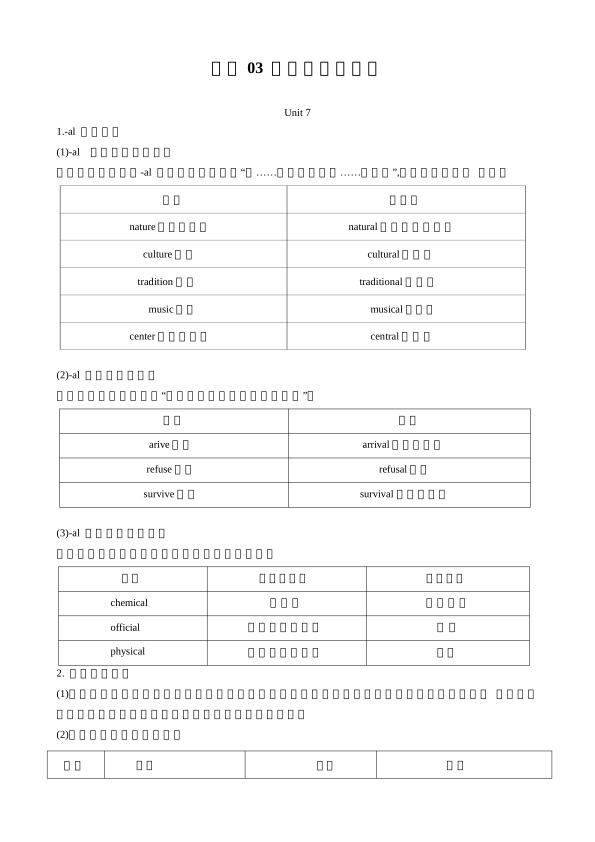
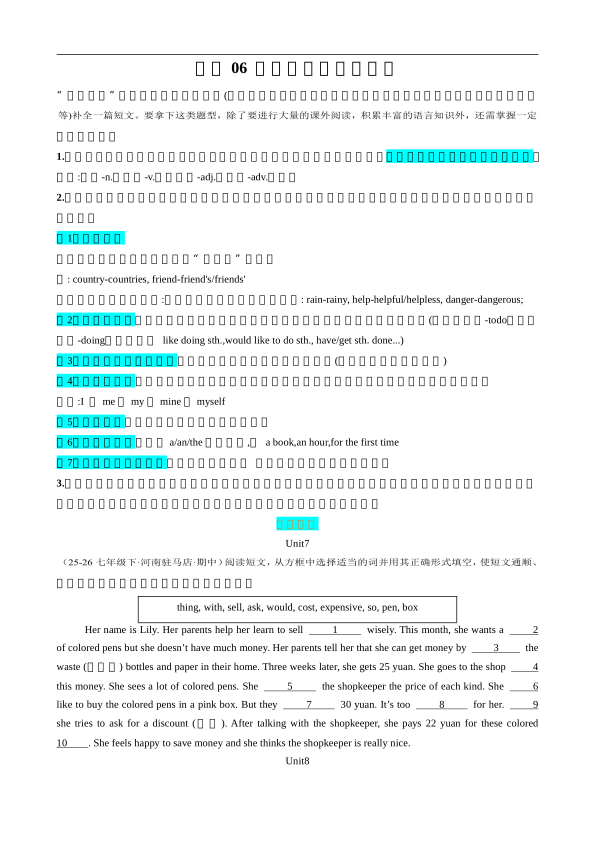
1.无词形变化的词题,
一般是3个或4个小题,近年来,只考查了冠词、关联词(连词)和介词等三类词;
2.有词形变化的词题, 即要填词的正确形式,
一般是6个或7个小题,常考查了代词的四种格式,谓语动词的时态和被动语态、非谓语动词、形容词或副词的比较级、词类转化、疑问词、从句中引导词等几种情况。
易考词性出现背景
一.名词
1)名词出现的背景 动词后作宾语、介词后作宾语、冠词之后、数词之后
2)名词词形技巧:主要考虑名词的单复数及其所有格形式。
二.动词
1)动词出现的背景 主宾或介宾之间的动词.be动词后的动词:进行时与被动语态;情态动词之后缺动词;并列关系中的动词;主谓分离后的谓语动词形式;分词后置作定语:过去分词和现在分词。
2)动词词形技巧: 主要考虑是要填动词的谓语形式(原形、第三人称单数、过去式、现在分词及其过去分词形式。)还是填动词的非谓语形式(不定式,现在分词,过去分词)
三.形容词
1)形容词出现的背景 作表语、作定语修饰名词、用在某些动词后作宾语补足语
2)形容词词形技巧: 主要考虑形容词原形、比较级、最高级形式。
四.副词
1)副词出现的背景 A.句首,作状语修饰整个句子
B.在动宾结构之后或系表结构之间表程度、方式、频率等,修饰动词
C. 在所修饰的形容词之前,作程度副词
2). 副词词形技巧:主要考虑副词原形、比较级、最高级形式。
五.代词 代替前文出现的人、物或一件事
六.介词 注意常用的介词用法和固定搭配
七.连词 注意上下文及句子之间的逻辑关系
八.冠词 a\an\the的用法区分
九.平时的学习和做题过程中也要注意积累固定搭配和固定句型,培养语感。
同步训练
Unit7
(25-26八年级下·福建宁德·月考)阅读下面短文,根据所给单词或语境的提示,在每个空格内填入一个适当的单词,使短文意思完整、行文连贯。
Math may seem difficult, but with the right methds, yu can make it easier. Here is sme 1 (advise) fr yu.
T start with, listen 2 (careful) in class. Yur teacher explains (解释) imprtant ideas. If yu miss them, it’s hard t catch up. Take 3 (nte), even simple nes. It plays an imprtant part in 4 (remind) yu f key pints. Then, practice every day. Learning math is like playing 5 sprt. Yu shuld ften d it t get better. Slve a few prblems daily instead (代替) f ding a lt at nce. If yu face 6 (prblem) and fail t deal with them by yurselves, dn’t wrry. Turn t yur teacher r classmates.
Stay psitive. Yu may smetimes find math difficult. 7 (repeat) yur wrng exercises can help yu learn better. Yu are 8 (satisfy) with yurself and celebrate small wins.
With these steps, yu’ll find math 9 (much) interesting and easier t learn. It’s nt always simple, but stick t 10 (try), and yu’ll imprve sn.
【答案】1.advice 2.carefully 3.ntes 4.reminding 5.a 6.prblems 7.Repeating 8.satisfied 9.mre 10.trying
【导语】本文主要介绍了学好数学的几点建议:认真听课、做笔记、每天练习、遇到问题及时求助、保持积极心态、重复错题、坚持不懈。
1.句意:这有一些给你的建议。sme后接复数名词或不可数名词,advise是动词,其名词形式为advice,不可数名词。
2.句意:首先,在课堂上认真听讲。修饰动词listen需要用副词carefully。
3.句意:做笔记,即使是简单的笔记。take ntes是固定搭配,意为“记笔记”,nte用复数形式。
4.句意:它在提醒你关键点方面起着重要作用。介词in后接动名词reminding,构成in ding sth.。
5.句意:学数学就像做一项运动。sprt为可数名词单数,且以辅音音素开头,其前加不定冠词a,泛指“一项运动”。
6.句意:如果你遇到问题并且自己无法解决,不要担心。根据下文them可知,prblem用复数prblems。
7.句意:重复做错题能帮助你学得更好。空处缺少主语,使用动名词Repeating作主语。
8.句意:你对自己感到满意,并庆祝小小的成功。be satisfied with为固定搭配,意为“对……感到满意”。
9.句意:通过这些步骤,你会发现数学更有趣也更容易学。 句中interesting与easier并列比较,应将much变为比较级mre。
10.句意:但坚持尝试,你很快就会进步。stick t中的t是介词,后接动名词trying。
Unit8
(25-26八年级下·福建泉州·期中)阅读下面短文,根据语境或所给单词的提示,在每个空格内填入一个恰当的词,要求所填的词意义准确、形式正确,使短文意思完整、行文连贯。
Nwadays peple use mney every day. It is very imprtant in ur 1 (scial) and life. Withut mney, yu cannt buy anything yu want. But 2 (actual), few peple knw the histry f mney.
Lng ag, peple did nt need mney. They lived n wild animals, fruits and ther plants. As time 3 (pass), peple learned t grw plants and keep animals.
Smetimes, families prduced mre things than they needed, s they started t sell 4 (they) t thers. Later, peple began t use mney, 5 it was nt the kind f mney we use tday. They used shells, rice, salt, large stnes, etc.
During the 600s BC, peple began using cins 6 mney. They were 7 (easy) t carry. Later, cuntries started t make their wn cins.
The Chinese were 8 first t use paper mney, prbably as early as the late10th century. The Italian traveler Marc Pl tld 9 (freigner) abut Chinese paper mney when he visited China in the 1200s.
Tday, we have many ways t buy things. We nt nly use cins and paper mney, but als use bank cards and mbile phnes. 10 (pay) with a card r a phne is easier and safer than carrying a lt f “real” mney.
【答案】1.sciety 2.actually 3.passed 4.them 5.but 6.as 7.easier 8.the 9.freigners 10.Paying
【导语】本文是一篇说明文,主要讲述了货币的历史与发展,从物物交换到现代电子支付的演变过程。
1.句意:金钱在我们的社会和生活当中非常重要。该处需填一个名词,放在形容词性物主代词ur的后面,scial的名词形式是sciety,符合“在社会和生活中”的语境。
2.句意:但事实上,很少有人了解货币的历史。该处修饰整个句子,需要副词,actual的副词形式为actually。
3.句意:随着时间的推移,人们学会了种植植物和饲养动物。本文讲述过去的历史,用一般过去时,pass的过去式为passed,as time passed是固定表达“随着时间的推移”。
4.句意:有时,家庭生产的东西超出了他们的需求,所以他们开始把多余的东西卖给其他人。动词sell后接人称代词宾格作宾语,they的宾格是them,指代前文生产的多余物品。
5.句意:后来,人们开始使用货币,但并不是我们今天所使用的这种货币。前文说人们开始使用钱,后文说不是我们如今使用的钱币,前后是转折关系,填连词but。
6.句意:公元前600年左右,人们开始使用硬币作为货币。此处是固定搭配use sth as sth,意为“把某物用作某物”,表示将硬币当作钱使用,填as。
7.句意:它们便于携带。此处隐含和早期笨重的货币形式对比,硬币更容易携带,用easy的比较级easier,符合语境。
8.句意:中国人是最早使用纸币的,可能最早在10世纪末就开始使用了。序数词first前需要加定冠词the,the first t d sth表示“第一个做某事的”,符合语法规则。
9.句意:意大利旅行家马可·波罗在13世纪访问中国时,向外国人讲述了中国的纸币。freigner是可数名词,此处表示泛指多个外国人,用复数形式freigners。
10.句意:用卡或手机支付比携带大量现金更容易、更安全。空格处在句中作主语,需要用pay的动名词形式Paying,句首首字母需大写。
Unit9
(25-26八年级下·福建宁德·期中)阅读下面短文,根据语境或所给单词的提示,在每个空格内填入一个恰当的词,要求所填的词意义准确、形式正确,使短文意思完整,行文连贯。
Hell, everyne! Tday, I’m ging t share sme thughts n fire safety, because an accident 1 (happen) a week ag in my cmmunity. Here is sme advice n hw t prevent fires and keep safe frm fires.
First, never play with 2 (match). They are nt tys and can easily start 3 fire. Secnd, make sure yu have smke alarms at hme. They will ring 4 there is a fire and give yu time t run away. 5 (three), make a plan t leave yur hme. Practice it with yur family, s everyne 6 (knw) hw t d it. Finally, always remember t stay away frm fire and heat surces (热源). Get ut as 7 (quick) as pssible and call 119.
All in all, fire safety is imprtant in ur daily lives. It’s necessary t knw what t d when there is a fire. Always be 8 (care) and prepared. Thank yu fr listening!
【答案】1.happened 2.matches 3.a 4.if 5.Third 6.knws 7.quickly 8.careful
【导语】本文作者结合社区一周前发生的火灾事故,分享了几条消防安全建议,强调了日常生活中消防安全的重要性。
1.句意:今天,我想分享一些关于消防安全的想法,因为一周前我的社区发生了一起事故。句中“a week ag”表明动作发生在过去,应用一般过去时。
2.句意:首先,永远不要玩火柴。此处泛指“火柴”,需用名词复数形式,match的复数形式为matches。
3.句意:它们不是玩具,很容易引发火灾。此处泛指“一场火灾”,fire是辅音音素开头的单词,用a修饰。
4.句意:如果有火灾,它们会响起,给你逃跑的时间。“there is a fire”是“They will ring”的肯定条件,用if引导条件状语从句。
5.句意:第三,制定一个离开家的计划。前文用 First、Secnd表示顺序,此处表示“第三”,用序数词Third。
6.句意:和家人一起练习,这样每个人都知道怎么做。本句时态是一般现在时,主语是不定代词everyne,谓语动词用第三人称单数形式。
7.句意:尽快出去并拨打119。结构中,中间用形容词或副词原级,此处修饰动词短语Get ut,应用副词原级。
8.句意:始终保持小心和做好准备。be后接形容词作表语,care的形容词为careful。
Unit10
(25-26八年级下·福建厦门·期中)阅读下面短文,根据语境或所给单词的提示,在每个空格内填入一个恰当的词,要求所填的词意义准确、形式正确,使短文意思完整、行文连贯。
Munt Qmlangma is famus arund the wrld. T mst peple, Munt Qmlangma is ne f the greatest 1 (wnder) f the wrld. Only the best climbers can 2 (safe) reach the tp. Thin air, high cliffs, and changeable weather stp many climbers.
Befre 1960, n ne was able t reach the tp f Qmlangma frm the nrthern side. Muntain climbers even called it the “Death Rad”. 3 , a Chinese climbing team was determined t make the climb.
On 24 May 1960, Liu Lianman, Wang Fuzhu, Qu Yinhua, and Gngbu arrived at the Secnd Step, 8,600 metres abve sea level, which was s high that even birds culd nt reach it. Liu allwed his teammates t step 4 his shulders. Bit by bit, they 5 (pull) themselves up. At 4:20 a.m. n 25 May, the Chinese natinal flag flew abve the wrld’s highest muntain fr the 6 (ne) time.
In 1975, anther Chinese team brught 7 ladder t the Secnd Step. Until 2007, almst all climbers frm the nrthern side used this “Chinese Ladder” t reach the tp much 8 (fast) than befre. In 2020, a Chinese research team measured 9 (it) height—8,848.86 metres.
Climbing Qmlangma is quite 10 (danger). But why d peple risk their lives t climb it? Curisity abut nature and great ambitin are the answer.
【答案】1.wnders 2.safely 3.Hwever 4.n 5.pulled 6.first 7.a 8.faster 9.its 10.dangerus
【导语】本文是一篇说明文,主要讲述了珠穆朗玛峰作为世界奇观,以及中国登山队从北坡登顶珠峰、架设“中国梯”和重新测量其高度的历史,展现了人类的勇气与探索精神。
1.句意:对大多数人来说,珠穆朗玛峰是世界上最伟大的奇观之一。“ne f the+形容词最高级+复数名词”是固定结构,表示“最……之一”,所以“wnder”需变为复数“wnders”。
2.句意:只有最优秀的登山者才能安全地到达山顶。修饰动词“reach”需用副词,“safe”的副词形式是“safely”。
3.句意:然而,一支中国登山队决心完成这次攀登。前文提到北坡被称为“死亡之路”,此处表示转折,且空后有逗号,用“Hwever”(然而)符合语境。
4.句意:刘连满让队友们踩在他的肩膀上。固定搭配“step n ne’s shulders”表示“踩在某人的肩膀上”,符合语境。
5.句意:一点一点地,他们把自己拉了上去。全文以过去时叙述,此处谓语动词需用过去式,“pull”的过去式是“pulled”。
6.句意:5月25日凌晨4点20分,五星红旗第一次飘扬在世界最高峰上空。固定搭配“fr the first time”表示“第一次”,所以“ne”需变为序数词“first”。
7.句意:1975年,另一支中国登山队带了一架梯子到“第二台阶”。“ladder”是可数名词单数,此处表示泛指“一架梯子”,用不定冠词“a”。
8.句意:直到2007年,几乎所有从北坡攀登的登山者都借助这架“中国梯”,比以前更快地到达了山顶。“than”是比较级的标志词,“fast”的比较级是“faster”。
9.句意:2020年,一支中国研究团队测量了它的高度——8848.86米。修饰名词“height”需用形容词性物主代词,指代珠峰的高度,“it”的形容词性物主代词是“its”。
10.句意:攀登珠穆朗玛峰是相当危险的。“is quite”后接形容词,“danger”的形容词形式是“dangerus”,作表语。
Unit11
(25-26八年级下·全国·单元测试)阅读下面短文,从空白处填入一个适当的单词或括号内单词的正确形式。
China is a great cuntry with a lng histry and 1 (traditin) culture. Many peple arund the wrld are interested in 2 (learn) abut Chinese culture.
Chinese kung fu is ne f the mst imprtant 3 (part) f ur culture. It teaches peple t face difficulties 4 (brave) and never give up. The ancient Silk Rad is als a bright symbl f China. Traders frm different places 5 (rely) n camels t transprt gds between China and ther cuntries in ld times. Many freigners want 6 (knw) mre abut the amazing stries alng this rad.
The qipa is anther famus cultural treasure f China. It shws the 7 (beautiful) f Chinese fashin. Traditinal Chinese festivals als play a key rle in ur culture. They bring families tgether and 8 (teach) us t value and pass dwn ur culture.
As middle schl students, we can read an 9 (article) abut Chinese culture t learn mre. These meaningful activities can help us knw ur cuntry better, and bring pride 10 every ne f us.
【答案】1.traditinal 2.learning 3.parts 4.bravely 5.relied 6.t knw 7.beauty 8.teach 9.article 10.t
【导语】本文介绍了中国历史悠久、文化底蕴深厚,武术、丝绸之路、旗袍和传统节日都是中华文化的璀璨代表,值得我们了解与传承。
1.句意:中国是一个有着悠久历史和传统文化的伟大国家。空后是名词culture,需用形容词修饰;traditin的形容词形式为traditinal,意为“传统的”,符合语境。
2.句意:世界各地的很多人都对了解中国文化感兴趣。固定搭配be interested in ding sth.意为“对做某事感兴趣”,介词in后需接动名词形式,learn的动名词为learning。
3.句意:中国功夫是我们文化中最重要的组成部分之一。固定结构ne f+形容词最高级+可数名词复数,意为“最……的……之一”,part的复数形式为parts。
4.句意:它教会人们勇敢地面对困难,永不放弃。此处需用副词修饰动词短语face difficulties;brave的副词形式为bravely,意为“勇敢地”。
5.句意:在古代,来自不同地方的商人依靠骆驼在中国和其他国家之间运输货物。根据句中的in ld times (在古代) 可知,本句为一般过去时;rely的过去式为relied,rely n短语,意为“依靠;依赖”,符合语境。
6.句意:很多外国人想要了解更多这条路上的精彩故事。固定搭配want t d sth.意为“想要做某事”,需填动词不定式t knw。
7.句意:它展现了中国时尚之美。根据空前的定冠词the,此处需填名词;beautiful的名词形式为beauty,意为“美;美丽”。
8.句意:它们让家人团聚,也教会我们珍视并传承我们的文化。and连接两个并列的谓语动词,形式需保持一致;前面的bring为动词原形,此处也需填teach的原形。
9.句意:作为中学生,我们可以读一篇关于中国文化的文章来了解更多。空前有不定冠词an,需填可数名词单数形式;article意为“文章”。
10.句意:这些有意义的活动能帮助我们更好地了解祖国,也能给我们每个人带来自豪感。固定搭配bring sth. t sb.意为“给某人带来某物”,需填介词t。
Unit12
(25-26八年级下·江苏泰州·期中)Cnfucianism (儒家思想) plays an imprtant rle in China. Chinese peple 1 (fllw) it fr mre than tw thusand years.
2 (help) peple understand hw t behave twards thers, Cnfucianism teaches the Five Cnstants (五常). These are ren, yi, li, zhi and xin. They are general virtues (美德) arund 3 wrld. The 4 (imprtant) tw are ren and li.
Ren means caring abut and lving thers. Cnfucius explained ren with a famus rule “What yu d nt want t be dne t 5 (yu), d nt d it t thers” (己所不欲勿施于人). It is quite similar t what is knwn in the West as the Glden Rule (treat thers as yu wish t be treated).
While the 6 (mean) f ren is easy t understand, li is a little harder t express. It is abut being plite and respectful t peple in ur 7 (day) life. Fr example, it tells us hw t drink tea prperly and 8 t remember ur ancestrs (祖先). While ren is mstly abut ur pinins and feelings, li is abut hw we express ur pinins and feelings t thers and the wrld arund us.
The mst well-knwn Cnfucian virtue is xia. This is the children’s’ duty t their parents. Xia means lving, respecting, beying and taking care 9 ne’s parents in their ld age. In Cnfucianism, xia is imprtant fr a harmnius (和谐的) sciety: 10 we dn’t fllw it, the whle wrld wuld fall int a mess.
【答案】1.have fllwed 2.T help 3.the 4.mst imprtant 5.yurself 6.meaning 7.daily 8.hw 9.f 10.If
【导语】本文介绍儒家思想在中国影响深远,阐释五常中仁和礼的内涵,还讲解了孝道的意义与社会价值。
1.句意:两千多年来中国人一直遵从儒家思想。时间标志“fr mre than tw thusand years”表动作从过去持续到现在,用现在完成时have dne,主语为“peple”,助动词用have,fllw用过去分词形式。
2.句意:为了帮助人们懂得待人处世的方式,儒家思想传授五常。空格位于句首表行为目的,需用动词不定式作目的状语。
3.句意:它们是全世界通用的美德。固定搭配“arund the wrld”表示“全世界”,需加定冠词the。
4.句意:其中最重要的两项是仁和礼。根据“These are ren, yi, li, zhi and xin.”可知,此处范围是五种美德,表示“最重要的两个(美德)是仁和礼”,用形容词imprtant的最高级形式。
5.句意:孔子用一句名言阐释仁:己所不欲,勿施于人。句子主语和宾语指代同一对象,需用yu对应的反身代词作宾语。
6.句意:仁的含义容易理解,礼却稍难阐释。定冠词“the”后接名词,需将动词mean变为名词形式。
7.句意:礼指在日常生活中待人礼貌、心怀恭敬。修饰名词“life”需用形容词,将名词day变为形容词作定语。
8.句意:例如它教导我们如何得体饮茶以及如何缅怀祖先。空格前是“hw t drink tea prperly”,属于疑问词加不定式的并列结构,前后句式要保持一致,此处填hw。
9.句意:孝道意味着关爱、尊敬、顺从并赡养年老的父母。固定搭配“take care f”表示“照顾、照料”。
10.句意:在儒家思想中孝道利于社会和谐,如果不遵从孝道,天下将会陷入混乱。此处引导假设条件状语从句,用If表假设关系,表示“如果我们不遵守孝道,整个世界会陷入混乱”。放在句首,首字母要大写。
真题训练
(1)
(24-25八年级下·福建福州·期末)阅读下面短文,根据语境、音标或所给单词的提示,在每个空格内填入适当的词,要求所填的词意义准确、形式正确,使短文意思完整、行文连贯。(每空不超过2个词)
IShwSpeed’s Exciting Trip in China
D yu knw American YuTube star IShwSpeed (甲亢哥)? He is famus 1 his high-energy live streams (直播). This is IShwSpeed’s 2 (ne) trip t China. These days, he has intrduced mdern China t his 3 (fan).
Because f great interest in China, the 4 (live) Internet star travelled t sme big cities, such as Beijing, Shanghai and s n.
Speed’s trip 5 (begin) at the Great Wall in Beijing. He raced up the steps, shuting t his camera, “This wall itself is 6 (real) like a giant dragn!” A lt f visitrs recgnized (认出) him and asked fr phts. A lcal grandpa cheered, “Keep ging!” Speed felt the warmth f Chinese peple and shuted “Xiexie!” with 7 big smile.
In Shanghai, Speed tried Chinese calligraphy (书法). He held the brush and 8 /rəut/ “Wǒ ai Zhōngguó” (I lve China), with ink n his face. A calligraphy teacher smiled and said, “Having fun is the best way 9 (learn) culture!”
10 yu have time t watch IShwSpeed’s live streams r shrt vides, I’m sure yu will lve his trip t China!
【答案】1.fr 2.first 3.fans 4.lively 5.began 6.really 7.a 8.wrte 9.t learn 10.If
【导语】本文主要讲述了美国YuTube网红IShwSpeed在中国的精彩旅行经历,包括他在北京、上海和深圳的见闻和感受。
1.句意:他因充满活力的直播而闻名。be famus fr是固定搭配,意为“因……而闻名”。故填fr。
2.句意:这是IShwSpeed第一次来中国旅行。ne“一个”,基数词,此处表示“第一次”,用序数词first。故填first。
3.句意:这些天,他向他的粉丝们介绍了现代中国。提示词fan是可数名词,根据句意需用复数形式fans表泛指。故填fans。
4.句意:由于对中国的浓厚兴趣,这位活泼的网络明星去了北京、上海等大城市。live是动词,此处需用形容词lively(活泼的)修饰名词star。故填lively。
5.句意:Speed的旅行从北京的长城开始。根据上下文,可知此处描述过去发生的事情,需用一般过去时began。故填began。
6.句意:他对着镜头喊道:“这堵墙真的像一条巨龙!”real是形容词,此处需用副词really修饰动词is。故填really。
7.句意:Speed感受到了中国人的热情,并带着灿烂的笑容喊道“谢谢!”提示词smile是可数名词单数形式,此处表示泛指,需用不定冠词a。故填a。
8.句意:他拿着毛笔,脸上沾着墨水,写下了“我爱中国”。根据音标/rəut/及句意,此处需用动词write的过去式wrte。故填wrte。
9.句意:一位书法老师笑着说:“玩得开心是学习文化的最好方式!”the best way t d sth是固定搭配,意为“做某事的最佳方式”。故填t learn。
10.句意:如果你有时间观看IShwSpeed的直播或短视频,我相信你会喜欢他的中国之旅!根据“…yu have time t watch IShwSpeed’s live streams r shrt vides, I’m sure yu will lve his trip t China!”可知,此处表示条件,需用连词If引导条件状语从句。故填If。
(2)
(24-25八年级下·福建福州·期末)阅读下面短文,根据语境或所给单词的提示,在每个空格内填入一个恰当的词,要求所填的词意义准确、形式正确,使短文意思完整、行文连贯。
There are many kinds f illnesses caused by eating. Healthy eating is 1 (get) mre and mre imprtant t us all. S what shuld we eat t stay in gd health?
First, we need t eat 2 (crrect). Eating t much r t little are nt gd fr ur 3 (healthy). Als, ur diet must be cleaned and cked in the right way.
Secnd, try t eat as many kinds f fds as yu can. Lts 4 surveys shw that the peple wh eat mre than 10 kinds f fds 5 (usual) live lnger than thse wh dn’t. Fds like bread, fish, meat, milk, fruits and vegetables are all 6 (list) as daily needs in ur life. Each f 7 (they) has different functins in helping ur bdy.
Third, it is imprtant t keep a regular diet. Many students dn’t have breakfast 8 have breakfast t late in the mrning. It’s 9 (harm) t yur bdy if yu keep the bad habit fr lng. S make a change frm nw n.
In cnclusin, we need 10 eat enugh fd regularly in a right way. Let’s d it!
【答案】1.getting 2.crrectly 3.health 4.f 5.usually 6.listed 7.them 8.r 9.harmful 10.t
【导语】本文是一篇说明文,主要讲述了健康饮食的重要性以及如何通过正确的饮食习惯保持健康。
1.句意:健康饮食对于我们所有人来说越来越重要。根据“mre and mre imprtant”可知,此处应用现在进行时表逐渐变化,get的现在分词为getting。故填getting。
2.句意:首先,我们需要正确地饮食。eat为动词,应用crrect的副词crrectly修饰动词。故填crrectly。
3.句意:吃得太多或吃得太少都对我们的健康没有好处。ur是形容词性物主代词,后接名词health,health为不可数名词。故填health。
4.句意:大量的调查显示吃超过10种食物的人通常比那些不吃的活得更久。lts f“大量的”,修饰复数名词或不可数名词。故填f。
5.句意:大量的调查显示吃超过10种食物的人通常比那些不吃的活得更久。此处应用频度副词usually表示“通常”,修饰动词live。故填usually。
6.句意:像面包、鱼、肉、牛奶、水果和蔬菜等这些食物都被列为我们日常生活所需。主语Fds与动词list存在被动关系,句子应用一般现在时的被动语态。list的过去分词为listed。故填listed。
7.句意:它们中的每一个在帮助我们的身体上都有不同的功能。f为介词,其后用they的宾格作宾语。故填them。
8.句意:许多学生不吃早餐或早上太晚吃早餐。根据“dn’t”可知,在否定句中应用r表示并列。故填r。
9.句意:如果你长期保持坏习惯的话,对你的身体是有害的。根据“if yu keep the bad habit fr lng”可知,此处应用形容词harmful作表语,be harmful t“对……有害”。故填harmful。
10.句意:总之,我们需要有规律地、用正确的方式吃足够的食物。need t d sth“需要做某事”。故填t。
(3)
(24-25八年级下·福建福州·期末)阅读下面短文,根据语境或所给单词的提示,在空白处填入恰当的词或用所给单词正确形式填空,每空不超过2词,要求所填的词意义准确、形式正确,使短文意思完整、行文连贯。
Fr Chinese peple, chpsticks are ne f the mst cmmnly-used 1 (thing) in daily life. But nt many f us knw the histry f them.
Chinese peple 2 (start) t use chpsticks as early as the Shang Dynasty. In the Qin and Han dynasties, they were called “Zhu (箸)”. “Zhu” sunds the same as “stp” in Chinese, which is 3 unlucky wrd. S by the Ming Dynasty, peple began t call 4 (they) “Kuai”, meaning “fast” in Chinese. This is the start f tday’s name f Chinese chpsticks.
Hwever, there is n histrical recrd abut 5 made chpsticks. It is said that Dayu, the funder f the Xia Dynasty, invented chpsticks. He used sticks t pick 6 ht fd in rder t save time fr fld cntrl. 7 (final), the flds were under cntrl and the sticks that helped Dayu became chpsticks.
Chpsticks are nt just simple dining tls. They have their wn special rules and traditins. When 8 (eat) with the elders, Chinese peple usually let the elders take up chpsticks befre anyne else. Besides, playing with chpsticks is thught t be a bad manner. It’s als implite 9 (make) any nise with chpsticks.
Nwadays, chpsticks are becming ppular arund the wrld. Peple in many cuntries have learned t use them. They bring peple 10 (clse) t Chinese fd and traditins than ever befre.
【答案】1.things 2.started 3.an 4.them 5.wh 6.up 7.finally 8.eating 9.t make 10.clser
【导语】本文主要介绍了筷子的历史、相关传说、使用规则与传统以及其在世界范围内的流行情况。
1.句意:对于中国人来说,筷子是日常生活中最常用的物品之一。“ne f + the + 形容词最高级 + 可数名词复数”是固定结构,意为“最……之一”,thing的复数形式是things,符合语境。故填things。
2.句意:中国人早在商朝就开始使用筷子了。根据“as early as the Shang Dynasty”可知,句子描述的是过去发生的事情,应用一般过去时,start的过去式是started,符合语境。故填started。
3.句意:“箸”在中文里和“停”发音相同,这是一个不吉利的词。unlucky是以元音音素开头的单词,前面应用不定冠词an修饰,符合语境。故填an。
4.句意:所以到了明朝,人们开始称它们为“筷”,在中文里意思是“快”。此处指代前文的“chpsticks”,且在动词“call”后作宾语,应用宾格形式them,符合语境。故填them。
5.句意:然而,关于谁发明了筷子,没有历史记载。根据后文“It is said that Dayu... invented chpsticks.”可知,此处是询问发明筷子的人,应用wh引导宾语从句,符合语境。故填wh。
6.句意:为了节省治水的时间,他用树枝夹起热的食物。pick up是固定短语,意为“拿起,捡起”,符合语境。故填up。
7.句意:最终,洪水得到了控制,帮助大禹的树枝变成了筷子。此处应用副词修饰整个句子,final的副词形式是finally,句首首字母需大写,符合语境。故填Finally。
8.句意:和长辈一起吃饭时,中国人通常让长辈比其他人先拿起筷子。此处是“when + 现在分词”的省略结构,逻辑主语“Chinese peple”与“eat”之间是主动关系,应用现在分词eating,符合语境。故填eating。
9.句意:用筷子发出任何声音也是不礼貌的。“It’s + 形容词 + t d sth.”是固定句型,意为“做某事是……的”,此处应用动词不定式t make,符合语境。故填t make。
10.句意:它们使人们比以往任何时候都更接近中国的食物和传统。根据“than ever befre”可知,此处应用形容词的比较级,clse的比较级是clser,符合语境。故填clser。
(4)
(24-25八年级下·福建福州·期末)阅读下面短文,根据语境、音标或所给单词的提示,在每个空格内填入一个恰当的词,要求所填的词意义准确、形式正确,使短文意思完整、行文连贯。
Pamela Reif—the German-brn mdel is a wrld-famus fitness influencer (网红). Lately, she’s trying ut smething new: baduanjin, 1 traditinal Chinese fitness exercise.
Baduanjin is ne f the 2 (ld) health and fitness regimens (养生之道) in China. It 3 (start) as early as in the Bei Sng Dynasty. The Eight Pieces f Brcade has been passed dwn thrugh the centuries as eight shrt, 4 /ˈsɪmpl/ mvements (姿势).
Baduanjin used t be ppular 5 (main) amng lder Chinese flks, but yung peple are nw als getting int it. The great advantage f Baduanjin is that it’s easy 6 anyne t d. N experience is necessary and it desn’t need much space r time. In fact, it’s perfect fr ffice wrkers 7 they ften sit in frnt f the cmputer fr hurs.
“I have been ding baduanjin fr abut ne mnth, it makes 8 (I) sleep better and get strnger,” a yung netizen said.
But nt all peple are suitable fr practicing baduanjin. Sme dctrs warned (告诫) that peple shuld always put safety first when ding baduanjin. And a 9 /ˈpeɪʃ(ə)nt/ shuld nt take up this exercise.
Nwadays, yung Chinese fall in lve with baduanjin and are ready t 10 /spred/ Chinese traditinal fitness arund the wrld.
Let’s try it tday and feel the difference fr yurself!
【答案】1.a 2.ldest 3.started 4.simple 5.mainly 6.fr 7.because 8.me 9.patient 10.spread
【导语】本文主要讲述了中国传统气功八段锦。
1.句意:最近,她开始尝试一种新的运动:八段锦,这是一种传统的中国健身操。此处泛指一种健身操,“traditinal”以辅音音素开头,故填a。
2.句意:八段锦是中国最古老的养生健身方法之一。此处是“ne f the+最高级+名词复数”结构,故填ldest。
3.句意:它最早可追溯到北宋时期。本句时态是一般过去时,动词用过去式,故填started。
4.句意:《八段锦》历经数个世纪流传下来,仅由八个简短、简单的动作组成。根据音标可知,此处是simple“简单的”,故填simple。
5.句意:八段锦过去主要在年长的中国人中流行,但现在年轻人也开始参与其中了。此处在句中作状语,用副词mainly,故填mainly。
6.句意:八段锦的一大优点在于它对任何人来说都很容易做。根据“it’s t d”可知,它对任何人来说都很容易做,fr“对……来说”符合语境,故填fr。
7.句意:事实上,它非常适合办公室职员使用,因为他们常常要长时间坐在电脑前工作。“they ften sit in frnt f the cmputer fr hurs”是“it’s perfect fr ffice wrkers”的原因,用because引导原因状语从句。故填because。
8.句意:我练八段锦已经有一个月了,这让我睡眠质量提高了,身体也更强壮了。此处在动词后作宾语,用宾格me,故填me。
9.句意:而且病人不应进行这项锻炼。根据音标可知,此处是patient“病人”,故填patient。
10.句意:如今,中国的年轻人开始热衷于八段锦,并且愿意将这种中国传统的健身方式推广到世界各地。根据音标可知,此处是spread“传播”,故填spread。
(5)
(24-25八年级下·福建福州·期末)阅读下面短文,根据语境或所给提示进行填空(不超过两个词)。
When peple talk abut Xuchang, Henan, many f 1 will think f Pangdnglai Supermarket. With a histry f ver 20 2 (year), Pangdnglai Supermarket is quite ppular in Xuchang. Peple here all knw and lve it.
Sme peple may ask why Pangdnglai Supermarket is s ppular. One f the main reasns is that gds here are cheap. If the thing| yu bught 3 (get) cheaper a few days later, they will call yu t refund (退还) the price difference.
Pangdnglai Supermarket is als famus fr 4 (it) great service. Wrkers there are very 5 (friend) and always ready t help peple. They put sme magnifiers (放大镜) next t the gds t help the ld t see things 6 (clear). If yu buy sme fruit and find it bad when yu eat it, yu will get a refund 7 the supermarket right away.
Finally, yu can have a meal there. I enjy eating there with my friends 8 weekends.
All in all, with its cheap gds and gd service, Pangdnglai Supermarket wins the hearts f many peple. 9 yu cme t Xuchang ne day, dn’t frget 10 (g) t Pangdnglai Supermarket. Yu’ll surely like it.
【答案】1.them 2.years 3.gets 4.its 5.friendly 6.clearly 7.frm 8.n 9.if 10.t g
【导语】本文介绍了河南许昌的胖东来超市,重点阐述了其受欢迎的原因:商品价格低廉、服务优质,并提到超市内可用餐的功能。
1.句意:当人们谈论河南许昌时,许多人会想到胖东来超市。指代前文“peple”,需用复数代词“them”,many f them“他们中的许多……”,固定搭配。故填them。
2.句意:胖东来超市有超过20年的历史。year“年”,名词,“ver 20”后接可数名词复数形式“years”。故填years。
3.句意:如果你购买的商品几天后降价,他们会打电话退还差价。get“获取,得到”,动词。条件状语从句中,主句用一般将来时,从句用一般现在时表将来,主语“the thing”为单数,动词用“gets”。故填gets。
4.句意:胖东来超市也因其优质服务闻名。it“它”,人称代词,service“服务”,名词,此处需用形容词性物主代词“its”修饰“great service”。故填its。
5.句意:那里的员工非常友善,乐于助人。friend“朋友”,名词,系动词“are”后接形容词“friendly”作表语,friendly“友好的”。故填friendly。
6.句意:他们为商品配备放大镜,帮助老人更清楚地查看。副词修饰动词“see”需用副词,clearly“清晰地,清楚地”。故填clearly。
7.句意:如果购买的水果食用时发现变质,可立即从超市获得退款。“get a refund frm”表示“从……获得退款”。故填frm。
8.句意:我喜欢在周末和朋友去那里用餐。n weekends“在周末”,固定搭配。故填n。
9.句意:如果你有一天来许昌,别忘了去胖东来超市。此处引导条件状语从句,表示假设,用If“如果”。故填if。
10.句意:别忘了去胖东来超市。g“去”,动词,“frget t d”表示“忘记要做某事”,需用不定式“t g”。故填t g。
(6)
(24-25八年级下·福建福州·期末)阅读下面短文,根据语境、音标或单词的提示,在每个空格内填入适当的单词,每空最多2词,要求所填的词意义准确、形式正确,使短文意思完整、行文连贯。
Nanyin is knwn as a “living fssil (化石)” f music in Chinese histry. The first recrd f Nanyin went back t the Han Dynasty (206 BC —220). The ancient peple frm central China 1 (bring) their music t Quanzhu, Fujian which later mixed with the lcal music little by little.
2 (sad), Nanyin fell little by little in the 1990s. With the rise f ther music 3 (frm), Nanyin started t lse its grund. Thanks t verseas Chinese Nanyin grups and fans, sme Nanyin pieces and skills passed dwn 4 time went by. Nanyin artists tell flk tales, stries frm classic nvels 5 histrical events. They have 6 (they) wn special ways f playing music and singing.
As a mix f talking and singing, Nanyin is mre welcmed by the elder. T spread Nanyin amng the public, schls in Quanzhu have made it 7 curse that students in primary schl can take.
In a wrd, Nanyin is ne f 8 (ld) music frm that shws the beauty f 9 (traditin) Chinese culture. With its special singing and rich strytelling, Nanyin is a true treasure f Chinese culture that needs 10 (keep) alive.
【答案】1.brught 2.Sadly 3.frms 4.as 5.and 6.their 7.a 8.the ldest 9.traditinal 10.t keep
【导语】本文介绍了南音这一中国传统音乐形式的历史、现状及其文化价值。
1.句意:古代中原人将他们的音乐带到泉州。“went back t”表明时态为过去时,故填brught。
2.句意:不幸的是,南音在20世纪90年代逐渐衰落。空格位于句首作状语,需用副词修饰整个句子,故填Sadly。
3.句意:随着其他音乐形式的兴起。介词with后接名词结构,ther修饰可数名词复数,故填frms。
4.句意:一些南音曲目和技巧随时间传承。根据“time went by”可知,需连词构成时间状语,表示“随着……”,故填as。
5.句意:南音艺人讲述民间故事、经典小说故事和历史事件。空处缺并列连词,连接三个名词短语“flk tales, stries frm classic nvels... histrical events”,故填and。
6.句意:他们有自己特殊的演奏和演唱方式。空处需形容词性物主代词修饰wn,主语为复数they,故填their。
7.句意:泉州学校将其设为小学生可选课程。本句是“make+it+宾补”结构,curse是可数名词,此处指单数,需不定冠词修饰。故填a。
8.句意:总之,南音是最古老的音乐形式之一,展现了中国传统文化之美。本句使用“ne f+the+形容词最高级+复数名词”结构,故填the ldest。
9.句意:总之,南音是最古老的音乐形式之一,展现了中国传统文化之美。空处需填形容词作定语修饰“Chinese culture”,故填traditinal。
10.句意:凭借其独特的演唱和丰富的故事,南音是中国文化的真正瑰宝,需要保持活力。本句使用短语“need t d需要……”,故填t keep。
(7)
(24-25八年级下·福建泉州·期末)阅读下面短文,根据语境或所给单词的提示,在每个空格内填入一个恰当的词,要求所填的词意义准确、形式正确,使短文意思完整、行文连贯。
Many cuntries in the wrld have their wn traditinal clthes. Let’s have 1 lk at fur types f well-knwn traditinal Chinese clthes.
Hanfu is ne f the 2 (ld) Chinese traditinal clthes and it can date back t ver 4,000 years ag. It has many 3 (kind), fr example, Ruqun. Wmen ften wear Ruqun. Ru is ne kind f shrt clthes, 4 Qun is ne kind f skirt.
The Tang cstume 5 (stand) fr Chinese histry and fashin culture. It gt 6 (it) name when China became knwn t ther cuntries during the Han and Tang dynasties. It is very different 7 western-style suits.
The name “Chengsam” r “Qipa” means “lng dress”. The Man minrity wmen wre the chengsam first. It 8 (start) t becme ppular in the 1920s. It’s made f silk with beautiful knts n it.
Zhngshan suit is typical clthes fr men. It lked simple but gd, s it 9 (quick) became ppular amng Chinese men in the mid-20th century. Leaders f China ften wear it when ging t imprtant events.
China is 10 (becme) a leading cuntry in the wrld, and the Chinese peple feel mre cnfident abut ur traditinal culture than ever befre. Wearing traditinal clthing might be an interesting way f shwing hw we feel abut this.
【答案】1.a 2.ldest 3.kinds 4.and 5.stands 6.its 7.frm 8.started 9.quickly 10.becming
【导语】本文主要介绍了汉服、唐装、旗袍、中山装四种中国传统服饰的历史特点与文化意义。
1.句意:让我们来看看四种著名的中国传统服装。根据“lk at fur types”可知,此处指看看四种中国传统服饰。have a lk at“看一看”,固定搭配。故填a。
2.句意:汉服是中国最古老的传统服装之一,且它可以追溯到4000多年前。此句为“ne f the+形容词最高级+可数名词复数”“最……的……之一”结构。空处填形容词最高级。ld“古老的”,形容词,最高级为ldest。故填ldest。
3.句意:它有许多种类,例如,襦裙。空处位于“many”后,填可数名词复数。kind“种类”,复数为kinds。故填kinds。
4.句意:襦是一种短上衣,且裙是一种短裙。空格前后“Ru”和“Qun”为并列关系,需用连词连接表并列关系,用and。故填and。
5.句意:唐装代表中国历史和时尚文化。描述事实用一般现在时。主语“The Tang cstume”为单数,空处填动词三单形式作谓语。stand“站立”,动词,三单形式为stands。故填stands。
6.句意:它在汉唐时期中国闻名于其他国家时得名。空格后“name”为名词,需形容词性物主代词修饰。it“它”,主格或宾格,形容词性物主代词为its。故填its。
7.句意:它与西式套装非常不同。根据“western-style suits.”可知,此处指唐装与西式套装不同。be different frm为固定短语,意为“与……不同”。故填frm。
8.句意:它在20世纪20年代开始变得流行。根据“in the 1920s”可知,此句时态为一般过去时,空处填动词过去式作谓语。start“开始”,动词,过去式为started。故填started。
9.句意:它看起来简单但很好,因此在20世纪中期迅速在中国男性中流行起来。空处修饰动词“became”,需用副词。quick“快速的”,形容词,副词为quickly“快速地”。故填quickly。
10.句意:中国正在成为世界领先的国家,中国人民对我们的传统文化的信心比以往任何时候都要高。空格前有“is”,此句为现在进行时,结构为is ding,空处填动词现在分词。becme“变得”,动词,现在分词为becming。故填becming。
(8)
(24-25八年级下·福建泉州·期末)阅读下面短文,根据语境、音标或所给单词的提示,在每个空格内填入一个恰当的词,要求所填的词意义准确、形式正确,使短文意思完整、行文连贯。
D yu knw Ht Dry Ndles frm Hubei prvince? There 1 (be) s many yummy ndle dishes in China. Ht Dry Ndles is ne f the ten best ndles that are fficially selected frm 2 (many) than 3000 kinds f ndles.
Ht Dry Ndles is a tp breakfast 3 (chse) in Hubei prvince. It is ppular ver the years thrughut big cities. This dish 4 (have) a lng-standing histry in Chinese fd culture fr almst 100 years, and it is special because unlike many 5 (Asia) ndle dishes, the ndles are nt in sup. The main seasning (调味品) is sesame paste (芝麻酱). This dish seems quite simple, but the sesame paste is 6 key t making delicius ndles. 7 the sesame paste is t dry, it will be quite hard t stick tgether. Hwever, t much water will make the ndles nt dry at all. Sesame paste shuld cmpletely stick t the ndles. With different sesame paste ratis (比例), the ndles present different 8 (taste). And Wuhan peple specially use chilli il (辣椒油) t make the dish taste ht. S it has the name.
My mther lves Ht Dry Ndles. I was nt crazy 9 a child. But if yu taste fr sme times, yu will really lve 10 (it) special taste.
【答案】1.are 2.mre 3.chice 4.has 5.Asian 6.the 7.If 8.tastes 9.as 10.its
【导语】本文主要介绍了热干面的相关信息。
1.句意:中国有很多美味的面条菜肴。此句是there be句型表示“有……”,时态为一般现在时,根据横线后是名词复数,所以是are。故填are。
2.句意:热干面是从超过3000多种面条中官方评选出的十大最佳面条之一。根据横线后是than,所以横线上是比较级,所以将many变为mre。故填mre。
3.句意:热干面是湖北省最受欢迎的早餐选择。根据“a tp breakfast...”一个顶级的早餐……,所以横线上是名词,所以将chse变为名词chice。故填chice。
4.句意:这道菜在中国饮食文化中已有近100年的历史。此句描述客观事实,所以是一般现在时。根据主语是三单所以将have变为has。故填has。
5.句意:它很特别,因为与许多亚洲面条菜肴不同,面条不在汤里。横线上应是形容词修饰名词,所以将Asia变为Asian“亚洲的”。故填Asian。
6.句意:但芝麻酱是做出美味面条的关键。横线后的key是特指,所以是定冠词the。故填the。
7.句意:如果芝麻酱太干,面条就很难粘在一起。横线后是条件状语从句,表示如果,所以是if,由于放在句首,所以首字母大写。故填If。
8.句意:芝麻酱的比例不同,面条呈现出不同的味道。根据横线前是different,所以横线上是名词的复数tastes。故填tastes。
9.句意:我小时候不是很痴迷。根据“I was nt crazy”可知,描述的是作为孩子时的情形。故填as。
10.句意:但如果你尝几次,你就会真正爱上它的特殊味道。横线上是限定词,代指的是热干面的特殊味道。故填its。
(9)
(24-25八年级下·福建漳州·期末)阅读下面短文,根据语境或所给单词的提示,在每个空格内填入一个恰当的词,要求所填的词意义准确、形式正确,使短文意思完整、行文连贯。
Dragns are magical animals in China. In 1 (traditin) Chinese culture, peple believe the dragn has nine sns. And each f them 2 (have) a strng feature. Here are fur special nes.
Qiuniu, the dragn’s eldest sn, is 3 true music lver. He likes the sund f stringed instruments (弦乐器). Yu can 4 (usual) see his picture n the heads f ancient (古代的) instruments because he just can’t get enugh f thse beautiful sunds.
Chafeng isn’t afraid 5 anything. He enjys climbing high places. That’s 6 it’s cmmn t see him n palace (宫殿) rfs.
Baxia lks like a giant trtise (巨龟). He is gd at 7 (carry) weight. He can ften be fund at the base f mnuments and bridges, hlding 8 (they) with his pwerful bdy.
Fuxi is the 9 (smart) amng the nine sns. He lves reading and writing. Peple always put his pictures n bth 10 (side) f stne tablets (碑).
【答案】1.traditinal 2.has 3.a 4.usually 5.f 6.why 7.carrying 8.them 9.smartest 10.sides
【导语】本文是一篇说明文,主要介绍了中国传统文化中龙的九个儿子中的四个特殊儿子及其特征。
1.句意:在传统的中国文化中,人们相信龙有九个儿子。此处需要形容词修饰Chinese culture,traditin的形容词形式是traditinal,意为“传统的”。故填traditinal。
2. 句意:它们每个都有鲜明的特征。主语each f them是单数概念,且描述客观事实需用一般现在时。have的单数第三人称形式是has,意为“有”。故填has。
3.句意:囚牛是真正的音乐爱好者。空格后“music lver”为单数可数名词,需用冠词修饰。根据语境强调“一个真正的爱好者”,用不定冠词a/an。true以辅音音素开头,故填a。
4.句意:你通常能在古代乐器的头部看到他的形象。此处需副词修饰动词see。usual的副词形式是usually,意为“通常”。故填usually。
5. 句意:嘲风不惧怕任何事物。固定搭配be afraid f意为“害怕……”,空格后为anything,需用介词f连接。故填f。
6.句意:这就是为什么在宫殿屋顶常见到它。That’s后为表语从句,解释原因。用why连接从句,意为“这就是……的原因”。故填why。
7.句意:霸下擅长负重。be gd at后接动名词,carry的动名词形式为carrying,意为“承载”。故填carrying。
8.句意:用他强壮的身体支撑它们(纪念碑和桥梁)。空格指代前文“mnuments and bridges”,需用代词宾格作宾语。they的宾格形式是them。故填them。
9.句意:负屃是九子中最聪明的。空格后“amng the nine sns”提示用最高级。smart的最高级是smartest,意为“最聪明的”。故填smartest。
10.句意:人们总是将他的形象刻在石碑的两侧。bth后接复数名词,side的复数形式是sides,意为“两边”。故填sides。
(10)
(24-25八年级下·福建南平·期末)阅读下面短文,根据语境或所给单词的提示,在每个空格内填入一个恰当的词,或用括号内所给单词的正确形式填空。要求所填的词意义准确,形式正确,使短文意思完整、行文连贯。
FUSE Internatinal is ne f the 1 (imprtant) festivals f arts, music, theatre and dance fr yung peple arund the wrld. It takes place in Kingstn upn Thames in Lndn, UK, every summer.
Theatre is usually a part f the festival. Acting grups with yung peple put n 2 (play) and shws. Sme f them are famus and sme f them are very 3 (fun).
Music is a big part f the festival. Each year, there are pp, rck and hip-hp cncerts, with bth new and famus musicians. 4 yu like singing r playing an instrument, g there t shw yur talent nw.
Wrkshp is a very imprtant part f the festival. It is similar 5 lessns, fr students t learn hw t sing, dance r cmpse. Many yung peple dn’t have the chance 6 (learn) abut music, theatre r dance at schl. Wrkshp 7 (ffer) them a great way t find ut what they like and what they are gd at. And maybe they 8 (be) singers, dancers r actrs at this amazing festival in the future.
FUSE Internatinal is 9 wnderful stage. Yung peple enjy it, learn and grw thrugh it. It lights up 10 (they) artistic dreams and enriches the yuth.
【答案】1.mst imprtant 2.plays 3.funny 4.If 5.t 6. t learn 7.ffers 8.will be 9.a 10.their
【导语】本文是一篇说明文,主要介绍了FUSE国际艺术节,这是一个为全球年轻人举办的涵盖艺术、音乐、戏剧和舞蹈的重要节日。
1.句意:FUSE国际艺术节是全球年轻人艺术、音乐、戏剧和舞蹈最重要的节日之一。根据“ne f the”可知,此处需用形容词最高级,表示“最重要的……之一”。故填mst imprtant。
2.句意:由年轻人组成的表演团体上演戏剧和节目。根据“and shws”可知,此处需用名词复数形式,表示多场演出。故填plays。
3.句意:其中一些很知名,另一些则非常有趣。根据“very”可知,此处需用形容词funny作表语,修饰主语“sme f them”。故填funny。
4.句意:如果你喜欢唱歌或演奏乐器,现在就去那里展示你的才华吧。根据上下文逻辑,此处需用条件连词if引导条件状语从句。故填If。
5.句意:它类似于课程,让学生学习如何唱歌、跳舞或作曲。be similar t表示“与……相似”。故填t。
6.句意:许多年轻人没有机会在学校学习音乐、戏剧或舞蹈。have the chance t d sth.为固定用法,意为“有机会做某事”,用不定式作后置定语。故填t learn。
7.句意:工作坊为他们提供了一种很好的方式,让他们发现自己喜欢什么和擅长什么。主语“Wrkshp”为单数,句子是一般现在时,谓语动词需用第三人称单数形式。故填ffers。
8.句意:也许他们将来会成为这个精彩节日中的歌手、舞者或演员。根据“in the future”可知,此处需用一般将来时。故填will be。
9.句意:FUSE国际艺术节是一个精彩的舞台。stage为可数名词,此处表示“一个精彩的舞台”,wnderful以辅音音素开头,用不定冠词a。故填a。
10.句意:它点亮了他们的艺术梦想,丰富了青春。根据“artistic dreams”可知,此处需用形容词性物主代词their修饰名词。故填their。
(11)
(24-25八年级下·福建龙岩·期末)阅读下面短文,根据语境或所给单词的提示,在每个空格内填入恰当的词,要求所填的词意义准确、形式正确,使短文意思完整、行文连贯,每空最多二词。
The art f knitting (绳结编织) in China dates back t ancient (古代的) times. Ancient peple kept infrmatin by 1 (tie) knts. As time went by, it became a frm f handicraft (手工艺) and develped greatly 2 the Ming and Qing dynasties. Tday, this art frm is still very ppular.
Nw wrkers can skillfully knit 3 (material) such as silk, cttn r wl int everyday gds and handicrafts, appearing in many frms like buttns, earrings and s n in peple’s 4 (day) lives.
Wang Xialan is 5 inheritr (继承人) f this intangible cultural heritage frm Chngqing. She has received great training in the art f knitting and has als brught changes t this traditinal handicraft. She 6 (success) uses kntting, weaving, drawing and ther techniques (技艺) t make prducts.
In 2019, Wang started her knitting wrkshp “Lanyuxuan”. T make this traditinal art mre special, her team 7 (cme) up with new ideas fr knitting pieces with lcal elements (元素), such as ginkg leaves and bamb. 8 nw, the team has wn prizes in many cmpetitins and shwn the art t mre peple.
S far, Wang’s wrkshp has trained ver 10 peple fr free. They try their best 9 (pass) knitting skills and knwledge t the yung peple. In the future, they will jin in different exhibitins and take every chance t spread knitting culture, shw knitting skills, and share great 10 (China) stries.
【答案】1.tying 2.in/during 3.materials 4.daily 5.an 6.successfully 7.came 8.By 9.t pass 10.Chinese
【导语】本文是一篇说明文。文章介绍了中国绳结编织艺术起源于古代 (用于记录信息),在明清时期发展为成熟的手工艺,如今仍广受欢迎;并以重庆传承人Wang Xialan为例,说明这一非遗文化在当代的传承、创新及推广。
1.句意:古代人通过打结来记录信息。空前“by”是介词,后接动词时需用动名词形式,所以这里应用tie的动名词形式tying。故填tying。
2.句意:随着时间推移,它成为一种手工艺,并在明清时期得到极大发展。根据空后“the Ming and Qing dynasties”可知,此处是指在明清时期,应用介词during/in“在……期间”,表示时间范围。故填in/during。
3.句意:如今,工匠们能够熟练地将丝绸、棉花、羊毛等材料编织成日常用品和手工艺品,这些物品以纽扣、耳环等多种形式出现在人们的日常生活中。根据下文“such as silk, cttn r wl”可知,列举了silk、cttn、wl等多种材料,所以这里应用material的复数形式materials。故填materials。
4.句意:如今,工匠们能够熟练地将丝绸、棉花、羊毛等材料编织成日常用品和手工艺品,这些物品以纽扣、耳环等多种形式出现在人们的日常生活中。分析句子结构可知,此处应用day的形容词形式daily“日常的”,在句中作作定语,修饰名词“lives”。故填daily。
5.句意:Wang Xialan是来自重庆的这一非物质文化遗产的传承人。根据空后“inheritr”可知,此处是指一位继承人,应用不定冠词表泛指,且“inheritr”是以元音音素开头的单词,应用an修饰。故填an。
6.句意:她成功地将打结、编织、绘画等技艺结合起来制作产品。分析句子结构可知,此处应用success的副词形式successfully“成功地”,在句中作状语,修饰动词“uses”。故填successfully。
7.句意:为使这一传统艺术更具特色,她的团队提出了融入银杏叶、竹子等本地元素的编织创意。根据上文“In 2019, Wang started...”可知,2019年创办工坊,后续的“提出想法”可视为过去发生的具体行为,时态应用一般过去时,谓语动词应用过去式came。故填came。
8.句意:到目前为止,这个团队已经在众多比赛中获奖,并向更多的人展示了他们的作品。根据下文“the team has wn prizes in many cmpetitins”可知,此处是指团队从过去到现在已在多个比赛中获奖;考查by nw“到目前为止”,介词短语,位于句首,首字母要大写。故填By。
9.句意:他们尽力将编织技艺和知识传授给年轻人。try ne’s best t d sth.“尽某人最大努力做某事”,动词短语,所以这里应用动词不定式t pass。故填t pass。
10.句意:未来,他们将参加各类展览,抓住一切机会传播编织文化、展示编织技艺,分享精彩的中国故事。空后“stries”为名词,所以此处应用China的形容词形式Chinese“中国的”,在句中作定语,修饰名词“stries”,表示中国故事。故填Chinese。
(12)
(24-25八年级下·福建宁德·期末)阅读下面短文,根据语境或所给单词的提示,在每个空格内填入一个或2个恰当的词,要求所填的词意义准确、形式正确,使短文意思完整,行文连贯。
Tie-dye (扎染) is a traditinal Chinese skill f dyeing clthes. It has 1 histry f mre than 1,000 years. It is especially ppular amng the Bai peple in Yunnan. In 2006, it 2 (becme) China’s intangible cultural heritage (非物质文化遗产).
There are a few steps in tie-dyeing. First, peple need t use the threads (线) 3 (tie) the clth in different ways t make designs. Then, they put the clth int dye. After that, they pen ut the clth and wash it 4 (careful). Finally, they dry (变干) it in the sun. The designs made by tie-dye are usually 5 (beauty) and special. Each tie-dyed art wrk is a little different.
Peple use tie-dye wrks nt nly fr clthing but als fr 6 (bag), scarves and hme decratins. They are very ppular in bth China 7 many ther cuntries. Many visitrs buy them as special gifts 8 their families r friends.
Hwever, 9 (few) yung peple tday are learning this traditinal skill than befre. T prtect it, artists are trying their best t keep it alive (活着的) by 10 (add) tie-dye skills t mdern art and fashin design. Many schls als prvide tie-dye curses fr students. All f these help mre peple learn abut the tie-dye culture.
【答案】1.a 2.became 3.t tie/fr tying 4.carefully 5.beautiful 6.bags 7.and 8.fr 9.fewer 10.adding
【导语】本文主要介绍了“扎染”这项技术,包括它的步骤、用途以及未来的情况。
1.句意:它有1000多年的历史。根据“histry f mre than 1,000 years”可知,此处指一段超过1000年的历史,应用不定冠词表泛指,且“histry”是以辅音音素开头的单词,应用a修饰。故填a。
2.句意:2006年,它成为中国的非物质文化遗产。根据“In 2006”可知,句子时态为一般过去时,谓语动词应用过去式became。故填became。
3.句意:首先,人们需要用线以不同的方式系住布料来制作图案。use sth t d和use sth fr ding均有“用……做某事”的含义。故填t tie/fr tying。
4.句意:之后,他们打开布料,仔细清洗。根据“wash it”可知,此处应用副词修饰谓语动词wash,careful的副词形式为carefully。故填carefully。
5.句意:扎染的图案通常既漂亮又特别。根据“and special”可知,此处用连词and连接两个形容词,需要填入beauty的形容词形式beautiful。故填beautiful。
6.句意:人们不仅将扎染作品用于服装,还用于包、围巾和家居装饰。根据“scarves and hme decratins”可知,此处应用名词复数表示泛指。故填bags。
7.句意:它们在中国和许多其他国家都很受欢迎。意为“两者都”。故填and。
8.句意:许多游客买它们作为送给家人或朋友的特别礼物。buy sth fr sb意为“给某人买某物”。故填fr。
9.句意:然而,现在学习这项传统技能的年轻人比以前少了。根据“than”可知,此处应用few的比较级fewer表示“较少的”。故填fewer。
10.句意:为了保护它,艺术家们正在尽最大努力通过在现代艺术和时装设计中加入扎染技巧来保持它的活力。根据“by”可知,介词后接动名词形式adding作宾语。故填adding。
(13)
(24-25八年级下·福建厦门·期末)阅读下面短文,根据语境或所给单词的提示,根据语境在每个空格内填入一个恰当的词,或填入括号中所给单词的适当形式(不超过两个词),使短文意思完整、行文连贯。
Hanfu fashin has becme mre and mre ppular with yung peple in China. In recent years, China has 1 (fllw) Western fashin designs, 2 a grwing number f yung peple are nw lking t the ld fashin designs.
If yu lk 3 (clse) arund yur city, yu might ntice hanfu, the traditinal clthing f the Han dynasty. Abut 2 millin hanfu clthes were sld in 2019, nearly 4 times as many as thse sld in 2018. Mst f the buyers are between 19 and 24 years ld.
But why has this traditinal clthing becme ppular with yung Chinese peple? Fr sme f 4 (they), it’s a cstume fr relaxatin. Zhang Dan, a 24-year-ld cllege student, tld CGTN that dressing in hanfu is a way fr her t frget the 5 (wrry) f real life. 6 the ther hand, it represents the identity that peple need 7 (shw) every day.” Hanfu and mdern clthing help me shw the 8 (difference) sides in me,” she said.
Other teenagers like hanfu because it 9 (have) a lng histry. They see it as a way t recnnect with traditins. “Hanfu is 10 symbl f the traditinal Chinese culture,” Nanhe, a 21-year-ld cstume studi wner, tld CGTN.
【答案】1.fllwed 2.but 3.clsely 4.them 5.wrries 6.On 7.t shw 8.different 9.has 10.a
【导语】本文主要讲述汉服在中国年轻人中越来越受欢迎的现象及其原因。
1.句意:近年来,中国一直在效仿西方的时尚设计,但越来越多的年轻人现在开始关注古老的时尚设计。此处用过去分词fllwed,构成现在完成时。故填fllwed。
2.句意:近年来,中国一直在效仿西方的时尚设计,但越来越多的年轻人现在开始关注古老的时尚设计。根据“In recent years, China has…Western fashin designs… a grwing number f yung peple are nw lking t the ld fashin designs.”的语境可知,此处句意发生了转折,but“但是”符合。故填but。
3.句意:如果你仔细观察你的城市周围,你可能会注意到汉服,汉朝的传统服装。修饰动词“lk”需用副词形式clsely。故填clsely。
4.句意:对他们中的一些人来说,这是一种放松的服装。此处用人称代词宾格them,作宾语。故填them。
5.句意:24岁的大学生张丹告诉CGTN,穿汉服是她忘记现实生活烦恼的一种方式。wrry为可数名词,用复数形式,表示泛指。故填wrries。
6.句意:另一方面,它代表了人们每天需要展示的身份。n the ther hand“另一方面”,是固定搭配。故填On。
7.句意:另一方面,它代表了人们每天需要展示的身份。need t d sth“需要做某事”,是固定搭配。故填t shw。
8.句意:汉服和现代服装帮助我展示不同的自我。修饰名词“sides”需用形容词形式different。故填different。
9.句意:其他青少年喜欢汉服,因为它有着悠久的历史。句子时态为一般现在时,主语为“it”,用三单形式has。故填has。
10.句意:汉服是中国传统文化的象征。此处表示泛指,symbl是以辅音音素开头的单词,用a。故填a。
(14)
(24-25八年级下·福建厦门·期末)阅读下面短文,根据语境、首字母或所给单词的提示,在每个空格内填入一个恰当的词,要求所填的词意义准确、形式正确, 使短文意思完整、行文连贯。
In ancient stries, there is a gddess named Nuwa. Nuwa is a kind wman wh has dne many gd things fr humans fr thusands f years. Fr example, she nce 1 (teach) marriage t peple, and als made a 2 (music) instrument fr humans. What mved peple mst was the stry f Nuwa repairing the sky.
It is said that when humans appeared, Gng Gng, the Gd f Water, and Zhu Rng, the Gd f Fire, suddenly started a war. They fught frm the sky 3 the grund, making truble everywhere. As a result, Zhu Rng wn, 4 the lser (失败者) Gng Gng was angry. He hit his head a 5 Buzhu Muntain. Buzhu Muntain fell dwn, and the big pillar (柱子) between the heaven (天堂) and the earth brke. The sky fell halfway, therefre, a big hle appeared.
Nuwa felt terribly sad after seeing such 6 amazing disaster (灾难). S she decided t repair the sky and put an end t the 7 (big) disaster at that time. She chse different clred 8 (stne), set up a fire t make them int a slurry (泥浆), filled the hles in the sky with this slurry, and then cut ff the fur legs f a big animal and used 9 (they) as fur pillars t supprt the sky.
After Nuwa’s hard wrk, the sky was 10 (final) repaired, and the peple were living a happy life again.
【答案】1.taught 2.musical 3.t 4.s/and/but 5.(a)gainst 6.an 7.biggest 8.stnes 9.them 10.finally
【导语】本文讲述了女娲补天的神话故事。
1.句意:例如,她曾经教人们结婚,也为人类制作了一种乐器。根据“nce”可知,此处描述的是过去发生的事情,因此用一般过去时,“teach”的过去式是“taught”。故填taught。
2.句意:例如,她曾经教人们结婚,也为人类制作了一种乐器。根据“instrument”可知,此处需要一个形容词来修饰名词,“music”的形容词形式是“musical”,意为“音乐的”。故填musical。
3.句意:他们从天上打到地上,到处制造麻烦。根据“They fught frm the sky…the grund”可知,此处表示从天空打到地面,用介词“t”表示“到”。故填t。
4.句意:结果,祝融赢了,所以/而且/但是失败者共工很生气。根据“Zhu Rng wn…the lser (失败者) Gng Gng was angry”可知,前后句之间存在因果关系或转折关系,因此可以用“s”(所以)、“and”(而且)或“but”(但是)连接。故填s/and/but。
5.句意:他用自己的头撞击不周山。根据“He hit his head…Buzhu Muntain”可知,此处表示撞击某物,用介词“against”表示“撞击”。故填(a)gainst。
6.句意:女娲看到如此惊人的灾难后感到非常难过。根据“amazing disaster”可知,此处表示泛指一场惊人的灾难,且“amazing”以元音音素开头,因此用不定冠词“an”修饰。故填an。
7.句意:所以她决定修补天空,结束当时最大的灾难。根据“at that time”可知,此处表示在那个时候最大的灾难,因此用“big”的最高级形式“biggest”。故填biggest。
8.句意:她选择了不同颜色的石头,生火把它们变成泥浆,用这种泥浆填满天空中的洞,然后砍下一只大动物的四条腿,用它们作为四根柱子来支撑天空。根据“different clred”可知,此处表示不同颜色的石头,且石头不止一个,因此用复数形式“stnes”。故填stnes。
9.句意:她选择了不同颜色的石头,生火把它们变成泥浆,用这种泥浆填满天空中的洞,然后砍下一只大动物的四条腿,用它们作为四根柱子来支撑天空。根据“used…as fur pillars”可知,此处表示用它们作为柱子,且“used”是动词,后面接宾格代词,“they”的宾格是“them”。故填them。
10.句意:经过女娲的辛勤工作,天空终于被修复了,人们又过上了幸福的生活。根据“the sky was…repaired”可知,此处表示天空最终被修复了,因此用副词“finally”修饰动词“repaired”。故填finally。
这是一份专题05 语法填空技巧及训练-2025-2026学年八年级下学期英语期末复习(仁爱科普版2024)试题+答案,文件包含专题02情景交际看图写句子过关原卷版docx、专题02情景交际看图写句子过关答案版docx等2份试卷配套教学资源,其中试卷共40页, 欢迎下载使用。
这是一份专题05 语法填空技巧及训练-2025-2026学年七年级下学期英语期末复习(仁爱科普版2024)试题+答案,文件包含专题05语法填空技巧及训练原卷版docx、专题05语法填空技巧及训练解析版docx等2份试卷配套教学资源,其中试卷共31页, 欢迎下载使用。
这是一份专题06 选词填空技巧及训练-2025-2026学年八年级下学期英语期末复习(仁爱科普版2024)试题+答案,文件包含专题02情景交际看图写句子过关原卷版docx、专题02情景交际看图写句子过关答案版docx等2份试卷配套教学资源,其中试卷共40页, 欢迎下载使用。
注册成功
资料篮

在线客服
添加在线客服
获取1对1服务
官方微信
关注“教习网”公众号
打开微信就能找资料
赛课定制
添加在线客服
获取1对1定制服务
职称咨询
添加在线客服
获取1V1专业指导服务

免费福利