免费领取教师福利

若您为此资料的原创作者,认为该资料内容侵犯了您的知识产权,请扫码添加我们的相关工作人员,我们尽可能的保护您的合法权益。


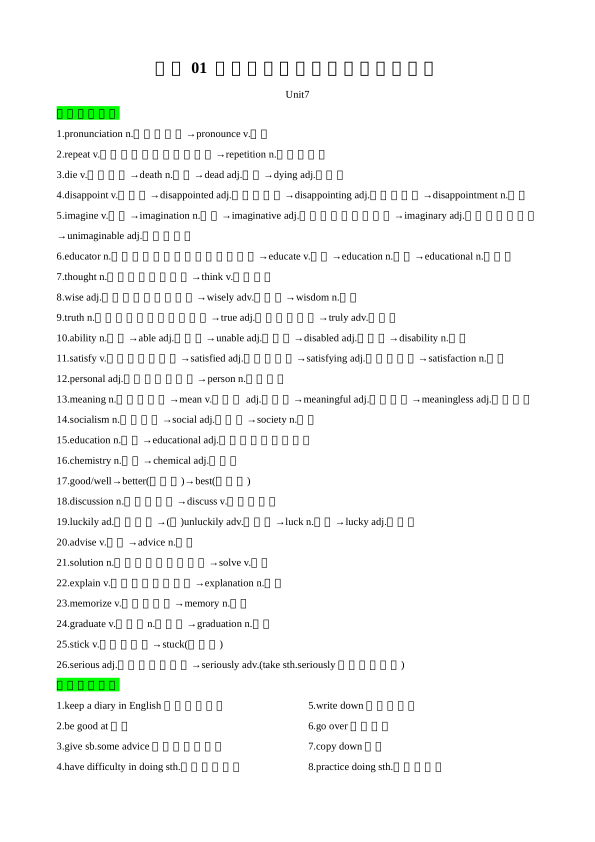
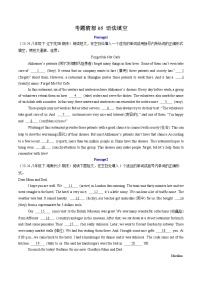
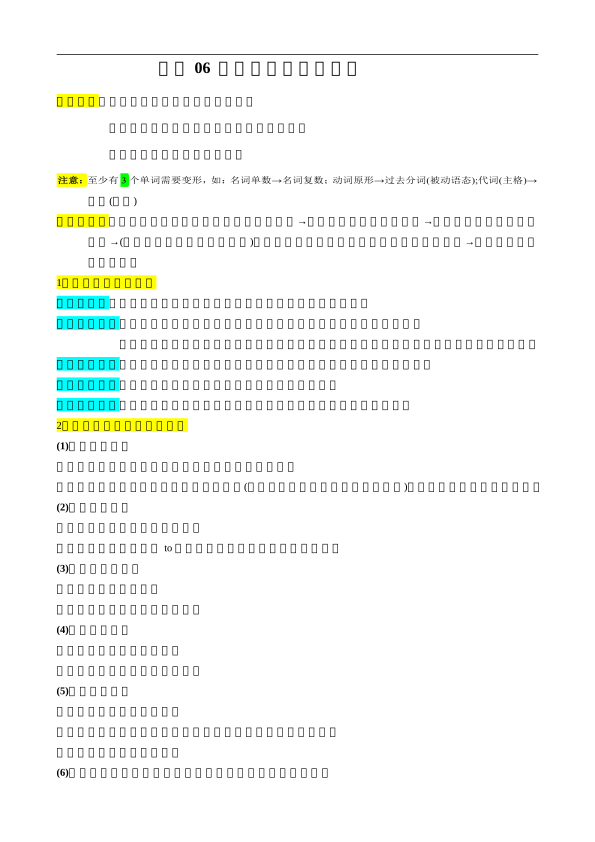
这是一份专题03 语法背默及训练-2025-2026学年八年级下学期英语期末复习(仁爱科普版2024)试题+答案,文件包含专题03语法背默及训练原卷版docx、专题03语法背默及训练答案版docx等2份试卷配套教学资源,其中试卷共41页, 欢迎下载使用。
Unit 7
1.-al 后缀用法
(1)-al 后缀构成的形容词
绝大多数由名词加-al 构成,核心含义为“与……相关的、具有……性质的”,部分需注意拼写 变形。
(2)-al 后缀构成的名词
多由动词派生而来,表“动作、过程、结果或相关事物”。
(3)-al 后缀构成的兼类词
同时具备形容词和名词两种词性,且含义相关。
2. 时间状语从句
(1)概念:在复合句中充当时间状语,用来修饰主句的谓语动词,明确说明主句动作发生、进行 或结束的时间,由相应时间连词引导从句,构成完整复合结构。
(2)常用引导连词用法对照表
(3)时态规则
①主过从过:时间状语从句用一般过去时,主句用相应过去时态。
he came in,I was reading a bk. 他进来的时候,我正在看书。
②主将从现:时间状语从句用一般现在时表将来,主句用一般将来时。
e.g. I will tell him the news as sn as he cmes back. 他一回来,我就把这个消息告诉他。 ③一般真理用一般现在时:描述客观真理、自然规律,主从句一律用一般现在时。
bils when the temperature reaches 100℃. 温度达到100摄氏度时,水会沸腾。
随堂训练
一、语法一:-al 形容词后缀
(一)构词规律:加在名词后,将名词转化为形容词,含义为“与……相关的;具有……性质的; 属于……的”。
(二)高频基础例词
1.persn→ (个人的;私人的) 2.traditin→ (传统的)
3.culture → (文化的) 4.center→ (中心的)
5.music→ (音乐的) 6.educatin → ( 教育的)
(三)用所给词的适当形式填空
1.We lve ur (natin)flag very much.
2.It's a (nature)lake in the muntain.
3.This is my (persn)phne.Yu can't use it.
4.Spring Festival is a (traditin)festival in China.
5.We have many (culture)activities at schl.
二、语法二:时间状语从句
(一)用法:说明动作发生时间的从句,由时间连词引导,可放在主句前或主句后,重点掌握基 础连词+语序规则+时态搭配。
(二)高频例句
1.When she , we were talking. ( 当她进来时,我们正在聊天。)
2.While my mther is cking,I my hmewrk. ( 妈妈做饭时,我写作业。)
3.Sally will g ut as sn as she her dinner. ( 莎莉一煮完饭就会出去。)
4.I until I finish my hmewrk. (我直到写完作业才睡觉。)
(三)选词填空
when,while,as sn as,until,after
1. my father is watching TV,I am cleaning the rm.
2. yu see him,please tell him t call me back.
3. the rain stpped, we went ut fr a walk.
4. it is sunny,we usually walk a pet dg in the park.
5.She wn't g t the z her friend cmes tmrrw.
三、句型转换
1. The children went t play n the playgrund. The rain stpped. ( 用 as sn as 合并为一句)
2.I was ding my hmewrk when my mther came back.( 改为一般疑问句)
yur hmewrk when yur mther came back?
3. The students play basketball twice a week after schl. (对画线部分提问)
the students play basketball after schl?
Unit8
1.-in后缀
用法:动词变抽象名词的后缀,表动作、行为、过程、结果或状态。
变形规则:
(1)常规变形:直接加-in;以不发音的 e 结尾,去e加-in。
如 :act→actin;create→creatin
(2)变体变形
①-sin:以 -d/-de/-se 结尾的动词,去e 或直接替换为-sin。
如:decide→decisin;revise→revisin
②-atin:以-ate 结尾的动词,去e 加-atin
如:celebrate →celebratin; educate→educatin
2.if 引导的条件状语从句
(1)定义:
if引导条件状语从句,表假设的条件(如果),从句修饰主句的动作/状态,说明主句发生的前提。
(2)两种基本形式:
①从句后置(无逗号):主句+if+从句
will have a picnic if the weather is fine.如果天气好,我们就去野餐。
②从句前置(必加逗号):If+从句,+主句.
the weather is fine,we will have a picnic. 如果天气好,我们就去野餐。
(3)时态
口诀:主将从现、主情从现、主祈从现
注意:
if引导的从句若主语是第三人称单数( he/ she/it/ 单数名词/不可数名词),谓语动词必须变三单,单选常考。
×错:If he cme,we will play tgether.
☑ 对:If he cmes, we will play tgether.
拓展: = unless(同义转换)“如果 不;除非”
yu dn't study hard,yu wn't pass the exam.
同义句:Unless _yu study hard, yu wn't pass the exam.
suggest
(1)v. 表明;显示
suggest+that 宾语从句
reprt suggests that the prject is successful. 这份报告表明这个项目是成功的。
(2)v.建议;提议
随堂训练
一、语法一:-in名词后缀
(一)构词规律:加在动词词尾,将动作类动词转化为抽象名词,表示某个动作、行为、过程或该 动作的结果或状态。
(二)高频基础例词
1. act → ( n. 行动) 2.invent→ (n. 发明)
3.invite → ( n. 邀请) 4.cllect → (n. 收集)
5.decide → (n. 决定) 6.prtect → (n. 保护)
(三)选词并用适当形式填空
invite,decide,act,perate,cllect
1.My mther made a t learn English well.
2.The dctr will d an fr the ld man tmrrw.
3.I received an t the birthday party yesterday.
4.We must take t save the animals in danger.
5.Tm has a big f ty cars.
二、语法二:if引导的条件状语从句
(一)用法:if 意为“如果;假如”,表示主句动作发生的条件或前提。if 引导的条件状语从句 可放在主句前也可以放主句后,位置不同标点有差异。
如:Yu will pass the exam if yu study hard.=If yu study hard, yu will pass the exam.
(二)核心时态规则
1. 主将从现:主句用 ,从句用 表将来的条件。
如:If it tmrrw,we t the park. (如果明天不下雨,我们就去公园。)
2.主情从现:主句用 ,从句仍用
如:We if the light . (如果红灯亮了,我们必须停下。)
3.主祈使从现:主句祈使句( 原形/Dn't+动词原形开头),从句仍用一般现在时。 如: if the flr wet. ( 地面湿的话,别跑。)
(三)用所给动词的适当形式填空
1.If she (get)up late,she (be)late fr schl.
2.We (g)fishing if the weather (be)fine tmrrw.
3.He (can speak)English well if he (practice)every day.
4.If he (cme)hme, (give)him this letter.
三、句型转换
1.If yu dn't study hard,yu can't pass the exam. ( 改为同义句)
,r yu can't pass the exam.
2.Emma has an art class n Tuesday.( 对画线部分提问)
Emma have an art class?
Unit9
1. 合成词
合成词就是由两个或两个以上独立单词组合而成、表达一个完整新含义的单词。
2. 副词比较级和最高级
与形容词类似,副词也有原级、比较级和最高级,用于比较动作的程度或方式。
(1)构成规则
1.规则变化
2.不规则变化
考点四 形容词和副词的比较等级的常用结构
1.原级的常用结构
2.比较级的常用结构
3.最高级的常用结构
易错点
1.表示程度的副词(quite、very、t、s、enugh等)只能修饰形容词和副词原级。
例:He is very tall. She is ld enugh t drive.
2.much/a lt/even/far/a little/a bit可修饰比较级,放在比较级前面,表程度。
例:It's a bit clder tday than yesterday. She is much better tday.
3.mre只能用于构成比较级,不可用于修饰比较级。
4.形容词最高级前一般加定冠词the,但其前面有形容词性物主代词(如my/his...)或名词所有格(如Lily's)时不加the;副词最高级前的the可省略。
随堂训练
一、语法一:合成词
(一)构词规律:由两个或两个以上独立基础单词组合而成,形成新单词、新含义,词性和用法 可通过拆分原词快速判断。
(二)高频基础例词
1.schl+bag→ ( 书包) 2.hme+wrk → (家庭作业)
3.play+grund→ (操场) 4.sme+times→ (有时)
5.else+where → (在别处) 6.class+rm→ (教室)
(三)选词填空
handbag,snwstrm,grassland,flashlight,earthquake
1.We see many sheep and cws walking n the green
2.A small happens and peple all run ut f the huse.
3.My mm puts her keys,phne and a wallet in her new
4.A heavy cmes and the children have t stay at hme.
5.Jane takes a bright when she ges fr a walk at night.
二、语法二:副词比较级和最高级
(一)用法:
1.比较级用法(两者比较)
标志词:than(比);常用结构:A+比较级+ +B
如:She dances than her friend at the party.她在派对上跳舞比她朋友更美。
2. 最高级用法(三者及以上比较)
标志词:in+范围(in ur class)/ f+群体(f all the students)
常用结构:A+(the)+ 最高级+in/f
如:He swims f all the bys in ur schl.
他是我们学校所有男生中游得最快的。
(二)用所给副词的适当形式填空
1.My mther cks (well) than my father,and the fd tastes great.
2.The ld man walks (slwly)than the yung man n the street.
3.Li Ming speaks English (clearly)in ur English grup.
4.He answers the teacher's questins (quickly)than any ther student.
5.This red bike can g (far)n the same rad.
三、句型转换
1.Tina was reading in the library when the strm came. (对画线部分提问)
What Tina when the strm came?
2.There will be a thunder shwer tmrrw. (改为一般疑问句)
there a thunder shwer tmrrw?
3.I can finish the wrk n time.He'll help me. ( 用 if 合并为一句)
he me,I the wrk n time.
Unit10
前缀 tele- 和 e- 知识点讲解
2.简单句基本结构
1. 主语 + 谓语(S + V)
这种结构中的谓语动词是不及物动词,后面不需要跟宾语。动词本身就能表达完整的意思。
例句:
The sun rises. → 太阳升起。(主语 the sun,谓语 rises)
We arrived. → 我们到了。(主语 we,谓语 arrived)
2. 主语 + 谓语 + 宾语(S + V + O)
这种结构中的谓语动词是及物动词,后面需要跟宾语。宾语是动作的承受者。
例句:
I lve the internet. → 我爱互联网。(主语 I,谓语 lve,宾语 the internet)
She reads nline articles. → 她阅读在线文章。(主语 she,谓语 reads,宾语 nline articles)
3. 主语 + 系动词 + 表语(S + V + P)
这种结构中的谓语动词是系动词,如 be(是)、feel(感觉)、lk(看起来)、seem(似乎)等。表语用来说明主语的状态或特征。
例句:
The internet is useful. → 互联网很有用。(主语 the internet,系动词 is,表语 useful)
Online turs are interesting. → 在线旅行很有趣。(主语 nline turs,系动词 are,表语 interesting)
4. 主语 + 谓语 + 间接宾语 + 直接宾语(S + V + IO + DO)
这种结构中的谓语动词是双宾动词,如 give(给)、shw(展示)、tell(告诉)、teach(教)等。后面跟两个宾语:间接宾语通常指人,直接宾语通常指物。
例句:
The internet gives us infrmatin. → 互联网给我们信息。(主语 the internet,谓语 gives,间接宾语 us,直接宾语 infrmatin)
She shwed me the website. → 她给我看了那个网站。(主语 she,谓语 shwed,间接宾语 me,直接宾语 the website)
5. 主语 + 谓语 + 宾语 + 宾语补足语(S + V + O + OC)
这种结构中的谓语动词后面跟宾语和宾语补足语。宾语补足语用来补充说明宾语的状态或动作,使句子的意思更完整。
例句:
The internet makes learning easy. → 互联网让学习变得容易。(主语 the internet,谓语 makes,宾语 learning,宾语补足语 easy)
We find nline turs helpful. → 我们发现在线旅行很有帮助。(主语 we,谓语 find,宾语 nline turs,宾语补足语 helpful)
注意:
(1)主谓宾vs 主系表
①主谓宾(S+V+0) 表示主语做什么,动词表示动作。
主系表(S+V+P)表示主语是什么/怎么样,动词表示状态、特征或变化。
②系动词三大类
(2)双宾语vs宾补
双宾语(S+V+IO+DO): 后面是两个独立宾语 (人+物),互不说明。
e.g. He gave me a bk. ( me 和 a bk 是两个 独立成分)
宾语补足语(S+V+0+C): 后面成分补充说明 宾语。
e.g. We made the rm clean.(clean 说明rm)
随堂训练
一、语法一:tele-和e-前缀
(一)构词规律:tele-含义是“远的;远程的;电视的”,多与名词、动词结合,构成新名词。e-与 名词结合,构成新名词,表“电子的……”。
(二)高频基础例词
1.tele-+phne→ (电话) 2.tele-+visin→ (电视)
3.tele-+wrker→ (远程办公者)4.e-+bk → (电子书)
5.e-+mail→ (电子邮件) 6.e-+business → (电子商务)
(三)选词填空
teleshpping,e-mney,e-cntrl,e-marketing,telelearming
1. is very safe and easy fr us t buy nline things.
2.We can d at hme when we can't g t schl.
3.This new machine wrks well with its smart system.
4.Many shps d t sell mre things nline.
5. helps ld peple buy things withut ging ut.
二、语法二:基本句型
(一)1.主谓(S+V)如: (雨停了。)
2.主系表(S+V+P)如: (他保持健康。)
3.主谓宾(S+V+0)如: (她完成了作业。)
4.主谓双宾(S+V+IO+DO)如: (老师教我们英语。)
5.主谓宾补(S+V+0+0C)如 : (这部电影让我开心。)
6.There be 句型如: (桌子上有一些书。)
(二)判断句子类型(填:主谓/主系表/主谓宾/主谓双宾/主谓宾补/There be句型)
1.My friend sent me a pstcard.
2.There is a pair f shes under the bed.
3.He runs fast every mrning.
4.She let me use her phne.
5.The sup tastes delicius.
6.We read bks in the library.
三、一词多义
cllectin A.(n.) 收藏品 B.(n.) 一群 C.(n.) ( 衣物的)系列
1.A cllectin f birds fly ver the lake every mrning.
2.The fashin stre has a beautiful dress cllectin.
3.My sister wants t start a bk cllectin this year.
mail A.(n.)电子邮件 B.(n.) 信件 C.(v.) 邮寄
1.He mails a pstcard t his friend every mnth.
2.I write a mail t my teacher abut the hmewrk.
3.She gets a lt f mail frm her pen pal.
Unit11
1.转化法
(1)转化法三大类型
(2)一句话判断法:
看单词在句子里充当什么成分:
作主语、宾语→一般是名词
作谓语→一定是动词
作表语、定语→一般是形容词
e.g.I need a glass f water(n.水)because I want t water the flwers(v.浇水).
She will shw(v.展示)us her new dress at the shw(n.演出)tnight.
This rm is clean(adj.干净的),s we dn't need t clean(v.打扫)it.
常见词
宾语从句(I)
(1)基本概念
宾语从句就是在复合句中作宾语的从句,结构为“主句+引导词+从句”,从句必须用陈述句语序。
e.g.I knw that yu are right.我知道你是对的。
(主句:I knw;宾语从句:that yu are right)
(2)语序规则
必须用陈述句语序:引导词+主语+谓语
e.g.I dn't knw where he lives.我不知道他住在哪里。
(3)时态呼应
①主句现在时→从句任意时态
e.g.I knw he will cme tmrrw.我知道他明天会来。
②主句过去时→从句过去时态
said he was ill.他说他生病了。
③客观真理→永远一般现在时
teacher said the sun rises in the east.老师说太阳从东方升起。
(4)引导词
①that引导陈述句,无词义,不充当成分,通常可省略。
e.g.I think(that)he is right.我认为他是对的。
that不能省略的情况:
a.多个宾语从句并列时,第二个及以后的that不可省略
said that he was late and that he was srry.他说他迟到了,并且表示很抱歉。
b.主句带有形式宾语it,真正宾语为that从句时
e.g.I find it imprtant that we study hard.我觉得我们努力学习很重要。
②if/whether引导一般疑问句,意为“是否”。
e.g.I want t knw if/whether he will cme.我想知道他是否会来。
③疑问词(what/wh/where/when/why/hw)引导特殊疑问句。
e.g.I dn't knw where he lives.我不知道他住在哪里。
(5)否定转移
条件:主语I/We+think/believe/suppse/expect
规则:nt从从句移到主句
e.g.I dn’t think he is right.我认为他不对。
随堂训练
一、语法一:零派生
(一)构词规律:一个单词在不改变拼写形式的情况下,直接用作另一种词性时,它就具有了 “同词异用”的特点。
(二)高频基础例词
1.water(n. 水 )→ water(v. ) 2.plant(n.植物)→ plant(v. )
3.name( n. 名字)→ name(v. ) 4.tidy( adj. 整洁的) →tidy(v. )
5.clear( adj.清澈的)→ clear( v. ) 6.cl( adj. 凉爽的) → cl(v. )
(三)根据句意,判断画线单词的词性(N= 名词,V= 动词,Adj =形容词),及中文含义。
1.Please bk a ticket nline fr me.( ) 含义 :
2.This bk is very interesting.( ) 含义:
3.He will picture the beautiful scene( 景色)in his article.( )含义:
4.Lk at that picture n the wall.( ) 含义 :
5.The brave pliceman finally freed the child.( ) 含义 :
6.Are yu free tmrrw afternn?( ) 含义 :
二、语法二:宾语从句( I)
(一)概念:用一个完整的句子来充当主句动词的宾语,这个句子就是宾语从句。 简单宾语:I knw him. (我知道他。)
宾语从句:I knw . (我知道他是一名老师。)
(二)1.基本结构:主句+引导词+从句(陈述句语序)
2.宾语从句三要素:引导词、语序、时态
3.引导词that 在宾语从句中仅起连接作用,无词义,常可省略。
如:I knw . (我知道你是对的。)
She said . (她说她明天会来。)
(三)合并句子
1.He is hnest.I knw it.
→I knw
2.They will win the game.We are cnfident.
→We are cnfident
(四)翻译句子
我发现他对音乐非常感兴趣。
三、单项选择
( )1.The cst was much higher than we had first expected( 预期).
A.actual B.cmmn C.simple
( )2.With a strng push,he began t higher and higher n the playgrund.
A.discuss B.swing C.arrive
( )3.The cat jumped smthly the wall and disappeared int the garden.
A. nt B.frm C.during
Unit12
1.动词变-ed/-ing形容词
(1)拼写规则
(2)-ed/-ing形容词用法解析
①-ed形容词
核心含义;感到……的(侧重人的主观心情、感受)
e.g.I'm interested in music.我对音乐感兴趣。She is excited abut the trip.她对这次旅行感到很兴奋。
②-ing形容词
核心含义:令人……的(侧重事物、事情给人的客观感受)
game is interesting.这个游戏很有趣。The mvie is exciting.这部电影很刺激。
(3)常见词
动词加上形容词后缀-ed或-ing构成形容词,以-ed结尾的形容词修饰人;以-ing结尾的形容词修饰物。
宾语从句(Ⅱ)
宾语从句大致可以分为三类:that引导的宾语从句、if/whether引导的宾语从句和疑问词引导的宾语从句。在本单元中,我们学习that、if和whether引导的宾语从句。
that引导的宾语从句
当谓语动词表示肯定的概念,如“希望”“相信”“知道”或“说”时,其后的宾语从句一般用that引导。that没有任何词汇意义,只具有语法功能,目的是使读者清楚后面的句子是前面动词的宾语,多数情况下that可以省略。
I hpe(that)it will rain this afternn.我希望今天下午会下雨。
不可省略that的常见情况
(1)当一个句子有多个并列的宾语从句时,通常第一个宾语从句前的that可省略,但后面的that不可省略。
She wrte(that)she wuld cme and see him smetimes,and that she wuld never frget what he had dne fr her.她写信说,她会不时来看他,而且永远不会忘记他为她做的(事情)。
(2)句中带有插入语时,宾语从句的引导词that不可省略。
Yur mther said,happily and prudly,that yu had wn the gld medal.你妈妈高兴又自豪地说,你赢得了金牌。
(3)带补语的宾语从句的引导词that通常不可省略。
He felt it necessary that he shuld give Liu Bin a call later.他觉得有必要晚些时候给刘彬打个电话。
if/whether引导的宾语从句
当一般疑问句充当句子的宾语时,用连词if或whether引导,if/whether在从句中不充当任何句子成分,意为“是否”,不可省略。宾语从句要用陈述语序。
I dn't knw whether/if she will cme this afternn.我不知道她今天下午是否会来。
whether与if引导宾语从句时的区别
疑问词引导的宾语从句
当特殊疑问句充当句子的宾语时,由原来的疑问词作为连接词,这些词在宾语从句中充当一定的句子成分,都有各自的词义,不可省略。疑问词引导的宾语从句也要用陈述语序。
常见连接词的含义及功能如下:
He asked them what they did at the weekend.他问他们周末做了什么。(what在宾语从句中作宾语)
D yu knw when he was brn?你知道他是何时出生的吗?(when在宾语从句中作时间状语)
连接代词wh与whm都指人。wh为主格,在从句中作主语或宾语;whm为宾格,在从句中作宾语。
I dn't knw wh is playing the pian next dr.我不知道谁正在隔壁弹钢琴。(wh在宾语从句中作主语)
Culd yu tell me whm yu spke t just nw?你能告诉我你刚才在和谁说话吗?(whm在宾语从句中作宾语)
宾语从句的时态问题
在含有宾语从句的复合句中:
(1)主句如果是一般现在时、现在完成时或一般将来时,从句根据实际情况选用时态。
(2)主句如果是过去时态,从句通常也用与过去有关的时态。
The teacher said that the students were having an exam.老师说学生们正在考试。
The freign guests tld me that they had learnt a lt during their stay in China.这些外国客人告诉我,他们在中国逗留期间学到了很多东西。
(3)当宾语从句表示的是普遍真理、客观事实或现在看来仍然是真实的情况时,从句用一般现在时,而不受主句时态的影响。
Mther tld me that hnesty is the best plicy.妈妈告诉我诚实总是上策。
(4)在口语中,为了强调从句涉及的某一状态在说话时仍在继续,动作是习惯性的、反复出现的,动作正在进行或尚未发生时,或主从句中所发生的动作时间在同一天,两者相隔很短时,宾语从句有时也用一般现在时、现在进行时或一般将来时。
Mary said that she usually reads a bk befre ging t bed.Mary说她睡觉前通常会看书。
She said that she is flying t Beijing next week.她说她下周要飞往北京。
随堂训练
一、语法一:-ed 和-ing后缀
(一)构词规律:1.动词+-ing→形容词,表示“令人……的”,描述事物或动作本身的性质。
2.动词+-ed→形容词,表示“感到……的”,用来描述人的感受、情绪。
(二)高频基础例词
1.interest(使感兴趣)→ (令人感兴趣的)→ (感到有兴趣的)
2.excite(使兴奋)→ (令人兴奋的)→ (感到兴奋的)
3.surprise(使惊讶)→ (令人惊讶的)→ (感到惊讶的)
4. relax(放松)→ (令人放松的)→ (感到放松的)
(三)用所给动词的-ed或-ing 形式填空
1.This stry is very (excite).All the students are (excite)abut it.
2.I felt (bre)because I watched a (bre)TV shw.
3.Listening t light music is (relax).She feel (relax)after listening t it.
4.The girl is (interest)in this (interest)bk.
5.The news is (surprise),and she is (surprise)at it.
二、语法二:宾语从句(Ⅱ)
(一)1.引导词if/whether 的用法:引导 (宾语从句是“是/否”回答的问句,从句需改为
语序)。if 和 whether 大多可以互换,在与r nt连用时,只能用 whether。
如:She asks me I like playing ftball r nt. ( 她问我是否喜欢踢足球。)
2.特殊疑问词作引导词的用法:引导特殊疑问句(宾语从句是wh/what/where 等开头的问句,从句需改为 语序)。高频特殊疑问词 (什么)、 (谁 )、 (哪里)、
(什么时候)、 (怎样)、 (为什么)、 (哪一个)
如:I dn’t knw .(我不知道她住在哪里。)
(二)改写句子(将括号内的问句改为宾语从句,注意语序和引导词)
1.I dn't knw.(Is he a teacher?)
I dn't knw
2.She asks me.(What d yu eat fr breakfast?)
She asks me
3.He thinks.(She is a nice girl.)
He thinks
4.We want t knw.(When will the meeting start?)
We want t knw
三、单项选择
( )1.The kind girl is the ld man acrss the street.
A.leading B.fllwing C.passing
( )2.—Shall we g hiking this Saturday?
—It the weather.I'll call yu tmrrw.
A.wrks n B.depends n C.puts n
( )3.We saw a yung taking phts by the sea.They lked very happy.
A.cuple B.circle C.candle
名词
形容词
nature自然;天性
natural自然的;天生的
culture文化
cultural文化的
traditin传统
traditinal传统的
music音乐
musical音乐的
center中心;中央
central中心的
动词
名词
arive到达
arrival到达;到来
refuse拒绝
refusal拒绝
survive幸存
survival幸存;存活
词汇
形容词含义
名词含义
chemical
化学的
化学物质
fficial
官方的;正式的
官员
physical
身体的;物理的
体检
连词
含义
用法
例句
when
当……时候
可接短暂性/延续性动词,时间 点、时间段通用
She was cking when the phne rang.电话铃响的时候,她正在 做饭。
while
在……期间
仅接延续性动词/进行时态,强 调时间段
I was ding my hmewrk while my brther was watching TV.我 弟弟看电视的时候,我正在写 作业。
as
一边……一边 ……;随着
主从句动作同步发生
We walked as we talked.我们边 走边聊。
befre
在……之前
主句动作先发生,从句动作后 发生
I will finish my wrk befre I g t bed.我睡觉前会完成工作。
after
在……之后
从句动作先发生,主句动作后 发生
After he finished his meal,he went ut fr a walk.他吃完饭 后,出去散步了。
as sn as
-……就 ……
动作紧密衔接,无间隔
I will call yu as sn as I arrive in Shanghai.我一到上海就给 你打电话。
until/till
直到
肯定句:动作延续至某刻;
否定句:nt .until直到……才
He waited until his mther came back.他一直等到他妈妈回来。 She didn’'t g t bed until she finished her hmewrk.她直到 做完作业才睡觉。
规则
从句时态
主句形式
例句
主将从现
一般现在时
will+动词原形
If yu study hard,yu will get gd grades. 如果你努力学习,你会取得好成绩。
主情从现
一般现在时
can/may/must+动词 原形
If yu try,yu can finish the task by yurself. 如果你试一试,你就能自己完成这项任务。
主祈从现
一般现在时
D/Dn't+动词原形
If yu finish hmewrk,hand it in at nce. 如果你完成了作业,立刻交上来。
常用结构
例句
suggest+that从句(shuld+动词 原形)
She suggests that we shuld save water every day.她建议我们 每天节约用水。
suggest+ding sth.
He suggests ging t the library after schl.他建议放学后去 图书馆。
suggest sth.t sb.
I suggested a gd bk t my deskmate.我给我的同桌推荐 了一本好书。
构成方式
构成
合成词
名词+名词
snw(雪)+strm(暴风雨)
snwstrm(暴风雪)
形容词+名词
black(黑色的)+bard(木板)
blackbard(黑板)
副词/介词+名词
after(在……之后)+nn(中午)
afternn(下午)
动词+名词
play(玩)+grund(地面)
playgrund(操场)
副词/介词+动词
ut(出去)+lk(看)
utlk(展望;观点)
类别
构成方法
原级
比较级
最高级
单音节词和部分双音节词
一般在词尾加-er或-est
fast
faster
fastest
near
nearer
nearest
以字母e结尾的词,在词尾加-r或-st
late
later
latest
以“辅音字母+y”结尾的双音节词,先把y变i,再加 -er或
-est
easy
easier
easiest
early
earlier
earliest
重读闭音节词词尾只有一个辅音字母时,先双写该辅音字母,再加 -er或-est
big
ht
fat
wet
thin
bigger
htter
fatter
wetter
thinner
biggest
httest
fattest
wettest
thinnest
多音节词和部分双音节词
在词前加mre或mst
careful
beautiful
quickly
carefully
mre careful
mre beautiful
mre quickly
mre carefully
mst careful
mst beautiful
mst quickly
mst carefully
原级
比较级
最高级
原级
比较级
最高级
gd/well
better
best
many/much
mre
mst
bad/badly
wrse
wrst
far
farther/further
farthest/furthest
little
less
least
结构
意义
示例
as+形容词原形/副词原形+as
和……一样……
She is as beautiful as her mther.
I wrked as hard as befre.
nt+s/as+形容词原形/副词原形+as
不如……那样……
I can't type s fast as yu.
结构
意义
示例
比较级+than
比……更……
Cassie's rm is bigger than mine.
The weather here is htter than that in Yunnan.
比较级+and+比较级
越来越……
It's getting warmer and warmer.
the+比较级, the+比较级
越……,就越……
The mre bks yu read, the mre yu knw.
Which/What/Wh...+比较级,A r B?
哪一个/什么/谁更……,A还是B?
Wh plays tennis better, Mike r Sam?
the+比较级+f the tw...
两者中较……的那一个
Anne is the taller f the tw girls.
结构
意义
示例
(the+)最高级(+单数名词)+in/f/amng+比较范围
在……中最……
It is the biggest city in China.
Sccer is the mst ppular sprt in the cuntry.
He culd jump (the) farthest f all.
ne f the+形容词最高级+可数名词复数
最……的……之一
Jay Chu is ne f the mst ppular singers.
sth.+be+the+形容词最高级+名词(+that)+ sb. have/has/had ever +过去分词
某事物是某人所有经历中最……的
He said it was the quietest and mst beautiful place he had ever been t.
the+序数词+形容词最高级
第几最……的
The Yellw River is the secnd lngest river in China.
tele-是一个表示距离远的前缀, 加在名词前构成名词或动词, 表示“电话的、电视的、远程的”相关的含义
词缀
典例
tele-
telephne (n.) 电话
televisin (n.) 电视
telescpe (n.) 望远镜
teleshpping (n.) 远程购物
telewrking (n.) 远程工作
telewrker (n.) 远程工作者
telecntrl (n.&v.) 远程控制; 遥控
telefilm (n.) 远程电影
telegram (n.) 电报; 电报机
telegraph (n.) 电报
telecurse (n.) 远程课程
telecast (n.&v.) 远程广播
telecnference (n.) 远程会议
telemedicine (n.) 远程医疗
telecmmunicatin (n.) 远程通信
telecmmute (v.) 远程办公
e-加在名词前,构成名词, 表示“电子的”相关的含义
词缀
典例
e-
electricity (n.) 电; 电流
electrnic (n.) 电子的
email (n.) 电子邮件
需要加上连字符-
e-news (n.) 电子新闻
e-bks (n.) 电子书
e-learning (n.) 电子学习
e-business (n.) 电子商务
e-ticket (n.) 电子票
e-banking (n.) 电子银行
e-pal (n.) 网友
e-library (n.) 电子图书馆
e-mney (n.) 电子货币
e-marketing (n.) 电子市场
e-gvernment (n.) 电子政务
e-wallet (n.) 电子钱包
类别
系动词(英文+中文)
状态类
be(是)、keep(保持)、stay(保持)、remain(保持)、seem(似乎)、appear(好像)
感官类
lk(看起来)、sund(听起来)、smell(闻起来)、taste(尝起来)、feel(感觉)
变化类
get(变得)、becme(成为)、tum(变成)、g(变得)
转化类型
规律
示例
名词→动词
表示“使用/做该名词相关动作”
water(n.水→v.浇水)bk(n.书→v.预订)
动词→名词
表示“动作/动作结果/场所”
stp(v.停止→n.车站)shw(v.展示→n.演出)
形容词→动词
表示“使变得……”
clean(adj.干净的→v.打扫)warm(adj.温暖的→v.变暖)
转化法
典例
名词转化为动词
water (n.) 水 →(v.) 浇水
ship (n.) 船 →(v.) 运输
hand (n.) 手 →(v.) 传递
clr (n.) 颜色 →(v.) 上色
bk (n.) 书 →(v.) 预订
dress (n.) 长裙 →(v.) 穿
ck (n.) 厨师 →(v.) 烹饪
frce (n.) 力量 →(v.) 强迫
动词转化为名词
lk (v.&n.) 看; 瞧
dubt (v.&n.) 怀疑
fight (v.&n.) 打架
talk(v.&n.) 谈话
walk (v.&n.) 走路
attack (v.&n.) 袭击
reprt (v.&n.) 报道
形容词转化为动词
clean (adj.) 干净的→(v.) 清扫
clear (adj.) 清楚的→(v.) 清理
tidy (adj.) 整洁的→(v.) 整理
crrect(adj.) 正确的→(v.) 纠正
free (adj.) 免费的; 空闲的→(v.) 释放
形容词转化为名词
daily (adj.) 每日的→(n.) 日报
final (adj.) 最后的→(n.) 决赛
fair (adj.) 公平的; 公正的→(n.) 展览;市场
right (adj.) 右边的→(n.) 权利; 右边
straight (adj.) 直的; 直接的→(n.) 直线
形容词转化为副词
early (adj.) 早的→(adv.) 早地
late (adj.) 晚的; 迟到的→(adv.) 晚地; 迟
fast (adj.) 快的; 快速的→(adv.) 快速地
slw (adj.) 慢的; 缓慢的→(adv.) 缓慢地
hard (adj.) 努力的; 硬的→(adv.) 努力地; 变硬
副词转换为动词
dwn (adv.) 向下; 朝下→(v.) 使掉落; 击败,战胜
ut (adv.) 向外→(v.)击倒; 驱逐
slw (adv.) 缓慢地→(v.) (使)减速; (使)降低
情况
变-ed规则
变-ing规则
示例
一般动词
直接+ed
直接+ing
interest→interested/interesting
不发音e结尾
直接+d
去e+ing
excite→excited/exciting
辅音+y结尾
y→i+ed
直接+ing
wrry→wrried/wrrying
重读闭音节
(辅+元+辅)
双写尾字母+ed
双写尾字母+ing
plan→planned/planning
后缀-ed:
的状态,或感觉,修饰人
后缀-ing:
的;令人的,修饰物
tired感到疲倦的
tiring令人疲倦的
interested感到有趣的
interesting有趣的
excited感到兴奋的
exciting令人兴奋的
surprised感到惊讶的
surprising令人惊讶的
mved感动的
mving令人感动的
wrried真心的
wrrying令人担忧的
bred感到无聊的
bring无聊的
amazed感到惊奇的
amazing令人惊奇的
scared感到害怕的
scaring令人惊惧的
cnfused困惑的,糊涂的
cnfusing令人费解的,令人迷惑
embarrassed尴尬的,窘迫的
embarrassing使人尴尬的
区别
例句
whether引导的宾语从句可置于句首,而if无此功能。
Whether it is true r nt,I can't tell.这是真的还是假的,我说不上来。
whether引导的宾语从句可直接用于介词之后,而if无此功能。
That depends n whether we wrk hard.那取决于我们是否努力。
whether可与r nt直接连用,而if一般不能。
Let me knw whether r nt yu can cme.让我知道你是否能来。
连接词
含义
功能
连
接
代
词
wh
谁(主格)
除在句中起连接作用外,还可在宾语从句中作主语、宾语、表语或定语。
whm
谁(宾格)
whse
谁的
what
什么
which
哪个
连
接
副
词
when
什么时候
除在句中起连接作用外,还可在宾语从句中作状语。
where
什么地方
hw
怎样,如何
why
为什么
主句
宾语从句
Mr Smith tells us
Mr Smith has tld us
Mr Smith will tell us
Smith先生告诉我们
that he wrks in a library.他在图书馆工作。
that he is wrking in a library.他目前在图书馆工作。
that he has wrked in a library since 1985.自1985年以来,他一直在图书馆工作。
Mr Smith tells us
Mr Smith has tld us
Mr Smith will tell us
Smith先生告诉我们
that he wrked in a library last year.去年他在图书馆工作。
that he was wrking in a library when we first met him.我们第一次见到他时,他在图书馆工作。
这是一份专题03 语法背默及训练-2025-2026学年八年级下学期英语期末复习(仁爱科普版2024)试题+答案,文件包含专题03语法背默及训练原卷版docx、专题03语法背默及训练答案版docx等2份试卷配套教学资源,其中试卷共41页, 欢迎下载使用。
这是一份专题03 语法背默及训练-2025-2026学年七年级下学期英语期末复习(仁爱科普版2024)试题+答案,文件包含专题03语法背默及训练背诵版docx、专题03语法背默及训练默写版docx等2份试卷配套教学资源,其中试卷共29页, 欢迎下载使用。
这是一份专题04 书面表达背默及训练-2025-2026学年八年级下学期英语期末复习(仁爱科普版2024)试题+答案,文件包含专题04书面表达背默及训练背诵版docx、专题04书面表达背默及训练默写版docx等2份试卷配套教学资源,其中试卷共40页, 欢迎下载使用。
注册成功
资料篮

在线客服
添加在线客服
获取1对1服务
官方微信
关注“教习网”公众号
打开微信就能找资料
赛课定制
添加在线客服
获取1对1定制服务
职称咨询
添加在线客服
获取1V1专业指导服务

免费福利