免费领取教师福利

若您为此资料的原创作者,认为该资料内容侵犯了您的知识产权,请扫码添加我们的相关工作人员,我们尽可能的保护您的合法权益。


这是一份期末复习之完形填空12篇(Units1-6单元话题)-2025-2026学年八年级英语下学期期末复习(仁爱科普版)试题+答案,文件包含期末复习之完形填空12篇Units1-6单元话题原卷版docx、期末复习之完形填空12篇Units1-6单元话题解析版docx等2份试卷配套教学资源,其中试卷共39页, 欢迎下载使用。
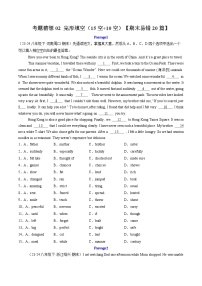
“These lessns are s hard! There are s many new wrds here. And I have t learn their spellings (拼写) and their 1 . Hw I wish wrds had n meanings!”
“P-l-e-a-s-u-r-e means a thing that brings yu 2 , like watching TV, playing cmputer games…”
“P-u-n-i-s-h—desn’t it mean making smebdy learn?”
These were my grumbles (抱怨) at class when I was ten. I didn’t really like learning at that time.
Mr. Dewar, my English teacher, 3 everything fr me. “Yu dn’t really like English, d yu?” he said. “Well, I’m ging t bring yu a new bk every Mnday. If yu read them all, I’ll 4 ask yu t read a bk again.”
The next Mnday, he brught me a bk. There was a picture f a by n the cver. He lked like me, s I read a few lines. I liked the by—I culdn’t put it dwn 5 I wanted t knw what wuld happen.
I finished that first bk in a week, and it didn’t stp there. Mr. Dewar seemed t knw just which bks I’d like. Every week, I thught, “I’m nt ding this again.” —but then I lked at the cver f the bk and culdn’t 6 t read the first page.
At the end f thse six weeks, I finished reading all the 7 bks. Mr. Dewar said, “S, that’s the end nw. Yu dn’t have t read any mre bks!” But he knew it wasn’t. The mre I read, the mre I 8 learning. He still lends me bks smetimes, but I als get sme 9 frm the schl library. Learning isn’t 10 any mre. It’s p-l-e-a-s-u-r-e, pleasure.
1.A.usesB.meaningsC.prnunciatins
2.A.jyB.successC.knwledge
3.A.changedB.didC.planned
4.A.ftenB.alwaysC.never
5.A.butB.sC.because
6.A.affrdB.decideC.wait
7.A.threeB.sixC.ten
8.A.enjyedB.hatedC.minded
9.A.himselfB.myselfC.urselves
10.A.simpleB.necessaryC.painful
【答案】
1.B 2.A 3.C 4.C 5.C 6.C 7.B 8.A 9.B 10.C
【导语】本文讲述了作者十岁时不喜欢学习英语,抱怨单词难学,英语老师杜瓦先生为他制定了读书计划,通过每周带书让他阅读,慢慢改变了他,让他从讨厌学习变得享受学习的故事。
1.句意:我必须学习它们的拼写和意思。
根据后文“Hw I wish wrds had n meanings!”,可知作者希望单词没有意思,由此可知此处指学习单词的拼写和意思,meanings“意思”符合。uses“用法”、prnunciatins“发音”均与后文语境不符。
2.句意:P-l-e-a-s-u-r-e 的意思是给你带来快乐的东西,比如看电视、玩电脑游戏……
根据后文“it’s p-l-e-a-s-u-r-e, pleasure”,可知 pleasure 意为“快乐”,由此可知此处指带来快乐,jy“快乐”符合。success“成功”、knwledge“知识”均不符合句意。
3.句意:我的英语老师杜瓦先生为我计划了一切。
根据后文老师说每周带一本新书给作者,以及制定的读书约定,可知老师为作者计划好了一切,planned“计划”符合。changed“改变”、did“做”均与后文老师的做法不符。
4.句意:如果你把它们都读完,我就再也不会让你再读一本书了。
根据上下文,老师用这个约定鼓励作者读书,结合后文作者读完书后爱上阅读,可知此处指老师不会再让他重复读书,never“从不”符合。ften“经常”、always“总是”逻辑不通。
5.句意:我喜欢这个男孩——我放不下这本书,因为我想知道会发生什么。前文“放不下书”和后文“想知道后续”是因果关系,应用because“因为”表原因。but“但是”表转折、s“所以”表结果,均不符合逻辑。
6.句意:但是然后我看着书的封面,迫不及待地读第一页。
根据前文作者说“再也不这样做了”,但看到封面又忍不住读,可知此处指迫不及待,culdn’t wait t d sth 是固定搭配,wait“等待”符合。affrd“承担得起”、decide“决定”均不符合搭配和语境。
7.句意:六周结束时,我读完了所有六本书。
根据前文“At the end f thse six weeks”,可知是六周时间,因此读了六本书,six“六”符合。three“三”、ten“十”均与前文时间不符。
8.句意:我读得越多,就越喜欢学习。
根据后文“Learning isn’t... any mre. It’s p-l-e-a-s-u-r-e, pleasure.”,可知作者不再讨厌学习,而是喜欢上学习,enjyed“喜欢”符合。hated“讨厌”、minded“介意”均与后文语境相反。
9.句意:他有时仍然会借给我书,但我也从学校图书馆自己借一些。
此处主语是I,对应的反身代词是myself“我自己”,指作者自己从图书馆借书。himself“他自己”、urselves“我们自己”均与主语人称不符。
10.句意:学习不再痛苦了。
根据前文作者抱怨学习难、讨厌学习,以及后文“It’s p-l-e-a-s-u-r-e, pleasure.”,可知作者现在觉得学习是快乐的,不再痛苦,painful“痛苦的”符合。simple“简单的”、necessary“必要的”均不符合上下文语境。
English is ne f the mst imprtant tls fr glbal cmmunicatin in the digital (数字) age. Mastering English is a big 1 fr many students, but 15-year-ld Lin Ha had fund his wn way t make the learning prcess 2 and efficient with mdern technlgy.
Lin Ha used t be weak in English listening and speaking. He was t 3 t speak in class r jin the schl’s English crner. His English teacher advised him t try sme ppular English-learning apps. T his surprise, he culd understand sme simple dialgues in shrt English vides 4 subtitles (提示词), which gave him mre cnfidence t keep learning.
Later, Lin Ha 5 a habit f watching 15-minute English tech vides every day after hmewrk. These vides talk abut new inventins like AI rbts, his favrite 6 . He tried t fllw the hst’s prnunciatin sentence by sentence. He als used a nte-taking app t 7 new wrds and useful expressins he learned frm the vides and textbks, and set a daily phne reminder (提醒) t 8 them fr 10 minutes each mrning.
Last term, Lin Ha jined an nline English club. He talked with teenagers frm different cuntries in English via vide calls (视频电话). Gradually, his spken English imprved 9 . Last mnth, he wn first prize in a city-level teen English speaking cmpetitin, and his 10 made his classmates and teachers very prud. Lin Ha’s experience shws there is n shrtcut t learning English well. Cmbine (结合) traditinal methds with mdern technlgy and keep practicing, and yu will make great prgress.
1.A.taskB.successC.challenge
2.A.bringB.enjyableC.tiring
3.A.shyB.activeC.brave
4.A.withB.frmC.withut
5.A.frmedB.brkeC.recrded
6.A.sptsB.ntesC.tpics
7.A.turn dwnB.write dwnC.get dwn
8.A.reviewB.questinC.imagine
9.A.slwlyB.greatlyC.quietly
10.A.failureB.illnessC.success
【答案】
1.C 2.B 3.A 4.C 5.A 6.C 7.B 8.A 9.B 10.C
【导语】本文讲述了英语学习基础薄弱的林浩,借助现代科技改变学习方式,最终提升英语水平并在比赛中获奖的故事。
1.句意:对许多学生来说,掌握英语是一个巨大的挑战。
根据上下文语境,此处指掌握英语并非易事,challenge“挑战”符合语境。task“任务”、success“成功”均不符合“学习难度大”的描述。
2.句意:但15岁的林浩找到了自己的方法,用现代科技让学习过程变得愉快且高效。
根据后文他通过视频、APP学习并获得信心的描述,enjyable“愉快的”符合语境;bring“无聊的”、tiring“累人的”与他的积极体验相反。
3.句意:他太害羞了,不敢在课堂上发言或参加学校的英语角。
根据前文“be weak in English”和后文“不敢发言”的描述,shy“害羞的”符合语境。
4.句意:令他惊讶的是,没有字幕他也能听懂英语短视频中的一些简单对话,这给了他继续学习的信心。
根据“gave him mre cnfidence t keep learning”的结果,此处指“无字幕”也能听懂,withut“没有” 符合语境。
5.句意:后来,林浩养成了每天做完作业后看15分钟英语科技视频的习惯。
固定搭配frm a habit f表示“养成……的习惯”,frmed符合语境。
6.句意:这些视频谈论像AI机器人这样的新发明,这是他最喜欢的话题。
根据“new inventins like AI rbts”可知,这些是视频讨论的话题,tpics“话题”符合语境;spts“地点”、ntes“笔记”不符合。
7.句意:他还使用记笔记的应用程序写下从视频和课本中学到的新单词和有用的表达,并设置手机每日提醒,每天早上花10分钟复习它们。
根据“nte-taking app”和“new wrds”的语境,write dwn“写下”符合;turn dwn“拒绝/调低”、get dwn“下来/沮丧”不符合。
8.句意:他还使用记笔记的应用程序写下从视频和课本中学到的新单词和有用的表达,并设置手机每日提醒,每天早上花10分钟复习它们。
根据“daily reminder”和学习场景,此处指复习所学内容,review“复习”符合。
9.句意:渐渐地,他的英语口语有了很大的提高。
根据后文“获得一等奖”的结果,greatly“大大地”符合语境。
10.句意:上个月,他在市级青少年英语口语比赛中获得了一等奖,他的成功让同学和老师都很骄傲。
根据“wn first prize”可知,此处指他的成功,success“成功”符合语境。
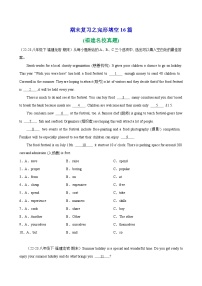
I used t spend all my pcket mney as sn as I gt it. I bught snacks, tys, and magazines withut thinking. Sn, I had n mney left fr things I really wanted, like a new dictinary. I felt 1 .
One day, my father gave me a piggy bank. He said, “If yu 2 sme mney every week, yu can buy what yu really need.” I decided t try. I started t 3 my spending. I wrte dwn everything I bught. I als 4 a mnthly budget. I put sme mney int my piggy bank every Sunday.
At first, it was hard. I wanted t buy ice cream. But I 5 twice befre spending. Mnths later, I pened my piggy bank. I was surprised t see hw much I had 6 ! I bught the dictinary and still had sme left.
Nw I understand that saving mney is nt just abut being 7 . It’s abut planning and self-cntrl. I still enjy buying things, but I always 8 a gd balance. I knw that small savings can 9 big dreams. Gd mney habits really 10 in life.
1.A.happyB.disappintedC.wise
2.A.brrwB.saveC.earn
3.A.write dwnB.think abutC.lk fr
4.A.spentB.madeC.lst
5.A.thughtB.paidC.asked
6.A.savedB.wastedC.spent
7.A.richB.prC.busy
8.A.keepB.breakC.frget
9.A.remindB.feelC.achieve
10.A.matterB.disappearC.cst
【答案】
1.B 2.B 3.B 4.B 5.A 6.A 7.A 8.A 9.C 10.A
【导语】本文是一篇成长类记叙文,讲述了作者从前花钱大手大脚,后来在父亲的引导下学会存钱、记账、理性消费,最终领悟到储蓄的意义,养成良好金钱观的故事。
1.句意:很快,我就没钱买自己真正想要的东西了,比如一本新词典。我感到很失望。
前文提到作者把零花钱花光了,没钱买真正需要的字典,因此心情是disappinted(失望的)。happy(开心的)、wise(明智的)均不符合语境。
2.句意:如果你每周都存一些钱,你就能买到你真正需要的东西了。
后文提到作者开始存钱、做预算,对应父亲的建议是让他存钱,save sme mney(存一些钱)符合语境。brrw(借)、earn(赚)均不符合文意。
3.句意:我决定试试,开始认真考虑自己的花销。
后文作者记录自己的每一笔消费,对应他开始“考虑”自己的钱都花在了哪里。think abut(考虑)符合语境。write dwn(写下,后文才提到记录)、lk fr(寻找)均不符合语境。
4.句意:我还制定了月度预算。
固定搭配make a budget表示“制定预算”,因此选made。spent(花费)、lst(丢失)均不符合搭配。
5.句意:一开始很难,我想买冰淇淋,但我会在花钱前再三思考。
固定搭配think twice表示“再三考虑”,对应作者学会克制消费、理性花钱的过程,因此选thught。paid(支付)、asked(询问)均不符合搭配。
6.句意:几个月后,我打开存钱罐,惊讶地发现自己存了这么多钱!
前文提到作者每周存钱,因此存钱罐里的是“存下的”钱,saved(存下的)符合语境。wasted(浪费)、spent(花掉)均不符合语境。
7.句意:现在我明白了,存钱不只是为了变得富有。
后文提到储蓄的真正意义是规划和自控,因此前文先点明人们对储蓄的常见误解:存钱是为了变富,选rich(富有的)。pr(贫穷的)、busy(忙碌的)均不符合。
8.句意:我依然喜欢买东西,但我总能保持收支平衡。
固定搭配keep a balance表示“保持平衡”,对应作者学会理性消费,在“花钱”和“存钱”之间找到平衡,选keep(保持)。break(打破)、frget(忘记)均不符合搭配。
9.句意:我知道,小小的储蓄也能实现大大的梦想。
固定搭配achieve big dreams表示“实现大梦想”,对应作者用存下的钱买到了字典,明白储蓄能帮助自己实现目标,选achieve(实现)。remind(提醒)、feel(感觉)均不符合。
10.句意:良好的金钱习惯真的会影响人的一生。
通读全文,从作者的经历中可以看到:好的金钱习惯能带来长远的改变,在生活中很重要。选matter(事关紧要,有重大影响)。disappear(消失)、cst(花费)均不符合。
D yu have pcket mney? If yur answer is yes, hw d yu get and 1 it? We asked fur students abut 2 pcket mney and here are the answers.
Wan Yan: Every week, I d sme 3 t get pcket mney, such as 4 , cleaning my bedrm, washing the plates and s n. My 5 give me 30 yuan a week as the pay. I learn it’s nt easy fr them t make mney s I spend my pcket mney 6 .
Lin Qingqing: My hme is 7 schl s I live in schl n weekdays. My parents give me 200 yuan every week. I spend mst f my mney 8 fd at schl. I als have t pay fr the bus tickets 9 I g t schl and cme back hme.
Zha Lun: My parents give me 50 yuan every week. I like 10 stries. S I almst spend all f the mney buying strybks. My parents say that it’s nt 11 . What d yu think 12 it? D I need a change?
Li Qiang: I get 100 yuan a week frm my parents. That’s 13 fr me. But I am still very careful with my mney because I plan t buy myself a gd pair f running shes. I think 14 I save half f my pcket mney every week, mnths later I’ll be 15 t buy it myself.
1.A.haveB.makeC.spendD.chse
2.A.hisB.herC.theirD.ur
3.A.hmewrkB.husewrkC.schlwrkD.wrk
4.A.writingB.readingC.singingD.cking
5.A.friendsB.cusinsC.teachersD.parents
6.A.quicklyB.carefullyC.immediatelyD.quietly
7.A.far frmB.next tC.acrss frmD.clse t
8.A.atB.nC.inD.fr
9.A.whenB.afterC.befreD.until
10.A.readingB.writingC.brrwingD.cpying
11.A.pssibleB.pliteC.wiseD.true
12.A.fB.frC.utD.with
13.A.difficultB.relaxingC.enughD.impssible
14.A.ifB.untilC.althughD.unless
15.A.friendlyB.helpfulC.unableD.able
【答案】
1.C 2.C 3.B 4.D 5.D 6.B 7.A 8.B 9.A 10.A 11.C 12.A 13.C 14.A 15.D
【导语】本文四位学生分享了他们如何获得及使用零花钱的不同方式与观念。
1.句意:如果你的答案是“有”,你如何得到并花掉它?
根据前文“get and”以及后文讨论使用零花钱的语境,此处应用spend表示“花费”。have“有”、make“制作”、chse“选择”均不符合“得到并花掉”的逻辑顺序。
2.句意:我们询问了四位学生关于他们的零花钱,以下是答案。
主语是We,询问的对象是fur students,应用their表示“他们的”。his“他的”、her“她的”、ur“我们的”均指代错误。
3.句意:每周,我做一些家务来挣零花钱。
根据后文“cleaning my bedrm, washing the plates”可知,这些是家务活,应用husewrk。hmewrk“家庭作业”、schlwrk“学校作业”、wrk“工作”均不具体对应所列事项。
4.句意:例如做饭、打扫我的卧室、洗碗等等。
所列举事项均为家务,cking“做饭”符合。writing“写作”、reading“阅读”、singing“唱歌”不属于家务劳动。
5.句意:我的父母每周给我30元作为报酬。
孩子在家做家务,给零花钱的通常是父母,应用parents。friends“朋友”、cusins“表亲”、teachers“老师”均不符合家庭场景。
6.句意:我明白他们赚钱不容易,所以我谨慎地花零花钱。
因为知道父母赚钱难,所以花钱应“谨慎地”,应用carefully。quickly“快速地”、immediately“立即”、quietly“安静地”均不符合逻辑。
7.句意:我家离学校很远,所以我平日住在学校。
后文说住在学校,原因应是家离学校远,应用far frm。next t“紧挨着”、acrss frm“在对面”、clse t“靠近”均不会导致住校。
8.句意:我把大部分钱花在学校食物上。
固定搭配spend mney n sth.,应用介词n。at、in、fr均不符合spend的固定用法。
9.句意:当我上下学时,我还得付公交车票钱。
“g t schl and cme back hme”表示上下学的时候,应用when引导时间状语从句。after“在……之后”、befre“在……之前”、until“直到”均不准确描述往返过程。
10.句意:我喜欢读故事。
后文说买故事书,应用reading表示“读”。writing“写作”、brrwing“借”、cpying“抄写”均与买故事书的逻辑不符。
11.句意:我父母说那样不明智。
父母认为把钱全用来买故事书不合理,应用wise表示“明智的”。pssible“可能的”、plite“礼貌的”、true“真实的”均不匹配父母评价花钱方式的语境。
12.句意:你觉得它怎么样?
固定句型What d yu think 应用介词f。fr、ut、with均不能构成此固定搭配。
13.句意:对我来说那足够了。
每周100元,后文说仍然很小心,说明钱是“足够的”,应用enugh。difficult“困难的”、relaxing“放松的”、impssible“不可能的”均不符合。
14.句意:我想如果我每周存下一半零花钱,几个月后我就能自己买它了。
表示条件关系,应用if引导条件状语从句。until“直到”、althugh“虽然”、unless“除非”均不符合逻辑。
15.句意:几个月后我就能自己买它了。
固定搭配be able t d sth.表示“能够做某事”,应用able。friendly“友好的”、helpful“有帮助的”、unable“不能的”均不符合或形式错误。
One mrning, David Hales set ut t take a shrt ride t test a snwmbile (雪地机动车). He repaired it fr a neighbur. Hales didn’t take fd r water fr the shrt 1 and left his cellphne behind. All went well 2 he made a wrng turn.
“I thught I knew the way but I turned exactly the 3 way.” On the first night, Hales used the snwmbile’s start il t make a 4 , but he wke up because his shes and pants burned. The next day, he had t 5 thrugh thick snw t find help thugh his legs kept hurting.
Fr tw days, he ate s much snw, and 6 was wrng with his muth. He thught he might nt 7 t live anther day as he traveled seven miles n his hands and knees. Hales was lst n March 13th, but he fund the strength t cntinue. “I wanted t lie dwn and just 8 , but I didn’t.” he said. 9 , the plice fund him later that mrning.
After the plice sent him t hspital, Hales was s 10 that he culdn’t sleep. He said he dreamed f ht chclate and a ht shwer when he finally fell asleep.
1.A.tripB.playC.sprt
2.A.nceB.afterC.until
3.A.shrtB.wrngC.straight
4.A.decisinB.planC.fire
5.A.jumpB.walkC.drive
6.A.smethingB.anythingC.everything
7.A.allwB.manageC.inspire
8.A.hang upB.pick upC.give up
9.A.LuckilyB.UnfrtunatelyC.Imprtantly
10.A.shckedB.afraidC.excited
【答案】
1.A 2.C 3.B 4.C 5.B 6.A 7.B 8.C 9.A 10.C
【导语】
本文讲述了大卫·黑尔斯(David Hales)出门测试雪地机动车,因走错路被困,在艰难求生两天后最终被警察救起的故事。
1.句意:黑尔斯没有为这次短途旅行带食物和水,也没有带手机。
上文提到“take a shrt ride”,说明是短途出行,trip“旅行,出行”符合。play“玩耍”、sprt“运动”均与短途出行的语境不符。
2.句意:一开始一切都很顺利,直到他转错了弯。
根据语境,前面说一切顺利,后面说转错弯,是转折关系,until“直到”符合,表示直到转错弯之前都顺利。nce“一旦”、after“在……之后”均不符合此处的时间逻辑。
3.句意:“我以为我知道路,但我转错了方向。”
上文提到“made a wrng turn”,所以这里说转错了方向,wrng“错误的”符合。shrt“短的”、straight“直的”均与转错方向的语境不符。
4.句意:第一天晚上,黑尔斯用雪地机动车的启动油生火,但他因为鞋子和裤子被烧而醒来。
下文提到“his shes and pants burned”,说明是用启动油生火,fire“火”符合。decisin“决定”、plan“计划”均与鞋子裤子被烧的语境无关。
5.句意:第二天,尽管他的腿一直疼,他还是不得不穿过厚厚的积雪去寻求帮助。
上文说被困,要寻求帮助,在雪地里只能步行,walk“走”符合。jump“跳”、drive“驾驶”在厚厚的积雪中不符合实际情况。
6.句意:两天来,他吃了很多雪,嘴巴出了问题。
“smething was wrng with...”是固定表达,表示“……出了问题”,smething“某事,某物”符合。anything“任何事”常用于否定句和疑问句;everything“每件事”不符合此处语境。
7.句意:当他用手和膝盖爬行了七英里时,他认为自己可能无法再活一天了。
根据语境,他觉得自己可能无法再活下去,manage t d sth.表示“设法做成某事”,manage“设法”符合。allw“允许”、inspire“激励”均与语境不符。
8.句意:“我想躺下来放弃,但我没有。”他说。
上文说处境艰难,这里说想躺下来,结合语境是想要放弃,give up“放弃”符合。hang up“挂断”、pick up“捡起”均不符合语境。
9.句意:幸运的是,那天早上晚些时候警察找到了他。
上文说他艰难求生,这里警察找到他,是幸运的事,luckily“幸运地”符合。unfrtunately“不幸地”、imprtantly“重要地”均不符合语境。
10.句意:警察把他送到医院后,黑尔斯兴奋得睡不着觉。
下文提到“he dreamed f ht chclate and a ht shwer”,说明他很兴奋,excited“兴奋的”符合。shcked“震惊的”、afraid“害怕的”均不符合语境。
Teenager Jake Denham was skiing with his family in the USA when he fell ver and lst ne f his skis (滑雪板). His family didn’t knw that he had a prblem. They 1 skiing. When they gt t the 2 f the muntain, there was n sign f Jake. Jake culdn’t find his ski anywhere. In the end, he decided t take ff 3 ski and walk dwn the muntain t lk fr his parents. But he culdn’t wrk ut the right way t g.
It was nw getting dark and he was a lng way frm any place f safety. He knew that he 4 die that night in the 5 temperatures. But Jake kept calm (镇定的) because he had watched a lt f TV prgrams abut living in difficult 6 . He remembered the advice frm these prgrams and knew that he shuld build a hle in the snw. He tried t make the hle up twards the hill 7 the wind culd hardly blw int it. Althugh utside the temperature 8 t a dangerus -15℃ that night, Jake was safe frm the cld.
But he had t get dwn the muntain. The 9 als advised, “If yu are lst, yu shuld 10 smene else’ s ft marks n the snw and fllw them.” Jake fund sme ski tracks (踪迹) easily and fllwed them. He walked and walked until 11 he saw lights. Nine hurs after he lst his ski, he fund a team f wrkers 12 came t save him.
His mum was very happy when she heard the news. Amazingly, Jake didn’t 13 have t g t hspital. He gt thrugh the terrible experience withut any injuries (损伤)。
S, next time when smene says that watching TV is a 14 f time, think f Jake. Smetimes TV can save yur 15 .
1.A.walked nB.depended nC.gt nD.kept n
2.A.ftB.tpC.sideD.left
3.A.antherB.the therC.smeD.ther
4.A.shuldB.mustC.canD.might
5.A.warmB.clC.lwD.high
6.A.situatinsB.trubleC.cmmunicatinD.pinins
7.A.sinceB.rC.s thatD.and
8.A.mveB.fellC.develpD.reach
9.A.wrkersB.parentsC.teachersD.prgrams
10.A.hearB.findC.lkD.get
11.A.finallyB.usuallyC.quicklyD.carefully
12.A.whatB.whC.whereD.when
13.A.evenB.stillC.alsD.new
14.A.wayB.jyC.wasteD.satisfactin
15.A.timeB.lifeC.experienceD.nature
【答案】
1.D 2.A 3.B 4.D 5.C 6.A 7.C 8.B 9.D 10.B 11.A 12.B 13.A 14.C 15.B
【导语】本文主要介绍了青少年杰克·登纳姆在美国和家人滑雪时摔倒丢失一块滑雪板,在与家人走失且身处困境的情况下,凭借从电视节目中学到的知识成功自救并最终获救,以及由此引发的关于看电视是否浪费时间的思考。
1.句意:他们继续滑雪。
根据上文“His family didn’t knw that he had a prblem.”可知,他的家人不知道他出了问题,所以他们继续滑雪。keep n ding sth.表示“继续做某事”,符合语境。walk n表示“继续走”,depend n表示“依靠”,get n表示“上车;进展”,均不符合语境。
2.句意:当他们到达山脚下时,没有杰克的踪迹。
根据下文“walk dwn the muntain t lk fr his parents”可知,他要下山找父母,所以这里是说当他们到达山脚下时,没有杰克的踪迹。the ft f the muntain表示“山脚下”,tp表示“顶部”,side表示“边”,left表示“左边”,均不符合语境。
3.句意:最后,他决定脱下另一只滑雪板,下山去找他的父母。
前面提到他丢了一只滑雪板,这里指他决定脱下另一只滑雪板。两者中的另一个用the ther表示,anther表示三者或三者以上中的另一个,sme表示“一些”,ther表示“其他的”,后面常接复数名词,所以选 the ther。
4.句意:他知道他可能会在寒冷的气温中死去。
根据语境,天快黑了,离安全的地方还很远,他知道他那天晚上可能会死。might表示“可能”,符合语境。shuld表示“应该”,must表示“必须;一定”,can表示“能;可以”,均不符合语境。
5.句意:他知道他可能会在寒冷的气温中死去。
根据下文“Althugh utside the temperature... t a dangerus -15℃ that night”可知,晚上温度很低,所以这里用lw表示“低的”,warm表示“温暖的”,cl表示“凉爽的”,high表示“高的”,均不符合语境。
6.句意:但是杰克保持冷静,因为他看了很多电视节目,了解了一些在困难情况下的建议。
根据语境,他从这些节目中得到建议,在困难的情况下知道该怎么做。situatin表示“情况;情形”,符合语境。truble表示“麻烦”,cmmunicatin表示“交流”,pinin表示“观点”,均不符合语境。
7.句意:他试着把洞挖得靠近山坡的上方,这样风就几乎不会吹进去。
他在雪地里挖了个洞,他试图让雪堆高一点,这样风就几乎吹不进去了。s that表示“为了”,引导目的状语从句,符合语境。since表示“自从;因为”,r表示“或者;否则”,and表示“和;并且”,均不符合语境。
8.句意:尽管那天晚上外面的温度降到了危险的零下15摄氏度,杰克却没有受到寒冷的影响。
这里指外面的温度下降到危险的-15℃,fall表示“降到”符合语境。mve表示“移动”,develp表示“发展”,reach表示“达到”,均不符合语境。
9.句意:节目中也建议:“如果你迷路了,你应该找到别人在雪地上的脚印并跟着它们走。”
根据上文“He ever watched a lt f TV prgrams”可知,是这些电视节目也建议……,所以选prgrams。wrkers表示“工人”,parents表示“父母”,teachers表示“老师”,均不符合语境。
10.句意:节目中也建议:“如果你迷路了,你应该找到别人在雪地上的脚印并跟着它们走。”
根据语境“如果你迷路了,你应该发现别人在雪地上的脚印并跟着它们”,find表示“发现”,符合语境。hear表示“听见”,lk表示“看(强调动作)”,get表示“得到”,均不符合语境。
11.句意:他走着走着,直到最后看到了灯光。
根据语境,他走着走着,最终看到了灯光。finally表示“最终”,符合语境。usually表示“通常”,quickly表示“快速地”,carefully表示“仔细地”,均不符合语境。
12.句意:在他丢失滑雪板九个小时后,他看到了一群来救他的工人。
这里是一个定语从句,先行词是a team f wrkers,指人,在从句中作主语,所以用wh引导。what不能引导定语从句,where引导定语从句时在从句中作地点状语,when引导定语从句时在从句中作时间状语,均不符合语境。
13.句意:令人惊讶的是,杰克甚至都不需要去医院。
根据语境“令人惊讶的是,杰克甚至都不必去医院”,even表示“甚至”,符合语境。still表示“仍然”,als表示“也”,new表示“新的”,均不符合语境。
14.句意:所以,下次当有人说看电视是浪费时间时,想想杰克。
根据语境“下次当有人说看电视是浪费时间时”,a waste f time表示“浪费时间”,符合语境。way表示“方式”,jy表示“快乐”,satisfactin表示“满意”,均不符合语境。
15.句意:有时候电视可以拯救你的生命。
根据上文杰克通过看电视节目学到的知识在困境中自救,可知这里说有时电视能救你的命。life表示“生命”,符合语境。time表示“时间”,experience表示“经历;经验”,nature表示“自然”,均不符合语境。
阅读下面短文,从每小题所给的A、B、C三个选项中,选出可以填入空白处的最佳答案。
Artificial intelligence (AI) is changing ur wrld fast. Frm smart phnes t schl tls, AI is everywhere. This makes “learning hw t learn” a key skill fr students tday.
Dr. Demis Hassabis, a tp AI scientist and 2024 Nbel Prize winner, says “learning hw t learn” will help yung peple 1 in the AI era. He explains that AI can d many things — like slving math prblems r summarizing articles — but it can’t teach peple t find new knwledge 2 their wn.
T build this skill, students need “meta-skills” (元技能). These are practical 3 . Fr example, critical (批判性的) thinking helps students 4 if AI’s answers are right. Time management lets them study new subjects 5 . Adapting t (适应) new tech als helps — since AI changes s fast.
Many schls are nw 6 students fr the AI future. They ffer AI classes and ask students t 7 with AI tls. The gal isn’t t let AI d all the wrk, 8 t help students use AI wisely.
It’s imprtant nt t depend t much n AI. Students shuld remember: AI is a 9 , nt a replacement (替代品) fr their wn thinking. By mastering “learning hw t learn”, they can keep up with changes and 10 success in the future.
1.A.playB.relaxC.succeed
2.A.withB.nC.by
3.A.waysB.abilitiesC.advice
4.A.wnderB.askC.check
5.A.slwlyB.quicklyC.quietly
6.A.preparingB.teachingC.helping
7.A.cmmunicateB.wrkC.discuss
8.A.ifB.becauseC.but
9.A.skillB.tlC.partner
10.A.getB.helpC.achieve
【答案】
1.C 2.B 3.B 4.C 5.B 6.A 7.B 8.C 9.B 10.C
【导语】本文主要讲述了人工智能(AI)正在迅速改变我们的世界,从智能手机到学校工具,AI无处不在。
1.句意:顶级人工智能科学家、2024年诺贝尔奖获得者Demis Hassabis博士表示,“学习如何学习”将帮助年轻人在人工智能时代取得成功。
结合上下文,AI时代需要关键技能,“学习如何学习”应是帮助年轻人“成功”,succeed符合语境。
2.句意:他解释说,人工智能可以做很多事情,比如解决数学问题或总结文章,但它不能教会人们自己寻找新知识。
此处是固定搭配n ne’s wn,意为“独自,靠自己”。
3.句意:这些都是实际能力。
根据“T build this skill, students need “meta-skills” (元技能).”可知,“元技能”属于“实际能力”,abilities符合上下文逻辑,正确。
4.句意:例如,批判性思维可以帮助学生检查人工智能的答案是否正确。
根据“critical (批判性的) thinking”可知,此处是“检查AI答案是否正确”,check符合逻辑,正确。
5.句意:时间管理使他们能够快速学习新科目。
根据“Time management lets them study new subjects”可知,时间管理的核心是“快速学习新科目”,quickly符合逻辑,正确。
6.句意:现在许多学校正在为学生迎接人工智能的未来做准备。
“prepare sb. fr...(让某人为某事做好准备)”是固定搭配,符合“学校为学生迎接人工智能的未来做准备”的语境。
7.句意:他们提供人工智能课程,并要求学生使用人工智能工具学习。
此处指使用AI工具学习,wrk符合“使用AI工具学习”的语境。
8.句意:我们的目标不是让人工智能做所有的工作,而是帮助学生明智地使用人工智能。
“”(不是……而是……)是固定搭配,表转折,符合语境,正确。
9.句意:人工智能是一种工具,而不是他们自己思维的替代品。
根据“nt a replacement (替代品) fr their wn thinking.”可知,AI是帮助学习和工作的“工具”,tl符合实际,正确。
10.句意:通过掌握“学会如何学习”,他们可以跟上变化,在未来取得成功。
根据“success in the future.”可知,“实现成功”符合“掌握技能后获得成功”的语境,achieve正确。
先通读短文,掌握其大意,然后从A、B、C、D四个选项中选出一个可以填入相应空白处的最佳答案。
Li Ting, 15, frm Shanghai, was preparing a talk n sme Western festivals. She searched nline fr certain 1 and made PwerPint pages.
Wu Qiang, her classmate, was ding his hmewrk carefully. But he culdn’t 2 the last prblem even thugh he tried his best. S he tk ut his 3 , pened a special app, and searched fr the prblem. Answers sn 4 n the screen in several secnds.
Nwadays, many students 5 hmewrk help nline like Li and Wu. They search fr infrmatin nline, use apps r 6 thrugh QQ and WeChat.
“It’s easy. Yu dn’t have t 7 fr yur teacher t explain it face t face,” accrding t Wu. “Yu can als learn by seeing 8 thers wrk them ut. What’s mre, it imprves students’ 9 . And it’s 10 true fr new kinds f hmewrk. I am quite 11 at searching nline.”
Hwever, this way f ding hmewrk 12 prblems. Sme lazy students just cpy answers nline. And their teachers dn’t knw the fact.
Anyhw, knwing hw t use the Internet 13 imprtant. When yu cme acrss a difficult prblem, think abut it by 14 first. Be sure t understand the answers, 15 yu wn’t make prgress.
1.A.messagesB.newsC.plansD.infrmatin
2.A.findB.slveC.checkD.finish
3.A.watchB.schlbagC.cmputerD.radi
4.A.shwedB.leftC.arrivedD.came
5.A.getB.frgetC.avidD.refuse
6.A.playB.discussC.acceptD.draw
7.A.payB.askC.careD.wait
8.A.whenB.whatC.hwD.why
9.A.skillsB.gamesC.bksD.clthes
10.A.hardlyB.nearlyC.simplyD.especially
11.A.gdB.slwC.angryD.weak
12.A.fixesB.findsC.causesD.passes
13.A.areB.isC.wasD.were
14.A.herselfB.myselfC.yurselfD.urselves
15.A.andB.butC.sD.r
【答案】
1.D 2.B 3.C 4.A 5.A 6.B 7.D 8.C 9.A 10.D 11.A 12.C 13.B 14.C 15.D
【导语】本文讲述了如今许多学生像李婷和吴强一样通过网络获取作业帮助,介绍了这种方式的便利之处,同时也指出了存在的问题,最后强调了懂得如何使用互联网很重要,遇到难题应先自己思考,要理解答案才能进步的故事。
1.句意:她在网上搜索了一些信息,制作了PwerPint页面。
messages消息;news新闻;plans计划;infrmatin信息。根据“She searched nline fr certain... and made PwerPint pages”可知,为准备关于西方节日的演讲,需要搜索“信息”,故选D。
2.句意:但尽管他尽了最大努力,还是解不出最后一道题。
find找到;slve解决;check检查;finish完成。根据“But he culdn’ last prblem even thugh he tried his best”可知,“slve the prblem”表示“解出题目”,故选B。
3.句意:于是他拿出电脑,打开一个专门的应用程序,搜索这道题。
watch手表;schlbag书包;cmputer电脑;radi收音机。根据“pened a special app, and searched fr the prblem”可知,搜索题目需要用“电脑”,故选C。
4.句意:几秒钟后,答案很快就显示在屏幕上了。
shwed显示;left离开;arrived到达;came来。根据“Answers sn... n the screen in several secnds”可知,答案“显示”在屏幕上,故选A。
5.句意:如今,许多学生像李婷和吴强一样在网上获取作业帮助。
get获取;frget忘记;avid避免;refuse拒绝。根据“many students... hmewrk help nline like Li and Wu”可知,“get hmewrk help”表示“获取作业帮助”,故选A。
6.句意:他们在网上搜索信息,使用应用程序,或者通过QQ和微信讨论。
play玩;discuss讨论;accept接受;draw画。根据“They search fr infrmatin nline, use apps r... thrugh QQ and WeChat”可知,通过QQ和微信讨论作业,故选B。
7.句意:你不必等老师面对面给你解释。
pay支付;ask问;care关心;wait等待。根据“Yu dn’t have t... fr yur teacher t explain it face t face”可知,不必等待老师面对面解释,“wait fr”表示“等待”,故选D。
8.句意:你也可以通过看别人是如何解决问题来学习。
when何时;what什么;hw如何;why为什么。根据“Yu can als learn by seeing... thers wrk them ut”可知,是看别人如何解决问题,故选C。
9.句意:此外,它还能提高学生的技能。
skills技能;games游戏;bks书;clthes衣服。根据“What’s mre, it imprves students’...”可知,这种学习方式能提高学生的技能,故选A。
10.句意:对于新型作业来说尤其如此。
hardly几乎不;nearly几乎;simply简单地;especially尤其。根据“And it’s... true fr new kinds f hmewrk”可知,对于新型作业尤其如此,“especially”强调对新型作业作用更明显,故选D。
11.句意:我很擅长网上搜索。
gd好的;slw慢的;angry生气的;weak弱的。根据“I am quite... at searching nline”可知,作者擅长网上搜索,“be gd at”表示“擅长”,故选A。
12.句意:然而,这种做作业的方式会引发问题。
fixes修理;finds找到;causes引发;passes通过。根据“Sme lazy students just cpy answers nline. And their teachers dn’t knw the fact”可知,有些学生抄袭答案,可知会“引发”问题,故选C。
13.句意:无论如何,懂得如何使用互联网是很重要的。
are是(复数);is是(单数);was是(过去式单数);were是(过去式复数)。动名词短语“knwing hw t use the Internet”作主语,谓语动词用单数,且时态为一般现在时,故选B。
14.句意:当你遇到难题时,先自己想一想。
herself她自己;myself我自己;yurself你自己;urselves我们自己。根据“When yu cme acrss a difficult prblem, think abut it by... first”可知,是让你自己先思考,此处是对“yu”说的,用“yurself”,故选C。
15.句意:一定要理解答案,否则你不会进步。
and和;but但是;s所以;r否则。根据“Be sure t understand the answers,... yu wn’t make prgress”可知,不理解答案否则不会进步,“r”表示“否则”,符合语境,故选D。
阅读下面短文,从短文后各题所给的A、B、C三个选项中,选出可以填入空白处的最佳选项。
Hu Yan, a Qinqiang actress, is the president (会长) f Ningxia Perfrming Arts Grup Qinqiang Theater. She started 1 Qinqiang Opera frm her mther when she was 4 years ld.
Training in Qinqiang Opera is very 2 . In 1985, Hu studied at an art schl in Ningxia. During training, she had t hld each mve fr half an hur. A small mistake culd mean she had t start again.
Her hard wrk led t her 3 . Hu started t wrk in a team at the age f 16. But in 1993, pp and Western music became ppular, and Qinqiang Opera lst fans. The team clsed, and Hu 4 the stage.
She then did different kinds f jbs, like selling things, running a shp and 5 in small films t make mney.
In the past few 6 , hwever, China has made great effrts t build up its traditinal culture. And Qinqiang Opera became mre 7 . Hu went back t the stage in 2000. She felt 8 than ever befre.
Nw, Hu’s team presents hundreds f Qinqiang Opera shws every year in Ningxia. “As we becme mre 9 abut ur culture, mre yung peple jin us.” Hu said 10 . “Ten years ag, ur audiences were mstly ld peple. Nw many yung peple lve ur shws.”
1.A.teachingB.learningC.playing
2.A.interestingB.relaxingC.hard
3.A.trubleB.hpeC.success
4.A.leftB.stayedC.wrked
5.A.turningB.actingC.believing
6.A.yearsB.weeksC.mnths
7.A.dangerusB.difficultC.ppular
8.A.easierB.quieterC.happier
9.A.differentB.famusC.cnfident
10.A.sadlyB.carefullyC.excitedly
【答案】
1.B 2.C 3.C 4.A 5.B 6.A 7.C 8.C 9.C 10.C
【导语】本文讲述了秦腔演员侯艳从4岁开始学习秦腔,虽经历秦腔不受欢迎、团队解散、自己离开舞台去从事其他工作等困境,但后来随着国家对传统文化的重视,秦腔再次流行,她重回舞台,如今团队每年在宁夏演出数百场秦腔,且越来越多年轻人加入的故事。
1.句意:她4岁时开始向母亲学习秦腔。
下文提到“Training in Qinqiang Opera”,说明她是在学习秦腔,learning“学习”符合语境。teaching“教”、playing“玩”均不符合此处表达从母亲那里获取秦腔知识的意思。
2.句意:秦腔训练非常艰苦。
下文提到“During training, she had t hld each mve fr half an hur. A small mistake culd mean she had t start again.”,这表明训练是很艰苦的,hard“艰苦的”符合。interesting“有趣的”、relaxing“令人放松的”与原文描述的训练情况不符。
3.句意:她的努力工作带来了成功。
下文提到“Hu started t wrk in a team at the age f 16.”,说明努力有了成果,取得了成功,success“成功”符合。truble“麻烦”、hpe“希望”均不能体现努力后的结果。
4.句意:团队解散了,侯艳离开了舞台。
上文说团队关闭了,那么她自然就会离开舞台,left“离开”符合。stayed“停留”、wrked“工作”都不符合团队解散后她的行为逻辑。
5.句意:然后她做了各种不同的工作,像卖东西、开店以及在小电影里演戏来赚钱。
根据“in small films”,可知是在电影里演戏,acting“表演,演戏”符合。turning“转动”、believing“相信”与在电影里的行为不相关。
6.句意:然而,在过去的几年里,中国大力弘扬传统文化。
从后文侯艳2000年重回舞台以及秦腔越来越受欢迎等情况来看,这是一个相对较长时间的过程,years“年”符合。weeks“周”、mnths“月”时间相对较短,不符合语境。
7.句意:秦腔变得更受欢迎了。
下文提到“Hu went back t the stage in 2000.”,说明秦腔的情况变好了,更受欢迎了,ppular“受欢迎的”符合。dangerus“危险的”、difficult“困难的”与秦腔情况变好不符。
8.句意:她感觉比以前更开心了。
重回舞台,秦腔又受欢迎了,她自然会感到开心,happier“更开心的”符合。easier“更容易的”、quieter“更安静的”都不能体现她此时的心情。
9.句意:随着我们对我们的文化更加自信,更多的年轻人加入我们。
对文化有自信才会更愿意去接触和传承,才会吸引更多年轻人加入,cnfident“自信的”符合。different“不同的”、famus“著名的”与吸引年轻人加入的逻辑关系不紧密。
10.句意:侯艳兴奋地说。
根据后文“Ten years ag, ur audiences were mstly ld peple. Nw many yung peple lve ur shws.”,可知她对这种变化是感到兴奋的,excitedly“兴奋地”符合。sadly“悲伤地”、carefully“仔细地”不符合她的心情。
请先阅读下面短文,掌握其大意,然后从各小题所给的A、B、C、D 四个选项中选出可以填入相应空白处的最佳选项。
The tea-picking pera, perfrmed by artists frm Nanchang Cunty f Suthern China’s Jiangxi Prvince, wn applause (掌声) amng the audience in Prague, capital f Czech Republic.
“Chinese tea is very 1 in Prague. I like Chinese tea very much and have it every day. 2 , it’s the first time I watched a 3 abut tea-picking,” said Marian Kvac.
As vice president f Czech-China Assciatin fr Ecnmic Cperatin, Kvac has 4 t China many times. “Thugh I feel I knw China a lt, I had never heard abut the 5 befre. It’s fascinating,” he said.
The tea-picking pera was frm the tea-grwing areas in Jiangxi where the tea pickers wuld 6 sngs t each ther while picking tea leaves.
These flk sngs were gradually adpted (采纳) by lcal singers and 7 became knwn as Tea-picking peras.
“Opera is a cmmn language amng different 8 ” said Wang Zhnghua, an fficial 9 Nanchang Cunty. He said the perfrmance is 10 . Tea picking pera has been listed as the Intangible Cultural Heritage (非物质文化遗产) in Jiangxi. “The best way t prtect 11 is t let mre peple knw it.” he said.
“We can 12 the lve f the audience. They really 13 it,” said Li Rujiang, wh helped rganize the 14 。
After the Prague tur, the trupe (巡回演出团) will als perfrm 15 England in the next days.
1.A.ppularB.easyC.terribleD.meaningful
2.A.AndB.SC.ButD.Hwever
3.A.perfrmanceB.prgramC.presentD.prgress
4.A.gneB.beenC.gtD.left
5.A.danceB.sngC.teaD.pera
6.A.singB.hearC.playD.like
7.A.firstB.usuallyC.finallyD.suddenly
8.A.culturesB.sngsC.striesD.bks
9.A.asB.withC.frmD.abut
10.A.bringB.meaningfulC.usefulD.relaxing
11.A.itB.thisC.themD.him
12.A.remindB.prtectC.feelD.give
13.A.hatedB.decidedC.discussedD.enjyed
14.A.thingB.gameC.eventD.play
15.A.atB.inC.nD.with
【答案】
1.A 2.D 3.A 4.B 5.D 6.A 7.C 8.A 9.C 10.B 11.A 12.C 13.D 14.C 15.B
【导语】本文通过讲述江西采茶戏在捷克演出受到欢迎的故事,介绍了采茶戏的起源与文化价值,展现了中国传统戏曲文化的魅力与国际传播,体现了文化交流的重要意义。
1.句意:中国茶在布拉格非常受欢迎。
根据后文“我非常喜欢中国茶,每天都喝”,可知中国茶在当地很受欢迎,应选ppular(受欢迎的)。easy(容易的)、terrible(糟糕的)、meaningful(有意义的)不符合语境。
2.句意:然而,这是我第一次看一场关于采茶的表演。
前文提到他很喜欢中国茶,后文说第一次看采茶相关表演,存在转折关系,且空后有逗号,应选Hwever(然而)。And(和)、S(所以)、But(但是)用法不符。
3.句意:这是我第一次看一场关于采茶的表演。
根据前文提到的采茶戏表演,应选perfrmance(表演)。prgram(节目)、present(礼物)、prgress(进步)不符合语境。
4.句意:科瓦奇多次去过中国。
固定搭配have been t表示“去过某地(已返回)”,符合“多次来中国”的语境,应选been。gne t表示“去了某地(未返回)”,gt(到达)、left(离开)不符合用法。
5.句意:虽然我觉得很了解中国,但我之前从未听说过这种戏曲。
全文核心是采茶戏,此处指代采茶戏,应选pera(戏曲)。dance(舞蹈)、sng(歌曲)、tea(茶)不符合语境。
6.句意:采茶戏来自江西产茶区,那里的采茶工在采茶时会互相唱歌。
固定搭配sing sngs表示“唱歌”,符合语境,应选sing(唱)。hear(听)、play(演奏)、like(喜欢)不符合搭配。
7.句意:这些民歌逐渐被当地歌手采用,最终被称为采茶戏。
根据“逐渐被采用”到“成为采茶戏”的过程,应选finally(最终)。first(首先)、usually(通常)、suddenly(突然)不符合语境。
8.句意:戏曲是不同文化之间的共同语言。
根据常识,戏曲作为文化载体,是不同文化间的交流语言,应选cultures(文化)。sngs(歌曲)、stries(故事)、bks(书籍)不符合语境。
9.句意:来自南昌县的官员王中华说……。
此处表示“来自南昌县的官员”,应选frm(来自)。as(作为)、with(和)、abut(关于)不符合语境。
10.句意:他说这场演出是有意义的。
根据后文采茶戏是非物质文化遗产,可知这场演出意义重大,应选meaningful(有意义的)。bring(无聊的)、useful(有用的)、relaxing(令人放松的)不符合语境。
11.句意:保护它最好的方式是让更多人了解它。
此处指代前文提到的采茶戏,单数事物用it指代,应选it。this(这个)、them(它们)、him(他)不符合指代用法。
12.句意:我们可以感受到观众的喜爱。
根据后文“他们真的很喜欢它”,可知团队感受到了观众的喜爱,应选feel(感受到)。remind(提醒)、prtect(保护)、give(给予)不符合语境。
13.句意:他们真的很喜欢它。
前文提到演出赢得了掌声,可知观众很喜欢这场表演,应选enjyed(喜爱)。hated(讨厌)、decided(决定)、discussed(讨论)不符合语境。
14.句意:帮忙组织了这场活动的李汝江说。
此处指代采茶戏的国际演出活动,应选event(活动)。thing(事物)、game(游戏)、play(戏剧)不符合语境。
15.句意:布拉格巡演结束后,剧团接下来几天还将在英国演出。
国家名前应用介词in,in England表示“在英国”,应选in。at(接具体地点/时刻)、n(接具体日期/平台)、with(和……一起)不符合用法。
阅读下面短文,从短文后各题所给的A、B、C三个选项中,选出可以填入空白处的最佳选项。
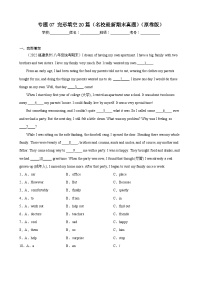
Lng ag in Italy, there lived an ld clck-maker named Geppett. “Tick-tck! Tick-tck!” went all the 1 in his shp. When he wrked, Geppett felt happy. But when he 2 , a sad feeling came ver him. “Ah!” he wuld think, “I dn’t even have a child!” S, ne day Geppett carved (雕刻) a puppet (木偶) frm wd in the shape f a 3 .
He made arms and legs fr the puppet 4 it culd mve. He made nice clthes fr it, as if it were a real by. “I will call yu Pincchi. ” said Geppett. That night, Geppett laid the wden puppet dwn 5 the bed.
Outside the windw, a big star shne 6 . Geppett lked at the star. “Bright star,” said Geppett. “If I culd make ne 7 , it wuld be fr a real by f 8 wn.” But f curse, he knew that was nt pssible.
That night, the same big star came int Geppett’s rm. It 9 a Blue Fairy (小精灵). The Blue Fairy flew ver t the bed. “Little wden puppet,” said the Blue Fairy, “in the mrning, yu will be able t walk and talk like a real by.” She tuched the puppet with her 10 stick. Pincchi’s eyes pened.
1.A.clcksB.tablesC.beds
2.A.fellB.cntinuedC.rested
3.A.pupilB.byC.man
4.A.whenB.sC.but
5.A.nB.frmC.thrugh
6.A.happilyB.carefullyC.brightly
7.A.wishB.friendC.decisin
8.A.hisB.myC.ur
9.A.turned intB.tk afterC.cut ut
10.A.brkenB.cleverC.magic
【答案】
1.A 2.C 3.B 4.B 5.A 6.C 7.A 8.B 9.A 10.C
【导语】本文讲述了钟表匠盖比特孤独无孩,雕刻了一个男孩木偶,他向星星许愿想要一个真正的孩子,随后星星化作蓝仙女,用魔法赋予了木偶生命。
1.句意:他店里所有的钟表都发出“嘀嗒嘀嗒”的声响。
根据前文ld clck-maker(老钟表匠),可知店内物品为钟表。tables桌子、beds床均与钟表匠身份和嘀嗒声无关。
2.句意:但当他休息时,一阵悲伤涌上心头。
根据前句工作时很开心,But表转折,说明停下工作休息时会难过。fell落下、cntinued继续,不符合转折语境.
3.句意:于是有一天,盖比特用木头雕刻了一个男孩模样的木偶。
根据后文“as if it were a real by”可知雕刻的是男孩外形。pupil小学生、man男人,与后文real by对应不上。
4.句意:他为这个木偶制作了胳膊和腿,这样它就能活动了。
空前后为因果顺承逻辑,前半句是做法,后半句是达成的结果。s可表结果与目的,用法合适;when表示时间、but表示转折,逻辑关系不符。
5.句意:那天晚上,盖比特把木偶放在床上。
n the bed为固定搭配,意为“在床上”。frm从、thrugh穿过,无法与bed搭配。
6.句意:窗外,一颗明亮的星星闪闪发光。
根据后文“Bright star”可知星星明亮闪耀,brightly明亮地符合语境。happily开心地、carefully小心地,不能修饰星星发光。
7.句意:如果我能许一个愿望,我想要一个真正的男孩。
根据后文想要拥有孩子的想法,make a wish为固定搭配,意为“许愿”。friend朋友、decisin决定,不合语境。
8.句意:我想要一个属于我自己的真正的男孩。
f ne’s wn为固定搭配,意为“某人自己的”,本句为盖比特直接引语,用my我的。his他的、ur我们的,人称指代错误。
9.句意:星星变成了一位蓝仙女。
根据上下文,星光化作仙女,turned int变成符合文意。tk after长得像、cut ut剪下,与场景无关。
10.句意:她用魔法棒触碰了木偶。
仙女拥有魔法,magic魔法的符合角色设定。brken破碎的、clever聪明的,无法修饰木棍,不合逻辑。
阅读下面短文,掌握其大意,从每题所给的A、B、C、D四个选项中,选出最佳选项。
Recently, I read the classic nvel Twenty Thusand Leagues Under the Sea. Its 1 is Jules Verne frm France. In the bk, Verne 2 an amazing cean wrld fr us.
The stry 3 with a strange “sea mnster (怪兽)” in the cean. T 4 the truth, Prfessr Arnnax and his partners set ut t hunt it. T their surprise, “the sea mnster” is nt a real animal. 5 , it is a high-tech submarine (潜水艇) named the Nautilus, and its wner is Captain Nem. He is my favurite 6 in the bk. He thinks the wrld abve the sea is nt 7 , s he chses t stay away frm the land wrld and live underwater. Captain Nem takes Prfessr Arnnax and his partners n an adventure arund the wrld. During the jurney, they experience bth the wnders and 8 f the cean. Finally, the Nautilus gets int a big whirlpl (旋涡). After that, 9 knws what happens t Captain Nem. Maybe he disappears (消失) with the Nautilus.
In my pinin, the nvel is mre than just an adventure stry. The technlgy in the bk is fantastic. 10 the Nautilus is just an imagined submarine, its high-tech design still surprises us tday. It shws Verne’s great 11 . Besides, it als makes me think abut the 12 f technlgy n ur lives. Technlgy can 13 us with each ther, but it can als create barriers (障碍) between peple. Shuld Captain Nem 14 facing real-life prblems? Or is it better fr him t face them bravely?
In 15 , this bk is meaningful and well wrth reading. I strngly recmmend this great bk t all f yu.
1.A.reprterB.librarianC.writerD.publisher
2.A.advisedB.explredC.discussedD.described
3.A.endsB.startsC.dealsD.agrees
4.A.find utB.make upC.lk afterD.shw ff
5.A.BesidesB.HweverC.InsteadD.Mrever
6.A.stryB.characterC.picture.D.message
7.A.bringB.tiringC.satisfyingD.wrrying
8.A.secretsB.dangersC.treasuresD.attractins
9.A.nbdyB.smebdyC.anybdyD.everybdy
10.A.SB.SinceC.BecauseD.Althugh
11.A.creativityB.wealthC.trubleD.pwer
12.A.damageB.recrdC.reviewD.effect
13.A.helpB.divideC.cnnectD.prvide
14.A.frgetB.avidC.finishD.suggest
15.A.histryB.memryC.surpriseD.summary
【答案】
1.C 2.D 3.B 4.A 5.C 6.B 7.C 8.B 9.A 10.D 11.A 12.D 13.C 14.B 15.D
【导语】本文作者简要介绍《海底两万里》的情节、人物,评价其科技价值与现实启示。
1.句意:最近,我读了经典小说《海底两万里》,它的作者是法国的儒勒·凡尔纳。
前文提到“nvel”,后问提到Jules Verne是这本书的“作者”;reprter/librarian/publisher 与小说创作者无关。
2.句意:在书中,凡尔纳为我们描绘了一个奇妙的海洋世界。
“describe an cean wrld”意为“描绘海洋世界”;advised/explred/discussed与“创作小说”语境不符。
3.句意:故事以海洋中一个奇怪的“海怪”开篇。
“start with”为固定搭配,意为“以……开始”;ends/deals/agrees 不符合“故事开端”语境。
4.句意:为了查明真相,阿龙纳斯教授和他的同伴们出发去追捕它。
“find ut the truth”意为“查明真相”;make up/lk after/shw ff与“追捕海怪”的目的不符。
5.句意:令他们惊讶的是,这个“海怪”并不是真正的动物。相反,它是一艘名为“鹦鹉螺号”的高科技潜水艇,其主人是尼摩船长
前文说“不是动物”,后文说“是潜水艇”,表转折用Instead;Besides/Hwever/ Mrever逻辑不符。
6.句意:他是我书中最喜欢的角色。
“Captain Nem”是小说中的“角色”;stry/picture/message 与“人物”语境不符。
7.句意:他认为陆地上的世界并不令人满意,所以他选择远离陆地,生活在水下。
后文“远离陆地”说明对陆地不满;bring/tiring/wrrying 与“选择逃离”的逻辑不匹配。
8.句意:旅途中,他们既见识了海洋的奇观,也经历了海洋的危险。
“wnders and dangers”为固定搭配,意为“奇观与危险”;secrets/treasures/attractins 与“冒险经历”的两面性不符。
9.句意:在那之后,没有人知道尼摩船长的下落,也许他和鹦鹉螺号一起消失了。
后文“maybe he disappears” 说明无人知晓;smebdy/anybdy/everybdy 与“下落不明”语境不符。
10.句意:虽然鹦鹉螺号只是一艘想象中的潜水艇,但其高科技设计在今天依然令人惊叹。
前后两句话表转折,用Althugh;S/Since/Because逻辑不符。
11.句意:它展现了凡尔纳非凡的创造力。
凡尔纳想象出潜水艇,体现“创造力”;用creativity;wealth/truble/pwer 与“创作想象”无关。
12.句意:此外,它也让我思考科技对我们生活的影响。
“the effect f technlgy”意为“科技的影响”;damage/recrd/review 与“科技对生活的作用”语境不符。
13.句意:科技可以连接人与人,但也能制造人与人之间的障碍。
“cnnect us with each ther”意为“连接我们”,与后文“barriers”形成对比;help/divide/prvide 与“科技的双面性”不符。
14.句意:尼摩船长应该逃避现实中的问题吗?还是勇敢面对更好?
“avid facing prblems”意为“逃避问题”,与后文“face them bravely”形成对比;frget/finish/suggest 与“面对问题”的语境不符。
15.句意:总之,这本书很有意义,非常值得一读。我强烈向大家推荐这本好书。
“in summary”为固定搭配,意为“总之”;histry/memry/surprise 与“总结全文”语境不符。
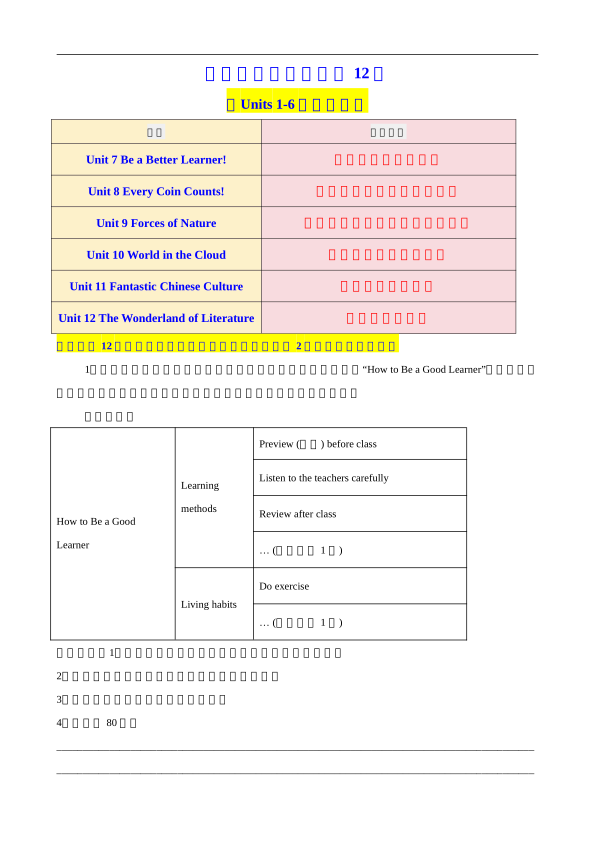
单元
单元话题
Unit 7 Be a Better Learner!
高效学习与学习方法
Unit 8 Every Cin Cunts!
理财消费、节约与钱币文化
Unit 9 Frces f Nature
自然灾害与自然力量、防灾自救
Unit 10 Wrld in the Clud
互联网与数字网络生活
Unit 11 Fantastic Chinese Culture
中华传统文化之美
Unit 12 The Wnderland f Literature
书籍与文学阅读
这是一份期末复习之完形填空12篇(Units1-6单元话题)-2025-2026学年八年级英语下学期期末复习(仁爱科普版)试题+答案,文件包含期末复习之完形填空12篇Units1-6单元话题原卷版docx、期末复习之完形填空12篇Units1-6单元话题解析版docx等2份试卷配套教学资源,其中试卷共39页, 欢迎下载使用。
这是一份期末复习之语法填空12篇(Units1-6单元话题)-2025-2026学年八年级英语下学期期末复习(仁爱科普版)试题+答案,文件包含期末复习之语法填空12篇Units1-6单元话题原卷版docx、期末复习之语法填空12篇Units1-6单元话题解析版docx等2份试卷配套教学资源,其中试卷共23页, 欢迎下载使用。
这是一份【期末专题复习】(仁爱版)2022-2023学年八年级英语下学期:专题07- 完形填空(真题练习)(原卷+解析),文件包含期末专题复习仁爱版2022-2023学年八年级英语下学期专题07-完形填空真题练习解析版docx、期末专题复习仁爱版2022-2023学年八年级英语下学期专题07-完形填空真题练习原卷版docx等2份试卷配套教学资源,其中试卷共53页, 欢迎下载使用。
注册成功
资料篮

在线客服
添加在线客服
获取1对1服务
官方微信
关注“教习网”公众号
打开微信就能找资料
赛课定制
添加在线客服
获取1对1定制服务
职称咨询
添加在线客服
获取1V1专业指导服务

免费福利