 免费领取教师福利
若您为此资料的原创作者,认为该资料内容侵犯了您的知识产权,请扫码添加我们的相关工作人员,我们尽可能的保护您的合法权益。


这是一份人教版(2024)八年级下册(2024)Section B学案及答案,共34页。学案主要包含了重点语法,过去进行时态,基本知识点,知识难点,重点短语,重点句型等内容,欢迎下载使用。
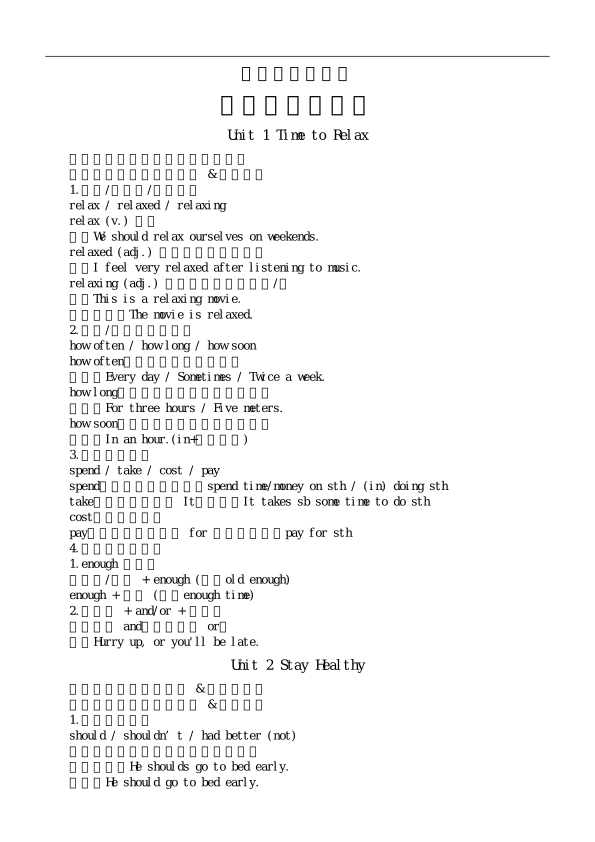
1.用于提建议的句型有:
What abut ding sth.?
=Hw abut ding sth.?
….怎么样?
Why dn’t yu d sth.?
= Why nt d sth.?
为什么不呢?
Let’s d sth.
让我们一起做某事吧。
Shall we/I d sth.?
我们/我做…好吗?
had better d/nt d sth.
最好做/不做某事
Will/Wuld yu please d sth.
请你做…好吗?
Wuld yu like t d sth.?
你想去做某事吗?
Wuld yu mind ding sth.?
你介意做某事吗?
【答语】
(1)同意对方的建议时,一般用:
Gd idea./ That’s gd idea.好主意
OK/ All right./ Great.好/ 行/太好了
Yes, please ./ I’d lve t.是的/ 我愿意
I agree with yu.我同意你的看法
N prblem.没问题
Sure./ Of curse./ Certainly.当然可以
Yes, I think s.对,我也这样想
(2)对对方的帮助或要求表示委婉谢绝时,一般用:
I dn’t think s.我认为不是这样
Srry, I can’t.对不起,我不能
I’d lve t, but… 我想去,但是...
I’m afraid… 我愿意,但恐怕……
2.get/have int a fight with sb.和某人打架
3.allw ding sth.允许做某事
allw sb.t d sth.允许某人做某事
be allwed t d sth.被允许做某事
注意:allw指“允许”,表示“默许,听任,不加阻止”
4.let sb.d sth.让某人做某事,语意较弱,多用于口语中,let不能用于被动语态。
5.系动词:后跟形容词作表语
一是:(be) am /is /are
be quiet=keep quiet 保持安静
二保持:stay/keep (表示持续状态)
stay healthy=keep healthy 保持健康
三变化:becme/get/turn(表示状态变化)
四..起来:sund/lk/smell/taste/feel(表示感觉)
6.find sb.ding sth.发现某人正在做某事。类似动词:hear, watch, see, feel
7.give sth.back t sb.
将...归还给某人
8.nt a big deal
没什么大不了的
9.be angry with sb.
=be mad at sb.
生某人的气
be angry at/abut sth.
对某事感到生气
be angry t d sth.
做某事感到生气
10.althugh= thugh
尽管 , 用来引导让步状语从句。注意:不能与but连用
11.get n with sb.与…友好相处
get n with sth.
继续(做某事)
get alng with 相处;进展;与…和睦相处
12.argue 争吵→argument n 争论
have an argument with sb.与某人辩论
argue with sb.与某人争吵
argue with sb.abut sth.
为某事与某人争吵
argue abut sth.争论某事
13.wrk ut 计算出、制定出、解答出
14.hang ver
挂在之上;悬浮在之上
hang ut 闲逛;常去某处
hang n t 紧紧抓住
hang up 挂电话;悬挂
15.refuse =say n t 拒绝
refuse t d sth.拒绝去做某事
16.instead 代替,反而,替
(1) instead 副词,代替,常放句首或句尾,表示前面的事情没做,而做了后面的事情。
(2) instead f +n./ding 代替,而不是,放在句中
注意:instead f 为介词短语,后面一般接名词、代词、介词短语或动名词形式。
17.ffer t d sth.主动提出做某事
ffer sb.sth.= ffer sth.t sb.
主动提供给某人某物
18.cmmunicate v.交流
cmmunicatin n.交流;沟通
cmmunicate with sb.和某人交流
19.explain v.解释;说明
explanatin n.解释;说明
explain sth.t sb.向某人解释某事
explain t sb.sth.给某人解释某事
20.make sth.clear 解释说明,说清楚
21.wrry v.担心
wrried adj.焦急的
wrry abut
= be wrried abut
为……担心
22.cmpete v.竞争;对抗
cmpetitin n.竞争
cmpete with sb.和某人竞争
cmpete against/ with 与……竞争
cmpete fr 为……参加比赛
23.sme time /smetime/sme times/smetimes
(1) sme time一段时间,做时间状语
It takes sb.sme time t d sth.做某事花费某人多长时间
(2) smetime adv.在某个时候,
(3) sme times 名词词组,“几次,几倍”
Mr.Green went t Sanya sme times last summer.
(4)smetimes=at times 有时(是一般现在时的标志词)
24.cut ut 删除;删去
cut up 切碎
cut dwn 砍到
cut in 插队
cut ff 切断(水、电)供应
25.successful 成功的
succeed 成功,达到
success 成功
successful 成功的
successfully adv.成功地
succeed in ding sth.
成功做某事
26.cntinue ding sth.
=g n ding sth.
继续做某事(前后做同一件事)
cntinue t d sth.
= g n t d sth.
继续做某事(前后不是同一件事)
27.cntinue,g n, last辨析
(1) cntinue 继续,持续,指进程在时间或空间上的延续,强调持续不断,有时也可以指短暂停止后继续进行。
He cntinue the wrk fr tw days.
他连续两天都在做这项工作。
(2) g n指无间歇或有间歇地继续,或以某种特定方式继续。
g n t d sth继续做某事,指开始做另外一件事;
g n ding sth继续做原来所做的事
(3) last v.持续,延续,维持,指某事物继续存在或某种现象在时间上延续,说明某一动作要延续一段时间。
28.cmpare…with…
把……与…..做比较
cmpare…t…
把…..比作……(比喻)
29.keep n ding sth.
继续做某事
keep sb.ding sth.
让某人一直做某事
keep up with 跟上
keep sb.frm ding sth.
阻止某人做某事
keep away frm避开
30.in ne’s pinin
以某人的观点;在某人看来
give pinins abut sth.
给出关于某事的观点。
31.be kind t sb.
= be gd t sb.
=be friendly t sb.
对某人友好
32.It’s + adj.(easy,difficult,imprtant,necessary) +(fr sb.) t d sth.
注意:形容词表示事物特征,如:easy ,difficult, hard ,imprtant等,须用介词fr
It’s +adj( kind, hnest, friendly, )+(f sb.) t d sth.
注意:形容词表示人的性格、品质与特点,如:gd ,kind ,nice, wrng等,用介词f。
【重点语法】
1.情态动词shuld与culd的用法
(1) shuld为情态动词,表示劝告、建议,意为“应该”,它和其他情态动词一样,没有人称和数的变化,后接动词原形,其否定形式为shuldn’t。
(2) 情态动词culd既是can的过去式,表示过去的能力,又可以表示谨慎、客气的建议,后接动词原形,其否定形式为culdn’t。
2.状语从句
状语从句就是在句子中作状语的从句。状语从句有好几种,如时间状语从句、原因状语从句、条件状语从句、结果状语从句、目的状语从句等。本单元重点讲述以下三种类型的状语从句。
(1) until引导的时间状语从句。until意为“直到;在之前”。 直到...才。
(2) s that是连词,意为“为的是,以便”,引导目的状语从句。
Let me take dwn yur telephne number s that I can call yu later.
让我记下你的号码,为的是以后好打电话给你。
(3)althugh的用法意思相当于thugh(尽管,虽然),用来引导让步状语从句。它所引导的从句不能与并列连词but,and, s等连用,但可以和yet, still等词连用。
注意:s that, in rder that和in rder t在用法上的区别。
①s that 因此;便于,较口语化,用的多,that可省略,后面跟句子;
②in rder that 为了,以便,则比较正式,用的比s that少,that不省略,后跟句子;
③in rder t 则直接跟动词原形。
Unit 5 Nature's Temper
【过去进行时态】
1.用法:
①过去某个时间正在发生的动作
②过去某段时间正在发生的动作
2.与过去进行时连用的时间状语,常见的有:
at nine last night
at that time= then/at this time yesterday
或者有when / while 的提示。
3.过去进行时的构成:was/were +现在分词
4.过去进行时的四个基本句型
肯定句:He was cking at six last night.
否定句:He was nt cking at six last night.
一般疑问句:Was he cking at six last night?
两种回答:Yes ,he was./N, he wasn’t.
特殊疑问句:What was he ding at six last night?
5.对比现在进行时
肯定句:He is cking nw.
否定句:He is nt cking nw.
一般疑问句:Is he cking nw?
两种回答:Yes ,he is./ N, he isn’t.
特殊疑问句:What is he ding nw?
6.过去进行时的几个例子
Jim was reading when the teacher came in.
当老师进来的时候,吉姆正在读书。
Jim was reading while Kate was watching TV.
凯特看电视的时候吉姆正在读书。
7.和一般过去时对比
He watched TV last night. (过去时间last night, 用一般过去时)
He was watching TV at nine last night.(过去时间last night at nine, 用过去进行时)
【基本知识点】
1.at the time f
在的时候 (常用于过去进行时)
2.g ff 发出响声, (闹钟)闹响 ,离开
g ver 复习
3.take a shwer 洗澡; 淋浴
4.heavy 改y为i +ly 变为adv.,heavily
5.pick up 接电话; 捡起;拾起; (开车)接某人; 学到、获得
6.die dwn 逐渐平息
7.at first = at the beginning 最初,开始
8.rise 升起;上升,指主语自身向高位置移动,如价格、太阳、电梯。
9.raise 举起;提高;提升,主语发出动作使其他事物升起,如举杯。
10.in a mess 一团糟
11.jin/jin in/take part in 辨析
(1)jin=be a member f 参加 ,指加入某种组织,并成为其中的一员。
jin the army / party 入伍/ 党
jin the club 加入俱乐部
jin sb.加入到某个人群之中
(2) jin in 后接活动名称
(3)take part in 参加 ,指加入群体活动中并在活动中发挥重要作用。
12.break sth.apart 分裂;解体
13.get t +地点
=arrive in/at +地点
=reach+地点
到达某个地点
14.get n 上车
get up 起床
get used t 习惯于
15.get alng with sb.与某人相处融洽
get tgether 相聚
16.in times f difficulty 困难时期
17.happen,take place 发生
(1)happen v.“发生”没有被动语态 ,主语是物,强调某事发生的偶然性
① sth.happen t sb.某事发生在某人身上
② sb.happen t d sth.某人碰巧做某事
(2)take place发生,指事情有计划有安排地发生
18.win 比赛或奖品
beat 人或组织
We beat them and wn the game.
19.make ne’s way t …
在某人去……的路上(当后接地点副词时,应省略介词t,如here, there, hme)
20.remember t d sth.记得去做某事(事未做)
21.remember ding sth.记得做过某事(事已做完)
22.in silence 沉默地、无声地
= silently
keep silent 保持沉默
23.take dwn 拆掉;拆毁
24.art 艺术→ artist 艺术家
science 科学→ scientist 科学家
pian 钢琴→pianist钢琴家
25.hear 听见,强调听的结果。
①hear sb.d sth.听见某人做某事;
②hear sb.ding sth.听见某人正在做某事
③hear abut 意为“听说”,相当于hear f,后面接词或短语
④hear frm 意为“收到的来信;有的消息”,
=get/receive a letter frm.
⑤hear 也有“听说”之意,这时后接that引导的宾语从句。
26.in truble 处于困境中
get sb.int truble
使某人陷入困境
27.What's the truble with yu ?
= What’s the matter with yu ?
= What’s wrng with yu ?
28.have truble (in)ding sth.
做某事有麻烦
29.have prblem /difficulty/fun (in) ding sth.
做某事有问题/困难/乐趣
【知识难点】
1.unless 引导条件状语从句
unless = if … nt “除非,若不”
Yu will miss the bus unless yu hurry up.
你要不快点就错过班车了。
2.as sn as 引导时间状语从句。“一…就”
He will cme and see yu as sn as he can.
他一来到就来见你。
引导结果状语从句
①“主语+谓语+s+形容词/副词+that从句”
The wind was s strng that we culd hardly mve frward.
风太大了我们无法前进。
②s +形容词 + a/an + 单数名词 + that从句
It was s ht a day that they all went swimming.
天气太热了所以他们都去游泳了。
③s + many/ few + 复数名词 + that从句
He has s few friends that he ften feels lnely.
他朋友太少了以至于经常感到孤独。
④s +much/ little + 不可数名词 + that 从句
I had s little mney that I culdn’t buy a pen.
我没钱以至于我都买不起一支钢笔。
Unit 6 Crssing Cultures
【重点短语】
1.wrk n ding sth. 致力于做某事
2.as sn as 一……就…
3.cntinue t d sth.继续做某事
4.be mved by...被...感动
如此 以至于
6.try t d sth. 试图做某事
7.find a gd way t d sth.找到做某事的好方法
8.the jurney t … ...之旅
9.keep ding sth. 坚持做某事
10.give up 放弃
11.instead f 代替;反而
12.have different pinins abut 持有关于...不同的观点
13.be new t sb.对某人来说是新鲜的/陌生的
14.the main character 主要人物;主人公
15.turn 变成
16.tell the/a stry 讲故事
17.be able t 能;会
18.a little bit silly 有点儿傻
19.at ther times 在另外一些时候
20.cme ut (书、电影等)出版
21.becme interested 对……感兴趣
22.nce upn a time 从前
23.fall in lve with sb.爱上某人
24.all ver the wrld 世界各地
25.walk t the ther side 走到另一边去
26.a fairy tale 一个神话故事
27.the rest f the stry 故事的其余部分
28.leave sb. t d sth. 让某人做某事
29.make a plan t d sth. 筹划/计划做某事
30.g t sleep 去睡觉
31.lead sb. t …… 把某人领到某地
32.get lst 迷路
33.change ne’s plan 改变计划
34.tell sb. t d sth. 告诉某人做某事
35.in the mnlight 在月光下
36.never mind 没关系
37.find ne’s way hme 找到某人回家的路
38.the next day 第二天
39.send sb. t …… 派某人去某地
40.make sth. happen 使某事发生
【重点句型】
1.S what d yu think abut/f the stry f Yu Gng?
你觉得愚公的故事怎么样?
2.It desn’t seem very pssible t mve a muntain.
把一座山给移掉好像不太可能。
3.I think we shuld try t find ther ways t slve a prblem.
我认为我们应该努力寻找解决问题的其他方法。
4.Yu have different pinins abut the stry, and neither f yu are wrng.
你们有着对这个故事不同的观点,你们谁都没有错。
5.This stry is nt new t Chinese children.
对中国的孩子来说这个故事并不陌生。
6.The Mnkey King is nt just any nrmal mnkey.
猴王不是一只平常的猴子。
7.This is because he can make 72 changes t his shape and size, turning himself int different animals and bjects.
这是因为他会根据形状和大小,做出72种变化,可以将自己变成不同的动物或东西。
8.But unless he can hide his tail, he can nt turn himself int a man.
但是除非是他能把尾巴藏起来,否则他变不成一个人。
9.Smetimes he can make the stick s small that he can keep it in his ear.
有时候,他能够让他的金箍棒变得很小,以至于可以放在耳朵里。
10.Because they were s big that it tk a lng time t walk t the ther side.
这些山太高了,以至于他们要花好长时间才能翻越过去。
11.Dn’t eat it until yu get t the frest.
你们到达森林之后才能吃。
12.And as sn as the TV prgram came ut mre than 30 years ag,Western children became interested in reading this stry because the clever Mnkey King keeps fighting t help the weak and never gives up.
这是一个很长的句子。如果不好理解,可以采取化整为零的方法去理解。
首先把长句子拆成短句子。
其次,快速识别关键词/词组,并在脑子里快速过一遍意思。整理如下:
① the TV prgram came ut mre than 30 years ag.
三十多年前电视剧播出。
② Western children became interested in reading the stry.
西方孩子对阅读这个故事产生了兴趣。
③ The Mnkey king keeps fighting t help the weak.
猴王一直在为了帮助弱者而战斗。
④ The Mnkey king never gives up.
猴王从来不放弃。
这是一份人教版(2024)八年级下册(2024)Section B学案及答案,共34页。学案主要包含了重点语法,过去进行时态,基本知识点,知识难点,重点短语,重点句型等内容,欢迎下载使用。
这是一份八年级下册(2024)Unit 1 Time to RelaxSection B导学案及答案,文件包含选择性必修二《经济与社会生活》阶段检测第三单元商业贸易与日常生活原卷版docx、选择性必修二《经济与社会生活》阶段检测第三单元商业贸易与日常生活解析版docx等2份试卷配套教学资源,其中试卷共12页, 欢迎下载使用。
这是一份初中英语新人教版八年级下册Unit1—Unit3知识点整理(2026春),共19页。学案主要包含了核心短语,词性转换,重点句型,核心语法,拓展考点,满分作文,话题作文,单元话题积累等内容,欢迎下载使用。
注册成功
资料篮

在线客服
添加在线客服
获取1对1服务
官方微信
关注“教习网”公众号
打开微信就能找资料
赛课定制
添加在线客服
获取1对1定制服务
职称咨询
添加在线客服
获取1V1专业指导服务

免费福利

.png)
.png)
.png)
