免费领取教师福利

若您为此资料的原创作者,认为该资料内容侵犯了您的知识产权,请扫码添加我们的相关工作人员,我们尽可能的保护您的合法权益。


这是一份湖北省云学联盟2025-2026学年高一下学期6月期末考试英语试卷(Word版附解析),文件包含人教版小学数学六年级上册第三单元测试卷解析版docx、人教版小学数学六年级上册第三单元测试卷A4docx、人教版小学数学六年级上册第三单元测试卷A3docx等3份试卷配套教学资源,其中试卷共13页, 欢迎下载使用。
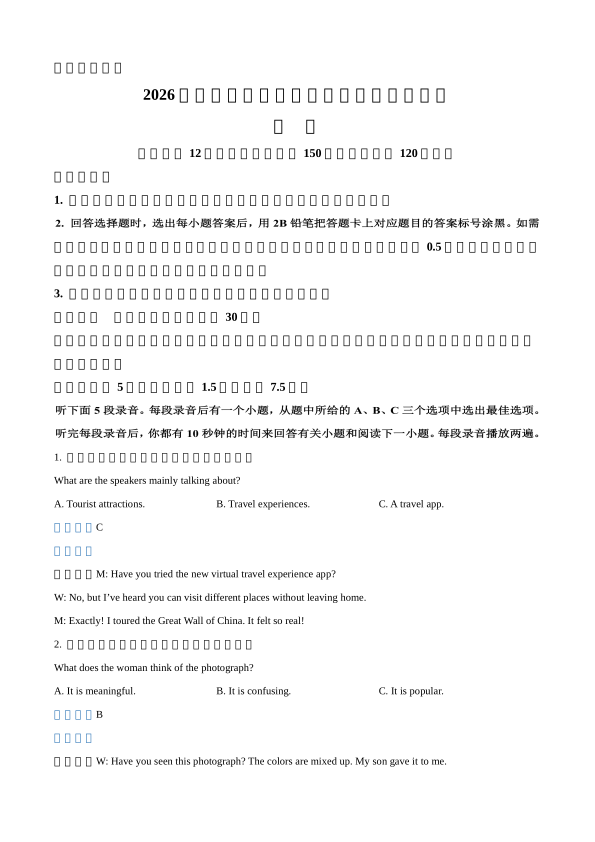
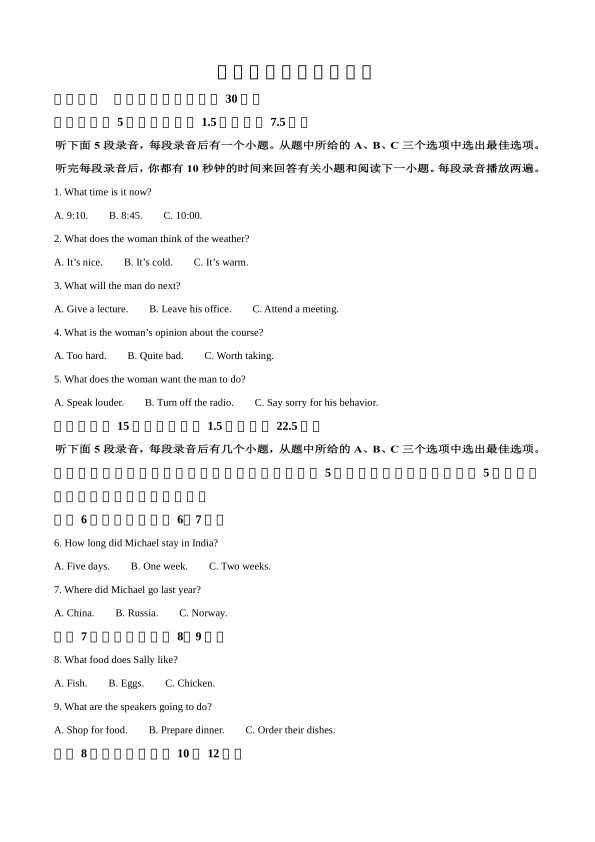
第一部分 听力(共两节,满分30分)
做题时,先将答案标在试卷上。录音内容结束后,你将有两分钟的时间将试卷上的答案转涂到答题卡上。
第一节(共5小题;每小题1.5分,满分7.5分)
听下面5段录音。每段录音后有一个小题,从题中所给的A、B、C三个选项中选出最佳选项。听完每段录音后,你都有10秒钟的时间来回答有关小题和阅读下一小题。每段录音播放两遍。
1. Wh has a cat?
A. The man’s cusin. B. The wman. C. The man.
2. What is the prbable relatinship between the speakers?
A. Teacher and student. B. Mther and sn. C. Classmates.
3. What are the speakers mainly talking abut?
A. A film. B. A nvel. C. A directr.
4. What des the wman think f the man’s rder?
A. Unhealthy. B. Gd. C. Cstly.
5. Why des Mark make the call?
A. T d sme research.
B. T make an appintment.
C. T ask abut his test results.
第二节(共15小题;每小题1.5分,满分22.5分)
听下面5段录音。每段录音后有几个小题,从题中所给的A、B、C三个选项中选出最佳选项。听每段录音前,你将有时间阅读各个小题,每小题5秒钟;听完后,每小题都有5秒钟的作答时间。每段录音播放两遍。
听第6段录音,回答第6、7题。
6. What happened t the man?
A. His bike was hit by a car.
B. He lst his bike yesterday.
C. He fell ff his bike.
7. Where did the man park his bike?
A. By the radside. B. In frnt f his huse. C. Outside the garage.
听第7段录音,回答第8、9题。
8. What is the man prbably?
A. A taxi driver. B. A pliceman. C. A htel clerk.
9. Where did the wman lse her cellphne accrding t herself?
A. In a mall. B. In a htel. C. In a taxi.
听第8段录音,回答第10至12题。
10. What is the man ding?
A. Aplgizing fr being late.
B. Putting ff an appintment.
C. Making an invitatin.
11. At what time will the speakers meet tmrrw?
A. 5:00 pm. B. 6:00 pm. C. 9:00 pm.
12. What kind f fd will the speakers have?
A. Thai fd. B. Italian fd. C. Krean fd.
听第9段录音,回答第13至16题。
13. When will the party be held?
A. On Friday. B. On Saturday. C. On Sunday.
14. Where will the speakers have lunch n granddad’s 70th birthday?
A. At a club. B. At Mari’s restaurant. C. At the man’s huse.
15. Hw will Nick g t the party?
A. Take a taxi.
B. Drive his wn car.
C. Ask the wman t pick him up.
16. What present will the wman get fr granddad?
A. A hat. B. Sme CDs. C. A suitcase.
听第10段录音,回答第17至20题。
17. What was the speaker ging t d with his daughter?
A. G shpping. B. G swimming. C. G camping.
18. When did the speaker g t the pst ffice?
A. In the mrning. B. In the afternn. C. In the evening.
19. What did the speaker get at the shp?
A. Sme fruits and bread. B. Tw swimsuits. C. Sme drinks.
20. Why did the speaker slw dwn?
A. Smething went wrng with his car.
B. There were tree branches n the rad.
C. The cars in frnt f his began t shake.
第二部分 阅读理解(共两节,满分50分)
第一节(共15小题;每小题2. 5分,满分37. 5分)
阅读下列短文,从每题所给的四个选项(A、B、C和D)中,选出最佳选项,并在答题卡上将该项涂黑。
A
Sharing Ec-Wisdm fr a Greener Future with Emma Carter & Jasn Reed
Cme and jin us fr a meaningful afternn talk with envirnmental expert Emma Carter and cmmunity prfessinal Jasn Reed. The tw speakers will discuss hw t translate envirnmental challenges int inspiring public stries. Their cnversatin fcuses n helping audiences stay inspired rather than anxius. They will als share hw ec-related stries can inspire public participatin, spread envirnmental awareness and prmte the building f an ec-friendly sciety.
Abut Emma Carter
Emma Carter is a prfessinal envirnmental researcher, speaker and authr. She wrked as a senir reprter at Green Weekly fr eight years befre jining the Glbal Envirnmental Institte in 2015. In 2020, she was appinted the institute’s lead envirnmental educatin specialist. In 2023, she received the Natinal Envirnmental Cmmunicatin Award fr her dcumentary series, and her latest bk Small Steps, Big Green Changes was published by Green Press in March 2025.
Abut Jasn Reed
Jasn Reed is the Executive Directr f a well-knwn internatinal scial rganizatin devted t prmting public envirnmental prtectin and ppularizing lw-carbn lifestyles. Since he tk ffice in 2018, the rganizatin has increased funding fr cmmunity envirnmental prjects and established lng-term partnerships with schls and lcal cmmunities, greatly bsting its influence in encuraging rdinary peple t live green lives.
Accessibility
The Cmmunity Culture Center welcmes peple f all abilities t attend its activities. If yu need special assistance r have questins abut n-site access fr the event, please send an email t culture_center@ lcal. rg prir t the activity.
Event Details
Meeting Methd: Face t Face
Event Types: Public Lecture
Date: Thursday, Nvember 12,2026
Time: 3:00 p. m. EST
Lcatin: Hall 203
21. What is the main tpic f the afternn talk?
A. Ppular green lifestyles arund the wrld.
B. Emma Carter’s career experience as a reprter.
C. Ways t turn envirnmental difficulties int inspiring stries.
D. Jasn Reed’s achievements in running internatinal rganizatins.
22. What can we learn abut the event frm the passage?
A. Jasn Reed came int ffice in 2023.
B. It will be held f time at 3:00 p. m. EST.
C. The center nly invites experts t jin the activity.
D. All attendees must email the center t sign up in advance.
23. Where is this passage mst likely taken frm?
A. A bk reviewB. A travel guideC. An event nticeD. A research reprt
B
Fr six years, practising the pian every evening was far frm an enjyable family mment; instead, it turned int a daily cntest f determinatin Many small trubles slwly grew mre and mre as days went by. Whenever Daniel, my 14-year-ld by, sat in frnt f the pian every night, I always kindly reminded him t play just half an hur. “Just thirty minutes, kay?” I asked him in a gentle vice.
Fr many years, he reacted with a sigh I culd easily expect each night. He agreed unwillingly and played the pian carelessly, staring at the clck instead f his music paper. N passin. N prgress. He had a rare illness called develpmental dysrhythmia(发育性节奏障碍). It was hard fr him t feel and cpy music beats, which put an unseen blck between him and the pian. Thrugh it, I culd see my by trying his best, but I culd never quite help him find the jy. The effrtless musical cnversatins that ther parents shared with their children felt like a fantasy. I felt like I was trying t mve a huge rck upward with n prgress at all. My cnstant encuragement met with a silent, yet understandable dismay. I had quietly begun t accept that music wuld never be his language.
But that snwy Wednesday night, after six years f silent patience, everything changed. I asked him the usual questin and prepared fr ur usual argument. After I said “Just thirty minutes, Daniel?”, he sat dwn and replied sftly “Okay”. It was a little change frm what always happened befre, but I almst failed t see it right away. Later he began t play the pian. In six years, it was the first time Daniel played an easy piece f music. It was a children’s sng he’d listened t n the radi, and he fllwed the music speed perfectly. His fingers fund the right ntes. He mved his bdy a little alng with the music. He stpped, turned t me with tears in his eyes, and whispered, “Mm, I think I finally feel the beat.”
Everything arund felt still. That shrt piece f music helped him cnnect his illness with music by himself. It was the nicest sund I had ever listened t. It wasn’t just a sng; it was the answer t six years f unseen patience. I held my breath, and tears streamed dwn my face. With a shaky vice, I tld him, “I believed in yu all the time.”
24. What did the mther always ask Daniel t d every night?
A. T play the pian fr thirty minutes.
B. T stare at the music paper carefully.
C. T mve his bdy alng with the music.
D. T listen t a children’s sng n the radi.
25. What des the underlined wrd “dismay” in paragraph 2 mst likely mean?
A. Victry. B. Discuragement.
C. Anger. D. Determinatin.
26. What happened n the snwy Wednesday night?
A. Daniel brke the pian and cried by accident.
B. Daniel asked his mther t stp reminding him.
C. Daniel argued with his mther fr the first time.
D. Daniel played a piece f music crrectly with feeling.
27. Which f the fllwing is the best title fr the text?
A. A Mther’s Daily CmplaintB. Silent Patience, Beautiful Beat
C. Hw t Becme a Pian MasterD. The Dangers f Frcing Children
C
AI Applicatin in Mdern Educatin
Artificial intelligence is reshaping varius scial fields, and mdern educatin is ne f the mst rewarding sectrs. Limited by fixed schedules and unified teaching mdes, traditinal educatin fails t meet students’ persnalized learning needs. With high flexibility and data-analysis capacity, AI is significantly imprving teaching quality and learners’ verall learning experience.
AI’s biggest advantage in educatin is realizing persnalized learning. Students differ in learning paces, academic weaknesses and study habits, which traditinal classes can hardly satisfy. Many AI-pwered systems cllect and analyze students’ learning data, including exercise errrs and knwledge mastery. They then generate tailr-made study schedules, spt weaknesses and ffer targeted exercises. Studies shw AI-assisted persnalized learning can raise students’ learning efficiency by nearly 40 percent.
AI als greatly reduces teachers’ repetitive rutine tasks sharply and eases their pressure. Much f teachers’ time is spent grading bjective questins, srting learning recrds and writing rutine feedback. Intelligent systems can autmatically scre papers and generate class learning reprts. Such tls save teachers ver half f their rutine time, enabling them t fcus mre n classrm teaching and student cmmunicatin.
AI deserves wide prmtin fr its value in balancing educatin resurces. Uneven distributin f educatinal resurces leaves remte areas lacking quality teachers and curses, widening the reginal educatin gap. Breaking time and space limits, AI platfrms deliver high-quality curricula t underdevelped areas, serving as a key slutin t prmte equitable educatin.
Hwever, AI’s large-scale applicatin in educatin faces challenges. Data misuse may cause privacy leakage(泄露). Mrever, AI nly assists knwledge teaching and cannt replace teachers’ rle in students’ mental grwth and character building. Besides, many grassrts teachers lack prfessinal AI training, blcking the ppularizatin f intelligent teaching.
Jint effrts frm educatinal departments, schls and tech firms are needed t imprve AI educatin systems. Strict data prtectin rules and standardized teacher training are essential. Despite existing challenges, AI will help build a fairer and mre efficient mdern educatin system, making the effrts wrthwhile. Therefre, instead f hesitating ver its limitatins, we shuld actively embrace AI as a pwerful tl t advance educatin.
28. What is the biggest strength f AI in educatin?
A. It simplifies teachers’ training curses.
B. It fully bridges reginal educatin gaps.
C. It achieves persnalized learning fr students.
D. It replaces traditinal classrm teaching mdes.
29. Hw des AI help reduce teachers’ burden?
A. By designing all schl teaching curses.
B. By handling repetitive daily teaching wrk.
C. By crrecting students’ subjective test answers.
D. By cmmunicating with students n teachers’ behalf.
30. What can we infer abut AI educatin frm the text?
A. It has been fully ppularized natinwide.
B. It has n ptential safety risks at present.
C. It still has limitatins in educatinal practice.
D. It can guide students’ mental develpment well.
31. What is the authr’s attitude twards AI educatin?
A. Supprtive. B. ObjectiveC. Dubtful. D. Negative.
D
Researchers have cnfirmed Arctic fxes living in suthern Svalbard carry unique genetic(基因的) features different frm thse living in the island’s nrthern znes, which indicates they slwly get used t the lcal envirnment. Genetic changes inside Arctic fx cells(细胞) that help the species cpe with milder winters have been discvered by bilgists frm Nrway’s Arctic University in a recently published study.
Glbal warming puts the lng-term survival f Arctic fxes at severe risk. Scientists say nearly tw-thirds f wild Arctic fx grups may disappear befre 2055 as thick seasnal snw cver becmes thinner and lcal winter temperatures keep rising. Nw researchers frm the university have fund certain genes cntrlling fur change, energy use and bdy prtectin wrk differently amng fx ppulatins in suthern Svalbard. The difference in gene perfrmance suggests these fxes are gradually adapting t increasingly mild winter surrundings.
The research team cllected tissue samples frm fxes acrss nrth and suth Svalbard and fcused n “mbile gene segments”: small mvable DNA fragments inside genmes capable f regulating the peratin f ther functinal genes. After matching these active genetic data with lcal yearly temperature recrds, the team fund climbing temperatures strngly prmte the activity f mbile gene segments within suthern Svalbard fx DNA. Such genetic changes can guide experts t judge which fx grups face the highest extinctin risk, uncver the adaptatin paths f Arctic fxes under glbal warming and guide targeted wildlife prtectin prjects in the future.
This study shws fxes in warm suthern Svalbard use special gene parts t change their genes quickly. This change helps them deal with thinner winter snw and get thrugh times with little fd. Sme DNA changes happen in genes fr keeping bdy fat, which lets fxes live when fd is scarce. Different frm nrthern fxes that eat mstly fat-rich small animals, suthern fxes feed n mre wild fruits and leftver plants. Their genes slwly change t fit this new eating way.
The next research plan is t test fx grups in ther Arctic regins t check whether the same genetic changes exist in their DNA. The study can ffer practical references t prevent the species frm dying ut. Still, researchers stress cutting fssil fuel(化石燃料)use t slw glbal temperature grwth is the mst essential measure fr lng-term fx prtectin.
32. What discvery did researchers make abut suthern Svalbard Arctic fxes?
A. Key adaptive genes f theirs were disappearing rapidly.
B. They travelled nrth cntinuusly t escape warm winters.
C. Their ppulatin was larger than fx grups living in nrthern areas.
D. Their genetic features shwed adaptatin t warmer winter envirnments.
33. What can we infer frm Paragraph 2 abut suthern Svalbard Arctic fxes?
A. Warm winter cnditins push their related genes t change.
B. They have fully adapted t the present glbal warming situatin.
C. Mst lcal fxes have already lst their thick seasnal winter fur.
D. Their fur grwth helps slw dwn the rise f winter temperatures.
34. Why d suthern Svalbard fxes make quick changes t their wn genes?
A. T mve nrth t find clder and better living places.
B. T cmpletely stp the lcal winter temperature rise.
C. T build up mre fat and hunt small fat-rich animals.
D. T fight against snw lss and live thrugh little fd.
35. What is the fllw-up research fcus f the scientists?
A. Examining fx DNA in mre Arctic areas fr the same genetic changes.
B. Cllecting reliable data n daily eating habits f fxes living in Svalbard.
C. Explring ld fx fssils t discver genetic changes in ancient fx species.
D. Studying effective appraches intended t lwer the use f fssil fuels glbally.
第二节(共5小题;每小题2. 5分,满分12. 5分)
根据短文内容,从短文后的选项中选出能填入空白处的最佳选项。选项中有两项为多余选项。
Hw t Build Self-Cnfidence
It can be very difficult fr peple t build steady self-cnfidence in study, wrk and life. Many peple are trapped in self-dubt and dare nt shw themselves cnfidently in their daily life. 36 Here are sme practical and useful tips t help yu becme a calm, psitive and cnfident persn.
Making small prgress every day matters mst. 37 Rather than lnging fr sudden huge prgress r pushing yurself t cmplete difficult tasks in a shrt time, experts pint ut that tiny daily imprvement wrks far better in the lng run. Strengthening self-cnfidence is a lng prcess that requires cntinuus accumulatin and persistent effrt.
Add diverse changes t yur self-imprvement training. 38 Never fix yurself in a single training mde fr a lng time. Yu can try new challenges, learn different skills and reflect n yur grwth in daily life within a shrt perid. T much single and repetitive practice causes mental tiredness and lw efficiency, s prper cmbinatin f different grwth tasks is really beneficial.
39 Observing excellent peple arund yu, listening t thers’ psitive feedback and trying mre scial practice in daily life can help yu crrect yur wrng self-cgnitin and imprve yur inner satisfactin uncnsciusly.
Keeping a grwth jurnal is als an effective way t build cnfidence. Spend sme quiet time each day recrding yur daily effrts, emtinal changes and small prgress. It desn’t matter what recrding way yu chse. By sticking t this meaningful habit, yu will gradually frm clear self-awareness and becme mre cnfident abut yur wn value. 40
A. Observe, listen and practice mre.
B. Self-cnfidence determines hw far a persn can g.
C. But with prper methds, yu can get rid f lw self-wrth.
D. Just a little daily prgress can build yur cnfidence step by step.
E. In this way, a grwth jurnal turns daily reflectin int lasting self-belief.
F. Cmparing yurself with thers is ften the fastest way t lse cnfidence.
G. Diverse grwth tasks can keep yu fcused and make imprvement mre effective.
第三部分 语言运用(共两节,满分30分)
第一节(共15小题;每小题1分,满分15分)
阅读下面短文,从短文后各题所给的A、B、C和D四个选项中,选出可以填入空白处的最佳选项,并在答题纸上将该项涂黑。
Mary wuld make the drive frm Washingtn, DC t Winchester, VA every few days t visit her grandmther, whse health began t 41 last autumn.
Alng the shulder f the highway, there was a lng 42 f wild flwers. They were thin and delicate, and mved back and frth in the wind as if 43 pems t each ther.
The first time she saw the flwers, Mary was 44 by an uncntrllable urge t bring sme t her sick grandmther. She 45 ver n the highway, picked a bunch f flwers and placed them in a vase by her grandmther’s bed.
Her grandmther 46 at the sight f the flwers and asked where she had gt them. Mary was verjyed by the ability f the flwers t 47 smething up inside her grandmther.
Afterwards, Mary began carrying 48 in the car during her trips. She wuld quickly glide (滑行) nt the shulder f the 49 , jump ut f the car, and cut a bunch f flwers. Each time Mary brught the flwers, her grandmther’s eyes wuld brighten and they wuld have a(n) 50 cnversatin.
One mrning in late Octber, Mary received a 51 saying that her grandmther had taken a turn fr the wrse. Mary’s heart 52 . She hung up and rushed ut. Mary was in such a hurry t get t the hspital that she sped past her flwer spt. She decided t turn arund, 53 several miles back and clip sme flwers.
Mary arrived at the hspital t find that her grandmther didn’t 54 t her. S she put the flwers in the vase quietly and sat dwn t hld her grandmther’s hand. Then, she felt the hld n her fingers 55 . In that mment, she truly felt the warm pwer f nature and lve.
41. A. imprveB decreaseC. relieveD. wrsen
42. A. rwB. bunchC. handfulD. package
43. A. recitingB. fferingC. whisperingD. explaining
44. A. rejectedB. replacedC. struckD. scared
45. A. bentB. pulledC. fellD. rlled
46. A. settled dwnB. came aliveC. passed awayD. carried n
47. A. wakeB. packC. gatherD. make
48. A. envelpesB. scissrsC. pumpkinsD. firewrks
49. A. streetB. kindergartenC. reginD. highway
50. A. flexibleB. superC. tenseD. frustrating
51. A. messageB. letterC. attachmentD. call
52. A. sankB beatC. racedD. ached
53. A. walkB. headC. jumpD. fly
54. A. clapB. tendC. respndD. cmplain
55. A. fascinatedB. battledC. reflectedD. tightened
第二节(共10小题;每小题1.5分,满分15分)
The film Dear Yu drew its 56 (inspire) frm real-life stries f verseas Chinese in Cha shan. As the directr put it, “In the 1940s, rdinary peple 57 (leave)their castal hmetwns t seek a living abrad.”
Qia pi, a unique cultural heritage, nce served as 58 imprtant bridge cnnecting verseas wanderers and their families. Qia pi were letters sent by verseas Chinese t their families back hme. They were nt just mney r wrds—they were lifelines f lve, spanning ceans and decades. These special letters, with pcket mney attached 59 them, carried sincere thughts and deep affectin acrss brders.
60 (regrettable), cuntless verseas Chinese spent their whle lives separated frm their lved nes. Fr example, Zheng Musheng, ne f the characters in the film, endured the lneliness and hardship f being far frm hme, harbring the hpe that all separated families like his wuld reunite. Tragically, fate didn’t allw this dream 61 (cme) true. After his death, Xie Nan zhi stepped up. It was her selfless devtin 62 kept the warm bnd alive fr decades..
What mves the audience mst is nt dramatic plts, but the quiet gdwill 63 (hide)in rdinary lives. The faded letters and ld names have becme precius memries, 64 (remind) us that lve can g beynd time and distance. Such 65 (remark)stries will always stay in peple’s minds and tuch the sftest part f their hearts, n matter hw many years pass.
第四部分 写作(共两节;满分40分)
第一节(满分15分)
假定你是高一学生李华,你校高三毕业生近日开展了主题为“Leave Knwledge Behind, Take Rubbish Away”的活动。请你给外教Mr. Smith写一封邮件介绍该活动,要点包括:(1)活动内容;(2)你的感想。
注意:(1)词数80左右;(2)可以适当增加细节,使行文连贯;(3)开头和结尾已为你写好,不计入总词数。
Dear Mr. Smith,
____________________________________________________________________________________________________________________________________________________________________________________________________________________________________________________________________________________
Yurs sincerely,
Li Hua
第二节(满分25分)
阅读下面短文,根据其内容和所给段落开头续写两段,使之构成一篇完整的短文。
Kevin had just graduated frm medical schl with a dctrate. He had mastered cuntless medical theries and advanced treatment methds. When he stepped int the city’s tp hspital as a new dctr, his eyes were full f enthusiasm. “Ten years f hard study will pay ff here. I’ll save many lives,” he ften tld himself.
Hwever, the reality was far frm what he expected. Once, an elderly patient with mild heart disease asked anxiusly, “Dctr, is my cnditin serius? Will I get better sn?” Kevin respnded bjectively, “Yur heart functin is declining. If yu dn’t take medicine n time, yu might lse yur life.” The patient was s frightened that he burst int tears, and his family immediately filed a cmplaint against Kevin fr scaring the patient.
Anther time, a yung father brught his child t see Kevin. The child had a high fever, and Kevin rdered several expensive tests and gave him brand-name medicines withut hesitatin. The father hesitated and said, “Dctr, these tests and medicines are a bit cstly. Is there a cheaper chice?” Kevin frwned and said, “If yu want yur child t recver quickly, yu have t pay fr them.” The father had n chice but t brrw mney t cver the expenses, and later he als cmplained abut Kevin fr nt cnsidering his ecnmic situatin.
Within a mnth, Kevin received three cmplaints. He felt blue and went t talk t Dr. Lily, the department directr. “Dr. Lily, I dn’ t understand. I always give patients the mst prfessinal treatment based n my knwledge. Why d they keep cmplaining abut me?” he asked with cnfusin.
Dr. Lily clapped him n the shulder gently and said, “Kevin, being a gd dctr is nt just abut having excellent medical skills. Yu als need t understand patients’ feelings and needs. Tim, wh jined the hspital with yu, is ding a great jb. Why nt bserve hw he wrks?”
注意:
(1)续写词数应为150左右;(2)请按如下格式在答题卡的相应位置作答。
After thinking twice, Kevin decided t fllw Lily’s tips. ___________________________________________
____________________________________________________________________________________________
Gradually, Kevin gained a new understanding f his jb. __________________________________________
____________________________________________________________________________________________
高一英语学科素养测评 评分细则
听力1-5ACAAC 6-10ABBCC 11-15BCCBB 16-20ABBAC
阅读 21-23CBC 24-27ABDB 28-31CBCA 32-35 DADA 36-40 CDGAE
完形填空41-45 DACCB 46-50 BABDB 51-55 DABCD
语法填空56. inspiratin 57. left 58. an 59. t 60. Regrettably
61. t cme 62. that 63. hidden 64. reminding 65. Remarkable
注意:按照今年高考阅卷标准regrettably小写要扣分。大写才能得分。
应用文:
Dear Mr. Smith,
I hpe this email finds yu well. I am writing t share with yu a meaningful activity recently rganized by the graduating senirs f ur schl, themed “Leave Knwledge Behind, Take Rubbish Away.”
During the activity, the senirs srted ut their used textbks, reference materials and study ntes, and dnated them t yunger students wh might need them. In this way, valuable knwledge was passed dwn rather than wasted. At the same time, they thrughly cleaned their classrms and drmitries, cllecting all the rubbish and unwanted items. They als made sure nthing was left behind but neat and tidy rms. The whle prcess was carried ut in an rderly and enthusiastic manner and many junir students als vlunteered t help.
I was deeply impressed and mved by this activity, which nt nly reflected the senirs’ sense f respnsibility but als set a wnderful example fr us yunger students. I thught yu might be interested in hearing abut this. Lking frward t yur thughts.
Yurs sincerely,
Li Hua
应用文解析:
内容整体要求:全文段落功能分明,逻辑顺序清晰完整,精准覆盖题干两大核心要点:活动内容、个人感想。行文衔接自然流畅,在题干基础上合理补充细节,丰富活动场景,贴合高一学生写作水平。全文语 言准确地道,句式长短结合、丰富多样,用词贴合校园生活场景,立意积极正向,完整完成介绍校园主题活动的写作任务。
书信格式与开头:采用标准规范的英文邮件书信格式,称呼、结尾落款完整标准,符合高考应用文写作规范。开头简洁礼貌、语体得体,以常用书信句式引入,精准点明学校高三毕业生“留下知识,带走垃圾”主题活动,清晰交代写信目的——向外教介绍本次校园活动,开篇点题,简洁自然,贴合对外书信正式、真诚的语言风格。
主体活动内容阐述:为本篇作文核心主体段落,内容具体详实、层次清晰,分两大维度完整介绍活动内容,紧扣活动主题。一方面详细阐述“留下知识”的核心举措:高三毕业生整理旧课本、教辅资料、学习笔记并捐赠给低年级学生,实现知识传承;另一方面清晰说明“带走垃圾”的具体行动:毕业生彻底清扫教室、宿舍,清理垃圾杂物,保持环境整洁。同时补充学生有序参与、低年级主动协助的细节,让活动内容更真实饱满,贴合校园真实场景,内容紧扣题干要求,无偏题、漏题情况。
结尾感想与立意升华:结尾自然收束全文,紧扣活动主旨阐述个人真实感想,立意深刻且贴合学生身份。作者点明本次活动彰显了高三学 子的责任担当,为低年级学生树立了良好榜样,升华了活动的教育意义。同时以礼貌句式收尾,贴合对外邮件的交流语境,情感真挚、积极向上,收尾规范完整,完美契合应用文写作的结尾要求。
读后续写:
After thinking twice, Kevin decided t fllw Lily’s tips. The next day, he walked int Tim’s cnsulting rm quietly, standing by the dr. He saw Tim dealing with an elderly patient wh wrried abut his high bld pressure. Instead f listing medical terms directly. Tim smiled and said cmfrtingly, “Uncle, yur bld pressure is a bit high yet manageable. Let’s adjust yur diet first. If that desn’t wrk, we’ll use mild medicine.” The patient ndded, lking reassured. Later, when a lady cmplained abut pricey tests, Tim checked again, saying, “I’ll cancel tw nn-essential tests.” The lady thanked him repeatedly.
Gradually, Kevin gained a new understanding f his jb. He realized that excellent medical skills alne were nt enugh t make a truly gd dctr. Patients needed nt nly prfessinal treatment but als warmth, understanding and respect, He began t cmmunicate with them patiently, explain cnditins in simple and cmfrting wrds, and chse suitable and affrdable medical plans. As he put himself in patients’ shes, he wn their trust and finally understd that a gd dctr treats bth diseases and hearts.
读后续写解析
一、导语
这篇短文讲述了一个关于医者初心、职业认知蜕变与自我成长的温暖励志故事。文章设置了清晰的人物成长冲突:主人公Kevin拥有扎实的医学专业知识,却只注重冰冷的医学理论与技术,不懂共情患者、缺乏温柔耐心的沟通方式,因此工作生硬、不受认可。在前辈Lily的点拨启发下,他开始反思自己的行医方式。故事的核心冲突在于:行医究竟是只靠专业技术完成诊疗,还是兼顾专业能力与人文温暖、真正体恤患者。这一冲突在续写部分完成行为改变、认知升级与主题升华,要求考生贴合人物转变逻辑,写出情感真挚、立意正向、凸显医者仁心的完整续写内容。
二、故事情节分析
开端(人物人设与问题铺垫):文章铺垫了主人公Kevin的初始状态:具备过硬的医学专业能力,拥有行医的硬实力,但职业认知片面、思维刻板。他看病只注重专业术语、检查项目和医疗流程,忽略患者的情绪焦虑、经济顾虑与心理感受,行医缺少温度,这为后文的自我反思、学习改变、成长蜕变埋下完整伏笔,让人物前后反差真实且有层次。
发展(他人点拨与反思契机):Kevin的问题被同事Lily温柔点破,Lily告诉他优秀的医生不仅要医术精湛,更要懂得体恤患者、温柔沟通、换位思考。这次善意的提醒成为主人公成长的关键转折点,让固执、刻板的Kevin开始意识到自己的短板,萌生了主动学习、改变行医方式的想法,为后续观摩学习、自我蜕变做好情节铺垫。
转折(主动改变与全新认知):故事进入核心转折,Kevin不再固守旧有行医模式,而是主动向前辈Tim学习。他放下固有偏见,默默观摩优秀医生的接诊方式,观察前辈如何温柔安抚焦虑老人、如何体谅患者经济压力、简化诊疗方案、耐心沟通解释,从生硬行医到观察温暖行医,完成人物行为的重要转变,为最后的思想升华做好铺垫。
三、续写的思路
所给段落首句承接前文Kevin下定决心学习改变的心理,续写围绕观摩学习→亲身感悟→认知升级→初心顿悟的清晰脉络展开,两段情节逻辑完整、层层递进。
第一段:观摩学习,见识温暖行医:紧承主人公决心借鉴前辈经验的心理,细致描写Kevin悄悄观摩Tim接诊的全过程。通过具体医患场景:温柔安抚高血压老人的焦虑、通俗解释病情、为患者取消不必要高价检查、体谅患者难处,用真实细腻的接诊细节,直观展现“有温度的行医”,让Kevin亲眼看见优秀医生的真正模样,完成情节的具象铺垫。
第二段:认知蜕变,升华医者初心:承接前文所见所感,写Kevin内心产生深刻触动,彻底颠覆以往片面的行医认知。他顿悟:医术只是 基础,理解、尊重、温柔、体谅才是行医的内核。随后写他主动改变自身行医方式,耐心沟通、简化话术、换位思考、为患者考虑,最终收获患者信任。结尾升华主旨:良医治病,更治人心,完成人物的彻底成长 与全文主题升华。
四、故事的主旨意义
专业技术之外,人文温度更可贵:行医不止是冰冷的诊疗与专业技 术,真正的职业优秀,是专业过硬的同时,拥有共情他人、体恤难处、温柔待人的温度,软力量往往比硬技术更打动人心、更具价值。成长是打破固有认知、主动蜕变:主人公从固执刻板、只信技术,到虚心学 习、主动改变行医方式,体现了人最可贵的成长:不固守自我,敢于看见不足、接纳建议、主动迭代自我,实现职业与心性的双重成熟。换位思考是所有服务职业的核心底色:无论是行医还是待人处事,站在他人角度体谅难处、理解焦虑、包容情绪,是化解矛盾、收获信任、成就自我的核心力量,也是本故事传递的正向人生哲理。
五、总结
本次续写聚焦职业认知蜕变与初心成长,考查考生细节场景描写、心理递进刻画与主题升华的能力。全文围绕“发现不足—观摩学习—自我改变一顿悟成长”完整展开,突出医术治病、仁心暖心的核心主旨,诠释谦逊学习、换位思考、坚守初心的正向内涵,情节真实细腻、立意温暖积极。
【完形填空】本文是一篇记叙文。文章讲述了玛丽为探望生病的祖母,每次驱车经过高速公路时都会采摘路边的野花带给祖母。花的美丽和生机唤醒了祖母的精神,也让她们有了愉快的交谈。当祖母病情恶化时,玛丽匆忙中错过花丛,又折返回去采花。在医院里,起初祖母没有反应,但当玛丽握住她的手时,祖母的手指收紧了,玛丽真切地感受到了自然与爱的温暖力量。
41. D. wrsen上文提到玛丽每隔几天就驱车去看望祖母,下文“last autumn”(去年秋天)提示祖母的健康状况在变差。wrsen意为“恶化”,符合语境。imprve(改善)、decrease(减少)、relieve(缓解)均不符合“健康变差”的逻辑。
42. A. rw alng the shulder f the highway(沿着高速公路路肩)与a lng rw(长长的一排)搭配,描述野花成排生长。Bunch(一束)、handful(一把)、package(一包)均无法与“lng”搭配描述成排的野花。
43. C. whispering as if whispering pems t each ther(仿佛在互相低语诗歌)运用拟人手法,生动描绘野花在风中摇曳的样子。whispering(低语)最贴合诗意和轻柔的氛围。reciting(朗诵)、ffering(提供)、explaining(解释)均不如whispering生动贴切。
44. C. struck be struck by an urge(被一股冲动突然击中)是固定搭配,表示“突然产生……的冲动”。rejected(被拒绝)、replaced(被取代)、scared(被吓到)均无法与“urge”形成合理搭配。
45. B. pulled pull ver是固定短语,意为“靠边停车”。她在高速公路上靠边停车,然后摘花。bent ver(弯腰)、fell ver(摔倒)、rlled ver (翻滚)均不符合驾驶员在高速公路上停车的动作逻辑。
46. B. came alive祖母看到花后“活跃起来/精神焕发”,询问花从哪里来。came alive(变得有生气)符合语境。settled dwn(安顿下来)、passed away(去世)、carried n(继续)均不符合。
47. A. wake wake smething up inside her grandmther (唤醒祖母内心的某种东西)是固定搭配,指花唤醒了祖母的精神或情感。pack up (打包)、gather up(收集)、make up(编造/弥补)均不符合。
48. B. scissrs 玛丽开始在车里携带剪刀,以便快速剪花。envelpes(信封)、pumpkins(南瓜)、firewrks(烟花)与“剪花”的动作无关。
49. D. highway上文多次提到highway,此处指她滑行到高速公路的路肩上。street(街道)、kindergarten(幼儿园)、regin(地区)均不符合上下文。
50. B. super每次玛丽带花来,祖母眼睛都会亮起来,她们会有“极好的/非常愉快的”交谈。super(极好的)符合语境。flexible(灵活的)、tense(紧张的)、frustrating(令人沮丧的)均与温馨的氛围矛盾。
51. D. call下文“She hung up”(她挂了电话)提示她接到的是电话(call). message(消息/短信)、letter(信)、attachment(附件)均无法与“hung up”搭配。
52. A. sank her heart sank(她的心一沉)是固定表达,表示听到坏消息后心情沉重。beat(跳动)、raced(疾驰)、ached(疼痛)均无法表达这种情绪上的低落。
53. B. head前文提到Mary匆忙赶路,错过了路边采花的位置,于是决定掉头,往回行驶几英里。head此处为动词,head back表示折返、往回走;walk(步行)、jump(跳跃)、fly(飞驰)均不符合开车折返的语境。
54. C. respnd祖母没有“回应”她。respnd t sb.(对某人有回应)符合语境,暗示祖母可能昏迷或虚弱。clap(鼓掌)、tend(照料)、cmplain(抱怨)均不符合。
55. D. tightened 她感觉到手指上的握力“收紧了”。祖母在无意识中抓紧了她的手,这是对自然与爱的本能回应。tightened(收紧)最符合“hld n her fingers”的语境。fascinated(着迷)、battled(斗争)、reflected (反射/思考)均不符合。
【语法填空】本文是一篇关于电影《给阿?的情书》的影评类文章,通过讲述潮汕海外华人的故事,展现了侨批这一独特文化遗产所承载的深 厚情感,强调了平凡生活中隐藏的美好情谊能够跨越时空,触动人心。
56. inspiratin;draw ne’s inspiratin frm 为固定搭配,意为“从……中获得灵感”,这里需要用inspire的名词形式,所以填inspiratin,说明电影《给阿嫲的情书》从潮汕海外华人的真实故事中获取灵感。
57. left;in the 1940s是一般过去时的标志词,普通人离开家乡去海外谋生。
58. an;可数名词bridge在此处表泛指“一座至关重要的桥梁”,所以用不定冠词an,说明侨批在海外游子与家乡亲人之间起到连接作用。
59. t;attach t是固定搭配,意为“附属于;与……相连”,这里表示零花钱附在侨批上,故填t。
60. Regrettably;这里需要一个副词修饰整个句子。令人惋惜的是,无数华侨终其一生都与挚爱的亲人分离。
61. t cme非谓语:allw sb. / sth. t d sth.允许某物做某事;否定式didn’t allw this dream t cme true。
62. that;此句是强调句结构It is/ was+被强调部分+that+其他部分,本句中被强调部分是her selfless devtin,强调是她的无私奉献让温暖的纽带延续数十年,所以填that。
63. hidden;句子已有谓语动词is,此处需用非谓语动词。gdwill(善意)和hide(隐藏)是被动关系,所以用过去分词hidden作后置定语,修饰 the quiet gdwill,表示隐藏在平凡生活中的善意。
64. reminding;句中已有谓语动词have becme。这里用现在分词作伴随状语,remind与逻辑主语The faded letters and ld names构成主动关系,意为褪色的信件和旧名字在成为珍贵回忆的同时,也提醒着我们爱能跨越时间和距离。
65. remarkable;修饰名词stries要用形容词。remark的形容词形式remarkable意为“非凡的;引人注目的”,突出这些故事令人印象深刻,会一直留在人们心中。
听力材料
Text 1 打算养一只猫
W: I’d like t get a cat, but I can’t find anyne wh will sell me ne.
M: Yn knw, my cusin just happens t have ne and she can’t take care f it. She’s gt sme srt f allergy t it.
Text 2 英语考试满分
W: I heard yu gt full marks in the English exam. Cngratulatins!
M: Thanks! I’m sure yu als did a gd jb.
Text 3 谈论电影
W: D yu think the film is true t the nvel?
M: Yes. I heard the directr is strict in all the scenes.
Text 4 点餐
M: I’ll have the steak, French fries, and let’s see, chclate ice cream fr dessert.
W: Oh, yu knw these things will ruin yur health—t much fat and sagar. Hw abut rdering sme vegetables and fruit instead?
Text 5 等待化验结果
M: Hell. This is Mark Smith. I’m calling t see if my bld test results ate available.
W: Dr. Miller just sent them t the lab last night, s the earliest they culd be back is tmrrw.
Text 6 自行车被撞坏
W: What’s the matter? Yur bike is in bad shape.
M: It was hit by a car yesterday.
W: Oh, were yu hurt?
M: Nt in the least, because I wasn’t riding n it. The bike was in frnt f my huse. Bth wheels were damaged.
W: It was lucky that yu were all right.
M: But my weekend was wasted.
Text 7 手机丢失报警
M: Culd yu recall hw yu lst yur cellphne?
W: After visiting a park, I did sme shpping in a mall. Then I went back t my htel. Perhaps I left it in the taxi t my htel.
M: OK. Dn’t wrry. Can yu remember the number f the taxi?
W: Yes, it’s likely that the taxi is marked with T-3345.
M: We’ll get in tuch with the taxi cmpany as sn as pssible.
Text 8 邀请吃晚饭
M: Jennifer, wuld yu like t have dinner with me tmrrw night?
W: OK. What time?
M: Is 9:00 pm all right?
W: I think that’s t late.
M: Is 6:00 pm OK?
W: Yes, that’s gd. Where wuld yu like t g?
M: The Italian restaurant n 5th street.
W: Oh, I dn’t like that restaurant. I dn’t want t g there.
M: Hw abut the Krean restaurant next t it?
W: OK. We can g there this time. Next time I want t try sme Thai fd.
Text 9 准备参加爷爷的生日聚会
W: Hell, Nick. I’m ringing abut granddad’s 70th birthday party. Will it be n Friday 26th, r Saturday 27th September?
M: Well, Mum and uncle Jack decided n Sunday, because several peple culdn’t make it n Friday r Saturday.
W: OK, are yu ging t have the party at yur huse?
M: It’s t small. The party will be at his glf club. There’s lunch befre the party, at Mari’s restaurant.
W: Mm... I can take yu there in my car.
M: Thanks, but I’ll have mine.
W: What abut presents? My brther’s ging t buy granddad a set f three CDs, and there is a beautiful hat I’d like t get fr him. What d yu think?
M: Excellent. I’ve bught him a leather suitcase. Well, see yu n the day.
W: Bye, Nick.
Text 10 遭遇地震的经历
M: I was driving alng the rad t fetch my daughter frm schl. We were ging t g swimming tgether. I’d finished wrking at abut 4 ’clck and then gne t the pst ffice. Then I’d stpped ff at a shp fr sme fruits and bread. We liked t have sme fruits and bread t eat after ur swim. I was driving fast when suddenly I saw the cars in frnt f mine start t mve frm side t side. I slwed dwn. Then my car started t shake! Perhaps smething had gne wrng with my car, I thught. I stpped and gt ut f the car. And at the same mment a big tree by the side f the rad fell dwn nt the car in frnt f me. I understd it was an earthquake.
这是一份湖北省云学联盟2025-2026学年高一下学期6月期末考试英语试卷(Word版附解析),文件包含人教版小学数学六年级上册第三单元测试卷解析版docx、人教版小学数学六年级上册第三单元测试卷A4docx、人教版小学数学六年级上册第三单元测试卷A3docx等3份试卷配套教学资源,其中试卷共13页, 欢迎下载使用。
这是一份湖北省云学联盟2025-2026学年高一下学期6月期末考试英语试卷,共34页。试卷主要包含了5 分,满分 7, 5 分,满分 37, A等内容,欢迎下载使用。
这是一份湖北省云学联盟2025-2026学年高一下学期6月期末考试 英语 Word版含解析含答案,共15页。试卷主要包含了5分,满分7等内容,欢迎下载使用。
注册成功
资料篮

在线客服
添加在线客服
获取1对1服务
官方微信
关注“教习网”公众号
打开微信就能找资料
赛课定制
添加在线客服
获取1对1定制服务
职称咨询
添加在线客服
获取1V1专业指导服务

免费福利

添加在线客服
领取免费福利