免费领取教师福利
若您为此资料的原创作者,认为该资料内容侵犯了您的知识产权,请扫码添加我们的相关工作人员,我们尽可能的保护您的合法权益。


这是一份2026年中考英语一轮复习检测卷(南京专用)(含答案解析),共13页。试卷主要包含了本试卷分第Ⅰ卷两部分等内容,欢迎下载使用。
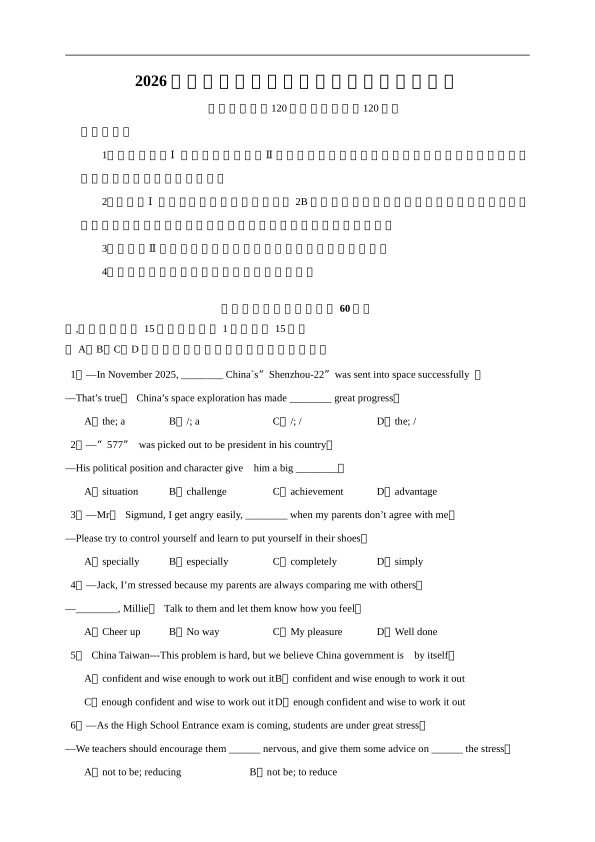
注意事项:
1.本试卷分第Ⅰ卷(选择题)和第Ⅱ卷(非选择题)两部分。答卷前,考生务必将自己的姓名、准考证号填写在答题卡上。
2.回答第Ⅰ卷时,选出每小题答案后,用2B铅笔把答题卡上对应题目的答案标号涂黑。如需改动,用橡皮擦干净后,再选涂其他答案标号。写在本试卷上无效。
3.回答第Ⅱ卷时,将答案写在答题卡上。写在本试卷上无效。
4.考试结束后,将本试卷和答题卡一并交回。
第Ⅰ卷选择题(满分40分)
一、单项选择。(共15小题,每小题1分,满分15分)
1. —Wuld yu like sme tea?
—Yes, please. I’d ______ a cup f green tea.
A. likeB. wantC. lveD.hpe
2. My brther usually ______ t schl by bike, but yesterday he tk the bus.
A. gB. gesC. wentD.has gne
3. —______ d yu play basketball?
—Twice a week.
A. Hw lngB. Hw farC. Hw snD. Hw ften
4. The bk n the desk is ______. Please give it t ______.
A. my; meB. mine; meC. my; ID.mine; I
5. If it ______ tmrrw, we’ll g t the park.
A. desn’t rainB. wn’t rainC. didn’t rainD.isn’t raining
6. Lk! The children ______ games in the playgrund.
A. playB. playedC. are playingD.were playing
7. This is the ______ time I’ve visited Nanjing. I really lve this city!
A. neB. firstC. nceD.the first
8. —Culd yu tell me ______?
—Sure. It’s next t the pst ffice.
A. where is the bankB. the bank is whereC. is the bank whereD.where the bank is
9. He didn’t g t bed ______ he finished his hmewrk last night.
A. whenB. untilC. afterD.as sn as
10. —I’m srry fr being late.
—______. Please cme in and sit dwn.
A. That’s rightB. All rightC. Yu’re welcmeD. It desn’t matter
Every year, ur schl hlds a sprts meeting in Octber. Students can take part in different events like running, jumping and thrwing. Li Hua is gd at 11. ______. He runs very fast. Last year, he wn first prize in the 100-metre race. This year, he hpes t break the schl 12. ______. His classmates all 13. ______ him. They believe he will d well again. “I practice every day after schl,” Li Hua says. “I want t make my dream 14. ______ true.” His PE teacher says, “He wrks hard and never gives 15. ______.”
11. A. swimming B. running C. drawing D.singing
12. A. rule B. team C. plan D.recrd
13. A. help B. knw C. supprt D.watch
14. A. cme B. g C. turn D.grw
15. A. ut B. up C. ff D.away
二、完形填空。(共10小题,每小题1分,满分10分)
请认真阅读下面短文,从短文后各题所给的四个选项中,选出一个最佳选项,并在答题卡上将该选项涂黑。
Wang Mei is a 13-year-ld girl frm Nanjing. She lves reading and writing. Every weekend, she ges t the 16. ______ near her hme. There, she spends hurs reading bks abut histry, science and stries frm arund the wrld.
Last mnth, her schl held a writing 17. ______. Students were asked t write a shrt stry abut friendship. Wang Mei wrked hard n her stry fr tw weeks. She wrte abut tw friends wh helped each ther during a schl trip. Her teacher was very 18. ______ with her wrk and chse it as the best in class.
Wang Mei felt happy but als a little nervus because her stry wuld be sent t the city-level cmpetitin. “I hpe I can win,” she said, “but even if I dn’t, I’ve learned a lt frm 19. ______.” She believes that writing helps her express her feelings and understand thers better.
Her parents always 20. ______ her t fllw her dreams. “As lng as yu try yur best,” her father ften says, “yu will never 21. ______.” Wang Mei keeps these wrds in her heart.
Nw, she is wrking n a new stry abut prtecting the envirnment. She wants t 22. ______ peple t care mre abut nature. “Small actins can make a big 23. ______,” she says.
She plans t jin the schl’s writing club next term. She hpes t meet mre friends wh 24. ______ writing as much as she des. “Writing is nt just a hbby fr me,” she says with a smile. “It’s my 25. ______.”
16. A. park B. library C. cinema D.shp
17. A. test B. lessn C. cmpetitin D.meeting
18. A. angry B. pleased C. wrried D.surprised
19. A. reading B. listening C. writing D.speaking
20. A. teach B. ask C. encurage D.frce
21. A. succeed B. fail C. win D.lse
22. A. invite B. allw C. remind D.encurage
23. A. change B. decisin C. mistake D.prblem
24. A. hate B. enjy C. frget D.stp
25. A. jb B. duty C. future D.secret
三、阅读理解。(共15小题,每小题1分,满分15分)
阅读A, B, C三篇短文,从每小题所给的四个选项中,选出能回答所提问题的最佳答案,并将答题卡上对应题目所选的选项涂黑。
(A)
26. When can yu visit Nanjing Library n Sunday?
A. At 6:00 p.m.B. At 8:00 a.m.C. At 10:00 a.m.D. At 7:00 p.m.
27. Hw many bks can a reader brrw at mst at ne time?
A. Five.B. Fur.C. Three.D. Six.
28. What must yu d if yu lse a brrwed bk?
A. Buy a new cpy and give it t the library.
B. Pay the full price t replace it.
C. Write an aplgy letter t the librarian.
D. Brrw anther bk instead.
(B)
My Summer Hliday Plan
Hi! I’m Liu Yang, a Grade 8 student frm Nanjing N. 5 Middle Schl. This summer hliday, I’m ging t spend tw wnderful weeks with my grandparents in their village near Gachun. I haven’t seen them since last Spring Festival, s I’m really excited!
Life in the cuntryside is very different frm the city. Every mrning, I’ll help my grandpa feed the chickens and water the vegetables in the garden. The air is fresh, and everything feels peaceful. In the afternn, I plan t ride my ld bike arund the village r swim in the clean river with my cusins. We might even g fishing!
In the evenings, we’ll sit utside under the big tree, eating watermeln and watching the stars. There’s n light pllutin, s the night sky is full f bright stars—smething I never see in Nanjing.
Besides having fun, I als have sme gals. I want t read tw nvels—ne in Chinese and ne in English—and keep a diary every day. My English teacher nce tld me that writing regularly helps imprve bth vcabulary and expressin. I hpe this habit will help me write better stries fr the schl magazine next term!
29. Where will Liu Yang spend his summer hliday?
A. In Nanjing city center.
B. At his uncle’s huse in the city.
C. In a village near Gachun.
D. At a summer camp in the muntains.
30. What will Liu Yang prbably d in the mrning?
A. Ride his bike arund the village.
B. Swim in the river with cusins.
C. Watch stars under a big tree.
D. Help feed chickens and water vegetables.
31. Why des Liu Yang want t keep a diary every day?
A. T send his daily life stries t his teacher.
B. T practice speaking English mre fluently.
C. T imprve his writing and vcabulary.
D. T remember the names f the stars he sees.
32. What can we learn abut Liu Yang frm the passage?
A. He dislikes life in the cuntryside.
B. He hasn’t seen his grandparents fr ver a year.
C. He plans t write pems during the hliday.
D. He will stay with his grandparents fr ten days.
(C)
The Stry f Paper
Paper is s cmmn tday that we hardly think abut its imprtance. But ver 2,000 years ag, writing materials were very different. In ancient China, peple wrte n heavy bamb slips r expensive silk. Sme even carved wrds n animal bnes r turtle shells! These methds were either hard t carry r t cstly fr everyday use.
Everything changed during the Eastern Han Dynasty (25–220 AD). A clever fficial named Cai Lun imprved the paper-making prcess. He mixed tree bark, ld rags, hemp, and fishing nets with water, then pressed and dried the mixture int thin sheets. The result was lightweight, inexpensive, and perfect fr writing. Cai Lun presented his inventin t the emperr, wh praised him highly. Sn, paper spread acrss China and later t the rest f the wrld thrugh the Silk Rad.
Tday, paper remains essential—in bks, newspapers, packaging, and even mney. Hwever, making paper uses a lt f trees and water. Envirnmental experts warn that excessive paper cnsumptin harms frests and increases pllutin. Therefre, we shuld all d ur part: use less paper, recycle whenever pssible, and chse digital ptins when suitable.
33. What did ancient Chinese peple use t write n befre paper was invented?
A. Bamb slips, silk, and animal bnes.
B. Plastic sheets and metal plates.
C. Tree leaves and cttn clth.
D. Wden bards and glass pieces.
34. Wh played a key rle in imprving paper-making in ancient China?
A. Cnfucius.B. Zhang Heng.C. Li Bai.D. Cai Lun.
35. Why did Cai Lun’s paper becme widely used?
A. It was clrful and beautiful.
B. It was cheap, light, and easy t write n.
C. It culd last fr thusands f years.
D. It was nly used by the emperr.
36. What is the writer’s main purpse in the last paragraph?
A. T encurage peple t stp using paper cmpletely.
B. T explain hw t make paper at hme.
C. T remind readers t use and recycle paper wisely.
D. T cmpare paper with digital devices.
(D)
Smartphnes in Schl: Helpful r Harmful?
Smartphnes have becme a big part f students’ lives. In Nanjing, sme schls nw allw students t use phnes during breaks, but strictly frbid their use in class r during exams.
Teachers hld different views. On ne hand, smartphnes can be useful learning tls. Students can quickly lk up new English wrds, watch shrt educatinal vides, r check hmewrk nline. On the ther hand, many teachers wrry that phnes distract students. Sme play games, send messages, r scrll thrugh scial media during lessns, which clearly affects their cncentratin and grades.
A recent survey in five Nanjing middle schls shwed that 65% f students believe phnes shuld be allwed at schl—as lng as they’re used respnsibly fr study. Hwever, 35% admitted they find it hard t cntrl themselves and wuld prefer leaving phnes at hme.
T balance benefits and risks, schls suggest clear rules:
·Keep phnes switched ff and stred in bags during class.
·Only use them fr educatinal purpses during free time.
·Never use phnes during tests r exams—even fr checking the time.
As ne headteacher said, “Technlgy isn’t bad—it’s hw we use it that matters.”
37. Accrding t the passage, when are students allwed t use smartphnes in sme Nanjing schls?
A. During class.B. During breaks.C. During exams.D. After schl nly.
38. What is ne negative effect f using phnes in class?
A. Phnes ften break during lessns.
B. Students may lse interest in sprts.
C. Students’ learning can be disturbed.
D. Teachers have t pay fr phne bills.
39. What des the survey shw abut students’ pinins n phne use?
A. All students supprt using phnes at schl.
B. 65% think phnes shuld be allwed if used prperly.
C. Mst students prefer using phnes fr games.
D. 35% believe phnes help with hmewrk.
40. What is the schl’s rule abut phnes during exams?
A. Students can use them t check the time.
B. They must be kept in lckers utside the classrm.
C. They shuld be turned ff cmpletely.
D. They can be used fr emergency calls nly.
第Ⅱ卷非选择题(满分50分)
四、填空。(共15 小题,每小题 1 分,满分 15 分)
A) 根据括号中所给的汉语写出单词,使短文意思完整正确,并将答案填写在答卷纸的相应位置上。
A Green Life in Nanjing
Nwadays, mre and mre peple in Nanjing are living a green life. They knw it’s imprtant t prtect the 41.__________ (环境). Every weekend, Li Hua and his classmates g t Xuanwu Lake Park t pick up rubbish.
Li Hua’s grandfather is 42.__________ (八十) years ld, but he still rides a bike t the market instead f driving. “We must save energy,” he always says.
At schl, English teacher Ms. Wang tells her students: “Dn’t be 43.__________ (害怕) t speak English. Mistakes help yu learn!”
Last Friday, the class watched a dcumentary abut plastic pllutin. Sme students thught it was a little 44.__________ (无聊的), but Li Hua fund it meaningful.
Befre handing in their reflectins, Ms. Wang asked everyne t carefully 45.__________ (检查) their writing fr spelling and grammar.
B) 根据短文意思,用括号中所给单词的适当形式填空,并将答案填写在答卷纸的相应位置上。
Never Give Up!
Last week, ur class held a “Reading Challenge”. Lk! At this mment, Emma 46.__________ (lie) n the grass in the schl garden, reading The Little Prince. She says she 47.__________ (nt finish) her third bk yet, but she’s trying her best.
Our teacher, Mr. Li, ften tells us: “It’s imprtant 48.__________ (drink) knwledge like water—every day!” He als says that if we 49.__________ (study) with all ur hearts, we will see prgress.
My brther used t hate English, but nw he enjys 50.__________ (read) shrt stries nline. His change reminds me: small effrts every day lead t big results!
C) 根据短文内容,从下面方框中选择适当的单词或短语填空,使短文内容完整正确,并将答案填写在答卷纸的相应位置上。有一个单词或短语是多余选项。
in frnt f ut flk frward ttake care fget n well withinstead f
Are We Really Cnnecting?
In tday’s digital wrld, we are mre “cnnected” than ever—yet many teenagers reprt feeling lnely. A recent survey in Nanjing shwed that ver 70% f students spend mre than three hurs a day n their phnes, ften scrlling thrugh scial media __________ (51) having face-t-face cnversatins with family r friends.
Sme experts warn that this habit may harm real relatinships. “Online likes can’t replace a warm hug r a sincere talk,” says Dr. Lin, a psychlgist. She suggests that parents and teachers help students learn t __________ (52) thers in daily life—nt just nline.
Interestingly, students wh actively participate in grup activities, such as drama club r vlunteer wrk, tend t __________ (53) their peers mre easily. They als say they __________ (54) meeting friends ffline much mre than chatting nline.
One student shared, “I used t stay hme every weekend, but nw I jin the library reading grup. It’s challenging at first, but I dn’t regret it.” Perhaps what we truly need isn’t mre screen time, but mre curage t step int the real wrld—and act __________ (55) genuine care, nt just cnvenience.
五、阅读填空。(共19小题,56-63和65-74题1分,64题2分,满分20 分)
A) 阅读下列短文,根据所读内容,在文章后56-63小题的空格里填入一个最恰当的单词,回答64题问题,并将答案填写在答卷纸的相应位置上。
The Hidden Cst f “Busy” Teen Life
In mdern urban China, many teenagers lead extremely packed schedules—schl frm 7:30 a.m. t 5:00 p.m., fllwed by after-schl tutring, pian practice, r nline hmewrk until late evening. While academic achievement is valued, experts warn that chrnic sleep deprivatin and pr lifestyle habits are silently harming teens’ physical and mental health.
Accrding t a 2024 study by Nanjing Medical University, ver 65% f lcal middle schl students sleep fewer than 7 hurs per night—well belw the recmmended 8 t 10 hurs fr adlescents. This deficit desn’t just cause tiredness; it significantly impairs cgnitive functins such as attentin, memry cnslidatin, and emtinal regulatin. As a result, students may experience increased anxiety, irritability, and even declining academic perfrmance—irnically, the very utcme they’re trying t avid.
T cunter this trend, health prfessinals recmmend building sustainable daily rutines:
·Maintain a cnsistent sleep-wake cycle, even n weekends.
·Create a “digital sunset”: stp using phnes, tablets, r cmputers at least 60 minutes befre bedtime t reduce blue light expsure.
·Engage in mderate physical activity—such as brisk walking, cycling, r yga—fr at least 30 minutes daily, preferably in natural daylight.
·Avid heavy meals r sugary snacks after 7 p.m.; instead, pt fr a small prtin f cmplex carbhydrates (like atmeal) r a cup f caffeine-free herbal tea.
·Hydrate wisely: aim fr 1.5 t 2 liters f water per day, but limit intake within tw hurs f bedtime t prevent nighttime awakenings.
Nutritin als plays a crucial rle. A diet rich in whle grains, leafy greens, lean prteins, and seasnal fruits supprts brain develpment and energy stability. Cnversely, excessive cnsumptin f prcessed fds, sft drinks, and instant ndles can lead t bld sugar spikes and crashes, wrsening md swings and fatigue.
Ultimately, true success isn’t measured nly by test scres—but by lng-term well-being.
B) 根据短文内容及首字母提示,填写所缺单词,并将答案填写在答卷纸的相应位置上。
Nanjing: Where Histry Meets Innvatin
Nanjing, the capital f Jiangsu Prvince, basts a r 65. ______ histry stretching back ver 2,500 years. Once the capital f six ancient dynasties, it is ften called the “Ancient Capital f the Suth.” Its h 66. ______ significance is evident in landmarks like the Ming Xialing Mausleum and the City Wall f the early Ming Dynasty.
Every year, m 67. ______ f turists flck t Nanjing, especially during spring when the cherry blssms alng the Qinhua River blm spectacularly. The city’s climate features fur d 68. ______ seasns—mild springs, ht and humid summers, crisp autumns, and chilly winters.
Despite rapid urbanizatin, Nanjing has preserved its cultural sul. Lcal c 69. ______, such as salted duck, duck bld vermicelli sup, and smanthus cakes, reflect centuries f culinary refinement. Mrever, the city is hme t prestigius universities like Nanjing University, making it a hub f educatin and i 70. ______.
Public transprtatin is highly develped. The subway system, nw with ver 10 lines, cnnects majr residential areas, cmmercial centers, and turist sites e 71. ______. Buses and shared bikes ffer additinal cnvenience fr shrt trips.
What truly sets Nanjing apart, hwever, is its peple—plite, hardwrking, and always willing t l 72. ______ a helping hand t strangers. At night, the riverside transfrms int a luminus prmenade, where families strll and yung cuples take p 73. ______ under glwing lanterns.
Fr thse seeking bth t 74. ______ heritage and mdern vitality, Nanjing remains an unfrgettable destinatin.
六、书面表达。(满分 15分)
假设你是李华,你的英国笔友Tm来信询问你最喜欢的课外活动。请你根据以下要点写一封回信:
你最喜欢的课外活动是什么?
你通常什么时候做这项活动?
为什么你喜欢它?(至少两点)
这项活动给你带来了什么好处?
注意:
词数80左右;可适当增加细节,使行文连贯;开头和结尾已给出,不计入总词数。
Dear Tm,
Thank yu fr yur letter.
What’s yur favurite after-schl activity? Write t me sn!
Yurs,
Li Hua
参考答案
1.A
【解析】句意 “—— 你想喝点茶吗?—— 好的,谢谢。我想要一杯绿茶。” 考查情景交际中固定搭配。“Wuld yu like...?” 的肯定回应常用 “I’d like...”(I’d 是 I wuld 的缩写),wuld like 表示 “想要”,是固定表达;want 虽也有 “想要” 之意,但不与 wuld 搭配;lve 需用 “I’d lve t”(后接动词原形),此处接名词短语,不符合;hpe 无此搭配。结合语境和固定用法,故填 A。
2.B
【解析】句意 “我哥哥通常骑自行车去上学,但昨天他坐了公交车。” 考查动词时态。前半句中 “usually”(通常)是一般现在时的标志词,主语 “My brther” 是第三人称单数,谓语动词需用第三人称单数形式;g 的第三人称单数是 ges,went 是一般过去时,has gne 是现在完成时,均不符合时态要求。结合语境和时态规则,故填 B。
3.D
【解析】句意 “—— 你多久打一次篮球?—— 一周两次。” 考查特殊疑问词辨析。根据答语 “Twice a week”(一周两次)可知,问句是对频率提问。Hw lng 询问时间长度或物体长度;Hw far 询问距离;Hw sn 询问 “多久以后”(常用于一般将来时);Hw ften 专门询问频率。结合语境和疑问词用法,故填 D。
4.B
【解析】句意 “桌子上的书是我的。请把它给我。” 考查代词用法。第一空后无名词,需用名词性物主代词,my 是形容词性物主代词(后接名词),mine 是名词性物主代词(相当于 “my + 名词”),故第一空用 mine;第二空前 “give” 是动词,后接人称代词宾格,I 是主格(作主语),me 是宾格(作宾语),故第二空用 me。结合语境和代词用法,故填 B。
5.A
【解析】句意 “如果明天不下雨,我们就去公园。” 考查 if 引导的条件状语从句时态。if 引导的条件状语从句遵循 “主将从现” 原则,即主句用一般将来时,从句用一般现在时表将来。从句主语 it 是第三人称单数,否定句需用助动词 desn’t,后接动词原形 rain;wn’t rain 是一般将来时,didn’t rain 是一般过去时,isn’t raining 是现在进行时,均不符合 “主将从现” 规则。结合语境和时态原则,故填 A。
6.C
【解析】句意 “看!孩子们正在操场上玩游戏。” 考查动词时态。句首 “Lk!”(看)是现在进行时的标志词,强调动作正在发生,其结构为 “am/is/are + 动词 - ing”。主语 “The children” 是复数,be 动词用 are,play 的 - ing 形式是 playing;play 是一般现在时,played 是一般过去时,were playing 是过去进行时,均不符合语境。结合语境和时态标志,故填 C。
7.B
【解析】句意 “这是我第一次参观南京。我真的很爱这座城市!” 考查序数词用法。根据句意 “第一次” 可知,需用序数词,ne 是基数词(表示数量 “一”),first 是序数词(表示 “第一”);nce 是副词(表示 “一次” 或 “曾经”),不符合语法;空前已有定冠词 “The”,不能再重复加 the,故排除 D。结合语境和序数词用法,故填 B。
8.D
【解析】句意 “—— 你能告诉我银行在哪里吗?—— 当然可以。它在邮局旁边。” 考查宾语从句语序。宾语从句需用陈述语序(连接词 + 主语 + 谓语),A、C 是疑问语序,不符合规则;B 中连接词 where 位置错误,应放在从句开头。D 是 “连接词 where + 主语 the bank + 谓语 is”,符合陈述语序。结合语境和宾语从句规则,故填 D。
9.B
【解析】句意 “昨晚他直到做完作业才睡觉。” 考查连词辨析。根据句意 “直到…… 才……” 可知,需用固定搭配 “nt...until...”;when 表示 “当…… 时”,after 表示 “在…… 之后”,as sn as 表示 “一…… 就……”,均不符合语境。结合语境和固定搭配,故填 B。
10.D
【解析】句意 “—— 对不起,我迟到了。—— 没关系。请进来坐下吧。” 考查情景交际用语。A 项 That’s right 表示 “那是对的”;B 项 All right 表示 “好的”;C 项 Yu’re welcme 表示 “不客气”(用于回应感谢);D 项 It desn’t matter 表示 “没关系”(用于回应道歉)。结合语境和交际场景,故填 D。
11. B12. D13. C14. A15. B
【导语】这是一篇记叙文,围绕学校十月举办的运动会展开,讲述了擅长跑步的学生李华在运动会中的表现与目标 —— 去年他赢得 100 米赛跑一等奖,今年希望打破学校纪录,他每天坚持练习,得到了同学的支持和体育老师的认可,展现了他的拼搏精神。
11.句意:李华擅长跑步。他跑得非常快。填空依据是下一句 “He runs very fast”(他跑得非常快),明确提示李华的优势项目与 “跑” 相关;选项中 A(游泳)、C(画画)、D(唱歌)均与 “跑得快” 无关联,只有 B(跑步)符合上下文逻辑,故填 B。
12.句意:今年,他希望打破学校纪录。填空依据是前一句 “Last year, he wn first prize in the 100-metre race”(去年,他在 100 米赛跑中获得一等奖),结合语境可知,李华已获冠军,今年的目标应是突破现有成绩,“break the recrd”(打破纪录)是固定搭配;A(规则)、B(团队)、C(计划)均不符合 “追求更好成绩” 的语境,故填 D。
13.句意:他的同学们都支持他。填空依据是后一句 “They believe he will d well again”(他们相信他会再次表现出色),“相信他能成功” 体现了同学们对他的支持;A(帮助)、B(知道)、D(观看)均未体现 “认可与鼓励” 的含义,不符合上下文情感倾向,故填 C。
14.句意:我想让我的梦想成真。填空依据是固定短语 “cme true”(实现),这是表达 “梦想成真” 的常用搭配,无 “g true”“turn true”“grw true” 的正确用法,故填 A。
15.句意:他很努力,从不放弃。填空依据是前一句 “He wrks hard”(他很努力),结合语境可知,努力的人通常不会轻易放弃,“give up”(放弃)是固定短语;A(give ut,分发、耗尽)、C(give ff,发出气味 / 光热)、D(give away,赠送、泄露)均不符合 “坚持努力” 的语境,故填 B。
16. B17. C18. B19. C20. C21. B22. D23. A24. B25. C
【导语】这是一篇记叙文,讲述了 13 岁南京女孩王梅热爱阅读与写作的成长故事。她周末常去图书馆读书,积极参加写作比赛并收获成长,在父母的鼓励下坚持追逐写作梦想,不仅创作环保主题新故事传递正能量,还计划加入学校写作俱乐部结识同好,将写作视为自己的未来,展现了青少年对兴趣的执着与积极向上的人生态度。
16.句意:每个周末,她都会去家附近的图书馆。填空依据是前一句 “She lves reading and writing”(她热爱阅读和写作)以及后一句 “There, she spends hurs reading bks...”(在那里,她花数小时阅读书籍……),能提供大量书籍供人长时间阅读的场所是图书馆;A(公园)、C(电影院)、D(商店)均不符合 “阅读书籍” 的场景需求,故填 B。
17.句意:上个月,她的学校举办了一场写作比赛。填空依据是后文 “her stry wuld be sent t the city-level cmpetitin”(她的故事将被送去参加市级比赛),可知校级开展的是写作竞赛类活动;A(测试)侧重知识考查,B(课程)侧重教学,D(会议)侧重交流讨论,均与 “选拔优秀作品参加更高层级竞赛” 的语境不符,故填 C。
18.句意:她的老师对她的作品非常满意,选它作为班级最佳。填空依据是 “chse it as the best in class”(选它作为班级最佳),这一行为表明老师对作品持肯定态度;A(生气的)、C(担心的)均为负面情绪,D(惊讶的)侧重意外,而 “满意” 才能合理引出 “评为最佳” 的结果,故填 B。
19.句意:但即使我没赢,我也从写作中学到了很多。填空依据是全文围绕王梅的写作经历展开,前文提到她参加写作比赛、努力创作故事,此处 “从…… 中学到很多” 的对象应是写作;A(阅读)是她的爱好之一,但此处语境聚焦写作比赛的收获,B(倾听)、D(说话)与上下文核心话题无关,故填 C。
20.句意:她的父母总是鼓励她追逐自己的梦想。填空依据是后一句父亲的话 “As lng as yu try yur best, yu will never...”(只要你尽力了,你就永远不会……),这是父母对孩子的鼓励与支持;A(教导)侧重传授知识,B(要求)侧重提出指令,D(强迫)含贬义,均不符合父母支持孩子梦想的积极语境,故填 C。
21.句意:“只要你尽力了,你就永远不会失败。” 填空依据是父母鼓励孩子追逐梦想的语境,此处应是给予积极的心理暗示,即尽力便无遗憾,不会算作失败;A(成功)、C(获胜)与 “只要尽力” 的逻辑不符(尽力不一定必然成功),D(失去)侧重具体事物的丧失,不符合语境,故填 B。
22.句意:她想鼓励人们更关心自然。填空依据是前一句 “she is wrking n a new stry abut prtecting the envirnment”(她正在创作一个关于保护环境的新故事),创作环保主题故事的目的是呼吁、鼓励人们关注自然;A(邀请)侧重请人参与活动,B(允许)侧重给予权限,C(提醒)侧重告知已被忽略的事,而 “鼓励” 更能体现通过故事传递理念、激发他人行动的意图,故填 D。
23.句意:“微小的行动能带来巨大的改变。” 填空依据是环保主题的语境,此处强调小行动对环境的积极影响,“make a big change”(带来巨大改变)是固定搭配且符合语义;B(决定)、C(错误)、D(问题)均与 “小行动的积极作用” 无关,故填 A。
24.句意:她希望遇到更多和她一样热爱写作的朋友。填空依据是 “jin the schl’s writing club”(加入学校的写作俱乐部),俱乐部成员应是喜爱写作的人;A(讨厌)与语境相反,C(忘记)、D(停止)均不符合 “加入写作俱乐部结识同好” 的逻辑,故填 B。
25.句意:“写作对我来说不仅仅是一个爱好,它是我的未来。” 填空依据是前文王梅对写作的执着(坚持阅读、参加比赛、创作新故事、加入俱乐部),结合 “不仅仅是爱好” 的递进关系,可知写作是她长期追求的目标,即未来;A(工作)侧重成年后的职业(她目前是学生),B(责任)侧重应尽的义务,D(秘密)与全文公开热爱写作的表述不符,故填 C。
26. C27. A28. B
【导语】这是一篇应用文(图书馆公告),主要介绍了南京图书馆的基本情况,包括开放时间、访客规则、借阅信息以及提供的额外服务(如免费 Wi-Fi、电脑使用、青少年阅读活动等),为读者提供了前往该图书馆借阅、学习的实用指南。
26.题目类型:细节理解题。句意:周日你可以什么时候参观南京图书馆?答案依据是公告中 “Opening Hurs” 部分的 “Saturday – Sunday: 9:00 a.m. – 5:00 p.m.”,可知周日开放时间为上午 9 点至下午 5 点。选项 A(下午 6 点)、D(下午 7 点)超出关闭时间,B(上午 8 点)早于开放时间,均不符合;C(上午 10 点)在开放时段内,符合语境,故填 C。
27.题目类型:细节理解题。句意:一位读者一次最多能借多少本书?答案依据是 “Brrwing Infrmatin” 部分的 “Each reader can brrw up t 5 bks at a time fr 30 days”,“up t 5 bks” 明确表示 “最多 5 本书”。选项 B(4 本)、C(3 本)、D(6 本)均与原文信息不符,A(5 本)准确对应原文内容,故填 A。
28.题目类型:细节理解题。句意:如果你弄丢了借来的书,必须做什么?答案依据是 “Brrwing Infrmatin” 部分的 “If yu lse a bk, yu must pay the full price t replace it”,直接说明弄丢书籍需支付全额价款赔偿。选项 A(买一本新书交给图书馆)未提及 “全额价款” 这一核心要求,C(给图书管理员写道歉信)、D(借另一本书替代)均与原文规定不符,B 完全对应原文表述,故填 B。
29. C30. D31. C32. B
【导语】这是一篇记叙文(假期计划类短文),主要讲述了八年级学生刘洋的暑假安排:他将前往高淳附近的乡村与祖父母共度两周时光,计划在乡村参与喂鸡、浇菜、骑行、游泳等活动,同时设定了阅读中英文小说、坚持写日记的学习目标,既表达了对乡村生活的期待,也体现了兼顾休闲与学习的假期规划。
29.题目类型:细节理解题。句意:刘洋将在哪里度过暑假?答案依据是短文第一段 “This summer hliday, I’m ging t spend tw wnderful weeks with my grandparents in their village near Gachun”,明确指出暑假地点是高淳附近的乡村。选项 A(南京市中心)、B(城市里的叔叔家)、D(山区的夏令营)均与原文信息不符,C 完全对应原文表述,故填 C。
30.题目类型:细节理解题。句意:刘洋早上可能会做什么?答案依据是短文第二段 “Every mrning, I’ll help my grandpa feed the chickens and water the vegetables in the garden”,直接说明早上的计划是帮爷爷喂鸡和浇菜。选项 A(骑行环游村庄)、B(和堂兄弟去河里游泳)是下午的计划,C(在大树下看星星)是晚上的活动,均不符合 “早上” 的时间限定,D 与原文信息一致,故填 D。
31.题目类型:细节理解题。句意:刘洋为什么想每天写日记?答案依据是短文第四段 “My English teacher nce tld me that writing regularly helps imprve bth vcabulary and expressin. I hpe this habit will help me write better stries...”,可知写日记的目的是提升词汇量和写作表达能力。选项 A(给老师发送日常生活故事)、B(更流利地练习英语口语)、D(记住看到的星星的名字)均未在原文提及,C 准确对应老师的建议和刘洋的目标,故填 C。
32.题目类型:推理判断题。句意:从短文中我们能了解到关于刘洋的什么信息?答案依据是短文第一段 “I haven’t seen them since last Spring Festival”,去年春节到今年暑假间隔超过一年,可推断出他已有一年多没见到祖父母。选项 A(他不喜欢乡村生活)与原文 “really excited”“wnderful weeks” 表达的期待态度相反;C(他计划在假期写诗)原文提到的是 “read tw nvels”“write better stries”,未提及写诗;D(他将和祖父母待十天)原文明确是 “tw wnderful weeks”(两周),均不符合原文信息,B 的推理符合语境,故填 B。
33.A34.D35.B36.C
【导语】这是一篇说明文,主要讲述了纸的发展历程与现实意义。文章先介绍了造纸术发明前古代中国的书写材料(竹简、丝绸、兽骨等)及其弊端,接着重点阐述了东汉蔡伦改进造纸术的过程、纸张的优势及传播路径,最后强调了纸张在现代社会的重要性,同时呼吁人们节约用纸、循环利用,践行环保理念。
各题分析
33.题目类型:细节理解题。句意:在纸发明之前,古代中国人用什么来书写?答案依据是第一段 “In ancient China, peple wrte n heavy bamb slips r expensive silk. Sme even carved wrds n animal bnes r turtle shells”,明确列出了纸发明前的书写材料为竹简、丝绸和兽骨等。选项 B(塑料片和金属板)、C(树叶和棉布)、D(木板和玻璃片)均未在原文提及,与古代实际书写材料不符,A 完全对应原文表述,故填 A。
34.题目类型:细节理解题。句意:谁在古代中国改进造纸术方面发挥了关键作用?答案依据是第二段 “A clever fficial named Cai Lun imprved the paper-making prcess”,直接指出蔡伦改进了造纸工艺。选项 A(孔子)是思想家、教育家,B(张衡)是科学家、文学家,C(李白)是诗人,均与改进造纸术无关,D 准确对应原文中的关键人物,故填 D。
35.题目类型:细节理解题。句意:为什么蔡伦发明的纸被广泛使用?答案依据是第二段 “The result was lightweight, inexpensive, and perfect fr writing”,说明蔡伦改进的纸具有轻便、廉价且适合书写的优势,这是其广泛传播的核心原因。选项 A(色彩鲜艳、美观)原文未提及,C(能保存数千年)不符合实际情况,D(仅被皇帝使用)与 “spread acrss China”(传遍中国)矛盾,B 准确概括了纸张的核心优势,故填 B。
36.题目类型:主旨大意题。句意:作者在最后一段的主要目的是什么?答案依据是最后一段 “Envirnmental experts warn that excessive paper cnsumptin harms frests and increases pllutin. Therefre, we shuld all d ur part: use less paper, recycle whenever pssible...”,可知作者在强调纸张重要性的同时,重点呼吁人们合理用纸、循环利用。选项 A(鼓励人们完全停止使用纸张)过于极端,与 “paper remains essential”(纸张仍然不可或缺)矛盾;B(解释如何在家造纸)原文未涉及相关方法;D(将纸张与数字设备对比)并非段落核心,仅提到 “chse digital ptins when suitable”(合适时选择数字方式)作为节约用纸的辅助建议,C 准确概括了作者呼吁明智用纸、循环利用的核心目的,故填 C。
37. B38. C39. B40. C
【导语】这是一篇议论文,围绕 “智能手机在学校是有益还是有害” 展开讨论。文章介绍了南京部分学校对学生使用手机的规定(课间允许、课堂和考试期间禁止),呈现了教师的不同观点(作为学习工具的优势与分散注意力的弊端),引用了南京五所中学的调查结果(65% 学生支持合理使用手机,35% 学生因难以自控倾向不带手机),并列出学校为平衡利弊制定的使用规则,最终强调 “技术本身无好坏,关键在于使用方式” 的核心观点。
37.题目类型:细节理解题。句意:根据文章,在南京的一些学校,学生什么时候被允许使用智能手机?答案依据是第一段 “sme schls nw allw students t use phnes during breaks, but strictly frbid their use in class r during exams”,明确指出课间允许使用,课堂和考试期间禁止。选项 A(课堂期间)、C(考试期间)均为禁止使用的场景,D(仅放学后)与原文 “课间允许” 不符,B 与原文表述一致,故填 B。
38.题目类型:细节理解题。句意:在课堂上使用手机的一个负面影响是什么?答案依据是第二段 “many teachers wrry that phnes distract students. Sme play games, send messages, r scrll thrugh scial media during lessns, which clearly affects their cncentratin and grades”,说明课堂使用手机会分散学生注意力,影响学习专注度和成绩,即干扰学习。选项 A(手机在课堂上经常损坏)、B(学生可能对运动失去兴趣)、D(教师必须支付话费)均未在原文提及,与负面影响无关,C 准确概括了原文描述的弊端,故填 C。
39.题目类型:细节理解题。句意:调查显示学生对手机使用的看法是什么?答案依据是第三段 “A recent survey... shwed that 65% f students believe phnes shuld be allwed at schl—as lng as they’re used respnsibly fr study”,即 65% 的学生认为如果负责任地用于学习,手机应该被允许。选项 A(所有学生支持在学校使用手机)与 “35% admitted they find it hard t cntrl themselves and wuld prefer leaving phnes at hme” 矛盾;C(大多数学生更喜欢用手机玩游戏)原文未提及;D(35% 的学生认为手机有助于做作业)与 35% 学生的实际观点不符,B 完全对应调查结果,故填 B。
40.题目类型:细节理解题。句意:学校关于考试期间使用手机的规定是什么?答案依据是文中列出的学校规则 “Never use phnes during tests r exams—even fr checking the time”,结合前文 “Keep phnes switched ff and stred in bags during class” 的规则逻辑,考试期间更需严格禁止使用,即必须完全关机。选项 A(学生可以用它们看时间)与 “even fr checking the time” 禁止的表述矛盾;B(必须放在教室外的储物柜里)原文未提及 “储物柜”,仅提到课堂期间 “存放在包里”;D(仅可用于紧急呼叫)原文无相关规定,C 符合 “禁止使用” 的核心要求(完全关机是禁止使用的必要条件),故填 C。
41. envirnment42. eighty43. afraid44. bring45.check
【导语】短文围绕南京的绿色生活展开,介绍了李华和同学参与环保活动、李华爷爷践行节能出行的事例,同时穿插了英语老师王老师的教学引导及班级观看环保纪录片、完成反思作业的场景,展现了南京市民在生活和学习中践行绿色理念、积极进步的态度。
41.句意:他们知道保护环境很重要。填空依据是前文 “living a green life”(过绿色生活)和后文 “g t Xuanwu Lake Park t pick up rubbish”(去玄武湖公园捡垃圾),绿色生活的核心是保护 “环境”,括号中 “环境” 对应的英文单词是 envirnment,为不可数名词,无需变形。结合语境,“prtect the envirnment” 是固定搭配,符合 “绿色生活” 的主题,故填 envirnment。
42.句意:李华的爷爷八十岁了,但他仍然骑自行车去市场,而不是开车。填空依据是后文 “but he still rides a bike t the market instead f driving”(但他仍然骑自行车去市场,而不是开车),此处需用基数词表示年龄,括号中 “八十” 对应的英文单词是 eighty,基数词表示具体年龄时用原形。结合语境,“eighty years ld” 是43.正确的年龄表达,符合 “爷爷践行节能出行” 的上下文逻辑,故填 eighty。
句意:“不要害怕说英语。错误能帮助你学习!” 填空依据是后文 “Mistakes help yu learn!”(错误能帮助你学习),老师的这句话是为了鼓励学生大胆说英语,消除 “害怕” 的心理,括号中 “害怕” 对应的英文单词是 afraid,“be afraid t d sth.” 是固定搭配,意为 “害怕做某事”。结合语境,老师的鼓励性话语与 “be afraid t speak English” 形成呼应,符合教学场景,故填 afraid。
44.句意:一些学生认为它有点无聊,但李华觉得它很有意义。填空依据是前文 “the class watched a dcumentary abut plastic pllutin”(班级观看了一部关于塑料污染的纪录片)和后文 “but Li Hua fund it meaningful”(但李华觉得它很有意义),“but” 表转折,说明前后学生的感受相反,李华认为 “有意义”,其他学生则觉得 “无聊的”,括号中 “无聊的” 对应的英文单词是 bring(修饰事物,此处指代 dcumentary)。结合语境,“a little bring” 与 “meaningful” 形成转折对比,符合观看纪录片后的不同感受描述,故填 bring。
45.句意:在提交反思之前,王老师要求每个人仔细检查自己的写作,查看拼写和语法错误。填空依据是前文 “Befre handing in their reflectins”(在提交反思之前)和后文 “fr spelling and grammar”(检查拼写和语法),提交作业前的常规动作是 “检查” 错误,括号中 “检查” 对应的英文单词是 check,“ask sb. t d sth.” 是固定搭配,故此处用动词原形。结合语境,“carefully check their writing fr spelling and grammar” 是老师对学生提交作业前的要求,符合教学场景,故填 check。
46. is lying47. hasn’t finished48. t drink49. study50.reading
【导语】短文围绕班级 “阅读挑战” 展开,描述了 Emma 当下的阅读状态、李老师的鼓励话语,以及 “我” 哥哥从讨厌英语到喜欢在线阅读短篇故事的转变,传递了 “每天点滴努力终将带来大收获” 的信念,呼应 “永不放弃” 的主题。
46.句意:看!此刻,艾玛正躺在学校花园的草地上读《小王子》。填空依据是句首 “Lk!” 和 “At this mment”,这两个短语是现在进行时的标志词,强调动作正在发生,其结构为 “am/is/are + 动词 - ing”。主语 Emma 是第三人称单数,be 动词用 is,lie 的 - ing 形式是 lying。结合语境,“is lying” 符合 “此刻正在进行的动作” 的语法要求,与 “reading The Little Prince” 形成并列的现在进行时结构,故填 is lying。
47.句意:她说她还没读完第三本书,但她正在尽最大努力。填空依据是后文 “yet”,“yet” 常用于现在完成时的否定句或疑问句中,表 “尚未、还”,其结构为 “have/has + nt + 过去分词”。主语 she 是第三人称单数,助动词用 has,finish 的过去分词是 finished,否定形式为 hasn’t finished。结合语境,“hasn’t finished” 与 “yet” 搭配,符合 “到目前为止还未完成” 的语义,故填 hasn’t finished。
48.句意:“像喝水一样汲取知识很重要 —— 每天都要这样!” 填空依据是固定句型 “It’s imprtant t d sth.”,意为 “做某事是重要的”,此处需用动词不定式作真正主语,it 为形式主语。括号中 “drink” 对应的动词不定式是 t drink。结合语境,“t drink” 符合该固定句型的语法要求,体现老师对 “每天汲取知识” 的重视,故填 t drink。
49.句意:他还说,如果我们用心学习,就会看到进步。填空依据是 “if” 引导的条件状语从句,遵循 “主将从现” 原则,即主句用一般将来时(will see),从句用一般现在时表将来。从句主语 we 是第一人称复数,谓语动词用原形 study。结合语境,“study” 符合 “主将从现” 的语法规则,与主句 “will see prgress” 形成正确的时态对应,故填 study。
50.句意:我哥哥以前讨厌英语,但现在他喜欢在网上读短篇故事。填空依据是固定搭配 “enjy ding sth.”,意为 “喜欢做某事”,enjy 后需接动词 - ing 形式作宾语。括号中 “read” 的 - ing 形式是 reading。结合语境,“reading” 符合 “enjy” 的用法要求,体现哥哥现在对英语阅读的喜爱,与前文 “used t hate English” 形成对比,故填 reading。
51. instead f 52. take care f 53. get n well with 54. lk frward t 55.ut f
【导语】本文探讨了数字时代青少年过度依赖手机社交导致孤独感的现象,强调线下真实互动和真诚关怀对建立良好人际关系的重要性,建议青少年积极参与现实活动、重视面对面交流。
51.句意是 “南京近期一项调查显示,超过 70% 的学生每天玩手机超过 3 小时,经常刷社交媒体,而不是与家人或朋友进行面对面交流”。选项 “instead f” 表示 “而不是”,符合语境 —— 此处对比了学生 “刷社交媒体” 和 “面对面交流” 两种行为,突出前者对后者的替代。根据上下文 “spend mre than three hurs a day n their phnes” 和 “having face-t-face cnversatins with family r friends”,两者为转折替代关系,故选择 “instead f”。
52.句意是 “心理学家林博士说:‘网上的点赞无法替代温暖的拥抱或真诚的交谈。’她建议家长和老师帮助学生学会在日常生活中关心他人 —— 而不仅仅是在网上”。选项 “take care f” 表示 “关心、照顾”,符合语境 —— 林博士强调真实人际关系的重要性,“关心他人” 是建立良好现实关系的核心。根据上下文 “Online likes can’t replace a warm hug r a sincere talk”,此处需对应 “真实互动中的关怀行为”,故选择 “take care f”。
53.句意是 “有趣的是,积极参与戏剧社或志愿活动等团体活动的学生,往往更容易与同龄人相处融洽”。选项 “get n well with” 表示 “与…… 相处融洽”,符合语境 —— 团体活动为学生提供了线下互动机会,有助于改善人际关系。根据上下文 “actively participate in grup activities”,团体活动的核心作用是促进人与人之间的良性互动,故选择 “get n well with”。
54.句意是 “他们还表示,比起网上聊天,他们更期待线下与朋友见面”。选项 “lk frward t” 表示 “期待”,符合语境 —— 前一句提到参与团体活动的学生人际关系更好,此处进一步说明他们对线下见面的积极态度。根据上下文 “meeting friends ffline much mre than chatting nline”,学生对线下见面的偏好体现为 “期待”,故选择 “lk frward t”。
55.句意是“也许我们真正需要的不是更多的屏幕使用时间,而是更多勇气走进现实世界--并且出于真诚的关怀而行动,而不仅仅是为了方便。”“act ut f genuine care”意为“出于真诚的关怀而行动”,固定搭配“act ut f + 抽象名词”更能体现主动的动机,与后文“nt just cnvenience”(而非仅仅为了方便)形成更精准的对比,符合短文“倡导真实互动与真诚关怀”的主旨。
56. 8-1057. quality58. regulatin59. swings60.declining
61. develpment62. awakenings63.well-being
64. Example: Using phnes befre bedtime is mst cmmn. Classmates ften scrll scial media late, expsing themselves t blue light that disrupts sleep.
【导语】这是一篇说明文,聚焦中国城市青少年“忙碌”生活背后的健康隐患,通过引用研究数据指出青少年睡眠不足的现状及危害,同时从作息、屏幕使用、运动、饮食等方面给出科学建议,强调真正的成功应兼顾学业与长期身心健康。
56.题目询问青少年每晚所需睡眠时长,依据短文第二段“the recmmended 8 t 10 hurs fr adlescents”,直接提取推荐睡眠时长作为答案,核心是准确匹配原文明确给出的数值范围。
57.题干围绕睡前使用电子设备的影响,原文提到“stp using phnes... t reduce blue light expsure”,结合常识及上下文,蓝光会干扰睡眠质量,“sleep quality”为固定搭配,符合“影响睡眠状态”的语境,故填 quality。
58.题目关于晚间轻度运动的作用,短文第二段指出睡眠不足会损害“emtinal regulatin”(情绪调节),而运动是改善该问题的建议,因此运动能提升情绪调节能力,填 regulatin,与原文核心词汇保持一致。
59.题干问深夜食用高糖或油腻食物的后果,原文明确提到“excessive cnsumptin... can lead t bld sugar spikes and crashes, wrsening md swings”,直接提取“md swings”(情绪波动)作为答案,准确对应原文因果关系。
60.题目描述当前睡眠不足的影响,原文第二段提到“students may experience... even declining academic perfrmance”,“declining academic perfrmance”即“成绩下滑”,故填 declining,贴合“学业表现下降”的语义。
61.题干关于健康饮食的作用,原文第六段指出“A diet rich in... supprts brain develpment”,直接提取“brain develpment”(大脑发育)中的核心词 develpment,符合“支持大脑功能”的语境。
62.题目围绕睡前限水的原因,原文第五段提到“limit intake within tw hurs f bedtime t prevent nighttime awakenings”,直接提取“nighttime awakenings”(夜间醒来)中的 awakenings,准确对应“避免睡眠中断”的目的。
63.题干询问真正成功的核心,原文最后一段强调“true success isn’t measured nly by test scres—but by lng-term well-being”,直接提取“well-being”(身心健康),契合“长期身心状态”的主旨。
64.要求列举文中提到的最常见不良习惯并说明原因,需从原文提及的“睡眠不足、睡前用电子设备、深夜不健康饮食”等习惯中选择,结合学生实际场景(如睡前刷手机),用 20-30 词说明习惯及危害,需紧扣原文“蓝光干扰睡眠”的核心依据,保证逻辑连贯、语言简洁。
65. rich66. histrical67. millins68. distinct69.cuisine
70. innvatin71. efficiently72. lend73. phts74.traditinal
【导语】这是一篇说明文,介绍了江苏省省会南京的独特魅力。文章从悠久历史、丰富旅游资源、分明气候、特色饮食、教育创新、便捷交通、友善市民等方面展开,展现了南京 “历史与创新交融” 的城市特质,凸显其作为兼具传统文化底蕴与现代活力的旅游目的地的价值。
65.句意 “南京拥有______的历史,可追溯至 2500 多年前”。首字母 r 提示,结合后文 “2,500 years” 和 “Ancient Capital f the Suth”,可知此处需体现历史 “丰富的、深厚的”,故填 rich。依据是后文对南京作为六朝古都的历史定位描述,呼应 “悠久且底蕴深厚” 的语义。
66.句意 “其______意义在明孝陵、明初城墙等地标中显而易见”。首字母 h 结合前文 “ancient dynasties”“histry”,可知此处指 “历史意义”,histrical 修饰 significance 为固定搭配,填 histrical。依据是前文强调南京的历史背景,地标是历史意义的具体体现。
67.句意 “每年,游客涌向南京”。首字母 m,结合常识和 “flck t”(大量涌入),millins f 为固定短语表示 “数百万的”,符合 “游客数量多” 的语境,填 millins。依据是后文 “especially during spring when the cherry blssms... blm spectacularly”,说明南京旅游吸引力强,游客众多。
68.句意 “这座城市的气候有四个______季节 —— 温和的春天、炎热潮湿的夏天、清爽的秋天和寒冷的冬天”。首字母 d,后文分别描述了四季的不同特征,可知是 “分明的、独特的” 季节,填 distinct。依据是破折号后对四季特点的具体列举,体现四季差异明显。
69.句意 “当地,如盐水鸭、鸭血粉丝汤和桂花糕,体现了数百年的烹饪精髓”。首字母 c,后文列举的都是食物,故指 “饮食、 cuisine”,填 cuisine。依据是 “salted duck, duck bld vermicelli sup, and smanthus cakes” 均为南京特色美食,对应 “烹饪相关的当地饮食”。
70.句意 “此外,南京拥有南京大学等著名高校,使其成为教育和______的中心”。首字母 i,结合文章标题 “Histry Meets Innvatin” 和 “educatin”,可知此处与 “创新” 对应,填 innvatin。依据是标题点明 “创新” 是南京的核心特质之一,高校是创新的重要载体。
71.句意 “地铁系统现有 10 余条线路,连接主要居民区、商业中心和旅游景点”。首字母 e,结合 “public transprtatin is highly develped”,可知地铁连接 “高效地”,填 efficiently。依据是前文 “highly develped” 说明交通系统运作顺畅,能高效连接各类区域。
72.句意 “然而,真正让南京与众不同的是它的人民 —— 有礼貌、勤奋,且总是愿意向陌生人______援手”。首字母 l,“lend a helping hand” 为固定短语表示 “伸出援手”,填 lend。依据是固定搭配的语义和前文对南京市民 “有礼貌、勤奋” 的正面描述,呼应 “乐于助人” 的特质。
73.句意 “夜晚,江边变成灯火通明的长廊,家人在散步,年轻情侣在灯笼下”。首字母 p,结合 “under glwing lanterns” 的场景,可知是 “拍照”,take phts 为固定搭配,填 phts。依据是旅游场景中 “拍照留念” 的常见行为,符合江边夜景的浪漫氛围。
74.句意 “对于那些既寻求______遗产又想要现代活力的人来说,南京仍是一个令人难忘的目的地”。首字母 t,结合文章标题 “Histry Meets Innvatin” 和前文对历史地标的描述,可知此处与 “传统” 对应,填 traditinal。依据是标题中 “Histry”(历史)与 “traditinal heritage”(传统文化遗产)语义一致,与后文 “mdern vitality” 形成对比。
六、书面表达。(满分 15 分)
Dear Tm,
Thank yu fr yur letter. My favurite after-schl activity is jining the schl's English drama club. I usually attend the club meetings every Wednesday and Friday evenings, frm 6:30 t 8:00 p.m., right after having dinner. I’m deeply fnd f it fr tw main reasns.
First, it lets me practice spken English in a fun and interactive way, which is much mre interesting than memrizing wrds alne. Secnd, wrking with teammates t rehearse plays helps me learn hw t cmmunicate and cperate effectively. This activity has greatly imprved my English fluency and bsted my cnfidence—nw I’m nt afraid t speak in frnt f thers anymre. It als made me gain many like-minded friends.
What’s yur favurite after-schl activity? Write t me sn!
Yurs,
Li Hua
【解析】
[总体分析]
题材:应用文(书信),属于笔友间的日常交流,核心是清晰、真诚地分享个人喜好,语言需亲切自然,符合书信格式。
时态:以一般现在时为主(描述日常习惯、喜好和客观好处),少量现在完成时(强调活动带来的持续影响)。
写作提示:需严格覆盖题目要求的四个要点(活动名称、时间、喜欢的原因、带来的好处),原因部分至少两点,可适当添加细节(如活动具体形式、场景)让内容更生动;开头结尾已固定,中间分两段展开更清晰(一段说明活动和喜好原因,一段阐述好处),词数控制在 80 左右。
[写作步骤]
第一步:回应来信,直接点明最喜欢的课外活动及参与时间,语言简洁明了,避免冗余。
第二步:分两点说明喜欢该活动的原因,结合具体场景(如互动方式、合作过程)让理由更有说服力,两点之间用逻辑连接词(如 First, Secnd)衔接。
第三步:阐述活动带来的实际好处,可从能力提升(如语言、沟通能力)、个人成长(如自信、交友)等方面展开,用现在完成时体现影响的持续性。
第四步:呼应结尾问句,保持书信的互动性,确保行文连贯、词数达标。
[亮点词汇]
jin the club, attend meetings, deeply fnd f, interactive way, memrize wrds, rehearse plays, cmmunicate effectively, cperate, imprve fluency, bst cnfidence, like-minded friends
[高分句型]
My favurite after-schl activity is ding sth.
I usually attend/d sth. + 时间状语(frm...t..., n...).
I’m fnd f it fr tw main reasns. First,... Secnd,...
It lets me d sth. in a... way, which is much mre... than ding sth. else.
Wrking with sb. t d sth. helps me learn hw t d sth.
This activity has greatly imprved my... and bsted my...
Nw I’m nt afraid t d sth. anymre.
It als made me gain...
Welcme t Nanjing Library!
Nanjing Library is ne f the largest public libraries in Jiangsu Prvince. It ffers a quiet and cmfrtable envirnment fr reading, studying and brrwing bks.
Opening Hurs:
Mnday – Friday:
9:00 a.m. – 8:00 p.m.
Saturday – Sunday:
9:00 a.m. – 5:00 p.m.
Clsed n public hlidays.
Rules fr Visitrs:
• Please keep quiet in the reading rms.
• N fd r drinks are allwed inside.
• Return brrwed bks n time t avid fines.
• Always shw yur library card when brrwing r returning bks.
Brrwing Infrmatin:
Each reader can brrw up t 5 bks at a time fr 30 days. Yu may renew a bk nce nline if n ne else has reserved it. If yu lse a bk, yu must pay the full price t replace it.
The library als ffers free Wi-Fi, cmputer access, and regular reading activities fr teenagers. Fr mre infrmatin, visit www.njlib.gv.cn.
What?
Hw r What Happens?
Why r What Fr?
Sleep need
Teens require 56. ________ hurs f sleep per night.
T supprt memry, md cntrl, and learning.
Screen use befre bed
Phnes/cmputers are used t clse t bedtime.
Blue light makes it harder t fall asleep and disrupts sleep 57. ________.
Evening activity
D light exercise like walking in natural daylight.
It helps stabilize energy and imprve emtinal 58. ________.
Nighttime eating
Eat sugary snacks r heavy meals late at night.
This causes bld sugar swings that wrsen md 59. ________.
Current reality
Over 65% f Nanjing teens sleep
这是一份2026年中考英语一轮复习检测卷(南京专用)(含答案解析),共23页。试卷主要包含了本试卷分第Ⅰ卷两部分等内容,欢迎下载使用。
这是一份2026年中考英语一轮复习检测卷(南通专用)(含答案解析),共29页。试卷主要包含了本试卷分第Ⅰ卷两部分等内容,欢迎下载使用。
这是一份2026年中考英语一轮复习检测卷(苏州专用)(含答案解析),共13页。试卷主要包含了完形填空,阅读理解,单词拼写,选词填空,短文填空,任务型阅读,书面表达等内容,欢迎下载使用。
注册成功
资料篮

在线客服
添加在线客服
获取1对1服务
官方微信
关注“教习网”公众号
打开微信就能找资料
赛课定制
添加在线客服
获取1对1定制服务
职称咨询
添加在线客服
获取1V1专业指导服务

免费福利

.png)
.png)