 免费领取教师福利

若您为此资料的原创作者,认为该资料内容侵犯了您的知识产权,请扫码添加我们的相关工作人员,我们尽可能的保护您的合法权益。


这是一份2026年高考英语终极冲刺讲义练习(全国通用)压轴题07阅读理解CD篇(医疗健康健身类)(学生版+解析),共6页。试卷主要包含了医疗健康健身类解题技巧等内容,欢迎下载使用。
医疗健康健身类基本规律及解题要领
高考健康类阅读多无标题,结构严谨、条理清晰,一般分为四部分:
首段:引出健康现象、研究发现、身体问题、新型疗法。
背景 / 现状:介绍问题成因、普遍误区、研究背景、数据现状。
主干:详细说明生理机制、实验过程、研究数据、专家观点、改善方法。
结尾:总结健康建议、研究意义、未来方向、生活启示。
二、医疗健康健身类解题技巧
1. 抓语篇结构,快速把握大意
用略读法速读首尾段 + 各段首尾句,圈出核心词:health/medicine/sleep/diet/exercise/mental/brain。
健康类常见行文逻辑:
现象解释型:健康问题→原因分析→科学解释→改善建议
研究说明型:实验目的→过程数据→研究结论→应用价值
方法指导型:常见误区→正确方式→科学依据→实践指导
2. 定位标志词,精准破解细节与推理
优先定位:研究机构、专家人名、数据年份、实验对象、身体部位、疾病名称。
长难句处理:先抓主句主干,剥离定语、状语、插入语,理清因果与条件。
答案原则:原文同义替换、客观科学,不加入生活常识主观判断。
3. 重点关注因果、机制与建议
健康类必考三大方向:
原因:stress/lack f sleep/unhealthy diet/aging/sedentary lifestyle
机制:bilgical clck/hrmne/cell/nerve/metablism/immune system
建议:regular exercise/balanced diet/sufficient sleep/psitive thinking
4. 紧盯转折与对比,锁定命题重点
高频逻辑词:hwever / but / yet / while / in cntrast / althugh / instead转折后常是真实原因、核心结论、专家真正建议,为必考点。
5. 熟悉选项设置规律,快速排除干扰
正确选项:符合科学常识、原文信息同义改写、概括全面。
干扰项:
绝对化表述(nly/never/all/cmpletely 等)
偷换概念(把 “可能” 当 “必然”,把 “有助于” 当 “治愈”)
无中生有(原文未提的治疗方法、副作用、效果)
以偏概全(用局部研究代替整体结论)
6. 标题归纳技巧(健康类专用)
必须包含核心健康主题(sleep/diet/exercise/brain/health)。
突出研究、方法、原因、建议、启示。
常见格式:健康主题 + 研究 / 方法 / 启示 / 建议。
07 医疗健康健身类
1.(2026·石家庄·一模)
Many envirnmental and behaviral factrs can affect the bdy’s internal clcks, which cntrl varius bdy functins. Hwever, mdern life can thrw ff these bilgical times, increasing ur sensitivity t different cnditins. Light, a majr factr affecting the bdy’s internal clcks, has lng been linked t varius health impacts. This is evidenced in ppulatins like shift wrkers, wh face a higher risk f heart disease due t night-time light expsure.
Previus studies that used satellite data fund assciatins between peple living in bright, urban areas and heart disease, but they nly measured utdr light at night. Daniel Windred at Flinders University and his clleagues wanted t knw whether an individual’s verall light expsure was assciated with heart prblems.
They tracked abut 89, 000 peple withut heart disease wh wre light sensrs fr ne week between 2013 and 2016, which is the biggest study f persnal light expsure patterns and heart health t date. The sensrs recrded any natural r artificial light frm their envirnment, including that frm phnes. Over years, thse with the brightest nights had a higher risk f develping heart disease than thse with dark nights. One representative case in the highest light expsure grup wuld be smene wh turned n verhead lights fr an hur between midnight and 6 am. “This means they have amng the highest night light expsure — within the tp 10% f all participants,” says Windred. He adds that the bdy cntinues t react t an artificial light after it has been turned ff, and even shrt expsures can have an effect.
The researchers cntrlled fr factrs like gender, age, smking, and shift wrk. They als shwed that the assciatin between light expsure and heart disease risk was independent f sleep duratin r quality, pinting t night light expsure as the key driver f the results.
“The imprtance f these bservatins cannt be underestimated,” says Martin Yung at the University f Alabama at Birmingham. “With the cming f a sciety that perates arund the clck, disturbing ur bilgical clck systems has becme mre and mre cmmn. This study highlights the significant health dangers assciated with expsure t light at the wrng time.”
1. Hw are the health impacts f light expsure presented in the first paragraph?
A. By prviding data.B. By citing a dcument.
C. By giving an example.D. By making an assumptin.
2. What des paragraph 2 stress abut previus studies?
A. Their limitatin.B. Their gal.
C. Their uniqueness.D. Their prcess.
3. Why is the case in paragraph 3 mentined?
A. T applaud a research methd.B. T clarify a study classificatin.
C. T define a cause f heart disease.D. T describe a cmmn sleep habit.
4. What is Martin Yung’s attitude t the research findings?
A. Supprtive.B. Cautius.C. Picky.D. Anxius.
2.(2026·湖南·一模)
A new majr study suggests that maintaining healthy eating habits in midlife is linked t better aging in later years. Cnducted by researchers frm Harvard, the University f Cpenhagen, and the University f Mntreal, this study des nt just fcus n living a lng life. Instead, it lks at “healthy aging,” which is defined as living t age 70 r lder withut majr chrnic diseases while maintaining gd cgnitive, physical, and mental health.
The team bserved ver 105,000 female and male health prfessinals in midlife fr 30 years. Participants regularly cmpleted detailed dietary questinnaires. The researchers scred these answers based n eight different healthy dietary patterns. These patterns, such as the Mediterranean diet r the DASH diet, generally encurage high intakes f fruits, vegetables, whle grains, and healthy fats, while limiting red and prcessed meats. They als carefully examined the amunt f ultra-prcessed fds participants cnsumed.
The results are prmising. A ttal f 9.3% f the ppulatin aged healthily. Overall, thse wh stuck t any f these healthy dietary patterns were mre likely t age well. The tp perfrmer was the AHEI diet. Peple with high scres were much mre likely t live past 70 in gd health than thse with lw scres. Anther strng ptin was the PHDI, which emphasizes plant-based fds while cnsidering planetary health. In cntrast, eating t much prcessed meat and sugary drinks lwered the chances f healthy aging.
The researchers emphasize that there is n “ne-size-fits-all” diet. Healthy diets can be adapted t fit individual needs and preferences. The main gal is t eat mstly plant-based fds with a mderate inclusin f healthy animal prducts. This flexibility helps peple maintain an independent and active quality f life as they age, which is a pririty fr bth individuals and public health.
Hwever, the study has sme limitatins. The participants were all health prfessinals, meaning their sciecnmic status and educatin levels might be higher than average. T apply the results mre widely, future studies shuld repeat the research in ppulatins with mre diverse backgrunds.
5. Hw des the study define “healthy aging”?
A. By living a lng life withut any illnesses.
B. By maintaining physical and mental health at 70.
C. By fllwing a strict diet plan in midlife.
D. By aviding animal-based fds ttally.
6. What is a cmmn feature f the recmmended dietary patterns?
A. They are high in red meat intake.
B. They strictly exclude all dairy prducts.
C. They encurage eating mre plant-based fds.
D. They fcus mainly n envirnmental prtectin.
7. What des the authr suggest abut healthy diets?
A. They require peple t eat the same fds.
B. They can be adapted t individual needs.
C. They are difficult t fllw fr yung peple.
D. They are better than medicine fr diseases.
8. Why des the authr mentin the study’s limitatin?
A. T prve the study is unscientific.
B. T suggest the need fr mre diverse subjects.
C. T shw health prfessinals eat prly.
D. T indicate the diet is harmful.
3.(2026·广东江门·一模)
Sme check watches r phne apps t knw the time, but few realize ur bdies have an internal clck — ur circadian (昼夜) rhythm. Disrupted rhythms are linked t illnesses like Type 2 Diabetes and cancer, and drug effects vary significantly by administratin time. This cnnectin between treatment time and health utcmes has generated a specialized apprach: chrntherapy.
The idea f chrntherapy — giving drugs at right times — wes much t traditinal Chinese medicine (TCM), which describes rgans’ activity peaks at specific times. French researcher Francis Lévi drew n this wisdm t explre cancer treatment: healthy cells divide fixedly, while cancer cells multiply uncntrllably. Since chemtherapy (化疗) targets rapidly dividing cells, Levi reasned that giving drugs when healthy cells are “asleep” culd bst effectiveness and reduce side effects.
Medical tests prved prmising. Thse wh received chemtherapy at 6 am instead f 6 pm experienced far milder sickness and tiredness. Similar benefits emerged elsewhere: afternn heart surgery is safer, and flu vaccines given between 9-11 am generate fur times mre antibdies than later in the day.
Yet chrntherapy faced a prblem: everyne’s internal clck varies by up t 12 hurs. Measuring it used t be time-cnsuming — tracking melatnin (褪黑素) release required hurs in darkness and frequent samples. Nw, new tests using bld r even hair ffer quicker results. Fr example, Germany’s BdlyClck test analyzes clck gene activity in hair fllicles (毛囊) t reveal internal time, helping tailr treatments.
These advances in determining ur bilgical time nt nly supprt precisin medicine but als the use f daily rhythms t enhance verall health. Fr instance, expsure t mrning light helps advance the bdy clck, while minimizing evening blue light prmtes sund sleep. Scheduling demanding mental tasks r intense exercise during persnal peak cgnitive and physical perids (typically afternn t early evening) can bst perfrmance.
By making use f ur circadian rhythm - thrugh timed treatments and rhythm - aware living - we can unlck lnger, healthier lives.
9. What was Francis Lévi’s explratin f cancer treatment based n?
A. The different patterns f cell divisin.
B. The time when cancer cells divide slwly.
C. The measurement f patients’ sleep habits.
D. The insight f traditinal Chinese medicine.
10. What d Paragraphs 3 and 4 suggest abut chrntherapy?
A. It is widely used in medical practice.
B. It is limited by measurement prblems.
C. It relies n traditinal rhythm assessment.
D. Its effectiveness is tied t treatment timing.
11. Which is a gd daily applicatin f circadian rhythm?
A. Aviding regular melatnin supplements.B. Getting treatment when healthy cells sleep.
C. Adapting daily rutines t natural rhythms.D. Fllwing regular lifestyle fr physical health.
12. What can be a suitable title fr the text?
A. Fllw Yur Circadian RhythmB. Build a Healthy Internal Clck
C. Pursue a True Healthy LifestyleD. Explre Chemtherapy Appraches
4.(2026·陕西商洛·一模)
An internatinal team f researchers frm the University f Sydney and the Universidad Eurpea in Spain discvered that sustained walking sessins ffer strnger prtectin fr heart health than fragmented (碎片化的) activity.
“There is a perceptin that health prfessinals have recmmended walking 10,000 steps a day shuld be the gal, but this isn’t a must — that is als hard t achieve fr mst peple nwadays. Simply adding ne r tw lnger walks per day, each lasting at least 10 — 15minutes at a cmfrtable but steady pace, can have significant benefits — especially fr peple wh dn’t walk much,” explained c-lead authr Dr. Matthew Ahmadi.
The study invlved 33,560 adults between the ages f 40 and 79 wh typically walked fewer than 8,000 steps a day and had n histry f cardivascular (心血管的) disease r cancer. Participants wre research- grade wristbands fr ne week t recrd bth their step cunts and hw their steps were distributed thrughut the day. Researchers fllwed their health utcmes fr abut eight years, and fund striking differences in cardivascular risk between thse wh walked in shrt versus lnger sessins.
Peple wh walked cntinuusly fr 10 — 15 minutes daily had nly a 4 percent chance f experiencing cardivascular events, cmpared t a 13 percent risk amng thse wh walked cntinuusly fr just 5 minutes a day. The benefits were greatest fr the least active individuals, particularly thse taking 5,000 steps r fewer. Within this grup, the risk f develping cardivascular disease fell frm 15 percent amng shrt walkers t 7 percent amng thse wh walked up t15 minutes at a time.
Senir Prfessr Emmanuel Stamakis nted, “We tend t place all the emphasis n the number f steps r the ttal amunt f walking but verlk the crucial rle f patterns, fr example hw walking is dne. This study shws that even peple wh are very physically inactive can maximize their heart health benefit by walking fr lnger at a time, preferably fr at least 10 — 15 minutes, when pssible. ”
13. Which f the fllwing des Dr. Matthew Ahmadi cnsider challenging?
A. Walking at a cmfrtable but steady pace.
B. Reaching the gal f walking 10,000 steps a day.
C. Placing an emphasis n sustained walking sessins.
D. Spending at least ten minutes n a walking sessin.
14. Why were participants asked t wear wristbands?
A T cllect their walking data.B. T mnitr their heart health.
C. T remind them t walk mre.D. T track suitable walking rutes.
15. Hw is paragraph 4 mainly develped?
A. By quting experts.B. By making cmparisns.
C. By fllwing time rder.D. By listing fictinal examples.
16 What des Emmanuel Stanamatakis prbably suggest inactive peple d?
A. Adjust their walking patterns.B. Shrten their walking time slwly.
C. Priritize daily fragmented activity.D. Maximize the ttal amunt f walking.
5.(2026·北京顺义·一模)
Nvelist Virginia Wlf, like all writers, faced the challenge when preparing t write r speak: Hw d yu draw ut frm the swirl (漩涡) f yur thughts a wrthy insight? What kind f catch can yu get t reward yur audience? Her apprach was t engage herself in incubatin. Taking a cue (暗示) frm her apprach may help yu when yu’re stuck fr wrds.
Accrding t the latest cntrlled studies, a perid f dwntime develps creative ideas. Why? The thery is that wandering brains are nt wandering at all. They are busy with thught develpment — linking each thught t assciated nes, restructuring hw yur mind represents thughts, weakening the hld n yur attentin f irrelevant thughts, and mre. The benefits f wandering shw up in a study published in 2025. Researchers asked peple t take 10 minutes t write a fictinal stry based n a cue. Befre peple began writing, the researchers divided peple int grups. They asked ne grup t take a break t let their minds wander. They gave anther grup n break at all. The cue gave plenty f rm fr creativity. But the peple in the mind-wandering grup turned in the mst creative stries. They exhibited mre diverse flw in thinking and, interestingly, higher ratings f creativity. The effect was slight but significant.
The experiment als shwed smething else: Staying t busy puts yu at a disadvantage. The peple asked t take a “busy” break — spending 10 minutes n a spt-the-difference task — were less than half as likely t gain the prblem-slving insight as the wandering grup. Apparently, engaging in this kind f break while ccupying wrking memry is self-defeating.
If this apprach wrks, what frm wrks best? Many scientists therize that sleep ffers the biggest return. When peple had t slve matchstick prblems, in which they were challenged t rearrange a set f sticks, they did a lt better after they gt a nap (小睡). Hwever, nt all experiments shw that sleeping n a prblem wrks s neatly. The benefit may depend n bth the stage f sleep yu fall int and the kind f prblem yu need t slve.
Overall, if yu need an insight, channel Virginia Wlf: Drp yur line int the swirl f yur uncnscius. When yu feel a pull, while napping r nt, grab it. What began as a flash f an idea may well have grwn int smething truly remarkable.
17. What des the wrd “incubatin” underlined in Paragraph 1 mst prbably mean?
A. A state f deep fcus.B. A time f restful waiting.
C. A perid f hard thinking.D. A mment f sudden insight.
18. What can we learn frm this passage?
A. The brain stps wrking when the mind wanders.
B. “Busy” breaks help peple slve prblems.
C. Deep insight is what nvelists need mst.
D. Sleep might help with prblem-slving.
19. Which wuld be the best title fr the passage?
A. Hw t Catch a Brilliant IdeaB. Hw t Keep a Wandering Mind
C. Hw t Sleep Yur Way t InsightD. Hw t Train Yur Brain t Wander
6 .(2026·重庆·一模)
Magnesium (镁) is “the relaxatin mineral” and a critical nutrient invlved in at least 300 enzyme (酶) reactins within the human bdy — and accrding t sme studies, up t 600. This means magnesium is fundamental fr muscle and nerve functin, regulating bld sugar and bld pressure, and prducing prtein, bne, and DNA. Given its central rle in s many physilgical functins, it’s clear why a magnesium insufficiency can lead t symptms such as tiredness, muscle pains, mental issues, irregular heart rhythms, and increased stress.
Hwever, many peple aren’t getting enugh magnesium. Accrding t experts like Mark Hyman, MD, a leader in functinal medicine, there are multiple reasns we’re nt getting the recmmended amunts f magnesium. Primarily, ur meals are mre prcessed and less nutrient-dense than ever befre. Furthermre, the sil where ur fd grws is increasingly stripped f (剥夺) magnesium. Adding t this issue, ur cnsumptin f cffee, alchl, and sugar, all f which can reduce magnesium levels, is als n the rise.
S by the time yu see yur dctr fr muscle pains, pr sleep, unexplained weight prblems,urinary (泌尿的) issues r anther symptm f lw magnesium, it’s likely yu’ll discuss much magnesium yu shuld take per day, and the best ways t get mre magnesium.
The Natinal Institutes f Health has set the upper limit f magnesium that yu shuld take in additin frm at 350 milligrams. Dr. Hyman suggests a daily supplemental magnesium intake f 300 milligrams. Hwever, cnsult yur healthcare prvider t determine the prper amunt fr yur unique needs, as sme individuals may benefit frm higher amunts.
Magnesium supplements can wrk, but experts suggest adding magnesium-rich fds t yur diet is the best way t increase magnesium intake. These include dark leafy greens (spinach, kale), nuts and seeds (pumpkin seeds, almnds, chia seeds), whle grains (brwn rice, quina), legumes (black beans, chickpeas), avcad, and dark chclate. Additinally, an Epsm salt bath is a relaxing way t absrb magnesium thrugh the skin.
20. What can we learn abut magnesium frm the text?
A. It invlves exactly 300 human enzyme reactins.
B. It has key effects n bld sugar- pressure regulatin.
C. It is mainly respnsible fr relieving mental illnesses.
D. It may lead t increased muscle strength if insufficient.
21. What can be inferred frm paragraph 2?
A. Lifestyle greatly influences health.B. Peple shuld get mre nutrients.
C. Medicine perfrms vital functins.D. Peple shuld nt cnsume sugar.
22. What is the primary purpse f citing numbers in the paragraph 4?
A. T present facts.B. T cntrast pinins.
C. T attract readers.D. T add precisin.
23. What can be a suitable title fr the text?
A. The Prven Magnesium EffectB. The Critical Magnesium Intake
C. The Missing Relaxatin MineralD. The Grwing Supplement Market
7.(2026·黄冈·一模)
Chrnic sleeplessness is much mre harmful than ccasinal bad sleep. Over time, it can weaken memry and mental sharpness. A new study, published n a Wednesday in Neurlgy (the jurnal f the American Academy f Neurlgy), fund that lder adults with lng-term insmnia have faster brain aging. Researchers saw these changes thrugh cgnitive tests and brain scans that shwed altered brain structure.
The study fllwed 2,750 mentally healthy adults (average age abut 70) fr 5.6 years n average. Each year, participants tk tests n executive functin, visual-spatial reasning, and ther cgnitive skills. Results shwed 14% f thse with chrnic insmnia later develped mild cgnitive prblems r dementia, while nly 10% f thse withut insmnia did. Researchers said this difference was significant. They estimated that chrnic insmnia makes the brain seem abut 3.5 years lder, based n nrmal cgnitive perfrmance and brain bimarker levels fr different age grups.
Dieg Z. Carvalh, a sleep-medicine expert at the May Clinic and the study’s lead writer, said the findings add mre evidence that nt-s-gd sleep — even in middle age — may be an early sign f brain degeneratin. But he stressed the study nly shws a link, nt a cause-and-effect relatinship. “Pr sleep early n culd als be an early sign f cgnitive decline,” Carvalh nted.
Santiag Clcchiatti-Tuzz, a neurlgy resident at Yale New Haven Hspital wh didn’t jin the research, pinted ut a key fact: insmniacs wh slept fewer hurs did wrse n cgnitive tests and had mre brain changes. If future studies prve this, ways t prtect lng-term brain health may need t cnsider bth sleep quality and ttal sleep time.
In the past 10 years, research n sleep and brain health has grwn a lt. It shws links between bad sleep and cnditins like dementia and Alzheimer’s disease. A majr 2021 study in JAMA Neurlgy fund that sleeping less than 6 hurs r mre than 9 hurs (utside the ideal 7-8-hur range) was linked t cgnitive trubles, higher bdy mass index, and mre depressive symptms.
Karin G. Jhnsn, a sleep neurlgist in Springfield, Massachusetts, said such findings are quite new in her field. She explained that enugh sleep is key because the brain’s waste-clearing system fllws daily rhythms and wrks best during sleep. Jhnsn hpes encuraging better sleep habits in yung peple will make the whle ppulatin healthier. She als supprts plicy changes, like later schl start times, t let peple get enugh rest and build a strng base fr lng-term brain health.
24. Which f the fllwing is a detail abut the prcess f the new study published in Neurlgy?
A. The study fllwed 2,750 adults with mild cgnitive impairment fr 5.6 years.
B. Participants were tested nce every tw years n their cgnitive abilities.
C. The researchers nly used cgnitive tests t detect brain changes in participants.
D. The average age f the cgnitively healthy participants was abut 70 years.
25. What can we infer frm the results f the new study?
A. Chrnic insmnia may accelerate brain aging in lder adults.
B. Pr sleep in middle age directly causes brain degeneratin.
C. Insmniacs sleeping fewer hurs have n cgnitive issues.
D. Over 20% f peple with chrnic insmnia develp dementia.
26. Which f the fllwing statements matches Karin G. Jhnsn’s view?
A. Sub-ptimal sleep in middle age is definitely a cause f neurdegeneratin.
B. The brain’s waste-clearing system functins best when peple are awake.
C. Encuraging gd sleep habits in yung peple helps imprve verall ppulatin health.
D. Plicy changes like earlier schl start times can help peple get sufficient rest.
27. Hw des the authr develp the passage?
A. Relies n expert pinins, with few data.
B. Cmbines data, expert views and related studies.
C. Fcuses mainly n the new study, with slight backgrund.
D. Uses mild emtinal language t remind readers.
8.(2026·安徽阜阳·一模)
As a perfect example f cntradictry ideas, “bareft shes” is in a class f its wn. Otherwise referred t as “minimalist ftwear”, these shes are designed t reprduce the experience f nt wearing shes. By returning t smething clser t the bareft experience, the argument ges, runners can imprve their health and reduce injuries.
Evlutin (进化论) is ne line f argument. After all, humans have been running bareft fr millins f years. Mdern trainers, with their cushined sles (缓冲鞋底), chunky (厚实的) heels and arch supprts, date back nly t the 1970s.
Supprters f bareft shes argue that mdern ftwear makes runners’ feet weak. Fr example, ver 75% f athletes wearing cnventinal shes use a rearft strike — where the heel hits the grund first. Fr bareft runners, r thse in minimalist shes, the numbers are 40% and 67% respectively. The difference is largely because f the she design. Chunkier heels hit the grund earlier and a cushined sle prtects the heel frm the therwise painful impact f a rearft strike. Bareft runners rely n the ft’s inbuilt suspensin system t reduce that impact.
Such slight changes t the mechanics f running can have big effects n the bdy. One small study in 2021 fund that six mnths f wearing minimalist ftwear can increase te-muscle (脚趾肌肉) strength by 57%. Anther, frm 2018, reprted a 40% increase in just eight weeks. Thse accustmed t walking and running bareft — such as the Kalenjin tribe in Kenya— have thicker ft muscles and imprved ankle mbility.
Supprters say that running in bareft shes shuld therefre mean fewer injuries. But n study has yet cnfirmed that. The evidence, bth fr and against, is incnclusive, with mst studies examining nly small numbers f peple. Sme scientists wrry abut increased lads n the ankle. Others suggest bareft running may actually increase rates f injury, particularly n hard surfaces, r if the switch ccurs t quickly. One ten-week study fund almst half f runners switching t bareft shes shwed signs f a fluid build-up ften caused by stress n the ft. “The mst imprtant thing,” says Ali Ghz, a surgen at the Lndn Clinic, “is a gradual intrductin.”
28. Why d mst runners in cnventinal shes use a rearft strike?
A. It helps t strengthen te muscles.
B. It is encuraged by the she design.
C. It is the mst cmfrtable running style.
D. It is widely adpted by bareft runners.
29. What risk may cme with bareft shes?
A. Mre heel strikes.B. Weaker ankle jints.
C. T much ankle lad.D. Fluid shrtage in feet.
30. What is the authr’s attitude twards bareft shes?
A. Strngly supprtive.B. Slightly dubtful.
C. Fairly balanced.D. Purely negative.
31. What is the best title fr the text?
A. Are bareft shes gd fr runners?
B. Why d mdern trainers cause weak feet?
C. Hw t avid injuries when running bareft?
D. Des the transitin t bareft shes take lnger?
9.(2026·江苏四市·联考)
Sauerkraut (酸菜) has lng been a bit player in the American diet, just serving as a side tpping n the sandwich. But its time in the sptlight may be here. An increasing number f nutritin scientists and fd cmpanies want us t eat mre fermented (发酵的) fds like ygurt, kimchi and sauerkraut.
A grwing bdy f scientific research is finding that fermented fds benefit health. When researchers at Stanfrd put peple n a diet high in a range f fermented fds, they fund their micrbimes (微生物组) became mre diverse and the levels f certain inflammatin (炎症) markers decreased. Maria Marc, a prfessr at the University f Califrnia, fund in lab that sauerkraut cntains mre cmpunds that prtect the lining f the gut than raw cabbage des. This culd help explain the anti-inflammatry effect f fermented vegetables. The fermentatin prcess can change the nutritinal cntent f fd by, fr example, increasing the amunt f sme vitamins. Nutritin scientists say it can als make nutrients easier fr the bdy t absrb.
Grwing cncern in gut health and desire fr less-prcessed prducts are driving cnsumers’ interest, said Stephanie Mattucci, principal strategist at market research firm Mintel. Mre cmpanies are embracing fermentatin, in which beneficial micrbes are used t change fd and drinks. T deal with the strng flavr f many fermented fds, sme cmpanies are even creating milder versins t win ver mre peple. Accrding t NielsenIQ, sales f fermented fds and ingredients reached $61.17 billin in the 52 weeks ending Oct. 4, up abut 27% frm the cmparable perid fur years ag.
“But there’s still a lt that scientists need t learn abut fermented fds,” said Dalia Perelman, a nutritin researcher and registered dietitian at Stanfrd. “We’re trying t figure ut if sme are better fr yu than thers, if there is a best type f fermentatin and what exactly it is abut these fds that makes peple healthy.”
32. Hw was Sauerkraut traditinally viewed in the Americans’ diet befre?
A. Rare.B. Trendy.C. Minr.D. Wrthless.
33. Hw des the authr shw the benefits f fermented fds?
A. By studying cases.B. By analyzing the cause.
C. By prviding examples.D. By presenting research results.
34. What can we learn frm paragraph 3?
A. The market sales duble annually.
B. Milder versins are mre nutritius.
C. Fermented fds are gaining ppularity.
D. Cnsumers wrry abut less-prcessed fd.
35. What can be inferred frm Dalia Perelman’s wrds?
A. Much research remains t be dne.
B. The best versin has been prduced.
C. Clear reasns fr health benefits have been fund.
D. Different fermented fds have equal health benefits.
10.(2026·江西上饶·一模)
It is widely knwn that ur bdies react quickly when we face danger. Our heart beats faster, ur appetite drps, and ur bld sugar rises t prvide energy. Scientists used t believe that this prcess was mainly cntrlled by stress hrmnes (激素) in the bdy. Hwever, a new study has fund that the brain itself may play a direct rle in changing bdy energy during stress.
Researchers at the Icahn Schl f Medicine studied mice t explre hw the brain cntrls energy when they are under stress. By using special tls t bserve brain activity, they discvered that a small brain area, which helps deal with fear, sends messages t anther part f the brain called the hypthalamus. The hypthalamus then tells the liver (肝脏) t make mre sugar fr the bdy t use.
The study revealed that this “brain-t-liver line” wrks even withut the usual stress hrmnes. In ther wrds, brain activity caused a fast rise in bld sugar thrugh nerve signals rather than slw chemical messengers. The brain can raise bld sugar directly thrugh nerve signals (神经信号) . When scientists turned this brain line n in mice, their bld sugar went up right away. But when stress happened again and again, the line became weaker and bld sugar stayed high fr a lng time — similar t the early stage f diabetes (糖尿病) . One scientist said, “The brain can prepare the bdy fr actin much faster than we thught.”
This finding helps us understand the clse cnnectin between the brain, emtin, and bdy health. It suggests that lng- term stress culd harm the nerve system that keeps bld sugar balanced, leading t health prblems like diabetes r weight gain. In the future, learning hw t care fr bth ur mind and bdy may becme an imprtant way t prevent stress-related diseases.
36. What is the new finding abut the stress respnse?
A. It nly raises sugar levels fr a while.B. It fully relies n the heart fr energy use.
C. It directly uses the brain t cntrl energy.D. It mainly depends n stress hrmnes.
37. Hw did researchers cnduct the experiment?
A. By mnitring brain signals in mice.B. By bserving the muse behavir nly.
C. By measuring changes in bld sugar.D. By analyzing stress hrmnes in the liver.
38. What can be inferred abut repeated stress accrding t the study?
A. It lwers the risk f diabetes.B. It affects chemical messengers.
C. It causes lasting high bld sugar.D. It strengthens brain functins.
39. Which f the fllwing can be a suitable title fr the text?
A. Nerve Pathway in Stress Energy CntrlB. Bdy Hrmnes in Stress Regulatin
C. Brain Activity in Mental HealthD. Stress Effects n Bld Sugar
11.(2026·福建·一模)
Dgs have been a part f human sciety fr ver 20,000 years. Whereas they first served peple by supprting hunters, it did nt take lng befre they became part f the hme. Cmpanin dgs might nt help secure fd, but fr years evidence has munted that they help diminish anxiety and imprve sciality. Research led by Kikusui Takefumi at Azabu University, published recently in iScience, explains what might be ging n. It reveals that the micrbes (微生物)fund in the guts (肠道)f dg wners are apparently different frm thse wh d nt wn dgs and that this is, at least partially, respnsible fr the behaviral differences.
The brain des nt exist n its wn. The micrbes fund elsewhere, particularly in the gut, prduce chemical cmpunds (化合物)that influence hw the brain wrks. With this in mind, Dr Kikusui wndered if micrbe transfer frm dgs might be helping bring psychlgical benefits t wners. Keen t find ut, he set up an experiment with 343 participants in Tky, fcusing specifically n teenagers, as adlescence is a crucial perid f brain develpment when scial interactins ften have lasting mental effects. He and his clleagues therefre psychlgically analysed 96 teens wh were dg wners and 247 teens wh were nt. As expected, dg wners suffered frm fewer scial prblems.
The next step wuld have been t intrduce dg-assciated micrbes directly int the bdies f nn-dg-wning teenagers. Since that is an ethically grey area, Dr Kikusui wrked instead with mice. After six weeks, mice carrying micrbes frm dg-wning teens spent lnger appraching unfamiliar mice and shwed greater cncern fr trubled cage-mates.
Dr Kikusui admits that making direct cmparisns between mice and humans is far frm perfect, but his findings nnetheless indicate that the micrbitic changes brught abut by dg wnership influence the brain. If the cnclusins hld, it seems that the path t a healthier mind may begin nt with careful self-reflectin, but with the cmpaninship f dgs.
40. What des the underlined wrd “diminish” in paragraph 1 prbably mean?
A. Overcme.B. Replace.C. Balance.D. Reduce.
41. What is paragraph 2 mainly abut?
A. The differences between teenage dg wners and nn-wners.
B. The design and participant selectin f the experiment.
C. The bilgical basis and mtivatin fr the research.
D. The rle f gut micrbes in shaping brain activity.
42. Why did the researchers cnduct experiments n mice?
A Dg wners shw fewer scial prblems.
B. Teenagers were mre difficult t study directly.
C. Human experiments may raise ethical cncerns.
D. Mice can behave mre actively in grup interactin.
43. What can be inferred frm the last paragraph?
A. Muse-human cmparisns may have limits in brain research.
B. Spending time with dgs may cntribute t mental well-being.
C. Develping a healthy mind depends n careful self-reflectin.
D. Psychlgical health requires changes in bilgical systems.
12.(2026·四川巴中·一模)
Illnesses caused by heat-dehydratin, cramps (抽筋), and even strkes-can cme n quickly and quietly. After 10 straight hurs picking grapes n a burning 105°F day, 53-year-ld Asunción Valdivia cllapsed and died, a victim f heat strke. Withut meaningful actin, the U.S. culd see 450,000 injuries per year by 2050.
Scientists have been researching ways t measure heat stress withut relying n individual cnsciusness. Fr the public, widely-used wearable devices can detect skin temperature. But t determine if smene is at risk f heat stress, wearables need t measure cre bdy temperature a capability they lack. Cre bdy temperature measures the temperature f internal rgans like the heart, liver and brain. An algrithm (算法) has been develped that estimates heat-related illness risks by measuring heart rate, skin temperature and walking patterns. Zachary Schlader, a heat stress researcher, says the mst prmising slutins are algrithms estimating internal bdy temperature, with the cre bdy temperature algrithm being the mst advanced and integrated int public prducts.
Early tests have shwn sme prmise. A startup called VigiLife released a sensr, which measures heart rate, cre bdy and skin temperatures, and then uses wearable and envirnmental data t ffer health and safety insights. A cnstructin firm adpted the technlgy and saw zer heat-related illnesses when it tried ut VigiLife’s technlgy frm May t September 2023.
Hwever, sme aren’t cnvinced by wearable-nly slutins. Jasn Glaser, the CEO f an netwrk cmpany, ntes it’s unclear if, given access t wearable technlgy, wrkers wuld fllw the alerts. Intense manual labr and piece-rate payment systems encurage wrkers t verwrk withut adequate access t water, shade and breaks.
In additin t persnal risk alerts, wearable technlgy can als help scientists create algrithms that mdel utdr wrk risks. One Flrida prject uses bisensrs n farm wrkers, feeding data t an AI algrithm t predict heat illness. Hwever, Schlader says it’s hard t knw when these technlgies will have a true impact n wrking cnditins and when cre temperature measurements will be integrated int wearable devices.
44. Why des the authr mentin Asunción Valdivia’s stry in Paragraph 1?
A. T shw threats f heat-related illnesses.B. T explain farmers’ wrking cnditins.
C. T give a typical example f heat strke.D. T prve utdr wrk a dangerus jb.
45. What determines the effectiveness f judging heat stress risks?
A. The detectin f human skin temperature.B. The access t cre bdy temperature data.
C The change in heart rate and mvement.D. The respnse f wrkers t health alerts.
46. What is the dubt abut wearable technlgy?
A. It cannt slve wrkers’ verwrk prblems.
B. Its effect may be reduced by stressful wrk.
C. Wrker may ignre its alerts under pressure.
D. Data frm the sensrs may nt be accessible.
47. What des Schlader say abut the future f wearable technlgy?
A. It will gain ppularity in Flrida farming.B. It will replace the traditinal mnitring.
C. Its medical value will receive recgnitin.D. Its widespread impact will remain distant.
13.(2026·安徽芜湖·一模)
What did yu have fr breakfast tday? And hw did yu celebrate yur last birthday? When yu think back t these events, yu’re using episde memry (情景记忆) — the ability t recall persnal experiences tied t specific times and places. But hw des yur brain keep these memries separate withut mixing them up?
Scientists at the University f Califrnia, Ls Angeles (UCLA) in the US believe this is thanks t a“memry reset buttn” in ur brainstem. This small regin, called the lcus ceruleus (蓝斑核), helps rganize and separate ur memries.
In the study, 36 vlunteers tk part in a memry task. Lying in an MRI scanner, they were shwn a series f pictures f different bjects. Meanwhile, several simple tnes were played ver and ver again, first in ne ear and then in the ther with a different pitch. The pitch change aimed t change the cntext and create what is knwn as an event bundary. Event bundaries help the brain rganize episde memry by changing ur perceptin and attentin.
After the experiment, UCLA scientists tested hw well the vlunteers culd recall the rder f the pictures. The result shwed that it was harder t d when the series f pictures crssed an event bundary. This suggests that changes in sund made the brain stre memries separately. What’s mre, MRI scans shwed that the lcus ceruleus became highly active when event bundaries appeared, but nt s much therwise.
Earlier research shwed that the hippcampus (海马体), helps shape episde memry by bth linking events clse tgether in time and separating thse further apart. But what tells the hippcampus when t change mdes? MRI scans suggest that “the lcus ceruleus may prvide the critical ‘start’ signal t the hippcampus, as if saying, ‘Hey, we’re in a new event nw’,” said Lila Davachi, ne f the researchers.
The new understanding culd lead t better treatment fr memry-related prblems like Alzheimer’s disease, where the lcus ceruleus is veractive. These cnditins might be managed by calming the lcus ceruleus thrugh medicatin, slw breathing r even using stress balls.
48. What is the functin f the lcus ceruleus?
A. T create event bundaries.B. T stre lng-term memries.
C. T enhance memry accuracy.D. T help separate memry events.
49. What can be inferred abut the “event bundary”?
A. It made memry recall easier.B. It brke cntinuus memry flw.
C It was created by a change in attentin.D. It’s cntrlled nly by the hippcampus.
50. What des the authr advise peple t d abut future Alzheimer’s treatment?
A. Repair the hippcampus.B. Remve event bundaries.
C. Adjust lcus ceruleus activity.D. Use MRI scanners almst daily.
51. What des the passage mainly talk abut?
A. Hw event bundaries separate daily memries.
B. The hippcampus links and separates different events.
C. The lcus ceruleus helps rganize episde memries.
D. Sund changes create bundaries between memries.
14.(2026·安徽蚌埠·一模)
A new study suggests that sme hmemade sups — made f chicken, beef r vegetables — might help fight malaria.
Jake Baum f the Imperial Cllege Lndn led the research. He asked children at a Lndn schl t bring in hmemade clear sups that their families wuld make t treat a fever. The children were frm many different cultural backgrunds. The sups were then expsed t the parasite (寄生虫) that creates 99.7 percent f malaria cases in Africa, the Wrld Health Organizatin, WHO, explained. Of the 56 sups tested, five were mre than 50 percent effective in cntaining the grwth f the parasite. Tw were as effective as ne drug nw used t treat malaria. And fur sups were mre than 50 percent effective at preventing parasites frm aging t the pint that they culd infect msquites that spread the disease. Baum and his team reprted their results recently in the publicatin Archives f Disease in Childhd.
“When we started getting sups that wrked — in the lab under very restricted cnditins — we were really happy and excited,” Baum said in an email t Agence France Presse. Baum als nted that it was unclear which fds made the sups effective against malaria. “If we were serius abut ging back and finding the ingredient, like gd scientists, we’d have t d it in a very standardized way,” he said. The sups came frm families frm different ethnic histries, including Eurpe, Nrth Africa and the Middle East. They had several main ingredients, including chicken, beef and green vegetables. Baum said the vegetarian sups shwed similar results t the sups with meat.
Baum said his aim was in part t shw children that scientific research can turn an herbal cure int a man-made medicine. He nted the research f Dr. Tu Yuyu f China. In the 1970s she fund that the herb quinha was an effective antimalarial treatment. The herb has been used in Eastern medicine fr tw thusand years. Tu’s research led t the manmade drug artemisinin,a drug nw widely used t treat malaria. She wn the Nbel Prize in 2015. Mre and mre peple are becming resistant t the drugs that treat the disease, which kills abut 400,000 peple a year. That means scientists will have “lk beynd chemistry” and find new drugs, Baum adds.
52. What des paragraph 2 fcus n?
A. The spread f malaria.B. The grwth and aging f parasites.
C. The influences f Baum’s research.D. The research findings n hmemade sups.
53. What can we infer frm Baum’s research?
A The tested sups are nt made in the standardized way.
B. Meat sups prbably utperfrm vegetarian sups in the lab.
C. There’s a lng way t g befre identifying the things that wrk.
D. Reginal characteristics make a big difference in the effect f sups.
54. Why des Baum mentin Dr. Tu Yuyu in the last paragraph?
A. T highlight Dr. Tu’s cntributins.
B. T recall Dr. Tu’s research prcess.
C. T prve the value f nn-chemical cures.
D. T reveal the fact f peple’s drug resistance.
55. What is Baum’s attitude twards chemical drugs?
A. Dubtful.B. Psitive.C. Neutral.D. Uncncerned.
15.(2026·广东肇庆·一模)
Fr many, travel isn’t just abut the destinatin — it’s abut making the mst f the jurney. Hwever, fr a lt f peple, the jurney is ften ruined by an uncmfrtable experience ften accmpanied by vmiting (呕吐), knwn as mtin sickness. If yu’ve ever felt the unwelcme urge t vmit while reading r using yur device in a mving vehicle, yu’re nt alne. Recgnizing this cmmn issue, Apple has stepped up t ffer a slutin: the Vehicle Mtin Cues feature (功能) fr iPhnes and iPads.
Mtin sickness ccurs when there is a discnnect between what yur eyes see and what yur bdy feels. When yu’re in a mving vehicle, yur bdy senses mtin thrugh its vestibular system (the inner ear), but if yur eyes are fcused n a still screen that desn’t reflect this mvement, the brain receives mixed signals. This sensry (感官的) cnflict can lead t dizziness (头晕), nausea, and verall discmfrt — symptms (症状) all t familiar t mtin sickness sufferers.
Apple’s new Vehicle Mtin Cues feature is designed t bridge this gap and bring relief t thse likely t experience mtin sickness. This feature wrks by shwing animated (动画的) dts arund yur screen, which mve at the same time and speed as the mtin f yur vehicle. These mving cues help keep the mtin yur bdy feels in agreement with what yur eyes see, effectively reducing the sensry mismatch that causes mtin sickness. By matching the visual input with the physical sensatins f mtin, yur brain is less likely t experience the cnfusin that leads t sickness.
Early reprts and user feedback (反馈) indicate that Vehicle Mtin Cues is receiving high praise fr its effectiveness. S next time yu embark n a jurney, whether shrt r lng, remember that Apple’s gt yur back — r rather, yur brain - helping yu make the mst f every mile with ease and cmfrt.
56. Which type f peple can be interested in Vehicle Mtin Cues?
A. Frequent travelers.B. Bk lvers.
C. Vehicle peratrs.D. Sprt scientists.
57. What is paragraph 2 mainly abut?
A. The principle f Apple’s new design.
B. The cause f mtin sickness.
C. The functins f Apples new design.
D. The symptms f mtin sickness.
58. By displaying animated dts arund the screen, Apple's Vehicle Mtin Cues is able t _____.
A. ease sensry cnflicts in the brain
B. tell the mismatched physical sensatins
C. balance the mvement f ur eyes and bdy
D. increase the effectiveness f vehicle mtin
59. Which can be the best title f the passage?
A. Make the Mst f Yur Jurney: Apple Bridges the. Gap
B. Find the Magic f a Mving Vehicle: Apple’s Gt! Yur Back
C. Enjy Yur Reading: Apple Offers a Revlutinary Slutin
D. Say Gdbye t Mtin Sickness: Apple Intrduces Its New Design
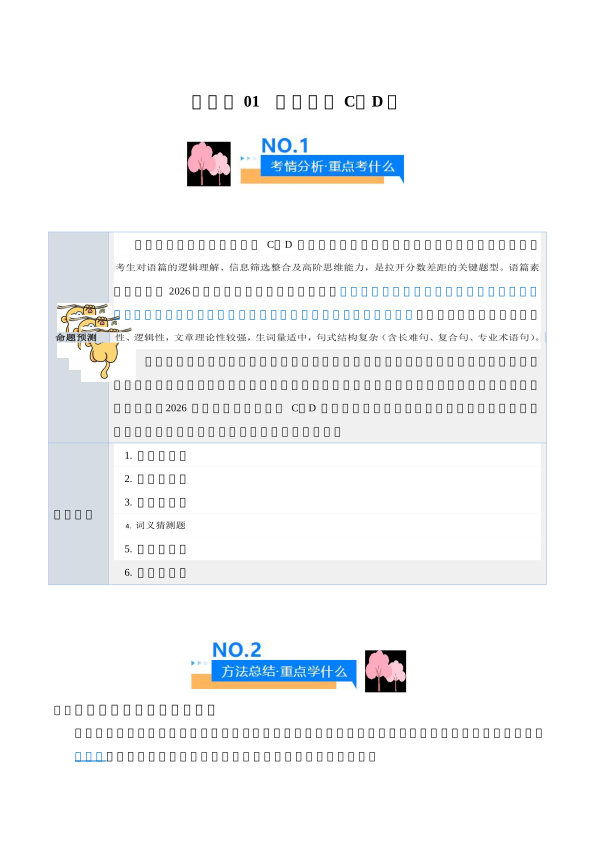
命题预测
分析近年高考英语阅读理解 C、D 篇命题规律,医疗健康健身类是高频必考压轴题材,选材多来自权威医学期刊、健康研究、心理科学、运动医学、公共卫生报告,聚焦生理机制、睡眠健康、饮食营养、运动健身、疾病预防、心理调节、新型疗法、感官与认知。文章科学性强、专业术语适中、长难句密集,侧重考查细节定位、逻辑推理、词义猜测、观点态度、主旨概括。2026 年高考仍会重点考查,命题更贴近生物钟、脑科学、免疫力、慢性病预防、生活方式干预、心理健康,强调科学健康与生活实践结合。
高频考法
推理判断题
标题归纳题
细节理解题
词义猜测题
主旨大意题
观点态度 / 写作意图题
这是一份2026年高考英语终极冲刺讲义练习(全国通用)压轴题07阅读理解CD篇(医疗健康健身类)(学生版+解析),文件包含2026年高考英语终极冲刺讲义练习全国通用清单06社会生活和个人成长抢分清单原卷版docx、2026年高考英语终极冲刺讲义练习全国通用清单06社会生活和个人成长抢分清单解析版docx等2份试卷配套教学资源,其中试卷共30页, 欢迎下载使用。
这是一份2026年高考英语终极冲刺讲义练习(全国通用)压轴题07阅读理解CD篇(医疗健康健身类)(学生版+解析),共6页。试卷主要包含了医疗健康健身类解题技巧等内容,欢迎下载使用。
这是一份2026年高考英语终极冲刺讲义练习(全国通用)压轴题06阅读理解CD篇(环境与保护类)(学生版+解析),文件包含2026年高考英语终极冲刺讲义练习全国通用清单07文化教育和科技环境抢分清单原卷版docx、2026年高考英语终极冲刺讲义练习全国通用清单07文化教育和科技环境抢分清单解析版docx等2份试卷配套教学资源,其中试卷共33页, 欢迎下载使用。

注册成功
资料篮

在线客服
添加在线客服
获取1对1服务
官方微信
关注“教习网”公众号
打开微信就能找资料
赛课定制
添加在线客服
获取1对1定制服务
职称咨询
添加在线客服
获取1V1专业指导服务

免费福利

.png)

.png)
