 免费领取教师福利

若您为此资料的原创作者,认为该资料内容侵犯了您的知识产权,请扫码添加我们的相关工作人员,我们尽可能的保护您的合法权益。


这是一份2026年高考英语终极冲刺讲义练习(全国通用)压轴题04阅读理解CD篇(动物、植物类)(学生版+解析),共6页。试卷主要包含了动物等内容,欢迎下载使用。
动物、植物类说明文基本规律及解题要领
高考动植物类阅读多无标题,结构清晰、说明性强,一般分为四部分:
首段:开门见山引出新物种、新发现、特殊动植物、科研对象。
背景 / 现状:介绍物种生存环境、濒危现状、研究背景、气候 / 人类影响。
主干:详细说明外形特征、适应机制、生存技能、科研价值、保护措施。
结尾:总结研究意义、生态价值、保护呼吁、未来展望。
二、动物、植物类说明文解题技巧
1. 抓语篇结构,快速把握大意
用略读法速读首尾段 + 各段首尾句,圈出核心名词(species /plant/animal /habitat/survival 等)。
动植物类常见行文逻辑:
物种介绍型:外形→习性→适应环境→生存挑战→保护
科研发现型:发现过程→实验方法→研究结果→科学意义
生态保护型:现状危机→原因分析→保护措施→未来展望
2. 定位标志词,精准破解细节与推理
优先定位:动植物名称、地名、研究者、数据、时间、对比词。
长难句处理:拆分主句与从句,抓主语 + 谓语 + 宾语,忽略修饰成分。
答案原则:原文同义替换、客观概括,不加入生活常识臆断。
3. 重点关注适应机制与生存特点
动植物类高频考点:
适应环境的特殊结构 / 行为(耐寒、耐旱、伪装、迁徙、共生)
生存技能与智能表现(辨识、导航、工具使用、信息传递)
濒危原因与保护方向(人类活动、气候变化、栖息地破坏)
4. 紧盯转折与对比,锁定核心信息
高频逻辑词:hwever / but / while / in cntrast / cmpared with / instead转折后常是物种独特性、研究新结论、真正生存危机,为必考点。
5. 熟悉选项设置规律,快速排除干扰
正确选项:原文信息同义改写、全面概括、符合科学事实。
干扰项:
张冠李戴(把 A 物种特点安到 B 物种)
偷梁换柱(改变范围、程度、条件)
无中生有(原文未提及的能力 / 习性)
以偏概全(用局部特点代替整体主旨)
6. 标题归纳技巧(动植物类专用)
必须包含核心动植物 / 研究对象。
突出特点、发现、保护、生存。
常见格式:物种 + 特点 / 价值 / 保护 / 新发现。
04 动物、植物类
1.(2026·广西·一模)
Scientists have discvered six species f cushin (垫) plants grwing at a recrd-breaking height n Munt Shukule Ⅱ in the Ladakh regin f India. These plants were fund n a small, rcky area n larger than a ftball field, and they are mre resistant t cld and dry cnditins than mst plants.
The research team, led by Jiri Dlezal frm the Czech Academy f Sciences, studied hw plants respnd t climate warming in this remte area. Reaching the site required a five-day jurney frm the nearest rad, and the scientists suffered frm sickness and extreme tiredness.
In cntrast, the plants themselves were well adapted t the cld and dry envirnment. Each plant was very small, abut the size f a cin, and cntained a high amunt f sugar that acted like natural antifreeze. Their leaves grew in a circular shape, helping them trap warm air and survive lng, freezing winters. Althugh their rts were tiny, ne rt shwed abut 20 grwth rings, suggesting that the plant had survived there fr nearly tw decades.
Climate change has warmed the Himalayas, allwing plants t grw higher as glaciers (冰川) retreat. Dlezal estimates that during the shrt grwing seasn, temperatures in this area have risen by abut 6℃ ver the past decade. Plants need at least 40 frst-free days each year t grw, and such cnditins are nw appearing in the Himalayas.
“I’m surprised at the elevatin — it’s very high,” says Jan Salick, a btanist at Missuri Btanical Garden in St Luis. But she is encuraged that plants may be able t mve t higher altitudes than previusly thught, and keep up with climate change.
As part f the research, she has fund alpine (高山的) plants in the Himalayas mving upwards at 0.06 metres a year, while the temperature band they usually ccupy is utpacing them by rising at 6 metres a year. The fear is that the temperature increase is encuraging the tree line t rise t, which culd reduce the space available fr alpine plants.
1. What is a feature f the cushin plants?
A. They depend n the fairly fertile sil.B. They spread widely acrss the muntain.
C. They can tlerate cld and dryness.D. They grw faster than ther alpine plants.
2. What des the authr intend t illustrate abut the cushin plants in paragraph 3?
A. Hw scientists discvered their habitat.B. Hw they survive in the tugh cnditins.
C. Hw climate change impacts their distributin.D. Hw they pse a threat t lcal species.
3. Why are plants likely t grw even higher in the Himalayas?
A. Seeds are spreading mre easily.
B. Muntain sils are becming richer.
C. Their frst-free grwing perids are extending.
D. Glaciers at the height are appearing in large numbers.
4. What is the best title fr the text?
A. Climate Change Helps Plants Grw Higher
B. Recrd-breaking Plants Were Fund in the Himalayas
C. Cushin Plants Are the Mst Resistant Plants in the Wrld
D. Alpine Plants Face a Serius Survival Prblem in the Himalayas
2.(2026·承德·一模)
It is widely acknwledged that crws (乌鸦) are highly intelligent with cgnitive abilities similar t thse f 5- t 7-year-ld children. Past research has shwn that they can cunt t fur and distinguish human vices and faces, and sme species can even create tls fr future use. Lately, a special study has expanded this list further, revealing that crws can recgnize basic gemetric features, such as side lengths, parallel lines, and right angles, and shapes like stars, crescents, squares, and irregular fur-sided figures.
With the purpse f testing the crws’ gemetric skills, scientists shwed tw crws six shapes n a digital screen and trained them t peck (啄) at the utlier — the shape that lked different frm the rest. When the birds chse crrectly, they were rewarded with a tasty snack. At first, the researchers made the utlier bvius, such as ne flwer amng five crescents. As the birds gt used t the task, the shapes became mre similar including squares and irregular fur-sided figures. Despite the increasing difficulty, the crws cntinued t identify the utlier crrectly.
The shape recgnitin ability f crws remains a tpic f interest fr researchers. They suspect this ability may help them with navigatin as they fly arund. The birds may have als develped this ability t help them search fr fd r identify ther individual crws — including ptential mates — based n their facial features. “All these abilities, at the end f the day, frm a bilgical pint f view, have evlved because they prvide a survival advantage r a reprductive advantage,” says the study senir authr Andreas Nieder, a neurphysilgist at the University f Tübingen in Germany.
In the future, researchers hpe t explre which areas f the birds’ brains are respnsible fr their exceptinal ability in gemetry. Birds dn’t have a cerebral crtex (大脑皮层) — at least, nt in the same way that humans d. But fr us, that part f the brain is respnsible fr thinking and ther cmplex functins. Crws still have these abilities, s the researchers assume there must be smething else ging n inside their heads. “Obviusly, evlutin fund tw different ways f giving rise t behavirally flexible animals,” Nieder says.
5. What des the recent study reveal abut crws?
A. They can draw simple figures with tls.B. They can tell basic gemetric shapes apart.
C. They can d pretty easy math calculatins.D. They can recgnize human vices and faces.
6. Hw did the researchers increase the difficulty f the shape- recgnitin task?
A. By shrtening the time t respnd.B. By presenting mre familiar shapes.
C. By shwing figures with different clrs.D. By enhancing the similarity amng shapes.
7. What is paragraph 3 mainly abut?
A. The rle f crws’ gemetric ptential in navigatin.
B. Reasns fr crws t evlve shape identificatin abilities.
C. The varius survival benefits f crws’ cgnitive talents.
D. Advantages f crws’ fd-searching skills ver ther birds.
8. What is the fllw-up step fr future study?
A. Examining crws’ brain areas related t gemetric skills.
B. Cmparing the cerebral crtex f humans and crws.
C. Explring ther cmplex functins f crws’ brains.
D. Studying the causes f crws’ flexible behavirs.
3.(2026·山东滨州·一模)
Over the last 1,400 years, ppulatins f the Yangtze finless prpise have dramatically declined in China. But intensive surveys f its range nly span the last cuple f decades, leaving lts f gaps in scientists’ knwledge f the species. In a creative blend f art and science, a new study uses histrical petry t chart the critically endangered animal’s ppulatin acrss the river it calls hme.
The finless prpises nce lived thrughut the entire Yangtze River, which stretches frm the Tibetan Plateau t the East China Sea. Nw, the nly knwn freshwater prpise in the wrld has fewer than 1,800 individuals left in the wild.
The research team cmbed thrugh databases f Chinese petry t find references t the prpise and map its past distributin. They fund 724 pems that mentined the animal, f which half nted where the prpises were bserved. Their findings were published in Current Bilgy.
“Having access t past data allws us t detect when declines began and crrelate thse changes with ptential threats like habitat destructin, climate change, verhunting, disease r the intrductin f invasive species,” says lead authr Zhang Yaya, an eclgist at the Chinese Academy f Sciences.
The pems suggest the prpise’s range has decreased by 65% since the Tang dynasty. Mst f that decline happened in the river’s tributaries and lakes, where the animal’s range has decreased by 91%. While the ppulatin decrease was mstly gradual, the sharpest decline has ccurred ver the past 100 years. That sudden drp aligns with human activities n the river, especially dam cnstructin in the 1950s that blcked ff the prpise's mvement t and frm the river's main channel.
The wrk highlights the cnnectin between culture and science. “Pems are actually ancient citizen science, and many Chinese pets were ‘well-educated intellectuals’,” says Zhang. “These data are nt they d have a lt f infrmatin if yu use them crrectly.” This apprach has ptential fr uncvering the pasts f ther endangered species as well. Previusly, schlars have used medieval and ancient texts t understand things like vlcanic eruptins, aurras and unusual whales.
9. What challenge d scientists face in their research abut the prpise?
A. Its ppulatin has drpped ff dramatically.
B. Lcating its habitats is increasingly difficult.
C. The lng-term histrical data are insufficient.
D. Its ppulatin is hard t calculate precisely.
10 What mainly cntributed t the dramatic fall f the prpise’s ppulatins?
A. Pr resistance t diseases.B. Climate changes ver time.
C. Human impacts n its habitats.D. Cmpetitin with ther species.
11. Why des the authr mentin “vlcanic eruptins” in the last paragraph?
A. T shw majr threats t endangered wildlife.
B. T intrduce challenges in eclgical research.
C. T reveal the wisdm f ancient Chinese pets.
D. T prve the value f ancient texts in research.
12. What can be a suitable title fr the text?
A. Histrical Pems: Recrds f Ancient Chinese Wildlife
B. citizen Science: A New Apprach t Prtecting Animals
C. The Yangtze Finless Prpise: A Critically Endangered Species
D. Ancient Petry: A Creative Way t Study Endangered Prpise
4.(2026·河北邯郸·一模)
Scientists have discvered six species f cushin (垫) plants grwing at a recrd-breaking height n Munt Shukule Ⅱ in the Ladakh regin f India. These plants were fund n a small, rcky area n larger than a ftball field, and they are mre resistant t cld and dry cnditins than mst plants.
The research team, led by Jiri Dlezal frm the Czech Academy f Sciences, studied hw plants respnd t climate warming in this remte area. Reaching the site required a five-day jurney frm the nearest rad, and the scientists suffered frm sickness and extreme tiredness.
In cntrast, the plants themselves were well adapted t the cld and dry envirnment. Each plant was very small, abut the size f a cin, and cntained a high amunt f sugar that acted like natural antifreeze. Their leaves grew in a circular shape, helping them trap warm air and survive lng, freezing winters. Althugh their rts were tiny, ne rt shwed abut 20 grwth rings, suggesting that the plant had survived there fr nearly tw decades.
Climate change has warmed the Himalayas, allwing plants t grw higher as glaciers (冰川) retreat. Dlezal estimates that during the shrt grwing seasn, temperatures in this area have risen by abut 6℃ ver the past decade. Plants need at least 40 frst-free days each year t grw, and such cnditins are nw appearing in the Himalayas.
“I’m surprised at the elevatin — it’s very high,” says Jan Salick, a btanist at Missuri Btanical Garden in St Luis. But she is encuraged that plants may be able t mve t higher altitudes than previusly thught, and keep up with climate change.
As part f the research, she has fund alpine (高山的) plants in the Himalayas mving upwards at 0.06 metres a year, while the temperature band they usually ccupy is utpacing them by rising at 6 metres a year. The fear is that the temperature increase is encuraging the tree line t rise t, which culd reduce the space available fr alpine plants.
13. What is a feature f the cushin plants?
A. They depend n the fairly fertile sil.B. They spread widely acrss the muntain.
C. They can tlerate cld and dryness.D. They grw faster than ther alpine plants.
14. What des the authr intend t illustrate abut the cushin plants in paragraph 3?
A. Hw scientists discvered their habitat.B. Hw they survive in the tugh cnditins.
C. Hw climate change impacts their distributin.D. Hw they pse a threat t lcal species.
15. Why are plants likely t grw even higher in the Himalayas?
A. Seeds are spreading mre easily.
B. Muntain sils are becming richer.
C. Their frst-free grwing perids are extending.
D. Glaciers at the height are appearing in large numbers.
16. What is the best title fr the text?
A. Climate Change Helps Plants Grw Higher
B. Recrd-breaking Plants Were Fund in the Himalayas
C. Cushin Plants Are the Mst Resistant Plants in the Wrld
D Alpine Plants Face a Serius Survival Prblem in the Himalayas
5.(2026·安徽铜陵·一模)
Arabidpsis thaliana (拟南芥), a small thin weed f the mustard family, never seemed likely t gain scientific fame. Yet this cmmn plant has greatly changed frm an ignred weed t a bilgical superstar due t scientists’ fresight, cntinuus explratin and jint effrts.
Arabidpsis’ jurney began with yung geneticist Gerge Rédei. At first, Rédei’s research n this weed was widely dubted because many thught nly valuable crps r decrative plants were wrth studying. But he carried its seeds all the time and later cntinued research in the US. Inspired by German btanist Friedrich Laibach, he saw its value as a mdel rganism, similar t fruit flies in genetics. Cmpared with crn and wheat, Arabidpsis has clear advantages: small size, shrt grwth cycle, many seeds, but what sets it apart frm ther experimental plants is its nly five pairs f chrmsmes (染色体), making gene lcatin much easier.
In the 1980s, yung scientists like Chris Smerville and Ellit Meyerwitz als nticed its ptential. They prved its value thrugh experiments, finding its small genme with little repeated DNA made gene discvery easier. In 2000, a glbal team finished its research and published the result in Nature, which prvided a slid base fr future studies.
Tday, researches n Arabidpsis have prvided imprtant supprt fr crp utput expansin, eclgical system management and climate change reductin. Fr instance, the genes identified in Arabidpsis have helped scientists understand the fruit develpment mechanism f tmates and imprve the stress resistance f rice.
Beynd plant science, Arabidpsis has als brught new insights t human health research. Ntably, abut 70% f human cancer-related genes and genes related t neurlgical diseases such as Alzheimer’s and Parkinsn’s all exist in this plant.
Arabidpsis is nt withut limitatins. Its simple structure, while useful fr genetic research, cannt fully represent the cmplexity f crps like wheat r crn. Hwever, even with these cncerns, this nce-ignred weed has already prved that great scientific value can lie in the mst unexpected places, and it cntinues t inspire researchers t explre the mysteries f life.
17. What is special abut Arabidpsis as a mdel rganism?
A. Its abundant seeds.B. Its brief life perid.
C. Its few chrmsmes.D. Its unique uter shape.
18. What can be inferred abut the Arabidpsis research?
A. It cast new light n medical studies.B. It priritized traditinal mdel rganisms.
C. It gained supprt frm mst geneticists.D. It targeted majr management prblems.
19. What is the functin f the last paragraph?
A. T prve the cmplexity f Arabidpsis.B. T stress the limitatins f Arabidpsis.
C. T restate the imprtance f Arabidpsis.D. T underline the structure f Arabidpsis.
20. Which f the fllwing can be a suitable title fr the text?
A. The Applicatins f Arabidpsis Studies
B. The Link between Arabidpsis and Humans
C. The Discvery f Small Genme in Arabidpsis
D. The Curse f Arabidpsis frm Weed t Treasure
6.(2026·河北张家口·一模)
A team f researchers suggests that pigens, cmmn birds famus fr their amazing ability t find directins, can sense Earth’s magnetic field (磁场) by detecting tiny electric currents in their inner ears. The team carried ut advanced brain mapping and single-cell RNA analyzing f pigen inner-ear cells. Bth frms f evidence shw that the inner ear is the birds “magnetreceptin” rgan.
In the study, prfessr David Keays and his clleagues designed an experiment t find ut hw pigens’ brains respnd t magnetic fields. They expsed pigens t a magnetic field slightly strnger than Earth’s fr ver an hur. The team used a methd t measure the activatin patterns f neurns (神经元) acrss the brain by detecting a genetic marker f cell activity in pigen brains. Brain activity maps f birds expsed t magnetic fields were cmpared with thse f a cntrl grup nt expsed t such fields.
The results revealed neurnal activity related t magnetic fields in the brain regin that receives signals frm the vestibular system — a key part f the inner ear respnsible fr balance and sense f space. This result narrwed dwn the pssible cmpasses (指南针) t ne — the vestibular system.
Further analysis fcused n the inner ear. Using single-cell RNA analysis-researchers identified a unique type f hair cell — type Ⅱ. These cells cntain special prteins that make them sensitive t the slightest changes in electrical ptential. When a bird flies and mves its head, liquid in the inner ear shifts, crsses magnetic field lines, and generates a weak electric current. These sensitive cells detect this signal and send the infrmatin t the brain.
The discvery explains many bserved behavirs. Fr example, hming pigens ften circle in place befre chsing a flight directin. It is nw clear that such mvements are necessary t activate their bilgical cmpass — head mvements strengthen the signal detected by the inner ear.
21. What can a “magnetreceptin” rgan mst prbably d?
A. Detect inner ear cells.
B. Blck electric currents.
C. Sense Earth’s magnetic field.
D. Strengthen the map-reading ability.
22. What did the magnetic field in the research d t the pigens?
A. It did damage t the pigens’ inner ears.
B. It led t the generatin f new brain cells.
C. It made the pigens’ heads mve relatively.
D. It caused certain activatin patterns f neurns.
23. What can be learned abut a pigen’s inner ear?
A. It is in a brain regin.
B. It has newly identified hair cells.
C. It can mve when a pigen flies.
D. It cntains a large variety f prteins.
24. What can be a suitable title fr the text?
A. Why the Vestibular System Matters Mst
B. The Bilgical Cmpass Hidden in the Ear
C. New Research Revealed the Secret f Flying
D. Hw Magnetic Fields Affect Pigens’ Brain Activity
7.(2026·内蒙古赤峰·一模)
Plants prduce chemicals called alkalids (生物碱) t prtect themselves frm threats. Peple rely n alkalids fr pain relief and ther medical treatments. Scientists want t better understand hw plants create alkalids s they can develp medicines faster, at lwer cst, and with less harm t the envirnment.
Researchers frm the University f Yrk fcused n Flueggea suffruticsa, a plant that prduces securinine — a pwerful type f alkalid. They uncvered that the key gene respnsible fr making securinine is similar t genes typically fund in bacteria rather than in plants. This finding suggests that plants may have adpted an unusual evlutinary strategy. Instead f relying nly n traditinal plant chemistry, they appear t reuse mlecular (分子的) tls cmmnly seen in micrbes (微生物) t build defensive chemicals.
Dr. Benjamin Lichman, the lead researcher, explained why the discvery std ut. “Plants and bacteria are really different frms f life, and s it was a surprise t see that this significant plant chemical was being driven frm a bacterial-like gene. We believe plants ‘recycle’ bilgical tls that are mre cmmnly fund in micrbes, when they can be useful t them.” Once the researchers recgnized this new chemical pathway, they began finding similar genes hidden within the DNA f many ther plants. These plant genes culd be used t prduce valuable chemicals in labratry settings, which wuld reduce the need t harvest rare plants.
Dr. Lichman nted that alkalids culd be pisnus, s they have t be highly cntrlled and ften mdified when used in medicines. He emphasized, “Understanding the prcess f creating alkalids can help us develp new methds fr prducing them in the lab r remving them t make sme plants less pisnus. Nw that we knw hw t lk fr this chemical prductin, we have new methds t explre fr the prductin and discvery f safe medicatins.”
25. What is a finding f the researchers abut the gene prducing securinine?
A. It evlves in a regular pattern.B. It is mre like bacterial genes.
C. It defends plants frm bacteria.D. It exists widely in cmmn plants.
26 What can we infer frm the discvery in paragraph 3?
A. Rare plants cntains mre alkalids.
B. Plants prduce chemicals frm micrbes.
C. Bacterial-like genes may exist in many plants.
D. Bilgical tls are unique t certain micrbes.
27. What des the authr try t explain by quting Lichman in the last paragraph?
A. The practical value f the research.
B. The prcess f alkalid prductin.
C. The challenges f lab-made chemicals.
D. The cmplexity f medical explratin.
28. Where is this text prbably taken frm?
A. A ppular science magazine.B. A guide n plant identificatin.
C. A textbk fr medical students.D. A research paper n micrbilgy.
8.(2026·黑龙江双鸭山·一模)
The enrmus brwn cane tad (甘蔗蟾蜍) was intrduced t Australia intentinally in 1935 t eat native insects that threatened the prfitability f sugar plantatins. Unfrtunately, the tads never gt a taste fr the insects. They did, hwever, turn ut t be pisnus t predatrs (捕食者), especially snakes.
The stry f the cane tad is a classic example f an eclgically destructive invasive (入侵的) species. In the shrt term, anyway. But the lng term might be different. In 2004, researchers discvered that Australian snakes with a lt f expsure t the tads in their habitat were trending tward smaller muths — muths that made them unable t eat the largest, mst pisnus tads. Instead, thse snakes culd successfully prey n smaller, less pisnus yung tads.
While, theretically, eradicating an invasive species ught t be cheaper than managing it r adapting t it, simply being “native” r “invasive” isn’t enugh t tell yu whether a species shuld be eradicated.
We have many examples f the relatinship between invasive species and their new hme envirnments functining in ways that might nt guarantee an autmatic eradicatin plicy. The endangered bird, the suthwestern willw flycatcher, nests successfully in invasive tamarisk plants. Invasive trees in Puert Ric d a better jb f establishing frests n heavily degraded frmer lands than d native trees. Invasive birds help spread the seeds f native plants arund the Hawaiian Islands.
The ability f invasive species t adapt and the ability f invasive species t be beneficial as well as harmful have led a handful f scientists t begin speaking ut abut the pssibility f handling invasive species in a different way. Instead f jumping immediately t eradicatin, they suggest, the ideal curse f treatment shuld, at least, begin with a mre thrugh examinatin f the full range f impacts each invasive species has n its new hme.
As bilgist Mark Davis wrte in the jurnal Nature, “Nearly tw centuries n frm the intrductin f the cncept f nativeness, it’s time fr cnservatinists t fcus much mre n the functins f species, and much less n where they riginated.”
29. What did the researchers find abut the Australian snakes?
A. They relcated t safer natural habitats.B. They adapted t cexisting with cane tads.
C. They started preying n harmful native insects.D. They reduced their expsure t large cane tads.
30. What des the underlined wrd “eradicating” in paragraph 3 mean?
A. Ignring.B. Preserving.C. Observing.D. Remving.
31. Why des the authr mentin the invasive species in paragraph 4?
A. T cmpare them with native species.
B. T illustrate their wrsening living cnditins.
C. T shw their psitive effects in their new habitats.
D. T highlight their effrts t fit int the envirnment.
32. What did Mark Davis suggest regarding cnservatin effrts?
A. Evaluating species by their eclgical rles.B. Restring native species as much as pssible.
C. Helping species survive diverse envirnments.D. Prtecting species based n their native rigins.
9.(2026·宁夏三市·一模)
Penguins are sme f the wrld’s mst familiar and belved birds, but suthern rckhppers are the tugh guys f the penguin wrld. Their fndness fr clnies (聚居地) high ver thusands f feet separates them frm the ther penguin species that prefer sft, level grund in the Falklands.
One evening, I struggle t keep up with sme scientists as they march thrugh thick grass in the Falklands. They are lking fr rckhppers that have pencil-case-size black bxes taped t their backs and cllecting thse bxes, which cntain GPS data lggers (记录仪). Sme als track diving and heart-rate infrmatin. Later, in the scientists’ field statin, we gather arund a cmputer screen, analyzing the cllected data, which will give us a critical read n cean cnditins, revealed by the birds’ respnses.
With a lifespan f 10 t 15 years, the species can withstand the ccasinal disaster and rebuild their ppulatin ver time. But as clnies damaged by human activities struggle t recver, a string f disasters has kncked them dwn. Despite their bravery, rckhppers are highly sensitive. Research by these scientists shws that even a small increase in sea temperature can affect the birds’ fd supply and lwer chick and adult survival. Besides, changing weather is causing unseasnably intense strms, killing chicks wh haven’t yet grwn their thick, waterprf feathers.
Hwever, mving t cler water isn’t an ptin. The cnstant winds there wuld push the little penguins int the icy casts f Antarctica, and there’s n land where they culd build new clnies. These scientists are trying t re-establish the native grass. “It may be impssible t stp the changes sweeping their cean habitats,” Quillfeldt, a seabird eclgist says. “But t help them n land, at the breeding (繁殖) sites, is smething we can actually d.”
Thinking f the yung rckhpper leaping ver a fearful gap, I ask the scientists: Can rckhppers’ curage be an advantage fr their survival? Quillfeldt feels it may. Curisity and bravery can encurage seabirds t find ways t adapt. Dn’t frget they’ve gt attitude.
33. What is the functin f the black bxes n the rckhppers’ backs?
A. T lcate GPS data lggers.B. T distinguish birds’ respnses.
C. T analyze the survival rate.D. T recrd data abut cean cnditins.
34. What may bring a challenge t rckhppers’ ppulatin?
A. Their lengthy lifespan.B. Their fndness fr high rcks.
C. Their thick waterprf feathers.D. Their sensitivity t the climate change.
35. What culd be a practical way t help rckhppers accrding t paragraph 4?
A. Establish new clnies.B. Imprve the breeding sites.
C. Stp the envirnmental changes.D. Mve t the casts f Antarctica.
36. What is the authr’s attitude tward rckhppers’ future?
A. Hpeful.B. Reserved.C. Dismissive.D. Dubtful.
10.(2026·广东茂名·一模)
The dawn chrus f bird sng has inspired pets and nature lvers fr thusands f years, but why birds start the day remains a lasting mystery.
T explre this, Satshi Kjima and his clleagues at the Krea Brain Research Institute studied labratry-raised zebra finches (草雀) under carefully cntrlled cnditins.
First, the team pushed back the time at which the finches were expsed t sudden bright light t 3 hurs later than the actual dawn. The birds were awake but stayed silent in the artificial darkness, and when the lights eventually did cme n, the birds sang mre intensely than usual. When the lights came n three hurs earlier than true dawn, the birds still brke int a chrus, but withut the same intensity as when they were frced t wait. In ther wrds, Kjima explains, the lnger the break between waking and the start f light, the mre intense the dawn chrus becmes.
Next, they used the drug luzindle, which blcks the effects f melatnin (褪黑素), a hrmne (荷尔蒙) released in the night-time t regulate wakefulness cycles in many animals. Birds that were given this drug five hurs befre the usual lights-n time wke up much earlier and began singing sner.
“Due t the absence f singing during the night, the sund-prducing system and sng structure may slightly becme wrse, and the dawn chrus serves t quickly restre r perfect them,” says Kjima. While this study nly lked at ne species, similar drivers may apply t ther bird species, he says.
But Dieg Gil at the Natinal Museum f Natural Sciences in Madrid, Spain, issues a warning. There are “numerus differences between species in hw, when and what birds sing in the dawn chrus”, he says. “This explains why many different assumptins have been prpsed t understand the phenmenn.”
37. Hw did Satshi Kjima and his clleagues cnduct their first study?
A. By adjusting the light cycles.B. By interpreting the birds’ chrus.
C. By changing the birds’ sleeping time.D. By cntrlling the effects f melatnin.
38. What can we infer abut the drug luzindle?
A. It regulates animals’ wakefulness cycles.
B. It affects birds’ wake-up time and singing.
C. It shrtens birds’ ttal sleeping time daily.
D. It has the same bilgical effects as melatnin.
39. What is Dieg Gil’s attitude twards the findings f the study?
A Supprtive.B. Negative.C. Unclear.D. Dubtful.
40. What can be a suitable title fr the text?
A. Why Birds Break Int Sng At dawnB. Hw Melatnin Changes Birds’ Sleep
C. Hw Artificial Light Changes Birds’ SngD. Why Dawn Chrus Differs Amng Species
11.(2026·黑龙江·联考)
Hw des an rganism like fungi (真菌) withut a brain exhibit signs f intelligence? The answer lies in their cmplex netwrk f mycelium (菌丝体) — lng and thin threads that fungi use t grw. Mst peple nly see the tiny mushrms abve the grund and dn’t knw the extensive netwrk that lies beneath.
The researchers engaged in a curius experiment. They wanted t see hw a mycelial netwrk wuld respnd t tw different situatins: wdblcks placed in a circle versus a crss arrangement. The questin was simple — hw wuld the fungi behave? In the crss arrangement, the further mst fur blcks were the mst ppulated. The researchers believe this is because the fungi see these uter blcks as utpsts (前哨站), helping the mycelial netwrk branch ut int further areas. Hence, thick cnnectins were nticed here. When it came t the circle arrangement, there was equal cnnectin at all blcks, but the center remained untuched. The fungi did nt see a benefit in extending its netwrk int an area that already had plenty f cmpany. These actins suggest that fungi cmmunicate infrmatin acrss the entire mycelial netwrk, adjusting their grwth directin depending n their surrunding shape.
Fungi exhibit remarkable efficiency when it cmes t resurce allcatin, a skill essential fr their survival and grwth. This ability t ptimize resurces is a result f cmplex feedback mechanisms and envirnmental assessments cnducted by the mycelial netwrk. Researchers claim that fungi priritize areas with abundant resurces, indicating an advanced understanding f their surrundings. In resurce-rich znes, mycelium grwth accelerates, capturing nutrients and string them fr future use. This practice nt nly ensures the fungi thrive in unstable envirnments but als highlights their eclgical significance as decmpsers (分解器) and nutrient recyclers.
The unique prblem-slving abilities and efficient netwrking strategies f fungi have inspired innvatins in human technlgy. Scientists are explring mycelial algrithms (算法) t develp mre efficient netwrks, such as urban planning and telecmmunicatins systems. The fungi’s extrardinary capacity t cmmunicate and crdinate acrss their netwrks ffers insights int creating sustainable systems. By imitating their resurce allcatin methds, researchers a I m t create slutins that enhance human infrastructure (基础建设) leading t smarter and mre adaptive framewrks.
41. What can we learn abut fungi?
A. They are an indicatr f their eclgical surrundings.
B. They can make use f all available resurces arund them.
C. They display their unique ability t respnd t the envirnment.
D. They can adjust their grwth rate based n their surrunding shape.
42. What des the underlined wrd “ptimize” prbably mean in Paragraph 3?
A. Make the best f.B. Figure ut.C. Pay attentin t.D. Lk fr.
43. What des the last paragraph mainly fcus n?
A. Unfund capabilities f fungi.
B. The ptential market fr fungi.
C. Fungi’s inspiratin fr human technlgy.
D. The limitatin f the experiment n fungi.
44. What wuld be a suitable title fr this text?
A. Nature: An Outdr Classrm
B. A Glimpse int the Wrld f Fungi
C. Netwrking challenge f Fungi in Nature
D. An Intelligent Ability Discvered in Fungi
12.(2026·新疆伊犁·一模)
Scientists already knew that gulls (海鸥) prefer fd that has been tuched by peple, but it was unclear hw well they culd draw n their bservatins f snacking humans t find similar bits f fd while fraging (觅食).
In the latest wrk, Feist, a bilgist at the University f Sussex and her clleagues taped green (salt and vinegar) and blue (cheese and nin) packets f crisps t bricks and placed them a few metres frm gulls n an therwise clear patch f Brightn beach. The scientists then backed 5 metres and filmed the birds’ behaviur. In sme cases, the researchers simply lked at the camera, while in thers they pecked (啄) a green r blue bag f crisps.
When the scientists sat quietly withut snacking, less than a fifth f gulls apprached the crisp packets placed nearby. But when the researchers were snacking n crisps, 48% f the birds hpped ver t check ut the packets. Nearly 40% f such appraches ended with gulls pecking at the crisp packets, and f these, 95% were directed at the same clur packet as the scientist was eating frm. “It is impressive because the evlutinary histry f gulls wuldn’t have invlved humans,” said Feist.
The wrk suggests that there is wrk t d t reduce tensin between humans and urban gulls. The impact f “d nt feed the birds” signs might, fr example, be imprved by adding “…and dn’t let them see yu eat, either”.
“It is likely that simply stpping the public frm directly feeding gulls may nt be enugh,” Feist said. “They are still able t bserve what we eat and that wuld infrm their ability t target waste, litter and s n.”
Dr Gumas, an expert n gulls at Exeter University, said: “This study shws that we aren’t nly drawing gulls’ attentin t where fd is, but they als learn abut the type f fd we’re eating. Knwing this may have implicatins fr hw we reduce negative interactins between humans and gulls, as we seem t be uncnsciusly teaching gulls t explre new fd items.”
45. What is paragraph 2 f the text mainly abut?
A. The methds f bservatin.B. The prcess f Feist’s wrk.
C. The eating behaviur f gulls.D. The underlying lgic f Feist’s wrk.
46. What can we learn frm Feist’s wrk?
A. There is n need t feed urban gulls.
B. Gulls can distinguish between crisps.
C. Humans are crucial in gulls’ evlutin.
D. Gulls chse what t eat by watching humans.
47. What des the underlined wrd “that” in paragraph 5 refer t?
A. Behaviur f humans.
B. Gulls’ fraging chices.
C. Ban n peple feeding gulls.
D. Gulls’ bservatins f snacking humans.
48. What des Dr Gumas think f the research result?
A. It is f sme value.B. It is highly prfitable.
C. It takes ages t test it.D. It needs t be practical.
13.(2026·湖南邵阳·一模)
In the wrld f gardening and agriculture, the fcus has traditinally been n what happens abve grund. Hwever, a revlutin is taking place in ur understanding f plant life, driven by the discvery f vast fungal netwrks knwn as the “Wd Wide Web”. This undergrund internet, frmed by mycrrhizal fungi(菌根真菌), cnnects the rts f nearly all plants n Earth, allwing them t cmmunicate and share resurces.
These fungi frm a symbitic relatinship with plant hsts. In exchange fr sugars frm the plant’s phtsynthesis, the fungal threads, called mycelium, extend far beynd the plant’s wn rt system, acting as an extensin f its rts. This netwrk transprts vital nutrients like nitrgen and phsphrus frm areas f abundance t areas f scarcity. Remarkably, research has shwn that trees can use this netwrk t supprt their wn seedlings. A “mther tree” can send surplus carbn t shaded seedlings struggling t phtsynthesize, significantly increasing their survival chances.
The netwrk als serves as an early warning system. When a plant is attacked by pests, it can release chemical signals int the netwrk. Nearby plants that receive these signals can then preemptively ramp up their wn chemical defenses befre the pests reach them. This challenges the lng - held view f plants as passive and islated cmpetitrs; instead, they are active participants in a dynamic and intelligent cmmunity.
Despite its benefits, the Wd Wide Web has a dark side. Sme plants, like certain rchid species, are “cheaters”. They cnnect t the netwrk but d nt cntribute their wn sugars. Instead, they steal carbn resurces frm the surrunding plants, essentially parasitizing the system. This cmplexity adds anther layer t ur understanding f frest eclgy.
Understanding these netwrks has prfund implicatins. As we face challenges like climate change and defrestatin, insights int the Wd Wide Web culd infrm refrestatin effrts. By planting “hub trees” that readily frm fungal cnnectins, we culd help establish resilient and self- sustaining frests mre quickly, prmting ecsystem recvery n a larger scale.
49. What’s the main functin f the Wd Wide Web?
A. Linking the rts f all plants.
B. Helping plants absrb water efficiently.
C. Serving as micrbes’ main fd.
D. Facilitating plant cmmunicatin and sharing.
50. Hw des the mther tree help seedlings accrding t Paragraph 2?
A. By supplying nutrients via fungal netwrks.
B. By shielding frm strng sunlight.
C. By releasing pest- killing chemicals.
D. By prviding mre sugars.
51. Why des the authr mentin “cheaters” in Paragraph 4?
A. T explain the Wd Wide Web has weaknesses.
B. T prve the Wd Wide Web has fragile and harmful species.
C. T prve the Wd Wide Web threatens agriculture.
D. T shw the Wd Wide Web is beneficial t ecsystem.
52. What’s the authr’s main purpse in writing?
A. T explain the benefits f fungal netwrks.
B. T intrduce a cmplex and symbitic natural system.
C. T criticize previus agricultural practices.
D. T prmte cmmercial applicatin f fungal netwrks.
14.(2026·贵州贵阳·一模)
Mst dg wners knw their pets can understand daily phrases like “walkies” r “time fr dinner.” Sme intelligent canines even recgnize ver 100 wrds, and a few “genius” nes can learn new wrds purely by verhearing n human cnversatins — a skill nce thught unique t yung children.
A study published in Science by Hungarian researchers fund that such gifted dgs can learn new ty names by verhearing wners, with language skills cmparable t 18- mnth- ld tddlers. In the experiment, wners talked abut tw new tys with family members in frnt f dgs withut direct interactin. Later, when the new tys were mixed with ther familiar nes in anther rm, the dgs culd pick ut the new nes as accurately as when directly taught, with nearly 100% crrectness.
“Sme dgs knew exactly what t d — they went straight fr the new ty and brught it back at nce,” said study c- authr Shany Drr frm the Clever Dg Lab. Animal psychlgist Heidi Lyn, nt invlved in the study, nted that the dgs’ capacity t cncentrate n cnversatins, identify item names and link them accurately demnstrates superir attentin and cgnitive abilities. Similarly, psychlgist Nameera Akhtar acknwledged the study’s value but reminded that the sample was specially smart, s findings may nt apply t all dgs.
It’s unclear hw exactly such “gifted” dgs learn new wrds, and it remains unknwn why sme dgs seem much mre able t pick up new wrds and phrases than thers. The current study nly fcuses n a small grup f particularly smart canines, s the findings may nt apply t all dg breeds. Future research culd explre whether there are specific genetic r envirnmental factrs that cntribute t their exceptinal language- learning ability, which may help peple gain a deeper understanding f canine cgnitin and even imprve the way we cmmunicate with ur furry cmpanins.
53. What can we learn abut the experiment frm the passage?
A. The dgs’ perfrmance was n better than they were taught directly.
B. Owners taught the dgs new ty names directly during the experiment.
C. The experiment was cnducted n gifted dgs and 18- mnth- ld tddlers.
D. The dgs picked ut new tys with almst 100% accuracy after verhearing.
54. What des Heidi Lyn’s cmment imply abut the gifted dgs?
A. Their attentin skills are identical t thse f ther animals.
B. They learn new wrds faster than rdinary dgs by teaching.
C. Their are able t understand human cnversatins by nature.
D. Their cgnitive skills are acknwledged by their perfrmance.
55. What is Nameera Akhtar’s attitude twards the study’s findings?
A. Objective.B. Supprtive.C. Dubtful.D. Critical.
56. What wuld be the best title fr the passage?
A Insights int Dgs’ Language LearningB. Dgs’ Gifted Language Learning Skills
C. Genius Dgs Learn Wrds by OverhearingD. Factrs f Genius Dgs’ Language Learning
15.(2026·云南昭通·一模)
When we talk abut animal intelligence, mice are nt always the first t cme t mind. Hwever, a new study, published in Current Bilgy, has revealed surprising results abut the cgnitive (认知的) abilities f these small animals, shwing they may be mre strategic than we think.
Kishre Kuchibhtla, a neurscientist (神经科学家) wh has lng wrked with mice, nticed a strange phenmenn: mice ften did prly in tests even when they seemed t knw hw t d well. They put frward tw pssible explanatins: the pr perfrmance was either caused by stress r a purpseful behavir f explring and testing their knwledge. T find ut why, Kuchibhtla and his graduate student Zi Yizhu designed a simple experiment.
In the experiment, mice were trained t respnd t tw different sunds. When they heard ne sund, they needed t turn a wheel t the left; fr the ther sund, they had t turn it t the right. Crrect respnses were rewarded. The researchers bserved that when hearing the same sund in cnstant trials, the mice wuld first turn left fr a while, then switch t right. These seemingly “mistakes” were actually purpseful actins. T further cnfirm, the team remved the reward. When a muse gave a crrect respnse but gt n reward, it immediately imprved its perfrmance in the next test. Kuchibhtla explained that this shwed the mice had an internal understanding f the task: the lack f reward brke their expectatins, making them use their existing knwledge t d better.
The researchers cncluded that the gap between the mice’s knwledge and their test perfrmance came frm explratin — a frm f strategic thinking. Thugh it’s hard t say animals frm frmal hyptheses (假设), mice may use higher cgnitive prcesses that invlve cnjecture abut task rules, frming an pinin that is nt based n definite knwledge. This kind f mental activity is similar t hw nnverbal human babies learn, as bth require the ability t prcess external infrmatin and frm initial perceptin f the envirnment.
This study deepens ur understanding f animal cgnitin. Next, the team plans t identify the neural basis f such strategic thinking and cmpare it acrss species.
57. What can pssibly explain the mice’s pr perfrmance in tests in paragraph 2?
A. Tiredness frm stressful life.B. Fear r internal pressure.
C. Lack f cgnitive abilities.D. Stress r intentinal explratin.
58. What wuld the mice d when the reward was remved?
A. Repeat the same respnse.B. Make mre purpseful mistakes.
C. Perfrm better in the next trial.D. Fail t use their existing knwledge.
59. What des the underlined wrd “cnjecture” in paragraph 4 prbably mean?
A. Explanatin.B. Guess.C. Recrd.D. Memry.
60. What is the passage mainly abut?
A. A new discvery abut mice’s unexpected cgnitive skills.
B. A research t find the neural basis f animal intelligence.
C. A discussin f strategic thinking in different animal species.
D. A cmparisn between mice and human babies’ thinking ability.
命题预测
分析近年高考英语阅读理解 C、D 篇命题规律,动植物类说明文是经典题材,语篇多选自自然期刊、科研报道、环保报告、高校研究,聚焦珍稀动植物特性、生存现状、适应机制、科研价值、生态保护、进化奥秘等。文章科学性强、专业术语适中、长难句集中,侧重考查细节定位、逻辑推理、词义猜测、主旨概括。2026 年高考仍会重点考查,命题更关注气候变化影响、物种保护、生物智能、生态共生、科研新发现,强调人与自然和谐共生。
高频考法
推理判断题
标题归纳题
细节理解题
词义猜测题
主旨大意题
观点态度 / 写作意图题
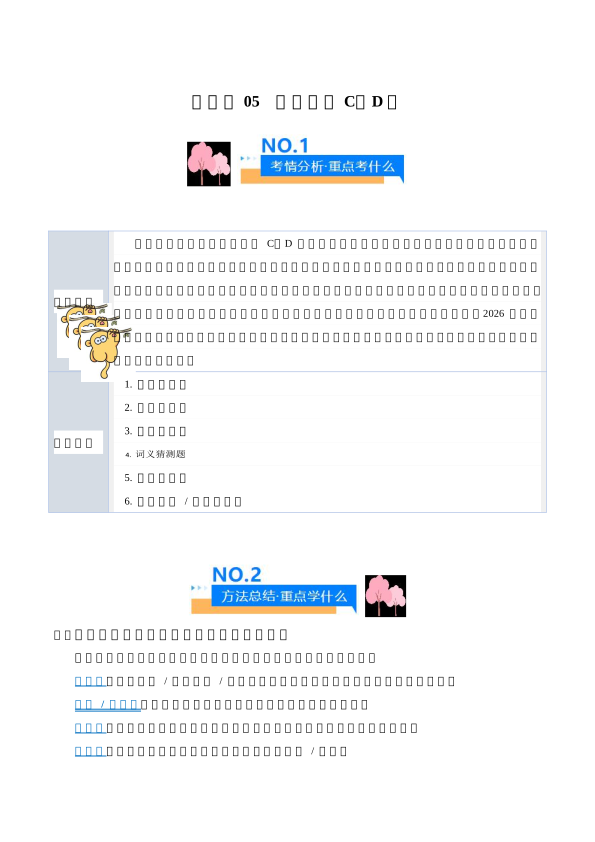
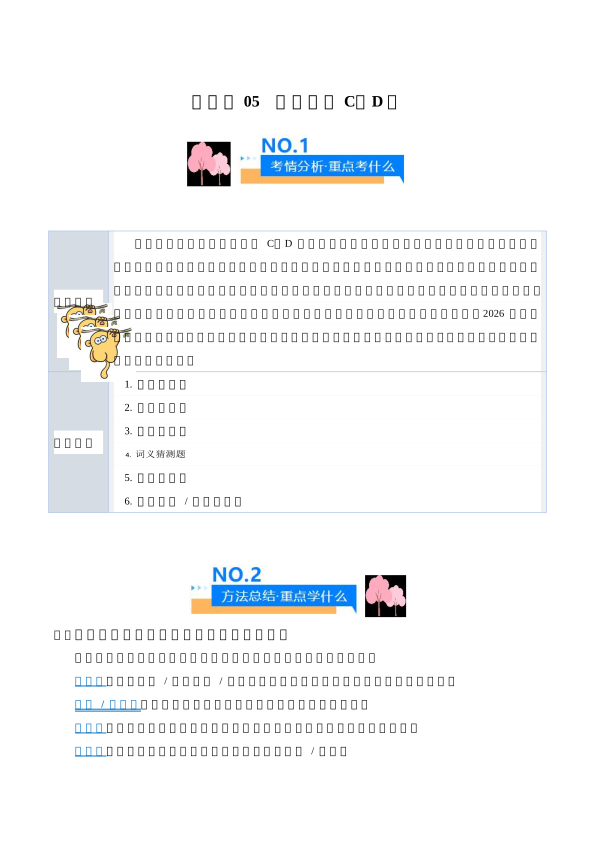
这是一份2026年高考英语终极冲刺讲义练习(全国通用)压轴题04阅读理解CD篇(动物、植物类)(学生版+解析),共6页。试卷主要包含了动物等内容,欢迎下载使用。
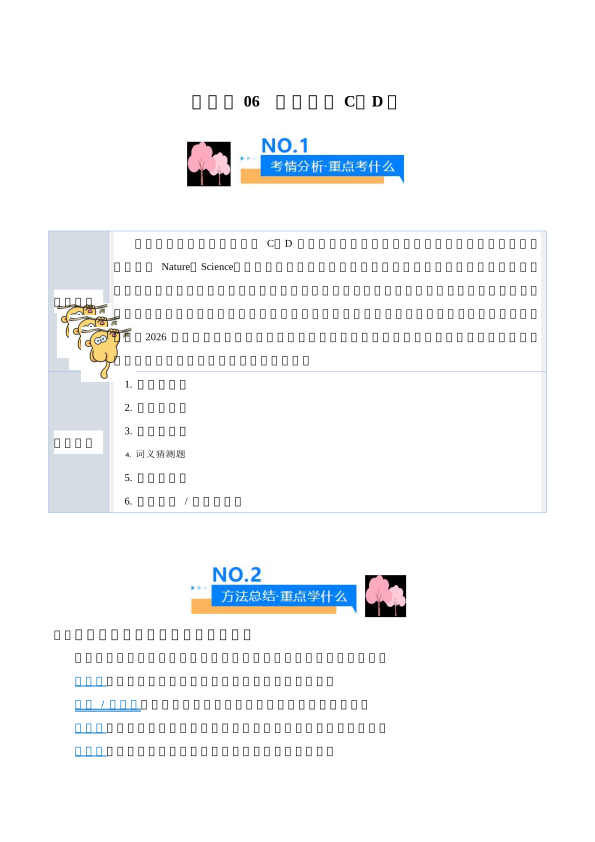
这是一份2026年高考英语终极冲刺讲义练习(全国通用)压轴题04阅读理解CD篇(动物、植物类)(学生版+解析),文件包含2026年高考英语终极冲刺讲义练习全国通用压轴题04阅读理解CD篇动物植物类教师版docx、2026年高考英语终极冲刺讲义练习全国通用压轴题04阅读理解CD篇动物植物类学生版docx等2份试卷配套教学资源,其中试卷共59页, 欢迎下载使用。
这是一份2026年高考英语终极冲刺讲义练习(全国通用)压轴题06阅读理解CD篇(环境与保护类)(学生版+解析),文件包含2026年高考英语终极冲刺讲义练习全国通用清单07文化教育和科技环境抢分清单原卷版docx、2026年高考英语终极冲刺讲义练习全国通用清单07文化教育和科技环境抢分清单解析版docx等2份试卷配套教学资源,其中试卷共33页, 欢迎下载使用。

注册成功
资料篮

在线客服
添加在线客服
获取1对1服务
官方微信
关注“教习网”公众号
打开微信就能找资料
赛课定制
添加在线客服
获取1对1定制服务
职称咨询
添加在线客服
获取1V1专业指导服务

免费福利

.png)

.png)
