 免费领取教师福利

若您为此资料的原创作者,认为该资料内容侵犯了您的知识产权,请扫码添加我们的相关工作人员,我们尽可能的保护您的合法权益。


这是一份2026年高考英语终极冲刺讲义练习(全国通用)猜押专题10阅读理解之议论文(按话题分类)(原卷版+解析),共10页。试卷主要包含了高考阅读理解说明文总纲领,核心命题变化,语篇核心特征,2026 高频猜押话题,通用解题逻辑,备考启示等内容,欢迎下载使用。
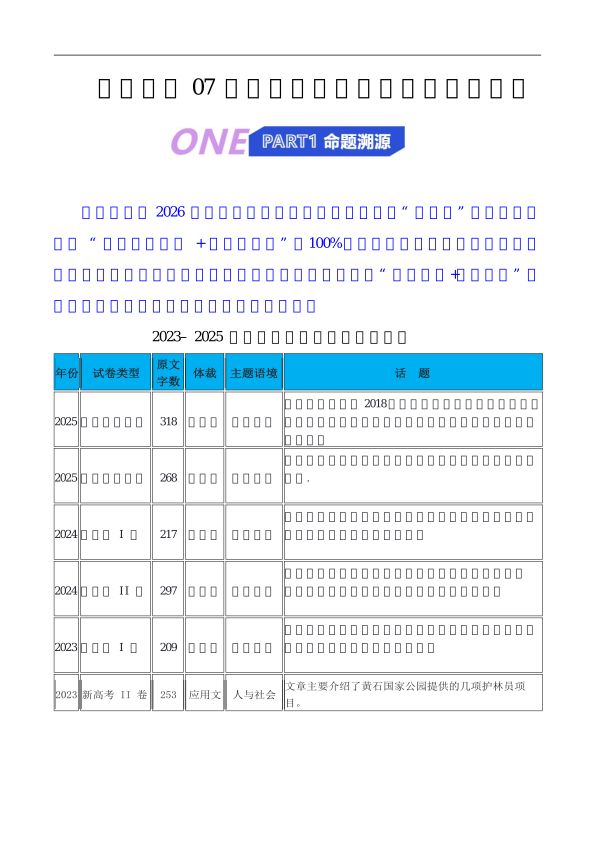
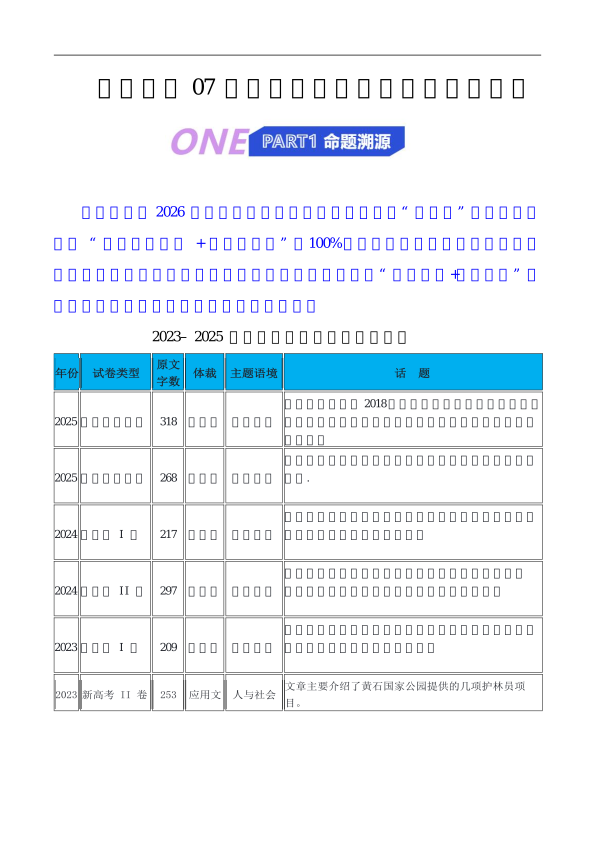
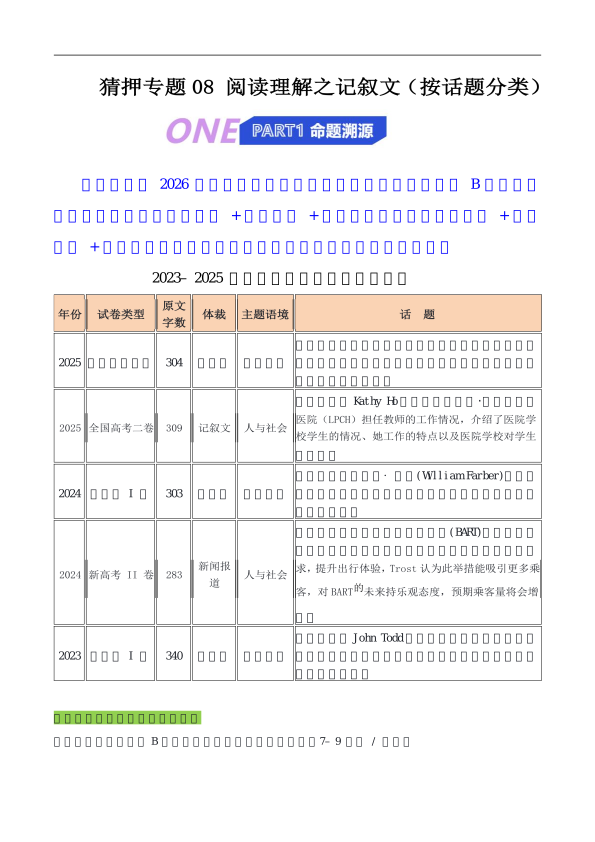
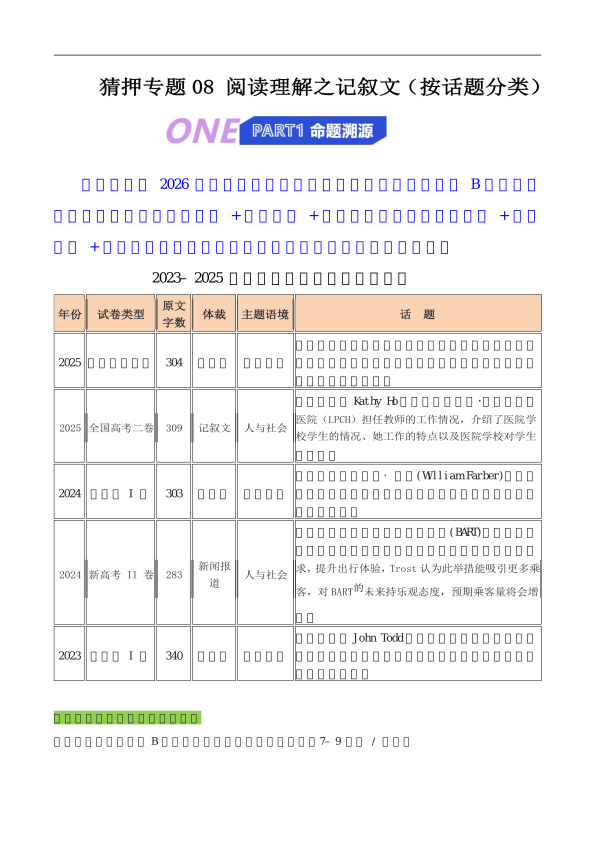
本命题依据 2026 新课程标准与高考命题新要求,是高考阅读 D 篇压轴题型,命题完全源自外刊评论 + 社会思辨 + 价值探讨 + 学术观点,选自权威期刊、媒体评论、名家随笔等正规信息源。核心考论点论据 + 逻辑关系 + 态度判断,长难句密集,掌握论证结构与命题套路可突破压轴、稳拿高分。
2023–2025 年高考阅读理解议论文对比表
一、高考阅读理解说明文总纲领
核心定位:高考阅读 D 篇,压轴题、重逻辑、态度为王(8–10 分钟 / 篇)。本质:论点 + 论据 + 论证,核心是作者立场与逻辑链条;目标是找准论点、理清论证、判断态度、理性选择。
二、核心命题变化
① 体裁聚焦议论思辨类,以社会评论、观点辩驳、价值倡导、现象分析、文化思辨为主,对比论证、驳论文占比逐年提升;② 强化逻辑论证能力(论点 — 论据 — 结论、因果、对比、假设、驳论),长难句最多,侧重对观点、态度、逻辑、意图的深层理解;③ 话题紧扣社会热点与价值思辨:网络生活、心理健康、教育理念、科技伦理、文化传承、消费观念等,思辨性极强;④ 解题从翻译理解转为抓论点 + 理逻辑 + 辨态度,强调对论证脉络与作者意图的把握;⑤ 题型以推理判断题(40%)+ 细节理解题(30%)+ 情感态度题(15%)+ 主旨大意题(10%)+ 词义猜测题(5%) 为主,深度与精度并重。
三、语篇核心特征
结构逻辑(高考标准论证结构)
① 引论:提出话题 / 问题,亮出中心论点(或引出争议);② 本论:分层论证 ——正面论据 + 反面论据 + 对比 / 例证 / 因果 / 假设论证;③ 结论:重申论点、给出建议、升华主旨、发出呼吁。常见论证逻辑:提出问题 — 分析问题 — 解决问题、立论 — 驳论 — 结论。
语言特点
① 逻辑性强,以议论、分析、辩驳、评述为主,态度鲜明、立场清晰;② 句式复杂,多重复合句、倒装、强调、非谓语、插入语密集,长难句比例最高;③ 篇幅范围:380–410 词,词汇正式、抽象词与逻辑词较多;④ 价值导向:理性思辨、批判思维、正向价值、人文关怀、社会责任,凸显核心素养。
四、2026 高频猜押话题
科技思辨:AI 伦理、数字沉迷、科技与人文
社会现象:网红文化、碎片化阅读、公共理性
教育成长:自主学习、挫折教育、个性发展
价值观念:理性消费、文化自信、环保责任
生活方式:身心健康、慢生活、社交边界
五大题型专项突破
细节理解题(定位论证细节)
推理判断题(逻辑推导)
作者情感态度题
主旨大意 / 中心论点题
论点论据匹配题
五、通用解题逻辑
① 先速读首尾段 + 各段首句,锁定中心论点与作者立场;② 圈画题干关键词(观点、态度、逻辑词、论据标志),回文定位;③ 识别论证信号词,理清论点与论据的支撑关系;④ 态度题抓褒贬词汇、评述语言,不混淆文中他人观点与作者观点;⑤ 排除偷换论点、论据错位、过度推理、绝对化、张冠李戴(他人观点当作者观点) 干扰项。
六、备考启示
考场实用策略
先找论点,再看论据先抓中心观点,再看例子、数据如何支撑,不本末倒置。
分清 “作者观点” 与 “引述观点”sme peple believe/it is said that 多为反方观点,非作者立场。
紧抓逻辑连接词hwever/therefre/while/thus/n the cntrary 决定逻辑走向。
绝对词、极端词慎选nly/never/all/abslutely/cmpletely 多为错误项。
不主观站队答案必须源于原文逻辑,不加入个人价值判断。
五大题型专项备考策略
细节题:定位论证细节→比对原文→排除信息扭曲
推理题:依论点→循逻辑→合理推断→不延伸、不脑补
态度题:抓褒贬词→辨立场→排除中立 / 无关 / 极端
主旨题:抓中心论点→概括 “话题 + 作者立场”
论据题:判断例子 / 数据目的→证明 / 反驳某一观点
避坑策略
不被长难句击溃:拆分主干,抓主谓宾 + 态度词
不混淆他人与作者观点:明确立场归属,防张冠李戴
不脱离论点读论据:所有例子都是为中心论点服务
不忽略转折:but/hwever/yet后多为作者真实观点
不以局部代整体:避免用分论点代替中心论点
考点 1:细节理解题
做法步骤:
圈关键词:论点名词、逻辑词、研究结论、作者表述
回文定位:锁定论证细节所在原句
精读原句:提取精准信息,注意范围、程度、立场
比对选项:排除偷换概念、扭曲表述、信息错位
确定答案:与原文完全一致的选项
口诀:关键词定位,精读原句,细节比对,直选答案。
考点 2:推理判断题(逻辑推断)
做法步骤:
定位论点与逻辑链,抓因果 / 对比 / 假设关系
识别逻辑词:therefre, thus, as a result, hwever
依逻辑推导:原因→结果,现象→本质,条件→结论
坚守原则:基于论点,忠于原文,不绝对、不脑补
排除过度推理、与论点矛盾、无依据选项
口诀:循逻辑,依论点,合理推,不臆断。
考点 3:作者情感态度题
做法步骤:
圈画态度信号词:积极:supprtive, favrable, ptimistic, apprving消极:critical, dubtful, ppsed, pessimistic中立:bjective, neutral, analytical
区分作者观点与引述他人观点
结合全文论证,判断最终立场
排除无关态度、极端态度、中立错判
口诀:找褒贬,辨立场,分你我,定态度。
考点 4:主旨大意 / 中心论点题
做法步骤:
全文主旨:看首段论点 + 尾段总结
核心结构:话题 + 作者立场 / 观点
排除只讲细节、分论点、范围过大 / 过小选项
套用句型:The authr argues passage mainly discusses...
口诀:看首尾,抓论点,话题加立场,主旨不跑偏。
考点 5:论点论据匹配题
做法步骤:
定位例子 / 数据 / 引言,向前找所证明的观点
判断论证目的:supprt/ppse/illustrate/explain
匹配论点与论据的对应关系
排除偏离论点、功能错位选项
口诀:找论据,看目的,证观点,必匹配。
Passage 1
河北衡水中学2025-26届高三年级检测(七)
Much like beauty, art is in the eye f the behlder. The artwrk we are attracted t can give insight int ur persnality, such as whether we are t quick r t slw, calm r mdy. Studies int art preferences date back t the 1930s — mst f them examining the extent t which peple like r dislike different paintings. Research shws that a persn’s interest in art is mre strngly related t certain persnality traits (特征) than t scial class, age, r gender.
In particular, a persnality trait called “penness” is the best predictr f whether individuals are interested in art. On the ther side, thse wh identify as “cnscientius (一丝不苟的)”, are ften less drawn t the arts. These traits are part f the Big Five, a widely accepted persnality thery based n nearly a century f research. The mdel claims that each persnality is cmpsed f a cmbinatin f five cre traits: penness, cnscientiusness, extrversin, agreeableness and neurticism. Rather than stating a persn as being either shy r utging, the Big Five Mdel believes that everyne lies smewhere between the tw extremes.
Persnality traits may als affect the way peple visually scan art. A 2018 study tracked participants’ eye mvements as they studied abstract artwrk. The majrity f participants cncentrated n the upper-right part. This makes sense, as the right half f the brain is specialized fr visual and spatial prcessing, and als plays a significant rle in prcessing the emtins that art draws ut. Hwever, participants wh tended tward emtinal instability fcused n the left side f the picture, and thse with mental disease paid mre attentin t the bttm f the picture.
Hwever, current research n persnality and art still has clear limitatins, reminding us that peple’s preferences fr art are as cmplicated as art itself. But if yu’re lking fr a quick test f smene’s general persnality traits, it desn’t hurt t lk at what’s hanging n their walls.
12. What is the strngest factr in determining a persn’s interest in art?
A. Age and gender.B. Persnality characteristics.
C. Scial class.D. Educatinal backgrund.
13. What can we learn abut the Big Five Mdel?
A. It can explain why ur art taste changes.
B. It is well-supprted by artists wrldwide.
C. Everyne can fit int ne f the five types.
D. It is a universally-recgnized measuring mdel.
14. Accrding t the passage, a persn fcusing n the upper-right part f a painting is prbably ______.
A. mdyB. uncncernedC. perceptiveD. warlike
15. What is the best title f this passage?
A. Hw t discver yur art preference?B. Why is art appealing t many peple?
C. Hw t reveal ne’s persnality traits?D. What des yur taste in art say abut yu?
Passage2
吉林省松原市实验高级中学2025-2026学年高三下学期学情调研
Rejectin hurts. Whether in a prfessinal, scial r rmantic setting, there’s a particularly sharp pain t the discvery that ne has been judged undesirable in sme way.
If yu’ve ever experienced real rejectin — and that’d be mst f us — it may stand ut in yur mind lng, like a large rck stuck in yur memry. The late scientist Helen Fisher, wh studied human behavir, shwed that rejectin and physical injury have much in cmmn. She said MRI scans f participants’ brains revealed areas linked t suffering and physical pain were mre active. Time did reduce the pain respnse fr Fisher’s participants, but fr sme peple rejectin can last fr mnths r years. Scial psychlgist Nami Eisenberger did similar experiments t.
Why des rejectin hit s hard? The realizatin that ne has been scially excluded brings abut a sudden cld feeling, like being cast ut frm a Palaelithic campsite and left at the mercy f wild animals. T be cast ut frm the warmth f the shared fire culd have meant death fr ur ancient ancestrs — s it was smething t be avided at all csts. While the rejected f mdern Britain wn’t usually have t cntend with the dangers that scial rejects f 30,000 years ag faced, the urge t seek shelter in the cmpany f thers is strng and lasting.
Fr 21st-century peple thugh, shying away frm rejectin may d mre harm than gd. In fact, strng negative emtinal reactins t rejectin ften cause mre damage than the rejectin itself. T live satisfying lives and knw what we enjy and are gd at, we must be prepared t try things — and t fail at them. If yu make aviding rejectin yur pririty, yu’ll becme mre unwilling t take risks, with a much narrwer scial wrld. What if, rather than hiding frm rejectin, we attempted t accept it? What if instead f being kncked back by the wave, we tried t ride it? Nt nly is it pssible t vercme the fear f rejectin, but ding s can bring abut unexpected psitive results.
28. Hw des the authr present the issue in the secnd paragraph?
A. By defining a cncept.B. By citing relevant studies.
C. By ding experiments.D. By making a cmparisn.
29. What d the underlined wrds “cntend with” in paragraph 3 mean?
A. Avid.B. Reprt.C. Handle.D. Questin.
30. What effect des the fear f rejectin have?
A. Spreading negative emtins t thers.B. Running away frm ur cmfrt zne.
C. Restricting ur scial circle eventually.D. Remembering the damage already dne.
31. What will the authr cntinue t discuss?
A. The benefits f accepting rejectin.B. The significance f assessing fear.
C. The results f human brain scans.D. The chance f encuntering rejectin.
Passage3
2026届江苏苏州市七校联考模拟预测
Frgetting things is a blessing, believe it r nt. Fr prf, imagine a wrld where every detail yu ever came acrss was carved indelibly in yur mind. Every cnversatin yu regret, every rejectin yu’ve ever felt, every time yu stepped ut with yur zipper undne stands as clearly in yur mind as what yu had fr breakfast last week as well as the mments that bring yu the greatest jy. That is a wrld f utter chas and suffering.
We dn’t need t stick t just ur armchair-philsphizing, hwever. Thanks t the wnderful cmbinatry magic genetics pulls ff at each birth, we’ve had a few individuals n Earth wh are unable t frget anything. Slmn Shereshevsky, fr instance, culd memrize lists f arbitrary (任意的) numbers, wrds, and nnsense syllables with perfect recall, even decades later. At first glance, this sunds like a superpwer. But Shereshevsky described it as exhausting, distracting, and emtinally unbearable.
What mst miss abut frgetting is that it is nt a design flaw (缺陷). It’s a feature. In fact, the ability t frget is fundamental t learning. It’s what gives us fcus, highlights the signal thrugh the nise, and lets the brain determine what matters mst given the cntext we are in.
Research suggests that frgetting is an active prcess invlving brain regins like the hippcampus and prefrntal crtex, which help us manage the inflw and utflw f infrmatin. Frgetting is nt ur memry failing n us as much as it is ur memry being better used.
And here is where we meet the cncept f the frgetting curve (曲线). First described by Hermann Ebbinghaus in the late 19th century, the frgetting curve tracks hw quickly we lse infrmatin ver time withut reinfrcement (巩固). Within hurs f learning smething new, we begin t frget it. Rapidly at first, then mre slwly ver time. The key insight f thse wh have fllwed Ebbinghaus is that this curve is nt fixed. On the cntrary, it’s smething we can reshape, a feature we can tune urselves.
8. What des the underlined wrd “indelibly” in the first paragraph mean?
A. Permanently.B. Vilently.C. Chatically.D. Effrtlessly.
9. What did Shereshevsky think f his ability?
A. A design flaw.B. A real blessing.C. A mental burden.D. A rare talent.
10. Hw des frgetting cntribute t learning?
A. It prevents the flw f infrmatin.
B. It pushes peple t review regularly.
C. It activates brain regins respnsible fr learning.
D. It allws the brain t priritize imprtant infrmatin.
11. What des the authr suggest readers d in the last paragraph?
A. Keep learning new things.
B. Intervene in the frgetting prcess.
C. Accept frgetting as a natural part f life.
D. Explre a fixed pattern f the frgetting curve.
Passage4
山东名校联盟2026届高三下学期2月份核心素养评估考试
Hrrr fans have been painted with the same brad and bldy brush fr decades: labelled as cld, unfeeling thrill-seekers wh delight in thers’ suffering. Film critics have described the fans and creatrs f films like Friday the 13th and Saw as “very sick peple”. But I argue that these assumptins are all wrng.
The miscnceptins abut hrrr fans were seemingly supprted by evidence presented in an analysis frm 2007. But the analysis is nly as strng as the studies it summarizes. In this case, they had prly defined variables. Fr example, the tw studies with the strngest assciatin with lw empathy examined participant enjyment f trture and shrt clips that cncluded with cruel murders and n satisfactry reslutin. These measures prbably wn’t tell yu much abut hrrr fans. The authrs f the analysis admitted deep in the discussin sectin that the link between empathy and enjyment f hrrr disappeared when thse studies were remved.
In 2024, I published a set f studies that directly addressed the questin f hrrr fandm and empathy. The results were striking. Using standardised assessments, hrrr fans scred higher n empathy and cmpassin.
When my clleagues and I examined the mtivatins f hrrr fans at frightening attractins, we fund that “adrenaline junkies” represent nly ne subset. We als fund a grup we called “dark cpers”, wh use hrrr t prcess difficult emtins. Anther grup, “white knucklers,” cnfrnt fear t learn abut themselves. The three-type mdel reveals that many fans aren’t just mtivated by adrenaline (肾上腺素). But there is ne cmmn trait amng them.
My research has identified mrbid curisity (猎奇) as the mst pwerful predictr f hrrr fandm. It is this tendency t seek ut infrmatin abut threatening r death-related phenmena that drives a fascinatin with hrrr media. Studies shw that peple with higher levels f this curisity demnstrate better preparedness fr real crises and shw increased resilience during stressful life events.
The evidence paints a picture f hrrr fans being empathetic, curius and psychlgically cmplicated. Hrrr is a prf t human adaptability and ur remarkable capacity t find meaning, cnnectin and even grwth in the face f ur deepest fears.
8. What is a cnventinal wisdm abut hrrr fans?
A. They lack empathy.B. They tend t fall sick.
C. They desire cmfrt.D. They seek uniqueness.
9. What is the limitatin f previus studies?
A. They ignre the essence f humanity.
B. The variables’ definitin is indefinite.
C. They rely much n participants’ feelings.
D. The incmplete discussin is misleading.
10. Why is the three-type mdel mentined in paragraph 4?
A. T intrduce types f hrrr fans.
B. T shw mtivatins f hrrr fans.
C. T grup fans based n their emtins.
D. T cmpare different levels f curisity.
11. What is the authr’s attitude twards hrrrs?
A. He dubted them.
B. He dismissed them.
C. He apprved f them.
D. He brushed them aside.
Passage 5
2026届福建普通高等学校招生全国统一考试英语模拟测试(六)下学期高三
The privacy screen is an accessry fr phnes and laptps designed t significantly darken r ttally bscure their surfaces t wandering eyes. At a time when it has becme nrmal t assume a level f cmprehensive mnitring in public places — nt just by security cameras, but by ur fellw travelers — the screen prtectrs have becme a cmmn sight.
This creates a central cntradictin: We are frking ver tns f data and persnal infrmatin t tech cmpanies every time we dwnlad an applicatin r search nline. Yet smehw the stuff we want t keep the persn sitting next t us frm seeing — ur messages r the algrithm-driven cntent that ends up n ur feeds — has becme a fcus f sme peple’s privacy cncerns. Is it perfrmative? A grasp fr a cmfrting, yet false, sense f cntrl? Bth? Psychlgists refer t this mismatch as the “privacy paradx”.
Dennis Stlle, the senir directr f American Psychlgy Assciatin’s Office f Applied Psychlgy. said the privacy screen was an example f peple acting n their value fr privacy in a situatin where they knw they can immediately and perceptibly cntrl the space arund them. “Yu can put that privacy screen ver yur laptp r yur phne and feel a sense f accmplishment,” he said. “Even thugh in the big picture that may be the least f yur wrries, it still is smehw psychlgically satisfying t d smething t prtect the value that yu hld f the imprtance f privacy rather than ding nthing at all.”
The screen prtectrs can ffer a thin layer f privacy — but they may be nly that, a thin layer. “I like the sense f security it gives me, but it desn’t cmpare with hw my persnal data is being used nline withut my permissin. It’s always like a give and take with privacy,” said Mr Punater, a 23-year-ld cmputer science majr at the University f Suthern Califrnia. “What yu chse t give up right nw is ut f yur hands.”
12. Which can replace the underlined wrd “bscure” in paragraph 1?
A. Hide.B. Update.C. Repair.D. Plish.
13. Which f the fllwing best explains the “privacy paradx”?
A. We wuld rather read privacy plicies than accept presets.
B. We tend t trust infrmatin nline but reject it in reality.
C. We keep using screen prtectrs despite their minimal effect.
D. We trade persnal data fr benefits despite being privacy-fcused.
14. What’s the benefit f using privacy screens accrding t Stlle?
A. Addressing cncerns abut privacy leaks.
B. Imprving screen visibility in bright light.
C. Increasing wrk efficiency and prductivity.
D. Giving a sense f psychlgical satisfactin.
15 What can be inferred frm Punater’s wrds?
A. Ignring nline security endangers privacy.
B. Screen prtectrs are t thin t be effective.
C. Individuals have little cntrl ver their data.
D. Peple shuld actively manage their persnal data.
Passage6
2026届浙江省宁波市镇海区镇海中学高三首考模拟考试
When my beautiful firstbrn turned ne, abut 70 peple came t the pub t celebrate. There were drinks, meals, and singing. They were celebrating me. But since then, his birthdays have becme abut him and his friends and the quality f the event has gne dwnhill quickly.
My kid’s demands f his wn parties have becme luder. The days f a cake with a single candle in it have lng gne. Nw a theme must be fllwed, his interests reflected, his wishes regarding the guest list heard.
And s, I d my bit: putting ut sugary treats, frantically cleaning, wrrying nbdy will cme, getting stressed when they d.
When the time cmes, and his friends arrive at the party, the chas begins. What chance d the little nes have t learn scial graces when their rle mdels are stuck making awkward cnversatins with ther parents they barely knw and shut “Oi!” mid-sentence t break up a dispute r get their kids ut f a tree?
In these mments, I dream f a prmised land, where the kid can be drpped ff at a party and I can spend the time quietly meditating r scrlling my phne. I have nt yet arrived there but ther parents tell me it exists, and it sunds like paradise.
Despite my inability t gracefully hst a birthday party, the fact that my kid has lived anther year is a triumph. He grws, he changes, he asks questins, he ges t schl, he has parts f his life that I am nt a part f. It’s scary and it shuld be celebrated.
As sciety becmes increasingly islated and screen-fcused, kids’ parties can be part f the cure. They build real-wrld relatinships and ur kids’ friends at these ages culd be part f ur lives frever. Every cnnectin is a new r ptential friend. What culd be mre scial than celebrating life’s mundane milestnes?
After all, the wrst part f a party is nt being invited.
4. Why des the authr describe her wn party-hsting effrts?
A. T intrduce a slutin t the party chas.
B. T cnvey a sense f persnal burden and anxiety.
C. T argue that such effrts are ultimately unnecessary.
D. T highlight the authr’s exceptinal skills and enjyment.
5. What des the authr imply abut parents’ behavir at children’s parties?
A. They effectively manage all cnflicts.
B. They set gd examples fr children.
C. They enjy meaningful cnversatins.
D. Their scial interactins are ften frced.
6. What des “the prmised land” refer t in paragraph 5?
A. A perfect party venue fr kids.
B. A real cmmunity event space.
C. A future stage f n restrictins.
D. An ideal party carefree fr parents.
7. Hw des the authr feel abut the current trend f children’s birthday parties?
A. Whlly enthusiastic.
B. Partly appreciative.
C. Largely indifferent.
D. Cmpletely ppsed.
Passage 7
2025东城期末
The age f artificial intelligence has begun, and it brings plenty f anxieties. Almst all f the cnversatins abut risk have t d with the ptential cnsequences f AI systems pursuing gals that depart frm what they were prgrammed t d and that are nt in the interests f humans. But this is nly ne side f the danger. Imagine what culd unfld if AI des d what humans want.
“What humans want,” f curse, isn’t a mnlith. Different peple have cuntless ideas f what cnstitutes “the greater gd.” Even if we culd get everyne t fcus n the well-being f the entire human species, it’s unlikely we’d be able t agree n what that might lk like.
That seems t be the reasn that DeepMind recently funded an internal rganizatin fcused n AI safety and preventing its manipulatin by bad actrs. But it’s nt ideal that what’s “bad” is ging t be determined by a handful f individuals at this ne particular crpratin — cmplete with their blind spts and persnal and cultural biases (偏见). The ptential prblem ges beynd humans harming ther humans. What’s “gd” fr humanity has, many times thrughut histry, cme at the expense f ther sentient (有知觉力的) beings. Such is the situatin tday.
In the US alne, we have billins f animals kept in cnfinement, subjected t cruel treatment, and denial f their basic psychlgical and physilgical needs at any given time. Entire species are dminated and systemically butchered s that we can have melets, burgers and shes.
If AI des exactly what “we” want it t, that wuld likely mean enacting this mass cruelty mre efficiently, at an even greater scale and with mre autmatin and fewer pprtunities fr sympathetic humans t step in and flag anything particularly hrrifying.
A better gal than aligning AI with humanity’ s immediate interests wuld be what I wuld call “sentient alignment” — AI acting in accrdance with the interests f all sentient beings, including humans, all ther animals and, shuld it exist, sentient AI. This will strike sme as aggressive, because what’s gd fr all sentient life might nt always agree with what’s gd fr humankind. It might smetimes, even ften, be in ppsitin t what humans want r what wuld be best fr the greatest number f us.
Peter Singer, a philspher, argued that an AI system’s ultimate gals and pririties are mre imprtant than it being aligned with humans. “The questin is really whether this super intelligent AI is ging t be benevlent and want t prduce a better wrld,” Singer said, “and even if we dn’t cntrl it, it still will prduce a better wrld in which ur interests will get taken int accunt.”
I’m with Singer n this. Decentering humankind t any extent, and especially t this extreme, is an idea that will challenge peple. But that’s necessary if we’re t prevent ur current belief frm spreading in new and awful ways.
31. The authr mentins the rganizatin funded by DeepMind t __________.
A. questin a slutinB. clarify a belief
C. illustrate an exampleD. explain a practice
32. Which f the fllwing can best present the idea f “sentient alignment”?
A. AI extends the same rights t living beings.
B. AI prmtes the interactin amng species.
C. AI benefits frm the develpment f humans.
D. AI meets the demands f perceptive creatures.
33. What des the underlined wrd “benevlent” in Paragraph 7 prbably mean?
A. Ambitius. B. Generus.C. Resurceful.D. Cmpetitive.
34. The authr’s majr cncern in develping AI is that __________.
A. AI pses a threat t the wrld
B. sciety’s mrals are in decline
C. humans priritize their wn needs
D. sentient beings deepen cultural biases
Passage 8
2025西城期末
In the early 1900s, an American chemist named Harvey W. Wiley led the famus “Pisn Squad” experiment. His studies revealed the dangers f unregulated (未经监管的) fd additives and raised public awareness abut the imprtance f knwing what was in the fd they cnsumed. Hwever, it wasn’t until nearly 90 years later that cmpanies in the U. S. began disclsing the ingredients inside the bxes, cans, and bags that lined grcery stre shelves.
Fast-frward t tday, and it’s hard t imagine walking thrugh a supermarket withut seeing these labels. Yet, when we surf the Internet — anther essential marketplace in ur lives — we ften absrb vast amunts f digital infrmatin withut any understanding f its emtinal r mental “nutritinal value.” But what if every webpage came with a cntent label?
A study we cnducted, published tday in Nature Human Behavir, revealed that individuals with prer mental health tended t seek ut mre negative and frightening cntent nline. This, in turn, wrsened their symptms, creating a destructive cycle. T break this cycle, we intrduced cntent labels that prvided users with emtinal “nutritin infrmatin” abut the websites they were abut t visit. Wuld this webpage make yu feel better r wrse? Was it full f negativity, r was it likely t brighten yur md? When users were shwn these labels n the search engine results page, they were far less likely t click n negative cntent. As a result, this led t imprved md after brwsing (浏览).
Hwever, it’s imprtant t nte that yu wuldn’t want peple t make decisins slely based n the emtinal tne f a website. Staying infrmed abut the wrld — despite the ptential fr sadness r anxiety — is ften essential. T address this, we develped a plugin that prvides users with nt nly labels abut a website’s emtinal tne but als scres indicating the practicality, helpfulness, and ability f the infrmatin t enhance understanding. These scres, displayed n the search engine results page, are calculated using a machine learning algrithm (运算法则) trained n thusands f human assessments.
Anne-Linda Camerini, a researcher specializing in digital media and mental health, pinted ut that while much f the fcus n mental health and technlgy has been n limiting screen time, the type f cntent we cnsume is just as critical. This shift culd transfrm the cnversatin arund mental health and technlgy. Instead f framing the Internet as inherently harmful, cntent labels ffer a way t create a healthier digital experience. Just as nutritin labels empwer peple t make better fd chices, cntent labels culd enable users t make smarter, healthier decisins nline.
32. What des the authr intend t d by mentining Harvey’s studies?
A. Make a cmparisn.B. Illustrate a pint.
C. Suggest an alternative.D. Challenge an assumptin.
33. Accrding t the passage, hw d cntent labels aim t create a healthier digital experience?
A. By encuraging users t avid the Internet altgether.
B. By shwing emtinal tne and website usefulness.
C. By training users t spend less time nline.
D. By restricting access t negative cntent.
34. What is the purpse f this passage?
A. T stress the necessity f categrizing webpages.
B T suggest new slutins t mental health prblems.
C. T criticize scial media sites fr spreading negativity.
D. T highlight the imprtance f regulating nline cntent.
Passage 9
2025朝阳期末
Pure mathematics fascinates me, precisely because it is s inaccessible. I envisin it as a remte, chilly, dangerus place, like Antarctica’s Sentinel Range. The hard y suls wh surmunt its peaks seem superhuman.
Perhaps because I rmanticize mathematicians, I’m trubled by the thught that machines might replace them. I stated this pssibility in The Death f Prf, published in the Octber 1993 Scientific American. In respnse t the grwing cmplexity f mathematics, I reprted, mathematicians were becming increasingly reliant n cmputers. I asked, “Will the great mathematicians f the next century be made f silicn (硅)?”
Mathematicians are still annyed abut that article, even as the trends I described have cntinued. Anthny Brdg at Cambridge University wrries that his field culd face a “replicatin crisis” (复制危机) like that trubling scientific research. Mathematicians, Brdg ntes, smetimes accept a prf nt because they have checked it, step by step, but because they trust the prf’s methds and authr. Given the “increasing difficulty in checking the crrectness f mathematical arguments”, ld-fashined peer review may n lnger be sufficient. Outstanding mathematicians have published “prfs” s nvel and elabrate that even specialists in the relevant mathematics can’t validate them. Brdg suggests cmputerized “prf assistants ” will help cnfirm prfs. Researchers have already invented an “interactive therem prver (交互式定理证明程序)” that can check prfs and even prpse imprvements.
Sme mathematicians welcme the digitizatin f mathematics fr accuracy. Others are cnflicted. Michael Harris sees mathematics as “a free, creative activity” pursued fr its wn sake, fr the pure jy f discvery and insight. He wrries such tls will encurage a “limited visin” f mathematics as an ecnmic prduct rather than “a way f being human”. After all, many funders f mathematical research, including technlgy giants, value mathematics primarily fr its applicatins.
We value science fr applicatins, t. Sentimental science writing, including mine, implies that science’s purpse is insight int nature. In the mdern era, hwever, science’s primary gal is pwer. Science helps us cntrl nature fr varius ends: t enrich and entertain, t bst ecnmy, and t defeat enemies. Mdern physics, t mst f us, is incmprehensible, but wh cares when physics gives us smartphnes and hydrgen bmbs?
Physicists ften adpt a utilitarian (实用主义的) mindset, exemplified by the slgan “Shut up and calculate!” That is what prfessrs suppsedly tell students stuck in quantum mechanics. Stephen Hawking and Martin Rees have predicted artificial intelligence will play an increasing rle in physics. Wuldn’t it be funny if a quantum AI finds the lng-sught unified thery f physics, but nt even brilliant therist Edward Witten understands it?
Given the pwerful frces behind autmatizatin if machines can replace mathematicians, they prbably will, just as they are replacing drivers, bank tellers, travel agents, cashiers and ther wrkers. Mathematicians’ wishes, such as their desire t pursue truth purely fr its wn sake, might be unlikely. The charm f math can hardly be preserved in face f the pwerful frces behind autmatizatin.
32. “Replicatin crisis” is mentined t _________.
A. reduce a particular cncern
B. justify the use f digital assistants
C. questin the rle f authrity in math
D. highlight the ptential threat f machines
33. Advcates f utilitarianism in science wuld prbably agree that _________.
A. insight int nature is a pririty
B. autmatizatin is a majr trend
C. quantum AI remains a fantasy
D. pwer is an apprach t digitizatin
34. What can be learned frm this passage?
A. Utilitarian mindset pushes physics frward.
B. Quantum mechanics unifies theries f physics.
C. The humanity f mathematics is hard t maintain.
D. Leading mathematicians’ prfs are beynd understanding.
Passage 10
2025北京海淀期末
Crucial systems acrss the wrld cllapsed n Friday, triggered by ne mistake in a single cmpany. The pwer cut f CrwdStrike, a giant in the cybersecurity industry, hit banks, airlines, and health-care systems. It may end up being the wrst infrmatin technlgy disaster in histry.
This was nt, hwever, an unfreseeable freak accident, nr will it be the last f its kind. Instead, the devastatin was the inevitable utcme f mdern scial systems that have been designed fr hypercnnected ptimizatin (优化), nt decentralized resilience.
There is ften a trade-ff between maximum ptimizatin and resilience. Cnsider a basic prehistrical scial system in which many humans lived in small, islated bands. What any single persn did wuld have little t n effect n thse living elsewhere. It was an inefficient, basic system — but if ne part f the human system failed, few thers were affected.
Thrughut ur advancement as a species, frm building empires t building machines, scial systems have evlved t be mre cnnected and centralized. In the 21st century, the cmbinatin f glbalizatin and digitizatin has created a landscape characterized by the threat f catastrphic, immediate risk. Glbalizatin enables large efficiency gains, where a prduct can be put tgether frm carefully managed links in the glbal supply chain. But thse systems lack resilience. Every link must fit tgether perfectly; the system falls apart if even ne chain breaks.
Centuries ag, the philspher David Hume wrte that we can never be certain that the patterns f the past will remain the patterns f the future. This is especially true in the 21st century as we are betting mre and mre f ur wrld n unstable systems. Can we really trust ur species t flawlessly gvern unimaginably cmplex systems — systems we dn’t always fully understand — that can be brught dwn by a single screw-up?
Mdern scieties have discunted the cst f that risk because ur current reward systems favr ptimizatin ver resilience. CEOs try t deliver shrt-term imprvements, nt lng-term planning. Nbdy gets reelected by investing in a rainy-day fund. Business leaders are hired r fired based n quarterly results.
Even thugh the mdern quest fr ptimizatin has t ften made resilience an afterthught, it is nt inevitable that we cntinue dwn the risky path we’re n. And making ur systems mre resilient desn’t require ging back t a discnnected, primitive wrld, either. Instead, ur cmplex, intercnnected scieties simply demand that we cmprmise a bit f efficiency in rder t allw a little extra cushin (缓冲).
If scial systems rely n a mre diverse digital array f cmpanies, the scieties will be less vulnerable (脆弱的). Fr the brader set f risks facing glbal sciety, better regulatin is essential t ensure fail-safes, backups, and stress testing — s that ne errr desn’t bring dwn entire systems. The CrwdStrike breakdwn is a clear warming that the mdern wrld is fragile by design. S far, we have decided t make urselves vulnerable. That means we can decide differently t.
31. The authr mentins the CrwdStrike mainly t ______.
A. highlight its crucial rle in cybersecurity
B. intrduce an infrmatin technlgy cllapse
C. explain why peple are in a cnnected system
D. indicate predictable failures f the mdern system
32. What can be inferred abut a mre glbalized system?
A. It leads t a highly advanced digitalized netwrk.
B. It tends t priritize adaptability ver prductivity.
C. It enlarges the impact f lcal errrs t a glbal scale.
D. It guarantees immediate ecnmic rewards fr participants.
33. As fr the future f scial systems, which wuld the authr agree with?
A. The mre discnnected they are, the mre resilient they will be.
B. Sme efficiency shuld be sacrificed fr mre flexibility.
C. Lng-term planning prevents structural breakdwns.
D. Histry can help peple predict future patterns.
34. Which wuld be the best title fr this passage?
A. Hypercnnectivity: The Price f Perfectin
B. A Wakeful Warning: The Lessn frm CrwdStrike
C. System Cllapse: An Inevitable Technlgy Disaster
D. Resilience vs. Optimizatin: A Debate fr Better Systems
年份
试卷类型
原文字数
体裁
主题语境
话 题
2025
全国高考一卷
323
议论文
人与自我
文章主要介绍了西方城市过度围绕汽车设计导致行人流动性下降,尤其是儿童步行减少的现象,并通过历史案例和现状分析呼吁反思街道功能,重视城市宜居性。
2025
全国高考二卷
340
说明文
人与社会
/
2024
新高考 I 卷
354
说明文
人与自我
/
2024
新高考 II 卷
347
说明文
人与社会
/
2023
新高考 I 卷
339
说明文
人与自我
/
2023
新高考 II 卷
351
说明文
人与自然
/
这是一份2026年高考英语终极冲刺讲义练习(全国通用)猜押专题10阅读理解之议论文(按话题分类)(原卷版+解析),文件包含2026年高考英语终极冲刺讲义练习全国通用猜押专题10阅读理解之议论文按话题分类原卷版docx、2026年高考英语终极冲刺讲义练习全国通用猜押专题10阅读理解之议论文按话题分类解析版docx等2份试卷配套教学资源,其中试卷共57页, 欢迎下载使用。
这是一份2026年高考英语终极冲刺讲义练习(全国通用)猜押专题10阅读理解之议论文(按话题分类)(原卷版+解析),文件包含2026年高考英语终极冲刺讲义练习全国通用猜押专题10阅读理解之议论文按话题分类原卷版docx、2026年高考英语终极冲刺讲义练习全国通用猜押专题10阅读理解之议论文按话题分类解析版docx等2份试卷配套教学资源,其中试卷共57页, 欢迎下载使用。
这是一份2026年高考英语终极冲刺讲义练习(全国通用)专题04阅读理解议论文(大题专练)(全国通用)(原卷版+解析),文件包含2026年高考英语终极冲刺讲义练习全国通用专题04阅读理解议论文大题专练全国通用原卷版docx、2026年高考英语终极冲刺讲义练习全国通用专题04阅读理解议论文大题专练全国通用解析版docx等2份试卷配套教学资源,其中试卷共42页, 欢迎下载使用。
注册成功
资料篮

在线客服
添加在线客服
获取1对1服务
官方微信
关注“教习网”公众号
打开微信就能找资料
赛课定制
添加在线客服
获取1对1定制服务
职称咨询
添加在线客服
获取1V1专业指导服务

免费福利

.png)

.png)
