免费领取教师福利
若您为此资料的原创作者,认为该资料内容侵犯了您的知识产权,请扫码添加我们的相关工作人员,我们尽可能的保护您的合法权益。


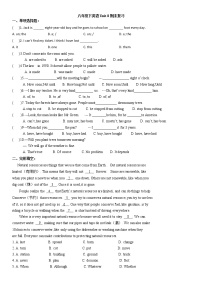
这是一份沪教牛津版英语八年级下册期中专题复习试卷,共25页。试卷主要包含了核心用法,特殊用法,专项练习等内容,欢迎下载使用。
期中语法考查核心为前4单元重点语法,按单元分类讲解,结合教材例句,明确用法、易错点及高频考点,配套基础练习,快速突破语法难点。
Unit 1 语法:Infinitives(不定式)
一、核心用法(教材P9重点)
不定式基本形式:t + 动词原形(否定式:nt t + 动词原形),具体用法分3类,结合教材原句理解:
动词 + t d(常见动词:want, cntinue, ffer, plan, hpe, decide等)
教材原句:Jin Ya wanted t paint a picture f the park near her hme.(金雅想画一幅她家附近公园的画。)
动词 + 宾语 + t d(常见动词:encurage, tell, ask, teach, invite等)
教材原句:We encuraged them t tell stries frm their wn life.(我们鼓励他们讲述自己生活中的故事。)
不定式表目的(t d 作目的状语)
教材原句:We rganized a painting cmpetitin t raise their spirits.(我们组织了一场绘画比赛来鼓舞他们的士气。)
二、特殊用法(易错点)
以下动词后接不定式时,省略t(let, make, see, hear, help等),教材原句示例:
The dctr wn’t let me g ut.(医生不让我出去。)(let sb. d sth.)
The students helped the wman (t) find her bag.(学生们帮助那位女士找到了她的包。)(help sb. (t) d sth.,t可省)
三、专项练习(贴合教材考点)
用所给动词的适当形式填空(每空1分,共5分)
I plan ______ (rganize) a vluntary activity with my classmates.(答案:t rganize)
She encuraged me ______ (express) my feelings freely.(答案:t express)
We saw a vlunteer ______ (help) the elderly crss the rad.(答案:help)
He wants ______ (take) sme phts fr the sick children.(答案:t take)
My mther let me ______ (visit) my grandparents this weekend.(答案:visit)
Unit 2 语法:Verb-ing用法
一、核心用法(教材P25-26重点)
Verb-ing 作主语(位于句首,谓语动词用单数)
教材原句:Bdy language matters!(肢体语言很重要!)→ 拓展:Using bdy language well helps us cmmunicate better.(灵活使用肢体语言帮助我们更好地沟通。)
Verb-ing 作宾语(常见动词:like, enjy, practice, finish, mind, avid等)
教材原句:She likes dancing t relax herself.(她喜欢跳舞来放松自己。)
Verb-ing 与 Verb-ed 作形容词(易错重点)
Verb-ing(令人……的):修饰事物或事件,如:exciting(令人兴奋的)、interesting(令人感兴趣的)
Verb-ed(感到……的):修饰人,如:excited(感到兴奋的)、interested(感到感兴趣的)
教材原句:The children were excited t see the ballet perfrmance.(孩子们看到芭蕾舞表演很兴奋。)
二、易错点辨析
区分:interested vs. interesting;excited vs. exciting;bred vs. bring(结合教材语境记忆,避免混淆)
三、专项练习
用所给动词的适当形式填空(每空1分,共5分)
______ (use) bdy language crrectly is very imprtant in cmmunicatin.(答案:Using)
He enjys ______ (watch) ballet in his free time.(答案:watching)
The stry abut bdy language is very ______ (interest).(答案:interesting)
I felt ______ (bre) when I listened t the bring talk.(答案:bred)
She practices ______ (speak) English every mrning.(答案:speaking)
Unit 3 语法:The passive in the simple present(一般现在时被动语态)
一、核心结构(教材P41重点)
肯定句:主语 + am / is / are + 动词过去分词(dne)
否定句:主语 + am / is / are + nt + 动词过去分词
一般疑问句:Am / Is / Are + 主语 + 动词过去分词?
二、教材原句示例
Cmic strips are lved by many teenagers.(连环画被许多青少年喜爱。)(肯定句)
Shadw puppets are nt used as much as befre.(皮影戏不像以前那样被广泛使用了。)(否定句)
Is this cmic strip made by yu?(这幅连环画是你画的吗?)(一般疑问句)
三、易错点
1. 被动语态的核心是“承受动作”,注意区分主动语态(主语做动作)和被动语态(主语承受动作);
2. 熟记常见动词的过去分词(如:make - made - made;use - used - used;lve - lved - lved)。
四、专项练习
将下列句子改为被动语态(每空1分,共5分)
Peple make cmic strips fr children. → Cmic strips ______ ______ fr children.(答案:are made)
We use this tl t draw pictures. → This tl ______ ______ t draw pictures.(答案:is used)
He desn’t watch animatin very ften. → Animatin ______ ______ ______ by him very ften.(答案:is nt watched)
D they like this Chinese animatin? → ______ this Chinese animatin ______ by them?(答案:Is; liked)
My sister reads cmic bks every day. → Cmic bks ______ ______ by my sister every day.(答案:are read)
Unit 4 语法:The passive in the simple past and the simple future(一般过去时、一般将来时被动语态)
一、核心结构(教材P57重点)
一般过去时被动语态:主语 + was / were + 动词过去分词
教材原句:A legendary Chinese painting was painted hundreds f years ag.(一幅传奇的中国画作是几百年前画的。)
一般将来时被动语态:主语 + will be + 动词过去分词 / 主语 + am / is / are ging t be + 动词过去分词
教材原句:The ld building will be repaired next year.(这座老建筑明年将被修缮。)
二、易错点
1. 时态区分:一般过去时被动(was/were)表过去发生的被动动作,一般将来时被动(will be / be ging t be)表未来的被动动作;
2. 不规则动词的过去分词(如:paint - painted - painted;repair - repaired - repaired;write - wrte - written)。
三、专项练习
用所给动词的适当形式填空(每空1分,共5分)
This paper-cut ______ (make) by a famus artist last year.(答案:was made)
The art exhibitin ______ (hld) in ur schl next mnth.(答案:will be held / is ging t be held)
These ld phts ______ (nt take) by my father.(答案:were nt taken)
______ the stry ______ (tell) by the ld man yesterday?(答案:Was; tld)
The traditinal craft ______ (prtect) by the gvernment in the future.(答案:will be prtected / is ging t be prtected)
第二部分:词汇专题(单元高频词、短语、构词法)
聚焦前4单元教材核心词汇、短语,按单元整理,标注词性、词义及教材原句,搭配构词法讲解,帮助学生快速记忆、灵活运用,避免死记硬背。
Unit 1 Helping thse in need
一、核心词汇(词性+词义+教材原句)
vluntary (adj.) 自愿的 → vluntary wrk 志愿工作(教材P4)
原句:We talked abut different kinds f vluntary wrk.(我们讨论了不同种类的志愿工作。)
suffer (v.) 受苦;遭受 → suffer frm 遭受(疾病、痛苦等)(教材P5)
原句:The children there all suffer frm serius diseases like cancer.(那里的孩子们都患有癌症等严重疾病。)
spirit (n.) 精神;士气 → raise ne’s spirits 鼓舞某人的士气(教材P5)
原句:We rganized a painting cmpetitin t raise their spirits.(我们组织了一场绘画比赛来鼓舞他们的士气。)
disabled (adj.) 残疾的 → disabled children 残疾儿童(教材P5)
原句:I vlunteered t help disabled children.(我自愿帮助残疾儿童。)
lnely (adj.) 孤独的;寂寞的(教材P5)
原句:She is really unhappy and needs smene t talk t because she is very lnely.(她很不开心,因为孤独,需要有人和她说话。)
encurage (v.) 鼓励 → encurage sb. t d sth. 鼓励某人做某事(教材P5)
原句:We encuraged them t tell stries frm their wn life.(我们鼓励他们讲述自己生活中的故事。)
二、核心短语
in need 需要帮助的 → peple in need 有需要的人
ffer t d sth. 主动提出做某事
cheer sb. up 使某人开心起来
have difficulty (in) ding sth. 做某事有困难
in lw spirits 情绪低落
cntinue t d sth. 继续做某事
三、构词法(教材P7重点)
否定前缀 un- / dis-(加在词前,使词义变否定)
happy → unhappy(不开心的);lucky → unlucky(不幸的)
appear → disappear(消失);agree → disagree(不同意)
Unit 2 Bdy language
一、核心词汇(词性+词义+教材原句)
bdy language 肢体语言(教材P18)
原句:What des bdy language mean t us?(肢体语言对我们意味着什么?)
gesture (n.) 手势;姿势(教材P19)
原句:We use gestures t express ur feelings.(我们用手势来表达我们的情感。)
cntact (n.) 接触;联系 → eye cntact 眼神交流(教材P30)
原句:Hw des eye cntact wrk?(眼神交流是如何起作用的?)
apprpriate (adj.) 合适的;恰当的(教材P18)
原句:We need t use apprpriate bdy language in different situatins.(我们需要在不同场合使用合适的肢体语言。)
express (v.) 表达;表示(教材P19)
原句:Bdy language helps us express ur thughts and feelings.(肢体语言帮助我们表达思想和情感。)
二、核心短语
make eye cntact 进行眼神交流
take actin 采取行动
in different situatins 在不同场合
make a suggestin 提出建议
accept a suggestin 接受建议
Unit 3 Cmics and animatin
一、核心词汇(词性+词义+教材原句)
cmic (n.) 连环画;漫画 → cmic strip 连环画(教材P34)
原句:Hw t make a cmic strip?(如何制作一幅连环画?)
animatin (n.) 动画;动画片(教材P34)
原句:What can cmics and animatin bring t ur lives?(漫画和动画能给我们的生活带来什么?)
shadw puppet 皮影戏(教材P37)
原句:Chinese animatin is frm shadw puppets t 3D films.(中国动画从皮影戏发展到3D电影。)
create (v.) 创造;创作(教材P40)
原句:We need t create interesting characters fr the cmic strip.(我们需要为连环画创作有趣的角色。)
frerunner (n.) 先驱;先行者(教材P46)
原句:Shadw puppets are the frerunner f animatin.(皮影戏是动画的先驱。)
二、核心短语
cmic strip 连环画
3D film 3D电影
从……到……
take part in 参加
make a cllectin f 收集……
Unit 4 Arts and heritage
一、核心词汇(词性+词义+教材原句)
art (n.) 艺术 → arts and crafts 工艺美术(教材P50)
原句:What rle d arts and crafts play in ur lives?(工艺美术在我们的生活中扮演什么角色?)
heritage (n.) 遗产;传统(教材P50)
原句:We shuld prtect ur cultural heritage.(我们应该保护我们的文化遗产。)
painting (n.) 绘画;画作(教材P52)
原句:A legendary Chinese painting was painted hundreds f years ag.(一幅传奇的中国画作是几百年前画的。)
paper-cut (n.) 剪纸(教材P56)
原句:A paper-cut artist tld us her stry.(一位剪纸艺术家给我们讲了她的故事。)
devte (v.) 致力于;奉献 → devte t 致力于……(教材P60)
原句:She devted herself t traditinal crafts.(她致力于传统工艺。)
二、核心短语
arts and crafts 工艺美术
cultural heritage 文化遗产
devte neself t 致力于……
art appreciatin 艺术欣赏
take pride in 为……感到自豪
三、词汇辨析(易错点)
raise vs. rise:raise 及物动词(需接宾语),如 raise spirits / mney;rise 不及物动词(不接宾语),如 The sun rises in the east.
lnely vs. alne:lnely 情感上“孤独的”,alne 指“独自一人”(无情感色彩),如 He lives alne but he is nt lnely.
第三部分:阅读专题(期中必考,贴合教材题型)
期中阅读考查重点:细节理解题、推理判断题、词义猜测题,主要围绕前4单元主题(志愿活动、肢体语言、漫画动画、工艺美术),结合教材阅读语篇风格,讲解解题技巧,配套专项练习。
一、解题技巧(3步搞定阅读题)
第一步:读题干,划关键词(人名、地名、时间、核心名词/动词),明确题目要求(找细节、猜词义、推理);
第二步:读语篇,定位关键词,找到对应段落和句子(无需逐字逐句翻译,重点找与题干相关的内容);
第三步:对比选项,排除干扰项(注意偷换概念、过度推理、与原文矛盾的选项)。
二、题型专项讲解(结合教材语篇)
1. 细节理解题(最基础,占比最高)
解题关键:原文定位,找到与题干完全匹配的信息,不添加个人主观判断。
教材示例(Unit 1 P6):
题目:Wh did Dng Lili help?
定位原文:I met a girl called Jin Ya. She wanted t paint a picture f the park near her hme. → 答案:Jin Ya.
2. 词义猜测题(易错)
解题关键:结合上下文语境,利用同义、反义、因果关系或举例说明猜测词义。
教材示例(Unit 1 P14):
原句:Little deeds f kindness, little wrds f lve, help make earth happy. → 猜测 deed 的含义,结合后文“kindness”“lve”,可知 deed 意为“行为;行动”。
3. 推理判断题(难度中等)
解题关键:基于原文信息,合理推理,不夸大、不缩小,符合原文主旨。
教材示例(Unit 2 P20):
原文:Bdy language is imprtant in cmmunicatin. Smetimes, it can express mre than wrds. → 推理:Bdy language is as imprtant as wrds in cmmunicatin.
三、阅读专项练习(期中难度,贴合教材主题)
Passage 1(主题:志愿活动,对应Unit 1)
During the schl hlidays, many teenagers d vluntary wrk t help peple in need. Dng Lili vlunteered at a children’s hspital. She helped sick children cheer up by rganizing a painting cmpetitin. She als tk phts fr a girl called Jin Ya, wh culdn’t g ut f the hspital. Wang Jie spent time with children withut parents. He encuraged them t tell their stries and express their feelings. Ding Ling helped disabled children. She taught them t sing t bring them jy. All f them said that vluntary wrk made them feel happy and meaningful.
题目(每小题2分,共10分)
What did Dng Lili d at the children’s hspital?
答案:B(细节理解题,定位原文“She helped sick children cheer up by rganizing a painting cmpetitin.”)
A. She taught children t sing. B. She rganized a painting cmpetitin.
C. She encuraged children t tell stries. D. She lked after hmeless cats.
Why did Dng Lili take phts fr Jin Ya?
答案:B(细节理解题,定位原文“wh culdn’t g ut f the hspital”)
A. Jin Ya lved taking phts. B. Jin Ya culdn’t g ut f the hspital.
C. Dng Lili wanted t make mney. D. Jin Ya asked her t d s.
Wh did Wang Jie help?
答案:C(细节理解题,定位原文“Wang Jie spent time with children withut parents.”)
A. Sick children. B. Disabled children. C. Children withut parents. D. Elderly peple.
What des the underlined wrd “jy” mean in Chinese?
答案:B(词义猜测题,结合上下文“taught them t sing”,可知是带来“快乐”)
A. 悲伤 B. 快乐 C. 痛苦 D. 孤独
What can we learn frm the passage?
答案:B(推理判断题,定位原文“All f them said that vluntary wrk made them feel happy and meaningful.”)
A. Vluntary wrk is bring. B. Vluntary wrk makes peple happy.
C. Only teenagers d vluntary wrk. D. Disabled children dn’t like singing.
Passage 2(主题:肢体语言,对应Unit 2)
Bdy language is an imprtant part f cmmunicatin. It includes gestures, eye cntact, facial expressins and pstures. Different bdy languages have different meanings. Fr example, smiling means kindness and friendliness. Making eye cntact shws respect and attentin. In sme cuntries, shaking hands is a way t greet peple, but in sme ther cuntries, peple bw t greet each ther. It’s imprtant t use apprpriate bdy language in different situatins. If yu use wrng bdy language, yu may make thers uncmfrtable.
题目(每小题2分,共10分)
What des bdy language include?
答案:C(细节理解题,定位原文“It includes gestures, eye cntact, facial expressins and pstures.”)
A. Gestures and eye cntact. B. Facial expressins and pstures.
C. Bth A and B. D. Nne f the abve.
What des smiling mean?
答案:B(细节理解题,定位原文“smiling means kindness and friendliness.”)
A. Respect and attentin. B. Kindness and friendliness.
C. Unhappiness and anger. D. Sadness and lneliness.
In sme cuntries, peple ______ t greet each ther.
答案:B(细节理解题,定位原文“but in sme ther cuntries, peple bw t greet each ther.”)
A. shake hands B. bw C. smile D. cry
Why is it imprtant t use apprpriate bdy language?
答案:C(推理判断题,结合原文“Bdy language is an imprtant part f cmmunicatin.”可推理)
A. Because it can make yu rich. B. Because it can make thers uncmfrtable.
C. Because it can help yu cmmunicate better. D. Because it can make yu famus.
What is the main idea f the passage?
答案:B(主旨大意题,全文围绕肢体语言的重要性及不同含义展开)
A. Hw t greet peple. B. The imprtance f bdy language.
C. Different kinds f gestures. D. Hw t smile.
第四部分:听力专题(期中必考,贴合教材话题)
期中听力考查重点:听句子选图片、听对话选答案、听短文填信息,话题围绕前4单元(志愿活动、筹款活动、肢体语言、漫画动画、工艺美术),讲解听力技巧,配套模拟练习。
一、听力解题技巧
听前:快速浏览题干和选项,划出关键词(如时间、地点、人物、动作),预测听力内容;
听中:集中注意力,重点听关键词和逻辑关系(如but、s、because),不要纠结单个生词,错过信息可暂时跳过,优先捕捉与题干相关的内容;
听后:核对答案,结合题干和听力内容,排除明显错误选项,确保答案与听力原文一致。
二、听力高频话题及常用句型(结合教材)
1. 志愿活动(Unit 1)
常用句型:
I plan t d vluntary wrk this weekend.
We are ging t help elderly peple / disabled children.
She ffered t help sick children in the hspital.
2. 肢体语言(Unit 2)
常用句型:
What des this gesture mean?
We shuld use apprpriate bdy language in cmmunicatin.
Eye cntact is imprtant when we talk t thers.
3. 漫画动画(Unit 3)
常用句型:
I like watching animatin in my free time.
Hw t make a cmic strip?
Shadw puppets are the frerunner f animatin.
4. 工艺美术(Unit 4)
常用句型:
This paper-cut is made by a famus artist.
We shuld prtect ur traditinal arts and crafts.
She devted herself t painting.
第五部分:写作专题(期中必考,3类高频题型)
期中写作考查重点:应用文(电子邮件、通知)、说明文(介绍类),围绕前4单元主题,提供写作模板、常用句型、范文及写作注意事项,帮助学生快速掌握写作技巧,拿到高分。
题型1:电子邮件(Unit 1重点,申请许可类)
一、写作模板(教材P12范文改编)
T: [老师姓名,如Ms Yan]
Subject: Organize a vluntary activity
Dear [老师姓名],
I am writing t yu abut my grup’s plans t start a vluntary activity.
In rder t help [帮助对象,如children in need / elderly peple], we plan t rganize [活动内容,如a visit t the children’s hme / a vluntary clean-up] n [时间,如Saturday, March 23]. [人数,如Five students frm ur class] have ffered t help.
We plan t [具体活动1,如teach the children t d paper-cutting] and [具体活动2,如chat with them / help them clean their rms]. We have prepared [准备的物品,如craft materials / bks] fr the activity.
Culd yu please give us permissin t rganize the activity? Thank yu fr yur supprt!
We lk frward t yur reply.
Yurs sincerely,
[你的姓名]
二、常用句型
I am writing t yu abut... 我写信给你是关于……
In rder t help..., we plan t... 为了帮助……,我们计划……
We plan t d... and... 我们计划做……和……
Culd yu please give us permissin 你能允许我们……吗?
We lk frward t yur reply. 我们期待你的回复。
三、范文(期中难度)
T: Ms Li
Subject: Organize a vluntary activity
Dear Ms Li,
I am writing t yu abut my grup’s plans t start a vluntary activity.
In rder t help elderly peple in the ld peple’s hme, we plan t rganize a visit n Saturday, April 10. Six students frm ur class have ffered t help.
We plan t help the elderly clean their rms and teach them t use smartphnes. We als want t chat with them t make them feel less lnely. Sme f us have prepared bks and fruits fr them.
Culd yu please give us permissin t rganize the activity? Thank yu fr yur supprt!
We lk frward t yur reply.
Yurs sincerely,
Zhang Wei
题型2:说明文(介绍肢体语言,Unit 2重点)
一、写作模板
Bdy language is an imprtant part f cmmunicatin. It includes [内容,如gestures, eye cntact and facial expressins]. Different bdy languages have different meanings.
Fr example, [例子1,如smiling means kindness and friendliness]. It can make peple feel warm. [例子2,如making eye cntact shws respect and attentin]. When we talk t thers, we shuld make apprpriate eye cntact.
In different cuntries, bdy language is different. [例子,如shaking hands is a cmmn way t greet peple in China, but peple bw in Japan].
It’s imprtant t use apprpriate bdy language in different situatins. It can help us cmmunicate better and get alng well with thers.
二、常用句型
... is an imprtant part f... ……是……的重要组成部分。
It includes... 它包括……
Fr example, ... 例如,……
It’s imprtant t d... 做……是重要的。
It can help us... 它能帮助我们……
三、范文(期中难度)
Bdy Language
Bdy language is an imprtant part f cmmunicatin. It includes gestures, eye cntact and facial expressins. Different bdy languages have different meanings.
Fr example, smiling means kindness and friendliness. It can make peple feel warm and welcme. Making eye cntact shws respect and attentin. When we talk t thers, we shuld make apprpriate eye cntact, nt t lng r t shrt.
In different cuntries, bdy language is different. In China, shaking hands is a cmmn way t greet peple. But in Japan, peple bw t greet each ther. If we use wrng bdy language in ther cuntries, we may make thers uncmfrtable.
It’s imprtant t use apprpriate bdy language in different situatins. It can help us cmmunicate better and get alng well with thers. S we shuld learn mre abut bdy language and use it crrectly.
题型3:说明文(介绍传统工艺,Unit 4重点)
一、写作模板
There are many traditinal arts and crafts in China. [工艺名称,如Paper-cut] is ne f the mst famus nes. It has a lng histry f [历史,如hundreds f years].
Paper-cut is made f [材料,如paper]. Peple use [工具,如scissrs] t cut paper int different shapes, such as [形状,如flwers, animals and characters]. It is usually red, because red means gd luck in China.
Many peple like paper-cut very much. It is nt nly a kind f craft, but als a part f ur cultural heritage. We shuld prtect it and pass it n t the next generatin.
二、常用句型
There are many... in China. 中国有许多……
... is ne f the mst famus nes. ……是最著名的之一。
It has a lng histry f... 它有……的悠久历史。
It is made f... 它由……制成。
We shuld prtect it and pass it n. 我们应该保护它并把它传承下去。
三、范文(期中难度)
Paper-cut: A Traditinal Chinese Craft
There are many traditinal arts and crafts in China. Paper-cut is ne f the mst famus nes. It has a lng histry f hundreds f years.
Paper-cut is made f paper. Peple use scissrs t cut paper int different shapes, such as flwers, animals and Chinese characters. It is usually red, because red means gd luck and happiness in China. During festivals, many families put paper-cuts n their windws t celebrate.
Many paper-cut artists devte themselves t this craft. They create beautiful paper-cuts and teach thers t make them. Paper-cut is nt nly a kind f craft, but als a part f ur cultural heritage. We shuld prtect it and pass it n t the next generatin.
四、写作注意事项
书写工整,避免拼写错误(重点检查教材核心词汇的拼写,如vluntary, disabled, animatin等);
这是一份牛津沪教版英语八年级下册期末测试卷,共8页。试卷主要包含了语法选择,完形填空,阅读,写作等内容,欢迎下载使用。
这是一份牛津译林版八年级下册英语【期中复习试卷】,共6页。试卷主要包含了选择填空,完形填空,阅读理解,任务型阅读,词汇,写作等内容,欢迎下载使用。
这是一份牛津译林版八年级上册本册综合课后作业题,共16页。试卷主要包含了听对话, 选答案,听独白, 填信息,完形填空,阅读理解,根据所给汉语意思完成句子,短文填空,任务型阅读,补全对话等内容,欢迎下载使用。
注册成功


(1).png)