免费领取教师福利

若您为此资料的原创作者,认为该资料内容侵犯了您的知识产权,请扫码添加我们的相关工作人员,我们尽可能的保护您的合法权益。


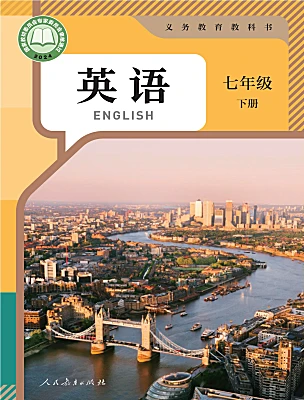
这是一份初中英语人教版(2024)七年级下册(2024)Unit 2 No Rules, No Order同步练习题,共11页。试卷主要包含了rule n,rder n,fllw v,arrive v,plite adj,respect n,lend v,sweet n等内容,欢迎下载使用。
第一部分 核心词汇
1.rule n.规则;规章
【搭配回顾】make a rule(制定规则);bey the rule(遵守规则)
【用法示例】
We shuld fllw the schl rules.(我们应该遵守校规。)
There is a rule that n ne is allwed t talk ludly in the library.(有一条规则是在图书馆里任何人都不允许大声说话。)
The rule f the game is very simple.(这个游戏的规则很简单。)
2.rder n. / v.作名词时意为 “秩序”;作动词时意为 “点菜”
【搭配回顾】in rder(按顺序;整齐);keep rder(维持秩序);rder sth.(点菜;订购某物)
【用法示例】
The teacher asked the students t stand in rder.(老师让学生们按顺序站好。)
The plice are trying t keep rder in the street.(警察正在努力维持街道秩序。)
I rdered a hamburger and a cup f cffee.(我点了一个汉堡和一杯咖啡。)
3.fllw v.遵循;跟随
【搭配回顾】fllw sb. /sth.(跟随某人 / 某物);fllw the advice(听从建议);fllw the trend(跟随潮流)
【用法示例】
Please fllw me. I will shw yu the way.(请跟我来。我将给你带路。)
Yu shuld fllw the dctr's advice and take a gd rest.(你应该听从医生的建议,好好休息。)
Many peple like t fllw the latest fashin trends.(许多人喜欢跟随最新的时尚潮流。)
4.arrive v.到达
【搭配回顾】arrive at(到达小地方,如车站、学校等);arrive in(到达大地方,如城市、国家等)
【用法示例】
We arrived at the airprt early in the mrning.(我们一大早就到达了机场。)
They will arrive in Beijing tmrrw.(他们明天将到达北京。)
The train arrived late because f the bad weather.(由于天气不好,火车晚点到达。)
5.plite adj.有礼貌的
【搭配回顾】be plite t sb.(对某人有礼貌);plitely adv.(有礼貌地)
【用法示例】
We shuld be plite t everyne.(我们应该对每个人都有礼貌。)
The by greeted the guests plitely.(这个男孩有礼貌地向客人打招呼。)
It's plite t say "thank yu" when smene helps yu.(当有人帮助你时,说 “谢谢” 是有礼貌的。)
6.respect n. & v.尊敬
【搭配回顾】shw respect fr sb.(对某人表示尊敬);respect neself(自尊)
【用法示例】
We shuld shw respect fr ur elders.(我们应该尊敬长辈。)
Everyne shuld respect the law.(每个人都应该尊重法律。)
He is a teacher wh is respected by all his students.(他是一位受到所有学生尊敬的老师。)
7.lend v.借给;借出
【搭配回顾】lend sth. t sb.(把某物借给某人);lend sb. sth.(借给某人某物)
【用法示例】
Can yu lend me yur bike?(你能把你的自行车借给我吗?)
I lent my bk t Tm yesterday.(我昨天把我的书借给了汤姆。)
She always lends her mney t her friends in need.(她总是把钱借给有需要的朋友。)
8.sweet n. / adj.作名词时意为 “糖果”;作形容词时意为 “甜的”
【搭配回顾】sweet tth(爱吃甜食的人);sweet dream(甜美的梦)
【用法示例】
The little girl lves t eat sweets.(这个小女孩喜欢吃糖果。)
The cake tastes very sweet.(这个蛋糕尝起来很甜。)
Have a sweet dream, my dear.(做个甜美的梦,亲爱的。)
9.queue n.队
【搭配回顾】queue up(排队);jump the queue(插队)
【用法示例】
Peple are queuing up t buy tickets.(人们正在排队买票。)
It's implite t jump the queue.(插队是不礼貌的。)
We shuld wait in the queue patiently.(我们应该耐心地排队等候。)
10.leave v.离开;留下
【搭配回顾】leave fr(动身去某地);leave sth. + 地点(把某物留在某地)
【用法示例】
He will leave fr Paris tmrrw.(他明天将动身去巴黎。)
Dn't leave yur bks n the table.(别把你的书留在桌子上。)
She left the rm withut saying a wrd.(她一句话也没说就离开了房间。)
11.absent adj.缺席的;不在的
【搭配回顾】be absent frm(缺席;不在)
【用法示例】
He was absent frm schl yesterday because f his illness.(他昨天因为生病没来上学。)
The teacher nticed that sme students were absent.(老师注意到有些学生缺席了。)
She desn't want t be absent frm any imprtant meetings.(她不想缺席任何重要会议。)
12.quietly adv.轻声地;安静地
【搭配回顾】keep quiet(保持安静)
【用法示例】
Please speak quietly in the library.(在图书馆请轻声说话。)
The baby is sleeping. Let's walk quietly.(宝宝在睡觉。我们轻轻地走。)
She clsed the dr quietly.(她轻轻地关上门。)
13.feed v.喂养;饲养
【搭配回顾】feed sth. t sb. /sth.(把某物喂给某人 / 某物);feed n(以…… 为食)
【用法示例】
My mther feeds the dg every day.(我妈妈每天喂狗。)
The farmer feeds the chickens with crn.(农民用玉米喂鸡。)
Cws feed n grass.(奶牛以草为食。)
14.nise n.声音;噪声
【搭配回顾】make nise(制造噪音);nise pllutin(噪音污染)
【用法示例】
Dn't make s much nise. The children are studying.(别制造这么多噪音。孩子们在学习。)
The nise frm the street wke me up.(街上的噪音把我吵醒了。)
We shuld take measures t reduce nise pllutin.(我们应该采取措施减少噪音污染。)
15.practise v.训练;练习
【搭配回顾】practise ding sth.(练习做某事)
【用法示例】
Yu need t practise speaking English every day.(你需要每天练习说英语。)
He practises playing the pian fr tw hurs every day.(他每天练习弹钢琴两个小时。)
She practises dancing hard t imprve her skills.(她努力练习跳舞以提高她的技巧。)
16.hang ut 短语动词闲逛;常去某处
【搭配回顾】hang ut with sb.(和某人一起闲逛)
【用法示例】
I ften hang ut with my friends n weekends.(我经常在周末和我的朋友们一起闲逛。)
They like t hang ut at the shpping mall.(他们喜欢在购物中心闲逛。)
He hung ut with his classmates after schl yesterday.(他昨天放学后和他的同学们一起闲逛了。)
17.awful adj.糟糕的,讨厌的
【搭配回顾】an awful day(糟糕的一天)
【用法示例】
I had an awful day at wrk tday.(我今天在工作中度过了糟糕的一天。)
The weather is awful. We can't g ut.(天气很糟糕。我们不能出去。)
This mvie is awful. I dn't like it at all.(这部电影很糟糕。我一点也不喜欢。)
18.becme v.变成
【搭配回顾】becme + adj.(变得……);becme a/an + 职业(成为一名……)
【用法示例】
It becmes clder and clder in winter.(冬天变得越来越冷。)
She wants t becme a famus singer.(她想成为一名著名的歌手。)
He has becme very successful in his career.(他在事业上已经变得非常成功。)
19.fcus n 短语动词集中(注意力、精力等)于
【搭配回顾】fcus ne's attentin n(把某人的注意力集中在…… 上)
【用法示例】
Yu shuld fcus n yur study.(你应该集中精力学习。)
The teacher asked the students t fcus n the blackbard.(老师让学生们把注意力集中在黑板上。)
He can't fcus n his wrk because f the nise.(由于噪音,他无法集中精力工作。)
第二部分 核心语法
一、祈使句的用法
1.定义:祈使句是用来表示请求、命令、建议、劝告等的句子。
2结构
肯定祈使句:通常以动词原形开头。例如:Open the dr.(打开门。)Cme here, please.(请过来。)
否定祈使句:在动词原形前加 dn't。例如:Dn't be late.(不要迟到。)Dn't run in the hallways.(不要在走廊里跑。)
注意:祈使句的主语通常是第二人称 yu,但一般省略不写。句末可以用句号或感叹号,语气较强时用感叹号。
二、情态动词 can/have t/must
1.can
表示能力:意为 “能,会”,强调具备某种技能或能力。例如:I can speak English.(我会说英语。)She can play the pian.(她会弹钢琴。)
表示可能性:意为 “可能,可以”,表示客观上的可能性。例如:It can be very cld in winter here.(这里的冬天可能会很冷。)
表示请求或允许:意为 “可以”,用于提出请求或询问是否允许。例如:Can I cme in?(我可以进来吗?)Yu can g nw.(你现在可以走了。)
构成疑问句和否定句:将 can 提前到主语前构成疑问句,在 can 后面加 nt 构成否定句,can nt 可缩写为 can't。例如:Can yu swim?(你会游泳吗?)He can't ride a bike.(他不会骑自行车。)
2.have t
表示客观需要:意为 “不得不,必须”,强调由于某种客观原因而必须做某事。例如:I have t get up early because I have a lt f wrk t d.(我不得不早起,因为我有很多工作要做。)
有人称、数和时态的变化:其第三人称单数形式是 has t,过去式是 had t。例如:He has t g t schl by bus.(他不得不乘公共汽车去上学。)Yesterday I had t stay at hme because f the rain.(昨天因为下雨我不得不待在家里。)
构成疑问句和否定句:借助助动词 d, des 或 did 来构成疑问句和否定句。例如:D yu have t clean yur rm?(你必须打扫你的房间吗?)She desn't have t g t the party.(她不必去参加聚会。)
3.must
表示主观义务:意为 “必须,一定”,强调说话人的主观意愿或要求对方必须做某事。例如:Yu must finish yur hmewrk befre yu watch TV.(你看电视之前必须完成作业。)We must be careful when we crss the rad.(我们过马路时必须小心。)
表示肯定推测:意为 “一定,肯定”,用于对现在情况的肯定推测。例如:He must be at hme because the light is n.(他一定在家,因为灯亮着。)
构成否定句:must 的否定式是 mustn't,意为 “禁止,不允许”。例如:Yu mustn't smke here.(你不允许在这里吸烟。)
注意:must 引导的一般疑问句,肯定回答用 must,否定回答用 needn't 或 dn't have t,意为 “不必”。例如:—Must I finish my hmewrk nw?(我必须现在完成作业吗?)—Yes, yu must.(是的,你必须。)/N, yu needn't.(不,你不必。)
单项选择
1.There is a great sense f team ________ in the China’s Olympic squad.
A.valueB.spiritC.qualityD.culture
2.Learning abut ______ histry helps us understand ur cuntry better.
A.natinalB.cmfrtableC.casualD.mbile
3.My mther always makes me _________ the pian fr an hur every day.
A.practises playingB.practise playing
C.practises t playD.practise t play
4.Dn’t use bad wrds. Be plite and _________ ne anther with respect.
A.treatsB.treatC.treatingD.t treat
5.—_________ we bring ur mbile phnes t class?
—N, we can’t. We must keep them in the lcker.
A.CanB.MustC.NeedD.Shuld
6.After reading fr a lng time, Judy ________ the bk and tk a rest.
A.cut dwnB.turned ffC.put dwnD.wke up
7.Cnnie, ______ the windw. It’s s cld tday.
A.nt penB.dn’t penC.n penD.desn’t pen
8.Many pets like t ________ their feelings by writing different scenes.
A.addB.practiseC.expressD.hand
9.The film Ne zha is very wnderful. I want t ________ it t all my friends.
A.rememberB.respectC.recmmendD.raise
10.I ften ________ the cmputer when I dn’t use it.
A.turn ffB.pick upC.lk afterD.play with
11.—We shuld ________ the tap (水龙头) when we are brushing ur teeth.
—Yeah. T save water, we must d like that.
A.cut ffB.cut dwnC.turn ffD.turn dwn
12.Yu will catch the early bus ________ yu get up early.
A.rB.butC.sD.if
13.He always prmises t ______ the time f playing cmputer games but never des it.
A.turn ffB.pick upC.fcus nD.cut dwn
14.Betty stpped spending time n shrt-frm vide apps _______ she realized it was a waste f time.
A.becauseB.butC.ifD.thugh
15.There are sme activities t learn the ________ f Lei Feng in March in ur schl.
A.spiritB.respectC.treatD.advice
16.We have gt tw answers t the slutin, but _________ f them is crrect.
A.neitherB.eitherC.allD.nne
17.—Is everyne here in the classrm tday?
—N, Liu Hua is ______ because he is ill in hspital.
A.busyB.absentC.prperD.silent
18.—Can I use yur bike, Paul?
—Of curse, but yu can’t ________ it t thers.
A.meanB.lendC.chseD.enjy
19.That thing teaches me t keep ________.
A.silentB.silentlyC.quietlyD.safely
20.—Alex is ne f the tp students in ur class.
—That’s true. He wrks hard and is seldm ________ frm classes.
A.farB.freeC.safeD.absent
21.—The ld man can’t see anything. He is ________. Let’s help him.
—That’s fr sure.
A.blindB.deafC.untidyD.clever
22.—Why are yu late fr schl tday?
—I’m srry. I didn’t catch the early bus and I had t ________ the next ne.
A.wait frB.ask frC.care frD.late fr
23.Be ________ when yu ask thers fr help, r nbdy wuld like t help yu.
A.happyB.dangerusC.pliteD.tidy
24.—Dad, can yu play badmintn with me nw?
—________ Let’s g!
A.Srry, I can’t.B.Yu’re welcme.C.Yes, f curse.D.Gd luck.
25.Students ________ fllw the schl rules. Fr example, they ________ bring mbile phnes t class.
A.may; needn’tB.can; mustn’tC.must; can’tD.shuld; dn’t have t
26.The teacher is kind t her students and wrks very hard. They all ________ him.
A.reachB.respectC.recmmendD.read
27.—Students can learn better with the help f DeepSeek. I strngly ________ it t yu.
—It seems a gd chice. I will give it a try.
A.respectB.recmmendC.rememberD.raise
28.— ________ ut f the windw. Please listen t the teacher.
— ________
A.Desn’t lk; Gd idea!B.Dn’t lk; Srry, I wn’t.
C.Dn’t lk; OK!D.Nt lk; N way!
29.—Let’s ________ the fruit after dinner?
—OK. What abut sme strawberries?
A.think abutB.blw utC.wait frD.help with
30.Remember t ________ the lights when yu leave the rm.
A.turn ffB.take ffC.get ffD.cut ff
31.He has ________ interesting jb.
A.aB.anC.theD./
32.—What d yu d n Sundays?
—I ften ________.
A.play the pianB.play pianC.plays the pianD.plays pian
33.Mary usually ________ her hmewrk at 7:00 in the evening.
A.desB.dC.t dD.ding
34.Tm ________ late fr schl this mrning.
A.isB.wasC.areD.were
35.The singer was ften seen t practice ________ sngs near the wds three years ag.
A.singB.singingC.t singD.sings
36.Jenny gave us _______ n hw t lean English well.
A.sme adviceB.any advices
C.sme advicesD.an advice
37.—What time des she ________ after schl?
—At six ’clck.
A.d her hmewrkB.des her hmewrk
C.d her hmewrksD.des her hmewrks
38.There is ________ milk in the glass. I need t buy sme.
A.fewB.a fewC.littleD.a little
39.—What are the rules at yur schl?
—We __________ listen t music in the classrm.
A.dn’tB.can’tC.aren’tD.desn’t
40.—________ I brrw (借用) yur bike?
—Sure. But yu mustn’t ________ it t thers.
A.Must; lendB.Can; lendC.Can; brrwD.Must; brrw
二、短文填空
根据短文内容及所给提示,在文中的空白处填写1个适当的单词或单词的正确形式。
Jack is 41 middle schl student. There are t many rules in his schl. 42 (ne), they must wear schl unifrms n schl days. They have t 43 (get) t schl n time. They can’t be late 44 schl. Secnd, they can’t run in the classrm 45 in the hallways. Third, they can’t eat in the classrm, and they must eat in the dining hall. Furth, they must read 46 (quiet) in the library. They mustn’t talk ludly. Fifth, they must clean the classrm every day. Keep it clean. Dn’t make it 47 (tidy). Sixth, they can’t bring the music players t schl, and they can’t listen t music in class, 48 . Fr 49 (by), they must keep their hair shrt. Jack says the rules are t strict. But they need t fllw 50 (they) because they help students t becme a better persn.
三、单词拼写
51. (nt pst) anything persnal n the Internet. It is dangerus.
52.When we are in the library, we shuld talk (quiet).
53.The child lks (happy) after drpping his ice-cream n the rad.
54.Yur rm is very (tidy). Please d the cleaning right nw.
55.Here’s sme (advise) fr a lng and healthy life.
56.Sam, (turn) ff the TV nw! Yur grandpa is sleeping.
57.Lily didn’t give up (practise) playing the pian and finally she played very well.
58.It is said ur city (build) anther science museum in three years.
59.Every afternn, Jane sits (quiet) by the windw and reads a bk.
60.Yu can’t watch TV because yu shuld fcus n ( d) hmewrk.
61.He must (walk) the dg after he finishes his hmewrk every night.
62.After a busy day, my dad likes t (relax) in the living rm t enjy sme tea.
63.Can yu (lend) me yur bike? My brther is using mine.
64.Dn’t (eat) t much salty fd. It’s bad fr yur teeth.
65.We can just clean the desks after class. I hpe my schl can take my (advise).
66.Dn’t (litter) everywhere. It’s bad behavir.
67.We have a lt f fun (play) games tgether.
68.The teacher asked the students t (quiet) put away their tys befre leaving the classrm.
69.There (be) a lt f rules in ur schl.
70.Yu can ask Xiaming t call me if he (have) time tmrrw.
71.My sister (brush) her teeth at 6:30 every mrning.
72.My sister usually (brush) her teeth at 7:00 in the mrning.
73.He (brush) his teeth every day.
74.Tm (have) a shwer every mrning.
75.He (lend) me his pen because I always can’t find mine.
76.We (have t) get up early every mrning.
77.When autumn cmes, my back yard (becme) a glden (金色的) wrld.
78.They always (eat) breakfast at 7:00.
79.What time (d) yur brther (get) up?
80.If Jack (study) hard, he can pass the exam easily.
81.I usually (take) a shwer at six frty.
82.He (nt suppsed) t arrive late fr the meeting.
83.When I leave my pen at hme, my friend May always (lend) me hers.
84.My sister always (wear) a red dress n weekends.
85.Yur rm is s (tidy). Yu’d better tidy it up.
86.Linda’s best friend will mve t anther city, s she is (happy) these days.
87.Yu shuld be (plite) t yur teachers.
88.Tm is never late and he is always (early).
89.She has a (sweet) tth and lves desserts.
90.When I feel (happy), I listen t music r ask my parents r teachers fr help.
这是一份初中英语人教版(2024)七年级下册(2024)Unit 2 No Rules, No Order同步练习题,共11页。试卷主要包含了rule n,rder n,fllw v,arrive v,plite adj,respect n,lend v,sweet n等内容,欢迎下载使用。
这是一份初中英语Unit 3 Keep Fit精练,共12页。试卷主要包含了fit adj,hardly adv,ever adv,nce adv,twice adv,maybe adv,well - used adj,practice n等内容,欢迎下载使用。
这是一份人教版(2024)七年级下册(2024)Unit 2 No Rules, No Order巩固练习,共21页。试卷主要包含了单词拼写,选词填空等内容,欢迎下载使用。
 新教材
新教材
注册成功
资料篮

在线客服
添加在线客服
获取1对1服务
官方微信
关注“教习网”公众号
打开微信就能找资料
赛课定制
添加在线客服
获取1对1定制服务
职称咨询
添加在线客服
获取1V1专业指导服务

免费福利

.png)
.png)