免费领取教师福利


若您为此资料的原创作者,认为该资料内容侵犯了您的知识产权,请扫码添加我们的相关工作人员,我们尽可能的保护您的合法权益。


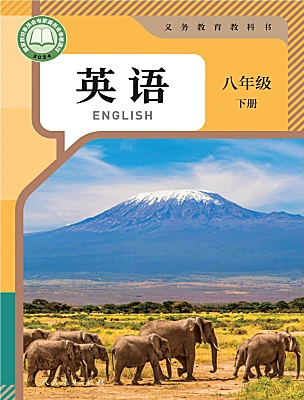
这是一份人教版(2024)八年级下册(2024)Section A教学设计,共5页。
导入一:图片导入法
Shw the picture f the girl flying a kite n page ne and the pictures in 1a. Say, “Lk at these pictures. What is the girl ding? What are the peple in ther pictures ding? D yu d similar things when yu have free time? Let's talk abut hw we spend ur free time tday.”
导入二:游戏导入法(猜活动)
Play a “Guess the Activity” game. Describe activities like “This activity is dne with a flute. Peple play music with it. What is it?” “This activity is abut writing beautiful Chinese characters with a brush. What is it?” After students guess, say, “Great! These are all free-time activities. Tday we'll learn mre abut hw peple spend their free time.”
导入三:问题导入法
Ask the class directly, “Bys and girls, when yu have free time after schl r n weekends, what d yu usually d? D yu like painting r hiking? Let's share yur free-time activities first, and then we'll learn mre abut this tpic.”
导入四:实物导入法
Bring a flute, a calligraphy brush, and a small painting(r pictures f them). Shw each item t the students and ask, “What activity is related t this thing? D yu use it when yu relax? Tday, we're ging t discuss hw these activities are part f ur free time.”
导入五:情境创设导入法
Say t the students, “Imagine it's Sunday, and yu dn't have any hmewrk. Yu can d whatever yu want t relax. What will yu chse t d? Will yu stay at hme r g ut? Let's talk abut yur chices, and then we'll explre different free-time activities.”
导入六:小组讨论导入法
Divide the students int grups f 4. Give them 2 minutes t discuss: “What's yur favurite free-time activity? Why d yu enjy it?” After the discussin, invite ne student frm each grup t share with the whle class. Then say, “Thank yu fr yur sharing! Tday, we'll learn mre free-time activities and why peple lve them.”
活动设计
活动一 Fr 1a-1d: “Activity Charades & Pair Talk”[活动猜谜(动作猜活动)与结对讨论]
开展方式:①分组进行 “猜活动” 游戏:各组抽取1a中的活动(如: playing the flute, ding calligraphy 等),一个组用动作表演,其他组猜测活动名称;②猜测完毕后,学生两人一组,用1d的句型(What d yu d in yur free time? I like t…Why d yu d it? I d it t…)讨论彼此的业余活动。
示例:
Student A: What d yu d in yur free time?
Student B: I like t paint.
Student A: Why d yu d it?
Student B: I d it t express my feelings.
活动二:Fr 2a-2d: “First-time Experience Sharing & Listening Check”(首次经历分享与听力检测)
开展方式:①先让学生自由分享 “第一次做某业余活动的经历”(如:第一次滑冰、游泳等);②播放 2b 的录音,学生完成 2b 的勾选任务和 2c 的句子填空;③小组内交流答案,并结合自己的经历讨论“首次尝试活动的感受”。
示例:
Student C: When I first tried swimming, I was afraid f water. But nw I lve it!
Student D: Emma didn't want t ice-skate at first, just like I didn't want t swim. But encuragement helps a lt.
活动三:Fr 3a-3d: “Dialgue Adaptatin & Rle-play”(对话改编与角色扮演)
开展方式:①学生阅读 3a 的对话,圈出 Peter 和 Yaming的业余活动;②小组合作改编对话,将原活动替换为小组成员的真实业余活动;③各组进行角色扮演展示改编后的对话。
示例(改编后):
Peter: Hey, Yaming! What are yu up t?
Yaming: Hi, Peter. I'm reading a nvel.
Peter: It's interesting! What's the name f the nvel?
Yaming: It's Jurney t the West. My dad taught me hw t read.
Peter: It's nice! But reading classics is difficult.
Yaming: Well, the first step is always the hardest. When I started t read, I spent hurs n simple stries.
Peter: I knw hw that feels! My teacher's teaching me t dance. It's difficult, but she encurages me nt t give up.
Yaming: Exactly. Nw I read ften—I lve the stries! Why did yu chse t dance?
Peter: I think dancing is cl. Will yu recmmend a nvel t me? I can teach yu a dance mve.
Yaming: It's a deal!
听说训练
听录音,选出最佳答案。(听力原文: Sectin A 1b and 1c )
Interview 1
( )1.What des Teng Fei usually d after schl?
A.He ges hiking. B.He prgrams. C.He exercises.
( )2.When des Teng Fei g hiking?
A.At the weekend.B.After schl.C.Every day.
◎Key: 1.B 2.A
Interview 2
( )1.Hw did Helen get int painting?
A.Her father taught her.
B.She learned it at schl.
C.She saw her mther paint when she was yung.
( )2.What can painting help Helen d?
A.Express her feelings.B.Relax herself.C.Make new friends.
◎Key: 1.C 2.A
Interview 3
( )1.What des Chen Jie like t d in her free time?
A.D sprt.B.Play the flute.C.Prgram.
( )2.Why des Chen Jie play the flute these days?
A.T practise it.B.T make it easy.C.T relax.
◎Key: 1.B 2.C
听录音,回答下列问题。(听力原文: Sectin A 2b and 2c)
1.Hw was Emma's weekend?
2.Where did Emma g t try ice skating?
3.What did Emma's instructr encurage her t d?
4.What did Fu Xing use t be scared f?
5.Will Emma try ice skating again?
◎Key: 1.It was OK, but nw she hurts all ver.
2.She went t the sprts centre.
3.Her instructr encuraged her t get back up whenever she fell.
4.She used t be scared f water.
5.Yes, she will.
语法探究
动词不定式(The Infinitive: t+动词原形)的用法探究
Step 1 观察及探究
动词不定式作目的状语和宾语补足语
【观察】
I play the flute t relax. 我吹长笛来放松。
I went t the sprts centre t ice-skate. 我去体育中心滑冰。
She tld me nt t give up s easily. 她告诉我不要轻易放弃。
It made me decide t try skiing. 这让我决定尝试滑雪。
I saw my mther paint. 我看见妈妈画画。
I'd lve t watch yu fly kites smetime. 我想在某个时间看你放风筝。
【探究】
在英语句子中,动词不定式(t+动词原形)常用来表示目的,作目的状语,说明动作的意图,可译为 “为了……”。当谓语动词是 ask, tell, want 等时,后面接 “sb t d sth”,不定式作宾语补足语,补充说明宾语的动作;当谓语动词是 make, see, watch 等时,后面接 “sb d sth”(不定式省略 t),作宾语补足语,补充说明宾语的动作或状态。
语法巧记口诀
不定式,两作用,目的状语和宾补。
表目的,“t d” 跟其后,“为了……” 把意表。
作宾补,看动词:ask/tell/want 后,“t d” 不能少;
make/see/watch 后,省略t,动作明。
Step 2 练习巩固
用括号内动词的正确形式填空。
1.She wants (read) a bk (relax) after wrk.
2.My teacher tld me (nt be) late fr class again.
3.The funny stry made us (laugh) a lt.
4.They plan (g) t the beach (enjy) the sunshine.
5.I like (watch) my little sister (draw) pictures.
◎Key: 1.t read; t relax 2.nt t be 3.laugh 4.t g; t enjy 5.t watch; draw
这是一份人教版(2024)八年级下册(2024)Section A教学设计,共5页。
这是一份初中英语人教版(2024)八年级下册(2024)Section B教学设计,共3页。
这是一份人教版(2024)Section A教学设计及反思,共11页。
 新教材
新教材
注册成功
资料篮

在线客服
添加在线客服
获取1对1服务
官方微信
关注“教习网”公众号
打开微信就能找资料
赛课定制
添加在线客服
获取1对1定制服务
职称咨询
添加在线客服
获取1V1专业指导服务

免费福利

.png)
.png)