 免费领取教师福利


若您为此资料的原创作者,认为该资料内容侵犯了您的知识产权,请扫码添加我们的相关工作人员,我们尽可能的保护您的合法权益。


这是一份初中英语仁爱科普版(2024)七年级下册(2024)Unit 9 From Here to There精品导学案,共3页。学案主要包含了语法梳理,语篇结构,描述方式,参考范文等内容,欢迎下载使用。
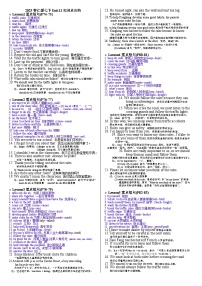
1. acrss frm 在……的对面
2. n the crner f 在……的拐角
3. between A and B 在A和B之间
4. excuse me 请问,劳驾,打扰一下
5. next t 紧邻……,在……近旁
6. The hspital is acrss frm the htel.医院在酒店的对面。
7.The supermarket is n the crner f Xinhua Street and Zhngshan Rad.
超市在新华街和中山路的拐角处。
8.There is a museum between the bank and the restaurant.
在银行和饭店之间有一家博物馆。
注:There be句型:“There is/are+名词+介词短语” 表示“某处有某人/某物”。
9. -Excuse me, is there a bank near here? 请问,这附近有银行吗?
-Yes, there is. It’s n Huaihai Rad. 有,在淮海路。
注:“Excuse me, is there a bank near here?”这是英语中最为常见的问路句型。
(1)There be句型的一般疑问句:Is/Are there+名词+介词短语?
其肯定回答:Yes, there is/are. 否定回答:N, there isn’t/aren’t.
(2)excuse me “请问,劳驾,打扰一下”,为礼貌用语,
常用于与陌生人开启对话,打断别人或在公共场合引起他人注意。
10. The bank is next t the bkstre.银行在书店旁边。
Lessn2重点短句(P40-41)
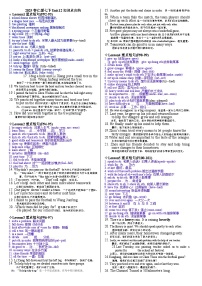
1. be lst=get lst 迷路,丢失
2. get arund 四处走动
3. get t sp. 到达某地 get here 到达这里
4. get ff 下车 get n 上车
5. change t 换乘
6. hw far多远(问距离)
7. lk fr寻找
8. g alng=walk alng 沿着……走
9. the first crssing 第一个十字路口
10. turn left 向左转 turn right 向右转
11. walk n 继续走,继续前行
12. n yur left 在你的左边 n yur right 在你的右边
13.-Culd yu shw me the way t the Jiangu Htel?
你能指给我去建国宾馆的路吗?
-Srry, I just gt here. 对不起,我刚来到这儿。
注:“Culd yu d sth.?”是一种比较委婉、客气的表达方式,
用来向对方提出请求,相比“Can yu d sth.?”语气更为委婉、礼貌。
-Hw can I get t the Jiangu Htel? 我怎样才能到达建国宾馆?
-Yu need t take the undergrund Line 2,
and then get ff at Zhngshan Park Statin.
你需要乘坐地铁二号线,然后在中山公园站下车。
15.Yu can change t the bus N. 18. 你可以换乘 18 路公交。
16.-Hw far is it? (距离) 有多远?
-Abut 15 kilmeters. 大约 15 千米。
注:询问两地之间的距离常用“hw far”。可以回答具体距离,
也可以用交通工具所花费的时间来回答。如:
-Hw far is yur schl frm yur hme? 你的学校离你家有多远?
-Abut twenty minutes’ walk. 走路大概 20 分钟。
17.I’m lking fr the Jiangu Htel. Can yu help me?
我正在寻找建国宾馆。你能帮助我吗?
18.G alng Huanghe Rad until yu get t the first crssing. 沿着黄河路走,直到你到达第一个十字路口。
19. Turn left and walk n. Yu can see it n yur right.
向左转,然后继续走。你可以看到它在你的右边。
Lessn3重点短句(P42-43)
1. a map f … 一张……的地图
2. n ft 步行
3. start t d sth. =begin t d sth. 开始做某事
4. learn t d sth. 学会做某事,学习做某事
5. by water=by bat/ship 乘船,走水路
6. in a shrt time 在短时间内
7. stand fr 代表
8. think abut 思考,考虑
9. in frnt f … 在……(外部)前面
10. in the mrning/afternn/evening 在早上/下午/晚上
11. in the end 最终
12.figure ut弄清楚,弄明白
13.First, Xiaya drew a map f the gift.首先,肖雅画了一张礼物的地图。
14.Next, Li Xiang lked at the map.接下来,李想看着地图。
15.Then, Li Xiang dug under the tree.然后,李想在树下挖。
16.Finally, Li Xiang fund the gift in the bx.
最后,李想找到了在盒子里的礼物。
17.They started t use animals t get arund. 他们开始用动物四处走动。
18.Peple learned t build bats and ships and began t travel by water.
人们学会了造船,并开始乘船出行。
19.The signs stand fr different places n the map.
这些标志代表地图上的不同地点。
20.Finally, there was an island in frnt f me.最后,有一座岛在我的前面。
注:方位介词短语in frnt f 及 in the frnt f的区别:
(1)in frnt f 在……(外部)的前面
There is a tree in frnt f the classrm. 在教室的前面有一棵树。
(2)in the frnt f 在……(内部)的前面
The teacher is in the frnt f the classrm. 这个老师在教室的前面。
Lessn4重点短句(P44-45)
1. last weekend 上周末
2. have an unfrgettable trip有一次难忘的旅行(have-had)
3. at first 首先,起初
4. set up 搭建;建立(set-set)
5. prepare fr ……为……做准备(prepare-prepared)
6. a bttle f water一瓶水
7. find the way back 找到回家的路(find-fund)
8. hld ne’s hand 握住某人的手(hld-held)
9. tell sb. t d sth. 告诉某人要做某事(tell-tld)
tell sb. nt t d sth.告诉某人不要做某事
10. take ut 拿出 (take-tk)
11.all the way一路上
12. return t=g back t 返回到(return-returned; g-went)
13. be happy t d sth. 很高兴做某事(am/is-was; are-were)
14. give sb. a hug 给某人一个拥抱 (give-gave)
15. g camping 去野营(g-went)
16. safety prblems 安全问题
17.Last weekend, we had an unfrgettable trip t a frest park.
上周末,我们去森林公园进行了一次难忘的旅行。
18.At first, my father and I set up the tent, and my mther prepared fr dinner.
首先,我和我的爸爸搭建了帐篷,我的妈妈准备晚餐。
19.We culdn’t find the way back. 我们找不到回家的路。
20.He tld me nt t wrry and tk ut a map frm his bag.
他告诉我不要担心,并从包里拿出了一张地图。
21.My mther was s happy t see us back and gave us a big hug. ,妈妈是如此高兴看到我们回来,并且给了我们一个大大的拥抱。
22.-What did yu d last weekend? 上周末你做了什么?
-I went camping with my parents. 我和我的父母去野营了。
Lessn5重点短句(P46-47)
1. g acrss 横穿,穿过(g-went)
2. the teaching building 教学楼
3. behind the dr在门后面
4. the pst ffice 邮局
5. n the left f 在……的左边(强调两个物体紧密相邻)
n the right f 在……的右边
6.at the end f 在……的末尾/尽头
7. t the left f 在……的左边 t the right f 在……的右边
注:此短语更侧重于方向,强调某一物体在另一个物体的左/右方向上,
两个物体之间可能有一定的距离,不一定是紧挨着。
8. happen t sb. 发生在某人身上(主-sth.)
9. just nw 刚才
10. the way t … 去……的路
11.ask sb. fr help 向某人寻求帮助
12. tell sb. sth. 告诉某人某事 (tell-tld)
13. put up a tent搭建帐篷 (put-put)
14. lk up 向上看,抬头看;查找(lk-lked)
15. fall dwn 落下,摔倒(fall-fell)
16. bring sth. back 把某物带回来 (bring-brught)
17. build a fire 生火 (build-built)
18.G acrss the bridge, and yu can find the z n yur right.
穿过这座桥,你能发现动物园在你的右边。
19.There is a lake in frnt f the teaching building.
教学楼前有一个湖。
20.The pst ffice is n the left f the shpping mall.
邮局在购物商场的左边。
21.Mr. Li lives at the end f Park Rad.李先生住在公园路的尽头。
22.-What happened t yu just nw? 刚刚你发生什么了?
-I didn’t find the way t yur cmmunity.我找不到去你社区的路。
【语法梳理】
1. 介词
(1)定义:
介词通常位于名词或代词之前,表示该词与句子其他成分之间关系。
主要用来表示方向、位置、时间、方式、原因、目的等关系。
(2)常见方位介词(部分):
behind 在……后面
The by is behind the tree. 这个男孩在树的后面。
between… and… 在……和……之间
The pen is between the bk and the ntebk. 钢笔在书和笔记本之间。
beside 在……旁边(≈ next t)
She is standing beside her mther. 她站在她妈妈的旁边。
at the end f 在……的尽头
There is a small shp at the end f the street. 在街道尽头有一家小商店。
acrss (从物体表面)横穿
He walked acrss the rad. 他走过马路。
thrugh(从物体内部)穿过
She walked thrugh the frest. 她穿过了森林。
acrss frm在对面
The hspital is acrss frm the htel.医院在酒店的对面。
2.动词的过去式:
(1)定义:
a.表示过去某个时间发生的动作或状态
(常与yesterday, last week 等时间状语连用)。
标志词:just nw, yesterday, last week, in+过去的年份,时间+ag, at that time, nce upn a time, in the past, the ther day 等。
b.表示过去经常发生的动作(常与 ften, usually 等副词连用)。
(2)动词过去式规则变化
(3)不规则动词过去式(部分):
begin→began开始, d→did做, fly→flew飞, build→built建造, buy→bught买, take→tk拿, is→was是, shake→shk摇动, fall→fell落下, run→ran跑, see→saw看见, are→were是, hear→heard听见, find→fund发现, have→had有, set→set放置 teach→taught教, g→went去, bring→brught带来 say→said说
(4)句型结构:
肯定句:主语+动词过去式+其他。
主语+was/were+其他。
They visited their grandparents yesterday. 他们昨天去看望了他们的祖父母。
She was sad just nw. 她刚才很伤心。
否定句:主语 + didn't + 动词原型 + 其他。
主语+was/were+nt+其他。
He didn't walk the dg this mrning. 他今天早上没有去遛狗。
We were nt late last mnth. 上个月我们没有迟到。
Lessn6重点短句(P48)
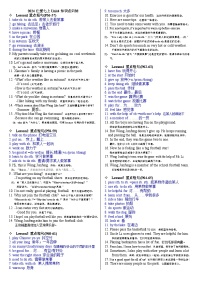
1. an unfrgettable trip 一次难忘的旅行
2. g muntain climbing去爬山(g-went)
3. last Sunday 上周日
4. make sure 确保,保证(make-made)
5. s that 以便,为的是(+句子,表目的)
6. as fr至于,关于,就而言
7. n the tp f the muntain在山顶上
8.g with sb. 和某人一起去
9. n that day 在那天
10.Where did yu g? 你去了哪里?
11.Wh did yu g with? 你和谁一起去的?
12.Hw did yu g there? 你怎样去那里?
13.What did yu prepare fr that trip?你为这次旅行准备了什么?
14.What was the weather like n that day?那天的天气怎么样?
=Hw was the weather n that day? 那天的天气怎么样?
15.What did yu d there?你在那里做什么了?
Lessn7重点短句(P49-50)
1.arrive at+小地点 “到达” (arrive-arrived)
arrive in+大地点 “到达”
2. set up the tent搭建帐篷(set-set)
3. g t sleep=g t bed 去睡觉(g-went)
4. t+adj./adv.+ t d sth. 太……而不能做某事
5. watch the stars 看星星
6. fall dwn摔倒(fall-fell)
7. n the grund 在地面上
8. hear sb. d sth. 听到某人做某事(强调全过程)(hear-heard)
hear sb. ding sth. 听到某人正在做某事(强调正在做)
9.the next day 次日,第二天
10. stay with sb. 和某人待在一起
11. alng the way 沿途,一路上
12. g fishing 去钓鱼
13. take phts拍照(take-tk)
14.But my brther and I were t excited t sleep.
但我哥哥和我都兴奋得睡不着觉。
注:“t+adj./adv.+ t d sth.” 意为“太……而不能做某事”,表示否定含义。
The bx is t heavy fr me t carry. 这个箱子对我来说太重了,我搬不动。
Suddenly, it started t rain.突然,天开始下雨了。
16.Everything was beautiful, but we must always put safety first.
一切都很美好,但是我们必须始终把安全放在第一位。
注:must 为情态动词,must d sth. 意为“必须做某事”。
表示必要性或义务,强调说话人的主观态度。如:
Yu must finish yur hmewrk n time.你必须按时完成作业。
【语篇结构】
熟悉并掌握叙述一次旅行经历的常见记叙文文体结构,
掌握相应写作要点:
1. Title: A Trip t...
2. Beginning: Intrduce the tpic (time, place, peple)
3. Bdy: Event sequence
• In the evening
• Then
• The next day
4. End: Summary
【描述方式】
1. 开门见山引出旅行经历:
This summer, I went t the Nrth Muntain near my hmetwn with my family.
2. 按照时间顺序叙述旅行的过程:
• In the evening, we arrived at the tp f the muntain and set up the tent.
• We then went ut t watch the stars. Suddenly, it started t rain.
• We culdn’t see very well and my brther fell dwn n the grund...
The next day, we stayed with ur parents alng the way.
3. 总结旅行经历,升华主题:
• It was a wnderful trip.
• Everything was beautiful, but we must always put safety first.
【参考范文】A Trip t the Z
Last Sunday, I went the z with my parents. It was a wnderful trip.
On the mrning f the day, we gt t the z early. First, we watched the mnkeys playing in the trees. They are cute. Then, we went t the panda huse.
There were lts f peple there. And all the pandas were sleeping. Later we watched tigers and lins. At last, my dad bught us ice cream. We enjyed ice cream befre leaving.
I felt jyful and amazed.
Lessn8重点短句(P51-53)
1. think f 认为,想起 (think-thught)
2. service center 服务中心
3. pet hspital 宠物医院
4. plice ffice 警察局
5. last mnth上个月
6. be famus fr … 因……而闻名(am/is-was; are-were)
7. bk a htel 预定酒店
8. fr three days 为期三天,持续三天
9. g fr a trip 去旅行(g-went)
10. during yur hliday 在你的假期期间
11. turn right 右转 turn left左转
12. g straight 直行
13. at the first turning 在第一个拐弯处/岔路口
14. g past 经过,路过
15. at the first crssing在第一个十字路口
16. the way t... 去……的路
17.What’s wrng with it? 它怎么了?
18.Hw is everything ging? 近况如何?
19.It’s famus fr its beautiful muntains.
它因美丽的山脉而闻名。
20.We had an exciting trip. 我们有一次激动人心的旅行。
注:“exciting”意为“令人兴奋的”,多修饰物,
“excited”意为“感到兴奋的”,多描述人的情绪。
This is an exciting mvie. 这是一部令人兴奋的电影。
I am excited abut the trip. 我对这次旅行感到兴奋。
21.I felt tired but happy. 我感到疲惫但是开心。
22.G alng the Lake Street and then past the first crssing.
沿着莱克街走,然后经过第一个十字路口。
23.Which is the way t the hspital?那一条是去医院的路?类别
变化方式
示例
发音规则
一般情况
直接加 -ed
watch→watched
1.清辅音后读 /t/
2.浊辅音和元音后读/d/;
3./t/或/d/ 后读 /ɪd/
以 e 结尾
加 -d
like→liked
重读闭音节,末尾单辅音字母
双写辅音字母加 -ed
plan→planned
stp→stpped
辅音字母 + y
改 y 为 i 加 -ed
carry→carried
这是一份初中英语仁爱科普版(2024)七年级下册(2024)Unit 9 From Here to There精品导学案,共3页。学案主要包含了语法梳理,语篇结构,描述方式,参考范文等内容,欢迎下载使用。
这是一份仁爱科普版(2024)七年级下册(2024)Unit 7 Being a Smart Shopper精品导学案,共3页。学案主要包含了语法梳理,语篇结构,描述方式,参考范文等内容,欢迎下载使用。
这是一份仁爱科普版(2024)七年级下册(2024)Unit 8 Our Blue Planet优秀导学案,共3页。学案主要包含了语法梳理,语篇结构,描述方式,参考范文等内容,欢迎下载使用。
 新教材
新教材
注册成功
资料篮

在线客服
添加在线客服
获取1对1服务
官方微信
关注“教习网”公众号
打开微信就能找资料
赛课定制
添加在线客服
获取1对1定制服务
职称咨询
添加在线客服
获取1V1专业指导服务

免费福利

.png)
.png)
.png)
