免费领取教师福利
若您为此资料的原创作者,认为该资料内容侵犯了您的知识产权,请扫码添加我们的相关工作人员,我们尽可能的保护您的合法权益。


这是一份安徽省六安市2025-2026学年高一下学期7月期末考试英语试卷(Word版附答案),共9页。
1. 答题前,考生先将自己的姓名、准考证号码填写清楚,将条形码准确粘贴在考生信息条形码粘贴区。
2. 选择题必须使用2B铅笔填涂;非选择题必须使用0.5毫米黑色字迹签字笔书写,字体工整、笔迹清晰。
3. 请按照题号顺序在答题卡各题目的答题区域内作答,超出答题区域书写的答案无效;在草稿纸、试卷上答题无效。
4. 作图可先使用铅笔画出,确定后必须用黑色字迹的签字笔描黑。
5. 保持卡面清洁,不要折叠,不要弄破、弄皱,不准使用涂改液、修正带、刮纸刀。
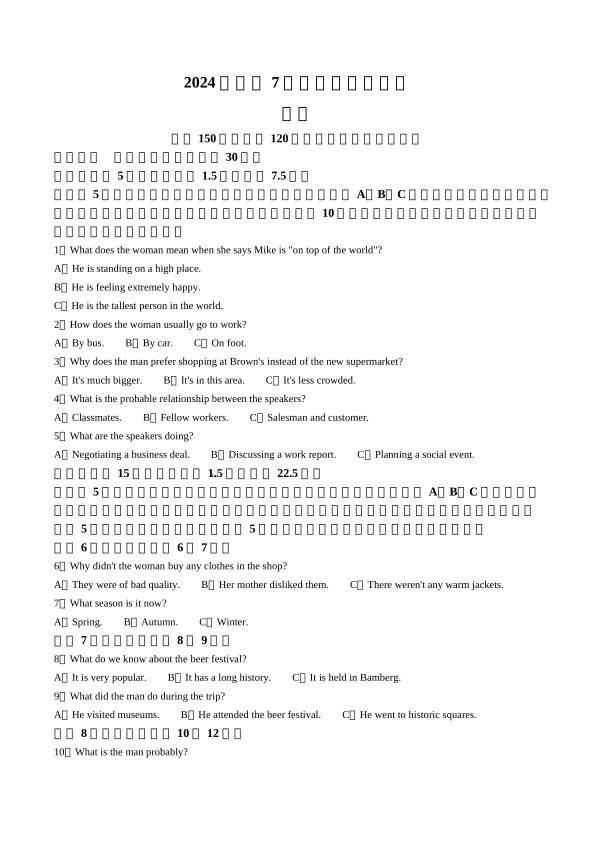
第一部分 听力(共两节,满分30分)
做题时,先将答案标在试卷上。录音内容结束后,你将有两分钟的时间将试卷上的答案转涂到答题卡上。
第一节(共5小题;每小题1.5分,满分7.5分)
听下面5段对话。每段对话后有一个小题,从题中所给的A、B、C三个选项中选出最佳选项。听完每段对话后,你都有10秒钟的时间来回答有关小题和阅读下一小题。每段对话读两遍。
1. What des the wman suggest the man d?
A. Buy a new cmputer. B. restart the cmputer. C. Stp using the cmputer.
2. What was wrng with the turist?
A. He was misunderstd. B. He culdn’t speak English. C. He culdn’t find the destinatin.
3. Why will the wman chse the blue bike?
A. It’s faster. B. It’s cheaper. C. It’s ec-friendly.
4. What is the man ding nw?
A. Studying fr a chemistry test.
B. checking basketball scres.
C. Playing a basketball game.
5. What des the wman mean?
A. The City Library is t far away.
B. The schl library is already clsed.
C. The man shuld g there by bus.
第二节(共15小题;每小题1.5分,满分22.5分)
听下面5段对话或独白。每段对话或独白后有几个小题,从题中所给的A、B、C三个选项中选出最佳选项。听每段对话或独白前,你将有时间阅读各个小题,每小题5秒钟;听完后,各小题将给出5秒钟的作答时间。每段对话或独白读两遍。
听第6段材料,回答第6、7题。
6. Which subject des Miss Jhnsn teach?
A. Literature. B. Science. C. Math.
7. What is the prbable relatinship between the speakers?
A. Brther and sister. B. Teacher and student. C. Mther and sn.
听第7段材料,回答第8、9题。
8. Hw des the wman want t travel?
A. By train. B. By plane. C. By bus.
9. When des the wman decide t g t Beijing?
A. In September. B. In Octber. C. In Nvember.
听第8段材料,回答第10至12题。
10. Where are the tw speakers prbably talking?
A. In the classrm. B. At the schl gate C. In a ticket ffice.
11. Wh will perfrm at the music festival?
A. Sme student bands. B. A famus singer. C. The headmaster.
12. What time are they suppsed t arrive?
A. At 6: 00 P. M. B. At 6: 30 P. M. C. At 7: 00 P. M.
听第9段材料,回答第13至16题。
13. What did Tm’s lder brther think f his vlunteering?
A. It was bring and tiring.
B. It helped imprve math skills.
C. It was a valuable experience.
14. Hw many hurs will Tm wrk at the museum each week?
A. 12 hurs. B. 18 hurs. C. 24 hurs.
15. Where did Lisa’s cusin vlunteer last summer?
A. At an animal shelter. B. At a city museum. C. At a math training center.
16. Why des Tm suggest Lisa try vlunteering?
A. It can replace summer curses.
B. It can bring in sme pcket mney.
C. It can help with cllege applicatins.
听第10段材料,回答第17至20题。
17. Hw did David feel abut water when he was yung?
A. He was afraid f it. B. He was crazy abut it. C. He felt relaxed in water.
18. Wh taught David t swim at the beginning?
A. His cach. B. His father. C. His classmate.
19. When did David win the gld medal in the City Swimming Champinship?
A. At the age f ten. B. At the age f fifteen. C. At the age f sixteen.
20. What is the speaker mainly talking abut?
A. His advice n vercming fear.
B. His plan t be a swimming cach.
C. His experience in becming a swimmer.
第二部分 阅读理解(共两节,满分50分)
第一节 (共15小题;每小题2.5分,满分37.5分)
阅读下列短文,从每题所给的A、B、C和D四个选项中选出最佳选项。
A
Lking t step ff the beaten path f traditinal museums? These fur museums in the U.S. let visitrs explre spaces where histry, art, and innvatin (革新) cmbine in unexpected ways.
Idah Ptat Museum, Blackft, Idah
Fr fd lvers, this museum is a must-visit. It shws hw ptates have shaped the lcal ecnmy. Visitrs can explre the develpment f ptat farming, discver different varieties, and view related cllectins. It prves that even a cmmn vegetable can be attractive.
Museum f Bad Art, Bstn, Massachusetts
Unlike traditinal museums shwing masterpieces, this ne prudly exhibits “bad art”. Visitrs can enjy funny wrks like Lucy in the Field with Flwers and try t guess the stries behind them. It reminds us that art is abut expressin and creativity, nt just technical perfectin.
Museum f Ice Cream, New Yrk City, New Yrk
This museum ffers a sweet experience. Its pink walls and clrful rms make perfect backdrps fr phts. Inside, guests can explre the science behind making ice cream and play in the Sprinkle (糖粒) Pl filled with plastic candy sprinkles. The biggest highlight is that visitrs have access t different ice cream varieties thrughut their visit. Bth yur inner child and yur children will have a great time at the Museum f Ice Cream.
Smithsnian Natinal Air and Space Museum, Washingtn, D. C.
Histry and science fans shuld nt miss this stp. It huses legendary bjects such as the Wright Flyer and the Apll 11 cmmand mdule (舱). An exhibitin n the Space Race further explains the intense cmpetitin between the U. S. and the Sviet Unin. Whether yu lve histry r science, there is always smething new t discver here.
1. What can visitrs d at the Idah Ptat Museum?
A. Taste different kinds f ptates.
B. Learn abut the histry f ptat farming.
C. Take phts with famus ptat artists.
D. Buy special ptat prducts as suvenirs.
2. Hw des the Museum f Bad Art challenge traditinal views f art?
A. By encuraging visitrs t create their wn strange artwrks.
B. By prving funny wrks are mre valuable than masterpieces.
C. By shwing that technical skill is nt the nly standard fr art.
D. By suggesting that art shuld fcus less n persnal expressin.
3. What d the fur museums have in cmmn?
A. They are lcated in majr cities.
B. They fcus mainly n fd and art.
C. They ffer free admissin t visitrs.
D. They prvide unusual experiences.
B
Parisima Taeb and her 9-year-ld daughter, Darya Haija, were heading hme frm their lcal grcery stre when Darya sptted a grup f hmeless peple in a nearby lt. “Where d they sleep?” she asked her mm, wrried. “There are shelters that try t help them,” Parisima explained, but Darya wasn’t satisfied. “Where d they get mney fr fd? Hw can I help?” she pressed n, but this time her mm had n answer.
“Let me ask yur teacher,” Parisima said. “Maybe she knws hw yu can help. ”“Yur timing culdn’t be better,” Darya’s teacher said the next afternn when Parisima apprached. “The schl is starting a fd drive. Darya is welcme t help!”
Excited, Darya and her classmates cllected canned gds and helped srt them fr a lcal fd bank. “Maybe there’s mre I can d,” she thught as the fd drive ended.
Darya lved making jewelry at hme. “What d yu think?” she asked her mm, shwing ff a beaded bracelet (珠链). “It’s beautiful!” Parisima smiled, and the next afternn, Darya made anther. Sn she had 20 and then she began decrating pens. “I’m ging t sell them and raise mney fr the hmeless,” Darya declared. “Where shuld the mney g?”
Parisima researched shelters and visited several with Darya. One f them, Frt Myers Wmen and Children Shelter, really tuched Darya’s heart. “This is the ne,” Darya decided, and sn she was ging dr-t-dr selling her bracelets and pens.
Peple were tuched by the little girl’s kindness and almst everyne she spke t bught smething. When Darya raised $1,000, Parisima helped her pen a bank accunt and write a check. “This is fr yu,” she tld Rachel McKinnn, directr f Frt Myers Wmen and Children’s Shelter. “This will help us buy fd and supplies fr residents,” McKinnn said gratefully, but fr Darya, it was just the beginning.
Fr her latest and greatest prject, Darya has made 100 bracelets, and she’s inviting friends t jin a large cmmunity sale. “Peple need fd and a place t sleep,” she says. “I lve helping them in every pssible way.”
4. What did Darya d immediately after the schl fd drive finished?
A. She began t make jewelry at hme.
B. She went dr-t-dr t sell pens.
C. She pened a bank accunt t save mney.
D. She figured ut mre ways t help the hmeless.
5. Why did Darya and her mther visit several shelters befre dnating?
A. T get advice n running a charity activity.
B. T lk fr peple t sell her bracelets t.
C. T pick a suitable shelter fr her dnatins.
D. T cllect daily supplies fr hmeless peple there.
6. What can we infer frm peple’s warm respnse t Darya’s sale?
A. Parisima helped prmte Darya’s prducts.
B. Peple were mved by Darya’s kind heart.
C. Hmeless peple needed the prducts badly.
D. Darya’s prducts were very cheap and beautiful.
7. Which f the fllwing can best describe Darya?
A. Warm-hearted and helpful.
B. Shy and thughtful.
C. Creative and curius.
D. Cnfident and humrus.
C
Simply using fd packaging as intended can intrduce micrplastics (微塑料) int yur fd. A review f 103 studies fund that everyday actins, like pening a plastic bttle r using a plastic cutting bard, can release tiny particles (微粒) f plastic.
A team led by bilgist Lisa Zimmermann frm the Swiss nn-prfit Fd Packaging Frum states that the prblem is ubiquitus. “This is the first systematic evidence f hw nrmal and intended use f fdstuffs packaged in plastics can be plluted with micrplastics,” said Zimmermann.
The deeper scientists explre micr- and nanplastics (MNPs), the clearer their widespread presence becmes. These are tiny pieces f material, t small t see, released by different plastic prducts as they’re used r break dwn in the envirnment. Plastic is cheap and useful fr string things and making clthes. Hwever, ver the years, we’ve learned that even thugh plastic desn’t break dwn easily, it can still turn int very small pieces. These tiny particles spread easily in the envirnment.
Scientists have fund micrplastics in nearly every part f the human bdy. Mst wrryingly, their health impacts remain largely unknwn, yet early findings are alarming. Zimmermann and her team examined 103 studies that have investigated the presence f plastic particles in fd. Frm these studies, they extracted 600 entries abut fd cntact articles, f which 96 percent reprted the presence f MNPs.
Ntably, the researchers fund that several studies link reusable plastic items — such as melamine bwls — t a rise in micrplastic release with each wash. The researchers als nte that ultra-prcessed (超加工) fd cntains mre micrplastics than minimally prcessed nes. The reasn fr this is simple: mre prcessing steps mean greater expsure t plastic fd-prcessing equipment, resulting in mre MNPs in the final prduct.
The researchers’ findings strngly suggest that nt nly is further in-depth research badly needed, but als effective measures shuld be taken t cut plastic use in fd packaging and prcessing.
8. What can we learn abut micrplastics frm the first paragraph?
A. They are released by imprper use f plastic packaging.
B. They can enter fd thrugh nrmal use f packaging.
C. They are mainly fund in plastic bttles and cutting bards.
D. They have been fully studied by scientists arund the wrld.
9. What des the underlined wrd “ubiquitus” in Paragraph 2 prbably mean?
A. Cmmn everywhere.B. Harmful t health.
C. Difficult t discver.D. Hard t avid cmpletely.
10. What cntributes t ultra-prcessed fd’s higher micrplastic levels?
A. Prlnged strage in plastic cntainers.
B. Greater use f plastic packaging.
C. Higher cntent f man-made additives.
D. Mre cntact with plastic prcessing tls.
11. What is the main purpse f the text?
A. T prmte the use f reusable plastic items.
B. T explain the health risks f prcessed fd.
C. T raise awareness f micrplastics frm plastic use.
D. T intrduce the applicatins f plastic fd packaging.
D
Unin Terrace Gardens in Aberdeen has been named the winner f the Andrew Dlan Best Building in Sctland Award. Designed by Stallan-Brand Architecture, it’s a public space in the city centre. After years f being ignred, the prject has brught the gardens back t life. It intrduced new architectural elements and restred ld features, creating a safe, peple-friendly public area.
Originally pened in 1879, the gardens had suffered frm years f decline. The recent £28.3 millin refurbishment (翻修) has transfrmed them int an energetic and accessible heart fr the cmmunity. Lcated near cultural sites like Aberdeen Art Gallery, the renewed gardens nw welcme everyne.
The design cmbines new structures with restred histric features. Three lantern-like pavilins (亭子), inspired by the city’s ld trams, huse a cafe, restaurant, and wine bar. Histric features, including statues, railings, and Victrian tilets, have been faithfully restred. The landscape cmbines green planting, play areas, event spaces, and an aerial walkway, creating a harmnius envirnment.
The head judge said the prject is a great success. It turned an ld, frgtten space int a ppular place that brings peple tgether. She highlighted that the ten-year effrt by Aberdeen City Cuncil shws the city’s strng devtin, resulting in a high-quality and green public space.
The lead architect described the gardens as the “beating heart f Aberdeen,” shwcasing hw thughtful urban renewal can reverse (扭转) centre decline. The president f the Ryal Crpratin f Architects in Sctland praises the prject as a perfect example f hw architecture imprves public life, nting its skillful cmbinatin f mdern design, heritage cnservatin, and landscape.
This award-winning transfrmatin has returned the gardens t the peple f Aberdeen as a valued place fr current and future generatins t enjy.
12. What was the primary utcme f the £28.3 millin refurbishment?
A. It built new cultural sites near the Art Gallery.
B. It changed the gardens int a cmmunity center.
C. It mainly fcused n restring Victrian tilets.
D. It cnstructed three large restaurants and cafes.
13. What can we learn abut the three new pavilins?
A. They are built beside ancient stne statues.
B. They were built with green planting inside.
C. They share the same style as the art gallery nearby.
D. Their design draws inspiratin frm histrical trams.
14. What is the lead architect’s main pint abut the prject?
A. It highlights the limits f urban renewal.
B. It revives the city thrugh thughtful redesign.
C. It shws heritage matters mre than functin.
D. It prves design can drive scial change greatly.
15. What is the best title fr the text?
A. Old Trams Shaped Aberdeen’s New Gardens
B. New Cafes Open in Unin Terrace Gardens
C. Scttish Gardens Win Tp Architecture Prize
D. Public Spaces Need Mre Gvernment Funding
第二节(共5小题;每小题2.5分,满分12.5分)
阅读下面短文,从短文后的选项中选出可以填入空白处的最佳选项。选项中有两项为多余选项。
Graduatin desn’t mark the end f learning — true lifelng learners knw that. In this text, we’ll explre five simple steps t help senirs embrace (拥抱) lifelng learning and cntinue grwing every day.
●Stay curius abut the wrld.
Curisity keeps lifelng learners yung at heart. ____16____ Each adventure — whether it’s wandering thrugh a museum, getting lst in a new city, r trying a new recipe — turns int an pprtunity t learn. They dive int new cultures, accept new ideas, and change hw they view the wrld.
●Make time fr daily learning.
Lifelng learners knw that learning fits int small pckets f time. They dedicate just 15-30 minutes a day t reading r puzzles. Fr example, they might read a chapter f a bk befre bed, slve a crsswrd puzzle ver mrning cffee, r watch an nline vide t pick up a skill, like gardening r painting. ____17____
●Embrace challenges instead f aviding them.
New things can feel impssible, but lifelng learners take it ne step at a time. They take up yga even as beginners, r try ut new technlgy when they feel cnfused. ____18____ Instead f saying, “I can’t d that,” they ask, “Hw can I learn this?”
●Set learning gals, big r small.
Gals give lifelng learners smething t wrk tward. ____19____ Achieving wins — big r small — fuels their excitement t keep ging.
●____20____
Lifelng learners knw learning happens in gd cmpany. As the age-ld saying ges,“If yu’re the smartest persn in the rm, yu’re in the wrng rm. ” They jin lcal bk clubs, take cmmunity center classes, r cnnect with neighbrs wh share their interests.
A. It’s abut cnsistency — nt perfectin.
B. Learning alne allws them t fcus better.
C. Surrund yurself with instructrs and like-minded peple.
D. They ask questins, try new things, and never stp explring.
E. They write dwn what they want t learn and celebrate prgress.
F. Lifelng learners knw facing challenges helps them grw strnger.
G. Sharing insights with thers can deepen understanding and inspire new ideas.
第三部分 语言知识运用(共两节,满分30分)
第一节(共15小题;每小题1分,满分15分)
阅读下面短文,从每题所给的A、B、C和D四个选项中选出可以填入空白处的最佳选项。
As a literature majr at the University f Iwa in the early 2000s, I bught a cpy f F. Sctt Fitzgerald’s The Great Gatsby t read fr pleasure. I never fund time t read it then, s the bk ____21____ t Brklyn with me after graduatin. It fllwed me thrugh several ____22____ in Manhattan and Brklyn. ____23____, leaving Park Slpe fr Midwd, I ____24____ I was never ging t read it, s I put it ut n the ____25____ in frnt f the huse where I lived at the time. It was ____26____ within hurs — a passerby must have ____27____ it n the sidewalk.
A cuple f years ag my family and I mved t a New Jersey twn filled with frmer Brklyn ____28____. Walking hme frm the train ne night, I passed a ____29____ library bx and saw a cpy f The Great Gatsby. I ____30____ it, thinking I wuld finally have ____31____ t read it during my daily cmmute (通勤). As I ____32____ the pages that evening, a bkmark drpped t the flr: a ticket receipt (收据) fr a perfrmance at the University f Iwa — with my ____33____ n it.
I std frzen, hlding that ____34____ receipt. The same cpy had traveled full circle, thrugh cuntless hands and neighbrhds, nly t find its way back t me tw decades later. Sme stries, it seems, ____35____ t remain unread frever.
21. A. wavedB. returnedC. rushedD. traveled
22. A. tripsB. mvesC. visitsD. shifts
23. A. FinallyB. SuddenlyC. RecentlyD. Gradually
24. A. prmisedB. imaginedC. decidedD. cmplained
25. A. tableB. shelfC. sidewalkD. wall
26. A. gneB. sldC. hiddenD. brken
27. A. missedB. spttedC. stlenD. printed
28. A. strangersB. residentsC. fficersD. reprters
29. A. freeB. busyC. publicD. mdern
30. A. tuchedB. returnedC. repairedD. grabbed
31. A. chanceB. energyC. timeD. curage
32. A. leafed thrughB. lked intC. saw thrughD. checked ut
33. A. numberB. phtC. addressD. name
34. A. lngB. ldC. thickD. cheap
35. A. happenB. prepareC. refuseD. agree
第二节(共10小题;每小题1.5分,满分15分)
阅读下面短文,在空白处填入1个适当的单词或括号内单词的正确形式。
Len Smith, a devted educatr with 25 years f service at Haverfrd High Schl, has recently risen frm a belved lcal figure t a natinal star. He ____36____ (name) the 2026 Natinal Teacher f the Year by the Cuncil (议会) f Chief State Schl Officers (CSSO) and learned f the hnr live n televisin. As the winner, Smith will serve as a natinal ambassadr (大使) fr teachers, traveling acrss the cuntry t share his ____37____ (educatin) philsphy.
During his quarter-century at Haverfrd, Smith ____38____ (teach) Advanced Placement U.S. Histry and African American Studies. He is famus ____39____ his unique teaching methd: every class begins with cmmunity-building activities befre students explre difficult histrical tpics. ____40____ (describe) his apprach as a “warm demander,” Smith mixes high standards with strng supprt. This style encurages students ____41____ (try) their best while feeling cared fr, helping them discver ptential ____42____ has lng remained hidden within them.
Beynd regular teaching, Smith als advises the African American Cultural Enrichment Club and caches freshman basketball. He ____43____ (active) pushes schl leaders t create a “grw-yur-wn” prgram ____44____ (aim) at recruiting mre teachers f different backgrunds. Accrding t The Philadelphia Inquirer, Smith hpes his natinal platfrm will inspire mre yung peple t cnsider teaching as ____45____ meaningful career. Students and cwrkers praise him fr cmbining academic excellence with a pwerful sense f belnging, making him a truly deserving hnree.
第四部分 写作(共两节,满分40分)
第一节(满分15分)
46. 假定你是李华,正在英国交流学习。你发现学校体育馆的更衣室(lcker rm)地面湿滑、场内垃圾多,且储物柜(lcker)老旧损坏。请给体育中心主任Mr. Davis写一封邮件,内容包括:
1. 反映问题;
2. 表达期望。
注意:
1. 写作词数应为80个左右;
2. 可适当增加细节以使行文连贯。
Dear Mr. Davis,
____________________________________________________________________________________________________________________________________________________________________________________________________________________________________________________________________________________________________________________________________________________________________________________________________________________________________________________________________________
Yurs,
Li Hua
第二节 续写(满分25分)
47. 阅读下面材料,根据其内容和所给段落开头语续写两段,使之构成一篇完整的短文。
“Here they cme!” 15-year-ld Alexa Billstrm shuted, lking int the hallway. Her lder sister, Jrdyn, had spent the summer in hspital receiving treatment fr a serius bld disease. Jrdyn felt sad and lnely until a hspital vlunteer brught in a therapy (治疗) dg. Jrdyn, wh lved dgs, lked frward t every visit. The dg’s warm cmpany lifted her spirits a lt.
After a bne peratin, Jrdyn made a full recvery and went back hme. Hwever, Alexa never frgt hw much happiness the therapy dg had brught her sister. Inspired, she decided t act. She had her dg, Mlly, trained and certified (认证) as a therapy dg. But smething even mre meaningful was abut t happen.
Alexa had always dreamed f wning a hrse. Her parents tld her she culd get ne nly if she culd cver all its purchase and upkeep csts. S, she saved every penny frm her part-time jb at a pizza shp. When she finally had enugh mney, she realized the cst f feeding and husing a full-sized hrse was t high. Then she had an idea: why nt get a smaller hrse? She searched nline and fund a rescue grup fr small hrses. One pht caught her eye. “He’s lvely!” she said. The little hrse was named Sawdust. She paid the fee, and the shelter sent him t a nearby stable.
At first, Sawdust was hard t manage. He pulled n the rpe, std n his back legs, and tried t run away. But Alexa was patient. She spent many afternns and evenings calming him dwn, brushing him, and teaching him. Slwly, he imprved. “He’s finally learning,” she tld the residents at the nursing hme where she had just started wrking. They begged t meet him, even thugh she explained he wasn’t yet a certified therapy animal. T everyne’s surprise, the visit went wnderfully. One lady hugged him and said, “Hi, sweetheart.”
Sn, ther nursing hmes invited him t visit. Alexa fund an rganizatin that certifies therapy hrses. She prepared him carefully, letting him get used t lud machines, wheelchairs, and ther facilities.
注意:
1. 续写词数应为150个左右;
2. 请按如下格式在答题卡的相应位置作答。
Finally, Sawdust passed his test and began visiting children’s hspitals r nursing hmes.
____________________________________________________________________________________________________________________________________________________________________________________________________________________________________________________________________________________________________________________________________________________________________________________________________________________________________________________________________________
Alexa still gives her free time t Sawdust’s missin.
____________________________________________________________________________________________________________________________________________________________________________________________________________________________________________________________________________________________________________________________________________________________________________________________________________________________________________________________________________
高一英语
满分:150分 考试时间:120分钟
注意事项:
1. 答题前,考生先将自己的姓名、准考证号码填写清楚,将条形码准确粘贴在考生信息条形码粘贴区。
2. 选择题必须使用2B铅笔填涂;非选择题必须使用0.5毫米黑色字迹签字笔书写,字体工整、笔迹清晰。
3. 请按照题号顺序在答题卡各题目的答题区域内作答,超出答题区域书写的答案无效;在草稿纸、试卷上答题无效。
4. 作图可先使用铅笔画出,确定后必须用黑色字迹的签字笔描黑。
5. 保持卡面清洁,不要折叠,不要弄破、弄皱,不准使用涂改液、修正带、刮纸刀。
第一部分 听力(共两节,满分30分)
做题时,先将答案标在试卷上。录音内容结束后,你将有两分钟的时间将试卷上的答案转涂到答题卡上。
第一节(共5小题;每小题1.5分,满分7.5分)
听下面5段对话。每段对话后有一个小题,从题中所给的A、B、C三个选项中选出最佳选项。听完每段对话后,你都有10秒钟的时间来回答有关小题和阅读下一小题。每段对话读两遍。
1. What des the wman suggest the man d?
A. Buy a new cmputer. B. restart the cmputer. C. Stp using the cmputer.
2. What was wrng with the turist?
A. He was misunderstd. B. He culdn’t speak English. C. He culdn’t find the destinatin.
3. Why will the wman chse the blue bike?
A. It’s faster. B. It’s cheaper. C. It’s ec-friendly.
4. What is the man ding nw?
A. Studying fr a chemistry test.
B. checking basketball scres.
C. Playing a basketball game.
5. What des the wman mean?
A. The City Library is t far away.
B. The schl library is already clsed.
C. The man shuld g there by bus.
第二节(共15小题;每小题1.5分,满分22.5分)
听下面5段对话或独白。每段对话或独白后有几个小题,从题中所给的A、B、C三个选项中选出最佳选项。听每段对话或独白前,你将有时间阅读各个小题,每小题5秒钟;听完后,各小题将给出5秒钟的作答时间。每段对话或独白读两遍。
听第6段材料,回答第6、7题。
6. Which subject des Miss Jhnsn teach?
A. Literature. B. Science. C. Math.
7. What is the prbable relatinship between the speakers?
A. Brther and sister. B. Teacher and student. C. Mther and sn.
听第7段材料,回答第8、9题。
8. Hw des the wman want t travel?
A. By train. B. By plane. C. By bus.
9. When des the wman decide t g t Beijing?
A. In September. B. In Octber. C. In Nvember.
听第8段材料,回答第10至12题。
10. Where are the tw speakers prbably talking?
A. In the classrm. B. At the schl gate C. In a ticket ffice.
11. Wh will perfrm at the music festival?
A. Sme student bands. B. A famus singer. C. The headmaster.
12. What time are they suppsed t arrive?
A. At 6: 00 P. M. B. At 6: 30 P. M. C. At 7: 00 P. M.
听第9段材料,回答第13至16题。
13. What did Tm’s lder brther think f his vlunteering?
A. It was bring and tiring.
B. It helped imprve math skills.
C. It was a valuable experience.
14. Hw many hurs will Tm wrk at the museum each week?
A. 12 hurs. B. 18 hurs. C. 24 hurs.
15. Where did Lisa’s cusin vlunteer last summer?
A. At an animal shelter. B. At a city museum. C. At a math training center.
16. Why des Tm suggest Lisa try vlunteering?
A. It can replace summer curses.
B. It can bring in sme pcket mney.
C. It can help with cllege applicatins.
听第10段材料,回答第17至20题。
17. Hw did David feel abut water when he was yung?
A. He was afraid f it. B. He was crazy abut it. C. He felt relaxed in water.
18. Wh taught David t swim at the beginning?
A. His cach. B. His father. C. His classmate.
19. When did David win the gld medal in the City Swimming Champinship?
A. At the age f ten. B. At the age f fifteen. C. At the age f sixteen.
20. What is the speaker mainly talking abut?
A. His advice n vercming fear.
B. His plan t be a swimming cach.
C. His experience in becming a swimmer.
第二部分 阅读理解(共两节,满分50分)
第一节 (共15小题;每小题2.5分,满分37.5分)
阅读下列短文,从每题所给的A、B、C和D四个选项中选出最佳选项。
A
【1~3题答案】
【答案】1. B 2. C 3. D
B
【4~7题答案】
【答案】4. D 5. C 6. B 7. A
C
【8~11题答案】
【答案】8. B 9. A 10. D 11. C
D
【12~15题答案】
【答案】12. B 13. D 14. B 15. C
第二节(共5小题;每小题2.5分,满分12.5分)
阅读下面短文,从短文后的选项中选出可以填入空白处的最佳选项。选项中有两项为多余选项。
【16~20题答案】
【答案】16. D 17. A 18. F 19. E 20. C
第三部分 语言知识运用(共两节,满分30分)
第一节(共15小题;每小题1分,满分15分)
阅读下面短文,从每题所给的A、B、C和D四个选项中选出可以填入空白处的最佳选项。
【21~35题答案】
【答案】21. D 22. B 23. A 24. C 25. C 26. A 27. B 28. B 29. A 30. D 31. C 32. A 33. D 34. B 35. C
第二节(共10小题;每小题1.5分,满分15分)
【36~45题答案】
【答案】36. was named
37. educatinal
38. has taught
39. fr 40. Describing
41. t try 42. that##which
43. actively
44. aimed 45. a
第四部分 写作(共两节,满分40分)
第一节(满分15分)
【46题答案】
【答案】One pssible versin:
Dear Mr. Davis,
I am Li Hua, an exchange student frm China. I am writing t bring t yur attentin sme issues regarding the lcker rm in the gym.
Recently, I have nticed that the flrs are ften wet and slippery, with litter lying arund, which pses a safety risk. Additinally, several lckers are ld and damaged, making it difficult t stre belngings safely.
I sincerely hpe that regular cleaning and maintenance can be arranged. Placing “Wet Flr” signs and repairing the lckers wuld greatly imprve the experience fr all users. Thank yu fr yur time and understanding.
Yurs,
Li Hua
第二节 续写(满分25分)
【47题答案】
【答案】
Finally, Sawdust passed his test and began visiting children’s hspitals r nursing hmes. Wearing his fficial blue vest, he walked calmly thrugh busy crridrs, bringing smiles t patients f all ages. Children eagerly held ut apple slices and carrts, their eyes shining with delight as Sawdust gently tk treats frm their palms. “He knws exactly wh needs him mst,” Alexa ften bserved, watching him apprach a lnely elder r a nervus child. The little hrse had transfrmed frm a frightened rescue int a cnfident healer, his glden cat shining under bright lights.
Alexa still gives her free time t Sawdust’s missin. Tgether they attend cmmunity events, raising funds and spreading awareness abut therapy animals. Last year alne, they cmpleted ver ninety visits. “When he first arrived, he hated the truck,” Alexa recalled, “but nw he jumps right in because he knws we’re bringing jy t thers.” Standing beside her small partner, she sees Jrdyn’s happy smile reflected n cuntless faces. That summer in the hspital had planted a seed f kindness, which has nw becme smething far beynd her wildest dreams.
这是一份安徽省六安市2025-2026学年高一下学期7月期末考试英语试卷(Word版附答案),共9页。
这是一份安徽六安市2025-2026学年高一下学期7月期末考试英语试卷(Word版附解析),文件包含安徽省六安第一中学2025-2026学年高二下学期7月期末地理试题Word版含解析docx、安徽省六安第一中学2025-2026学年高二下学期7月期末地理试题Word版无答案docx等2份试卷配套教学资源,其中试卷共18页, 欢迎下载使用。
这是一份安徽省六安市2025-2026学年高一下学期7月期末考试英语试卷,共5页。
注册成功
资料篮

在线客服
添加在线客服
获取1对1服务
官方微信
关注“教习网”公众号
打开微信就能找资料
赛课定制
添加在线客服
获取1对1定制服务
职称咨询
添加在线客服
获取1V1专业指导服务

免费福利

添加在线客服
领取免费福利