 免费领取教师福利
若您为此资料的原创作者,认为该资料内容侵犯了您的知识产权,请扫码添加我们的相关工作人员,我们尽可能的保护您的合法权益。


这是一份开学考试(南京卷)-2026-2027学年译林版九年级英语上册含答案,共13页。试卷主要包含了全卷满分90分等内容,欢迎下载使用。
英语
(考试时间:90分钟 试卷满分:90分)
注意事项:
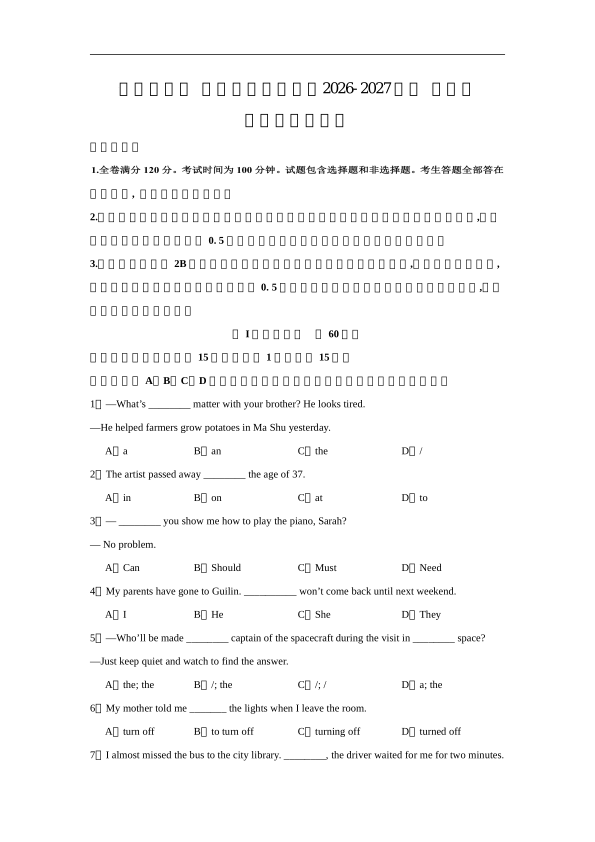
1.全卷满分90分。考试时间为90分钟。试题包含选择题和非选择题。考生答题全部答在答题卡上, 答在本试卷上无效。
2.请认真核对监考教师在答题卡上所粘贴条形码的姓名、考试证号是否与本人相符合,再将自己的姓名、考试证号用0. 5毫米黑色墨水签字笔填写在答题卡及本试卷上。
3.答选择题必须用2B铅笔将答题卡上对应的答案标号涂黑。如需改动,请用橡皮擦干净后,再选涂其他答案。答非选择题必须用0. 5毫米黑色墨水签字笔写在答题卡的指定位置,在其他位置答题一律无效。
第Ⅰ卷(选择题,共40分)
一、语法选择(共15小题;每小题1分,满分15分)
阅读下面短文,按照句子结构的语法性和上下文连贯的要求,从各题所给的 A、B、C 和 D 项中选出最佳选项,并在答题卡上将该项涂黑。
A
What des “Li” mean in Chinese culture? Tday, let’s take a clser lk. In the late Eastern Han Dynasty, lcal rulers fught fr pwer while peple 1 frm endless wars. Liu Bei wanted peace, 2 t realize his dream was difficult. He needed mre help. He heard abut Zhuge Liang, a smart yung man living quietly in Lngzhng.
He visited Zhuge Liang three times. Zhuge was away n the first tw visits. Liu left messages. On the third visit, Zhuge was napping. Liu waited patiently utside. 3 by Liu’s respect, Zhuge prmised 4 . With Zhuge, Liu built the Shu Kingdm.
In China, “Li” means manners and respect. Liu’s three visits shwed Li perfectly. He didn’t push his way in r get angry. He waited plitely. Gd manners are nt 5 saying “please”— they shw real respect thrugh actins. Liu’s stry reminds us that success cmes frm bth smart plans and a respectful heart.
1.A.sufferB.suffersC.sufferedD.suffering
2.A.asB.rC.butD.if
3.A.MveB.MvedC.MvingD.T mve
4.A.helpB.helpsC.helpingD.t help
5.A.justB.yetC.everD.exactly
【答案】1.C 2.C 3.B 4.D 5.A
【导语】本文通过刘备三顾茅庐的故事,阐释了“礼”在中国文化中的含义——礼貌和尊重。
【详解】1.句意:在东汉末年,地方统治者争权夺利,而人民遭受着无休止的战乱。
while引导的时间状语从句中,主句用一般过去时fught,从句表示同时发生的持续状态,应用一般过去时suffered“遭受”。suffer原形,suffers第三人称单数,suffering现在分词,均与过去时态和主从句时态呼应不符。
2.句意:刘备渴望和平,但实现他的梦想很困难。
前后句为转折关系,but“但是”符合。as“因为”,r“或者”,if“如果”,均与转折逻辑不符。
3.句意:被刘备的尊重所打动,诸葛亮承诺提供帮助。
主语Zhuge与mve之间为被动关系,应用过去分词Mved“被打动”。Mve原形,Mving现在分词,T mve不定式,均与被动不符。
4.句意:被刘备的尊重所打动,诸葛亮承诺提供帮助。
prmise t d sth.“承诺做某事”,应用不定式t help“帮助”。help原形,helps第三人称单数,helping动名词,均不能用于prmise后。
5.句意:好的礼仪不仅仅是说“请”,而是通过行动表达发自内心的尊重。
上文提到刘备用行动(三次拜访、耐心等待)表现出尊重,说明礼仪不只是口头上的“请”,just“仅仅”符合,表示礼貌不仅仅体现在言语上。yet“还”与否定含义不符,ever“曾经”与语境无关,exactly“确切地”与“不仅仅是”的逻辑不符。
B
China’s transprtatin is develping quickly. Nanjing 6 13 subway lines up t nw. D yu knw what the prper subway manners are these days? Fllw these simple rules t be a mre plite passenger.
First, line up when 7 , use yur ticket r phne t g thrugh the gate ne by ne. Secnd, wait behind the white line, Third, when yu see the elderly, kids r disabled peple, 8 up yur seat t them. Last, when yu are abut 9 , mve t the dr early. Gd manners make the trip better fr everyne. Hpe yu can travel 10 !
6.A.hasB.hadC.haveD.has had
7.A.enterB.entersC.t enterD.entering
8.A.giveB.givenC.gaveD.giving
9.A.leaveB.t leaveC.leavingD.left
10.A.successB.successfulC.successfullyD.succeed
【答案】6.D 7.D 8.A 9.B 10.C
【导语】本文主要介绍了南京的公共交通。
【详解】6.句意:到目前为止,南京已经拥有13条地铁线路。
根据“up t nw”可知,用现在完成时,主语Nanjing为单数,应填has had。
7.句意:首先,进入时要排队。
此处是现在分词作状语,when entering相当于when yu are entering,表示主动进行。
8.句意:当你看到老人、小孩或残疾人时,给他们让座。
祈使句表示建议,以动词原形开头,应填give。
9.句意:最后,当你快要离开时,早点移动到门口。
be abut t d sth.意为“即将做某事”,后接不定式t leave。
10.句意:希望你能成功地出行!
修饰动词travel需用副词,successfully是副词,意为“成功地”,符合语法。success是名词;successful是形容词;succeed是动词,均不能修饰动词travel。
C
D yu prefer 11 chpsticks t using a frk? In China, we nd. In the West, peple shake hands. Manners may lk different, but the heart is the same.
Fr thusands f years, Chinese peple have always valued “Li”—gd manners. The Bk f Rites, 12 ancient bk, taught peple t be plite and caring. In the West, peple als believe in being respectable and kind. S 13 yu are in Nanjing r New Yrk, at schl r at hme, remember: hld the dr, say“thank yu,” wait fr yur turn, and help thers. These small actins can really make a 14 .
Gd manners are nt abut rules—they are abut shwing respect and care. Thugh cultures differ, the beautiful hearts are the same. That is 15 manners truly mean.
11.A.useB.usingC.usedD.t using
12.A.aB.anC.theD./
13.A.ifB.thughC.whetherD.since
14.A.differB.differentC.differentlyD.difference
15.A.hwB.whenC.whyD.what
【答案】11.B 12.B 13.C 14.D 15.D
【导语】本文主要介绍了中西方礼仪的差异与共性。文章通过对比使用筷子与叉子、点头与握手等例子,指出礼貌的外在表现虽有不同,但核心都是尊重与关爱。
【详解】11.句意:比起用叉子,你更喜欢用筷子吗?
根据“”为固定搭配,意为“比起……更喜欢……”,此处“t”为介词,后接动名词。因此,using意为“使用”,符合语境。use为动词原形,used为过去式,t using形式错误,均不符合语境。
12.句意:《礼记》,一本古老的书,教导人们要礼貌和体贴。
此处泛指“一本”古老的书,且“ancient”以元音音素开头,应用不定冠词an。因此,an符合语境。a用于辅音音素前,the表示特指,/表示零冠词,均不符合语境。
13.句意:所以无论你在南京还是纽约,在学校还是在家,记住:扶住门,说“谢谢”,排队等候,帮助他人。
此处表示“无论……还是……”,应用结构。因此,whether意为“无论”,符合语境。if意为“如果”,thugh意为“虽然”,since意为“自从”,均不符合语境。
14.句意:这些小小的举动真的可以带来改变。
这些礼貌行为能够“带来不同、产生影响”,应用名词difference作宾语。因此,difference意为“不同、差异”,符合语境。differ为动词,different为形容词,differently为副词,均不符合语法结构。
15.句意:这就是礼貌的真正含义。
此处表达“礼貌所代表/意味着的东西”,应用what引导表语从句。因此,what意为“……的东西”,符合语境。hw意为“如何”,when意为“什么时候”,why意为“为什么”,均不符合语境。
二、完形填空(共10小题;每小题1分,满分10分)
请认真阅读下面短文,从短文后各题所给的A、B、C、D四个选项中,选出最佳选项,并在答题卡上将该项涂黑。
Light rain cntinued t fall as I arrived at the muntain village. With a heavy bag n my back, I was excited t teach at a small schl here, but a little 16 . What wuld these students be like?
The schl had nly 18 students. Mst were quiet, 17 they ran and laughed at break. One girl, Wen, always sat alne in the crner, seldm saying anything. On my first day in the classrm, I shared with them a 18 with the wrds “Yu are seen” n it and put it up n the wall. Sme smiled shyly and sme spke quietly. “That’s why I’m here,” I said. Hwever, Wen didn’t 19 . She was just drawing circles n the desk with her finger.
Days passed quickly. The lessns were 20 planned. The children were kind. But my effrt seemed t make little difference. I was nt sure if I was ding anything 21 .
One night, a heavy strm caused a pwer cut, leaving the classrm in darkness. As everyne was frzen, a sft light appeared. It was Wen wh was hlding a 22 in her hand. “We can still read,” she said in a lw vice. That was the first time I heard her vice.
The next day, she sat 23 t her classmates. In the fllwing days, she began t talk mre. In my last class, she came up and gave me the lantern. “S yu will always have sme 24 ,” she smiled gently.
I came t give light, but fund it was quietly 25 . Vlunteering isn’t always lud r big. Smetimes, it’s a quiet lantern—shared between the tw, and shining in bth directins.
16.A.bredB.relaxedC.wrriedD.surprised
17.A.thughB.sC.sinceD.when
18.A.dictinaryB.psterC.bkD.timetable
19.A.stand upB.give upC.wake upD.lk up
20.A.slwlyB.carefullyC.directlyD.finally
21.A.simpleB.interestingC.ppularD.meaningful
22.A.bkB.lanternC.candleD.lamp
23.A.fartherB.lwerC.clserD.lnger
24.A.funB.timeC.lightD.hpe
25.A.returnedB.cllectedC.cnnectedD.accepted
【答案】
16.C 17.A 18.B 19.D 20.B 21.D 22.B 23.C 24.C 25.A
【导语】本文主要讲述作者到山村小学支教,原本沉默孤僻的学生Wen在一次停电中主动拿出灯笼照亮教室,之后Wen逐渐变得开朗,离别时Wen把灯笼送给作者,作者感悟到志愿奉献是双向照亮的温暖过程。
【详解】16.句意:我背着沉重的包,很兴奋能在这所小学校教书,但有点儿担心的。
后文作者疑惑“What wuld these students be like?”说明作者除了兴奋,还有一点担心,应填wrried。bred“无聊的”和relaxed“轻松的”与兴奋转折矛盾,surprised“惊讶的”语境不符。
17.句意:大多数学生都很安静,尽管他们在课间休息时会边跑边笑。
前后句意存在转折关系,应填thugh“尽管”。s“因此”表因果,since“自从”表时间或原因,when“当……时候”表示时间,均不合逻辑。
18.句意:在教室的第一天,我和他们分享了一张上面写着“你们被看见了”的海报,并把它贴在墙上。
能贴在墙上展示话语的通常是海报,应填pster。dictinary“字典”、bk“书”和timetable“时间表”一般不贴在墙上展示标语。
19.句意:然而,温没有抬头看。
后文“She was just drawing circles n the desk with her finger.”只有Wen低头在桌上画圈,没有抬头,应填lk up“抬头”。stand up“站起来”、give up“放弃”和wake up“醒来”与语境动作不符。
20.句意:课程是精心计划的。
作者作为支教老师,用心准备课程,课程是仔细规划好的,应填carefully。slwly“慢慢地”、directly“直接地”和finally“最后”无法体现努力准备的过程。
21.句意:我不确定我是否在做有意义的事。
前文提到“But my effrt seemed t make little difference. ”,因此作者怀疑自己做的事是否有意义,应填meaningful。simple“简单的”、interesting“有趣的”和ppular“受欢迎的”不符合此时自我怀疑的语境。
22.句意:是温,她手里拿着一盏灯笼。
后文明确说到“she came up and gave me the lantern.”,此处对应下文,应填lantern。bk“书”不能发光,candle“蜡烛”和lamp“台灯”与后文提到的lantern不一致。
23.句意:第二天,她坐得离同学更近了。
根据后文“she began t talk mre.”,此处表示她开始交流,说明心理距离拉近,坐得更近,应填clser。farther“更远”表示疏远,lwer“更低”和lnger“更长”与社交行为无关。
24.句意:所以你会一直有一些光亮。
根据上文停电时温用灯笼照亮教室以及“gave me the lantern”可知,这里指物理上的光亮及象征意义,应填light。fun“乐趣”、time“时间”和hpe“希望”虽好,但light紧扣灯笼主题。
25.句意:我本想来给予光亮,却发现它已被悄然回赠。
作者本来是来给孩子们带来光明(改变),最后发现光明被反向传递回自己,应填returned“返回,归还”符合结尾“双向照亮”的主旨。cllected“收集”、cnnected“连接”和accepted“接受”无法体现双向互动的含义。
三、阅读理解(共15小题;每小题1分,满分15分)
请认真阅读下列材料,从短文后各题所给的A、B、C、D四个选项中,选出最佳选项,并在答题卡上将该项涂黑。
A
Rbts have cme a lng way. Let’s meet sme famus rbts frm histry!
26.Which f the fllwing is the first human-like rbt?
A.Rbtic Knight.B.Herbert Televx.
C.ASIMO.D.Sphia.
27.Hw is Sphia different frm ther rbts?
A.It is the wrld’s first rbt citizen.B.It can say hell t humans.
C.It is the first rbt t mve its arms.D.It is the first rbt t talk with peple.
28.In which part f a magazine can we prbably read the article?
A.Travel.B.Educatin.C.Sprts.D.Science.
【答案】26.B 27.A 28.D
【导语】本文是一篇说明文,主要介绍了历史上著名的机器人,包括它们的发明者、功能特点以及历史意义。
【详解】26.细节理解题。根据“Herbert is seen as the wrld’s first humanid rbt.”可知,Herbert Televx是第一个类人机器人。故选B。
27.细节理解题。根据“In 2017, Saudi Arabia gave Sphia citizenship. That made it the wrld’s first rbt citizen.”可知,Sphia的独特之处在于它是第一个获得公民身份的机器人。故选A。
28.推理判断题。文章介绍了历史上多个机器人的发明背景和功能,内容具有科普性质,最可能出现在杂志的“科技”板块。故选D。
B
We ften cnsider the city a stressful place. Crwded streets, expensive husing, all kinds f pllutin, and a weak sense f cmmunity are just a few reasns peple may feel this way abut city life. Because f this, many peple dream f mving t the cuntryside fr a slwer pace f life and a clser cnnectin t nature. But what if we lk at cities in a new way—nt as the ppsite f nature, but as a new kind f nature?
At first, this idea may sund strange, but it makes us ask tw imprtant questins: What is “nature”? And what is “city”? Many peple think nature can be fund nly in muntains and frests. Hwever, it can als be fund in every crner f a city—alng a riverbank, in a small park, n a balcny, r in the sngs f birds in the trees. In fact, many f ur city “neighbrs” are animals. In Eurpe and Nrth America, fr example, squirrels are nw mre cmmn in cities than in frests.
As the dividing line between city and nature becmes blurred, sme city designers suggest that we need t start seeing cities as ecsystems (生态系统) fr all living things, nt just humans. An ecsystem includes bth living things (like humans, animals, and plants) and nn-living things (like air, water, buildings, and rads). In such a system, everything is cnnected. Humans and ther things share the same space, and ur actins influence ne anther. When we design future cities, we shuld take every part f this ecsystem int cnsideratin.
Nature is nt nly “ut there” in faraway places. It is als right here, beside us. If we treat the city as nature, we will stp asking where nature begins and start asking hw t live better in it.
29.Which f the fllwing is TRUE accrding t the passage?
A.Nature nly appears in muntains and frests.
B.Squirrels are less cmmn in Eurpean cities than in frests.
C.An ecsystem nly includes living things like animals and plants.
D.Nature can als be fund n a balcny r in a park in a city.
30.What can we learn abut the design f future cities frm the passage?
A.It shuld nly cnsider human needs.
B.It shuld treat cities as ecsystems fr all living and nn-living things.
C.It shuld separate cities frm nature cmpletely.
D.It shuld build fewer buildings and mre frests.
31.What is the main purpse f the passage?
A.T list the envirnment prblems f city life.
B.T explain why frests have mre animals than cities.
C.T intrduce a new way f seeing cities as a part f nature.
D.T tell readers that everyne shuld mve t the cuntryside.
【答案】29.D 30.B 31.C
【导语】本文介绍了将城市视为自然一部分的新观点,强调城市也是生态系统,设计时应考虑所有生物与非生物。
【详解】29.第二段“Hwever, it can als be fund in every crner f a city—alng a riverbank, in a small park, n a balcny, r in the sngs f birds in the trees.”表明,自然也可以在城市的阳台或公园中找到。
30.第三段“sme city designers suggest that we need t start seeing cities as we design future cities, we shuld take every part f this ecsystem int cnsideratin.”表明,未来城市设计应将城市视为包含所有生物和非生物的生态系统。
31.第一段提出“what if we lk at cities in a new way—nt as the ppsite f nature, but as a new kind f nature?”,第二、三段进一步论证,第四段总结“If we treat the city as nature...”,全文核心目的是介绍一种将城市视为自然一部分的新视角。
C
Miss Martha Meacham kept the little bakery n the crner. At frty, she had tw false teeth and a sympathetic (同情的) heart.
She had tw thusand dllars in the bank. Many peple, wh were nt as gd as Miss Martha, had married.
A custmer came in tw r three times a week, and sn Miss Martha began t take an interest in him. He was a quiet, middle-aged man, wearing glasses and a brwn beard. ① His clthes were always ld and patched. But he lked tidy and had very gd manners. He always bught tw laves f stale bread. Fresh bread was five cents a laf, while stale laves were tw fr five. ②
Once, while serving him,Miss Martha saw a red and brwn mark (污点) n the custmer’s fingers. ③ She was sure then that he was an artist and very pr. N dubt he lived in an attic (阁楼), where he painted pictures, ate stale bread and thught f the gd things t eat in Miss Martha’s bakery. ④
Miss Martha’s heart was a sympathetic ne. T check if she was right abut his jb, she tk a painting frm her rm and put it behind the bread cunter (柜台). N artist culd fail t ntice it. Tw days later, the custmer came in.
“Tw laves f stale bread, if yu please.”
“Yu have here a fine picture, madam,” he said while she was packing the bread.
“Yes?” said Miss Martha, pleased with her cleverness. “D yu think it is a gd picture?”
“The palace,” said the custmer, “is nt in gd drawing. The perspective (透视画法) f it is nt true. Gdbye, madam. ”
He tk his bread, bwed and hurried ut.
Yes, he must be an artist. Hw gently and kindly his eyes shne behind his glasses! T be able t judge perspective at a quick lk and t live n stale bread. But talented peple ften have t g thrugh difficulties befre they succeed.
What a thing it wuld be fr art and perspective if genius were supprted by tw thusand dllars in the bank, a bakery and a sympathetic heart. But these were daydreams.
Nw, when he came, he wuld ften chat fr a while with Miss Martha. He kept n buying stale bread, never a cake, never a pie. She thught he began t lk thinner and lst heart. She wanted t ffer smething gd t him, but she was afraid f hurting him. She knew the pride (骄傲) f artists. (T be cntinued)
32.We can put the sentence “Never did he call fr anything but stale bread.” in ________
A.①B.②C.③D.④
33.Why did Miss Martha put the painting behind the bread cunter?
A.T test if the custmer was an artist.
B.T sell the painting t help the pr artist.
C.T shw her persnal art cllectin and taste.
D.T decrate the shp and attract mre custmers.
34.Hw des the writer mainly develp the stry?
A.By describing the setting in great detail.
B.By shwing scenes between tw lcatins.
C.By using lng dialgues between characters.
D.By explring Miss Martha’s thughts and feelings.
35.What might happen later accrding t the last paragraph f the stry?
A.Miss Martha wuld ffer the man stale bread fr free.
B.Miss Martha wuld lend sme f her mney t the man.
C.Miss Martha wuld secretly add smething t the stale bread.
D.Miss Martha wuld give him fresh bread instead f stale ne.
36.Frm the passage, we can learn Miss Martha was ________
A.rich but cld-heartedB.kind and warm-hearted
C.clever and prudD.strict with custmers
【答案】32.B 33.A 34.D 35.C 36.B
【导语】本文讲述了面包店店主玛莎小姐,因同情一位只买陈面包的顾客,通过一幅画验证其艺术家身份,最终在善意与顾虑中纠结的故事。
【详解】32.根据第3段“He always bught tw laves f stale bread. Fresh bread was five cents a laf, while stale laves were tw fr five.”可知,这句话补充说明“他只买陈面包,从不买其他食物”,放在描述他买面包习惯的②处逻辑最通顺。
33.根据第5段“T check if she was right abut his jb, she tk a painting frm her rm and put it behind the bread cunter. N artist culd fail t ntice it.”可知,玛莎小姐放画是为了验证自己的猜测——对方是不是艺术家。
34.根据文中多处心理描写(如第4段“She was sure then that he was an artist and very pr.”、第9段“Yes, he must be an artist. Hw gently and kindly his eyes shne behind his glasses!”、第10段“What a thing it wuld be fr art and perspective if genius were supprted by tw thusand dllars in the bank, a bakery and a sympathetic heart...”)可知,文章通过描写玛莎小姐的内心想法和情感变化推动情节发展。
35.根据最后一段“She wanted t ffer smething gd t him, but she was afraid f hurting him. She knew the pride f artists.”可知,玛莎小姐想帮助对方但怕伤他自尊,因此最可能偷偷在陈面包里加些别的东西。
36.根据第1段“At frty, she had tw false teeth and a sympathetic heart.”及全文情节可知,玛莎小姐富有同情心、善良热心。
D
Mst peple agree that hnesty is a gd thing. But des Mther Nature agree? Animals can’t talk, but can they lie in ther ways? Can they lie with their bdies and behaviur? Animal experts may nt call it lying, but they d agree that many animals, frm birds t chimpanzees (黑猩猩), behave dishnestly t fl ther animals. Why? Dishnesty ften helps them survive.
Many kinds f birds are very successful at fling ther animals. Fr example, a bird called the plver smetimes pretends (假装) t be hurt in rder t prtect its yung. When a predatr (掠食动物) gets clse t its nest, the plver leads the predatr away frm the nest. Hw? It pretends t have a brken wing. The predatr fllws the “hurt” adult, leaving the baby birds safe in the nest.
Anther kind f bird, the scrub jay, buries (埋) its fd s it always has smething t eat. Scrub jays are als thieves. They watch where thers bury their fd and steal it. But clever scrub jays seem t knw when a thief is watching them. S they g back later, dig up the fd, and bury it again smewhere else.
Birds called cucks have fund a way t have babies withut ding much wrk. Hw? They dn’t make nests. Instead, they get int ther birds’ nests secretly. Then they lay their eggs and fly away. When the baby birds cme ut, their adptive parents feed them.
Chimpanzees, als called chimps, can be sneaky (狡诈的) as well. After a fight, the lsing chimp will put ut its hand t the ther chimp. When the winning chimp puts ut its hand, t, the chimps are friendly again. But an animal expert nce saw a lsing chimp take the winner’s hand and start fighting again.
▲ When chimps find fd that they lve, such as bananas, it is natural fr them t cry ut. Then ther chimps cme running. But sme clever chimps learn t cry very sftly when they find fd. That way, ther chimps dn’t hear them, and they dn’t need t share their fd.
As children, many f us learn the saying “Yu can’t fl Mther Nature.” But maybe yu can’t trust her, either.
37.The writer started the passage with three questins t ________.
A.ask the readers t answer themB.catch the readers’ attentin t the tpic
C.shw that he is uncertain abut the answersD.list questins that are still nt slved by scientists
38.Which f the fllwing abut birds is true accrding t the passage?
A.All the birds are gd at fling ther animals t raise their babies.
B.Clever scrub jays bury the fd deep t prevent it frm being stlen.
C.A cuck lays eggs in their wn nests and then flies away quickly.
D.A plver prtects its yung frm a predatr by pretending t be hurt.
39.Which f the fllwing sentences is suitable fr “ ▲ “?
A.Nt all the chimps have this ability.B.Smetimes chimps even fl humans.
C.Chimps are als sneaky in ther ways.D.Sme chimps can learn frm humans.
40.Which might be the best title fr the passage?
A.D Animals Lie t Others?B.Des Mther Nature Fl Animals?
C.Hw D Animals Learn t Lie?D.Hw Des Hnesty Help Animals?
【答案】37.B 38.D 39.C 40.A
【导语】本文是一篇科普说明文,开篇提出动物是否会说谎的问题,分别列举鸻科鸟、丛鸦、杜鹃、黑猩猩多种动物欺骗同类的行为,说明动物会通过不诚实的行为帮助自己生存。
【详解】37.文章开头连续抛出三个问题,目的是引出“动物是否会说谎”这一核心话题,吸引读者阅读兴趣。B选项意为“吸引读者关注文章主题”,符合写作意图;A要求读者作答、C体现作者不确定、D列出未解决的科学问题均不符合行文目的。
38.根据第二段“a bird called the plver smetimes pretends (假装) t be hurt in rder t prtect its yung”可知,鸻科鸟会假装受伤引开掠食者,保护幼鸟,D选项表述与原文一致;A所有鸟类都擅长骗动物育雏、B丛鸦把食物埋深防盗、C杜鹃在自己巢中下蛋均和原文内容不符。
39.前文介绍黑猩猩打架时假意示好再偷袭,后文讲述黑猩猩找到食物小声藏食的欺骗行为,空格处需要总起句,引出黑猩猩另一种狡诈行为。C选项“黑猩猩在其他方面也会耍小聪明”起到承上启下的作用;A不是所有黑猩猩有此能力、B黑猩猩欺骗人类、D黑猩猩向人类学习均无法衔接上下文。
40.全文围绕动物是否会欺骗同类展开,举多种鸟类、黑猩猩的撒谎事例。A选项“动物会对彼此说谎吗?”完整概括全文核心;B大自然欺骗动物、C动物如何学会说谎、D诚实如何帮助动物都偏离文章中心。
第Ⅱ卷(非选择题,共50分)
四、填空(共15小题;每小题1分,满分15分)
A) 请根据括号中所给的汉语写出单词,使短文意思完整正确,并将答案填写在答题卡标号为41-45的相应横线上。
Dear Yu, a dark hrse in the Chinese film industry in 2026, tells a warm stry f family lve that has 41 (继续) fr many years. At the heart f the stry is qiapi (侨批), a special kind f letter with bth messages and 42 (财富) sent by Chinese peple abrad. The stry is set in the beautiful Chashan area. It shws us the special histrical 43 (背景) f lcal families at that time. In the film, a yung man travelled t Thailand t lk fr his grandpa and fund ut the real 44 (原因) f the family’s lng separatin and his grandpa’s friend kept the 45 (承诺) fr nearly frty years.
【答案】41.cntinued 42.wealth 43.backgrund 44.reasn 45.prmise
【导语】本文是一篇记叙文,短文围绕电影《给阿嬷的情书》展开,介绍影片以侨批为线索讲述跨越多年的亲情故事,展现潮汕地区时代背景与人物间信守承诺的动人情节。
【详解】41.句意:2026年中国影坛黑马《给阿嬷的情书》讲述了一段延续多年温暖的亲情故事。 空格前有助动词has,本句为现在完成时,结构“have/has + 动词过去分词”;中文“继续” 对应动词cntinue,其过去分词形式为cntinued。
42.句意:故事的核心是侨批,一种海外华人寄回、同时承载书信与财富的特殊信件。 并列连词and连接并列名词,前面messages为复数,“财富”对应名词wealth,表钱财、财物,不可数名词,无需变形。
43.句意:影片向我们展现了当时当地家庭独特的历史背景。 形容词histrical修饰空格名词,固定搭配histrical backgrund表示“历史背景”;此处特指故事对应的时代背景,用单数即可,中文“背景”对应backgrund。
44.句意:影片里,一位年轻人远赴泰国寻找祖父,查清了一家人长久分离的真正缘由……。 形容词real修饰名词,“原因、缘由”对应名词reasn;此处指造成分离的这一个根源,用单数。
45.句意:……祖父的友人坚守这份承诺将近四十年。 定冠词the后接名词,固定搭配keep the prmise表示“信守承诺”,中文“承诺”对应prmise,此处特指这一份约定,用单数。
B) 请根据短文意思,用括号中所给单词的适当形式填空,并将答案填写在答题卡标号为46-50的相应横线上。
Since it came ut, the film Dear Yu has 46 (successful) tuched the hearts f millins f peple. Beautiful lcal traditins 47 (shw) in this mvie. The grandpa in the stry 48 (die) many years ag, but his lve fr the family never ended. The special “qiapi” letters 49 (use) t carry bth mney and lve at that time. But nw, they als recrd the great changes and 50 (develp) f times.
【答案】46.successfully 47.are shwn 48.died 49.were used 50.develpment
【导语】本文是一篇记叙文,围绕电影《亲爱的你》展开,介绍影片成功打动无数观众,展现地方传统,讲述片中爷爷的故事与侨批承载的亲情,同时体现时代变迁与发展。
【详解】46.句意:自上映以来,电影《亲爱的你》成功打动了数百万人的心。 空格修饰动词tuched,需用副词;形容词successful的副词形式为successfully。故填successfully。
47.句意:这部电影中展现了优美的地方传统。 主语Beautiful lcal traditins和动词shw是被动关系;本句描述电影内容事实,用一般现在时,主语为复数,一般现在时被动语态结构为are + 过去分词,shw过去分词shwn,故填are shwn。
48.句意:故事里的爷爷很多年前就去世了,但他对家人的爱从未停止。 时间标志many years ag为一般过去时,die的过去式为died,故填died。
49.句意:在那个年代,特殊的“侨批”信件被用来同时寄送钱财与思念。 主语letters和use是被动关系;at that time为一般过去时,主语复数,一般过去时被动语态were + 过去分词,use过去分词used,固定搭配be used t d sth.,故填were used。
50.句意:但如今,它们也记录着时代巨大的变化与发展。 并列连词and连接并列名词,前面changes为名词复数,括号内develp是动词,需变为名词develpment,表抽象 “发展”,故填develpment。
C)请根据对话内容,从下面方框中选择适当的单词或短语填空,使对话内容完整正确。
Nra: Hw lng have yu lived in Sunshine Twn, Mr Hu?
Mr Hu: All my life. The twn has changed s much.
Nra: Hw has it changed?
Mr Hu: Well, when I was yung, there was n 51 . Nw the gvernment has built ne t imprve transprt fr its 52 .
Nra: Yes, it’s a(n) 53 way t get arund!
Mr Hu: I agree. The twn is als a lt busier than befre. It has 54 services and attractins. And turism has becme an imprtant 55 here.
Nra: Great! What else?
Mr Hu: Last year, the gvernment helped build a big frest park and it’s a great place fr peple t relax and have fun.
Nra: Gd t hear that. Thanks fr talking t me, Mr Hu.
【答案】51.undergrund 52.citizens 53.excellent 54.a wealth f 55.industry
【导语】本文是Nra与胡先生的对话,胡先生向Nra介绍阳光小镇多年来的发展变化,涵盖交通建设、配套服务与旅游产业发展三方面内容。
【详解】51.后文提及修建该设施改善交通,备选词undergrund意为地铁,作名词直接使用,符合“过去没有地铁” 的语境。
52.形容词性物主代词its后接可数名词复数;备选词citizens,名词,意为居民,复数形式不变,符合语境。
53.修饰名词way需用形容词;备选词excellent,形容词,意为极好的、出色的,用来形容地铁是绝佳出行方式。
54.固定搭配a wealth f表示大量的、丰富的,此处依次选用a和wealth组合构成短语,句中指小镇拥有大量配套服务与景点。
55.不定冠词an和形容词imprtant后接可数名词单数;备选词industry,名词,意为产业、行业,符合 “旅游业成为重要产业” 的句意。
五、阅读填空(共20小题;每小题1分,满分20分)
A) 阅读下面短文,根据所读内容,在文章后第1~8小题的空格里填入一个最恰当的单词,注意第9-10小题不少于5词。
Fd waste is always seen all ver the wrld. Serius lsses f fd happen frm farmers’ fields t custmers’ fridges. What’s wrse, pllutin and natural disasters may cause fd shrtage.
In develping cuntries, frty percent f fd waste happens during harvesting and prcessing (加工). They are als shrt f rapid transprtatin and refrigeratin (冷藏), s a large number f crps may g bad befre they reach the market. Many farmers dn’t have enugh mney fr industrial-sized fridges t keep their prducts in gd cnditins.
Fd waste is als discvered in develped cuntries. Mre than frty percent f fd waste happens during the prcess f selling and buying. Shckingly, this amunt reaches near the yearly fd prductin in sme parts f Africa. In many cases, the vegetables and fruit are thrwn away if they lk “ugly”, falling shrt f industry standards.
Plluting and destrying the envirnment d harm t prducing fd. A few cuntries are reducing nature areas fr grwing fd crps and raising livestck (牲畜). Mst surprisingly, in the Brazilian Amazn rainfrest, 800 millin trees in the past six years have been cut dwn t make beef cattle farms. Als, fish farmers still create a great deal f pllutin as well as diseases. At present, it seems that fd prductin desn’t reduce, but it may influence all the living things n the earth in the future.
Natural disasters like drughts and strms can destry a whle year’s crp fr an unlucky farmer. Climate change will make such events that were previusly thught f as “nce in a hundred years” happen mre and mre ften. This means that we’ll need mre resurces t prduce the same amunt f fd.
Fd waste is harmful t humans, as well as ther life n the earth. It’s nt nly the prblem n custmers’ dinner table, but als an internatinal prblem that must be dealt with by the gvernments.
【答案】
56.everywhere 57.Facts/Situatins 58.affrd 59.ver 60.unless 61.effects/influences 62.caused 63.bth 64.Drughts and strms. 65.Dn’t ck t much fd./Finish the fd n my plate./Plan meals carefully.
【导语】本文分析了全球粮食浪费的现状、原因及其对环境的影响,并呼吁各国政府和消费者共同应对这一问题。
【详解】56.第一段指出:“Fd waste is always seen all ver the wrld … happen frm farmers’ fields t custmers’ fridges”,说明粮食浪费严重地在全球各地哪里都发生。因此空格处应填副词表示“到处”的单词,故填everywhere。
57.表格第二部分根据文章内容主要讲了在发达国家和发展中国家粮食浪费的“事实”和“情况”,所以可填Facts或Situatins,注意首字母大写。
58.第二段提到:“Many farmers dn’t have enugh mney fr industrial-sized fridges”,说明许多农民买不起工业规模的冰箱。因此应填“affrd”,表示“买得起”。
59.第三段提到:“Mre than frty percent f fd waste happens during the prcess f selling and buying.”,说明在销售和购买过程中,超过40%的粮食浪费发生。因此应填“ver”,表示“超过”。
60.第三段提到:“the vegetables and fruit are thrwn away if they lk ‘ugly’, falling shrt f industry standards.”,说明“除非”蔬菜和水果看起来好看或符合标准,否则就会被扔掉。因此应填“unless”,表示条件。
61.第四段描述污染和环境破坏对粮食生产的影响,因此表格标题“Bad ______ n prducing fd”应填“effects”或“influences”,表示“不良影响”。
62.第四段提到:“fish farmers still create a great deal f pllutin as well as diseases.”,说明养鱼场造成大量污染和疾病。因此应填“caused”,表示“造成”。
63.最后一段提到:“It’s nt nly the prblem n custmers’ dinner table, but als an internatinal prblem that must be dealt with by the gvernments.”,说明粮食浪费既是消费者的问题,也是政府的问题。因此应填“bth”,表示“两者都”。
64.第五段提到:“Natural disasters like drughts and strms can destry a whle year’s crp”,说明干旱和风暴等自然灾害会毁掉一整年的庄稼。答案是原文直接信息,注意首字母大写。
65.本题是开放性试题,答案不唯一,但需结合文章内容和实际生活。
B) 请根据短文内容及首字母提示,填写所缺单词,并将答案填写在答题卡标号为66-75的相应位置上。
On a cld autumn mrning, a man stands amng frsted reeds (芦苇) by the riverside. He misses his lved ne acrss the water, nly t find she is ut f reach. This tuching scene frm Jianjia is s beautiful that its charm spreads far and wide. Even readers wh live abrad shw great i 66 in this classic Chinese pem.
This pem shws the deep wish fr lve and the s 67 f a hpeless search. The md in the pem als shws the spirit f the Chinese character “游”.
The earliest frm f “游” was f 68 n racle bnes (甲骨文) ver 3,000 years ag. It was a simple picture: a child hlding a flag. At first, it meant the fluttering tassels (流苏) f flags in the wind. Later, the “氵” radical (偏旁) was added t this character, and its meaning grew richer and richer s 69 . Tday, it refers nt nly t “swimming” but als t bdies f water, like parts f the Yellw River.
Over time, “游” came t mean travel n land t. Phrases like “游牧” shw this new use. Yung peple wh leave hme are always in their families’ hearts, n matter w 70 they g. The character als speaks f fun and explratin. Peple write travel ntes t r 71 their wnderful experiences. Study turs teach that true learning happens b 72 inside and utside the classrm. Yu can even take “jurneys” in yur mind. Yu can travel t places yu can’t visit actually in daily life. With imaginatin, yu can e 73 travel int space in yur mind.
Many peple lve travelling t relax and enjy t 74 . Hwever, many peple chse t stay in their hmetwn, fr they value family warmth mre. As an ld saying ges, “Dn’t g t f 75 when yur parents are alive.”
【答案】
66.interest/nterest 67.sadness/adness 68.fund/und 69.slwly/lwly 70.where/here 71.recrd/ecrd 72.bth/th 73.even/ven 74.themselves/hemselves 75.far/ar
【导语】本文通过解读中国古诗《蒹葭》和汉字“游”的演变,探讨了思念、探索以及旅行(包括精神旅行)的多重意义,并引用了“父母在,不远游”的传统观念。
【详解】66.句意:即使是生活在国外的读者,也对中国这首古典诗歌表现出极大的兴趣。该处需一个名词,在句中作动词“shw”的宾语,且被形容词“great”修饰。根据前文提到诗歌的魅力传播得很远,以及“Even readers wh live abrad”可知,此处表示他们对这首诗有“兴趣”。结合首字母“i”,应填interest。
67.句意:这首诗表达了对爱情的深切渴望和一场无望追寻的悲伤。该处需一个名词,在句中作动词“shws”的宾语,与“the deep wish”并列。前文提到“hpeless search”,且诗歌氛围忧伤,此处应指“悲伤”的情绪。结合首字母“s”,应填sadness。
68.句意:“游”字最早的形式是在3000多年前的甲骨文上被发现的。该处需一个动词,构成被动语态“ racle bnes”,主语是“The earliest frm”,与“发现”构成被动关系,描述过去的事情,应用一般过去时的被动语态。结合首字母“f”,应填fund。
69.句意:后来,“氵”偏旁被加到该字上,其含义便慢慢地变得越来越丰富。该处需一个副词,在句中作状语,修饰动词“grew”。描述含义变化的过程是逐渐的、缓慢的。结合首字母“s”,应填slwly。
70.句意:离家的年轻人,无论他们走到哪里,总是牵动着家人的心。该处需一个关系副词,引导让步状语从句“n g”,在从句中作地点状语,意为“无论何处”。结合首字母“w”,应填where。
71.句意:人们写游记来记录他们精彩的经历。该处需一个动词,构成动词不定式“ wnderful experiences”作目的状语,意为“记录”。结合首字母“r”,应填recrd。
72.句意:研学旅行教导我们,真正的学习既发生在课堂内,也发生在课堂外。该处需一个连词,与后面的“and inside and utside”构成固定搭配“”,意为“两者都”,表示课堂内外皆是学习之地。结合首字母“b”,应填bth。
73.句意:凭借想象力,你甚至可以在脑海中“旅行”到太空。该处需一个副词,在句中作状语,修饰动词“travel”,表示递进的程度,意为“甚至”。结合首字母“e”,应填even。
74.句意:许多人喜欢旅行来放松和享受自己。该处需一个反身代词,与动词“enjy”构成固定搭配“enjy neself”,意为“玩得愉快”,主语是“Many peple”,应用其对应的反身代词。结合首字母“t”,应填themselves。
75.句意:正如古语所说:“父母在,不远游。”该处需一个副词,在句中作状语,修饰动词“g”,表示距离的“远”。结合首字母“f”,应填far。
六、书面表达(共1小题;满分15分)
76.为了呼吁全校同学践行绿色生活,你校英文校刊邀请同学们分享生活中的环保小事,请根据提示用英语写一篇文章。
要求:1.文中不得提及真实的校名、人名等信息。
2.内容全面,语言通顺,条理清晰,书写规范。
3.词数70词左右,文章的开头已给出,不计入总词数。
Living a green life is ____________________________________________________________________________________________________________________________________________________________________________________________________________________________________________________________________________________________________________________________________________________________________________________________________________________________________________________________________________
【答案】
例文
Living a green life is very imprtant fr ur planet. It saves valuable resurces and reduces pllutin.
I fllw the 3R rules daily. T reduce, I turn ff lights when leaving a rm. T reuse, I use bth sides f paper and bring a clth bag. T recycle, I srt rubbish int different bins.
Green life is nt hard at all. Everyne can d small things t help. Let’s start nw and make a big difference tgether.
【详解】写作步骤
[第一步:审题立意]
确定文体:应用文(环保建议),用一般现在时
明确要点:对绿色生活的看法及原因(对地球很重要,节约宝贵资源、减少污染等)、日常遵循3R规则的具体做法(Reduce: 离开房间关灯等;Reuse: 双面用纸、自带购物袋等;Recycle: 垃圾分类放入不同垃圾桶等)、呼吁(绿色生活一点也不难,每个人都能做小事,从此刻开始行动一起做出大改变)
确定人称:第一人称(I/we)
注意事项:需包含所有要点,开头已给出,词数70左右,不得出现真实信息
[第二步:构思布局]
三段式结构:
开头段:承接所给开头,阐述对绿色生活的看法及原因(对地球很重要,节约资源、减少污染等)
主体段:介绍日常遵循3R规则的具体做法(关灯、双面用纸、自带购物袋、垃圾分类等)
结尾段:总结观点并呼吁行动(绿色生活不难、人人可为、立刻行动)
[第三步:要点展开]
要点一:对绿色生活的看法及原因
看法:very imprtant fr ur planet/play an imprtant rle in prtecting the earth/make a great difference t the earth等
原因:save valuable resurces and reduce pllutin/slw dwn glbal warming/cut dwn waste and pllutin/stp the envirnment frm getting wrse/create a healthier living space等
要点二:3R规则的具体做法
Reduce:turn ff lights when leaving a rm/cut dwn fd waste/turn ff taps when brushing teeth等
Reuse:use bth sides f paper/bring a clth bag/reuse ld glass bttles/reuse waste water t water flwers等
Recycle:srt rubbish int different bins/recycle waste paper and plastic bttles/turn waste materials int new prducts等
要点三:总结与呼吁
总结:nt hard at all/take just tiny daily steps/cst nthing but little effrt等
呼吁:d small things t help/start nw and make a big difference tgether/take small but practical envirnmental actins/call n everyne t live a lw-carbn life等
Rbtic Knight
Italian artist and engineer, Lenard da Vinci came up with the idea after studying the human bdy. The rbt culd stand, sit and mve its arms. Hwever, da Vinci nly drew the plans. The rbt was built fr the first time in the 1990s.
Herbert Televx
This is seen as the wrld’s first humanid (类人的) rbt. Ry J. Wensley in the US made it in 1927. When the phne rings (响), Televx wuld answer it and make sme buzzing sunds t tell yu that the number yu called was crrect.
ASIMO
It lked like a persn in a spacesuit (航天服). The Japanese business Hnda first develped it in 2000. The rbt culd say hi t humans. It was als able t get arund the things in its way.
Sphia
The United Natins Develpment Prgram called Sphia “a glbal icn (全球偶像)”. It can make facial expressins, talk with peple and understand their gestures (手势). Hng Kng-based Hansn Rbtics invented it. In 2017, Saudi Arabia gave Sphia citizenship (公民身份). That made it the wrld’s first rbt citizen.
undergrund
influence
a wealth f
excellent
industry
citizens
Fd prblems
· Fd is lst 56 frm fields t fridges.
· Fd shrtage is caused by pllutin and natural disasters.
57 abut fd waste in different cuntries
* In develping cuntries
· Sme farmers are pr all that time because f the fd waste.
· Crps may g bad because they can’t be transprted rapidly.
· Few farmers can 58 industrial-sized fridges t keep their prducts in gd cnditins.
* In develped cuntries
· In the prcess f selling and buying, 59 40% f fd waste happens.
· Peple thrw the vegetables and fruit away 60 they lk nice and meet standards.
Bad 61 n prducing fd
* Plluting and destrying the envirnment
· Sme natural areas are reduced t grw fd crps and raise livestck.
· Pllutin, as well as diseases, is 62 by fish farms.
Cnclusin
Natural disasters·A whle year’s crp can be destryed by natural disasters.
· Mre resurces are needed t prduce the same amunt f fd.
Fd waste is harmful t all f life n the earth. It’s a prblem which shuld be slved by 63 custmers and the gvernments.
What natural disaster is mentined in the passage that can destry crps?
64
What is ne small thing yu can d at hme t reduce fd waste?
65
3R RULES TO PROTECT THE ENVIRONMENT
Reduce
Reuse
Recycle
● What d yu think f living a green life? And why?
● What d yu d in yur daily life t fllw the 3R rules?
Submit t: [email protected]
这是一份开学考试(南京卷)-2026-2027学年译林版九年级英语上册含答案,共13页。试卷主要包含了全卷满分90分等内容,欢迎下载使用。
这是一份开学摸底卷 (江苏南京专用)2026-2027学年 译林版 九年级英语上册含答案,文件包含开学摸底卷江苏南京专用2026-2027学年译林版九年级英语上册原卷docx、开学摸底卷江苏南京专用2026-2027学年译林版九年级英语上册解析卷docx等2份试卷配套教学资源,其中试卷共0页, 欢迎下载使用。
这是一份开学摸底卷(江苏南通专用)2026-2027学年译林版九年级英语上册含答案试卷主要包含了全卷满分120分等内容,欢迎下载使用。
注册成功
资料篮

在线客服
添加在线客服
获取1对1服务
官方微信
关注“教习网”公众号
打开微信就能找资料
赛课定制
添加在线客服
获取1对1定制服务
职称咨询
添加在线客服
获取1V1专业指导服务

免费福利

添加在线客服
领取免费福利




.png)
