免费领取教师福利



若您为此资料的原创作者,认为该资料内容侵犯了您的知识产权,请扫码添加我们的相关工作人员,我们尽可能的保护您的合法权益。

这是一份浙江省金华市2025-2026学年高二下学期期末英语试卷(Word版附解析)含听力音频试卷主要包含了5分,满分7等内容,欢迎下载使用。
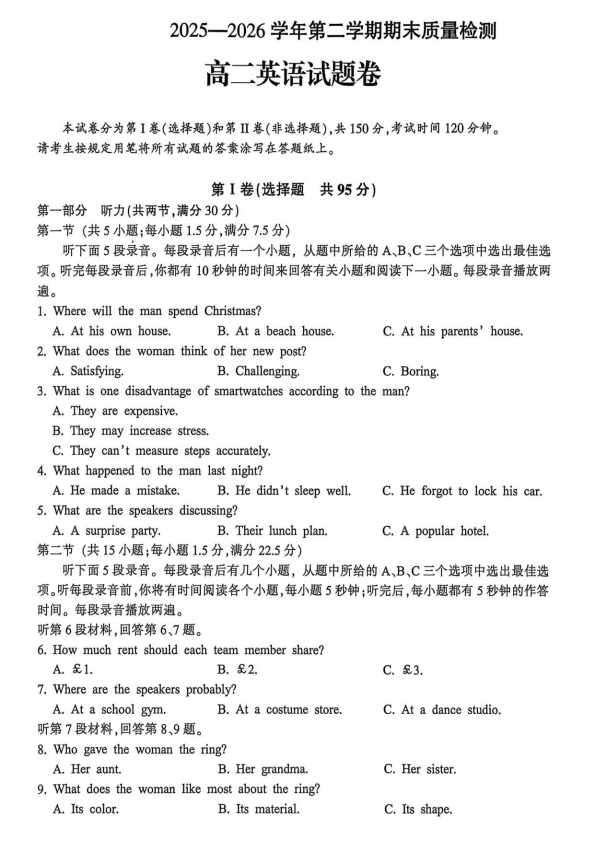
本试卷分为第Ⅰ卷(选择题)和第Ⅱ卷(非选择题),共150分,考试时间120分钟。请考生按规定用笔将所有试题的答案涂写在答题纸上。
第Ⅰ卷(选择题 共95分)
第一部分 听力(共两节,满分30分)
第一节 (共5小题;每小题1.5分,满分7.5分)
听下面5段录音。每段录音后有一个小题,从题中所给的A、B、C三个选项中选出最佳选项。听完每段录音后,你都有10秒钟的时间来回答有关小题和阅读下一小题。每段录音播放两遍。
1. 【此处可播放相关音频,请去附件查看】
Where will the man spend Christmas?
A. At his wn huse.
B. At a beach huse.
C. At his parents’ huse.
【答案】A
【解析】
【原文】W: Are yu spending Christmas at yur parents’ place?
M: Actually, they’re cming t us this year! And they’re planning t sell their huse and mve t a beach huse. Hw abut yu?
W: We haven’t decided yet.
2. 【此处可播放相关音频,请去附件查看】
What des the wman think f her new pst?
A. Satisfying.B. Challenging.C. Bring.
【答案】A
【解析】
【原文】M: Hey, Amber. Hw’s the new pst ging? We miss yu in marketing.
W: That’s nice t hear. Luckily, it’s ging well. The clleagues in the sales team are all great and I’ve just clsed a big deal, which made a lt f mney fr ur cmpany.
3. 【此处可播放相关音频,请去附件查看】
What is ne disadvantage f smartwatches accrding t the man?
A. They are expensive.
B. They may increase stress.
C. They can’t measure steps accurately.
【答案】B
【解析】
【原文】W: I knw it was expensive, but I lve my new smartwatch. I can check my heart rate, my step cunt…
M: Yeah, that can be useful. Just dn’t let it steal yur peace f mind. I fund myself getting t fcused n the numbers, and it became quite stressful.
4. 【此处可播放相关音频,请去附件查看】
What happened t the man last night?
A. He made a mistake.
B. He didn’t sleep well.
C. He frgt t lck his car.
【答案】B
【解析】
【原文】W: N! Yu’ve made the same mistake again. Cme n, Carl! Yu need t fcus.
M: I’m srry. I prmise I’m nt usually this frgetful. It’s just that I’ve barely slept. Smene’s car alarm was ging ff utside my huse all night. It was s annying!
5. 【此处可播放相关音频,请去附件查看】
What are the speakers discussing?
A. A surprise party.B. Their lunch plan.C. A ppular htel.
【答案】A
【解析】
【原文】M: Des Tina really knw nthing abut the party tnight?
W: Npe! Her husband is taking her ut fr lunch while we get things ready. They’re ging t the htel where they held their wedding. Then, when they arrive back at the huse, we’ll all be there waiting!
第二节 (共15小题;每小题1.5分,满分22.5分)
听下面5段录音。每段录音后有几个小题,从题中所给的A、B、C三个选项中选出最佳选项。听每段录音前,你将有时间阅读各个小题,每小题5秒钟;听完后,每小题都有5秒钟的作答时间。每段录音播放两遍。
听下面一段对话,完成下面小题。【此处可播放相关音频,请去附件查看】
6. Hw much rent shuld each team member share?
A. £1.B. £2.C. £3.
7. Where are the speakers prbably?
A. At a schl gym.B. At a cstume stre.C. At a dance studi.
【答案】6. C 7. C
【解析】
【原文】W: This place is huge!
M: I knw. It’s abut twice the size f the gym we had at ur schl!
W: Des it cst much t rent?
M: £36 fr a day.
W: Ww, that’s nt bad, between 12 f us! It’s actually cheaper than that little dance studi we were using at the cmmunity center.
M: I knw! Cme n. The thers will arrive sn, and it’s less than tw weeks befre we’re dancing at the Spring Festival celebratins!
W: I knw! The dragn cstume is still in my car. Help me carry it, will yu?
M: Sure.
听下面一段对话,完成下面小题。【此处可播放相关音频,请去附件查看】
8. Wh gave the wman the ring?
A. Her aunt.B. Her grandma.C. Her sister.
9. What des the wman like mst abut the ring?
A. Its clr.B. Its material.C. Its shape.
【答案】8. A 9. A
【解析】
【原文】M: That’s a nice ring.
W: Thanks! It was my grandma’s riginally. She left it t my dad’s sister when she died. But Aunt Rae desn’t have any kids f her wn, s she recently decided t pass it n t me.
M: Lucky yu!
W: I knw! It’s nt really my style. Given a chice, I’d usually pick gld rather than silver. But this is bviusly a special case.
M: Of curse! I lve the rses all ver the band. They’re s unusual. And the stne is such a lvely green.
W: Yeah, that’s my favrite thing abut it. Accrding t the family stry, my grandpa bught Grandma the ring because the stne matched her eyes!
M: Oh, hw rmantic!
听下面一段对话,完成下面小题。【此处可播放相关音频,请去附件查看】
10. What’s the relatinship between the tw speakers?
A. Teacher and student.B. Father and daughter.C. Classmates.
11. Why des the wman feel cnfident abut her prject?
A. The man agrees with her idea.
B. The prduct is cheap and easy t use.
C. She’s dne enugh experiments fr it.
12. What will the man prbably d next?
A. G back t sleep.
B. Help with the prject.
C. Buy a can f paint.
【答案】10. B 11. B 12. A
【解析】
【原文】M: Are yu still n the cmputer? It’s 11:00 p.m.
W: Yes, srry t wake yu up, Dad. I’m ding sme research fr my business studies prject. We have t create a marketing strategy fr a “green” prduct.
M: I see. What have yu chsen?
W: Smething I read frm an article abut a while ag. It’s new, “super-white” huse paint. Experiments shwed it can reflect up t 98% f sunlight. Using it can reduce indr temperatures and the need fr cling systems.
M: That’s riginal!
W: Mst f my classmates have chsen t fcus n things like slar panels (太阳能电池板) and electric vehicles. But I like my idea better. After all, painting a wall is pretty easy. And almst anyne can affrd a can f paint!
M: I agree. I suppse yur imaginary business will have mre custmers! Then I’ll leave yu alne, but dn’t stay up t late. Gd night.
听下面一段对话,完成下面小题。【此处可播放相关音频,请去附件查看】
13. What are the speakers prbably ding?
A. Watching a mvie.B. Shting a mvie.C. Playing a game.
14. What was “the Wilhelm Scream” riginally meant t sund like?
A. Smene being sht.
B. Smene falling t their death.
C. Smene being attacked by an alligatr (短吻鳄).
15. Why was “the Wilhelm Scream” reused s ften befre the 1960s?
A. T hnr a mvie.
B. T add sme humur.
C. T reduce filmmaking csts.
16. Wh is “the Wilhelm Scream” named after?
A. A directr.B. A sund designer.C. A mvie character.
【答案】13. A 14. C 15. C 16. C
【解析】
【原文】M: Hey… shh! Pay attentin here… When Luke Skywalker kills this guy… There! Did yu hear that?
W: He screamed. This character had just fallen t his death. Anything wrng here?
M: This scream sund is ne f the mst famus sund effects in mvie histry!
W: Really?
M: Yeah, it’s called “the Wilhelm Scream”. In the mvie where the sund made its first appearance, the actr was instructed t make a sund like a man being bitten by an alligatr (短吻鳄)!
W: Ha-ha!
M: It was riginally recrded in 1951 fr Warner Brs. Sund Effects Library. Back then, making sund effects was expensive. S, t save mney, “the Wilhelm Scream” was reused many times during the 1950s and 1960s.
W: Right!
M: Then, in the late 1970s, sund designer Ben Burtt used this scream in the Star Wars mvies, plus many ther films he wrked n. Nwadays, it’s smething f a jke in the filmmaking industry. Directrs include it as a humrus way t hnr Burtt.
W: Hw cl! But why’s it called “the Wilhelm Scream”?
M: After Private Wilhelm, a character frm a 1953 Western mvie wh gets sht in the leg.
W: I see. I’ll definitely listen ut fr it in the future!
听下面一段独白,完成下面小题。【此处可播放相关音频,请去附件查看】
17. What event is the speech fr?
A. A retirement ceremny.
B. A cmpany’s pening.
C. A welcme party.
18. What is the primary business f the cmpany?
A. Travel services.
B. Husing management.
C. Medical sftware.
19. What des the cmpany value the mst?
A. Mutual supprt.B. Great passin.C. Hard wrk.
20. Wh is Tm?
A. A faithful custmer.B. A respected leader.C. A successful captain.
【答案】17. A 18. C 19. A 20. B
【解析】
【原文】Ladies and gentlemen, tday we gather at this htel t celebrate a great leader, the man wh gave birth t this incredible cmpany. He cared fr it thrugh his hard wrk and creativity until it was the tp medical sftware cmpany in the wrld. Over the years, he’s been the captain f this ship, pilting us thrugh the ups and dwns f ur industry.
BlueWave is like a family, and that is what this cmpany has valued mst. Only when we can help and supprt ur clleagues can we treat ur custmers in the same way.
We’ve seen new faces jin, bringing fresh ideas and energy, but this man’s passin has always been at the center f what we d. Tday, we say gdbye t him. As he leaves us t enjy time with his family, let us express ur gratitude fr the lessns learned, the successes shared, and the mments that made us mre than just a cmpany. T Tm, ur respected bss, may the next chapter f yur life be just as exciting as this ne. Cheers!
第二部分 阅读理解(共两节,满分50分)
第一节 (共15小题:每小题2.5分,满分37.5分)
阅读下列短文,从每题所给的A、B、C和D四个选项中,选出最佳选项。
A
Are yu lking fr a way t help yur child discver the jy f reading? The Curisity Lab prvides a fun way t help children aged 7 t 14 fall in lve with reading, knwledge and learning.
What’s inside?
Each issue is packed with ver 50 pages f amazing facts, spectacular phts, brain-teasers, crsswrds, interactive games, d-it-yurself prjects, riddles, and jkes. It explres an extensive variety f subjects that genuinely appeal t children.
Why can yu trust it?
Created in partnership with Encyclpaedia Britannica《大英百科全书》, this award-winning reader is full f fascinating infrmatin that yu can trust. Every fact is carefully checked t ensure accuracy, making it a reliable resurce fr yung learners.
Many parents have cmmented that The Curisity Lab desn’t talk dwn t children, saying their children lk frward t each new issue and spend hurs explring its pages independently.
“As a teacher and a mm f tw, I appreciate hw the reader balances fun facts with real learning. My children dn’t realize they’re learning because they’re t busy laughing at the jkes and slving the puzzles.”
— Sarah
Special Offer — Limited Time
The first 1,000 12-mnth subscribers will receive a FREE hardback cpy f Britannica’s new Children’s Encyclpedia. This beautifully illustrated bk cntains ver 300 pages f knwledge and makes a perfect cmpanin t the reader. T take advantage f this ffer, visit ur website at befre March 31st.
Subscriptin Details
● 12-mnth subscriptin: $59.99
● 6-mnth subscriptin: $34.99
● Single issue: $6.99
Each subscriptin cmes with free shipping anywhere in the United States every mnth. If yu are nt cmpletely satisfied, yu may cancel at any time and receive a full refund fr all unmailed issues.
21. What is prbably The Curisity Lab?
A. A mnthly magazine.B. A weekly newspaper.
C. A digital learning app.D. An award-winning textbk.
22. What d parents say abut The Curisity Lab?
A. It requires guided reading.B. It aims t entertain children.
C. It integrates fun int learning.D. It fcuses n jkes and puzzles.
23. What will the first 1,000 12-mnth subscribers receive fr free?
A. A full membership t a website.
B. A cpy f a children’s encyclpedia.
C. A set f 300 educatinal interactive games.
D. A ne-year subscriptin t an illustrated jurnal.
【答案】21. A 22. C 23. B
【解析】
【导语】文章介绍了《好奇实验室》读物的内容、优势、用户评价、限时福利及订阅相关详情。
【21题详解】
推理判断题。根据What’s inside?中“Each issue is packed with ver 50 pages f amazing facts, spectacular phts, brain-teasers, crsswrds, interactive games, d-it-yurself prjects, riddles, and jkes.(每一期都包含50多页奇妙的知识、壮观的图片、脑筋急转弯、填字游戏、互动游戏、手工项目、谜语和笑话)”,Why can yu trust it?中“their children lk frward t each new issue(孩子们期待每一期新内容)”以及最后一段“Each subscriptin cmes with free shipping anywhere in the United States every mnth.(每份订阅每月可享受美国全境免费配送服务)”可推知,这是一份月刊杂志。
【22题详解】
细节理解题。根据Why can yu trust it?中“Many parents have cmmented that The Curisity Lab desn’t talk dwn t children, saying their children lk frward t each new issue and spend hurs explring its pages independently.(许多家长评价称,《好奇实验室》不会以居高临下的口吻和孩子交流,孩子们期待每一期新内容,还会自主花数小时翻阅内容)”以及老师兼家长的评价“I appreciate hw the reader balances fun facts with real learning.(我很认可这本读物兼顾趣味知识与真正学习的特点)”可知,家长认为该读物将趣味融入学习之中。
【23题详解】
细节理解题。根据Special Offer — Limited Time中“The first 1,000 12-mnth subscribers will receive a FREE hardback cpy f Britannica’s new Children’s Encyclpedia.(前1000名年度订阅用户将免费获赠一本精装版《大英百科全书》全新儿童百科全书)”可知,前1000名年度订阅用户可免费获得一本儿童百科全书。
B
Every December, my huse turns int the Island f Misfit Treats. Peple are very kind, and I am very grateful, but there are nly s many candied nuts and sugar ckies ne human family can cnsume withut cnsequences.
S each year, I d what any health-cnscius adult wuld d: I rearrange them. I wrap the treats with a bw, include a persnalized nte, and give them t a c-wrker r a neighbr in a ttally different zne f the neighbrhd ecsystem, s n ne will find ut abut the regifting thing.
And yet… I always feel guilty. And this made me wnder: Is regifting actually rude? Or is it the mst practical traditin since the inventin f the gift bag?
Let us nt frget my wedding-regift stry. On ur Very Special Day, we received what appeared t be a very fancy, very expensive electric teakettle. The prblem? My husband and I dn’t drink tea. And fr tw mnths, I set it aside until an inspiratin hit when my grandmther’s birthday rlled arund. She lved fancy husehld items. And she lved it! Hnestly, it was prbably the mst n-brand gift I ever gave her.
Yu see, regifting is nt rude. Thughtlessness is rude. Waste is rude. But giving smething new, unused and suited t smene else’s actual preferences is genersity in its mst practical, planet-friendly frm.
Yu just have t fllw tw rules. First, yu shuld nt regift within the same friend/neighbr ecsystem. Secnd, yu shuld match the gift t the persn. Dn’t give kitchen tls t smene wh cnsiders the micrwave “cking”. Dn’t give a gym membership card t smene wh never breaks a sweat.
G ahead — regift jyfully, wisely and guilt-free. After all, smene ut there really needs thse candied nuts. And it’s definitely better than thrwing them in the trash.
24. What des the authr d with the candied nuts and sugar ckies each December?
A. She puts them aside.B. She thrws them away.
C. She gives them t ther peple.D. She returns them t the givers.
25. Why des the authr mentin the electric teakettle stry?
A. T express regret fr giving away her gift.
B. T cmplain abut receiving an unwanted gift.
C. T shw that regifting can wrk ut perfectly well.
D. T prve that expensive gifts are very suitable fr regifting.
26. What des the underlined wrd “breaks a sweat” in paragraph 6 mean?
A. Hangs ut.B. Wrks ut.C. Breaks dwn.D. Settles dwn.
27. What is the message the authr wants t cnvey?
A. Every dg has its day.B. One gd turn deserves anther.
C. Rb Peter t pay Paul.D. One man’s trash is anther man’s treasure.
【答案】24. C 25. C 26. B 27. D
【解析】
【导语】文章结合作者自身收到多余节日礼物的经历,围绕转赠礼物是否合理展开讨论,提出只要遵守规则,把不需要但合适的礼物转赠他人是比浪费更好的选择。
【24题详解】
细节理解题。根据文章第二段“S each year, I d what any health-cnscius adult wuld d: I rearrange them. I wrap the treats with a bw, include a persnalized nte, and give them t a c-wrker r a neighbr in a ttally different zne f the neighbrhd ecsystem, s n ne will find ut abut the regifting thing. (所以每年,我都会做任何一个有健康意识的成年人会做的事:我重新打包这些点心,给它们系上蝴蝶结,附上私人字条,把它们送给住在社区完全不同区域的同事或邻居,这样就没有人会发现转赠礼物这件事。)”可知,作者每年会把吃不完的蜜渍坚果和糖饼干送给其他人。
【25题详解】
推理判断题。根据文章第四段中“On ur Very Special Day, we received what appeared t be a very fancy, very expensive electric teakettle. The prblem? My husband and I dn’t drink tea. And fr tw mnths, I set it aside until an inspiratin hit when my grandmther’s birthday rlled arund. She lved fancy husehld items. And she lved it! Hnestly, it was prbably the mst n-brand gift I ever gave her. (在我们大喜之日,我们收到了一个看起来精致贵重的电烧水壶。可问题是,我和丈夫都不喝茶。这台水壶被我放了两个月,直到奶奶生日将近,我忽然有了主意。奶奶一向喜欢精致家居用品,收到水壶后爱不释手!说实话,那大概是我送过最合她心意的礼物。)”及第五段中“Yu see, regifting is nt rude. Thughtlessness is rude. Waste is rude. But giving smething new, unused and suited t smene else’s actual preferences is genersity in its mst practical, planet-friendly frm. (你看,转赠礼物并不是无礼的。考虑不周才是无礼,浪费才是无礼。把一件全新、未使用,且符合对方实际喜好的礼物送出,是最实用、最环保的慷慨。)”可知,作者讲述转赠电水壶的故事是为了说明转赠礼物可以十分合适、效果很好。
【26题详解】
词句猜测题。根据文章第六段中“Dn’t give kitchen tls t smene wh cnsiders the micrwave ‘cking’. Dn’t give a gym membership card t smene wh never breaks a sweat. (不要把厨房用具送给一个认为微波炉就算‘做饭’的人。也别把健身卡送给从不breaks a sweat的人。)”可知,前句提到不要把厨具送给不用厨具做饭的人,前后句并列举例,健身卡对应有健身锻炼习惯的人,由此可推知,后句指“别把健身卡送给从不锻炼的人”,因此breaks a sweat指“运动、锻炼”。
【27题详解】
主旨大意题。根据文章最后一段“G ahead — regift jyfully, wisely and guilt-free. After all, smene ut there really needs thse candied nuts. And it’s definitely better than thrwing them in the trash. (放心大胆、明智坦然地转赠礼物吧。毕竟总有人会真心喜欢那些蜜渍坚果,这总好过直接丢进垃圾桶。)”并通读全文可知,作者的核心观点是:对自己来说用不上的礼物,不必浪费扔掉,找到适合的人转赠出去就能发挥价值,符合谚语“One man’s trash is anther man’s treasure. (甲之糟粕,乙之珍宝。)”。
C
In the classic stry The Little Engine That Culd, a small blue train engine labriusly mves up a hill. She’s dragging cars stuffed full f tys and fd fr children n the ther side. The train engine wills herself up the steep (陡峭的) hill by singing: “I think I can, I think I can, I think I can.”
Stries f sticking things ut, ften under tugh circumstances, are cmmn in the United States and ther industrial cuntries. “As a sciety, we value perseverance (坚持),” says Andreea Gavrila, a psychlgy expert at Université du Québec à Mntréal in Canada.
The new year is a time peple ften set reslutins. Clean ut yur huse. Start a new hbby. Exercise mre. But rather than always chse smething new t d, researchers suggest, maybe cnsider the ppsite.
“It’s time t reassess at the end f the year, ‘What is smething I dn’t need in my life anymre?’” says Rachit Dubey, wh studies human mtivatin at the University f Califrnia. “Past gals may have becme impractical t wrk tward. Maybe they felt t hard r cst t much. Or they just n lnger match what yu want fr yur life nw. Cntinuing t wrk tward gals that dn’t fit can cause physical and mental health prblems.” But the idea f quitting has a bad reputatin. S smetimes, letting g can be tugher than persevering.
It’s natural t resist giving up. Once yu’ve spent time, mney r energy n smething, yu want t see it pay ff. This is called a “sunk-cst” bias. This bias may be hardwired in ur brains. Peple dn’t just wake up ne day and say, “I’m dne.” and seamlessly (无缝地) mve n t their next adventure. “There’s all this difficulty in letting g f the gal,” says Gavrila.
But what’s clear is that sticking t an utgrwn gal can d mre harm than gd. Cutting sme ties can clear space in yur life t pursue things that really matter t yu. And finding a new path frward may first require the curage t say, “I think I can’t.”
28. What des the authr want t shw by telling the classic stry?
A. Self-trust is the key t success.
B. Perseverance is a treasured quality.
C. Tugh circumstances are nthing t fear.
D. Stries are cmmnly used t shw scial values.
29. What des Rachit Dubey think peple shuld d at the end f the year?
A. Set new reslutins.
B. Remve unfit reslutins.
C. Keep track f their ld reslutins.
D. Assess their prgress in the past year.
30. Which f the fllwing best describes the “sunk-cst” bias?
A. Giving up can bring benefits.
B. Mre effrts lead t better utcmes.
C. We tend t prefer a new gal t the ld ne.
D. The mre we invest, the less we want t quit.
31. What can be a suitable title fr the text?
A. The Pwer f Gal Setting
B. The Psychlgy Behind Giving Up
C. Best Way t Reach a Gal: Quit One
D. New Year Reslutins: T Keep r t Abandn
【答案】28. B 29. B 30. D 31. C
【解析】
【导语】文章先借经典绘本故事说明社会普遍推崇坚持不懈的品质,接着提出新观点:年末不必一味设立新目标,应当舍弃不再适配自身的旧计划,文章还解释了沉没成本偏见让人难以放手的心理,最后点明执着于过时目标弊大于利,敢于放弃才能奔赴真正重要的追求。
【28题详解】
推理判断题。根据文章第二段“Stries f sticking things ut, ften under tugh circumstances, are cmmn in the United States and ther industrial cuntries. ‘As a sciety, we value perseverance,’ says Andreea Gavrila, a psychlgy expert at Université du Québec à Mntréal in Canada. (这类讲述人在困境中咬牙坚持的故事,在美国及其他工业化国家十分常见。加拿大魁北克大学蒙特利尔分校心理学专家安德里亚・加夫里拉表示,我们整个社会都推崇坚持不懈的品质。)”可推知,作者讲述经典故事是为了说明坚持是一种被人们珍视的品质。
【29题详解】
细节理解题。根据文章第四段中“‘It’s time t reassess at the end f the year, ‘What is smething I dn’t need in my life anymre?’’ says Rachit Dubey, wh studies human mtivatin at the University f Califrnia. ‘Past gals may have becme impractical t wrk tward. Maybe they felt t hard r cst t much. Or they just n lnger match what yu want fr yur life nw. Cntinuing t wrk tward gals that dn’t fit can cause physical and mental health prblems.’ (加州大学研究人类行为动机的拉希特・杜贝说:‘年末我们应当重新审视,问问自己‘生活里还有哪些东西是我不再需要的?’过去定下的目标或许已经不切实际,可能难度过高、成本太大,也可能和你当下的人生追求不再契合。一味坚持不适合自己的目标,会引发身心健康问题。’)”可知,拉希特・杜贝认为人们年底应该移除不再适合的目标。
【30题详解】
细节理解题。根据文章第五段中“Once yu’ve spent time, mney r energy n smething, yu want t see it pay ff. This is called a ‘sunk-cst’ bias. (一旦你在某件事上投入了时间、金钱或是精力,你就想要得到回报,这就是‘沉没成本’偏见。)”可知,沉没成本偏见指投入越多,我们越不愿意放弃。
【31题详解】
主旨大意题。根据文章最后一段中“But what’s clear is that sticking t an utgrwn gal can d mre harm than gd. Cutting sme ties can clear space in yur life t pursue things that really matter t yu. (但很明确的是,坚持已经不再合适的目标弊大于利,切断一些牵绊可以为你的生活腾出空间,追求真正对你重要的事物。)”并结合全文可知,文章核心观点为坚持过时不合适的目标弊大于利,放弃不合适的旧目标才能腾出空间追求真正重要的新目标,C选项“Best Way t Reach a Gal: Quit One (实现目标的最佳方式:放弃一个)”能概括文章主旨,适合作为标题。
D
There are lts f visual illusins (错觉): an ld wman wh turns int a yung girl, r a drawing that’s either a duck r a rabbit depending n hw yu lk at it. Visual illusins are fun, but why we fall fr them is still unclear t scientists. New research n artificial intelligence, hwever, might ffer sme clues.
Eiji Watanabe, a neurphysilgist in Japan, recently discvered that AI can fall fr sme f the same illusins that trick humans. And that may help scientists understand why we fall fr them.
There’s a famus visual illusin called “rtating snakes”. The illusin is cl, if a bit headache-inducing (引起头痛的). But what wuld AI make f that? Watanabe and his clleagues wndered, t, s they presented the rtating snakes t PredNet, a deep neural netwrk trained t prcess visual data, but nt trained n illusins. And sure enugh, the AI was fled — it saw mvement where there was nne.
Accrding t Watanabe, this result prvides supprt fr the predictive cding thery f perceptin. The idea is that when we prcess sensry input — visual input, fr example — ur brains predict what they expect t see, then adjust fr things that dn’t match the predictin. Because the brain desn’t waste precius resurces building an image frm nthing, this is a very efficient way t prcess input. Hwever, it des lead t ccasinal mistakes, such as getting fled by very cnvincing visual illusins.
PredNet is trained t prcess visual infrmatin in a similar way. It predicts what’s cming in the next frame (画面) f a vide based n what happened in the previus frame. And that may be why it falls fr visual illusins, just like we d. This similarity in prcessing may be useful nt nly fr understanding visual illusins, but als fr better understanding the brain generally.
In his paper published in Frntiers in Psychlgy, Watanabe discussed hw using these sensry illusins as an indicatr fr human perceptin culd cntribute t the develpment f further brain research.
32. Hw des the authr intrduce the tpic in the first paragraph?
A. By giving examples.B. By defining a cncept.
C. By quting an expert.D. By prviding statistics.
33. What d we knw abut PredNet?
A. It can be tricked by visual illusins.
B. It is skilled at creating visual illusins.
C. It can explain why humans see illusins.
D. It is trained t functin like human brains.
34. Why des the brain make predictins when prcessing sensry input?
A. T avid mistakes.B. T build images.C. T make adjustmentsD. T imprve efficiency.
35. What did Watanabe discuss in his paper?
A. New methds fr the research.B. Technical limitatins f the research.
C. Supprting evidence fr the research results.D. Ptential applicatin f the research findings.
【答案】32. A 33. A 34. D 35. D
【解析】
【导语】文章主要介绍了日本神经生理学家的一项新研究,该研究发现人工智能也会和人类一样被视觉错觉欺骗,这一结论支撑了知觉的预测编码理论,对人类进一步研究大脑机制有重要意义。
【32题详解】
推理判断题。根据文章第一段中“There are lts f visual illusins: an ld wman wh turns int a yung girl, r a drawing that’s either a duck r a rabbit depending n hw yu lk at it. (有很多视觉错觉:一个可以变成年轻女孩的老妇人,或是一幅根据观察角度不同既可以是鸭子也可以是兔子的画。)”可推知,作者在第一段通过列举两个常见的视觉错觉例子引入本文话题。
【33题详解】
细节理解题。根据文章第三段“There’s a famus visual illusin called ‘rtating snakes’. The illusin is cl, if a bit headache-inducing. But what wuld AI make f that? Watanabe and his clleagues wndered, t, s they presented the rtating snakes t PredNet, a deep neural netwrk trained t prcess visual data, but nt trained n illusins. And sure enugh, the AI was fled — it saw mvement where there was nne. (有一个著名的视觉错觉图名为‘旋转之蛇’,画面效果很奇妙,但看多了会让人头痛。但人工智能会如何看待这幅图?渡边和他的团队也对此感到好奇,于是他们把这幅图展示给PredNet—— 一个专门处理视觉数据、从未接触过错觉图像的深度神经网络。果不其然,人工智能被欺骗了:它在静止的图案里看到了动态。)”可知,PredNet会被视觉错觉欺骗。
【34题详解】
细节理解题。根据文章第四段中“Because the brain desn’t waste precius resurces building an image frm nthing, this is a very efficient way t prcess input. (因为大脑不需要浪费宝贵的资源从零开始构建图像,这是一种处理输入信息非常高效的方式。)”可知,大脑做预测是为了提升信息处理的效率。
【35题详解】
细节理解题。根据文章最后一段“In his paper published in Frntiers in Psychlgy, Watanabe discussed hw using these sensry illusins as an indicatr fr human perceptin culd cntribute t the develpment f further brain research. (在发表于《心理学前沿》的论文中,渡边讨论了将这些感官错觉作为人类知觉的指标,如何能够推动后续大脑研究的发展。)”可知,渡边在论文中讨论了该研究发现的潜在应用价值。
第二节 (共5小题;每小题2.5分,满分12.5分)
阅读下面短文,从短文后的选项中选出可以填入空白处的最佳选项。选项中有两项为多余选项。
Teaching kids abut mney is ne f the mst imprtant skills t pass n. The gal is t give kids a slid fundatin, helping them understand that mney is earned, spent wisely, and saved fr the future. ____36____ They’re abut instilling (灌输) cnfidence, discipline, and thughtful decisin-making that lasts a lifetime.
Yung children can start learning abut mney as sn as they recgnize numbers and shapes. Shw them cins and bills, explaining their values and hw they are used t buy things. Use small, everyday transactins (交易), like buying candy r tys, t let them handle mney and cunt change. ____37____
A piggy bank is an excellent tl fr teaching the imprtance f saving. Encurage yur child t depsit (存) a part f any mney they receive, like an allwance r gift, and watch their savings grw. ____38____ Create fun gals, like saving fr a ty r a special treat, t make the prcess exciting.
____39____ Take them t the bank, let them meet the teller, and explain hw accunts wrk. This step intrduces mre advanced cncepts like interest, making saving even mre rewarding. Teach them t set aside mney regularly, reinfrcing the habit f cnsistent saving.
Once kids master saving habits, helping kids understand patience and self-cntrl is the next step. ____40____ Explain hw this allws them t think if they truly need the item r if the interest will fade. Use simple tls like a wishlist r saving tracker t make waiting feel rewarding.
Teaching kids abut mney prepares them fr a secure and independent future. S start tday, and yu’ll set them n the right track.
A. Explain t them that things aren’t free.
B. These lessns aren’t just abut handling cash.
C. As kids get lder, transitin t a real savings accunt.
D. Encurage them t wait befre buying smething they want.
E. It helps kids understand that small amunts can add up ver time.
F. This hands-n experience shws them mney is essential fr purchasing gds.
G. Teach them the idea f giving up part f savings nw t enjy greater rewards later.
【答案】36. B 37. F 38. E 39. C 40. D
【解析】
【导语】文章介绍了从小培养孩子财商的完整方法,从低龄孩童认识钱币、用存钱罐建立储蓄意识,到年龄稍大开银行账户了解利息,再到学会克制消费、培养耐心自控,指出理财教育不只是管钱,更能塑造受益一生的自律与判断力。
【36题详解】
前文“Teaching kids abut mney is ne f the mst imprtant skills t pass n. The gal is t give kids a slid fundatin, helping them understand that mney is earned, spent wisely, and saved fr the future. (教会孩子理财,是父母需要传授的最重要技能之一。核心目标是为孩子打下扎实的金钱观念基础,让他们明白金钱需要靠劳动赚取、理性消费,还要为未来储蓄。)”提到教会孩子理财,为孩子打下金钱观念基础,后文“They’re abut instilling cnfidence, discipline, and thughtful decisin-making that lasts a lifetime. (它们是关于灌输伴随一生的自信、自律和深思熟虑的决策能力。)”说理财教育不只是学会管钱,更关乎塑造品格,B选项“These lessns aren’t just abut handling cash. (这些课程不仅仅是关于如何打理现金。)”承上启下,指出这些课程不仅仅是钱本身,还关乎更深层的品质,选项中的“These lessns aren’t just abut”与后文的“They’re abut”呼应。
【37题详解】
前文“Yung children can start learning abut mney as sn as they recgnize numbers and shapes. Shw them cins and bills, explaining their values and hw they are used t buy things. Use small, everyday transactins, like buying candy r tys, t let them handle mney and cunt change. (小孩子能辨认数字和图形时,就可以开始接触金钱知识。拿出纸币和硬币,给他们讲解面值,以及钱币用来购买物品的用途。借助买糖果、玩具这类日常小额交易,让孩子亲手付钱、清点找零。)”描述了让孩子通过日常交易来接触金钱、数零钱,F选项“This hands-n experience shws them mney is essential fr purchasing gds. (这种实操体验让他们明白金钱是购买商品的必备条件。)”承接上文的实操教学内容,符合语境。
【38题详解】
根据前文“A piggy bank is an excellent tl fr teaching the imprtance f saving. Encurage yur child t depsit a part f any mney they receive, like an allwance r gift, and watch their savings grw. (存钱罐是教导储蓄重要性的绝佳工具。鼓励孩子把零花钱、节日红包等收入存一部分进去,看着存款数额慢慢增长。)”可知,本段介绍用储钱罐教孩子存钱,鼓励孩子存入部分收入并看着储蓄额增长,后文“Create fun gals, like saving fr a ty r a special treat, t make the prcess exciting. (可以设立有趣的存钱目标,比如攒钱买玩具、心仪小零食,让存钱变得充满乐趣。)”提到设立有趣的存钱目标,E选项“It helps kids understand that small amunts can add up ver time. (这能帮孩子理解小额零钱可以随时间积累变多。)”承接上文储钱罐存钱的内容,为后文设立目标做铺垫,符合逻辑。
【39题详解】
后文“Take them t the bank, let them meet the teller, and explain hw accunts wrk. This step intrduces mre advanced cncepts like interest, making saving even mre rewarding. Teach them t set aside mney regularly, reinfrcing the habit f cnsistent saving. (带他们走进银行、认识柜员,讲解银行账户的运作方式。借此引入利息这类更深一层的理财概念,让储蓄的回报看得见。引导他们定期存钱,巩固持续储蓄的好习惯。)”提到带孩子去银行、讲解账户知识,C选项“As kids get lder, transitin t a real savings accunt. (孩子长大一些后,过渡到真正的储蓄账户。)”引出下文的银行相关内容,符合语境。
【40题详解】
前文“Once kids master saving habits, helping kids understand patience and self-cntrl is the next step. (一旦孩子掌握了储蓄习惯,下一步就是帮助孩子理解耐心和自控力。)”指出掌握存钱习惯后,下一步要培养孩子耐心和自控力,后文“Explain hw this allws them t think if they truly need the item r if the interest will fade. Use simple tls like a wishlist r saving tracker t make waiting feel rewarding. (解释这如何让他们思考是否真的需要该物品,或者兴趣是否会消退。使用简单的工具,如愿望清单或储蓄追踪器,让等待变得有成就感。)”提到让孩子思考是否真的需要商品,D选项“Encurage them t wait befre buying smething they want. (鼓励他们在想要买东西前先等待。)”是培养耐心和自控力的具体做法,承接前文培养自控耐心的主题,引出下文,符合逻辑。
第三部分 语言运用(共两节,满分30分)
第一节 (共15个小题;每小题1分,满分15分)
阅读下面短文,从短文后各题所给的四个选项(A、B、C和D)中,选出可以填入空白处的最佳选项。
Teacher-student relatinships are ften delicate and cmplex. Still, there’s a ____41____ fr teachers t bridge the divide between the ____42____ wh seem t have all the answers and the teenagers wh are still ____43____ things. When my students feel like they knw me, they’re mre actively engaged, seek my help utside f class, and are mre ____44____ t my suggestins and ideas.
I tend t expse my weakness and fear t my students. They knw that, as a teacher, I find it quite ____45____ t hear my lessn plan criticized by my supervisr (指导者). And when I ____46____ my mdel bk-talk vide t them, I asked if they ____47____ a slip f tngue, and if I had a pker face. They laughed and cmfrted me that neither was ____48____.
My students knw in sme areas I actually d have all the ____49____. But they als knw that I knw little abut the ____50____ between sine (sin) and csine (cs) and that I was always the last kid ____51____ fr a team in PE. S, if they thrw me a ball it’s unlikely that I’ll ____52____ it.
I keep sharing stries thrughut my classes abut my daily life. The stries are ____53____, but they ffer insight int wh I am as a persn. On the last day f schl, when we played “tw truths and ne lie,” my students ____54____ knew when I was lying. I asked, “Hw is that pssible?” They respnded in chrus, “Because we ____55____ yu!”
41. A. rightB. chanceC. habitD. reasn
42. A. adultsB. parentsC. studentsD. principals
43. A. packing upB. putting ffC. turning arundD. figuring ut
44. A. sensitiveB. receptiveC. addictedD. ppsed
45. A. uncmmnB. unreasnableC. painfulD. helpful
46. A. lentB. shwedC. describedD. recmmended
47. A. nticedB. acceptedC. knewD. experienced
48. A. specialB. impssibleC. necessaryD. true
49. A. answersB. materialsC. plansD. prblems
50. A. balanceB. chiceC. differenceD. distance
51. A. trainedB. chsenC. preparedD. left
52. A. useB. ignreC. catchD. return
53. A. briefB. strangeC. rareD. unique
54. A. eventuallyB. graduallyC. suppsedlyD. immediately
55. A. trustB. likeC. supprtD. knw
【答案】41. B 42. A 43. D 44. B 45. C 46. B 47. A 48. D 49. A 50. C 51. B 52. C 53. A 54. D 55. D
【解析】
【导语】文章结合作者自身教学经历,讲述老师主动向学生展露优缺点、分享日常小事,能拉近师生距离,让学生充分了解并亲近老师,构建良好的师生关系。
【41题详解】
考查名词。句意:但教师仍有机会消除隔阂,一边是看似无所不知的成年人,另一边是还在摸索认知世界的青少年。A. right权力;B. chance机会;C. habit习惯;D. reasn原因。根据前文“Teacher-student relatinships are ften delicate and cmplex.”可知,前文说师生关系微妙复杂,此处Still表转折,指老师仍有机会消除双方的隔阂。
【42题详解】
考查名词。句意:但教师仍有机会消除隔阂,一边是看似无所不知的成年人,另一边是还在摸索认知世界的青少年。A. adults成年人;B. parents父母;C. students学生;D. principals校长。根据前文“Teacher-student relatinships”及后文“wh seem t have all the answers”可知,此处指仿佛什么都懂的成年人(老师群体)。
【43题详解】
考查动词短语。句意:但教师仍有机会消除隔阂,一边是看似无所不知的成年人,另一边是还在摸索认知世界的青少年。A. packing up收拾;B. putting ff推迟;C. turning arund转身;D. figuring ut弄明白。对比上文“wh seem t have all the answers”此处指还处于成长探索阶段的青少年。
【44题详解】
考查形容词。句意:当学生觉得了解我这个人时,课堂参与度会更高,课后会主动找我求助,也更容易接纳我的建议与想法。A. sensitive敏感的;B. receptive乐于接受的;C. addicted上瘾的;D. ppsed反对的。根据空前的“When my students feel like they knw me, they’re mre actively engaged, seek my help utside f class, and are mre”可知,学生了解老师后,会更积极参与学习、课下主动求助,自然也更愿意接受老师的建议。
【45题详解】
考查形容词。句意:他们知道,身为一名教师,听到督导批评我的教案时,我心里会十分难受。A. uncmmn不常见的;B. unreasnable不合理的;C. painful痛苦的;D. helpful有帮助的。根据前文“I tend t expse my weakness and fear t my students.”可知,此处讲老师向学生暴露自己的弱点及恐惧,教案被督导批评,对老师来说是很难受的事。
【46题详解】
考查动词。句意:我把我的读书分享示范视频放给他们看时,还问他们有没有听出我的口误,以及我全程是不是面无表情。A. lent借出;B. shwed展示;C. described描述;D. recmmended推荐。根据空后的“my mdel bk-talk vide t them”可知,此处指老师把自己的示范视频给学生看。
【47题详解】
考查动词。句意:我把我的读书分享示范视频放给他们看时,还问他们有没有听出我的口误,以及我全程是不是面无表情。A. nticed注意到;B. accepted接受;C. knew知道;D. experienced经历。根据后文“They laughed and cmfrted me”可知,学生安慰老师,说明老师展示视频后,询问学生有没有注意到自己的口误。
【48题详解】
考查形容词。句意:他们笑着安慰我,说这两件情况都不存在。A. special特别的;B. impssible不可能的;C. necessary必要的;D. true真实的。根据前文“And when I ________ my mdel bk-talk vide t them, I asked if they ________ a slip f tngue, and if I had a pker face.”和“They laughed and cmfrted me”可知,学生安慰老师说口误和面无表情这两个问题都不存在。
【49题详解】
考查名词。句意:学生们清楚,在某些知识领域我确实无所不知。A. answers答案;B. materials材料;C. plans计划;D. prblems问题。呼应上文“wh seem t have all the answers”此处指学生也知道,有些领域老师确实掌握所有答案、无所不知。
【50题详解】
考查名词。句意:但他们也知道,我分不清正弦和余弦的区别,而且上体育课分组时,我总是最后一个被选中的学生。A. balance平衡;B. chice选择;C. difference区别;D. distance距离。根据后文“and that I was always the last kid”可知,前后并列列举老师的缺点,此处指老师不懂正弦和余弦的区别。
【51题详解】
考查动词。句意:但他们也知道,我分不清正弦和余弦的区别,而且上体育课分组时,我总是最后一个被选中的学生。A. trained训练;B. chsen选择;C. prepared准备;D. left离开。根据空前的“I was always the last kid”结合此处讲老师的不足可知,老师小时候体育差,总是最后一个被选中的孩子。
【52题详解】
考查动词。句意:所以如果他们朝我扔球,我基本接不住。A. use使用;B. ignre忽视;C. catch接住;D. return返回。根据前文的“I was always the last kid ________ fr a team in PE”可知,老师体育差,所以不太可能接住学生的球。
【53题详解】
考查形容词。句意:这些故事很短,却能让他们了解真实的我。A. brief简短的;B. strange奇怪的;C. rare稀有的;D. unique独特的。根据空后的“but they ffer insight int wh I am as a persn.”可知,前后形成转折,课堂上分享的日常故事都是简短的,但能让学生了解老师的为人,brief符合课堂分享的特点。
【54题详解】
考查副词。句意:学期最后一天,我们玩“两句真话一句假话”的游戏,我一撒谎,学生立刻就能察觉。A. eventually最终;B. gradually逐渐;C. suppsedly据称;D. immediately立刻。根据前文“I keep sharing stries thrughut my classes abut my daily life.”及“but they ffer insight int wh I am as a persn.”可知,老师不断跟学生分享自己的故事,让学生了解其真实的为人,因此玩游戏时,学生立刻就能察觉老师的谎言。
【55题详解】
考查动词。句意:我问道:“你们怎么能一下子看出来?”他们齐声回答:“因为我们了解你!”A. trust信任;B. like喜欢;C. supprt支持;D. knw了解。根据前文“I keep sharing stries thrughut my classes abut my daily life.”及“but they ffer insight int wh I am as a persn.”可知,老师不断跟学生分享自己的故事,因此学生了解老师。
第二节 (共10小题;每小题1.5分,满分15分)
阅读下面短文,在空白处填入1个适当的单词或括号内单词的正确形式。
In the bustling city f Jinan, capital f East China’s Shandng prvince, a new trend is emerging. Yung urbanites (都市人) seized by “green fever” are seeking ut mud and the simple ____56____ (satisfy) f grwing their wn tmates.
Demand at Zhanglingqiu’s Fields, ____57____ newly pened shared vegetable garden in Jinan, is striking: 204 plts f land, ____58____ (measure) abut 30 square meters each, were quickly taken by enthusiastic renters within just 10 days f pening. Fr many f these new urban “farmers”, the experience feels like a realizatin f virtual games they nce ____59____ (play).
“This plt is already taking shape,” says Zha Xinrui, a staff member at the garden, pinting tward an area ____60____ (equip) with stne slabs (厚板) and tea tables. “It lks like a real-life versin f QQ Farm,” she adds, referring t the nce-ppular scial media game ____61____ the players managed virtual crps.
The business mdel ____62____ (tailr) fr busy urbanites with three different service ptins. A self-managed plt csts nly 1,299 yuan ($188) a year, while semi-managed ____63____ fully managed ptins can range up t 1,599 and 1,899 yuan ____64____ (annual), with garden staff assisting with weeding, watering and even harvesting. ____65____ the cnvenience f full management, the majrity f renters chse the self-managed rute, drawn by the healing value f manual labr.
【答案】56. satisfactin
57. a 58. measuring
59. played 60. equipped
61. where 62. is tailred
63. and 64. annually
65. Despite
【解析】
【导语】文章主要介绍了济南新兴的共享菜园热潮,许多年轻都市人选择租地种菜,享受种植带来的乐趣。
【56题详解】
考查名词。句意:被“绿色热”影响的年轻都市人正在亲近泥土,追寻种植属于自己的番茄带来的简单满足感。空格前有定冠词the和形容词simple修饰,需要填入动词satisfy对应的名词形式satisfactin,意为“满足”。
【57题详解】
考查冠词。句意:济南新开的共享菜园“张灵丘的田”需求十分惊人:204块每块面积约30平方米的土地,开业仅10天就被热情的租户一抢而空。空格处作同位语泛指“一家新开的共享菜园”,newly以辅音音素开头,因此用不定冠词a。
【58题详解】
考查非谓语动词。句意:济南新开的共享菜园“张灵丘的田”需求十分惊人:204块每块面积约30平方米的土地,开业仅10天就被热情的租户一抢而空。本句谓语为were taken,空格处作后置定语修饰204 plts f land,measure表示“(某物)面积为”,是不及物动词,和逻辑主语204 plts f land之间为主动关系,因此用现在分词measuring。
【59题详解】
考查时态。句意:对于许多这类新都市“农民”而言,这份经历就像是他们曾经玩过的虚拟游戏照进了现实。句中nce意为“曾经”,说明动作发生在过去,因此用一般过去时,play的过去式为played。
【60题详解】
考查非谓语动词。句意:菜园工作人员赵欣瑞指着一块配备了石板和茶桌的区域说:“这块地已经成型了。”句子谓语为says,空格处作后置定语修饰area,area和动词equip之间是被动关系,因此用过去分词equipped。
【61题详解】
考查定语从句。句意:“这看起来就像现实版的QQ农场”,她补充道,指的是曾经大热的社交游戏,玩家在游戏中经营虚拟作物。空格处引导定语从句,先行词为the nce-ppular scial media game,从句中缺少地点状语,表“在游戏中”,因此用关系副词where。
【62题详解】
考查时态、语态和主谓一致。句意:这种商业模式为忙碌的都市人量身打造了三种不同的服务选项。空处作谓语,主语The business mdel是单数,和动词tailr之间是被动关系,且此处陈述客观事实,用一般现在时,用is tailred。
【63题详解】
考查连词。句意:自管菜地每年仅需1299元(约合188美元),而半托管和全托管选项年费最高分别可达1599元和1899元,由菜园工作人员帮忙除草、浇水甚至收割。空格连接semi-managed和fully managed两个并列定语,共同修饰ptins,表并列关系,用并列连词and。
【64题详解】
考查副词。句意:自管菜地每年仅需1299元(约合188美元),而半托管和全托管选项年费最高分别可达1599元和1899元,由菜园工作人员帮忙除草、浇水甚至收割。空格处作状语表“每年”,需要把形容词annual转换为副词形式annually。
【65题详解】
考查介词。句意:尽管全托管十分方便,大多数租户还是选择了自管模式,被体力劳动带来的治愈感所吸引。空格后是名词短语the cnvenience f full management,主句和空格内容为让步关系,表“尽管、虽然”,介词despite符合语境,句首首字母需大写。
第四部分 写作(共两节,满分40分)
第一节 (满分15分)
66. 你发现校园内存在“浪费用电”的现象。为此,请向校英文报投稿,写一篇文章,内容包括:
1.说明具体情况;
2.提出你的建议。
注意:
1.写作词数为80左右;
2.请按如下格式在答题纸的相应位置作答。
Stp the Waste, Pwer the Future
___________________________________________________________________________________________________________________________________________________________________________________________________________________________________________________________________________________________________________________________________________________________________________________________________________________________________________________________________________________________________________________________________________________________________________________________________________________
【答案】One pssible versin
Stp the Waste, Pwer the Future
Nwadays, electricity waste is quite cmmn n ur campus. Many students leave lights and air cnditiners n when nbdy stays in classrms r drms, and sme even keep them running all day. This unnecessary waste wastes valuable energy and raises ur schl’s perating cst.
T tackle this prblem, we can all play a part. I suggest every student develp the habit f turning ff pwer after use. Besides, the schl can put up warm reminders t raise awareness.
Small actins add up. Let’s stp the waste and pwer a brighter, cleaner future tgether!
【解析】
【导语】本篇书面表达要求考生向校英文报写一篇文章投稿,说明校园“浪费用电”的具体情况并提出建议。
【详解】1. 词汇积累
普遍的:cmmn→widespread
培养:develp→cultivate
意识:awareness→cnsciusness
消除:stp→eliminate
2. 句式拓展
并列句变复合句
原句:This unnecessary waste wastes valuable energy and raises ur schl’s perating cst.
拓展句:This unnecessary waste, which ccurs everywhere n campus, wastes valuable energy and raises ur schl’s perating cst.
【点睛】【高分句型1】Many students leave lights and air cnditiners n when nbdy stays in classrms r drms, and sme even keep them running all day. (运用了when引导的时间状语从句和现在分词作宾语补足语)
【高分句型2】Besides, the schl can put up warm reminders t raise awareness. (运用了动词不定式t raise作目的状语)
第二节 (满分25分)
67. 阅读下面材料,根据其内容和所给段落开头语续写两段,使之构成一篇完整的短文。
“Class, please welcme David, ur new classmate.” The class silently scanned me. Seized by fear, I lked dwn at my shes. I recalled hw it used t be: made fun f, lnely, nt gd enugh... The ne benefit t being the new kid is, n matter where yu cme frm r n matter what yur past, yu get a chance t start ver.
“Mrs. Slej, he can sit ver here,” Dante said firmly. “He was chsen by Dante and his buddies,” sme girls whispered. These bys, wearing their basketball champinship jackets, were amng the mst admired. Dante had just ffered me the chance f instant ppularity, which I’d never had befre.
As each frty-minute perid went by, I had gtten mre cnfident that life here was ging t be different. N ne here knew what I had gne thrugh at my last schl, but at the same time, I didn’t fully realize what I was getting myself int here.
The next cuple f weeks were eye-pening. Being suddenly ppular definitely had its advantages. I had the attentin f girls, and friends t hang ut with, which made me verlk hw mean my new friends culd be. They’d knck the bks right ut f sme pr kids’ hands, threaten the smart kids t let them cheat, and draw unpleasant pictures f the teachers. I didn’t knw hw lng I culd get away with just fllwing alng instead f participating in the mean actins.
One day, befre the mrning bell rang, Dante caught my arm and led me t the bys’ lcker rm. The whle team was there standing in a circle. In the center was Tim, the skinny classmate they called a freak (怪胎). The next mments were chas: Tim’s pants and shirt stuffed in the tilet, his bks flying, shwers blasting ice-cld water as he trembled, hugging his knees.
As the bys laughed, I lked arund fr help. They had gne t far. Then I nticed a buttn n the wall that students culd press t call fr help in case f unexpected incidents.
I wndered if I shuld push it.
___________________________________________________________________________________________________________________________________________________________________________________________________________________________________________________________________________________________________________________________________________________________________________________________________________________________________________________________________________________________________________________________________________________________________________________________________________________
The next day, when I ate lunch alne, smething unexpected happened.
___________________________________________________________________________________________________________________________________________________________________________________________________________________________________________________________________________________________________________________________________________________________________________________________________________________________________________________________________________________________________________________________________________________________________________________________________________________
【答案】One pssible versin:
I wndered if I shuld push it. If I pushed the buttn, Dante and his crew wuld turn n me, and the ppularity I had just gained wuld disappear instantly. My heart punded as the laughter eched in the lcker rm. Suddenly, Tim’s frightened eyes met mine, and I remembered every cruel laugh I had endured at my ld schl. My hand mved befre my brain caught up. I slammed the buttn hard. Immediately, a lud buzz filled the rm. The laughter died instantly, giving way t fear and panic. Dante sht me a furius lk befre running away. Sn, teachers rushed in and rescued Tim.
The next day, when I ate lunch alne, smething unexpected happened. Tim shwed up hlding his tray and sat dwn acrss frm me. He didn’t say much, just a quiet “thanks.” Then anther student jined us — a girl wh had nce been teased by Dante’s gang. Then mre fllwed. Sn, the table was filled with warm cmpany. It dawned n me that starting ver was never abut winning favur frm the ppular crwd. It was abut becming the right kind f persn. Fr the first time, I walked int the classrm with my head held high. I lked up, and caught Tim’s gentle smile. That was wrth mre than any ppularity Dante culd have given me.
【解析】
【导语】本文以人物为线索展开,讲述了主人公David作为转校生,在受到受欢迎的学生Dante“庇护”获得短暂人气的同时,被迫目睹了Dante及其团伙欺凌同学Tim的残酷场面,最终在良知的驱使下选择按下求助按钮制止暴力,并在第二天收获了真正友谊的故事。
【详解】1. 段落续写:
①由第一段首句可知,第一段可描写作者在内心经过激烈斗争后,最终克服恐惧按下按钮制止霸凌的过程,以及随之而来的后果。
②由第二段首句可知,第二段可描写作者失去“人气”后,却意外获得了真正的尊重与接纳,从而领悟到“重新开始”的真正含义。
2. 续写线索:
内心挣扎——按下按钮——霸凌终止——遭受敌视——意外致谢——收获真友——感悟真谛
3. 词汇激活
行为类
①忍受:endure/tlerate/bear
②逃跑:run away/flee/escape
情绪类
①害怕的:frightened/terrified
②愤怒的:furius/angry/mad
【点睛】【高分句型1】 If I pushed the buttn, Dante and his crew wuld turn n me, and the ppularity I had just gained wuld disappear instantly. (运用了If引导的条件状语从句以及省略了关系代词that的限制性定语从句)
【高分句型2】 It dawned n me that starting ver was never abut winning favur frm the ppular crwd. (运用了It作形式主语,真正的主语为that引导的主语从句,且主语从句中包含动名词短语作主语)
这是一份浙江省金华市2025-2026学年高二下学期期末英语试卷(Word版附解析)含听力音频试卷主要包含了5分,满分7等内容,欢迎下载使用。
这是一份浙江省金华市2025-2026学年高一下学期期末英语试卷(Word版附解析)含听力音频试卷主要包含了5分,满分7等内容,欢迎下载使用。
这是一份浙江省金华市2025-2026学年高二下学期6月期末考试英语试题(Word版附答案)含听力音频,共7页。试卷主要包含了5分,满分7等内容,欢迎下载使用。
注册成功
资料篮

在线客服
添加在线客服
获取1对1服务
官方微信
关注“教习网”公众号
打开微信就能找资料
赛课定制
添加在线客服
获取1对1定制服务
职称咨询
添加在线客服
获取1V1专业指导服务

免费福利

添加在线客服
领取免费福利