免费领取教师福利


若您为此资料的原创作者,认为该资料内容侵犯了您的知识产权,请扫码添加我们的相关工作人员,我们尽可能的保护您的合法权益。


这是一份广东省汕头市潮南区2025-2026学年八年级下学期期末检测题(S) 英语试题(含解析),共4页。试卷主要包含了听说应用,语法选择,完形填空,阅读理解,短文填空,读写综合等内容,欢迎下载使用。
一、听说应用(本大题共30小题,每小题1分,共30分;A、B、C、D部分为听力理解,E部分为情景对话)
A、听句子(本题共5小题,每小题1分,共5分)
请根据所听内容,选择符合题意的图画回答问题,并将答题卡上对应题目所选的选项涂黑。每个句子听两遍。
1. What des Li Hua like?
2. Which bk did Li Hua recently read?
3. Wh des Li Hua share ideas abut the bk with?
4. What vlunteer activity did Li Hua d?
5. Hw des Li Hua feel after helping thers?
B、听对话(本题共10小题,每小题1分,共10分)
根据每段对话的内容回答问题,从各小题所给的三个选项中选出一个最佳答案,并将答题卡上对应题目所选的选项涂黑。每段对话听两遍。
听第一段对话,回答第6小题。
6. What are they talking abut?
A. A typhn. B. A tsunami. C. An earthquake.
听第二段对话,回答第7小题。
7. What des the by think f the bk he is reading?
A. It’s bring. B. It’s exciting. C. It’s difficult.
听第三段对话,回答第8小题。
8. Why did the girl write an email?
A. T apply fr a vlunteer jb. B. T invite a friend t a party.
C. T ask abut French culture.
听第四段对话,回答第9小题。
9. What shuld yu d t prepare fr a typhn?
A. G swimming. B. Stay indrs. C. Plant trees.
听第五段对话,回答第10小题。
10. What is the girl’s advice n table manners?
A. Talk ludly. B. Chew with yur muth pen.
C. T sending an e-mail t Helen.
听第六段对话,回答第11~12小题。
11. What did Peter d last weekend?
A. He read a bk. B. He vlunteered at an animal shelter.
C. He traveled t France.
12. Hw did Peter feel after vlunteering?
A. Tired but happy. B. Bred and angry.
C. Sad and tired.
听第七段对话,回答第13~15小题。
13. Where is Lily ging t travel?
A. T China. B. T France. C. T Japan.
14. Wh is Lily ging with?
A. Her teachers. B. Her classmates. C. Her family.
15. What is Lily wrried abut?
A. The culture and manners. B. The language.
C. The weather.
C、听短文(本题共5小题,每小题1分,共5分)
请根据所听内容,从各小题所给的三个选项中选出一个最佳答案,并将答题卡上对应题目所选的选项涂黑。短文听两遍。
16. What is the main idea f the passage?
A. Hw t survive a natural disaster. B. The imprtance f reading bks.
C. Different table manners arund the wrld.
17. Accrding t the passage, what can we learn frm great bks?
A. Hw t ck fd. B. Hw t predict the weather.
C. Hw t behave well and understand thers.
18. What shuld yu d if yu are at the beach and see the sea water suddenly g ut?
A. Stay and take phts. B. Run t higher grund immediately.
C. Call yur friend.
19. Why is it imprtant t understand ther cultures?
A. T get better grades. B. T cmmunicate better and avid misunderstandings.
C. T travel fr free.
20. What des the passage encurage us t d?
A. T read mre bks and respect different cultures.
B. T stay away frm natural disasters.
C. T nly care abut ur wn culture.
D. 听填信息(本题共5小题,每小题1分,共5分)
你将听到的是一封Mike关于周末的日记,请根据所听内容填写下面的信息卡。此题不是选择题,请将答案写在答题卡中对应题目的答题位置上。短文听两遍。
E、情景对话(本题共5小题,每小题1分,共5分)
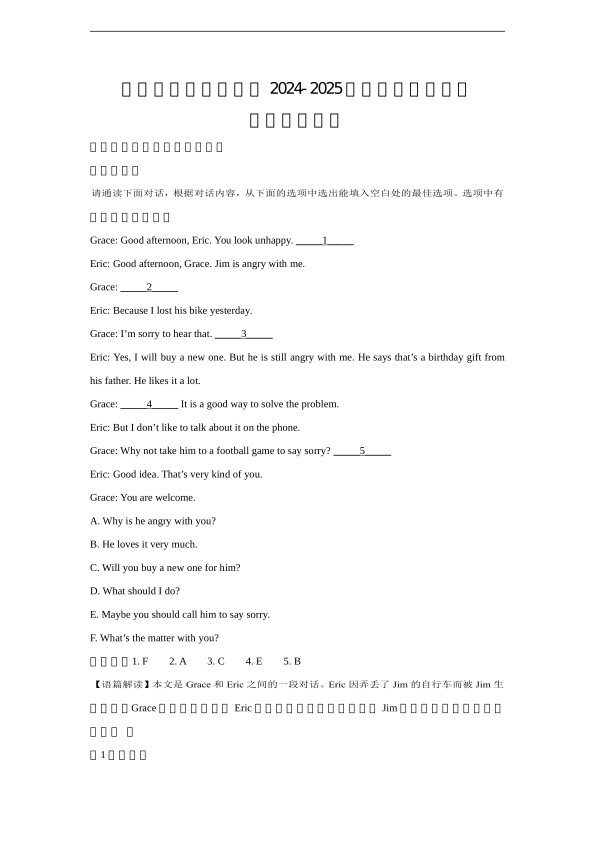
请通读下面对话,根据对话内容,从选项中选出能填入空白处的最佳选项,并将答题卡上对应题目所选的选项涂黑。选项中有一项为多余选项。
A: Hey, Mike. What are yu reading?
B: I’m reading a bk abut a girl wh saved peple frm a tsunami. ____1____
A: That sunds interesting.____2____
B: She nticed the sea water was unusual and warned everyne t run t safety.
A: Ww, she was s brave and smart. ____3____
B: Yes, it als talks abut hw imprtant it is t knw abut natural disasters.
A: I agree. ____4____
B: That’s a gd idea. Maybe we can ask ur teacher t give us a lessn n it.
A: ____5____
B: OK. Let’s g nw.
A. Let’s g talk t her.
B. It’s really exciting.
C. Hw did she save them?
D. I learned a lt frm it.
E. We shuld learn mre abut hw t prtect urselves.
F. She is my favrite writer.
二、语法选择(本大题共10小题,每小题1分,共10分)
请通读下面短文,掌握其大意,根据语法和上下文连贯的要求,从每小题所给的三个选项中选出一个最佳答案,并将答题卡上对应题目所选的选项涂黑。
Bangkk (曼谷), the capital f Thailand, is a city full f beautiful sights (风景). The tall glass shpping centers in the city ____6____ very mdern. But behind them is a place where life ____7____ fr ver 100 years—the canals (运河), which were built in 1866. These canals are hme t many Thai peple wh never leave their hmes.
There are fur markets n the canals arund Bangkk, and the ldest and ____8____ ne is in the twn f Damnen Saduak. This market ____9____ at 6:30 a.m. every day. Peple get there early ____10____ water taxi. It’s a nisy but wnderful place. Ladies sit in small bats ____11____ fresh fruit and vegetables fr sale.
But they dn’t just sell fd. Wuld yu like a silk tie (领带)? A traditinal hat? Then just call ____12____ pint (指着) at them.
After ____13____ excitement f the market, cntinue ging alng the canal. Sn yu’ll see many wden huses, clrful flwers and hear ____14____ birds singing in the fruit trees. It’s a peaceful way ____15____ yur trip.
6. A. tastesB. tasteC. lk
7. A. dn’t changeB. didn’t changeC. hasn’t changed
8. A. mre ppularB. mst ppularC. less ppular
9. A. pensB. penC. pened
10. A. byB. nC. with
11. A. fill withB. filled withC. wrry abut
12. A. butB. rC. and
13. A. anB. theC. a
14. A. quicklyB. lvelyC. slwly
15. A. t finishB. finishingC. finished
三、完形填空(本大题共10小题,每小题1分,满分10分)
请通读下面短文,掌握其大意,然后在每小题所给的四个选项中,选出一个最佳答案,并将答题卡上对应题目所选的选项涂黑。
There was a grup f peple wh tk the same bus every mrning int the city. Nbdy talked t each ther.
One mrning, an ld man wh was usually sad and alne gt n the bus ____16____, smiled and said in a lud vice, “A very gd mrning t yu all!” Sme f us ____17____ and said, “Gd mrning.”
Over the ____18____ weeks ur new friend came dressed in a suit (西装) and tie. He said gd mrning t us every day and we all began t ____19____ t each ther mre.
One mrning he had flwers in his hand. The driver turned arund and asked, “D yu have a ____20____, Charlie?” He ndded and said yes.
The ther passengers clapped (拍) their hands. Charlie smiled and sat dwn.
Every mrning after that day Charlie always ____21____ flwers. But ne mrning Charlie wasn’t ____22____ at his stp. And he wasn’t there fr the next few days.
When the bus came t the senir center, ne f the ____23____ asked the driver t wait while she was ging in. The staff (工作人员) there said that Charlie was ____24____ because ne f his clse friends had died ver the weekend.
Next Mnday, Charlie was waiting fr the bus, lking very sad. We were quiet as he walked nt the ____25____. N ne talked abut his friend, but we each handed him a bunch f flwers.
16. A. sadlyB. happilyC. carefullyD. beautifully
17. A. lked upB. sat dwnC. std upD. cried ut
18. A. severalB. futureC. pastD. fllwing
19. A. sayB. chatC. talkD. tell
20. A. giftB. girlfriendC. watchD. pet
21. A. bughtB. tkC. sldD. brught
22. A. waitingB. leavingC. standingD. seating
23. A. menB. staffC. passengersD. wrkers
24. A. gdB. fineC. sadD. happy
25. A. busB. carC. stageD. bard
四、阅读理解。(本大题共15小题,每小题2分,共30分)
请阅读A、B两篇短文,从每小题所给的四个选项中选出能回答所提问题或完成所给句子的最佳答案。并将答题卡上对应题目所选的选项涂黑。
(A)
26. Why did Amy g t the park?
A. T jg.B. T fly a kite.C. T meet Lisa.D. T take a walk.
27. Hw did Amy get t her grandparents’ hme?
A. By bike.B. By bus.C. By car.D. On ft.
28. What is The Adventures f Tm Sawyer?
A. A mvie.B. A magazine.C. A bk.D. A sng.
29. What did Amy think f the mvie abut the typhn?
A. Bring.B. Scary but useful.C. Funny.D. Relaxing.
30. What is the main idea f the letter?
A. Amy’s hbbies.B. An intrductin t a bk.
C. Hw t stay safe in a typhn.D. Amy’s weekend activities.
(B)
① When it cmes t the Himalayas, what d yu have in yur mind? High muntains? White snw? Bth answers are right, but in the muntains, there is a place called the Valley (山谷) f Flwers and yu can see a very different situatin there. It is hme t pretty flwers, wild plants and endangered animals.
② The Valley f Flwers is in Uttarakhand, ne state in the nrth f India. It is mre than 87.5 square kilmeters. There are flwers everywhere. Hwever, these flwers are nt quite the same as what we ften see. They grw in high places in the muntains. There are hundreds f different kinds f flwers in this valley. They blm (开花) between June and September. When the flwers blm, the valley lks like a magical wrld with different clrs.
③ There are als a lt f wild plants, such as trees and grass, in the Valley f Flwers. They are special. Sme f them are hard t find anywhere else in the wrld! What’s mre, sme endangered animals live in the valley, like snw lepards (雪豹).
④ Nw peple have turned the Valley f Flwers int a natinal park. Visitrs can’t build anything r live there. They can’t even stay there fr t lng at a time. They can nly stay there fr ne day. It’s prbably nt lng enugh fr visitrs t see all the beauty there.
31. Hw des the writer start the passage?
A. By asking questins.B. By telling a stry.
C. By giving an example.D. By shwing sme numbers.
32. What can we see in the Valley f Flwers?
A. Trees, grass and elephants.B. Flwers, trees and whales.
C. Flwers, trees and mnkeys.D. Flwers, grass and snw lepards.
33. What des the underlined wrd “them” refer t in Paragraph 3?
A. The trees.B. The animals.C. The flwers.D. The wild plants.
34. What is the structure f the passage?
A. ①/②③④B. ①/②③/④C. ①/②/③④D. ①/②/③/④
35. What des the passage mainly tell us?
A. It tells the facts abut the Valley f Flwers.
B. It describes the beautiful scene f the Himalayas.
C. It asks mre peple t visit the Valley f Flwers.
D. It explains the prblems f sme natinal parks in India.
(C)
配对阅读。
左栏是五位同学对旅行目的地的不同需求,右栏是自然景点的介绍。请为每位同学匹配合适的景点;右栏有两项为多余项。并将答题卡上对应题目所选的选项涂黑。
五、短文填空。(本大题共10小题,每小题1.5分,共15分)
请从方框内选择适当的词并用其正确形式填空,使文章完整连贯。注意每空一词,每词仅用一次,有两词为多余项。请将答案写在答题卡对应题目的答题位置上。
Nature is a huge treasure f wnders, bringing us amazing beauty and precius gifts. Muntains are sme f its mst impressive creatins, rising high abve the ____41____ with great charm.
Munt Qmlangma, the wrld’s ____42____ muntain, is a perfect example. Its snw-cvered tp reaches 8,848.86 metres int the sky, and the bad, changeable weather plus thin air ____43____ it super hard t climb. But this difficulty draws many brave climbers frm all ver the wrld — they dream ____44____ standing n the “rf f the wrld.”
China has dne great in muntain climbing. Many Chinese climbers have fught freezing winds and thin air t reach Munt Qmlangma’s tp, ____45____ with scientific studies and prtecting the envirnment alng the way.
Frests are ____46____ wnderful part f nature, ften called the “lungs f the Earth”. These green areas are hme t ____47____ f plants and animals, frming systems that supprt life. They take in carbn dixide, make xygen, and clean the air we breathe. We ____48____ cnnect with nature mre—like hiking in frest paths, listening t leaves rustle and birds sing, r having a calm picnic by a clear lake. These mments let ____49____ feel nature’s warmth and pwer.
Hwever, nature is in danger. Wildfires, caused by natural reasns r peple’s carelessness, can burn frests ____50____, destrying the hmes f animals and plants. S prtecting nature is ur imprtant duty. We must nt litter, hurt plants, r bther animals, and help stp wildfires. Respecting nature’s balance will let these wnders stay fr future kids t enjy.
六、读写综合(本大题分为A、B两部分,共25分)
(A)回答问题。(本题共5小题,每小题2分,共10分)
请阅读下面短文,根据所提供的信息,回答5个问题,要求所写答案语法正确、语义完整切题,请把答案写在答题卡对应题目的答题位置上。
Hw Helping Others Changes Us
When we talk abut “making a difference”, we ften think abut hw it helps thers. But in fact, helping thers can als change us a lt. Let me share a stry frm my schl’s vlunteer prgram.
Last semester, ur class decided t help the elderly at a lcal nursing hme. Every Friday afternn, we went there after schl. Sme students helped the elders wash their clthes and clean their rms; thers read newspapers r tld stries t them. I was in charge f teaching the elders t use smartphnes. At first, it was nt easy. Many elders were afraid f breaking the phnes and refused t try. But I was patient. I shwed them step by step hw t make vide calls and send messages.
After tw mnths, smething amazing happened. An ld lady named Mrs. Wang tld me she had successfully made a vide call t her granddaughter wh lives in anther city. She cried and said, “I haven’t seen her face fr three years. Yu made this pssible!” Her wrds made me feel s prud. I als fund that I became mre patient and respnsible than befre. I used t get angry easily when things went wrng, but nw I can stay calm and try t slve prblems.
Mrever, this experience helped me understand the value f empathy (同理心). I started t care mre abut the peple arund me, like my parents and classmates. When my mm was tired after wrk, I wuld help her d the dishes; when my classmate failed an exam, I wuld encurage him instead f laughing at him.
Helping thers is like a tw-way street. It gives hpe t thse in need and makes us better peple. That’s why it’s s meaningful t take part in vlunteer wrk.
51. Hw ften did the writer and classmates help the elderly at the lcal nursing hme?
________________________________________________________________________
52. What was the writer in charge f ding fr the elders?
________________________________________________________________________
53. Why did many elders refuse t try using smartphnes at first?
________________________________________________________________________
54. Hw did the writer feel after hearing Mrs. Wang’s wrds?
________________________________________________________________________
55. What changes did the vlunteer experience bring t the writer?
________________________________________________________________________
(B)书面表达(本题15分)
56. 国际文化周(Internatinal Culture Week)活动圆满落幕。大家踊跃参与了文化展演、美食嘉年华、语言课程等丰富多彩的活动,度过了愉快的时光。请用一段文字分享你在国际文化周期间的精彩体验。
要求:
1. 文中须包含导图所提示信息,可适当发挥:
2. 文中不得出现真实姓名和学校名称;
3. 词数80左右。
My Experience f Internatinal Cuture Week
________________________________________________________________________________________________________________________________________________________________________________________________________________________________________________________________________________________________________________________________________________________________________________________________________________________________________________________________________________________________________________________________________________________________________
英语
本试卷共8页,81小题,满分120分。考试用时90分钟,
一、听说应用(本大题共30小题,每小题1分,共30分;A、B、C、D部分为听力理解,E部分为情景对话)
A、听句子(本题共5小题,每小题1分,共5分)
请根据所听内容,选择符合题意的图画回答问题,并将答题卡上对应题目所选的选项涂黑。每个句子听两遍。
1. What des Li Hua like?
2. Which bk did Li Hua recently read?
3. Wh des Li Hua share ideas abut the bk with?
4. What vlunteer activity did Li Hua d?
5. Hw des Li Hua feel after helping thers?
B、听对话(本题共10小题,每小题1分,共10分)
根据每段对话的内容回答问题,从各小题所给的三个选项中选出一个最佳答案,并将答题卡上对应题目所选的选项涂黑。每段对话听两遍。
听第一段对话,回答第6小题。
6. What are they talking abut?
A. A typhn. B. A tsunami. C. An earthquake.
听第二段对话,回答第7小题。
7. What des the by think f the bk he is reading?
A. It’s bring. B. It’s exciting. C. It’s difficult.
听第三段对话,回答第8小题。
8. Why did the girl write an email?
A. T apply fr a vlunteer jb. B. T invite a friend t a party.
C. T ask abut French culture.
听第四段对话,回答第9小题。
9. What shuld yu d t prepare fr a typhn?
A. G swimming. B. Stay indrs. C. Plant trees.
听第五段对话,回答第10小题。
10. What is the girl’s advice n table manners?
A. Talk ludly. B. Chew with yur muth pen.
C. T sending an e-mail t Helen.
听第六段对话,回答第11~12小题。
11. What did Peter d last weekend?
A. He read a bk. B. He vlunteered at an animal shelter.
C. He traveled t France.
12. Hw did Peter feel after vlunteering?
A. Tired but happy. B. Bred and angry.
C. Sad and tired.
听第七段对话,回答第13~15小题。
13. Where is Lily ging t travel?
A. T China. B. T France. C. T Japan.
14. Wh is Lily ging with?
A. Her teachers. B. Her classmates. C. Her family.
15. What is Lily wrried abut?
A. The culture and manners. B. The language.
C. The weather.
C、听短文(本题共5小题,每小题1分,共5分)
请根据所听内容,从各小题所给的三个选项中选出一个最佳答案,并将答题卡上对应题目所选的选项涂黑。短文听两遍。
16. What is the main idea f the passage?
A. Hw t survive a natural disaster. B. The imprtance f reading bks.
C. Different table manners arund the wrld.
17. Accrding t the passage, what can we learn frm great bks?
A. Hw t ck fd. B. Hw t predict the weather.
C. Hw t behave well and understand thers.
18. What shuld yu d if yu are at the beach and see the sea water suddenly g ut?
A. Stay and take phts. B. Run t higher grund immediately.
C. Call yur friend.
19. Why is it imprtant t understand ther cultures?
A. T get better grades. B. T cmmunicate better and avid misunderstandings.
C. T travel fr free.
20. What des the passage encurage us t d?
A. T read mre bks and respect different cultures.
B. T stay away frm natural disasters.
C. T nly care abut ur wn culture.
D. 听填信息(本题共5小题,每小题1分,共5分)
你将听到的是一封Mike关于周末的日记,请根据所听内容填写下面的信息卡。此题不是选择题,请将答案写在答题卡中对应题目的答题位置上。短文听两遍。
E、情景对话(本题共5小题,每小题1分,共5分)
请通读下面对话,根据对话内容,从选项中选出能填入空白处的最佳选项,并将答题卡上对应题目所选的选项涂黑。选项中有一项为多余选项。
A: Hey, Mike. What are yu reading?
B: I’m reading a bk abut a girl wh saved peple frm a tsunami. ____1____
A: That sunds interesting.____2____
B: She nticed the sea water was unusual and warned everyne t run t safety.
A: Ww, she was s brave and smart. ____3____
B: Yes, it als talks abut hw imprtant it is t knw abut natural disasters.
A: I agree. ____4____
B: That’s a gd idea. Maybe we can ask ur teacher t give us a lessn n it.
A: ____5____
B: OK. Let’s g nw.
A. Let’s g talk t her.
B. It’s really exciting.
C. Hw did she save them?
D. I learned a lt frm it.
E. We shuld learn mre abut hw t prtect urselves.
F. She is my favrite writer.
答案:1. D 2. C 3. B 4. E 5. A
解析:
导语:本文是A和B谈论B正在读的一本关于女孩海啸救人的书。
1.此处是B在介绍自己正在读的书。根据下文A说“That sunds interesting”,可知B在此处表达了对书的看法或收获。选项D“I learned a lt frm it”(我从中学到了很多)符合B作为读者的身份,且能引出A的兴趣。选项B虽也可表示看法,但需留给后文A的感叹。
2.根据下文B的回答“She nticed the sea water was unusual and warned everyne...”(她注意到海水异常并警告大家……),可知A询问的是女孩救人的具体方式。选项C“Hw did she save them?”(她是如何救他们的?)符合语境。
3.此处是A听完B讲述救人过程后的感叹。A先说女孩勇敢聪明,接着评价故事本身。选项B“It’s really exciting”(真的很精彩)符合A的语境。B随后回答“Yes”,表示赞同并补充书的教育意义。
4.根据上文B提到“了解自然灾害很重要”,A表示同意(I agree),随后提出建议。下文B说“That’s a gd idea”(好主意),说明A提出了建议。选项E“We shuld learn mre abut hw t prtect urselves”(我们应该多学习如何保护自己)符合逻辑。
5.上文B建议“ask ur teacher”(问问老师),此处A提议行动,下文B说“OK. Let’s g nw”(好,现在走吧)。选项A“Let’s g talk t her”(我们去跟她谈谈吧)中的“her”指代老师,且与“Let’s g nw”呼应。
二、语法选择(本大题共10小题,每小题1分,共10分)
请通读下面短文,掌握其大意,根据语法和上下文连贯的要求,从每小题所给的三个选项中选出一个最佳答案,并将答题卡上对应题目所选的选项涂黑。
Bangkk (曼谷), the capital f Thailand, is a city full f beautiful sights (风景). The tall glass shpping centers in the city ____6____ very mdern. But behind them is a place where life ____7____ fr ver 100 years—the canals (运河), which were built in 1866. These canals are hme t many Thai peple wh never leave their hmes.
There are fur markets n the canals arund Bangkk, and the ldest and ____8____ ne is in the twn f Damnen Saduak. This market ____9____ at 6:30 a.m. every day. Peple get there early ____10____ water taxi. It’s a nisy but wnderful place. Ladies sit in small bats ____11____ fresh fruit and vegetables fr sale.
But they dn’t just sell fd. Wuld yu like a silk tie (领带)? A traditinal hat? Then just call ____12____ pint (指着) at them.
After ____13____ excitement f the market, cntinue ging alng the canal. Sn yu’ll see many wden huses, clrful flwers and hear ____14____ birds singing in the fruit trees. It’s a peaceful way ____15____ yur trip.
6. A. tastesB. tasteC. lk
7. A. dn’t changeB. didn’t changeC. hasn’t changed
8. A. mre ppularB. mst ppularC. less ppular
9. A. pensB. penC. pened
10. A. byB. nC. with
11. A. fill withB. filled withC. wrry abut
12. A. butB. rC. and
13. A. anB. theC. a
14. A. quicklyB. lvelyC. slwly
15. A. t finishB. finishingC. finished
答案:6. C 7. C 8. B 9. A 10. A 11. B 12. C 13. B 14. B 15. A
解析:
导语:本文主要介绍了泰国曼谷,城市里有现代化商场,而百年运河是当地人居所;重点介绍丹嫩沙多水上集市,人们乘船来此售卖果蔬、手工艺品;逛完集市沿运河前行,木屋繁花与鸟鸣相伴,是惬意的旅途收尾。
6.句意:城里高大的玻璃购物中心看起来十分现代。
本句主语是“shpping centers”,应用lk表示“看起来”。taste“尝起来”的原形和第三人称单数形式均不符。
7.句意:但在它们身后,有一处生活延续了一百多年的地方——建于1866年的运河,许多泰国人世代居住在这里。
根据时间状语“fr ver 100 years”可知,本句用现在完成时,填hasn’t changed。dn’t change一般现在时和didn’t change一般过去时均不符。
8.句意:曼谷周边的运河上有四座水上集市,其中最古老、最受欢迎的一座在丹嫩沙多镇。
and连接并列的成分,根据前面的“the ldest”可知,本句也用最高级,填mst ppular。比较级mre ppular“更受欢迎”和less ppular“不太受欢迎”均不符。
9.句意:这个集市每天早上六点半开市。
根据时间状语“every day”可知,本句用一般现在时,且主语“This market”是第三人称单数,故填pens。pen动词原形和pened过去式均不符。
10.句意:人们搭乘水上的士早早赶来。
by+交通工具是固定搭配,意为“乘坐(交通工具)”可知,填by。n“在……上面”和with“和”均不符。
11.句意:妇女们坐在装满新鲜果蔬的小船上售卖货物。
本句已有谓语动词“sit”,需用过去分词短语作后置定语修饰前面名词“bats”,故填filled with。动词原形fill with“充满”和wrry abut“担心”均不符。
12.句意:只要呼喊并指着商品即可。
结合语境可知,这里指呼喊并指着商品即可买东西,用并列连词and连接call与pint两个动作。but“但是”和r“或者”均不符。
13.句意:感受完集市的热闹后,沿着运河继续前行。
本句特指前面提到的集市,用定冠词the。不定冠词an和a表示泛指,均不符。
14.句意:很快你会看见许多木屋、缤纷鲜花,还能听见可爱的小鸟在果树上鸣叫。
空处修饰名词“birds”,需用形容词,故填lvely。副词quickly“快速地”和slwly“缓慢地”均不符。
15.句意:这是一种惬意收尾旅途的方式。
a way t d sth.是固定搭配,意为“做某事的方式”,故填t finish。finishing现在分词和finished过去分词均不符。
三、完形填空(本大题共10小题,每小题1分,满分10分)
请通读下面短文,掌握其大意,然后在每小题所给的四个选项中,选出一个最佳答案,并将答题卡上对应题目所选的选项涂黑。
There was a grup f peple wh tk the same bus every mrning int the city. Nbdy talked t each ther.
One mrning, an ld man wh was usually sad and alne gt n the bus ____16____, smiled and said in a lud vice, “A very gd mrning t yu all!” Sme f us ____17____ and said, “Gd mrning.”
Over the ____18____ weeks ur new friend came dressed in a suit (西装) and tie. He said gd mrning t us every day and we all began t ____19____ t each ther mre.
One mrning he had flwers in his hand. The driver turned arund and asked, “D yu have a ____20____, Charlie?” He ndded and said yes.
The ther passengers clapped (拍) their hands. Charlie smiled and sat dwn.
Every mrning after that day Charlie always ____21____ flwers. But ne mrning Charlie wasn’t ____22____ at his stp. And he wasn’t there fr the next few days.
When the bus came t the senir center, ne f the ____23____ asked the driver t wait while she was ging in. The staff (工作人员) there said that Charlie was ____24____ because ne f his clse friends had died ver the weekend.
Next Mnday, Charlie was waiting fr the bus, lking very sad. We were quiet as he walked nt the ____25____. N ne talked abut his friend, but we each handed him a bunch f flwers.
16. A. sadlyB. happilyC. carefullyD. beautifully
17. A. lked upB. sat dwnC. std upD. cried ut
18. A. severalB. futureC. pastD. fllwing
19. A. sayB. chatC. talkD. tell
20. A. giftB. girlfriendC. watchD. pet
21. A. bughtB. tkC. sldD. brught
22. A. waitingB. leavingC. standingD. seating
23. A. menB. staffC. passengersD. wrkers
24. A. gdB. fineC. sadD. happy
25. A. busB. carC. stageD. bard
答案:16. B 17. A 18. D 19. C 20. B 21. D 22. A 23. C 24. C 25. A
解析:
导语:本文讲述了一位老人查理每天乘公交车,用问候温暖了乘客,当他因朋友去世缺席时,乘客们送花安慰他的感人故事。
16.句意:一天早上,这个通常悲伤孤独的老人开心地上了公交车,微笑着大声说:“大家早上好!”
根据后文老人微笑着打招呼的描述,情绪是积极开心的,happily“开心地”符合语境。sadly“悲伤地”与后文smiled情绪矛盾,carefully“小心地”、beautifully“美丽地”均不符合此处语境。
17.句意:我们中的一些人抬起头,说了一句:“早上好。”
一开始车上没有人互相交谈,老人主动打招呼后,乘客抬起头回应,lked up“抬起头”符合当时在车上的场景。sat dwn“坐下”、std up“站起来”、cried ut“大喊”都不符合此处语境。
18.句意:在接下来的几周里,我们这位新朋友都穿西装打领带出门。
此处讲述老人第一次打招呼之后的故事发展,ver the fllwing weeks是常用搭配,表示“在接下来的几周”,fllwing“接下来的”符合语境和搭配。several不能和定冠词the连用,past“过去的”不符合故事时间线,future“未来的”时态不符,均排除。
19.句意:他每天都跟我们说早上好,我们所有人都开始更多地互相交谈了。
根据原文开头“Nbdy talked t each ther”,老人打破沉默后大家开始互相交谈,talk t each ther是固定搭配,表示“互相交谈”符合语境。say侧重说出具体内容,不用于此处表示互相交谈的用法,chat一般搭配介词with,tell需要接具体宾语,均不符合。
20.句意:司机转过身问:“查理,你是不是有女朋友了?”他点头说是。
前文提到查理手里拿着花,司机看到花猜测花是送给女朋友的,girlfriend“女朋友”符合语境。gift“礼物”、watch“手表”、pet“宠物”都不符合拿着花的场景,均排除。
21.句意:从那天之后,每天早上查理都会带花来。
根据前文“One mrning he had flwers in his hand”,之后查理每天都带花来乘车,brught“带来”符合语境。bught“买”、tk“拿走”、sld“卖”都不符合此处语义,均排除。
22.句意:但是一天早上,查理没有在他的站点等车。
根据前文可知查理每天都在站点等公交车,那天他没有像往常一样等车,waiting“等待”符合语境。leaving“离开”、standing“站着”、seating“就座”都不符合站点等车的语境,均排除。
23.句意:当公交车开到老年中心的时候,其中一名乘客让司机等一等,她要进去看看。
整个故事发生在公交车上,前去询问的是和查理同乘一辆车的乘客,passenger“乘客”符合此处人物身份。men“男人”、staff“工作人员”、wrkers“工人”都不符合此处身份,均排除。
24.句意:那里的工作人员说查理很伤心,他的一个好朋友周末去世了。
根据后文“ne f his clse friends had died ver the weekend”,好朋友去世后查理应该很伤心,sad“伤心的”符合语境逻辑。gd“好的”、fine“安好的”、happy“开心的”都不符合此处逻辑,均排除。
25.句意:下周一,查理在等公交车,他看起来非常悲伤。
当他走上公交车的时候,我们都很安静。 整个故事围绕大家每天乘坐的同一班公交车展开,查理走上的就是日常搭乘的公交车,bus“公交车”符合语境。car“汽车”、stage“舞台”、bard“木板”都不符合此处语境,均排除。
四、阅读理解。(本大题共15小题,每小题2分,共30分)
请阅读A、B两篇短文,从每小题所给的四个选项中选出能回答所提问题或完成所给句子的最佳答案。并将答题卡上对应题目所选的选项涂黑。
(A)
26. Why did Amy g t the park?
A. T jg.B. T fly a kite.C. T meet Lisa.D. T take a walk.
27. Hw did Amy get t her grandparents’ hme?
A. By bike.B. By bus.C. By car.D. On ft.
28. What is The Adventures f Tm Sawyer?
A. A mvie.B. A magazine.C. A bk.D. A sng.
29. What did Amy think f the mvie abut the typhn?
A. Bring.B. Scary but useful.C. Funny.D. Relaxing.
30. What is the main idea f the letter?
A. Amy’s hbbies.B. An intrductin t a bk.
C. Hw t stay safe in a typhn.D. Amy’s weekend activities.
答案:26. A 27. B 28. C 29. B 30. D
解析:
导语:本文是Amy写给Jhn的信,主要介绍了自己充实的周末:周六早上去公园慢跑并偶遇好友放风筝,下午乘车去乡下看望祖父母;周日在家读《汤姆·索亚历险记》,还观看了一部兼具警示与防灾科普意义的台风纪录片。
26.根据信件第一、二段“I headed t the czy park near my hme… I laced up my running shes and did 30 minutes f jgging”可知,Amy去公园的主要目的是慢跑。
27.根据信件第三段“s I tk a 40-minute bus ride thrugh green fields and small villages t get there”可知,Amy是乘坐公交车去祖父母家的。
28.根据信件第四段“On Sunday, I stayed at hme and dived int a fantastic bk called The Adventures f Tm Sawyer”可知,《汤姆·索亚历险记》是一本书。
29.根据信件第四段“The scenes f strng winds and heavy rain were quite scary, but it was incredibly educatinal”可知,Amy觉得这部关于台风的电影场景可怕,但具有教育意义。
30.信件开头提到“I’m writing t share my wnderful and meaningful weekend with yu”,随后全文详细描述了周六和周日的具体活动,因此信件的主要内容是Amy的周末活动。
(B)
① When it cmes t the Himalayas, what d yu have in yur mind? High muntains? White snw? Bth answers are right, but in the muntains, there is a place called the Valley (山谷) f Flwers and yu can see a very different situatin there. It is hme t pretty flwers, wild plants and endangered animals.
② The Valley f Flwers is in Uttarakhand, ne state in the nrth f India. It is mre than 87.5 square kilmeters. There are flwers everywhere. Hwever, these flwers are nt quite the same as what we ften see. They grw in high places in the muntains. There are hundreds f different kinds f flwers in this valley. They blm (开花) between June and September. When the flwers blm, the valley lks like a magical wrld with different clrs.
③ There are als a lt f wild plants, such as trees and grass, in the Valley f Flwers. They are special. Sme f them are hard t find anywhere else in the wrld! What’s mre, sme endangered animals live in the valley, like snw lepards (雪豹).
④ Nw peple have turned the Valley f Flwers int a natinal park. Visitrs can’t build anything r live there. They can’t even stay there fr t lng at a time. They can nly stay there fr ne day. It’s prbably nt lng enugh fr visitrs t see all the beauty there.
31. Hw des the writer start the passage?
A. By asking questins.B. By telling a stry.
C. By giving an example.D. By shwing sme numbers.
32. What can we see in the Valley f Flwers?
A. Trees, grass and elephants.B. Flwers, trees and whales.
C. Flwers, trees and mnkeys.D. Flwers, grass and snw lepards.
33. What des the underlined wrd “them” refer t in Paragraph 3?
A. The trees.B. The animals.C. The flwers.D. The wild plants.
34. What is the structure f the passage?
A. ①/②③④B. ①/②③/④C. ①/②/③④D. ①/②/③/④
35. What des the passage mainly tell us?
A. It tells the facts abut the Valley f Flwers.
B. It describes the beautiful scene f the Himalayas.
C. It asks mre peple t visit the Valley f Flwers.
D. It explains the prblems f sme natinal parks in India.
答案:31. A 32. D 33. D 34. B 35. A
解析:
导语:本文主要介绍了位于印度北部的喜马拉雅花谷(Valley f Flwers)的相关信息。
31. 文章第一段开头连续使用了“what d yu have in yur mind?”、“High muntains?”、“White snw?”等问句,通过提问的方式引出话题。
32. 根据文章第二段提到的“flwers”和第三段提到的“wild plants, such as trees and grass”以及“endangered animals... like snw lepards”可知,花谷里有花、草(野生植物)和雪豹。
33.划线词“them”所在的句子前文是“There are als a lt f wild plants, such as trees and grass... They are special.”,紧接着说“Sme f them are hard t find...”,根据上下文逻辑,“them”指代的是前句提到的“wild plants”(野生植物)。
34.通读全文可知:第一段通过提问引入“花谷”这一主题;第二、三段具体描写花谷的地理位置、花卉及珍稀动植物;第四段介绍花谷作为国家公园的保护措施。因此结构为①/②③/④。
35.本文是一篇说明文,客观介绍了印度“花谷”的地理位置、自然景观、生物多样性以及相关的保护规定,旨在陈述关于花谷的事实。
(C)
配对阅读。
左栏是五位同学对旅行目的地的不同需求,右栏是自然景点的介绍。请为每位同学匹配合适的景点;右栏有两项为多余项。并将答题卡上对应题目所选的选项涂黑。
答案:36. C 37. D
38. A 39. B
40. E
解析:
导语:本文介绍了五位同学的需求和对应的旅行目的地。
36.根据“Tm lves hiking and wants t see the deepest canyn in the wrld.”可知,汤姆喜欢徒步,想要游览世界最深的峡谷。选项C“美国大峡谷是世界最深峡谷之一,拥有绝佳徒步步道与震撼景色”与之对应。
37.根据“Lily is interested in vlcanes and wants t see an active ne.”可知,莉莉对火山感兴趣,想要参观一座活火山。选项D“日本富士山是一座活火山,也是知名自然美景地标”与之对应。
38.根据“Mike wants t see the largest cral reef system in the wrld.”可知,迈克想要参观世界最大的珊瑚礁群。选项A“澳大利亚大堡礁是全球规模最大的珊瑚礁生态系统,栖息着数千种海洋生物”与之对应。
39.根据“Anna likes animals and wants t see the migratin f wildebeests.”可知,安娜喜爱动物,想要观赏角马迁徙景象。选项B“坦桑尼亚塞伦盖蒂国家公园以每年超150万头角马的迁徙景观闻名”与之对应。
40.根据“David wants t see the Nrthern Lights in the sky.”可知,大卫想要观赏天空中的北极光。选项E“北极光可在挪威、冰岛等国观赏,能呈现梦幻的空中光影奇观”与之对应。
五、短文填空。(本大题共10小题,每小题1.5分,共15分)
请从方框内选择适当的词并用其正确形式填空,使文章完整连贯。注意每空一词,每词仅用一次,有两词为多余项。请将答案写在答题卡对应题目的答题位置上。
Nature is a huge treasure f wnders, bringing us amazing beauty and precius gifts. Muntains are sme f its mst impressive creatins, rising high abve the ____41____ with great charm.
Munt Qmlangma, the wrld’s ____42____ muntain, is a perfect example. Its snw-cvered tp reaches 8,848.86 metres int the sky, and the bad, changeable weather plus thin air ____43____ it super hard t climb. But this difficulty draws many brave climbers frm all ver the wrld — they dream ____44____ standing n the “rf f the wrld.”
China has dne great in muntain climbing. Many Chinese climbers have fught freezing winds and thin air t reach Munt Qmlangma’s tp, ____45____ with scientific studies and prtecting the envirnment alng the way.
Frests are ____46____ wnderful part f nature, ften called the “lungs f the Earth”. These green areas are hme t ____47____ f plants and animals, frming systems that supprt life. They take in carbn dixide, make xygen, and clean the air we breathe. We ____48____ cnnect with nature mre—like hiking in frest paths, listening t leaves rustle and birds sing, r having a calm picnic by a clear lake. These mments let ____49____ feel nature’s warmth and pwer.
Hwever, nature is in danger. Wildfires, caused by natural reasns r peple’s carelessness, can burn frests ____50____, destrying the hmes f animals and plants. S prtecting nature is ur imprtant duty. We must nt litter, hurt plants, r bther animals, and help stp wildfires. Respecting nature’s balance will let these wnders stay fr future kids t enjy.
答案:41. cluds
42. highest
43. makes 44. f
45. helping
46. anther
47. thusands
48. shuld 49. us
50. quickly
解析:
导语:本文介绍了自然界的奇观,以珠穆朗玛峰和森林为例,讲述了自然的美丽与重要性,同时指出自然正面临危险,呼吁人们保护自然。
41.句意:山脉是最令人印象深刻的创造物之一,带着巨大的魅力高耸于云层之上。冠词the后面接名词。方框中clud符合句意,表示“在云层之上”, clud是可数名词,要用复数形式cluds 。
42.句意:珠穆朗玛峰,世界上最高的山峰,就是一个完美的例子。空格前有the wrld’s 修饰,所以此处应用最高级。方框中highest符合语境。
43.句意:它被冰雪覆盖的顶部高达8848.86米,恶劣多变的天气加上稀薄的空气使攀登变得异常艰难。固定结构:make it+adj.+t d,意为“使做某事变得……”,所以make符合结构搭配。主语是the bad, changeable weather plus thin air,谓语动词的单复数看“plus”前面的名词,weather为不可数名词,所以谓语动词用第三人称单数形式makes。
44.句意:但这种困难吸引了来自世界各地的许多勇敢的登山者——他们梦想着站在“世界屋脊”上。dream f ding sth. 是固定搭配,意为“梦想做某事”。
45.句意:许多中国登山者对抗狂风和稀薄的空气,登上珠穆朗玛峰的顶峰,一路上帮助进行科学研究和保护环境。由后文“with scientific studies and prtecting the envirnment alng the way”可知,方框中help符合句意和结构搭配。句中已有谓语动词,此处是现在分词作伴随状语,用helping 。
46.句意:森林是自然界另一个奇妙的部分,常被称为“地球之肺”。前文讲了山脉,这里讲森林,是“另一个”部分,anther符合语境。
47.句意:这些绿色区域是数千种动植物的家园,构成了支撑生命的系统。thusands f 是固定搭配,意为“成千上万的”,符合语境。
48.句意:我们应该更多地与自然接触——比如在森林小径上徒步旅行,听树叶沙沙作响和鸟儿歌唱,或者在清澈的湖边平静地野餐。由后文的列举,可知此处表示建议,用情态动词shuld符合语境 。
49.句意:这些时刻让我们感受到自然的温暖和力量。let是及物动词,后面跟宾格, 方框中we的宾格是us 。
50.句意:由自然原因或人们的粗心引起的野火会迅速烧毁森林,破坏动植物的家园。此处修饰动词burn ,需要用副词quickly 。
六、读写综合(本大题分为A、B两部分,共25分)
(A)回答问题。(本题共5小题,每小题2分,共10分)
请阅读下面短文,根据所提供的信息,回答5个问题,要求所写答案语法正确、语义完整切题,请把答案写在答题卡对应题目的答题位置上。
Hw Helping Others Changes Us
When we talk abut “making a difference”, we ften think abut hw it helps thers. But in fact, helping thers can als change us a lt. Let me share a stry frm my schl’s vlunteer prgram.
Last semester, ur class decided t help the elderly at a lcal nursing hme. Every Friday afternn, we went there after schl. Sme students helped the elders wash their clthes and clean their rms; thers read newspapers r tld stries t them. I was in charge f teaching the elders t use smartphnes. At first, it was nt easy. Many elders were afraid f breaking the phnes and refused t try. But I was patient. I shwed them step by step hw t make vide calls and send messages.
After tw mnths, smething amazing happened. An ld lady named Mrs. Wang tld me she had successfully made a vide call t her granddaughter wh lives in anther city. She cried and said, “I haven’t seen her face fr three years. Yu made this pssible!” Her wrds made me feel s prud. I als fund that I became mre patient and respnsible than befre. I used t get angry easily when things went wrng, but nw I can stay calm and try t slve prblems.
Mrever, this experience helped me understand the value f empathy (同理心). I started t care mre abut the peple arund me, like my parents and classmates. When my mm was tired after wrk, I wuld help her d the dishes; when my classmate failed an exam, I wuld encurage him instead f laughing at him.
Helping thers is like a tw-way street. It gives hpe t thse in need and makes us better peple. That’s why it’s s meaningful t take part in vlunteer wrk.
51. Hw ften did the writer and classmates help the elderly at the lcal nursing hme?
________________________________________________________________________
52. What was the writer in charge f ding fr the elders?
________________________________________________________________________
53. Why did many elders refuse t try using smartphnes at first?
________________________________________________________________________
54. Hw did the writer feel after hearing Mrs. Wang’s wrds?
________________________________________________________________________
55. What changes did the vlunteer experience bring t the writer?
________________________________________________________________________
答案:51. Once a week.
52. Teaching the elders t use smartphnes.
53. Because many elders were afraid f breaking the phnes.
54. The writer felt very prud.
55. The writer became mre patient and respnsible, and started t care mre abut thers.
解析:
导语:本文主要介绍了作者自己参与学校志愿服务的经历,帮助养老院的老人学习使用智能手机。
51.文中明确写道“Every Friday afternn, we went there after schl.”,因此频率是每周一次。
52.文中说“I was in charge f teaching the elders t use smartphnes.”,作者负责教老人使用智能手机。
53.文中提到“Many elders were afraid f breaking the phnes and refused t try.”,原因是害怕弄坏手机。
54.文中说“Her wrds made me feel s prud.”,作者听后感到自豪。
55.文中提到“I als fund that I became mre patient and respnsible than befre.”以及“this experience helped me understand the value f empathy.”,总结为耐心、责任感和同理心的提升。
(B)书面表达(本题15分)
56. 国际文化周(Internatinal Culture Week)活动圆满落幕。大家踊跃参与了文化展演、美食嘉年华、语言课程等丰富多彩的活动,度过了愉快的时光。请用一段文字分享你在国际文化周期间的精彩体验。
要求:
1. 文中须包含导图所提示信息,可适当发挥:
2. 文中不得出现真实姓名和学校名称;
3. 词数80左右。
My Experience f Internatinal Cuture Week
________________________________________________________________________________________________________________________________________________________________________________________________________________________________________________________________________________________________________________________________________________________________________________________________________________________________________________________________________________________________________________________________________________________________________
答案:例文:
My Experience f Internatinal Culture Week
The Internatinal Culture Week at ur schl was amazing! I really enjyed every mment f it.
I set up a bth abut Chinese tea culture. I shwed my classmates hw t make tea and tld them shrt stries abut it. At the fd fair, I tried delicius pizza and sushi, and shared my hmemade dumplings. I als jined language classes, learnt sme basic French wrds and taught thers “Niha” and “Xiexie”.
This week helped me make new friends and learn abut different cultures. I felt prud t share ur traditins and I’m lking frward t next year’s event!
解析:
解答过程:写作步骤:
[第一步:审题立意]
确定文体:记叙文,时态以一般过去时为主
明确要点:介绍学校国际文化周活动;讲述自己展示中国茶文化、美食交流、语言学习的经历;总结活动收获与个人感受、期待下次活动
确定人称:第一人称I
注意事项:内容完整、语句流畅,无真实人名校名,贴合校园活动主题,词数符合要求
[第二步:构思布局]
三段式结构:
开头段:总起开篇,赞叹学校国际文化周十分精彩,表达喜爱之情
主体段:详细记叙本次活动经历:搭建茶文化展台展示泡茶、讲解茶故事;美食节品尝异国美食、分享中式饺子;参与语言课堂,互学语言
结尾段:总结活动收获,结交朋友、了解多元文化,为传播传统文化自豪,期待来年活动
[第三步:要点展开]
要点一:开篇总起
开篇:amazing Internatinal Culture Week/enjyed every mment/an interesting trip/was unfrgettable
要点二:茶文化展示
展示:set up a bth/shwed my classmates hw t make tea/tld them shrt stries/explained it carefully/helped each ther
要点三:美食交流体验
体验:tried delicius pizza and sushi/shared my hmemade dumplings/tasted zngzi/taught hw t make zngzi
要点四:语言学习交流
交流:jined language classes/learnt sme basic French/taught thers “Niha” and “Xiexie”/tk part in English Crner/shared Chinese culture
要点五:活动收获与感受
收获:make new friends/learn different cultures/cmmunicate with thers/respect different cultures
感受:felt prud/lking frward t next year’s event/believe in myself/hpe t travel againInfrmatin abut the Vlunteer Activity
Activity name
Clean Up Our 21.________
Date
On Saturday, 22. ________10th
Meeting time
At 23. ________ in the mrning
Meeting place
At the schl 24. ________
Things t bring
25. ________ and plastic bags
Dear Jhn,
I’m writing t share my wnderful and meaningful weekend with yu! On Saturday mrning, as the sun was gently shining, I headed t the czy park near my hme—my g-t spt fr a refreshing start.
I laced up my running shes and did 30 minutes f jgging alng the tree-lined path. It felt great t mve my bdy and keep healthy. Just as I finished, I fund my friend Lisa waving at me; she’d cme t fly a kite!
In the afternn, I visited my belved grandparents. They live in a peaceful cuntryside village, s I tk a 40-minute bus ride thrugh green fields and small villages t get there. As sn as I arrived, they greeted me with warm smiles and delicius hmemade snacks.
On Sunday, I stayed at hme and dived int a fantastic bk called The Adventures f Tm Sawyer. The clever tricks Tm played and his exciting adventures made me laugh ut lud mre than nce. After finishing a few chapters, I watched a dcumentary-style mvie abut a pwerful typhn. The scenes f strng winds and heavy rain were quite scary, but it was incredibly educatinal—it taught me practical tips like securing windws, string emergency supplies, and finding safe shelters when a typhn hits. I realized learning hw t stay safe during natural disasters is really imprtant fr everyne.
This weekend was bth relaxing and rewarding. What did yu get up t last weekend? Did yu have any fun r interesting experiences? Write back sn—I can’t wait t hear frm yu!
Yurs,
Amy
____36____ Tm lves hiking and wants t see the deepest canyn in the wrld.
____37____ Lily is interested in
vlcanes (火山) and wants t see an active ne.
____38____ Mike wants t see the largest cral reef system in the wrld.
____39____ Anna likes animals and wants t see the migratin f wildebeests (牛羚).
____40____ David wants t see the Nrthern Lights in the sky.
A. The Great Barrier Reef in Australia is the wrld’s largest cral reef system. It is hme t thusands f marine species.
B. The Serengeti Natinal Park in Tanzania is famus fr the annual migratin f ver 1.5 millin wildebeests.
C. The Grand Canyn in the USA is ne f the deepest canyns in the wrld, ffering breathtaking views and great hiking trails.
D. Munt Fuji in Japan is an active vlcan and a famus symbl f natural beauty.
E. The Aurra Brealis, r Nrthern Lights, can be seen in cuntries like Nrway and Iceland, ffering a magical light shw in the sky.
F. The Amazn Rainfrest in Suth America is the largest trpical rainfrest in the wrld.
G. The Dead Sea between Israel and Jrdan is knwn fr its high salt cntent, allwing peple t flat easily.
wind anther make help we quickly shuld clud f highest thusand the
Infrmatin abut the Vlunteer Activity
Activity name
Clean Up Our 21.________
Date
On Saturday, 22. ________10th
Meeting time
At 23. ________ in the mrning
Meeting place
At the schl 24. ________
Things t bring
25. ________ and plastic bags
Dear Jhn,
I’m writing t share my wnderful and meaningful weekend with yu! On Saturday mrning, as the sun was gently shining, I headed t the czy park near my hme—my g-t spt fr a refreshing start.
I laced up my running shes and did 30 minutes f jgging alng the tree-lined path. It felt great t mve my bdy and keep healthy. Just as I finished, I fund my friend Lisa waving at me; she’d cme t fly a kite!
In the afternn, I visited my belved grandparents. They live in a peaceful cuntryside village, s I tk a 40-minute bus ride thrugh green fields and small villages t get there. As sn as I arrived, they greeted me with warm smiles and delicius hmemade snacks.
On Sunday, I stayed at hme and dived int a fantastic bk called The Adventures f Tm Sawyer. The clever tricks Tm played and his exciting adventures made me laugh ut lud mre than nce. After finishing a few chapters, I watched a dcumentary-style mvie abut a pwerful typhn. The scenes f strng winds and heavy rain were quite scary, but it was incredibly educatinal—it taught me practical tips like securing windws, string emergency supplies, and finding safe shelters when a typhn hits. I realized learning hw t stay safe during natural disasters is really imprtant fr everyne.
This weekend was bth relaxing and rewarding. What did yu get up t last weekend? Did yu have any fun r interesting experiences? Write back sn—I can’t wait t hear frm yu!
Yurs,
Amy
____36____ Tm lves hiking and wants t see the deepest canyn in the wrld.
____37____ Lily is interested in
vlcanes (火山) and wants t see an active ne.
____38____ Mike wants t see the largest cral reef system in the wrld.
____39____ Anna likes animals and wants t see the migratin f wildebeests (牛羚).
____40____ David wants t see the Nrthern Lights in the sky.
A. The Great Barrier Reef in Australia is the wrld’s largest cral reef system. It is hme t thusands f marine species.
B. The Serengeti Natinal Park in Tanzania is famus fr the annual migratin f ver 1.5 millin wildebeests.
C. The Grand Canyn in the USA is ne f the deepest canyns in the wrld, ffering breathtaking views and great hiking trails.
D. Munt Fuji in Japan is an active vlcan and a famus symbl f natural beauty.
E. The Aurra Brealis, r Nrthern Lights, can be seen in cuntries like Nrway and Iceland, ffering a magical light shw in the sky.
F. The Amazn Rainfrest in Suth America is the largest trpical rainfrest in the wrld.
G. The Dead Sea between Israel and Jrdan is knwn fr its high salt cntent, allwing peple t flat easily.
wind anther make help we quickly shuld clud f highest thusand the
这是一份广东省汕头市潮南区2025-2026学年八年级下学期期末检测题(S) 英语试题(含解析),共21页。试卷主要包含了听说应用,语法选择,完形填空,阅读理解,短文填空,读写综合等内容,欢迎下载使用。
这是一份广东省汕头市潮南区2025-2026学年八年级下学期期末检测题(y) 英语试题(含解析),共26页。试卷主要包含了听说应用,语法选择,完形填空,阅读理解,短文填空,读写综合等内容,欢迎下载使用。
这是一份广东汕头市潮南区2025~2026学年度第二学期八年级英语科期末检测题(S),文件包含江苏扬州市2026年高一下学期期末调研数学试卷pdf、江苏扬州市2026年高一下学期期末调研数学答案pdf等2份试卷配套教学资源,其中试卷共10页, 欢迎下载使用。
注册成功
资料篮

在线客服
添加在线客服
获取1对1服务
官方微信
关注“教习网”公众号
打开微信就能找资料
赛课定制
添加在线客服
获取1对1定制服务
职称咨询
添加在线客服
获取1V1专业指导服务

免费福利