 免费领取教师福利

若您为此资料的原创作者,认为该资料内容侵犯了您的知识产权,请扫码添加我们的相关工作人员,我们尽可能的保护您的合法权益。


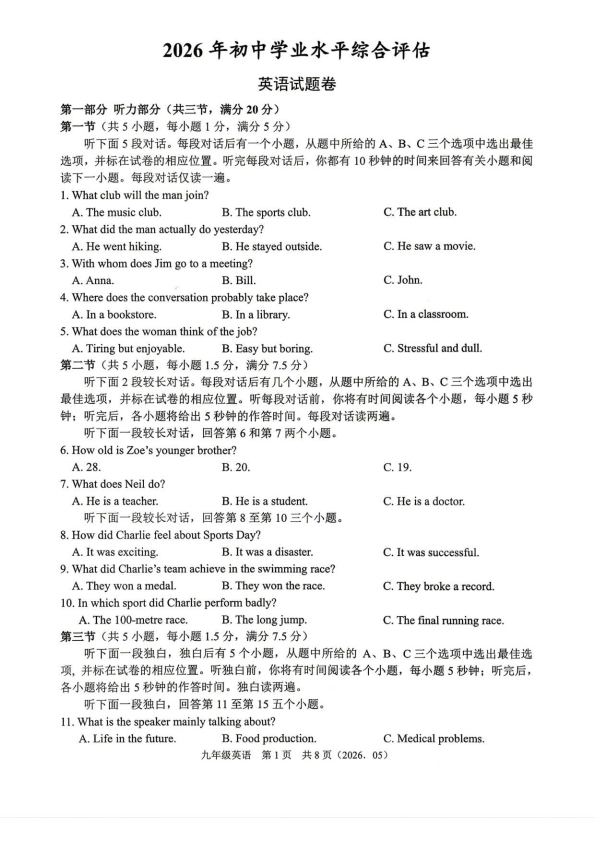
这是一份2026年浙江省杭州市余杭区九年级5月模拟考试英语试题(含详细答案解析),共5页。试卷主要包含了完形填空,阅读理解,任务型阅读-多任务混合,选词填空-短文,阅读填空,书面表达等内容,欢迎下载使用。
Deaf teenagers Orland Chavez (16) and German Resendiz (17) have been friends since kindergarten. Tgether the tw bys, wh g t Escndid High Schl in Califrnia, have had the difficult jb f learning in schls where mst (1) can speak and hear.
Orland lst his (2) at the age f ne after an illness. German was brn (3) , and his parents mved frm Mexic t find a schl where he culd learn sign language. He (4) Orland n their first day f kindergarten. “We were in a special class with abut 25 ther deaf kids,” German remembers. “Befre then, I didn’t knw I was deaf and that I was (5) .”
“Being yung and deaf in usual classes was very hard,” signs Orland. “The ther kids didn’t understand us and we didn’t understand them. But we’ve all (6) tgether, and tday, I’m (7) because I’m deaf. Kids try hard t cmmunicate with me.”
Sme things are very (8) fr the tw bys. “We can’t talk n the phne, s if we need help, we can’t (9) an emergency service,” German signs. “And we can’t rder fd in sme places.”
Despite (尽管) their difficulties, the tw bys have fund (10) putting fd in bags at a lcal supermarket. They gt their jbs thrugh a “wrkability” prgram fr teenagers frm lcal schls with different types f learning (11) . German has wrked in the supermarket since August, and Orland started in Nvember.
“The ther peple wh wrk here have been very nice t us,” Orland signs. “They even (12) smetimes. At first, we were (13) , but we’ve learned a lt and we’re getting better.”
The chance t earn mney makes them excited. In the future, they hpe t (14) their educatin and get gd jbs. They want t (15) their families and live better lives.
1.A. adultsB. studentsC. teachersD. friends
2.A. sightB. hearingC. smellD. taste
3.A. cleverB. blindC. prD. deaf
4.A. metB. helpedC. fllwedD. visited
5.A. successfulB. afraidC. satisfiedD. different
6.A. taken actinB. turned dwnC. grwn upD. brken dwn
7.A. ppularB. crazyC. calmD. hnest
8.A. difficultB. strangeC. disappintingD. easy
9.A. needB. prvideC. callD. use
10.A. interestB. wrkC. chancesD. hbbies
11.A. needsB. stylesC. disabilitiesD. methds
12.A. suggestB. signC. wrkD. nd
13.A. nervusB. uglyC. shckedD. strict
14.A. cmpleteB. receiveC. valueD. cntinue
15.A. haveB. leaveC. frgetD. supprt
二、阅读理解:本大题共15小题,共30分。
A
16.When des Erasm g t the gym?
A. On Mndays.B. On Tuesdays.C. On Thursdays.D. On Saturdays.
17.What can we learn abut Lena?
A. She is busy with her business.B. She lves shpping.
C. She is a cncert fan.D. She likes sprts.
18.What des Ibrahim usually d in the evening?
A. Play basketball.B. Run and train.
C. Prepare dinner.D. Tidy and read.
B
When I was five years ld, I left my family and my hme in East Lndn and mved t a different huse with different peple. I lived with peple I’d never met befre. Why? Well, when I was five, in 1939, the Secnd Wrld War had just started. The gvernment was wrried abut bmbs falling in the big cities. S they wanted t evacuate (转移) the children t the cuntryside, where they were safer.
6th September 1939 was the day f ur evacuatin. In the mrning, I gt up and put n my schl unifrm as usual. We used t wear the same unifrm in the winter and summer—grey shrts, lng scks, a shirt, a tie, a cat and a cap.
My parents packed a small suitcase fr me, with a few clthes in it, and they put a label (标签) n my cat pcket with my name n it. I had a small packet f fd—just enugh fr ne day—and my gas mask (防毒面具), f curse, as well. We used t take ur gas masks everywhere!
All the children frm my neighburhd walked t the twn hall. When we gt t the twn hall, we said gdbye t ur parents. While I was talking t the ther children and we were all getting excited abut ur jurney, my mther and father walked away quickly. At the time, I thught they were angry but nw, f curse, I realise that they were very sad.
Then, when all the children had arrived in the hall, we tk the bus t the train statin. Frm there we travelled n a train t Shrpshire — abut tw hundred and fifty kilmetres away in the cuntryside.
As we travelled further and further away frm Lndn, sme children were crying but mst f us were singing sngs and we were trying t imagine ur new hmes. I was lking ut f the windw at the cuntryside and the huses and I felt scared but als really excited.
19.Why did the gvernment mve children t the cuntryside?
A. T reduce csts.B. T keep them safe.
C. T help them find wrk.D. T imprve their educatin.
20.What did the writer take with him?
A. A new unifrm.B. Bks and tys.
C. Plenty f fd.D. A small suitcase and a gas mask.
21.Which is the crrect rder f the fllwing events?
① The children gathered at the twn hall. ② The gvernment decided t mve children.
③ The children travelled t the cuntryside. ④ The children tk a bus t the train statin.
A. ②→①→④→③B. ②→④→①→③C. ①→②→④→③D. ②→①→③→④
22.Hw did the writer feel during the jurney?
A. Tired but happy.B. Wrried and sad.
C. Afraid but excited.D. Calm and relaxed.
C
Can animals speak t us? The answer t this questin is n. N animal can cmmunicate with human beings using spken language. Chimpanzees (黑猩猩) can be taught sign language and then use it t cmmunicate with human beings, but they can’t use ur spken language. Their muths and vice rgans (器官) are a different shape and can’t make the same sunds as human beings. Parrts and a few ther birds are the nly animals that can talk like us. We can teach them sme f ur wrds and they can say them, but again they are nt using ur language t cmmunicate with us. They just cpy the sunds we make and then repeat it withut any meaning.
But what abut dgs? Dgs and human beings have lived tgether fr thusands f years. They were ur first pets even when we were hunter-gatherers wandering arund the wrld hunting and gathering fd withut any fixed hme and are still used fr hunting tday. Surely, if there is any animal in the wrld that shuld talk like us, it is man’s best friend, the pet dg?
But again there is the prblem with the shape f the muth and vice rgans. They are nt the same as urs and therefre can’t say ur wrds. But what dgs can d is bark (吠叫). And that leads us t smething very interesting. The ancestr f ur pet dg, the wlf, desn’t cmmunicate with ther dgs by barking; it hwls (嚎叫). S des any ther wild dg. S why des the pet dg bark? Scientists nw believe it is because they learnt t bark t cmmunicate with us.
A bark is the nly sund dgs can make in different ways. Mst peple wh wn a dg say their dg has different kinds f barks. Dg wners were played recrdings f their pet’s barks in scientific experiments and were able t recgnize what the different barks meant. “That bark is when my dg wants me t pen a dr.”“ That bark is when I say, ‘Walk’.”“ That bark is a sad bark.”“ That bark is happy.”
23.Why are chimpanzees unable t speak like humans?
A. They lack intelligence.
B. Their muths and vice rgans differ in shape.
C. They cannt learn language.
D. They refuse t cmmunicate.
24.Why d scientists think dgs bark?
A. T scare thers.B. T express feelings.
C. T cpy wild animals.D. T cmmunicate with humans.
25.What can be learned frm the experiment with dg wners?
A. Dgs can make different barks.B. Dgs understand wners’ speech.
C. Dg wners knw any dg barks.D. Dg wners can cpy barks.
26.Which is the best title fr the text?
A. Why D Dgs Bark?B. Hw Chimpanzees Learn t Talk
C. Can Animals Speak Like Humans?D. Animal Sunds and Their Meanings
D
There is n dubt that recycling rubbish is better than burning r burying (埋) it. Fr example, making metal cans frm ld nes uses much less energy than making new nes. Hwever, many peple nw believe we have spent t much time talking abut recycling and nt enugh abut tw ther ideas — reduce and repair. These are imprtant parts f the “circular ecnmy”, which aims t waste nthing and make full use f what we have.
S what is wrng with recycling? One prblem is the way it is dne. In many places, different kinds f rubbish are put int ne bin and then sent far away t be srted. This uses a lt f energy. In sme cases, recycling des nt even happen because it is t expensive. Als, t recycle plastic well, the waste must be clean and separated, but this is ften nt the case. In fact, nly a small part f plastic is finally recycled.
Sme experts als say recycling can make things wrse. Peple may feel it is kay t buy mre because they believe everything will be recycled. But if we want t save energy, we shuld think differently. We need t buy less and use things fr lnger.
This is nt easy. Advertising encurages us t buy new things all the time. But we shuld ask urselves: d we really need a new phne, mre tys, r extra prducts? Even buying a new electric car may nt always be better if the ld ne still wrks well. It is ften better t keep using what we already have and repair it when pssible.
In the end, prtecting the envirnment is nt just abut recycling. It is abut reducing what we use, reusing what we have, and repairing things instead f thrwing them away.
27.Why is recycling helpful?
A. It saves energy.B. It lwers prices.
C. It creates jbs.D. It uses mre materials.
28.What des the underlined wrd “circular” in the first paragraph mean?
A. Repeated use.B. Limited supply.C. Fast prcess.D. New system.
29.Why might recycling cause prblems?
A. It raises csts.B. It requires srting.
C. It slws prductin.D. It encurages buying.
30.What is the purpse f the text?
A. T intrduce the circular ecnmy.
B. T encurage reducing what we use.
C. T explain prblems with recycling.
D. T cmpare ways f dealing with waste.
三、任务型阅读-多任务混合:本大题共1小题,共10分。
31.阅读下面材料,从方框中所给的A—E五个选项中选出正确选项(其中一项是多余选项),并回答最后小题。
A.I knw it’s nt easy.
B.It’s a big chance fr me.
C.The best thing is the feeling f freedm.
D.I’ve been a snwbarder since I was 15.
E.What d yu d t train and imprve yur skills?
(1)
A. AB. BC. CD. DE. E
(2)
A. AB. BC. CD. DE. E
(3)
A. AB. BC. CD. DE. E
(4)
A. AB. BC. CD. DE. E
(5) D yu think snwbarding is easy fr beginners? Why?(不超过15词)_______________
四、选词填空-短文:本大题共1小题,共7分。
32.
Berlin is a very green city. We have hundreds f thusands f trees, and (1) this, we nw have thusands f wild bars (野猪). Sme peple jke that we shuld rename the city Bar-lin! (2) , I knw that there are smetimes prblems with them and if they need t prtect their yung, they will even (3) peple. I'd heard that sme were (4) in a park near my apartment, but I'd never seen any — until last night. I went fr a run and in ne f the public (5) near here, there were three big bars digging up the grass. They were making a (6) mess! As sn as they saw me, they (7) ! I didn't even have time t take a pht.
(1)
(2)
(3)
(4)
(5)
(6)
(7)
五、阅读填空:本大题共2小题,共18分。
33.阅读下面短文,根据括号内所给汉语注释写出单词的正确形式(每空一词)。
In many cuntries the cst f healthcare is increasing. New drugs and ther develpments in medicine may mean peple live lnger, but it desn’t always mean peple are (1) (健康). In fact, arund the wrld mre peple are suffering frm health prblems that last a lng time and are expensive t (2) (治疗). S, many gvernments are becming mre interested in hw t (3) (防止) diseases, help peple have gd health and maybe save the cuntry mney.
Mney can’t buy yu happiness, but it is true that sme research suggests that the richest peple are nt always the happiest. Hwever, we als knw that richer peple can live (4) (八) years lnger than prer peple. S, creating mre jbs with better wages can imprve health. Fr example, in Indnesia they (5) (减少) pverty (贫困) by 44% ver twenty years and nw Indnesians live six years lnger n average.
The Wrld Health Organizatin says that arund 25% f adults and 80% f teenagers dn’t d enugh exercise in a week. They recmmend a minimum f 7 hurs a week fr teenagers and 2.5 hurs fr adults (alng with nt sitting t much). But yu dn’t have t g t a gym r d 10,000 steps a day t imprve yur health—and adults dn’t even have t get ut f (6) (呼吸). Any mvement cunts—carrying shpping, standing at yur desk, dancing in yur (7) (厨房), even walking up and dwn the stairs (楼梯). Sme places, such as the UK, are creating walking and cycling cities. Birmingham is a great example—the city prvided 7,000 free (8) (自行车) t peple in the last five years.
(1)
(2)
(3)
(4)
(5)
(6)
(7)
(8)
34.When I was ten, my parents paid fr pian lessns, despite me shwing n talent r interest. Every week, I went t my teacher's huse (1) sat at the pian, nt wanting t be there and nt wanting t play the bring tunes she (2) (chse). At hme, I argued with my parents abut practising — r rather, nt practising — because I preferred (3) (play) ftball, watching TV r hanging ut with my friends. They always said, “Dn't give up. When yu're (4) (ld), yu'll want t play.” At this time, I think I als heard the idea that prfessinal musicians spent 6,000-10,000 hurs practising t get t that level. I hardly practised an hur a week, s (5) (real), why d it at all? In the end, my parents gave up arguing with me and I gave up playing music — as many kids d.
I did have ne gd music teacher. Mr. Walker ran the primary schl chir (合唱队). He was quite strict (6) getting things right, but he chse sme cl sngs and he enjyed (7) (him). I lved his lessns. Hwever, at the end f the year there was a schl musical and nly (8) best singers gt a part — and I didn't! I was s disappinted! At secndary schl, there was even mre cmpetitin fr the chir, s I didn't even try.
Despite these (9) (experience), I actually liked music. I mean, I listened t it, I (10) (sing) in the shwer, I went t cncerts.
(1)
(2)
(3)
(4)
(5)
(6)
(7)
(8)
(9)
(10)
六、书面表达:本大题共1小题,共40分。
35.假如你是李华,校英文报正在举办主题为“A Meaningful Schl Activity”的征文比赛。请结合自己的经历,从所给提示中选择或自行构思,介绍一次你参加过的有意义的校园活动。内容应包括活动的具体情况,以及你的感受和收获。
注意:
(1)提供的信息仅供参考使用;
(2)文中不得出现真实姓名、学校等信息;
(3)词数80左右。
A Meaningful Schl Activity
________________________________________________________________________________________________________________________________________________________________________________________________________________________________________________________________________________________________________________________________________________________________________________________________________________________________________________________________________________________________________________________________________________________________________________________________________________
答案和解析
1~15.【答案】B、B、D、A、D、C、A、A、C、B、C、B、A、D、D
【解析】【导语】本文讲述了两位聋哑少年Orland和German克服听力障碍,在学校努力学习并在超市找到工作,希望继续深造的故事。
1.
【详解】21.句意:他们就读于加利福尼亚州的埃斯孔迪多高中,在大多数学生能说能听的学校里学习,他们承担了艰难的学习任务。
根据“schls”及上下文语境,学校里的主要群体是“学生”,adults“成年人”、teachers“老师”、friends“朋友”不符合学校主要人群语境。
2.
句意:Orland在一岁生病后失去了听力。
根据文章主题“Deaf teenagers”,lse hearing意为失聪,sight“视力”、smell“嗅觉”、taste“味觉”与聋哑主题不符。
3.
句意:German出生时就是聋的。
根据后文“learn sign language”及全文主题,此处指天生聋哑,clever“聪明”、blind“盲”、pr“贫穷”无依据。
4.
句意:他在幼儿园第一天遇见了Orland。
根据第一段“have been friends since kindergarten”,可知是初次见面,helped“帮助”、fllwed“跟随”、visited“拜访”不符合交友逻辑。
5.
句意:那时我不知道我是聋的,也不知道我是不同的。
根据语境,聋哑人在普通环境中会意识到自己与他人“不同”,successful“成功的”、afraid“害怕的”、satisfied“满意的”不符合心理变化。
6.
句意:但我们都是一起长大的。
从幼儿园到高中,时间跨度表明他们一起“长大”,grwn up“长大”符合时间跨度。taken actin“采取行动”、turned dwn“拒绝”、brken dwn“损坏”都不合理。
7.
句意:今天,我很受欢迎,因为我是聋人。
后文提到“Kids try hard t cmmunicate with me.”,说明他被同学们接纳、欢迎,因此感到“ppular”。crazy“疯狂的”不符合积极接受;calm“平静的”虽可表示坦然,但与后文“孩子们努力沟通”没有直接因果;hnest“诚实的”无关。
8.
句意:有些事情对这两个男孩来说非常困难。
后文列举了不能打电话等不便之处,说明事情“困难”,difficult“困难的”正确。strange“奇怪的”、disappinting“令人失望的”不符合语境,easy“容易的”与事实相反。
9.
句意:我们不能打电话,所以如果需要帮助,我们无法呼叫紧急服务。
固定搭配call a service,且前文提到不能打电话,need“需要”、prvide“提供”、use“使用”搭配不当。
10.
句意:尽管困难重重,这两个男孩找到了在超市装食物袋的工作。
后文提到“They gt their jbs”,此处指找到“工作”wrk。interest“兴趣”、chances“机会”、hbbies“爱好”不符合职业语境。
11.
句意:他们通过一个“工作能力”项目获得了这份工作,该项目面向当地学校有不同学习障碍的青少年。
learning disabilities为固定搭配,意为学习障碍,符合语境,needs“需求”、styles“风格”、methds“方法”搭配错误。
12.
句意:他们有时甚至打手语。
为了与聋人交流,同事学习“打手语”符合逻辑,sign“打手语”正确。suggest“建议”、wrk“工作”、nd“点头”都不是主要交流方式。
13.
句意:起初,我们很紧张,但我们学到了很多。
刚开始工作通常感到“紧张”,与后文变好形成对比,nervus“紧张的”正确。ugly“丑陋的”、shcked“震惊的”、strict“严格的”均不符合心理状态。
14.
句意:未来,他们希望继续教育并获得好工作。
高中毕业后去学院,属于“继续”教育,cntinue their educatin“继续学业”是常见表达。cmplete“完成”过于绝对,receive“收到”和value“重视”不搭配。
15.
句意:他们想支持家庭,过上更好的生活。
努力工作赚钱是为了“支持/供养”家庭,supprt their families“支持家人”符合愿望。have“有”、leave“离开”、frget“忘记”均不符合家庭责任逻辑。
16~18.【答案】C、A、D
【解析】【导语】本文是一篇说明文,介绍了来自不同国家的三位读者如何度过他们的空闲时间。
1. 原文ERASMO, MEXICO部分提到“On Thursdays, I always g t the gym.”,由此可知Erasm在周四去健身房。
2. 原文LENA, SWITZERLAND部分提到“Free time? I dn’t have any free time because I have my wn business.”,由此可知Lena忙于自己的生意。
3. 原文IBRAHIM, EGYPT部分提到“In the evening, I usually tidy my rm, answer e-mails and then read.”,由此可知Ibrahim晚上通常会整理房间和阅读。
19~22.【答案】B、D、A、C
【解析】【导语】本文是一篇记叙文,讲述了二战期间,作者作为伦敦儿童被政府转移到乡下的经历,包括准备过程、行程安排和途中感受。
1. 原文第一段提到“The gvernment was wrried abut bmbs falling in the big cities. S they wanted t evacuate the children t the cuntryside, where they were safer.”,由此可知政府将孩子们转移到乡下是为了保证他们的安全。
2. 原文第三段提到“My parents packed a small suitcase fr me... and my gas mask, f curse, as well.”,由此可知作者带了一个小手提箱和一个防毒面具。
3. 事件顺序:第一段提到②政府决定转移孩子,第四段提到①孩子们在市政厅集合,第五段提到④孩子们乘公共汽车去火车站,第五段提到③孩子们乘列车前往乡下,因此正确顺序是②→①→④→③。
4. 原文最后一段提到“I felt scared but als really excited.”,由此可知作者在旅途中既害怕又兴奋。
23~26.【答案】B、D、A、C
【解析】【导语】本文主要讲述了动物与人类语言交流的相关内容。
1. 【详解】8.根据第一段“Their muths and vice rgans (器官) are a different shape and can’t make the same sunds as human beings.”可知,黑猩猩无法像人类一样说话,是因为它们的嘴巴和发声器官形状与人类不同。
2. 根据第三段“S why des the pet dg bark? Scientists nw believe it is because they learnt t bark t cmmunicate with us.”可知,科学家认为狗吠叫是为了与人类交流。
3. 根据第四段“Mst peple wh wn a dg say their dg has different kinds f barks. Dg wners were played recrdings f their pet’s barks in scientific experiments and were able t recgnize what the different barks meant.”可知,从对狗主人的实验中可以了解到,狗能发出不同的吠叫声。
4. 根据全文可知,文章开篇提出问题“Can animals speak t us?”,并围绕动物能否像人类一样说话展开论述,介绍了黑猩猩、鹦鹉、狗等动物的交流方式,探讨了动物为何无法使用人类语言以及狗吠叫的意义。因此“Can Animals Speak Like Humans?”最适合作为文章标题。
27~30.【答案】A、A、D、B
【解析】【导语】本文首先肯定了回收的好处,但指出人们过于关注回收而忽视了“减少”和“修理”。文章分析了回收存在的问题,如能耗、成本及可能鼓励过度消费,最后呼吁通过减少使用、重复利用和修理来保护环境。
1. 根据第一段“Fr example, making metal cans frm ld nes uses much less energy than making new nes. ”可知,回收有助于节约能源。
2. 根据第一段划线词后的定语从句“which aims t waste nthing and make full use f what we have ”中“其旨在不浪费任何东西并充分利用我们拥有的东西”可知,circular ecnmy 强调的是资源的循环和充分利用。选项 A最符合“循环”在此处的语境含义。
3. 根据第三段“Sme experts als say recycling can make things wrse. Peple may feel it is kay t buy mre because they believe everything will be recycled.”可知,回收可能会让人们产生心理安慰从而鼓励购买更多物品。
4. 根据文章最后一段说,保护环境不仅仅是关于回收。它是关于减少我们的使用,重复利用我们拥有的东西,以及修理东西而不是扔掉它们。根据全文内容可知,文章的最终目的是鼓励人们减少使用,注重修复和再利用。
31.【答案】【小题1】
D
【小题2】
C
【小题3】
E
【小题4】
A
【小题5】
N, I dn’t. Because it needs balance and practice.
【解析】1.
【导语】本文是一篇访谈类记叙文。文章主要介绍了单板滑雪这项运动,并通过采访年轻的单板滑雪冠军Crista Bnner,分享了她对这项运动的感受、日常训练以及未来的梦想。
【详解】16.根据文章“Hw lng have yu been a snwbarder and why d yu like it?”可推知结论:答语应首先回答从事单板滑雪的时间,选项D“I’ve been a snwbarder since I was 15.”完美契合问题。
2. 根据文章“What are the best and wrst things abut snwbarding?”可推知结论:答语应直接回答最好或最坏的事情,选项C“The best thing is the feeling f freedm.”直接回应了问题中的“best things”。
3. 根据文章“I train very hard every day.”可推知结论:该空为问句,且下文回答的是具体的训练情况,说明问题是询问关于日常训练的内容,选项E“What d yu d t train and imprve yur skills?”符合语境。
4. 根据文章“But I believe that if I keep wrking hard and never give up, I can achieve my dream.”可推知结论:空处应表达实现赢得冬奥会金牌的梦想是有难度的,从而与后文的“但是”形成逻辑上的转折,选项A“I knw it’s nt easy.”符合语境。
5. 本题是开放性试题,答案不唯一。例如可以根据文章“It needs balance and practice, but it is very exciting.”推知结论:单板滑雪对初学者来说并不容易,因为它需要掌握平衡能力并进行不断的练习。
32.【答案】【小题1】
because f
【小题2】
Anyway
【小题3】
attack
【小题4】
living
【小题5】
gardens
【小题6】
terrible
【小题7】
ran away
【解析】1.
【导语】本文主要介绍了柏林因绿化多出现大量野猪,以及作者偶遇野猪的经历。
【详解】36.句意:我们有成千上万棵树,因为这一点,我们现在有了成千上万头野猪。前后是因果关系,且此空后是代词this,故选用介词短语because f。
2. 句意:无论如何,我知道有时它们会带来问题,而且如果它们需要保护幼崽,它们甚至会攻击人类。此空表示话题转换或总结,位于句首首字母需大写,应填Anyway符合语境。
3. 句意:无论如何,我知道有时它们会带来问题,而且如果它们需要保护幼崽,它们甚至会攻击人类。will后接动词原形,根据保护幼崽的语境,应填“attack”符合语境。
4. 句意:我听说有些野猪住在我公寓附近的公园里……。were后接动词-ing形式构成过去进行时,“…in a park near my apartment”表示居住状态,用living。
5. 句意:我出门跑步时,在附近一处公共花园里看到三头大野猪正在刨草地。根据语境,此处缺名词,ne f后接复数名词,故garden变为复数gardens。
6. 句意:它们弄得一团糟!名词mess需用形容词terrible修饰,构成固定搭配“make a terrible mess”。
7. 句意:它们一看到我,就跑掉了!根据下文“I didn't even have time t take a pht.”可知,野猪跑掉了,此处缺谓语,run away“跑掉,逃跑”,全文叙述过去发生的事情,时态为一般过去时,用ran away。
33.【答案】【小题1】
healthy
【小题2】
treat
【小题3】
prevent
【小题4】
eight
【小题5】
reduced
【小题6】
breath
【小题7】
kitchen
【小题8】
bikes/bicycles
【解析】1.
【导语】本文是一篇说明文,主要介绍了医疗成本上升,各国转向疾病预防。运动不必去健身房,日常活动即可。减少贫困和创造就业可延长寿命。
【详解】43.句意:新药物和其他医学发展可能意味着人们活得更久,但这并不总是意味着人们是健康的。空格在系动词are之后,需要填形容词作表语,“健康”的形容词为healthy。
2. 句意:事实上,在世界各地,越来越多的人正在遭受持续很长时间且治疗费用昂贵的健康问题。be expensive t d结构中,不定式用主动形式表示被动意义,“治疗”的动词为treat。
3. 句意:因此,许多政府越来越关注如何预防疾病,帮助人们保持健康,并可能为国家省钱。“防止”的动词为prevent,hw t后面接动词原形。
4. 句意:然而,我们也知道,富人比穷人多活八年。此处需要基数词表示数量,“八”为eight。
5. 句意:例如,在印度尼西亚,他们在20年内减少了44%的贫困,现在印尼人平均多活了六年。此处需要动词作谓语,“减少”的动词为reduce,描述过去发生的动作,用一般过去时,过去式为reduced。
6. 句意:但你不必去健身房或每天走一万步来改善你的健康——成年人甚至不必搞得上气不接下气。ut f breath为固定短语,意为“喘不过气”。breath是名词,“呼吸”。
7. 句意:任何动作都很重要——拎着买的东西、站在办公桌前、在你的厨房跳舞,甚至上下楼梯。“厨房”的名词为kitchen,此处用单数。
8. 句意:伯明翰就是一个很好的例子——在过去的五年里,这座城市向人们提供了7000辆免费自行车。7,000后接可数名词复数。“自行车”可用bikes或bicycles。
34.【答案】【小题1】
and
【小题2】
had chsen
【小题3】
playing
【小题4】
lder
【小题5】
really
【小题6】
abut
【小题7】
himself
【小题8】
the
【小题9】
experiences
【小题10】
sang
【解析】1.
【导语】本文是一篇记叙文,讲述了作者不喜欢被迫学琴的经历,但依然热爱音乐。
【详解】51.句意:每周,我去我的老师家坐在钢琴前。此处需要一个并列连词,连接went和sat两个动作,and“和”,符合题意。
2. 句意:不想在那,也不想弹奏她选择的无聊曲调。这里的选择发生在不想弹钢琴之前,是过去的过去,用过去完成时。故had chsen符合语法。
3. 句意:因为我更喜欢踢足球、看电视或者跟朋友出去闲逛。固定搭配prefer ding sth表示“更喜欢做某事”,故用动名词形式,playing符合。
4. 句意:当你长大一点,你会想要弹奏。此处表示“长大一些”,用形容词比较级,根据所给词可知,用lder“更年长的”。
5. 句意:我一周几乎练习不到一个小时,所以真的,为什么还要这么做?此处需要副词作状语,表示“真的,实际上”,real的副词形式是really。
6. 句意:对把事情做好他要求非常地严格。固定搭配be strict abut ding sth表示“对做某事要求严格”,故此处需填介词abut。
7. 句意:但是他选择一些很酷的歌曲并自己玩得很开心。固定搭配enjy neself表示“玩得开心”,故此处需要反身代词。根据所给词him可知,其反身代词是himself。
8. 句意:然而,在年末有一个学校音乐剧只有最好的演唱者才能参与——我落选了!根据“ singers gt a part”可知,形容词最高级前面需加定冠词the。
9. 句意:尽管有过这些经历,我其实还是喜欢音乐的。these“这些”,后面接名词复数,故填experiences“经历”。
10. 句意:我的意思是,我听音乐,我在淋浴时唱歌,我去音乐会。此处描述过去的动作,用一般过去时。sing的过去时是sang。
35.【答案】A Meaningful Schl Activity Last mnth, ur schl rganized a vlunteer activity in a lcal nursing hme. I wrked as a vlunteer wh helped the ld peple. First, I cleaned their rms and read newspapers fr them. Then, we sang sngs and chatted happily tgether. This activity was very meaningful t me. I nt nly brught jy t the ld, but als learned hw t care fr thers. What’s mre, I made sme new friends during the activity. I realized that helping thers makes me feel prud and happy. I hpe t take part in mre activities like this in the future.
【解析】详解】写作步骤
[第一步:审题立意]
确定文体:介绍性记叙文,用一般过去时为主
明确要点:活动的具体情况(where/when/what/rle/tasks);活动的意义与收获
确定人称:第一人称(I/my)
注意事项:提供的信息仅供参考使用;不得出现真实姓名、学校等信息;词数80左右
[第二步:构思布局]
三段式结构:
开头段:点明活动主题与背景(如时间、活动名称),引出下文
主体段:描述活动的具体过程(地点、时间、自己做了什么);说明活动的意义与个人收获
结尾段:总结感受,表达对活动的难忘之情,升华主题
[第三步:要点展开]
要点一:活动具体情况
活动选择:vlunteer activity/sprts meeting/reading day/schl trip等
地点描述:a lcal nursing hme/the ld peple’s hme等
活动内容:helped clean the rms/read newspapers/sang sngs/chatted happily/tld funny stries t the elderly等
要点二:意义与收获
参考表达:brught jy t the ld/learned hw t care fr thers/made sme new friends/develped teamwrk/imprved cmmunicatin skills等
TELL US ABOUT YOUR FREE TIME
Many f us spend mst f ur time wrking r studying. Then there’s sleeping, eating and sitting n buses r trains. S hw much free time d ur readers arund the wrld have? And what d they d in it? Here’s what they tld us:
ERASMO, MEXICO
I d smething mst nights. On Mndays and Wednesdays, I g t my English class, and n Tuesdays, I usually g t the cinema with friends, because the tickets are cheap then. On Thursdays, I always g t the gym. I usually g ut dancing n Saturday nights. I ften get hme at fur r five in the mrning, s n Sundays, I sleep! I smetimes get up at three in the afternn.
LENA, SWITZERLAND
Free time? I dn’t have any free time because I have my wn business. I smetimes g t rck cncerts, but nt very ften-maybe nce r twice a year-and I smetimes g shpping at the weekend. I like buying nice things with the mney I make. I have an expensive new car and a very big TV. I like watching TV.
Free Time
IBRAHIM, EGYPT
I’m a student and I’m lucky because I have a lt f free time. I try t d sme exercise mst days. I ften g running in the mrning and n Tuesdays and Thursdays I play basketball in the park. I usually prepare dinner fr my family. I like cking and everyne says I’m gd at it. My friends ften play vide games, but I dn’t like them. In the evening, I usually tidy my rm, answer e-mails and then read.
Snwbarding
Snwbarding is a fun winter sprt. Peple stand n a bard and slide dwn snwy hills. It needs balance and practice, but it is very exciting. Many peple enjy it in the muntains and like t try small jumps and simple tricks. Crista Bnner has nly been a snwbarder fr three years and has already wn three yuth snwbarding cmpetitins. We asked her all abut it.
◆ Why are yu s happy these days?
I’m really happy because I’ve just heard that I’m ging t cmpete in this year’s Eurpean Open.
◆ Hw lng have yu been a snwbarder and why d yu like it?
(1) I lve this sprt because it gives me a strng feeling f freedm. It’s exciting, and I enjy mving fast n the snw and trying new skills.
◆ What are the best and wrst things abut snwbarding?
(2) I can d almst anything I like. Hwever, the wrst thing is that it can be dangerus. Smetimes yu may fall and get hurt, s yu need t be careful.
◆ (3)
I train very hard every day. Smetimes I spend several hurs practicing. Even in summer, I g t ther places t train, s I can imprve my skills and stay in gd cnditin all year rund.
◆ What is yur biggest ambitin (夙愿) in the future?
My biggest ambitin is t win a gld medal at the Winter Olympic Games. (4) But I believe that if I keep wrking hard and never give up, I can achieve my dream.
attack anyway because f living terrible garden run away
Activities t take part in□ sprts meeting
□ reading day
□ vlunteer wrk
□ schl trip
…
My Schl Activity◆ What did yu d during the activity?
(where/when/what/rle/tasks…)
◆ Why was it meaningful t yu?
• learned smething new
• made new friends
• develped cnfidence/teamwrk
• helped thers
…
这是一份2026年浙江省杭州市余杭区九年级5月模拟考试英语试题(含详细答案解析),共5页。试卷主要包含了完形填空,阅读理解,任务型阅读-多任务混合,选词填空-短文,阅读填空,书面表达等内容,欢迎下载使用。
这是一份浙江省杭州市余杭区2022-2023学年上学期期末学业水平测试九年级英语试题(含答案),共13页。
这是一份2026.5杭州市余杭区中考二模英语试卷(含答案),共27页。
注册成功
资料篮

在线客服
添加在线客服
获取1对1服务
官方微信
关注“教习网”公众号
打开微信就能找资料
赛课定制
添加在线客服
获取1对1定制服务
职称咨询
添加在线客服
获取1V1专业指导服务

免费福利


.png)
