免费领取教师福利
若您为此资料的原创作者,认为该资料内容侵犯了您的知识产权,请扫码添加我们的相关工作人员,我们尽可能的保护您的合法权益。


这是一份2025-2026学年八年级英语下册期末复习(人教版)考前押题练习含答案(语法填空16篇)(八大热点话题),共25页。
本资料共16篇专题训练,从上到下每单元依次对应2篇单元话题专题训练
阅读下面短文并填空,(如有提示词,则填入提示词的适当形式;如无提示词,则填入一个适当的单词)。
I still remember when I was a little by, I wuld always draw pictures n bks and walls. It’s ne f my favurite 1 (hbby), and art has always been my favurite subject.
2 nw in middle schl, there is nly ne art lessn each week, which is far frm enugh fr me. Hw I wish the schl culd 3 (increase) the number f art lessns fr students like me! I always get cmpletely 4 (lse) in my artwrk, and the 45 minutes fr each lessn passes quickly. It is as if 5 (draw) takes me t anther wrld.
I enjy drawing s much. I just keep n drawing my pictures. I 6 (especial) enjy drawing cartns. Letting my creativity run freely, I smetimes draw things that even surprise myself. I dn’t even knw hw 7 (describe) sme f them t yu.
When I am drawing smething, I always feel free. I’m 8 (happy) than any ther time. Fr me, drawing is 9 natural way t shw myself and it 10 (allw) me t fllw my heart. And the result is always a gd ne.
【答案】
1.hbbies 2.But 3.increase 4.lst 5.drawing 6.especially 7.t describe 8.happier 9.a 10.allws
【导语】本文讲述了作者对绘画的热爱:从小就喜欢画画,如今中学美术课太少让他遗憾,但绘画仍是他表达自我、追寻内心的方式。
1.句意:这是我最喜欢的爱好之一,而且美术一直是我最喜欢的学科。“ne f + 可数名词复数”是固定结构,“hbby”的复数是“hbbies”。
2.句意:但现在上了中学,每周只有一节美术课,对我来说远远不够。此处表转折,填“But”。
3.句意:我多么希望学校能增加像我这样的学生的美术课数量!“culd”后接动词原形,填“increase”。
4.句意:我总是完全沉浸在我的作品中,每节课45分钟过得飞快。“get lst”是固定搭配(沉浸于、迷路),填“lst”。
5.句意:画画就像带我去了另一个世界。此处作主语,用动名词“drawing”。
6.句意:我尤其喜欢画卡通。此处修饰动词“enjy”,用“especial”的副词形式“especially”。
7.句意:我甚至不知道如何向你描述其中一些作品。“hw t d sth.”是固定结构(如何做某事),填“t describe”。
8.句意:我比其他任何时候都开心。“than”提示用形容词比较级,“happy”的比较级是“happier”。
9.句意:对我来说,画画是一种自然的自我表达方式。此处表泛指,“natural”以辅音音素开头,填“a”。
10.句意:它让我能追随自己的内心。主语“it”是第三人称单数,一般现在时中动词用“allws”。
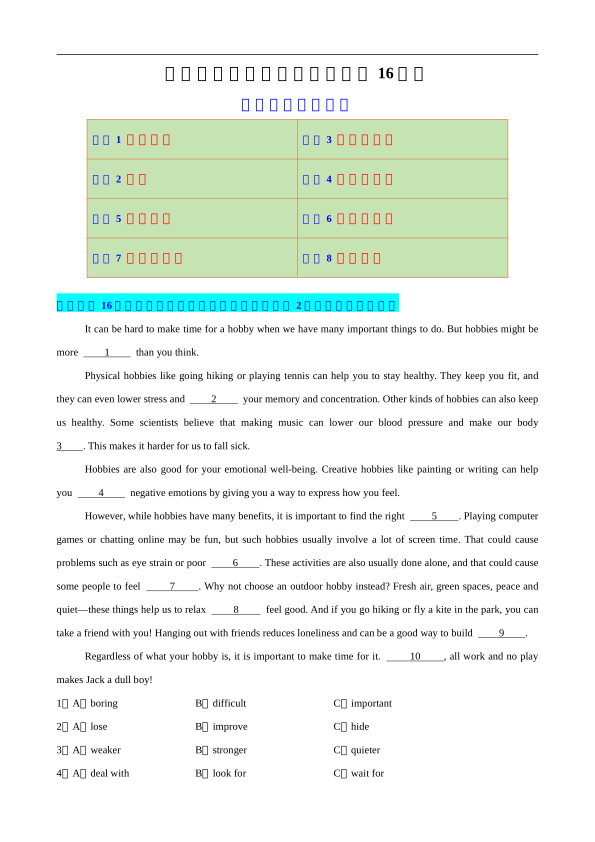
阅读下面短文,根据上下文或括号内单词等提示,在空白处填入适当的单词或括号内单词的适当形式。
It can be hard t make time fr a hbby when we have many imprtant things t d. But hbbies might be 1 (imprtant) than yu think.
Physical hbbies 2 ging hiking r playing tennis can help yu stay healthy. They can reduce stress and help yu remember better. Other kinds f hbbies can als keep us healthy. 3 (make) music can reduce bld pressure and make ur bdies strnger. Playing an instrument als 4 (keep) ur brains yung.
Hbbies are als gd fr yur mental health. Creative hbbies like painting r writing can help yu deal with negative emtins. That is 5 they ffer yu a way t express hw yu feel. Yu may feel gd abut 6 (yu) in this way!
Everything has tw sides. Playing cmputer games r chatting nline may be fun, but such hbbies 7 (usual) take a lt f screen time. That culd cause prblems such as eye sreness r pr sleep. Als yu may feel lnely when ding these 8 (activity) alne. Why nt chse 9 utdr hbby instead? Fresh air, green spaces, peace and quiet — these things help us t relax and feel gd.
Whatever yur hbby is, it is imprtant 10 (make) time fr it. After all, all wrk and n play makes Jack a dull by!
【答案】
1.mre imprtant 2.like 3.Making 4.keeps 5.because 6.yurself 7.usually 8.activities 9.an 10.t make
【导语】本文是一篇说明文,主要介绍了爱好对身心健康的重要性,分析了不同类型爱好(体育类、艺术类、创造性爱好)的益处,也提及了线上爱好的潜在问题,最后呼吁人们为爱好留出时间。
1.句意:但爱好可能比你想象的更重要。句中出现“than”,表示两者比较,形容词imprtant需使用比较级形式,即mre imprtant。
2.句意:像徒步旅行或打网球这样的体育爱好可以帮助你保持健康。此处是举例说明“Physical hbbies”的具体类型,“like”可表示“像,例如”,符合语境。
3.句意:制作音乐可以降低血压,让我们的身体更强壮。此处需要动名词作句子的主语,因此动词make需变为动名词形式Making,注意句首单词首字母需大写。
4.句意:演奏乐器也能让我们的大脑保持年轻。句子主语“Playing an instrument”是动名词短语,视为单数,句子时态为一般现在时,谓语动词keep需使用第三人称单数形式keeps。
5.句意:那是因为它们为你提供了一种表达感受的方式。前文提到“创造性爱好可以帮助你处理负面情绪”,此处是解释原因,“That is because...”是固定句型,意为“那是因为……”。
6.句意:你可能会通过这种方式对自己感觉良好!此处主语和宾语均指代“yu”,需使用反身代词,构成“feel gd abut neself”的固定搭配,“yu”的反身代词是 yurself。
7.句意:玩电脑游戏或网上聊天可能很有趣,但这样的爱好通常会占用很多屏幕时间。此处修饰动词take,需用副词形式,形容词usual的副词形式是usually。
8.句意:而且当你独自做这些活动时,可能会感到孤独。限定词“these”后需接可数名词复数形式,activity的复数形式是activities。
9.句意:为什么不选择一个户外爱好呢?此处泛指“一个户外爱好”,需用不定冠词,utdr以元音音素开头,故用an。
10.句意:无论你的爱好是什么,为它腾出时间是很重要的。“It is imprtant t d sth.”是固定句型,意为“做某事是重要的”,因此动词make需使用不定式形式t make。
阅读下面的短文,在空白处填入一个适当的单词用所给词的适当形式填空。
If yu dn’t keep yurself warm enugh,winter can be a time t have an illness. During the winter mnths, peple 1 (easy) get clds and the flu.Many peple think they are the same, 2 they are different.
Clds can stay with yu fr up t a week. Yu will have a 3 (run) nse, a sre thrat, a headache, a cugh and a fever. Flu is 4 (serius) than clds. Yu will feel sick very quickly. Yu will have a fever and a headache. Yur bdy will hurt and becme weak. This culd last fr up t fur 5 (week).
Are there any ways t keep 6 (yu) away frm clds r flu? Staying away frm peple 7 clds r flu may wrk. Try nt 8 (tuch) yur nse r eyes if yu have been clse t smene wh has a cld. Wash yur hands, especially after 9 (clean) yur nse. Ging ut with wet hair can als give yu a cld!
If yu catch a cld r the flu, g t bed and rest. Ding this will help yu get well. Drink lts f water. Stay in 10 warm, well-aired rm. If yu have a headache r yur muscle(肌肉) hurts, dn’t frget t take sme medicine.
【答案】
1.easily 2.but 3.runny 4.mre serius 5.weeks 6.yurself 7.with 8.t tuch 9.cleaning 10.a
【导语】 本文主要介绍了冬天人们容易患感冒和流感,并说明了感冒和流感的区别,以及预防和应对感冒、流感的方法。
1.句意:在冬季,人们很容易感冒和得流感。空格修饰动词get,应用副词形式,easy的副词为easily。
2.句意:许多人认为它们是一样的,但它们是不同的。前句说“they are the same”,后句说“they are different”,前后构成转折关系可知,应用转折连词but。
3.句意:你会流鼻涕、喉咙痛、头痛、咳嗽和发烧。根据nse可知,该处用形容词runny作定语,a runny nse意为“流鼻涕的”。
4.句意:流感比感冒更严重。句中有than,可知应用比较级,serius是多音节词,比较级前加mre可知。因此填mre serius。
5.句意:这可能持续长达四周。fur后接可数名词复数,week的复数为weeks。
6.句意:有什么方法能让你自己远离感冒或流感吗?keep neself away frm是固定搭配,意为“让自己远离……”,主语是yu“你”,反身代词应用yurself。
7.句意:远离患有感冒或流感的人可能会有效果。根据clds r flu可知,peple后需要介词表示“患有……的”,应用with。
8.句意:如果你靠近了感冒的人,尽量不要摸你的鼻子或眼睛。try nt t d sth.是固定搭配,意为“尽量不要做某事”,因此该空填t tuch。
9.句意:洗手,尤其是在清理鼻子之后。after是介词,介词后接动名词形式,clean的动名词为cleaning。
10.句意:待在一个温暖、通风良好的房间里。rm是可数名词单数,此处表示泛指“一个”,且warm以辅音音素开头,应用不定冠词a。
阅读下面短文,在空白处填入一个适当的单词或用括号内所给单词的正确形式填空。
James and his friend Allen lived in the city, away frm their families. One Saturday, James, wh never cked befre, was 1 (determine) t make fried chicken. After taking deep 2 (breath), he pured il int a pan, turned n the stve, and left the il t heat while he made 3 (prepare) fr the chicken. Just then, Allen came hme and was excited that their ftball team wn the game. Hearing the gd news, James frgt abut the cking il, fllwed Allen int the living rm and 4 (wnder) mre abut the game.
Sn, they smelled smething 5 (burn). Rushing back t the kitchen, they fund the pan n fire, with large flames jumping int the air. James quickly turned ff the stve, but a flame jumped nt his shirt. He threw himself t the flr and rlled arund t put ut the fire n his clthes. Allen, remembering his schl 6 (safe) lessns, knew water wuld make the il fire even 7 (bad). Instead, he gt a fire extinguisher and put ut the pan fire 8 secnds.
Luckily, James was 9 (simple) a little hurt. 10 imprtant lessns this accident taught them! Never leave cking fd alne, and knwing basic living knwledge can have a great influence in an emergency.
【答案】
1.determined 2.breaths 3.preparatins 4.wndered 5.burning 6.safety 7.wrse 8.in 9.simply 10.What
【导语】本文是一篇记叙文,讲述了James做饭分心引发火灾,Allen用安全知识正确灭火,两人得到生活教训的故事。
1.句意:一个周六,从未做过饭的James下定决心做炸鸡。determine意为“下决心”,是动词,此处考查固定短语be determined t d sth.,意为“下定决心做某事”。
2.句意:深呼吸几次后,他往锅里倒油、打开燃气灶,一边准备鸡肉,一边热油。此处考查固定搭配take deep breaths,意为“深呼吸”,breath为可数名词,常用复数形式。
3.句意:深呼吸几次后,他往锅里倒油、打开燃气灶,一边准备鸡肉,一边热油。prepare意为“准备”,是动词,此处考查固定短语make preparatins fr…,意为“为……做准备”,此处用preparatin的复数形式表示泛指。
4.句意:听到这个好消息,James忘了锅里的烹饪的油,跟着Allen走进客厅,想知道更多比赛的事。wnder意为“想知道”,是动词,and连接并列谓语,前文frgt、fllwed均为动词的过去式,此处要用wnder的过去式wndered。
5.句意:很快,他们闻到有东西烧焦了。burn意为“燃烧”,是动词,smell sth. ding意为“闻到某物正在……”,此处用burn的现在分词burning作宾语补足语,强调动作正在发生。
6.句意:Allen想起了学校的安全课程,知道用水浇油火会让火势变得更糟。safe译为“安全的”,是形容词,此处考查固定短语safety lessns,意为“安全课”,safety是safe的名词形式,意为“安全”。
7.句意:Allen想起了学校的安全课程,知道用水浇油火会让火势变得更糟。bad意为“差的;坏的”,是形容词,even“甚至”修饰形容词比较级,bad的比较级是wrse,意为“更糟的”。
8.句意:相反,他拿来灭火器,在几秒内扑灭了锅里的火。此处考查固定搭配in+时间段,表示“在……之内”。
9.句意:幸运的是,James只是受了一点轻伤。simple译为“简单的;一般的”,是形容词,此处用副词修饰“a little hurt”,作状语,simple的副词形式是simply,意为“仅仅;只”。
10.句意:这场事故给了他们多么重要的教训啊!句子是感叹句,中心词是名词lessns“教训”,用what引导感叹句,其结构是“What+形容词+可数名词复数+主语+谓语!”句首单词的首字母要大写。
In traditinal Chinese culture, a father’s lve is ften quiet but strng. They may shw their lve 1 (different), but this lve is always as deep as the cean.
Zeng Gufan was 2 fficial leader in the Qing Dynasty. He was a busy man, but he always fund time 3 (write) letters t his children. Zeng paid great attentin 4 his children’s persnal grwth. Thrugh his letters, he set family rules and taught his sns t review (温习) them ften. He kept 5 (fllw) up n this wrk thrugh his letters.
Lu Xun was ne f China’s greatest 6 (writer) f the 20th century. 7 he is knwn and respected fr his sharp writing, he was simply a gentle father t his sn, Zhu Haiying. When Haiying was little, the family lived in Shanghai. In summer, the wet weather 8 (bring) the by ut in a rash (皮疹). Every evening, he ran t his father’s rm and lay n the bed. Lu Xun then came in with sme unguent (药膏), and he gently put it n Haiying’s skin. The by’s skin cled, but his heart gt warm. Lu Xun liked t write letters with different kinds f paper. The mst 9 (excite) thing fr Haiying was t chse the “right” paper fr his father. Lu Xun always accepted his sn’s ideas.
These fathers express their lve in 10 (they) wn ways. Fatherly lve is different, but its strength hlds a family tgether. Fatherly lve is passed n frm generatin t generatin.
【答案】
1.differently 2.an 3.t write 4.t 5.fllwing 6.writers 7.Thugh/Althugh 8.brught 9.exciting 10.their
【导语】本文以曾国藩和鲁迅为例,阐述了父爱的表达方式虽各不相同,但都深沉而有力,体现了父爱在家庭中的凝聚与传承作用。
1.句意:他们可能以不同的方式表达爱意,但这种爱始终如大海般深沉。修饰动词shw需用副词,different的副词形式为differently,意为“不同地”。
2.句意:曾国藩是清朝的一位官员领袖。fficial leader为可数名词单数,此处首次提及表泛指,且fficial以元音音素开头,故填不定冠词an。
3.句意:他是一个大忙人,但他总是找时间给孩子们写信。“find time t d sth.”为固定搭配,意为“找时间做某事”,故填动词不定式t write。
4.句意:曾国藩非常重视孩子的个人成长。“pay attentin t”为固定短语,意为“注意、重视”,故填介词t。
5.句意:他坚持通过书信来跟进这项工作。“keep ding sth.”为固定搭配,意为“持续做某事”,故填动名词fllwing。
6.句意:鲁迅是20世纪中国最伟大的作家之一。“ne f”后接可数名词复数,writer的复数形式为writers。
7.句意:虽然他以犀利的文笔而闻名和受人尊敬,但对自己的儿子周海婴,他却只是一位温和的父亲。前后分句之间存在明显的让步转折关系:承认他在文学界的威严形象,但强调在家庭中截然不同的温柔面貌,需用连词thugh/althugh引导让步状语从句,句首单词首字母大写,故填Thugh/Althugh。
8.句意:夏天,潮湿的天气使男孩身上起了皮疹。描述过去的情况用一般过去时,bring的过去式为brught。
9.句意:对海婴来说,最激动人心的事情就是为父亲选择合适的纸张。修饰名词thing(事情)需用形容词,此处用excite的形容词exciting“令人激动的”(修饰物),与The mst共同构成形容词的最高级,表示“最激动人心的”。
10.句意:这些父亲以他们自己的方式表达爱。修饰名词ways需用形容词性物主代词,they的形容词性物主代词为their。
阅读短文内容,在空白处填入一个适当的单词或括号内单词的正确形式。
Anger is a kind f feeling. Many things can make yu angry. When yur teacher gives yu t much hmewrk, when yur team lses 1 imprtant game, when a friend brrws yur favrite thing and then 2 (break) it, yu may get really angry.
Usually, yur bdy will tell yu when yu are angry. Fr example, yu breathe 3 (fast) than befre, yur face turns red, and yu may want t break smething r hit smene. But smetimes, yu hide (隐藏) yur anger 4 (quiet). Fr example, yu may hide it 5 yur heart. The prblem is that if yu d this, yu may get a headache r yur stmach may hurt.
In fact, it’s nt gd t hide yur anger, and it’s nrmal fr yu 6 (get) angry smetimes. But anger must be let ut in the right way, withut hurting thers r 7 (yu).
When yu get angry, yu can talk abut it with ther peple. It’s 8 (help) t talk abut yur anger with an adult, such as a parent, a teacher, etc. When yu talk abut anger, thse bad 9 (feeling) can start t g away. Here are sme ther things yu can d 10 yu start t feel angry: talk t a gd friend, cunt frm 1 t 100, give smene a hug (拥抱), g fr a bike ride, think abut gd things, etc.
Remember that hw yu act when yu are angry can make everything better r wrse. Dn’t let yur anger cntrl yu.
【答案】
1.an 2.breaks 3.faster 4.quietly 5.in 6.t get 7.yurself 8.helpful 9.feelings 10.when
【导语】本文是一篇说明文,介绍了愤怒这种情绪的产生、表现,说明隐藏愤怒的危害,并给出了正确处理愤怒的方法,提醒人们不要被愤怒控制。
1.句意:当你的队伍输掉一场重要的比赛时。“game”是可数名词单数,空后的“imprtant”以元音音素开头,需用不定冠词an(一个),表示泛指。
2.句意:当一个朋友借了你最喜欢的东西然后把它弄坏时,你可能会变得很生气。由“brrws”可知句子时态为一般现在时,主语“a friend”是第三人称单数,谓语动词应用第三人称单数形式。
3.句意:举个例子,你的呼吸比以前更快。句中有“than”表示比较,需用副词fast的比较级。
4.句意:但有时你悄悄地隐藏你的愤怒。修饰动词“hide”需用副词。
5.句意:举个例子,你可能把它藏在心里。hide in ne’s heart是固定搭配,表示“藏在心里”。
6.句意:有时候生气对你来说是正常的。it’s+形容词+fr sb. t d sth.是固定句型,需用不定式作主语。
7.句意:不伤害别人也不伤害你自己。与“thers”并列,表示伤害自己,需用反身代词yurself表示“你自己”。
8.句意:和成年人谈论你的愤怒是有帮助的。it’s+形容词+t d sth.是固定句型,此处表示和成年人谈论会有帮助,需用形容词helpful“有帮助的”。
9.句意:那些坏情绪会开始消失。“thse”后接可数名词复数。
10.句意:当你开始感到生气时,你可以做一些其他的事情。“yu start t feel angry”是时间背景,需用when引导时间状语从句,表示“当……的时候”。
阅读下面短文,在空白处填入一个恰当的单词或用括号内所给单词的适当形式填空。
Angel Falls is in sutheastern Venezuela. It is the 1 (tall) waterfall in the wrld. 2 (it) height is 979 metres. The waterfall is in Canaima Natinal Park, 3 sixth largest natinal park in the wrld.
4 is it called Angel Falls? Well, it is named after an American pilt named Jimmie Angel. In Nvember 1933, he flew alne and nticed the falls. He described it as a “mile-high waterfall”, 5 n ne believed him.
In March 1935, Angel tk tw 6 (explrer) t see the falls by plane. They reached the falls 7 (successful). The tw men then realized Angel was telling the truth.
In 1937, Angel went t the falls again with sme ther experts. Unluckily, there 8 (be) smething wrng with their plane. They finally 9 (survive) after spending days in the wild. That adventure (冒险) made Jimmie Angel famus, and the whle wrld gt 10 (knw) the natural wnder. Tday, Angel Falls is ne f the mst ppular places t visit in the wrld.
【答案】
1.tallest 2.Its 3.the 4.Why 5.but 6.explrers 7.successfully 8.was 9.survived 10.t knw
【导语】本文介绍安赫尔瀑布的地理位置、名称由来及探险历史。
1.句意:它是世界上最高的瀑布。空格前“the”后需接形容词最高级,tall的最高级是tallest。
2.句意:它的高度是979米。空格后是名词“height”,需用形容词性物主代词作定语,指代“安赫尔瀑布的”,it对应的形容词性物主代词是Its,位于句首首字母大写。
3.句意:它是世界第六大国家公园。序数词“sixth”前需用定冠词the。
4.句意:它为什么被称为安赫尔瀑布?空格处位于句首,询问原因,需用疑问副词Why,首字母大写。
5.句意:但没有人相信他。前文说他描述它是“一英里高的瀑布”,后文说没人相信,前后是转折关系,需用并列连词but连接。
6.句意:安赫尔带着两名探险家乘飞机去看瀑布。“tw”后需接可数名词复数,explrer的复数形式是explrers。
7.句意:他们成功地到达了瀑布。空格处修饰动词“reached”,需用副词作状语,表示“成功地”,successful的副词形式是successfully。
8.句意:不幸的是,他们的飞机出了故障。There be句型中,主语“smething”是单数,叙述过去发生的事情,需用一般过去时,be动词用was。
9.句意:他们在野外度过了数天后最终幸存下来。叙述过去发生的事情,需用一般过去时,survive的过去式是survived。
10.句意:全世界都知道了这个自然奇观。“get t knw”是动词短语,意为“逐渐了解、知道”,t为不定式符号。
阅读下面短文,在空白处填入1个适当的单词或括号内单词的正确形式。
Lake Natrn is a lake in Tanzania, East Africa. Its water is red, and the lake is ne f the 1 (salt) lakes in the wrld. The red clur 2 (cme) frm salt-lving rganisms (生物) called halphiles. This is a 3 (nature) wnder, but als dangerus t many living things.
Lake Natrn is very ht. And its water can reach 60℃. The lake’s high salt levels can burn skin and even damage (损害) eyes. That’s why many animals cannt live here. But ne special bird, 4 flaming, lves this lake. It builds nests n the salt islands. Every year, thusands f flamings cme here 5 (lay) eggs and raise their chicks. The lake gives them a safe hme, 6 few animals can reach their nests.
The lake’s beauty is 7 (change). Smetimes it lks red, smetimes pink, and smetimes silver r range. This depends n the sunlight, temperature, and algae (藻类) in the water. Its clurs change thrughut the day and acrss seasns. Strng winds can als change the shape f the salt crusts.
Peple must be careful here. Walking near the lake is 8 (risk). The salt crust can break, and peple can fall 9 the ht, salty water. The air arund the lake smetimes smells terrible because f chemicals in the water. Still, it is a magical place t visit and study, especially fr 10 (science) and phtgraphers.
【答案】
1.saltiest 2.cmes 3.natural 4.the 5.t lay 6.because 7.changeable 8.risky 9.int 10.scientists
【导语】本文主要介绍了东非坦桑尼亚的纳特龙湖,其湖水呈红色、含盐量极高、水温很高,对多数生物危险,却是火烈鸟理想的繁殖地。文章还描述了湖水颜色的多变性以及靠近湖泊的危险性。
1.句意:它的水是红色的,这个湖是世界上最咸的湖泊之一。salt“盐”,此处修饰名词lakes,用形容词形式salty“咸的”,“ne f the+形容词最高级+名词复数”表示“最……的……之一”,salty的最高级为saltiest“最咸的”。
2.句意:红色来自一种叫做嗜盐菌的喜盐生物。cme frm“来自”,空处作谓语,描述客观事实,用一般现在时,主语为The red clur,动词用第三人称单数形式cmes。
3.句意:这是一个自然奇观,但对许多生物也很危险。nature“自然”,修饰名词wnder,用其形容词形式natural“自然的”。
4.句意:但有一种特别的鸟,火烈鸟,喜欢这个湖。此处表示一类事物(火烈鸟这类鸟),前面加定冠词the。
5.句意:每年,成千上万的火烈鸟来到这里产卵并抚养它们的幼鸟。lay“下(蛋),产(卵)”,此处用不定式作目的状语,表示“来这里的目的是产卵和抚养幼鸟”。
6.句意:湖给了它们一个安全的家,因为很少有动物能到达它们的巢穴。“很少有动物能到达它们的巢穴”是“湖给了它们一个安全的家”的原因,用because“因为”引导原因状语从句。
7.句意:这个湖的美是多变的。句子缺表语,下文提到湖水颜色会变红、粉、银或橙色,说明它的美是多变的,用change“变化”的形容词形式changeable“多变的”。
8.句意:在湖边行走是危险的。be动词is后接形容词作表语,risk“危险”的形容词形式是risky“危险的”。
9.句意:盐壳可能会破裂,人们可能会掉入滚烫的咸水中。fall int意为“掉入、落入”。
10.句意:尽管如此,它仍然是一个参观和学习的神奇之地,尤其是对科学家和摄影师来说。and连接并列成分,phtgraphers“摄影师”是复数,science“科学”对应的职业名词scientist“科学家”也用复数scientists。
阅读下面材料,在空白处填入适当内容(1个单词)或括号内单词的正确形式。
This disaster was the 1 (surprise) event the village had seen in recent years. A reprter vlunteered 2 (interview) the villagers because he truly believed his truthful reprt wuld g 3 lng way tward helping the village.
But when the reprter arrived, he fund that peple stayed calm. 4 (thank), the villagers acted in an rderly way after the strm. Sme elders 5 (review) hw they culd better prtect their hmes next time while sme yung men were trying t repair the rfs that had cme 6 . Peple even managed t prtect precius 7 (culture) ancient places frm further harm. Security 8 (guard) made sure n danger wuld threaten wmen and children.
Everyne was thinking abut 9 they culd d. They waited patiently 10 the rescue teams finally arrived. Even facing great lss, every villager held firm hpe fr a bright new future.
【答案】
1.mst surprising 2.t interview 3.a 4.Thankfully 5.were reviewing 6.ff 7.cultural 8.guards 9.what 10.until
【导语】本文讲述了一场灾难过后,村民们镇定有序地应对灾害、积极自救的故事,展现了人们在困境中保持理性、守望相助的精神。
1.这场灾难是近年来这个村庄经历过的最令人意外的事件。句中有the和表示范围的in recent years,需用形容词最高级。surprise的形容词形式为surprising(修饰事物),其最高级为mst surprising,表示“最令人意外的”。
2.句意:一名记者自愿采访村民,因为他真诚地相信他真实的报道会对帮助这个村庄大有帮助。固定搭配vlunteer t d sth.表示“自愿做某事”,因此需用动词不定式形式,应用t interview。
3.句意:一名记者自愿采访村民,因为他真诚地相信他真实的报道会对帮助这个村庄大有帮助。固定搭配g a lng way tward ding sth.意为“对某事大有帮助”,因此填不定冠词a。
4.句意:值得庆幸的是,风暴过后村民们表现得井然有序。此处修饰整个句子,需用副词形式,thank的副词形式为Thankfully,表示“值得庆幸的是”,句首首字母需大写。
5.句意:一些老人正在回顾下次如何更好地保护他们的家园,而一些年轻人正试图修复已经脱落的屋顶。while引导并列句,前后时态需保持一致,后文用过去进行时were trying,因此此处也需用过去进行时,主语Sme elders为复数,应用were reviewing,表示“正在回顾”。
6.句意:一些老人正在回顾下次如何更好地保护他们的家园,而一些年轻人正试图修复已经脱落的屋顶。固定搭配cme ff表示“脱落、掉落”,此处表示屋顶脱落,应用ff。
7.句意:人们甚至设法保护珍贵的文化古迹免受进一步的破坏。空后为名词ancient places,需用形容词修饰,culture的形容词形式为cultural,表示“文化的”。
8.句意:保安确保不会有危险来伤害妇女和儿童。此处作句子主语,需用名词形式,security guard是可数名词,意为“保安”,句中表示一类人,需用复数形式guards。
9.句意:每个人都在思考他们能做些什么。此处为宾语从句,从句中d缺少宾语,需用what引导,表示“什么”。
10.句意:他们耐心地等待,直到救援队最终到达。此处表示动作持续到某个时间点,需用连词until,表示“直到……为止”。
阅读下面短文,在空白处填入括号内单词的正确形式。
Last year, an earthquake hit ur twn. Everyne was 1 (scare) that night. The grund shk hard, and the lights in the buildings went ut suddenly. Peple ran ut f their hmes, shuting in fear. Amng them were my neighbr Mr. Wang and 2 (he) family. My mm and I were stuck in ur huse at first because the dr was clsed. Mr. Wang heard ur cries and came back 3 (help). He pulled the dr pen with all his strength and guided us t a safe place, away frm the 4 (bad) damaged buildings.
After the earthquake 5 (stp), we saw many peple get hurt. Many peple 6 (be) screaming ludly fr help arund us. 7 (thankful), kind neighbrs and vlunteers came t ffer help right away, Mr. Wang and my mm rushed t the secnd flr and fund an ld lady 8 (hide) alne in a small crner, She was t terrified t mve. They managed t lead her t safety and then set up 9 (tent) fr weak elders and little kids. Althugh we felt exhausted, we stayed tgether, T lk after each ther well, we decided 10 (share) fd and clean water if need. That experience taught me that human care and unity culd light up the way in the darkest mments.
【答案】
1.scared 2.his 3.t help 4.badly 5.stpped 6.were 7.Thankfully 8.hiding 9.tents 10.t share
【导语】本文讲述了去年作者所在的城镇发生了一场地震,邻居王先生在地震中帮助作者一家脱离险境,之后大家齐心协力救助他人、搭建帐篷、分享物资的感人经历。
1.句意:那天晚上每个人都很害怕。此处作表语,修饰人(Everyne),表示“感到害怕的”,应用形容词scared。
2.句意:其中有我的邻居王先生和他的家人。“family”是名词,前面要用形容词性物主代词his修饰。
3.句意:王先生听到了我们的呼喊声,回来帮忙。此处表示目的,应用动词不定式t help作目的状语。
4.句意:把我们引导到一个安全的地方,远离受损最严重的建筑物。此处修饰过去分词damaged,应用副词badly,表示“严重地”。
5.句意:地震停止后,我们看到很多人受伤了。根据全文时态为一般过去时,此处应用stp的过去式stpped。
6.句意:我们周围很多人在大声呼救。主语“Many peple”是复数,且全文为一般过去时,应用be动词的过去式were。
7.句意:谢天谢地,善良的邻居和志愿者们立刻赶来帮忙。此处修饰整个句子,应用副词Thankfully,且位于句首,首字母需大写。
8.句意:王先生和我妈妈冲到二楼,发现一位老太太独自躲在一个小角落里。“find sb. ding sth.”表示“发现某人正在做某事”,应用现在分词hiding作宾语补足语。
9.句意:然后为体弱的老人和小孩子们搭起了帐篷。“tent”为可数名词,此处指搭建多个帐篷,应用复数形式tents。
10.句意:为了更好地照顾彼此,我们决定分享食物和干净的水。“decide”后接动词时,应用动词不定式作宾语,即decide t d sth.。
Hngli is having dinner at his friend’s huse tnight. But English table manners are 1 (cnfuse) fr him, s he is a little wrried. Sam is 2 by frm Lndn. He gave Hngli fur tips t help him enjy 3 (he) at his friend’s huse.
Firstly, he shuld bring a small gift. The gift can’t be fd 4 the hst asks him t d s. Secndly, he has t wait fr the hst t start befre he 5 (eat). Thirdly, he shuld use a knife and frk 6 (prper)—hld the knife in his right hand and the frk in his left hand. There’s n need 7 (wrry) if he gets cnfused, because he can just watch what everyne else des. 8 (last), he shuld thank the hst and say that everything is delicius.
Thanks 9 Sam’s tips, Hngli desn’t wrry abut the table manners anymre! Sam als tld Hngli, “The 10 (imprtant) thing is having a gd time at his friend’s huse.” Hngli can’t agree mre.
【答案】
1.cnfusing 2.a 3.himself 4.unless 5.eats 6.prperly 7.t wrry 8.Lastly 9.t 10.mst imprtant
【导语】本文讲述了Hngli要去朋友家吃晚餐,因担心英式餐桌礼仪而向来自伦敦的Sam求助,Sam给出了四条实用建议,让Hngli不再焦虑。
1.句意:但他觉得英式餐桌礼仪太令人困惑了,所以有点担心。修饰物“English table manners”用形容词cnfusing,表示“令人困惑的”。
2.句意:Sam是一个来自伦敦的男孩。此处表示泛指一个男孩,by以辅音音素开头,用不定冠词a。
3.句意:他给了Hngli四条建议,帮他在朋友家玩得开心。enjy neself是固定短语,意为“玩得开心”,he的反身代词是himself。
4.句意:除非主人要求,否则礼物不能是食物。根据“the hst asks him t d s.”可知,前后为转折关系,即除非主人要求,否则不能将食物作为礼物,用连词unless。
5.句意:其次,他必须等主人先开始,自己再吃。主语he是第三人称单数,文章用一般现在时,eat的第三人称单数形式是eats。
6.句意:第三,要正确使用刀叉,他应该右手拿刀,左手拿叉。修饰动词use用副词,prper的副词形式是prperly。
7.句意:如果他感到困惑也不用担心,因为他可以看看其他人怎么做。There’s n need t d sth.是固定句型,意为“没有必要做某事”,故填t wrry。
8.句意:最后,他应该感谢主人,并说一切都很美味。此处表示“最后”,用副词Lastly修饰整个句子,句首首字母大写。
9.句意:多亏了Sam的建议,Hngli不再担心餐桌礼仪了。thanks t是固定短语,意为“多亏了”,故填t。
10.句意:Sam和Hngli都认为,在朋友家最重要的事情是玩得开心。根据“thing is having a gd time at his friend’s huse.”可知,此处表示最重要的事,需用形容词最高级,imprtant的最高级是mst imprtant。
阅读下面短文,在空白处填入一个适当的单词或括号内单词的正确形式。
It is impssible t name all Chinese custms in ne passage. Even s, in this passage we bring yu several Chinese 1 (culture) custms and traditins that yu shuld knw. Here we g.
It’s 2 (cmmn) fr Chinese t shw their feelings penly, als aviding any unnecessary bdy tuch. The Chinese see it badly that peple kiss each ther 3 the face, even if they are wmen. In fact, it was nt s acceptable t shake hands in the past. As the cuntry gradually (逐渐地) lets western custms in, peple are used t 4 (shake) hands t greet.
At meals, sme details shuld be knwn by bth guests and hsts. In China, the lder guests are always seated first, and then thers can take their seats. Fd 5 (manner) are als very imprtant. Yu shuld never serve yurself a drink; it shuld be served by smene else. Sticking chpsticks int a bwl f rice is s rude 6 yu shuld avid it. And t eat fd, yu must put yur muth clse t yur wn bwl. But dn’t be 7 (surprise) if peple eat with their muths pen. This is nrmal in China.
Many f yu have already knwn it’s 8 (embarrass) t pen gifts in public. But that’s nt the nly imprtant thing t knw when 9 (receive) gifts in China. Fr example, the Chinese will always refuse yur gift up t three times 10 (shw) they are well educated. But in the end, they are willing t accept it.
【答案】
1.cultural 2.uncmmn 3.n 4.shaking 5.manners 6.that 7.surprised 8.embarrassing 9.receiving 10.t shw
【导语】本文介绍了几种需要了解的中国文化习俗与传统,包括社交礼仪、餐桌礼仪以及收赠礼物的注意事项。
1.句意:尽管如此,在这篇文章中,我们为你带来了一些你应该了解的中国文化习俗和传统。“culture”意为“文化”,此处需要用其形容词形式cultural修饰名词“custms and traditins”,表示“文化的”。故填cultural。
2.句意:中国人很少公开表达自己的感情,也避免任何不必要的身体接触。“cmmn”意为“常见的”,根据后文“The Chinese see it badly that peple kiss each ther”的语境,可知此处应表示“不常见”,用其反义词uncmmn。故填uncmmn。
3.句意:中国人认为人们亲吻对方的脸是很不好的,即使她们是女性。“n the face”是固定搭配,表示“在脸上”。故填n。
4.句意:随着这个国家逐渐融入西方习俗,人们习惯了握手问候。“be used t ding sth”是固定搭配,表示“习惯于做某事”,因此“shake”需要变为动名词shaking。故填shaking。
5.句意:餐桌礼仪也非常重要。“manner”意为“方式;态度”,在表示“礼仪、规矩”时常用复数形式manners,“fd manners”即“餐桌礼仪”。故填manners。
6.句意:把筷子插在一碗米饭里是非常不礼貌的,你应该避免这样做。“s…that…”是固定句型,表示“如此……以至于……”,引导结果状语从句。故填that。
7.句意:但如果人们吃饭时张着嘴,不要感到惊讶。“surprise”意为“使惊讶”,此处需要用其形容词形式surprised描述人的感受,表示“感到惊讶的”。故填surprised。
8.句意:你们很多人已经知道,在公共场合打开礼物是令人尴尬的。“embarrass”意为“使尴尬”,此处需要用其形容词形式embarrassing描述事物的性质,表示“令人尴尬的”。故填embarrassing。
9.句意:但这并不是在中国收礼物时需要知道的唯一重要的事情。“when ding sth”是“when sb is ding sth”的省略结构,表示“当做某事的时候”,因此“receive”需要变为现在分词receiving。故填receiving。
10.句意:例如,中国人总是会拒绝你的礼物多达三次,以显示他们受过良好的教育。此处用动词不定式t shw作目的状语,表示“refuse yur gift”的目的是“they are well educated”。故填t shw。
A tiger was eating the village’s farm animals. He 1 (cme) dwn frm the muntains t steal a pig ne day and then a sheep the next day. The tiger was huge and strng, and the villagers were afraid.
“We need ur teacher Lazi,” the villagers decided. When Lazi agreed 2 (help) them, the villagers cheered. “Lazi will kill the tiger and save us!”
“I said nthing abut killing the tiger,” said Lazi. “Nw, I need ne man and a small gat.” A man named Wang brught Lazi 3 little gat, and they went t the 4 (tiger) cave (洞). The tiger was gne, 5 Lazi gently put the gat there and left quietly. The gat didn’t realize the danger and went t sleep.
The tiger returned. He watched the sleeping gat 6 a while. Then, he began t pet the little gat, just like a mther cat washing her babies. The gat wke up, and the tw 7 (animal) began t play tgether, chatting, jumping and getting 8 (happy) than befre.
9 (final), they lay dwn tgether t sleep.
The next day, a wman carrying her baby rushed int the village frm the fields. “A huge snake tried t hurt my baby!” she said. “But a strange animal drve it away. It was half man and half tiger!”
The day after, a stranger walked int the village. He was hlding the little gat. “I was the tiger that harmed yu,” he said. “Once I understd hw t give and receive happiness, I 1 (change) by Lazi.” The villagers cheered, and Lazi smiled.
【答案】
1.came 2.t help 3.a 4.tiger’s 5.s 6.fr 7.animals 8.happier 9.Finally 10.was changed
【导语】本文是一篇记叙文,讲述了村民们被老虎困扰,寻求老子帮助的故事,老子没有用武力杀死老虎,而是用一只小山羊让老虎感受到给予和接受快乐的道理,最终老虎变成了懂得爱与善意的存在。
1.句意:他一天下山偷一头猪,第二天又偷一只羊。描述的是过去发生的事情,故用一般过去时。故填came。
2.句意:当老子同意帮助他们时,村民们欢呼起来。agree t d sth.表示“同意做某事”,为固定搭配。
3.句意:一个叫王的人给老子带来了一只小山羊,然后他们去了老虎的洞穴。此处表示“一只小山羊”,且“little gat”为可数名词单数,little以辅音音素开头,故用不定冠词a。
4.句意:一个叫王的人给老子带来了一只小山羊,然后他们去了老虎的洞穴。“洞穴”属于“老虎”,应用名词所有格,表示所属关系。故填tiger's。
5.句意:老虎不在,所以老子轻轻地把山羊放在那里,悄悄地离开了。前后句为因果关系,前因后果,故用连词s。
6.句意:他看了一会儿那只睡觉的山羊。fr a while表示“一段时间”,为固定搭配。
7.句意:山羊醒了,两只动物开始一起玩耍,聊天、蹦跳,比以前更开心了。根据“tw”可知,此处需用可数名词复数形式。
8.句意:山羊醒了,两只动物开始一起玩耍,聊天、蹦跳,比以前更开心了。根据“than befre”可知,此处应用比较级形式。故填happier。
9.句意:最后,它们躺在一起睡觉了。此处修饰整个句子,需用副词作状语,句首单词,首字母需大写。
10.句意:一旦我明白了如何给予和接受快乐,我就被老子改变了。主语“I”与动词change之间为被动关系,且故事整体为过去时态,故用一般过去时的被动语态。
阅读下面短文,在空白处填入一个适当的词,或填入括号中所给单词的正确形式且不超过三个词。
Once upn a time, there was a farmer wh wned a large piece f land. He was nt nly knwn fr wrking hard, 1 als fr being greedy (贪婪的). One day, when he was walking arund his fields, he fund a glden gse. The gse culd lay glden eggs, and the farmer was very 2 (excite). At first, the farmer was patient (耐心的) and waited 3 the gse t lay ne egg every day. But as time went n, he became impatient. He thught, “If I can get all the glden eggs at nce, I will becme rich sn.” S he 4 (plan) t kill the gse t take all the eggs inside.
When the farmer cut the gse pen, he was surprised 5 (find) nthing inside. The farmer lst his nly chance t becme rich. He was very sad and realised that his greed had brught him nthing but lss. The stry f the farmer and the gse 6 (quick) spread thrugh the village. Frm then n, peple in the village ften tld this stry t teach their 7 (child) the imprtance f patience and aviding greed.
Years later, the farmer’s stry became famus in ther 8 (twn). Peple wuld travel t his village t hear it. The farmer became a warning t thers abut the danger f greed. Althugh the farmer was sad, he hped his mistake culd help thers learn smething. “If I had been mre patient,” he said, “I culd have lived a much 9 (happy) life.” He spent the rest f his days 10 (tell) this stry t anyne wh wuld listen.
【答案】
1.but 2.excited 3.fr 4.planned 5.t find 6.quickly 7.children 8.twns 9.happier 10.telling
【导语】本文主要通过讲述一个农民“杀鹅取蛋”的故事,告诉我们:不能目光短浅,只看眼前利益;贪婪会带来损失,耐心才是智慧。
1.句意:他不仅因勤劳出名,还因贪婪为人所知。“nt als...”是固定搭配,意为“不仅……而且……”。故填but。
2.句意:这只鹅能下金蛋,农夫非常兴奋。根据“the farmer was very...”可知,此处描述人的情绪,应用形容词excited,作表语。故填excited。
3.句意:起初,农夫很有耐心,每天等待鹅下一个蛋。“wait fr”是固定短语,意为“等待”,此处表示等待鹅下蛋。故填fr。
4.句意:所以他计划杀掉鹅,取出里面所有的蛋。本文讲述过去的故事,动作发生在过去,时态为一般过去时,所以此处填plan的过去式planned。故填planned。
5.句意:当农夫把鹅切开时,他惊讶地发现里面什么也没有。“be surprised t d sth”是固定结构,意为“对做某事感到惊讶”。故填t find。
6.句意:农夫和鹅的故事迅速在村子里传开了。分析句子可知,此处修饰动词spread,应填副词quickly“迅速地”。故填quickly。
7.句意:从那以后,村里的人常讲这个故事,教他们的孩子明白耐心的重要性,以及要避免贪婪。their后接可数名词复数,child的复数形式是children。故填children。
8.句意:多年后,农夫的故事在其他城镇也出了名。twn“城镇”,是可数名词,ther后接可数名词复数,twn的复数形式是twns。故填twns。
9.句意:我本可以过上更幸福的生活。much修饰形容词比较级,happy的比较级是happier。故填happier。
10.句意:接下来的日子里,他把这个故事讲给所有愿意听的人听。“spend time (in) ding sth”是固定结构,意为“花费时间做某事”,tell的动名词形式是telling。故填telling。
阅读下面短文,在空白处填入1个适当的词或括号内单词的正确形式。
On a sunny mrning in Beijing, abut 40 peple “watched” the Chinese street dance film One and Only. We culd tell they were enjying the film frm their facial 1 (express). Xu Wei, wh suffers frm an eye disease, was ne f 2 (they). This film is nt the same as thers. When the actrs stp 3 (talk), audi (音频) descriptins explain what is happening n screen, allwing peple 4 (fllw) the stry clsely. “I’ve cme here fur times t enjy these films. It 5 (true) means a lt t me,” Xu says.
The film was made by Guangming Cinema, and s far, ver 800 6 (vlunteer) have helped make the special films. It takes abut 28 days t finish ne film, and they have successfully made mre than 800!
These films are 7 (imprtance) fr peple wh have 8 (lse) their gd eyesight.
Sme films are shwn in special schls, and sme are free nline. In their spare time, 9 (this) peple can enjy art and talk abut the films with thers. These wnderful films make their lives 10 (gd) and happier.
【答案】
1.expressins 2.them 3.talking 4.t fllw 5.truly 6.vlunteers 7.imprtant 8.lst 9.these 10.better
【导语】本文介绍了为视障人士制作的无障碍电影,讲述了这类电影的制作背景、意义,以及给视障人群生活带来的积极改变。
1.句意:我们可以从他们的面部表情看出他们很享受这部电影。“facial expressins”是固定搭配,表示“面部表情”,express的名词形式是expressin,此处用复数expressins。
2.句意:患有眼疾的徐薇是他们中的一员。“ne f”后接宾格代词,指代前面的“40 peple”,所以they变为宾格them。
3.句意:当演员停止说话时,音频描述会解释屏幕上发生的事情。“stp ding sth.”是固定搭配,表示“停止正在做的事”,所以talk变为动名词talking。
4.句意:让人们能够紧密跟随故事情节。“allw sb. t d sth.”是固定搭配,表示“允许某人做某事”,所以用不定式t fllw。
5.句意:“这对我来说真的意义重大,”徐薇说。“means”是动词,需要用副词修饰,true的副词形式是truly。
6.句意:到目前为止,已有超过800名志愿者帮助制作这些特殊电影。“ver 800”后接可数名词复数,vlunteer的复数形式是vlunteers。
7.句意:这些电影对已经失去良好视力的人很重要。“are”后接形容词作表语,imprtance的形容词形式是imprtant。
8.句意:这些电影对已经失去良好视力的人很重要。“have +过去分词”构成现在完成时,lse的过去分词是lst。
9.句意:在空闲时间,这些人可以欣赏艺术并和他人谈论电影。“peple”是复数名词,前面用指示代词复数these修饰。
10.句意:这些精彩的电影让他们的生活变得更好、更快乐。“and happier”提示此处用比较级,gd的比较级是better。
阅读下面短文,在空白处填入一个适当的单词或括号内单词的正确形式。
I ften read abut the children living in the muntains. They dn’t have enugh learning 1 (resurce), especially fr English. I believe English is nt just 2 language—it als gives peple the chance t see the wrld 3 (different). S I started thinking abut what I culd d fr these children.
Then, I came up with an idea: t make special English learning material! Mre than 10 classmates jined me, and we started a club. It 4 (call) “Out f Muntains”.
Our English materials had three parts: listening, reading and writing. We decided 5 (publish) them every mnth and send them t children by email. We als built a website s children culd get infrmatin mre easily. Each f us wrked n ne part, such as writing cntent, designing layuts (排版), making illustratins (插图) and develping the website. T make the learning prcess mre fun, we chse 6 (interest) tpics fr kids, like hlidays.
The 7 (hard) part was finding the children. I kept in tuch 8 schls in Liangshan, Sichuan. I als reached ut t children thrugh sme WeChat fficial accunts (官方账号). I felt nervus talking t them and was afraid f being refused, 9 I did my best t share ur ideas.
In the end, we gt the readers we hped fr. Every time a parent emailed us saying “My child really liked the stry”, it gave 10 (we) the pwer t keep ging. I hpe ur small acts can help give these kids a better future.
【答案】
1.resurces 2.a 3.differently 4.was called 5.t publish 6.interesting 7.hardest 8.with 9.but 10.us
【导语】本文是一篇记叙文,讲述了作者为了给山区缺乏英语学习资源的孩子提供帮助,与同学们一起创办俱乐部并制作特殊英语学习材料的经历。
1.句意:他们没有足够的学习资源,尤其是在英语方面。resurce意为“资源”,是可数名词,此处被enugh修饰,且指代多种资源,应用其复数形式resurces。
2.句意:我相信英语不仅仅是一种语言——它也给了人们以不同方式看世界的机会。language意为“语言”,是可数名词单数,此处泛指“一种语言”,且language以辅音音素开头,应填不定冠词a。
3.句意:我相信英语不仅仅是一种语言——它也给了人们以不同方式看世界的机会。different意为“不同的”,是形容词,此处修饰动词短语see the wrld,需要用副词形式differently。
4.句意:它被叫做“走出大山”。call意为“称呼,叫作”,主语It指代前面的club,与call之间是被动关系,且描述的是过去发生的事情,应用一般过去时的被动语态,故填was called。
5.句意:我们决定每个月发布它们并通过电子邮件发送给孩子们。decide t d sth.是固定搭配,意为“决定做某事”,故填t publish。
6.句意:为了让学习过程更有趣,我们为孩子们选择了有趣的话题,比如假期。interest意为“兴趣”,是名词或动词,此处修饰名词tpics,应用形容词形式interesting,意为“有趣的”。
7.句意:最难的部分是找到孩子们。hard意为“困难的”,是形容词,前面有定冠词The,此处表示“最难的”,应用其最高级形式hardest。
8.句意:我与四川凉山的学校保持联系。keep in tuch with是固定短语,意为“与……保持联系”。
9.句意:和他们交谈时我感到紧张,害怕被拒绝,但我尽我最大的努力去分享我们的想法。前半句表达了紧张和害怕的情绪,后半句表达了积极行动,前后存在转折关系,应填but。
10.句意:每次有家长发邮件说“我的孩子真的很喜欢这个故事”,这给了我们继续前行的力量。we是人称代词主格,此处作动词gave的宾语,应用其宾格形式us。
话题1 休闲活动
话题3 成长与情绪
话题2 健康
话题4 自然界奇观
话题5 自然灾害
话题6 跨文化交际
话题7 阅读与书籍
话题8 助人奉献
这是一份2025-2026学年八年级英语下册期末复习(人教版)考前押题练习含答案(语法填空16篇)(八大热点话题),共9页。
这是一份2025-2026学年八年级英语下册期末复习(人教版)考前押题练习含答案(阅读回答问题16篇)(八大热点话题),文件包含期末复习考前押题阅读回答问题16篇八大热点话题原卷版docx、期末复习考前押题阅读回答问题16篇八大热点话题解析版docx等2份试卷配套教学资源,其中试卷共36页, 欢迎下载使用。
这是一份2025-2026学年八年级英语下册期末复习(人教版)考前押题练习含答案(阅读还原16篇)(八大热点话题),文件包含期末复习考前押题阅读还原16篇八大热点话题原卷版docx、期末复习考前押题阅读还原16篇八大热点话题解析版docx等2份试卷配套教学资源,其中试卷共31页, 欢迎下载使用。
注册成功
资料篮

在线客服
添加在线客服
获取1对1服务
官方微信
关注“教习网”公众号
打开微信就能找资料
赛课定制
添加在线客服
获取1对1定制服务
职称咨询
添加在线客服
获取1V1专业指导服务

免费福利