免费领取教师福利


若您为此资料的原创作者,认为该资料内容侵犯了您的知识产权,请扫码添加我们的相关工作人员,我们尽可能的保护您的合法权益。


这是一份2025-2026学年八年级英语下册期末复习(人教版)考前押题练习含答案(完形填空16篇)(八大热点话题),共25页。
本资料共16篇专题训练,从上到下每单元依次对应2篇单元话题专题训练
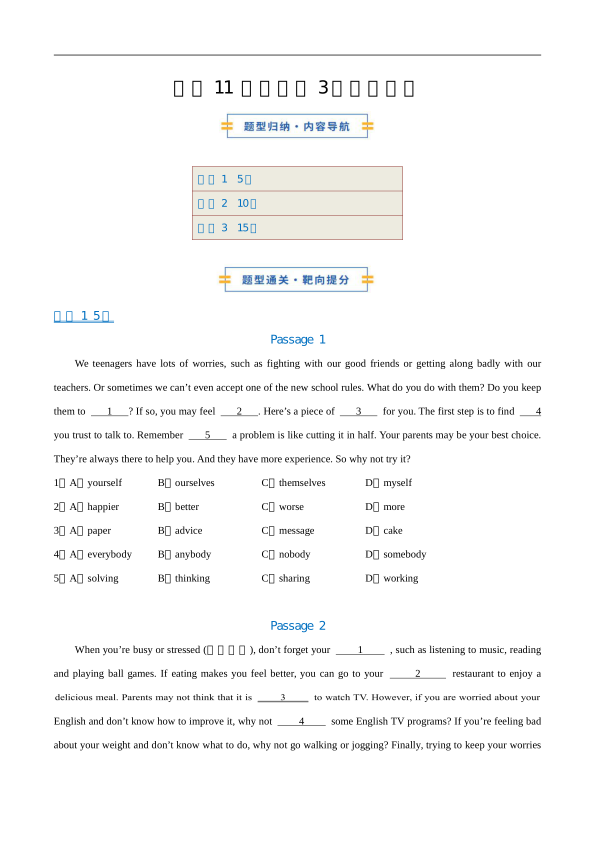
It can be hard t make time fr a hbby when we have many imprtant things t d. But hbbies might be mre 1 than yu think.
Physical hbbies like ging hiking r playing tennis can help yu t stay healthy. They keep yu fit, and they can even lwer stress and 2 yur memry and cncentratin. Other kinds f hbbies can als keep us healthy. Sme scientists believe that making music can lwer ur bld pressure and make ur bdy 3 . This makes it harder fr us t fall sick.
Hbbies are als gd fr yur emtinal well-being. Creative hbbies like painting r writing can help yu 4 negative emtins by giving yu a way t express hw yu feel.
Hwever, while hbbies have many benefits, it is imprtant t find the right 5 . Playing cmputer games r chatting nline may be fun, but such hbbies usually invlve a lt f screen time. That culd cause prblems such as eye strain r pr 6 . These activities are als usually dne alne, and that culd cause sme peple t feel 7 . Why nt chse an utdr hbby instead? Fresh air, green spaces, peace and quiet—these things help us t relax 8 feel gd. And if yu g hiking r fly a kite in the park, yu can take a friend with yu! Hanging ut with friends reduces lneliness and can be a gd way t build 9 .
Regardless f what yur hbby is, it is imprtant t make time fr it. 10 , all wrk and n play makes Jack a dull by!
1.A.bringB.difficultC.imprtant
2.A.lseB.imprveC.hide
3.A.weakerB.strngerC.quieter
4.A.deal withB.lk frC.wait fr
5.A.priceB.hbbyC.balance
6.A.sleepB.fdC.mney
7.A.happyB.lnelyC.excited
8.A.butB.andC.s
9.A.relatinshipsB.friendsC.habits
10.A.In shrtB.At lastC.After all
【答案】
1.C 2.B 3.B 4.A 5.C 6.A 7.B 8.B 9.A 10.C
【导语】本文介绍了爱好的多种益处,包括身体健康、情绪健康,并建议选择合适的户外爱好以建立人际关系。
1.句意:但爱好可能比你想象的更重要。
上文讲很难为爱好腾出时间,下文讲爱好的各种好处,说明它“更重要”,imprtant“重要的”符合。bring“无聊的”、difficult“困难的”均与好处不符。
2.句意:它们能让你保持身体健康,甚至还能缓解压力、提升记忆力和专注力。
上文爱好有益健康,说明它们能“改善”记忆力和注意力,imprve“改善”符合。lse“失去”、hide“隐藏”均与积极效果不符。
3.句意:一些科学家认为,创作音乐可以降低血压,让我们的身体更强健。
上文音乐有益健康,说明能使身体“更强壮”,strnger“更强壮的”符合。weaker“更虚弱的”、quieter“更安静的”均与健康不符。
4.句意:绘画、写作等创意类爱好能为你提供抒发情感的途径,帮你排解负面情绪。
上文创意爱好可以抒发内心感受,进而能“处理”负面情绪,deal with“处理”符合。lk fr“寻找”、wait fr“等待”均与情绪处理不符。
5.句意:然而,尽管爱好有诸多益处,但找到恰当的平衡十分重要。
上文爱好有益但需适度,说明要找到“平衡”,balance“平衡”符合。price“价格”、hbby“爱好”均与适度原则不符。
6.句意:屏幕时间可能导致眼睛疲劳或睡眠不佳。
上文屏幕时间的问题,说明会导致“睡眠不佳”,pr sleep“睡眠不佳”符合。fd“食物”、mney“钱”均与屏幕影响不符。
7.句意:独自活动可能导致一些人感到孤独。
上文活动独自进行,说明可能导致“孤独”,lnely“孤独的”符合。happy“快乐的”、excited“兴奋的”均与负面结果不符。
8.句意:这些东西帮助我们放松,感觉良好。
上文列举自然环境的益处,需用and连接两个并列动作,说明放松“并”感觉良好。but“但是”表转折,s“所以”表结果,均与并列逻辑不符。
9.句意:与朋友一起可以减少孤独感,是建立人际关系的好方法。
上文与朋友一起,说明能建立“人际关系”,relatinships“人际关系”符合,build relatinships“建立人际关系”。friends“朋友”与build搭配不当,habits“习惯”与社交不符。
10.句意:毕竟,只工作不玩耍,聪明的孩子也变傻。
上文强调为爱好腾出时间的重要性,需用After all“毕竟”引出理由或强调观点。In shrt“总之”用于概括总结,At last“最后”侧重时间顺序收尾,二者均不符合此处补充佐证观点的语境。
请先阅读下面短文,掌握其大意,然后从各小题所给的A、B、C、D四个选项中选出可以填入相应空白处的最佳选项。
Hbbies are the things peple ften d fr fun in their free time. Peple may have many different kinds f hbbies, which add 1 t their life.
2 d yu need hbbies? Fr a large number f teenagers, ding smething they lve fr an hur r tw is a gd way t relax. A study has fund that peple are 3 when they take part in a relaxing activity. Other studies have shwn that hbbies can give yu a feeling f 4 , especially when yur hbby helps yu get a prize in a cmpetitin. Lastly, develping hbbies is a gd way t meet peple wh have 5 in cmmn.
Hw d yu 6 the right hbby? Start with what yu enjyed in the past. Did yu nce play ftball? Pick it up again. If yu find it isn’t right fr yu, stp and turn t new things. Jining a class r a team may give yu a 7 t meet ther peple, t.
Which relaxing hbbies are gd fr yur health? It’s clear that exercise such as 8 is gd fr yur health. As a matter f fact, dancing is wnderful exercise. A review f 94 studies has fund that dancing three times a week imprves peple’s balance (平衡能力). Getting ut in nature is als helpful whether yu are hiking r ding things that aren’t active.
Which hbbies keep yur 9 active? Music and reading are the best ways. Prbably playing the pian r listening t yur favrite band can help yu make it. Scientists have fund reading is als gd fr yur brain.
Hbbies let yu frget yur wrries and 10 . What a difference hbbies make! S develp yur wn great hbbies as sn as yu can.
1.A.trubleB.clrC.sadnessD.nise
2.A.WhyB.HwC.WhatD.When
3.A.less bredB.less interestingC.mre bredD.mre serius
4.A.angerB.humurC.successD.failure
5.A.anythingB.nthingC.everythingD.smething
6.A.shareB.chseC.tuchD.miss
7.A.changeB.decisinC.chanceD.plan
8.A.eatingB.sleepingC.singingD.walking
9.A.healthB.armC.mindD.leg
10.A.make upB.cheer upC.stay upD.get up
【答案】
1.B 2.A 3.A 4.C 5.D 6.B 7.C 8.D 9.C 10.B
【导语】本文讲述了爱好的诸多益处,能帮助人们放松、获得成就感、结交朋友、强健身体、活跃思维,并告诉我们如何选择合适的爱好,倡导大家培养良好爱好。
1.句意:人们有各种各样的爱好,它们为生活增添色彩。
add clr t ne’s life“为生活增添色彩”,符合爱好的积极意义,应用clr。
2.句意:为什么我们需要爱好?
后文答句在解释需要爱好的原因是放松、做喜欢的事。问原因应用Why。Hw怎样,问方式,What什么,When什么时候,均不符。
3.句意:一项研究发现,人们参加放松的活动时,不那么无聊。
参加放松的活动时,应没有那么无聊,less bred“没那么无聊”符合语境。less interesting更无趣,mre bred更无聊,mre serius更严肃,均不符。
4.句意:其他研究表明,爱好能带给人成就感,尤其是当你的爱好帮助你在比赛中获奖的时候。
爱好会带来积极的情绪,如成就感,应用success“成功”。anger愤怒,humur幽默,failure失败,均不符。
5.句意:最后,培养爱好是结识有共同之处的人的好方式。
固定短语have smething in cmmn“有共同之处”,常用于肯定句。anything多用于否定句和疑问句,nthing无共同之处,everything所有共同点,均不符。
6.句意:你如何选择合适的爱好?
根据“the right hbby? Start with what yu enjyed in the past.”可知,此处表示选择正确的爱好,应用chse“选择”。
7.句意:参加课程或团队也会给你机会认识其他人。
此处是固定搭配give sb. a chance t d sth.,译为“给某人做某事的机会”,chance“机会”符合句意。change改变,decisin决定,plan计划,均不符。
8.句意:很明显,像散步这类运动有益于身体健康。
散步属于运动,应用walking“散步”。eating吃,sleeping睡觉,singing唱歌,都不是运动,均不符。
9.句意:哪些爱好能让你的头脑保持活跃?
固定搭配keep yur mind active“保持思维/头脑活跃”,应用mind“头脑”。health健康,arm手臂,leg腿,均不符。
10.句意:爱好能让你忘却烦恼,心情变好, 振作起来。
“Hbbies let yu frget yur wrries and”可知,爱好的作用应是积极的,应用cheer up“振作起来”。make up编造,stay up熬夜,get up起床,均不符。
Bb is afraid f ging t the lab again. An accident happened last mnth. After 1 the experiment (实验) with ther students in the lab, he 2 all the useless things int the dustbin (垃圾桶). All f a sudden, ne f the bttles fell frm his hands. He went t pick it up. But he hurt himself. He cut his 3 . Hw scared Bb was!
The teacher 4 helped him wash the cut and press n it t stp bleeding. And then sme students fund a clean bandage (绷带). The teacher put it n the cut. The teacher and his classmates 5 him t g t the hspital, but he didn’t g. He thught he wuld be OK. But later, the 6 was wrse than befre. Bb had a 7 , s the teacher drve Bb t the hspital. Luckily, it was nt really 8 . The dctr tk Bb’s temperature and said he had a fever caused by the cut. And then the dctr put sme medicine n the cut and advised him t 9 .
There are many risks f ding experiments. The students will becme mre 10 when they are in the lab after the accident.
1.A.finishingB.playingC.cleaningD.shutting
2.A.tuchedB.putC.mvedD.shcked
3.A.handB.headC.ftD.nse
4.A.quietlyB.simplyC.clearlyD.quickly
5.A.agreedB.chseC.askedD.let
6.A.descriptinB.slutinC.suggestinD.situatin
7.A.feverB.cldC.headacheD.pain
8.A.cmfrtableB.seriusC.bringD.unusual
9.A.make a wishB.have a chatC.take a breakD.take a deep breath
10.A.carefulB.healthyC.famusD.prud
【答案】
1.A 2.B 3.A 4.D 5.C 6.D 7.A 8.B 9.C 10.A
【导语】本文是一篇记叙文,讲述了Bb在实验室做实验时意外受伤的经历,强调了实验室操作的安全风险,以及学生在经历事故后会变得更加谨慎。
1.句意:在实验室和其他同学完成实验后,他把所有没用的东西扔进了垃圾桶。
根据“the experiment”和清理垃圾的动作可知,是在“完成”实验之后。
2.句意:他把所有没用的东西扔进了垃圾桶。
固定搭配“put... int...”表示“把……放进……”,贴合“扔进垃圾桶”的语境。
3.句意:他割破了手。
前文提到“ne f the bttles fell frm his hands. He went t pick it up”,瓶子从手中掉落,捡取时受伤部位自然是手。
4.句意:老师迅速帮他清洗伤口并按压止血。
受伤后需紧急处理,“quickly”表示“迅速地”,符合急救场景。
5.句意:老师和同学们要求他去医院,但他没去。
“ask sb. t d sth.”表示“要求某人做某事”,符合劝人就医的语境。
6.句意:但后来,情况比之前更糟了。
根据“was wrse than befre”可知,此处描述伤口的状态变化,“situatin”表示“情况”贴合语境。
7.句意:Bb发烧了,所以老师开车送他去医院。
后文提到“he had a fever caused by the cut”,此处应指他“发烧”了。
8.句意:幸运的是,情况并不真的严重。
前文有“Luckily”,说明情况并不严重,“serius”符合“幸运的是”所表达的伤情不重的含义。
9.句意:然后医生在伤口上涂了药,建议他休息。
受伤发烧后需要休息恢复,“take a break”符合医生的康复建议。
10.句意:经历这次事故后,学生们在实验室里会变得更加小心。
前文提到“There are many risks f ding experiments.”,实验室有安全风险,经历事故后学生应更谨慎,“careful”表示“小心的”符合语境。
William and Miller were rwing dwn the Salmn River in Idah when they saw 1 cming frm a muntain. They were n a bating trip with five ther children. They culd see fire n the ther side f the 2 when they reached camp in the afternn. The fire was still tw miles away, s 3 was wrried. Then, suddenly, the wind 4 directin (方向) and the fire was pushed clser. Everyne was surprised but nbdy was 5 . After all, a fire culdn’t jump the river.
That evening, the wind changed again. William and his grup were suddenly surrunded (被围绕) by a frest fire. The fire spread 6 than they thught. There was nly ne way t run 7 . They had t take 8 t keep rwing the bat t the next camp place. It was very ht and the thick smke 9 their eyes, s they put wet clth ver their faces. When they reached the next campsite, they fund the fire n the campsite was ut, 10 it was safe t stay there. Hwever, the muntain abve was still n fire and thick smke 11 the air. That night, they slept with wet twels ver their faces.
When they wke early the next mrning, it was very cld. The sun was cvered by the thick smke and they culdn’t even see the river. William and his friends were scared. The fire was getting nearer and nearer. At five ’clck in the afternn, they finally reached the river’s 12 . Luckily, everyne n the river that day gt back 13 . It was a painful experience fr 14 and they still culdn’t 15 it.
1.A.airB.smkeC.cludD.flwers
2.A.riverB.cuntryC.buildingD.address
3.A.everybdyB.smebdyC.nbdyD.anybdy
4.A.frcedB.attendedC.thughtD.changed
5.A.excitingB.terribleC.happyD.scared
6.A.lwerB.fasterC.easierD.clser
7.A.awayB.withC.inD.dwn
8.A.nteB.upC.actinD.ut
9.A.sweptB.drewC.hurtD.cleaned
10.A.becauseB.sC.butD.thugh
11.A.blewB.madeC.filledD.burned
12.A.beginB.endC.crnerD.center
13.A.warmlyB.suddenlyC.safelyD.easily
14.A.themB.theyC.theirD.we
15.A.check verB.put verC.run verD.get ver
【答案】
1.B 2.A 3.C 4.D 5.D 6.B 7.A 8.C 9.C 10.B 11.C 12.B 13.C 14.A 15.D
【导语】本文讲述了威廉和米勒等人在爱达荷州的萨蒙河划船时遭遇森林大火,在火势蔓延中奋力逃生,最终安全脱险的惊险经历。
1.句意:威廉和米勒正在爱达荷州的萨蒙河上划船,这时他们看到山里冒出了烟。
根据下文“a frest fire”以及“thick smke”,可知他们看到的是“烟”,应选用smke。air“空气”,clud“云”,flwers“花”,均不符合语境。
2.句意:下午到达营地时,他们可以看到河对岸的火。
根据上文他们在河上划船,下文“a fire culdn’t jump the river”可知火在河对岸,应用river表示“河”。cuntry“国家”,building“建筑”,address“地址”,均不符合语境。
3.句意:火还在两英里外,所以没有人担心。
根据上文火距离尚远,且他们认为火无法跳过河流,因此“没有人”担心,应用nbdy。everybdy“每个人”,smebdy“某人”,anybdy“任何人”,均不符合语境。
4.句意:突然,风向变了,火被推得更近。
根据“the fire was pushed clser”可推知,风向发生了改变,change directin表示“改变方向”,符合语境。frced“强迫”,attended“参加”,thught“思考”,均不符合语境。
5.句意:每个人都很惊讶,但没有人害怕。
根据上文“a fire culdn’t jump the river”,他们相信火不会过河,因此不“害怕”,应用scared表示“害怕的”。exciting“兴奋的”,terrible“可怕的”,happy“高兴的”,均不符合语境。
6.句意:火势蔓延得比他们想象的要快。
根据上下文火势迅速发展,应用faster表示“更快地”。lwer“更低地”,easier“更容易地”,clser“更近地”,均不符合语境。
7.句意:只有一个逃跑的方向。
run away表示“逃跑”,away与run构成短语,表示“离开”。with、in、dwn均不能与run构成此义,不符合“逃跑”语境。
8.句意:他们不得不采取行动,继续划船到下一个营地。
take actin是固定短语,表示“采取行动”,符合语境。nte“笔记”,up“向上”,ut“向外”,均不符合语境。
9.句意:周围很热,浓烟刺痛了他们的眼睛,所以他们把湿布盖在脸上。
根据常识,烟雾会“刺痛”眼睛,应用hurt表示“伤害、刺痛”。swept“扫”,drew“画”,cleaned“清洁”,均不符合语境。
10.句意:当他们到达下一个营地时,发现营地里的火已经灭了,所以待在那里是安全的。
前后为因果关系:火灭了,因此安全,应用s表示“所以”。because“因为”,but“但是”,thugh“虽然”,均不符合语境。
11.句意:然而,山上的火仍在燃烧,浓烟弥漫在空气中。
fill the air表示“弥漫在空气中”,符合语境。blew“吹”,made“使”,burned“燃烧”,均不符合语境。
12.句意:下午五点,他们终于到达了河流的终点。
根据上下文,他们一路划船逃生,最终到达了河流的“尽头”,应用end表示“终点”。begin“开始”,crner“角落”,center“中心”,均不符合语境。
13.句意:幸运的是,那天河上的每个人都安全返回了。
根据上文最终脱险,以及“Luckily”,可知每个人都“安全地”返回,应用safely表示“安全地”。warmly“温暖地”,suddenly“突然地”,easily“容易地”,均不符合语境。
14.句意:这对他们来说是一次痛苦的经历,他们仍然无法从这件事中走出来。
介词fr后接人称代词宾格,指代William和他的朋友们,应用them。they为主格,their为形容词性物主代词,we为主格,均不符合语境。
15.句意:这对他们来说是一次痛苦的经历,他们仍然无法从这件事中走出来。
get ver表示“从……中恢复/克服”,符合经历创伤后难以释怀的语境。check ver“检查”,put ver“推迟”,run ver“碾过”,均不符合语境。
“It’s cld tday. If yu g ut withut a cat, yu’ll catch a cld!” Mum said t me. Hw culd that happen? I didn’t 1 her wrds, but I said nthing. I left hme withut a cat and caught the bus t schl. I felt kind f 2 after I gt ff the bus, and I caught a bad cld later. I regretted (后悔) that I didn’t 3 Mum. Sn she gt a phne call frm my teacher.
“Students shuldn’t cme t schl when they are 4 ” the teacher said. “We must stp ther students frm being ill.” S I had t g hme. I felt very weak. My head ached and my thrat 5 : What shuld I d? I asked Mum. “D as I say”, mum said t me, “Lie dwn and 6 nw.”
I accepted her 7 . She gave me sme lemn tea with hney. Then my thrat felt a little better. She asked me t take a ht bath. I sat in the bath fr twenty minutes and felt cmfrtable. After that, I gt back t my 8 . When I wke up ten hurs later, I felt much better and was full f 9
What 10 my illness? Was it the lemn tea with hney r the ht bath? Neither (都不). It was my mther’s lve.
1.A.believeB.rememberC.understand
2.A.tiredB.bredC.cld
3.A.wait frB.listen tC.lk after
4.A.busyB.sleepyC.sick
5.A.hurtB.mvedC.filled
6.A.studyB.restC.exercise
7.A.giftB.helpC.advice
8.A.bedB.schlC.chair
9.A.wrryB.fearC.energy
10.A.causedB.treatedC.described
【答案】
1.A 2.C 3.B 4.C 5.A 6.B 7.C 8.A 9.C 10.B
【导语】本文讲述了作者不听妈妈的劝告,没穿外套出门结果感冒生病,最后在妈妈的照顾下康复的故事,表达了母爱的温暖。
1.句意:我不相信她的话,但我什么也没说。
根据后文作者没穿外套就出门了,可知他当时不相信妈妈说的会感冒的话。believe符合语境,remember记得、understand理解,不符合。
2.句意:下车后我感到有点冷,后来就得了重感冒。
根据后文“caught a bad cld later”,结合前文没穿外套的情节,可知下车时就感到冷了。cld符合语境,tired累的、bred无聊的,不符合。
3.句意:我后悔没有听妈妈的话。
前文妈妈劝他穿外套,他没穿,所以生病后后悔没听妈妈的话。listen t符合语境,wait fr等待、lk after照顾,不符合。
4.句意:老师说:“学生生病时不应该来学校。”
根据后文老师让他回家,以及他感冒生病的情节,可知这里说的是生病的学生不该来学校。sick符合语境,busy忙碌的、sleepy困倦的,不符合。
5.句意:我头疼,喉咙也疼。
作者感冒了,所以喉咙会疼。hurt符合语境,mved感动的、filled充满的,不符合。
6.句意:妈妈对我说:“照我说的做,现在躺下休息。”
根据前文作者生病虚弱,妈妈让他躺下,可知是让他休息。rest符合语境,study学习、exercise锻炼,不符合。
7.句意:我接受了她的建议。
根据妈妈说的“D as I say”,这是妈妈给的建议,作者听从了,advice符合语境。gift礼物、help帮助,不符合。
8.句意:在那之后,我回到了床上。
根据后文“When I wke up ten hurs later”,能看出作者回到了床上睡觉,bed符合语境。schl学校、chair椅子,不符合。
9.句意:十小时后我醒来,感觉好多了,充满了活力。
根据前文“I felt very weak”和后文“I felt much better”,作者从虚弱恢复到精力充沛,energy符合语境。wrry担忧、fear恐惧,不符合。
10.句意:是什么治好了我的病?是加了蜂蜜的柠檬茶还是热水澡?
根据后文的问题,作者在思考是什么让自己康复的,“treated my illness”表示“治愈了我的病”,符合语境,caused引起、described描述,不符合。
先通读短文,掌握其大意,然后从A、B、C、D四个选项中选出一个可以填入相应空白处的最佳答案。
My anger explded (爆发) a few weeks ag.
It started when we drve t Aunt Jen’s farm. My little brther Tex 1 his ty, s we drve hme t pick it up.
Just a few 2 later, I realized my ckies fr Aunt were still in the kitchen. I spent a whle afternn making them.
“I’m afraid we dn’t have 3 ,” said my mum. “Take them next time!”
I didn’t say a wrd and just pushed dwn my feelings, 4 my mind kept ging ver all thse little things n the way.
Spending a lvely day n Aunt Jen’s farm, we set ff fr hme. As sn as we gt hme, Tex ran inside fr 5 .
“I’m thirsty t!” I said, fllwing him.
“Hang n, hney,” Mum called me. “Give me a hand with these bags.” 1 all the feelings I kept inside pured ut. “It’s nt fair!” I 2 . “Tex gets t d everything he wants, but I just can’t!”
“Ww! Yu’re having strng feelings,” Mum said. “I want t make sure I really understand what yu are s 3 abut. Let’s have a family 4 ?” I didn’t think it wuld help, but I agreed.
“I knw I’m lder, s I have t be respnsible (负责任的) fr 5 things, but I wish things culd be…fairer!” I said first in the meeting.
Dad tuched his head, “Srry, hney. We dn’t knw yu are 6 s many feelings.”
“Let’s try this!” Mum 7 paper and pencils. “Write dwn the unfair things this week—even tiny nes!”
We wrte quietly. My paper said, “N ne sees when I d things right.”
“Ah!” Mum read my 1 carefully. “Hw abut starting a ‘Gd Jb Bttle’? Yu can add a stne int the bttle if yu help thers. When the bttle is 2 , that means a pizza-mvie night!”
“That sunds nice. I can give it a try.” I said. The thers als agreed.
After the meeting, I felt lighter. It’s OK t let yurself get angry. But dn’t 1 t speak it ut. Just speak up right away when yu need t.
1.A.tkB.threwC.frgtD.fund
2.A.minutesB.daysC.weeksD.mnths
3.A.timeB.giftsC.mneyD.ckies
4.A.ifB.butC.untilD.because
5.A.tysB.bagsC.drinksD.pencils
6.A.CertainlyB.SlwlyC.FinallyD.Usually
7.A.shutedB.advisedC.checkedD.replied
8.A.srryB.angryC.seriusD.curius
9.A.tripB.gameC.partyD.meeting
10.A.mreB.newerC.betterD.stranger
11.A.hidingB.shwingC.trainingD.enjying
12.A.tk utB.gave backC.paid frD.thught f
13.A.bksB.mindsC.wrdsD.feelings
14.A.bigB.fullC.specialD.beautiful
15.A.tryB.waitC.hpeD.decide
【答案】
1.C 2.A 3.A 4.B 5.C 6.C 7.A 8.B 9.D 10.A 11.A 12.A 13.C 14.B 15.B
【导语】本文讲述了“我”因生活琐事积攒愤怒并最终爆发,通过家庭会议学会表达情绪、化解矛盾的成长故事。
1.句意:我的弟弟Tex忘了他的玩具,所以我们开车回家去取。
根据原文后文“s we drve hme t pick it up”,可知“我们”回家的目的是去拿玩具,说明弟弟Tex是“忘记”了玩具,因此选C。
2.句意:几分钟后,我意识到给Jen阿姨的饼干还在厨房里。
根据原文上下文,“我们”刚开车回家取完玩具,就发现忘带饼干,这是很短的时间,因此选A。
3.句意:“恐怕我们没有时间了,” 妈妈说。
根据原文后文妈妈的话“Take them next time!”,可知妈妈让“我”下次再带饼干,说明这次已经没时间送了,因此选A。
4.句意:我没说话,只是压抑着情绪,但一路上我的脑子里不断回放这些小事。
根据原文前后分句,“I didn’t say a wrd and just pushed dwn my feelings”和“my mind kept ging ver all thse little things n the way”存在转折关系,因此选B。
5.句意:我们一到家,Tex 就跑进去喝水。
根据原文后文“‘I’m thirsty t!’ I said, fllwing him”,可知“我”也感到口渴,所以弟弟Tex跑进去是为了找喝的,因此选C。
6.句意:最后,我压抑的所有情绪都爆发了。
根据原文上下文,“我”一路压抑情绪,和后文“all the feelings I kept inside pured ut”,此时情绪终于爆发,因此选C。
7.句意:“这不公平!” 我喊道。
根据原文前文 “all the feelings I kept inside pured ut”,可知“我”的情绪爆发了,所以此处是大喊出来的,因此选A。
8.句意:我想弄清楚你为什么这么生气。
根据原文前文妈妈的话“Yu’re having strng feelings”,可知妈妈想了解“我”强烈情绪背后的原因,因此选B。
9.句意:我们开个家庭会议吧。
根据原文后文“I said first in the meeting”,可知此处妈妈提议召开的是家庭会议,因此选D。
10.句意:我知道我年纪大,所以我必须对更多的事情负责。
根据原文“我”的话“I knw I’m lder”,结合生活常识,年长的孩子需要承担更多责任,因此选A。
11.句意:我们不知道你藏着这么多情绪。
根据原文前文“我”一直压抑情绪,没有表达出来,可知父母不知道“我”隐藏了这么多感受,因此选A。
12.句意:妈妈拿出了纸和铅笔。
根据原文后文妈妈的话“Write dwn the unfair things this week—even tiny nes!”,可知妈妈拿出纸笔让大家写下本周遇到的不公平的事,因此选A。
13.句意:妈妈仔细读了我写的话。
根据原文前文“My paper said, ‘N ne sees when I d things right.’”,可知妈妈读的是“我”写在纸上的内容,因此选C。
14.句意:当瓶子装满时,就意味着一个披萨电影之夜。
根据原文前文“Yu can add a stne int the bttle if yu help thers”,可知每做一件好事就往瓶子里放一颗石头,当石头装满瓶子时,就可以兑换奖励,因此选B。
15.句意:但是不要等到不得不说的时候才说出来。
根据原文后文“Just speak up right away when yu need t”,可知文章主旨是要及时表达情绪,不要拖延,因此选B。
The Yellw River is the secnd lngest river in China. The “yellw” in its name is frm the mud (泥) and 1 . Abut ninety per cent f the mud and sand in the Yellw River 2 the Less Plateau (黄土高原). A lt f mud and sand ges int the Yellw River 3 it is easy fr the rain t wash the Less Plateau away.
The Yellw River starts frm the Qinghai—Tibet Plateau. It runs frm west t east thrugh nine prvinces and 4 runs int the Bhai Sea. The Yellw River is 5,464 kilmetres lng, and its area 5 abut 752,443 square kilmetres. It is a natural 6 f China.
In Chinese histry, the Yellw River is the mst 7 birthplace f Chinese civilizatin. Ancient Chinese peple lived by the river. They depended n the water t 8 . Tday, the area arund the Yellw River is very imprtant fr farming. The Yellw River als prvides (提供) water fr factries and peple’s lives. What’s 9 , the Yellw River als plays an imprtant rle in Chinese culture. Peple created a lt f 10 , paintings, and sngs abut it. The Yellw River is a symbl f Chinese spirit, and we call it ur “mther river”.
1.A.waterB.fishC.sandD.grass
2.A.turns intB.cmes frmC.gets acrssD.lks fr
3.A.ifB.untilC.althughD.because
4.A.finallyB.simplyC.reallyD.brightly
5.A.mvesB.remainsC.needsD.cvers
6.A.wnderB.prblemC.dangerD.envirnment
7.A.difficultB.strangeC.imprtantD.unusual
8.A.studyB.surviveC.manageD.cntinue
9.A.mreB.wrseC.lessD.better
10.A.awardsB.pemsC.gamesD.bjects
【答案】
1.C 2.B 3.D 4.A 5.D 6.A 7.C 8.B 9.A 10.B
【导语】本文介绍了黄河的名称由来、地理特征、历史地位及文化意义,强调了其作为“母亲河”对中国文明的重要性。
1.句意:它名字里的“黄”来自泥和沙。
根据后文“Abut ninety per cent f the mud and sand”,可知黄河的“黄”来自泥沙,应选用sand,与 mud 并列,解释名称由来;water“水”、fish“鱼”、grass“草”均与“黄”的成因无关。
2.句意:黄河中约90%的泥沙来自黄土高原。
根据语境,黄河中90%的泥沙来自黄土高原,应选用“cmes frm”,表示来源;“turns int”意为“变成”、“gets acrss”意为“穿过”、“lks fr”意为“寻找”,均与泥沙来源的语境不符。
3.句意:大量泥沙流入黄河,因为雨水容易冲走黄土。
根据前后句逻辑,大量泥沙进入黄河,因为雨水容易冲刷黄土高原,应选用because,引导原因状语从句;if“如果”、until“直到”、althugh“虽然”,均无法体现因果关系。
4.句意:它自西向东流经九个省份,最后流入渤海。
根据黄河流程,它自西向东流经九省,最终注入渤海,应选用finally,表示流程的终点;simply“简单地”、really“真正地”、brightly“明亮地”,均与流程逻辑无关。
5.句意:它的流域面积约为752443平方公里。
根据地理常识,黄河流域覆盖约752443平方公里,应选用cvers,表示面积范围;mves“移动”、remains“保持”、needs“需要”,均无法与area搭配表示面积。
6.句意:它是中国的一个自然奇观。
根据语境,黄河是中国的自然奇观,应选用wnder,“natural wnder”为固定搭配,意为“自然奇观”;prblem“问题”、danger“危险”、envirnment“环境”,均不符合黄河的正面形象。
7.句意:在中国历史上,黄河是中华文明最重要的发源地。
根据“birthplace f Chinese civilizatin”,可知黄河是最重要的发源地,应选用imprtant,体现其历史地位;difficult“困难的”、strange“奇怪的”、unusual“不寻常的”,均不符合语境。
8.句意:他们依靠河水生存。
根据前文“Ancient Chinese peple lived by the river”,他们依靠河水生存,应选用survive,表示依赖水源维持生命;study“学习”、manage“管理”、cntinue“继续”,均与生存需求无关。
9.句意:此外,黄河在中国文化中也扮演着重要角色。
根据前文提到黄河的农业、工业作用,后文补充文化意义,是递进关系,应选用mre,“What’s mre”为固定搭配,意为“此外”;wrse“更糟”、less“更少”、better“更好”,均无法构成递进结构。
10.句意:人们创作了许多关于它的诗歌、绘画和歌曲。
根据后文“paintings, and sngs”,可知人们创作了很多诗歌、画作和歌曲,应选用pems,与画作、歌曲并列,属于文化创作形式;awards“奖项”、games“游戏”、bjects“物品”,均与文化创作语境不符。
Have yu ever heard f Munt K2 (乔戈里峰)? It is knwn as Savage (凶猛的) Muntain because many peple 1 t die r get hurt while they were climbing it.
Munt K2 is the secnd highest muntain in the wrld after Qmlangma. Peple never 2 K2 in winter. Bth strms and cld weather make it 3 t climb this muntain during that time. S K2 is famus as ne f the mst 4 muntains t climb. It is knwn by different 5 such as Chgri (乔戈里峰), Ketu and Munt Gdwin-Austen. The name, Chgri 6 “the king f muntains”.
A small area f the muntain lies in Pakistan (巴基斯坦). The ther 7 f the muntain lie in Xinjiang, China. Thmas Mntgmerie did the first survey f Munt K2 and measured its height. He named the 8 K2 — “K” std fr Ketu r Kechu. K2 was the secnd muntain listed, s the name 9 the number “2”. The 10 time t climb K2 is between April and Octber. It takes at least 3 weeks t cmplete the climbing.
1.A.usedB.triedC.failedD.decided
2.A.mveB.testC.passD.explre
3.A.imprtantB.impssibleC.wnderfulD.amazing
4.A.difficultB.harmfulC.naturalD.changeable
5.A.wndersB.cnditinsC.namesD.structures
6.A.presentsB.cntrlsC.frgivesD.means
7.A.bjectsB.partsC.stagesD.facts
8.A.muntainB.desertC.riverD.frest
9.A.avidedB.includedC.repeatedD.accepted
10.A.riskiestB.hardestC.rightestD.lngest
【答案】
1.A 2.D 3.B 4.A 5.C 6.D 7.B 8.A 9.B 10.C
【导语】本文介绍了乔戈里峰(K2)的地理位置、名称由来、攀登难度、危险性及最佳攀登时间等相关信息。
1.句意:它被称为凶猛之山,因为过去许多人在攀登这座山时会死亡或受伤。
根据“It is knwn as Savage Muntain”及常识可知,这座山很危险,过去常有人遇难。“used t d sth.”意为“过去常常做某事”,文中已有“t”,应选used。tried尝试;failed失败;decided决定;均语意不通。
2.句意:人们从不在冬天探索乔戈里峰。
根据下文提到天气恶劣可知,冬天没人去探索这座山。explre意为“探索”,符合语境。mve移动、test测试、pass通过,均不符合攀登山峰的语境。
3.句意:暴风雨和寒冷的天气使得在这段时间内无法攀登这座山。
根据“Bth strms and cld weather”可知,极端天气使得攀登变得不可能。impssible不可能的,符合逻辑。imprtant重要的;wnderful精彩的;amazing令人惊奇的,均不符合语境。
4.句意:所以乔戈里峰作为最难爬的山之一而出名。
根据前文提到有人死亡或受伤以及天气恶劣可知,这座山攀登起来非常困难。difficult符合文意。harmful有害的;natural自然的;changeable易变的,都无法体现攀登难度。
5.句意:它以不同的名字而闻名,如乔戈里、Ketu和Munt Gdwin-Austen。
根据“such as Chgri, Ketu...”可知,这些都是山的名称。names符合语境。wnders奇迹;cnditins条件;structures结构,均与列举内容不符。
6.句意:Chgri这个名字的意思是“山之王”。
此处是对名称含义的解释,means意为“意思是”,符合语境。presents呈现、cntrls控制、frgives原谅,均无此意。
7.句意:这座山的其他部分位于中国新疆。
根据前文“A small area... lies in Pakistan”可知,此处指山的另一部分。parts与area对应,符合语境。bjects物体;stages阶段;facts事实;均不符合语境。
8.句意:他把这座山命名为K2。
根据全文主题“Munt K2”可知,命名对象是这座山。muntain符合语境。desert沙漠;river河;frest森林;都是地理特征不符。
9.句意:K2是第二座被列入名单的山峰,所以名字中包含了数字“2”。
根据“K2”及“the number 2”可知,名字里含有数字2。included意为“包含”,符合逻辑。avided避免;repeated重复;accepted接受;均不符合语境。
10.句意:攀登K2最合适的时间是在四月到十月之间。
根据“between April and Octber”可知,这是适宜攀登的季节。rightest在此处意为“最合适的”。riskiest最危险的;hardest最难的;lngest最长的;均为负面或无关描述。
Ls Angeles, a beautiful city between muntains and the cean, ften faces wildfire dangers. Climate change has made fires wrse recently. It causes the temperature t rise and makes cnditins even mre 1 .
Scientists say strange weather-heavy rains fllwed by lng 2 -has the risk f fires. Plants grw 3 with enugh rain, and then dry weather makes them die quickly, and strng Santa Ana winds then spread (传播) fires fast. Human 4 raise danger t. Many ld huses are made f wd, which catches fire easily. Sme peple are t lazy t clear the dry plants arund their huses, even thugh it’s 5 fr fire safety. Peple als build mre huses in 6 areas with frests arund.
By 16 January 2025, wildfires in Ls Angeles had killed 27 peple, 7 ver 12,000 buildings, and caused ver $250 billin in damage (损失). Thick smke made peple 8 hard, harmed wildlife and killed many animals. Rescue (救援) teams wrked day and night, but they still culdn’t 9 the fires fr several weeks.
Experts suggest 10 future disasters: build fireprf (防火的) huses, avid high-risk building areas, and clear away the dry plants.
Ls Angeles is still beautiful, but its stry warns the wrld: dealing with climate change is necessary fr survival.
1.A.difficultB.dangerusC.bringD.nisy
2.A.tsunamisB.drughtsC.snwstrmsD.earthquakes
3.A.healthilyB.slwlyC.quietlyD.differently
4.A.habitsB.hbbiesC.activitiesD.jbs
5.A.expensiveB.luckyC.strangeD.imprtant
6.A.crwdedB.beautifulC.riskyD.nrmal
7.A.brke dwnB.calmed dwnC.pressed dwnD.wrte dwn
8.A.breatheB.feelC.studyD.wrk
9.A.changeB.frgetC.clearD.cntrl
10.A.lking frB.preparing frC.waiting frD.asking fr
【答案】
1.B 2.B 3.A 4.C 5.D 6.C 7.A 8.A 9.D 10.B
【导语】本文主要讲述了洛杉矶面临的山火危险、成因、造成的损失以及专家对未来防灾的建议。
1.句意:它(气候变化)导致气温上升,使环境甚至更加危险。
前文提到洛杉矶常面临野火危险,气候变暖会加剧火情,dangerus“危险的”符合语境;difficult“困难的”、bring“无聊的”、nisy“吵闹的”均不符合野火相关场景。
2.句意:科学家称,反常天气——暴雨过后长期干旱——会带来火灾风险。
根据常识,暴雨后长期干旱环境易引发火灾;tsunamis“海啸”、snwstrms“暴风雪”、earthquakes“地震”均和野火诱因无关。
3.句意:有充足雨水时植物健康生长,随后干燥天气让它们快速枯死。
雨水充足,植物会健康地生长;slwly“缓慢地”、quietly“安静地”、differently“不同地”不符合雨水滋养植物的逻辑。
4.句意:人类活动也会增加危险。
后文列举老旧木质房屋、人们疏于清理干枯植物等,都属于人类活动;habits“习惯”、hbbies“爱好”、jbs“工作”概括范围片面,无法涵盖后文多种人为因素。
5.句意:尽管清理房屋周边干枯植物对消防安全很重要,但一些人懒得去做。
清理枯植物对防火是重要的;expensive“昂贵的”、lucky“幸运的”、strange“奇怪的”不符合消防安全常识。
6.句意:人们还在森林周边危险区域建造更多房屋。
森林周边易受野火侵袭,属于“危险的(risky)” 区域;crwded“拥挤的”、beautiful“美丽的”、nrmal“正常的”不符合野火高危地带的特点。
7.句意:到 2025 年 1 月,洛杉矶野火已造成 27 人死亡,摧毁超 12000 栋建筑,造成超 2500 亿美元损失。
野火会摧毁建筑,用brke dwn“摧毁”;calmed dwn“平静下来”、pressed dwn“压制”、wrte dwn“写下”均不符合火灾破坏建筑的语境。
8.句意:浓烟让人们呼吸困难,伤害野生生物,致使许多动物死亡。
浓烟会影响人的呼吸“breathe”;feel“感受”、study“学习”、wrk“工作”均不匹配浓烟对人体的直接影响。
9.句意:救援团队日夜工作,但数周内仍无法控制火势。
救援团队的目标是“控制(cntrl)”野火;change“改变”、frget“忘记”、clear“清除”不符合扑救野火的动作逻辑。
10.句意:专家建议为未来灾害做准备:建造防火房屋、避开高危建筑区、清理干枯植物。
后文均为防灾举措,即为灾害做准备“preparing fr”;lking fr“寻找”、waiting fr“等待”、asking fr“请求”不符合主动防灾的语境。
On December 21st, there was a terrible strm. It 1 tw villages. It started at arund 2:00 p.m. and lasted fr nly half an hur. 2 it caused a lt f damage (损坏).
Mre than 30 3 fell dwn. The windws f 20 huses were brken. 4 , ne persn died and several were badly hurt. Many peple were 5 after the strm. My family were ne f them, because we als 6 ur hme.
I still 7 that I was watching TV with my parents when I heard a strange and lud nise. A few 8 later, ur huse fell dwn n tp f us. We 9 ur best t climb ut, but we culdn’t find my little sister. S my parents went back quickly and 10 her.
I lked arund and fund the village in a 11 . Fallen trees, 12 windws and rubbish were everywhere. Just then I saw my 13 Mr. Wang under his fallen huse. My father and I ran t 14 him. Sn, the strm was dying dwn. Althugh the strm brke many things apart, it brught peple 15 tgether. After all, a friendly cmmunity is built n lve and supprt.
1.A.tk utB.mved arundC.swept thrughD.kept ut
2.A.OrB.BecauseC.WhileD.But
3.A.bikesB.husesC.frksD.umbrellas
4.A.SuddenlyB.RecentlyC.UnluckilyD.Heavily
5.A.lnelyB.bredC.friendlyD.hmeless
6.A.hidB.lstC.gluedD.feared
7.A.rememberB.learnC.tellD.feel
8.A.minutesB.mnthsC.daysD.years
9.A.blewB.triedC.mixedD.went
10.A.wrriedB.stdC.fundD.frgt
11.A.mmentB.hurryC.messD.place
12.A.brkenB.harmfulC.nrmalD.glbal
13.A.passengerB.reprterC.classmateD.neighbr
14.A.saveB.hitC.limitD.stp
15.A.fartherB.clserC.wrseD.less
【答案】
1.C 2.D 3.B 4.C 5.D 6.B 7.A 8.A 9.B 10.C 11.C 12.A 13.D 14.A 15.B
【导语】本文讲述作者经历的一场暴风雨,描述了灾害造成的破坏及伤亡,重点展现了灾后邻里互助的感人场景。
1.句意:它席卷了两个村庄。
暴风雨通常是“席卷”某个地区,sweep thrugh“席卷”符合灾难发生的场景。
2.句意:但是它造成了很多损坏。
“lasted fr nly half an hur”与“caused a lt f damage”之间存在转折关系,应用表示转折的连词But。
3.句意:超过30所房子倒塌了。
根据下文,“windws f 20 huses were brken”及“ur huse fell dwn”表明此处指房子倒塌,应用huses。
4.句意:不幸的是,一人死亡,几人重伤。
后文提到人员伤亡,这是负面结果,应用Unluckily“不幸地”,表达惋惜之情。
5.句意:暴风雨后许多人无家可归。
根据前文房屋倒塌、损坏的描述,人们失去了住所,应用hmeless“无家可归的”。
6.句意:……因为我们也失去了家园。
前文提到无家可归,此处对应我们“失去家园”,应用lst“失去”。
7.句意:我仍然记得当时我和父母正在看电视……。
后文描述的具体细节表明这是在回忆过去,应用remember“记得”,符合回忆场景。
8.句意:几分钟后,我们的房子倒塌压住了我们。
根据上文,“lasted fr nly half an hur”表明房子倒塌发生在暴风雨期间。应用minutes“分钟”,符合房屋倒塌是短时间内发生的语境。
9.句意:我们尽最大努力爬出来……。
“try ne’s best t d sth.”意为“尽某人最大努力做某事”,此处用过去式tried,固定搭配。
10.句意:所以我的父母迅速回去找到了她。
前文提到找不到妹妹,此处父母回去的目的是找到她,应用fund“找到”。
11.句意:我环顾四周,发现村庄一片狼藉。
in a mess意为“一片狼藉,一团糟”,固定搭配,符合暴风雨后的破坏场景。
12.句意:倒下的树、破碎的窗户和垃圾到处都是。
根据上文,“windws f 20 huses were brken”表明窗户是碎的,应用brken“破碎的”与前文呼应。
13.句意:就在这时我看见我的邻居王先生在他倒塌的房子下。
根据下文“a friendly cmmunity”的描述,此处指同社区的邻居,neighbr“邻居”符合社区关系的语境。
14.句意:我和父亲跑过去救他。
王先生被困在倒塌的房屋下,作者和父亲的行为是“救”他,应用save“拯救”,符合紧急救助场景。
15.句意:……它使人们关系更紧密了。
根据下文,“a friendly cmmunity is built n lve and supprt”表明灾难让人们团结,clser“更紧密”体现情感拉近。
阅读下面短文,掌握大意,从A、B、C、D选出最佳选项。
Different cuntries have different greeting custms. It’s imprtant fr us t knw them when we 1 with freign peple.
In China, peple usually shake hands and smile when they meet. In Japan, peple ften 2 lightly instead f shaking hands. In sme Western cuntries, peple may hug r 3 each ther n the cheek.
If we dn’t knw these custms, we may behave imprperly and even make thers 4 . Fr example, asking a lady’s age r salary is very 5 in many freign cuntries. We shuld never d that.
We als need t use prper bdy language. Ndding the head means agreement, while 6 the head ften means disagreement. Dn’t raise yur fist casually, and keep a gentle and friendly 7 when talking.
Learning cultural differences is nt hard. Just watch hw lcal peple 8 and fllw them. Being plite and respectful is the best way t 9 the culture gap and make gd 10 with freign friends.
1.A.fightB.cmmunicateC.argueD.cmpare
2.A.bwB.shutC.laughD.cry
3.A.hitB.rubC.kissD.beat
4.A.happyB.cmfrtableC.relaxedD.embarrassed
5.A.pliteB.rudeC.perfectD.nrmal
6.A.shakingB.nddingC.tuchingD.washing
7.A.viceB.mannerC.secretD.jke
8.A.behaveB.sleepC.studyD.wrk
9.A.widenB.crssC.increaseD.create
10.A.mistakesB.decisinsC.friendsD.plans
【答案】
1.B 2.A 3.C 4.D 5.B 6.A 7.B 8.A 9.B 10.C
【导语】本文介绍了不同国家的问候习俗及肢体语言差异,建议我们观察当地人行为,礼貌待人,跨越文化差异,结交外国朋友。
1.句意:当我们与外国人交流时,了解这些习俗很重要。
根据“with freign peple”及语境,此处指与外国人“交流”。cmmunicate with为固定搭配,意为“与……交流”,符合语境。
2.句意:在日本,人们经常轻轻鞠躬而不是握手。
根据文化常识,日本人的见面礼仪是“鞠躬”。A选项“鞠躬”符合日本习俗。
3.句意:在一些西方国家,人们可能会拥抱或亲吻对方的脸颊。
根据西方习俗,见面问候常包含“亲吻脸颊”。选项C符合问候语境。
4.句意:如果我们不懂这些习俗,可能会行为不当,甚至让别人尴尬。
根据“behave imprperly”,后果应是负面的。D选项“尴尬的”,符合语境,表示让别人感到尴尬。A选项意为“快乐的”;B选项意为“舒适的”;C选项意为“放松的”,均为正面情绪,不符合逻辑。
5.句意:例如,在许多外国,询问女士的年龄或薪水是非常粗鲁的。
根据“We shuld never d that”,可知这种行为是不好的。B选项rude“粗鲁的”,符合语境。其他三项与语境相反。
6.句意:点头意味着同意,而摇头通常意味着不同意。
根据常识,与“ndding”相对表示不同意的是“shaking head”。选项A符合语境。
7.句意:……谈话时保持温和友好的举止。
本段主题是“bdy language”,且前文提到不要随意举拳,故此处指保持友好的“举止”。应填manner。
8.句意:只要观察当地人如何表现并跟随他们。
根据“watch hw lcal peple...”,指观察当地人的“表现”。A选项behave“表现”符合语境,B、C、D 项不符合学习习俗的语境。
9.句意:礼貌和尊重是跨越文化鸿沟的最好方式。
根据“culture gap”,目的是消除差异,即“跨越”。选项B符合文意。
10.句意:并与外国朋友建立良好的友谊(结交好朋友)。
make friends with为固定搭配,意为“与……交朋友”。C选项friends符合语境,A、B、D 项不符合搭配及语境。
It is said that Chinese peple are the mst friendly in the wrld. When freign peple visit a Chinese family, the Chinese family will shake hands with them. As 1 , the freign peple will be surprised at the warmth that they 2 . When yu a visit Chinese family, the hst ften makes tea fr yu and gets yu biscuits r candies. They will als chat with yu, and yu will never feel lnely.
At the same time, they will be busy 3 a meal fr yu. Chinese peple ften ffer 4 guests a big meal. They always prepare 5 fd than the guests can eat. On the table, the guests must be the first t eat. One f the mst surprising things 6 that the Chinese hst likes t pick fd fr guests. The Chinese family try t make yu feel at hme. When yu finish eating, the hst 7 says “It seems that yu didn’t eat much, please have mre.” Yu tell them yu have been full, 8 they will still put mre fd in yur bwl.
Being warm is an imprtant part f Chinese culture. Cnfucius said 9 years ag, “T meet friends frm a place far away, hw 10 we are!” Haha. I think yu shuld remember it.
1.A.custmersB.hstsC.guests
2.A.receiveB.acceptC.hear
3.A.t prepareB.preparingC.paying
4.A.herB.theirC.his
5.A.muchB.manyC.mre
6.A.isB.areC.was
7.A.neverB.usuallyC.finally
8.A.becauseB.butC.if
9.A.tw thusandsB.tw thusand fC.thusands f
10.A.interestedB.bredC.happy
【答案】
1.C 2.A 3.B 4.B 5.C 6.A 7.B 8.B 9.C 10.C
【导语】本文讲述了中国人的热情好客,通过招待客人的种种细节展现中国文化中“温暖”的重要组成部分,并引用孔子名言“有朋自远方来,不亦乐乎”加以印证。
1.句意:作为客人,外国人会惊讶于他们所感受到的温暖。
根据前文“When freign peple visit a Chinese family”可知,外国人是到中国家庭拜访,身份是客人。guests意为“客人”,符合语境。custmers意为“顾客”,hsts意为“主人”,均不符合。
2.句意:作为客人,外国人会惊讶于他们所感受到的温暖。
根据前文“warmth that they...”可知,此处表示“收到的温暖”。receive意为“收到,得到”,与warmth搭配表示感受到温暖,符合语境。accept意为“(主观)接受”,hear意为“听见”,均不能与warmth自然搭配。
3.句意:同时,他们会忙着为你准备饭菜。
根据固定搭配“be busy ding sth.”可知,应用动名词形式。preparing意为“准备”,符合语境。t prepare是不定式,不能用于be busy后;paying意为“付款”,与meal搭配不当且不符合语境。
4.句意:中国人通常给他们的客人提供一顿大餐。
根据主语“Chinese peple”为复数,且guest为可数名词复数,需用形容词性物主代词their表示“他们的”,符合语境。her意为“她的”,his意为“他的”,均与主语不一致。
5.句意:他们总是准备比客人能吃的更多的食物。
根据空格后的“than”可知,需用比较级形式。mre是many/much的比较级,意为“更多的”,可修饰fd,符合语境。much和many均为原级,不能与than连用。
6.句意:最令人惊讶的事情之一是,中国主人喜欢为客人夹菜。
根据主语“One f the mst surprising things”,中心词为ne,谓语动词应用单数,且全文时态为一般现在时。is是be动词单数形式,符合语境。are为复数,was为过去式,均不符合。
7.句意:你吃完后,主人通常会说:“你好像吃的不多,请再多吃点。”
根据生活常识和语境,这属于中国主人的常见行为。usually意为“通常”,符合语境。never意为“从不”,与事实相反;finally意为“最后”,不能体现习惯性行为。
8.句意:你告诉他们你饱了,但他们还是会往你碗里夹更多食物。
根据前后分句的语义,表示转折关系。but意为“但是”,符合语境。because意为“因为”,if意为“如果”,均不能表达转折意味。
9.句意:孔子在数千年前说过:“有朋自远方来,不亦乐乎!”
根据语境,表示大概的数千年,需用固定结构。thusands f意为“数千的”,符合语境。tw thusands结构错误,tw thusand f用法错误。
10.句意:孔子在数千年前说过:“有朋自远方来,不亦乐乎!”
根据孔子名言的含义可知是表达喜悦之情。happy意为“快乐的”,符合语境。interested意为“感兴趣的”,bred意为“无聊的”,均不能正确表达“乐”的含义。
It was the cldest winter ever. Many animals died 1 the cld weather. The prcupines (豪猪) faced this 2 as well. But sme smart prcupines had an idea. They advised huddling (蜷缩) tgether t stay warm. It seemed like a 3 idea because it culd make them live thrugh the cld winter. But there was a 4 . Their pinty quills (尖尖的刺) started hurting their friends.
After sme time, several prcupines culdn’t stand it any lnger. They thught they shuld keep themselves away frm thers. 5 , when they mved away frm each ther, the cld air came in. 6 , sme f them started t get 7 r even die. Then they faced a difficult chice—either stand the pinty quills r face death. The prcupines thught abut the chice 8 and decided t huddle tgether. They 9 ver and ver again s that they culd stay warm and feel little pain (疼痛). Frm that day n, they huddled tgether t live a warm life.
The prcupines learned a(n) 10 lessn: Smetimes, a little pain in life tgether is nt a big prblem if it means staying warm and living thrugh the cld.
1.A.thanks tB.because fC.instead fD.even thugh
2.A.landscapeB.situatinC.budgetD.hpe
3.A.perfectB.strangeC.seriusD.terrible
4.A.nteB.tlC.prblemD.rle
5.A.BesidesB.HardlyC.AlsD.Hwever
6.A.Fr exampleB.In factC.At firstD.As a result
7.A.sickB.tiredC.bredD.hungry
8.A.easilyB.freshlyC.carefullyD.brightly
9.A.tastedB.triedC.addedD.frmed
10.A.imprtantB.difficultC.dangerusD.cmfrtable
【答案】
1.B 2.B 3.A 4.C 5.D 6.D 7.A 8.C 9.B 10.A
【导语】本文讲述了在极寒的冬天,豪猪们为了保暖蜷缩在一起。在经历刺痛与寒冷的抉择后,它们通过不断尝试找到了既保暖又减少疼痛的方法,并从中学到了重要的一课。
1.句意:许多动物因为寒冷的天气而死亡。
根据“the cld weather”可知,寒冷天气是动物死亡的原因,对应because f。thanks t“多亏”、instead f“而不是”、even thugh“即使”不符合因果逻辑。
2.句意:豪猪也面临着同样的处境。
根据前文极寒天气导致动物死亡,可知豪猪也面临同样的艰难处境,对应situatin。landscape“风景”、budget“预算”、hpe“希望”不符合语境。
3.句意:这似乎是一个完美的想法,因为这能让它们熬过寒冬。
根据“because it culd make them live thrugh the cld winter”可知,能熬过冬天是个极好的主意,perfect符合语境。strange“奇怪的”、serius“严重的”、terrible“可怕的”与此处感情色彩不符。
4.句意:但是有一个问题。它们尖尖的刺开始刺伤它们的朋友。
根据“Their pinty quills started hurting their friends.”可知,刺伤同伴是一个麻烦和问题,对应prblem。nte“笔记”、tl“工具”、rle“角色”不符合前后文逻辑。
5.句意:然而,当它们彼此分开时,冷空气进来了。
前文提到它们决定分开以避免刺伤,后文说冷空气进来,前后逻辑为转折关系,Hwever符合语境。Besides“此外”、Hardly“几乎不”、Als“也”不表转折。
6.句意:结果,它们中的一些开始生病甚至死亡。
前文冷空气进来是原因,后文生病死亡是导致的结果,前后为因果逻辑,对应As a result。Fr example“例如”、In fact“事实上”、At first“起初”不符合语境。
7.句意:结果,它们中的一些开始生病甚至死亡。
根据“r even die”可知,此处应填入与死亡相关的、程度稍轻的词,即对应sick。tired“疲劳的”、bred“无聊的”、hungry“饥饿的”不符合逻辑。
8.句意:豪猪们仔细思考了这个选择,并决定蜷缩在一起。
面对生死攸关的艰难选择,豪猪们必然是认真仔细地思考,carefully符合语义。easily“容易地”、freshly“新鲜地”、brightly“明亮地”不符合语境。
9.句意:它们一次又一次地尝试,以便既能保暖又感觉不到太大的疼痛。
根据“ver and ver again”可知,它们为了找到合适的距离在不断尝试,tried符合语境。tasted“品尝”、added“增加”、frmed“形成”代入不通顺。
10.句意:豪猪们学到了重要的一课。
根据后文总结的生存哲理可知,这是一个关乎生存的重要教训,imprtant符合语义。difficult“困难的”、dangerus“危险的”、cmfrtable“舒适的”不符合文章主旨。
Hanhania (a kind f bird) fund a rck crevice (裂缝) at the ft f a muntain. He used it as his nest (窝). A magpie (喜鹊) 1 in a tree near the rck. They became friends.
As days went by, leaves fell dwn frm trees, and cld winds began t blw hard. The magpie knew: 2 was cming.
On warm days, the magpie gt up early t 3 straw (稻草) t make her nest. Hwever, Hanhania just played all day. The magpie said t him, “Hey! Dn’t just play. Make yur nest when it’s warm.” 4 he didn’t listen.
Winter came very sn. The magpie stayed in her warm nest. Suddenly, she heard Hanhania 5 , “Cld, ah, ah, hw cld!” The magpie fund Hanhania shaking (发抖) because f feeling 6 . “I’ll make my nest tmrrw!”
The next day, the sun came ut. It was warm again. Spring 7 t cme back. The magpie said t him, “Make yur nest nw, r yu’ll die.” But he 8 didn’t listen.
Sn it snwed 9 . “Ah, ah, hw cld! I’ll make the nest tmrrw!”
The next day, the sun came ut again.
The magpie shuted t Hanhania, but there was n 1 . Hanhania was already dead in the crevice.
1.A.livedB.mvedC.wrked
2.A.SpringB.WinterC.Summer
3.A.put nB.clean upC.lk fr
4.A.ButB.WhenC.Althugh
5.A.cryingB.shtingC.jking
6.A.cldB.hungryC.ht
7.A.startedB.rememberedC.seemed
8.A.evenB.snC.still
9.A.prbablyB.heavilyC.quickly
10.A.answerB.fightC.actin
【答案】
1.A 2.B 3.C 4.A 5.A 6.A 7.C 8.C 9.B 10.A
【导语】本文讲述了寒号鸟和喜鹊是朋友,喜鹊在冬天来临前勤劳筑巢,寒号鸟却只顾玩乐不听劝告,最终在严寒中被冻死在石缝里的故事,警示人们要未雨绸缪、勤劳准备。
1.句意:一只喜鹊住在岩石附近的树上。
“in a tree near the rck”说明喜鹊在树上安家,lived“居住”描述长期栖息的常态,符合语境。mved“移动”不表示长期停留、wrked“工作”不能描述鸟类栖息。
2.句意:喜鹊知道冬天要来了。
leaves fell和cld winds是冬天的征兆,Winter“冬天”直接对应入冬的自然信号,符合语境。Spring“春天”与落叶寒风矛盾、Summer“夏天”同样不符合季节特征。
3.句意:在温暖的日子里,喜鹊早早起来寻找稻草来筑巢。
“straw t make her nest”需要先搜集材料,lk fr“寻找”准确描述筑巢前的准备工作,符合语境。put n“穿上”和clean up“清理”均与找稻草筑巢无关。
4.句意:但他不听。
劝告后寒号鸟拒绝接受建议,But“但是”连接劝说与拒绝的转折关系,符合语境。When“当……时”表时间、Althugh“虽然”表让步,均不能表达“劝了但没听”的转折。
5.句意:突然,她听到寒号鸟在哭喊:“冷啊,啊,啊,好冷!”
寒号鸟在寒冬中受冻发出痛苦声,crying“哭喊/喊叫”最能表达被冻得惨叫的状态,符合语境。shting“射击”、jking“开玩笑”均与被冻死的严肃情景完全不符。
6.句意:喜鹊发现寒号鸟因为感到寒冷而发抖。
shaking发抖是因为cld“寒冷”,符合语境。hungry“饥饿”不会引起颤抖、ht“炎热”与冬天和发抖矛盾。
7.句意:春天似乎要回来了。
太阳出来变暖让人产生春天错觉,seemed“似乎”表达这种表面回暖的假象,符合语境。started“开始”和remembered“记得”均不能表达“看似春天实际仍是冬天”的假象。
8.句意:但他仍然不听。
之前没听现在还是没听,still“仍然”表示情况持续不变,符合语境。even“甚至”强调递进关系但这里侧重不变的顽固、sn“很快”表示将来不久,不是“持续不听”的含义。
9.句意:很快雪下得很大。
天气急转直下说明降雪量大,heavily“大量地/猛烈地”修饰降雪的程度,符合语境。prbably“可能地”不能描述程度、quickly“快速地”虽合理但不能强调降雪的密集猛烈。
10.句意:喜鹊对寒号鸟喊叫,但没有回应。
喊了却没有得到回应说明寒号鸟已死,answer“回答/回应”直接对应喊话后无反馈,符合语境。fight“打架”、actin“行动”均不能描述“喊叫后期待的反应”。
Last summer, I decided t vlunteer at a lcal animal shelter. I had always lved animals, and I wanted t help 1 dgs and cats find lving hmes. When I first arrived at the shelter, I was 2 by hw many animals there were. There were dgs f all sizes and ages, and cats that were shy and scared.
At first, I was nervus arund the dgs, especially the big nes. But the shelter wrkers 3 me hw t apprach them safely, and sn I felt cmfrtable. My main jb was t 4 the dgs, clean their cages, and play with them. I als helped with 5 the cats, giving them fd and water, and cleaning their litter bxes.
One day, a small, brwn dg named Max came t the shelter. He was very shy and 6 t cme near anyne. I spent a lt f time sitting near his cage, talking t him sftly and giving him treats. After a few days, he started t 7 me, and he wuld cme t the cage dr when he saw me. I decided t 8 him fr a walk every day, and sn he became my favrite dg at the shelter.
After a few weeks, a family came t the shelter lking fr a dg. They saw Max and 9 in lve with him immediately. They adpted him, and I was s 10 t see him g t a lving hme. It was a bittersweet mment, but I knew that Max wuld be happy with his new family.
Vlunteering at the animal shelter was ne f the 11 experiences f my life. It taught me the imprtance f 12 thers, especially thse wh can’t help themselves. It als taught me that even a small act f 13 can make a big difference in an animal’s life.
If yu are lking fr a way t 14 yur cmmunity, I highly recmmend vlunteering at an animal shelter. It’s a rewarding experience that will 15 yur heart, and yu will be helping animals in need.
1.A.hmelessB.happyC.healthyD.strng
2.A.excitedB.surprisedC.bredD.angry
3.A.askedB.tldC.taughtD.rdered
4.A.feedB.sellC.buyD.train
5.A.lking frB.lking afterC.lking atD.lking up
6.A.happyB.willingC.afraidD.ready
7.A.trustB.fearC.hateD.ignre
8.A.makeB.takeC.getD.keep
9.A.fellB.gtC.becameD.turned
10.A.sadB.happyC.wrriedD.nervus
11.A.wrstB.hardestC.bestD.easiest
12.A.helpingB.hurtingC.watchingD.fllwing
13.A.kindnessB.crueltyC.angerD.fear
14.A.leaveB.jinC.helpD.visit
15.A.breakB.warmC.hurtD.pen
【答案】
1.A 2.B 3.C 4.A 5.B 6.C 7.A 8.B 9.A 10.B 11.C 12.A 13.A 14.C 15.B
【导语】本文讲述了作者去年夏天在动物收容所做志愿者的经历,照顾流浪动物并帮助它们找到新家,从中收获了温暖和成长。
1.句意:我想帮助无家可归的狗和猫找到有爱的家。
作者在动物收容所当志愿者,这里的动物都是被遗弃的,说明它们是“无家可归的”,hmeless“无家可归的”符合。happy“快乐的”,healthy“健康的”,strng“强壮的”,均与流浪动物身份不符。
2.句意:当我第一次到达收容所时,那里有多少动物让我感到惊讶。
作者没想到有这么多动物,说明他感到“惊讶”,surprised“惊讶的”符合。excited“兴奋的”,bred“无聊的”,angry“生气的”,均与惊讶情绪不符。
3.句意:收容所的工作人员教我如何安全地接近它们。
作者一开始对大狗感到紧张,后来能安全接近,是因为工作人员“教”了他,taught“教”符合。asked“问”,tld“告诉”,rdered“命令”,均与教学指导不符。
4.句意:我的主要工作是喂狗、清洁它们的笼子以及和它们玩耍。
作为志愿者,他需要“喂”狗,feed“喂”符合。sell“卖”,buy“买”,train“训练”,均与照顾动物的基本工作不符。
5.句意:我还帮忙照顾猫。
除了狗,作者还帮忙“照顾”猫,lking after“照顾”符合。lking fr“寻找”,lking at“看”,lking up“查阅”,均与照顾不符。
6.句意:他很害羞,不敢靠近任何人。
Max刚到收容所时非常害羞,说明它“害怕”靠近人,afraid t d sth.“害怕做某事”,afraid“害怕的”符合。happy“快乐的”,willing“愿意的”,ready“准备好的”,均与害羞行为不符。
7.句意:几天后,他开始信任我。
作者耐心对待Max后,它开始“信任”作者,trust“信任”符合。fear“害怕”,hate“讨厌”,ignre“忽视”,均与建立信任关系不符。
8.句意:我决定每天带他去散步。
为了让它更适应人类,作者决定“带”它去散步,take him fr a walk“带他去散步”,take“带”符合。make“制作”,get“得到”,keep“保持”,均与带狗散步不符。
9.句意:他们立刻爱上了他。
领养家庭看到Max后立刻就“爱上”了它,fall in lve with“爱上”,fell为fall的过去式,符合。gt“得到”,became“成为”,turned“转变”,均与爱上不符。
10.句意:看到他去了一个有爱的家,我很开心。
虽然不舍,但看到Max有了好归宿,作者还是“开心”的,happy“开心的”符合。sad“悲伤的”,wrried“担心的”,nervus“紧张的”,均与送走宠物的复杂心情中积极的成分不符。
11.句意:在动物收容所做志愿者是我一生中最好的经历之一。
这段经历对作者产生了积极影响,说明是“最好的”经历之一,best“最好的”符合。wrst“最差的”,hardest“最难的”,easiest“最简单的”,均与积极评价不符。
12.句意:它教会了我帮助他人的重要性,尤其是那些无法自助的人。
志愿者工作的核心是“帮助”他人,helping“帮助”符合。hurting“伤害”,watching“观看”,fllwing“跟随”,均与志愿者精神不符。
13.句意:它教会了我,即使是一个小小的善举也能给动物的生活带来很大的改变。
作者通过自己的行动体会到“善意”的力量,kindness“善意”符合。cruelty“残忍”,anger“愤怒”,fear“恐惧”,均与善举不符。
14.句意:如果你正在寻找一种方式来帮助你的社区,我强烈推荐在动物收容所做志愿者。
作者建议读者通过志愿者工作来“帮助”社区,help yur cmmunity“帮助你的社区”,help“帮助”符合。leave“离开”,jin“加入”,visit“参观”,均与社区贡献不符。
15.句意:这是一次有益的经历,会温暖你的心。
志愿者工作会“温暖”人的心灵,warm yur heart“温暖你的心”,warm“温暖”符合。break“打破”,hurt“伤害”,pen“打开”,均与温暖不符。
先通读下面的短文,掌握其大意,然后从每小题所给的A、B、C、D四个选项中选择可以填入相应空白处的最佳选项,并在答题卡上将该项涂黑。
I went t a bld drive held at a church recently. I arrived early t be first because I knew it wuld take a while. After getting my pulse (脉搏) and bld pressure 1 , a yung wman walked me t the dnr area. While she was getting the things ready, we talked abut the weather. I als tld her that the nly pain I really gt frm 2 bld was later when I pulled the tape bandage (绷带) ff my hairy Italian arms.
While I was talking, 3 , I was feeling a gentle urge in my heart t say smething else. Finally I stpped talking and said t the yung wman: “I’m 4 fr all the hard wrk yu guys put in. Yu really are saving lives!”
She lked 5 fr a secnd, blinking back tears. “Thank yu”, she said. “N ne ever says that.” It seemed my simple wrds had deeply 6 her heart.
Later after I had finished dnating, I saw the wman wrking with anther dnr and we waved and shared a 7 befre I headed hme. I left the church with a clear head and a happy heart. I was glad I’d fllwed my inner 8 .
Henry James wrte: “Three things in human life are imprtant. The first is t be kind. The secnd is t be kind. The third is t be kind.” His wrds 9 us f the pwer f kindness. If yu feel the gentle urge within t say r d smething kind then, dn’t hld back. Gd wants yu t d them.
Gd’s lve lives deep within all f ur suls. We are here t spread jy and make this wrld a better place with everything we say and everything we d. May we always try ur best t act 10 and bring warmth t peple arund us.
1.A.checkedB.feltC.treatedD.saved
2.A.givingB.lendingC.fferingD.dnating
3.A.hweverB.insteadC.therefreD.besides
4.A.helpfulB.pliteC.carefulD.grateful
5.A.angryB.surprisedC.bredD.tired
6.A.brkenB.wnC.tuchedD.clsed
7.A.secretB.prmiseC.kissD.smile
8.A.viceB.fearC.dreamD.gal
9.A.remindB.rememberC.respectD.review
10.A.quietlyB.bravelyC.kindlyD.patiently
【答案】
1.A 2.D 3.A 4.D 5.B 6.C 7.D 8.A 9.A 10.C
【导语】本文讲述作者参加献血活动,感谢工作人员辛勤付出,对方感动落泪,文章倡导我们要听从内心善意,善待他人,温暖世界。
1.句意:测完脉搏和血压后,一个年轻的女人带我走向捐赠区域。
根据“pulse and bld pressure”,体检指标需被“检查”,故checked符合语境。
2.句意:我也告诉她,我唯一感觉到的疼痛是在献血后当我撕掉绷带时它粘住了我多毛的意大利手臂。
根据“bld drive”以及下文“Later after I had finished dnating”可知,是“献血”,dnate bld为固定搭配。
3.句意:然而,当我说话时,我感到内心冲动,想说些别的。
根据前半句“While I was talking”和后半句“I was feeling a gentle urge in my heart t say smething else.”可知,表面聊天内心却有冲动,前后句意是转折关系,hwever表转折。
4.句意:我对你们的辛勤工作很感激。
根据后文“Thank yu”以及“Yu really are saving lives!”可知,此处是表达感谢,be grateful t表示感激。
5.句意:她愣了一瞬,强忍住泪水。
根据“N ne ever says that”可知,没人说过这话,所以应该是感到意外惊讶,surprised符合语境。
6.句意:似乎我简单的话语深深打动了她的心。
根据“blinking back tears”可知,话语触动了情感,固定搭配“tuch heart”表示感动。
7.句意:……在我回家之前,我们挥手并分享了一个微笑。
根据“we waved and shared a...”及友好氛围可知,陌生人之间通常是微笑表示友好,smile符合。
8.句意:我很高兴听从了内心的声音。
根据前文“urge in my heart”,可知,此处指内心的指引或声音,inner vice符合语境。
9.句意:他的话提醒我们善良的力量。
根据后半句“ pwer f kindness.”可知,前面是要提醒人们善良的力量。“remind sb. f sth.”固定搭配,意为“提醒某人某事”。
10.句意:愿我们努力友善行事,给我们周围的人带来温暖。
根据全文主旨及Henry James名言“Three things in human life are imprtant. The first is t be kind.”,可知,此处呼应善良的主题,kindly符合。
话题1 休闲活动
话题3 成长与情绪
话题2 健康
话题4 自然界奇观
话题5 自然灾害
话题6 跨文化交际
话题7 阅读与书籍
话题8 助人奉献
这是一份2025-2026学年八年级英语下册期末复习(人教版)考前押题练习含答案(完形填空16篇)(八大热点话题),共25页。
这是一份2025-2026学年八年级英语下册期末复习(人教版)考前押题练习含答案(语法填空16篇)(八大热点话题),共25页。
这是一份2025-2026学年八年级英语下册期末复习(人教版)考前押题练习含答案(阅读回答问题16篇)(八大热点话题),共41页。
注册成功
资料篮

在线客服
添加在线客服
获取1对1服务
官方微信
关注“教习网”公众号
打开微信就能找资料
赛课定制
添加在线客服
获取1对1定制服务
职称咨询
添加在线客服
获取1V1专业指导服务

免费福利