 免费领取教师福利
若您为此资料的原创作者,认为该资料内容侵犯了您的知识产权,请扫码添加我们的相关工作人员,我们尽可能的保护您的合法权益。


这是一份陕西宝鸡市陈仓区2026年初中学业水平第二次模考卷英语(含解析),共10页。试卷主要包含了本试卷分为第一部分等内容,欢迎下载使用。
英语
注意事项:
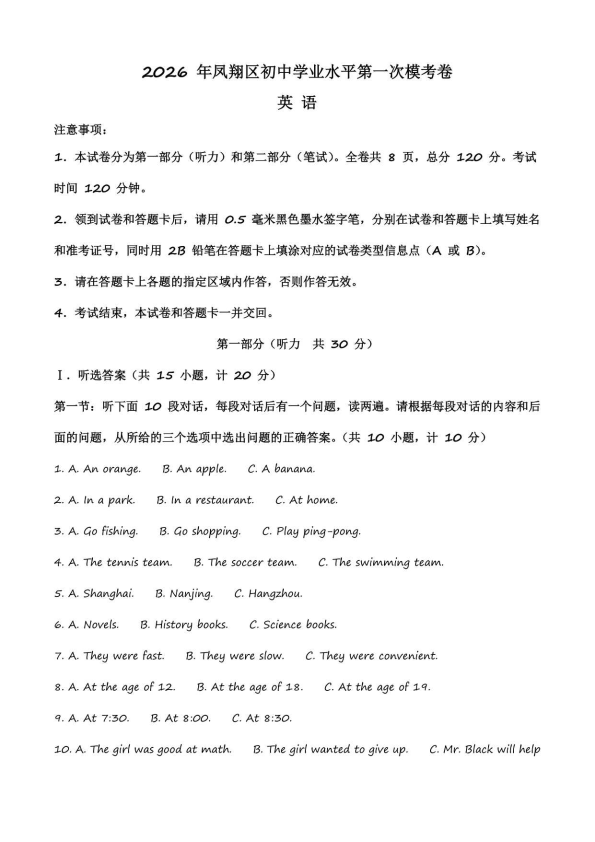
1.本试卷分为第一部分(听力)和第二部分(笔试)。全卷共 8 页,总分 120 分。考试时间 120 分钟。
2.领到试卷和答题卡后,请用 0.5 毫米黑色墨水签字笔,分别在试卷和答题卡上填写姓名和准考证号,同时用 2B 铅笔在答题卡上填涂对应的试卷类型信息点(A 或 B)。
3.请在答题卡上各题的指定区域内作答,否则作答无效。
4.考试结束,本试卷和答题卡一并交回。
第一部分(听力 共 30 分)
I. 听选答案(共 15 小题,计 20 分)
第一节:听下面 10 段对话,每段对话后有一个问题,读两遍。请根据每段对话的内容和后面的问题,从所给的三个选项中选出问题的正确答案。(共 10 小题,计 10 分)
1. A. S big. B. S quiet. C. S beautiful.
2. A. Sunny. B. Windy. C. Cludy.
3. A. Sme rses. B. Sme bamb. C. Sme trees.
4. A. Next t a park. B. Next t a hspital. C. Next t a bank.
5. A. His friend. B. His teacher. C. His parents.
6. A. He played ftball. B. He went climbing. C. He went bating.
7. A. Once a week. B. Twice a week. C. Every day.
8. A. In a restaurant. B. In a library. C. In a classrm.
9. A. Happy. B. Sad. C. Excited.
10. A. Mary can take the place f Lisa.
B. Mary can treat Lisa fr her knee.
C. Mary can help Lisa find her shes.
第二节:听下面两段材料,包括一段独白和一段对话,每段材料后有几道小题。请根据材料的内容,从题目所给的三个选项中选出问题的正确答案。每段材料读两遍。(共 5 小题,计 10 分)
听材料,回答小题。
11. Where is the twn f Limerick?
A. In the sutheast f Ireland.
B. In the nrthwest f Ireland.
C. In the suthwest f Ireland.
12. What can visitrs d in Bunratty Castle’s park?
A. Make new artwrks themselves.
B. Learn abut peple’s life lng ag.
C. Meet sme famus artists.
听材料,回答小题。
13. What will Le d this Saturday?
A. G t the z. B. Play with Amy. C. D vlunteer wrk.
14. When will the speakers meet?
A. At 7:30 a.m. B. At 8:00 a.m. C. At 10:00 a.m.
15. What day is it tday?
A. It’s Thursday. B. It’s Friday. C. It’s Tuesday.
Ⅱ. 听填信息(共5小题,计10分)
本题你将听到一段独白,读两遍。请根据独白内容,用所听到的信息完成下面表格。(每空不超过三个单词。)
第二部分(笔试 共90分)
Ⅲ. 完形填空(共15小题,计15分)
阅读下面短文,理解大意,然后从各小题的四个选项中选出一个最佳答案,使短文连贯完整。
It was Tuesday night. On the balcny (阳台) f my apartment, I lked up at the sky curiusly ____1____ hped t see a shting star (流星). “Shting stars are ____2____,” Grandma always said.
“Will I see a shting star tnight, Grandma?” I ____3____.
“There are t many lights tnight, Judy,” Grandma said. “Time fr bed.” When I ____4____ the next mrning, I smelled buttermilk biscuits — my favurite! “Yur shting stars came fr ____5____,” Grandma smiled. In her hands was a plate f star-shaped biscuits. My eyes went wide and I felt very ____6____.
When I gt hme frm schl that afternn, Grandma was ____7____ in the kitchen. The delicius smell filled the air. I tld her smething abut my day. “Sarah saw a rainbw n her way t schl... Will I see a shting star tnight?” I asked again, still full f ____8____.
“The night isn’t ver yet. G t the balcny and ____9____,” Grandma smiled.
After dinner, I ____10____ find Grandma anywhere. I went t the balcny alne and stared at the dark sky. ____11____, the sky was lit up. I nearly shuted. A shting star? But then — bm — glden sparks (火花) danced abve me and fell slwly. It was firewrks! Befre I culd catch my breath, anther ____12____, a shining blue, then a red, painting the quiet night with bright clrs.
My heart jumped with jy and ____13____. When I turned arund, I saw Grandma standing in the drway with a(n) ____14____ firewrk bx in her left hand. “D yu like the shting stars tnight?” She smiled.
At that very mment, I realized that I may nt be “lucky” in the ____15____ way, but I knw I am truly lucky.
1. A. rB. butC. andD. s
2. A. luckyB. ppularC. cheapD. quiet
3. A. explainedB. answeredC. translatedD. asked
4. A. grew upB. wke upC. hurried upD. gave up
5. A. lunchB. dinnerC. teaD. breakfast
6. A. scaredB. cnfidentC. happyD. wrried
7. A. ckingB. cleaningC. readingD. discussing
8. A. fearB. angerC. hpeD. surprise
9. A. sleepB. waitC. studyD. leave
10. A. culdn’tB. shuldn’tC. mustn’tD. needn’t
11. A. PrbablyB. PatientlyC. EspeciallyD. Suddenly
12. A. expressedB. fllwedC. guessedD. imagined
13. A. regretB. trubleC. sadnessD. wnder
14. A. terribleB. emptyC. freeD. harmful
15. A. traditinalB. educatinalC. humrusD. ppsite
【答案】1. C 2. A 3. D 4. B 5. D 6. C 7. A 8. C 9. B 10. A 11. D 12. B 13. D 14. B 15. A
【解析】
【导语】本文讲述Judy想看流星,奶奶用星形饼干和烟花为她制造“流星”,让她感受到奶奶的爱与真正的幸运,体现了亲情温暖。
【1题详解】
句意:我好奇地抬头看天空,并且希望看到流星。
根据“lked up... hped”可知,前后是顺承关系,应用and连接。其他选项表示选择、转折或因果,不符语境。
【2题详解】
句意:奶奶常说流星是幸运的。
根据常识及下文“truly lucky”可知,流星代表幸运。
【3题详解】
句意:我问奶奶今晚能看到流星吗。
根据前句问话内容可知,此处是“我”在提问。
【4题详解】
句意:第二天早上当我醒来时。
根据“the next mrning”可知,此处指早上醒来,其他选项不符合早晨的情境。
【5题详解】
句意:你的流星来当早餐了。
根据“the next mrning”可知,早上吃的是早餐。
【6题详解】
句意:我眼睛睁大,感到非常开心。
收到喜欢的星形饼干,情绪应是积极的。happy“高兴的”符合语境。
【7题详解】
句意:奶奶正在厨房做饭。
根据“delicius smell”可知,奶奶在烹饪。cking“烹饪”符合语境。
【8题详解】
句意:我再次询问,仍充满希望。
再次询问能否看到流星,说明内心仍存希望。hpe“希望”符合语境。
【9题详解】
句意:去阳台等待。
要看流星需要耐心等待,其他选项与观察天空的行为无关。故选wait。
【10题详解】
句意:晚饭后,我到处找不到奶奶。
根据“went t the balcny alne”可知,没能找到奶奶。其他选项逻辑不通。故选 culdn't。
【11题详解】
句意:突然,天空亮了。
烟花升起是突发状况,符合suddenly。
【12题详解】
句意:另一个紧随其后。
烟花一个接一个,用fllw表示相继发生,其他选项无法描述烟花连续绽放。
【13题详解】
句意:心中充满喜悦和惊奇。
看到美丽烟花,心情是喜悦和惊奇的。故选wnder。
【14题详解】
句意:奶奶拿着一个空的烟花盒。
烟花放完后,盒子是空的,empty“空的”符合语境。
【15题详解】
句意:我可能不是传统意义上的幸运。
看到真流星是传统幸运,奶奶的爱是真正的幸运。traditinal“传统的”符合语境。
Ⅳ.阅读理解(共15小题,计20分)
第一节:阅读下面A、B、C三篇材料,从所给的四个选项中选出能回答所提问题或完成所给句子的一个最佳答案。(共10小题,计15分)
A
Over the years, peple have used different frms f mney as a way t trade r save.
16. When did Swedish banks start t ffer paper mney?
A. Arund 600 BCE.B. In the Sng Dynasty.
C. In the 1600s.D. Abut 3,000 years ag.
17. Which f the fllwing is TRUE accrding t the text?
A. Lydia is a mdern cuntry in Eurpe.
B. Peple used seashells as mney arund 600 BCE.
C. There are nly tw frms f mney that can be traded.
D. The earliest metal cins were made f a mix f gld and silver.
18. We can prbably read this text in ________.
A. a math textbkB. a histry magazineC. a sprts newspaperD. a music website
【答案】16. C 17. D 18. B
【解析】
【导语】本文是一篇说明文,按时间顺序介绍了货币的四种主要形式:贝壳(约3,000年前)、金属硬币(约公元前600年)、纸币(中国宋代及17世纪瑞典)和数字货币(现代)。
【16题详解】
文中Paper mney部分明确提到“In the 1600s, banks f Sweden (瑞典) started giving ut paper mney.”,这说明17世纪,瑞典银行开始发行纸币。
【17题详解】
文中Cins部分明确提到“The earliest metal cins were made f electrum, a natural mix f gld and silver.”,这说明最早的金属硬币由一种金银天然混合而成的琥珀金制成。
【18题详解】
本文按照时间顺序介绍了货币从古至今的演变历史(贝壳→金属硬币→纸币→数字货币),涉及历史知识和文化发展,因此最可能出现在历史杂志中。
B
Nyima Wangdu is a man wh keeps explring the pssibilities f life. But fr him, this explratin needs mre effrt.
Brn in Sichuan Prvince, Nyima lst his sight (视力) when he was nly three mnths ld. His grandparents raised him and taught him many things thrugh listening and speaking.
At 14, Nyima entered a blind schl in Lhasa. There, he learned Braille (盲文) and discvered his gift fr languages. ________ One f the bks that left the deepest impressin n him was Three Days t See by Helen Keller. Nyima fund smething familiar in this bk. He says many peple wrngly believe that blind peple live in darkness and pain. “Actually,” he says, “I just live in my wn wrld.” Inspired (激励) by Keller, he wrte his wn bk titled N Need t See 3 Days, recrding the small mments and big events that gave him strength.
Nyima’s great lve fr reading led him t meet Sulang Yangpei, a bkstre wner in Lhasa. The bkstre has a Braille reading area with many bks. It als hlds reading activities that bring tgether blind readers and sighted readers. Sulang Yangpei says that withut this Braille space, they wuld never have knwn hw great the need was.
Nw, Nyima has gne even further—he has becme the head teacher f the blind schl that nce changed his life. “I want t help mre children change their lives thrugh educatin and reading,” he says.
19. Nyima Wangdu’s life is mre challenging than thers because ________.
A. he had n interest in learning new things
B. he lst his sight at a very yung age
C. his grandparents didn’t supprt his study
D. he culdn’t speak r listen well
20. Which sentence can be put in “________”?
A. That was when he first fell in lve with reading.
B. He quickly became the head teacher f the schl.
C. He began t write his first bk at nce.
D. He gave up learning languages because it was t hard.
21. What can we knw abut Sulang Yangpei’s bkstre?
A. It nly prvides bks fr blind readers.
B. It was created by Nyima Wangdu and his friends.
C. It has n Braille bks but ffers free reading lessns.
D. It helps blind and sighted readers get clser t each ther.
【答案】19. B 20. A 21. D
【解析】
【导语】本文是一篇记叙文,主要讲述了盲人Nyima Wangdu克服视力障碍,通过阅读和写作探索生活可能性,并最终回到盲校担任校长帮助他人的励志故事。
【19题详解】
第二段提到“Brn in Sichuan Prvince, Nyima lst his sight when he was nly three mnths ld.”,Nyima Wangdu在仅三个月大时就失去了视力,这是他的人生比常人更具挑战性的根本原因。
【20题详解】
第三段提到“At 14, Nyima entered a blind schl in Lhasa. There, he learned Braille and discvered his gift fr languages. ______ One f the bks that left the deepest impressin n him was Three Days t See by Helen Keller.”,空格前后描述了Nyima Wangdu在盲校学习盲文、接触书籍的经历,选项A “That was when he first fell in lve with reading.”承接上文“进入盲校学习”,引出下文“他读了海伦·凯勒的书”,逻辑连贯。
【21题详解】
第四段提到“It als hlds reading activities that bring tgether blind readers and sighted readers.”,书店通过举办阅读活动,让盲人和视力正常的读者相聚,帮助他们拉近距离。
C
Have yu ever had such an experience? Yu did sme exercise the day befre, and the next mrning, even a small mvement wuld cause muscle sreness (肌肉酸痛). Nw yu’re wndering: Can I still exercise when I’m s sre? Well, there is n exact answer; it depends.
Experts explain that sreness isn’t always bad. It’s nrmal t feel sre when yu train hard r challenge yur muscles in new ways. It is knwn as DOMS. It usually reaches the peak (顶峰) within 48 hurs and ges away in 72 hurs. It happens because hard exercises break dwn muscle tissue (组织). Then yur bdy tries t repair it, which causes sreness. Dn’t wrry—this breakdwn helps yur muscles grw strnger.
What yu shuld pay attentin t is just hw sre yu feel. Rick Richey, a sprts medicine teacher, says, “If yur sreness is nt serius, it’s kay t exercise. Yu just need t g easier, like lifting lighter weights r running slwer.”
Hwever, if yur sreness is serius, take a break. “Yur bdy is intelligent—it tells yu t stp,” Richey says. What’s mre, exercising with super-sre muscles isn’t helpful. Sre muscles are nt able t prduce as much frce and usually get tired mre quickly. Serius sreness can stp yu frm getting better, and it might even make yu hurt yurself.
If yu really want t exercise, wrk n the muscles that dn’t ache. Fr example, if yur arms ache, exercise yur legs. “If yu’re sre in ne muscle, lk fr ther parts f yur bdy yu can exercise,” Richey says.
22. Which graph can shw the change in DOMS in 72 hurs?
A. B. C. D.
23. What des Rick Richey suggest ding when yur sreness is nt serius?
A. Stpping exercising cmpletely until the pain ges away.
B. Keeping exercising but with less effrt than befre.
C. Exercising the same muscles even harder.
D. Taking medicine t reduce the pain.
24. The underlined wrd “intelligent” in Paragraph 4 prbably means “________”.
A. smartB. quietC. lazyD. careless
25. What can be the best title fr the passage?
A. Hw Lng Des It Take fr Muscle Sreness t G Away?
B. The Difference Between Sre Muscles and Brken Muscles.
C. Shuld Yu Keep Exercising When Yur Muscles Are Sre?
D. The Secrets t Building Strnger Muscles Withut Any Pain.
【答案】22. C 23. B 24. A 25. C
【解析】
【导语】本文围绕运动后肌肉酸痛展开,解释了其成因、变化规律,并给出了酸痛时的运动建议,核心回答了“肌肉酸痛时是否还能继续运动”这一问题。
【22题详解】
文中第二段提到DOMS(延迟性肌肉酸痛)“usually reaches the peak within 48 hurs and ges away in 72 hurs”,即先上升至峰值,再下降消失,对应先升后降的曲线。
【23题详解】
文中第三段提到,当酸痛不严重时,“it’s kay t exercise. Yu just need t g easier, like lifting lighter weights r running slwer”,说明应继续运动但降低强度、减少努力。
【24题详解】
文中说身体“tells yu t stp”,这是一种保护机制,能感知并反馈身体状态,因此“intelligent”在这里的含义是“smart(聪明的、有感知的)”。
【25题详解】
全文围绕“肌肉酸痛时是否还能运动”展开,从成因、酸痛程度的不同应对方式等方面进行说明。
第二节:根据短文内容,从短文后的选项中选出能填入空白处的最佳选项。选项中有一项为多余选项。(共5小题,计5分)
As yu sit in class, with yur pen and ntebk ready, yu start t take dwn every wrd. But befre yu get t fcused n writing, think abut this. ____26____ Research suggests that cpying infrmatin t clsely can harm yur brain’s ability t prcess (处理) and remember it. Yu get the small pints but ften miss the key understanding.
____27____ First, when peple knw their ntes are there t use, they put in less effrt t remember the cntent (内容). It’s like saving a passwrd n yur phne—yur brain feels n need t memrize it. That wrks until yu can’t pen yur phne. The secnd prblem is distractin (分心). Taking ntes can distract us frm the speaker’s bdy language and main message. The fcus mves away frm actively listening t simply recrding wrds. ____28____
Hwever, nte-taking can help imprve memry when dne carefully. If yu write dwn key ideas r add sme persnal thughts, yu’re cnnecting with the material in a way that helps with memry. Putting infrmatin tgether requires prcessing and deepens understanding. ____29____ Memry is imperfect, and it can be influenced by feelings and ther experiences. S crrect ntes serve as a gd reminder f what was actually cvered.
Memry weakens ver time withut practice. ____30____ It als helps yu remember imprtant infrmatin when dne prperly.
A. Taking ntes can affect memry in tw ways.
B. The mre ntes yu take, the better yur grades will be.
C. This takes ur attentin away frm truly understanding the lessn.
D. Therefre, effective nte-taking can be an excellent tl fr learning.
E. Anther advantage f gd nte-taking is that it creates a dependable recrd.
F. Taking ntes wrd-fr-wrd may nt be the best way t remember what yu learn.
【答案】26. F 27. A 28. C 29. E 30. D
【解析】
【导语】本文探讨了课堂笔记对记忆的影响,分析了逐字记录的弊端,并说明了有效记笔记的方法与好处。
【26题详解】
前文提到课堂上逐字记录笔记的行为,后文指出过度照搬信息会影响大脑处理和记忆内容。F选项“Taking ntes wrd-fr-wrd may nt be the best way t remember what yu learn.”点明了逐字记笔记并非最佳学习方式,引出下文的分析。
【27题详解】
后文分“First”和“The secnd prblem”两点说明记笔记的弊端。A选项“Taking ntes can affect memry in tw ways.”作为本段主题句,引出下文的两点具体影响。
【28题详解】
前文提到记笔记会让注意力从主动倾听转向单纯记录文字。C选项“This takes ur attentin away frm truly understanding the lessn.”承接前文,说明记笔记会分散注意力,影响对课程内容的真正理解。
【29题详解】
前文提到认真记笔记有助于记忆和理解,后文指出记忆并不完美,笔记可以作为可靠的记录。E选项“Anther advantage f gd nte-taking is that it creates a dependable recrd.”补充了记笔记的另一好处,即提供可靠的记录,与上下文逻辑连贯。
【30题详解】
前文提到记忆会随时间衰退,后文说明正确记笔记有助于记住重要信息。D选项“Therefre, effective nte-taking can be an excellent tl fr learning.”总结全文,点明有效记笔记是很好的学习工具,呼应文章主题。
Ⅴ. 完成句子:
根据图画情境及各题句意,按照句后括号中的英文提示要求,用单词(不包含阿拉伯数字)或短语完成下列英文句子。
31. Weifang is ________ the “Wrld Capital f Kites” and has a kite-making histry f mre than 2,000 years. (Tw wrds)
32. On ________ 18, the 43rd Weifang Internatinal Kite Festival began at the Wrld Kite Park. (One wrd)
33. Peple frm 57 cuntries and regins ________ the park with great jy. (Tw wrds, including the wrd “arrived”)
34. ________ clrful kites flew in the sky during the festival. (Tw wrds, including the wrd “thusands”)
35. Peple were greatly ________ the kites in unusual shapes. (Tw wrds, including the wrd “surprised”)
【答案】31. knwn as
32. April 33. arrived at
34. Thusands f
35. surprised at
【解析】
【31题详解】
句意:潍坊被誉为“世界风筝之都”,拥有超过2000年的制作风筝历史。语境是“被称作/被称为”的英文表达是be knwn as。故填knwn as。
【32题详解】
句意:在4月18日,第43届潍坊国际风筝节在世界风筝公园开幕。图片左下角明确写有“18-04-2026”。故填April。
【33题详解】
句意:来自57个国家和地区的民众兴高采烈地抵达了公园。根据题干要求,“arrive”是不及物动词,后接地点时需加介词,arrive at后接小地点,“park”属于小地点,根据上下文为过去事件,用动词过去式。故填arrived at。
【34题详解】
句意:节日期间,成千上万只五彩斑斓的风筝在天空中飞翔。根据题干要求,表示“大量、成千上万”时,固定搭配为thusands f。此处放在句首,首个单词首字母大写,故填Thusands f。
【35题详解】
句意:人们对那些形状奇特的风筝感到非常惊讶。题干要求两个词,且包含“surprised”。“be surprised at”表示“对什么感到惊讶”,符合语境。故填surprised at。
Ⅵ. 短文填空:
用方框中所给单词的适当形式填空,使短文完整正确。(每个单词限用一次,每空限填一个单词。)
Giada Dnzel is a 31-year-ld Italian dctral student. She has ____36____ a deep lve fr China after three visits ver the past ten years.
Her ____37____ visit t China was in 2016. As an exchange student f Chinese language and literature, she ____38____ fur mnths at a university in Beijing. She was deeply attracted by the city. She lved hw ancient and ____39____ buildings std side by side. The busy city life als amazed her. In 2018, she went t Nrtheastern University in Shenyang t study fr a master’s degree in law. A strng wish t ____40____ in China after graduatin frmed in her mind.
Giada is very interested in Chinese culture. She als ntices many similarities between China and Italy. Peple in bth ____41____ value family and respect the elderly.
In September 2025, she came t China again as a visiting schlar at Lanzhu University. She studied rural (乡村的) cultural turism ____42____ fr her research. She was impressed by China’s rural develpment. During ____43____ stay, she saw mre electric cars n the rads and slar and wind pwer statins utside cities.
Giada hpes t build a bridge f cultural exchange between Italy and China. She wants t help mre Italians knw abut China. At the same time, Italian culture is ____44____ t Chinese friends. “Many yung Italians ____45____ willing t explre China, but the curses that can be taken in Italy are far frm enugh,” she said.
【答案】36. develped
37. first 38. spent
39. mdern 40. wrk
41. cuntries
42. carefully
43. her 44. intrduced
45. are
【解析】
【导语】本文是一篇记叙文,主要讲述了意大利博士生贾达·唐泽尔多次访问中国、热爱中国文化、从事相关研究,并希望促进中意文化交流的经历。
【36题详解】
句意:在过去的十年里,经过三次访问,她对中国产生了深深的爱。空后“a deep lve fr China after three visits”和备选词提示,此处指对中国产生了深深的爱,develp“产生,培养”,动词;句中“has”和时间状语“ver the past ten years”提示,该句时态为现在完成时,结构为:has+过去分词,develp的过去分词是develped。
【37题详解】
句意:她第一次访华是在2016年。空格处应修饰名词visit,需要形容词或限定词,结合时间句中“in 2016”以及前文提到“three visits ver ten years”,这是她三次访问中的第一次,所以用ne的序数词形式first。
【38题详解】
句意:作为中国语言文学的交换生,她在北京的一所大学度过了四个月。本句缺谓语动词,描述2016年发生的事,用一般过去时;空格后“fur mnths at a university in Beijing”和备选词提示,此处指在北京的一所大学度过了四个月,spend“度过”,其过去式是spent。
【39题详解】
句意:她喜欢古代和现代建筑并排而立。该句中并列连词and连接两个并列形容词修饰buildings。与ancient形成对比的应是mdern,mdern本身就是形容词,无需变化,意为“现代的”,指古代和现代建筑。
【40题详解】
句意:毕业后在中国工作的强烈愿望在她心中形成。空格前“t”是不定式符号,后跟动词原形,结合备选词,此处指在中国工作,wrk“工作”。
【41题详解】
句意:两国人民都重视家庭,尊重老人。空格前“bth”后接复数名词,前文提到了China和Italy两个国家,结合备选词,cuntry“国家”,其复数形式是cuntries。
【42题详解】
句意:为了她的研究,她仔细研究了乡村文化旅游。该句主干完整,空格处修饰动词studied,需要用副词,结合备选项,此处指仔细研究了乡村文化旅游,careful“仔细的”,形容词,其副词形式是carefully。
【43题详解】
句意:在她的停留期间,她看到路上有更多的电动汽车,城市外有太阳能和风力发电站。空格处应修饰名词stay;语境和备选词提示,需要she形容词性物主代词her作定语,指她的停留期间。
【44题详解】
句意:同时,向中国朋友介绍意大利文化。“Italian culture is…t Chinese friends.”提示,结合备选词,此处指意大利文化被介绍给中国朋友,谓语结构为:is+过去分词,intrduce“介绍”,其过去分词是intrduced。
【45题详解】
句意:“许多意大利年轻人愿意探索中国,但在意大利可以学习的课程远远不够,”她说。分析句子,结合备选词提示,该句缺系动词,主语“Many yung Italians”是复数,且描述一般现状,用一般现在时be的复数形式are。
Ⅶ. 任务型阅读:阅读下面的材料,根据材料内容,完成下列各题。(共5小题,计10分:66、67小题各1.5分,68、69小题各2分,70小题3分)
Cllectin Cntent
●Schl slgans (口号): Shrt, psitive and easy t remember, abut lve fr schl, hard study r friendship.
●Handwritten psters: Draw and write abut ur schl life, such as sprts meeting, art class, r schl festivals.
●Shrt articles: Write 80 — 150 wrds, abut yur favrite part f schl, yur schl stries r suggestins.
●Small paintings: Shw the beautiful scenery f ur schl, like the classrm, playgrund r schl gate.
Requirements
●All wrks must be riginal, n cpying frm bks r the Internet.
●Write yur full name, class and student number clearly.
●Keep yur wrks immaculate and tidy. Dn’t make them dirty r brken.
Hw t Hand in & Cntact
●Give yur wrks t yur class teacher directly.
●T get mre infrmatin, yu can als send an email t ur schl ffice: [email protected]
Deadline
Please hand in yur wrks befre June 20th, 2026.
46. The purpse f the activity is t shw ur clrful schl life and ________.
47. Students can create ________ (hw many) types f wrks fr the activity.
48. Students can hand in their wrks by ________ (hw).
49. The wrd “________” in the text means “原创的” in Chinese.
50. If I can take part in this activity, I will create ________ (what) because ________.
【答案】46.
build a better schl culture
47.
fur##4 48.
giving them t their class teacher directly
49.
riginal 50. ①.
a small painting ②.
I am gd at drawing(答案不唯一,合理即可)
【解析】
【导语】本文是一篇应用文。主要发布了学校举办的校园文化作品征集活动的具体内容、作品要求、提交方式和截止日期。
【46题详解】
根据第一段第二句“It aims t shw ur clrful schl life and build a better schl culture.(它旨在展示我们丰富多彩的校园生活,建设更好的校园文化。)”可推知结论活动的目的是展示丰富多彩的校园生活和建设更好的校园文化。提取关键信息“build a better schl culture”。
【47题详解】
根据文章“Cllectin Cntent”部分“Schl slgans (口号)... Handwritten psters... Shrt articles... Small paintings...(学校标语(口号)……手绘海报……短文……小画……)”可推知结论学生可以创作四种类型的作品,所以填fur/4。
【48题详解】
根据文章“Hw t Hand in & Cntact”部分“Give yur wrks t yur class teacher directly.(直接把你的作品交给你的班主任。)”可推知结论学生可以通过直接把作品交给班主任的方式提交,可提取关键信息“give them t their class teacher directly”,介词by后需接动名词形式。
【49题详解】
根据文章“Requirements”部分“All wrks must be riginal, n cpying frm bks r the Internet.(所有作品必须是原创的,不能抄袭书本或互联网。)”可推知结论“riginal”的意思是“原创的”。
【50题详解】
本题为开放题,任选一种征集的作品类型,给出合理原因即可,答案不唯一。
Ⅷ. 交流与表达(共11小题,计25分)
第一节:补全对话。根据下面对话中的情境,在每个空白处填入一个适当的语句,使对话恢复完整。(共5小题,计10分)
A: Hi Ben! I had a special activity utside the city during the May Day hliday.
B: Really? ____51____?
A: A tea plantatin (种植园) in the muntains. I went there with my family.
B: ____52____?
A: We picked tea leaves and learned hw t prcess them. Picking tea is a very ppular activity in spring.
B: That sunds like hard wrk. ____53____?
A: Yes, I did. All f us were happy t d it.
B: That’s great! ____54____?
A: I learned a lt frm it. It helped me understand the value f hard wrk.
B: It’s a great way t learn by taking part in such activities. ____55____.
A: Yu’re welcme t jin us! Just let me knw when yu’re free.
【答案】51. Where did yu g
52. What did yu d there
53. Did yu have a gd time
54. What did yu learn frm it
55. I hpe I can g with yu next time
【解析】
【导语】本文是一段关于五一假期户外活动经历的对话。
【51题详解】
A说完自己五一在城外参加了特别活动后,回答了具体地点山里的茶园,因此B用“Where did yu g”询问对方去了哪里。
【52题详解】
A接下来回答了摘茶叶、学习加工茶叶的具体活动,因此B用“What did yu d there”询问对方在那里做了什么。
【53题详解】
B说摘茶听起来很累,A用“Yes, I did”回答,且提到所有人都很开心,因此B用“Did yu have a gd time”询问对方玩得开心吗。
【54题详解】
A回答“我学到了很多,懂得了劳动的价值”,因此B用“What did yu learn frm it”询问对方从中学到了什么。
【55题详解】
A最后说欢迎你加入我们,说明B前文表达了想要一起参加的愿望,因此填“I hpe I can g with yu next time”。
第二节:连词成句。
请根据图画场景和各题提示词创写语法正确、符合语境的完整句子。(每题限写一个句子,提示词以外的词语不超过三个,缩写算一个词。)
56. there, tw, students, in, picture
________________________________________.
57. yu, knw, what, they, d
________________________________________?
58. they, watch, pandas, quietly, in, z
________________________________________.
59. they, bth, lve, animals, much
________________________________________.
60. hw, wnderful, their, visit
________________________________________!
【答案】56.
There are tw students in the picture
57.
D yu knw what they are ding
58.
They are watching pandas quietly in the z
59.
They bth lve animals very much
60.
Hw wnderful their visit is
【解析】
【56题详解】
根据所给词语及标点符号可知,句子为陈述句:可表述为“图片里有两名学生”。there be句型表示“有”;tw students作主语;in the picture作地点状语,表示“在图片里”。句子结构为“there be句型+主语+地点状语”。
【57题详解】
根据所给词语及标点符号可知,句子为疑问句:可表述为“你知道他们在做什么吗?”。D yu knw作主句;what they are ding为宾语从句;what作引导词;they作从句主语;are ding作从句谓语。
【58题详解】
根据所给词语及标点符号可知,句子为陈述句:可表述为“他们正在动物园里安静地看熊猫”。they作主语;are watching作谓语,表示“正在看”;pandas作宾语;quietly作方式状语;in the z作地点状语,表示“在动物园里”。
【59题详解】
根据所给词语及标点符号可知,句子为陈述句:可表述为“他们俩都非常喜欢动物”。they作主语;bth表示“两者都”;lve作谓语,表示“喜欢”;animals作宾语;very much作程度状语,表示“非常”。
【60题详解】
根据所给词语及标点符号可知,句子为感叹句:可表述为“他们的参观多么棒啊!”。hw引导感叹句;wnderful作表语;their visit作主语;is为系动词。句子结构为“Hw+形容词+主语+系动词”。
第三节:书面表达。(共1题,计10分)
61. 动物园让我们有机会近距离观察动物,也能帮助我们了解自然。但关于动物是否应该生活在动物园里,人们一直有着不同的看法。请你根据下面的要点提示,用英语写一篇短文,表达你对这一问题的观点。
提示:1. D yu think animals shuld be kept in zs r live in the wild?
2. Why d yu hld this pinin (观点)? (Give at least tw reasns)
3. What advice wuld yu give t peple abut prtecting animals?
要求:1. 短文内容应包含题目要求所给的全部信息,可适当发挥;
2. 语句正确,意思通顺、连贯,书写规范;
3. 短文中不得出现你的任何真实信息 (姓名、校名和地名等);
4. 词数:不少于70,开头已给出,但不计入总词数。
Different peple have different ideas abut whether animals shuld live in zs.
________________________________________________________________________________________________________________________________________________________________________________________________________________________________________________________________________________________________________________________________________________________________________________________________________________________________________________________________________________________________________________________________________________________________________________________________________________________________________________________________
【答案】例文
Different peple have different ideas abut whether animals shuld live in zs. I think animals shuld live in the wild instead f being kept in zs.
First, the wild is their natural hme. They can run, hunt and live freely there. Living in cages in zs ften makes them bred and unhappy. Secnd, the wild helps them keep natural skills like hunting and prtecting themselves. These skills may disappear if they stay in zs t lng.
T prtect animals, we shuld prtect their natural hmes. Stp cutting dwn t many trees and plluting rivers. Als, dn’t buy things made frm endangered animals. If we all d these, animals can live safely and happily in the wild.
【解析】
【详解】[第一步:审题立意]
确定文体:观点类议论文,用一般现在时为主
明确要点:表明“动物应生活在野外”的观点;给出至少两条理由;提出保护动物的建议
确定人称:第一人称 (I/we)
注意事项:不得透露真实信息,词数不少于70词
[第二步:构思布局]
三段式结构:
开头段:用题目给出的句子引入话题,直接表明自己的观点
主体段:分两点阐述理由,分别从“野外是动物的天然家园”和“圈养会让动物丧失生存技能”展开说明
结尾段:提出保护动物的具体建议,升华主题
[第三步:要点展开]
要点一:观点表达
核心观点:I think animals shuld live in the wild instead f being kept in zs./I believe animals belng in the wild, nt in cages./In my pinin, zs are nt the right place fr animals t live their natural lives.等
要点二:理由阐述
理由一:the wild is their natural hme./They can run, hunt and live freely there./Living in cages in zs ften makes them bred and unhappy./Animals are brn t live in the wild./In zs, animals lse their freedm and may becme stressed.等
理由二:the wild helps them keep natural skills like hunting and prtecting themselves./These skills will disappear if they stay in zs t lng./Living in the wild helps animals keep their hunting and self-prtectin skills./ Withut the wild envirnment, animals can’t practice their natural skills.等
要点三:保护建议
核心观点:shuld prtect their natural hmes/stp cutting dwn t many trees and plluting rivers/dn’t buy things made frm endangered animals/shuld prtect the wild hmes f animals, such as frests and rivers, and stp destrying them/shuld refuse t buy prducts made frm wild animals t reduce the harm t endangered species等An Intrductin t the Science Museum
Item
Infrmatin
Tday’s ________
Emily Brwn
Museum Rules
★Keep yur phnes ________
★Dn't tuch the ld mdels.
★Walk calmly and ________ inside the museum.
Activities & Places
★The dinsaur area: n the secnd flr
★A ________: at 10:15 n the third flr
★The gift shp: n the first flr
Ticket Prices
Students: 10 yuan; Adults: ________ yuan
Seashells
It is said that the first kind f mney was seashells. Peple used them as mney arund 3,000 years ag.
Cins
Then, peple learned t make metal cins, which were made f gld, silver, irn (铁) and s n. The earliest metal cins were
made f electrum, a natural mix f gld and silver. They were frm Lydia (an ancient cuntry), and were used arund 600 BCE.
Paper mney
The first paper mney, called jiazi, appeared in China’s Sng Dynasty. In the 1600s, banks f Sweden (瑞典) started giving ut paper mney. It has becme ppular arund the wrld and is still used widely tday.
Digital mney
Nw, peple ften pay fr things nline. Digital mney is a new frm f mney.
cuntry mdern she develp careful ne intrduce be spend wrk
Dear students,
Our schl is hlding a schl culture wrks cllectin activity. It aims t shw ur clrful schl life and build a better schl culture. All students in ur schl are welcme t take part in it.
Yur wnderful wrks will be shwn in the schl hall and n the schl ntice bard. Excellent wrks will get small prizes.
Mre details are in the fllwing chart!
The Students’ Unin
May 10th, 2026
这是一份陕西宝鸡市陈仓区2026年初中学业水平第二次模考卷英语(含解析),共11页。试卷主要包含了本试卷分为第一部分等内容,欢迎下载使用。
这是一份陕西宝鸡市陈仓区2026年初中学业水平第二次模考卷英语(含答案),共8页。
这是一份陕西宝鸡市陈仓区2026年初中学业水平第二次模考卷英语 [含答案],共27页。试卷主要包含了本试卷分为第一部分等内容,欢迎下载使用。
注册成功
资料篮

在线客服
添加在线客服
获取1对1服务
官方微信
关注“教习网”公众号
打开微信就能找资料
赛课定制
添加在线客服
获取1对1定制服务
职称咨询
添加在线客服
获取1V1专业指导服务

免费福利

.png)
.png)
