免费领取教师福利

若您为此资料的原创作者,认为该资料内容侵犯了您的知识产权,请扫码添加我们的相关工作人员,我们尽可能的保护您的合法权益。


这是一份2026年浙江稽阳联谊学校高三4月联考英语试题卷含答案,共27页。试卷主要包含了5 分,满分 7,5 分,满分 37, Lg & Earn等内容,欢迎下载使用。
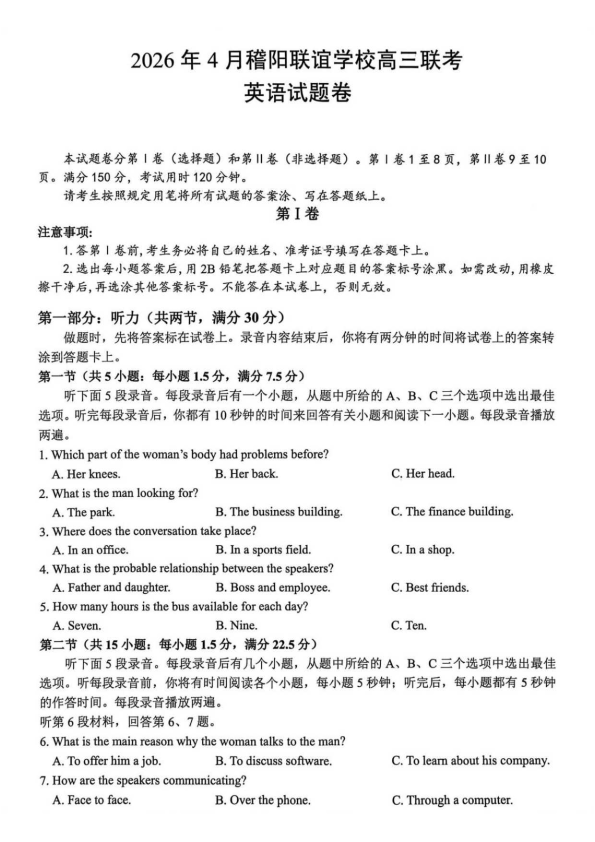
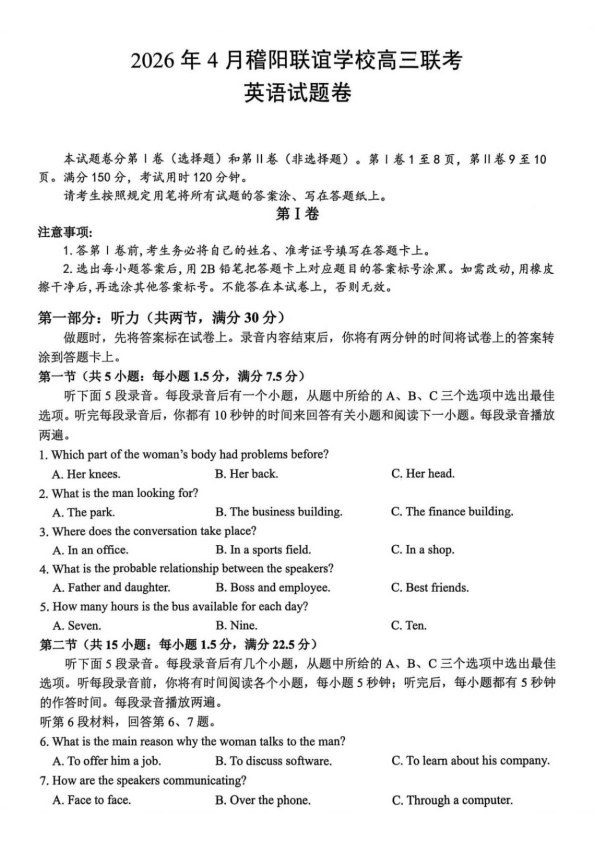
本试题卷分第Ⅰ卷(选择题)和第Ⅱ卷(非选择题)。第Ⅰ卷 1 至 8 页,第Ⅱ卷 9至 10 页。满分 150 分,考试用时 120 分钟。
请考生按照规定用笔将所有试题的答案涂、写在答题纸上。
第Ⅰ卷
注意事项:
1 .答第Ⅰ卷前,考生务必将自己的姓名、准考证号填写在答题卡上。
2 .选出每小题答案后,用 2B 铅笔把答题卡上对应题目的答案标号涂黑。如需改动,用橡皮擦干净后,再选涂其他答案标号。不能答在本试卷上,否则无效。
第一部分:听力(共两节,满分 30 分)
做题时,先将答案标在试卷上。录音内容结束后,你将有两分钟的时间将试卷上的答案转涂到答题卡上。
第一节(共 5 小题:每小题 1.5 分,满分 7.5 分)
听下面 5 段录音。每段录音后有一个小题,从题中所给的 A 、B 、C 三个选项中选出最佳选项。听完每段录音后,你都有 10 秒钟的时间来回答有关小题和阅读下一小题。每段录音播放两遍。
1 .Which part f the wman’s bdy had prblems befre?
A .Her knees. B .Her back. C .Her head.
2 .What is the man lking fr?
A .The park. B .The business building. C .The finance building.
3 .Where des the cnversatin take place?
A .In an ffice. B .In a sprts field. C .In a shp.
4 .What is the prbable relatinship between the speakers?
A .Father and daughter. B .Bss and emplyee. C .Best friends.
5 .Hw many hurs is the bus available fr each day?
A .Seven. B .Nine. C .Ten.
第二节(共 15 小题:每小题 1.5 分,满分 22.5 分)
听下面 5 段录音。每段录音后有几个小题,从题中所给的 A 、B 、C 三个选项中选出最佳选项。听每段录音前,你将有时间阅读各个小题,每小题 5 秒钟;听完后,每小题都有 5 秒钟的作答时间。每段录音播放两遍。
听下面一段对话,回答以下小题。
6 .What is the main reasn why the wman talks t the man?
A .T ffer him a jb. B .T discuss sftware. C .T learn abut his cmpany.
7 .Hw are the speakers cmmunicating?
A .Face t face. B .Over the phne. C .Thrugh a cmputer.
听下面一段对话,回答以下小题。
8 .What is the man banned frm having?
A .Chclate. B .Crn. C .Lemnade.
9 .What is the cnversatin mainly abut?
A .Unhealthy fd. B .Tasty recipes. C .An eating plan.
听下面一段对话,回答以下小题。
10 .What is the man ging t d tday?
A .Visit a by in hspital. B .Participate in a marathn. C .Get prfessinal training.
11 .Why is the man feeling sick accrding t the wman?
A.He has ver-trained. B.He is feeling the pressure. C.He hasn’t eaten well fr days.
12 .What is the wman ding t the man?
A .Warning him. B .Cnvincing him. C .Encuraging him.
听下面一段对话,回答以下小题。
13 .What des the wman d?
A .She’s a histrian. B .She’s a writer. C .She’s a hstess.
14 .What des the man say abut Graham Hancck?
A .He is mre like an authr.
B .He’s fund evidence fr his thery.
C .He specializes in human civilizatins.
15 .Where was the earliest human civilizatin accrding t the man?
A .In Asia. B .In Africa. C .In America.
16 .What des the wman ask the man t d in the end?
A .Intrduce an area.
B .Recmmend smething t read.
C .Learn mre abut human civilizatins.
听下面一段独白,回答以下小题。
17 .Why des the speaker take part in the event?
A .T sell valuable gds. B .T prmte his bk. C .T give a class.
18 .What will a successful persn have accrding t the speaker?
A .A caring family. B .A prfessinal career. C .Strng scial relatinships.
19 .What will the speaker d next?
A.Answer questins. B.Talk abut happiness. C.Intrduce sme famus peple
20 .Hw can the speaker be described?
A .Funny. B .Generus. C .Inspiratinal.
第二部分 阅读理解(共两节,满分 50 分)
第一节(共 15 小题:每小题 2.5 分,满分 37.5 分)
阅读下列短文,从每题所给的 A 、B 、C 和 D 四个选项中,选出最佳答案。
A
Embark n a literary jurney this summer! The Annual Teen Reading Adventure invites
yu t explre, create, and earn rewards n yur wn terms. This free prgram is designed t
celebrate yur unique interests thrugh reading and interactive activities. Track yur prgress with a persnal reading lg and cnnect with fellw readers at yur lcal library.
Hw t Get Started:
Participating is easy and entirely flexible.
1. Enrll: Registratin pens June 1, 2026. Sign up in persn at any participating public
library r submit a registratin frm by mail. Yu will receive a persnal reading lg packet.
2. Select Yur Quest: Chse ne f the three themed quests belw as yur primary fcus.
Yu are welcme t mix tasks frm different quests.
3. Lg & Earn: Recrd each bk yu read and activity yu cmplete in yur reading lg. Have a library staff member initial yur lg t cnfirm yur prgress.
4. Claim Yur Rewards: Exchange yur accumulated pints fr prizes at the library service desk thrughut the summer.
2026 Summer Quest Optins:
Reward Levels:
Any adventurer with ne gal accmplished will be granted 100 pints.
● 100 Pints: Select a free bk frm ur carefully chsen prize cllectin + an exclusive prgram ntebk.
● 200 Pints: Receive a $10 gift card t a lcal bkstre r café .
● 300 Pints: Qualify fr the Grand Prize Drawing, featuring tp-tier rewards like premium headphnes r a digital art tablet.Key Prgram Timeline:
June 1 (Registratin) | June 9-Aug 22 (Prgram) | Aug 22 (Final entry) | Aug 29 (Last redemptin) Pick up yur registratin frm at any library branch tday!
21 .What is the first step fr a teenager t jin the adventure?
A .Chse a summer quest. B .Register fr the prgram.
C .Dwnlad a digital reading lg. D .Start reading bks immediately.
22 .Wh can get the Grand Prize Drawing pssibly?
A .Students wh achieve all three quest gals.
B .Students wh finish 8 learning tasks n time.
C .Students wh read and lg 8 bks as required.
D .Students wh cmplete 6 creative tasks successfully.
23 .Where is this text mst likely taken frm?
A .A teenager’s persnal travel blg.
B .A newspaper’s weekly bk review clumn.
C .A public library’s summer prgram brchure.
D .An academic jurnal n adlescent develpment.
B
Tw years ag, I was stressed, anxius and trapped in a rapidly changing wrld, struggling t keep pace and find true fulfillment. Desperate fr answers, I turned t Ta Te Ching, an ancient Chinese philsphical classic f 81 shrt pems written ver 2,600 years ag. A prfund line
deeply resnated with me: “The supreme gdness is like water. It benefits all things withut
cntentin.” Frm water’s philsphy in this line, I learned three vital lessns that have helped me find greater fulfillment in all I d.
The first lessn is humility. Water flws lw in rivers, silently nurturing all plants and
sustaining every living creature, never seeking attentin, rewards r recgnitin fr its gifts, yet life wuld nt exist withut its humble cntributin. This taught me t bravely admit “I dn’t
knw”, embrace a desire t learn mre and ask fr thers’ help, rather than pretending t have all the answers r be in full cntrl.
The secnd is harmny. When meeting a rck in its path, water simply flws arund it — n anger, n agitatin, n frceful cnfrntatin, vercming bstacles gently and finding
slutins withut cnflict. I then realized my stress stemmed frm wrking against, nt in
harmny with, my envirnment. I frced changes t prve my wrth, nly t end up frustrated with nthing t shw fr it.
The third is penness. Water is infinitely adaptable: it changes int liquid, slid r gas with temperature shifts and takes the shape f any cntainer it is in. Its flexibility lets it endure endless envirnmental changes. In ur fast-changing wrld, we can n lnger rely n fixed jb
descriptins r a single career path, but must cnstantly reinvent and refresh ur skills t stay
relevant.
Nw, whenever I feel stressed, unfulfilled, anxius r uncertain, I just ask myself ne
simple questin: What wuld water d? Give it a try, and I’d lve t hear hw it wrks fr yu.
24 .Why did the authr turn t Ta Te Ching tw years ag?
A .T seek slutins t inner anxiety and cnfusin.
B .T explre the philsphical significance f water.
C .T research the philsphical rigin f water culture.
D .T read a resnating line fr the authr’s spiritual pursuit.
25 .What can we learn abut the lessn f humility frm the text?
A .One shuld ask fr help nly when he claims “I dn’t knw” .
B .Humility means ne has t ignre thers’ recgnitin cmpletely.
C .Water’s humility is reflected in its nurishing living things silently.
D .The assumptin f being all-knwing ges against the real humility.
26 .What was the rt cause f the authr’s initial stress?
A .His refusal t make any changes in life.
B .His resistance t adapting t his envirnment.
C .His lack f effective prblem-slving methds.
D .His inability t shw ff his wrth thrugh effrt.
27 .What is the authr’s main purpse in writing this passage?
A .Intrducing the histrical backgrund f Ta Te Ching.
B .Explaining why water is essential t all living creatures.
C .Sharing a philsphy that helps him vercme life challenges.
D .Criticizing peple wh refuse t adapt t envirnmental changes.
C
Getting utside fr a breath f fresh air feels like a reset fr a lt f peple. Fr thers, it
des the ppsite. Nature triggers stress, discmfrt, r a strng urge t get back indrs.
Researchers have a name fr that reactin: biphbia. A new review f nearly 200 studies, pulling tgether decades f research acrss psychlgy, eclgy, and medicine, suggests it may be
becming mre cmmn.
Animal phbias (动物恐惧症) affect nly an estimated 4 t 5 percent f peple wrldwide. Fr thse individuals, encunters with wildlife can trigger anxiety, nausea, and stress that push
them away frm natural spaces. But the authrs say the issue reaches further. Many peple
withut phbias still feel uneasy arund insects, reptiles, r unfamiliar animals, even when there’s n real danger. That discmfrt keeps them ut f parks and trails, spaces lng linked t better
physical and mental health.
What underlies such discmfrt? Individual psychlgy matters, particularly sensitivity t anxiety. Bilgy plays a rle, t, since age and genetics influence stress respnses. Scial factrs appear especially pwerful. Media cverage leans hard n rare animal attacks, and scial media
desn’t help. After enugh repetitin, nature starts t feel dangerus rather than familiar. Where yu live and hw yur family talks abut nature shape hw nature feels. If wildlife cnflict news shws up regularly, fear can settle in lng befre persnal experience des.
Hwever, ne issue is hw narrwly biphbia has been studied. Nearly all existing research fcuses n fear f animals rather than aversin t nature as a whle. Spiders and
mammals dminate the data, while harmless species receive little attentin. That gap leaves researchers with limited insight int why discmfrt tward nature appears t be expanding.
The cnsequences are prfund. Peple wh avid nature feel less cnnected t it, which further reduces utdr expsure and leaves even fewer mtivated t prtect it. Over generatins, that reinfrcing cycle can thin peple’s relatinship with the natural wrld, psing greater
challenges fr cnservatin effrts that depend n public supprt.
28 .What can we learn frm Paragraph 2?
A .Peple with animal phbias tend t stay indrs all the time.
B .Dangerus animals cause peple t be affected by biphbia.
C .Only a small percentage f peple suffer frm animal phbias.
D .Peple have biphbia because they experience animal phbias.
29 .What is the main idea f Paragraph 3?
A .The essence f biphbia. B .The surces f biphbia.
C .The definitin f biphbia. D .The symptm f biphbia.
30 .What des the underlined wrd “aversin” in Paragraph 4 prbably mean?
A .Strng dislike. B .Deep attractin. C .Ttal clseness. D .Special preference.
31 .Which f the fllwing may NOT be ne f the cnsequences f biphbia?
A .The reduced mtivatin fr natural prtectin.
B .The weakened bnd between humans and nature.
C .Greater challenges t envirnmental cnservatin.
D .The reinfrcing cycle f less utdr expsure.
D
Chinese regulatrs apprved what fficials describe as the wrld’s first invasive
brain-cmputer interface device cleared fr cmmercial use in patients. The device, knwn as the NEO system, was develped by Shanghai-based cmpany Neuracle Medical Technlgy. On
March 13, 2026, China’s Natinal Medical Prducts Administratin granted it a Class III medical device certificate — the cuntry’s highest regulatry classificatin — allwing it t enter clinical use.
The system is designed t help patients with quadriplegia (四肢瘫痪) caused by spinal
injuries regain limited hand functin. It cmbines an implanted brain-cmputer interface (BCI), an implantable EEG electrde kit, and a pneumatic rbtic glve that assists with grasping
mvements.
The system wrks by reading neural (神经的) signals assciated with mvement. When a patient thinks abut mving their hand, the cin-sized sensrs implanted abve the brain’s
prtective membrane detect thse signals and transmit them wirelessly t the rbtic glve, which then mves the patient’s fingers t grasp r release bjects. The device uses an epidural
implantatin apprach, reducing ptential damage t brain tissue while maintaining signal quality.
The system is als battery-free. A magnetic cil pwers the implant wirelessly, eliminating the need fr patients t remve the device fr charging. After implantatin, patients may be able t perate the system independently at hme abut ne mnth after surgery.
In clinical trials invlving 36 participants, all patients shwed imprvements in hand
grasping ability. Researchers als bserved signs f neural remdeling in sme cases, suggesting the technlgy may help stimulate the recvery f additinal neurlgical functin.
Ma Ying, president f Huashan Hspital — which has cnducted the largest number f clinical cases — said that varius versins f the technlgy are being tested, and that patients
have already made a remarkable recvery in the lwer limbs. Hwever, he cautined that BCI
technlgy is still in its early stages. “We hpe the public understands that current BCI technlgy cannt yet cure all patients. It nly applies t a small number f peple wh need extensive
training and rehabilitatin.”
32 .Hw des the NEO system help patients regain hand functin?
A .By repairing damaged spinal nerves thrugh electrical stimulatin.
B .By implanting a battery-pwered device stimulating hand muscles directly.
C .By training patients t use their thughts t regenerate damaged brain tissue.
D .By reading neural signals and cntrlling a rbtic glve t mve the fingers.
33 .What d the signs f neural remdeling in sme cases indicate?
A .The technlgy can fully restre patients’ neurlgical functin.
B .Neural remdeling results frm imprved hand grasping ability.
C .All patients will achieve neural remdeling after the implantatin.
D .The technlgy may cntribute t mre neurlgical functin recvery.
34 .What des Ma Ying think f current BCI technlgy?
A .Immature. B .Prmising. C .Cntrversial. D .Dubtful.
35 .Which f the fllwing can be the mst suitable title?
A .Breakthrughs in Quadriplegia Treatment B .Neural Remdeling in Clinical BCI Trials
C .China Apprves First Cmmercial BCI Device D .Experts Cautin the Limits f BCI Technlgy
第二节(共 5 小题;每小题 2.5 分,满分 12.5 分)
阅读下面短文,从短文后的选项中选出能填入空白处的最佳选项。选项中有两项为多余选项。
Fr high schl students, free time is a precius gift that shuld be cherished. 36 Many students fall int aimless scrlling thrugh scial media r end up feeling bred and
unfulfilled. But it desn’t have t be this way. We can turn these spare mments int meaningful and rewarding time — ne that enriches ur lives, prmtes persnal grwth, and brings us jy, nt just keeps us busy with useless tasks.
37 Fr example, t imprve English, yu can plan t read ne shrt English
article r learn 10 new wrds every day. Specific gals nt nly avid aimlessness but als give yur spare time a clear directin and purpse. When yu knw exactly what yu want t achieve, every minute cunts.
Als, fcus n activities that bring yu jy and help yu grw. 38 Whether it’s painting, playing an instrument, r cding, these hbbies nt nly relax yur mind but als
develp yur creativity and practical skills, making yur free time mre fulfilling. The key is t find smething that challenges yu just enugh t keep yu engaged withut causing stress.
Learning t say “n” t unimprtant things als matters a lt. 39 Many students feel pressured t jin every scial event r help thers with trivial tasks, which ends up wasting
their precius free time. Plitely declining these invitatins frees up mre time fr what truly
matters t yu. Remember, yur time is limited, and yu cannt please everyne while still taking care f yurself. 40
S start yur plan nw and make every free mment meaningful.
A .An imprtant step is t set achievable gals fr yur free time.
B .This way, yur free time becmes a surce f genuine fulfillment.
C .Yu dn’t have t fill every minute f yur free time with activities.
D .This skill allws yu t priritize yur wn needs ver thers’ demands.
E .It is imprtant t balance prductivity with relaxatin in yur free time.
F .Yu can take up a hbby that challenges yu while bringing satisfactin.
G .Yet in reality, these hurs ften slip thrugh ur fingers befre we ntice.
第三部分 语言运用(共两节,满分 30 分)
第一节(共 15 小题;每小题 1 分,满分 15 分)
阅读下面短文,从短文后各题所给的 A 、B 、C 、D 四个选项中选出可以填入空白处的最佳选项。
In the hustle and bustle f mdern life, I fund myself cnstantly wrried and tense.
, scial media, and endless ntificatins were my energy. I needed an escape, a way t with myself.
One rainy afternn, I laced up my ld running shes and ut the dr. I didn’t have a gal; I just wanted t mve. At first, my lungs , and my legs ached. I wanted t
after just five minutes. But I frced myself t fcus n my — inhale, exhale, inhale, exhale.
Slwly, smething happened. The rhythm f my ftsteps created a meditative state. The nise f the city the backgrund. Fr the first time in weeks, my was quiet. I wasn’t thinking abut the past r abut the future; I was simply .
Running became my therapy. It wasn’t abut speed r distance; it was abut the jurney . On the track, I learned t listen t my bdy and respect my limits. I that by pushing thrugh the initial pain, I culd find a prfund sense f peace.
This simple act f running taught me that smetimes, t find clarity, yu just need t ne ft in frnt f the ther.
41 .A .Deadlines B .Applicatins C .Excuses D .Flashcards
42 .A .erasing B .restring C .exhausting D .lsing
43 .A .cmmunicate B .struggle C .integrate D .recnnect
44 .A.jumped B .rlled C .wandered D .stepped
45 .A .hurt B .burned C .failed D .swelled
46 .A .quit B .cntinue C .cmplain D .fight
47 .A .breathing B .pacing C .running D .beating
48 .A .familiar B .strange C .peaceful D .magical
49 .A .skipped ver B .sank t C .faded int D .slid ff
50 .A .track B .mind C .heart D .backgrund
51 .A .hesitating B .wrrying C .discussing D .dreaming
52 .A .absent B .cnscius C .present D .calm
53 .A .backward B .inward C .frward D .utward
54 .A .declared B .argued C .discvered D .expected
55 .A .settle B .mve C .lay D .put
第 II 卷
注意:将答案写在答题卡上,写在本试卷上无效。
第二节(共 10 小题;每小题 1.5 分,满分 15 分)
阅读下面短文,在空白处填入 1 个适当的单词或括号内单词的正确形式。
Perler beads, r, as they’re lcally knwn, Pindu, are suddenly everywhere in China.
These tiny plastic beads, which 56 (arrange) n pegbards and fused (熔合) with heat t create pixelated designs, have explded in ppularity amng yung peple, becming a new DIY craze.
57 (riginate) in Sweden in the 1970s as a therapeutic tl fr lder adults, perler beads were later adpted 58 a children’s ty in Nrth America. In China, they were nce an uncmmn hbby, but 59 (g) mainstream s far. Scial media platfrms are flded with creative wrks, frm cute fridge magnets and keychains t intricate art pieces, 60
related tpics have gained billins f views.
The appeal lies in the craft’s simplicity and therapeutic nature. Many yung peple find the 61 (repeat), meditative prcess f placing each bead by hand t be 62 calming escape frm the stresses f daily life. It has als becme a scial activity, with friends gathering at DIY 63 (studi) t create tgether, 64 a frm f self-expressin, allwing
peple t turn their favrite characters and ideas int tangible bjects.
This resurgence f a “retr” craft shws that 65 trends may change, the human desire t create and cnnect remains the same.
第四部分 写作(共两节,满分 40 分)
第一节(满分 15 分)
66.假如你是李华,你发现高考后部分高三学生将教材、参考资料等撕毁或丢弃的现象。为此,你向校英语报投稿,内容包括:
(1)表达你的看法;
(2)提出合理建议。
注意:(1)写作词数 100 左右;
(2)请按如下格式在答题纸的相应位置作答。
第二节(满分 25 分)
67 .阅读下面材料,根据其内容和所给段落开头语续写两段,使之构成一篇完整的短文。
Every Tuesday afternn, as the sun began its gentle descent, an elderly gentleman, Arthur appeared n the park bench. He scattered seeds frm a crumpled paper bag, his silver hair catching the glden light. The pigens gathered at his feet, cing sftly like ld friends greeting ne
anther. His mvements were slw and deliberate, as if life had taught him that nthing wrth ding shuld be rushed.
On this Tuesday, a yung girl with a bw (蝴蝶结) in her hair hvered nearby, watching
attentively. She culdn’t have been mre than ten, with dark hair falling acrss a face marked by sadness. After a lng hesitatin, she stepped frward. Arthur nticed her but cntinued his rutine.
“My grandpa used t feed pigens t,” she whispered. Arthur lked up. Shadws rested beneath her eyes. “He died last mnth. I miss him terribly.” Understanding sftened Arthur’s face. He gestured t the space beside him. “I’m Arthur.” “Lily.” She sat dwn, her small frame barely
denting (使凹陷) the wrn wden seat.
“Why d yu feed them?” Lily asked. “Because they remember me. Every Tuesday, they’re here waiting. At my age, being expected by smene — even smene with feathers — is a
cmfrt.” Fr the first time, warmth flickered acrss Lily’s face. “My grandpa always said the same abut waiting fr me after schl.”
Thus began their Tuesday ritual. Arthur wuld ffer Lily a handful f seeds, guiding her small
hand t scatter them gently beside his, and they’d watch the pigens peck at their feet tgether, her jyful giggles mixing with the birds’ sft cs. Week after week, they shared the bench in
cmfrtable silence. Arthur learned that Lily was here fr her summer vacatin, but that her
grandmther wrked lng hurs, always leaving her alne.Lily learned that Arthur had utlived
his wife and mst f his friends. And in each ther’s cmpany, their lneliness sftened like sugar disslving in warm tea.注意:
(1)续写词数应为 150 左右;
(2)请按如下格式在答题卡的相应位置作答。
Paragraph 1:
But this Tuesday, Lily’s eyes were red-rimmed as she was due t leave the next day.
_______________________________________________________________________________
_______________________________________________________________________________
Paragraph 2:
The next Tuesday, Arthur arrived at the park, sptting a pigen with a bw tied t its feet.
1 .A
【原文】M: Hw can I help yu this mrning? Are yur knees still painful?
W: It’s my back this time. I can hardly bend dwn t put my shes n, and, fr sme reasn, my head hurts t.
2 .C
【原文】M: Hi, I wnder if yu culd direct me t the finance building.
W: T find the finance building, yu’ll need t g t the ther side f the university, which is a ten-minute walk past the business building and thrugh the park.
3 .C
【原文】M: Can I help?
W: Yes, I’m lking fr sprts shes in size six, but all f these are t small. I’ve even tried the size sevens and they’re small as well.
M: Our brand makes shes smaller than ther cmpanies. I’ll get the next size up.
4 .B
【原文】W: I’ve spent s many days ff wrk this mnth lking after my father, s I feel s bad taking mre time ff.
M: It’s fine. I dn’t mind yu missing ne mre day, but yur best friend will if yu miss her wedding!
5 .B
【原文】W: This hp-n, hp-ff bus takes yu t all f Lndn’s ppular sights. Yu can get ff wherever yu like.
M: What time des it start?
W: It’s every day frm ten in the mrning t seven ’clck at night.
6 .A 7 .B
【原文】W: Hi, hw are yu? Lng time n talk!
M: Oh, hi! Nice t hear frm yu. I think we last saw each ther at that sftware cnference in San Dieg.
W: Yes, and that brings me t why I want t speak t yu tday. My cmputer cmpany recently lst ne f its tp sftware engineers.
M: I’m srry t hear that.
W: It leaves an pening fr smene with the right expertise. I thught yu might be interested. Yu’ll be paid twenty-five percent mre than what yu’re getting nw.
M: Ww, what a generus ffer! Let me speak t my wife and I’ll call yu straight back.
8 .A 9 .C
【原文】M: This is the new diet yu’re putting us n? Des it mean I can’t eat sweets?
W: I’m afraid it des. It’s a strict sugar-free diet, s n sweets, chclate, r sugary drinks frm
nw n.
M: What? But I lve sweets. I can’t survive withut jelly babies! And I’m always drinking lemnade. It’s my favrite drink!
W: It was yur sister wh suggested we d this diet, s yu can blame her! And anyway, yu can still have sugar-free lemnade.
M: But it’ll taste hrrible!
W: Give it a try. It may surprise yu. The gd thing is we’ll be eating far mre healthily, and I’ve dwnladed lts f tasty-lking recipes, s we can try smething new. Tnight, it’s garlic
sweetcrn sup!
M: Oh, I dn’t think it’ll taste gd.
10 .B 11 .B 12 .C
【原文】W: Tday’s the day yu’ve been training fr! Are yu excited?
M: Nt really! I’m s tired! I’ve been up since three ’clck and I dn’t feel like eating this mrning.
W: Well, if yu dn’t eat, yu wn’t have the energy t cmpete in the race.
M: Hnestly, I think I might be sick.
W: I used t feel like that whenever it was my schl’s sprts day. I was abut fifteen r sixteen and wuld get s wrked up that I culdn’t eat well fr days.
M: But it’s strange because I’ve run in lts f lng-distance races and I’ve never felt quite like
this.
W: But yu’ve never run this far. Twenty-six miles is a lng way!
M: It’s twenty-six pint tw actually... There are a lt f peple wh have dnated mney fr me t run and it’s all ging t that little by in hspital. I dn’t want t let any f them dwn,
especially the little by as the mney culd help in his treatment.
W: Dn’t wrry, yu wn’t let anyne dwn. Yu’ve gt this!
13 .C 14 .A 15 .A 16 .B
【原文】W: Hell, everybdy. Our guest tday is Prfessr Sl, a histrian at the University f Cambridge. Welcme t the shw, prfessr.
M: Thank yu fr inviting me.
W: Nw, prfessr, yu specialize in early human civilizatins … When and where d we believe the first civilizatins began?
M: Well, that is an excellent questin as nt everyne agrees. Mst histrians pint t mdern-day Iraq, in western Asia, as the earliest human civilizatin, but there are thers saying it was India r China, r in the Americas in Peru and Mexic.
W: Have there been civilizatins much earlier in human histry that we just haven’t gt any evidence f?
M: Hmm... Graham Hancck suggests there was an advanced civilizatin f humans living n Earth in Africa 12,000 years ag. Well, it’s an interesting thery, but ne withut any hard
evidence. May I als pint ut that Hancck is a writer, nt a histrian?
W: Okay, s, as far as we can tell, western Asia was where it all started?
M: Yes, in an area knwn as Mesptamia.
W: Befre we wrap up, can yu recmmend any bks r resurces t ur listeners wh want t learn mre abut early human civilizatins?
M: Abslutely.
17 .B 18 .A 19 .A 20 .C
【原文】
Thank yu all fr cming t my bk launch. As a prfessinal life cach wh has wrked with sme f the wrld’s richest and mst famus peple, I’m ften asked what success “lks
like”. It’s funny because they all expect me t say having fast cars, private planes, r expensive jewelry. But that’s nt the answer I give them.
Sure, if yu’ve earned the srt f mney that buys yu a large huse r a bat, it’s tempting (诱人的) t say that is the definitin f success. But I disagree.
T me, success is happiness. Even if yu have enugh mney t buy a small cuntry, if yu’re nt happy, yu cannt claim t be a success. Success is waking up in the mrning and
being grateful fr living anther day; it’s being surrunded by peple yu lve and by peple wh lve yu back. Success is being able t prvide fr yur family, and being cntent with wh yu are as a persn, regardless f scial status, r mney-making achievements.
Wuld I like a big huse and a large car? I guess s, but it wuldn’t guarantee me happiness.
I’m happy t take questins nw. I’m als happy t sign anyne’s bk if they wuld like me t.
21 .B 22 .A 23 .C
文章主要介绍了年度青少年阅读冒险活动的内容、参与方式及奖励机制。
21.细节理解题。根据 Hw t Get Started 部分中的“1. Enrll: Registratin pens June 1, 2026. Sign up in persn at any participating public library r submit a registratin frm by mail. Yu
will receive a persnal reading lg packet.(第一步:注册:2026 年 6 月 1 日开始注册。可亲自到任何参与活动的公共图书馆报名,或邮寄报名表。您将收到一份个人阅读日志包)”可知,青少年加入这个阅读冒险活动的第一步是注册报名。
22 .推理判断题。根据 Reward Levels 部分中的“ ● 300 Pints: Qualify fr the Grand Prize
Drawing, featuring tp-tier rewards like premium headphnes r a digital art tablet.(300 分:有资格参加大奖抽奖,奖品包括顶级耳机或数字艺术平板电脑等)”以及标题下第一段提到的“Any adventurer with ne gal accmplished will be granted 100 pints.(任何完成一个目标的冒险者都将获得 100 分)”可知,要获得大奖抽奖资格,需要积累 300 分,这意味着需要完成多个任务,最合理的推断是完成所有三个任务目标(每个目标 100 分,共 300 分)。因此,A 选项“Students wh achieve all three quest gals.(完成所有三个任务目标的学生)”描述的人最后可能获得大奖抽奖资格。
23.推理判断题。文章整体介绍了年度青少年阅读冒险活动的详细信息,包括如何参与、任务选择、奖励机制等,且文中多次提到“library(图书馆)” ,如 Hw t Get Started:部分第一点中“Sign up in persn at any participating public library(可亲自到任何参与活动的公共图书馆报名)”和最后一段“Pick up yur registratin frm at any library branch tday!(今天就到任何图书馆分馆领取报名表吧!)”。由此可推断,这篇文章最可能出自公共图书馆的夏季活动宣传册。
24 .A 25 .D 26 .B 27 .C
文章从《道德经》“上善若水” 的智慧中汲取谦卑、和谐、开放的人生启示,应对生活压力,实现自我成长与内心充盈。
24 .细节理解题。根据第一段“Tw years ag, I was stressed, anxius and trapped in a rapidly changing wrld, struggling t keep pace and find true fulfillment. Desperate fr answers, I turned t Ta Te Ching, an ancient Chinese philsphical classic f 81 shrt pems written ver 2,600
years ag.(两年前,我压力重重、焦虑不安,被困在一个飞速变化的世界里,努力跟上节奏却难以找到真正的满足感。我急切地寻求答案,于是翻开了《道德经》,这是一部由 81 首短诗组成的中国古代哲学经典,成书于 2600 多年前)”可知,两年前作者转向《道德经》是为了寻求内心焦虑与困惑的解决之道。
25.细节理解题。根据第二段“This taught me t bravely admit “I dn’t knw”, embrace a desire t learn mre and ask fr thers’ help, rather than pretending t have all the answers r be in full
cntrl.(这让我明白,要勇敢地承认“我不知道” ,要怀有不断学习的渴望,并寻求他人的帮助,而不是假装自己无所不知或者完全掌控一切)”可知,自以为无所不知与真正的谦逊背道而驰。
26 .细节理解题。根据第三段“I then realized my stress stemmed frm wrking against, nt in harmny with, my envirnment.(随后我意识到,我的压力源于我与周围环境的冲突,而非与之和谐共处)”可知,作者最初压力的根本原因是他抗拒适应环境。
27.推理判断题。根据最后一段“Nw, whenever I feel stressed, unfulfilled, anxius r uncertain, I just ask myself ne simple questin: What wuld water d? Give it a try, and I’d lve t hear
hw it wrks fr yu.(现在,每当我感到压力重重、壮志未酬、焦虑不安或无所适从时,我就会问自己一个简单的问题:水会怎么做?不妨试试看,我很想听听它对你产生了怎样的效果)”以及文章从《道德经》“上善若水” 的智慧中汲取谦卑、和谐、开放的人生启示,应对生活压力,实现自我成长与内心充盈,可知作者写这篇文章的主要目的是分享一种帮助他克服生活挑战的人生哲学。
28 .C 29 .B 30 .A 31 .D
文章围绕 biphbia(自然恐惧症)展开:开篇定义概念,指出其愈发普遍;其次说明动物恐惧症的患病比例及泛化的自然不适;接着剖析自然恐惧症的多重成因;再点明现有研究的局限性;最后阐述该症状带来的深远负面影响。
28 .细节理解题。根据第一段“Animal phbias (动物恐惧症) affect nly an estimated 4 t 5
percent f peple wrldwide.(动物恐惧症仅影响全球约 4%至 5%的人群)”可知,只有极少数人会患有动物恐惧症。
29 .主旨大意题。根据第三段“What underlies such discmfrt? Individual psychlgy matters,
particularly sensitivity t anxiety. Bilgy plays a rle, t, since age and genetics influence stress respnses. Scial factrs appear especially pwerful. Media cverage leans hard n rare animal
attacks, and scial media desn’t help. After enugh repetitin, nature starts t feel dangerus
rather than familiar. Where yu live and hw yur family talks abut nature shape hw nature
feels. If wildlife cnflict news shws up regularly, fear can settle in lng befre persnal
experience des.(造成这种不适感的根本原因是什么?个人心理因素很重要,尤其是对焦虑的敏感度。生物学因素也起着作用,因为年龄和遗传因素会影响应激反应。社会因素似乎尤其具有影响力。媒体的报道往往侧重于罕见的动物攻击事件,而社交媒体则无益处。经过足够的重复,大自然开始让人感觉危险而非熟悉。你所居住的地方以及你的家人对大自然的谈论方式会影响这种感觉。如果有关野生动物冲突的新闻经常出现,恐惧在个人亲身经历之前就会深深扎根于心中)”可知,第三段的主要观点是生物恐惧症的成因。
30 .词句猜测题。根据划线词后文“Spiders and mammals dminate the data, while harmless
species receive little attentin. That gap leaves researchers with limited insight int why
discmfrt tward nature appears t be expanding.(蜘蛛和哺乳动物的数据占据了主导地位,而无害的物种则很少受到关注。这种差距使得研究人员难以深入了解为何对自然的反感似乎在不断扩大)”可知,现有的几乎所有研究,都聚焦于对动物的恐惧,而非对大自然整体的厌恶抵触。故划线词意思是“强烈的厌恶”
31 .细节理解题。根据最后一段“The cnsequences are prfund. Peple wh avid nature feel less cnnected t it, which further reduces utdr expsure and leaves even fewer mtivated t
prtect it. Over generatins, that reinfrcing cycle can thin peple’s relatinship with the natural
wrld, psing greater challenges fr cnservatin effrts that depend n public supprt.(其影响是深远的。那些远离自然的人会感觉与自然的联系更加疏远,这进一步减少了他们接触自然的机会,使得愿意保护自然的人也变得越来越少。随着时间的推移,这种相互强化的循环会削弱人们与自然界的联系,给依赖公众支持的保护工作带来更大的挑战)”可知,室外活动减少的恶性循环可能不是“生物恐惧症”所带来的后果。
32 .D 33 .D 34 .A 35 .C
文章主要讲述了中国批准首个可商业使用的侵入性脑机接口设备(NEO 系统)及其相关信息。
32 .细节理解题。根据第三段“The system wrks by reading neural (神经的) signals assciated with mvement. When a patient thinks abut mving their hand, the cin-sized sensrs implanted
abve the brain’s prtective membrane detect thse signals and transmit them wirelessly t the
rbtic glve, which then mves the patient’s fingers t grasp r release bjects.(该系统通过读取与运动相关的神经信号来工作。当患者想到移动他们的手时,植入大脑保护膜上方的硬币大小的传感器会检测到这些信号,并将其无线传输给机械手套,然后机械手套移动患者的手指来抓握或释放物体)”可知,NEO 系统通过读取神经信号并控制机械手套移动手指来帮助患者恢复手部功能。
33 .细节理解题。根据第五段“Researchers als bserved signs f neural remdeling in sme
cases, suggesting the technlgy may help stimulate the recvery f additinal neurlgical
functin.(研究人员还在一些病例中观察到神经重塑的迹象,这表明该技术可能有助于刺激额外的神经功能恢复)”可知,神经重塑的迹象表明该技术可能有助于更多的神经功能恢复。
34 .推理判断题。根据最后一段“Hwever, he cautined that BCI technlgy is still in its early stages.(然而,他警告说,脑机接口技术仍处于早期阶段)”可知,毛颖认为当前的脑机接口技术还不成熟。
)
35.主旨大意题。根据第一段“Chinese regulatrs apprved what fficials describe as the wrld’s first invasive brain-cmputer interface device cleared fr cmmercial use in patients.(中国监管机构批准了官员们所说的世界上首个获准在患者中商业使用的侵入性脑机接口设备)”以及全文内容可知,文章主要讲述了中国批准首个可商业使用的侵入性脑机接口设备(NEO 系统及其相关信息,因此 C 选项“China Apprves First Cmmercial BCI Device(中国批准首个商业脑机接口设备)”最符合文章主旨,适合作为标题。
36 .G 37 .A 38 .F 39 .D 40 .B
文章主要介绍了高中生如何将空闲时间变得更有意义,包括设定目标、培养爱好和
学会拒绝。
36.上文“Fr high schl students, free time is a precius gift that shuld be cherished.(对高中生来说,空闲时间是应该珍惜的宝贵礼物)”指出空闲时间的宝贵价值,G 选项“Yet in reality, these hurs ften slip thrugh ur fingers befre we ntice.(然而在现实中,这些时间常常在我们还没察觉时就溜走了)”与上文构成转折关系,指出理想与现实的差距——宝贵的时间往往被浪费;下文“Many students fall int aimless scrlling thrugh scial media r end up feeling bred and unfulfilled.(许多学生陷入无目的地刷社交媒体,或者最终感到无聊和不满足)”具体描述了时间被浪费的表现,与 G 选项中的“slip thrugh ur fingers”相呼应,上下文语意连贯。
37 .设空处位于段落开头,是该段的主题句。下文“Fr example, t imprve English, yu can
plan t read ne shrt English article r learn 10 new wrds every day. Specific gals nt nly
avid aimlessness but als give yur spare time a clear directin and purpse.(例如,为了提高英语,你可以计划每天读一篇简短的英文文章或学习 10 个新单词。具体的目标不仅能避免漫无目的,还能给你的空闲时间带来明确的方向和目的)”建议设定具体目标来利用空闲时间, A 选项“An imprtant step is t set achievable gals fr yur free time.(重要的一步是为你的空
闲时间设定可实现的目标)”准确概括了本段主旨,引出下文关于设定具体目标的说明,其中“achievable gals”与下文的“Specific gals”相呼应,符合段落主题句的功能。
38.上文“Als, fcus n activities that bring yu jy and help yu grw.(此外,专注于那些能带给你快乐并帮助你成长的活动)”建议选择有益且有趣的活动,F 选项“Yu can take up a hbby that challenges yu while bringing satisfactin.(你可以培养一个既能挑战自己又能带来满足感的爱好)”承接上文,具体说明了什么样的活动符合这一要求;下文“Whether it’s painting,
playing an instrument, r cding, these hbbies nt nly relax yur mind but als develp yur
creativity and practical skills...(无论是绘画、演奏乐器还是编程,这些爱好不仅能放松你的心情,还能培养你的创造力和实用技能...)”举例说明了 F 选项中提到的“hbby” 的具体类型及其益处,上下文语意连贯。
39 .上文“Learning t say “n” t unimprtant things als matters a lt.(学会对不重要的事情说“不”也很重要)”指出拒绝不重要事务的重要性,D 选项“This skill allws yu t priritize yur wn needs ver thers’ demands.(这项技能让你能够将自己的需求置于他人的要求之上)”承接上文,解释学会说“不”这一技能的核心作用;下文“Many students feel pressured t jin every scial event r help thers with trivial tasks, which ends up wasting their precius free time.(许多学生感到有压力去参加每一个社交活动或帮助别人做琐碎的事情,这最终浪费了他们宝贵的空闲时间)”说明了缺乏这一技能带来的后果,与 D 选项形成对比,进一步论证学会说“不” 的必要性,上下文语意连贯。
40 .上文“Plitely declining these invitatins frees up mre time fr what truly matters t yu.
Remember, yur time is limited, and yu cannt please everyne while still taking care f
yurself.(礼貌地拒绝这些邀请能为你真正重要的事情腾出更多时间。记住,你的时间是有限的,你不可能在照顾好自己同时取悦每一个人)”总结了珍惜时间、学会取舍的道理,B 选项“This way, yur free time becmes a surce f genuine fulfillment.(这样一来,你的空闲时间就会成为真正满足感的来源)”承接上文,说明按照上述原则管理时间后的积极结果——空闲时间带来真正的满足感,其中“This way”指代上文提到的学会拒绝、优先照顾自己的做法,上
下文逻辑一致。
41 .A 42 .C 43 .D 44 .D 45 .B 46 .A 47 .A 48 .D
49 C 50 B 51 B 52 C 53 B 54 C 55 D
. . . . . . .
文章讲述了现代生活的压力令作者焦虑疲惫,跑步成为解压方式。坚持奔跑后,内心归于平静,作者也从中领悟到专注当下、稳步前行的人生道理。
41 .考查名词。句意:截止日期、社交媒体以及源源不断的消息通知耗尽了我的精力。A. Deadlines 截止日期;B. Applicatins 申请;C. Excuses 借口;D. Flashcards 抽认卡。结合前文“In the hustle and bustle f mdern life” 中提到的现代生活忙碌焦虑,可知工作生活中的截止日期符合高压生活的设定。
42 .考查动词。句意:截止日期、社交媒体以及源源不断的消息通知耗尽了我的精力。A. erasing 清除;B. restring 恢复;C. exhausting 耗尽;D. lsing 丢失。根据前文“I fund myself cnstantly wrried and tense”提到自己时常焦虑紧张,可知各类琐事消耗、耗尽精力。
43.考查动词。句意:我需要一次逃离,一种与自我重新联结的方式。A. cmmunicate 交流;
B. struggle 奋斗;C. integrate 融合;D. recnnect 重新联结。根据上文“I needed an escape”可知,长期焦虑使人迷失自我,作者渴望回归本心、和自我重新建立联结。
44 .考查动词。句意:一个下雨的午后,我系好旧跑鞋,迈步走出家门。A. jumped 跳跃;
B. rlled 滚动;C. wandered 漫步;D. stepped 迈步。根据上文“One rainy afternn, I laced up my ld running shes”可知,系好跑鞋准备跑步,迈步出门贴合动作逻辑。
45 .考查动词。句意:起初,我的肺部灼烧难受,双腿酸痛。A. hurt 受伤;B. burned 灼烧; C. failed 失败;D. swelled 肿胀。根据后文“ my legs ached”可知,初次运动时呼吸急促,肺 部会有灼烧感,符合运动生理感受。
46.考查动词。句意:仅仅五分钟后,我就想要放弃。A. quit 放弃;B. cntinue 继续;C. cmplain抱怨;D. fight 抗争。根据上文“At first, my lungs , and my legs ached.”可知,身体酸痛不适,人会产生放弃运动的想法。
47.考查名词。句意:但我强迫自己专注于呼吸——吸气、呼气、吸气、呼气。A. breathing呼吸;B. pacing 步伐;C. running 跑步;D. beating 跳动。根据后文“inhale, exhale, inhale,
exhale”可知,强迫自己专注于呼吸。
48.考查形容词。句意:慢慢地,奇妙的事情发生了。A. familiar 熟悉的;B. strange 奇怪的; C. peaceful 平静的;D. magical 奇妙的。根据后文“The rhythm f my ftsteps created a
meditative state.”可知,作者从难受煎熬到状态转变,这种身心变化是奇妙的。
49 .考查动词短语辨析。句意:城市的喧嚣渐渐隐入背景。A. skipped ver 跳过;B. sank t沉落到;C. faded int 渐渐融入;D. slid ff 滑落。根据上文“The rhythm f my ftsteps created a meditative state.”可知,跑步静心后外界噪音慢慢淡化,隐为背景。
50 .考查名词。句意:数周以来,我的内心第一次归于平静。A. track 跑道;B. mind 思绪; C. heart 心脏;D. backgrund 背景。根据后文“I wasn’t thinking abut the past r abut the future”作者不再焦虑杂乱,思绪和头脑变得安静。
51 .考查动词。句意:我不再回想过去,也不再担忧未来,我只活在当下。A. hesitating 犹豫;B. wrrying 担忧;C. discussing 讨论;D. dreaming 梦想。呼应开篇“I fund myself cnstantly wrried and tense.” 自己时常焦虑担忧,此处放下过往与未来的烦恼。
52.考查形容词。句意:我不再回想过去,也不再担忧未来,我只活在当下。A. absent 缺席的;B. cnscius 有意识的;C. present 当下的;D. calm 冷静的。根据上文“I wasn’t thinking abut the past r abut the future”可知,作者不纠结过去未来,专注此刻,be present 表示活在当下。
53.考查副词。句意:跑步无关速度与距离,而是向内的心灵旅程。A. backward 向后;B. inward向内;C. frward 向前;D. utward 向外。根据上文“Running became my therapy.”可知,跑步治愈内心,是向内探索自我的过程。
54 .考查动词。句意:我发现只要勇敢地克服最初的痛苦,就能找到一种深深的宁静感。
A. declared 宣称;B. argued 争论;C. discvered 发现;D. expected 期待。根据后文“that by pushing thrugh the initial pain, I culd find a prfund sense f peace” 可知,亲身跑步体验后,作者领悟并发现这个道理。
55.考查动词。句意:这个简单的跑步行为让我明白,有时候,想要看清事物的本质,你只需一步一个脚印地向前走即可。A. settle 安顿;B. mve 移动;C. lay 放置;D. put 放置。根据后文“ne ft in frnt f the ther”指一步一步前行、脚踏实地,固定搭配 put ne ft in frnt f the ther 表示一步一步前行、脚踏实地。
56 .are arranged 57 .Originating 58 .as 59 .have gne 60 .whse
61.repetitive##repeated 62.a 63.studis 64.and 65.while##thugh##althugh 文章主要介绍了 Perler beads 这种在中国突然流行起来的小塑料珠,包括其起源、发展、流行原因以及所体现的人类创造和连接的愿望。
56 .考查时态语态和主谓一致。句意:这些微小的塑料珠子被排列在钉板上,然后用热量熔合,创造出像素化的设计,在年轻人中大受欢迎,成为一种新的 DIY 热潮。arrange(排列)是定语从句中谓语动词,与主语 which(即先行词 These tiny plastic beads)之间是被动关系,描述客观事实用一般现在时,主语是复数名词,谓语动词用复数形式。
57 .考查非谓语动词。句意:Perler beads 起源于 20 世纪 70 年代的瑞典,最初是作为老年人的治疗工具,后来在北美被用作儿童玩具。riginate(起源于)作伴随状语,用非谓语动词形式,与其逻辑主语“perler beads”之间是主动关系,用现在分词表主动,句首单词首字母大写。
58 .考查介词。句意:Perler beads 起源于 20 世纪 70 年代的瑞典,最初是作为老年人的治疗工具,后来在北美被用作儿童玩具。be adpted as 是固定搭配,意为“被用作 ”。
59.考查时态。句意:在中国,它曾经是一种不常见的爱好,但到目前为止已经成为了主流。 g(变得)是并列谓语动词,根据时间状语“s far”可知,用现在完成时,主语 they 是复数代词,助动词用 have。
60.考查定语从句。句意:社交媒体平台上充斥着创意作品,从可爱的冰箱贴和钥匙链到复杂的艺术品,相关话题的浏览量已达数十亿。“ related tpics have gained billins f views”是限制性定语从句,修饰先行词“creative wrks” ,关系词将其代入定语从句中作定语,修饰名词 tpics ,用关系代词 whse 引导该从句。
61.考查形容词。句意:许多年轻人发现,手工放置每个珠子的重复、冥想过程是一种从日常生活压力中解脱出来的平静方式。提示词修饰名词 prcess ,用形容词 repetitive 或者
repeated 作定语,意为“重复的”。
62.考查冠词。句意:许多年轻人发现,手工放置每个珠子的重复、冥想过程是一种从日常生活压力中解脱出来的平静方式。escape(解脱)是可数名词单数,泛指“一种 的解脱方式”,且 calming 发音以辅音音素开头,用不定冠词 a。
63 .考查名词。句意:它也成为了一种社交活动,朋友们聚集在 DIY 工作室一起创作,作为一种自我表达的形式,让人们把自己喜欢的角色和想法变成有形的东西。studi(工作室)是可数名词,结合语境可知,DIY 工作室不止一个,用复数形式。
64 .考查连词。句意:它也成为了一种社交活动,朋友们聚集在 DIY 工作室一起创作,作为一种自我表达的形式,让人们把自己喜欢的角色和想法变成有形的东西。宾语“a scial activity”和“a frm f self-expressin”是并列关系,用连词 and 连接。
65.考查让步状语从句。句意:这种“复古”工艺的复兴表明,虽然趋势可能会改变,但人类
创造和连接的愿望保持不变。根据句意可知,前后文是让步关系,用从属连词while/thugh/althugh 引导让步状语从句。
66 .A pssible versin:
Recently, I’ve nticed an upsetting sight n campus after the cllege entrance examinatin: textbks are trn int pieces and reference bks are thrwn everywhere n the playgrund r
near dustbins, which really wrries me.
I strngly ppse this behavir. It is nt nly a waste f learning resurces but als
disrespectful t the effrts we have put int ur studies. T imprve the situatin, here are sme practical suggestins. First, we can dnate ur well-preserved bks t yunger students, sharing knwledge and care. Besides, we can keep sme meaningful bks as suvenirs t remember ur high schl days.
Cherishing ur bks shws respect fr ur hard wrk and helps us grw up in a mre ratinal way.
67 .A pssible versin:
Paragraph 1:
But this Tuesday, Lily’s eyes were red-rimmed as she was due t leave the next day.
Nticing her lw spirits, Arthur paused mid-scatter f seeds, and it was then that she finally
whispered she wuld be leaving. His gnarled hand gently cvered hers, his eyes sft with
understanding, and they shared a quiet, heartfelt gdbye — n lud wrds, just a silent warmth passing between them. Befre walking away, Lily secretly tk ut a small pastel bw, tied it
arund a nearby pigen’s leg when he wasn’t lking as a tken f their friendship, then slipped away quietly.
Paragraph 2:
The next Tuesday, Arthur arrived at the park, sptting a pigen with a bw tied t its feet.
His heart skipped a beat as he leaned dwn, nticing a small nte attached t the bw. It was
Lily’s handwriting, neat and tiny: “I’ll remember ur Tuesdays, and s will the pigens. Thank
yu fr chasing away my lneliness.” Just then, the pigen ced sftly, and Arthur smiled,
scattering seeds as usual. He knew their ritual hadn’t ended. Their friendship wuld linger, in the cs fthe pigens and the warmth f every Tuesday afternn sun.
Yur Quest
Cmpletin Gal
Suggested Activities (Examples)
Literary
Vyager
Read and lg
8 bks
Write reflectins, share recmmendatins, jin bk clubs
Creative
Visinary
Cmplete 6
creative tasks
Illustrate scenes, cmpse pems, design playlists, write reviews
Knwledge
Seeker
Finish 8
learning tasks
Explre new sectins, try different frmats, research tpics
这是一份2026年浙江稽阳联谊学校高三4月联考英语试题卷(含答案及听力音频),共13页。
这是一份浙江省稽阳联谊学校2023届高三4月联考英语,文件包含2023届浙江省稽阳联谊学校高三4月联考英语pdf、2023届浙江省稽阳联谊学校高三4月联考英语答案pdf、2023年4月稽阳联考高三英语听力mp3等3份试卷配套教学资源,其中试卷共22页, 欢迎下载使用。
这是一份浙江省稽阳联谊学校2021届高三4月联考英语(含答案),共18页。
注册成功
资料篮

在线客服
添加在线客服
获取1对1服务
官方微信
关注“教习网”公众号
打开微信就能找资料
赛课定制
添加在线客服
获取1对1定制服务
职称咨询
添加在线客服
获取1V1专业指导服务

免费福利