 免费领取教师福利


若您为此资料的原创作者,认为该资料内容侵犯了您的知识产权,请扫码添加我们的相关工作人员,我们尽可能的保护您的合法权益。


这是一份2026年高考英语考点专题精讲精练(新高考通用)读后续写04语言描写专题(学生版+解析),文件包含化学深圳卷全解全析docx、化学深圳卷考试版docx、化学深圳卷考试版A3docx、化学深圳卷参考答案及评分标准docx、化学深圳卷答题卡docx、化学深圳卷答题卡pdf等6份试卷配套教学资源,其中试卷共31页, 欢迎下载使用。
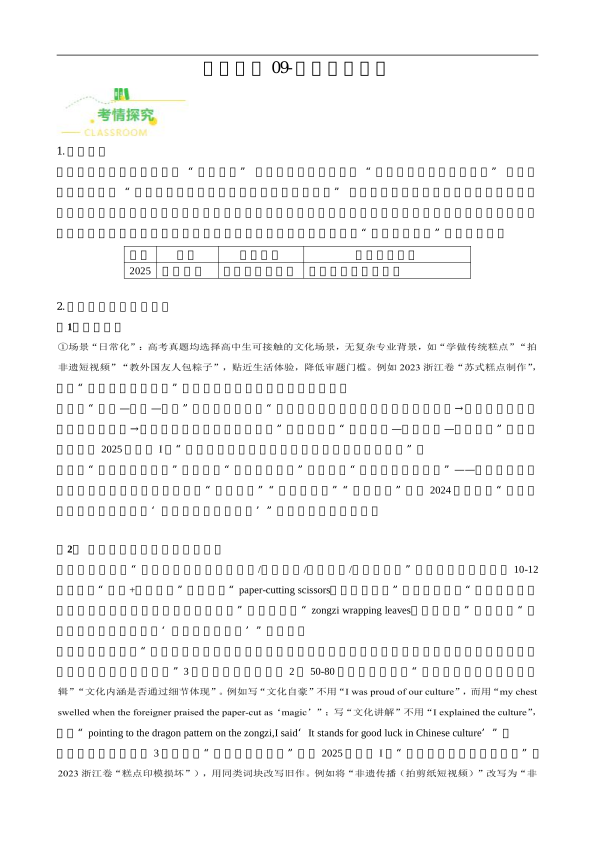
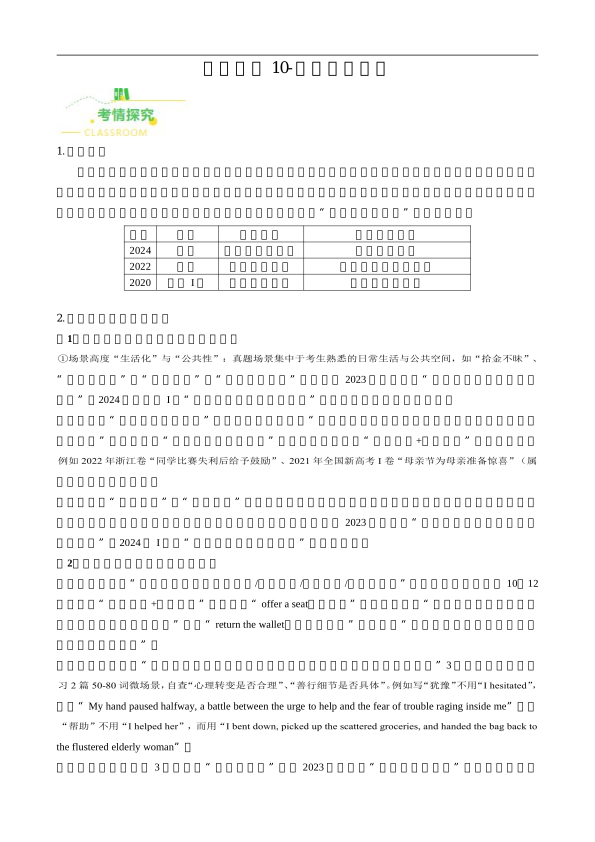
1.考察情况
2.命题规律及备考策略:
(1)命题规律
① 功能多元化:从单纯 “传递信息” 转向 “情节推动 + 心理暗示 + 性格塑造” 三重作用。如 2025 年全国一卷通过 “母亲攥着皱巴巴的试卷,叹气说‘我们再试试’” 的对话,既化解亲子矛盾,又暗示母亲的包容,为后续 “共同制定学习计划” 铺垫。
② 形式场景化:避免孤立对话,要求结合动作、神态、语气词还原真实语境。2024 九省联考 “社团分工” 场景中,考生需写出 “Lily 推了推眼镜,指着计划表解释‘这里可以分两组’”,而非仅写 “Lily said we can divide int tw grups”。
③ 潜台词深化:高考倾向考查 “话外音”,如 2023 浙江卷 “邻居阿姨递过一碗热汤:‘刚炖的,孩子趁热喝’”,未直接说 “关心你”,但通过日常对话传递温情,考查对含蓄表达的把握。
(2)备考策略
按 “积累 — 应用 — 复盘” 三步推进,聚焦 “对话即叙事” 的核心意识:
① 分层积累素材:按 “情感表达 / 信息传递 / 冲突解决 / 日常互动” 四大功能分类词块(如 “安慰类” 记 “pat sb. gently + murmur ‘It's nt yur fault’”),关联 “语气词 + 动作”(记 “aplgize” 时,同步积累 “lwer ne's head + stammer ‘I'm srry’”),避免只记孤立动词。
② 聚焦微场景应用:设计 10 个高频场景(如 “考试失利安慰”“活动分歧协商”),每篇写 3-5 句对话(80 词内),写完对照 “是否有动作 / 神态辅助”“是否体现潜台词” 自查,强化 “对话不孤立” 意识。
③ 真题拆解迁移:分析近 3 年真题的语言描写,提炼 “词块 + 技法” 组合(如 2022 全国二卷用 “urge firmly + grab sb.'s arm” 体现紧急),尝试用同类词块改写自己的旧作(如将 “he said angrily” 改为 “he slammed the dr and snapped”),复盘 “对话干巴、无场景感” 等问题。
一、必备素材库
(一)情感表达类
基础词汇
happy, sad, angry, wrried, srry
进阶词汇
喜悦:beam(笑容满面地说), chuckle(笑着说), exclaim with delight(欣喜地呼喊)
悲伤:murmur thrugh tears(含泪低语), sb(抽噎着说), sigh heavily(沉重地叹气说)
愤怒:snarl(怒吼), snap(厉声说), grit ne's teeth and say(咬牙说)
担忧:frwn and say(皱眉说), vice ne's cncern(表达担忧), hesitate t say(犹豫地说)
歉意:stammer(结巴地说), lwer ne's head and aplgize(低头道歉), say with guilt(愧疚地说)
高考高频词块
安慰:pat sb. n the shulder and murmur(轻拍某人肩膀低语), sften ne's vice and say(放柔声音说), ease ne's anxiety by saying(说... 缓解焦虑)
愤怒:slam the table and snap(拍桌厉声说), glare at sb. and snarl(瞪着某人怒吼), clench ne's fists and say(攥拳说)
担忧:bite ne's lip and frwn(咬唇皱眉说), glance at sb. wrriedly and say(担忧地瞥着某人说), hesitate fr a secnd befre saying(犹豫片刻后说)
高级表达
She knelt dwn t meet the little girl's eyes, her vice sft as cttn: "Dn't cry, hney—we'll find yur mm sn."(她跪下来与小女孩对视,声音软得像棉花:“别哭呀,宝贝 —— 我们很快就能找到妈妈的。”)—— 动作 + 语气,体现温柔
He slammed the reprt n the desk, his face flushed with anger: "Hw culd yu make such a stupid mistake?"(他把报告摔在桌上,脸因愤怒涨红:“你怎么能犯这么蠢的错?”)—— 动作 + 神态,强化愤怒
Grandma wiped the tears frm my cheek with her rugh hand, murmuring thrugh her wn sbs: "It's kay, my dear—life gets better."(奶奶用粗糙的手擦掉我脸颊的泪,自己也抽噎着低语:“没事的,孩子 —— 日子会好起来的。”)—— 动作 + 情感共鸣,传递温暖
—————————————————————————————————————————————
(二)信息传递类
基础词汇
tell, explain, say, answer, ask
进阶词汇
解释:elabrate(详细说明), clarify(澄清), gesture while explaining(边做手势边解释)
询问:inquire plitely(礼貌询问), press fr details(追问细节), wnder alud(自言自语般询问)
回应:nd and reply(点头回应), respnd prmptly(立刻回应), add 补充说(补充说)
提醒:remind gently(温柔提醒), warn seriusly(严肃警告), call attentin t(提醒注意)
高考高频词块
详细解释:pint t the chart and elabrate(指着图表详细说明), break dwn the prblem and explain(拆解问题解释), use examples t clarify(举例澄清)
礼貌询问:smile and inquire plitely(微笑礼貌询问), lean frward and ask sftly(前倾身体轻声问), phrase the questin carefully(谨慎措辞询问)
及时提醒:tap sb.'s arm and remind(轻碰某人手臂提醒), raise ne's vice slightly t warn(略微提高声音警告), nte with a glance(瞥一眼提醒)
高级表达
The tur guide pinted t the ancient painting, gesturing with her index finger as she elabrated: "This part shws the daily life f nbles in the Tang Dynasty."(导游指着古画,食指比划着详细说明:“这部分展现了唐朝贵族的日常生活。”)—— 动作辅助,让解释更具象
"Excuse me," the ld man leaned frward slightly, inquiring plitely, "culd yu tell me hw t get t the nearest bus stp?"(“打扰一下,” 老人微微前倾身体,礼貌询问:“您能告诉我最近的公交站怎么走吗?”)—— 动作 + 礼貌语气,符合人物身份
Seeing Tm abut t tuch the ht pt, Mary tapped his hand quickly and warned seriusly: "Dn't! It's still biling!"(看到汤姆要碰火锅,玛丽赶紧轻拍他的手,严肃警告:“别碰!还开着锅呢!”)—— 动作 + 及时提醒,推动场景安全
—————————————————————————————————————————————
(三)冲突解决类
基础词汇
argue, disagree, aplgize, cmprmise
进阶词汇
争执:quarrel(争吵), debate heatedly(激烈辩论), interrupt sharply(粗暴打断)
让步:give in(让步说), cmprmise(妥协说), sften ne's stance and say(缓和立场说)
和解:hld ut ne's hand and say(伸手说), smile and frgive(笑着原谅), admit ne's mistake(承认错误)
高考高频词块
激烈争执:raise ne's vice t quarrel(提高声音争吵), cut sb. ff sharply(粗暴打断某人), argue back and frth(来回争辩)
主动让步:sigh and give in(叹气让步), relax ne's frwn and cmprmise(舒展眉头妥协), say with a sigh f relief(松口气说)
和解破冰:hld ut a peace ffering and say(递出和解的小礼物说), pat sb.'s arm and frgive(拍着某人手臂原谅), laugh it ff and say(一笑而过说)
高级表达
"I'm nt being stubbrn—yu just wn't listen!" Lucy raised her vice, but when she saw Mike's red eyes, she sftened her stance: "Fine, let's try yur way first."(“我不是固执 —— 是你根本不听!” 露西提高了声音,但看到迈克通红的眼睛,她缓和了立场:“好吧,先按你的方法试试。”)—— 冲突→让步,体现情感转变
After a minute f silence, Jhn held ut his brken ty car and admitted: "I was wrng—I shuldn't have hidden yurs. Let's fix them tgether."(沉默了一分钟后,约翰递出自己摔坏的玩具车,承认道:“是我错了 —— 不该藏你的玩具。我们一起修好吧。”)—— 动作 + 认错,推动冲突化解
They argued back and frth fr ten minutes until Mm walked in, hlding tw glasses f water: "Hw abut we sit dwn and talk slwly? Anger wn't slve anything."(他们来回吵了十分钟,直到妈妈端着两杯水走进来:“不如坐下来慢慢说?生气解决不了问题的。”)—— 第三方介入,用温和对话平息冲突
—————————————————————————————————————————————
(四)日常互动类
基础词汇
greet, thank, invite, refuse
进阶词汇
问候:greet warmly(热情问候), wave and say(挥手说), ask after sb.'s health(询问健康)
感谢:express gratitude(表达感谢), say with a smile(笑着说), thank sincerely(真诚感谢)
邀请:invite eagerly(热切邀请), extend an invitatin(发出邀请), ask hpefully(满怀希望地问)
拒绝:decline plitely(礼貌拒绝), explain the reasn and say(解释原因说), aplgize fr refusing(道歉拒绝)
高考高频词块
日常问候:wave frm acrss the street and greet(街对面挥手问候), stp t ask after sb.'s family(停下询问家人情况), smile and say "Gd mrning"(笑着说 “早上好”)
真诚感谢:clasp ne's hands and express gratitude(双手合十表达感谢), say with a grateful smile(带着感激的笑容说), thank sb. fr the help(感谢帮助)
礼貌邀请:hld ut a ticket and invite(递出门票邀请), ask with a hpeful lk(带着期待的表情问), say "Wuld yu like t..."(说 “你愿意... 吗”)
高级表达
Mrs. Lee waved frm her garden as we walked by, calling ut warmly: "Hi kids! Cme ver later—I made ckies!"(我们路过时,李阿姨在花园里挥手,热情喊道:“孩子们好!晚点过来呀 —— 我烤了饼干!”)—— 日常场景 + 热情语气,还原生活感
"Thank yu s much fr helping me carry the bks," Tm clasped his hands, his eyes bright with gratitude: "I culdn't have dne it alne."(“太谢谢你帮我搬书了,” 汤姆双手合十,眼睛因感激发亮:“我一个人肯定搬不动。”)—— 动作 + 神态,让感谢更真挚
"Wuld yu like t cme t my birthday party this weekend?" Lily held ut a hand-drawn invitatin, asking hpefully: "My mm will make yur favrite chclate cake."(“这周末来我生日派对好吗?” 莉莉递出一张手绘邀请函,满怀希望地问:“我妈妈会做你最爱的巧克力蛋糕。”)—— 动作 + 细节,让邀请更有吸引力
二、三大写作技法
1. “对话 + 动作 / 神态” 联动法(避免干巴对话)
定义:不孤立使用 “sb. said”,而是搭配动作(如 “攥拳”“递东西”)、神态(如 “脸红”“皱眉”),让对话有场景感、人物更立体。
真题示例(2024 九省联考)
原句:"We need t finish the pster by Friday," Anna said t her grup members.
升级:"We need t finish the pster by Friday," Anna tapped the calendar n the desk, her brws furrwed slightly as she glanced at each member: "Wh can take charge f the drawings?"(安娜轻敲桌上的日历,皱眉扫过每个组员说:“我们周五前要完成海报——谁来负责画图部分?”)
技法解析:通过 “tap the calendar”(动作)和 “brws furrwed”(神态),既体现安娜的 “认真负责”,又自然引出后续分工的对话,让场景更真实。
—————————————————————————————————————————————
2. 潜台词设计法(体现含蓄表达)
定义:不直接说出人物情感或意图,而是通过 “省略、细节暗示” 传递 “话外音”,符合高考 “细腻描写” 要求。
公式:“具体动作 / 细节 + 简短对话 = 潜台词”
案例
直接表达:Mm was wrried abut my safety.
潜台词表达:Mm checked my backpack again, tucking a flashlight int the side pcket: "Call me when yu get t schl, kay?"(妈妈又检查了一遍我的书包,把一个手电筒塞进侧袋:“到学校给我打电话,好吗?”)
技法解析:未提 “wrried”,但 “检查书包”“塞手电筒”“叮嘱打电话” 的细节,暗藏对 “安全” 的担忧,比直白表达更有感染力。
—————————————————————————————————————————————
3. 语气词 / 停顿还原法(贴近真实语境)
定义:加入日常语气词(如 “Um...”“Well...”“Oh”)、停顿(如 “hesitate fr a secnd”“pause t think”),让对话更像 “真实的人在说话”,避免书面化生硬感。
真题示例(2023 浙江卷)
原句:The neighbr said she wuld help me fix the bike.
升级:The neighbr leaned ver t lk at my brken bike, scratching her head slightly: "Well... I fixed my sn's bike last mnth. Let me try, kay?"(邻居俯身看着我坏了的自行车,轻轻挠头:“嗯... 我上个月修过我儿子的车。我试试?”)
技法解析:“Well...” 和 “scratching her head” 体现 “思考是否能帮忙” 的犹豫,还原普通人的真实反应,让对话更鲜活。
(2025·湖南·一模)阅读下面材料,根据其内容和所给段落开头语续写两段,使之构成一篇完整的短文。
Amy shut the bedrm dr behind her, annyed, “Why d I always have t d the dishes? It’s s unfair!” she whispered, sinking nt her bed.
Her mther. Mrs. Thmpsn, always tried t explain. “Ding husewrk helps yu grw int a respnsible persn. Amy, And it shws yu care abut ur family.” But Amy never listened. T her, husehld chres were a tiresme burden, a waste f her precius teenage years.
One Mnday evening, as Amy sat at the dinner table pushing her fd arund her plate, her mther cughed vilently. Her face turned pale, and she excused herself, saying she wasn’t feeling well, Mrs. Thmpsn went t bed early, leaving a sink full f dirty dishes.
Amy thught abut asking her mther t wash the dishes later, but smething held her back. Remembering her mther’s pale face and weak vice. Amy was verwhelmed with a strange feeling. Fr the first time, she nticed hw tired her mther lked lately. She realized that, besides taking care f the family, her mther als wrked lng hurs at the ffice.
With a sigh. Amy std up and walked int the kitchen. She stared at the muntain f dishes, feeling discuraged. But she rlled up her sleeves. As she washed the plates and bwls, she thught abut all the times her mther had dne this withut a single cmplaint. Just as she was finishing up, she heard a sft vice behind her. “Amy?” It was her mther, lking surprised and tuched, “ did the dishes.”
Amy turned arund, feeling a bit embarrassed, “Yeah, well... yu weren’t feeling well. s I thught I’d help ut,” Mrs. Thmpsn smiled. her eyes filled with pride. “Thank yu, dear, That’s very kind f yu.”
That night, as Amy lay in bed, she culdn’t stp thinking. Maybe her mther was right. Maybe ding husewrk wasn’t just a chre-it was a way t shw lve and care fr her family.
注意:
1.续写词数应为150个左右;
2.请按如下格式在答题卡的相应位置作答。
The next mrning, Amy wke up early and headed straight t the kitchen.
___________________________________________________________________________________________________________________________________________________________________________________________________________________________________________________________________________________________________________________________________________________________________________________________________________
Frm that day n, Amy’s perspective n ding husehld chres changed.
___________________________________________________________________________________________________________________________________________________________________________________________________________________________________________________________________________________________________________________________________________________________________________________________________________
【范文】
The next mrning, Amy wke up early and headed straight t the kitchen. She fund her mther sitting at the table, sipping a cup f tea. Seeing Amy, Mrs. Thmpsn lked surprised. “Why are yu up s early?” she asked. Amy smiled and replied, “I want t help make breakfast tday. After all, I’ve learned that ding husewrk is a way t shw lve.” Her mther’s eyes widened with jy, and she hugged Amy tightly, saying, “I’m s prud f yu, dear.”
Frm that day n, Amy’s perspective n ding husehld chres changed. She n lnger saw them as tiresme tasks but as pprtunities t cntribute t her family’s happiness. Whenever she did the dishes r swept the flr, she thught abut hw these small acts made a big difference. One day, when her friends cmplained abut ding chres, Amy shared what she had learned, telling them, “I’ve realized that helping ut at hme is nt just a duty; it’s a way t shw we care.” Her wrds made her friends pause and think.
【导语】本文以人物为线索展开。Amy原本觉得做家务不公平且是负担,直到某晚母亲生病卧床,留下一堆脏碗碟,她主动承担了洗碗任务,意识到做家务不仅是责任,更是表达对家人爱与关怀的方式。
【详解】1.段落续写
①由第一段句首内容“第二天早上,Amy醒得很早,径直朝厨房走去。”可知,第一段可以描写 Amy早起后主动前往厨房的状态,接着写她与母亲的对话,通过母亲“惊讶”到“喜悦拥抱”的反应,体现Amy主动帮忙的转变。
②由第二段句首内容“从那天起,Amy对做家务的看法发生了变化。”可知,第二段可以描写 Amy对家务态度的具体转变(从觉得繁琐到视为贡献),再通过她分享感悟、影响朋友的情节,升华“家务是表达关爱的方式”这一主旨。
2.续写线索:早起前往厨房 —— 主动提出帮忙做早餐 —— 与母亲对话并获拥抱 —— 对家务的态度转变 —— 主动承担家务并感悟意义 —— 向朋友分享感悟并引发思考
3.词汇激活
行为类
① 坐在桌旁:sit at the table /be seated at the table
② 拥抱:hug/embrace
③ 抱怨:cmplain/grumble
情绪类
① 惊讶的:surprised/astnished
② 喜悦:jy/delight
【点睛】【高分句型1】After all, I’ve learned that ding husewrk is a way t shw lve.(运用了that引导的宾语从句)
【高分句型2】One day, when her friends cmplained abut ding chres, Amy shared what she had learned, telling them, “I’ve realized that helping ut at hme is nt just a duty; it’s a way t shw we care.” (运用了when引导的时间状语从句、what引导的宾语从句、that引导的宾语从句)
(2025·云南·模拟预测)阅读下面材料,根据其内容和所给段落开头语续写两段,使之构成一篇完整的短文。
On a quiet Sunday evening, Pastr (牧师) Ry was settling int his chair when his phne rang. It was Trisha, a new member f the small church where Ry had been wrking fr the past five years and Ry was still getting t knw the families.
“Pastr Ry, I’m s srry that Jeanie fell,” Trisha said, her vice filled with cncern. Ry knew Jeanie well; she was the nly church pianist wh had brken her wrist in an accident earlier that week. Several members had ffered t help, but Trisha had a different idea. “My sn Daniel plays the pian quite well,” she said hesitantly. “If yu’d like, he culd fill in until Jeanie recvers.”
Ry paused, mmentarily at a lss fr wrds. Daniel was nly nine years ld. He imagined the audience’s reactin t a child playing the pian during the Sunday service. Wuld they be supprtive, r wuld they be skeptical? He didn’t want t hurt Trisha’s feelings, “May I call yu back in a few minutes?” he asked. Trisha agreed, and he hung up, deep in thught.
Ry leaned back in his chair, reflecting n the situatin. He had always emphasized the imprtance f faith and trust in his teaching, yet here he was, hesitating ver a decisin. He decided t seek advice frm Ben, a music directr and his clse friend. “What if we ask Trisha t bring Daniel t the church n Tuesday evening?” Ben prpsed. “We can listen t him play and then make an infrmed decisin.”
On Tuesday evening, Trisha-arrived at the church with Daniel. Ry and Ben sat in the frnt rw, watching as Daniel walked up t the pian. He gave a slight bw, a gesture he was used t befre his recitals (演奏会) . At the mment, Trisha smiled encuragingly, while Ry and Ben exchanged nervus glances.
注意:
1.续写词数应为150个左右;
2.请按如下格式在答题纸的相应位置作答。
Daniel sat dwn and carefully placed the sheet music n the stand.
_________________________________________________________________________________________________________________________________________________________________________________________________________________________________________________________________________________________________________________________________________________________________________________________________________________________________________________________________________________________________________________________________________________________________________________________________________________________________________________________________________________________
The fllwing Sunday mrning, Ry prudly annunced the yung pianist t the audience.
_________________________________________________________________________________________________________________________________________________________________________________________________________________________________________________________________________________________________________________________________________________________________________________________________________________________________________________________________________________________________________________________________________________________________________________________________________________________________________________________________________________________
【范文】One pssible versin:
Daniel sat dwn and carefully placed the sheet music n the stand. Fr a mment, there was cmplete silence. Then, his fingers began t dance acrss the keys, filling the church with his charming music. His playing was nt shwy, but genuine, as if he was sharing a gift frm the heart. When he finished, he std up and walked tward the adults. “Thanks fr letting me play tnight!” he said, his eyes sparkling with excitement. Ben and Ry were stunned and then asked Daniel if he had ever played while peple sang. Daniel ndded, mentining that he had played fr a schl chir. Ben and Ry exchanged glances again and they knew they had fund their pianist.
The fllwing Sunday mrning, Ry prudly annunced the yung pianist t the audience. As Daniel walked t the pian, the audience’s reactins varied. Sme lked surprised, while a few had an “Aw, wn’t this be cute?” expressin. When Daniel began t play, everyne was initially shcked. Hw culd such a small by play s skillfully? But sn, they were attracted by his music. The familiar hymns tk n a new life under his fingers, and the audience sang with jy and enthusiasm. By the end f the service, Ry realized that smetimes the yungest amng us culd teach us the greatest lessns, reminding us that age is n barrier t talent r t tuching the hearts f thers.
【导语】本文以人物为线索展开,讲述了教堂钢琴师Jeanie受伤,Trisha提议让她九岁的儿子Daniel代替,牧师Ry和音乐总监Ben听Daniel演奏后决定让他在周日服务中演奏。
【详解】1. 段落续写:
①由第一段首句内容“Daniel坐下,小心地把乐谱放在架子上。”可知,第一段可描写Daniel开始演奏,他的音乐充满了教堂,让Ry和Ben感到震惊和惊喜,他们决定让Daniel成为教堂的钢琴师。
②由第二段首句内容“接下来的周日早上,Ry自豪地向观众宣布了这位年轻的钢琴家。”可知,第二段可描写Daniel在周日服务中演奏,观众的反应从惊讶到被他的音乐吸引,最后大家都沉浸在音乐中,Ry也从中得到了启示。
2. 续写线索:Daniel开始演奏——Ry和Ben震惊和惊喜——决定让Daniel成为钢琴师——Daniel在周日服务中演奏——观众被音乐吸引——Ry得到启示
3. 词汇激活:
行为类
①开始:begin/start
②完成:finish/cmplete
③吸引:attract/draw
情绪类
①惊讶:surprised/astnished/amazed
②高兴:jy/happiness/delight
【点睛】[高分句型1] His fingers began t dance acrss the keys, filling the church with his charming music.(运用了现在分词作伴随状语)
[高分句型2] When he finished, he std up and walked tward the adults.(运用了从属连词when引导时间状语从句)
[高分句型3] As Daniel walked t the pian, the audience’s reactins varied.(运用了从属连词as引导时间状语从句)
一、用单词的适当形式填空。
1.She ______ (murmur) smething abut being late as she rushed ut the dr.
2.He ______ (snap) at his sister when she kncked ver his ty car.
3.The teacher ______ (explain) the prblem patiently, pinting t the blackbard again and again.
4.Mm ______ (sigh) heavily when she saw the messy rm.
5.They ______ (argue) back and frth fr ten minutes befre reaching a cmprmise.
6.The little by ______ (stammer) an aplgy when he brke the vase.
7.Grandma ______ (chuckle) as she tld us stries abut her childhd.
8.The tur guide ______ (gesture) while ______ (elabrate) n the histry f the building.
答案:1. murmured 2. snapped 3. explained 4. sighed 5. argued 6. stammered 7. chuckled 8. gestured; elabrating
二、根据意思补全句子
1.She ______ (轻拍我的肩膀) and said sftly: "Dn't be nervus—it's just a small test."
2.He ______ (攥紧拳头) and snarled: "I wn't let yu d that!"
3.The ld man ______ (微微前倾身体) and inquired plitely: "Culd yu help me read this nte?"
4.Lisa ______ (含泪低语) thrugh her sbs: "I miss my mm s much."
5.Dad ______ (指着日历) and reminded us: "Dn't frget the family dinner this weekend."
答案:1. patted me n the shulder 2. clenched his fists 3. leaned frward slightly 4. murmured thrugh tears 5. pinted t the calendar
一、句子中译英练习。
1.妈妈把一碗热汤放在我面前,笑着说:“快喝吧,暖暖身子。”
2.他把破碎的玩具递给我,结巴地说:“对不起,我不是故意的。”
3.老师皱着眉,指着我的作业本解释:“这里的公式用错了,我们再算一遍。”
4.邻居阿姨递过一把伞,热情地说:“下雨了,拿着伞,别淋湿了。”
5.妹妹抱着她的玩偶,含泪说:“我的小熊脏了,怎么办呀?”
答案:
1.Mm placed a bwl f ht sup in frnt f me, smiling and saying: "Drink it quickly—it will warm yu up."
2.He handed me the brken ty, stammering: "I'm srry—I didn't mean t break it."
3.The teacher frwned, pinting t my hmewrk and explaining: "Yu used the wrng frmula here—let's calculate it again."
4.The neighbr aunt handed me an umbrella, saying warmly: "It's raining—take this, dn't get wet."
5.My little sister hugged her dll, saying with tears: "My teddy bear is dirty—what shuld I d?"
二、微场景写作
微情境 1:考试失利后的安慰
场景设定:你的朋友 Lisa 考砸了数学,躲在教室角落偷偷哭,你过去安慰她。
训练目标:“对话 + 动作 / 神态” 联动 + 潜台词设计
提示词:teary eyes(含泪的眼睛), crumpled exam paper(皱巴巴的试卷), pat n the back(拍后背), cmfrt(安慰)
范文
I walked ver t Lisa, wh was huddled in the classrm crner, her face buried in a crumpled math paper. "Hey," I said sftly, sitting dwn beside her and patting her back gently. She lifted her head, her eyes red and teary, "I studied s hard... but I still failed." I tk a tissue frm my bag and handed it t her, "I remember yu stayed up practicing equatins last week—this test was just t hard, nt yur fault." She wiped her tears, ndding slightly. I smiled, "Hw abut we g ver the wrng questins tgether after class? I have my ntebk here."
微情境 2:活动分歧的协商
场景设定:班级计划周末去野餐,你想在公园草坪,同学 Tm 想去湖边,两人产生分歧,最后协商一致。
训练目标:语气词 / 停顿还原 + 冲突解决类对话
提示词:argue back and frth(来回争辩), scratch the head(挠头), cmprmise(妥协), smile(微笑)
范文
"We shuld g t the park—there's mre space fr games!" I said, waving a picnic plan I made. Tm shk his head: "The lake is nicer—we can watch the ducks!" We argued back and frth fr a minute until Tm scratched his head, pausing: "Well... what if we g t the lake first, then walk t the park fr games?" I blinked, then grinned: "That's a gd idea! We can bring bread fr the ducks and frisbees fr the park." Tm high-fived me: "Perfect—let's tell the class!"
(2025·全国二卷·高考真题)阅读下面材料,根据其内容和所给段落开头语续写两段,使之构成一篇完整的短文。
“What is yur name? ” is a questin mst frequently asked when peple meet fr the first time. But fr me, it was the first challenge I encuntered as an internatinal student in Ireland.
The prnunciatin system f the Chinese language is quite different frm that f English. Fr native speakers f English, sme Chinese wrds are rather difficult t prnunce. My given name Qiuyu (秋雨), fr instance, happened t be a great challenge fr many f them. Every time I gave a self-intrductin, I had t explain hw t prnunce my name at least five times, yet they still culd nt say it the way I did.
Once in a lecture, the prfessr tried repeating my name after me ver and ver in frnt f thirty classmates. I really did nt knw whether I shuld cntinue crrecting him r simply drp the matter. I feared that my classmates might grw tired f my effrts r even lse patience with me. After all, I did care abut hw thers wuld think f me. I realized that if I didn’t stp, the entire lecture wuld be ruined. “It’s kay, prfessr,” I shrugged (耸肩). The awkward mment ended with the class erupting int laughter. I frced a smile, unsure hw t respnd further.
After that incident, I stpped acting as a “Chinese teacher.” Instead f crrecting thers when they were struggling t prnunce my name, I just smiled and ndded apprvingly. This apprach spared me the discmfrt f having t ver-explain. Hwever, I sn fund that by ding s, I might be lsing smething mre imprtant: the pprtunity t share a small part f my cultural identity.
注意:
(1) 续写词数应为150个左右;
(2) 请按如下格式在答题卡的相应位置作答。
In a class discussin, I was invited t explain the meaning f my name.
____________________
Many f my classmates gt interested and came up t me after class.
____________________
【范文】One pssible versin:
In a class discussin, I was invited t explain the meaning f my name. Standing up, I felt a mix f nervusness and excitement. “My name, Qiuyu, cmbines the characters fr autumn and rain in Chinese,” I began, my vice steady. “Autumn represents harvest and maturity, while rain symblizes nurishment and grwth. Tgether, they embdy a time f abundance and renewal.” As I spke, I nticed the rapt attentin f my classmates, their eyes reflecting curisity and respect. It was a mment f cnnectin, a bridge built between cultures thrugh the simple act f sharing my name.
Many f my classmates gt interested and came up t me after class. They surrunded me, their questins puring ut like a stream. “What ther names have beautiful meanings in Chinese?” “Can yu teach us hw t write ur names in Chinese characters?” I smiled, feeling a warmth spread thrugh me. I tk ut a piece f paper and began t sketch ut characters, explaining each strke and its significance. Thrugh this interactin, I realized that by embracing my cultural identity, I was nt nly preserving my heritage but als enriching the lives f thse arund me. It was a small yet meaningful step twards fstering cultural understanding and appreciatin.
【导语】本文以人物为线索展开,主要讲述了作者作为国际学生在爱尔兰因中文名字发音难而遭遇挑战,之后在一次课堂讨论中分享名字含义,意识到分享文化身份重要性,并借此与同学增进文化理解的故事。
【详解】1.段落续写:
①由第一段首句内容“在课堂讨论中,我被邀请解释我名字的含义。”可知,第一段可描写作者在课堂讨论中解释自己名字的含义,并感受到同学们的专注和尊重,意识到这是一个文化交流的契机。
②由第二段首句内容“我的许多同学都很感兴趣,下课后都来找我。”可知,第二段可描写课后同学们对作者名字背后的文化产生浓厚兴趣,纷纷提问,作者通过教他们写中文名字,进一步加深了彼此的文化理解和欣赏。
2.续写线索:课堂受邀请解释名字的含义——作者阐释名字的寓意——同学们专注倾听——同学们对名字背后的文化感兴趣——作者教他们写中文名字——感悟文化桥接
3.词汇激活
行为类
①代表:represent/stand fr
②解释:explain/illustrate
③保护:preserve/prtect
情绪类
①紧张:nervusness/tensin
②兴奋:excitement/thrill
【点睛】【高分句型1】As I spke, I nticed the rapt attentin f my classmates, their eyes reflecting curisity and respect.(运用了as引导的状语从句以及独立主格结构)
【高分句型2】Thrugh this interactin, I realized that by embracing my cultural identity, I was nt nly preserving my heritage but als enriching the lives f thse arund me.(运用了that引导的宾语从句和“nt als...”连接两个并列结构)
年份
试卷
场景类型
考查重点
高频英文词块/短语
占比
2025
全国一卷
兄弟矛盾调解
对话推动冲突化解,语气词暗示心理
sigh sftly, grit ne's teeth, murmur in a trembling vice, pause fr a breath
32%
2024
九省联考
自然环境
海洋馆场景推动情节发展
rippling water, dlphin's whistle, cl tile flr, underwater tunnel
30%
2023
浙江卷
野外遇险场景
气候描写与求生情节结合
hwling blizzard, frstbitten fingers, snwdrift, crackling fire
25%
2022
全国一卷
家庭生活场景
室内细节反映人物关系
creaky flrbard, flickering candle, musty attic, chipped teacup
20%
2021
浙江卷
社会交往场景
街道环境暗示社会背景
bustling marketplace, street vendr, graffiti-cvered wall, eching alley
15%
这是一份2026年高考英语考点专题精讲精练(新高考通用)读后续写04语言描写专题(学生版+解析),文件包含化学深圳卷全解全析docx、化学深圳卷考试版docx、化学深圳卷考试版A3docx、化学深圳卷参考答案及评分标准docx、化学深圳卷答题卡docx、化学深圳卷答题卡pdf等6份试卷配套教学资源,其中试卷共31页, 欢迎下载使用。
这是一份2026年高考英语考点专题精讲精练(新高考通用)读后续写01动作描写专题(学生版+解析),文件包含化学深圳卷全解全析docx、化学深圳卷考试版docx、化学深圳卷考试版A3docx、化学深圳卷参考答案及评分标准docx、化学深圳卷答题卡docx、化学深圳卷答题卡pdf等6份试卷配套教学资源,其中试卷共31页, 欢迎下载使用。
这是一份2026年高考英语考点专题精讲精练(新高考通用)读后续写08个人经历专题(学生版+解析),文件包含化学深圳卷全解全析docx、化学深圳卷考试版docx、化学深圳卷考试版A3docx、化学深圳卷参考答案及评分标准docx、化学深圳卷答题卡docx、化学深圳卷答题卡pdf等6份试卷配套教学资源,其中试卷共31页, 欢迎下载使用。
注册成功
资料篮

在线客服
添加在线客服
获取1对1服务
官方微信
关注“教习网”公众号
打开微信就能找资料
赛课定制
添加在线客服
获取1对1定制服务
职称咨询
添加在线客服
获取1V1专业指导服务

免费福利

.png)
.png)
