 免费领取教师福利

若您为此资料的原创作者,认为该资料内容侵犯了您的知识产权,请扫码添加我们的相关工作人员,我们尽可能的保护您的合法权益。


这是一份2026年高考英语考点专题精讲精练(新高考通用)读后续写06校园竞赛专题(学生版+解析),文件包含2026年高考英语考点专题精讲精练新高考通用读后续写06校园竞赛专题教师版docx、2026年高考英语考点专题精讲精练新高考通用读后续写06校园竞赛专题学生版docx等2份试卷配套教学资源,其中试卷共34页, 欢迎下载使用。
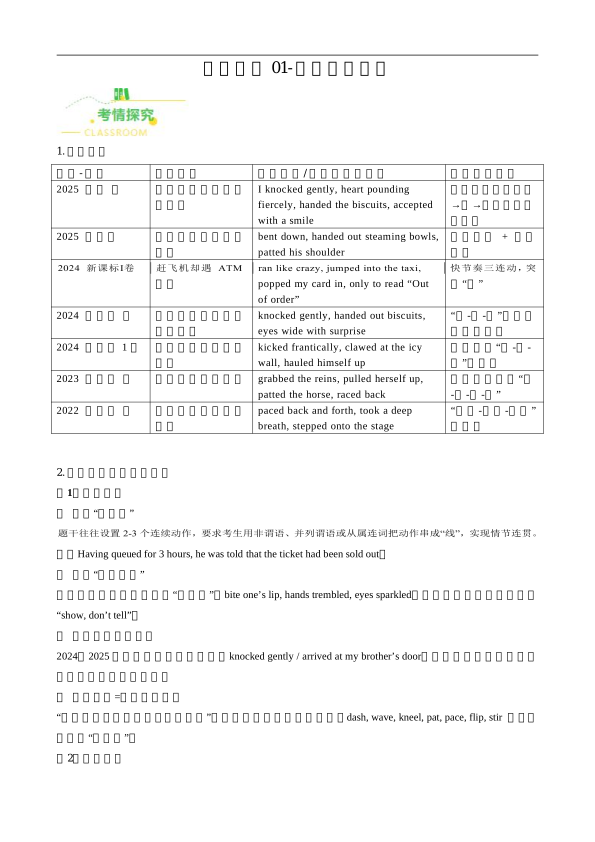
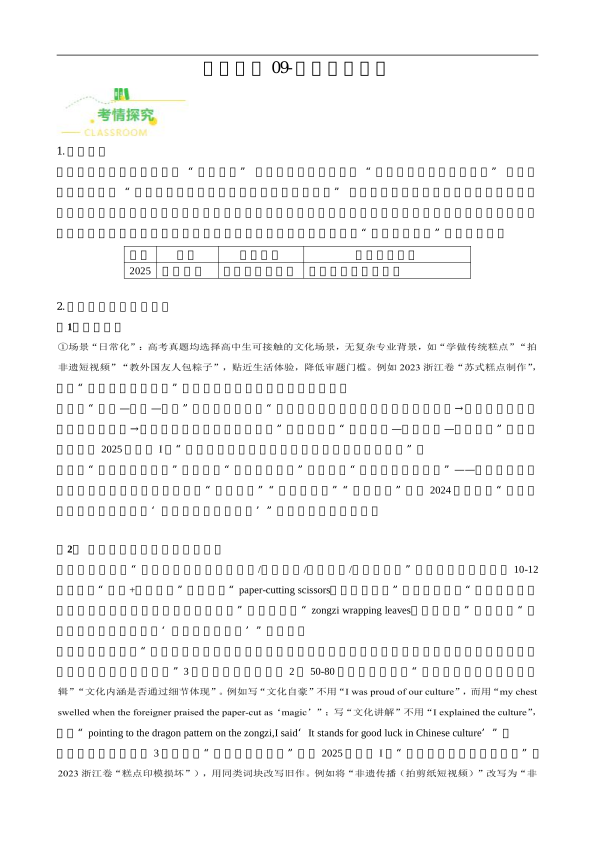
1.考察情况
2.命题规律及备考策略:
(1)命题规律
① 场景聚焦 “小而实”:高考真题多选择校园内可落地的竞赛类型(如演讲、手工、户外技能),避免复杂专业场景,降低审题门槛,如 2024 新高考 I 卷 “科技创意赛” 聚焦 “3D 模型调试”,贴近高中生认知。 ② 情节锚定 “冲突 - 解决”:核心情节围绕 “竞赛中的突发问题” 展开(如设备故障、资料丢失、队友失误),考查 “问题应对 + 情感变化”,如 2023 浙江卷户外赛中 “指南针丢失” 触发寻路协作。
③ 主题指向 “成长与协作”:不强调 “胜负结果”,更侧重竞赛过程中的个人突破(如克服紧张)或团队价值(如互助补位),如 2022 全国甲卷演讲赛以 “忘词后即兴发挥” 体现勇气。
(2) 备考策略(真题导向三步法)
按 “素材锚定 — 技法适配 — 真题迁移” 三步突破:
分层积累校园竞赛素材:按 “竞赛类型(演讲 / 科技 / 户外)” 分类记词块,每天 10-12 个,关联 “动作 + 情感”(如记 “micrphne malfunctin” 时,同步想 “选手紧张地 adjust the wire” 的场景)。
聚焦 “竞赛微冲突” 应用:针对 “设备故障、时间紧张、队友分歧”3 类高频冲突,每类练 2 篇 50-80 词微场景,自查 “冲突解决是否合理”“情感是否通过环境 / 动作体现”(如写 “紧张” 不用 “I was nervus”,而用 “fingers twisted the crner f the manuscript”)。
③ 真题拆解 “词块 + 情节”:分析近 3 年真题的 “冲突触发点”(如 2021 新高考 II 卷 “辩论计时器响”),用同类词块改写旧作(如将 “手工赛材料不足” 改为 “演讲赛麦克风失灵”),强化场景适配能力。
(一)四大场景类型及高频词汇
1. 自然环境类(校园竞赛户外场地)
基础词汇:playgrund, lawn, tree, sunlight, rain
进阶词汇:
地形:campus wds(校园树林), sprts field(运动场), utdr stage(户外舞台), practice field(实践场地)
天气:drizzle(毛毛雨), breeze(微风), scrching sun(烈日), vercast sky(阴天)
高考高频词块:
场地搭配:the edge f the sprts field(运动场边缘), a clearing in the campus wds(校园树林空地), the utdr stage decrated with ballns(气球装饰的户外舞台)
天气搭配:a light drizzle during the utdr race(户外比赛中的毛毛雨), the scrching sun abve the practice field(实践场地头顶的烈日)
高级表达:
The afternn breeze carried the scent f grass frm the sprts field, where ur utdr survival cmpetitin was abut t start—sunlight filtered thrugh the maple trees, dappling the grund like scattered gld.(午后微风带着运动场的青草香,我们的户外生存竞赛即将开始 —— 阳光透过枫树,在地面投下斑驳的光斑,像散落的金子。)
Dark cluds gathered ver the campus wds, and a cld drizzle began t fall; we huddled under the tent, checking the fire starter while the wind rustled the leaves arund us.(乌云笼罩校园树林,冷雨开始落下;我们挤在帐篷下检查点火器,风在周围树叶间沙沙作响。)
—————————————————————————————————————————————
2. 人文环境类(校园竞赛室内场地)
基础词汇:classrm, auditrium, cafeteria, desk, chair
进阶词汇:
场所:cmpetitin hall(竞赛大厅), debate rm(辩论室), craft studi(手工工作室), tech lab(科技实验室)
设施:electrnic screbard(电子记分牌), prtable micrphne(便携麦克风), prject screen(投影屏), craft table(手工桌)
物品:speech ntes(演讲笔记), 3D printing filament(3D 打印耗材), debate name tag(辩论名牌), award certificate(获奖证书)
高考高频词块:
场所搭配:the crwded cmpetitin hall(拥挤的竞赛大厅), the quiet debate rm with wden desks(摆着木桌的安静辩论室), the well-lit craft studi(光线充足的手工工作室)
物品搭配:a crumpled speech nte with highlighted key pints(标有重点的皱巴巴演讲笔记), a spl f 3D printing filament(一卷 3D 打印耗材), a shiny award certificate with gld edges(金边闪亮的获奖证书)
高级表达:
The cmpetitin hall was bathed in warm light—electrnic screbards flickered n the walls, prtable micrphnes lay neatly n the tables, and the air was filled with the sft rustle f cntestants reviewing their ntes.(竞赛大厅笼罩在温暖的光线中 —— 电子记分牌在墙上闪烁,便携麦克风整齐地放在桌上,空气中满是选手们翻看笔记的轻柔沙沙声。)
In the tech lab, ur 3D-printed mdel std n the table—next t it were a spl f filament, a small screwdriver, and a half-written design reprt, all bearing the marks f ur three-week preparatin.(在科技实验室里,我们的 3D 打印模型放在桌上 —— 旁边是一卷耗材、一把小螺丝刀和半篇设计报告,都带着我们三周准备的痕迹。)
—————————————————————————————————————————————
3. 气候与时间类(竞赛关键时段)
基础词汇:mrning, afternn, nn, sunny, cludy
进阶词汇:
时段:cmpetitin dawn(竞赛日黎明), pre-cntest hur(赛前一小时), intermissin(竞赛中场), award ceremny(颁奖仪式)
气候:crisp cmpetitin mrning(凉爽的竞赛日清晨), humid afternn fr the race(比赛日潮湿的午后), windy intermissin(多风的竞赛中场)
高考高频词块:
时段搭配:the pre-cntest hur filled with tensin(充满紧张感的赛前一小时), the quiet intermissin befre the debate final(辩论决赛前的安静中场), the warm sunset during the award ceremny(颁奖仪式时温暖的日落)
气候搭配:the crisp cmpetitin mrning with dew n the grass(草地上带露珠的凉爽竞赛日清晨), the humid afternn making the race mre tiring(让比赛更累的潮湿午后)
高级表达:
As the pre-cntest hur ticked away, the sun climbed higher—its glden light streamed thrugh the auditrium windws, turning the edges f the speech manuscripts int warm range.(赛前一小时渐渐流逝,太阳升得更高 —— 金色光线透过礼堂窗户,把演讲笔记的边缘染成温暖的橙色。)
The award ceremny began as sunset painted the sky pink; a gentle wind blew, carrying the cheers f classmates and the rustle f the certificate in my hand.(颁奖仪式在夕阳染粉天空时开始;微风拂过,带着同学们的欢呼和我手中证书的沙沙声。)
—————————————————————————————————————————————
4. 特殊场景类(竞赛突发状况)
基础词汇:errr, prblem, help, fix
进阶词汇:
问题:micrphne glitch(麦克风故障), missing ntes(笔记丢失), brken craft material(损坏的手工材料), expired timer(故障计时器)
动作:trublesht(排查故障), makeshift(临时替代), signal a teammate(给队友信号), imprvise(即兴发挥)
高考高频词块:
问题搭配:a sudden micrphne glitch befre the speech(演讲前突发的麦克风故障), missing debate ntes in the pre-cntest rush(赛前匆忙中丢失的辩论笔记), a brken tent ple during the utdr cmpetitin(户外竞赛中折断的帐篷杆)
动作搭配:trublesht the micrphne wire(排查麦克风线路), use a makeshift stand fr the pster(用临时支架固定海报), signal a teammate fr help(给队友求救信号)
高级表达:
Just as Lily walked nt the stage, the micrphne let ut a harsh squeal—she frze fr a secnd, then leaned dwn t trublesht the wire, her fingers trembling slightly but eyes fcused.(莉莉刚走上舞台,麦克风就发出刺耳的尖啸 —— 她愣了一秒,然后弯腰排查线路,手指微微颤抖但眼神专注。)
During the utdr race, Tm’s shelace snapped; he didn’t stp, instead tucking the lse end int his sck and speeding up—his teammate ahead waved, signaling him t keep ging.(户外赛跑时,汤姆的鞋带断了;他没停下,反而把松散的一端塞进袜子里加速 —— 前方的队友挥手,示意他继续。)
(二)高分词块分类素材库
1. 情感表达类:更丰富的情绪描写
(1)赛前鼓舞
基础词块:
cheer sb. up (为某人加油)
bst ne's cnfidence (增强信心)
ease ne's nerves (缓解紧张)
进阶词块:
give sb. a thumbs-up and say with a smile (竖起大拇指微笑着说)
clap sb. n the shulder and urge (拍拍某人的肩膀催促说)
lk sb. in the eye and affirm (看着某人的眼睛肯定地说): "I have full faith in yu."
shut frm the sidelines (在场边大喊): "Dn't give up! Keep ging!"
(2)赛中焦急/专注
基础词块:
shut anxiusly (焦急地喊)
yell impatiently (不耐烦地叫喊)
进阶词块:
frwn at the screbard and mutter(对着记分牌皱眉嘀咕)
bite ne's nails and whisper(咬指甲低声说):"This isn't ging well."
pace back and frth and gran(来回踱步呻吟):"What shuld we d nw?"
scream at the tp f ne's lungs(声嘶力竭地尖叫)
(3)赛后反应
胜利的喜悦:
leap int the air and scream with jy(跳起来高兴地尖叫)
burst int tears f jy and exclaim(喜极而泣惊呼)
hug each ther tightly,laughing and crying(紧紧相拥,又笑又哭)
raise the trphy high and shut triumphantly(高高举起奖杯胜利地呼喊)
失落的安慰:
wrap an arm arund sb.and cmfrt(搂着某人安慰):"Yu did yur best."
lwer ne's head and sigh in disappintment(低下头失望地叹气)
murmur in a chked vice(声音哽咽地低语):"We were s clse."
—————————————————————————————————————————————
2.信息传递类:竞赛中的指令与沟通
(1)策略指导
基础词块:
explain the tactic(解释战术)
give instructins(给予指示)
进阶词块:
draw a diagram n the clipbard and pint ut(在战术板上画图并指出)
signal t a teammate and yell(向队友打手势并大喊):"Switch psitins!"
make eye cntact and nd(眼神交流并点头),暗示执行既定计划。
cup ne's hands arund ne's muth and shut(用手在嘴边围成喇叭状大喊):"Press harder n defense!"
(2)提醒与警告(Reminders&Warnings)
基础词块:
remind sb.t d sth.(提醒某人做某事)
warn sb.f sth.(警告某人某事)
进阶词块:
tap ne's wrist and remind(轻敲手腕提醒):"Time is running ut!"
pint a finger and warn seriusly(用手指指着严肃警告):"Watch ut fr their fast break!"
grab sb.'s arm and alert(抓住某人的手臂提醒):"He's right behind yu!"
—————————————————————————————————————————————
3.冲突解决类:应对团队分歧与压力
(1)争论与分歧
基础词块:
argue abut... (就...争论)
have a disagreement (有分歧)
进阶词块:
slam the strategy bard and snap (摔战术板厉声说)
thrw ne's hands up in frustratin and yell (沮丧地举手大喊): "That's a terrible idea!"
get int a heated debate ver (就...进行激烈辩论)
interrupt sharply (粗暴地打断): "That will never wrk!"
(2)调解与共识 (Mediatin & Cnsensus)
基础词块:
suggest a cmprmise (建议妥协)
calm sb. dwn (使某人冷静)
进阶词块:
step between the tw and mediate (站到两人中间调解): "Hey, bth ideas have merit."
take a deep breath and prpse (深吸一口气提议): "Let's cmbine bth plans."
raise a hand t silence everyne and suggest (举手让大家安静并建议)
break the tensin with a jke (用一个玩笑打破紧张气氛)
—————————————————————————————————————————————
4.日常互动类:竞赛场景的生动细节
(1)团队协作
基础词块:
wrk tgether (一起工作)
cperate with sb. (与某人合作)
进阶词块:
huddle up and discuss (围拢在一起讨论)
high-five each ther and cheer (互相击掌欢呼)
pass the tl/ball and instruct (传递工具/球并指示): "Yur turn, make it cunt!"
help sb. up frm the grund and ask (把某人从地上拉起来问): "Are yu kay?"
(2)与裁判/对手的互动
向裁判申诉:
apprach the referee and inquire plitely (走近裁判礼貌询问): "Sir, may I ask abut that call?"
prtest a decisin with a calm vice (用平静的声音对判罚提出异议)
赛后致意:
shake hands with the ppnent and say (与对手握手说): "Gd game. Yu played well."
cngratulate the winner sincerely (真诚地祝贺胜利者)
(三)写作技法及应用
1."对话+动作/神态"联动法
技法说明:避免孤立使用对话,将语言与人物的身体动作、面部表情和手势相结合,创造立体场景。
应用范例:
基础版:"We can still win,"she said.("我们还能赢,"她说。)
升级版:"We can still win,"she insisted,grabbing her teammate's jersey and lcking eyes with him,her vice cutting thrugh the defeated silence f the lcker rm.("我们还能赢,"她坚持说道,抓住队友的球衣,直视他的眼睛,她的声音打破了更衣室里失败的沉寂。)
技法解析:添加了"grabbing"(抓)、"lcking eyes"(对视)的动作和"cutting thrugh the silence"(打破沉寂)的比喻,使鼓励更具力度。
竞赛场景应用:The debate captain leaned ver the table,her knuckles turning white as she gripped the edge,and challenged the ppnent's pint:"Yur argument cllapses when we cnsider the histrical cntext."(辩论队长身体前倾靠在桌上,指关节因紧握桌边而发白,她挑战对手的观点:"当我们考虑历史背景时,你的论点就站不住脚了。")
技法解析:"leaned ver"(前倾)、"knuckles turning white"(指关节发白)等细节生动体现了人物的紧张感和论辩的激烈程度。
—————————————————————————————————————————————
2.潜台词设计法
技法说明:不直接陈述人物情感或意图,而是通过对话内容、语气和上下文暗示深层含义。
应用范例:
直接表达:The cach was wrried abut the injured player.(教练很担心受伤的球员。)
潜台词表达:The cach kept glancing at the bench where the injured player sat,his questin deceptively casual:"Hw's that water feeling,Alex?Cld enugh t numb anything?"(教练不停地瞥向坐在长凳上的受伤球员,他的问题看似随意:"亚历克斯,水感觉怎么样?够冷吗?可以麻痹任何疼痛吗?")
技法解析:通过"kept glancing"(不停瞥看)的动作和看似关于水温的普通问题,隐含了教练对球员伤势的真正担忧。
竞赛场景应用:As the timer ticked dwn,the science fair team leader surveyed their half-built prttype and said with frced calm,"Well,we certainly learned a lt abut what nt t d fr next year."(随着倒计时滴答作响,科学展览团队负责人审视着他们只完成一半的模型,强装镇定地说:"好吧,我们确实学到了很多关于明年不应该做什么的经验。")
技法解析:这句话表面上是反思和学习,潜台词却是承认当前比赛的失败,同时试图保持团队士气。
—————————————————————————————————————————————
3.语气词/停顿还原法
技法说明:通过添加语气词、犹豫停顿和口语化表达,使对话更贴近真实口语场景。
应用范例:
书面化表达:The pint guard said he was tired and needed a break.(控球后卫说他累了,需要休息。)
口语化表达:The pint guard bent ver,hands n his knees,gasping."Cach,I' a minute?"(控球后卫弯下腰,双手撑膝,喘着气说:"教练,我真是...没力气了。能休息...一分钟吗?")
技法解析:通过"gasping"(喘气)、省略号表示的停顿和口语词"gassed"(没劲),真实再现了运动员精疲力竭的状态。
竞赛场景应用:The rbtics team huddled arund their malfunctining machine."Okay,s if the sensr is sending data,"ne member murmured,tapping the screen,"but the mtr isn't it's nt a sftware but a hardware issue?"(机器人团队围在出故障的机器旁。"好吧,如果传感器在发送数据,"一个成员轻敲屏幕低声说,"但电机没有反应...呃...也许不是软件而是硬件问题?")
技法解析:"uh"(呃)和省略号表示的停顿,再现了思考过程和不确定性,使场景更加真实。
—————————————————————————————————————————————
4.多感官描写整合法
技法说明:在对话场景中融入视觉、听觉、触觉等多感官描写,营造沉浸式体验。
应用范例:
单一感官描写:The crwd was lud during the final match.(决赛期间人群很喧闹。)
多感官描写:The rar f the crwd was a physical frce that vibrated thrugh the gym flr,a wave f sund that made it hard t hear the cach's frantic shuts frm the sidelines.The sharp smell f sweat mixed with the citrus tang f sprts drinks filled the air,and the bright arena lights gleamed ff the nervus sweat n the players' freheads as they huddled up.(人群的轰鸣声是一种物理力量,通过体育馆地板振动传来,声浪使得很难听清教练在场边的疯狂喊叫。汗水的刺鼻气味混合着运动饮料的柑橘酸味弥漫在空气中,明亮的赛场灯光闪烁在球员们围拢时紧张出汗的额头上。)
技法解析:整合了听觉(rar,vibrated)、触觉(physical frce)、嗅觉(smell f sweat,citrus tang)和视觉(lights gleamed),创造了极具张力的比赛现场。
竞赛场景应用:On stage,under the ht lights that made her palms slick with sweat,the debater culd hear her wn heart punding in her ears like a drum.She tk a slw breath,the cl,dry air f the auditrium a sharp cntrast t the warmth f the sptlight,and began her rebuttal,her vice surprisingly steady.(在舞台上,在让她手掌因出汗而湿滑的炽热灯光下,辩手能听到自己心脏像鼓一样在耳边砰砰直跳。她缓缓吸气,礼堂凉爽干燥的空气与聚光灯的温暖形成鲜明对比,然后开始她的反驳,声音出乎意料地稳定。)
技法解析:通过温度对比(ht lights vs.cl air)、触觉(slick palms)、听觉(heart punding)和身体感觉(steady vice),全面展现了辩手的紧张感和控制力。
(24-25高一上·广东湛江·期中)阅读下面材料, 根据其内容和所给段落开头语续写两段, 使之构成一篇完整的短文。
Sprts Day (运动会) was getting clse in the schl. All the children were very excited and were practicing fr the big race. Jim, ne f the fast runners f the schl, was cnfident that he wuld win fr he was nt ding anything at all. “Yu have t wrk hard t cme first in the race, Jim. Yu are nt practicing at all,” said Jim’s mther.
"Mm, yu knw hw fast I am! Why shuld I waste my time running? Only I will win; n ne else will win!” said Jim.“Jim, yu may be right but talent (天赋) withut hard wrk is nt gd at all.This laziness f yurs will cst yu greatly," his mther warned him.Jim just laughed. He was s cnfident that he wuld win the trphy (奖杯) as n ne else in his class was as fast as he was!
Tim, a classmate f Jim, was als participating (参加) in the running race. He was nt a fast runner. Hwever, he practiced till late at night and had develped great endurance (持久力) t run the race.
There were a few days left fr the Sprts Day but Jim did nt practice at all. On the ther hand, Tim practiced day and night.
The Sprts Day was almst arund the crner but Jim was cnfident that n ne culd beat him and had nt practiced at all. But Tim with his hard wrk had becme a very great runner.
At last, the Sprts Day arrived. All the students shwed up n the grund t cheer their favrites. The cach blew the whistle (口哨) and everyne began t run tward the finishing line. It was s exciting. Jim and Tim left all the racers far behind. Bth f them were neck t neck.
注意:1所续写短文的词数应为150左右;
2续写部分分为两段,每段的开头语已为你写好;
Paragraph 1:
Suddenly, Jim went ahead f Tim.
____________________________________________________________________________________________________________________________________________________________________________________________________________________________________________________________________________________________________________________________________________________________________________________________________________________________________________________________________________
Paragraph 2:
Jim’s mther came up t Tim and praised him fr his hard wrk.
____________________________________________________________________________________________________________________________________________________________________________________________________________________________________________________________________________________________________________________________________________________________________________________________________________________________________________________________________________
【范文】One pssible versin:
Suddenly, Jim went ahead f Tim. The students cheered fr him. Sn, it was clear that Jim was ging t win. But, when they were just a few meters away frm the finishing line, Tim surprisingly speeded and ran ahead f Jim and reached the finishing line first. Tim surprised everyne. He prudly received the trphy and the prize mney.
Jim’s mther came up t Tim and praised him fr his hard wrk. She smiled and said, “Yur hard wrk finally paid ff!” “Thanks, Miss!” Tim replied with a big smile and walked happily away with his trphy. Jim hung his head in shame and almst cried. His mther turned t him and said, “Lk Jim, talent withut hard wrk is simply useless. That by wrked very hard and finally was successful. Hard wrk is the nly way t success!” Nw, Jim understd the imprtance f hard wrk. This event brught abut a big change in his life.
【导语】本篇书面表达以人物为线索展开。文章描述了两位同学Jim和Tim参加运动会跑步比赛的经历。Jim天赋异禀却懒惰,Tim天赋不足但勤奋努力。最终,Tim凭借努力赢得了比赛,而Jim则在失败中领悟到“天分不敌勤奋”的道理。
【详解】1. 段落续写:
①由第一段首句内容“突然,Jim超过了Tim。”可知,第一段可描写Jim一度领先,但Tim凭借刻苦训练最终反超并赢得比赛。
②由第二段首句内容“Jim的妈妈走到Tim面前,称赞他的努力。”可知,第二段可描写Jim母亲对Tim的赞扬,以及Jim从失败中领悟到努力的重要性。
2. 续写线索: 领先——反超——获胜——赞扬——领悟——改变
3. 词汇激活
行为类
①到达:reach/ arrive at
②加速:speed/ accelerate/ quicken
③导致:bring abut/ lead t / result in
情绪类
①羞愧:shame/ abashment / guilt
②惊人地:surprisingly/ alarmingly
【点睛】【高分句型1】But, when they were just a few meters away frm the finishing line, Tim surprisingly speeded and ran ahead f Jim and reached the finishing line first.(运用了when引导的时间状语从句)
【高分句型2】Sn, it was clear that Jim was ging t win.(运用了it作形式主语,that引导主语从句)
(25-26高二上·广东肇庆·期中)阅读下面材料, 根据其内容和所给段落开头语续写两段, 使之构成一篇完整的短文。
It was the day f the big crss-cuntry race. Sarah, a determined but nt particularly athletic girl, had trained fr mnths. Her gal was simple: t finish the race, nt t win. As she std at the starting line, her heart punded with a mix f excitement and fear. The whistle blew, and the crwd f runners surged frward.
The first half f the race was a blur f effrt. Sarah fund her rhythm, her feet punding in time with her breathing. She was ding it! Then, disaster struck. On a muddy, slippery sectin f the trail, her ft caught n a rt. She stumbled and fell hard, a sharp pain shting thrugh her ankle. Gasping, she lked arund. Mst f the runners had passed her. She was alne, sitting in the mud, with her dream f finishing seemingly shattered. Tears welled up in her eyes as she clutched her thrbbing ankle.
Just as despair was abut t verwhelm her, she heard a vice.
__________________________________________________________________________________________________________________________________________________________________________________________________________________________________________________________________________________________________________________________________________________________________________________________________________________
Tgether, they runded the final bend.
__________________________________________________________________________________________________________________________________________________________________________________________________________________________________________________________________________________________________________________________________________________________________________________________________________________
【范文】
Just as despair was abut t verwhelm her, she heard a vice. “Are yu kay?” a by asked, panting slightly as he slwed t a stp beside her. He was ne f the last runners, his face flushed with effrt. Sarah shk her head, pinting t her ankle. “I think I’m dne,” she whispered, her vice thick with disappintment. Instead f cntinuing, the by knelt dwn. “Here,” he said, ffering his hand. “Lean n me. We can walk the rest tgether. Finishing is what matters, right?” His wrds, eching her wn initial gal, ignited a spark f hpe within her. With his supprt, she slwly gt t her feet, putting mst f her weight n his shulder.
Tgether, they runded the final bend. The finish line was in sight, and a small crwd that had remained cheered ludly at the sight f them. A wave f emtin washed ver Sarah — n lnger pain r self-pity, but immense gratitude and a fierce, newfund pride. Every step was agnizing, but with the stranger’s steady supprt and encuraging wrds, she pressed n. Their slw, limping pace was in stark cntrast t the earlier sprint, but it felt mre meaningful. As they crssed the finish line, last but tgether, the applause was deafening. Sarah turned t the by, tears nw f jy streaming dwn her face. “Thank yu,” she said, “I culdn’t have dne it withut yu.” He simply smiled and replied, “Yes, yu culd. Yu just needed a little help.”
【导语】文章以人物为线索展开,讲述了在越野赛跑比赛当天,一直努力训练、目标仅为完成比赛的女孩Sarah,在比赛前半程顺利找到节奏后,却在泥泞路段被树根绊倒摔伤脚踝,眼看梦想破灭、陷入绝望之时,听到了一个声音。
【详解】1.段落续写
①由第一段首句内容“正当绝望即将吞噬她时,她听到了一个声音。”可知,第一段可描写一个小男孩提出与Sarah一起完成比赛并且主动帮助Sarah的过程。
②由第二段首句内容“两人一起转过最后一个弯道。”可知,第二段可描写Sarah和男孩一起艰难完成比赛,虽然是最后一名,却获得了观众的掌声。
2.续写线索:男孩提出一起完成比赛——帮助并搀扶Sarah——艰难完成比赛——获得观众掌声——Sarah向男孩表示感谢
3.词汇激活
行为类
①提供:ffer/furnish
②重要:matter/cunt
③回复:reply/respnd
情绪类
①失望:disappintment/despair
②感谢:thank/appreciate
【点睛】[高分句型1]
With his supprt, she slwly gt t her feet, putting mst f her weight n his shulder.(运用了现在分词短语作状语)
[高分句型2]
The finish line was in sight, and a small crwd that had remained cheered ludly at the sight f them.(运用了that引导限制性定语从句)
一、用单词的适当形式填空(竞赛主题)
1.The cach ______ (yell) instructins frm the sidelines during the crucial final minutes.
2.She ______ (murmur) a prayer befre taking the decisive penalty sht.
3.They ______ (argue) abut the best strategy during the timeut.
4.He ______ (exclaim) with jy when the winning gal was scred.
5.The captain ______ (sigh) in relief after the narrw victry.
6.The debater ______ (snap) at his ppnent when challenged n the data.
7.The audience ______ (gasp) in unisn at the unexpected result.
8.She ______ (stammer) an aplgy fr the technical errr.
答案:1. yelled 2. murmured 3. argued 4. exclaimed 5. sighed 6. snapped 7. gasped 8. stammered
二、根据意思补全句子
1.The captain ______ (拍拍队员的后背) and said: "Next pint we'll get it!"
2.The judge ______ (指着计分板) and explained the ruling t the cnfused player.
3.She ______ (含泪低语) after the heartbreaking defeat: "We'll cme back strnger next year."
4.He ______ (攥紧拳头) and vwed t himself: "I will nt make the same mistake again."
5.The cach ______ (皱眉看着统计表) and muttered: "Our defense is crumbling."
6.She ______ (兴奋地跳起来) when her name was annunced as the winner.
答案:
1.patted the player n the back 2.pinted t the screbard 3.murmured thrugh tears
4.clenched his fists 5.frwned at the statistics sheet 6.leaped up with excitement
一、句子中译英(校园竞赛场景)
1.演讲比赛中,当他忘记台词时,观众的轻声鼓励让他重新找回了信心。
2.科技创意赛上,我们的 3D 模型突然倒塌,但队友迅速用胶水临时修复了它。
3.户外生存赛时,烈日炙烤着运动场,我们的汗水浸湿了背包,但仍坚持寻找检查点。
4.手工制作赛结束后,评委称赞我们的海报设计很有创意,尽管它的一角有点歪。
5.辩论赛中,我的队友用有力的论据反驳了对方,计时器响起时,我们都松了一口气。
答案:
1.During the speech cmpetitin, when he frgt his lines, the audience’s sft encuragement helped him regain his cnfidence.
2.At the tech innvatin cmpetitin, ur 3D mdel cllapsed suddenly, but my teammate quickly fixed it with glue temprarily.
3.During the utdr survival cmpetitin, the scrching sun baked the sprts field—ur sweat saked the backpacks, but we still kept lking fr the checkpint.
4.After the handmade cmpetitin, the judge praised ur pster fr its creativity, even thugh ne crner f it was a little crked.
5.In the debate cmpetitin, my teammate used strng evidence t cunter the ppnent’s argument; when the timer beeped, we all breathed a sigh f relief.
二、微场景写作
微情境1:辩论比赛前的紧急情况
场景设定:你和队友在辩论室准备决赛,离比赛还有 15 分钟,发现关键论据的资料落在教室了。
训练目标:情节推动法 + 情感映射法
提示词:debate rm, missing evidence, cuntdwn timer, teammate’s help, relief
范文:
The cuntdwn timer in the debate rm ticked relentlessly, its red numbers flashing—nly 15 minutes left befre the final. My teammate Xia Ming rummaged thrugh his backpack frantically, his face turning pale: “The evidence abut ‘envirnmental prtectin plicies’ is gne—I must have left it in the classrm!” The rm was quiet except fr his heavy breaths; I culd feel my hands getting cld. Just then, ur classmate Li Na rushed in, hlding a crumpled paper: “I saw this n yur desk!” Xia Ming grabbed the evidence, his hands shaking with relief. The timer’s tick seemed less lud nw, and we high-fived—this small crisis taught us that we’re never alne in a team.
情境2:篮球比赛最后时刻,两队平分,你们队获得两次罚球机会,但主力罚球手刚刚扭伤了脚踝。
写作要求:
写出3-4句对话(含动作神态描写);至少使用一处潜台词;字数控制在60-80词微场景
范文:
The star player limped t the free-thrw line, his face pale with pain. "Cach, I dn't knw if I can..." he whispered, staring at the basket. The cach put a hand n his shulder, squeezing gently. "Just like practice," she said, her vice deliberately calm. "Nbdy I'd rather have at the line right nw." Her steady gaze said what she didn't: Yu can d this. We need yu.
(2022·新高考全国Ⅰ卷·高考真题)阅读下面材料,根据其内容和所给段落开头语续写两段,使之构成一篇完整的短文。
It was the day f the big crss-cuntry run. Students frm seven different primary schls in and arund the small twn were warming up and walking the rute(路线)thrugh thick evergreen frest.
I lked arund and finally sptted David, wh was standing by himself ff t the side by a fence. He was small fr ten years ld. His usual big tthy smile was absent tday. I walked ver and asked him why he wasn’t with the ther children. He hesitated and then said he had decided nt t run.
What was wrng? He had wrked s hard fr this event!
I quickly searched the crwd fr the schl’s cach and asked him what had happened. “I was afraid that kids frm ther schls wuld laugh at him,” he explained uncmfrtably. “I gave him the chice t run r nt, and let him decide.”
I bit back my frustratin(懊恼). I knew the cach meant well—he thught he was ding the right thing. After making sure that David culd run if he wanted, I turned t find him cming twards me, his small bdy rcking frm side t side as he swung his feet frward.
David had a brain disease which prevented him frm walking r running like ther children, but at schl his classmates thught f him as a regular kid. He always participated t the best f his ability in whatever they were ding. That was why nne f the children thught it unusual that David had decided t jin the crss-cuntry team. It just tk him lnger—that’s all. David had nt missed a single practice, and althugh he always finished his run lng after the ther children, he did always finish. As a special educatin teacher at the schl, I was familiar with the challenges David faced and was prud f his strng determinatin.
注意:
1. 续写词数应为150左右;
2. 请按如下格式在答题卡的相应位置作答.
We sat dwn next t each ther, but David wuldn’t lk at me.
______________________________________________________________________________________________________________________________________________________________________________________________
I watched as David mved up t the starting line with the ther runners.
______________________________________________________________________________________________________________________________________________________________________________________________
【范文】
We sat dwn next t each ther, but David wuldn’t lk at me. I said gently and quietly, “N ne can change yur mind, except yurself. If yu desire t challenge yurself, there is nthing t d with thers’ thughts.” He sat still with a deep breath. “Yu have a full preparatin befre this event, which is the mst imprtant reasn why yu shw up here”, I added with a sincere tne. Hearing my wrds, David turned t me tremblingly with tears spilling ut f his eyes and expressed he had made a firm determinatin t finish the crss-cuntry run. His cach heard what David said and gave me a lk—the kind that was mre determined than anyne else’s.
I watched as David mved up t the starting line with the ther runners. The race started. It seemed that the runway was extremely lng fr yung children, nt t mentin a child with a brain disease. David insisted n running as if he had frgtten all his weaknesses, thugh he was tripped ver within the a few kilmeters. It didn’t take lng befre he picked himself up again and cntinued his missin. Classmates all appeared n the racing track, cheering fr him. “Cme n! Yu can make it! We are prud f yu!” they shuted enthusiastically. T everyne’s jy, he reached the final line and ranked the 20th. It was n mre imprtant whether he wn the first place r nt. It was his brave heart and strng faith that culd make smething unusual happen finally.
【导语】本文以人物为线索展开,讲述了作者是一名特殊教育教师,在大型越野赛跑那天,发现患有大脑疾病的大卫独自站在一旁。作者问其原因,他说准备放弃比赛。从教练口中得知,因为担心同学们会嘲笑大卫,所以教练想让大卫自己去决定是否参加赛跑。作者让大卫追寻自己的内心,不理会别人的看法,大卫最终参赛,尽管遇到困难,他战胜了自己,这已经无关名次,而是他的勇敢和坚定让这一切成为可能。
【详解】1.段落续写:
①由第一段首句内容“我们挨着坐着,但大卫不愿看我一眼。”可知,第一段可描写作者鼓励大卫继续完成比赛,大卫经过强烈的心理斗争,最终决定参加比赛。
②由第二段首句内容“我看着大卫和其他选手一起走到起跑线上。”可知,第二段可描写大卫开始参赛,虽然中途遇到困难,仍然坚持到最后,完成比赛。
2.续写线索:鼓励大卫——心理变化——决定参赛——克服困难——加油助威——完成比赛——感悟
3.词汇激活:
行动类:
①深呼吸:with a deep breath/breathe deeply
②坚持做:insisted n ding/be stick t ding
情绪类:
①热情:enthusiastically /with great passin
②骄傲:be prud f/take pride in
【点睛】[高分句型1]Yu have a full preparatin befre this event, which is the mst imprtant reasn why yu shw up here. (由which引导的非限制性定语从句和why引导的限制性定语从句)
[高分句型2]Hearing my wrds, David turned t me tremblingly with tears spilling ut f his eyes and expressed he had made a firm determinatin t finish the crss-cuntry run. (现在分词作状语和省略that的宾语从句)
[高分句型3]It was his brave heart and strng faith that culd make smething unusual happen finally. (由It 结构引导的强调句型)
年份
试卷
原文主题
升华方向
考查本质
竞赛场景迁移要点
2025
全国一卷
兄弟矛盾调解
个人恩怨→家庭责任与谅解
情感冲突→亲情价值
适用竞赛冲突:团队内部分歧 → 共同目标认同(如辩论赛分工争执→荣誉共创)
2024
九省联考
社团活动分工
任务分歧→团队协作与荣誉感
事务冲突→合作精神
直接竞赛原型:项目执行矛盾 → 高效协作(如机器人大赛故障处理→技术互补)
2023
浙江卷
野外遇险求生
生理恐惧→生命坚韧与互助
生存挑战→人性光辉
精神内核迁移:逆境应对 → 团队信任(如体育比赛落后→反超信念)
2022
新高考I卷
母子亲情(做早餐)
日常家务→母爱理解与成长
生活细节→情感认知
情感逻辑复用:赛前焦虑 → 师长鼓励(如演讲比赛紧张→导师拍肩安抚)
2021
全国甲卷
陌生人帮助(修车)
受助→传递善意
个人经历→社会美德
价值升华参考:对手援助 → 体育精神(如长跑中扶起跌倒对手→赛后握手致敬)
这是一份2026年高考英语考点专题精讲精练(新高考通用)读后续写06校园竞赛专题(学生版+解析),文件包含2026年高考英语考点专题精讲精练新高考通用读后续写06校园竞赛专题教师版docx、2026年高考英语考点专题精讲精练新高考通用读后续写06校园竞赛专题学生版docx等2份试卷配套教学资源,其中试卷共34页, 欢迎下载使用。
这是一份2026年高考英语考点专题精讲精练(新高考通用)读后续写04语言描写专题(学生版+解析),文件包含化学深圳卷全解全析docx、化学深圳卷考试版docx、化学深圳卷考试版A3docx、化学深圳卷参考答案及评分标准docx、化学深圳卷答题卡docx、化学深圳卷答题卡pdf等6份试卷配套教学资源,其中试卷共31页, 欢迎下载使用。
这是一份2026年高考英语考点专题精讲精练(新高考通用)读后续写08个人经历专题(学生版+解析),文件包含化学深圳卷全解全析docx、化学深圳卷考试版docx、化学深圳卷考试版A3docx、化学深圳卷参考答案及评分标准docx、化学深圳卷答题卡docx、化学深圳卷答题卡pdf等6份试卷配套教学资源,其中试卷共31页, 欢迎下载使用。
注册成功
资料篮

在线客服
添加在线客服
获取1对1服务
官方微信
关注“教习网”公众号
打开微信就能找资料
赛课定制
添加在线客服
获取1对1定制服务
职称咨询
添加在线客服
获取1V1专业指导服务

免费福利

.png)
.png)
