 免费领取教师福利


若您为此资料的原创作者,认为该资料内容侵犯了您的知识产权,请扫码添加我们的相关工作人员,我们尽可能的保护您的合法权益。


这是一份2026年高考英语考点专题精讲精练(新高考通用)读后续写10善行义举专题(学生版+解析),文件包含化学深圳卷全解全析docx、化学深圳卷考试版docx、化学深圳卷考试版A3docx、化学深圳卷参考答案及评分标准docx、化学深圳卷答题卡docx、化学深圳卷答题卡pdf等6份试卷配套教学资源,其中试卷共31页, 欢迎下载使用。
1.考察情况
善行义举类话题是高考读后续写核心命题方向之一,旨在引导学生关注社会公德、个人品德,弘扬社会主义核心价值观。此类题目通常设定一个主人公面临道德选择或需要施以援手的日常情境,考查学生构建一个展现善良、勇气、责任与温暖的结局的能力,强调“小善举,大温暖”的叙事逻辑。
2.命题规律及备考策略:
(1)命题规律(基于近五年真题分析)
①场景高度“生活化”与“公共性”:真题场景集中于考生熟悉的日常生活与公共空间,如“拾金不昧”、“帮助陌生人”、“保护环境”、“化解他人矛盾”等。例如2023年全国乙卷“在超市兼职时帮助迷路老人”、2024年新高考I卷“在车站帮助提重物的乘客”,场景真实,易于考生代入。
②情节遵循“困境-援手-升华”模式:核心情节围绕“主人公发现他人困境(身体不便、情绪低落、遭遇麻烦)”展开,经过“内心犹豫-伸出援手”的过程,最终达成“问题缓解+情感温暖”的双重效果。例如2022年浙江卷“同学比赛失利后给予鼓励”、2021年全国新高考I卷“母亲节为母亲准备惊喜”(属亲情,亦体现善行)。
③主题聚焦“个人成长”与“社会温情”:不追求宏大叙事,更强调平凡善举带来的个人价值实现(如责任感、成就感)和社会正能量的传递(如感动、接力)。例如2023年乙卷中“帮助老人后对工作价值的重新认识”,2024年I卷中“微小帮助换来真诚感激”的情感体验。
(2) 备考策略(真题导向三步法)
①素材锚定:按“善行场景类型(主动帮助/意外援助/勇气担当/长期坚持)”分类积累词块,每日10~12个,关联“善行动作+内心感悟”。例如记“ffer a seat(让座)”时,同步联想“看到孕妇上车,自己起身让座时内心的自然选择”;记“return the wallet(归还钱包)”时,关联“捡到钱包后内心的挣扎与最终选择交还的释然”。
②技法适配:针对“是否帮忙的内心挣扎、帮助过程中的困难、善行后的情感反馈”3类关键点,每类练习2篇50-80词微场景,自查“心理转变是否合理”、“善行细节是否具体”。例如写“犹豫”不用“I hesitated”,而用“My hand paused halfway, a battle between the urge t help and the fear f truble raging inside me”;写“帮助”不用“I helped her”,而用“I bent dwn, picked up the scattered grceries, and handed the bag back t the flustered elderly wman”。
③真题迁移:分析近3年真题的“善行触发点”(如2023全国乙卷“老人迷茫的眼神”),用同类词块改写旧作。例如将“帮助对象(迷路老人)”改写为“帮助对象(摔倒的孩童)”,保留“发现-行动-安慰-结局”的核心逻辑,强化不同场景下的细节描写能力。
(一)四大场景类型及高频词汇
1. 公共场合互助场景(善行的常见载体)
基础词汇:bus(公交), supermarket(超市), library(图书馆), help(帮助), elderly(老人), bag(袋子)
进阶词汇:
人物 / 物品:wheelchair user(轮椅使用者), shpping cart(购物车), heavy suitcase(沉重行李箱), library card(借书证)
动作 / 状态:hld the dr(扶门), ffer a seat(让座), push the cart(推购物车), help find a bk(帮找书)
高考高频词块:
场景搭配:ffer the seat t the elderly with a cane(给拄拐杖的老人让座), help the wheelchair user press the elevatr buttn(帮轮椅使用者按电梯按钮), push the shpping cart fr the pregnant wman(帮孕妇推购物车)
动作搭配:hld the bus dr pen fr the running passenger(为赶车的乘客扶着公交门), help the elderly take ut the library card frm the wallet(帮老人从钱包里拿借书证)
高级表达:
1.The bus swayed t a stp, and an elderly man with a cane gt n—his hands shk as he held the handrail. I std up, saying “Please sit here,” and helped him t the seat. He smiled, pulling a small range frm his pcket: “Fr yu, kid—it’s sweet.” The range felt warm in my hand, just like his smile.(公交摇晃着停下,一位拄拐杖的老人上了车 —— 他抓扶手时手在抖。我站起来说 “您坐这儿”,扶他到座位上。他笑着从口袋里掏出一个小橘子:“给你,孩子,甜着呢。” 橘子在我手里暖暖的,就像他的笑容。)
2.In the supermarket, a pregnant wman struggled t push her shpping cart—her belly was big, and she had t lean frward t hld the handle. I walked ver, saying “Let me help,” and tk the cart frm her. She thanked me, and when we reached the checkut, she even ffered t buy me a bttle f water: “It’s the least I can d.”(超市里,一位孕妇吃力地推购物车 —— 她肚子很大,得前倾着扶把手。我走过去说 “我来帮您”,从她手里接过车。她谢了我,到收银台时,还提出要给我买瓶水:“这点小事不算什么。”)
—————————————————————————————————————————————
2. 邻里帮扶场景(善行的温暖延伸)
基础词汇:neighbr(邻居), hme(家), package(快递), trash(垃圾), sick(生病), ck(做饭)
进阶词汇:
人物 / 行为:elderly neighbr(老年邻居), single parent(单亲家长), take ut the trash(倒垃圾), deliver meals(送餐), water plants(浇花)
物品 / 场景:drstep package(门口快递), hmemade sup(家常汤), spare key(备用钥匙), sickbed(病床)
高考高频词块:
帮扶搭配:take the elderly neighbr’s package t her dr(把老年邻居的快递送到家门口), deliver hmemade prridge t the sick neighbr(给生病的邻居送家常粥), water the neighbr’s plants while they’re away(邻居外出时帮浇花)
场景搭配:the drstep with three packages fr Mrs. Li(李奶奶家门口的三个快递), the kitchen where I make sup fr the sick neighbr(我给生病邻居做汤的厨房)
高级表达:
1.Every evening, I pass Mrs. Wang’s dr—she’s 78 and lives alne. Lately, I’ve been taking her trash ut when I g dwn; tnight, she left a jar f pickles n my drstep with a nte: “Made these this mrning—try them.” The pickles are crispy, and the nte’s handwriting is shaky, but it feels like a warm hug.(每天晚上我经过王奶奶家门口 —— 她 78 岁了,一个人住。最近我下楼时都会帮她倒垃圾;今晚,她在我门口放了一罐腌菜,附了张纸条:“早上做的,尝尝。” 腌菜脆脆的,纸条字迹有点抖,却像一个温暖的拥抱。)
2.Mr. Zhang, my neighbr, fell and hurt his leg last week. My mm asked me t take him hmemade chicken sup every day. When I knck n his dr, he always sits in the chair by the dr, waiting. “This sup tastes just like my wife’s,” he says, his eyes a little wet. I smile—helping him feels like helping my wn grandpa.(邻居张叔叔上周摔了腿。妈妈让我每天给他送家常鸡汤。我敲门时,他总坐在门口的椅子上等着。“这汤跟我老伴做的一样香,” 他说,眼睛有点湿。我笑了 —— 帮他就像帮我爷爷一样。)
—————————————————————————————————————————————
3. 陌生人应急救助场景(善行的突发载体)
基础词汇:rain(雨), car(车), lst(迷路), help(帮助), prblem(问题), fix(修理)
进阶词汇:
情境 / 动作:car stuck in mud(车陷泥里), lst child(迷路小孩), flat tire(爆胎), share an umbrella(共撑伞), fix the bike(修自行车)
物品 / 状态:raincat(雨衣), tlbx(工具箱), phne(手机), address(地址), ht drink(热饮)
高考高频词块:
救助搭配:help push the car stuck in the mud(帮推陷在泥里的车), help the lst child find his parents(帮迷路小孩找父母), share the umbrella with the stranger in the rain(雨天和陌生人共撑伞)
场景搭配:the rainy rad where the car gt stuck(车陷进去的雨天道路), the sidewalk where the lst child was crying(迷路小孩哭的人行道)
高级表达:
1.It rained heavily, and I saw a car stuck in the mud by the rad—the driver, a yung man, pushed hard, but the car didn’t mve. I ran ver, saying “Let’s push tgether.” We grunted, ur shes sinking in the mud, and finally, the car gt ut. He handed me a twel: “Yu’re all wet—thank yu.” The twel smelled like lemn, and my cld hands felt warm.(雨下得很大,我看见路边一辆车陷在泥里 —— 司机是个年轻人,用力推,可车没动。我跑过去说 “咱们一起推”。我们哼着劲,鞋子陷在泥里,终于把车推了出来。他递给我一条毛巾:“你都湿了,谢谢。” 毛巾有柠檬味,我冰凉的手觉得暖暖的。)
2.A little girl cried n the sidewalk, saying she culdn’t find her mm. I knelt dwn, wiping her tears: “What’s yur mm’s name?” She tld me, and I tk her hand, walking arund the neighbrhd. When we saw her mm running twards us, the girl yelled and ran—her mm hugged me, saying “I dn’t knw hw t thank yu.” I smiled: “I’d hpe smene wuld help my little sister if she was lst.”(一个小女孩在人行道上哭,说找不到妈妈了。我跪下来擦她的眼泪:“你妈妈叫什么呀?” 她告诉了我,我牵着她的手在小区里走。看到她妈妈朝我们跑过来时,小女孩喊着跑了过去 —— 她妈妈抱着我说 “真不知道怎么谢你”。我笑了:“要是我妹妹迷路了,我也希望有人能帮她。”)
—————————————————————————————————————————————
4. 善意传递场景(善行的价值延伸)
基础词汇:cpy(效仿), share(分享), help(帮助), kind(善良), pass(传递)
进阶词汇:
行为 / 状态:fllw ne’s example(效仿某人), pass n kindness(传递善意), share the stry(分享故事), encurage thers(鼓励他人)
场景 / 成果:the cpied kindness(被效仿的善意), the shared stry f help(被分享的帮助故事), the chain f kindness(善意链条)
高考高频词块:
传递搭配:fllw the example f ffering a seat(效仿让座的行为), pass n the kindness by helping thers(通过帮助他人传递善意), share the stry f being helped n scial media(在社交媒体分享被帮助的故事)
成果搭配:the chain f kindness starting frm a small seat(从一个小座位开始的善意链条), the scial media pst abut kindness that gt many likes(获很多赞的善意主题社交媒体帖子)
高级表达:
1.After I ffered my seat t the elderly man n the bus, I saw a teenager stand up fr a wman with a baby—he even helped her hld the baby bag. The elderly man smiled at me: “See? Yur kindness made thers d the same.” I ndded, my heart warm. That day, the bus was filled with small acts f kindness, like little lights in the dark.(我给老人让座后,看到一个少年给抱孩子的妈妈站起来 —— 他还帮她抱婴儿包。老人对我笑:“你看,你的善意让别人也这么做了。” 我点点头,心里暖暖的。那天,公交上满是微小的善举,像黑暗中的小灯。)
2.I shared the stry f the stranger wh helped me fix my bike n WeChat. T my surprise, many friends left cmments: “I’ll help smene tday t!” One friend even psted a pht f herself helping an ld man crss the rad. It turns ut, a small stry can start a big chain f kindness—we just need t take the first step.(我在微信上分享了陌生人帮我修自行车的故事。没想到,很多朋友留言:“我今天也要帮别人!” 一个朋友还发了她帮老人过马路的照片。原来,一个小故事能开启长长的善意链条 —— 我们只需要迈出第一步。)
(二)高分词块分类素材库
1. 情感表达类(善行中的核心情绪)
2. 信息传递类(善行中的沟通互动)
3. 冲突解决类(善行中的问题应对)
4. 日常互动类(善行中的温暖细节)
(三)写作技法及应用
1. “善行动作 + 情感” 联动法
技法说明:通过 “具体的善意动作(如扶门、递茶、提袋)” 搭配 “细微的情感反应(如喉咙发紧、手微抖、笑容)”,让善意可触可感,避免直白说 “he was kind”“I was mved”。
基础版:The ld man thanked me fr helping him.(老人感谢我帮他。)
升级版:The ld man tk my hand after I carried his bag t the dr—his palm was rugh frm years f wrk, and he squeezed my hand gently. “Thank yu, kid,” he said, his vice a little shaky. I lked dwn at ur hands, and my thrat felt tight—I’d just dne a small thing, but it meant s much t him.(我把老人的袋子送到门口后,他握住了我的手 —— 他的手掌因常年劳作而粗糙,轻轻捏了捏我的手。“谢谢你,孩子,” 他说,声音有点抖。我看着我们交握的手,喉咙发紧 —— 我只是做了件小事,对他来说却意义重大。)
善行场景应用:The stranger handed me a twel after we pushed his car ut f the mud. “Yu’re all wet,” he said, his eyes crinkling when he smiled. I tk the twel—it was still warm frm being in his bag—and wiped my face. “This is nthing,” I said, but my cheeks felt ht. It was the first time a stranger’s kindness had made me feel s happy.(我们把陌生人的车推出泥后,他递给我一条毛巾。“你都湿了,” 他笑着说,眼角皱了起来。我接过毛巾 —— 还带着他包里的温度 —— 擦了擦脸。“这没什么,” 我说,可脸颊有点发烫。这是第一次,陌生人的善意让我这么开心。)
技法解析:通过 “握手”“捏手” 等动作细节,搭配 “喉咙发紧”“脸颊发烫” 的情感反应,让 “善意” 和 “被触动” 通过具体细节传递,而非空洞的形容词,符合高考 “细节见主题” 的评分标准。
—————————————————————————————————————————————
2. 善行潜台词设计法
技法说明:不直接陈述 “这是善意传递”“他在做好事”,而是通过 “重复的善意行为(如邻居每天放伞在楼下)、特殊的善意物品(如老人递的橘子)” 暗示善意的存在与延伸,让主题更含蓄深刻。
基础版:My neighbr was kind t everyne.(我的邻居对所有人都好。)
升级版:Every rainy mrning, there’s an umbrella leaning against the building’s dr—it’s blue, with a small tear n the edge. N ne says wh puts it there, but when smene frgets an umbrella, they take it, and the next day, it’s back, smetimes with a new raincat. Last week, I saw Mrs. Li, the elderly neighbr, wiping the umbrella with a clth—she never admitted it was hers, but the way she fixed the tear tld me everything.(每个下雨的早上,楼门口都靠着一把伞 —— 蓝色的,边缘有个小破口。没人说是谁放的,但谁忘带伞了就会拿走,第二天伞又会回来,有时还会多一件雨衣。上周,我看见邻居李奶奶用布擦那把伞 —— 她从没承认是她放的,但她补破口的样子说明了一切。)
善行场景应用:The bus driver always waits an extra minute when he sees smene running fr the bus. Tday, he waited fr an elderly wman, and when she gt n, she handed him a candy. “Fr yu,” she said. The driver smiled, putting it in his pcket—I nticed his pcket had a handful f candies, different clrs. He never said anything abut waiting, but thse candies were prf f hw many peple he’d helped.(公交司机看到有人赶车时,总会多等一分钟。今天,他等了一位老奶奶,老奶奶上车后递给他一颗糖。“给你,” 她说。司机笑了,把糖放进兜里 —— 我看见他兜里有一把糖,五颜六色的。他从没说过等车的事,但那些糖就是他帮过多少人的证明。)
技法解析:通过 “反复出现的伞”“兜里的糖” 等细节,暗示 “邻居的默默善意”“司机的长期帮助”,避免直白说 “neighbr was kind”“driver helped thers”,让善意的温暖感通过物品自然流露,更具感染力。
—————————————————————————————————————————————
3. 多感官善行整合法
技法说明:在善行场景中融入 “视觉(老人的白发、陌生人的微笑)、听觉(道谢声、雨声)、触觉(暖橘子、湿毛巾)、嗅觉(热汤香、柠檬毛巾味)、味觉(甜橘子、热姜茶)”,让善行场景可 “触摸”“感知”,增强沉浸式体验。
基础版:I helped the ld man and he gave me an range.(我帮了老人,他给了我一个橘子。)
升级版:The ld man’s hands shk as he pulled an range frm his cat pcket—it was a little squashed, but he wiped it with his sleeve carefully befre handing it t me. “It’s frm my garden,” he said. I peeled it, and the sweet smell filled my nse; when I tk a bite, the juice was tangy and sweet. “Delicius,” I said. He laughed, his white beard mving: “I’m glad yu like it.” The rain utside tapped n the bus windw, but the range made me feel warm all ver.(老人从外套口袋里掏橘子时手在抖 —— 橘子有点压瘪了,但他用袖子仔细擦了擦才递给我。“我自家种的,” 他说。我剥开橘子,甜香飘进鼻子;咬一口,汁水又酸又甜。“真好吃,” 我说。他笑了,白胡子动了动:“你喜欢就好。” 窗外的雨敲着公交窗,可橘子让我浑身都暖和了。)
善行场景应用:I brught hmemade chicken sup t Mr. Zhang, my sick neighbr. When he pened the dr, the smell f medicine filled the rm. I handed him the therms, and he pured the sup int a bwl—its glden clr and rich smell made his eyes light up. “It smells like my wife’s,” he said, taking a sip. The sup was still ht, and he blew n it gently. I sat dwn, listening t him talk abut his wife, and the rm felt less cld, filled with the warmth f sup and stries.(我给生病的邻居张叔叔送家常鸡汤。他开门时,屋里满是药味。我递给保温壶,他把汤倒进碗里 —— 金黄色的汤,浓郁的香味让他眼睛亮了。“闻着跟我老伴做的一样,” 他说着喝了一口。汤还很烫,他轻轻吹着。我坐下来听他讲老伴的事,屋里不那么冷了,满是汤的温暖和故事的温情。)
技法解析:通过 “压瘪的橘子”“甜香”“酸甜汁水”(视觉、嗅觉、味觉),以及 “药味”“金黄鸡汤”“热汤”(嗅觉、视觉、触觉),让 “帮老人”“探病邻居” 的善行场景立体可感,比单一描写更能传递善意的温度。
—————————————————————————————————————————————
4. 善行冲突 - 解决法
技法说明:通过 “善意被拒绝(如老人说 “不用麻烦”)、误解善意(如陌生人警惕)” 的冲突设置与解决,展现 “善意发起 — 调整方式 — 达成帮助” 的过程,让情节更有层次,主题更突出 “善意的坚持与灵活”。
基础版:The ld man refused my help, but I still helped him.(老人拒绝了我的帮助,但我还是帮了他。)
升级版:“I can carry it myself,” the ld man said, pulling his bag away frm me. His back was bent, and the bag lked heavy, s I smiled and said, “I’m ging t the same building—let me just hld it fr a little while. My arm is strng!” I held ut my hand, and he hesitated, then handed me the bag. When we reached his dr, he said, “Thank yu—yu’re a gd kid.” I waved, knwing that smetimes, yu just need t find a way t help withut making thers feel trubled.(“我自己能提,” 老人说着把袋子从我手里抽走。他背有点驼,袋子看起来很重,于是我笑着说 “我也去那栋楼,就让我提一会儿吧,我胳膊有劲!” 我伸出手,他犹豫了一下,把袋子递给了我。到他家门口时,他说 “谢谢,你是个好孩子”。我挥挥手,知道有时候,帮人得找个不让对方觉得麻烦的方式。)
善行场景应用:A wman held her bag tightly when I ffered t help her push the strller. “I’m fine,” she said, her eyes wary. I stepped back, pinting t the steep ramp ahead: “That ramp is hard t push up alne—I’ll just help yu get t the tp, then leave.” She lked at the ramp, then at me, and ndded. We pushed the strller up tgether, and when we gt t the tp, she said, “Srry I was rude.” I smiled: “I understand—safety first.” Smetimes, trust takes a little time, but kindness can help build it.(我提出帮一位女士推婴儿车时,她紧紧抓着包。“我没事,” 她说,眼神警惕。我后退一步,指着前面的陡坡:“那个坡不好推,我就帮你推到顶上,然后就走。” 她看了看坡,又看了看我,点了点头。我们一起把婴儿车推上去,到顶上时她说 “对不起,我刚才有点没礼貌”。我笑了:“我理解,安全第一。” 有时候,信任需要一点时间,但善意能帮我们建立它。)
技法解析:通过 “老人拒绝帮助”“女士警惕善意” 的冲突,以及 “找共同方向”“明确帮助范围” 的解决过程,展现 “善意不是强加,而是灵活适配对方需求” 的逻辑,让情节有起伏,主题从 “单纯帮人” 深化到 “尊重式善意”,符合高考 “情节合理 + 主题深刻” 的要求。
(2025·贵州遵义·模拟预测)阅读下面材料,根据其内容和所给段落开头语续写两段,使之构成一篇完整的短文。
Anika pulled her suitcase behind her as she fllwed her parents thrugh the airprt. She lked all arund her in the huge building that seemed t be filled with thusands f peple. It was ging t be her first time n an airplane. She was very excited, and maybe just a little nervus. She hugged her favrite dll tightly. That made her feel better.
She walked dwn the narrw passage f the plane t find her seat with her parents. The tall flight attendant smiled at her and asked where they were ging. “Walt Disney Wrld,” Anika said with a smile.
“I thught s,” replied the flight attendant. “Mst f the families n this flight are headed that way.” She pinted t her name tag. “I’m Leanne. Yu let me knw if yu and yur pretty dll friend need anything.”
“Thanks. I’m Anika, and this is Pansy,” said Anika, hlding the dll up t shw her.
“Nice t meet yu bth,” replied Leanne.
It was a lng jurney. Anika read a bk with Pansy and did sme puzzles. Sn she was getting a little tired, and bred t.
Anika’s mm suggested she try and get sme sleep. “That way yu wn’t be tired when we arrive.” They asked Leanne fr a pillw, a blanket, and a sleep mask t cver her eyes. “That shuld keep yu warm and czy,” Leanne said. “Night-night!” She winked at the yung girl and walked dwn the passage.
Anika put Pansy under the blanket with her and settled in. She fell asleep quickly. In n time, it seemed, she was being wken up again because it was time t land. They had arrived!
Anika was delighted t be in Flrida. She culdn’t wait t swim at the htel pl and then see all the rides at the magical amusement park. When her family gt t the htel, they put dwn their bags and luggage. Anika thught that she wuld bring Pansy alng t see all the amazing sights with her. She lked arund, but she culdn’t find her dll. “Mmmy? Daddy? Have yu seen Pansy?”
注意:(1)续写词数应为150个左右;(2)请按如下格式在相应位置作答。
Her parents searched thrugh the bags and luggage — n dll.
____________________________________________________________________________________________________________________________________________________________________________________________________________________________________________________________________________________________________________________________________________________________________________________________________________________________________________________________________________
When she barded the plane, Anika was surprised t see that Leanne was ne f the flight attendants again.
____________________________________________________________________________________________________________________________________________________________________________________________________________________________________________________________________________________________________________________________________________________________________________________________________________________________________________________________________________
(2025·浙江·一模)阅读下面材料, 根据其内容和所给段落开头语续写两段, 使之构成一篇完整的短文。
A Hug t Stp a Bank Rbber
“Hmm,” Michael Armus muttered t himself. He’d just set ft int the bank, and felt the tensin. “Smething’s nt right.”
It was a sunny mrning, and the 69-year-ld retired painter was there t depsit a check. Nrmally, whenever Michael visited, he’d be greeted ludly frm the tellers, with whm he lved t share his jkes.
But tday, nne f the tellers acknwledged him. Nr did the bank’s manager, wh sat at his desk with his head dwn and seemed t be whispering int his telephne. As Michael apprached the teller windws, he nticed the three emplyees had similar wrried lks n their faces.
Michael lked t his left and nticed a man at anther windw with his T-shirt pulled up t partially cnceal his face. “This is a rbbery,”thught Michael. He heard the man say, “I dn’t want t hurt anybdy.” Minutes earlier, the man had passed a nte t the teller demanding cash and saying he had a gun. Michael lked again and the man's shirt had drpped a bit, expsing mre f his face. “I’ve seen this guy!” thught Michael. He recgnized the wuld-be rbber as smene he’d passed several times n a street crner praying fr thse wh were in misery. Suddenly, instead f being frightened, Michael felt cmpassin fr him, and a thught ppped int his head, “Maybe I can help.”
He walked ver t the man, 43-year-ld Eric, and calmly asked, “What’s wrng? Dn’t yu have a jb?” Startled, Eric lked at Michael and exclaimed, “There is nthing in this twn fr me. Nthing!” Then, tears streamed dwn his face. Michael sensed the despair in the man’s vice, as if he were ready t thrw his life away. It reminded him f his wn struggles and hw getting a secnd chance had nce saved him, stirring a pwerful urge t help. He knew the tellers were terrified, and he wanted t get Eric ut f the bank. 注意:
(1)续写词数应为150个左右;
(2)请按如下格式在答题纸的相应位置作答。
S he patted Eric n the shulder and said, “Let’s g utside and talk abut this.”
___________________________________________________________________________________________________________________________________________________________________________________________________________________________________________________________________________________________________________________________________________________________________________________________________________
Just then, the plice appeared and shuted, “Freeze!”
___________________________________________________________________________________________________________________________________________________________________________________________________________________________________________________________________________________________________________________________________________________________________________________________________________
一、用单词的适当形式填空(善行义举高频词)。
1.The elderly man ______ (hld) my hand tightly and thanked me fr carrying his bag t the dr.
2.We ______ (push) the car stuck in the mud fr 10 minutes befre it finally ______ (get) ut.
3.The little girl ______ (cry) n the sidewalk when I ______ (see) her, s I knelt dwn t help.
4.My neighbr ______ (leave) a jar f pickles n my drstep yesterday, thanking me fr taking ut her trash.
5.The bus driver ______ (wait) an extra minute every mrning t let the running students ______ (get) n.
6.I ______ (share) the stry f the stranger wh helped me n WeChat, and it ______ (get) many likes.
7.The wman ______ (hesitate) at first, but she finally ______ (let) me help her push the strller.
8.We ______ (find) the little girl’s picture bk tgether, and she ______ (hug) it tightly t her chest.
二、根据意思补全句子。
1.I ______________________________________ (为拄拐杖的老人扶着公交门) until he gt n safely.
2.The stranger ______________________________ (把伞倾向我) when we walked in the rain tgether.
3.My mm asked me t __________________________ (给生病的邻居送家常粥) every evening this week.
4.The little girl ____________________________ (帮老奶奶捡掉落的书) and handed them t her with a smile.
5.The elderly man ______________________ (从口袋里掏出一个橘子) and wiped it befre giving it t me.
6.We __________________________________ (一起推陷在泥里的车) until it finally mved frward.
一、句子中译英
1.在超市里,我帮一位孕妇推购物车,她到收银台时提出要给我买一瓶水表示感谢。
2.公交上,一位老人给抱孩子的妈妈让座,妈妈递给他一颗糖,全车人都笑了。
3.我帮迷路的小男孩找到妈妈后,他妈妈紧紧拥抱我,说 “真不知道怎么感谢你”。
4.邻居张奶奶每天下雨时都会在楼门口放一把伞,说是 “多买的”,其实是给没带伞的人用。
5.我们花了 15 分钟才把陷在泥里的车推出来,司机递给我们每人一条柠檬味的毛巾擦手。
二、微场景写作
微情境 1:雨天在公交站,你看到一位老人没带伞,主动分享伞送他到小区门口。
场景设定:下班高峰,下着中雨,公交站只有你和一位拄拐杖的老人,你撑着伞,老人缩在站台下躲雨,你主动邀他共撑伞,送他到附近小区。
训练目标:多感官善行整合法 + 善行动作细节
提示词:rain, umbrella, elderly man with a cane, share, walk, warm
微情境 2:超市里,你看到一位老人对着自助结账机发愁,主动帮忙扫码,后来发现他是为孙子买生日蛋糕。
写作要求:写出 3-4 句包含 “善行冲突 - 解决” 的句子;至少使用一处 “情感反应细节”;字数控制在 60-80 词。
(2022·浙江·高考真题)阅读下面短文,根据所给情节进行续写,使之构成一个完整的故事。
I needed t d smething in my cmmunity (社区) in rder t cmplete the cmmunity service hurs required t graduate frm high schl. Sme f my friends had signed up t spend time at a sup kitchen, s I did, t. It seemed like a gd thing t d.
I thught that we wuld just be passing ut dinners t thse in need, but I fund ut we wuld be ding everything frm preparing t serving the dinner. We began preparing the fd, frm mixing salad dressing t separating frzen meat. Much still needed t be dne befre dinner was served, but already utside the building many hmeless peple were gathering. It wasn’t until a cuple f hurs later that we pened the drs and began serving dinner.
As the line f peple came tward me, I gt a little scared. I’d cme face t face with the hmeless: Hw shuld I act? Hw wuld they treat me? Wuld they hate me fr having mre than they did? While sme f the peple lked very friendly, sme f them lked s dangerus. I didn’t have t much time t wrry abut it. I was assigned (分配) t serve the salad with the lady next t me. She smiled at me and said if I needed help, she’d be right there, which I fund quite cmfrting.
I had never seen s many peple wanting fd. They were f all ages and natinalities. Mst f them wre clthes that were trn and dirty. Sme lked like they had given up n life, while thers seemed t be making the best f the situatin, smiling and jking. Sme were better ff than thers, but they all needed a gd meal and a warm place t eat. It saddened me t think f hw many peple there were wh didn’t have a place t call hme and the nly fd they gt came frm a sup kitchen.
注意:
1. 所续写短文的词数应为150左右;
2. 至少使用5个短文中标有下划线的关键词语;
3. 续写部分分为两段,每段的开头语已为你写好;
4. 续写完成后,请用下划线标出你所使用的关键词语。
Paragraph 1:
As they came in my directin, I put n my brightest and happiest smile.
________________________________________________________________________________________________________________________________________________________________________________________________________________________________________________________________________________________________________________________________________________________________________________________________________________________________________________________________________________________
Paragraph 2:
I was s happy that I had earned my service hurs in this way.
________________________________________________________________________________________________________________________________________________________________________________________________________________________________________________________________________________________________________________________________________________________________________________________________________________________________________________________________________________________
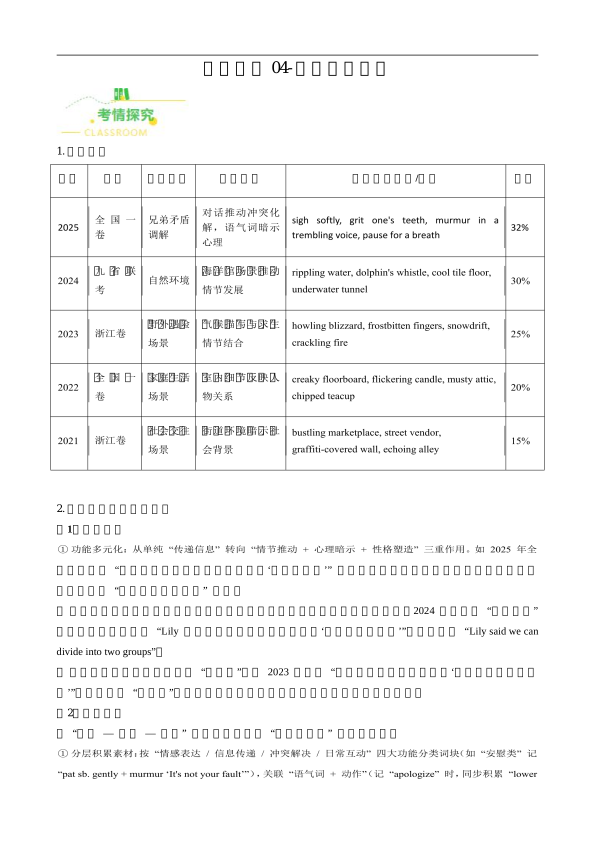
年份
试卷
原文情境
主题升华方向
2024
广东
司机的善意帮助
陌生人的善良
2022
浙江
社区义务服务
互帮互助、助人为乐
2020
全国I卷
帮助贫困家庭
邻里互助、善良
情感类型
基础词块
进阶词块(含动作 / 细节)
善意触动
be mved, feel warm
thrat feel tight when given ht tea(接过热茶时喉咙发紧);hands shake a little when thanked(被感谢时手微抖)
主动善意
want t help, be kind
walk ver t take the heavy bag(走过去接过重袋子);kneel dwn t talk t the lst child(跪下来跟迷路小孩说话)
感激回应
say thank yu, be grateful
hld ne’s hand tightly and say “Thank yu”(紧握双手说 “谢谢”);give a small gift t shw thanks(送小礼物表感谢)
善意传递
pass n kindness, encurage thers
tell the stry t encurage mre help(分享故事鼓励更多人帮忙);fllw the example t help thers(效仿例子帮助他人)
互动类型
基础词块
进阶词块(含动作 / 情境)
主动提供帮助
ffer help, can I help yu
tap the elderly’s arm and say “Let me carry that”(轻碰老人胳膊说 “我来提”);hld the umbrella up and say “Cme with me”(举着伞说 “跟我来”)
回应善意
accept help, thank yu
nd and take the ffered hand(点头接过伸出的手);smile and say “Yu’re s kind”(微笑说 “你真好”)
解释善意动机
I want t help, it’s nthing
say “I’d want help if I were yu”(说 “要是我是你,我也希望有人帮”);wave and say “It’s just a small thing”(挥手说 “只是小事”)
传递善意指引
yu can help by, try t
tell the teenager “Offering a seat is easy but helpful”(告诉少年 “让座简单却有用”);say “Try helping the neighbr take ut the trash”(说 “试试帮邻居倒垃圾”)
冲突类型
基础词块
进阶词块(含过程 / 解决)
善意被拒绝
refuse help, dn’t truble yu
smile and say “It’s n truble—I’m ging that way t”(微笑说 “不麻烦,我也往那边走”);hld the package and say “Let me just set it at yur dr”(拿着快递说 “我就放你门口”)
误解善意
be wary, dubt
shw the tlbx and say “I just want t fix yur bike”(展示工具箱说 “我就是想帮你修自行车”);step back slwly and say “I wn’t hurt yu”(慢慢后退说 “我不会伤害你”)
善意中断犹豫
hesitate, nt sure
take a deep breath and walk ver(深呼吸走过去);lk at thers helping and gain curage(看别人帮忙获得勇气)
帮助遇困难
can’t help, need mre help
shut t passersby “Can we push tgether?”(对路人喊 “咱们一起推好吗”);call a neighbr t help the sick elderly(叫邻居帮忙照顾生病老人)
互动类型
基础词块
进阶词块(含动作 / 温度)
公共场合细节
hld dr, ffer seat
hld the bus dr pen until the elderly get n(扶着公交门等老人上车);put a cushin n the seat fr the elderly(给老人座位垫靠垫)
邻里日常帮扶
take package, water plants
leave a nte with the package “Signed fr yu”(快递上贴纸条 “帮你签收了”);water the plants and pick the dead leaves(浇花并摘掉枯叶)
陌生人应急细节
share umbrella, fix bike
tilt the umbrella twards the stranger(把伞倾向陌生人);wipe the bike seat befre giving it back(还自行车前擦干净座位)
善意传递细节
share stry, fllw example
take a pht f thers helping and pst it(拍别人帮忙的照片发出去);tell the child “Help thers like the uncle did”(跟孩子说 “像叔叔那样帮别人”)
这是一份2026年高考英语考点专题精讲精练(新高考通用)读后续写10善行义举专题(学生版+解析),文件包含化学深圳卷全解全析docx、化学深圳卷考试版docx、化学深圳卷考试版A3docx、化学深圳卷参考答案及评分标准docx、化学深圳卷答题卡docx、化学深圳卷答题卡pdf等6份试卷配套教学资源,其中试卷共31页, 欢迎下载使用。
这是一份2026年高考英语考点专题精讲精练(新高考通用)读后续写01动作描写专题(学生版+解析),文件包含化学深圳卷全解全析docx、化学深圳卷考试版docx、化学深圳卷考试版A3docx、化学深圳卷参考答案及评分标准docx、化学深圳卷答题卡docx、化学深圳卷答题卡pdf等6份试卷配套教学资源,其中试卷共31页, 欢迎下载使用。
这是一份2026年高考英语题型专练(全国通用)题型28读后续写话题之助人为乐类(原卷版+解析),共89页。试卷主要包含了 看见, 抉择, 行动, 升华, 句式用途等内容,欢迎下载使用。
注册成功
资料篮

在线客服
添加在线客服
获取1对1服务
官方微信
关注“教习网”公众号
打开微信就能找资料
赛课定制
添加在线客服
获取1对1定制服务
职称咨询
添加在线客服
获取1V1专业指导服务

免费福利


.png)
.png)
