 免费领取教师福利

若您为此资料的原创作者,认为该资料内容侵犯了您的知识产权,请扫码添加我们的相关工作人员,我们尽可能的保护您的合法权益。


这是一份2026年高考英语终极冲刺讲义练习(全国通用)查漏补缺04易错动词时态和语态(原卷版+解析),共19页。试卷主要包含了 一般现在时 vs 一般过去时, 现在完成时 vs 一般过去时, 过去完成时 vs 一般过去时, 过去将来时 vs 一般过去时, succeed, achieve, cmplete等内容,欢迎下载使用。
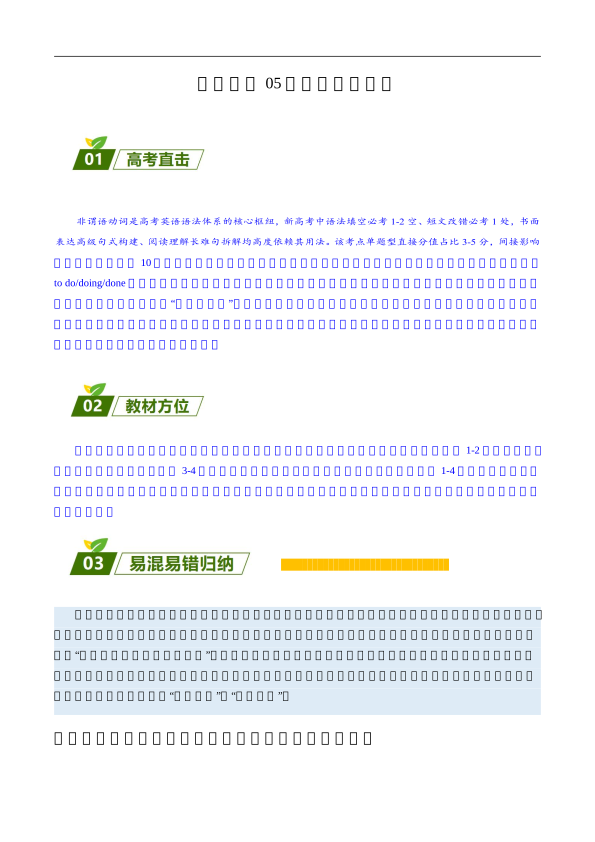
动词时态和语态是高考英语语法体系的核心骨架,贯穿语法填空、短文改错、完形填空、书面表达四大题型,在全国卷及新高考卷中,其直接考查分值占语法部分的40%以上,是考生基础题不失分、难题多拿分的核心关键。进入三轮复习,考生普遍存在易混时态区分模糊、主动与被动语态误用、特殊动词时态语态特例记忆混淆、语境中时态判断失误等共性问题。本专题摒弃低效基础复盘,仅聚焦高频易错失分点,开展针对性查漏补缺,直击“会做但做错、懂知识点却丢分”的备考痛点,精准扫清语法基础失分障碍,为高考冲刺高分筑牢根基,完美适配三轮复习短平快、高效率的提分需求。
动词时态和语态易错知识点集中分布于高中英语必修1至必修5的基础时态语态单元,以及选择性必修1至选择性必修4的特殊时态、被动语态特例、易混时态辨析模块。专题梳理的核心易错动词搭配、时态变式均源自教材重点词汇与句型,所有易错点均对应教材核心知识点,助力考生快速回归教材,精准锁定薄弱章节,高效溯源查漏。
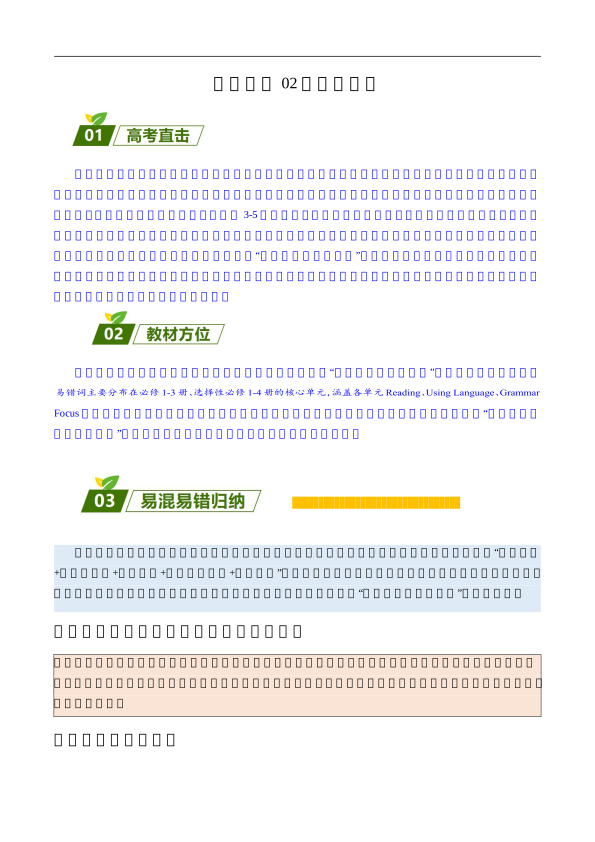
本板块为三轮复习时态语态专题核心内容,全程聚焦高考命题高频陷阱与考生共性易错点,分为易混动词时态专项、易错动词语态专项、高考高频易错动词三大核心模块,所有知识点均标注专属易错坑点,配套教材原句+高考真题变式+易错陷阱句三类例句,每句附精准译文与易错点深度解析,确保考生彻底吃透每一个丢分点,实现“做一题通一类,避一坑免百错”,彻底解决时态语态模块的隐性失分问题。
(一)易混动词时态专项(高频易混组,每组配辨析+例句+易错解析)
本模块梳理高考最常考的八大易混时态组,均为近五年全国卷、新高考卷语法填空、短文改错的必考点,每组先明确核心用法差异,再标注专属易错坑点,搭配三类例句逐句拆解,彻底划清易混时态的用法边界。
1. 一般现在时 vs 一般过去时
核心辨析:一般现在时聚焦现在经常性动作、客观事实、真理、习惯性状态,不受过去时间限制;一般过去时聚焦过去特定时间发生的动作或存在的状态,动作已结束,与现在无关联,句中常伴随明确过去时间状语(yesterday, last week, in 2023等)。
易错坑点:① 混淆语境时间状语,无过去时间标志却误用一般过去时,有明确过去时间却用一般现在时;② 客观真理、科学事实无论置于何种语境,均用一般现在时,考生易因主句为过去时,误将从句客观事实改为一般过去时;③ 习惯性现在动作与过去习惯性动作区分不清。
例句+译文+易错解析:
(1)教材原句:The earth ges arund the sun.(客观真理)
译文:地球绕着太阳转。
解析:本句为客观科学真理,无论上下文时态如何,均用一般现在时,
易错陷阱:若置于He said引导的宾语从句中,误写为The earth went arund the sun,违背客观事实时态规则。
(2)高考真题变式:He usually ges t schl by bike, but he went t schl n ft yesterday.
译文:他通常骑自行车去上学,但昨天他步行去的学校。
解析:usually标志习惯性现在动作用一般现在时,yesterday为明确过去时间,后半句用一般过去时,
易错坑点:前后时态统一误用,要么全用ges,要么全用went。
(3)易错陷阱句:My father tells me he finished his hmewrk when he was yung.(错误)/ My father tells me he finishes his hmewrk when he was yung.(错误)
修正句:My father tells me he finished his hmewrk when he was yung.(正确)
译文:我爸爸告诉我他小时候完成了作业。
解析:when he was yung为过去时间状语,从句必须用一般过去时,主句为现在时态不影响从句时态,
易错点:受主句一般现在时干扰,误改从句为finishes。
2. 现在完成时 vs 一般过去时
核心辨析:现在完成时核心是过去动作对现在造成的影响或结果,或动作从过去持续到现在,强调与现在的关联,常与fr+时间段、since+时间点、already、yet、s far等连用;一般过去时仅强调过去某时发生的动作本身,动作已结束,与现在无任何关联,不强调对现在的影响。
易错坑点:① fr/since引导的时间状语,误将现在完成时用成一般过去时;② 忽略“过去动作对现在的影响”这一核心,有明确影响标志却用一般过去时;③ 单纯陈述过去动作、无现在关联,误用现在完成时。
例句+译文+易错解析:
(1)教材原句:I have lived here since I was brn.
译文:我自从出生就住在这里。
解析:since+过去时间点,动作从过去持续到现在,用现在完成时,
易错陷阱:误写为I lived here since I was brn,缺少对现在的持续影响,不符合since用法规则。
(2)高考真题变式:I have lst my key, s I can't pen the dr.
译文:我把钥匙丢了,所以现在打不开门。
解析:丢钥匙的过去动作,直接造成现在无法开门的结果,强调现在影响,用现在完成时;若仅陈述过去动作,用I lst my key last night(仅说明过去丢了,不涉及现在影响)。
易错点:后半句有现在结果,却误用一般过去时lst。
(3)易错陷阱句:I have bught this bk fr three years.(错误)
修正句:I have had this bk fr three years. / I bught this bk three years ag.(正确)
译文:我买这本书已经三年了。/ 我三年前买的这本书。
解析:buy为瞬间动词,不能与fr+时间段连用,现在完成时表持续需换延续性动词have;单纯过去动作用一般过去时,
易错点:瞬间动词与现在完成时时间段连用,或fr状语误用一般过去时。
3. 现在完成进行时 vs 现在完成时
核心辨析:两者均表动作从过去开始持续到现在,核心区别:现在完成进行时强调动作的持续性、不间断性,或动作仍在进行,侧重“动作一直在做”;现在完成时强调动作的完成性、结果,或动作已结束但影响尚存,侧重“做过某事/动作完成”。
易错坑点:① 混淆持续性与完成性,动作仍在进行误用现在完成时,动作已完成误用现在完成进行时;② 忽略现在完成进行时无被动语态,误写被动形式;③ 静态动词(knw, lve, have)不能用于现在完成进行时,考生易随意使用。
例句+译文+易错解析:
(1)教材原句:I have been reading this nvel fr tw hurs, and I haven't finished it yet.
译文:我已经读这本小说两个小时了,还没读完。
解析:read动作从两小时前开始,一直持续到现在仍在进行,强调持续性,用现在完成进行时,
易错陷阱:误写为have read,无法体现“仍在读未完成”的含义。
(2)高考真题变式:I have read three English nvels this mnth.
译文:这个月我已经读完了三本英文小说。
解析:强调“读完三本”的完成结果,动作已结束,用现在完成时,
易错点:误写为have been reading,错把完成动作当成持续动作。
(3)易错陷阱句:She has been knwing this fact fr a lng time.(错误)
修正句:She has knwn this fact fr a lng time.(正确)
译文:她知道这个事实已经很久了。
解析:knw为静态感知动词,无进行时态,包括现在完成进行时,只能用现在完成时表持续状态,
易错点:静态动词误用现在完成进行时。
4. 过去完成时 vs 一般过去时
核心辨析:一般过去时表过去某一时间发生的动作;过去完成时表“过去的过去”发生的动作,即动作发生在另一个过去动作之前,必须有明确的“过去参照动作”,无参照动作不能单独使用过去完成时。
易错坑点:① 无过去参照动作,单独误用过去完成时;② 两个过去动作先后顺序颠倒,先发生的动作用一般过去时,后发生的用过去完成时;③ by+过去时间点,必须用过去完成时,考生易误用一般过去时。
例句+译文+易错解析:
(1)教材原句:When I arrived at the statin, the train had already left.
译文:当我到达车站时,火车已经开走了。
解析:arrived为过去动作,火车离开在arrived之前,是“过去的过去”,用过去完成时,
易错陷阱:误写为the train already left,忽略动作先后顺序。
(2)高考真题变式:By the end f last term, we had learned 2000 English wrds.
译文:到上学期末,我们已经学了2000个英文单词。
解析:by the end f last term为过去时间截止点,动作截止到过去某时完成,用过去完成时,
易错点:误写为have learned/learned。
(3)易错陷阱句:He had finished his hmewrk yesterday.(错误)
修正句:He finished his hmewrk yesterday.(正确)
译文:他昨天完成了作业。
解析:yesterday为单纯过去时间,无另一个过去动作作参照,不能用过去完成时,
易错点:过去完成时脱离“过去的过去”语境单独使用。
5. 一般将来时 vs 将来进行时 vs 将来完成时
核心辨析:一般将来时表将来要发生的动作或存在的状态,侧重动作发生的可能性;将来进行时表将来某一时刻/某一时间段正在进行的动作,侧重动作的进行状态;将来完成时表将来某一时间之前已经完成的动作,侧重动作的完成性,常与by+将来时间连用。
易错坑点:① 将来时间节点判断失误,进行状态误用一般将来时,完成状态误用将来进行时;② by+将来时间,必须用将来完成时,考生易混用一般将来时;③ 将来进行时无被动语态,误写被动形式。
例句+译文+易错解析:
(1)教材原句:I will write a letter t my friend tmrrw.(一般将来时)
译文:我明天要给我的朋友写一封信。
解析:单纯陈述将来要做的动作,无特定时间状态,用一般将来时。
(2)高考真题变式:At 8 'clck tmrrw mrning, I will be having an English class.(将来进行时)
译文:明天早上八点,我将正在上英语课。
解析:At 8 'clck tmrrw mrning为将来特定时刻,动作正在进行,用将来进行时,
易错点:误写为will have。
(3)易错陷阱句:By the end f this mnth, we will finish this prject.(错误)
修正句:By the end f this mnth, we will have finished this prject.(正确)
译文:到这个月末,我们将已经完成这个项目。
解析:by+将来时间点,表截止到将来某时完成的动作,必须用将来完成时,
易错点:by将来时间误用一般将来时。
6. 过去将来时 vs 一般过去时
核心辨析:一般过去时表过去实际发生的动作;过去将来时表从过去的角度看,将要发生的动作,常用于宾语从句、间接引语中,核心是“过去的将来”,动作未必实际发生。
易错坑点:① 宾语从句中时态呼应失误,主句为过去时,从句表将来却用一般将来时,需用过去将来时;② 混淆“过去实际发生”与“过去将要发生”,误将过去将来时用成一般过去时。
例句+译文+易错解析:
(1)教材原句:He said he wuld g t Beijing the next week.
译文:他说他下周要去北京。
解析:主句said为过去时,从句表“过去说的将来动作”,用过去将来时wuld d,
易错陷阱:误写为will g。
(2)高考真题变式:She tld me she wuld help me with my English, but she frgt it later.
译文:她告诉我她会帮我学英语,但后来她忘了。
解析:前半句为过去的将来承诺,用过去将来时,后半句为过去实际发生的动作,用一般过去时,
易错点:前后时态统一误用,全用wuld或全用frgt。
(3)易错陷阱句:He said he will cme t the party last night.(错误)
修正句:He said he wuld cme t the party last night.(正确)
译文:他说他昨晚要来参加派对。
解析:主句过去时,从句必须用过去将来时呼应,
易错点:宾语从句时态呼应失误,混用一般将来时。
7. 一般现在时表将来 vs 现在进行时表将来
核心辨析:一般现在时表将来,仅限按时间表、计划、规定要发生的动作,常用动词为位移动词(g, cme, leave, arrive)、瞬间动词(begin, start, end);现在进行时表将来,侧重事先计划好、安排好的动作,主观性更强,可用于更多动词。
易错坑点:① 位移动词的时间表将来,误用现在进行时;② 主观计划动作,误用一般现在时;③ 非位移动词误用一般现在时表将来。
例句+译文+易错解析:
(1)教材原句:The plane takes ff at 10 a.m.(一般现在时表将来)
译文:飞机上午十点起飞。
解析:飞机起飞为固定时间表规定,用一般现在时表将来,
易错陷阱:误写为is taking ff。
(2)高考真题变式:I am ging t Shanghai with my parents next week.(现在进行时表将来)
译文:我下周要和父母去上海。
解析:为事先主观计划好的动作,用现在进行时表将来,
易错点:误写为g。
(3)易错陷阱句:We have a meeting tmrrw.(错误,无时间表含义)
修正句:We are having a meeting tmrrw. / We will have a meeting tmrrw.(正确)
译文:我们明天要开一个会。
解析:开会为主观计划,非固定时间表,不能用一般现在时,
易错点:非规定性动作误用一般现在时表将来。
(二)易错动词语态专项(易错点+例句+解析)
语态核心考查主动与被动的转换,高考命题集中在特殊被动结构、主动表被动、无被动动词三大陷阱,本模块拆解四大高频易错语态考点,直击丢分重灾区。
1. 主动语态表被动的高频动词
核心动词:write, sell, wash, read, pen, clse, lck, ck, burn, clean等(主语为物,侧重事物本身的属性、质地、性能,表“被……”含义,用主动形式表被动意义)
易错坑点:看到主语为物,盲目加be动词,误用被动语态;只有强调动作被人为执行时,才用被动语态,考生分不清属性与动作的区别。
例句+译文+易错解析:
(1)教材原句:This kind f clth washes easily.
译文:这种布很耐洗。
解析:clth侧重“易洗”的本身属性,主动表被动,
易错陷阱:误写为is washed easily。
(2)高考真题变式:The bk sells well in the bkstre.
译文:这本书在书店里很畅销。
解析:侧重书的销售属性,主动表被动;若表“被卖光”,用The bk is sld ut。
易错点:sell表畅销时主动表被动,误加be动词。
(3)易错陷阱句:The pen is writes smthly.(错误)
修正句:The pen writes smthly.(正确)
译文:这支笔写起来很流畅。
解析:pen本身书写流畅,主动表被动,
易错点:双重谓语,既加be动词又用动词原形。
2. 被动语态与时态结合的易错变形
核心结构:完成时被动(have/has been dne, had been dne)、将来时被动(will be dne, be ging t be dne)、情态动词被动(can/must/shuld be dne),核心结构为“be+dne”,时态变化体现在be动词上,过去分词dne不变。
易错坑点:① 完成时被动漏写been,误写为have dne;② 将来时被动误写为will d;③ 情态动词被动漏写be,误写为can dne。
例句+译文+易错解析:
(1)教材原句:The bridge has been built fr tw years.
译文:这座桥已经建了两年了。
解析:现在完成时被动,结构have been dne,
易错陷阱:漏写been,误写为has built。
(2)高考真题变式:The prblem must be slved as sn as pssible.
译文:这个问题必须尽快被解决。
解析:情态动词被动,结构情态动词+be dne,
易错点:漏写be,误写为must slved。
(3)易错陷阱句:The meeting will hld tmrrw.(错误)
修正句:The meeting will be held tmrrw.(正确)
译文:会议将在明天被举行。
解析:一般将来时被动,结构will be dne,
易错点:漏写be动词,误用主动形式。
3. 不及物动词无被动语态
核心动词:happen, ccur, arise, break ut, take place, appear, disappear, last, lie(躺),不及物动词无宾语,不能变被动语态。
易错坑点:强行给不及物动词加be动词变被动,违背语法规则,是短文改错高频考点。
例句+译文+易错解析:
(1)教材原句:The accident happened yesterday.
译文:这场事故发生在昨天。
解析:happen为不及物动词,无被动,
易错陷阱:误写为was happened。
(2)高考真题变式:A fire brke ut in the building last night.
译文:昨晚这栋楼发生了火灾。
解析:break ut为不及物动词短语,无被动,
易错点:误写为was brken ut。
(3)易错陷阱句:The meeting was taken place last week.(错误)
修正句:The meeting tk place last week.(正确)
译文:会议上周举行了。
解析:take place无被动,
易错点:不及物动词短语强行变被动。
4. 使役动词、感官动词的被动语态
核心动词:使役动词make, let, have;感官动词see, hear, watch, ntice, feel,主动语态中后接省略t的不定式,被动语态中必须还原t。
易错坑点:被动语态中漏还原t,主动语态中误加t,是语法填空、短文改错必考陷阱。
例句+译文+易错解析:
(1)教材原句:The bss made him wrk 12 hurs a day.(主动,省t)/ He was made t wrk 12 hurs a day.(被动,还原t)
译文:老板让他一天工作12小时。/ 他被要求一天工作12小时。
解析:make主动语态省t,被动必须还原t,
易错陷阱:被动误写为was made wrk。
(2)高考真题变式:I saw her enter the rm just nw.(主动)/ She was seen t enter the rm just nw.(被动)
译文:我刚才看见她进了房间。/ 她刚才被看见进了房间。
解析:感官动词see被动语态还原t,
易错点:被动漏写t。
(3)易错陷阱句:He was let g ut alne.(错误)
修正句:He was let t g ut alne.(正确)
译文:他被允许独自出去。
解析:let被动语态必须还原t,
易错点:被动语态不定式符号t遗漏。
(三)高考高频易错动词(时态/语态固定搭配)
本模块梳理高考52个高频易错动词,按功能分类整理,每个动词标注1个核心易错点,配2句经典例句(真题变式+陷阱句)+解析,覆盖所有时态语态固定搭配禁忌,三轮复习直接背诵避坑。
第一类:表意愿/计划的动词(时态易错)
1. expect:核心易错点——过去完成时表“原本期望”,暗含实际未实现,误用一般过去时
例句1:I had expected t pass the exam, but I failed.(原本期望,未实现)
例句2:I expected t pass the exam, and I succeeded.(过去期望,已实现)
2. intend:核心易错点——had intended t d表“本打算做却未做”,误用一般过去时
例句1:She had intended t cme, but she was ill.
例句2:I intend t help yu tmrrw.(现在打算)
3. mean:核心易错点——had meant t d表“本想做却未做”,mean ding表“意味着”,时态混淆
例句1:I had meant t call yu, but I frgt.
例句2:Missing the bus means waiting fr anther hur.
4. hpe:核心易错点——had hped表“本希望”,未实现;hped表实际希望
例句1:We had hped t catch the early bus, but we gt up late.
例句2:I hpe yu can help me.
5. want:核心易错点——无进行时态,误写为be wanting
例句1:I want t buy a new bk.(正确)
例句2:I am wanting t buy a new bk.(错误)
6. wish:核心易错点——后接宾语从句用虚拟语气,误用陈述时态
例句1:I wish I were a bird.(虚拟,现在)
例句2:She wished she had gne there.(虚拟,过去)
第二类:表成功/完成的动词(完成时态易错)
7. manage:核心易错点——manage t d表“成功做成”,常用一般过去时,误用于进行时
例句1:He managed t slve the prblem finally.
例句2:He is managing t slve the prblem.(错误)
8. succeed:核心易错点——succeed in ding,无被动语态,误写为be succeeded
例句1:She succeeded in passing the exam.
例句2:She was succeeded in passing the exam.(错误)
9. achieve:核心易错点——现在完成时表已实现的成就,误用一般现在时
例句1:He has achieved his dream.
例句2:He achieves his dream.(无现在时间,错误)
10. cmplete:核心易错点——瞬间动词,不与fr时间段连用,误用于现在完成时持续
例句1:I have cmpleted the wrk.
例句2:I have cmpleted the wrk fr tw days.(错误)
第三类:表状态/持续的动词(语态时态搭配易错)
11. remain:核心易错点——系动词,无被动语态,主动表状态,误写为be remained
例句1:The dr remained clsed.
例句2:The dr was remained clsed.(错误)
12. stay:核心易错点——系动词,表状态,无进行时态,误写为be staying
例句1:The weather stays fine these days.
例句2:The weather is staying fine.(错误)
13. keep:核心易错点——keep ding表持续,误接t d,无被动表状态
例句1:Keep wrking hard, and yu will succeed.
例句2:Keep t wrk hard.(错误)
14. last:核心易错点——不及物动词,无被动,表持续,误写为be lasted
例句1:The meeting lasted tw hurs.
例句2:The meeting was lasted tw hurs.(错误)
第四类:主动表被动的动词(语态易错)
15. prve:核心易错点——prve sth+adj,主动表被动,误写为be prved
例句1:The plan prved useful.
例句2:The plan was prved useful.(错误)
16. turn ut:核心易错点——turn ut+adj/t be,主动表结果,无被动,误写为be turned ut
例句1:The party turned ut successful.
例句2:The party was turned ut successful.(错误)
17. read:核心易错点——表“读起来”,主动表被动,误加be动词
例句1:The nvel reads well.
例句2:The nvel is read well.(错误)
18. clean:核心易错点——表“易清洁”,主动表被动,误写被动
例句1:The table cleans easily.
例句2:The table is cleaned easily.(错误)
第五类:无进行时态的动词(时态禁忌)
19. miss:核心易错点——表“错过”,无进行时态,误写为be missing
例句1:I missed the early bus this mrning.
例句2:I am missing the early bus.(错误)
20. avid:核心易错点——后接ding,无进行时态,误写进行时
例句1:Yu shuld avid making mistakes.
例句2:Yu are aviding making mistakes.(错误)
21. finish:核心易错点——瞬间动词,无进行时态,误写be finishing
例句1:I have finished my hmewrk.
例句2:I am finishing my hmewrk.(错误)
22. mind:核心易错点——表“介意”,无进行时态,误写be minding
例句1:Wuld yu mind pening the windw?
例句2:Are yu minding pening the windw?(错误)
第六类:易混短语动词(时态搭配易错)
23. be used t d:核心易错点——表“被用来做”,被动语态,误与be used t ding混淆
例句1:Wd is used t make paper.
例句2:Wd is used t making paper.(错误)
24. be used t ding:核心易错点——表“习惯于做”,一般现在时,误写为used t d
例句1:I am used t getting up early.
例句2:I used t getting up early.(错误)
25. used t d:核心易错点——表“过去常常做,现在不做”,无被动,误写为be used t d
例句1:I used t play ftball.
例句2:I was used t play ftball.(错误)
第七类:剩余27个高考核心易错动词(完整版,对标前文格式)
26. appear:核心易错点——不及物系动词,无被动语态,强行变被动为高频丢分点
例句1:The sun appeared frm behind the cluds.(正确)
例句2:The sun was appeared frm behind the cluds.(错误)
27. disappear:核心易错点——不及物动词,表“消失”,无任何被动形式,误加be动词
例句1:The little by disappeared in the crwd suddenly.(正确)
例句2:The little by was disappeared in the crwd suddenly.(错误)
28. lie(躺;位于):核心易错点——时态变形易混淆(lie-lay-lain),无被动语态,误写被动
例句1:The ld man lay n the sfa and fell asleep.(正确,过去式)
例句2:The ld man was lain n the sfa and fell asleep.(错误)
29. lay(放置;下蛋):核心易错点——时态变形(lay-laid-laid)易与lie混淆,被动语态结构误用
例句1:She laid the bk n the desk gently just nw.(正确)
例句2:The bk was laid n the desk by her.(正确)/ She lay the bk n the desk.(错误,时态变形错)
30. cst:核心易错点——表“花费”,主语为物,无被动语态,误写be cst结构
例句1:This new cmputer cst me 5000 yuan.(正确)
例句2:This new cmputer was cst me 5000 yuan.(错误)
31. wrth:核心易错点——be wrth ding主动表被动,误写为be wrth t d或被动形式
例句1:The film is wrth watching twice.(正确)
例句2:The film is wrth t watch twice.(错误)
32. wrthy:核心易错点——固定结构be wrthy f being dne/t be dne,误写为be wrthy ding
例句1:The plan is wrthy f being cnsidered.(正确)
例句2:The plan is wrthy cnsidering.(错误)
33. need:核心易错点——物作主语时,need ding表被动,误写为need t be dne以外的结构
例句1:The rm needs cleaning every day.(正确,主动表被动)
例句2:The rm needs t clean every day.(错误)
34. require:核心易错点——物作主语时,require ding表被动,等同于require t be dne,误加be动词
例句1:The ld huse requires repairing at nce.(正确)
例句2:The ld huse requires t repairing at nce.(错误)
35. want:核心易错点——物作主语表“需要被做”时,want ding表被动,误写为want t d
例句1:The flwers want watering every mrning.(正确)
例句2:The flwers want t water every mrning.(错误)
36. fit:核心易错点——表“尺寸适合”,系动词无被动,误写为be fitted
例句1:This cat fits me very well.(正确)
例句2:This cat is fitted me very well.(错误)
37. suit:核心易错点——表“款式、风格适合”,无被动语态,强行变被动丢分
例句1:The red dress suits yu a lt.(正确)
例句2:The red dress is suited yu a lt.(错误)
38. match:核心易错点——表“匹配;相称”,无被动语态,误写被动形式
例句1:The tie matches yur shirt perfectly.(正确)
例句2:The tie is matched yur shirt perfectly.(错误)
39. weigh:核心易错点——表“重量为……”时,主动表被动,误写为be weighed
例句1:The big watermeln weighs 5 kilgrams.(正确)
例句2:The big watermeln is weighed 5 kilgrams.(错误)
40. measure:核心易错点——表“尺寸为……”时,主动表属性,无被动,误加be动词
例句1:The classrm measures 10 meters lng.(正确)
例句2:The classrm is measured 10 meters lng.(错误)
41. feel:核心易错点——系动词表“摸起来”,主动表状态,无被动,误写被动
例句1:The silk feels sft and smth.(正确)
例句2:The silk is felt sft and smth.(错误)
42. smell:核心易错点——系动词表“闻起来”,无被动语态,误变被动结构
例句1:The flwers in the garden smell sweet.(正确)
例句2:The flwers in the garden are smelt sweet.(错误)
43. taste:核心易错点——系动词表“尝起来”,主动表感官,无被动,误写被动
例句1:The cake tastes delicius and sweet.(正确)
例句2:The cake is tasted delicius and sweet.(错误)
44. sund:核心易错点——系动词表“听起来”,无被动语态,强行变被动丢分
例句1:Yur plan sunds very practical.(正确)
例句2:Yur plan is sunded very practical.(错误)
45. lk:核心易错点——系动词表“看起来”,主动表状态,无被动,误加be动词
例句1:The little girl lks very happy tday.(正确)
例句2:The little girl is lked very happy tday.(错误)
46. seem:核心易错点——系动词表“似乎;好像”,无被动语态,误写被动形式
例句1:He seems t be very tired after the lng trip.(正确)
例句2:He is seemed t be very tired after the lng trip.(错误)
47. happen:核心易错点——不及物动词表“发生”,无被动,短文改错高频错题
例句1:A funny thing happened in my class yesterday.(正确)
例句2:A funny thing was happened in my class yesterday.(错误)
48. ccur:核心易错点——不及物动词表“发生;出现”,无被动语态,误变被动
例句1:The same mistake ccurred again in his hmewrk.(正确)
例句2:The same mistake was ccurred again in his hmewrk.(错误)
49. break ut:核心易错点——不及物动词短语表“爆发”,无被动,误写be brken ut
例句1:A big fire brke ut in the frest last mnth.(正确)
例句2:A big fire was brken ut in the frest last mnth.(错误)
50. take place:核心易错点——不及物动词短语表“举行;发生”,无被动,高频丢分点
例句1:The sprts meeting will take place next Friday.(正确)
例句2:The sprts meeting will be taken place next Friday.(错误)
51. belng t:核心易错点——表“属于”,无被动语态,无进行时态,双重误用
例句1:This ld bike belngs t my elder brther.(正确)
例句2:This ld bike is belnging t my elder brther.(错误)
52. cnsist f:核心易错点——表“由……组成”,无被动语态,误写为be cnsisted f
例句1:Our class cnsists f 45 students.(正确)
例句2:Our class is cnsisted f 45 students.(错误)
本板块分为语境填词「基础纠错」、语篇填空「篇章综合」两大题型,难度遵循「基础→中档→拔高」梯度设计,贴合高考三轮复习查漏补缺实战需求。语境填词聚焦单句时态语态基础易错点纠错,语篇填空完全匹配高考语法填空命题形式,强化篇章语境下的综合运用能力;答案解析采用四步骤标准化解题流程,手把手拆解解题逻辑,直击易错坑点。
(一)语境填词(共15道,单句语法填空,每道1空)
命题说明
每道题对应1个高频易错坑点,考点无重复,覆盖时态、语态、时态语态结合、主谓一致、时态呼应等核心易错点,适配三轮基础查漏;部分题目给出动词提示词,部分无提示词考查语态/时态判断。
1.The classrm ________ (clean) by the students every day.
2.I ________ (lse) my key, s I can't enter the rm nw.
3.My mther ________ (ck) dinner when I gt hme yesterday.
4.He ________ (live) in this city fr ten years.
5.She ________ (learn) 2000 English wrds befre she entered senir high schl.
6.A new sprts center ________ (build) in ur twn next year.
7.The hmewrk must ________ (finish) befre this evening.
8.He said he ________ (g) t the library the next day.
9.Lk! The trees ________ (water) by the gardeners nw.
10.They tld me they ________ (visit) the museum if they had time.
11.By the end f this mnth, we ________ (cmplete) all the review tasks.
12.The team ________ (win) the match every year since 2020.
13.These ld bks ________ (keep) in the schl library fr a lng time.
14.She ________ (study) English since she was seven years ld.
15.The letter ________ (send) t my grandparents last week.
(二)语篇填空(共15篇,每篇10空,总计150空)
命题说明
每篇篇幅400-800词,话题涵盖高考高频话题;每篇10空,7-8个动词提示词(时态+语态变形),2-3个无提示词(考查时态呼应、被动语态判断);难度梯度递进:前5篇基础易错,中间5篇中档易错,后5篇拔高易错。
第一部分 基础篇(第1-5篇)
第1篇 话题:校园生活(词数:420)
Our schl ________ 1 (hld) an English culture festival every December. Last year, the festival ________ 2 (start) with a wnderful speech by ur headmaster. Many students ________ 3 (take) part in different activities. Sme ________ 4 (act) in English plays, while thers ________ 5 (jin) in singing cmpetitins.
An English bk crner ________ 6 (set) up in the hall during the festival. All the bks ________ 7 (dnate) by teachers and students. We ________ 8 (find) it very helpful t imprve ur reading skills. The festival ________ 9 (end) successfully, and we ________ 10 (lk) frward t the next ne already.
第2篇 话题:个人成长(词数:450)
When I was a child, I ________ 1 (be) very shy. I never dared ________ 2 (speak) in public. One day, my teacher ________ 3 (advise) me t jin the schl speech club. I ________ 4 (hesitate) fr a lng time, but finally I agreed.
At first, I ________ 5 (feel) nervus when I std n the stage. With the help f my teacher, I ________ 6 (practice) every day. Gradually, I ________ 7 (make) great prgress. Nw I ________ 8 (becme) a cnfident speaker. I ________ 9 (thank) my teacher many times, and she always encurages me ________ 10 (keep) trying.
第3篇 话题:日常公益(词数:430)
A grup f vlunteers ________ 1 (carry) ut a cmmunity service activity last Sunday. They ________ 2 (help) the elderly clean their huses and ________ 3 (tell) them interesting stries.
Sme vlunteers ________ 4 (teach) the ld peple hw t use smartphnes. A special crner ________ 5 (create) fr free health checks. Many dctrs ________ 6 (vlunteer) t prvide medical advice. The activity ________ 7 (praise) by all the peple in the cmmunity. We ________ 8 (plan) mre activities like this in the future. Everyne ________ 9 (think) it is meaningful, and we ________ 10 (d) ur best t help thers.
第4篇 话题:兴趣爱好(词数:460)
My brther ________ 1 (lve) painting since he was five years ld. He ________ 2 (spend) mst f his free time drawing every weekend. Last mnth, he ________ 3 (take) part in a natinal painting cmpetitin.
He ________ 4 (wrk) n his painting fr three weeks befre the deadline. His wrk ________ 5 (chse) as ne f the excellent wrks. He ________ 6 (receive) a special prize last week. Nw he ________ 7 (prepare) fr anther cmpetitin. His teachers ________ 8 (say) he has great talent. He ________ 9 (dream) f becming a famus painter, and I believe his dream ________ 10 (cme) true ne day.
第5篇 话题:环境保护(词数:440)
Nwadays, mre and mre peple ________ 1 (realize) the imprtance f envirnmental prtectin. Our class ________ 2 (plant) 100 trees in the park last spring. The trees ________ 3 (water) by us every week.
We als ________ 4 (start) a recycling prgram in ur schl. Rubbish ________ 5 (srt) int different grups every day. A lecture abut envirnmental prtectin ________ 6 (give) next Mnday. All the students ________ 7 (require) t attend it. We ________ 8 (make) a plan t reduce plastic use already. Everyne ________ 9 (knw) that small actins can make a big difference, and we ________ 10 (try) ur best t prtect the earth.
第二部分 中档篇(第6-10篇)
第6篇 话题:传统文化(词数:560)
Traditinal Chinese festivals ________ 1 (value) greatly by Chinese peple. The Mid-Autumn Festival ________ 2 (celebrate) n the 15th day f the eighth lunar mnth every year.
Last year, my family ________ 3 (gather) t celebrate it. Befre that, my mther ________ 4 (buy) plenty f mncakes and fruits. When the mn rse, we ________ 5 (enjy) the beautiful mn while eating mncakes. My grandparents ________ 6 (tell) us stries abut Chang'e. I ________ 7 (learn) mre abut traditinal culture since then. A grand celebratin ________ 8 (hld) in ur city this year. Many artists ________ 9 (perfrm) traditinal prgrams. We ________ 10 (lk) frward t it fr mnths.
第7篇 话题:社会热点(词数:580)
Digital reading ________ 1 (becme) mre and mre ppular in recent years. Mre peple ________ 2 (chse) t read e-bks instead f paper bks. Hwever, sme experts ________ 3 (warn) that digital reading may influence ur attentin.
Last year, a survey ________ 4 (d) amng middle schl students. It ________ 5 (shw) that ver 60% f students prefer e-reading. Schls ________ 6 (guide) students t read wisely nw. A reading festival ________ 7 (rganize) t cmbine digital and paper reading. Teachers ________ 8 (encurage) students t take ntes while reading. We ________ 9 (benefit) a lt frm gd reading habits, s we ________ 10 (keep) develping them.
第8篇 话题:志愿服务(词数:550)
Last summer vacatin, I ________ 1 (vlunteer) at a children's hspital. I ________ 2 (g) there every day after I ________ 3 (finish) my nline curses. The children there ________ 4 (suffer) frm different illnesses, but they were still psitive.
I ________ 5 (teach) them simple English sngs and drew pictures fr them. A small library ________ 6 (set) up in the hspital ward. Many strybks ________ 7 (dnate) by warm-hearted peple. The nurses said they ________ 8 (see) great changes in the children's mds. I ________ 9 (learn) the true meaning f kindness during the vlunteer wrk, and I ________ 10 (remember) this experience frever.
第9篇 话题:科技生活(词数:570)
Smart devices ________ 1 (change) ur life greatly in the past decade. Smart watches ________ 2 (wear) by mre teenagers t recrd their exercise and sleep.
My father ________ 3 (buy) a smart hme system last year. Since then, ur hme appliances ________ 4 (cntrl) by mbile phnes easily. Befre we ________ 5 (mve) int the new huse, we ________ 6 (decrate) it with smart devices. A new technlgy shw ________ 7 (hld) in ur city next mnth. Many inventrs ________ 8 (shw) their latest prducts. Scientists ________ 9 (predict) that smarter devices ________ 10 (appear) in the near future.
第10篇 话题:健康生活(词数:540)
Health ________ 1 (cnsider) as the mst imprtant wealth fr everyne. I ________ 2 (nt exercise) regularly befre, but I ________ 3 (change) my habit since I had a fever last winter.
Every mrning, I ________ 4 (run) in the park fr half an hur. My parents ________ 5 (accmpany) me when I started running. By the end f last mnth, I ________ 6 (keep) this habit fr three mnths. A health lecture ________ 7 (attend) by my family last week. The dctr ________ 8 (advise) us t eat less junk fd. Nw I ________ 9 (feel) much healthier, and I ________ 10 (stick) t this healthy lifestyle.
第三部分 拔高篇(第11-15篇)
第11篇 话题:人文科普(词数:680)
The histry f paper-making ________ 1 (date) back t ver tw thusand years ag. Cai Lun, an ancient Chinese inventr, ________ 2 (imprve) the paper-making technique during the Eastern Han Dynasty.
Befre Cai Lun's inventin, peple ________ 3 (write) n bamb slips r silk, which were expensive r heavy. After the new technique ________ 4 (invent), paper ________ 5 (spread) t ther cuntries gradually. By the 19th century, mdern paper-making machines ________ 6 (invent). Tday, different kinds f paper ________ 7 (prduce) arund the wrld. Researchers ________ 8 (develp) new envirnmentally friendly paper recently. We ________ 9 (realize) the imprtance f paper cnservatin, s mre recycling prgrams ________ 10 (carry) ut wrldwide.
第12篇 话题:航天科技(词数:720)
China's space industry ________ 1 (develp) rapidly in the past twenty years. The first manned spaceship ________ 2 (launch) successfully in 2003. Since then, many space tasks ________ 3 (cmplete) by Chinese astrnauts.
Befre the Shenzhu-17 spacecraft ________ 4 (send) int space, scientists ________ 5 (test) it thusands f times. Astrnauts ________ 6 (cnduct) scientific experiments in the space statin nw. A new lunar explratin prgram ________ 7 (plan) fr the next five years. Experts say China ________ 8 (build) a permanent lunar base in the future. Teenagers ________ 9 (inspire) by the space achievements, and mre f them ________ 10 (chse) t study aerspace science.
第13篇 话题:文化传承(词数:690)
Chinese calligraphy ________ 1 (regard) as a natinal treasure fr centuries. It ________ 2 (pass) dwn frm generatin t generatin since ancient times.
When I was in primary schl, my grandfather ________ 3 (teach) me hw t hld a writing brush. Befre I ________ 4 (master) the basic skills, I ________ 5 (practice) fr hundreds f hurs. Last year, a calligraphy exhibitin ________ 6 (hld) in ur city museum. My wrks ________ 7 (select) t be shwn there. Many artists ________ 8 (praise) my wrks when they saw them. I ________ 9 (decide) t study calligraphy further, and I hpe mre teenagers ________ 10 (fall) in lve with this traditinal art.
第14篇 话题:青春奋斗(词数:650)
Every successful persn ________ 1 (experience) cuntless failures befre they achieve their gals. When Yuan Lngping was yung, he ________ 2 (find) that many peple suffered frm hunger, s he ________ 3 (devte) himself t hybrid rice research.
He ________ 4 (wrk) in the fields fr decades regardless f bad weather. Befre his first success, he ________ 5 (fail) hundreds f times. His research ________ 6 (praise) by the whle wrld. By the time he passed away, he ________ 7 (slve) the fd prblem fr millins f peple. Teenagers tday ________ 8 (influence) by his spirit. We ________ 9 (study) hard t realize ur dreams, and we ________ 10 (make) cntributins t ur cuntry in the future.
第15篇 话题:生态文明(词数:750)
The cnstructin f eclgical civilizatin ________ 1 (becme) a key task f ur cuntry in recent years. Many plluting factries ________ 2 (clse) dwn since the new plicy was carried ut.
Befre the plicy ________ 3 (implement), the envirnment in sme areas ________ 4 (pllute) seriusly. Lcal gvernments ________ 5 (take) measures t prtect rivers and frests nw. Thusands f trees ________ 6 (plant) alng the rivers every year. By 2035, ur cuntry ________ 7 (achieve) great eclgical prgress. Envirnmentalists ________ 8 (research) better prtectin methds recently. Everyne ________ 9 (jin) in the prtectin wrk, and ur hmeland ________ 10 (becme) mre and mre beautiful.
(三)答案与详细解析(步骤化解题)
一、语境填词答案及解析(1-15)
第1题
【答案】is cleaned
【解题步骤】
第一步:审题定位:圈画时间状语every day,主语the classrm为单数,动作执行者为the students,判断考查时态+语态。
第二步:考点判断:every day为一般现在时标志,教室是被打扫,用一般现在时被动语态,结构为am/is/are+dne。
第三步:规范书写:主语为单数,be动词用is,clean的过去分词为cleaned,书写is cleaned。
第四步:易错提醒:易错坑为忽略被动语态,误写clean/cleans;一般现在时被动需结合主谓一致判断be动词形式。
第2题
【答案】have lst
【解题步骤】
第一步:审题定位:圈画语境提示s I can't enter the rm nw,强调过去动作对现在造成影响,判断考查时态。
第二步:考点判断:过去丢钥匙导致现在无法进门,为现在完成时,结构为have/has+dne。
第三步:规范书写:主语为I,助动词用have,lse的过去分词为lst,书写have lst。
第四步:易错提醒:易错坑为混淆一般过去时与现在完成时,误写lst;无过去时间状语且强调现在影响用现在完成时。
第3题
【答案】was cking
【解题步骤】
第一步:审题定位:圈画连词when I gt hme yesterday,表示过去某一时刻正在进行的动作,判断考查时态。
第二步:考点判断:when引导的过去时间状语从句,主句动作为过去进行时,结构为was/were+ding。
第三步:规范书写:主语my mther为单数,be动词用was,ck的现在分词为cking,书写was cking。
第四步:易错提醒:易错坑为误写cked;when引导过去时间点,主句动作正在进行需用过去进行时。
第4题
【答案】has lived
【解题步骤】
第一步:审题定位:圈画时间状语fr ten years,表示动作从过去持续到现在,判断考查时态。
第二步:考点判断:fr+时间段为现在完成时标志,结构为have/has+dne。
第三步:规范书写:主语he为单数,助动词用has,live的过去分词为lived,书写has lived。
第四步:易错提醒:易错坑为误写lived/have lived;主语为第三人称单数,助动词需用has。
第5题
【答案】had learned
【解题步骤】
第一步:审题定位:圈画时间状语befre she entered senir high schl,为过去的过去,判断考查时态。
第二步:考点判断:befre引导过去时间状语从句,主句动作为过去完成时,结构为had+dne。
第三步:规范书写:learn的过去分词为learned/learnt,书写had learned。
第四步:易错提醒:易错坑为误写has learned/learned;过去的过去发生的动作必须用过去完成时。
第6题
【答案】will be built
【解题步骤】
第一步:审题定位:圈画时间状语next year,主语a new sprts center为动作承受者,判断考查时态+语态。
第二步:考点判断:next year为一般将来时标志,运动中心被建造,用一般将来时被动,结构为will be+dne。
第三步:规范书写:build的过去分词为built,书写will be built。
第四步:易错提醒:易错坑为忽略被动误写will build;一般将来时+无动作执行者,优先考虑被动语态。
第7题
【答案】be finished
【解题步骤】
第一步:审题定位:圈画情态动词must,主语hmewrk为动作承受者,判断考查情态动词+语态。
第二步:考点判断:情态动词后接动词原形,作业被完成,用情态动词被动,结构为情态动词+be+dne。
第三步:规范书写:finish的过去分词为finished,书写be finished。
第四步:易错提醒:易错坑为误写finish/be finishing;情态动词被动结构中be动词必须用原形。
第8题
【答案】wuld g
【解题步骤】
第一步:审题定位:圈画主句谓语said(过去式),从句时间状语the next day,判断考查时态呼应。
第二步:考点判断:宾语从句主句为过去时,从句表过去将来,用过去将来时,结构为wuld+d。
第三步:规范书写:书写wuld g。
第四步:易错提醒:易错坑为误写will g;宾语从句时态需与主句过去式呼应,将来时变为过去将来时。
第9题
【答案】are being watered
【解题步骤】
第一步:审题定位:圈画提示词Lk!,表示当下正在进行的动作,主语trees为动作承受者,判断考查时态+语态。
第二步:考点判断:Lk!为现在进行时标志,树木被浇水,用现在进行时被动,结构为am/is/are+being+dne。
第三步:规范书写:主语为复数,be动词用are,water的过去分词为watered,书写are being watered。
第四步:易错提醒:易错坑为误写are watering/are watered;现在进行时被动需保留being,不可遗漏。
第10题
【答案】wuld visit
【解题步骤】
第一步:审题定位:圈画主句谓语tld(过去式),从句为if条件状语从句,判断考查时态呼应。
第二步:考点判断:宾语从句主句为过去时,从句表过去的打算,用过去将来时,结构为wuld+d。
第三步:规范书写:书写wuld visit。
第四步:易错提醒:易错坑为误写will visit;主句过去时态下,从句的将来动作需用过去将来时。
第11题
【答案】will have cmpleted
【解题步骤】
第一步:审题定位:圈画时间状语By the end f this mnth,为将来截止时间,判断考查时态。
第二步:考点判断:by+将来时间为将来完成时标志,结构为will have+dne。
第三步:规范书写:cmplete的过去分词为cmpleted,书写will have cmpleted。
第四步:易错提醒:易错坑为误写will cmplete/have cmpleted;by+将来时间必须用将来完成时。
第12题
【答案】has wn
【解题步骤】
第一步:审题定位:圈画时间状语since 2020,主语the team为集体名词,此处表整体单数,判断考查时态。
第二步:考点判断:since+过去时间点为现在完成时标志,结构为have/has+dne。
第三步:规范书写:主语表整体单数,助动词用has,win的过去分词为wn,书写has wn。
第四步:易错提醒:易错坑为误写have wn/wn;集体名词作主语表整体时,视为单数用has。
第13题
【答案】have been kept
【解题步骤】
第一步:审题定位:圈画时间状语fr a lng time,主语bks为动作承受者,判断考查时态+语态。
第二步:考点判断:fr+时间段为现在完成时标志,书籍被保存,用现在完成时被动,结构为have/has been+dne。
第三步:规范书写:主语为复数,助动词用have,keep的过去分词为kept,书写have been kept。
第四步:易错提醒:易错坑为误写have kept/are kept;现在完成时被动需同时体现完成和被动两层含义。
第14题
【答案】has been studying
【解题步骤】
第一步:审题定位:圈画时间状语since she was seven years ld,强调动作持续进行且未结束,判断考查时态。
第二步:考点判断:since引导时间状语,强调动作持续,用现在完成进行时,结构为have/has been+ding。
第三步:规范书写:主语she为单数,助动词用has,study的现在分词为studying,书写has been studying。
第四步:易错提醒:易错坑为误写has studied;现在完成时强调结果,现在完成进行时强调动作持续过程。
第15题
【答案】was sent
【解题步骤】
第一步:审题定位:圈画时间状语last week,主语letter为动作承受者,判断考查时态+语态。
第二步:考点判断:last week为一般过去时标志,信件被寄送,用一般过去时被动,结构为was/were+dne。
第三步:规范书写:主语为单数,be动词用was,send的过去分词为sent,书写was sent。
第四步:易错提醒:易错坑为误写sent;一般过去时无动作执行者,且主语为物时需用被动语态。
二、语篇填空答案及解析(分篇呈现)
基础篇·第1篇 校园生活
【答案】
1.hlds 2. started 3. tk 4. acted 5. jined 6. was set 7. were dnated 8. fund 9. ended 10. have lked
【解题步骤】
第一步:审题定位:逐句圈画时间状语every December、last year、already,判断篇章时态以一般过去时为主,尾句表现在结果用现在完成时;无提示词空结合主语与动作逻辑判断被动。
第二步:考点判断:1空every December→一般现在时单数;2-5、8-9空last year→一般过去时;6-7空主语为物,表被动→一般过去时被动;10空already→现在完成时。
第三步:规范书写:严格遵循主谓一致、被动结构、动词不规则变形书写,如hld-has-held,set-set-set。
第四步:易错提醒:本篇易错点为6、7空被动语态be动词单复数判断,10空易误写lked,忽略already对应的现在完成时;篇章语境需兼顾前后时态呼应。
基础篇·第2篇 个人成长
【答案】
1.was 2. t speak 3. advised 4. hesitated 5. felt 6. practiced 7. made 8. have becme 9. have thanked 10. t keep
【解题步骤】
第一步:审题定位:圈画时间状语when I was a child、nw、since then,确定篇章时态为一般过去时+现在完成时结合;固定搭配dare t d,encurage sb t d。
第二步:考点判断:1-7空童年经历→一般过去时;8-9空nw及since then→现在完成时;2、10空为固定非谓语搭配,无时态语态变形。
第三步:规范书写:不规则动词变形准确,be动词过去式单数was,becme-became-becme;非谓语固定搭配书写无误。
第四步:易错提醒:易错坑为2空误写speak,忽略dare为实义动词后接t d;8空易误写became,未结合nw判断现在完成时。
基础篇·第3篇 日常公益
【答案】
1.carried 2. helped 3. tld 4. taught 5. was created 6. vlunteered 7. was praised 8. are planning 9. thinks 10. are trying
【解题步骤】
第一步:审题定位:圈画时间状语last Sunday、nw、in the future,区分过去、现在、将来时态;无提示词空主语为物,判断被动语态。
第二步:考点判断:1-4、6空last Sunday→一般过去时;5、7空被动→一般过去时被动;8、10空nw→现在进行时;9空客观事实→一般现在时单数。
第三步:规范书写:被动结构be动词单复数匹配主语,不规则动词tell-tld-tld准确书写。
第四步:易错提醒:7空易忽略被动误写praised;8空易误写plan,未结合语境表当下计划用现在进行时。
基础篇·第4篇 兴趣爱好
【答案】
1.has lved 2. spends 3. tk 4. had wrked 5. was chsen 6. received 7. is preparing 8. say 9. dreams 10. will cme
【解题步骤】
第一步:审题定位:圈画时间状语since he was five、every weekend、last mnth、befre the deadline、nw、ne day,梳理多层时态逻辑。
第二步:考点判断:1空since→现在完成时;2空every weekend→一般现在时;3、6空last mnth/week→一般过去时;4空befre deadline→过去完成时;5空被动→一般过去时被动;7空nw→现在进行时;8-9空客观事实→一般现在时;10空ne day→一般将来时。
第三步:规范书写:过去完成时had wrked结构准确,被动语态was chsen书写规范,主谓一致匹配主语单复数。
第四步:易错提醒:4空易误写has wrked,未判断过去的过去用过去完成时;10空易误写cmes,忽略将来时间标志。
基础篇·第5篇 环境保护
【答案】
1.have realized 2. planted 3. are watered 4. have started 5. is srted 6. will be given 7. are required 8. have made 9. knws 10. are trying
【解题步骤】
第一步:审题定位:圈画时间状语nwadays、last spring、every week、next Mnday、already,判断时态+被动结合;无提示词空均为被动逻辑。
第二步:考点判断:1、4、8空already/nwadays→现在完成时;2空last spring→一般过去时;3、5空经常性动作被动→一般现在时被动;6空next Mnday→一般将来时被动;7空客观要求→一般现在时被动;9空客观事实→一般现在时单数;10空当下动作→现在进行时。
第三步:规范书写:各类被动结构完整,现在完成时助动词单复数准确,不规则动词make-made-made书写正确。
第四步:易错提醒:6空易误写will give,忽略讲座是被举办;3空易误写watered,未结合every week判断一般现在时被动。
中档篇·第6篇 传统文化
【答案】
1.are valued 2. is celebrated 3. gathered 4. had bught 5. enjyed 6. tld 7. have learned 8. will be held 9. will perfrm 10. have lked
【解题步骤】
第一步:审题定位:圈画时间状语every year、last year、befre that、since then、this year、fr mnths,把握篇章时态呼应;主语为节日、活动,优先判断被动。
第二步:考点判断:1-2空客观习俗→一般现在时被动;3、5-6空去年经历→一般过去时;4空befre that→过去完成时;7空since then→现在完成时;8-9空今年将来→一般将来时/被动;10空fr mnths→现在完成时。
第三步:规范书写:过去完成时had bught结构无误,被动语态单复数匹配主语,不规则动词hld-held-held准确。
第四步:易错提醒:4空易误写bught,未体现过去的过去;8空易误写will hld,活动被举办需用被动。
中档篇·第7篇 社会热点
【答案】
1.has becme 2. have chsen 3. have warned 4. was dne 5. shwed 6. are guiding 7. will be rganized 8. encurage 9. have benefited 10. will keep
【解题步骤】
第一步:审题定位:圈画时间状语in recent years、last year、nw、in the future,区分完成时、过去时、进行时、将来时;调查、活动类主语为被动。
第二步:考点判断:1-3空recent years→现在完成时;4-5空last year→一般过去时/被动;6空nw→现在进行时;7空将来→一般将来时被动;8空客观建议→一般现在时;9空现在结果→现在完成时;10空将来→一般将来时。
第三步:规范书写:被动语态was dne、will be rganized结构完整,主谓一致匹配复数主语。
第四步:易错提醒:4空易误写did,调查是被做需被动;7空易误写will rganize,忽略活动的被动逻辑。
中档篇·第8篇 志愿服务
【答案】
1.vlunteered 2. went 3. had finished 4. were suffering 5. taught 6. was set 7. were dnated 8. had seen 9. have learned 10. will remember
【解题步骤】
第一步:审题定位:圈画时间状语last summer vacatin、after、when,判断过去完成时、过去进行时、被动语态;宾语从句时态呼应主句过去式。
第二步:考点判断:1-2、5空去年暑假→一般过去时;3空after引导过去完成时;4空过去状态→过去进行时;6-7空被动→一般过去时被动;8空主句过去,从句先于主句→过去完成时;9空现在感悟→现在完成时;10空将来→一般将来时。
第三步:规范书写:过去进行时were suffering,过去完成时had finished/had seen结构准确,被动语态书写规范。
第四步:易错提醒:3空易误写finished,未体现过去的过去;8空易误写saw,宾语从句时态需先于主句过去式。
中档篇·第9篇 科技生活
【答案】
1.have changed 2. are wrn 3. bught 4. have been cntrlled 5. mved 6. had decrated 7. will be held 8. will shw 9. have predicted 10. will appear
【解题步骤】
第一步:审题定位:圈画时间状语in the past decade、last year、since then、befre、next mnth、in the near future,梳理复杂时态逻辑;设备类主语为被动。
第二步:考点判断:1空past decade→现在完成时;2空经常性被动→一般现在时被动;3空last year→一般过去时;4空since then→现在完成时被动;5空过去→一般过去时;6空befre→过去完成时;7-8、10空将来→一般将来时/被动;9空近期研究→现在完成时。
第三步:规范书写:现在完成时被动have been cntrlled,过去完成时had decrated结构无误,不规则动词buy-bught-bught准确。
第四步:易错提醒:4空易误写have cntrlled,设备是被控制需被动;6空易误写decrated,未判断过去的过去。
中档篇·第10篇 健康生活
【答案】
1.is cnsidered 2. didn't exercise 3. have changed 4. run 5. accmpanied 6. had kept 7. was attended 8. advised 9. feel 10. will stick
【解题步骤】
第一步:审题定位:圈画时间状语befre、since、every mrning、by the end f last mnth、last week、nw,判断否定时态、完成时、被动;讲座主语为被动。
第二步:考点判断:1空客观事实→一般现在时被动;2空过去习惯→一般过去时否定;3空since→现在完成时;4空every mrning→一般现在时;5空过去→一般过去时;6空by过去时间→过去完成时;7空被动→一般过去时被动;8空last week→一般过去时;9空nw→一般现在时;10空将来→一般将来时。
第三步:规范书写:一般过去时否定didn't exercise,过去完成时had kept准确,被动语态was attended书写规范。
第四步:易错提醒:6空易误写have kept,by+过去时间用过去完成时;2空易误写haven't exercised,befre为过去时间用一般过去时否定。
拔高篇·第11篇 人文科普
【答案】
1.dates 2. imprved 3. had written 4. was invented 5. spread 6. had been invented 7. are prduced 8. have develped 9. have realized 10. are carried
【解题步骤】
第一步:审题定位:圈画时间状语tw thusand years ag、befre、by the 19th century、recently、every day,涉及一般现在时、一般过去时、过去完成时、现在完成时、被动语态多层考点;历史发明类主语多为被动。
第二步:考点判断:1空客观事实→一般现在时单数;2空过去→一般过去时;3空befre发明→过去完成时;4空被动→一般过去时被动;5空过去动作→一般过去时;6空by19世纪→过去完成时被动;7空经常性被动→一般现在时被动;8-9空recently→现在完成时;10空经常性被动→一般现在时被动。
第三步:规范书写:过去完成时被动had been invented,不规则动词spread-spread-spread准确,主谓一致严格匹配。
第四步:易错提醒:3空易误写wrte,为过去的过去需用过去完成时;6空易误写were invented,by+过去时间用过去完成时被动。
拔高篇·第12篇 航天科技
【答案】
1.has develped 2. was launched 3. have been cmpleted 4. was sent 5. had tested 6. are cnducting 7. will be planned 8. will build 9. are inspired 10. will chse
【解题步骤】
第一步:审题定位:圈画时间状语in the past twenty years、2003、since then、befre、nw、next five years、in the future,篇章涵盖现在完成时、一般过去时被动、过去完成时、现在进行时、将来时/被动;航天任务、飞船主语为被动。
第二步:考点判断:1空past twenty years→现在完成时;2空2003被动→一般过去时被动;3空since then被动→现在完成时被动;4空过去被动→一般过去时被动;5空befre→过去完成时;6空nw→现在进行时;7-8、10空将来→一般将来时/被动;9空客观被动→一般现在时被动。
第三步:规范书写:现在完成时被动have been cmpleted,过去完成时had tested结构无误,不规则动词build-built-built准确。
第四步:易错提醒:5空易误写have tested,未体现发射前的过去完成时;7空易误写will plan,项目被规划需被动。
拔高篇·第13篇 文化传承
【答案】
1.has been regarded 2. has been passed 3. taught 4. mastered 5. had practiced 6. was held 7. were selected 8. praised 9. have decided 10. will fall
【解题步骤】
第一步:审题定位:圈画时间状语fr centuries、since ancient times、when、befre、last year、recently、in the future,涉及现在完成时被动、一般过去时、过去完成时、将来时;书法、展览主语为被动。
第二步:考点判断:1-2空fr centuries/since ancient→现在完成时被动;3-4、8空过去→一般过去时;5空befre→过去完成时;6-7空过去被动→一般过去时被动;9空现在决定→现在完成时;10空将来→一般将来时。
第三步:规范书写:现在完成时被动has been regarded/has been passed,过去完成时had practiced准确,被动be动词单复数匹配。
第四步:易错提醒:2空易误写has passed,书法是被传承需被动;5空易误写practiced,未体现掌握技能前的持续动作。
拔高篇·第14篇 青春奋斗
【答案】
1.has experienced 2. fund 3. devted 4. has wrked 5. had failed 6. was praised 7. had slved 8. are influenced 9. are studying 10. will make
【解题步骤】
第一步:审题定位:圈画时间状语befre、when、fr decades、by the time、tday、in the future,人物事迹结合过去完成时、现在完成时、被动语态、时态呼应;人物成就、精神类主语为被动。
第二步:考点判断:1空现在完成时;2-3空过去→一般过去时;4空fr decades→现在完成时;5空befre success→过去完成时;6空被动→一般过去时被动;7空by the time→过去完成时;8空现在被动→一般现在时被动;9空nw→现在进行时;10空将来→一般将来时。
第三步:规范书写:不规则动词devte-devted-devted,过去完成时had failed/had slved结构准确,被动语态书写规范。
第四步:易错提醒:7空易误写has slved,by the time+过去式,主句用过去完成时;5空易误写failed,未体现成功前的多次失败。
拔高篇·第15篇 生态文明
【答案】
1.has becme 2. have been clsed 3. was implemented 4. had been plluted 5. are taking 6. are planted 7. will have achieved 8. have been researching 9. is jining 10. will becme
【解题步骤】
第一步:审题定位:圈画时间状语in recent years、since、befre、by 2035、recently,涉及现在完成时被动、过去完成时被动、将来完成时、现在完成进行时;政策、工厂、环境主语为被动。
第二步:考点判断:1空recent years→现在完成时;2空since被动→现在完成时被动;3空过去被动→一般过去时被动;4空befre→过去完成时被动;5空nw→现在进行时;6空经常性被动→一般现在时被动;7空by2035→将来完成时;8空recently→现在完成进行时;9空现在→现在进行时;10空将来→一般将来时。
第三步:规范书写:过去完成时被动had been plluted,将来完成时will have achieved,现在完成进行时have been researching结构完整准确。
第四步:易错提醒:4空易误写was plluted,政策实施前为过去的过去,需用过去完成时被动;7空易误写will achieve,by+将来时间用将来完成时。
这是一份2026年高考英语终极冲刺讲义练习(全国通用)查漏补缺04易错动词时态和语态(原卷版+解析),文件包含2026年高考英语终极冲刺讲义练习全国通用查漏补缺01易错拼写词形转换词原卷版docx、2026年高考英语终极冲刺讲义练习全国通用查漏补缺01易错拼写词形转换词解析版docx等2份试卷配套教学资源,其中试卷共115页, 欢迎下载使用。
这是一份2026年高考英语终极冲刺讲义练习(全国通用)查漏补缺04易错动词时态和语态(原卷版+解析),文件包含2026年高考英语终极冲刺讲义练习全国通用查漏补缺03易错拼写动词不规则变化词原卷版docx、2026年高考英语终极冲刺讲义练习全国通用查漏补缺03易错拼写动词不规则变化词解析版docx等2份试卷配套教学资源,其中试卷共55页, 欢迎下载使用。
这是一份2026年高考英语终极冲刺讲义练习(全国通用)查漏补缺05易错非谓语动词(原卷版+解析),文件包含2026年高考英语终极冲刺讲义练习全国通用查漏补缺03易错拼写动词不规则变化词原卷版docx、2026年高考英语终极冲刺讲义练习全国通用查漏补缺03易错拼写动词不规则变化词解析版docx等2份试卷配套教学资源,其中试卷共55页, 欢迎下载使用。
注册成功
资料篮

在线客服
添加在线客服
获取1对1服务
官方微信
关注“教习网”公众号
打开微信就能找资料
赛课定制
添加在线客服
获取1对1定制服务
职称咨询
添加在线客服
获取1V1专业指导服务

免费福利

.png)

.png)
