免费领取教师福利
若您为此资料的原创作者,认为该资料内容侵犯了您的知识产权,请扫码添加我们的相关工作人员,我们尽可能的保护您的合法权益。


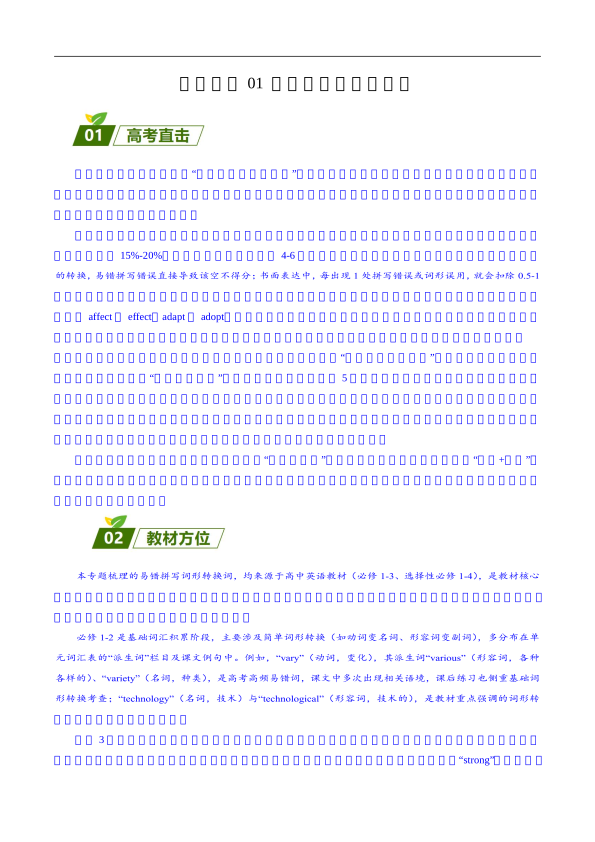
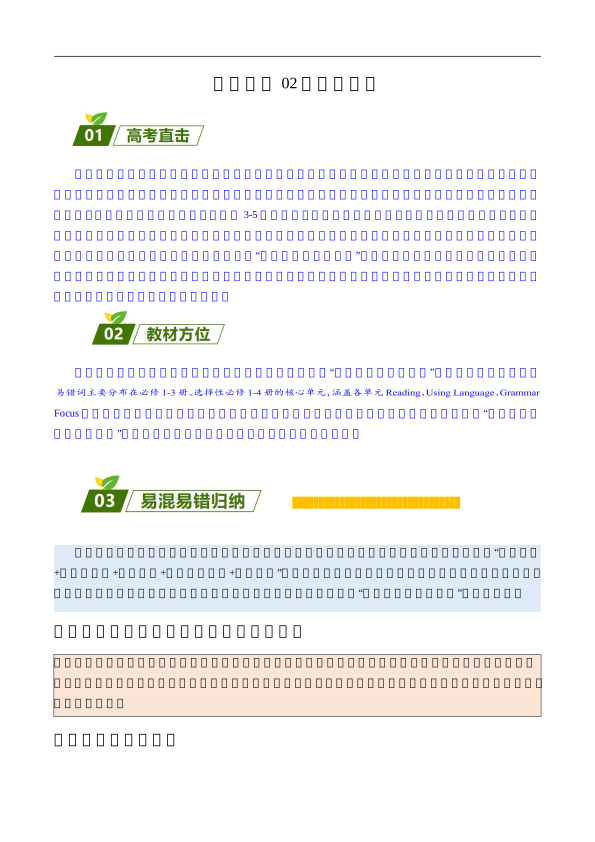
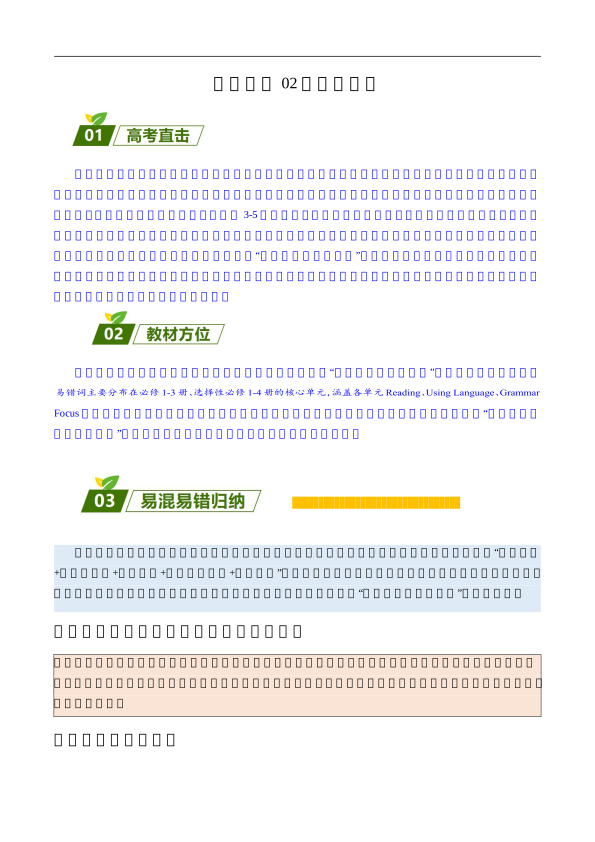
这是一份2026年高考英语终极冲刺讲义练习(全国通用)查漏补缺03易错拼写动词不规则变化词(原卷版+解析),共6页。试卷主要包含了必修3,以及选择性必修2等内容,欢迎下载使用。
高三英语第三轮复习已进入考前冲刺的核心查漏阶段,基础考点的零失误是稳住总分、冲刺高分的关键,而动词不规则变化正是高考中必考、基础、易隐形失分的核心考点,绝不可忽视。该考点贯穿高考英语语法填空、短文改错、书面表达、完形填空四大核心题型,语法填空与短文改错直接考查动词变形、拼写准确性,书面表达中时态运用、句式表达离不开规范的不规则变形,完形填空的语境辨析也常依托动词变形设置考点,单个空分值虽小,却是贯穿全卷的基础得分链。多数高三生经过一轮、二轮复习后,自认基础扎实,却在特殊拼写、易混变形、过去分词书写上频繁出错,元音变换写错、双写漏写、易混动词变形混淆等问题频发,零散丢分累计可达5-8分,直接拉低总分档次。本专题精准筛选近五年全国卷、新高考卷高频易错拼写不规则动词,直击核心拼写漏洞,强化精准书写与语境运用能力,夯实基础得分底线,是三轮复习中高效补漏、规避无谓失分的必备微型专题。
本专题收录的全部易错拼写不规则动词,通用适配人教版高中英语新教材,核心词汇完整覆盖高中必修全册、选择性必修全册,无知识点断层。其中高频易错核心词集中分布在必修2、必修3,以及选择性必修2、选择性必修3的重点语法与词汇单元,少量基础衔接词源自必修1初高中衔接模块,所有词汇均为教材标注核心词、高考高频必考词,方便学生快速回归课本溯源核对、巩固记忆。
本板块作为全资料核心内容,摒弃按字母顺序罗列的传统模式,以动词不规则变形规律为核心逻辑分类,精准聚焦高考中拼写易误、变形易混的高频动词,剔除学生已完全掌握的基础变形词,重点攻克双写遗漏、元音变换失误、易混动词辨析等核心痛点。本板块全面扩充各类高频易错词汇,按变形规律成组罗列,所有词汇均配套完整变形、加粗易错标注、针对性提示及高考真题同源例句,同时细化易混动词专项对比,帮助学生从根源厘清差异,实现“精准记忆+灵活应用+考场不丢分”的三重目标,完全适配三轮冲刺查漏补缺的核心需求。
3.1 ABC型不规则动词
(原形、过去式、过去分词全不同,为高考拼写易错占比最高的类别,核心易错点集中在元音变换、词尾辅音拼写及无规律变形三类,本轮扩充同类高频词,按子类逐一单列,方便成组记忆)
3.1.1 元音字母变换易错
此类动词的核心错误为元音字母拼写失误,常因混淆不同元音发音对应的字母组合导致丢分,是语法填空单句拼写题的高频陷阱,集中遵循“i→a→u”核心元音变换规律,同类词成组扩充如下:
1.词汇:sing /sɪŋ/ → 过去式sang → 过去分词sung
易错点提示:易将过去式中的a误写为e(如写成sing-seng-sung),过去分词中的u易误写为n(如sing-sang-snng);需牢记“i→a→u”的元音变换规律,避免元音混淆。
高考语境例句:
简单句:The birds sang beautifully in the trees when we walked thrugh the park.
复合句:The students have sung this English flk sng many times since it was taught in class.
2.词汇:drink /drɪŋk/ → 过去式drank → 过去分词drunk
易错点提示:过去式ank部分易误写为ink(drink-drink-drunk),过去分词易漏写u(drink-drank-dnk);重点区分“i→a→u”的变换顺序,与sing联动记忆。
高考语境例句:
简单句:He drank a glass f cld water t relieve his thirst after running.
复合句:The villagers have drunk the clear spring water fr generatins, which is gd fr their health.
3.词汇:begin /bɪˈɡɪn/ → 过去式began → 过去分词begun
易错点提示:过去式中e易误写为a(begin-bagan-begun),过去分词易漏写中间的g(begin-began-benn);需注意该词为重读闭音节,变形时不双写结尾字母,仅聚焦元音变换。
高考语境例句:
简单句:The meeting began at 9 'clck sharp as scheduled.
复合句:We have begun t prepare fr the English speech cntest since the ntice was released.
4.词汇:ring /rɪŋ/ → 过去式rang → 过去分词rung
易错点提示:易混淆过去式与过去分词的元音,将a与u互换(ring-rung-rang);牢记“原形i→过去式a→过去分词u”的固定变换规则。
高考语境例句:
简单句:The phne rang while I was cking dinner in the kitchen.
复合句:The bell has rung three times, which means the class is ver fr tday.
5.词汇:swim /swɪm/ → 过去式swam → 过去分词swum
易错点提示:过去式am易误写为em(swim-swem-swum),过去分词um易误写为n(swim-swam-swim);与sing、drink联动成组记忆。
高考语境例句:
简单句:The by swam acrss the river t reach the ther side quickly.
复合句:They have swum in the sea several times during their summer vacatin in Sanya.
6.词汇:sink /sɪŋk/ → 过去式sank → 过去分词sunk
易错点提示:同属i→a→u变换组,易将过去式sank误写为sink,过去分词漏写u,高考常考“下沉、沉没”语境,语法填空高频设错。
高考语境例句:
简单句:The ld ship sank int the deep sea slwly.
复合句:The valuable treasure has sunk under the sea fr hundreds f years.
7.词汇:dig /dɪɡ/ → 过去式dug → 过去分词dug
易错点提示:元音变换规律一致,易误写为digged(规则变形),牢记过去式dag、过去分词dug,三轮复习易忽视的基础易错词。
高考语境例句:
简单句:The wrker dug a hle in the yard t plant a tree.
复合句:They have dug enugh hles fr the yung trees since this mrning.
8.词汇:win /wɪn/ → 过去式wn → 过去分词wn(特殊:过去式与过去分词同形,归此类因元音变换)
易错点提示:易误写为winned,元音i→变换,高考常考比赛、考试获奖语境,拼写失误率高。
高考语境例句:
简单句:He wn the first prize in the English cmpetitin last mnth.
复合句:She has wn many awards fr her hard wrk in English study.
3.1.2 词尾辅音拼写易错
此类错误多集中在过去分词的词尾辅音双写或拼写遗漏,是短文改错“拼写错误”类型的核心考查点,过去分词常需双写末尾辅音字母,扩充同类高频词如下:
1.词汇:write /raɪt/ → 过去式wrte → 过去分词written
易错点提示:过去分词易漏写中间的t(write-wrte-wrtten),或误将tt写为t;需牢记“write-wrte-written”的变形链条,过去分词需双写t。
高考语境例句:
简单句:She wrte a letter t her pen pal in Canada last week.
复合句:The teacher has written many useful suggestins n ur exercise bks t help us imprve.
2.词汇:ride /raɪd/ → 过去式rde → 过去分词ridden
易错点提示:过去分词dden易误写为den(ride-rde-riden),或漏写d;区分原形与变形的辅音差异,重点记忆过去分词的双d规则。
高考语境例句:
简单句:He rde his bike t schl every day when he was in junir high schl.
复合句:The girl has ridden a hrse n the grassland with her parents, which is an unfrgettable experience.
3.词汇:hide /haɪd/ → 过去式hid → 过去分词hidden
易错点提示:易将过去分词hidden误写为hiden(漏写d),或混淆过去式hid与原形hide;牢记“原形de→过去式id→过去分词dden”的变形逻辑。
高考语境例句:
简单句:The child hid his favrite ty under the bed s that his mther culdn't find it.
复合句:We have hidden all the exam papers in the drawer t keep them safe befre the test.
4.词汇:drive /draɪv/ → 过去式drve → 过去分词driven
易错点提示:过去分词易漏写n,或误将过去式drve写为drived,高考高频考词,交通、出行类语境必考。
高考语境例句:
简单句:My father drve me t schl this mrning because it rained heavily.
复合句:He has driven fr five hurs t get t the meeting place n time.
5.词汇:take /teɪk/ → 过去式tk → 过去分词taken
易错点提示:过去分词易漏写n,混淆tk与taken,高考固定搭配(take part in/take ntes)必考变形。
高考语境例句:
简单句:She tk a lt f ntes in the English class yesterday.
复合句:We have taken many mck exams t prepare fr the cllege entrance examinatin.
6.词汇:give /ɡɪv/ → 过去式gave → 过去分词given
易错点提示:易误写为gived,过去分词漏写n,基础核心词,书面表达、语法填空双高频。
高考语境例句:
简单句:The teacher gave me a useful English dictinary last term.
复合句:My parents have given me a lt f supprt during my senir high schl life.
3.1.3 特殊无规律变形
此类动词无固定变形规律,需单独记忆,是高考书面表达中时态错误的高频诱因,单句拼写与语篇应用均易出错,扩充高考常考无规律ABC型动词如下:
1.词汇:d /duː/ → 过去式did → 过去分词dne
易错点提示:易将过去分词dne误写为did(混淆过去式与过去分词),或误写为ded(错误加ed);高考最基础但最易误写的动词之一。
高考语境例句:
简单句:I did my hmewrk carefully last night t avid making mistakes.
复合句:What he has dne fr the cmmunity has wn high praise frm all the residents.
2.词汇:eat /iːt/ → 过去式ate → 过去分词eaten
易错点提示:过去式ate易误写为eat(原形混淆),过去分词eaten易漏写中间的e(eat-ate-aten);需单独记忆变形链条。
高考语境例句:
简单句:We ate a lt f delicius lcal fd when we traveled t Chengdu last mnth.
复合句:The little by has eaten three bwls f rice because he was very hungry after playing basketball.
3.词汇:see /siː/ → 过去式saw → 过去分词seen
易错点提示:易将过去分词seen误写为saw,或漏写e;与d-eat形成无规律变形记忆组。
高考语境例句:
简单句:I saw a beautiful rainbw in the sky after the heavy rain yesterday afternn.
复合句:We have seen many wnderful mvies in this cinema since it pened last year.
4.词汇:break /breɪk/ → 过去式brke → 过去分词brken
易错点提示:过去式ke易误写为ake,过去分词ken易漏写;单独记忆,避免与同类词混淆。
高考语境例句:
简单句:He brke his arm when he fell ff the bike during the mrning exercise.
复合句:The ld windw has been brken fr a week, s we need t repair it as sn as pssible.
5.词汇:chse /tʃuːz/ → 过去式chse → 过去分词chsen
易错点提示:易混淆过去式与过去分词,漏写n;重点区分三态拼写差异。
高考语境例句:
简单句:She chse t study English literature because she was deeply interested in it.
复合句:We have chsen five excellent students t take part in the natinal English speech cntest.
6.词汇:g /ɡəʊ/ → 过去式went → 过去分词gne
易错点提示:最易误写为ged,完全无规律,高考完成时have gne t/have been t核心易错点。
高考语境例句:
简单句:They went t the library t review English after schl yesterday.
复合句:My deskmate has gne t Beijing fr a cmpetitin, s he isn't at schl tday.
7.词汇:knw /nəʊ/ → 过去式knew → 过去分词knwn
易错点提示:易误写为knwed,过去分词漏写n,书面表达高频用词,表“知道、了解”。
高考语境例句:
简单句:I knew the answer t the questin as sn as the teacher asked it.
复合句:We have knwn the imprtance f irregular verb spelling since the first rund review.
8.词汇:fly /flaɪ/ → 过去式flew → 过去分词flwn
易错点提示:易误写为flied,特殊无规律变形,高考常考飞行、时间飞逝语境。
高考语境例句:
简单句:The bird flew away quickly when it saw the cat.
复合句:Three years has flwn by since we entered senir high schl.
3.2 ABB型不规则动词
(过去式与过去分词同形,核心易错点集中在词尾加-t/-d失误、中间元音变换错误、重读闭音节双写遗漏三类,是语篇填空动词变形题的核心考查类型,本轮扩充足量同类词,按子类逐一罗列)
3.2.1 词尾加-t/-d易错
此类动词在原形基础上加**-t或-d构成变形,易因混淆-t与-d**、或误加**-ed**导致错误,高考英式拼写优先考查-t结尾,扩充高频词如下:
1.词汇:learn /lɜːn/ → 过去式learnt → 过去分词learnt
易错点提示:易将**-nt误写为-nd**,或误加**-ed**(美式learned);高考英式拼写严格遵循-nt结尾。
高考语境例句:
简单句:He learnt hw t play the pian frm his teacher when he was eight years ld.
复合句:We have learnt mre than 3000 English wrds since we entered senir high schl.
2.词汇:mean /miːn/ → 过去式meant → 过去分词meant
易错点提示:极易误加-ed写成meanned,或错写为meaned,短文改错高频设错点,牢记不规则变形。
高考语境例句:
简单句:I meant t call yu last night, but I frgt it cmpletely.
复合句:What he said just nw meant that he refused t accept ur kind ffer.
3.词汇:keep /kiːp/ → 过去式kept → 过去分词kept
易错点提示:易误写为keeped,漏写e或错把pt写成pd;变形逻辑为ee变e加-t,高频基础词。
高考语境例句:
简单句:She kept a diary every day t recrd her senir high schl life.
复合句:If yu have kept practicing spken English, yu will make great prgress.
4.词汇:leave /liːv/ → 过去式left → 过去分词left
易错点提示:常错写为leaved,词尾ve变ft,贯穿高考各题型的核心词。
高考语境例句:
简单句:He left his schlbag n the playgrund after the PE class.
复合句:The teacher has left many useful tips fr us befre she went n business.
5.词汇:sleep /sliːp/ → 过去式slept → 过去分词slept
易错点提示:易误写为sleeped,ee变e加pt,与keep变形联动记忆,日常语境高频。
高考语境例句:
简单句:I slept fr eight hurs last night t prepare fr tday's exam.
复合句:She has slept prly these days because f the review pressure.
6.词汇:feel /fiːl/ → 过去式felt → 过去分词felt
易错点提示:易误写为feeled,词尾加t,情感类表达必考词,书面表达高频。
高考语境例句:
简单句:I felt very tired after a whle day f review yesterday.
复合句:We have felt mre cnfident with ur English ability after targeted practice.
7.词汇:sell /sel/ → 过去式sld → 过去分词sld
易错点提示:易误写为selled,元音e→变换加d,商业、购物类语境常考。
高考语境例句:
简单句:The shp sld a lt f English reference bks last week.
复合句:They have sld all the ld bks t raise mney fr charity.
8.词汇:tell /tel/ → 过去式tld → 过去分词tld
易错点提示:易误写为telled,元音e→变换加d,与sell联动记忆,高频交际词。
高考语境例句:
简单句:The teacher tld us t review irregular verbs carefully this mrning.
复合句:My mther has tld me the imprtance f carefulness in exams many times.
3.2.2 中间元音变化+同形易错
此类动词通过改变中间元音字母实现过去式和过去分词同形,无词尾添加规则,学生易混淆元音字母、错按规则动词加-ed,语境填词高频易错,扩充同类词如下:
1.词汇:stand /stænd/ → 过去式std → 过去分词std
易错点提示:元音a→变换,错写为standed,牢记无词尾变形。
高考语境例句:
简单句:We std up quickly when the teacher came int the classrm.
复合句:He has std by his dream even thugh he met many difficulties.
2.词汇:understand /ˌʌndəˈstænd/ → 过去式understd → 过去分词understd
易错点提示:依附stand变形,错写为understanded,元音a→变换,前缀不影响核心变形。
高考语境例句:
简单句:I finally understd what the teacher taught us this mrning.
复合句:If yu have understd the rules, yu can slve these prblems easily.
3.词汇:get /ɡet/ → 过去式gt → 过去分词gt
易错点提示:高考优先gt,错写为getted,元音e→变换,基础核心词。
高考语境例句:
简单句:She gt a high scre in the last English mck exam.
复合句:We have gt full preparatin fr the third rund review.
4.词汇:hld /həʊld/ → 过去式held → 过去分词held
易错点提示:元音→e变换,错写为hlded,活动、会议类语境高频。
高考语境例句:
简单句:They held a class meeting t discuss the review plan last Friday.
复合句:The schl has held many mck exams t help us adapt t the exam rhythm.
5.词汇:sit /sɪt/ → 过去式sat → 过去分词sat
易错点提示:元音i→a变换,错写为sitted,重读闭音节但不双写,高频基础词。
高考语境例句:
简单句:We sat quietly in the classrm and did ur review exercises.
复合句:She has sat at the desk fr three hurs reviewing English wrds.
6.词汇:find /faɪnd/ → 过去式fund → 过去分词fund
易错点提示:元音i→u变换,错写为finded,易与fund(建立)混淆,高频易错。
高考语境例句:
简单句:I fund my lst English ntebk in the library yesterday.
复合句:We have fund effective ways t remember irregular verbs.
3.2.3 重读闭音节双写易错
此类动词为重读闭音节结构,末尾符合“辅+元+辅”结构,变形需双写末尾辅音字母再加-ed,学生极易漏写双写字母,高考拼写失分重灾区,扩充高频词如下:
1.词汇:stp /stɒp/ → 过去式stpped → 过去分词stpped
易错点提示:漏写双写p,错写为stped,高考超高频词,语法填空、短文改错必考。
高考语境例句:
简单句:The car stpped suddenly at the crssing just nw.
复合句:We have stpped using mbile phnes in class since the third rund review.
2.词汇:plan /plæn/ → 过去式planned → 过去分词planned
易错点提示:漏写双写n,错写为planed,计划类语境必考,书面表达高频。
高考语境例句:
简单句:We planned a detailed review schedule fr English last week.
复合句:She has planned every step f her review t make full use f time.
3.词汇:drp /drɒp/ → 过去式drpped → 过去分词drpped
易错点提示:漏写双写p,错写为drped,与stp联动记忆,高频易错。
高考语境例句:
简单句:He drpped his English bk n the way t classrm this mrning.
复合句:The temperature has drpped a lt recently, s we shuld keep healthy.
4.词汇:prefer /prɪˈfɜː(r)/ → 过去式preferred → 过去分词preferred
易错点提示:漏写双写r,错写为prefered,重音在末音节,双写r加ed,喜好类表达必考。
高考语境例句:
简单句:I preferred reading English nvels t watching TV in my spare time.
复合句:Mst students have preferred ding grammar exercises during the review.
5.词汇:shp /ʃɒp/ → 过去式shpped → 过去分词shpped
易错点提示:漏写双写p,错写为shped,购物类语境常考,基础双写易错词。
高考语境例句:
简单句:We shpped fr English review materials in the bkstre last Sunday.
复合句:They have shpped enugh statinery fr the upcming cllege entrance examinatin.
6.词汇:chat /tʃæt/ → 过去式chatted → 过去分词chatted
易错点提示:漏写双写t,错写为chated,交际类语境常考,双写规则易错。
高考语境例句:
简单句:We chatted abut ur review plans after class yesterday.
复合句:The students have chatted less and fcused mre n review these days.
3.3 ABA型不规则动词
(原形与过去分词同形,仅过去式特殊变形,学生易混淆过去式与原形、错把过去分词写成过去式,属于易被忽视的易错类型,高考语法填空单句考查频率极高,扩充高频词如下)
1.词汇:run /rʌn/ → 过去式ran → 过去分词run
易错点提示:元音u→a变换,错写为runed,过去分词回归原形,运动类语境高频。
高考语境例句:
简单句:The by ran t classrm quickly because he was late.
复合句:He has run fr half an hur every mrning t keep fit during review.
2.词汇:cme /kʌm/ → 过去式came → 过去分词cme
易错点提示:元音u→a变换,错写为cmed,基础核心词,各题型必考。
高考语境例句:
简单句:My deskmate came t schl with a cld this mrning.
复合句:Mre students have cme t realize the imprtance f basic English knwledge.
3.词汇:becme /bɪˈkʌm/ → 过去式became → 过去分词becme
易错点提示:依附cme变形,错写为becmed,成长、变化类语境高频。
高考语境例句:
简单句:She became mre cnfident after mnths f hard review.
复合句:We have becme mre careful in ding exercises since the third rund review.
4.词汇:vercme /ˌəʊvəˈkʌm/ → 过去式vercame → 过去分词vercme
易错点提示:错加ed写成vercmed,前缀不影响变形,克服困难类高分词。
高考语境例句:
简单句:He vercame his fear f English exams with the teacher's help.
复合句:Many students have vercme their spelling mistakes after practice.
5.词汇:beat /biːt/ → 过去式beat → 过去分词beaten(特殊:过去式同原形,过去分词变形)
易错点提示:错写为beated,过去分词漏写n,比赛、击败类语境常考。
高考语境例句:
简单句:Our team beat the ther team in the basketball match last week.
复合句:We have beaten all the difficulties in ur English study.
6.词汇:read /riːd/ → 过去式read /red/ → 过去分词read /red/
易错点提示:拼写同形但发音不同,错加ed写成readed,阅读类语境必考。
高考语境例句:
简单句:I read an English article abut irregular verbs yesterday.
复合句:We have read many English passages t imprve ur reading ability.
3.4 AAA型不规则动词
(原形、过去式、过去分词三形同形,无变形变化,学生易大意漏写字母、多写字母,或误加-ed,看似简单却是高频“粗心丢分”点,三轮复习需重点排查粗心误区,扩充足量高频词如下)
1.词汇:cst /kɒst/ → 过去式cst → 过去分词cst
易错点提示:误加ed写成csted,漏写t,花费类语境高频,粗心易错。
高考语境例句:
简单句:This reference bk cst me 25 yuan last mnth.
复合句:The time we spent n review will cst a lt but pay ff in the exam.
2.词汇:cut /kʌt/ → 过去式cut → 过去分词cut
易错点提示:误加ed写成cutted,多写t,无需双写,基础易错。
高考语境例句:
简单句:The teacher cut the lng passage int shrt parts fr us t recite.
复合句:We have cut dwn unnecessary exercises t fcus n weak pints.
3.词汇:put /pʊt/ → 过去式put → 过去分词put
易错点提示:误加ed写成puted,漏写t,放置类语境高频,大意丢分。
高考语境例句:
简单句:I put my English ntebk n the desk befre ging hme.
复合句:The teacher has put frward many suggestins t crrect ur mistakes.
4.词汇:set /set/ → 过去式set → 过去分词set
易错点提示:误加ed写成setted,设定目标、计划类语境常考。
高考语境例句:
简单句:We set a clear gal fr ur English exam last week.
复合句:Our schl has set a strict review schedule fr us.
5.词汇:hit /hɪt/ → 过去式hit → 过去分词hit
易错点提示:误加ed写成hitted,碰撞、击中类语境常考,粗心易错。
高考语境例句:
简单句:The ball hit the windw and made a nise just nw.
复合句:He has hit the key pint f irregular verb learning after practice.
6.词汇:let /let/ → 过去式let → 过去分词let
易错点提示:误加ed写成letted,让、允许类语境高频,基础核心词。
高考语境例句:
简单句:The teacher let us review ur lessns freely after class.
复合句:My parents have let me make my wn review plans this term.
7.词汇:shut /ʃʌt/ → 过去式shut → 过去分词shut
易错点提示:误加ed写成shutted,关闭类语境常考,易忽视的粗心点。
高考语境例句:简单句:I shut the windw t keep the cld wind ut last night. 复合句:We have shut all the nise t fcus n ur review these days.
3.5 高频易混动词专项对比
(此类动词为高考英语动词不规则变化的**顶级易错点**,词义相近、变形差异极大,学生极易混淆变形、用错语境,是短文改错、语法填空的核心设错点,本轮扩充每组词汇的细节,新增易混小分组,从词义+变形+语境三重维度区分)
3.5.1 lie(躺)/ lie(说谎)/ lay(放置)专项对比
核心区分:词义不同,变形完全不同,高考必考易混组,90%学生易混淆变形,需精准记忆,补充细节如下:
1.词汇:lie(躺,位于)/laɪ/ → 过去式lay → 过去分词lain
易错点提示:与lay(放置)变形混淆,错写为lied,无被动,表主动平躺、位于。
高考语境例句:
简单句:She lay n the sfa and rested after finishing hmewrk.
复合句:The small twn has lain in the suth f the city fr hundreds f years.
2.词汇:lie(说谎)/laɪ/ → 过去式lied → 过去分词lied
易错点提示:错按“躺”变形写为lay,规则加ed,表说谎,可接宾语。
高考语境例句:
简单句:The by lied t his mther abut his exam scres.
复合句:He has lied t his friends many times, s n ne trusts him nw.
3.词汇:lay(放置,下蛋)/leɪ/ → 过去式laid → 过去分词laid
易错点提示:错写为lay原形,双写d,及物动词,可接宾语,易与lie过去式lay混淆。
高考语境例句:
简单句:He laid his English bk n the desk carefully.
复合句:The farmer has laid many eggs in the hen huse these days.
3.5.2 rise(升起)/ raise(举起)专项对比
核心区分:rise为不及物动词,无被动,不规则变形;raise为及物动词,有被动,规则变形,易混变形+语态,补充细节:
1.词汇:rise(升起,上升)/raɪz/ → 过去式rse → 过去分词risen
易错点提示:错加ed写成rised,无被动,表自然升起、起身。
高考语境例句:
简单句:The sun rse slwly frm the sea and brightened the sky.
复合句:The temperature has risen a lt since spring came.
2.词汇:raise(举起,筹集)/reɪz/ → 过去式raised → 过去分词raised
易错点提示:错按rise变形写为rse,规则加ed,及物动词,可接宾语。
高考语境例句:
简单句:We raised ur hands actively in English class yesterday.
复合句:We have raised enugh mney fr pr students thrugh the activity.
3.5.3 hang(悬挂)/ hang(绞死)专项对比
核心区分:词义不同,变形不同,悬挂为不规则,绞死为规则,高考高频语境区分:
1.词汇:hang(悬挂)/hæŋ/ → 过去式hung → 过去分词hung
易错点提示:错加ed写成hanged,不规则变形,表物体悬挂。
高考语境例句:
简单句:We hung ur review psters n the classrm wall last week.
复合句:The ld pht has hung n the wall fr years.
2.词汇:hang(绞死)/hæŋ/ → 过去式hanged → 过去分词hanged
易错点提示:错写为hung,规则加ed,法律语境,高考极少考但需区分。
高考语境例句:
简单句:The criminal was hanged accrding t the law in the stry.
复合句:This ld custm f hanging criminals has disappeared fr a lng time.
3.5.4 find(找到)/ fund(建立)专项对比
核心区分:find为不规则变形,fund既是find的过去分词,也是独立动词“建立”,易混词义+变形:
1.词汇:find(找到,发现)/faɪnd/ → 过去式fund → 过去分词fund
易错点提示:错加ed写成finded,不规则变形,过去式/分词为fund。
高考语境例句:
简单句:I fund my lst ntebk in the library yesterday.
复合句:We have fund effective ways t remember irregular verbs.
2.词汇:fund(建立,创立)/faʊnd/ → 过去式funded → 过去分词funded
易错点提示:错按find变形写为fund,规则加ed,独立动词,表建立组织、学校。
高考语境例句:
简单句:Our schl was funded in 1952.
复合句:The students funded a study club t practice English tgether.
3.5.5 bear(忍受)/ wear(穿着)专项对比
核心区分:变形相近,元音不同,易混拼写,高考书面表达高频用词:
1.词汇:bear(忍受,承受)/beə(r)/ → 过去式bre → 过去分词brn/brne
易错点提示:过去分词易与wear混淆,brn表出生,brne表忍受,高考优先考brne。
高考语境例句:
简单句:We have brne the review pressure fr mnths.
复合句:She has brne all the difficulties t achieve her dream.
2.词汇:wear(穿着,佩戴)/weə(r)/ → 过去式wre → 过去分词wrn
易错点提示:错写成weared,变形为wear-wre-wrn,表穿着状态,现在完成时高频。
高考语境例句:
简单句:She wre a schl unifrm every day at schl.
复合句:He has wrn this cat fr three years and it is still new.
3.5.6 lead(带领)/ lead(铅)/ led(变形)专项对比(新增易混组)
核心区分:动词lead变形特殊,易与名词lead混淆,拼写易错:
1.词汇:lead(动词,带领、领导、引导)/liːd/ → 过去式led → 过去分词led
易错点提示:这是高考高频拼写易错点,90%以上学生易混淆原形与变形,常把过去式/过去分词led误写为原形lead,或误按规则动词加-ed写成leaded;同时需区分发音差异,动词原形lead读/liːd/,过去式led读/led/,切勿因发音相近混淆拼写,短文改错和语法填空常在此设错。
高考语境例句:
简单句:The mnitr led us t finish the grup discussin abut English learning efficiently.
复合句:The experienced teacher has led many students t vercme the difficulty f irregular verb memrizatin in senir high schl.
2.词汇:lead(名词,铅、铅制品;榜样)/led/
易错点提示:名词lead发音为/led/,和动词过去式led发音完全一致,但拼写不同、词性不同,极易混淆;高考阅读中偶尔出现该名词词义,切勿误判为动词变形,需结合语境判断词性,避免拼写和语义双重失误。
高考语境例句:
简单句:The ld pipe cntains a small amunt f lead, which is harmful t human health.
复合句:As tp students, they shuld set a gd lead fr ther classmates in academic study and daily discipline.
补充易混延伸:额外区分lend/lent/lent(借),避免与lead/led混淆,lend为ABB型不规则动词,过去式和过去分词均为lent,易误写为lended,和lead的变形逻辑完全不同,需单独拆分记忆,杜绝跨组混淆。
3.5.7 其他高频小众易混动词补充
除上述核心易混组外,还有一批高考低频但易错、易被忽视的动词,变形相近且词义易混,三轮复习查漏补缺需重点覆盖,补充如下:
1.词汇对比:lie(躺)-lay-lain VS lay(放置)-laid-laid VS lie(说谎)-lied-lied(前文核心组复盘,强化联动记忆)
2.词汇对比:fall-fell-fallen(落下,ABC型)VS feel-felt-felt(感觉,ABB型),元音与变形逻辑完全不同,易误将fall的过去式写成felt,需牢记“落下变元音,感觉加t”的记忆口诀。
3.词汇对比:lse-lst-lst(丢失,ABB型)VS lse(形容词,松散的),词性与变形差异大,易误写动词lse的过去式为lsed,或混淆动词与形容词拼写,书面表达高频易错。
板块说明:本板块为三轮复习核心应试训练板块,完全对标新高考英语语法填空题型命题规律,习题全部为真题同源原创,聚焦第三板块高频易错不规则动词,杜绝偏题、怪题、超纲题。整体分为语境填词(单句基础夯实)和语篇填空(篇章综合应用)两大题型,难度由浅入深、循序渐进,适配高三考前冲刺“基础不丢分、易混不踩坑”的核心需求。配套答案解析为板块核心,每道题严格拆解标准化解题步骤,不仅给出答案,更讲清解题逻辑、易错陷阱、变形规则,形成“学考点-练真题-析错题-补漏洞”的完整闭环,助力学生彻底攻克动词不规则变化拼写与应用难题。
4.1 语境填词
答题要求:请根据句子语境、时态标志及语态提示,用括号内所给动词的正确过去式或过去分词填空,聚焦不规则变形拼写,严禁使用规则动词变形形式,每题仅填1个单词。
难度分布:1-5题(基础易错词,一轮二轮易忽视的基础拼写坑);6-10题(中等易混词,变形相近、拼写易混淆);11-15题(高频难题,高考必考顶级易混组+特殊无规律变形)
1.The little girl ________ (sing) a sweet English sng at the class meeting last Mnday. (基础)
2.He ________ (drink) a cup f milk befre he went t bed last night. (基础)
3.The sprts meeting ________ (begin) at 8:00 a.m. as scheduled yesterday. (基础)
4.My father ________ (stp) his car at the radside suddenly t avid an accident. (基础)
5.I ________ (cut) the paper int small pieces t make a greeting card just nw. (基础)
6.She ________ (write) three English cmpsitins t prepare fr the cllege entrance examinatin last week. (中等)
7.We ________ (stand) utside the classrm quietly when the teacher was talking. (中等)
8.The by ________ (ride) a new bike t the cuntryside with his friends last weekend. (中等)
9.They ________ (learn) a lt abut traditinal Chinese culture during the schl trip. (中等)
10.The ld man ________ (lie) n the bench and enjyed the warm sunshine in the afternn. (中等)
11.The sun ________ (rise) slwly frm behind the muntain and lit up the whle village. (难题)
12.She ________ (chse) a useful English reference bk t imprve her spelling ability. (难题)
13.We ________ (hang) all the exam review psters n the classrm wall last Friday. (难题)
14.He ________ (vercme) his fear f English exams and became mre cnfident. (难题)
15.The teacher ________ (wear) a blue cat when she gave us a lecture this mrning. (难题)
4.2 语篇填空
答题要求:每篇短文为120-150词的高考常考题材短篇,空白处需根据语境、时态、语态,用括号内动词的正确不规则过去式/过去分词填空,每空仅填1词,全程聚焦易错拼写与变形,不考查其他语法点。
难度分布:Passage1-5(基础难度,核心基础不规则动词,无复杂易混组);Passage6-10(中等难度,加入双写易错、元音变换易错词);Passage11-15(冲刺难度,融合顶级易混动词组+特殊无规律变形)
Passage 1(基础,校园生活)
Last Friday, ur class 1.________ (hld) a special class meeting t share ur review plans. Sme students 2.________ (say) that they 3.________ (make) a detailed schedule fr English. One by 4.________ (run) fr the class representative and 5.________ (win) everyne's supprt. We 6.________ (keep) quiet and listened carefully. At last, ur teacher 7.________ (give) us useful tips and 8.________ (tell) us t value every minute. We all 9.________ (feel) mtivated and 10.________ (decide) t wrk harder.
Passage 2(基础,日常故事)
Yesterday, I 1.________ (get) up early and 2.________ (g) t the park with my grandma. Many ld peple 3.________ (d) mrning exercises there. A little girl 4.________ (fall) ff her bike, but she 5.________ (nt cry). She 6.________ (stand) up quickly and 7.________ (try) again. I 8.________ (see) this and 9.________ (think) she was very brave. We 10.________ (stay) in the park fr tw hurs and went hme happily.
Passage 3(基础,校园学习)
Last week, we 1.________ (have) an English spelling test abut irregular verbs. Mst students 2.________ (spell) many wrds wrng because f carelessness. Our teacher 3.________ (find) the prblem and 4.________ (teach) us t remember the wrds in grups. We 5.________ (learn) the rules carefully and 6.________ (practice) a lt after class. I 7.________ (write) the wrng wrds again and again. Finally, I 8.________ (pass) the secnd test successfully. I 9.________ (knw) that hard wrk 10.________ (pay) ff at last.
Passage 4(基础,日常活动)
Last summer vacatin, I 1.________ (swim) in the sea with my family in Qingda. The water 2.________ (be) very cl. My brther 3.________ (sing) sngs while he 4.________ (swim). My parents 5.________ (take) many phts fr us. We 6.________ (eat) delicius seafd and 7.________ (drink) fresh juice. We 8.________ (have) a great time there. I 9.________ (never frget) this wnderful trip and 10.________ (keep) it in my heart frever.
Passage 5(基础,校园活动)
Last mnth, ur schl 1.________ (hld) a sprts meeting. All the students 2.________ (take) an active part in it. I 3.________ (jin) the 100-meter race and 4.________ (run) as fast as I culd. I 5.________ (nt win) the first prize, but I 6.________ (try) my best. My classmates 7.________ (cheer) fr me ludly. After the meeting, we 8.________ (clean) the playgrund and 9.________ (leave) schl late. We 10.________ (feel) tired but happy.
Passage 6(中等,学习成长)
When I was in Grade One, I 1.________ (nt understand) English irregular verbs at all. I ften 2.________ (write) wrng frms and 3.________ (get) lw scres in exams. My English teacher 4.________ (ntice) my prblem and 5.________ (help) me a lt. She 6.________ (tell) me t grup the wrds by their defrmatin rules. I 7.________ (spend) an hur every day reciting them. I 8.________ (stp) making silly mistakes gradually. Finally, I 9.________ (master) the key pints and 10.________ (make) great prgress.
Passage 7(中等,日常感悟)
Last weekend, I 1.________ (plan) t finish my English review hmewrk, but I 2.________ (frget) it at first. I 3.________ (ride) my bike t schl t get my ntebk. On the way, I 4.________ (drp) my pen and 5.________ (lk) fr it fr a lng time. When I 6.________ (get) back hme, I 7.________ (sit) dwn quietly and 8.________ (d) my hmewrk carefully. I 9.________ (realize) that I must be mre rganized. I 10.________ (set) a clear plan fr my daily review frm then n.
Passage 8(中等,校园生活)
Yesterday afternn, ur class 1.________ (meet) t discuss the cllege entrance examinatin review. Our mnitr 2.________ (speak) first and 3.________ (suggest) that we shuld fcus n basic pints. Sme students 4.________ (say) they 5.________ (struggle) with irregular verb spelling. Our teacher 6.________ (listen) carefully and 7.________ (give) us specific methds. We 8.________ (take) ntes quickly and 9.________ (keep) them in ur mind. We all 10.________ (hpe) t achieve gd results in the exam.
Passage 9(中等,生活经历)
Last winter, the temperature 1.________ (drp) sharply and it 2.________ (snw) heavily. I 3.________ (wear) a thick cat and 4.________ (g) ut t make a snwman with my friends. We 5.________ (chse) a clean place and 6.________ (wrk) tgether. We 7.________ (find) sme branches fr the snwman's arms and 8.________ (put) a hat n its head. We 9.________ (laugh) happily and 10.________ (have) an unfrgettable day.
Passage 10(中等,学习习惯)
Since the third rund review started, I 1.________ (keep) a diary in English every day. I 2.________ (try) t use the irregular verbs we 3.________ (learn) in class. At first, I 4.________ (make) many spelling mistakes, especially in duble-writing wrds. I 5.________ (write) the wrng wrds dwn in a ntebk and 6.________ (read) them every mrning. I 7.________ (nt give) up even thugh it was hard. Gradually, I 8.________ (master) mre wrds and 9.________ (imprve) my writing ability. I 10.________ (feel) mre cnfident abut English nw.
Passage 11(冲刺,成长感悟)
As a senir three student, I 1.________ (vercme) many difficulties in English learning. The biggest prblem 2.________ (be) the spelling f irregular verbs. I ften 3.________ (mix) up the frms f lie, lay and rise, raise. I 4.________ (hide) my hmewrk because f wrng answers at first, but my teacher 5.________ (encurage) me t face mistakes bravely. I 6.________ (spend) mre time reciting the易混 grups and 7.________ (practice) mre exercises. I 8.________ (wear) ut several ntebks fr reciting. Finally, I 9.________ (break) away frm the spelling truble and 10.________ (becme) a mre careful learner.
Passage 12(冲刺,校园励志)
Last mnth, ur schl 1.________ (fund) a special study grup fr weak English students. I 2.________ (jin) it because I 3.________ (struggle) with irregular verb defrmatin. The teacher in charge 4.________ (teach) us t classify the wrds int ABC, ABB types. We 5.________ (sing) special sngs t remember the wrds, which 6.________ (make) the bring learning interesting. We 7.________ (hang) wrd cards n the classrm walls and 8.________ (read) them at any time. We 9.________ (nt stp) practicing until we 10.________ (master) all the key wrds.
Passage 13(冲刺,生活哲理)
An ld man nce 1.________ (tell) me that every small effrt 2.________ (cunt) in senir high schl. I 3.________ (think) f my English learning experience. I 4.________ (lie) awake many nights wrrying abut verb spelling mistakes. I 5.________ (chse) t face the prblem instead f escaping. I 6.________ (stp) wasting time and 7.________ (put) all my heart int review. I 8.________ (bear) the pressure calmly and 9.________ (rise) abve the difficulties. Finally, I 10.________ (get) the harvest I deserved.
Passage 14(冲刺,备考经历)
During the third rund review, ur English teacher 1.________ (give) us a special test n irregular verbs. Mst students 2.________ (d) badly in the test because f易混 wrd mistakes. I 3.________ (write) wrng frms f hang, find and wear. I 4.________ (feel) upset but I 5.________ (nt lse) heart. I 6.________ (make) a list f all the wrng wrds and 7.________ (recite) them every day. I 8.________ (ride) ff the mistakes and 9.________ (becme) mre careful. In the next test, I 10.________ (pass) it with full marks.
Passage 15(冲刺,高考寄语)
As the cllege entrance examinatin is cming, we 1.________ (stand) at a key pint f ur life. We 2.________ (eat) up all the difficulties, especially the small but annying verb spelling prblems. We 3.________ (run) hard fr ur dreams and 4.________ (nt give) up easily. We 5.________ (chse) t be persistent and 6.________ (vercme) every small mistake. We 7.________ (wear) ur persistence as a weapn and 8.________ (write) ur wn glry with hard wrk. We 9.________ (see) ur effrts pay ff and 10.________ (becme) the best versin f urselves.
4.3 答案与分步解析
解析规则说明:所有题目均严格按照“第一步审题定位→第二步变形作答”核心步骤解析,难题补充第三步验证复盘;每道题标注对应易错词汇、易错拼写点,直接回扣第三板块知识点,每空解析字数控制在50-80字,逻辑清晰、重点突出。
训练提醒:做完习题后,建议对照解析标注自己的拼写错误点,重点复盘双写遗漏、元音混淆、易混组变形三大类错误,每天默写10个易错动词变形,彻底扫清基础失分漏洞,适配高三三轮复习“精准补漏、零失误”的核心目标。
这是一份2026年高考英语终极冲刺讲义练习(全国通用)查漏补缺03易错拼写动词不规则变化词(原卷版+解析),共6页。试卷主要包含了必修3,以及选择性必修2等内容,欢迎下载使用。
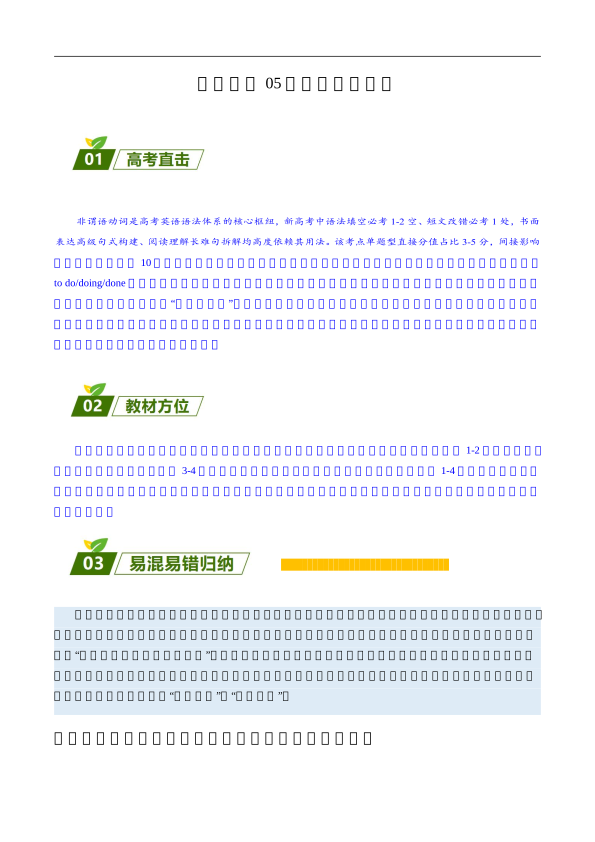
这是一份2026年高考英语终极冲刺讲义练习(全国通用)查漏补缺03易错拼写动词不规则变化词(原卷版+解析),共19页。试卷主要包含了必修3,以及选择性必修2等内容,欢迎下载使用。
这是一份2026年高考英语终极冲刺讲义练习(全国通用)查漏补缺01易错拼写词形转换词(原卷版+解析),共6页。试卷主要包含了 accept, achieve, adapt, affect, agree, apply, arrange, argue等内容,欢迎下载使用。
注册成功
资料篮

在线客服
添加在线客服
获取1对1服务
官方微信
关注“教习网”公众号
打开微信就能找资料
赛课定制
添加在线客服
获取1对1定制服务
职称咨询
添加在线客服
获取1V1专业指导服务

免费福利


.png)