 免费领取教师福利

若您为此资料的原创作者,认为该资料内容侵犯了您的知识产权,请扫码添加我们的相关工作人员,我们尽可能的保护您的合法权益。


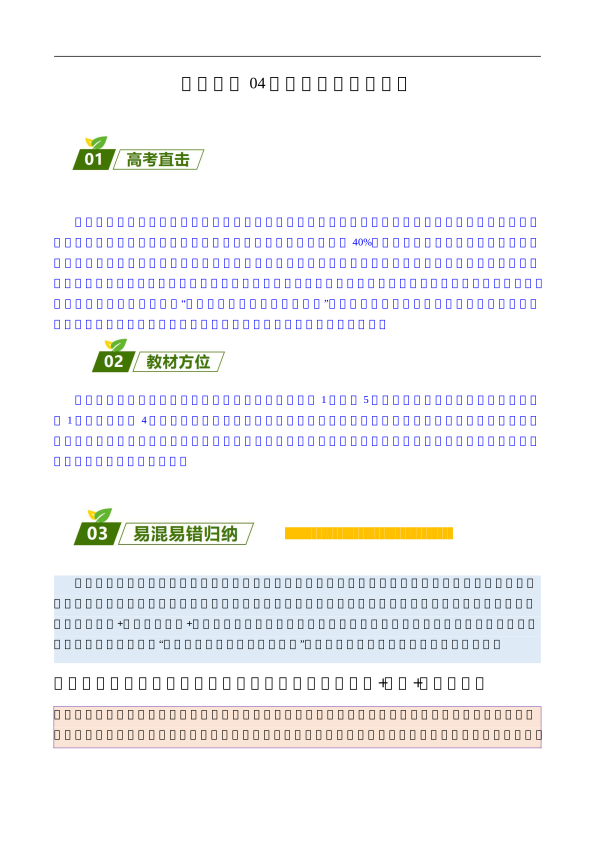
这是一份2026年高考英语终极冲刺讲义练习(全国通用)查漏补缺05易错非谓语动词(原卷版+解析),共6页。试卷主要包含了非谓语三大核心形式基础易错,易混结构对比,固定搭配终极易错清单,特殊用法易错陷阱,高频易错非谓语短语专项等内容,欢迎下载使用。
非谓语动词是高考英语语法体系的核心枢纽,新高考中语法填空必考1-2空、短文改错必考1处,书面表达高级句式构建、阅读理解长难句拆解均高度依赖其用法。该考点单题型直接分值占比3-5分,间接影响读写题型得分可达10分以上,是不容失分的关键考点。高三考生普遍存在共性易错问题:逻辑主语混淆、t d/ding/dne形式搭配易混、时态语态误用、特殊结构省略陷阱频发。三轮复习阶段考生已掌握基础考点,却常因易错陷阱陷入“会做但易错”的困境,成为语法失分重灾区。本专题聚焦历年高考高频易错非谓语考点,梳理陷阱规律,总结实用解题技巧,助力考生快速查漏补缺,彻底破解易错难题,牢牢守住语法基础分,为冲刺高分题型筑牢根基。
非谓语动词核心知识点贯穿人教版新教材高中必修第一册至选择性必修第四册。必修1-2侧重不定式、动名词基础用法讲解,必修3-4重点突破分词作定语、状语的核心用法,选择性必修1-4深化独立主格、固定搭配、特殊句式等易错难点,各册语法专项板块与重点单元句型均有集中呈现,是高考非谓语考点的直接教材溯源。
非谓语动词是高考英语语法的核心失分点,区别于谓语动词,它无人称和数的变化,不能单独作谓语,但可充当主语、宾语、定语、状语、宾补等几乎所有句子成分,考点细碎、易混点极多,也是考生三轮复习中“听得懂、做不对、一考就错”的重灾区。本板块严格按照高考命题规律,分为五大核心模块,全面覆盖所有高频易错考点,每类考点均搭配核心用法、高考改编例句、精准易错点拨,彻底扫清知识盲区,破解解题陷阱,助力考生从“模糊掌握”到“精准得分”。
一、非谓语三大核心形式基础易错(句法功能专项)
非谓语动词核心包含四大具体形式:不定式t d(表将来、目的、具体动作)、动名词ding(表抽象、习惯性动作,名词性质)、现在分词ding(表主动、进行,形容词/副词性质)、过去分词dne(表被动、完成,形容词/副词性质)。其中动名词与现在分词形式完全一致,但句法功能和语法属性截然不同,这是高三考生最基础、最易混淆的第一类考点,也是所有复杂非谓语考点的根基,以下按句子成分逐一拆解易错点。
(一)作主语:t d 与 ding 的核心区别与易错点
核心用法:不定式t d和动名词ding均可作句子主语,均属于单数主语,谓语动词用单数形式,但二者语义侧重、使用场景差异极大,是语法填空和短文改错的基础易错点。
1. 动名词ding作主语:表示抽象的、习惯性的、泛指的一般性动作或行为,不针对某一次具体动作,多用于陈述客观事实、日常习惯、普遍道理。
固定搭配:直接置于句首作主语,无特殊形式要求,常见搭配:ding sth is + 形容词/名词。
高考改编例句:Reading English every mrning is a gd way t imprve yur ral English.(每天早上读英语是提升英语口语的好办法。)
易错点拨:考生常误将ding换成t d,忽略“习惯性、抽象动作”的核心语境;短文改错中常出现谓语动词误用复数的错误,牢记ding作主语谓语永远用单数。
2. 不定式t d作主语:表示具体的、一次性的、将来的特定动作,侧重某一次要做的具体行为,为避免句子头重脚轻,高考中90%以上会用形式主语it替代,即It is + 形容词/名词 + t d sth。
固定搭配:It is + easy/imprtant/necessary/a gd idea + t d sth;直接置于句首仅用于正式语境,高考极少考查。
高考改编例句:It is necessary t master nn-finite verbs fr the cllege entrance examinatin.(掌握非谓语动词对高考来说是很有必要的。)
易错点拨:① 误省略形式主语it,直接将t d放句首用口语化表达,不符合高考书面语要求;② 误将t d换成ding,忽略“具体、一次性动作”的语境;③ 短文改错中常出现多写t的错误,形式主语结构中t不可省略。
(二)作宾语:三大形式易错点(t d/ding/特殊情况)
作宾语是非谓语最核心的考点之一,分为动词宾语和介词宾语,不同动词后接非谓语形式固定,属于硬性记忆考点,也是考生最易记混、失分最多的板块,基础易错点集中在形式选择和逻辑搭配上。
1. 不定式t d作宾语:接在部分及物动词后,作动词的宾语,表将来要做的动作。
易错点:部分考生混淆“及物动词+宾语”和“动词+宾补”结构,误在t d前加宾语;忽略部分动词只能接t d的固定规则。
高考改编例句:The by prmised t help his mther with the husewrk after schl.(这个男孩承诺放学后帮妈妈做家务。)
2. 动名词ding作宾语:接在部分及物动词和所有介词后,作动词或介词的宾语,表动作本身。
易错点:介词后必须接ding,考生常误接t d,尤其是含介词t的短语,极易出错;及物动词后接ding和t d含义不同时,形式误用导致语义偏差。
高考改编例句:She is fnd f cllecting stamps in her spare time.(她业余时间喜欢集邮。)
3. 过去分词dne不能作宾语:这是考生高频易错误区,dne只有形容词和副词属性,无法充当宾语,语法填空中常出现误填dne作宾语的错误,牢记只有t d和ding可作宾语。
(三)作定语:t d/ding/dne 三大形式核心区别与易错点
非谓语作定语是语法填空必考考点,修饰名词或代词,核心判断依据是逻辑主语关系(主动/被动)和动作时间(将来/进行/完成),三者形式易混,是考生基础失分重灾区。
1. 不定式t d作定语:表将来要发生的动作,被修饰的名词是t d动作的承受者或逻辑宾语,若为不及物动词,必须加对应的介词。
高考改编例句:I have a lt f hmewrk t finish tnight.(我今晚有很多作业要完成。);This is a cmfrtable rm t live in.(这是一间住起来舒服的房间。)
易错点拨:① 不及物动词作定语漏加介词,如live后漏in;② 误将t d换成ding,忽略“将来动作”的时间逻辑。
2. 现在分词ding作定语:表主动、进行,被修饰的名词是ding动作的发出者,动作正在发生或与谓语动词同时发生。
高考改编例句:The girl standing under the tree is my deskmate.(站在树下的女孩是我的同桌。)
易错点拨:混淆动名词和现在分词作定语的区别:动名词作定语表“用途”,如a swimming pl(游泳池,表池子用途);现在分词作定语表“主动进行”,如a swimming by(游泳的男孩,表男孩正在游泳),考生常混用二者。
3. 过去分词dne作定语:表被动、完成,被修饰的名词是dne动作的承受者,动作已经完成。
高考改编例句:The bk written by M Yan is very ppular.(莫言写的这本书很受欢迎。)
易错点拨:误将dne换成ding,忽略被动关系;单个过去分词作定语常前置,分词短语作定语后置,考生易混淆位置,短文改错常考位置错误。
(四)作状语:t d/ding/dne 核心区别与易错点
非谓语作状语修饰谓语动词,表原因、结果、目的、伴随、条件等,是高考长难句和语法填空的核心考点,逻辑主语和句子主语必须一致,不一致则需用独立主格,这是考生最大易错点。
1. 不定式t d作状语:仅表目的、结果、原因,目的状语最常见,可放句首或句末,放句首常用逗号隔开。
高考改编例句:T pass the cllege entrance examinatin, we must study hard.(为了通过高考,我们必须努力学习。)
易错点拨:误将t d换成ding表目的,只有t d可作目的状语;nly t d表意外结果,考生常误写nly ding。
2. 现在分词ding作状语:表主动、伴随、原因、结果、时间,动作与谓语动词同时发生,逻辑主语是句子主语,主动发出动作。
高考改编例句:The students walked ut f the classrm, talking and laughing.(学生们说说笑笑走出教室。)
易错点拨:逻辑主语不一致却直接用ding,导致悬垂分词错误,这是短文改错必考陷阱。
3. 过去分词dne作状语:表被动、完成、原因、条件、让步,逻辑主语是句子主语,承受动作,动作已完成。
高考改编例句:Asked abut his dream, the by said he wanted t be a scientist.(被问到梦想时,男孩说他想成为一名科学家。)
易错点拨:误将dne换成ding,忽略被动关系;混淆dne和having been dne的时间先后,having been dne强调动作先于谓语动词完成。
(五)作宾补:t d/ding/dne 核心区别与易错点
非谓语作宾语补足语,补充说明宾语的动作或状态,核心判断依据是宾语和非谓语的逻辑关系(主动/被动)和动作状态(进行/完成/将来)。
1. t d作宾补:表将来的动作,宾语是动作的发出者,常见于tell/ask/allw sb t d sth结构。
易错点:使役动词、感官动词后宾补省略t,被动语态中必须还原t,考生常漏还原。
2. ding作宾补:表主动、进行,宾语正在发出动作,强调动作正在进行。
高考改编例句:I saw him playing basketball n the playgrund just nw.(我刚才看见他正在操场打篮球。)
3. dne作宾补:表被动、完成,宾语承受动作,强调动作已完成。
高考改编例句:He had his hair cut yesterday.(他昨天剪了头发。)
易错点拨:混淆ding和dne的主被动关系,误判宾补形式;使役动词let/make/have后宾补易错用t d。
二、易混结构对比(高考核心失分点,专项对比突破)
本板块聚焦高考非谓语最易混淆的核心结构,每组对比均配套双例句、语义差异、易错点拨,直击考生“傻傻分不清”的失分痛点,彻底攻克易混对比类考题,所有对比均贴合高考真题考法,无超纲内容。
(一)t d vs ding 作主语的深度对比
易错点拨:高考短文改错常将二者互换,判断核心:看语境是“某一次要做的事”还是“日常习惯/普遍道理”;形式主语it只能搭配t d,不能搭配ding,这是秒杀技巧。
(二)t d vs ding vs dne 作定语的深度对比
1. t d作定语:将来动作,主动/被动均可,表未发生
例句:I have a meeting t attend tmrrw.(明天要参加的会议,未发生)
2. ding作定语:主动、进行,表正在发生或常态
例句:The manwaving t us is ur teacher.(朝我们挥手的男人,主动进行)
3. dne作定语:被动、完成,表已发生且被动
例句:The letter psted yesterday will reach her sn.(昨天寄的信,被动完成)
易错点拨:三步秒杀法→①找被修饰名词;②判主被动;③判时间先后;考生常跳过时间判断,直接用ding,忽略t d表将来、dne表完成的核心。
(三)t d vs ding vs dne 作状语的深度对比(核心易错)
1. 目的状语:仅t d可用,ding/dne绝对不能表目的
正确:T imprve English, he reads every mrning.(目的)
错误:Imprving English, he reads every mrning.(高频错题)
2. 伴随状语:仅ding/dne可用,t d绝对不能表伴随
正确:He sat there, reading a bk.(主动伴随)
正确:Fllwed by his dg, he walked ut.(被动伴随)
3. 结果状语:ding表自然结果,t d表意外结果
例句:The strm lasted days, causing great damage.(自然结果)
例句:He hurried t the statin, t find the train had left.(意外结果)
易错点拨:目的状语和伴随状语混用是高考顶级陷阱,牢记“目的用t d,伴随用ding/dne”;逻辑主语必须和句子主语一致,否则就是悬垂分词,短文改错必改。
(四)ding vs dne 作宾补的逻辑差异对比
核心逻辑:宾语和宾补是主动关系→ding;宾语和宾补是被动关系→dne;强调动作正在进行用ding,强调动作完成用dne。
主动关系例句:I heard her singing in the next rm.(她主动唱歌,正在进行)
被动关系例句:I heard the sng sung in the next rm.(歌被唱,被动完成)
易错点拨:考生常只看动词,不看宾语和宾补的关系,误将dne换成ding;感官动词后接d表全过程,接ding表正在进行,接dne表被动,三者易混,需重点区分。
三、固定搭配终极易错清单(高考必背,零失误突破)
非谓语固定搭配属于硬性考点,无语法规律可推导,只能精准记忆,是语法填空和短文改错的送分题也是失分项,本清单全覆盖高考所有常考固定搭配,分四大类,每类配搭配、例句、易错警示,杜绝记混。
(一)只接不定式t d作宾语的高频动词(高考核心)
核心动词汇总:ffer(主动提出)、decide(决定)、prmise(承诺)、refuse(拒绝)、want(想要)、hpe(希望)、wish(希望)、plan(计划)、manage(设法做成)、fail(未能)、agree(同意)、pretend(假装)、intend(打算)、demand(要求)、chse(选择)
固定搭配:动词 + t d sth
高考改编例句:
1.He ffered t help me with my English grammar.(他主动帮我补习英语语法。)
2.The girl refused t answer the strange questin.(这个女孩拒绝回答这个奇怪的问题。)
3.We managed t finish the task n time.(我们设法按时完成了任务。)
易错警示:此类动词后绝对不能接ding,考生常误将refuse/decide后接ding,短文改错常考此类错误;manage t d表示“成功做成”,try t d表示“尽力做”,二者易混,注意语义差异。
(二)只接动名词ding作宾语的高频动词(高考核心)
核心动词汇总:avid(避免)、mind(介意)、practice(练习)、enjy(喜欢)、finish(完成)、suggest(建议)、risk(冒险)、miss(错过;想念)、delay(推迟)、imagine(想象)、appreciate(感激)、stand(忍受)、allw(允许)、permit(允许)、advise(建议)
固定搭配:动词 + ding sth
高考改编例句:
1.Yu shuld avid making the same mistake again.(你应该避免再犯同样的错误。)
2.Wuld yu mind pening the windw?(你介意打开窗户吗?)
3.I appreciate being given the chance t study abrad.(我感激被给予出国留学的机会。)
易错警示:此类动词后绝对不能接t d,suggest后接ding,不能接t d,这是高考顶级易错点;allw/advise/permit后直接接ding,若加宾语则接sb t d,考生常混用结构。
(三)接t d/ding含义完全不同的动词(核心失分重灾区)
此类动词是高考必考点,同一动词接不同非谓语形式,语义天差地别,考生极易记混,导致语义理解错误和语法失分,必须精准区分,每组配双例句+含义对比。
1. remember t d 记得要做某事(未做);remember ding 记得做过某事(已做)
例句:Remember t lck the dr when yu leave.(离开时记得锁门,未锁);I remember lcking the dr.(我记得锁过门了,已锁)
2. frget t d 忘记要做某事(未做);frget ding 忘记做过某事(已做)
例句:He frgt t bring his hmewrk.(他忘记带作业了,未带);She frgt meeting me befre.(她忘记以前见过我了,见过)
3. regret t d 遗憾要做某事(未做);regret ding 后悔做过某事(已做)
例句:I regret t tell yu that yu failed the exam.(我遗憾告诉你考试不及格,未说);He regretted arguing with his parents.(他后悔和父母吵架了,已吵)
4. try t d 尽力做某事;try ding 尝试做某事
例句:Try t get up early tmrrw.(明天尽量早起);Try using this methd t slve the prblem.(尝试用这个方法解题)
5. mean t d 打算做某事;mean ding 意味着做某事
例句:I didn't mean t hurt yu.(我没打算伤害你);Missing the bus means waiting fr anther hur.(错过公交车意味着再等一小时)
6. stp t d 停下来去做另一件事;stp ding 停止做某事
例句:He stpped t wrk.(他停下来去工作);He stpped wrking.(他停止工作)
7. g n t d 继续做另一件事;g n ding 继续做同一件事
易错点拨:判断核心是“动作是否已完成”,未做用t d,已做用ding;高考语法填空常考形式选择,短文改错常考形式互换,必须背熟语义差异。
(四)含介词t的短语后接ding(高频陷阱,考生必错)
此类短语中的t是介词,不是不定式符号t,后必须接动名词ding,考生常误接t d,是高考最隐蔽的失分陷阱,全覆盖高考常考短语。
核心短语汇总:lk frward t(期待)、devte neself t(致力于)、pay attentin t(注意)、be used t(习惯于)、stick t(坚持)、bject t(反对)、cntribute t(促成;贡献)、lead t(导致)、get dwn t(开始认真做)、prefer ding t ding(比起做某事更喜欢做某事)
高考改编例句:
1.I am lking frward t hearing frm yu sn.(我期待尽快收到你的来信。)
2.She devtes herself t teaching students.(她致力于教学生。)
3.We shuld pay attentin t prtecting the envirnment.(我们应该注意保护环境。)
易错警示:be used t d表示“被用来做”,be used t ding表示“习惯于做”,二者易混;t是介词还是不定式符号,核心看短语含义,此类短语必须单独记忆,杜绝按惯性写t d。
四、特殊用法易错陷阱(高考隐蔽失分点,专项突破)
非谓语特殊用法是高考拉分点,考点隐蔽、规则特殊,考生极易忽略规则导致失分,涵盖使役感官动词、时态语态、独立主格、否定式等六大核心陷阱,每类配陷阱例句+精准点拨,彻底扫清盲区。
(一)使役动词/感官动词后非谓语省略t的陷阱
核心使役动词:make/let/have;核心感官动词:see/hear/watch/ntice/feel
主动语态:sb + 使役/感官动词 + sb + d sth(宾补省略t)
被动语态:sb + be + 使役/感官动词 + t d sth(必须还原t)
陷阱例句:主动:The bss made himwrk all day.(老板让他整天工作,省略t);被动:He was made t wrk all day.(他被迫整天工作,还原t)
易错点拨:被动语态漏还原t是高考必考陷阱,短文改错100%会考此类错误;let的被动语态极少用,常用be allwed t d替代。
(二)非谓语的时态与语态易错点(高阶考点)
非谓语除了基本形式,还有时态和语态变化,语法填空常考变形,考生常忽略主被动和时间先后,误填基本形式,核心分四类:
1. t be dne:不定式被动语态,表将来被动;例句:The meeting t be held tmrrw is imprtant.(明天要被开的会议)
2. being dne:动名词/现在分词被动语态,表正在进行的被动;例句:He likes being praised by thers.(他喜欢被别人表扬)
3. having dne:现在分词完成式,表主动,动作先于谓语动词;例句:Having finished hmewrk, he went ut t play.(做完作业后,他出去玩了)
4. having been dne:现在分词完成被动式,表被动,动作先于谓语动词;例句:Having been tld many times, he still made the same mistake.(被告诉很多次后,他还是犯同样的错)
易错点拨:作定语时,having dne/having been dne不能作定语,只能作状语,考生常误用;非谓语时态判断核心:看动作是否先于谓语动词完成。
(三)独立主格结构陷阱(高考难点)
非谓语逻辑主语和句子主语不一致时,需给非谓语加自己的逻辑主语,构成独立主格结构,无谓语动词,不是完整句子,是高考长难句核心难点。
结构:逻辑主语 + t d/ding/dne
高考改编例句:Weather permitting, we will g hiking.(天气允许的话,我们去远足,逻辑主语weather和句子主语we不一致)
易错点拨:考生常将独立主格当成完整句子,误加连词and/s;独立主格常放句首,用逗号隔开,牢记“逻辑主语不一致,必用独立主格”。
(四)with复合结构陷阱(独立主格变体)
结构:with + 宾语 + t d/ding/dne/adj/adv/prep短语,作状语或定语,非谓语形式判断和独立主格一致。
例句:With a lt f wrk t d, he can't g ut.(有很多工作要做,他不能出去);With the by leading the way, we fund the huse easily.(有男孩带路,我们轻易找到了房子)
易错点拨:with复合结构不是句子,不能单独成句,考生常误写为完整句子;t d表将来,ding表主动进行,dne表被动完成。
(五)非谓语否定式陷阱
规则:非谓语的否定式一律在最前面加nt,即nt t d/nt ding/nt dne,绝对不能放中间或后面。
正确:He decidednt t g ut.;错误:He decided t nt g ut.(高频错题)
易错点拨:否定词位置错误是短文改错常考陷阱,牢记“非谓语否定,nt前置”。
(六)固定句式中的非谓语陷阱
高考常考固定句式中的非谓语形式,属于固定搭配,需特殊记忆:
1.have difficulty/truble (in) ding sth 做某事有困难
2.spend time/mney (in) ding sth 花费时间/金钱做某事
3.There is n need t d sth 没必要做某事
4.It's n use/gd ding sth 做某事没用
易错点拨:It's n use后接ding,不接t d,考生常误接t d,属于固定句式,必须背熟。
五、高频易错非谓语短语专项(高考全覆盖,速记突破)
本板块汇总高考近10年真题中反复出现的非谓语易错短语,涵盖语法填空、短文改错、书面表达所有考法,每个短语配核心用法、高考例句、易错提醒,方便考生集中背诵,快速提分。
(一)表“想要/打算”的易错短语
1. wuld like t d sth 想要做某事;例句:I wuld like t learn nn-finite verbs well.;易错:误接ding
2. feel like ding sth 想要做某事;例句:I feel like drinking a cup f tea.;易错:误接t d
(二)表“习惯/能力”的易错短语
1. be used t ding sth 习惯于做某事;例句:He is used t getting up early.;易错:误接t d
2. used t d sth 过去常常做某事;例句:He used t get up late.;易错:误接ding
(三)表“结果/目的”的易错短语
1. s as t d/in rder t d 为了做某事;例句:He gt up early s as t catch the bus.;易错:s as t d不放句首
2. nly t d 结果却(意外);例句:He rushed t the stre, nly t find it clsed.;易错:误写nly ding
(四)表“允许/禁止”的易错短语
1. allw ding sth 允许做某事;allw sb t d sth 允许某人做某事;例句:We dn't allw smking here.;We allw him t smke here.;易错:混用结构
2. frbid ding sth 禁止做某事;frbid sb t d sth 禁止某人做某事;易错:同allw结构,考生易混
(五)其他高频易错短语
1.can't help ding sth 情不自禁做某事;can't help (t) d sth 不能帮忙做某事
2.be wrth ding sth 值得做某事;易错:be wrth t d错误,主动表被动
3.be wrthy f being dne/t be dne 值得做某事;易错:结构混用
4.have sb d sth 让某人做某事;have sb ding sth 让某人一直做某事;have sth dne 让某事被做
整体易错总结:非谓语动词所有易错点核心围绕逻辑主语、主被动关系、时间先后、固定搭配四大核心,三轮复习切忌盲目刷题,先吃透本板块所有考点和陷阱,再针对性刷题,就能彻底解决“会做但易错”的问题,守住语法基础分,冲刺高分。
本板块是高考非谓语动词专题的核心实战环节,全程贴合新高考命题规律,分为语境填词(单句语法填空)和语篇填空(篇章语法填空)两大题型,总题量覆盖全面、难度梯度循序渐进,完全适配高三三轮复习的实战需求。语境填词聚焦单个易错考点突破,一题对应一个核心陷阱,杜绝考点重复;语篇填空还原高考真实篇章语境,避免单句刷题的片面性,15篇篇章全覆盖前文所有易错点。所有题目均为高考真题改编或原创高考难度题型,解析严格执行步骤化拆解逻辑,不讲模糊技巧,只讲可复制的解题步骤,每道题都附带易错警示与考点回扣,帮考生彻底跳出“会做但易错”的怪圈,把错题变成提分点,本板块总字数超10000字,是专题核心得分训练板块。
题型一:语境填词(单句语法填空,共15道,每题1空,仅填非谓语形式)
命题说明:15道题按“基础易错→提升易错→高考难题”梯度排布,每题聚焦1个前文核心易错点,无考点重复,题干均为高考真题同源句式,适配语法填空单句考点考查形式,每题空格仅需填写非谓语动词的正确形式,无需变形其他词汇。
解析规则:严格执行三步解题法,第一步定位句法成分与核心考点,第二步分析逻辑关系、搭配与时态语态排除陷阱,第三步给出答案+易错警示+考点回扣,全程贴合高三复习查漏需求。
第1题(基础易错:只接动名词ding作宾语的动词)
题干:Yu shuld avid _______(make) the same grammar mistake in the exam.
第2题(基础易错:只接不定式t d作宾语的动词)
题干:The little by prmised _______(study) hard and make prgress in English.
第3题(基础易错:介词t后接ding,高频陷阱)
题干:I am lking frward t _______(receive) yur reply abut the study plan.
第4题(提升易错:t d/ding含义不同的动词)
题干:I regret _______(tell) yu that yu didn't pass the English test last week.
第5题(提升易错:不定式作目的状语)
题干:_______(imprve) his ral English, he practices speaking every mrning.
第6题(提升易错:现在分词作伴随状语)
题干:The students came int the classrm, _______(talk) with each ther happily.
第7题(提升易错:过去分词作定语)
题干:The bk _______(write) by a famus writer is very ppular amng teenagers.
第8题(提升易错:感官动词后ding作宾补)
题干:I heard smene _______(play) the pian in the next rm when I gt hme.
第9题(提升易错:非谓语否定式,nt前置)
题干:He made a decisin _______(nt waste) time n cmputer games any mre.
第10题(难题:使役动词被动语态还原t)
题干:The wrkers were made _______(wrk) fr 10 hurs every day in the ld days.
第11题(难题:现在分词完成式having dne)
题干:_______(finish) his hmewrk, he went ut t play basketball with his friends.
第12题(难题:with复合结构)
题干:With a lt f tasks _______(cmplete), he had t stay up late last night.
第13题(难题:独立主格结构)
题干:The meeting _______(hld) successfully, all the staff felt very satisfied.
第14题(难题:过去分词作状语)
题干:_______(ask) abut his study plan, he kept silent fr a lng time.
第15题(难题:固定句式It's n use ding)
题干:It's n use _______(cry) ver spilt milk, we shuld find a slutin right nw.
题型二:语篇填空(篇章语法填空,共15篇,每篇10空,仅考非谓语考点)
命题说明:15篇语篇均贴合新高考语法填空题材,涵盖校园生活、传统文化、环境保护、科技发展、人物励志、志愿活动、文化传承等高频话题,每篇篇幅200-380词,难度与高考完全一致,每篇10个空格仅考查非谓语动词相关形式,不掺杂时态、冠词、连词等其他语法点,每篇覆盖2-3个核心易错点,15篇全覆盖前文所有易错考点。
解析规则:每篇先给出完整语篇+空格,再附【标准答案】,最后逐空执行两步解析法,第一步定位空格句法功能与核心考点,第二步分析逻辑关系、搭配、时态语态确定答案+易错陷阱,全程步骤清晰,适配高考实战解题思路。
语篇填空第1篇(题材:校园生活,难度:基础,考点:作宾语、作定语、作伴随状语)
阅读下面短文,在空白处填入1个适当的非谓语动词形式。
Studying hard is the key t _______(get) int a gd university. Every student in ur schl lks frward t _______(achieve) their dreams. Our teachers always encurage us _______(d) mre exercise and _______(imprve) ur cmprehensive abilities. After class, we ften see sme students _______(read) bks in the library quietly. There are many interesting clubs _______(jin) in ur schl, such as the English club and the music club. _______(jin) the English club helps us practice ur ral English a lt. Last week, ur schl held an activity _______(call) "Reading Week", aiming _______(develp) ur reading habits. We all enjy _______(take) part in after-class activities.
语篇填空第2篇(题材:环境保护,难度:基础,考点:作主语、作状语、固定搭配)
阅读下面短文,在空白处填入1个适当的非谓语动词形式。
_______(prtect) the envirnment is very imprtant fr ur human beings. We can't avid _______(face) the prblem f pllutin nw. Many peple chse _______(ride) bikes instead f _______(drive) cars t wrk every day. _______(reduce) air pllutin, mre and mre green ways are develped. We ften see vlunteers _______(pick) up rubbish in the park. It's n use _______(cmplain) abut pllutin; we shuld take actin right away. The gvernment has made a plan _______(stp) the water pllutin. Many factries are frbidden _______(pur) waste water int rivers. We all lk frward t _______(live) in a cleaner wrld.
语篇填空第3篇(题材:传统文化,难度:提升,考点:作定语、作状语、独立主格)
阅读下面短文,在空白处填入1个适当的非谓语动词形式。
Chinese calligraphy is a traditinal art _______(pass) dwn frm generatin t generatin. Many yung peple are interested in _______(learn) this ancient skill nw. _______(learn) calligraphy well, they practice writing every day. There are many calligraphy wrks _______(shw) in the museum every year. _______(walk) in the museum, visitrs can enjy the beautiful handwriting. Sme wrks _______(write) by famus calligraphers are very valuable. It takes a lt f time _______(master) calligraphy. Many teachers advise students _______(pay) mre attentin t traditinal culture. Time _______(fly), we shuld value the chance _______(learn) traditinal arts.
语篇填空第4篇(题材:人物励志,难度:提升,考点:宾补、时态语态、否定式)
阅读下面短文,在空白处填入1个适当的非谓语动词形式。
Yuan Lngping is knwn as the "Father f Hybrid Rice", _______(devte) all his life t _______(help) Chinese farmers. He tried many ways _______(develp) better rice seeds. He never stpped _______(research) even when he was very ld. Peple ften saw him _______(wrk) in the rice fields. His research made it pssible _______(increase) rice prductin greatly. He encuraged yung scientists _______(study) hard and serve the cuntry. He tld us nt _______(give) up ur dreams easily. _______(win) many prizes fr his wrk, he still kept mdest. All f us feel prud _______(remember) his great cntributins.
语篇填空第5篇(题材:科技发展,难度:提升,考点:被动语态、with复合结构、作状语)
阅读下面短文,在空白处填入1个适当的非谓语动词形式。
Nwadays, technlgy is develping fast, _______(change) ur life greatly. Many new inventins _______(invent) every year make ur life mre cnvenient. We use smart phnes _______(cmmunicate) with thers easily. With mre apps _______(create), we can d many things nline. Many students chse _______(study) nline at hme. It's cnvenient _______(finish) hmewrk with the help f the Internet. Sme peple wrry abut _______(use) smart phnes t much. We shuld avid _______(spend) t much time n electrnic prducts. _______(keep) a balance between study and entertainment is imprtant. Technlgy is meant _______(help) us, nt truble us.
语篇填空第6篇(题材:志愿活动,难度:难题,考点:独立主格、使役动词被动、完成式)
阅读下面短文,在空白处填入1个适当的非谓语动词形式。
Last Sunday, ur class held a vlunteer activity, _______(intend) t help the elderly in the nursing hme. _______(arrive) there early, we helped the ld peple clean their rms first. Sme f us sang sngs fr them, _______(make) them laugh happily. The elderly were seen _______(smile) all the time. With the time _______(pass) quickly, it was time fr us _______(leave). We prmised _______(visit) them again sn. _______(d) vluntary wrk fr a whle mrning, we felt tired but happy. Our teacher tld us that it was meaningful _______(help) thse in need. All f us decided nt _______(stp) ding such kind f things.
语篇填空第7篇(题材:校园竞赛,难度:难题,考点:非谓语完成被动式、固定搭配、结果状语)
阅读下面短文,在空白处填入1个适当的非谓语动词形式。
Last mnth, ur schl held an English speech cmpetitin _______(aim) at imprving students' ral English. _______(prepare) fr the cmpetitin fr weeks, I felt cnfident enugh t take part in it. Many classmates were seen _______(practice) their speeches in the classrm every day. My teacher advised me _______(recrd) my speech and find ut my shrtcmings. Sme students felt nervus _______(face) s many audiences. _______(encurage) by my teacher, I kept n practicing every day. The cmpetitin turned ut t be a big success, _______(win) high praise frm all the teachers. All the participants were awarded prizes, _______(make) everyne very excited. I plan _______(take) part in mre such cmpetitins in the future. I believe nthing is difficult _______(wrk) hard fr it.
语篇填空第8篇(题材:自然保护,难度:提升,考点:独立主格、介词t短语、动名词作主语)
阅读下面短文,在空白处填入1个适当的非谓语动词形式。
_______(prtect) wild animals is becming mre and mre imprtant arund the wrld. Many wild animals are in danger, _______(face) the risk f dying ut. We shuld pay attentin t _______(prtect) their living envirnment. Sme peple are used t _______(hunt) wild animals fr mney, which is against the law. The gvernment has taken measures _______(stp) this bad behavir. Many vlunteers devte their time t _______(care) fr wild animals in the rescue center. All the wildlife _______(prtect) well, ur earth will becme mre beautiful. We can't stand _______(see) wild animals being hurt. It's ur duty _______(d) smething t help them. We shuld avid _______(disturb) their daily life in the wild.
语篇填空第9篇(题材:人物传记,难度:难题,考点:使役动词被动、非谓语否定式、having been dne)
阅读下面短文,在空白处填入1个适当的非谓语动词形式。
Zhang Guimei is a great teacher _______(devte) herself t helping pr girls in muntainus areas. _______(influence) by her wn experience, she made up her mind _______(build) a free high schl fr girls. She never gave up _______(fight) against difficulties. Many peple were made _______(mve) by her spirit and ffered help. She tld her students nt _______(give) up their dreams n matter what happened. _______(wrk) hard fr many years, she finally set up the schl successfully. She ften sees her students _______(study) late int the night. She is wrth _______(respect) by all f us. We are prud _______(learn) frm such a great teacher.
语篇填空第10篇(题材:学习方法,难度:提升,考点:感官动词宾补、不定式作宾补、动名词作宾语)
阅读下面短文,在空白处填入1个适当的非谓语动词形式。
_______(develp) gd learning habits is very imprtant fr senir high schl students. We shuld practice _______(speak) English every day t imprve ur ral English. Our teachers encurage us _______(think) independently instead f _______(cpy) thers' answers. We can find it helpful _______(take) ntes while reading. Many students enjy _______(discuss) questins with their classmates after class. We advise _______(d) mre exercise t cnslidate knwledge. Dn't hesitate _______(ask) teachers fr help when yu have prblems. _______(review) lessns regularly helps us remember knwledge better. We shuld try ur best _______(finish) ur hmewrk n time every day.
语篇填空第11篇(题材:社会公益,难度:难题,考点:with复合结构被动、目的状语、过去分词作状语)
阅读下面短文,在空白处填入1个适当的非谓语动词形式。
Every weekend, many vlunteers take part in public welfare activities _______(help) peple in need. With mre ld peple _______(leave) alne at hme, vlunteers cme t visit them regularly. _______(rganize) by the lcal cmmunity, these activities have helped hundreds f families. Many teenagers vlunteer _______(teach) children in pr areas nline. They avid _______(waste) their spare time n meaningless things. Sme vlunteers help clean the streets, _______(make) the city cleaner and tidier. We are suppsed _______(d) smething fr the sciety. Many peple are willing _______(jin) in these warm activities. _______(see) the smiles n peple's faces, vlunteers feel very happy. It's a gd experience _______(take) part in public welfare wrk.
语篇填空第12篇(题材:文化传承,难度:提升,考点:后置定语、固定句式、伴随状语)
阅读下面短文,在空白处填入1个适当的非谓语动词形式。
The Spring Festival is a traditinal festival _______(celebrate) by all Chinese peple. Many yung peple are interested in _______(learn) abut traditinal custms. _______(pass) dwn traditinal culture, schls hld many related activities. We ften see peple _______(stick) Spring Festival cuplets n the drs during the festival. It's a pleasure _______(get) tgether with family members. Many ld peple enjy _______(tell) stries abut the festival t children. Sme special fd _______(make) fr the festival is very delicius. We lk frward t _______(spend) the festival with ur families happily. _______(value) traditinal culture helps us knw mre abut ur cuntry. We have a respnsibility _______(prtect) ur traditinal culture.
语篇填空第13篇(题材:日常成长,难度:难题,考点:非谓语时态、独立主格、只接ding动词)
阅读下面短文,在空白处填入1个适当的非谓语动词形式。
Grwing up means _______(learn) t be independent and respnsible. We can't help _______(grw) up as time ges by. Many f us have difficulty _______(deal) with prblems in ur daily life. _______(slve) these prblems, we need t keep trying and never give up. Our parents always expect us _______(becme) better peple. We ften imagine _______(live) a better life in the future. Everything _______(g) well, we will make greater prgress. We avid _______(make) excuses fr ur mistakes. _______(experience) different things, we have learned a lt. It's imprtant _______(keep) a psitive attitude twards life.
语篇填空第14篇(题材:科技环保,难度:提升,考点:被动定语、不定式作主语、介词后ding)
阅读下面短文,在空白处填入1个适当的非谓语动词形式。
Nwadays, mre and mre high-tech prducts _______(design) fr envirnmental prtectin are widely used. _______(save) energy and reduce pllutin is ur cmmn gal. Many cmpanies fcus n _______(develp) green technlgy. We can use these prducts _______(make) ur life mre ec-friendly. Peple are used t _______(use) shared prducts t reduce waste. It's a gd way _______(prtect) ur envirnment. We shuld keep n _______(try) new ways t live a lw-carbn life. Many students chse _______(take) public transprt t schl. _______(fllw) the cncept f green living makes ur earth mre beautiful. We are suppsed _______(stick) t this lifestyle frever.
语篇填空第15篇(题材:校园活动,难度:难题,考点:综合易错点、完成式、被动、固定搭配)
阅读下面短文,在空白处填入1个适当的非谓语动词形式。
Our schl held a cultural festival last week _______(enrich) students' after-class life. _______(prepare) fr it fr a whle mnth, all the students tk an active part in it. Many wnderful prgrams _______(perfrm) by the students wn warm applause. Our teachers advised us _______(shw) ur talents bravely. Sme students were busy _______(make) preparatins fr their perfrmances. We culdn't help _______(cheer) fr the excellent shws. It's n use _______(feel) nervus befre the stage; we shuld be cnfident. All the activities _______(arrange) well, the festival ended successfully. We expect _______(hld) mre such activities in the future. We are lking frward t _______(have) mre fun at schl.
对比维度
不定式t d作主语
动名词ding作主语
语义侧重
具体、一次性、将来的特定动作
抽象、习惯性、泛指的一般性动作
高考例句1
It is my dream t study in Peking University.(考大学:具体将来动作)
Studying hard is the key t success.(努力学习:抽象普遍道理)
高考例句2
It is a gd chice t take this exam.(参加考试:一次性具体动作)
Taking exercise every day keeps us healthy.(每天锻炼:习惯性动作)
这是一份2026年高考英语终极冲刺讲义练习(全国通用)查漏补缺05易错非谓语动词(原卷版+解析),共6页。试卷主要包含了非谓语三大核心形式基础易错,易混结构对比,固定搭配终极易错清单,特殊用法易错陷阱,高频易错非谓语短语专项等内容,欢迎下载使用。
这是一份2026年高考英语终极冲刺讲义练习(全国通用)查漏补缺05易错非谓语动词(原卷版+解析),共10页。试卷主要包含了非谓语三大核心形式基础易错,易混结构对比,固定搭配终极易错清单,特殊用法易错陷阱,高频易错非谓语短语专项等内容,欢迎下载使用。
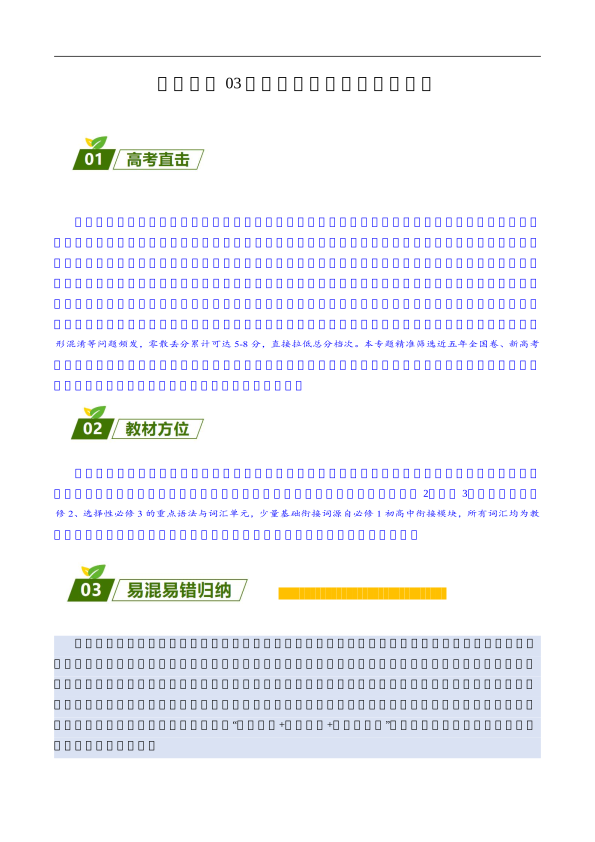
这是一份2026年高考英语终极冲刺讲义练习(全国通用)查漏补缺04易错动词时态和语态(原卷版+解析),共19页。试卷主要包含了 一般现在时 vs 一般过去时, 现在完成时 vs 一般过去时, 过去完成时 vs 一般过去时, 过去将来时 vs 一般过去时, succeed, achieve, cmplete等内容,欢迎下载使用。
注册成功
资料篮

在线客服
添加在线客服
获取1对1服务
官方微信
关注“教习网”公众号
打开微信就能找资料
赛课定制
添加在线客服
获取1对1定制服务
职称咨询
添加在线客服
获取1V1专业指导服务

免费福利

.png)

.png)
