 免费领取教师福利
若您为此资料的原创作者,认为该资料内容侵犯了您的知识产权,请扫码添加我们的相关工作人员,我们尽可能的保护您的合法权益。


这是一份浙江省杭州市滨江区2025年中考一模英语试卷(解析版),共6页。
第一节 阅读理解(共15小题,每小题2分,满分30分)
阅读下面短文,从每题所给的四个选项(A、B、C和D)中选出最佳选项。
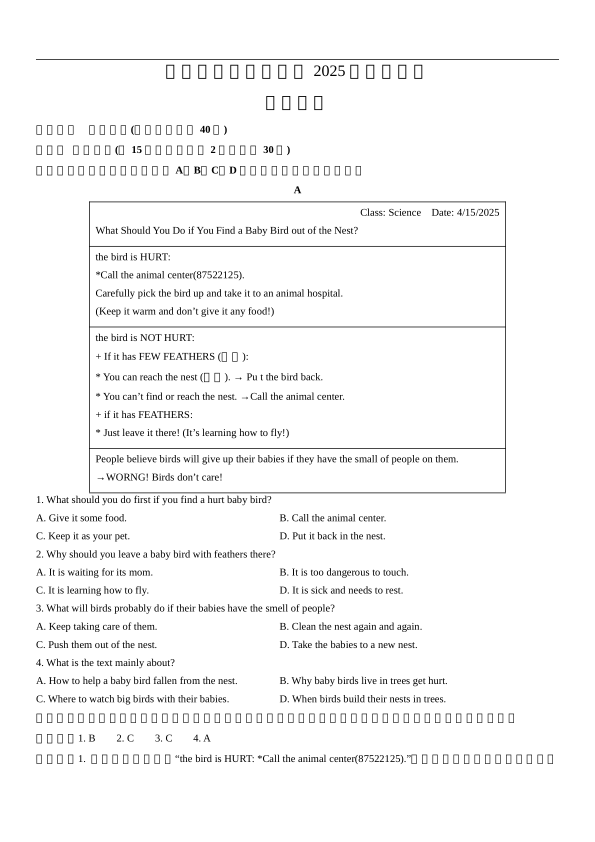
A
1. What is safe t use during a thunderstrm?
A. Telephnes.B. Mbile phnes.C. Cmputers.D. Radis.
2. What shuld yu d when caught utside during a thunderstrm?
A. Stand up tall.B. Lie n the grund.
C. Cver yur ears.D. Keep yur heels n the grund.
3. Where might yu read this text?
A. In a travel magazine.B. In a museum guidebk.
C. On a weather website.D. In a science fictin nvel.
【语篇解读】本文主要讲了雷雨天气户外和室内的一些注意事项。
【答案】1. B 2. C 3. C
【解析】1. 细节理解题。根据“Mbile phnes are safe”可知,手机是可以安全使用的。故选B。
2. 细节理解题。根据“Cver yur ears with yur hands...”可知,需要用手捂住耳朵。故选C。
3. 推理判断题。文章涉及雷雨天气的安全知识,所以可能在天气网站上看到。故选C。
B
Each spring brings a new blssm f wildflwers alng the highway I travel daily t wrk.
There is ne particular blue flwer that has always caught my eye. I’ve nticed that it blms (盛开) nly in the mrning hurs because the afternn sun is t warm fr it. Every day fr abut tw weeks, I see thse beautiful flwers.
Smetime in March this year, I started a wildflwer garden in ur yard. I can lk ut f the kitchen windw while ding the dishes and see the flwers. I’ve ften thught that thse lvely blue flwers frm the rad wuld lk great with ther wildflwers in ur yard. Every day I drve past the flwers thinking, “I’m getting late. I’ll stp n my way hme and dig them.” “Gee, I dn’t want t get my gd clthes dirty.” Whatever the reasn, I never stpped t dig them. My husband even gave me a flding shvel (铲子) fr that.
One day n my way hme frm wrk, I was sad t see that the pretty blue flwers were gne. I thught t myself, “Way t g, yu waited t lng! Yu shuld have dne it right away when yu saw them blming this sprung!”
A week ag, we were shcked t learn that my ldest sister has a brain tumr (肿瘤). Befre that, we had always thught that there wuld be plenty f time fr each ther. I culdn’t help but see the cnnectin between the pretty blue flwers and the relatinship between my sister and us. I d believe that Gd has given us sme time left t plant sme wnderful memries that will blm every year fr us.
And yes, if I see the blue flwers again, yu can bet I’ll stp and take them t my wildflwer garden.
4. When did the writer start her wildflwer garden?
A. Last winter.B. This spring.
C. Last summer.D. This autumn.
5. Why did the writer fail t dig up the blue flwers earlier?
A. She didn’t have a prper tl.B. The flwers were prtected by law.
C. She fund excuses fr herself.D. Her husband asked her nt t d it.
6. Why did the writer cnnect the blue flwers with her sister’s situatin?
A. Bth require special medical care.
B. Bth are cmmn things fr her in her daily life.
C. Bth are influenced by the weather.
D. Bth teach her t act quickly n imprtant things.
7. What des the writer mean by saying the underlined sentence in Paragraph 5?
A. Planting flwers can help her sister feel healthier.
B. Gd will help her sister get better frm the illness.
C. There’s nt enugh time t d things with her sister.
D. They shuld use their time t create lasting memries.
【语篇解读】本文讲述了作者通勤路上被一种蓝色野花吸引,却因各种借口迟迟未移植到自家花园,最终错过花期的故事。这个遗憾让她联想到被确诊脑瘤的姐姐,从而领悟到及时行动的人生哲理。
【答案】4. B 5. C 6. D 7. D
【解析】4. 细节理解题。根据“Smetime in March this year, I started a wildflwer garden in ur yard.”可知,作者是在今年三月开始种植野花花园的,即今年春天。故选B。
5. 细节理解题。根据“Every day I drve past the flwers thinking, ‘I’m getting late. I’ll stp n my way hme and dig them.’ ‘Gee, I dn’t want t get my gd clthes dirty.’ Whatever the reasn, I never stpped t dig them.”可知,作者为自己找了很多借口,比如时间不够、怕弄脏衣服等,导致未能及时挖取蓝花。故选C。
6. 推理判断题。根据“I culdn’t help but see the cnnectin between the pretty blue flwers and the relatinship between my sister and us.”以及前文作者因拖延而错过蓝花的经历,可以推断出蓝花和姐姐的情况都教会了作者要及时行动,不要拖延重要的事情。故选D。
7. 词句猜测题。根据划线句子“I d believe that Gd has given us sme time left t plant sme wnderful memries that will blm every year fr us.”可知,作者认为应该利用剩下的时间与姐姐一起创造美好的回忆,这些回忆会像花朵一样每年绽放。故选D。
C
Traditinal Chinese clthes reflect traditinal Chinese beauty, culture, and scial values. Here are sme f the mst famus types.
1. Hanfu
The Hanfu (Han clthing) dates back t ver 4,000 years ag. It became the natinal clthing at the Han Dynasty. It als had a far-reaching influence n neighbring Asian cuntries, such as Krea, Japan, and Vietnam. Nwadays, peple seldm wear Hanfu except n special situatins, such as festivals and wedding ceremnies.
Hanfu clthing includes:
yi (an pen crss-cllar (领子) garment (服饰));
pa (full-bdy garment wrn by men);
ru (an pen crss-cllar shirt);
shan (an pen crss-cllar shirt r jacket wrn ver the yi);
qun r chang(a skirt wrn by wmen r men);
ku (a type f trusers).
2. Qipa
Since the Qing Dynasty, Qipa has mainly develped int Beijing styles, Shanghai styles and Hng Kng styles. Beijing’s Qipa style is mre traditinal than the ther tw and the clrs are much brighter. Shanghai-style Qipa is mre business-like and frward-lking. It shws the latest fashin. Mre Western ideas are used in the designs and clrs. Hng-Kng-style Qipa is influenced greatly by Eurpean fashins.
3. Tang Suit
Tang suit actually nly dates back t the Qing Dynasty (1644—1911). As the Tang Dynasty was famus fr being pwerful, freigners called the verseas Chinese peple “the Tang peple” and the clthes they wre were called “Tang suits”. Traditinal Tang suits usually have Chinese characters n them t express gd luck r best wishes. Nwadays, Tang suits have becme a kind f frmal dress wrn n sme special situatins, such as Chinese New Year r wedding ceremnies.
4. The Zhngshan Suit
The Zhngshan suit is a type f men’s jacket. Dr Sun Zhngshan made it mre ppular. The design f Zhngshan suits mixes traditinal Chinese and Western clthing styles. Zhngshan suits have fur big pckets n the frnt, tw up and tw dwn. There are five central buttns n the frnt and three smaller buttns n each sleeve. Zhngshan suits can be wrn n frmal and daily situatins.
8. Which Hanfu clthing is the man in the picture wearing?
A. “shan”.B. “pa”.
C. “ru”.D. “chang”.
9. What des the underlined wrd “frward-lking” abut Qipa prbably mean?
A. clrfulB. mdern
C. simpleD. traditinal
10. What d the fur types f Chinese clthes have in cmmn?
A. They all date back t the Qing Dynasty.
B. They all have a great influence n ther cuntries.
C. They were all influenced greatly by western fashins.
D. They are all cnnected with traditinal Chinese culture.
11. What’s the purpse f the text?
A. T cmpare traditinal Chinese clthes with Western clthes.
B. T explain why Chinese peple n lnger wear traditinal clthes.
C. T discuss the influence f Chinese clthes n ther Asian cuntries.
D. T intrduce sme f the famus types f traditinal Chinese clthing.
【语篇解读】本文主要介绍了中国传统服饰,包括汉服、旗袍、唐装和中山装,并阐述了它们的历史、特点和文化意义。
【答案】8. B 9. B 10. D 11. D
【解析】8. 细节理解题。根据“pa (full-bdy garment wrn by men)”可知,图片中的男士穿的是“袍”。故选B。
9. 词义猜测题。根据“Shanghai-style Qipa is mre business-like and frward-lking. It shws the latest fashin.”可知,上海式旗袍更具商业性,展示最新的时尚,“frward-lking”指的是“现代的”或“时尚的”。故选B。
10. 细节理解题。根据“Traditinal Chinese clthes reflect traditinal Chinese beauty, culture, and scial values.”以及分别介绍了汉服、旗袍、唐装和中山装可知,它们都与中国传统文化紧密相连。汉服历史悠久,对周边国家有影响;旗袍有不同风格且融合了一些西方元素,但也基于中国传统文化;唐装体现了中国元素和美好祝愿;中山装融合中西风格,也是在中国传统文化基础上发展而来。故选D。
11. 主旨大意题。全文介绍了汉服、旗袍、唐装和中山装这四种中国传统服饰,目的是介绍一些著名的中国传统服装类型。故选D。
D
Mving with Muscles (肌肉)
Hw D Muscles Make Yu Mve?
Muscles can d tw things—they can cntract (收缩) and relax. A muscle gets shrter and thicker when it cntracts. When the muscle relaxes, it gets lnger and thinner.
Muscles make us mve by wrking tgether in pairs. Fr example, the upper part f yur arm has a biceps muscle (肱二头肌) and a triceps muscle (肱三头肌). This pair f muscles wrks tgether when yu bend (弯曲) yur arm at the elbw. As yur arm bends, tw things happen—the biceps muscle cntracts and the triceps muscle relaxes. As yu unbend yur arm, the triceps muscle cntracts and the biceps muscle relaxes.
Hw D Yu Cntrl Yur Muscles?
When yu want t mve in a certain way, yur brain sends signals (信号) t the muscles yu need t use. When yu want t bend yur arm at the elbw, yur brain sends ut tw signals. One signal ges t the biceps muscle and tells it t cntract. Anther signal ges t the triceps muscle and tells it t relax. Bth muscles wrk tgether t make yu bend yur arm.
Can Yu Cntrl All Yur Muscles?
The muscles that yu can cntrl are called vluntary muscles (随意肌). All the muscles that make yur bdy mve are vluntary muscles. Yu tell yur bdy that yu want t ride a bike r thrw a ball. Yur brain sends signals t the vluntary muscles that yu need t use. Yu cntrl yur vluntary muscles.
Yur bdy has muscles that yu d nt cntrl. These are called invluntary muscles. These muscles wrk n their wn. Fr example, yur heart is an invluntary muscle. It cntracts and relaxes as it beats. It beats n its wn. That is why yur heart keeps beating when yu are asleep.
12. Hw des the text explain the wrk f muscle pairs?
A. By using the example f biceps and triceps.
B. By listing all vluntary muscles in the bdy.
C. By describing the histry f muscle research.
D. By cmparing human muscles t animal muscles.
13. What might happen if the brain can’t send signals when bending the arm?
A. The arm wuld bend nrmally.
B. The arm muscles wuld cntract freely.
C. The arm wuld nt mve at all.
D. The arm wuld mve faster than usual.
14. What des the underlined wrd “That” in the last paragraph refer t?
A. Muscles can wrk tgether in pairs.
B. The heart is an invluntary muscle.
C. The brain sends signals t all muscles.
D. Vluntary muscles need signals t wrk.
15. What’s the text mainly abut?
A. Hw the brain sends signals t the muscles.
B. Hw many kinds f muscles there are in the bdy.
C. Hw muscles wrk and hw the brain cntrls them.
D. Hw the vluntary and invluntary muscles are different.
【语篇解读】本文介绍了肌肉如何工作以及大脑如何控制它们,包括肌肉的收缩和放松、肌肉对的协作、大脑发送信号控制运动的过程,以及随意肌和不随意肌的区别。
【答案】12. A 13. C 14. B 15. C
【解析】12. 推理判断题。根据“Muscles make us mve by wrking tgether in pairs. Fr example, the upper part f yur arm has a biceps muscle (肱二头肌) and a triceps muscle (肱三头肌). This pair f muscles wrks tgether when yu bend (弯曲) yur arm at the elbw”可知,文本通过使用肱二头肌和肱三头肌的例子来解释肌肉对的工作方式。故选A。
13. 推理判断题。根据“When yu want t bend yur arm at the elbw, yur brain sends ut tw signals. One signal ges t the biceps muscle and tells it t cntract. Anther signal ges t the triceps muscle and tells it t relax.”可知,如果大脑无法发送信号,手臂的肌肉将无法正常收缩和放松,因此手臂将无法移动。故选C。
14. 词义猜测题。根据“Yur bdy has muscles that yu d nt cntrl. These are called invluntary muscles. These muscles wrk n their wn. Fr example, yur heart is an invluntary muscle. It cntracts and relaxes as it beats. It beats n its wn. That is why yur heart keeps beating when yu are asleep.”(你的身体有你无法控制的肌肉。这些被称为不随意肌。这些肌肉会自己运动。例如,你的心脏是一块不随意肌。它在跳动时收缩和放松。它会自己跳动。这就是为什么你的心脏在你睡着的时候还在跳。)可知,下划线的“That”指的是心脏是一个不随意肌。故选B。
15. 主旨大意题。根据全文内容可知,文章主要讲述了肌肉如何工作以及大脑如何控制肌肉,同时还介绍了随意肌和不随意肌的区别。故选C。
第二节 任务型阅读(共5小题,每小题2分,满分10分)
阅读下面材料,从方框中所给的A-E五个选项中选出正确选项(其中有一项是多余选项),并回答最后小题。
A healthy lifestyle is very imprtant t us. It can nt nly keep us fit but als help us perfrm better in study. Here are sme ways t keep a healthy lifestyle.
T begin with, a prper diet is the base f gd health. Make sure t have three meals a day. We shuld include a lt f fresh vegetables and fruit in ur diet. ____16____ Instead f having a can f cla, we can chse a glass f fruit juice.
Ding sprts is necessary. We dn’t have t d t much exercise fr many hurs. ____17____ Fr example, we can simply take a walk during breaks r just climb the stairs instead f taking the elevatr. They are very easy t d but very useful. It imprves ur energy levels and imprves ur md.
Anther key is getting enugh sleep. Many f us stay up late t study. ____18____ We shuld have a regular sleep schedule and get 7 t 8 hurs f sleep each night. A gd night’s sleep will help us remember better and be ready fr a new day.
____19____ We ften face challenges and stress in ur studies and life. It’s imprtant t find ways t deal with stress, such as having a chat with ur friends, listening t music r reading bks. Keeping psitive can help us vercme difficulties.
All in all, with these healthy habits, we can get healthy and get the ability t study and grw.
Which way d yu think is the mst imprtant t keep a healthy lifestyle? Why?(不超过20词)
_______________________________20_______________________________
20. I think prper diet is mst imprtant because it prvides energy fr ur bdy.
【语篇解读】本文介绍了保持健康生活方式的几种方法。
【答案】16. B 17. E 18. C 19. A
【解析】16. 根据“Instead f having a can f cla, we can chse a glass f fruit juice.”可知,应该减少不健康饮料和垃圾食品的摄入,选项B“尽量少喝饮料少吃垃圾食品”符合语境。故选B。
17. 根据“We dn’t have t d t much exercise fr many hurs…They are very easy t d but very useful.”可知,简单的运动也很有用,选项E“简单的运动也能带来很大改变”符合语境。故选E。
18. 根据“Many f us stay up late t study”可知,熬夜不好,选项C“但这会影响我们的记忆力”符合语境。故选C。
19. 根据“We ften face challenges and stress…Keeping psitive can help us vercme difficulties.”可知,保持积极的态度很重要,选项A“关注心理健康”符合语境。故选A。
20. 开放性试题,言之合理即可。参考答案为I think prper diet is mst imprtant because it prvides energy fr ur bdy.
第二部分 语言运用(共三节,满分40分)
第一节 完形填空(共15小题,每小题1分,满分15分)
Life Is Beautiful is an Italian mvie that tells a pwerful stry abut a father’s lve during Wrld War II.
The mvie begins in the 1930s in a small Italian twn. Guid, a (n) ____21____ Jewish (犹太) man with a big smile, always makes peple laugh with his jkes and magic tricks. Guid ften tells his sn Gisuè, “Life is a ____22____! If yu smile and play fair, yu’ll always win!”
When Wrld War II begins, they are ____23____ t head t a cncentratin camp (集中营). Guid knws the camp is dangerus, ____24____ he wants t prtect his sn’s inncence (纯真). He invents a clever stry t explain the situatin t his sn: “This is all part f a big game, Gisuè! The winner’s prize is a REAL tank (坦克)!” He ____25____ makes up rules fr the “game”:
Getting pints: Gisuè gets pints fr hiding quietly, ____26____ the guards, and nt crying fr candy.
Lsing pints: If the guards see him r if he ____27____ hunger, he lses pints.
The big prize: If they earn 1,000 pints, they win a tank.
In the camp, the prisners (囚犯) wrk all day and are really tired. But Guid ____28____ his tiredness is part f the game. Guid says t his sn, “Lk hw many pints we gt tday!” He als tells him imaginative stries abut ____29____ “prgress” in the game. He describes hw ____30____ they are t winning the tank, making Gisuè’s eyes shine with ____31____.
As the war nears its end, Guid hides Gisuè inside a small metal bx. ____32____, a sldier catches Guid. When walking away, he passes Gisuè’s hiding bx. Knwing his ____33____ is watching, Guid thrws his leg high in the air like a silly and funny duck and winks at Gisuè. It is his final act f lve in life—making his sn ____34____ ne last time.
Life Is Beautiful leaves us with an imprtant ____35____: N matter hw hard life gets, we can always chse t see the gd, spread kindness, and prtect the nes we lve.
21. A. seriusB. hnestC. cheerfulD. hard-wrking
22. A. shwB. gameC. testD. trip
23. A. madeB. invitedC. allwedD. advised
24. A. thughB. becauseC. butD. if
25. A. almstB. stillC. neverD. even
26. A. prtectingB. findingC. avidingD. being
27. A. lies abutB. cmplains abutC. cares abutD. frgets abut
28. A. pretendsB. nticesC. realizesD. dubts
29. A. urB. theirC. itsD. his
30. A. slwB. farC. clseD. similar
31. A. kindnessB. fearC. regretD. excitement
32. A. UnluckilyB. GenerallyC. HpefullyD. Patiently
33. A. fatherB. guardC. prisnerD. sn
34. A. angryB. thankfulC. happyD. wrried
35. A. ruleB. lessnC. jkeD. prmise
【语篇解读】本文是一篇记叙文。文章主要讲述了意大利电影《美丽人生》中,父亲圭多在二战期间,为保护儿子吉苏的纯真,将集中营的苦难生活编造为一场游戏的动人故事。
【答案】21. C 22. B 23. A 24. C 25. D 26. C 27. B 28. A 29. B 30. C 31. D 32. A 33. D 34. C 35. B
【解析】21. 句意:圭多,一个面带灿烂笑容的开朗的犹太男子,总是用他的笑话和魔术逗人们笑。serius严肃的;hnest诚实的;cheerful乐观的,高兴的;hard-wrking努力工作的。根据“always makes peple laugh with his jkes and magic tricks.”可知,他很乐观,cheerful符合语境。故选C。
22. 句意:圭多经常告诉他的儿子吉苏:“生活就是一场游戏!”shw表演;game游戏;test测试;trip旅行。根据后文“He invents a clever stry t explain the situatin t his sn: ‘This is all part f a big game, Gisuè!’”可知,这里说生活是游戏,game符合语境。故选B。
23. 句意:当二战爆发时,他们被迫前往集中营。made使,让;invited邀请;allwed允许;advised建议。根据“When Wrld War II begins, they head t a cncentratin camp (集中营). Guid knws the camp is dangerus...”可知,集中营很危险,犹太人是被迫去的。be made t d sth. 表示“被迫做某事”,符合语境。故选A。
24. 句意:圭多知道集中营很危险,但他想保护儿子的纯真。thugh虽然;because因为;but但是;if如果。根据“Guid knws the camp is dangerus”和“he wants t prtect his sn’s inncence”可知,前后句是转折关系,知道危险却仍要保护儿子的纯真,but符合语境。故选C。
25. 句意:他甚至为这个“游戏”制定了规则。almst几乎;still仍然;never从不;even甚至。根据“He invents a clever stry t explain the situatin t his sn ... He even makes up rules fr the ‘game’”可知,在编造游戏故事基础上,还进一步制定规则,用even表递进。故选D。
26. 句意:吉苏因安静躲藏、避开守卫、不哭着要糖果而得分。prtecting保护;finding发现;aviding避开;being是。根据“Getting pints: Gisuè gets pints fr hiding quietly ... and nt crying fr candy”以及集中营的危险环境可知,要避开守卫才能不被发现而得分,aviding符合语境。故选C。
27. 句意:如果守卫看到他,或者他抱怨饥饿,他就会失分。lies abut关于……说谎;cmplains abut抱怨;cares abut关心;frgets abut忘记。根据“Lsing pints: If the guards see him r if he ... hunger, he lses pints”以及游戏设定是积极表现得分,负面表现失分可知,抱怨饥饿属于负面行为会失分,cmplains abut符合语境。故选B。
28. 句意:但圭多假装他的疲惫是游戏的一部分。pretends假装;ntices注意到;realizes意识到;dubts怀疑。根据“In the camp, the prisners wrk all day and are really tired. But Guid ... his tiredness is part f the game”可知,为了让儿子相信游戏,他假装疲惫是游戏环节,pretends符合语境。故选A。
29. 句意:他还给他讲关于游戏中“他们的”进展的富有想象力的故事。ur我们的;their他们的;its它的;his他的。根据“He als tells him imaginative stries abut ... ‘prgress’ in the game”可知,这里说的是父子在游戏中的进展,用their符合语境。故选B。
30. 句意:他描述他们离赢得坦克有多近,让吉苏的眼睛因兴奋而发亮。slw慢的;far远的;clse接近的;similar相似的。根据“He describes hw ... they are t winning the tank, making Gisuè’s eyes shine with ...”可知,是描述接近赢坦克让儿子兴奋。clse t表示“接近”,这里说接近赢得坦克,clse符合语境。故选C。
31. 句意:他描述他们离赢得坦克有多近,让吉苏的眼睛因兴奋而发亮。kindness善良;fear恐惧;regret后悔;excitement兴奋。根据前文描述接近赢坦克,儿子相信游戏,可知会很兴奋,excitement符合语境。故选D。
32. 句意:不幸的是,一名士兵抓住了圭多。Unluckily不幸地;Generally通常;Hpefully有希望地;Patiently耐心地。根据“As the war nears its end, Guid hides Gisuè inside a small metal bx. ..., a sldier catches Guid”可知,被士兵抓住是不好的事,Unluckily符合语境。故选A。
33. 句意:知道他的儿子在看着,圭多把他的腿高高地举到空中,像一只愚蠢而有趣的鸭子,向Gisue眨着眼睛。father父亲;guard守卫;prisner囚犯;sn儿子。根据“Knwing his ... is watching, Guid thrws his last act f lve in Gisuè—making his sn...”可知,是知道儿子在看,sn符合语境。故选D。
34. 句意:这是他一生中最后一次爱的行为——最后一次让他的儿子开心。angry生气的;thankful感激的;happy开心的;wrried担心的。根据“Knwing his sn is watching, Guid thrws his last act f lve in Gisuè—making his sn...”以及父亲一直努力保护儿子纯真、传递乐观可知,是让儿子开心,happy符合语境。故选C。
35. 句意:《美丽人生》给我们留下了重要的一课:无论生活多么艰难,我们总是可以选择看到美好的一面,传播善良,保护我们所爱的人。rule规则;lessn教训;jke笑话;prmise承诺。根据“Life Is Beautiful leaves us with an imprtant...: N matter hw hard life gets, we can always chse t see the gd, spread kindness, and prtect the nes we lve”可知,这里是电影给人们留下的启示,是电影传达的道理,lessn符合语境。故选B。
第二节 词汇运用(共15小题,每小题1分,满分15分)
A. 将方框中所给词语的适当形式填入短文中,每词仅用一次。
Once upn a time, there was a yung hrse. One day, an ld hrse asked him t help carry sme salt and he agreed prudly. He crssed a ____36____ n the way. He fell dwn ____37____ and sme salt gt int the water. The bag ____38____ nt s heavy. The hrse was happy. Next time, he was asked t carry cttn. Thinking ____39____ what happened last time, he fell int the river n purpse. But the cttn tk in water and was much ____40____. The hrse felt difficult t mve frward, regretting a lt.
【语篇解读】本文讲述了一匹年轻马匹的故事。
【答案】36. river 37. by accident 38. became 39. abut 40. heavier
【解析】36. 句意:他途中穿过一条河。根据“He crssed a…”结合备选词可知,这里指的是穿过一条河。river“河”,是可数名词,此处用单数形式。故填river。
37. 句意:他不小心摔倒了,一些盐掉进了水里。根据“He fell dwn…”结合备选词可知,这里指的是他不小心摔倒了。by accident“意外地;偶然地”,是固定搭配。故填by accident。
38. 句意:袋子变得不那么重了。根据“The bag…nt s heavy.”结合备选词可知,这里指的是袋子变得不那么重了。becme“变得”,句子时态是一般过去时,动词用过去式。故填became。
39. 句意:想着上次发生的事情,他故意掉进了河里。根据“Thinking…what happened last time…”可知,这里指的是想着上次发生的事情。think abut“思考”。故填abut。
40. 句意:但棉花吸了水,变得更重了。根据“the cttn tk in water and was much…”结合备选词可知,这里指的是棉花变得更重了。heavy“重的”,此处用比较级形式heavier,表示“更重”。故填heavier。
B. 阅读下面短文,根据括号内所给汉语注释写出单词的正确形式(每空一词)。
The 24 slar terms are part f Chinese culture. They date back t ____41____ (古代的) China.
Frm an ____42____ (早的) age, children learn knwledge abut slar terms. Thrugh lively lessns, children learn that the slar terms are nt just time markers but als guides fr healthy living.
The 24 slar terms are ____43____ (划分) int 4 grups based n seasns They influence peple’s lives a lt. Fr example, when the Beginning f Spring cmes, peple knw ____44____ (清晰) frm the weather that it’s time fr spring farming. Sme parents take their children t the cuntryside during certain slar terms. They let their kids experience different farming ____45____ (活动) and take phts f the beautiful cuntryside.
Sme children are even taught t ck traditinal fd abut the slar terms by ____46____ (他们自己). Parents think it’s a fun way t understand this Chinese ____47____ (象征). When a certain slar term ____48____ (到达) , sme families like t buy special things. Fr example, during the Winter Slstice, they may get dumplings.
Parents are children’s ____49____ (第一) teacher. They shuld set a gd example. They shuld fllw the 24 slar terms and ____50____ (提供) better help t their children.
【语篇解读】本文讲述了中国的二十四节气及其在文化中的重要性。
【答案】41. ancient 42. early 43. divided 44. clearly 45. activities 46. themselves 47. symbl 48. arrives 49. first 50. prvide/ffer
【解析】41. 句意:它们可以追溯到古代中国。ancient“古代的”,修饰China。故填ancient。
42. 句意:从早年起,孩子们就学习关于节气的知识。early“早的”,修饰age。故填early。
43. 句意:二十四节气根据季节划分为四组。divide“划分”,动词,这里是一般现在时的被动语态,应该用过去分词。故填divided。
44. 句意:例如,当立春到来时,人们可以从天气中清晰地知道是春耕的时候了。clearly“清晰”,副词修饰动词。故填clearly。
45. 句意:他们让孩子们体验不同的农耕活动,并拍摄美丽的乡村风景。activity“活动”,是可数名词,different修饰可数名词复数。故填activities。
46. 句意:一些孩子甚至被教自己烹饪与节气相关的传统食物。themselves“他们自己”,是反身代词。故填themselves。
47. 句意:父母认为这是一种有趣的方式来理解这个中国象征。symbl“象征”,是名词,Chinese symbl表示“中国象征”。故填symbl。
48. 句意:当某个节气到来时,一些家庭喜欢购买特别的东西。arrive“到达”,句子是一般现在时,主语是第三人称单数,动词用三单。故填arrives。
49. 句意:父母是孩子的第一任老师。first“第一”,是序数词。故填first。
50. 句意:他们应该遵循二十四节气,并为孩子提供更好的帮助。prvide/ffer“提供”,应用动词原形和fllw并列。故填prvide/ffer。
第三节 语法填空(共10小题,每小题1分,满分10分)
阅读下面短文,在空白处填入一个适当的词,或填入括号中所给单词的正确形式。
Exams aren’t just abut testing what we learn—they’re als a chance t imprve ur study skills. Here’s ____51____ we can make gd use f every exam.
Befre an exam, we can review what we ____52____ (learn) s far. We als d different types f practice t prepare ____53____ different tpics. In the last 10 minutes befre the exam, we can d ____54____ few simple prblems t build up the cnfidence and get in the right mind.
During the exam, we shuld fcus n answering each questin ____55____ (careful) . It is als a chance t practice wrking under pressure. We always plan hw ____56____ (use) ur time fr each part f the exam and decide the best rder t answer the questins. With mre practice, it’s easy t find a way because the best methd fr ____57____ (we) is the ne that wrks well.
After the exam, ne f ____58____ (imprtant) things is t take time t think abut hw we did. We lk at ur mistakes, wrk ut where we went wrng ____59____ think hw we managed ur time. We can write dwn the knwledge in a persnal “exam handbk” and read it befre the next exam t remember the past mistakes and imprtant learning pints.
By fllwing these ____60____ (step), we can find that we make gd use f every exam and keep learning.
【语篇解读】本文讲述了如何充分利用考试来提升学习技能的方法。
【答案】51. hw 52. have learned 53. fr 54. a 55. carefully 56. t use 57. us 58. the mst imprtant 59. and 60. steps
【解析】51. 句意:这里是我们如何充分利用每一次考试的方法。根据“we can make gd use f every exam.”可知,此处需要填入一个表示方式的词,hw符合句意。故填hw。
52. 句意:在考试前,我们可以复习到目前为止所学的内容。根据“s far”可知,时态是现在完成时,主语是we,助动词用have。故填have learned。
53. 句意:我们也做不同类型的练习来准备不同的主题。prepare fr是固定搭配,表示“为……做准备”。故填fr。
54. 句意:在考试前的最后10分钟,我们可以做几个简单的问题来建立信心并进入正确的心态。a few表示“几个”,固定搭配。故填a。
55. 句意:在考试期间,我们应该专注于仔细回答每个问题。修饰动词answer需要用副词形式carefully。故填carefully。
56. 句意:我们总是计划如何利用时间来完成考试的每个部分。hw t d是固定结构,表示“如何做”。故填use。
57. 句意:通过更多的练习,很容易找到一种方法,因为对我们来说最好的方法就是效果最好的方法。此处需要填入宾格代词us,作介词fr的宾语。故填us。
58. 句意:考试后,最重要的事情之一是花时间思考我们的表现。根据“ne f”可知,空处需要用imprtant的最高级形式the mst imprtant。故填the mst imprtant。
59. 句意:我们看看自己的错误,找出哪里出了问题,并思考我们是如何管理时间的。此处需要并列连词and连接两个动作。故填and。
60. 句意:通过遵循这些步骤,我们可以发现我们充分利用了每一次考试并不断学习。step是可数名词,根据“these”可知用复数形式steps。故填steps。
第三部分 书面表达(共1小题,满分20分)
61. 学校英语校刊正在举行主题为“Life skills fr the future”的征文活动。哪些生活技能你认为很重要?你平时是如何做的?请从下图中选择两类技能写一篇英语短文进行投稿,也可自行补充其他生活技能。
要求:词数80左右;短文首尾已给出,不计入总词数。
【答案】Life skills are imprtant fr ur future. Amng the many skills, I believe cking and effective cmmunicatin are necessary. Cking is a basic daily living skill that helps us stay healthy and independent. I ften help my parents in the kitchen, learning hw t prepare simple meals like fried rice and vegetable sup. This nt nly saves mney but als ensures I eat nutritius fd.
Cmmunicatin, n the ther hand, is a imprtant scial skill. It helps us build strng relatinships and wrk well with thers. I practice this by actively listening t my friends and expressing my thughts clearly during grup discussins. This has imprved my teamwrk and prblem-slving abilities.
All in all, if we try ur best t imprve these life skills nw, we’ll be better prepared fr the future.A. Pay attentin t the mind health.
B. Try t take fewer drinks and less junk fd.
C. But it can influence ur memry.
D. Making mre friends is als a gd way.
E. The simple nes can make a big difference.
river abut heavy becme by accident
Life skills are imprtant fr ur future.___________________________________________________________________________________________________________________________________________________ ________________________________________________________________________________________________________________________________________________________________________________________________________________________________________________________________________________________________________________
All in all, if we try ur best t imprve these life skills nw, we’ll be better prepared fr the future.
这是一份浙江省杭州市滨江区2025年中考一模英语试卷(解析版),共12页。
这是一份浙江省杭州市滨江区2025年中考一模英语试题及答案,共11页。试卷主要包含了第一部分 阅读理解,第二部分 语言运用,第三部分 书面表达等内容,欢迎下载使用。
这是一份浙江省杭州市萧山区2025年中考一模英语试卷(解析版),共13页。
注册成功
资料篮

在线客服
添加在线客服
获取1对1服务
官方微信
关注“教习网”公众号
打开微信就能找资料
赛课定制
添加在线客服
获取1对1定制服务
职称咨询
添加在线客服
获取1V1专业指导服务

免费福利

.png)
.png)
.png)
