 免费领取教师福利



若您为此资料的原创作者,认为该资料内容侵犯了您的知识产权,请扫码添加我们的相关工作人员,我们尽可能的保护您的合法权益。

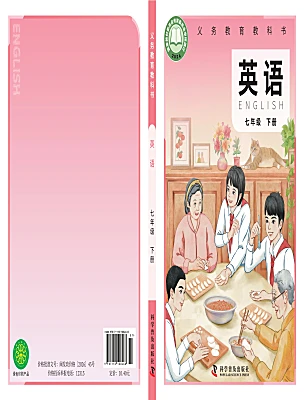
这是一份仁爱科普版(2024)七年级下册(2024)Unit 11 Rules Matter !表格教案,共37页。
= 1 \* ROMAN \* MERGEFORMAT I. Material analysis
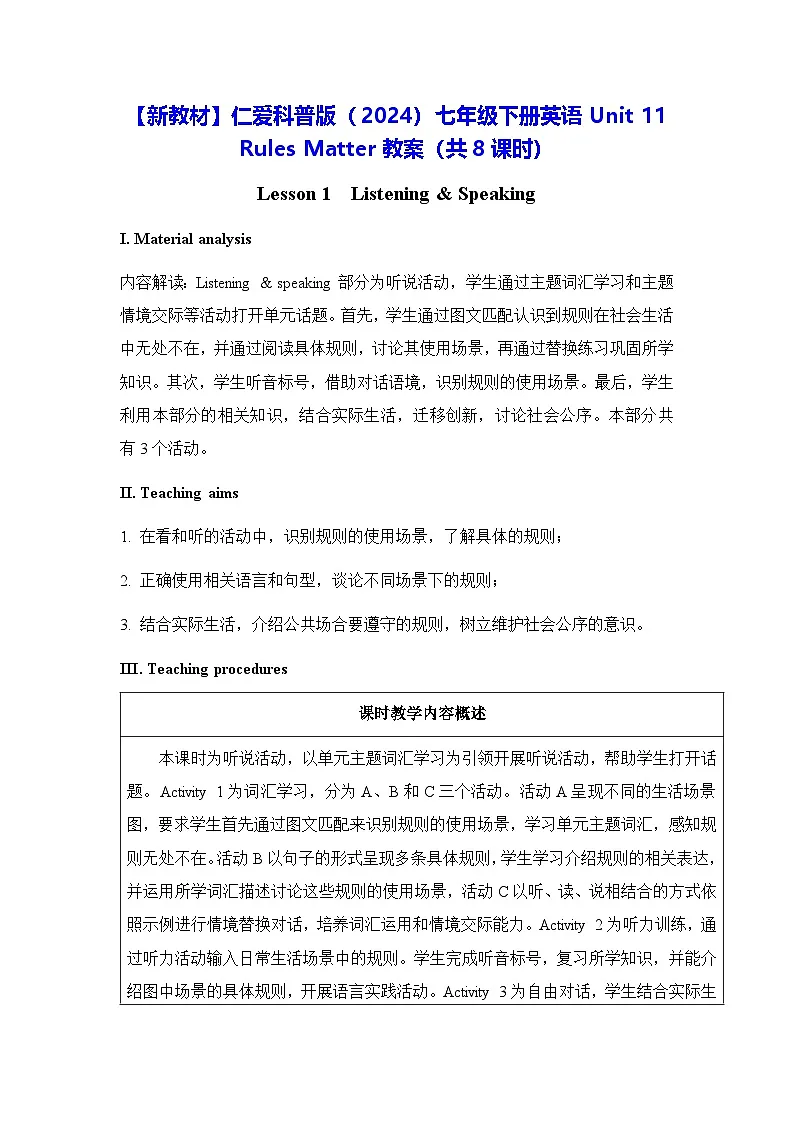
内容解读:Listening & speaking部分为听说活动,学生通过主题词汇学习和主题情境交际等活动打开单元话题。首先,学生通过图文匹配认识到规则在社会生活中无处不在,并通过阅读具体规则,讨论其使用场景,再通过替换练习巩固所学知识。其次,学生听音标号,借助对话语境,识别规则的使用场景。最后,学生利用本部分的相关知识,结合实际生活,迁移创新,讨论社会公序。本部分共有3个活动。
= 2 \* ROMAN \* MERGEFORMAT II. Teaching aims
在看和听的活动中,识别规则的使用场景,了解具体的规则;
正确使用相关语言和句型,谈论不同场景下的规则;
结合实际生活,介绍公共场合要遵守的规则,树立维护社会公序的意识。
= 3 \* ROMAN \* MERGEFORMAT III. Teaching prcedures
= 4 \* ROMAN \* MERGEFORMAT IV. Blackbard design
Unit 11 Rules Matter
Lessn 2 Functin and Prnunciatin
= 1 \* ROMAN \* MERGEFORMAT I. Material analysis
内容解读:Functin部分为功能部分,通过“听”的视角切入单元“规则”的主题,结合语用知识学习,开展听、读、说、写、看语言综合运用能力训练。首先,学生通过两两对话的形式,谈论图片中的活动,为听力活动做准备。听力内容围绕王俊峰和赵立谈论班级规则展开。第一遍听后了解王俊峰先赵立道歉的原因。第二遍听后完成填空,进一步梳理具体的班规。之后,学生两两合作,结合实际,借助语言支架,谈论校园规则,达到学以致用的目的。本部分共有4个活动。
Prnunciatin部分为语音训练,学习字母x和字母组合a、i/y、、u在单词中的读音规则,把握句子的节奏和语调。首先,学生通过听音感知含有以上字母及字母组合发音的单词。接着,学生通过听音跟读掌握发音,归纳读音规则。随后通过听音圈词,辨识发音,培养学生见词能读的能力,内化所学知识。最后,学生通过chant感知句子的节奏和语调, 把握朗读时的抑扬顿挫和韵律感,提升语音技能。本部分共有4个活动。
= 2 \* ROMAN \* MERGEFORMAT II. Teaching aims
正确朗读单词,根据字母x和字母组合a、i/y、、u的读音规则拼读单词,做到见词能读,听音能辨;
感知句子的节奏和语调, 把握朗读时的抑扬顿挫;
获取、梳理对话人物所在班级的班规,了解如何得体地劝导他人遵守规则;
借助语言支架,结合实际,讨论并介绍学校的校规,提升明规守序的意识。
= 3 \* ROMAN \* MERGEFORMAT III. Teaching prcedures
= 4 \* ROMAN \* MERGEFORMAT IV. Blackbard design
Unit 11 Rules Matter
Lessn 3 Thinking Skills and Reading Strategies
= 1 \* ROMAN \* MERGEFORMAT I. Material analysis
内容解读:Thinking Skills部分为思维技能学习,借助因果关系图分析事件的前因后果与内在逻辑,让思维可视化。首先是思维技能的学习理解活动,首先,学生了解思维技能的定义,通过看图和阅读文本,学习利用因果关系图了解文本的内在逻辑,初步掌握思维技能。然后,学生阅读新文本,完成因果关系图,呈现事件的前因后果,巩固和内化所学。最后迁移创新,学生与同伴谈论其他交通事故,尝试找出事故中的因果关系,在新语境中运用所学完成任务。本部分共有3个活动。
Reading Strategies部分为阅读策略学习,内容为通过读前、读中、读后的持续提问探究文本主题意义。首先是该策略的学习理解和应用实践活动,学生通过阅读策略的定义和说明,初步感知如何提问,然后,学生通过预览标题,读前提问预测、读中检测预测并持续提问、读后联系生活继续提问,理解语篇内容,获取细节信息,将文本联系生活,探究主题意义。最后迁移创新,学生阅读新的语篇,在读前、读中、读后分别提出问题,邀请同桌回答,巩固该阅读策略。本部分共有3个活动。
= 2 \* ROMAN \* MERGEFORMAT II. Teaching aims
运用因果分析的思维技能绘制因果关系图,了解事件的前因后果和内在逻辑;
结合实际生活,运用因果分析的思维技能组织语言,谈论其他交通事故,理清事件的前因后果;
运用读前、读中、读后持续提问的阅读策略,探究文本的主题意义,并结合实际表达观点,谈论家规及其重要性。
= 3 \* ROMAN \* MERGEFORMAT III. Teaching prcedures
= 4 \* ROMAN \* MERGEFORMAT IV. Blackbard design
= 4 \* ROMAN \* MERGEFORMAT V. Teaching material
Thinking Skills: Understanding cause and effect
Exercise 1 Fill in the table belw with the prbable causes r effects in yur wn wrds.
Exercise 2 Read the fllwing CAUSES r EFFECTS. Then find ut their relatinships, and cnnect them int cmplete sentences.
1. ① She made ne big mistake. ② She was very tired.
2. ① Mary studied hard fr the chemistry exam. ② She gt an A+.
3. ① Schl canceled the ftball game. ② It rained heavily.
4. ① It is t late. ② They cannt g t cinema.
5. ① He didn't call the plice. ② The plice tk n actin.
Reading Strategies: Asking Questins
Exercise 1 Read the title and ask yur wn questins. Then after reading, answer them.
My Schl Day
I usually get up at 6:30 in the mrning. Then I brush my teeth and wash my face. After that, I have breakfast. I ften eat bread and drink milk. At 7:30, I g t schl by bike. My first class starts at 8:00. We have fur classes in the mrning. At 12:00, it's time fr lunch. I usually have rice, vegetables and meat. In the afternn, we have three classes. Schl ends at 4:30. Then I g hme and d my hmewrk. After dinner, I watch TV fr a while and then g t bed at 9:00.
e.g. ① Hw des the writer g t schl?
② When des the writer usually get up?
What des the writer have fr lunch?
Exercise 2 Raise questins befre, during and after reading the text.
Rules Matter
In the library, there are sme simple rules. When we g in, we shuld walk slwly and nt run. After we sit dwn, we can't talk r make any nise. We must keep quiet t let ther peple read. When we finish reading, we shuld put the bks back t their prper places. These rules help the library be a nice place. S, in the library, rules matter a lt.
e.g. Befre reading:
What rules d yu think there are in the library?
During reading:
Which rule is the mst difficult t fllw accrding t the text?
When shuld we return the bks in the library?
After reading:
Hw can we help peple fllw the library rules?
What will happen if nbdy fllws the library rules?
Unit 11 Rules Matter
Lessn 4 Theme Reading
= 1 \* ROMAN \* MERGEFORMAT I. Material analysis
内容解读:Theme Reading部分为主题阅读活动,帮助学生运用本单元所学的因果分析思维技能和持续提问的阅读策略开展主题阅读。首先,学生通过两两合作,讨论图中场景,并回答问题,帮助学生了解在公共场合要遵守的规则,为语篇的学习做好准备。然后,学生在读前预览标题,并提出一个问题,通过初读语篇,找出该问题的答案,巩固本单元所学的阅读策略,提升策略的运用能力。然后再读文本,回答问题,获取细节信息,并完成因果关系图,帮助学生落实思维技能。最后,学生通过完成选词填空的练习,巩固话题词汇。本部分共有5个活动。
= 2 \* ROMAN \* MERGEFORMAT II. Teaching aims
运用读前、读中、读后持续提问的阅读策略,获取文本的主要内容和关键信息,探究文本的主题意义;
借助因果分析图梳理文本的内在逻辑,了解遵守规则的重要性;
联系实际谈论生活中其他场合的规则及其重要性,强化遵规守纪的意识。
= 3 \* ROMAN \* MERGEFORMAT III. Teaching prcedures
= 4 \* ROMAN \* MERGEFORMAT IV. Blackbard design
Unit 11 Rules Matter
Lessn 5 Grammar in Use
= 1 \* ROMAN \* MERGEFORMAT I. Material analysis
内容解读:Grammar in Use部分为语法学习与使用,包括反身代词及情态动词must/mustn’t、shuld/shuldn’t的形式、意义和用法。在反身代词部分,首先,学生通过观察图文,感知反身代词的表达形式和基本意义,在此基础上,归纳总结反身代词的表达形式,并在新语境中填写正确的反身代词,巩固所学。在情态动词部分,学生通过对话感知must/mustn’t、shuld/shuldn’t的形式和意义,在此基础上,学习如何在语境中使用must/mustn’t、shuld/shuldn’t, 并总结这些情态动词的用法。最后,学生在新语境中用shuld和shuldn't将规则补充完整,并思考这些规则的使用场景,完成匹配活动。本部分共有6个活动。
= 2 \* ROMAN \* MERGEFORMAT II. Teaching aims
在语境中理解反身代词和情态动词must/mustn’t、shuld/shuldn’t的形式、意义和用法;
归纳总结反身代词的表达形式,并对比情态动词must和shuld在形式、意义和使用上的区别;
在新语境中运用所学语法知识,描述不同生活场景下的规则,并树立规则意识。
= 3 \* ROMAN \* MERGEFORMAT III. Teaching prcedures
= 4 \* ROMAN \* MERGEFORMAT IV. Blackbard design
Unit 11 Rules Matter
Lessn 6 Oral Cmmunicatin
= 1 \* ROMAN \* MERGEFORMAT I. Material analysis
内容解读:Oral Cmmunicatin部分为口语交际活动,采取“以听促说”的形式,引导学生拓展单元“规则”话题,开展口头语言交际活动。首先听音标号,认识公园中的指示牌,再根据听力内容填写表格,了解在公园中要遵守的规则。在完成听力活动后,利用所给活动素材和语言提示进行小组讨论,谈论更多生活场景中要遵守的规则。本部分共分为2个活动。
= 2 \* ROMAN \* MERGEFORMAT II. Teaching aims
运用所学听力策略获取信息,了解公园中要遵守的规则;
正确识别公园中不同指示牌的含义,并树立规则意识;
正确使用目标语言谈论更多生活场景中要遵守的规则。
= 3 \* ROMAN \* MERGEFORMAT III. Teaching prcedures
= 4 \* ROMAN \* MERGEFORMAT IV. Blackbard design
Unit 11 Rules Matter
Lessn 7 Reading fr Writing
= 1 \* ROMAN \* MERGEFORMAT I. Material analysis
Reading fr Writing部分为以读促写活动,培养学生的书面表达能力。首先,学生通过阅读范文,获取有关“我家的派对规则”的相关信息和篇章结构,并借助因果关系图梳理制定派对规则的前因后果。接着是迁移创新类活动,学生运用因果分析的思维技能深入思考写作内容,绘制因果关系图,在新情景中介绍规则制定的前因后果,巩固本单元的思维技能。然后,学生根据提供的写作模板,起草作文,完成作文初稿。接着对照范文检查初稿,修改后定稿。最后学生与同伴交换作文,根据评价量表进行评价。本部分共有5个活动。
= 2 \* ROMAN \* MERGEFORMAT II. Teaching aims
基于写作目的、文体和要求,分析课文结构,列出制定规则的前因后果;
绘制因果关系图,谋篇布局,拟定框架,完成写作任务;
通过自评和互评,学会反思,改进文章的结构、内容和语言。
= 3 \* ROMAN \* MERGEFORMAT III. Teaching prcedures
= 4 \* ROMAN \* MERGEFORMAT IV. Blackbard design
Unit 11 Rules Matter
Lessn 8 Prject and Review
= 1 \* ROMAN \* MERGEFORMAT I. Material analysis
Prject部分为实践项目活动,基于单元“规则”主题,学习与应用跨学科知识和社会文化知识,设计校园指示牌,学会使用语言做事情。首先,学生通过观察公共指示牌,回答问题,了解指示牌传递的信息及使用场景,认识到它们在日常生活中的重要性,并通过图文匹配,了解指示牌的功能。然后,学生以小组形式设计校园指示牌,并与同伴讨论要设计的校园指示牌的类型与功能,最后,学生与全班同学分享,完成项目实践活动,体会运用所学知识解决现实生活中真实问题的乐趣,促进语言能力、文化意识、思维品质和学习能力等协同发展。本部分有3个活动。
Review部分为单元复习,通过听说活动和阅读理解回顾单元主题,并对单元的主题词汇和语法项目进行复习。首先,学生听录音完成表格,了解不同国家的交通规则,并讨论中西方交通规则的不同,加深对单元主题知识的理解。其次,学生根据指示牌的提示完成句子,复习描述规则的表达方式,巩固和内化词汇知识,提高词汇运用能力。接着,学生通过看图写话,在新情境中使用情态动词must/mustn’t、shuld/shuldn’t,在具体语境中使用语法知识,提升语法知识的实践应用和迁移创新能力。最后,学生阅读短文,完成阅读任务,理解关键信息,帮助学生提升综合阅读能力。本部分共有4个活动。
= 2 \* ROMAN \* MERGEFORMAT II. Teaching aims
通过听说读写的活动,复习巩固本单元话题词汇和语法;
通过设计校园指示牌的方式,综合所学语言介绍校园指示牌的类型与功能;
通过听、读活动,了解中西方在交通规则和餐桌礼仪规则等方面的不同,尊重多元文化;
主动反思和评价自我表现,促进自我监督式学习。
= 3 \* ROMAN \* MERGEFORMAT III. Teaching prcedures
= 4 \* ROMAN \* MERGEFORMAT IV. Blackbard design
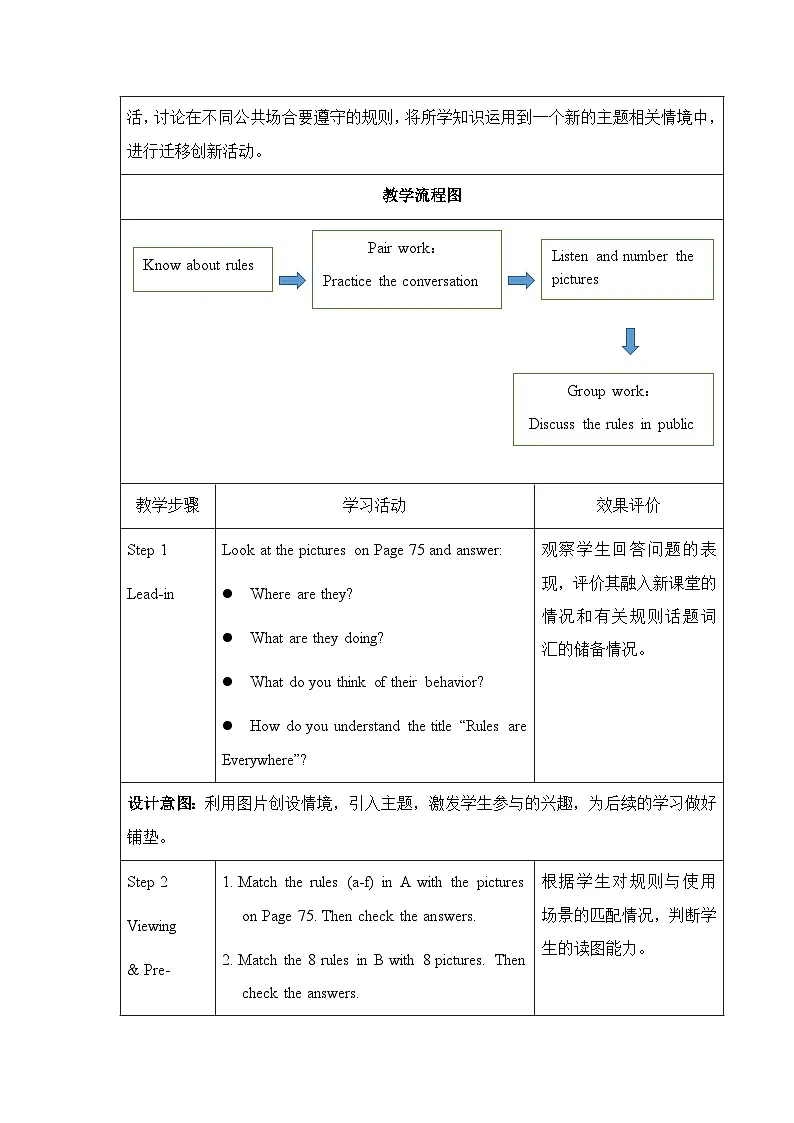
课时教学内容概述
本课时为听说活动,以单元主题词汇学习为引领开展听说活动,帮助学生打开话题。Activity 1为词汇学习,分为A、B和C三个活动。活动A呈现不同的生活场景图,要求学生首先通过图文匹配来识别规则的使用场景,学习单元主题词汇,感知规则无处不在。活动B以句子的形式呈现多条具体规则,学生学习介绍规则的相关表达,并运用所学词汇描述讨论这些规则的使用场景,活动C以听、读、说相结合的方式依照示例进行情境替换对话,培养词汇运用和情境交际能力。Activity 2为听力训练,通过听力活动输入日常生活场景中的规则。学生完成听音标号,复习所学知识,并能介绍图中场景的具体规则,开展语言实践活动。Activity 3为自由对话,学生结合实际生活,讨论在不同公共场合要遵守的规则,将所学知识运用到一个新的主题相关情境中,进行迁移创新活动。
教学流程图
Pair wrk:
Practice the cnversatin
Listen and number the pictures
Knw abut rules
Grup wrk:
Discuss the rules in public
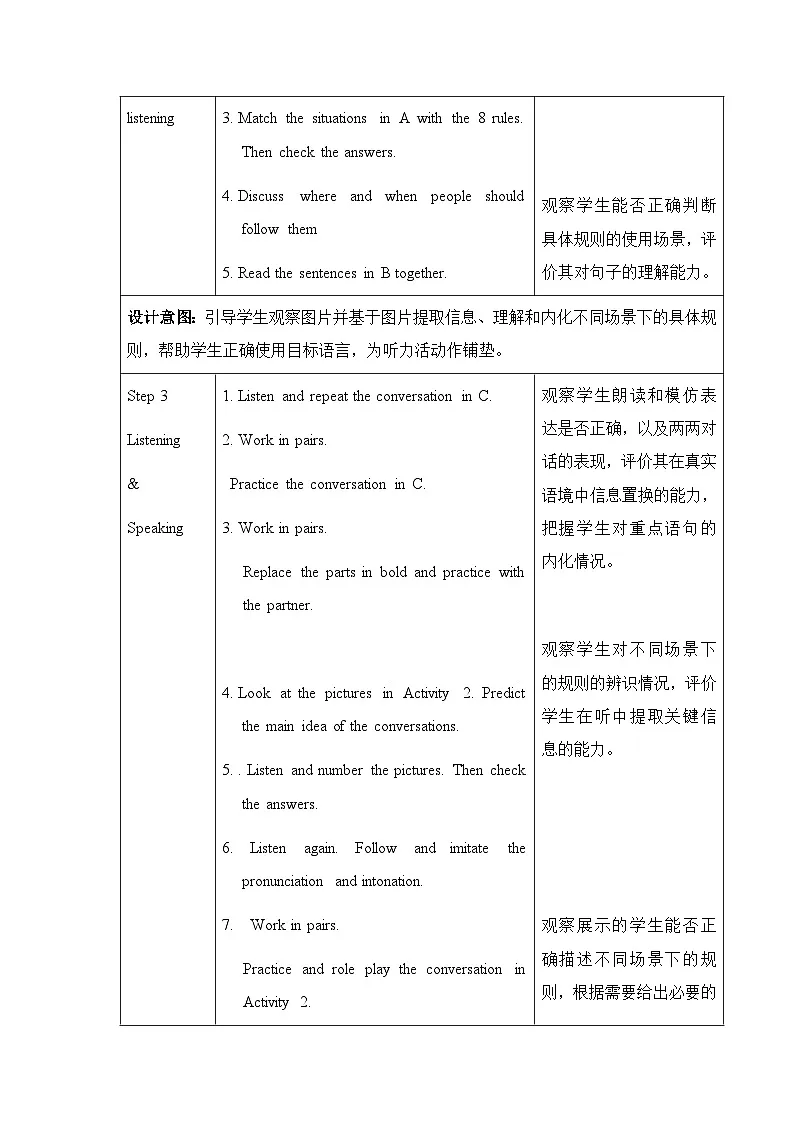
教学步骤
学习活动
效果评价
Step 1
Lead-in
Lk at the pictures n Page 75 and answer:
Where are they?
What are they ding?
What d yu think f their behavir?
Hw d yu understand the title “Rules are Everywhere”?
观察学生回答问题的表现,评价其融入新课堂的情况和有关规则话题词汇的储备情况。
设计意图:利用图片创设情境,引入主题,激发学生参与的兴趣,为后续的学习做好铺垫。
Step 2
Viewing
& Pre-
listening
Match the rules (a-f) in A with the pictures n Page 75. Then check the answers.
Match the 8 rules in B with 8 pictures. Then check the answers.
Match the situatins in A with the 8 rules. Then check the answers.
Discuss where and when peple shuld fllw them
Read the sentences in B tgether.
根据学生对规则与使用场景的匹配情况,判断学生的读图能力。
观察学生能否正确判断具体规则的使用场景,评价其对句子的理解能力。
设计意图:引导学生观察图片并基于图片提取信息、理解和内化不同场景下的具体规则,帮助学生正确使用目标语言,为听力活动作铺垫。
Step 3
Listening
&
Speaking
Listen and repeat the cnversatin in C.
Wrk in pairs.
Practice the cnversatin in C.
Wrk in pairs.
Replace the parts in bld and practice with the partner.
Lk at the pictures in Activity 2. Predict the main idea f the cnversatins.
. Listen and number the pictures. Then check the answers.
Listen again. Fllw and imitate the prnunciatin and intnatin.
Wrk in pairs.
Practice and rle play the cnversatin in Activity 2.
Intrduce the rules based n the infrmatin in listening.
观察学生朗读和模仿表达是否正确,以及两两对话的表现,评价其在真实语境中信息置换的能力,把握学生对重点语句的内化情况。
观察学生对不同场景下的规则的辨识情况,评价学生在听中提取关键信息的能力。
观察展示的学生能否正确描述不同场景下的规则,根据需要给出必要的指导。
设计意图:通过听读活动,引导学生获取语料中关于不同场景下的规则的关键信息,在交流中运用所学,内化语言,为后续语言输出奠定基础。
Step 4
Pst-listening
Wrk in grups.
Each grup chses ne situatin and discuss the rules used in the situatin. Write dwn as many rules as pssible.
Sme students share the rules in public in class.
观察学生在学习活动中的表现,评价其在真实语境中综合运用所学知识的情况。
设计意图:引导学生联系实际生活,介绍在不同公共场合要遵守的规则,用所学语言做事情,实现迁移创新。
Unit 11 Rules Matter
Lessn 1 Listening & Speaking
Rules arund us
Rules:
traffic rules class rules shpping rules eating rules family rules library rules
What …rules shuld we fllw?
课时教学内容概述
本课时是功能部分和语音训练。
Functin部分结合语用知识,从“听”的视角切入单元主题。学生通过听音频,理解对话内容和意义,掌握如何介绍班级规则以及用得体的语言劝导他人遵守班规。Activity 1为听前热身讨论活动,通过呈现图片,讨论图中行为正确与否,复习校园规则的相关表达,为听力活动作准备。Activity 2为听中学习理解类活动。学生听后回答问题,了解王俊峰和赵立的对话内容。Activity 3为听后应用实践活动,学生听音填写班规,梳理对话中的细节信息,应用所学话题的词汇和功能句。Activity 4为听后迁移创新类活动,学生联系生活,讨论并介绍自己学校的校规,将所学的功能句运用到实际生活中,提高学生使用英语得体、恰当地与他人进行沟通和交流的能力。
Prnunciatin部分为语音训练,从语音训练和歌谣的形式引入单元话题。Activity 1帮助学生感知语音现象。学生通过跟读和模仿学习理解并感知字母组合a、i/y、、u的发音。Activity 2帮助学生归纳语音规则。学生通过跟读单词及其发音,分析、总结归纳字母x和字母组合a、i/y、、u的发音规则。Activity 3帮助学生内化所学知识。通过听音圈词,辨别同一字母组合在不同单词中的发音差异,提高发音的准确性,在应用实践中加深理解所学语音知识。Activity 4帮助学生提升语音技能。通过听读chant,感知chant的节奏、语调和韵脚, 把握朗读时的抑扬顿挫,提升语音技能。
教学流程图
Pair wrk:
Talk abut the behavir in the pictures
Pair wrk:
Talk abut the schl rules
First listening:
Answer questins
Functin
Secnd listening:
Cmplete the classrm rules
Listen and read
Listen and circle
Sum up the prnunciatin rules f sme grups f letters and the imprtance f the rhythm and intnatin
Chant:
Listen and fllw
Prnunciatin
Practice the chant
教学步骤
学习活动
效果评价
Step 1
Lead-in
Lk at the pictures. Observe the behavir and talk abut what we shuld and shuldn’t d.
Wrk in pairs.
Discuss the schl rules in the pictures.
观察学生回答问题的表现,了解其有关校园规则的词汇储备情况。
设计意图:通过谈论图片导入本节课的教学情境,激活已知,为后续的语言学习做好铺垫。
Step 2
Listening
&
Speaking
Lk at the picture f Wang Junfeng and Zha Li talking in the classrm, fcus n the given questin and predict the pssible answers.
Listen t the cnversatin and answer the questin in Activity 2.
Why did Wang Junfeng say srry t Zha Li?
Then check the answers.
Listen again and cmplete the classrm rules. Then check the answers.
Listen and repeat.
Wrk in pairs.
Rle play the cnversatin and shw it in class.
根据学生的回答,判断学生读图以及预判听力内容的能力。
根据学生回答问题的表现,评价学生获取关键信息的能力。
观察角色扮演展示中学生表现,根据需要给出必要指导和反馈。
设计意图:通过听音频回答问题并填写班规,培养学生提取关键信息的能力;通过角色扮演促其内化所学,为后续的迁移活动做好准备。
Step 3
Pair Wrk
Talk abut the schl rules in real life. 2. Sme students share the schl rules in class. Other students evaluate and add mre.
根据学生表现,评价其综合运用所学词语、句型和结构的情况,给予必要指导和反馈。
设计意图:在迁移创新的语境中,谈论自己学校的校规,帮助学生正确使用目标语言,学以致用,发展语言能力。
Step 4
Prnunciatin
Read the text in Activity 1 individually. Pay attentin t the prnunciatin f the clred letters.
Listen and repeat the text.
Listen and repeat the sunds and wrds alud in Activity 2.
Read alud and sum up the prnunciatin rules f the letter “x” and sme grups f letters(a、i/y、、u).
Read alud the new wrds with the same grups f letters accrding t the prnunciatin rules.
Listen t the wrds in Activity 3 and circle the wrd with a different sund in each grup. Then check the answers.
Observe the stress mark in the cnversatins in Activity 4 and try t read the chant individually.
Listen t the chant and repeat. Pay attentin t the rhythm and intnatin.
Practice the chant and try t read the chant quickly and fluently.
观察学生跟读、根据规则读新词以及辩词单词的表现,判断其对语音规则掌握和运用的情况。
观察学生在朗读chant时是否有节奏且注意语音语调,给予必要指导和反馈。
设计意图:通过跟读、朗读单词、识别单词等一系列活动,培养拼读能力;通过跟读和朗读chant,感知节奏、语调和韵脚,内化所学语音知识,把握朗读时的语调和节奏感,提升语音技能。
Unit 11 Rules Matter
Lessn 2 Functin and Prnunciatin
Functin
What class rules d yu have:
Cme t schl n time.
Listen t thers carefully.
What ther rules d yu have?
Prnunciatin
a i/y u x
[əʊ] [ɔɪ] [u:] [ʊ] [aʊ] [u:] [ʌ] [ks] [gz]
课时教学内容概述
本课时为思维技能和阅读策略的学习。
Thinking Skills部分为“因果分析”思维技能的学习。Activity 1为学习理解活动,借助图片、文本和因果关系图,帮助学生学习通过因果关系图的方式梳理文本信息,了解事件的内在逻辑,初步掌握思维技能。Activity 2为应用实践活动,根据短文内容开
展应用实践活动,完成事故的因果关系图,巩固和内化Activity 1中所学的技能。Activity 3为迁移创新活动。学生两两合作,结合实际生活,谈论其他交通事故,运用因果分析的思维技能,理清事件的前因后果,在新语境中运用所学。
Reading Strategies部分为“读前、读中、读后持续提问”阅读策略的学习,帮助学生探究文本的主题意义。Activity 1和Activity 2 为显性教学活动,分别进行该阅读策略的学习理解和应用实践活动。首先,学生通过预览标题,在读前提出问题,预测文本内容。然后,学生通过阅读文本,检测自己的预测是否正确,并在读中和读后持续提问,理解语篇内容,获取更多细节信息,将文本联系生活,探究文本的主题意义。Activity 3为话题迁移创新活动。在前两个活动的基础上,学生运用该阅读策略理解新语篇,开展语言交际活动。
教学流程图
Read the text and Learn hw an effect cmes abut.
Talk abut sme ther rad accidents and find the causes and effects.
Thinking skill:
Understanding cause and effect
Read the text and cmplete the cause and effect chart
Read the title and ask pre-reading questins
Reading strategy:
Asking questins
Read the text t practice the reading strategy
Ask mre questins during and after reading
教学步骤
学习活动
效果评价
Step 1
Lead-in
Observe the picture in Activity 1 and answer the questin: What are they ding? Where are they?
观察学生回答问题的表现,判断其提取图片信息的能力。
设计意图:通过引导学生观察图片,通过图片获取关键信息,预测并讨论图中人物的活动及场景,为接下来的学习做好铺垫。
Step 2
Reading&
Learning
Read the text in Activity 1 and check the predictin.
Pay attentin t the cause and effect chart in Activity 1 and learn hw the effect cmes abut.
Read the text in Activity 2 and cmplete the cause and effect chart. Then check the answers.
Retell the text based n the cause and effect chart.
观察学生能否正确完成因果关系图,判断其对因果分析思维技能的掌握情况。
设计意图:引导学生用因果分析这一技能梳理文本内容,绘制因果关系图,展示事件的前因后果和内在逻辑,为进一步在现实生活情境中运用所学做好铺垫。
Step 3
Drawing&
Sharing
Pair wrk. Talk abut sme ther rad accidents and draw the cause and effect charts abut the accidents.
Exchange the cause and effect charts with partners and describe the rad accidents accrding t the charts.
Sme students share the charts and the rad accidents in class.
观察学生因果分析图的完成情况和对交通事故前因后果的描述情况,根据需要给出必要指导和反馈。
设计意图:引导学生运用因果分析的技能,结合实际生活,绘制交通事故的因果分析图,并整合运用相关语言描述交通事故的前因后果,学以致用。
Step 4
Reading strategies
Read the title f the text in Activity 1 and ask pre-reading questins with the help f the given tips.
Read the text and check the pre-reading questins.
Ask mre questins during and after reading the text.
Share the questins and answers with partners.
Sme students share their questins and answers in class.
根据学生在读前、读中、读后提出的问题及分享的答案,必要时给予指导。
设计意图:通过运用读前、读中、读后持续提问的阅读策略,帮助学生理解文本内容,提取关键信息,探究文本的主题意义,提高阅读能力。
Step 4
Applying
Pair wrk.
Read the text in Activity 3 and raise sme questins befre, during and after reading the text. Then ask yur partner t answer the questins.
Further thinking:
·Des yur family have family rules? If yes,
what are they? why des yur family make them?
·D yu think it’s necessary t make family rules? Why r why nt?
观察学生读前、读中、读后提出的问题及分享的答案,判断学生对该阅读策略的运用情况,必要时给予指导。
观察学生在谈论家规及其重要性时的表现,评价学生在真实语境中综合运用所学知识的情况。
设计意图:在新文本中再次运用持续提问的阅读策略,通过学生两两合作交流问题和答案,深入理解文本,探究文本的主题意义,并引导学生思考家规的重要性,回扣本单元所学的阅读技能和思维技能,巩固所学,实现知识迁移,学以致用。
Unit 11 Rules Matter
Lessn 3 Thinking Skills and Reading Strategies
Thinking Skills: Understanding cause and effect
Cause: why smething happen?
Effect: what happens?
They can help us hw events are related.
Reading Strategies: Asking Questins
Asking questin befre, during and after reading.
It can help us make predictin, better understand the text and think mre abut what is said.
CAUSE
EFFECT
Lenny fell frm his bike.
Blair wn the running race.
It rained heavily last night.
This was the best Christmas party ever!
Susie wn the first place in this exam.
课时教学内容概述
本课时为主题阅读,语篇为说明文,内容围绕规则的作用展开,举例说明了遵守规则的重要性。Activity 1为热身准备活动,学生通过两两合作,讨论图中公共场所中应遵守的规则。Activity 2为阅读理解及策略应用类活动。学生通过预览标题读前提问,预测答案,并阅读文本检验预测,回扣本单元阅读策略。Activity 3为语篇精读及深入理解类活动。学生通过阅读语篇回答问题,理解语篇关键细节。Activity 4为思维技能实践应用类活动。学生结合本单元所学思维技能的应用实践,复读语篇,完成因果关系图,迁移创新运用因果分析的思维技能。Activity 5为语言知识学习与应用类活动。学生通过完成选词填空的练习,在新语境中应用语言知识,巩固有关规则话题的词汇。
教学流程图
Read the title, ask a questin and then find the answer in the text
Read the text and answer the questins
Lk at the pictures and answer the questins
Grup wrk:
Talk abut ther rules and the imprtance f fllwing rules
Cmplete the cause and effect chart
Fill in the blanks with the given wrds and phrases
教学步骤
学习活动
效果评价
Step 1
Lead-in
Lk at the pictures and answer:
Where are they?
What rules shuld peple fllw in these places?
Wh helps yu fllw these rules?
观察学生回答问题的表现,根据学生说出的内容,评价学生对规则话题的知识储备情况。
设计意图:通过展示公共场所的图片,引导学生讨论公共场所的规则,复习不同规则的表达,激活已知,为本课的学习做好准备。
Step 2
Pre-reading
Read the title f the text in Activity 2 and select ne aspect (what/wh/why/ when/where/hw) t raise a questin.
Write dwn the questin and predict the pssible answer.
Wrk in grups.
Share the pre-reading questin with grup members.
根据学生所提的问题及预测的答案,评价其对本单元阅读策略的掌握情况。
设计意图:引导学生预览标题,在读前提问,预测答案,预测文本内容。并通过小组交流活动,激发学生对阅读的兴趣。
Step 3
While-reading
Read the text in Activity 2 t find the answer t the questin.
Sme students share their questins and answers in class.
Read the text again and answer the questins in Activity 3. Then check the answers.
Cmplete the cause and effect chart in Activity 4 accrding t the text. Then check the answers.
观察学生读中回答问题的情况,评价学生对文章细节的理解能力。
观察学生因果关系图的填写情况,评价其是否理解文本内容中的因果关系并已形成结构化知识。
设计意图:引导学生阅读课文,获取细节信息,通过绘制因果关系图了解规则的作用及遵守规则的重要性,梳理文本内容,迁移创新运用因果分析这一思维技能。
Step 4
Pst-reading
Retell the text based n the cause and effect chart in Activity 4. Then sme students retell in class.
Read the letter in Activity 5 and fill in the blanks with the wrds in the bx. Then check the answers.
Wrk in grups.
Talk abut the rules in public and why peple shuld fllw them. Sum up the benefits f fllwing rules.
观察学生的复述是否全面具体,使用语言是否正确,评价学生对目标语言的内化情况。
观察学生在选词填空中的填写情况,评价学生对规则相关话题核心词汇的掌握情况。
根据学生小组讨论生活中的规则及其重要性的表现,评价学生的迁移创新的能力。
设计意图:学生基于因果关系图,复述规则的作用,内化语言,并通过小组谈论生活场景中的规则及其重要性,迁移创新,强化遵规守纪的意识。
Unit 11 Rules Matter
Lessn 4 Theme Reading
What rules d yu fllw in these public places?
Wh help yu fllw the rules?
Phrases:
keep sb. safe listen t in rder fllw the rules
课时教学内容概述
本课时为语法学习与使用,分为两个部分,包括反身代词和情态动词must/mustn’t、shuld/shuldn’t。
反身代词部分:Activity 1呈现语法现象,学生通过图片和句子了解和感知反身代词的表达形式和基本意义。Activity 2归纳语法规则,学生以表格的形式进行归纳、总结。Activity 3为迁移创新应用,学生在新语境中填写正确的反身代词,巩固所学。
情态动词部分:Activity 1呈现语法现象,学生通过对话感知情态动词must/mustn’t、shuld/shuldn’t的形式和意义。Activity 2归纳语法规则,学生结合Activity 1的对话,自行总结must和shuld的区别,并在新语境中用正确的情态动词进行填空。Activity 3为迁移创新应用,学生用shuld和shuldn't将规则补充完整,并思考这些规则的使用场景,完成匹配活动。
教学流程图
Understand hw reflexive prnuns are used by studying the given sentences
Cmplete the table with crrect reflexive prnuns
Fill in the blanks with the crrect frm f the prnuns
Summarize the usage f the mdal verbs must/mustn’t, shuld/shuldn't
Understand the usage f the mdal verbs must/mustn’t, shuld/shuldn't by studying the cnversatin
Use the mdal verbs t cmplete the sentences
教学步骤
学习活动
效果评价
Step 1
Observing
Lk at the pictures in Activity 1 and read the sentences. Pay attentin t the reflexive prnuns in bld.
Discuss the usage f the reflexive prnuns.
观察学生的表现,根据学生对内容的梳理情况,了解其对反身代词的认知。
设计意图:在语境中呈现反身代词的语法知识,指导学生观察反身代词的表达形式、基本意义和语用功能。
Step 2
Summarizing
Cmplete the table in Activity 2 and check the answers.
Cmpare reflexive prnuns with persnal prnuns. Analyze their differences in meaning and usage, and learn hw reflexive prnuns are frmed.
观察学生的表现,根据学生填写表格的情况,了解其对反身代词的掌握程度。
设计意图:引导学生发现、分析、对比反身代词与人称代词在意义、使用和拼写上的区别。
Step 3
Applying
Sentence Making Practice:
Chse a persnal prnun and its crrespnding reflexive prnun. Use them t make a sentence.
Play the card game:
Play in pairs. Student A hlds a persnal prnun card and Student B finds the crrespnding reflexive prnun card as quickly as pssible. The pair that cmpletes the matching game in the shrtest time wins.
Read the text in Activity 3 and use the crrect frm f the given prnuns t fill in the blanks.
Check the answers.
观察学生在造句练习中的表现,判断其是否具有运用反身代词的能力。
观察学生在纸牌游戏中的表现,判断其能否识记反身代词。
观察学生在语篇中根据语境填写反身代词的情况,评价其是否能理解其形式和意义并在语境中正确使用。
设计意图: 通过造句、纸牌游戏及短文填空的练习活动,帮助学生在语境中正确使用反身代词。
Step 4 Observing
Wrk in pairs.
Read the cnversatin in Activity 1.
Discuss hw t use the mdal verbs must/mustn’t and shuld/shuldn’t crrectly.
观察学生在讨论中的反映,给予鼓励和帮助。
设计意图: 在对话语境中,与同伴谈论交通规则,初步感知情态动词must/mustn’t、shuld/shuldn’t的使用。
Step 5 Summarizing
1. Cmplete the table in Activity 2 and learn hw t use must/mustn’t and shuld/shuldn’t.
2. Check the answers.
3. Summarize the differences between must and shuld.
观察学生完成表格的情况,了解其对情态动词must/mustn’t和shuld/shuldn’t在形式、意义及使用上的掌握程度。
设计意图: 引导学生聚焦情态动词must/mustn’t, shuld/shuldn’t的形式与意义,并进一步感知must和shuld在表达语气上的区别,在语境中正确使用相应的情态动词,巩固认知。
Step 6 Applying
Fill in the blanks with shuld r shuldn’t t cmplete the rules.
Check the answers.
Discuss when and where peple shuld fllw the rules and match the rules with the crrect situatins.
Wrk in grups.
Brainstrm mre rules in different situatins and sme grups share their results by using the pattern “Yu must/mustn’”.
观察学生完成句子及匹配活动的表现,根据需要给出必要的指导和反馈。
观察学生在综合运用所学语法知识中的表现,从内容的合理性、语法的准确性、语言的得体性等方面进行评价。
设计意图:引导学生在新语境中运用所学语法知识,描述不同生活场景下的规则,并树立规则意识。
Unit 11 Rules Matter
Lessn 5 Grammar in Use
Reflexive prnuns
myself yurself herself himself itself urselves themselves
must/mustn’t, shuld/shuldn’t
We must lk at bth sides befre crssing the rad.
We mustn’t run n the street.
We shuld always fllw the traffic rules.
We shuldn’t eat in the class.
课时教学内容概述
本课时为口语交际活动,内容围绕规则展开。学生运用本单元所学内容,结合听力策略,完成听力和口语的活动。Activity 1为听力理解活动,分为A和B两个活动。在活动A中,学生听音标号,认识公园中的指示牌,在活动B中,学生根据听力内容填写表格,2个部分由浅入深地帮助学生梳理、掌握听力文本中的关键信息,了解在公园中要遵守的规则。Activity 2为口头表达活动,学生根据听力内容迁移创新,以祈使句为脚手架,组织语言谈论更多生活场景中要遵守的规则,并在班级进行分享。
教学流程图
First listening:
Listen t the park rules and number the pictures
Secnd listening:
Listen again and fill in the blanks
Pre-listening:
Observe the signs and discuss what the rules are
Grup wrk:
Talk abut what rules shuld be fllwed in mre different situatins
教学步骤
学习活动
效果评价
Step 1
Lead-in
Lk at the signs in Activity 1 A and talk abut the rules.
Share the rules by using must/mustn’t r shuld/shuldn’t.
依据学生回答的内容,判断学生谈论规则的语言能力。
设计意图:通过展示公园指示牌,引导学生尝试用情态动词must/mustn’t、shuld/shuldn't描述规则,激活已知。
Step 2
Listening
Listen t the park rules and number the pictures.
Check the answers.
Read thrugh the sentences in Activity 1 B and identify the part f speech f the missing wrds.
Listen again and fill in the blanks.
Check the answers.
6. Read the rules in Activity 1B alud. Pay attentin t the intnatin.
观察学生听力活动完成情况,评价其听力活动中获取和记录关键信息的能力。
观察学生朗读和模仿的情况,给出必要指导和反馈。
设计意图:通过多层次的听力活动,培养学生听前确定目标、听中获取和记录关键信息的听力策略。
Step 3
Oral Cmmunicatin
Wrk in grups.
Discuss what rules they shuld fllw in the given activities r places in Activity 2.
Brainstrm mre activities r places and discuss what rules shuld be fllwed in these situatins.
Sme grups share their ideas in class by using imperative sentences.
观察学生的小组活动表现,判断其在口语交际中是否使用较为准确的表达, 关注其语音、语调是否正确。
设计意图: 通过组员的口语交际活动,引导学生在口头表达中使用恰当的句型、流畅的语言描述不同生活场景下的规则,提升学生口语交际能力。
Unit 11 Rules Matter
Lessn 6 Oral Cmmunicatin
Dn’t swim in the lake.
play lud music.
feed the birds.
Dn’t litter.
Ds put the waste int the waste cans.
Take care f the children under 10 years ld.
课时教学内容概述
本课时为以读促写活动,写作内容为“为______制定的______规则”,围绕单元主题展开,运用本单元所学内容完成作文。Activity 1为学习范文和思维导图。梳理作文结构及主要内容。Activity 2为绘制思维导图,学生围绕自己制定规则的经历,完成因果关系图,为仿写做准备。Activity 3为撰写初稿,学生按照所给作文结构及模板,完成作文的仿写。Activity 4为修改并定稿,学生将最后完成的作文写在作文本上,并在抄写作文的同时,检查句子结构、语法及单词拼写问题。Activity 5为同伴互评,学生根据评价量表与同伴完成作文互评。
教学流程图
Read the text again and cmplete the cause and effect chart
Read the text and study the structure f the text
Draw a cause and effect chart abut making rules
Cmplete evaluatin f the essay
Draft the essay
Make the final draft in the exercise bk, and then check
教学步骤
学习活动
效果评价
Step 1
Lead-in
Free Talk:
·D yu have family rules? What are they?
·Wh make the rules? And why?
依据学生对家规相关话题的回答情况,判断学生对规则制定相关话题的语言储备情况。
设计意图:通过师生自由交谈导入本课情境,围绕写作主题激活学生已知和相关语言,提高写作教学的针对性和有效性。
Step 2
Reading
Observe the title “Family Rules fr a Huse Party” and predict the main idea f the text.
Read the text and cmplete the cause and effect chart in Activity 1 and identify the reasns fr making new rules. Then check the answers.
Analyze the text structure and find ut the main idea f each paragraph. Then make an utline f the text.
根据学生因果关系分析图的完成情况,了解其对写作要点的理解程度。
观察学生对语篇结构的分析,评价学生写作前谋篇布局的意识。
设计意图:通过学习课文结构,梳理文章要点,为笔头输出作准备。
Step 3
Writing
Draw the students’ wn cause and effect charts abut making rules.
Draft the essay in Activity 3 abut making rules.
Wrk in pairs.
Discuss and revise the draft.
Make the final draft in the exercise bk.
观察学生写作任务的完成情况,给出必要的指导和反馈。
设计意图:通过层次递进的活动,引导学生从构思文章内容架构,起草文章要点,综合运用所学目标语言,完成写作任务,提升语言综合运用能力。
Step 4
Evaluating
1. Invite the partner t rate the final draft.
2. Edit the draft.
3. Sme students present the final draft t the whle class.
4. D peer-evaluatin.
根据学生呈现的作品,评价其综合运用所学词语、句型和结构的情况,给予必要的指导和反馈。
设计意图: 引导学生通过自评和同伴互评,反思和评价自己文章的表达效果,修改完善文章,提升写作质量,实现以评促学。
Unit 11 Rules Matter
Lessn 7 Reading fr Writing
Writing
Title: Family Rules fr a Huse Party
Beginning: Reasn fr new rules.
Bdy: Cause
Effect
End:
课时教学内容概述
本部分为项目学习、复习和学生自评。
Prject部分为设计并介绍校园指示牌。Activity 1为学习理解类活动。学生通过观察公共指示牌,回答问题,了解指示牌传递的信息及使用场景,认识到它们在日常生活中的重要性。Activity 2为应用实践类活动。学生以小组为单位,与同伴讨论要设计的校园指示牌的类型与功能,并着手设计。Activity 3为迁移创新类活动。学生以小组分享设计的校园指示牌并进行介绍
Review部分通过听说活动和阅读理解回顾单元主题,并对单元的主题词汇和语法项目进行复习。Activity 1为听说活动。学生听录音完成表格,了解不同国家的交通规则,并讨论他们与中国交规的不同。Activity 2为词汇练习,学生根据指示牌的提示完成句子,复习描述规则的表达方式。Activity 3为语法复习。学生看图,判断图中行为正确与否,并在新情境中使用情态动词must/mustn’t、shuld/shuldn’t完成看图写话任务,巩固所学。Activity 4为阅读理解。学生通过完成任务型阅读提升综合阅读能力。
Self-assessment部分以客观评价和主观以客观评价和主观评价相结合的方式引导学生进行自评和反思。
教学流程图
Observe the public signs and knw abut their main functins
Grup wrk:
Design schl public signs and think abut the types and functins
Share the designed schl public signs in class
Listen and cmplete the table. Discuss hw the rules are different frm thse in China
Fill in the blanks accrding t the signs
Observe the pictures and make sentences with the given wrds
Read the text and cmplete the reading tasks
教学步骤
学习活动
效果评价
Step 1
Lead in
Free Talk:
Where can yu see the public signs? And give sme examples.
根据学生的回答,了解学生对指示牌相关话题的语言储备情况。
设计意图:通过师生对话,导入本课,激发学生已知。
Step 2
Viewing
&
Answering
Observe the public signs in Activity 1 and answer the questins:
·What d the given public signs mean? Where can yu find them?
·Why d we need public signs in ur life?
2. Match the signs with their main functins.
观察学生回答问题的表现,判断学生对指示牌类型及功能的掌握情况。
设计意图:通过读图和回答问题,掌握谈论指示牌类型及功能的的词块,为设计校园指示牌活动做好铺垫。
Step 3
Designing
Wrk in grups. Discuss what schl public signs will be designed. Think abut the types f the signs and their functins.
Design the schl public signs.
观察学生制作校园指示牌的过程,给予必要指导和反馈。
设计意图:通过讨论校园指示牌的设计思路以及着手设计校园指示牌的过程,培养学生综合运用能力、动手实践能力和审美能力。
Step 4
Presenting &
Evaluating
Sme grups share the schl public signs and intrduce the types and functins in class.
2. Vte fr “The Best Schl Public Signs” and put them up in schl.
观察学生的设计作品及介绍情况,评价学生运用所学进行有意义的思考、建构、交流和表达的能力。
设计意图:开展语言综合实践活动,提升学生运用所学语言和跨学科知识创造性地解决问题的能力,学以致用、学用一体。
Step 5
Reviewing
Listen t the text in Activity 1 and cmplete the table. Check the answers. And then discuss hw the rules in the table are different frm thse in China.
Observe the signs in Activity 2 and cmplete the sentences. Then check the answers.
Observe the pictures in Activity 3. Put a check(√) fr must/shuld r a crss(×) fr mustn’t/shuldn’t, and make sentences with the given wrds. Then check the answers and read the sentences alud, paying attentin t the mdal verbs.
Read the passage abut table manners and rules in China in Activity 4 and cmplete the reading tasks. Then check the answers.
Wrk in grups. Discuss the differences in table manners and rules between China and western cuntries.
观察学生填写表格的情况,判断其在听力中获取并记录信息的能力。
观察学生完成句子的情况,判断学生对指示牌含义的识别能力。
观察学生看图写话的情况,判断其使用的语法是否正确,给出必要指导和反馈。
根据学生对中西方餐桌礼仪及规则差异的讨论,评价学生是否具有包容多元文化的意识。
设计意图:通过听力活动,培养学生听前预测、听中记录、听后检查的听力策略;在语境中复习本单元不同场景下的规则及情态动词must/mustn’t、shuld/shuldn’t的用法;通过完成任务型阅读,帮助学生提升综合阅读能力。
Step 6
Assessment
Cmplete the self-assessment list.
Reflect n what the students have learned in this unit.
依据学生评价量表了解学生本单元的学习情况,调整下一单元教学规划。
设计意图:通过单元评价量表,发挥学生主体作用,引导学生成为评价活动的参与者和合作者,主动反思和评价自我表现,促进自我监督式学习; 教师由此获取英语教学的反馈信息,对自身的教学行为进行反思总结,不断提高教学水平和专业能力。
Unit 11 Rules Matter
Lessn 8 Prject and Review
Prject: Design public signs fr yur schl
What schl rules we shuld fllw?
Dn’t eat in the classrm.
Be plite.
Listen t the teachers carefully.
…
这是一份仁爱科普版(2024)七年级下册(2024)Unit 11 Rules Matter !表格教案,共37页。
这是一份初中英语Unit 11 Rules Matter !教学设计,共7页。教案主要包含了单元课标要求,核心素养单元教学目标等内容,欢迎下载使用。
这是一份初中英语仁爱科普版(2024)七年级下册(2024)Unit 7 Being a Smart Shopper表格教学设计,共10页。教案主要包含了教材分析,教学目标,教学重难点,教学准备,教学过程,板书设计,教学反思等内容,欢迎下载使用。
 新教材
新教材
注册成功
资料篮

在线客服
添加在线客服
获取1对1服务
官方微信
关注“教习网”公众号
打开微信就能找资料
赛课定制
添加在线客服
获取1对1定制服务
职称咨询
添加在线客服
获取1V1专业指导服务

免费福利

.png)
.png)
.png)
