免费领取教师福利

若您为此资料的原创作者,认为该资料内容侵犯了您的知识产权,请扫码添加我们的相关工作人员,我们尽可能的保护您的合法权益。


这是一份湖北省武汉市洪山区2025-2026学年七年级下学期期末 英语试题(含解析),共4页。试卷主要包含了听力测试,选择填空,完形填空,阅读理解,词与短语填空,综合填空,书面表达等内容,欢迎下载使用。
第一部分 听力部分
一、听力测试 (共三节,满分25分)
第一节 (共5小题,每小题1分,满分5分)
听下面5个问题。每个问题后有三个答语,从题中所给的A、B、C三个选项中选出最佳选项。听完每个问题后,你都有5秒钟的时间来作答和阅读下一小题。每个问题仅读一遍。
1. A. Bred. B. Amazing. C. Delicius.
2. A. Yes, I did. B. N, I dn’t. C. Yes, I am.
3. A. It’s delicius. B. It’s cludy. C. It’s 30℃.
4. A. Hld n, please. B. N, thanks. C. Are yu Peter?
5. A. In the Central Park. B. Her parents. C. Watering the plants.
第二节 (共7小题,每小题1分,满分7分)
听下面7段对话。每段对话后有一个小题,从题中所给的A、B、C三个选项中选出最佳选项。听完每段对话后,你都有10秒钟的时间来回答有关小题和阅读下一小题。每段对话仅读一遍。
6. Hw is the weather in New Yrk?
A. Cl. B. Ht. C. Warm.
7. What did Tny think f the film?
A. Scary. B. Terrible. C. Excellent.
8. What did the girl d last Sunday?
A. played basketball. B. Visited the farm. C. Read a bk.
9. Where are the speakers?
A. In a supermarket. B. In a library. C. On the phne.
10. What des the man mean?
A. Mr White can’t answer the phne nw.
B. Mr White wn’t call the wman.
C. Mr White will cme back sn.
11. What are they ding?
A. They’re playing vlleyball.
B. They’re watching the vlleyball match.
C. They’re talking abut the vlleyball match.
12. What stry might the man read t his daughter next??
A. B. C.
第三节 (共13小题,每小题1分,满分13分)
听下面4段对话或独白。每段对话或独白后有几个小题,从题中所给的A、B、C三个选项中选出最佳选项。听每段对话或独白前,你将有时间阅读各个小题,每小题5秒钟;听完后,各小题将给出5秒钟的作答时间,每段对话或独白读两遍。
听下面一段对话,回答13至15三个小题。
13. Where is Grandpa nw?
A. In the park. B. In his rm. C. In the garden.
14. What is Grandma ding right nw?
A. Taking a walk. B. Cking dinner. C. Watching TV.
15. Wh is Jhn playing chess with?
A. Rick. B. Peter. C. Emma.
听下面一段对话,回答16至18三个小题。
16. Hw lng did Fu Xing stay in Sanya?
A. Fr three days. B. Fr a week. C. Fr a mnth.
17. What did Fu Xing d at the beach?
A. Went fishing. B. Played beach vlleyball. C. Went sea-bathing.
18. Hw did Fu Xing like the seafd?
A. It was interesting. B. It was cheap. C. It was delicius.
听下面一段对话,回答19至21三个小题。
19. Where did Lily g n the weekend?
A. T the farm. B. T the science museum. C. T the z.
20. What did Lily make there?
A. A rbt. B. A space statin. C. A mdel plane.
21. What can Jhn d n the farm?
A. Feed ducks. B. Ride a hrse. C. Learn abut space.
听下面一段独白,回答22至25四个小题。
22. Wh is prbably the speaker?
A. A farmer. B. A reprter. C. A stry-teller.
23. What was the farmer’s idea?
A. Raising the plants. B. Lking at the plants. C. Watering the plants.
24. Hw did the farmer feel when he came hme?
A. Sad. B. Tired. C. Surprised.
25. What des the speaker want t tell us?
A. Sme things take time and we shuld nt rush.
B. We shuld water the plants every day.
C. Farmers shuld listen t their family.
第二部分 笔试部分
二、选择填空 (共10小题,每小题1分,满分10分)
从题中所给的A、B、C、D四个选项中,选出一个最佳答案。将代表该答案的字母在答题卡上相应的位置涂黑。
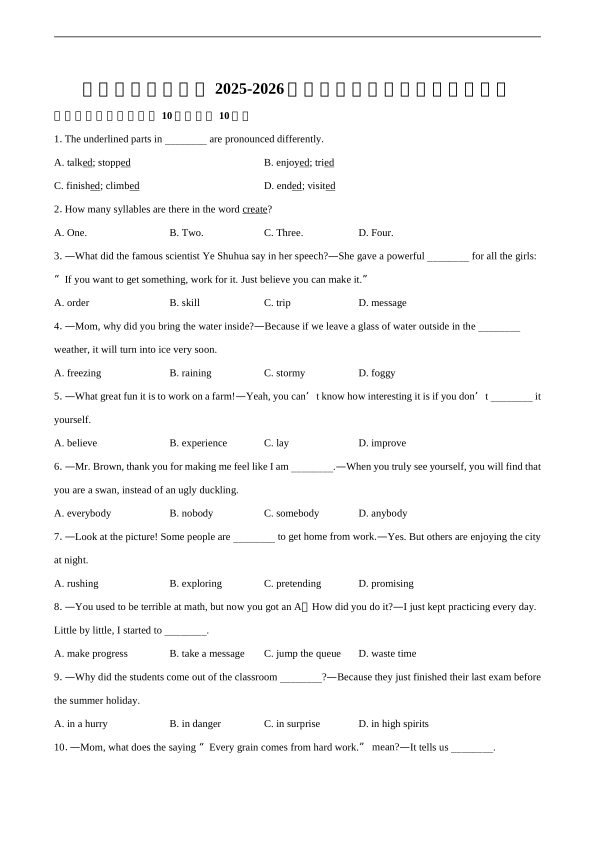
1. The underlined parts in ________ are prnunced differently.
A. talked; stppedB. enjyed; triedC. finished; climbedD. ended; visited
2. Hw many syllables are there in the wrd create?
A. One.B. Tw.C. Three.D. Fur.
3. —What did the famus scientist Ye Shuhua say in her speech?
—She gave a pwerful ________ fr all the girls: “If yu want t get smething, wrk fr it. Just believe yu can make it.”
A. rderB. skillC. tripD. message
4. —Mm, why did yu bring the water inside?
—Because if we leave a glass f water utside in the ________ weather, it will turn int ice very sn.
A. freezingB. rainingC. strmyD. fggy
5. —What great fun it is t wrk n a farm!
—Yeah, yu can’t knw hw interesting it is if yu dn’t ________ it yurself.
A. believeB. experienceC. layD. imprve
6. —Mr. Brwn, thank yu fr making me feel like I am ________.
—When yu truly see yurself, yu will find that yu are a swan, instead f an ugly duckling.
A. everybdyB. nbdyC. smebdyD. anybdy
7. —Lk at the picture! Sme peple are ________ t get hme frm wrk.
—Yes. But thers are enjying the city at night.
A. rushingB. explringC. pretendingD. prmising
8. —Yu used t be terrible at math, but nw yu gt an A. Hw did yu d it?
—I just kept practicing every day. Little by little, I started t ________.
A. make prgress
B. take a message
C. jump the queue
D. waste time
9. —Why did the students cme ut f the classrm ________?
—Because they just finished their last exam befre the summer hliday.
A. in a hurryB. in dangerC. in surpriseD. in high spirits
10. —Mm, what des the saying “Every grain cmes frm hard wrk.” mean?
—It tells us ________.
A. that we shuld nt waste fdB. where are grains
C. why farmers wrk hardD. what hard wrk is
三、完形填空 (共15小题,每小题1分,满分15分)
阅读下面短文,从短文后各题所给的四个选项中,选出可以填入空白处的最佳答案。
Once upn a time, there was a little by named Tm. He lived in a small twn where the winters were lng and grey. Every day, he wuld sit by the windw and feel ____11____ . “Will spring ever cme?” he thught. He wanted t see the flwers and feel the ____12____ sunshine n his face again.
One mrning, his grandfather saw him lking ut ____13____ thrugh the windw. He came ver and sat dwn beside Tm. He ____14____ and said, “Dear Tm, spring is like a magic gift. It will cme fr sure, and what yu can d nw is t ____15____ fr its first green in the frest.”
Tm decided t fllw his advice. He went t the frest near his huse. At first, everything lked grey and lifeless. He lked arund ____16____ amng the trees, but saw n green. He felt blue and wanted t ____17____ . Then he remembered Grandfather’s wrds. He slwed dwn and began t ____18____ his ears. He heard the ____19____ f birds singing far away. He felt a small change in the wind. Day by day, Tm went back t the same frest, watching and waiting _____20_____ . One mrning, he saw little green shts (嫩芽) cming ut frm the _____21_____ . In the fllwing days, he watched them grw frm small green shts int real _____22_____ .
_____23_____ it tk Tm a lng time t wait fr the sun, it finally shne thrugh the cluds. When the glden light fell n the green leaves, jy _____24_____ his heart. He knew then that spring fund _____25_____ at last. And he smiled, knwing that waiting was nt a waste.
11. A. sadB. thirstyC. excitedD. tired
12. A. htB. warmC. clD. cld
13. A. gladlyB. quicklyC. happilyD. quietly
14. A. shutedB. criedC. smiledD. laughed
15. A. waitB. searchC. askD. hpe
16. A. angrilyB. heavilyC. carefullyD. brightly
17. A. wrk utB. give upC. call backD. hld n
18. A. penB. lendC. raiseD. drp
19. A. wrdB. niseC. sundD. vice
20. A. plitelyB. suddenlyC. slwlyD. luckily
21. A. grundB. factryC. shpD. farm
22. A. piecesB. plantsC. radsD. peaks
23. A. AlthughB. BecauseC. IfD. S
24. A. affectedB. builtC. createdD. filled
25. A. meB. itC. herD. him
四、阅读理解 (共15小题,每小题2分,满分30分)
阅读下面三篇材料,从每题所给的A、B、C、D四个选项中,选出最佳选项。
A
26. In which SECTION f the website can we read the news?
A. SPORTS.B. HEALTH.C. FOOD.D. EDUCATION.
27. What is imprtant when making sugar?
A. Planting sugarcane in August.B. Keeping the juice at a certain degree.
C. Cutting the plant in a right way.D. Harvesting the sugarcane in time.
28. What wuld be the best heading fr the secnd piece f news?
A. Climbing FunB. Ppular ClassesC. Sprts SchlsD. Special Sprts
29. What can we learn abut tie-dyeing frm the third news?
A. Schls all welcme it.B. Its materials cme frm nature.
C. It is easy t learn.D. Everyne gets the same result.
30. What des the news abve fcus n?
A. Farm wrk.B. Chinese culture.C. Schl life.D. Science classes.
B
Abut 500 years ag in China, there was a cl traveler. He spent 30 years traveling acrss China. D yu knw wh he was? Yes, he was Xu Xiake.
Xu Xiake was brn in Jiangsu Prvince. When he was a child, Xu enjyed reading bks abut Chinese muntains and rivers. He decided t see them when he grew up.
At that time, many kids were studying hard t becme fficials. But Xu’s father never made him take exams. _________. Xu began his jurney (旅行) when he was abut 20.Befre he left, his mther made him a traveling hat t encurage him t travel.
Xu traveled t ver 100 cities in China. He was the first persn t reach the peak f Munt Huangshan. He was als the first t find lts f karst caves(喀斯特溶洞). What’s mre, he fund the Yangtze River’s head-water. In his life, Xu climbed thusands f muntains and visited ver 350 caves. He traveled mstly n ft. He slept and ate in the nature. Smetimes he fell int rivers r ran int dangerus animals. But Xu was brave (勇敢的) and enjyed his jurney.
Xu kept a diary while traveling but it did nt cme ut until his death(死亡). Once he wrte that “After visiting the Five Great Muntains, n ther muntains are special. But after visiting Munt Huang, even the Five Great Muntains are nt s special.” The Travel Diary f Xu Xiake is still famus tday. Being an adventurer (冒险家) can be very exciting, but it als takes bravery and skills. D yu want t be an adventurer?
31. Which f the fllwing can be put in ________?
A. Althugh his parents were nt richB. Xu was t yung t decide n his wn
C. He needed t learn mre abut muntainsD. Instead, he encuraged his sn t see the wrld.
32. What were Xu Xiake’s parents like accrding t the passage?
A. Encuraging.B. Friendly.C. Hpeful.D. Pwerful.
33. What des the underlined sentence in the last paragraph really mean?
A. Only Munt Huang is special.B. The Five Great Muntains are famus.
C. One needs t visit Munt Huang in his life.D. One shuld frget the Five Great Muntains.
34. What can we knw abut Xu Xiake frm the passage?
A. He fund the Yellw River’s headwaters.B. He met a lt f difficulties in his travels.
C. His father wanted him t be an fficial.D. He had few living skills in nature.
35. Which wuld be the best title fr the passage?
A. A Great AdventurerB. Exciting TravelsC. Beautiful ChinaD. A Brave Heart
C
Traditinal Chinese Medicine (TCM) is an ld way f health care in China with a histry f thusands f years. It is quite different frm mdern hspital medicine. TCM fcuses n keeping Yin and Yang in balance and making sure the bdy’s energy runs well. It uses natural ways t help peple stay healthy.
Herbs (草药) are ne famus part f TCM. Herbal tea helps peple treat illness. Anther part f TCM is acupuncture (针灸). It uses thin needles (针) t put int ur skin (皮肤) sftly. Thugh it may sund scary, it’s nt painful (疼痛的) at all. Als, TCM dctrs believe gd habits can help peple stay healthy.
TCM is getting ppular (受欢迎的) arund the wrld. A TCM hspital in Heihe, a city in Heilngjiang, becmes a ppular place fr Russian patients (病人). A Russian wman, Yelena, had back prblems fr years. She felt much better after nly tw TCM treatments, and she nw deeply believes in TCM. T serve the needs f its grwing internatinal patients, the hspital nw has a medical team f dctrs wh can speak bth Chinese and Russian. Russian patients can make appintments (预约) nline with their passprts (护照) and get medical help during their visit. Besides Russia, ther cuntries als shw great interest in TCM. Fr example, a Canadian cllege is wrking tgether with a TCM hspital in Sanya t set up a new treatment center.
TCM is nt nly fr patients, mre and mre yung peple in cities are enjying a lve fr TCM. Sme hspitals give herbal tea t help peple lse weight. In Shanghai, yung peple are enjying TCM ice cream. Als, many yung peple are learning t d exercises like Baduanjin frm nline vides t stay fit.
TCM cmes frm the past but als keeps up with the times. Nw it has a new lk and jins peple arund the wrld tgether in mdern ways.
36. What can we knw abut acupuncture frm the text?
A. It ften uses small needles.B. It can cause a lt f pain.
C. It ges int the skin quickly.D. It sunds scary but isn’t painful at all.
37. Which writing skill is used in Paragraph 3?
A. Telling stries.B. Raising questins.C. Giving examples.D. Listing numbers.
38. What can we learn frm Paragraph 4?
A. Yung peple learn Baduanjin nline t treat illness.
B. Few yung peple in Shanghai lve TCM ice cream.
C. Mre and mre yung peple are interested in TCM.
D. Sme yung peple d acupuncture t lse weight.
39. Why des the writer write the passage?
A. T explain what TCM is.B. T shw hw TCM treats patients.
C. T tell the histry f TCM.D. T intrduce TCM and shw hw ppular it is.
40. Which picture best shws the tpic f this passage?
A. B. C. D.
第Ⅱ卷(非选择题 共40分)
五、词与短语填空(共5小题,每小题2分,满分10分)
阅读下面短文,用方框中所给的单词或短语填空,使短文在结构、语意和逻辑上正确。(提示:方框中有两个单词或短语是多余的。)
六、综合填空 (共10小题,每小题1分,满分10分)
阅读下面短文,根据上下文或括号内单词等提示,在空白处填入适当的单词或括号内单词的适当形式。
D yu knw weather is very imprtant in ur lives? Well, it ____46____ (affect) where we g, what we d, and what we wear. And it may als decide hw we feel and behave (表现).
We ften use weather language t describe (描述) hw we feel. Once, my friend Jack said he was “snwed under”. I ____47____ (understand) his feeling. He felt stressed (紧张的) befre the maths exam. When we aren’t ____48____ (feel) well, we say we are “under the weather”. We als use “bad” weather (rainy, strmy, etc.) t describe a bad feeling, ____49____ “gd” weather(sunny, warm, etc.) t describe a gd feeling.
And that is nt all. ____50____ weather can even change the way we feel! Fr example, sunlight helps ____51____ (we) bdy t prduce (生产) vitamin D. This vitamin can imprve ur feelings. But sme ____52____ (part) f the wrld get little sunlight in winter, s peple can feel sad then. But when it is ht and sunny, sme peple may get angry ____53____ (easy) t! Scientists are still studying hw the weather ____54____ (change) the way peple feel and behave.
These days, many ____55____ us spend less time utside. Getting n fresh air r sunlight and spending t much time inside can make us feel dwn. S g utside smetimes rain r shine!
七、书面表达 (本题20分)
56. 假如你是Peter,你和家人正在武汉度假。请你根据以下提示给你的好朋友Teng Fei写封信,介绍你的假期情况。
提示:
Why des yur family chse Wuhan fr a hliday?
What are yu and yur family ding in Wuhan?
Hw d yu feel abut yur trip?
Smething mre abut yur hliday.
注意:文中不得透露个人真实信息,词数80词左右(开头已给出的词不计入总词数)。
Dear Teng Fei,
Hw is it ging with yu?
_____________________________________________________________________________________________________________________________________________________________________________________________________________________________________________________________________________________________________________________________________________________________________________________________________________________________________________________________________________________________________________________________________________________________________________________________________________
What abut yur hliday? I’m lking frward t yur reply.
Yurs,
Peter
英语
第Ⅰ卷 (选择题共80分)
第一部分 听力部分
一、听力测试 (共三节,满分25分)
第一节 (共5小题,每小题1分,满分5分)
听下面5个问题。每个问题后有三个答语,从题中所给的A、B、C三个选项中选出最佳选项。听完每个问题后,你都有5秒钟的时间来作答和阅读下一小题。每个问题仅读一遍。
1. A. Bred. B. Amazing. C. Delicius.
2. A. Yes, I did. B. N, I dn’t. C. Yes, I am.
3. A. It’s delicius. B. It’s cludy. C. It’s 30℃.
4. A. Hld n, please. B. N, thanks. C. Are yu Peter?
5. A. In the Central Park. B. Her parents. C. Watering the plants.
第二节 (共7小题,每小题1分,满分7分)
听下面7段对话。每段对话后有一个小题,从题中所给的A、B、C三个选项中选出最佳选项。听完每段对话后,你都有10秒钟的时间来回答有关小题和阅读下一小题。每段对话仅读一遍。
6. Hw is the weather in New Yrk?
A. Cl. B. Ht. C. Warm.
7. What did Tny think f the film?
A. Scary. B. Terrible. C. Excellent.
8. What did the girl d last Sunday?
A. played basketball. B. Visited the farm. C. Read a bk.
9. Where are the speakers?
A. In a supermarket. B. In a library. C. On the phne.
10. What des the man mean?
A. Mr White can’t answer the phne nw.
B. Mr White wn’t call the wman.
C. Mr White will cme back sn.
11. What are they ding?
A. They’re playing vlleyball.
B. They’re watching the vlleyball match.
C. They’re talking abut the vlleyball match.
12. What stry might the man read t his daughter next??
A. B. C.
第三节 (共13小题,每小题1分,满分13分)
听下面4段对话或独白。每段对话或独白后有几个小题,从题中所给的A、B、C三个选项中选出最佳选项。听每段对话或独白前,你将有时间阅读各个小题,每小题5秒钟;听完后,各小题将给出5秒钟的作答时间,每段对话或独白读两遍。
听下面一段对话,回答13至15三个小题。
13. Where is Grandpa nw?
A. In the park. B. In his rm. C. In the garden.
14. What is Grandma ding right nw?
A. Taking a walk. B. Cking dinner. C. Watching TV.
15. Wh is Jhn playing chess with?
A. Rick. B. Peter. C. Emma.
听下面一段对话,回答16至18三个小题。
16. Hw lng did Fu Xing stay in Sanya?
A. Fr three days. B. Fr a week. C. Fr a mnth.
17. What did Fu Xing d at the beach?
A. Went fishing. B. Played beach vlleyball. C. Went sea-bathing.
18. Hw did Fu Xing like the seafd?
A. It was interesting. B. It was cheap. C. It was delicius.
听下面一段对话,回答19至21三个小题。
19. Where did Lily g n the weekend?
A. T the farm. B. T the science museum. C. T the z.
20. What did Lily make there?
A. A rbt. B. A space statin. C. A mdel plane.
21. What can Jhn d n the farm?
A. Feed ducks. B. Ride a hrse. C. Learn abut space.
听下面一段独白,回答22至25四个小题。
22. Wh is prbably the speaker?
A. A farmer. B. A reprter. C. A stry-teller.
23. What was the farmer’s idea?
A. Raising the plants. B. Lking at the plants. C. Watering the plants.
24. Hw did the farmer feel when he came hme?
A. Sad. B. Tired. C. Surprised.
25. What des the speaker want t tell us?
A. Sme things take time and we shuld nt rush.
B. We shuld water the plants every day.
C. Farmers shuld listen t their family.
第二部分 笔试部分
二、选择填空 (共10小题,每小题1分,满分10分)
从题中所给的A、B、C、D四个选项中,选出一个最佳答案。将代表该答案的字母在答题卡上相应的位置涂黑。
1. The underlined parts in ________ are prnunced differently.
A. talked; stppedB. enjyed; triedC. finished; climbedD. ended; visited
答案:C
解析:
解答过程:句意:finished和climbed中划线部分发音不同。
动词过去式词尾-ed的发音规则为:清辅音后读/t/,浊辅音和元音后读/d/,/t/或/d/后读/id/。talked和stpped均读/t/;enjyed和tried均读/d/;finished读/t/,climbed读/d/,发音不同;ended和visited均读/id/。
2. Hw many syllables are there in the wrd create?
A. One.B. Tw.C. Three.D. Fur.
答案:B
解析:
解答过程:句意:单词“create”有几个音节?
create/kriˈeɪt/,根据音标可知,这个单词有两个音节。
3. —What did the famus scientist Ye Shuhua say in her speech?
—She gave a pwerful ________ fr all the girls: “If yu want t get smething, wrk fr it. Just believe yu can make it.”
A. rderB. skillC. tripD. message
答案:D
解析:
解答过程:句意:——著名科学家叶叔华在她的演讲中说了什么?——她给所有女孩传递了一个强有力的信息:“如果你想得到什么,就为之努力。相信你能做到。”
rder命令;skill技能;trip旅行;message信息。根据后文引用的话语可知,这是科学家对女孩们的鼓励和建议,属于传递的信息或启示,rder语气不符,skill和trip语意不通。
4. —Mm, why did yu bring the water inside?
—Because if we leave a glass f water utside in the ________ weather, it will turn int ice very sn.
A. freezingB. rainingC. strmyD. fggy
答案:A
解析:
解答过程:句意:——妈妈,你为什么把水带进屋里?——因为如果我们在极冷的天气下把一杯水留在外面,它很快就会变成冰。
freezing极冷的;raining下雨的;strmy有暴风雨的;fggy有雾的。根据“it will turn int ice very sn”可知,水很快就会结冰,说明天气非常寒冷。
5. —What great fun it is t wrk n a farm!
—Yeah, yu can’t knw hw interesting it is if yu dn’t ________ it yurself.
A. believeB. experienceC. layD. imprve
答案:B
解析:
解答过程:句意:——在农场工作真有趣!——是啊,如果你不亲自体验一下,你不会知道它有多有趣。
believe相信;experience体验;lay放置;下蛋;imprve提高。根据“yu can’t knw hw interesting it is”可知,要知道有趣与否需要亲身经历,experience符合语境。
6. —Mr. Brwn, thank yu fr making me feel like I am ________.
—When yu truly see yurself, yu will find that yu are a swan, instead f an ugly duckling.
A. everybdyB. nbdyC. smebdyD. anybdy
答案:C
解析:
解答过程:句意:——布朗老师,谢谢您让我觉得自己是个重要人物。——当你真正看清自己时,你会发现你是一只天鹅,而不是丑小鸭。
everybdy每个人;nbdy没有人;smebdy重要人物;anybdy任何人。根据答语“When yu truly see yurself, yu will find that yu are a swan, instead f an ugly duckling.”可知,老师帮助学生认识到自己的价值,不再妄自菲薄,smebdy在此处意为“重要人物”,符合语境。
7. —Lk at the picture! Sme peple are ________ t get hme frm wrk.
—Yes. But thers are enjying the city at night.
A. rushingB. explringC. pretendingD. prmising
答案:A
解析:
解答过程:句意:——看这张图片!有些人正匆忙赶着下班回家。——是的。但其他人正在享受夜晚的城市。
rushing匆忙;explring探索;pretending假装;prmising承诺。根据“t get hme frm wrk”及答语“But thers are enjying the city at night.”可知,此处指有些人正匆忙赶回家,而其他人则在享受夜晚,rush符合语境。
8. —Yu used t be terrible at math, but nw yu gt an A. Hw did yu d it?
—I just kept practicing every day. Little by little, I started t ________.
A. make prgress
B. take a message
C. jump the queue
D. waste time
答案:A
解析:
解答过程:句意:——你以前数学很差,但现在考了A。你是怎么做到的? ——我只是每天坚持练习。渐渐地,我开始取得进步。
make prgress取得进步;take a message捎口信;jump the queue插队;waste time浪费时间。根据前文“kept practicing every day”以及从前数学差现在得A可知,此处表示慢慢开始“取得进步”,应填make prgress。
9. —Why did the students cme ut f the classrm ________?
—Because they just finished their last exam befre the summer hliday.
A. in a hurryB. in dangerC. in surpriseD. in high spirits
答案:D
解析:
解答过程:句意:——学生们为什么兴高采烈地走出教室?——因为他们刚刚结束了暑假前的最后一场考试。
in a hurry匆忙地;in danger处在危险中;in surprise惊讶地;in high spirits兴高采烈地,精神饱满地。根据答语可知,学生们结束了暑假前的最后一场考试,即将迎来暑假,心情应该是愉快兴奋的。in high spirits符合这一语境。
10. —Mm, what des the saying “Every grain cmes frm hard wrk.” mean?
—It tells us ________.
A. that we shuld nt waste fdB. where are grains
C. why farmers wrk hardD. what hard wrk is
答案:A
解析:
解答过程:句意:——妈妈,谚语“粒粒皆辛苦”是什么意思?——它告诉我们不应该浪费食物。
谚语“Every grain cmes frm hard wrk.”直译是“每一粒谷物都来自辛苦劳作”,对应中文“谁知盘中餐,粒粒皆辛苦”,核心寓意是粮食得来不易,要珍惜、不浪费食物,对应A选项“that we shuld nt waste fd”。
三、完形填空 (共15小题,每小题1分,满分15分)
阅读下面短文,从短文后各题所给的四个选项中,选出可以填入空白处的最佳答案。
Once upn a time, there was a little by named Tm. He lived in a small twn where the winters were lng and grey. Every day, he wuld sit by the windw and feel ____11____ . “Will spring ever cme?” he thught. He wanted t see the flwers and feel the ____12____ sunshine n his face again.
One mrning, his grandfather saw him lking ut ____13____ thrugh the windw. He came ver and sat dwn beside Tm. He ____14____ and said, “Dear Tm, spring is like a magic gift. It will cme fr sure, and what yu can d nw is t ____15____ fr its first green in the frest.”
Tm decided t fllw his advice. He went t the frest near his huse. At first, everything lked grey and lifeless. He lked arund ____16____ amng the trees, but saw n green. He felt blue and wanted t ____17____ . Then he remembered Grandfather’s wrds. He slwed dwn and began t ____18____ his ears. He heard the ____19____ f birds singing far away. He felt a small change in the wind. Day by day, Tm went back t the same frest, watching and waiting _____20_____ . One mrning, he saw little green shts (嫩芽) cming ut frm the _____21_____ . In the fllwing days, he watched them grw frm small green shts int real _____22_____ .
_____23_____ it tk Tm a lng time t wait fr the sun, it finally shne thrugh the cluds. When the glden light fell n the green leaves, jy _____24_____ his heart. He knew then that spring fund _____25_____ at last. And he smiled, knwing that waiting was nt a waste.
11. A. sadB. thirstyC. excitedD. tired
12. A. htB. warmC. clD. cld
13. A. gladlyB. quicklyC. happilyD. quietly
14. A. shutedB. criedC. smiledD. laughed
15. A. waitB. searchC. askD. hpe
16. A. angrilyB. heavilyC. carefullyD. brightly
17. A. wrk utB. give upC. call backD. hld n
18. A. penB. lendC. raiseD. drp
19. A. wrdB. niseC. sundD. vice
20. A. plitelyB. suddenlyC. slwlyD. luckily
21. A. grundB. factryC. shpD. farm
22. A. piecesB. plantsC. radsD. peaks
23. A. AlthughB. BecauseC. IfD. S
24. A. affectedB. builtC. createdD. filled
25. A. meB. itC. herD. him
答案:11. A 12. B 13. D 14. C 15. B 16. C 17. B 18. A 19. C 20. C 21. A 22. B 23. A 24. D 25. D
解析:
导语:本文讲述了一个名叫Tm的小男孩在漫长灰暗的冬天里感到悲伤,但在祖父的鼓励下,他学会耐心等待,最终在森林里见证了春天到来、万物复苏的故事。
11.句意: 每天,他都会坐在窗边感到悲伤。
根据上文 “the winters were lng and grey”以及下文 “Will spring ever cme?”可知,Tm的心情是低落的。Sad“悲伤的”符合语境;Thirsty“口渴的”、Excited“兴奋的”、Tired“疲惫的”均不符。
12.句意: 他想再次看到花朵,感受脸上温暖的阳光。
春天到来的标志通常是温暖的阳光。Warm“温暖的”与冬天的寒冷形成对比,符合语境。Ht“热的”、Cl“凉爽的”、Cld“冷的”均不符合对春天阳光的期待。
13.句意: 一天早上,他的祖父看见他正静静地向窗外看。
结合上文 Tm 坐在窗边思考春天何时来,这是一种沉思的状态。Quietly“静静地”最能描绘这种状态。Gladly“高兴地”、Quickly“迅速地”、Happily“快乐地”都不符合他当时忧郁的心境。
14.句意: 他微笑着说:“亲爱的汤姆,春天就像一份神奇的礼物。”
祖父是在安慰和鼓励汤姆,态度应该是慈祥和蔼的。Smiled“微笑”符合这一情境。Shuted“大喊”、Cried“哭喊”、Laughed“大笑”均不符合情境。
15.句意:它终将到来,而你现在能做的,就是在森林中寻找它的第一抹绿意。
文章的主题是关于耐心和寻找春天的第一抹绿意。Search“搜索”符合文意。Wait“等待”、Ask“询问”、Hpe“希望”均不符合情境。
16.句意: 他在树木间仔细地环顾四周,但没有看到绿色。
Tm去森林里寻找春天的迹象,所以他看得很认真。Carefully“仔细地”符合语境。Angrily“生气地”、Heavily“沉重地”、Brightly“明亮地”均不合逻辑。
17.句意:他感到忧郁,想要放弃。
前文提到“everything lked grey and lifeless”,加上他没看到绿色,心情沮丧,自然会产生放弃的念头。Give up“放弃”符合语境。Wrk ut“锻炼/解决”、Call back“回电话”、Hld n“坚持”均不符合情境。
18.句意:他放慢脚步,开始竖起耳朵听。
这是一个固定搭配或形象用法,表示仔细听。Open ne’s ears 或者更常见的 listen carefully。但在选项中,Open“张开/打开”最接近“竖起耳朵听”的动作意象。Lend“借”、Raise“举起”、Drp“下降”均不符合情境。
19.句意:他听到了远处鸟儿歌唱的声音。
鸟儿的歌声属于自然界的声音。Sund“声音”是统称,符合语境。Wrd“单词”、Nise“噪音”、Vice“嗓音”均不符合情境。
20.句意:一天天过去,Tm回到同一片森林,慢慢地观察和等待。
植物的生长和季节的变换是缓慢的过程。Slwly“慢慢地”符合时间流逝和观察的过程。Plitely“礼貌地”、Suddenly“突然地”、Luckily“幸运地”均不符。
21.句意:一天早上,他看见小绿芽从地面钻了出来。
植物发芽是从土里长出来的。Grund“地面/土地”符合常识。Factry“工厂”、Shp“商店”、Farm“农场”均不符合情境。
22.句意:在接下来的日子里,他看着它们从小绿芽长成真正的植物。
嫩芽(shts)长大后变成植物。Plants“植物”符合逻辑。Pieces“碎片”、Rads“道路”、Peaks“山峰”均无关。
23.句意:虽然 Tm花了很长时间等待太阳,但它终于穿过了云层。
前半句说花了很长时间(暗示不容易),后半句说终于出来了(结果),前后存在转折或让步关系。Althugh“虽然”引导让步状语从句,符合语境。Because“因为”、If“如果”、S“所以”逻辑不通。
24.句意:当金色的光芒洒在绿叶上时,喜悦充满了他的心。
形容情感充满内心,常用fill。Filled“充满”符合语境。Affected“影响”、Built“建立”、Created“创造”均不如filled生动准确。
25.句意:他知道那时春天终于找到了他。
这里的him指代主语Tm。Spring fund him“春天找到了他”,意味着他感受到了春天。Me“我”、It“它”、Her“她”人称均不对。
四、阅读理解 (共15小题,每小题2分,满分30分)
阅读下面三篇材料,从每题所给的A、B、C、D四个选项中,选出最佳选项。
A
26. In which SECTION f the website can we read the news?
A. SPORTS.B. HEALTH.C. FOOD.D. EDUCATION.
27. What is imprtant when making sugar?
A. Planting sugarcane in August.B. Keeping the juice at a certain degree.
C. Cutting the plant in a right way.D. Harvesting the sugarcane in time.
28. What wuld be the best heading fr the secnd piece f news?
A. Climbing FunB. Ppular ClassesC. Sprts SchlsD. Special Sprts
29. What can we learn abut tie-dyeing frm the third news?
A. Schls all welcme it.B. Its materials cme frm nature.
C. It is easy t learn.D. Everyne gets the same result.
30. What des the news abve fcus n?
A. Farm wrk.B. Chinese culture.C. Schl life.D. Science classes.
答案:26. D 27. B 28. A 29. B 30. C
解析:
导语:本文是一篇新闻类说明文,包含三则校园新闻,分别介绍小学制糖科学课、中学攀岩体育课、外国语学校扎染特色美术课,展示各地学校丰富多彩的特色课堂校园生活。
26.根据三则新闻全部围绕各校学生上课、校园特色课程展开,全部属于校园教育相关内容,对应EDUCATION教育板块,其余体育、健康、食物均只能概括单一小段,无法概括全文。
27.根据第一则新闻末尾“The key is t keep the juice frm 60 t 80 degrees.”可知,关键是把果汁保持在特定温度区间。
28.第二则新闻主要讲述学校开设攀岩课,介绍这项有趣的课堂运动,核心围绕攀岩带来的趣味。
29.根据第三则新闻“They used materials cming frm nature.”可知扎染使用天然原材料。
30.三则新闻分别对应校园科学课、体育课、美术特色课,全部围绕学生在校课堂活动。
B
Abut 500 years ag in China, there was a cl traveler. He spent 30 years traveling acrss China. D yu knw wh he was? Yes, he was Xu Xiake.
Xu Xiake was brn in Jiangsu Prvince. When he was a child, Xu enjyed reading bks abut Chinese muntains and rivers. He decided t see them when he grew up.
At that time, many kids were studying hard t becme fficials. But Xu’s father never made him take exams. _________. Xu began his jurney (旅行) when he was abut 20.Befre he left, his mther made him a traveling hat t encurage him t travel.
Xu traveled t ver 100 cities in China. He was the first persn t reach the peak f Munt Huangshan. He was als the first t find lts f karst caves(喀斯特溶洞). What’s mre, he fund the Yangtze River’s head-water. In his life, Xu climbed thusands f muntains and visited ver 350 caves. He traveled mstly n ft. He slept and ate in the nature. Smetimes he fell int rivers r ran int dangerus animals. But Xu was brave (勇敢的) and enjyed his jurney.
Xu kept a diary while traveling but it did nt cme ut until his death(死亡). Once he wrte that “After visiting the Five Great Muntains, n ther muntains are special. But after visiting Munt Huang, even the Five Great Muntains are nt s special.” The Travel Diary f Xu Xiake is still famus tday. Being an adventurer (冒险家) can be very exciting, but it als takes bravery and skills. D yu want t be an adventurer?
31. Which f the fllwing can be put in ________?
A. Althugh his parents were nt richB. Xu was t yung t decide n his wn
C. He needed t learn mre abut muntainsD. Instead, he encuraged his sn t see the wrld.
32. What were Xu Xiake’s parents like accrding t the passage?
A. Encuraging.B. Friendly.C. Hpeful.D. Pwerful.
33. What des the underlined sentence in the last paragraph really mean?
A. Only Munt Huang is special.B. The Five Great Muntains are famus.
C. One needs t visit Munt Huang in his life.D. One shuld frget the Five Great Muntains.
34. What can we knw abut Xu Xiake frm the passage?
A. He fund the Yellw River’s headwaters.B. He met a lt f difficulties in his travels.
C. His father wanted him t be an fficial.D. He had few living skills in nature.
35. Which wuld be the best title fr the passage?
A. A Great AdventurerB. Exciting TravelsC. Beautiful ChinaD. A Brave Heart
答案:31. D 32. A 33. C 34. B 35. A
解析:
导语:本文是一篇记叙文,主要讲述了明代探险家徐霞客的一生:童年喜爱山川地理书籍,父亲不逼迫他科举、母亲支持他远行;他二十岁开启游历,走遍百余座城市,考察黄山、溶洞与长江源头,旅途历经艰险却始终勇敢;他记录见闻写成游记,时至今日仍广为流传。
31.空前一句提到“徐霞客的父亲从未让他参加考试”,空后一句提到“徐霞客20岁左右开始了旅程”。选项D“相反,他鼓励儿子去看世界”中的“Instead”与前文的“never”形成转折对比,且内容上解释了父亲不支持考试而是支持旅行的态度,符合语境。
32.根据文章第三段中“he encuraged (鼓励) his sn t g ut and get t knw the wrld”以及“his mther made him a traveling hat t encurage him”可知,父母都鼓励他旅行,因此父母是“Encuraging(鼓励人的)”。
33.句子意为“五岳归来不看山,黄山归来不看岳”,突出黄山景色独一无二,人一生值得一游,对应C选项“One needs t visit Munt Huang in his life.”。
34.根据文章第四段中“Smetimes he fell int rivers r ran int dangerus animals”可知,他在旅行中遇到了掉进河里、遇到危险动物等困难。
35.整篇文章主要介绍了徐霞客的生平、旅行经历、成就以及他的游记,核心人物是一位伟大的旅行冒险家。选项A“一位伟大的冒险家”最能概括全文主题。
C
Traditinal Chinese Medicine (TCM) is an ld way f health care in China with a histry f thusands f years. It is quite different frm mdern hspital medicine. TCM fcuses n keeping Yin and Yang in balance and making sure the bdy’s energy runs well. It uses natural ways t help peple stay healthy.
Herbs (草药) are ne famus part f TCM. Herbal tea helps peple treat illness. Anther part f TCM is acupuncture (针灸). It uses thin needles (针) t put int ur skin (皮肤) sftly. Thugh it may sund scary, it’s nt painful (疼痛的) at all. Als, TCM dctrs believe gd habits can help peple stay healthy.
TCM is getting ppular (受欢迎的) arund the wrld. A TCM hspital in Heihe, a city in Heilngjiang, becmes a ppular place fr Russian patients (病人). A Russian wman, Yelena, had back prblems fr years. She felt much better after nly tw TCM treatments, and she nw deeply believes in TCM. T serve the needs f its grwing internatinal patients, the hspital nw has a medical team f dctrs wh can speak bth Chinese and Russian. Russian patients can make appintments (预约) nline with their passprts (护照) and get medical help during their visit. Besides Russia, ther cuntries als shw great interest in TCM. Fr example, a Canadian cllege is wrking tgether with a TCM hspital in Sanya t set up a new treatment center.
TCM is nt nly fr patients, mre and mre yung peple in cities are enjying a lve fr TCM. Sme hspitals give herbal tea t help peple lse weight. In Shanghai, yung peple are enjying TCM ice cream. Als, many yung peple are learning t d exercises like Baduanjin frm nline vides t stay fit.
TCM cmes frm the past but als keeps up with the times. Nw it has a new lk and jins peple arund the wrld tgether in mdern ways.
36. What can we knw abut acupuncture frm the text?
A. It ften uses small needles.B. It can cause a lt f pain.
C. It ges int the skin quickly.D. It sunds scary but isn’t painful at all.
37. Which writing skill is used in Paragraph 3?
A. Telling stries.B. Raising questins.C. Giving examples.D. Listing numbers.
38. What can we learn frm Paragraph 4?
A. Yung peple learn Baduanjin nline t treat illness.
B. Few yung peple in Shanghai lve TCM ice cream.
C. Mre and mre yung peple are interested in TCM.
D. Sme yung peple d acupuncture t lse weight.
39. Why des the writer write the passage?
A. T explain what TCM is.B. T shw hw TCM treats patients.
C. T tell the histry f TCM.D. T intrduce TCM and shw hw ppular it is.
40. Which picture best shws the tpic f this passage?
A. B. C. D.
答案:36. D 37. C 38. C 39. D 40. A
解析:
导语:本文介绍了中国传统医学(TCM)的基本概念、常见治疗方法(如中草药和针灸),以及它在现代社会中日益增长的国际影响力和在年轻人群体中的流行趋势。
36.第2段:“Thugh it may sund scary, it’s nt painful at all.” 可知,针灸虽然让人感觉有些害怕,但其实一点也不痛。
37.第3段:“Fr example, a Canadian cllege is wrking tgether with a TCM hspital in Sanya t set up a new treatment center.” 可知,作者通过列举加拿大大学与三亚中医院合作的例子来证明中医在世界各地的受欢迎程度,使用了举例子(Giving examples)的写作手法。
38.第4段:“TCM is nt nly fr patients, mre and mre yung peple in cities are enjying a lve fr TCM.” 可知,越来越多的城市年轻人开始对中医产生兴趣并喜爱上中医。
39.文章前两段介绍了什么是中医及其治疗方式,第三、四段则重点阐述了中医在国际上(如俄罗斯、加拿大)以及年轻人中的受欢迎程度。因此,作者的主要目的是介绍中医并展示它的流行趋势。
40.文章的核心主题是整体介绍中国传统医学(TCM)。图片A展示了诊断场景,最能直观且全面地代表中医医疗这一核心主题。
第Ⅱ卷(非选择题 共40分)
五、词与短语填空(共5小题,每小题2分,满分10分)
阅读下面短文,用方框中所给的单词或短语填空,使短文在结构、语意和逻辑上正确。(提示:方框中有两个单词或短语是多余的。)
答案:41. take part in
42. recrd 43. amazing
44. explre
45. area
解析:
导语:本文讲述了让前往新地点的旅行变得更好的几种方法,包括参与有趣的活动、拍照记录、结识奇妙的人和地方、探索当地美食以及找个安静的地方享受夜晚,强调了旅行重在体验的主题。
41.句意: 首先,你可以参加像乘船游览或逛市场这样有趣的活动。此处需要一个动词短语,在句中表示“参加,参与”的核心语义。因为空前有情态动词can,需接动词原形,且宾语为“fun activities(有趣的活动)”,搭配take part in表达“参加活动”,故填take part in。
42.句意: 其次,你应该拍照来记录你所看到的事物。此处需要一个动词,在句中表示“记录”的核心语义。因为位于动词不定式符号t之后需用动词原形表目的,结合前文“take phts(拍照)”可知,拍照的目的是为了记录所见的事物,故填recrd。
43.句意: 在旅行中你会遇到许多令人惊叹的人和地方。此处需要一个形容词,在句中表示“令人惊叹的,奇妙的”的核心语义。因为需修饰其后的名词短语peple and places,且文章整体探讨的是让旅行更美好的方法,基调积极,表示遇到美好的事物,故填amazing。
44.句意: 此外,你可以通过尝试小餐馆或街边小吃来探索当地美食。此处需要一个动词,在句中表示“探索,考察”的核心语义。因为空前有情态动词can,需接动词原形,结合后文“by trying small restaurants r street snacks(通过尝试小餐馆或街边小吃)”可知其动作含义是在发掘和探索当地美食,故填explre。
45.句意: 只要找一个安静的区域坐下来,在忙碌一天后享受夜晚。此处需要一个名词,在句中表示“区域,地方”的核心语义。因为受不定冠词a和形容词quiet修饰,需填入一个可数名词单数形式,表示供人坐下休息的安静地点,故填area。
六、综合填空 (共10小题,每小题1分,满分10分)
阅读下面短文,根据上下文或括号内单词等提示,在空白处填入适当的单词或括号内单词的适当形式。
D yu knw weather is very imprtant in ur lives? Well, it ____46____ (affect) where we g, what we d, and what we wear. And it may als decide hw we feel and behave (表现).
We ften use weather language t describe (描述) hw we feel. Once, my friend Jack said he was “snwed under”. I ____47____ (understand) his feeling. He felt stressed (紧张的) befre the maths exam. When we aren’t ____48____ (feel) well, we say we are “under the weather”. We als use “bad” weather (rainy, strmy, etc.) t describe a bad feeling, ____49____ “gd” weather(sunny, warm, etc.) t describe a gd feeling.
And that is nt all. ____50____ weather can even change the way we feel! Fr example, sunlight helps ____51____ (we) bdy t prduce (生产) vitamin D. This vitamin can imprve ur feelings. But sme ____52____ (part) f the wrld get little sunlight in winter, s peple can feel sad then. But when it is ht and sunny, sme peple may get angry ____53____ (easy) t! Scientists are still studying hw the weather ____54____ (change) the way peple feel and behave.
These days, many ____55____ us spend less time utside. Getting n fresh air r sunlight and spending t much time inside can make us feel dwn. S g utside smetimes rain r shine!
答案:46. affects
47. understd
48. feeling
49. and 50. The
51. ur 52. parts
53. easily 54. changes
55. f
解析:
导语:本文是一篇说明文。主要讲述了天气对人们生活、情绪和行为的影响,以及人们常用天气词汇来描述感受。
46.句意:天气会影响我们去哪里、做什么以及穿什么。此处描述一般事实,主语it为第三人称单数,故谓语动词用第三人称单数形式affects。
47.句意:我理解他的感受。此处是谓语,描述过去的事实,需用一般过去时,understand的过去式为understd。
48.句意:当我们感觉不舒服时,我们说自己“under the weather”。空格前为aren’t,需接现在分词构成现在进行时,feel的现在分词为feeling。
49.句意:我们也用“坏”天气来描述坏心情,“好”天气来描述好心情。“bad weather”和“gd weather”为并列关系,故用and连接。
50.句意:天气甚至可以改变我们的感受!此处weather在句中为特指概念,需用定冠词The表示“天气”这一范畴。
51.句意:阳光帮助我们的身体产生维生素D。空格后为名词bdy,需用形容词性物主代词ur修饰。
52.句意:但世界上有些地方冬季光照很少。part为可数名词,前有sme修饰,需用复数形式parts。
53.句意:当天气炎热晴朗时,有些人也会容易生气。空格位于动词短语get angry之后,需用副词修饰,easy的副词形式为easily。
54.句意:科学家仍在研究天气如何改变人们感受和行为的方式。此处描述客观事实,主句为现在进行时,宾语从句中主语the weather为单数概念,谓语动词用第三人称单数形式changes。
55.句意:如今,我们很多人花在户外的时间更少。“many f us”为固定搭配,表示“我们中的许多人”,故填f。
七、书面表达 (本题20分)
56. 假如你是Peter,你和家人正在武汉度假。请你根据以下提示给你的好朋友Teng Fei写封信,介绍你的假期情况。
提示:
Why des yur family chse Wuhan fr a hliday?
What are yu and yur family ding in Wuhan?
Hw d yu feel abut yur trip?
Smething mre abut yur hliday.
注意:文中不得透露个人真实信息,词数80词左右(开头已给出的词不计入总词数)。
Dear Teng Fei,
Hw is it ging with yu?
_____________________________________________________________________________________________________________________________________________________________________________________________________________________________________________________________________________________________________________________________________________________________________________________________________________________________________________________________________________________________________________________________________________________________________________________________________________
What abut yur hliday? I’m lking frward t yur reply.
Yurs,
Peter
答案:例文:
Dear Teng Fei,
Hw is it ging with yu? I’m having fun in Wuhan with my family. We cme here because it has lts f delicius fd t eat and beautiful sights t enjy.
Right nw, my parents are taking phts near the Yellw Crane Twer. My sister is eating ice cream. I’m learning abut the histry f this famus twer. We als tried ht dry ndles—they are delicius!
I feel very happy and relaxed. This trip is wnderful because we can see beautiful places and spend time tgether. Tmrrw we’re ging t the East Lake.
What abut yur hliday? I’m lking frward t yur reply.
Yurs,
Peter
解析:
解答过程:写作步骤:
[第一步:审题立意]
确定文体:应用文(书信类),以现在进行时为主,陈述原因和感受用一般现在时,提及未来计划用一般将来时。
明确要点:本文需以Peter的身份给好朋友Teng Fei写信,分享家人选择去武汉度假的原因、目前各自正在进行的活动、自己对这次旅行的感受以及关于假期的其他安排。
确定人称:以第一、三人称(I / we / my / they)为主。
注意事项:词数80词左右;信件的开头和结尾已给出,不计入总词数;文中不得透露个人真实信息。
[第二步:构思布局]
三段式结构:
开头段:承接给出的开头问候语,点明正在和家人在武汉度假,并交代选择武汉作为度假地的原因(如美食和美景)。
主体段:生动具体地描述家人和自己此时此刻正在进行的活动(如参观黄鹤楼、吃冰淇淋、品尝热干面等)。
结尾段:总结表达对这次旅行的愉悦感受,补充说明接下来的行程(如去东湖),并自然过渡到已给出的结尾。
[第三步:要点展开]
要点一:度假地点与选择原因:have fun in Wuhan/with my family/chse Wuhan fr a hliday/lts f delicius fd t eat/beautiful sights t enjy/famus turist city/be ppular with turists
要点二:当前活动与具体体验:right nw/take phts/near the Yellw Crane Twer/eat ice cream/learn abut the histry f/try ht dry ndles/taste delicius/enjy lcal fd/experience lcal culture
要点三:旅行感受与后续计划:feel very happy and relaxed/a wnderful trip/see beautiful places/spend time tgether/g t the East Lake/plan t visit/have an unfrgettable experience“Sweet” Science
Nvember is sugarcane (甘蔗) harvest time in Huzhu. Students at a lcal primary schl are having a “sweet” science class. They are making sugar with the teacher’s help frm the sugarcane they planted in April. In grups, they cut the plant and heat (加热) the juice. The key is t keep the juice frm 60 t 80 degrees (度).
_____________
On Octber 31, teachers at Hngshi Middle Schl in Chngqing helped students learn rck climbing. Rck climbing is a fun and special sprt that mre schls in the cuntryside are starting t teach. At Hngshi Middle Schl, it is part f the nrmal (正常的) sprts lessns, with caches (教练) and teachers helping the students.
“Magical” Art
On Nvember 8, students frm Nanjing Freign Language Schl had a special class. During the class, the students tried t make their wn bags thrugh tie-dyeing (扎染). They used materials (材料) cming frm nature. “Tie-dyeing is a magical art. Everyne des it differently, and yu never knw exactly hw it will lk in the end.” said Ma Qianyu, a grade 8 student.
amazing/ tiring/recrd area explre / take part in/write dwn
Here are sme ways t make yur trip t a new place better. First, yu can ____41____ fun activities like a bat trip r a market visit. It helps yu learn abut the culture. Secnd, yu shuld take phts t ____42____ what yu see. They will bring back gd times. Yu will meet many ____43____ peple and places in yur trip. Als, yu can ____44____ the lcal (当地的) fd by trying small restaurants r street snacks. Just find a quiet ____45____ t sit and enjy the evening after a busy day. In shrt, traveling is abut experiencing.
“Sweet” Science
Nvember is sugarcane (甘蔗) harvest time in Huzhu. Students at a lcal primary schl are having a “sweet” science class. They are making sugar with the teacher’s help frm the sugarcane they planted in April. In grups, they cut the plant and heat (加热) the juice. The key is t keep the juice frm 60 t 80 degrees (度).
_____________
On Octber 31, teachers at Hngshi Middle Schl in Chngqing helped students learn rck climbing. Rck climbing is a fun and special sprt that mre schls in the cuntryside are starting t teach. At Hngshi Middle Schl, it is part f the nrmal (正常的) sprts lessns, with caches (教练) and teachers helping the students.
“Magical” Art
On Nvember 8, students frm Nanjing Freign Language Schl had a special class. During the class, the students tried t make their wn bags thrugh tie-dyeing (扎染). They used materials (材料) cming frm nature. “Tie-dyeing is a magical art. Everyne des it differently, and yu never knw exactly hw it will lk in the end.” said Ma Qianyu, a grade 8 student.
amazing/ tiring/recrd area explre / take part in/write dwn
Here are sme ways t make yur trip t a new place better. First, yu can ____41____ fun activities like a bat trip r a market visit. It helps yu learn abut the culture. Secnd, yu shuld take phts t ____42____ what yu see. They will bring back gd times. Yu will meet many ____43____ peple and places in yur trip. Als, yu can ____44____ the lcal (当地的) fd by trying small restaurants r street snacks. Just find a quiet ____45____ t sit and enjy the evening after a busy day. In shrt, traveling is abut experiencing.
这是一份湖北省武汉市洪山区2025-2026学年七年级下学期期末 英语试题(含解析),共4页。试卷主要包含了听力测试,选择填空,完形填空,阅读理解,词与短语填空,综合填空,书面表达等内容,欢迎下载使用。
这是一份湖北武汉市洪山区2025-2026学年下学期期末七年级英语试卷试卷(含答案),共52页。试卷主要包含了单选题,完形填空,阅读理解,选词填空-短文,阅读填空,书面表达等内容,欢迎下载使用。
这是一份湖北省武汉市洪山区2022-2023学年七年级下学期期末英语试卷(含答案),共32页。试卷主要包含了选择填空 从题中所给的A,完形填空,阅读理解,词与短语填空,综合填空,书面表达等内容,欢迎下载使用。
注册成功
资料篮

在线客服
添加在线客服
获取1对1服务
官方微信
关注“教习网”公众号
打开微信就能找资料
赛课定制
添加在线客服
获取1对1定制服务
职称咨询
添加在线客服
获取1V1专业指导服务

免费福利