 免费领取教师福利
若您为此资料的原创作者,认为该资料内容侵犯了您的知识产权,请扫码添加我们的相关工作人员,我们尽可能的保护您的合法权益。




这是一份Unit 4 Arts and heritage单元复习 课件 (新教材)初中英语沪教牛津版八年级下册(2024),共26页。
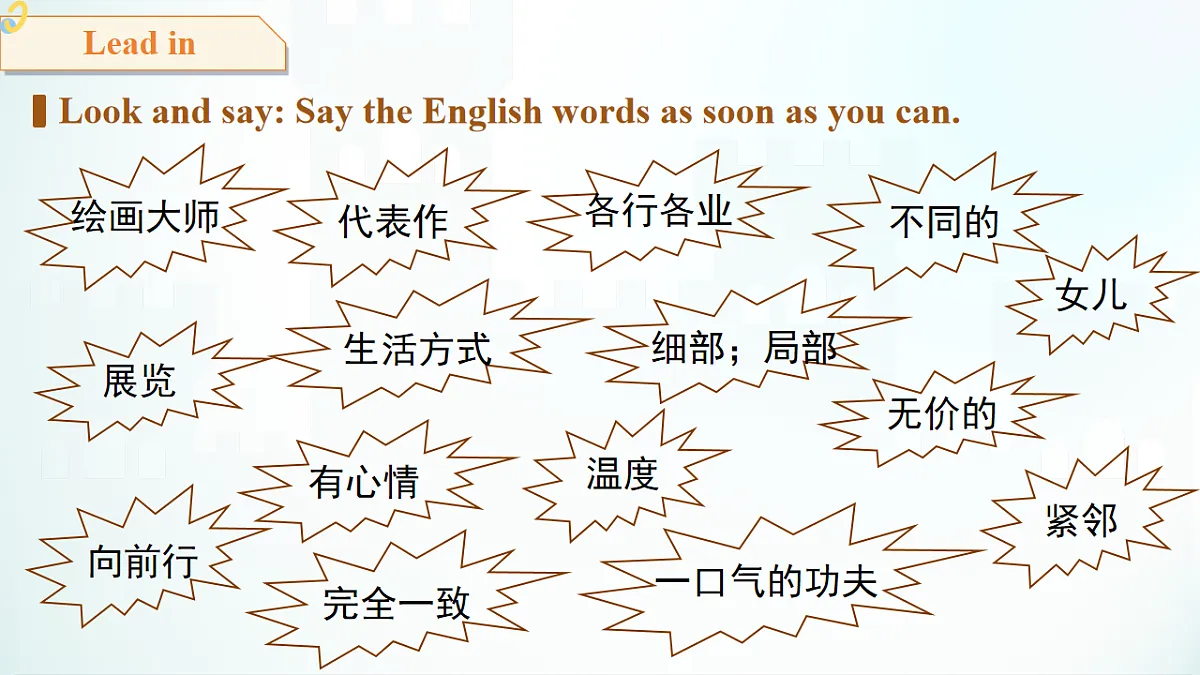
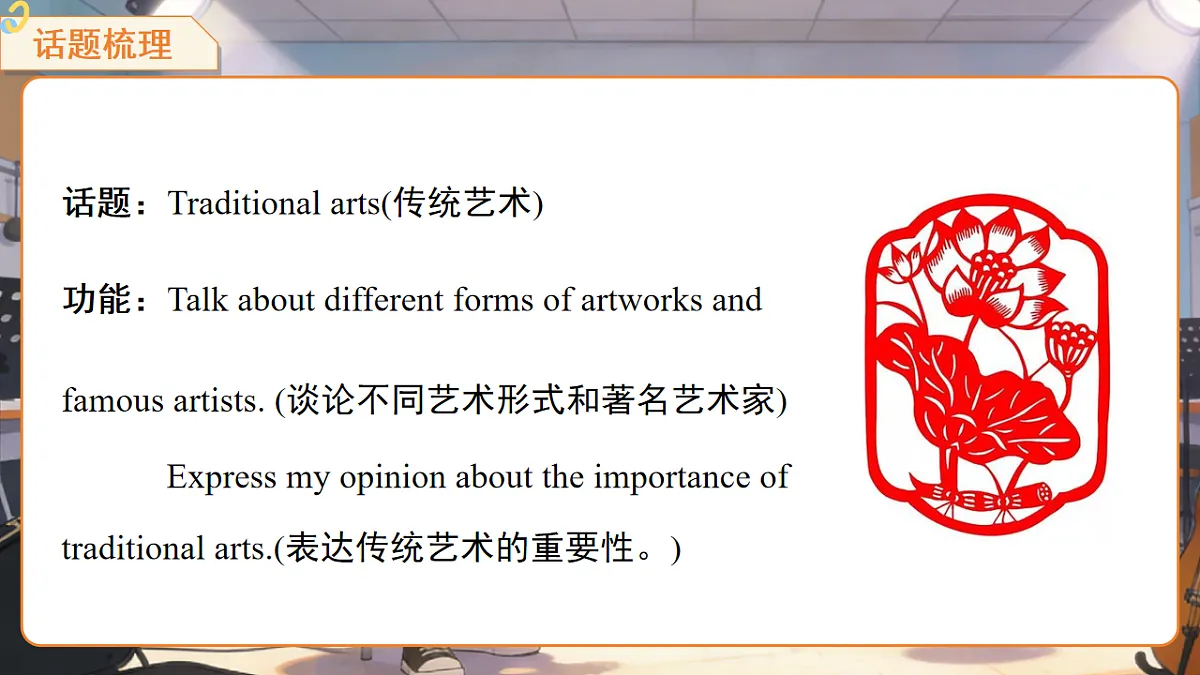
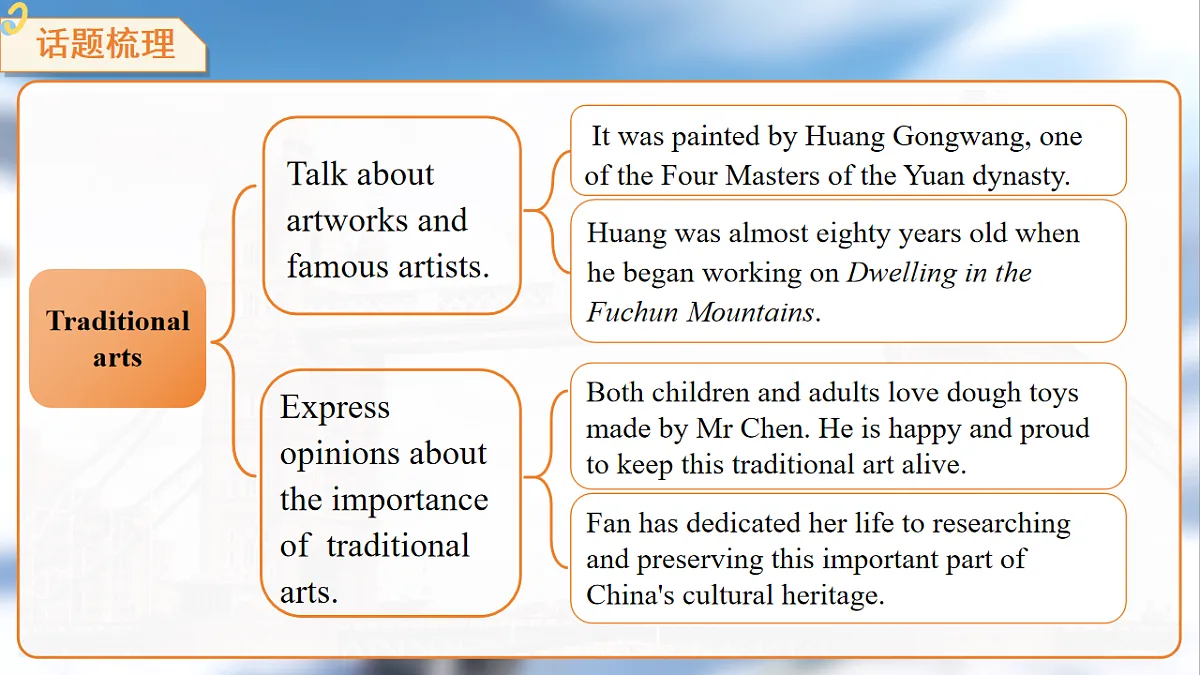
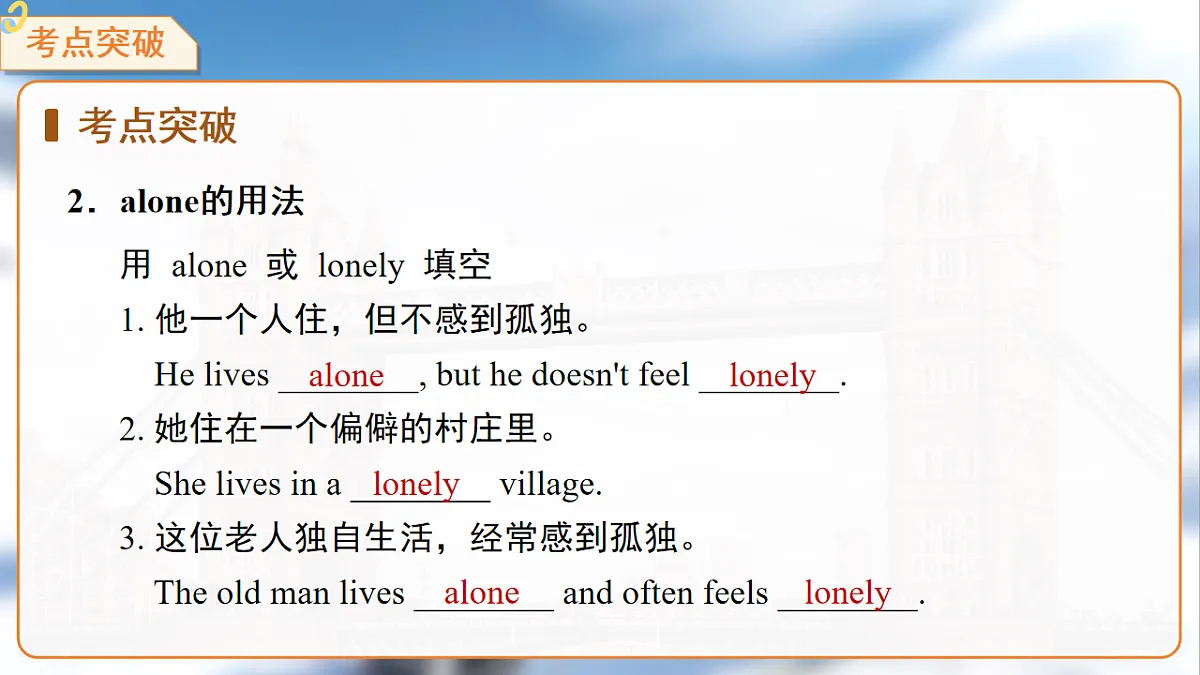
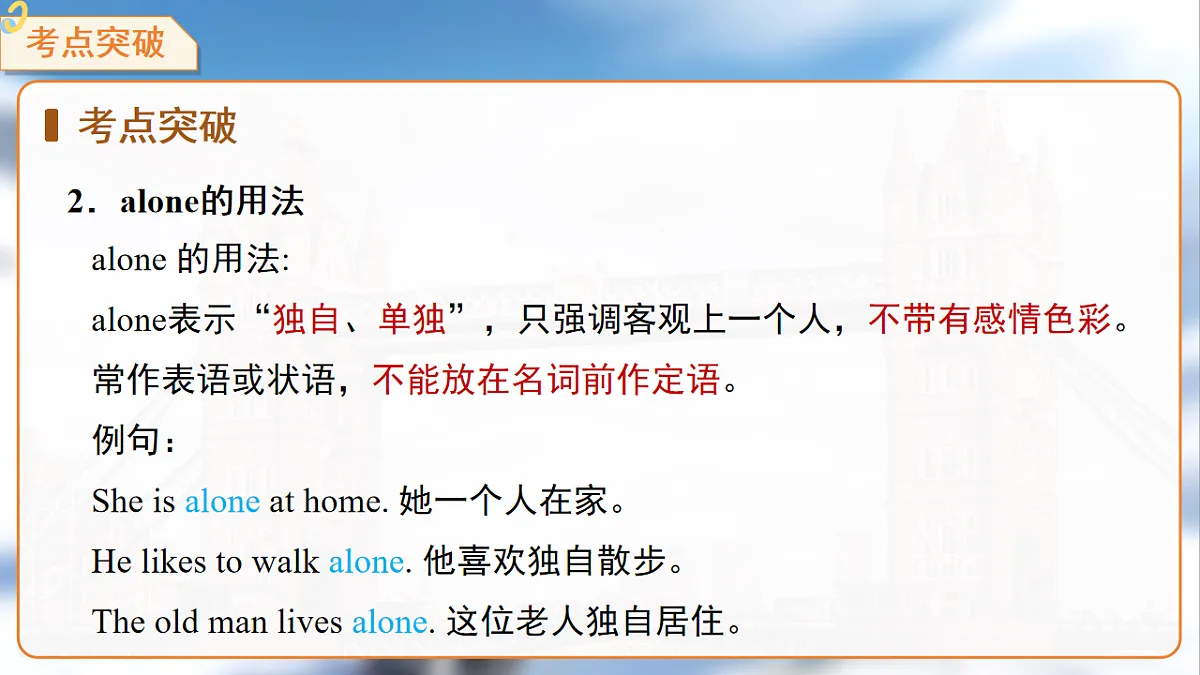
Unit reviewArts and heritageUnit 4 英语沪教版八年级下册Lead in话题梳理话题:Traditional arts(传统艺术)功能:Talk about different forms of artworks and famous artists. (谈论不同艺术形式和著名艺术家) Express my opinion about the importance of traditional arts.(表达传统艺术的重要性。) 话题梳理Traditional arts考点突破1. 无论你什么时候需要帮助,都可以给我打电话。 You can call me ________ ________ ________ help.2. 每当我看到这张照片,我就想起我的奶奶。 ________ I ________ the photo, I think of my grandma.3. 你可以随时来我家。 You can come to my house ________ ________ ________ .1.whenever的用法whenever you needWheneverseewhenever you like 考点突破whenever = no matter when 意思:无论何时;每当……的时候。引导时间状语从句,从句用一般现在时表将来。例句:You can come to see me whenever you are free. 你有空的时候随时可以来看我。Whenever it rains, I stay at home. 每当下雨,我就待在家里。I will help you whenever you need help. 无论何时你需要帮助,我都会帮你。1.whenever的用法考点突破2.alone的用法用 alone 或 lonely 填空1. 他一个人住,但不感到孤独。 He lives ________, but he doesn't feel ________.2. 她住在一个偏僻的村庄里。 She lives in a ________ village.3. 这位老人独自生活,经常感到孤独。 The old man lives ________ and often feels ________.alonelonelylonelyalonelonely考点突破alone 的用法:alone表示“独自、单独”,只强调客观上一个人,不带有感情色彩。常作表语或状语,不能放在名词前作定语。例句:She is alone at home. 她一个人在家。He likes to walk alone. 他喜欢独自散步。The old man lives alone. 这位老人独自居住。2.alone的用法考点突破alone 与 lonely 的区别:alone:客观上独自一人(无感情)lonely:主观上孤独、寂寞(有感情)lonely 可作定语:a lonely village 一个偏僻的村庄2.alone的用法考点突破例句:He lives alone, but he never feels lonely.他独自居住,但从不感到孤独。She felt lonely without her family.没有家人她感到孤独。It is a lonely island.这是一座偏僻的孤岛。2.alone的用法考点突破3.require的用法用所给词的适当形式填空1. The teacher requires us ___________ (finish) homework on time.2. This problem requires ___________ (solve) at once.3. This job ___________ (require) patience.to finishsolvingrequires考点突破3.require的用法 require是动词,表示“需要;要求”,语气比 need 正式一点。核心用法:1. require sth. 需要某物 This job requires time. 这份工作需要时间。考点突破3.require的用法2. require sb. to do sth. 要求某人做某事 The rules require us to wear school uniforms. 规定要求我们穿校服。3. require doing 需要被做(表被动)= need to be done The room requires cleaning. 这个房间需要打扫。4. 名词:requirement 要求考点突破4.graduate的用法请将下列句子翻译成英文:1. 他明年将从中学毕业。 He will ________ ________ middle school next year.2. 我姐姐去年大学毕业了。 My sister ________ ________ university last year.3. 毕业后,他想去北京。 After _________, he wants to go to Beijing.graduate fromgraduated fromgraduation考点突破4.graduate的用法 graduate是动词,表示“毕业”,常用于以下短语:graduate from + 学校 “从……毕业”graduate in + 专业 “某专业毕业”graduation 是名词形式,表示“毕业”。例句:He will graduate from high school next year. 他明年将高中毕业。She graduated in English. 她是英语专业毕业的。After graduation, he found a good job. 毕业后,他找到了一份好工作。考点突破5.make up one's mind的用法翻译句子1. 我已经下定决心努力学习英语。 I have ________ ________ ________ ________ to study English hard.2. 她下定决心成为一名歌手。 She made up her mind ________ ________ a singer.3. 你下定决心了吗? Have you ________ ________ ________ ________?made up my mindto bemade up your mind考点突破5.make up one's mind的用法make up one's mind 的用法:表示“下定决心;拿定主意”,one's 要随主语变化成my / your / his / her / our / their等。固定搭配:make up one’s mind to do sth. 下定决心做某事例句:I have made up my mind to study hard. 我已经下定决心努力学习。She made up her mind to be a doctor. 她下定决心当一名医生。语法突破1. 一般将来时的被动语态和一般过去时的被动语态将下列主动语态句子改写为被动语态。1. People spoke this language all over the world then. (改为一般过去时被动)2. They will build a new hospital in this city. (改为一般将来时被动)A new hospital will be built in this city.This language was spoken all over the world then.语法突破1. 一般将来时的被动语态和一般过去时的被动语态 1. 一般过去时的被动语态表示: 过去某个时间发生的被动动作。肯定句: 主语 + was/were + 动词过去分词 + 其他.否定句: 主语 + was/were + not + 动词过去分词 + 其他.一般疑问句: Was/Were + 主语 + 动词过去分词 + 其他?例句:肯定: The bridge was built in 1998. 否定: The homework was not finished yesterday. 疑问: Were these trees planted by the students?语法突破1. 一般将来时的被动语态和一般过去时的被动语态 一般将来时的被动语态表示将来某个时间将要发生的被动动作。结构: will be + done 或 am/is/are going to be + done肯定句: 主语 + will be / be going to be + 动词过去分词 + 其他.否定句: 主语 + will not be + 动词过去分词 + 其他.一般疑问句: Will + 主语 + be + 动词过去分词 + 其他?例句:肯定: The meeting will be held next Monday. 否定: This book won't be published until next month.疑问: Will the new library be opened soon? Task 1We have seen many works of art in this unit. Which one impressed you most? Try to share your favourite artwork with the class.•What does it look like?•Who was it made/painted by?•How do you feel when you watch it?•Why do you like it so much?Task 2We are living in a modern world. Some people say that we don't need any traditional art works. What's your idea? Discuss with your partner and give your opinion. My partner says that… because… I don't agree with him. I think that… I have made up my mind to… I hope that…SummarySummary(1)whenever的用法(2)alone的用法(3)require的用法(4)graduate的用法(5)make up one's mind的用法(6)一般将来时的被动语态和一般过去时的被动语态的用法 Homework1.Review what we learned in this unit.2.Preview Unit 5.Thank you!Unit 4
注册成功
资料篮

在线客服
添加在线客服
获取1对1服务
官方微信
关注“教习网”公众号
打开微信就能找资料
赛课定制
添加在线客服
获取1对1定制服务
职称咨询
添加在线客服
获取1V1专业指导服务

免费福利


.png)
.png)
.png)
