 免费领取教师福利


若您为此资料的原创作者,认为该资料内容侵犯了您的知识产权,请扫码添加我们的相关工作人员,我们尽可能的保护您的合法权益。


这是一份2026年中考英语考前冲刺:重要语法考点 讲义,共3页。
名词
冠词
代词
形容词和副词
时态
被动语态
非谓语
情态动词
系动词
并列连词
介词
数词
状语从句
宾语从句
定语从句
其他句式
名词
名词的数
单数变复数易错点
stry---stries(辅音字母+y) ty---tys(元音字母+y) leaf---leaves(f和fe结尾) life---lives
ptat---ptates tmat---tmates her---heres(以结尾的有生命加es)
单复数同形
deer---deer fish----fish sheep----sheep Chinese ----Chinese Japanese---Japanese
国人变化
Chinese----Chinese Japanese---Japanese
Englishman----Englishmen Frenchman----Frenchmen
American -----Americans German----Germans Australian---Australians
不规则变化
muse---mice child---children man---men wman---wmen ft---feet
名词作定语和复合名词
apple trees wmen teachers He is a three-year-ld by. He is three years ld.
(二)名词的格
1. ’s 所有格
1). 共同拥有,只在最后一个名词后加“’s.” 名词单数
This is Mary and Lily’s bedrm .
2). 分别拥有,分别在每个名词后加“’s.” 名词复数
These are Tm’s and Jack’s schl bags .
3). 以s结尾的名词,变所有格时在s后加“’”,不以s 结尾的复数名词,仍加“’s”
Teachers’ Day Children’s Day
4). 表示店铺、医院、诊所、住宅等名称时,常在名词后加 ’s 代表全称。
at the dctr’s at the Bb’s
5). 表示时间、距离、国家、城市等无生命的名词,也可在词尾加’s 来构成所有格。
an hur’s ride tw weeks’ time China’s capital
f 所有格:
1). f 用来表示无生命的名词所有格
the map f China the dr f the rm
2). 双重所有格
f + 名词所有格 f + 名词性的物主代词
a friend f my father’s 我父亲的一位朋友 a friend f mine我的一位朋友
(三)不可数名词
1.常考不可数名词
advice infrmatin news fun wrk furniture paper bread chclate
fd rice cheese glass玻璃 mney meat chicken traffic
2.数量表达
只可加可数名词:many, t many, a few, few, a number f
只可加不可数名词:much, t much , a bit f, a little, little, a great deal f, a large amunt f
既可加可数也可加不可数:sme, any, a lt f, lts f, plenty f, all, the rest f
量词单位表达
不可数名词:名词不要变复数,只变单位词 a piece f paper 一张纸 three pieces f paper 三张纸
可数名词:名词和单位词都可以变复数 a bag f apples tw bags f apples
主谓一致:由单位词的量决定 There is a bag f apples. There are tw bags f apples.
冠词(a/an/the/零冠词)
1、不定冠词(根据发音选择a和an)
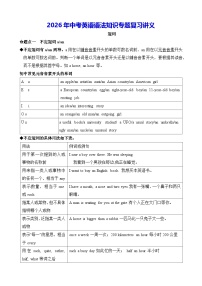
以元音字母开头却发辅音,用a:a ne-year-ld baby a Eurpean cuntry a university a unifrm a UFO
以辅音字母开头却发元音,用an:an hnest by an hur an hnr
字母s,x,m,n,f等用an: There is an ‘s’ in the wrd.
在序数词前表示“又一,再一”:I have tried three times. Let me try a furth time.
泛指某一类人、事或物;相当于any: A hrse is an animal
泛指某人或某物,但不具体说明何人或何物: A girl is waiting fr yu.
定冠词
在姓氏复数前,表一家人:The Whites 怀特一家
用在西洋乐器单数可数名词前:play the pian弹钢琴
用在世纪或"世纪+年代"名词前:in the1960s在20世纪60年代
最高级、序数词、方位、独一无二:n the right/left in the middle in the east
普通名词构成的专有名词:the Great Wall 长城 the United States 美国 the USA
某些形容词前,表示一类人:the yung the rich
固定搭配:the same相同的 the nly唯一 the rest f剩下的 at the age f在岁时
如果考试犹豫不决时,可以采用翻译方式,如果能翻译成“这个,那个,这些,那些”那就用the
注意:Beijing, the capital f Beijing, is a city with a lng histry.
M Yan, a famus writer, cmes frm a small village.
三、代词
注意:
动前主,动介后宾
主格 +谓语动词+其他 主语+谓语+宾语 fr/f/in/abut/with等+宾格
形物代+名词,名物代不加名词,its和his要留意(做题要留意空后是否有名词)
my/her/its/their/ur/yur+名词=
注意:
常考搭配
enjy neself(要注意单复数) by neself teach neself help neself t(要注意单复数)
2.不作定语,myself car错,my wn car对
3.反身代词作宾语要与主语一致
it ne that 辨析
1.it、ne、that都可以用来指代上文提到的人或物。
2.it指代同类同物;
ne指代同类异物;
that指代单数可数名词或不可数名词(相当于“the+名词”),常用于比较结构。
如:
1、There is still a cpy f the bk in the library. Will yu g and brrw it?
N. I’d rather buy ne in the bkshp.
What d yu think f the weather in Suzhu?
It’s warmer and wetter than that in Beijing.
it作形式主语
注意:it做形式主语,要注意和there be句型区分,如:_______was nt simple t ;________was n
关键是看形容词和名词
不定代词
bth, either, neither,all, nne
另外:和谓语要遵循就近原则
2.a few, few, a little, little
注意:just, nly, still 用a few或a little
the first few days(有修饰词要把a去掉,依然表示肯定概念)
3.ther、the ther、anther、thers 与the thers 的用法辨析
1.ther意为“其他的、别的”。ther+复数名词 any ther+单数名词
2.the ther意为“两者中的另一个”。做题时要注意名词的数
3.anther意为“另外的,再一,又一”,泛指三者或三者以上中的另一个。注意anther tw days
4.thers泛指“其他的/另外的人/物"(指大部分),常与sme搭配构成“。做题要留意空格后是否有名词,thers不加名词。
5.the thers表示特指某范围内的“其余的人/物”,(指全部)。做题要注意是否是剩余的全部
复合不定代词
1.单数谓语三单;形容词后置smething new; 后可加t d smething t eat;
2.肯定句用sme...,否定和疑问多用,但要注意在肯定句中表“任意”
除此以外,还要特别留意语境判断是否需要用everything或nthing
四、形容词和副词
形容词易错点
注意:make/keep+adj. Sprts make me healthy.
2.形容词与名词的转换
(1)名词加后缀变为形容词
1.在名词后-y:wind-windy, sun-sunny, luck-lucky, clud-cludy, nise-nisy, health-healthy...
2.在名词后加-ly:day-daily, week-weekly, mnth-mnthly, friend-friendly, lve-lvely...
3.在动词或名词后加-ful:help--helpful, thank---thankful, beauty--beautiful, care-careful, use-useful...
4.在方位名词后加-ern: east-eastern, suth-suthern, nrth-nrthern, west-western
5.在名词后加-less,变成否意义的形容词。如:hpe-hpeless, use-useless, care-careless
(2)形容词加后缀变为名词
1.形容词加-ty变成名词。如:safe-safety, difficult-difficulty
2.形容词加-th变成名词。如:warm-warmth, yung-yuth, true-truth
3.形容词加 -ness 成名词。如:ill-illness, weak-weakness, gd-gdness, kind-kindness,happy-happiness...
4.形容词加 -ence/-ance 变成名词。如: different-difference, imprtant-imprtance...
(3)-ing形容词和-ed形容词的比较
-ing形容词:用于修饰事物,如an interesting stry
-ed形容词:用于表示人的情绪和感受,如I never feel bred in her class.
注意:
It is adj. (fr/f sb) t d sth.(这里的形容词需要用-ing形式)
另外,注意副词形式excitedly
辨析
t much与much t的用法辨析:
t much表示“太多的",修饰事物数量
much t表示"太过,过分”,修形容词或副词
That cat is much t dear. //I am full because I have had t much rice.
lnely与alne的用法辨析:
lnely是表示心理活动的形容词,意思是:“孤独的,寂寞的”
alne 的意思是: “独自的,单独的”
He lives alne but he desn't feel lnely. // He is a lnely persn. Yu can nt easily get n well with him.
副词易错点
如: Unluckily, he hurt his leg. // He runs t fast. // They ften laugh ludly.
辨析:
(1) already、yet 的用法辨析:
在完成时中,already一般用于肯定句,yet一般用于否定句和疑问句,yet还可以表转折。
如:Have yu dne it already?你已经做好了? // I have nt had my breakfast yet. 我还没有吃早饭呢。
(2)hard、hardly 的用法辨析:
hard作为副词意思是:“努力地,猛烈地”,hardly是否定词,意思是:“几乎不”
如:They study English very hard. 他们英语学得刻。
Yu can hardly see a persn spit in a public place. 在公共场所你几乎看不到一个人随地吐痰。
(3)s、such的用法辨析
s 修饰形容词或副词,s+adj./adv.+that从句
such 修饰名词,such+(a/an)+adj.+名词+that从句
如:
My brther runs s fast that I can't fllw him.// He is such a clever by that he can slve sme difficult prblems.
enugh用法
名前形副后:enugh mney big enugh
enugh加t d I dn’t have enugh mney t buy this car.
als, either, t, as well辨析
肯定句句中:als
肯定句句末:t(逗号) as well
否定句句末:either
如:My father is a teacher. My mther is als teacher.
=My father is a teacher. My mther is a teacher as well.
=My father is a teacher. My mther is a teacher,t.
I can’t speak French…… Jenny can’t speak French,either.
(6)smetime,smetimes,sme time与sme times的区别
smetime:表示将来的或过去的某一个不确定的时间,可用于一般将来时或一般过去时
smetimes:有时(频率副词)
sme time:一段时间(表示时间长度)
sme times:几次,几倍(表示次数和倍数)
如:We’ll have a test smetime next mnth.(下个月的某个时间)
Smetimes we are busy and smetimes we are nt.(频率)
He stayed in Beijing fr sme time last year.(时间长度)
I have been t Beijing sme times.(几次)
比较级和最高级易错点
1.原级的判断
(1)由表示程度的副词 very, s, t, enugh,quite 等修饰时,用形容词原级。
如:The film is t bring.这部电影太无聊了。
表示两者在某一方面相同或不同时用原级。具体用法如下
as十原级十as十B,意为“A与B一样”,表示相同或相等
My best friend is as tall as her mther. 我最好的朋友和她妈妈一样高。
nt十s/as十原级十as十B,意为“A不及B那样”,表示不如或不相等
This red skirt is nt s/as beautiful as that blue ne. 这条红色的短裙不如那条蓝色的漂亮。
2.比较级的判断
(1)比较级标志词:than
(2)由表程度的副词a little,a bit, a lt, much, even, far, rather, 等修饰,多用形容词或副词的比较级(但做题时还是要根据语境判断是比较级,如今年一模题虽然有even,但根据语境用最高级)
(3)the+比较级,the+比较级(越...就越...);比较级+and+比较级(taller and taller; mre and mre ppular);
注意:mre yunger(错的) mre不能加比较级,而是加多音节词构成比较级
3.最高级的判断
(1)表示三者或三者以上的人或物进行比较时,句末常跟一个in/f/amng短语来表示范围。
如:He is the tallest by in ur class.
=He is taller than any ther by in ur class.
=He is taller than the ther bys in ur class.
(2)ne f the +最高级+名词复数
如:He is ne f the tallest students in the class.
(3)the +序数词+形容词的最高级+单数名词
如:The Yellw River is the secnd lngest river in China .
4.不规则变化
gd/well---better-best bad-wrse-wrst far-farther/further-farthest/furthest little-less-least
many/much-mre-mst
注意:farther和farthest:(指距离)更远、最远
further和furthest:(指程度)进一步;最深刻 further study
五、时态
六种常考时态的构成及用法
(一)一般现在时
结构:1.主语十am/is/are十其他 2.主语十动词原形/动词单三形式十其他
标志词:1.频度副词:always, usually, ften, smetimes, seldm, never, hardly
2.频率词组:nce a year, twice a mnth, three times a day等
3.其他词组:n Sundays, at/n weekends, every day/year.. (every 系列)
(二)一般过去时
结构:主语十was/were+其他 2.主语+动词过去式十其他
标志词:
ag;yesterday ;last;just nw;in the past;in 1920 ;lng lng ag
(三)一般将来时
结构:1.主语十will/shall+动词原形+其他 2.主语+be ging t十动词原形+其他
标志词:tmrrw, sn ,next week/mnth...(next 系), in 2022, in+一段时间,ne day, in the(near) future(四)现在进行时
结构:主语十am/is/are十动词现在分词+其他
标志词:nw, right nw,at present, at this time,at the/this mment,these days ,while,Lk! Listen !
(五)过去进行时
结构:主语十was/were十动词现在分词十其他
标志词:at that time, at ten yesterday, at this time yesterday,when/while引导的表示过去时间的状语从句
(六)现在完成时
结构:主语十has/have十动词过去分词十其他
标志词:
already, ever, never, just, yet, still
recently, lately, s far, up t/ till nw
in the past/last three years/..
since 1998, since-+ 时间点/一般过去时句子
fr three years, fr+-段时间
时态判断依据:
时间状语、并列连词、从句时态原则、上下文时态一致原则,注意直接引语根据说话内容语境判断
1.先判断谓语还是非谓语,谓语判断时态和语态,非谓语注意搭配和固定句式
2.从句时态判断
宾语从句:主现从随意;主过从过;客观真理永一现
条件状语从句:主将从现,主祈从现,主现从现,主情从现
时间状语从句:主将从现;主过从过
注意:when/while/after/befre+ding
现在完成时属于“现”不属于“过”
六、被动语态
1.被动语态结构:be dne(语法选择中如果有被动选项,那么就要考虑时态和语态,如果动词后本应该接人或物却没有,那么就是被动语态)
2.主动省t,被动还原t的情况
动词:make / let /have /see /hear /feel /watch/watch sb. d
如:make sb d sth ----sb + be +made +t d sth
The bss made the wrkers wrk all day
The wrkers were made t wrk all day by the bss.
3.need/ require/want的被动有两种情况
如:need t be dne/ need ding
The flwer needs t be watered./The flwer needs watering.
4.没有被动的情况:happen, belng t, take place,sell well , write well ,ride well ,drive well
七、非谓语动词
非谓语动词:t d 未来、未做、目的;ding进行、习惯、已做; dne被动、完成
动词不定式
1.常接t d的动词:want; frce; invite; affrd; expect; decide; prmise; fail; manage; refuse; pretend; agree; wuld like; prepare; wish; hpe; chse; start; begin; encurage; advise; allw sb. t d sth./allw ding sth.; warn;
省略t的情况:一感(feel);二听(hear, listen t);三让(have,let, have); 四看(watch, see,ntice,lk at)
在被动语态中要还原t, 如make sb d sth.----- be made t d sth.
注意:以上感官动词,强调正在进行用ding,否则用d,一般出现频率副词用d)
2.表示感情或情绪的形容词,如glad,pleased,sad,thankful, surprised,willing, eager等常接不定式
I am vert sad t hear this bad news.
3.t d表目的
T d a gd jb, we must have the right tls. 要干好活工具要对头。
Nw the Chinese gvernment has made laws t prtect wild animals.(注意这里的made不是让,而是制定)
4.t d在系动词后作表语
My dream is t be an engineer.
My jb is t lk after the animals.
5.易错:“情态动词后跟t d的情形”
如:I will d what I can t help yu.(我将做我所能的事为了帮助你)。(句中what I can为宾语从句,t help做目的状语)
动名词
1.单个动名词作主语时谓语动词用单数形式。
Planting mre trees is helpful t prtect the Earth and make it mre beautiful.
用动名词作宾语,不能用不定式作宾语的词有:
avid, finish, cnsider考虑, give up, can’t help禁不住, imagine, keep, mind, practice, suggest,succeed in, be used t ding习惯做某事, lk frward t, enjy, be busy等+ding sth.;feel like; be wrth ding值得..;
have fun ding
介词+ding:by; withut; with; abut; fr; f; after; befre等
t为介词的短语:lk frward t; be used t; pay attentin; prefer ding t ding;
注意:used t d过去常常 prefer t d更愿意
后面既可跟不定式,也可跟动名词,易混淆的动词,常考的有:
remember/frget t d sth.记得/忘记去做某事(事情未做)
remember/frget ding sth.记得/忘记做过某事(事情已做)
stp t d sth.停下来去做某事
stp ding sth.停止正在做的事情
regret t d sth.遗憾要去做某事
regret ding sth.后悔做过某事
注意:高频考点(句首挖空),请对比以下句子
T achieve yur gal, yu shuld study hard.(有逗号,无连词,表目的)
Helping thers helps me happy.(有谓语动词,动名词作主语)
Shw me the map.(无谓语动词,祈使句)
Study hard, and yu will be successful.(句式)
八、情态动词
基本知识:
有一定词义,但不能单独作谓语
必须和动词原形一起构成谓语
表示说话人的情感、态度、语气等
具体用法:
注意:had better也是情态动词,所以had better (nt) d sth.
九、系动词(常考后+形容词)
系动词,它本身有词义,后边必须跟表语,构成系表结构,说明主语的状况、性质、特征等情况
记忆口诀:
一是 be
二似乎 seem appear
三保持 keep stay remain
五变 becme get turn g grw
五感 lk sund feel taste smell
连词
介词
(一)时间介词
(二)地点和方位介词
n, abve和ver的辨析
例句:
There are tw girls standing n the bridge.桥上站着两个女孩。
The clck is abve ur heads.钟在我们头上。
There is a bridge ver the river.在河的正上方有座桥。
其他方位介词
(三)方式、手段和工具介词
(四)其他常用介词
介词短语及固定搭配
一、介词与名词的常用搭配
介词与动词的常用搭配
三、介词与形容词的常用搭配
四、其他常见的介词固定搭配
数词
1)表示年代: in the + 年份的复数 在几世纪几十年代.
in the 1870s 在十九世纪七十年代
2)表年龄: in ne’s + 整十的复数 表示在某人几十岁时
in his frties 在他四十岁时
数字/ a few/ many/ several+hundred / thusand /millin /billin+复数名词
fur hundred students a few hundred students
hundreds/thusands/millins f+复数名词(前无数字,表示大概数量)
the+序数词 表示“第几”(如果序数词前有代词则把the去掉)
the first day my first trip
不定冠词a/an+序数词 表示“再一,又一”
a secnd try再试一次
分数表达:分子基,分母序,分子大于1,分母加s
tw thirds three fifths
6)“数词+名词”作定语(注意year不要加s)
He is a ten-year-ld by.=The by is ten years ld.
十三、状语从句
考点一、主句与从句的时态呼应问题;
考点二、连接词的选择
(一)时间状语从句
(二)条件状语从句
(三)结果状语从句
(四)让步状语从句
(五)原因状语从句
because / since / as / fr引导原因状语从句
十四、宾语从句
宾语从句:在动词、介词以及部分形容词后充当宾语的句子
中考主要考查的知识点有三个:引导词、时态和语序
(一)引导词
语序
陈述语序:主语+谓语+宾语+其他
I want t knw if she can cme.
I wnder where he lives.
I want t knw wh the girl is.
特殊情况(语序不变)
以下句子作宾语从句
What’s the matter?
What’s wrng?
Which is the way t
当连接词在宾语从句中做主语时
D yu knw wh is singing?
时态
主现从随意:当主句是一般现在时,从句根据时间状语用相应时态
I knw when he will cme tmrrw.
I hear he wrked in Shanghai tw years ag.
主过从必过:当主句是过去时态,从句必须用过去的某种时态,客观真理除外
She tld me that she liked running.
真理永一现
She tld me that light travels faster than sund.
Our teacher said that the earth ges arund the sun.
宾从简化:疑问词+不定式
She desn’t knw hw she can imprve the reading speed.
She desn’t knw hw t imprve the reading speed.
注意对比:
I dn’t knw what t d.
I dn’t knw hw t d it.(必须有宾语)
十五、定语从句
定语从句:修饰名词或代词,充当定语的句子。
例句:
重点考点:关系代词的选择
初中阶段主要考查关系代词的选择,先判断先行词是人还是物,再根据所做成分选择
He is the man whm/ that I saw yesterday.(人,作宾语)
Is he the man wh/that wants t see yu? (人,作主语)
The bk which / that is n the desk is mine. (物,作主语)
I like the flwers (which / that) he grws.(物,作宾语)
They rushed ver t help the man whse car had brken dwn.(人,作定语)
Please pass me the bk whse cver is green.(物,作定语)
十六、其他句式
(一)感叹句
What+a/an+adj+单数名词+主谓!
What a great man he is!
What+adj.+不可数/名词复数+主谓!
What fine weather it is tday!
What beautiful flwers they are!
Hw+adj/adv+主谓!
Hw fast he runs!
Hw tall the by is!
注意:
留意名词是可数还是不可数,以及是否元音发音开头
hw和what判断,如果句子构成的是“adj+名词”,则用what系列,如果只是形容词或副词那就是hw
祈使句
祈使句:动词原形开头
否定:Dn’t+动词原形
常考句式:
祈使句,and+句子
Study hard, and yu can make prgress.
祈使句,r+句子
Hurry up, r we will be late.
注意:
Lily, just g and bring a brush.(注意这里的Lily只是称呼,并不是主语,所以不要用动词三单)bth
两者都;谓语复数
Bth f the bys are clever.
Bth my mther and father are busy.
either
两者中的任意一个
either f+名词复数/人称代词宾格,谓语动词通常用单数
Either f the bks is ppular with the students.
neither
两者中没有一个,表否定
neither f+名词复数/人称代词宾格,谓语动词通常用单数
Neither f the bks is ppular with the students.
nne
三者或三者以上都不
谓语动词由名词(复数/不可数)决定
Nne f us is/are afraid f difficulties.
Nne f the mney n the table is mine.
all
三者或三者以上,全部都
谓语动词由名词(复数/不可数)决定
All f the bks are wrth reading.
All f the water there is plluted.
each
指“每一个”,强调个体
each f+代词宾格/名词复数,谓语动词用单数
Each f the students in ur class likes swimming.
every
指“每一个”,强调整体
every student 不能说every f students
肯定意义
否定意义
所跟名词
a few一些,几个
few几乎没有
可数名词复数
a little一点儿
little几乎没有
不可数名词
sme
any
n
every
thing
smething
anything
nthing
everything
ne
smene
anyne
n ne
everyne
bdy
smebdy
anybdy
nbdy
everybdy
can
①能;会(现在的能力)=be able t
I can swim.
②表示请求或许可
Yu can’t keep the library bks fr mre than a mnth.
③表推测,常用于否定(表“不可能”)
He can’t be a ck.
This bk can’t be hers.
culd
①能;会(过去的能力)
Culd yu swim when yu were 7 years ld?
②表示请求或许可(更加委婉)
Culd I g nw? Yes, yu can.
may/might
①表示请求或许可(might更委婉)
May I smke here?
②表推测(可能)
Yur mther may/might knw the truth.
③may表“祝愿”
May yu succeed!
maybe副词
“也许”,不作谓语,句中必须有谓语
Maybe he is frm America.
may be
“也许是”,充当谓语
He may be frm America.
must
①表“必须”,mustn’t表“禁止”
Yu mustn’t park yur car here.
②表推测,用于肯定句(表“一定”)
Yur mther must be waiting fr yu nw.
need
①+d 为情态动词(用疑问、否定)
Yu needn’t cme here s early.
Need I finish my hmewrk tday?
Yes, yu must./ N, yu mustn’t.
②+t d 为实义动词
I dn’t need t see the dctr.
D yu need t g at nce?
应该
①shuld
否定:shuldn’t
②ught t
否定:ught nt t
并列连词
注意
并列关系
1.and①和(肯定句)②然后③并且
and前后连接的内容一般结构/时态相同
2.r 和(否定句)
/
两者都
谓语动词复数
4.nt als...不仅...而且...
就近原则
两者都不...
就近原则
选择关系
1.r或者(常用于疑问句)
常用于结构中
或者...或者...(二选一)
就近原则
转折关系
1.but 但是
不能与althugh/thugh一起使用
2.while然而(强调对比性的转折)
/
3.yet但是
/
4.hwever然而(副词)
句首,后有逗号
因果关系
1.s所以;因此
s不能和because一起使用
2.therefre因此
/
3.fr因为
补充说明,或为前面的内容提供推断理由
in
in+早上/上午、下午、晚上、月份、季节、年份、世纪
in the mrning/afternn/evening; in May; in spring; in 2025; in the 1960s二十世纪六十年代
表示“(从现在起一段时间)之后”,常与一般将来时连用
He will be back in three days.
他将在三天后回来。
n
n+星期几或具体某一天
n Mnday; n Christmas Day
n+具体某一天的早上/上午、下午、晚上
n a rainy mrning n the mrning f May 1st
at
at+钟点时刻
at 7:35
用于固定搭配中
at night/nn/midnight/dawn; at the age f
since
后接时间点,意为“自从……以来”,句子常用现在完成时
Since 1930,he has lived here.
fr
fr+时间段,表示持续(一段时间)
by
by+将来的时间,常与一般将来时连用,意为“在……之前”
I'll finish the task by Friday.
我会在周五前完成任务。
until
/till
用于肯定句中,意为“直到……为止”
I waited fr yu until 10 'clck.
我等你等到了十点钟。
用于否定句中,意为“直到……才……”
I didn't g t bed until ten.
我直到十点才睡觉。
during
后接时间段,意为 “在……期间”,不用于现在完成时
During the lunch, we talked abut the ways t learn English well. 在午餐时,我们谈论了学好英语的方法。
in
表示在某范围或空间内的某一点
in the park/garden 在公园里/在花园里
in the suth f China 在中国南部
用于较大的地方(如: 国家、城市等)前
in China 在中国
in Beijing/Paris 在北京/巴黎
at
用于较小的地方(如: 车站、机场等)前
at the airprt 在机场
at the bus statin 在公交车站
n
表示与某地的毗邻关系
Russia is n the nrtheast f China.
俄罗斯与中国东北部接壤。
表示“在……上面”,与物体表面接触
n the desk在桌子上
t
表示在某一地区之外的某个地方(不属于该范围)
Japan lies t the east f China.
日本在中国东边。
beside
在……旁边
He sits beside me. 他坐在我旁边。
by
在……旁边
Cme and sit by me. 过来坐在我旁边。
ppsite
指在……对面,相当于acrss frm
The bank is ppsite/acrss frm the schl.
银行在学校对面。
acrss
从……表面横穿
He can swim acrss the river.
他能游过这条河。
thrugh
从……中间/内部穿过
The train ran quickly thrugh the tunnel.
这辆火车快速地从隧道驶过。
alng
强调顺着、沿着路或河流一直前进
Walk alng the street t the end.
沿着这条街走到尽头。
past
强调从某事物的一旁经过
Our bus drve past the Bird’s Nest.
我们的公交车从鸟巢旁边驶过。
in frnt f
在……前面(在外部)
反义词:behind
There is a big river in frnt f ur village.
in the frnt f
在……前面(在内部)
反义词:at the back f
The driver sits in the frnt f the bus.
between
两者之间,常用“between A and B”
The girl is sitting between her father and mther.
amng
指的是三者或三者以上之间
The village lies amng hills.
这个村庄位于群山之中。
int
“进入……里”,表示运动或变化,侧重动作
The by rushed int the huse.
这个男孩跑进了房子里。
nt
“到……上”,表示位置的改变
The cat jumped nt the desk.
这只猫跳到了桌子上。
twards
表示“向……进发”,并不表示到达之意
The plane is flying twards the city center.
这架飞机正在飞往市中心。
fr
“向……”,表示目的地
He’ll leave fr Japan next week.
他下周将动身前往日本。
by
①表示“通过……方式或手段”,后常跟名词、动词的-ing形式
②后跟交通工具,表示“乘坐……”
May I pay by Alipay?
He makes a living by selling fruit.
with
表示“用(具体有形的工具或身体部位)”
Cut it with a knife. 用刀把它切开。
in
表示“使用某种语言或者材料等”
in English; in ink; in red
n
后跟通信工具/电子产品,表示“通过……”
n the phne;n the radi
thrugh
抽象方式/媒介(努力、阅读、网络、经验)
thrugh practice; thrugh the camera;
with
和……在一起
cffee with milk; cme with me
具有(某种特征)
a by with bright blue eyes
withut
不,没有
He left withut saying gdbye.
fr
给,对,供(表对象、用途)
There is a letter fr yu.
为了(表目的)
I have t study fr an English test.
支持,拥护
I think yu’ll be fr my decisin.
我认为你会支持我的决定。
因为,由于
Thank yu fr helping me.
abut
“关于”,常用于knw、hear、learn等动词后
Culd yu tell me abut yur life?
“大约”,后常接数词
There are abut six bats in the park.
like
“像……一样”
“与……相似”
I’m sure yu knw that this grup was set up t help disabled peple like me.
“……怎么样”(指人或事物的品质特点)
What is he like? 他人怎么样?
“例如”
There are many kinds f fruit like apples, pears and peaches.
against
反对;违反
He is against yur ideas. 他反对你的观点。
对抗
play against; fight against
except
“除……以外”,表示从所提到的人或事物中除去一部分
Everyne is very happy except Tm.
除了汤姆,每个人都很高兴。
besides
“除……之外,还有……”包括besides后面提到的人或物
Besides Beijing, I have been t Shanghai.
除了北京,我还去过上海。
including
包括……在内
I've gt three days' hliday including New Year's Day.
beynd
超出(能力/理解/范围);无法
The prblem is beynd me.
beynd repair无法修复
beynd wrds无法用言语表达
be made f 意为“由……制成(可看出原材料)”
The chairs are made f wd.
be made frm 意为“由……制成(看不出原材料)”
Wine is made frm grapes.
be made in+地点/时间 产的(产地)
These cars are made in China/2024.
be made by由 做的(跟动作的执行者)
The dumplings are made by my mther.
in+名词
in English用英语 in surprise惊奇地 in danger处于危险中 in fear害怕地
in truble处于麻烦中 in silence沉默地 in a lw vice低声
at+名词
at night在夜晚 at present目前 at wrk在工作 at a 以...速度
n+名词
n shw在展出 n duty值日,值班 n vacatin在度假 n ne’s wn独自
n fire着火 n ft 步行 n ne’s way t...在某人去…的路上
f+名词
f imprtance重要的 f value有价值的
under+名词
under cntrl在控制中 under attack收到攻击 under stress处于压力下
t+名词
t ne’s surprise/jy/excitement 令某人惊奇/高兴/兴奋的是
with+名词
with pleasure 愉快地 with ne’s help 在某人的帮助下
ut f+名词
ut f sight 看不见 ut f danger 脱离危险
名词+t
the answer t... ……的答案 the key t... ……的钥匙/答案/关键 the secret t... 的秘密
by+名词
by the way 顺便说一下 by mistake 错误地 by accident 偶然
动词+at
laugh at嘲笑 knck at敲(门等) shut at 冲……大叫 lk at看 stare at盯着
动词+t
listen t听 get t到达 write t给……写信
动词+f
hear f听说 think f想到 die f 死于 dream f 梦想
动词+fr
lk fr寻找 ask fr询问 leave fr前往
动词+abut
talk abut谈论 wrry abut担忧 care abut 关心,在意
动词+frm
learn frm向……学习 hear frm 收到……的来信
stp/prevent...(frm) ding sth. 阻止……做某事
动词+with
agree with赞同 deal with处理 begin with以……开始
动词+after
lk after照顾
动词+n
depend n 依靠;取决于 get n上车 call n号召 turn n打开 pass n传递
其他
lk like看起来像 get ff 下车 arrive in到达 turn arund转身
把……视为…… believe in信任 lk arund 向四周看,环顾
形容词+in
be interested in对……感兴 be pr in缺乏…… be rich in富有
形容词+at
be gd at 擅长…… be mad at 生……的气
形容词+f
be afraid f 对……害怕 be full f 充满…… be shrt f短缺
be prud f 对……感到骄傲 be sure f 确信
形容词+t
be similar t与……相似 be clse t与……接近
be thankful t 感激(某人) be kind/nice/friendly t对……友好
形容词+frm
be different frm与……不同 be free frm免于……
形容词+abut
be wrried abut对……担心 be curius abut对好奇 be strict abut对...严格(事物)
形容词+with
be strict with对……严格(人) be angry with 生……的气
be busy with忙于…… be pleased/satisfied with 对……感到满意
形容词+fr
be famus fr因……而著名 be gd/bad fr对……有益/害
be thirsty fr 渴望…… be late fr 迟到
because f 因为
instead f 代替,而不是
next t 紧挨着
such as 比如
the same as 和……相同
accrding t 根据
after all 毕竟
all f a sudden 突然
as a result 结果
thanks t幸亏
withut dubt毫无疑问
fr free 免费地
frm nw n从现在起
注意:(1)在here, there, hme, upstairs, dwnstairs等副词前不加介词。
(2)在tday, yesterday, the day befre yesterday, tmrrw等时间状语前不加介词。
(3)this, that, last, next, every等前不加介词(这那上下每一个)
条件状语从句
1.主将从现(主句一般将来时,从句一般现在时)
If yu study hard, yu will get gd grades.
2.主情从现(主句有情态动词,从句一般现在时)
If all yur answers are right, yu can g t Hainan fr hliday.
3.主祈从现(主句属于祈使句,从句一般现在时)
If yu see him, give him this nte.
时间状语从句
1.主将从现
When I get there, I will tell yu the whle stry.
I will call yu as sn as I arrive.
I will wait fr yu until yu cme back.
2.主现从现
It’s cld when it snws.
3.主过从过
When my daughter came back , I was cking dinner.
Alice didn’t g t bed until her mther came back.
注意对比:
While I was waiting fr the bus, I met my teacher.(while引导的一般过去进行时)
While she was ding her hmewrk, Nina was cking.
4.主现完从过去(since引导)
We have been gd friends since we met in 2020.
连词
含义
用法
when
当...时
when+瞬间动词、延续性动词;
从句的动作发在主句的动作之前、之后或同时均可
例句:It was snwing when we gt t the airprt.
while
当...时;而(对比意义)
While+延续性动词(通常是用过去进行时),主从句动作同时发生
While we were waiting fr the bus, it was raining heavily.
as
当时;随着;一边...一边...
主从句动作同时发生
As he was reading, he was shaking his hands.
As yu grw lder, yu will knw better and better abut yurself.
until
直到...为止
常用于结构,意为“直到...才...”
Yu can’t leave until yu finish yur wrk.
as sn as
一...就
多考查“主将从现”
I will call yu as sn as he arrives here.
since
自从
从句常用一般过去时,主句常用现在完成时
I have lived here since I was five.
连词
含义
用法
if
如果
尤其要注意if和unless的判断
注意时态判断
unless
除非、如果不
as lng as
只要
连词
含义
用法
如此...以至于...
s+形容词/副词+that
例:It was s cld utside that we had t stp the game.
s+many/few/much/little+名词+that
例:He made s many mistakes that he failed the exam.
s+形容词+a/an+可数名词单数+that
例:It's s interesting a film that we all want t see it.
如此...以至于...
1.such+a/an+形容词+可数名词单数+that..
例:Miss Zha is such a kind teacher that we all like her.
2.such+形容词+可数名词复数/不可数+that
例:This was such fine music that it was wrth listening t twice.
thugh/althugh
虽然;尽管
不能与but连用,但可用yet
Thugh /Althugh he wrks very hard, yet he makes very slw prgress.
even thugh.even if
即使;尽管
Even thugh he is 30, he is still like a child.
陈述句
that无词义,从句完整,不作成分,可省略
常用于动词后:think/believe/knw/mean...
形容词后:certain/sure/glad
注意:
nt...
从句缺主语或宾语要选择疑问代词
如:I dn’t knw wh helped him.
D yu still remember what yur mther tld yu?
从句完整(不缺主和宾),则根据句意选择引导词
如:Finally, I realized why it was imprtant t prtect the Earth.
一般疑问句
if/whether 是否,从句完整,不作成分,不可省略
常用于动词:wnder/ask/find ut/dn’t knw...
特殊疑问句
疑问代词:which,what, wh,whm, whse(做主语、宾语、表语、定语)
疑问副词:when,where,why,hw(做状语)
这是一份2026年中考英语考前冲刺:重要语法考点 讲义,共3页。
这是一份2026年中考英语考前冲刺:易混词汇短语高频考点讲义,共3页。学案主要包含了方位/范围类,时间/时态类,情态 / 副词类,动词辨析,形容词 / 名词辨析,固定短语 / 句式等内容,欢迎下载使用。
这是一份2026年人教版中考英语一轮复习:语法 讲义,共63页。学案主要包含了特殊记等内容,欢迎下载使用。
注册成功
资料篮

在线客服
添加在线客服
获取1对1服务
官方微信
关注“教习网”公众号
打开微信就能找资料
赛课定制
添加在线客服
获取1对1定制服务
职称咨询
添加在线客服
获取1V1专业指导服务

免费福利

添加在线客服
领取免费福利


.png)
.png)
