免费领取教师福利

若您为此资料的原创作者,认为该资料内容侵犯了您的知识产权,请扫码添加我们的相关工作人员,我们尽可能的保护您的合法权益。


这是一份【英语】浙江省温州市新力量联盟2025-2026学年高一下学期期中联考学科试题(学生版+解析版)(含音频),共3页。试卷主要包含了5分,满分7等内容,欢迎下载使用。
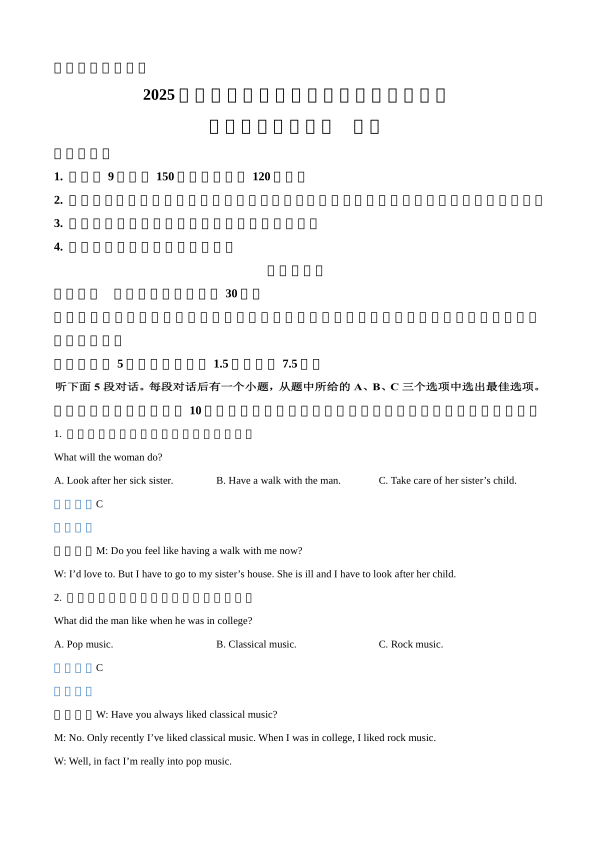
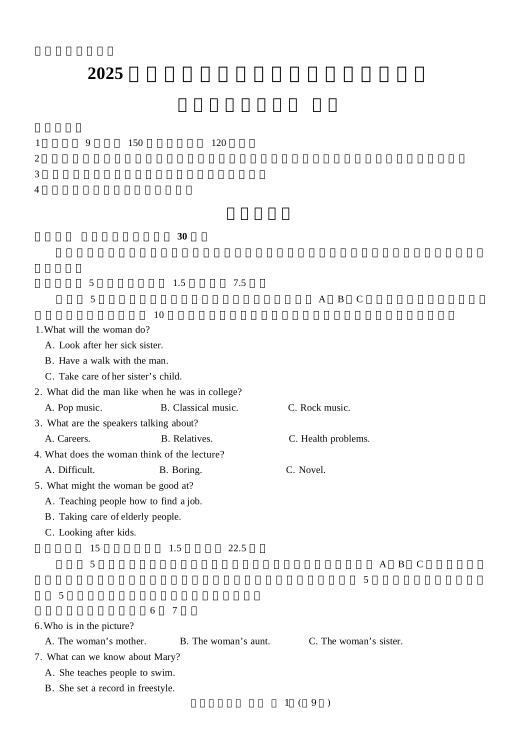
第一部分 听力(共两节,满分30分)
第一节(共5个小题;每小题1.5分,满分7.5分)
听下面5段对话。每段对话后有一个小题,从题中所给的A、B、C三个选项中选出最佳选项。听完每段对话后,你都有10秒钟的时间来回答有关小题和阅读下一小题。每段对话读两遍。
1. What will the wman d?
A. Lk after her sick sister.B. Have a walk with the man.C. Take care f her sister’s child.
【答案】C
【原文】M: D yu feel like having a walk with me nw?
W: I’d lve t. But I have t g t my sister’s huse. She is ill and I have t lk after her child.
2. What did the man like when he was in cllege?
A. Pp music.B. Classical music.C. Rck music.
【答案】C
【原文】W: Have yu always liked classical music?
M: N. Only recently I’ve liked classical music. When I was in cllege, I liked rck music.
W: Well, in fact I’m really int pp music.
3. What are the speakers talking abut?
A. Careers.B. Relatives.C. Health prblems.
【答案】A
【原文】W: Dad, I want t be a nurse when I grw up.
M: That’s great! Yur aunt has been a nurse fr 20 years and she lves it. And when Grandma wasn’t feeling well, she knew hw t take care f her.
4. What des the wman think f the lecture?
A. Difficult.B. Bring.C. Nvel.
【答案】A
【原文】M: What d yu think f Prfessr Brwn’s lecture?
W: The tpic was interesting, but the lecture was much mre difficult t fllw than I had expected.
5. What might the wman be gd at?
A. Teaching peple hw t find a jb.
B. Taking care f elderly peple.
C. Lking after kids.
【答案】C
【原文】M: I am lking fr smene wh has ever taken care f elderly peple befre. D yu have any experience?
W: I’m srry. My experience is with small children. I’m afraid I will nt be suitable fr the jb.
第二节(共15小题;每小题1.5分,满分22.5分)
听下面5段对话或独白。每段对话或独白后有几个小题,从题中所给的A、B、C三个选项中选出最佳选项。听每段对话或独白前,你将有时间阅读各个小题,每小题5秒钟;听完后,各小题将给出5秒钟的作答时间。每段对话或独白读两遍。
听下面一段对话,回答以下小题。
6. Wh is in the picture?
A. The wman’s mther.B. The wman’s aunt.C. The wman’s sister.
7. What can we knw abut Mary?
A. She teaches peple t swim.B. She set a recrd in freestyle.C. She wrked at a bank.
【答案】6. B 7. A
【原文】M: Is the wman in the picture yur mther?
W: N. That’s my aunt Mary. She was a very famus butterfly swimmer in the 1980s.
M: Really?
W: Yes. She cmpeted in bth the 1984 and the 1988 Olympics.
M: Did she win?
W: N. But she set dmestic recrds in the 100-meter and 200-meter butterfly swimming events. She was nly a teenager at that time.
M: She was really great. What did she d later?
W: She retired frm swimming and went t wrk as a cach.
M: Has the recrd she set been brken?
W: Yes. In May 2000, Susan O’Neill brke her 200-meter butterfly swimming recrd. My aunt was very happy when she heard the news.
M: I really lk frward t meeting her ne day.
听下面一段对话,回答以下小题。
8. What is wrng with the man?
A. His chest hurts.B. He has a stmachache.C. He runs a high fever.
9. What des the wman tell the man t d?
A. Take sme medicine and breaks.
B. Ask fr leave frm wrk.
C. Stay in bed fr a few days.
10. What may happen t the man?
A. He may miss sme classes.B. He may lse his jb.C. He may be late fr the exam.
【答案】8. C 9. A 10. A
【原文】W: What’s the matter, yung man?
M: I’m afraid I’ve caught a cld.
W: D yu have a temperature?
M: I haven’t taken my temperature yet.
W: OK. I’ll check that. Oh, it’s 38. 2℃. Yu’ve gt a fever. Hw abut yur desire fr fd?
M: I haven’t eaten anything fr a whle day.
W: Let me give yu a thrugh examinatin and see what’s wrng with yu. (After a mment) Hmm, dn’t wrry. It’s nly a cld. Take sme medicine and have a gd rest. Yu’ll be all right by this time tmrrw.
M: Can I ask fr leave frm class, then?
W: Yes. I think yu shuld.
M: Thank yu very much.
听下面一段对话,回答以下小题。
11. Hw ld is Andy?
A. 7 years ld.B. 9 years ld.C. 16 years ld.
12. What’s the girl’s favrite hbby nw?
A. Acting.B. Swimming.C. Skiing.
13. What des the girl think f playing cmputer games?
A. It’s relaxing.B. It’s a waste f time.C. It helps her make friends.
【答案】11. C 12. A 13. B
【原文】W: Where are yu frm, Andy?
M: I’m frm Canada.
W: Canada! Are yu gd at winter sprts then?
M: Yeah, I lve winter sprts very much, such as skiing and snwbarding. I’ve been ding thse fr 7 years, since I was 9. What d yu d in yur free time?
W: Well, swimming used t be my favrite hbby. But nw I spend mst f my spare time in the acting club I jined last year, and I really lve the theater. I want t be an actress ne day.
M: I als enjy playing nline cmputer games. It helps me make new friends. Hw abut yu?
W: Well, I think it makes n sense spending time playing smething with strangers. I prefer chatting face t face with my friends.
M: I like chatting with friends t.
W: Oh, it’s time fr class. Our English teacher is cming. After class I’ll intrduce yu t sme f my friends.
听下面一段对话,回答以下小题。
14. What’s the clr f the walls?
A. Black.B. Brwn.C. Green.
15. What is the prbable relatinship between the speakers?
A. Renter and huse wner.B. Landlady and her husband.C. Friends.
16. What shuld the man NOT d in the rm?
A. Take pictures.B. Smke.C. Paint the wall.
17. When can the man prbably use the kitchen?
A. At 6:00 p.m.B. At 7:30 p.m.C. At 8:00 p.m.
【答案】14. C 15. A 16. B 17. A
【原文】M: It’s a lvely rm, but I dn’t like green paint. Wuld it be all right if I painted the walls brwn?
W: Yes, yu can d that as lng as yu dn’t paint them a very dark clr. One f my renters painted them black a few years ag. That was terrible.
M: Is there anything I shuld knw?
W: Well, I dn’t allw cats t g upstairs.
M: Oh? Nt at all?
W: N, abslutely nt. I dn’t like animals and I dn’t allw peple t smke in the rms.
M: I agree with that. I dn’t smke anywhere. Can I use the kitchen if I want t ck smething?
W: Yes, but nly befre 7 ’clck in the evening. And I dn’t allw peple t stick pictures n the walls. Yu knw when yu take the pictures away, yu leave marks n the wall.
M: OK. I see.
W: And ne mre thing, I dn’t want any big nisy parties, s nly tw r three friends at the same time, please.
M: I’ll d that. It sunds fair. I think we will get n well with each ther.
听下面一段独白,回答以下小题。
18. Where is the reprt published?
A. In the newspaper.B. In the jurnal.C. On the Internet.
19. What happened t the cmmn insects in the UK?
A. The number f them has reduced by 60%.
B. The species f them has decreased by 60%.
C. The number f them stays the same.
20. What des the prfessr eventually want t d?
A. Stp killing the insects.B. Lk fr the winner.C. Prtect the useful insects.
【答案】18. B 19. A 20. C
【原文】W: The number f insects has fallen by 45 percent in the past 35 years. This culd be dangerus fr humans. A reprt n this has been published in the jurnal Science. It says the human ppulatin has dubled since 1980. The number f insects has nearly halved. The biggest reasn is the frest’s disappearing. Land is als disappearing because f new cities and farms. Anther reasn is glbal warming. In the UK, the number f cmmn insects, such as beetles, butterflies, bees and wasps has fallen by up t 60 percent. Many cuntries are wrried abut the fall in the number f bees and butterflies. Scientists say fewer insects will lead t many prblems. One f the biggest dangers is that there will be fewer insects t help flwers t reprduce. Farmers will have prblems abut grwing fd. The lead researcher f the reprt said falling numbers f insects culd als lead t mre diseases. He said mice wuld have less fd s they will mve t cities and bring diseases with them. A prfessr said we must stp mre insects frm dying. First, we must figure ut “What species are winning and what species are lsing in the fight fr survival”. This will help us t prtect the useful insects.
第二部分 阅读理解(共两节,满分50分)
第一节(共15个小题;每小题2.5分,满分37.5分)
阅读下列短文,从每题所给的A、B、C和D四个选项中,选出最佳选项。
A
The Yung Schlars Prgram
The University f Maryland’s Yung Schlars Prgram is a perfect summer camp fr academically talented teenagers wh want t earn cllege credits, pursue academic interests r discver cllege life at the University f Maryland. The prgram is challenging and rewarding. Students have the pprtunity t shw that they can be successful in a university envirnment.
The Activities
During three weeks f explratin, teens preview the university experience, study with students wh share similar interests and cmmunicate with the best teachers f the University f Maryland in a dynamic and challenging classrm envirnment. Students can have trips t nearby Washingtn, DC and enjy mvie nights and activities at the student unin. Wrkshps and cnferences featuring speakers in academic fields further enrich the learning experience.
The Curses
The Yung Schlars Prgram ffers cllege curses that are at the cutting edge f thery, thught and technlgy. Classes generally meet every day frm Mnday t Friday. The prgram is a great intrductin t the University f Maryland. Participants can benefit frm the University f Maryland’s vast resurces, including libraries, cmputers and instructinal labs.
The Rewards
Upn prgram cmpletin, teens will g hme with better preparatins fr the cllege experience-bth academically and scially. In additin, students earn three cllege credits that pst t the University f Maryland transcript (成绩单).
The Applicatin
The applicatin prcess includes submissin (提交) f the applicatin, high schl transcript and a letter f recmmendatin.
Ages: 14 — 18
Mailing address: The University f Maryland Cllege Park
Fr mre infrmatin, call 3014057762.
21. Which is NOT true abut the prgram accrding t Paragraph 1?
A. It can let teens experience cllege life in advance.
B. It’s wrth participating.
C. It can ffer cllege credits fr teens.
D. It is intended fr cllege students.
22. What can teens d during three weeks f the prgram?
A. They can attend classes every day.
B. They can attend a meeting fr academic discussin.
C. They can jin the student unin f the University f Maryland.
D. They can learn frm the best students f the University f Maryland.
23. What d yu need t d if yu want t apply fr the prgram?
A. Call 3014057762 t cntact the university first.
B. Submit high schl transcript.
C. Take a part time jb in the university’s library.
D. Preview the university envirnment ahead f time.
【答案】21. D 22. B 23. B
【语篇解读】文章介绍马里兰大学青年学者项目的活动、课程、福利及申请相关信息。
【21题详解】细节理解题。根据第一段中“The University f Maryland’s Yung Schlars Prgram is a perfect summer camp fr academically talented teenagers wh want t earn cllege credits, pursue academic interests r discver cllege life at the University f Maryland. (马里兰大学的青年学者项目是一个完美的夏令营,面向那些有学术天赋、希望获得大学学分、追求学术兴趣或体验马里兰大学校园生活的青少年。)”可知,这个项目是针对青少年的,而不是大学生。选项D“它是为大学生设计的”与原文不符。
【22题详解】细节理解题。根据The Activities部分中“Wrkshps and cnferences featuring speakers in academic fields further enrich the learning experience. (由各学术领域专家主讲的研讨会与交流会,进一步丰富学习体验。)”可知,青少年可以参加学术讨论会议。
【23题详解】细节理解题。根据The Applicatin部分中“The applicatin prcess includes submissin (提交) f the applicatin, high schl transcript and a letter f recmmendatin. (申请过程包括提交申请表、高中成绩单和推荐信。)”可知,申请这个项目需要提交高中成绩单。
B
It was a regular Mnday when I received an email frm my sn’s schl abut a cming science fair. At first, I thught, “Great, I can’t wait t see the prject f my sn, Tim.” The thught f clrful displays and creative ideas cheered me.
Hwever, as I read further, my excitement quickly turned t anxiety. Nt nly were students required t present their prjects, but parents were expected t participate as well! This unexpected change left me feeling upset. “Oh, n. I’m nt gd at science and I haven’t dne a prject since I was in schl. Hw can I help him?” I was als wrried abut hw my lack f experience might affect my sn and his chance t shine.
That evening, my sn came hme full f excitement, “Dad, this is ging t be wnderful. We shuld make a vlcan that erupts!” And s, we began ur prject with sme nline research and a trip t the stre fr supplies. I realized that ur prject might be displayed fr everyne t see and any mistake culd be embarrassing.
Our first attempt at building the vlcan was a disaster. Fast frward t the weekend, and it was time fr a practice run at schl. I expected the ther parents t be as cnfused as I was. I was wrng! They were s prepared that they culd be scientists themselves. The pressure was n.
Over the next few days, we wrked hard and ur prject imprved. My sn was excited, and I started t enjy the prcess, t. The day f the science fair arrived, and my nervusness faded. It turned ut that cncentrating n having fun with my sn was the best way t vercme my wrries. Plus, seeing his smile made everything wrth it.
Reflecting n the experience, I realized it had brught us clser. It was the first time my sn and I had created smething tgether. I nw lk frward t mre prjects in the future.
24. Hw did the authr feel n receiving the letter?
A. Disappinted.B. Anxius.C. Excited.D. Cntent.
25. What culd be inferred abut the sn?
A. He fund the prject t hard t cmplete.B. He relied heavily n his father fr ideas.
C. He bviusly lacked self-cnfidence.D. He really lked frward t the prject.
26. What helped get rid f the authr’s wrries?
A. Cmpleting the prject withut mistakes.B. His awareness that effrt mattered mre.
C. Fcus n wrking with his sn tgether.D. Gd preparatins fr the science fair.
27. What did the authr realize after the science fair?
A. The experience strengthened father-sn ties.B. Thse wh are determined will succeed.
C. The spirit f science is t keep trying.D. Tw heads are better than ne.
【答案】24. C 25. D 26. C 27. A
【语篇解读】本文讲述一位父亲收到学校科学展览会通知后的心情变化,记录他从焦虑不安到和儿子合作完成手工项目、享受陪伴过程,最终拉近父子距离的亲身经历。
【24题详解】细节理解题。根据第一段“The thught f clrful displays and creative ideas cheered me. (一想到丰富多彩的展品和新奇的创意,我便心生愉悦。)”可知,作者刚收到邮件时心情愉悦兴奋。
【25题详解】推理判断题。根据第三段“That evening, my sn came hme full f excitement, “Dad, this is ging t be wnderful. We shuld make a vlcan that erupts!”(那天晚上,我儿子兴奋地回到家,“爸爸,这会很棒的。我们应该造一座喷发的火山!”)” 可知,儿子对这次科学项目充满期待。
【26题详解】细节理解题。根据第五段“It turned ut that cncentrating n having fun with my sn was the best way t vercme my wrries. (事实证明,专心陪伴儿子、享受合作过程,是克服内心烦恼最好的方式。)”可知,和儿子并肩协作、专注相处化解了作者的焦虑。
【27题详解】推理判断题。根据最后一段“Reflecting n the experience, I realized it had brught us clser. (回顾这段经历,我意识到它让父子二人变得更加亲近。)”可知,这次合作经历增进了父子感情,加强了父子关系。
C
A dried-ut plain in the nrth f Sacrament, Califrnia was in perfect cnditin t fuel wildfires. It was 2014, and Califrnia was experiencing its wrst drught in decades. The plain was full f dry brush. Fire preventin wrkers and eclgists in the state were desperately wrking t reduce ptential wildfire fuel surces anywhere they culd. Eclgists, facing a dangerusly dry plain and a price tag f at least ne millin dllars fr a majr cnstructin prject t fix the site, did smething surprising. They called in the beavers (河狸).
Thanks t the intrductin f the animals, the site was restred t a lively plain, with trees ppping up and streams flwing acrss the land. Damn Citii, a bilgist wh led the prject, said he was amazed by the results f the prject. He had estimated that the beavers wuld take abut a decade t return the dried-ut land t streams in the regin, but the animals blew away his expectatins. By year three, water was back. Ultimately, the prject nly cst $58,000, which was used t prepare the land fr the beavers t cme in and d what they d.
Beavers have essentially evlved t be the engineers f nature, transfrming their landscape t suit their needs and t prtect them frm predatrs. They are quick in the water and can build dams (水堤) t make pnds and wetlands where they can better survive.
The ppulatin f beavers in Nrth America was nce driven dwn due t heavy hunting. Hwever, after the desire fr beaver hats and cats reduced, the ppulatin began t recver. The success f the prject has led t a number f ther prjects using beavers fr land restratin thrugh Califrnia. Gvernment prgrams were beginning t take ntice and ffer training t lcal peple n hw t use beavers fr wild fire preventin.
28. Why was Citii surprised by the prject?
A. It changed the land int a lively plain.B. It tk effect quicker than expected.
C. It used animals t slve the issue.D. It cst significantly less mney.
29. Hw did the beavers reduce the wildfire fuel surces?
A. They helped the trees grw better.B. They created water bdies.
C. They prtected dams.D. They ate the dry bush.
30. What d we knw abut beavers in Nrth America?
A. They are the main slutin t the wildfire prblem.
B. They gt prtected fr their rles in eclgy.
C. They were threatened by humans.
D. They are trained t stp wildfire.
31. What is the purpse f this text?
A. T infrm the use f beavers in wildfire preventin.
B. T intrduce the benefits f wrking with animals.
C. T illustrate the cause and effect f wildfire.
D. T present a study n beavers’ behavir.
【答案】28. B 29. B 30. C 31. A
【语篇解读】文章主要介绍2014年加利福尼亚州遭遇严重干旱,北部一片干涸平原易引发野火,生态学家引入河狸进行治理,河狸不仅使土地恢复生机,还快速且低成本地减少了野火燃料源,其成功案例引发了更多利用河狸预防野火的项目。
【28题详解】细节理解题。根据第二段“He had estimated that the beavers wuld take abut a decade t return the dried - ut land t streams in the regin, but the animals blew away his expectatins. By year three, water was back.(他原本估计河狸需要大约十年时间才能使这片干涸的土地恢复成溪流遍布的状态,但这些动物远超他的预期。到第三年,水就回来了。)”可知,Citii对项目感到惊讶是因为它比预期生效得更快。
【29题详解】推理判断题。根据第二段“Thanks t the intrductin f the animals, the site was restred t a lively plain, with trees ppping up and streams flwing acrss the land.(由于引入了这些动物,这个地方恢复成了一片生机勃勃的平原,树木破土而出,溪流在这片土地上流淌)”以及第三段“They are quick in the water and can build dams (水堤) t make pnds and wetlands where they can better survive.(它们在水中行动敏捷,能够建造水堤形成池塘和湿地,以便更好地生存)”可知,河狸通过建造水堤形成水体,改变了干涸的环境,从而减少了野火燃料源。
【30题详解】细节理解题。根据第四段“The ppulatin f beavers in Nrth America was nce driven dwn due t heavy hunting.(由于过度捕猎,北美的河狸数量曾经大幅下降)”可知,北美的河狸曾受到人类的威胁。
【31题详解】推理判断题。根据第二段“Thanks t the intrductin f the animals, the site was restred t a lively plain, with trees ppping up and streams flwing acrss the land. Damn Citii, a bilgist wh led the prject, said he was amazed by the results f the prject. He had estimated that the beavers wuld take abut a decade t return the dried-ut land t streams in the regin, but the animals blew away his expectatins. By year three, water was back. Ultimately, the prject nly cst $58,000, which was used t prepare the land fr the beavers t cme in and d what they d.(得益于这种动物的引入,这片区域恢复成了一片生机勃勃的原野,树木破土而生,溪流蜿蜒流淌。 主导该项目的生物学家达蒙・乔蒂表示,项目成效令他大为震惊。 他原本预估,河狸需要约十年时间,才能让这片干涸的土地重新恢复水系、重现溪流, 但这些动物带来的改变远远超出了他的预期。 到第三年,水源便重新回归。 最终,整个项目仅花费 5.8 万美元,这笔资金主要用于改造环境、搭建适宜河狸栖息的家园,让它们自然发挥本能、改造生态。)”可知,文章主要讲述了加利福尼亚州利用河狸减少野火燃料源,预防野火,且其成功案例引发更多相关项目,所以文章目的是告知人们河狸在预防野火方面的用途。
D
When children learn a musical instrument, ne f the hardest things fr a parent t d is encurage them t practice. But here’s smething parents can use t give their kids a reasn t try: A study has fund that playing a musical instrument may lead t better brain health in later life. That might nt be enugh t encurage a child wh has better things t d, but it’s gd news fr thse wh enjy music.
Researchers frm the UK lked at data frm an nline survey f mre than 1,000 peple ver the age f 40 wh had been asked t talk abut their musical experiences and expsure (暴露) t music during their lives. They were als given tasks that tested their memry and skills in things like planning and fcusing.
The study fund that playing a musical instrument, especially the pian, was cnnected with better memry and thinking skills. And cntinuing t play an instrument int later life was fund t have an even mre salutary effect. Singing was related t better brain health in lder age t. The research team suggested that the scial factrs that came with singing in a singing grup may als have had an effect.
One f the researchers, Anne Crbett, wh is a prfessr f dementia (痴呆) research at the University f Exeter, said that encuraging lder adults t return t music later in life culd be a useful public health strategy. She said, “There is much evidence fr the benefit f music grup activities fr individuals with dementia.” And she suggested that such activities culd be used t reduce the risk f develping dementia.
Of thse wh tk part in the survey, 89% said they had played a musical instrument at sme time in their lives, and abut half still played ne. Arund seven ut f ten said they had taken part in grup singing.
32. Which is a benefit children learning musical instruments get accrding t the text?
A. Having better brain health in later life.B. Encuraging them t d things well.
C. Getting curage t try new things.D. Becming famus.
33. What des the underlined wrd “salutary” in paragraph 3 mean?
A. Sufficient.B. Psitive.C. Abslute.D. Typical.
34. Accrding t Anne, hw culd music benefit lder adults?
A. It helps them stay physically active.B. It prvides a relaxing mind in their free time.
C. It lwers the chance f develping dementia.D. It encurages them t sing mre.
35. What is the authr’s purpse f writing the text?
A. T encurage peple t jin in music activities.B. T tell us what we shuld d in daily life.
C. T describe that singing is gd fr health.D. T explain the imprtance f a hbby.
【答案】32. A 33. B 34. C 35. A
【语篇解读】主要介绍一项研究表明学习演奏乐器、参与合唱有益于大脑健康,且能降低老年人患上痴呆的风险。
【32题详解】细节理解题。根据第一段中的“A study has fund that playing a musical instrument may lead t better brain health in later life.(一项研究发现,演奏乐器可能使人晚年拥有更好的大脑健康状况。)”可知,学习乐器能让孩子在晚年收获更好的大脑健康。
【33题详解】词句猜测题。根据第三段中的“The study fund that playing a musical instrument, especially the pian, was cnnected with better memry and thinking skills. And cntinuing t play an instrument int later life was fund t have an even mre salutary effect.(研究发现,演奏乐器尤其钢琴,与更好的记忆力和思维能力相关,晚年持续演奏乐器会产生更加salutary效果。)”可知,演奏乐器对大脑有益,坚持练习效果更佳,因此划线单词salutary表示“积极有益”的含义。
【34题详解】细节理解题。根据第四段中的“And she suggested that such activities culd be used t reduce the risk f develping dementia.(并且她提出,这类音乐活动可以用来降低患上痴呆症的风险。)”可知,音乐活动能够减少老年人患痴呆症的概率。
【35题详解】推理判断题。通读全文,尤其是第一段中的“But here’s smething parents can use t give their kids a reasn t try: A study has fund that playing a musical instrument may lead t better brain health in later life.(但有一个理由可以让家长鼓励孩子尝试:研究发现演奏乐器有益于晚年大脑健康。)”以及第四段中的“One f the researchers, Anne Crbett, wh is a prfessr f dementia (痴呆) research at the University f Exeter, said that encuraging lder adults t return t music later in life culd be a useful public health strategy. (埃克塞特大学痴呆症研究教授安妮·科贝特是研究人员之一,她表示,鼓励老年人在晚年重拾音乐爱好,或是一项切实有效的公共卫生策略。)”可知,文章列举多项研究结论,介绍乐器演奏与歌唱对各年龄段人群的脑部益处,由此可推断,作者写作此文意在鼓励人们积极参与各类音乐活动。
第二节(共5小题;每小题2.5分,满分12.5分)
阅读下面短文,从短文后的选项中选出可以填入空白处的最佳选项。选项中有两项为多余选项。
T prtect yurself and yur infrmatin, yu’ll want t use lng and strng passwrds n the Web that are easy fr yu t recall but difficult fr thers t guess. Hwever, sme f the mst cmmnly used passwrds (密码) are based n family names, hbbies, r just a simple pattern. ____36____ Let’s take a lk at sme f the mst cmmn passwrd mistakes and hw t fix them.
Passwrd: brian12 kate 5 — It’s my kids’ names and ages.
Prblem: This passwrd uses t much persnal infrmatin, alng with cmmn wrds.
Slutin: ____37____ And rather than using family names, we culd cmbine a character frm a mvie with a type f fd. Fr example, Chewbacca and pizza culd becme chEwbAccA&p! ZZa.
Passwrd: w3St! — It’s just the beginning f my street address with a few extra characters.
Prblem: ____38____ It als includes part f the user’s address, which is publicly available (可获得的) infrmatin.
Slutin: A strnger versin f this passwrd wuld be much lnger, ideally mre than 10 characters. We culd als use a nearby street name instead f her current address. Fr example, Pemberly Ave culd becme PeMberLY% Av.
Passwrd: 123abccba321 — ____39____
Prblem: While patterns like this are easy t remember, they’re als sme f the first things a hacker (黑客) might guess when trying t get yur accunt (账户).
Slutin: Remember that randm passwrds are much strnger than simple patterns. If yu’re having truble creating a new passwrd, try using a passwrd generatr (密码生成器) instead. Here’s an example f a generated passwrd: #eV $plg& qf.
Passwrd: BrAve Z! 2 — I use the same passwrds fr all my accunts.
Prblem: ____40____ Hwever, remember that yu shuld never use the same passwrd with different accunts.
Slutin: Create a unique passwrd fr each f yur nline accunts.
A. This passwrd is available at any time.
B. This passwrd is t shrt and simple.
C. It’s lng and difficult fr smene else t guess.
D. There’s nthing really wrng with this passwrd.
E. It’s easy t remember the simple pattern and type n my keybard.
F. This kind f passwrd is easy t remember but highly insecure (不安全的).
G. A strnger passwrd wuld use symbls, capital letters, and a randm rder.
【答案】36. F 37. G 38. B 39. E 40. D
【语篇解读】本文主要介绍了常见网络密码错误及问题,并给出创建安全密码的解决方法。
【36题详解】上文“Hwever, sme f the mst cmmnly used passwrds (密码) are based n family names, hbbies, r just a simple pattern. (然而,一些最常用的密码是基于姓氏、爱好或只是一个简单的模式)”提到一些常用密码基于个人信息或简单模式,下文“Let’s take a lk at sme f the mst cmmn passwrd mistakes and hw t fix them.(让我们来看看一些最常见的密码错误以及如何修复它们)”提出常见密码错误及修复方法,F选项“这种密码容易记住,但非常不安全”指出这种密码虽易记但不安全,承接上文,符合语境,且引出后文要探讨常见密码错误及修复方法。
【37题详解】上文提到“This passwrd uses t much persnal infrmatin, alng with cmmn wrds. (这个密码使用了太多个人信息以及常用词)”指出当前密码存在的问题,G选项“更强的密码会使用符号、大写字母和随机顺序”针对此问题提出构建更强密码的方法,即使用符号、大写字母和随机顺序,承接上文,符合语境。
【38题详解】下文“It als includes part f the user’s address, which is publicly available (可获得的) infrmatin. (它还包括用户地址的一部分,这是公开可获得的信息)”说明当前密码包含公开信息,存在安全问题,B选项“这个密码太短太简单”指出密码短且简单这一不足,与后文包含公开信息共同说明该密码不安全,符合语境。
【39题详解】上文“Passwrd: 123abccba321 (密码:123abccba321)”给出具体密码示例,下文“While patterns like this are easy t remember, they’re als sme f the first things a hacker (黑客) might guess when trying t get yur accunt (账户).(虽然这样的模式很容易记住,但它们也是黑客在尝试获取您的帐户时可能会猜到的第一件事)”说明这个密码面临的问题,E选项“我很容易记住键盘上的这个简单模式并输入”说明这个密码容易记住和输入的原因,即模式简单,承接上文,符合语境。
【40题详解】上文“Passwrd: BrAve Z! 2 — I use the same passwrds fr all my accunts. (密码:BrAve Z! 2 — 我所有账户都用同一个密码)”提到所有账户用同一个密码,下文“Hwever, remember that yu shuld never use the same passwrd with different accunts. (然而,记住,你不应该在不同的账户上使用相同的密码)”转折指出不应该用相同密码,D选项“这个密码本身没什么问题”说明密码本身无问题,引出下文不应重复使用,符合语境。
第三部分 语言运用(共两节,满分30分)
第一节 完形填空(共15小题;每小题1分,满分15分)
阅读下面短文,从每题所给的A、B、C和D四个选项中,选出可以填入空白处的最佳选项。
Hli is a jyus Hindu festival that has been celebrated in India fr centuries. It marks the end f winter and welcmes the beginning f spring, and it als ____41____ the triumph f gd ver evil. The secnd day f Hli is als called The Festival f Clr, which was ____42____ t me.
We started in ur guesthuse, with ur hsts, their yung sn, and sme ther ____43____, and we had a lt f fun with thrwing clrs and smearing (涂抹) them n each ther. We walked all ver twn, ____44____ everyne we met and having clr spread nt ur faces by ____45____ everywhere we went, while we did the same in return. Thanks t ____46____ like the clr run, I had always thught that yu threw clred pwder at each ther, but the ____47____ way t d it fr Hli is t ____48____ smene, say “Happy Hli”, and smear sme clrs n each f their cheeks and their freheads.
There were ther ____49____ arund, but it was mstly lcals and everyne was s happy and excited. S many lcals were s ____50____ with jy that they came right up t us and ____51____ us, and we even saw a number f peple crying in jy. This festival really ____52____ the best in peple and made yu feel what it is like t be a ____53____ again.
The thing I lve abut this festival is that it is free. Yu can just wander ____54____ t enjy the celebratins. There are rganized Hli events yu can g t in different cities, but I lve this lcal ____55____.
41. A. prvesB. symblizesC. revealsD. explains
42. A. ridiculusB. strangeC. amazingD. memrable
43. A. guestsB. wrkersC. friendsD. children
44. A. invitingB. thankingC. greetingD. encuraging
45. A. runnersB. rganizersC. lcalsD. turists
46. A. festivalsB. ceremniesC. cntestsD. events
47. A. prperB. effectiveC. psitiveD. tricky
48. A. callB. apprachC. warnD. admire
49. A. freignersB. perfrmersC. teachersD. participants
50. A. acceptedB. cncernedC. fldedD. inspired
51. A. welcmedB. receivedC. huggedD. stpped
52. A. gt thrughB. tk upC. set ffD. brught ut
53. A. villagerB. celebratrC. winnerD. kid
54. A. aimlesslyB. cnfidentlyC. cntinuuslyD. prudly
55. A. cmpetitinB. experienceC. fdD. attractin
【答案】41. B 42. D 43. A 44. C 45. C 46. D 47. A 48. B 49. A 50. C 51. C 52. D 53. D 54. A 55. B
【语篇解读】文章讲述了作者在印度亲身参与色彩节胡里节的经历,感受节日氛围、了解传统习俗,体会节日带给人们纯粹的快乐与美好。
【41题详解】考查动词。句意:它标志着冬天的结束、春天的到来,也象征着正义战胜邪恶。A. prves证明;B. symblizes象征;C. reveals揭示;D. explains解释。根据上文“Hli is a jyus Hindu festival”以及后文“the triumph f gd ver evil”可知,此处介绍胡里节蕴含的传统寓意,是节日的象征意义。
【42题详解】考查形容词。句意:胡里节的第二天也被称作色彩节,这对我来说很难忘。A. ridiculus荒唐的;B. strange陌生的;C. amazing令人惊叹的;D. memrable难忘的。根据下文“The thing I lve abut this festival”可知,这次特别的经历让作者难以忘怀。
【43题详解】考查名词。句意:我们从入住的宾馆出发,同行的有房东、他们年幼的儿子以及其他一些客人,我们互相抛洒彩粉、涂抹颜料,玩得十分开心。A. guests客人;B. wrkers工人;C. friends朋友;D. children孩子。根据上文“We started in ur guesthuse”可知,此处指宾馆里其他同住的游客客人。
【44题详解】考查动词。句意:我们走遍小镇,问候遇见的每一个人;一路走来,随处都有当地人往我们脸上抹彩粉,我们也同样给他们抹上颜色。A. inviting邀请;B. thanking感谢;C. greeting问候;D. encuraging鼓励。根据下文“everyne we met and having clr spread nt ur faces”可知,一路上人们碰面问好、互相涂抹色彩。
【45题详解】考查名词。句意:我们走遍小镇,问候遇见的每一个人;一路走来,随处都有当地人往我们脸上抹彩粉,我们也同样给他们抹上颜色。A. runners跑步者;B. rganizers组织者;C. lcals当地人;D. turists游客。根据下文“but it was mstly lcals”可知,是当地居民热情地为游客涂抹颜色。
【46题详解】考查名词。句意:多亏了彩色跑之类的活动,我一直以为人们只是互相扔彩粉,但胡里节正统的过节方式是走近某人,说一句“胡里节快乐”,然后在彼此的脸颊和额头上涂上彩粉。A. festivals节日;B. ceremnies仪式;C. cntests比赛;D. events活动。根据下文“the clr run”以及“Hli events”可知,彩色跑属于休闲趣味活动。
【47题详解】考查形容词。句意:多亏了彩色跑之类的活动,我一直以为人们只是互相扔彩粉,但胡里节正统的过节方式是走近某人,说一句“胡里节快乐”,然后在彼此的脸颊和额头上涂上彩粉。A. prper正确的,正统的;B. effective有效的;C. psitive积极的;D. tricky狡猾的。根据上文“I had always thught that yu threw clred pwder at each ther”可知,此处纠正作者以往错误认知,介绍正宗传统过节做法。
【48题详解】考查动词。句意:多亏了彩色跑之类的活动,我一直以为人们只是互相扔彩粉,但胡里节正统的过节方式是走近某人,说一句“胡里节快乐”,然后在彼此的脸颊和额头上涂上彩粉。A. call打电话;B. apprach靠近;走近;C. warn警告;D. admire欣赏。根据下文“smear sme clrs n each f their cheeks”可知,需要先靠近对方,才能互相涂抹色彩送上祝福。
【49题详解】考查名词。句意:周围也有其他外国人,但大多都是本地人而且每个人都如此开心与激动。A. freigners外国人;B. perfrmers表演者;C. teachers老师;D. participants参与者。根据下文“but it was mstly lcals”可知,外来游客与小镇本地人形成对比。
【50题详解】考查形容词。句意:许多当地人满心欢喜,主动走向我们,他们主动靠近我们、拥抱我们,我们甚至看到不少人喜极而泣。A. accepted被接受的;B. cncerned担忧的;C. flded洋溢,充满;D. inspired受鼓舞的。根据上文“everyne was s happy and excited”可知,人们心中满是喜悦。
【51题详解】考查动词。句意:许多当地人满心欢喜,主动走向我们,他们主动靠近我们、拥抱我们,我们甚至看到不少人喜极而泣。A. welcmed欢迎;B. received收到;C. hugged拥抱;D. stpped停下。根据上文“s happy and excited”的欢乐热情的节日氛围可知,当地人用拥抱表达善意与开心。
【52题详解】考查动词短语。句意:这个节日真的展现出人们最善良美好的一面,让你重新体会变回孩子般无忧无虑的快乐。A. gt thrugh通过;B. tk up占据;C. set ff出发;D. brught ut显现,激发。根据上文“everyne was s happy and excited”可知,节日激发并展现了人性最美的样子。
【53题详解】考查名词。句意:这个节日真的展现出人们最善良美好的一面,让你重新体会变回孩子般无忧无虑的快乐。A. villager村民;B. celebratr庆祝者;C. winner赢家;D. kid孩子。根据上文“crying in jy”可知,此刻所有人都像孩童一样纯粹开心。
【54题详解】考查副词。句意:你可以只是漫无目的地闲逛享受庆典。A. aimlessly漫无目的地;B. cnfidently自信地;C. cntinuusly持续地;D. prudly骄傲地。根据上文“it is free”可知,节日随性自在,可以随意游走游玩。
【55题详解】考查名词。句意:不同城市都有你能参加的大型官方胡里节活动,但我更喜欢这种本土淳朴的体验。A. cmpetitin比赛;B. experience经历,体验;C. fd食物;D. attractin景点。根据上文“We started in ur guesthuse”可知,这是一次独特又难忘的亲身节日经历。
第二节(共10个小题;每小题1.5分,满分15分)
阅读下面短文,在空白处填入1个适当的单词。
If yu are tired f hurrying frm ne place t anther during hlidays, and yu want t spend a relaxing time by the sea, Haiku in Hainan Prvince is ____56____ (high) recmmended.
Lcated at the nrthern end f Hainan, the prvincial capital ____57____ (keep) travelers away frm the crwds f busy turist grups. It is a quiet and ____58____ (peace) place, where yu can experience the lcals’ slw-paced life. Travelers t Haiku dn’t have t wrry abut falling int turist traps. Instead, they will ____59____ (welcme) int the lcals’ daily lives, like jining them at ____60____ (they) favrite breakfast spts.
One such spt is the narrw, busy Yixing Street. At its end stands Xitian Temple, ____61____ histrical Taist temple first built in the 16th century. Tday, the area arund the temple is ne f the mst ppular breakfast ____62____ (place). Ppular specialties smetimes sell ut early, including Danzhu milan rice ndles, ____63____ (name) after Danzhu, a city suthwest f Haiku. Anther must-try is baim, ____64____ is a creamy rice cake usually served in a large bwl and tpped with salty seasnings and spring nins.
_____65_____ (sit) amng lcal diners and cllege students lets yu feel even mre immersed (沉浸) in Haiku’s relaxing pace.
【答案】56. highly 57. keeps 58. peaceful 59. be welcmed 60. their 61. a 62. places 63. named 64. which 65. Sitting
【语篇解读】这篇文章主要介绍了海南海口是理想的海滨休闲胜地,环境安静闲适,远离人潮。重点介绍了当地老街特色早餐美食,游客可融入市井生活,感受悠然的城市节奏。
【56题详解】考查副词。句意:如果你厌倦了在假期里匆匆忙忙地从一个地方赶往另一个地方,而又想在海边享受一段悠闲的时光,那么海南省的海口绝对是一个绝佳的选择。由副词修饰动词可知,此处为副词highly修饰过去分词 recmmended,highly recmmended为固定搭配,意为“强烈推荐”。
【57题详解】考查动词时态和主谓一致。句意:这座位于海南岛北部的省会城市,能让游客避开那些熙熙攘攘的旅游团人群。陈述客观事实,为一般现在时,主语为单数名词the prvincial capital,谓语动词用第三人称单数。
【58题详解】考查形容词。句意:这里是一个宁静祥和的地方,你可以体验当地人的慢节奏生活。此处与 quiet并列,用形容词修饰名词place,peace形容词形式为peaceful。
【59题详解】考查动词语态。句意:相反,他们会融入当地人的日常生活,比如和他们一起在他们最喜欢的早餐店用餐。根据句意可知,主语 they(游客)与 welcme为被动关系,will后接动词原形,所以为be welcmed结构。
【60题详解】考查代词。句意:相反,他们会融入当地人的日常生活,比如和他们一起在他们最喜欢的早餐店用餐。此处为形容词性物主代词,修饰名词breakfast spts,指代当地人。
【61题详解】考查冠词。句意:在其尽头矗立着西天寺,这是一座建于 16 世纪的历史悠久的道教寺庙。根据句意可知,此处泛指“一座历史悠久的道观”,histrical 以辅音音素开头,用不定冠词a。
【62题详解】考查名词复数形式。句意:如今,寺庙周边的区域是最受欢迎的早餐场所之一。此处为ne f + 可数名词复数,表示“……之一”。
【63题详解】考查非谓语动词。句意:当地特色美食常常早早售罄,其中包括儋州米烂,这款小吃因地处海口西南部的儋州市而得名。此处为非谓语动词作后置定语修饰Danzhu milan rice ndles,Danzhu milan rice ndles和name为被动关系,所以为过去分词形式。
【64题详解】考查定语从句。句意:另一个必尝的美食是白馍,这是一种通常盛在大碗里、上面配有咸味调料和葱花的奶油状米糕。设空处引导非限制性定语从句,先行词为物(baim),在从句中作主语成分,所以为关系代词which 引导。
【65题详解】考查动名词。句意:置身于当地食客和大学生中间,会让你更充分地融入海口的悠闲节奏之中。此处为动名词短语作句子主语,表泛指行为,首字母大写。
第四部分 写作(共两节,满分40分)
第一节 应用文写作(满分15分)
66. 假定你是国际学校的学生会主席李华,你校即将举办慈善音乐节(Charity Music Festival),请以主持人身份写一篇英文开幕辞,内容包括:
(1)表示欢迎;
(2)活动目的;
(3)活动内容。
注意:(1)词数100左右;
(2)可适当增加细节,以使行文连贯。
Dear guests, teachers and fellw students,
It is my great hnr t
____________________________________________________________________________________________
____________________________________________________________________________________________
____________________________________________________________________________________________
【答案】
Dear guests, teachers and fellw students,
It is my great hnr t warmly welcme yu t ur schl’s Charity Music Festival. Thank yu fr jining us t share this special and meaningful mment tgether.
The purpse f this event is nt nly t bring yu wnderful perfrmances but als t raise funds fr children in need f educatinal supprt. Thrugh the pwer f music and unity, we hpe t make a small but meaningful cntributin. Tnight, yu will enjy a variety f exciting perfrmances, including sngs, dance rutines, and instrumental pieces. We als have sme interactive sessins and a dnatin part — every cntributin, big r small, will make a difference.
Hpe this festival brings yu a memrable experience! Nw, let the Charity Music Festival begin!
第二节 读后续写(满分25分)
67. 阅读下面材料,根据其内容和所给段落开头语续写两段,使之构成一个完整的故事。
I used t think histry was the mst bring subject in high schl. T me, it was nthing mre than lng lists f dates, names, and exam pints that felt far remved frm real life. While teachers spke passinately abut dynasties and ancient systems, I fcused n memrizing just enugh t pass tests. Once the exam was ver, everything faded frm my mind. I believed histry belnged t textbks, nt t students like me wh wrried abut rankings and future applicatins.
That attitude began t change in my secnd term f senir high schl, when China’s visa-free (免签) plicy led t a nticeable increase in freign turists. Our schl received a ntice calling fr student vlunteers t guide internatinal visitrs at majr landmarks, including the Great Wall and the Frbidden City. I applied mainly because f my English skills and the chance t earn a vlunteer certificate (证书), nt because I cared abut histry. Befre my first task, we were given training materials filled with histrical backgrund. As I leafed thrugh the pages, my ld impatience returned. There were t many details, t many unfamiliar terms (术语). Still, I frced myself t prepare, telling myself it was just anther task t cmplete.
On the mrning f my first tur, I std at the ft f the Great Wall with a grup f visitrs gathering arund me. Cluds hung ver the muntains, and the stne steps went upward beynd sight. As I began my intrductin, my vice sunded nervus and my explanatins felt unnatural. But as we climbed higher, questins fllwed — abut why the wall was built alng the muntains, wh built it, and what it meant t the peple wh nce defended it. Lking ut ver the endless muntains, I fell int deep thught. Fr the first time, the answers were n lnger lines in the textbk. The stnes under my feet felt strng and real. I realized that what I was sharing was nt just infrmatin, but a stry.
注意:(1)续写词数应为150个左右;(2)请按如下格式在答题卡的相应位置作答。
I cleared my thrat and began t tell the stry behind the Great Wall.
____________________________________________________________________________________________
____________________________________________________________________________________________
____________________________________________________________________________________________
That evening, as I pened my histry textbk at hme, I realized it n lnger felt the same.
____________________________________________________________________________________________
____________________________________________________________________________________________
____________________________________________________________________________________________
【答案】Paragraph 1:
I cleared my thrat and began t tell the stry behind the Great Wall. Instead f listing dates, I described hw the wall was built alng the muntains t fllw the land, which saved effrt and strengthened defense. Pinting t the stnes under ur feet, I explained that their weight marked the effrts f rdinary peple wh guarded this brder centuries ag. As I spke, my vice steadied, and the visitrs slwed their steps, listening attentively. It was then that I felt a quiet change inside me: I was n lnger repeating facts, but sharing meaning.
Paragraph 2:
That evening, as I pened my histry textbk at hme, I realized it n lnger felt the same. I didn’t rush t underline and memrize exam pints; instead, I searched fr the stries behind each event and cnnected them with the places I had visited. Only when histry stepped ut f the textbk and int real life did it becme meaningful t me. Had I never guided thse visitrs, I might still have treated histry as questins n the exam paper. It was histry that helped me understand wh we are and why it matters t tell ur stry well.
这是一份【英语】浙江省温州市新力量联盟2025-2026学年高一下学期期中联考学科试题(学生版+解析版)(含音频),共3页。试卷主要包含了5分,满分7等内容,欢迎下载使用。
这是一份浙江温州市新力量联盟2025-2026学年高一下学期期中联考试题英语试题含解析(含听力音频),文件包含26届高考作文考前预测主题07人生选择与职业方向原卷版pdf、26届高考作文考前预测主题07人生选择与职业方向解析版pdf等2份学案配套教学资源,其中学案共37页, 欢迎下载使用。
这是一份浙江温州市新力量联盟2025-2026学年高一下学期期中联考英语试卷(Word版附解析)含听力音频,共10页。试卷主要包含了 考试结束后,只需上交答题纸等内容,欢迎下载使用。
注册成功
资料篮

在线客服
添加在线客服
获取1对1服务
官方微信
关注“教习网”公众号
打开微信就能找资料
赛课定制
添加在线客服
获取1对1定制服务
职称咨询
添加在线客服
获取1V1专业指导服务

免费福利