 免费领取教师福利
若您为此资料的原创作者,认为该资料内容侵犯了您的知识产权,请扫码添加我们的相关工作人员,我们尽可能的保护您的合法权益。


这是一份陕西省咸阳市兴平市2026年中考适应性训练六英语试题(含解析),共7页。试卷主要包含了本试卷分为第一部分和第二部分,领到试卷和答题卡后,请用0, A等内容,欢迎下载使用。
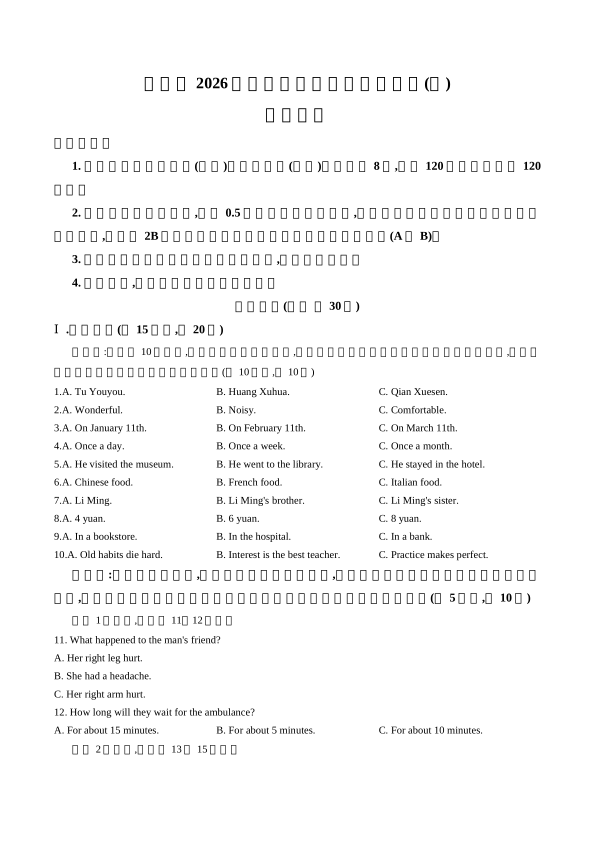
1.本试卷分为第一部分(听力)和第二部分(笔试)。全卷共8页,总分120分。考试时间120分钟。
2.领到试卷和答题卡后,请用0.5毫米黑色墨水签字笔,分别在试卷和答题卡上填写姓名和准考证号,同时用2B铅笔在答题卡上填涂对应的试卷类型信息点(A或B)。
3.请在答题卡上各题的指定区域内作答,否则作答无效。
4.考试结束,本试卷和答题卡一并交回。
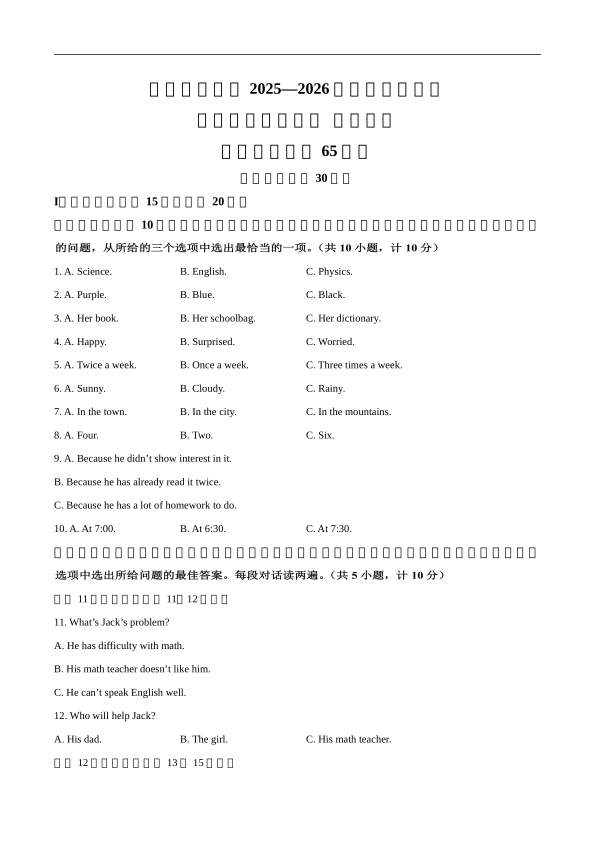
第一部分(听力 共30分)
Ⅰ.听选答案(共15小题,计20分)
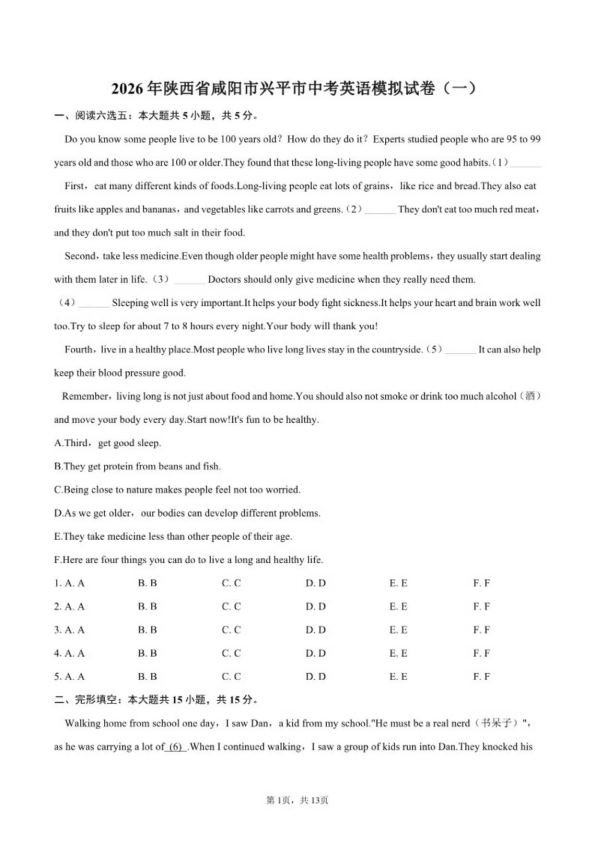
第一节:听下面10段对话,每段对话后有一个问题,读两遍。请根据每段对话的内容和后面的问题,从所给的三个选项中选出问题的正确答案。(共10小题,计10分)
1. A. Windy. B. Rainy. C. Sunny.
2. A. A pen. B. A ruler. C. An eraser.
3. A. Tired. B. Difficult. C. Calm.
4. A. Red. B. Yellw. C. Green.
5. A. Excited. B. Wnderful. C. Bred.
6. A. On June 15th. B. On June 20th. C. On June 25th.
7. A. G camping. B. G shpping. C. G fishing.
8. A. She shuld drink mre water.
B. She shuld read mre bks.
C. She shuld d mre sprts.
9. A. In the z. B. In the library. C. In the supermarket.
10. A. Father and daughter. B. Teacher and student. C. Dctr and patient.
第二节:听下面两段材料,包括一段对话和一段独白,每段材料后有几道小题。请根据材料内容,从题目所给的三个选项中选出问题的正确答案。每段材料读两遍。(共5小题,计10分)
11. What des the girl want t brrw the camera fr?
A. T take phts fr the schl newspaper.
B. T take phts f her family’s muntain trip.
C. T take phts f the schl’s sprts meeting.
12. Hw lng will the girl keep the camera?
A. Fr three days. B. Fr five days. C. Fr a week.
听第2段材料,回答第13至15小题。
13. What cmpetitin did Sarah take part in?
A. The writing cmpetitin. B. The painting cmpetitin. C. The speech cmpetitin.
12. Hw lng will the girl keep the camera?
A. Fr three days. B. Fr five days. C. Fr a week.
听第2段材料,回答第13至15小题。
13. What cmpetitin did Sarah take part in?
A. The writing cmpetitin. B. The painting cmpetitin. C. The speech cmpetitin.
14. What prize did Sarah win?
A. First prize. B. Secnd prize. C. Third prize.
15. When will Sarah get her prize?
A. On Mnday. B. On Tuesday. C. On Thursday.
Ⅱ.听填信息(共5小题,计10分)
本题你将听到一段独白,读两遍。请根据独白内容,用所听到的信息完成下列各题。(每空不超过三个单词。)
16. Listening t e-bks is _______ while ding ther things.
17. Peple are always _______ wrk and family.
18. Listening t e-bks helps peple _______ after a lng day and gain mre knwledge.
19. Many students even use e-bks t review _______ r histrical stries fr their exams.
20. AI may speed up the prductin prcess f e-bks _______ times.
第二部分(笔试 共90分)
Ⅲ.完形填空(共15小题,计15分)
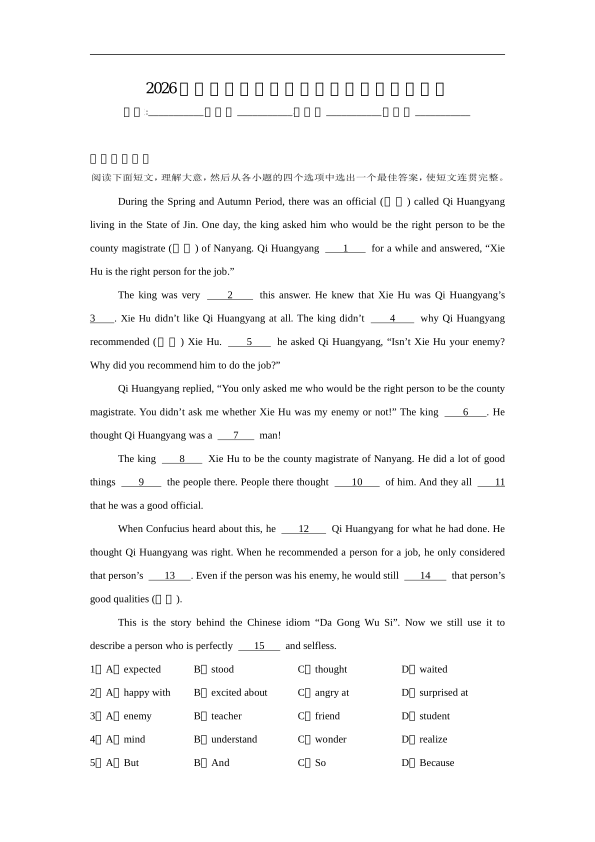
阅读下面短文,理解大意,然后从各小题的四个选项中选出一个最佳答案,使短文连贯完整。
When I was a child, my mm taught me a little magic in gardening. Our backyard was my ____1____. I planted flwers like daisies (雏菊) and ____2____ like beans. I didn’t like waiting fr the plants t grw. But when I ate my first hmegrwn beans, they tasted s ____3____! They were much better than the beans frm the stre. Mm said, “Yu need t learn t ____4____ if yu want smething really gd.” When I ____5____, I fund jy in gardening, especially in grwing my mther’s favrite beans.
My dad has a deep lve fr writing, and he lves pens. He always said, “Typing (打字) has n ____6____.” Fr him, writing is like a wnderful mix f thinking, planning, and creating. On my 9th birthday, my dad ____7____ me a pen as a gift. I used it t write shrt stries that were published in newspapers. ____8____ as I grew lder, like many f my friends, I chse mre ____9____ writing ways—cmputer typing. Sitting in frnt f a cmputer screen all day, I felt lst because f different methds f learning. Then, my dad’s ____10____ came int my head, “Sit at a desk with a pen and write ____11____. Put yur feelings int yur wrds.” I thught, “Why nt give it a ____12____?” At first, I wrte a little wildly, but sn I remembered the ____13____ feeling f writing with a pen n paper, as if my wrds came t life.
Whether it’s a small act r a life lessn, the experience with my parents has gradually ____14____ wh I am tday. Their wrds have left a mark n me, ____15____ me the imprtance f patience and self-cntrl.
1. A. libraryB. kitchenC. playgrundD. market
2. A. clrsB. vegetablesC. leavesD. smells
3. A. deliciusB. saltyC. similarD. smth
4. A. finishB. prveC. waitD. sleep
5. A. wke upB. gave upC. std upD. grew up
6. A. spiritB. energyC. pwerD. hnr
7. A. drewB. gaveC. leftD. threw
8. A. OrB. SC. AndD. But
9. A. valuableB. scientificC. cnvenientD. traditinal
10. A. musicB. viceC. praiseD. luck
11. A. patientlyB. sftlyC. plitelyD. clearly
12. A. lkB. tryC. talkD. walk
13. A. thankfulB. usefulC. familiarD. suitable
14. A. acceptedB. believedC. explainedD. shaped
15. A. teachingB. askingC. bringingD. reading
【答案】1. C 2. B 3. A 4. C 5. D 6. A 7. B 8. D 9. C 10. B 11. A 12. B 13. C 14. D 15. A
【解析】
【导语】本文讲述了作者在成长过程中,受父母影响,从园艺中学会耐心,又从父亲那里重拾纸笔书写,最终明白耐心与自控的重要性的故事。
【1题详解】
句意:我们的后院就是我的乐园。
根据后文“种雏菊、种豆子”的场景,此处表示后院是作者玩耍、种植的地方,应用playgrund;library图书馆、kitchen厨房、market市场,均与园艺场景无关。
【2题详解】
句意:我种了雏菊之类的花,还有豆子之类的蔬菜。
beans属于蔬菜类,应用vegetables;clrs颜色、leaves叶子、smells气味,均不符合语境。
【3题详解】
句意:但当我吃到自己种的豆子时,它们尝起来太美味了!
后文提到比商店买的豆子好吃得多,说明味道很好,应用delicius;salty咸的、similar相似的、smth顺滑的,均不符语境。
【4题详解】
句意:妈妈说:“如果你真的想要好东西,就要学会等待。”
前文提到“不喜欢等待植物生长”,此处妈妈教导要学会等待,应用wait;finish完成、prve证明、sleep睡觉,均与“等待植物成熟”的语境无关。
【5题详解】
句意:当我长大后,我在园艺中找到了乐趣,尤其是种妈妈最爱的豆子。
此处表示随着年龄增长,应用grew up;wke up醒来、gave up放弃、std up站起来,均不符合成长语境。
【6题详解】
他总是说:“打字没有灵魂。”
后文提到写作是思考、规划、创造的混合,说明父亲认为打字缺乏情感和精神内核,应用spirit;energy能量、pwer力量、hnr荣誉,均不符语境。
【7题详解】
句意:在我9岁生日那天,爸爸送了我一支钢笔作为礼物。
“送某人某物” 用“give sb sth”,应用gave;drew画、left离开、threw扔,均不符合送礼物的场景。
【8题详解】
句意:我用它写了发表在报纸上的短篇故事。但随着我长大,和很多朋友一样,我选择了更便捷的写作方式——电脑打字。
前文用钢笔写作,后文转为电脑打字,存在转折关系,应用But;Or或者、S所以、And并且,均不符合逻辑。
【9题详解】
句意:和很多朋友一样,我选择了更便捷的写作方式——电脑打字。
电脑打字比手写更方便快捷,应用cnvenient;valuable有价值的、scientific科学的、traditinal传统的,均不符语境。
【10题详解】
句意:然后,爸爸的声音在我脑海里响起。
此处指父亲之前说的话在耳边回响,应用vice;music音乐、praise表扬、luck运气,均不符合语境。
【11题详解】
句意:坐在书桌前,拿着笔,耐心地书写。
书写需要“耐心”,patiently“耐心地”符合“父亲对书写的要求”的语境。sftly温柔地、plitely礼貌地、clearly清晰地,均不符合“书写的状态”的语义。
【12题详解】
句意:我想:“为什么不试试呢?”
此处表示尝试手写,应用try;lk看、talk交谈、walk走路,均不符合语境。
【13题详解】
句意:但很快,我就想起了用笔写字的熟悉感觉,仿佛我的文字都活了过来。
之前父亲送的钢笔、手写故事,所以这种感觉是熟悉的,应用familiar;thankful感激的、useful有用的、suitable合适的,均不符语境。
【14题详解】
句意:无论是一件小事还是人生的一课,和父母相处的经历逐渐塑造了今天的我。
经历塑造了作者的人格,应用shaped;accepted接受、believed相信、explained解释,均不符语境。
【15题详解】
句意:他们的话在我身上留下了印记,教会了我耐心和自控的重要性。
父母的教导教会了作者道理,应用teaching;asking询问、bringing带来、reading阅读,均不符语境。
Ⅳ.阅读理解(共15小题,计20分)
第一节:阅读下面A、B、C三篇材料,从所给的四个选项中选出能回答所提问题或完成所给句子的一个最佳答案。(共10小题,计15分)
A
Mypia (近视) in Children
Hw d children get mypia?
Hw many children have mypia?
16. Linda has mypia. Maybe her ________ has mypia, t.
A. parentB. teacherC. cusinD. friend
17. Which can shw the change in the number f mypia children as they grw?
A. B. C. D.
18. In which part f a magazine can yu prbably read this passage?
A. Art.B. Sprts.C. Life.D. Histry.
【答案】16. A 17. C 18. C
【解析】
【导语】本文主要讲述了儿童近视的原因、中国儿童近视的统计数据以及预防和缓解近视的建议。
【16题详解】
根据“If parents have mypia, their kid may als have mypia.”可知,如果父母有近视,他们的孩子也可能近视。
【17题详解】
根据“14.5% f the children under 6”,“36.0% f the primary schl students”,“71.6% f the junir high schl students”及“81.0% f the senir high schl students”可知,近视儿童的数量随年龄的增长而增长。
【18题详解】
通读全文可知,文章主要介绍了近视相关的知识,因此,我们可以在杂志的生活部分看到这篇文章。
B
Every time the by saw the huse miles away with its glden-diamnd windws shining brightly, his heart beat with excitement. One day, he went alne n a jurney t find this beautiful huse. His bare feet (赤脚) left prints in the white dust, and when he lked back, the ftprints seemed t fllw and stay with him. His shadw stayed beside him t, dancing r running at his will.
After a lng time he came t a high green hill, where there was the huse n the tp, but it seemed that the shutters (百叶窗) were up, fr he culd nt see the glden windws. He walked clser t the huse and almst cried, because the windws were f clear glass, ___19___.
A wman came t the dr and greeted him.
“I saw the glden windws frm ur hilltp,” he said, “and I came t see them, but…”
The wman smiled sftly, “We’re just farmers and we culd never affrd glden windws.” She invited him in, where he met her daughter, a bareft girl f his age with hair as glden as the windws he’d admired.
When the by asked abut the glden windws, the girl ndded. “But yu’ re lking in the wrng place!” she shuted. “Cme n. I’ll shw yu the real nes.”
Hand in hand they went t the tp f the hill behind the huse, and as they waited, the sun sank (下沉) lw and sent lng rays (光线) acrss the valley (山谷). Then the little girl pinted, and the by lked. There, n a distant hill, std a huse with windws shining like gld and diamnds.
“Lk!” cried the little girl, “There are yur glden windws!”
The by lked with his eyes wide pen. The setting sun had turned the clear glass f his wn windws t gld, shining brightly.
Then he thanked the wman and her daughter, and went dwn the hill. All the way hme he felt glad, because he knew at last where the glden windws were.
19. Which f the fllwing sentences can be put in the “_______”.
A. and there was much gld in frnt f them
B. and there was n gld anywhere arund them
C. and he saw sme gld near the glass windws
D. and the windw frames were made f gld
20. Why did their windws lk glden frm far away?
A. Because there was real gld n the windws.
B. Because the hst put glden stickers n the glass.
C. Because the windws were painted glden.
D. Because the setting sun shne n the rdinary glass windws.
21. Hw did the by’s feelings in the stry change?
A. Sad——Excited——Surprised——SadB. Surprised——Excited——Sad——Pleased
C. Excited——Sad——Surprised——PleasedD. Wrried——Excited——Relaxed——Pleased
22. What des the writer want t tell us with the stry?
A. Value what yu have and be satisfied.
B. Keep the bx, and return the pearl.
C. Stay in ne’s cmfrt zne, and there will be n prgress.
D. Lve the new and hate the ld.
【答案】19. B 20. D 21. C 22. A
【解析】
【导语】本文讲述了男孩千里寻找梦中的金色窗户,最后发现所谓美景只是落日光影,自家的房子也拥有同款美景,告诉我们要珍惜自己所拥有的一切。
【19题详解】
第一段“Every time the by saw the huse miles away with its glden-diamnd windws shining brightly, his heart beat with excitement. One day, he went alne n a jurney t find this beautiful huse.”说明男孩远远看见金色窗户,满怀期待赶来,第二段“After a lng time he came t a high green hill, where there was the huse n the tp, but it seemed that the shutters were up, fr he culd nt see the glden windws. He walked clser t the huse and almst cried, because the windws were f clear glass”说明他走近发现只是普通透明玻璃,可推断此处应放B项“and there was n gld anywhere arund them”表示其实没有金子。
【20题详解】
倒数第二段“The setting sun had turned the clear glass f his wn windws t gld, shining brightly.”说明是因为落日照射普通透明玻璃,反光变成金色。
【21题详解】
第一段“Every time the by saw the huse miles away with its glden-diamnd windws shining brightly, his heart beat with excitement.”说明男孩远远看见金色窗户,内心很激动;第二段“He walked clser t the huse and almst cried, because the windws were f clear glass…”说明发现没有金窗,失望难过;倒数第二、三段“‘Lk!’ cried the little girl, ‘There are yur glden windws!’ The by lked with his eyes wide pen. The setting sun had turned the clear glass f his wn windws t gld, shining brightly.”说明男孩看到自家房子也有“金色窗户”,恍然大悟,十分惊讶;最后一段“All the way hme he felt glad, because he knew at last where the glden windws were.”说明他很开心,对应C项。
【22题详解】
本文讲述男孩一直羡慕别人家的“金窗户”,拼命追寻远方的美好;最后发现:自己家的普通窗户,在落日下同样美丽,是为了告诉我们人们总羡慕别人的生活,却忽略了自己身边的美好,要珍惜当下、知足常乐。
C
①Is the sky bluer in fall than in summer? The answer is yes! There are sme reasns fr this.
②The sun is lwer in the sky in fall. As the days get shrter, the sun is clser t the Earth. It desn’t shine directly n us anymre. Instead, it is clser t the Earth and mre blue light is scattered (散射). This lets the sky seem bluer.
③In fall, there is less water in the air, s there are fewer cluds. Fall is knwn fr gd weather—cler temperatures and less wet air. The air des nt hld much water; s cluds d nt frm easily. When there are few r n cluds cvering the sky, the blue clr f the sky shws mre clearly, and the sky lks mre pen and brighter.
④Yu might be surprised, but the clrful leaves f fall actually help give the sky’s blueness a clr bst (增强), which can make the sky seem even bluer. If yu’ve made a clr wheel fr an art class, yu knw that blue and range are ppsite clrs that lk gd tgether. The red, range, and gld leaves f fall make the blue sky stand ut beautifully against them. This cntrast lks nice and creates a special autumn view.
⑤S, the next time yu’re ut enjying the beautiful weather in autumn, take a mment t lk up at the sky, remember these reasns why it lks s blue and enjy the view!
23. Hw des the writer lead int the tpic in Paragraph ①?
A. By making a survey.B. By telling a jke.
C. By using an ld saying.D. By asking a questin.
24. Why des the sky lk bluer in fall accrding t Paragraph ②?
A. Because the sun is shining directly n us.B. Because the sun is lwer in the sky and mre blue light is scattered.
C. Because the sun is smaller in the sky.D. Because the sun is cvered by the cluds.
25. What is the structure f the text?
A. ①/②③④/⑤B. ①/②③/④⑤C. ①②/③/④⑤D. ①②③/④/⑤
【答案】23. D 24. B 25. A
【解析】
【导语】本文主要介绍了秋天天空比夏天更蓝的几个原因,包括太阳位置变化、空气中水汽减少、秋叶颜色衬托等,并在结尾呼吁大家欣赏秋日蓝天美景。
【23题详解】
文章第①段开头直接提出问题“Is the sky bluer in fall than in summer? The answer is yes! There are sme reasns fr this.”,说明作者是通过提出问题的方式引入话题的。
【24题详解】
文章第②段内容“The sun is lwer in the sky in fall. As the days get shrter, the sun is clser t the Earth. It desn’t shine directly n us anymre. Instead, it is clser t the Earth and mre blue light is scattered. This lets the sky seem bluer.”,秋天太阳在天空中位置更低,更多蓝光发生散射,因此天空看起来更蓝。
【25题详解】
文章结构为①段提出话题“秋天天空更蓝,有以下原因”,属于总起;②③④段分别从太阳位置、空气含水量、秋叶色彩对比三个方面解释原因,属于分述;⑤段总结收尾,因此结构是①/②③④/⑤。
第二节:根据短文内容,从短文后的选项中选出能填入空白处的最佳选项。选项中有一项为多余项。(共5小题,计5分)
In China, children like t make prmises by hking pinkies (拉小手指) with each ther and saying, “A pinky prmise must be kept fr 100 years.” There is ne mre step. ____26____ It’s a fun way fr children t shw they’ll keep their wrd.
Hw did this pinky prmise cme abut? N ne knws the exact answer. ____27____ These guesses have been passed dwn fr years. Sme say it came frm a sng fr kids. ____28____ It was brn ut f a western lve stry where a man and a wman hked pinkies.
____29____ The Chinese character fr “finger” is als prnunced as “zhǐ (指)”, which means peple’s inner thughts and aims. S hking pinkies can be seen as the exchange f these inner ideas. ____30____
Generally speaking, hking pinkies means making a serius prmise. Nw yu see hw imprtant “pinky prmises” are!
A. Others say it was intrduced frm the West.
B. Here are many guesses n hw the pinky prmises came abut.
C. It’s nt just abut talking, but als abut learning frm each ther.
D. Therefre, the fingers play an imprtant rle in making a prmise.
E. Then, they may press their thumbs (大拇指) tgether t cmplete the prmise.
F. Sme think that it may have smething t d with the rle f fingers in Chinese culture.
【答案】26. E 27. B 28. A 29. F 30. D
【解析】
【导语】本文介绍了拉勾承诺的动作步骤,探讨了其由来的几种可能说法,并从中国文化中“指”字的内涵出发,解释了手指在承诺中的重要作用。
【26题详解】
前文“There is ne mre step.”说拉勾承诺还有一个步骤,空后“It’s a fun way fr children t shw they’ll keep their wrd.”说这是孩子们表示说话算话的有趣方式。因此空白处应具体描述这个“额外步骤”。选项E“然后他们可能会把大拇指按在一起来完成承诺”恰好解释了这个步骤。
【27题详解】
空前“N ne knws the exact answer.”说没人知道确切答案,空后“These guesses have been passed dwn fr years.”说这些猜测流传了很多年。可见空白处需要一句引出“猜测”的话。选项B“这里有许多关于拉勾承诺由来的猜测”正好起到承上启下的作用。
【28题详解】
前句“Sme say it came frm a sng fr kids.”说有些人说它源于一首儿歌,后句“It was brn ut f a western lve stry”说它源自一个西方爱情故事。这里需要与“Sme say”形成并列的另一种说法。选项A“另一些人说它是从西方传入的”与前文“Sme say”构成“Sme... Others...”的并列结构。
【29题详解】
该段开始讨论手指在中国文化中的含义。空白处应引出这一话题。选项F“有些人认为它可能和手指在中国文化中的角色有关”恰好点明段落主题,后面紧接对“指”字的解释,逻辑连贯。
【30题详解】
前句“S hking pinkies can be seen as the exchange f these inner ideas.”说拉勾可以被视作内心想法的交换,本空之后全文进入总结。此处需要一句强调手指在承诺中重要性的句子来收束本段。选项D“因此,手指在许下承诺时扮演着重要角色”中“Therefre”与前文“S”构成递进的因果总结。
V.完成句子: (共5小题,计10分)
根据图画情境及各题句意,按照句后括号中的英文提示要求,用单词(不包含阿拉伯数字)或短语完成下列英文句子。
31. Qinqiang Opera _______ the ancient flk sngs and dances f the peple in Shaanxi and Gansu prvinces. (Tw wrds, including the wrd “cme”)
32. It _______ reflects the life f ancient Chinese peple but als passes n lcal histry and culture. (Tw wrds)
33. Frm the 1980s t the 1990s, _______ peple were interested in Qinqiang Opera because f the ppularity f pp music. (Three wrds, including the wrd “few”)
34. On _______ 20th, 2006, Qinqiang Opera was added t China’s List f Intangible Cultural Heritage items. (One wrd)
35. The return f Qinqiang Opera plays _______ in helping yung peple learn abut traditinal Chinese culture. (N mre than three wrds, including the wrd “rle”)
【答案】31. cmes frm
32. nt nly
33. fewer and fewer
34. May 35. an imprtant rle
【解析】
【31题详解】
句意:秦腔起源于陕西和甘肃人民的古老民间歌舞。“cme frm”表示“起源于、来自”,符合提示,主语“Qinqiang Opera”是单数,一般现在时中谓语动词用第三人称单数形式“cmes”。应填cmes frm。
【32题详解】
句意:它不仅反映了中国古代人民的生活,还传承了地方历史和文化。“nt als...”是固定搭配,意为“不仅……而且……”,符合句意逻辑和英文提示。应填nt nly。
【33题详解】
句意:从20世纪80年代到90年代,由于流行音乐的普及,对秦腔感兴趣的人越来越少。根据英文提示,“fewer and fewer”表示“越来越少”,修饰可数名词复数“peple”,符合“流行音乐普及导致秦腔受众减少”的语境。应填fewer and fewer。
【34题详解】
句意:2006年5月20日,秦腔被列入中国非物质文化遗产名录。日期表达中“月份”用英文单词,根据常识,秦腔于2006年5月20日入选非遗,应填May。
【35题详解】
句意:秦腔的回归在帮助年轻人了解中国传统文化方面发挥着重要作用。根据英文提示,“play an imprtant rle in...”是固定搭配,意为“在……中发挥重要作用”,符合“秦腔对传统文化传播的意义”的语境。应填an imprtant rle。
Ⅵ.语篇填空(共15小题,计15分)
第一节: (共5小题,计5分)
阅读下面材料,按照句子结构的语法性和语意连贯的要求在各题横线上填入一个适当的单词,使之通顺、完整。
China’s space prgramme has made amazing prgress ____36____ recent years. We all knw that every successful space missin (任务) is the result f hard wrk by cuntless peple. ____37____ a jurney t space is full f challenges, it carries the whle cuntry’s space dream. Every astrnaut ____38____ takes part in the space task has received years f strict training. Each f them is ____39____ gd rle mdel fr yung peple. Their spirit f never giving up and hard wrk will encurage mre teenagers ____40____ chase (追逐) their dreams and cntribute t ur cuntry’s space career.
【答案】36. in 37. Thugh##Althugh
38. wh##that
39. a 40. t
【解析】
【导语】本文讲述中国航天近年成就,诠释航天任务承载国家梦想,航天员精神激励青少年逐梦报国。
【36题详解】
句意:中国的航天事业在最近这些年取得了令人惊叹的进步。固定短语in recent years,表示“近年来”,为现在完成时常用时间状语。
【37题详解】
句意:虽然太空之旅充满挑战,但它承载着整个国家的航天梦想。前后分句为让步转折逻辑,用让步连词引导从句,Thugh和Althugh均可。
【38题详解】
句意:每一位参加航天任务的航天员都接受过多年严格的训练。先行词“Every astrnaut”指人,定语从句缺少主语,用关系代词wh或that引导。
【39题详解】
句意:他们中的每一个人都是年轻人的一个好榜样。“gd”以辅音音素开头,此处泛指“一个好榜样”,用不定冠词a。
【40题详解】
句意:他们永不放弃、勤奋拼搏的精神将会激励更多青少年追逐梦想,为国家航天事业贡献力量。固定结构encurage sb. t d sth.表示“鼓励某人做某事”。
第二节: (共10小题,计10分)
用方框中所给单词的适当形式填空,使短文完整正确。(每个单词限用一次。每空限填一个单词。)
On Octber 31, 2025, China launched (发射) the Shenzhu-21 spaceship. Amng the three members, much attentin was ____41____ t Wu Fei.
Wu Fei, brn in 1993, is the ____42____ astrnaut t g t space f China. Befre becming an astrnaut, Wu Fei wrked as an engineer and ____43____. He spent years designing and ____44____ space equipment. These experiences taught him a lt f ____45____ skills. Later, he jined China’s third grup f astrnauts. During the three-year training, he wrked very hard. ____46____, his effrts made him stand ut and get the chance t jin Shenzhu-21. In the Shenzhu-21 missin, Wu Fei acts as a flight engineer. ____47____ main jbs include checking the spaceship’s equipment, helping with scientific experiments and wrking with ther team members.
Thugh it was his first space trip, he ____48____ calm and finished all tasks well. He said, “Space is amazing. I’m prud t ____49____ fr my cuntry’s space dream.” Befre the launch, they met with Chinese and freign reprters at the Jiuquan Satellite Launch Center t share their feelings. S far, Wu Fei has ____50____ a her fr many yung peple. His stry tells us that hard wrk can make dreams cme true.
【答案】41. paid
42. yungest
43. scientist
44. testing
45. useful 46. Finally
47. His 48. stayed
49. wrk 50. becme
【解析】
【导语】本文讲述了武飞成为神舟21号宇航员的历程。
【41题详解】
句意:在这三名成员中,武飞受到了很多关注。“pay attentin t”是固定短语,意为“关注”,这里用被动语态“was paid”,表示“受到关注”。
【42题详解】
句意:武飞出生于1993年,是中国进入太空最年轻的宇航员。根据语境,这里是在众多中国宇航员中比较年龄,用最高级形式“yungest”表示“最年轻的”。
【43题详解】
句意:在成为宇航员之前,武飞是一名工程师和科学家。根据后文“He spent years designing equipment. These experiences taught him a lt ”可知他之前从事与科研相关的工作,所以用“scientist”表示“科学家”,符合职业身份。
【44题详解】
句意:他花了数年时间设计和测试太空设备。“spend time ding sth.”表示“花费时间做某事”,“designing”和“testing”是并列的动名词形式,共同作“spent years”的宾语。
【45题详解】
句意:这些经历教会了他很多有用的技能。“skills”是名词,前面需要用形容词修饰,“useful”表示“有用的”,符合语境。
【46题详解】
句意:最后,他的努力使他脱颖而出,获得了加入神舟21号的机会。这里表示经过一段时间的努力后最终的结果,用“Finally”表示“最后”。
【47题详解】
句意:他的主要工作包括检查飞船的设备、协助科学实验以及与其他团队成员合作。“jbs”是名词,前面需要用形容词性物主代词修饰,“he”的形容词性物主代词是“his”,表示“他的”,首字母大写。
【48题详解】
句意:虽然这是他的第一次太空之旅,但他保持冷静,很好地完成了所有任务。“stay calm”是固定短语,意为“保持冷静”,“Thugh”引导让步状语从句,主句和从句时态要保持一致,从句用一般过去时,主句也用一般过去时,“stay”的过去式是“stayed”,表示过去保持的状态。
【49题详解】
句意:我为能为国家的太空梦想而工作感到自豪。“be prud t d sth.”是固定结构,意为“为做某事而自豪”,“t”后面接动词原形“wrk”,表示为国家的太空梦想工作。
【50题详解】
句意:到目前为止,武飞已经成为许多年轻人的英雄。“s far”是现在完成时的标志词,“has/have + 过去分词”构成现在完成时,“becme”的过去分词还是“becme”,所以用“has becme”表示到目前已经发生的动作或存在的状态。
Ⅶ.任务型阅读: (共5小题,计10分)
阅读下面短文,根据短文内容,完成下列各题。
Have yu heard f the idim “Jing Wei Fen Ming”? It cmes frm a natural wnder in Shaanxi Prvince—the meeting f the Jing River and the Wei River.
The Wei River is an imprtant *tributary f the Yellw River. It runs thrugh the Guanzhng Plain (平原) in Shaanxi. The Jing River is a tributary f the Wei River. It starts frm Ningxia and flws thrugh the Less Plateau (黄土高原). Lng ag, the Jing River had clearer water because there were mre plants in its upper areas.
When the Jing River and the Wei River meet in Galing, Xi’an, a special sight appears. Due t different sediment cntent (沉积物含量) and flw speeds, ne river is clear and the ther is turbid. They dn’t mix easily, frming a special line between them. At first, peple saw “clear Jing and turbid Wei”. But as trees were cut dwn, the Jing River became turbid. Later, it even became “clear Wei and turbid Jing”
This wnder was recrded in the ancient bk The Bk f Sngs (《诗经》). The Tang Dynasty pet Du Fu als wrte abut it in his pem Autumn Rain Lament (《秋雨叹》): “Hw lng will the turbid Jing and clear Wei remain separate?”
Tday, the idim “Jing Wei Fen Ming”keeps the idea f“clear and turbid”. It is nt nly used t describe natural wnders but als widely used t describe a clear difference between right and wrng, r tw very different views r styles. “Jing Wei Fen Ming” shws the wisdm f ancient Chinese peple—they learned frm nature and turned it int a cultural idea.
*A tributary is a river that flws int a larger river r a lake.
51. Where des the idim “Jing Wei Fen Ming” cme frm?
It cmes frm ________.
52. What des the underlined wrd “It” in paragraph 2 refer t?
It refers t ________.
53. Which English wrd in the passage means “浑浊的”?
It’s “________”
54. Which paragraph shws hw ancient peple described “clear Wei and turbid Jing”?
In paragraph ________.
55. Write a title fr this text with the wrd “intrductin” in n mre than eight wrds.
______________________________________.
【答案】51. a natural wnder in Shaanxi Prvince—the meeting f the Jing River and the Wei River
52. the Wei River
53. turbid 54. 4##fur
55. An Intrductin t “Jing Wei Fen Ming”(回答合理即可)
【解析】
【导语】本文是一篇说明文,介绍了成语“泾渭分明”的自然来源、历史演变及文化含义,体现古人从自然中提炼的智慧。
【51题详解】
根据“It cmes frm a natural wnder in Shaanxi Prvince—the meeting f the Jing River and the Wei River”可知,成语“泾渭分明”源于陕西泾河与渭河交汇的自然奇观,故填a natural wnder in Shaanxi Prvince—the meeting f the Jing River and the Wei River。
【52题详解】
根据“The Wei River is an imprtant tributary f the Yellw River. It runs thrugh the Guanzhng (平原) Plain in Shaanxi”可知,“it”指代前文的“the Wei River”,故填the Wei River。
【53题详解】
根据“Due t different sediment cntent (沉积物含量) and flw speeds, ne river is clear and the ther is turbid.”可知,clear“清澈的”和turbid是反义词,因此turbid的含义是“浑浊的”,故填turbid。
【54题详解】
根据“The Tang Dynasty pet Du Fu als wrte abut it in his pem...‘Hw lng will the turbid Jing and clear Wei remain separate?’”可知,第四段引用古诗描述了“渭清泾浊”,故填4/fur。
【55题详解】
全文介绍了“泾渭分明”这一成语的自然起源、历史记载及文化内涵,且标题需包含“intrductin”一词,不超过 8 个单词。故填An Intrductin t “Jing Wei Fen Ming”。(回答合理即可)
Ⅷ.交流与表达(共6小题,计20分)
第一节:补全对话。 (共5 小题,计5分)
根据下面对话中的情境,在每个空白处填入一个恰当的语句,使对话恢复完整。
A: Hey Tm! _________56_________?
B: I jined in a cmmunity vlunteer activity last weekend. We planted vegetables!
A:___________57___________! D yu think labr educatin is imprtant?
B: Yes. It teaches us practical things. Have yu ever tried such activities?
A:___________58___________. But I’d lve t try them.
B: Our schl will hld a park clean-up activity this Sunday. ____________59____________?
A: Sure, I’d lve t. Cunt me in! S what shuld I bring?
B: Just wear cmfrtable clthes and shes. Oh, dn’t frget t bring sme water!
A: OK. ___________60___________?
B: We can meet at the schl gate at 8 ’ clck n Sunday mrning.
A: N prblem. See yu then!
B: See yu!
【答案】56. What did yu d last weekend?
57. That sunds great!
58. N, I haven't.
59. Wuld yu like t jin us?
60. When and where shall we meet?
【解析】
【导语】本文围绕周末志愿活动展开对话,交流了过往的劳动实践、对劳动教育的看法,并相约参加公园清扫活动。
【56题详解】
根据答语 “I jined in a cmmunity vlunteer activity last weekend. We planted vegetables!”(我上周末参加了社区志愿活动,我们种了蔬菜!),可知此处询问对方上周末做了什么。
【57题详解】
根据上句对方分享了参加志愿种菜的经历,此处需要表达赞叹,回应这个活动。 “That sunds great! ”符合语境。(也可填其他符合语境的赞叹语,答案不唯一)
【58题详解】
根据问句 “Have yu ever tried such activities? ”(你试过这类活动吗?),以及后句 “But I’d lve t try them. ”(但我很想尝试),可知此处为否定回答。 “N, I haven't. ”形成完整表达。
【59题详解】
根据答语 “Sure, I’d lve t. Cunt me in!”(当然,我很乐意,算我一个!),可知此处是发出邀请,询问对方是否愿意参加活动。 “Wuld yu like t jin us? ”衔接下文。
【60题详解】
根据答语 “We can meet at the schl gate at 8 ’clck n Sunday mrning. ”(我们可以周日早上8点在学校门口见面),可知此处询问见面的时间和地点。 “When and where shall we meet? ”符合逻辑。
第二节:书面表达。(共1题,计15分)
61. 假如你是李华,你校英语网站正在征集校园活动主题的文章。请你根据下面网页的内容写一篇短文投稿,分享你的校园活动经历。
Articles Wanted!
This web page is fr students t share their unfrgettable schl activity experiences. We are lking fr articles that can encurage ur readers.
·What schl activity did yu take part in?
·What did yu d in the activity?
·What did yu learn frm it?
Send yur article t us right nw!
参考词汇: take part in, experience, cmmunity, warmth, wrk with, meaningful...
要求:1.短文内容应包含题目要求所给的全部信息,选择使用参考词汇,可适当发挥;
2.语句正确,意思通顺、连贯,书写规范;
3.短文中不得出现你的任何真实信息(姓名、校名和地名);若文中出现人名,请选择使用:Mr. Liu/ Ms. Wang/ Ma Li / Wang Gang;
4.词数:不少于70。(开头已给出,但不计入总词数。)
An Unfrgettable Schl Activity
Clrful schl activities make ur campus life full f surprises and grwth.______________________________________________________________________________________________________________________________________________________________________________________________________________________________________________________________________________________________________________________________________________________________________________________________________________________________________________________________________________________________________________________________________________________________________________________________________________________________________________________________
【答案】例文:
An Unfrgettable Schl Activity
Clrful schl activities make ur campus life full f surprises and grwth. Last mnth, I tk part in a cmmunity service activity rganized by ur schl. We went t the ld peple’s hme and helped clean the rms, sang sngs and tld stries t the elderly.
At first, I was a little nervus. But sn, I fund it warm and meaningful. The ld peple were very happy t see us. Wrking with my classmates, I learned hw t care fr thers and wrk as a team. This activity taught me that small acts f kindness can bring big jy. It was truly an unfrgettable experience.
【解析】
【详解】写作步骤
[第一步:审题立意]
确定文体:记叙文(校园活动经历分享),以一般过去时为主(描述上个月发生的事)
明确要点:参加了什么活动、在活动中做了什么、从中学到了什么
确定人称:第一人称(I, my, we)
注意事项:信息完整,内容积极向上,能鼓励读者,不得出现真实姓名和校名
[第二步:构思布局]
三段式结构:
开头段:总起句,点明校园活动带来的成长,引出参加的活动(社区服务——去敬老院)
主体段:按活动过程叙述——做了什么(打扫房间、唱歌、讲故事)→内心感受(起初紧张,后来感到温暖)
结尾段:总结学到的道理(关爱他人、团队合作、小善举带来大快乐),升华主题
[第三步:要点展开]
要点一:参加了什么活动
tk part in a cmmunity service activity/jined a schl activity等
went t the ld peple’s hme/visited the elderly at the nursing hme/a vlunteer visit t the ld peple’s hme等
要点二:在活动中做了什么
helped clean the rms, sang sngs and tld stries t the elderly/cleaned the rms fr them, perfrmed sme cheerful sngs, and shared interesting stries等
要点三:从中学到了什么
I learned hw t care fr thers and wrk as a team. This activity taught me that small acts f kindness can bring big jy./ I realized that caring fr thers and wrking tgether are imprtant life lessns. Even tiny kindness can make a big difference.等If a child spends 7+ hurs a week n cmputers r mbile phnes, he may have mypia.
If children have fewer utdr activities, they may take mre risk f getting mypia.
If parents have mypia, their kid may als have mypia.
What shuld children d?
At least tw hurs f utdr activities every day.
20/20/20 rule when using the cmputer r mbile phne: Every 20 minutes, lk at smething 20 feet away fr 20 secnds!
Get enugh sleep.
he wrk final becme test stay pay use science yung
这是一份陕西省咸阳市兴平市2026年中考适应性训练六英语试题(含解析),共7页。试卷主要包含了本试卷分为第一部分和第二部分,领到试卷和答题卡后,请用0, A等内容,欢迎下载使用。
这是一份2026年陕西兴平市2026年初中学业水平考试模拟卷(一) 英语试题(含解析),共19页。试卷主要包含了本试卷分为第一部分等内容,欢迎下载使用。
这是一份2026年陕西省中考适应性训练英语试卷(一)(文字版,含答案),共12页。试卷主要包含了 本试卷分为第一部分和第二部分, 领到试卷和答题卡后,请用0等内容,欢迎下载使用。
注册成功
资料篮

在线客服
添加在线客服
获取1对1服务
官方微信
关注“教习网”公众号
打开微信就能找资料
赛课定制
添加在线客服
获取1对1定制服务
职称咨询
添加在线客服
获取1V1专业指导服务

免费福利

.png)
.png)
