 免费领取教师福利

若您为此资料的原创作者,认为该资料内容侵犯了您的知识产权,请扫码添加我们的相关工作人员,我们尽可能的保护您的合法权益。


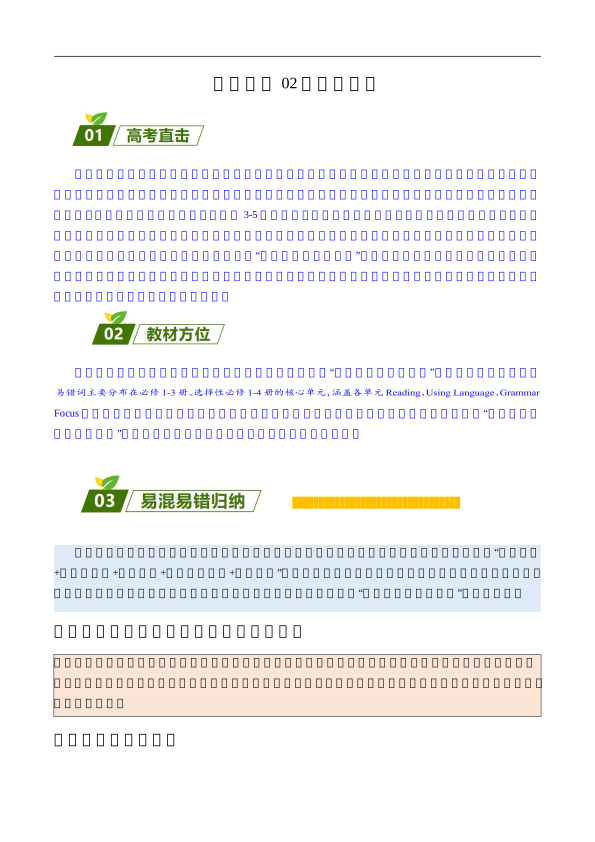
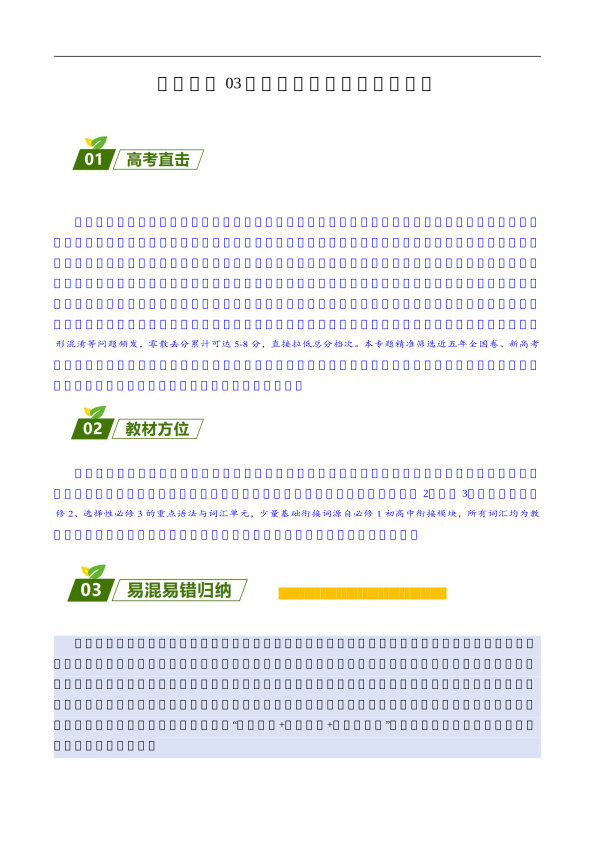
这是一份2026年高考英语终极冲刺讲义练习(全国通用)查漏补缺01易错拼写词形转换词(原卷版+解析),共6页。试卷主要包含了 accept, achieve, adapt, affect, agree, apply, arrange, argue等内容,欢迎下载使用。
高三第三轮复习的核心是“精准突破、查漏补缺”,聚焦高考高频易错点,实现分数最大化提升。词形转换与易错拼写是高考英语的基础考点,更是失分重灾区,贯穿高考英语全题型,直接决定考生的基础得分上限,对冲刺高分至关重要。
从高考题型分布来看,词形转换与易错拼写在语法填空、书面表达、完形填空、阅读理解中均有明确考查,占比约15%-20%。语法填空每年固定考查4-6道词形转换题,涉及动词、名词、形容词、副词之间的转换,易错拼写错误直接导致该空不得分;书面表达中,每出现1处拼写错误或词形误用,就会扣除0.5-1分,且错误累计会影响作文档次,很多考生因基础词汇拼写失误,错失高分机会;完形填空中,易混拼写词(如affect与effect、adapt与adpt)常作为干扰项,若掌握不扎实,极易误选;阅读理解中,陌生词的词形变化(如名词复数、形容词比较级)若识别错误,会影响对文章细节的理解,进而导致答题偏差。
高三三轮复习时间紧张,无需再全面铺开词汇复习,重点攻克“易错、易混、高频”的词形转换词,能快速减少基础失分,实现“低成本高回报”。本专题精准筛选高考近5年高频易错拼写词、核心词形转换词,结合高考真题规律,梳理易错点、归纳转换规则、搭配典型例句、设计针对性练习,帮助考生在短时间内厘清易错点、掌握转换技巧,避免重复踩坑,夯实基础,为高考英语冲刺筑牢根基,助力考生在基础题型上不丢分、少丢分,为难题突破预留充足时间,最终实现分数的稳步提升。
高考英语对词形转换与拼写的考查,侧重“语境化应用”,而非单纯的记忆,本专题兼顾“记忆+应用”,既帮助考生牢记易错拼写,又引导考生掌握不同语境下的词形转换规律,贴合高考命题导向,是三轮复习中不可或缺的核心资料。
本专题梳理的易错拼写词形转换词,均来源于高中英语教材(必修1-3、选择性必修1-4),是教材核心词汇的延伸与拓展,分布于教材各单元的词汇表、课文、语法模块及课后练习中,贯穿高中三年英语学习,是考生从基础积累到能力提升的核心载体。
必修1-2是基础词汇积累阶段,主要涉及简单词形转换(如动词变名词、形容词变副词),多分布在单元词汇表的“派生词”栏目及课文例句中。例如,“vary”(动词,变化),其派生词“varius”(形容词,各种各样的)、“variety”(名词,种类),是高考高频易错词,课文中多次出现相关语境,课后练习也侧重基础词形转换考查;“technlgy”(名词,技术)与“technlgical”(形容词,技术的),是教材重点强调的词形转换,也是语法填空常考考点。
必修3侧重词汇的深化与拓展,易混易错拼写词、复杂词形转换词(如不规则变化、多词性转换)逐渐增多,主要分布在单元阅读课文、语法专题(如词形变化语法)及拓展阅读中。例如,“strng”(形容词,强壮的)与“strength”(名词,力量),拼写易混淆,课文中通过对比语境帮助考生理解,课后练习中也设计了针对性的词形转换题目;“infrm”(动词,通知),其派生词“infrmatin”(名词,信息)、“infrmative”(形容词,有信息量的),是高考书面表达与阅读理解的高频词,教材中通过书信、新闻报道等语篇强化应用。
选择性必修1-4则聚焦高考高频考点,易混易错词形转换词(如affect/effect、adapt/adpt、imply/infer)、抽象名词转换、动词时态语态相关词形变化等,多分布在单元主题语篇、语法填空专项练习及高考衔接类习题中。这些词汇是教材词汇的升华,直接对接高考考点,也是考生三轮复习中需要重点查漏补缺的内容。综上,本专题的词汇均源于教材,覆盖高中各阶段重点,精准对接高考,帮助考生回归教材、夯实基础,
实现“从教材到高考”的无缝衔接。
一、动词→名词(高频易错类)
核心说明:此类词是高考词形转换考查的重点,多涉及词尾变化(如-tin、-ment、-ance、-ence、-in),易错点集中在拼写(如漏掉字母、混淆词尾)、不规则变化,以下均为高考高频易错词,搭配高考风格例句,便于语境记忆。
1. accept(v. 接受)→ acceptance(n. 接受;认可)
易错点:拼写易漏掉中间的“e”,误写为“acceptence”;注意与“except”(prep. 除……之外)区分拼写。
例句1:His acceptance f the award shwed his mdesty and gratitude.(他对奖项的接受体现了他的谦逊和感激。)(高考书面表达常用)
例句2:The acceptance f new technlgy takes time, especially in rural areas.(新技术的认可需要时间,尤其是在农村地区。)(阅读理解常见语境)
2. achieve(v. 实现;达成)→ achievement(n. 成就;成绩)
易错点:词尾“-ment”易误写为“-ment”(正确),但常漏掉“i”,误写为“achievment”;注意发音与拼写的对应,“achieve”末尾的“e”不发音,转换为名词时保留。
例句1:Her great achievement in science has wn her wrldwide fame.(她在科学领域的伟大成就为她赢得了世界声誉。)(书面表达高分句)
例句2:We shuld take pride in ur wn achievements instead f cmparing with thers.(我们应该为自己的成就感到骄傲,而不是与他人比较。)(完形填空语境)
3. adapt(v. 适应;改编)→ adaptatin(n. 适应;改编本)
易错点:拼写易与“adpt”(v. 收养;采用)混淆,进而误写为“adptin”;词尾“-atin”易漏写“a”,误写为“adaptatin”(正确),注意“adapt”中的“a”在名词中保留。
例句1:The adaptatin f the nvel int a film was a great success.(这部小说改编成电影取得了巨大成功。)(阅读理解常见话题)
例句2:His quick adaptatin t the new schl envirnment surprised all his teachers.(他快速适应新学校环境的能力让所有老师都感到惊讶。)(语法填空语境)
4. affect(v. 影响;打动)→ effect(n. 影响;效果)
易错点:最易混易错词之一,拼写仅差一个字母,含义不同、词性不同(affect为动词,effect多为名词);常误写为“affect”作名词、“effect”作动词(偶尔可作动词,意为“实现”,但高考极少考查)。
例句1:The bad weather will affect ur plan t g hiking this weekend.(恶劣天气将影响我们这个周末去徒步旅行的计划。)(动词用法,高考高频)
例句2:The new plicy has a psitive effect n the develpment f the lcal ecnmy.(新政策对当地经济的发展有积极影响。)(名词用法,语法填空常考)
5. agree(v. 同意;赞同)→ agreement(n. 同意;协议)
易错点:词尾“-ment”易误写为“-ment”,常漏掉“e”,误写为“agreemment”;注意“agree”末尾的“e”在转换为名词时保留,且“ee”不重复。
例句1:We finally reached an agreement n the issue after a lng discussin.(经过长时间的讨论,我们最终就这个问题达成了协议。)(书面表达、阅读理解均常见)
例句2:His agreement t help us made ur task much easier.(他同意帮助我们,让我们的任务轻松了许多。)(语法填空语境)
6. apply(v. 申请;应用)→ applicatin(n. 申请;应用)
易错点:词尾“-catin”易误写为“-catin”,常漏掉“p”,误写为“aplicatin”;注意“apply”中的“pp”在名词中保留,且“y”变为“i”。
例句1:She submitted her applicatin fr the psitin f a teacher last week.(她上周提交了教师职位的申请。)(书面表达申请信常用)
例句2:The applicatin f AI technlgy in educatin has changed the way we learn.(人工智能技术在教育中的应用改变了我们的学习方式。)(高考热点话题)
7. arrange(v. 安排;整理)→ arrangement(n. 安排;布置)
易错点:词尾“-ment”易误写,且“arrange”中的“e”易漏掉,误写为“arrangment”;注意“arrange”末尾的“e”保留,词尾加“-ment”。
例句1:We have made all the arrangements fr the cming schl trip.(我们已经为即将到来的学校旅行做好了所有安排。)(书面表达常用)
例句2:The arrangement f the furniture in the rm makes it lk mre spacius.(房间里家具的布置让它看起来更宽敞。)(阅读理解语境)
8. argue(v. 争论;辩论)→ argument(n. 争论;论点)
易错点:词尾“-ment”易误写,且“argue”中的“e”易漏掉,误写为“arguement”;注意“argue”末尾的“e”保留,词尾加“-ment”,且“u”不重复。
例句1:They had a heated argument abut whether students shuld use mbile phnes at schl.(他们就学生是否应该在学校使用手机进行了激烈的争论。)(完形填空语境)
例句2:His argument is well-supprted by facts and data.(他的论点有充分的事实和数据支持。)(阅读理解议论文常见)
9. attend(v. 出席;参加;照料)→ attendance(n. 出席;出席人数)
易错点:拼写易漏掉“d”,误写为“attendance”(正确),或误写为“attendence”;注意“attend”中的“d”在名词中保留,词尾加“-ance”。
例句1:The teacher required us t have a perfect attendance recrd this term.(老师要求我们这学期保持全勤记录。)(校园场景高频)
例句2:The attendance at the cncert was much higher than expected.(音乐会的出席人数比预期的多得多。)(阅读理解语境)
10. chse(v. 选择;决定)→ chice(n. 选择;抉择)
易错点:不规则变化,易误写为“chse”(动词原形)或“chise”;注意“chse”的名词形式为“chice”,“”变为“i”。
例句1:It is difficult t make a chice between tw gd ptins.(在两个好的选项之间做出选择很难。)(完形填空高频语境)
例句2:Her chice t study abrad was supprted by her parents.(她出国留学的选择得到了父母的支持。)(书面表达常用)
11. cmpare(v. 比较;对比)→ cmparisn(n. 比较;对比)
易错点:词尾“-isn”易误写为“-isin”,误写为“cmparisin”;注意“cmpare”中的“e”在名词中变为“i”,词尾加“-sn”。
例句1:A cmparisn between the tw methds shws that the new ne is mre efficient.(两种方法的对比表明,新方法更高效。)(阅读理解议论文)
例句2:In cmparisn with last year, ur sales have increased by 20%.(与去年相比,我们的销售额增长了20%。)(书面表达数据描述常用)
12. cmpete(v. 竞争;对抗)→ cmpetitin(n. 竞争;比赛)/ cmpetitr(n. 竞争者;对手)
易错点:词尾“-itin”易误写为“-atin”,误写为“cmpetitin”(正确);“cmpetitr”易漏掉“i”,误写为“cmpetitr”(正确),注意“cmpete”中的“e”变为“i”。
例句1:There is fierce cmpetitin between the tw cmpanies in the market.(两家公司在市场上存在激烈的竞争。)(阅读理解常见)
例句2:He is a strng cmpetitr in the speech cntest and is likely t win.(他是演讲比赛中的强劲对手,很可能获胜。)(书面表达、语法填空均常见)
13. cnclude(v. 得出结论;结束)→ cnclusin(n. 结论;结尾)
易错点:词尾“-sin”易误写为“-ssin”,误写为“cnclussin”;注意“cnclude”末尾的“e”去掉,加“-sin”。
例句1:After careful research, we came t the cnclusin that the thery is crrect.(经过仔细研究,我们得出结论:这个理论是正确的。)(议论文高频)
例句2:The cnclusin f the stry surprised all the readers.(故事的结尾让所有读者都感到惊讶。)(阅读理解记叙文)
14. cnsider(v. 考虑;认为)→ cnsideratin(n. 考虑;关心)
易错点:词尾“-atin”易误写,且“cnsider”中的“e”易漏掉,误写为“cnsideratin”(正确);注意“cnsider”末尾的“e”保留,词尾加“-atin”。
例句1:We shuld take his advice int cnsideratin befre making a decisin.(我们在做决定之前应该考虑他的建议。)(书面表达、完形填空均高频)
例句2:Her cnsideratin fr thers made her very ppular amng her classmates.(她对他人的关心让她在同学中很受欢迎。)(阅读理解语境)
15. cntribute(v. 贡献;捐献;促成)→ cntributin(n. 贡献;捐献)
易错点:词尾“-tin”易误写为“-sin”,误写为“cntributin”(正确);常漏掉“b”,误写为“cntributin”;注意“cntribute”中的“b”在名词中保留。
例句1:Everyne can make a cntributin t prtecting the envirnment.(每个人都能为保护环境做出贡献。)(书面表达热点话题)
例句2:His cntributin t the develpment f medicine is immeasurable.(他对医学发展的贡献是不可估量的。)(阅读理解人物介绍)
16. decide(v. 决定;判定)→ decisin(n. 决定;决心)
易错点:词尾“-sin”易误写为“-ssin”,误写为“decissin”;注意“decide”末尾的“e”去掉,加“-sin”。
例句1:It was a difficult decisin fr her t leave her hmetwn and wrk in a big city.(对她来说,离开家乡去大城市工作是一个艰难的决定。)(完形填空语境)
例句2:He made a firm decisin t study hard and get gd grades in the cllege entrance examinatin.(他下定决心努力学习,在高考中取得好成绩。)(书面表达励志类)
17. depend(v. 依靠;依赖;取决于)→ dependence(n. 依靠;依赖)/ independent(adj. 独立的)→ independence(n. 独立)
易错点:“dependence”易漏写“e”,误写为“dependance”;“independent”易漏写“d”,误写为“independant”;“independence”易漏写“d”或“e”,拼写错误率极高。
例句1:T much dependence n thers will make yu lse yur ability t slve prblems.(过度依赖他人会让你失去解决问题的能力。)(完形填空)
例句2:We shuld encurage children t be independent and learn t take care f themselves.(我们应该鼓励孩子独立,学会照顾自己。)(书面表达)
例句3:The cuntry fught hard fr its independence and finally succeeded.(这个国家为独立而努力奋斗,最终取得了成功。)(阅读理解历史类)
18. develp(v. 发展;开发;培养)→ develpment(n. 发展;发育)
易错点:词尾“-ment”易误写,且“develp”中的“e”易漏掉,误写为“develpement”;注意“develp”末尾的“e”保留,词尾加“-ment”。
例句1:The rapid develpment f the Internet has changed ur daily life greatly.(互联网的快速发展极大地改变了我们的日常生活。)(高考热点话题)
例句2:The develpment f children's language ability is very imprtant in their early years.(儿童语言能力的发展在他们的幼年时期非常重要。)(阅读理解教育类)
19. differ(v. 不同;有差异)→ difference(n. 差异;不同)
易错点:词尾“-ence”易误写为“-ance”,误写为“differance”;注意“differ”中的“e”在名词中保留,词尾加“-ence”。
例句1:There are many differences between Chinese and Western cultures.(中西方文化之间有很多差异。)(书面表达文化类)
例句2:The difference between the tw wrds is nt easy t distinguish fr beginners.(这两个词之间的差异对初学者来说不容易区分。)(易错点强调)
20. discuss(v. 讨论;探讨)→ discussin(n. 讨论;议论)
易错点:词尾“-sin”易误写为“-ssin”,误写为“discussin”(正确);注意“discuss”末尾的“s”在名词中保留,加“-in”。
例句1:We had a heated discussin abut the prblem in the class meeting.(我们在班会上就这个问题进行了热烈的讨论。)(校园场景)
例句2:The discussin n envirnmental prtectin will be held next week.(关于环境保护的讨论将于下周举行。)(阅读理解)
21. educate(v. 教育;培养)→ educatin(n. 教育;培养)/ educatr(n. 教育家;教育工作者)
易错点:“educatin”易漏写“c”,误写为“eductin”;“educatr”易漏写“c”或“a”,误写为“eductr”。
例句1:Educatin is the key t imprving peple's quality f life.(教育是提高人们生活质量的关键。)(议论文高频)
例句2:He is a famus educatr wh has devted his life t educatin.(他是一位著名的教育家,一生致力于教育事业。)(人物介绍)
22. exist(v. 存在;生存)→ existence(n. 存在;生存)
易错点:词尾“-ence”易误写为“-ance”,误写为“existance”;注意“exist”末尾的“t”在名词中保留,加“-ence”。
例句1:The existence f life n ther planets is still a mystery t us.(其他星球上生命的存在对我们来说仍然是一个谜。)(科普类阅读理解)
例句2:Plants need water and sunlight fr their existence.(植物的生存需要水和阳光。)(基础语境)
23. explain(v. 解释;说明)→ explanatin(n. 解释;说明)
易错点:词尾“-atin”易误写,且“explain”中的“i”易漏掉,误写为“explainatin”;注意“explain”末尾的“n”在名词中保留,加“-atin”。
例句1:The teacher gave a clear explanatin f the difficult prblem.(老师对这道难题给出了清晰的解释。)(校园场景)
例句2:His explanatin fr being late was nt cnvincing.(他对迟到的解释没有说服力。)(完形填空语境)
24. fail(v. 失败;未能)→ failure(n. 失败;失败者)
易错点:词尾“-ure”易误写为“-ure”(正确),但常漏掉“l”,误写为“faiure”;注意“fail”中的“l”在名词中保留。
例句1:Failure is the mther f success, s we shuld nt be afraid f it.(失败是成功之母,所以我们不应该害怕失败。)(励志类书面表达)
例句2:His failure t pass the exam made him very depressed.(他考试不及格让他非常沮丧。)(完形填空)
25. frgive(v. 原谅;宽恕)→ frgiveness(n. 原谅;宽恕)
易错点:词尾“-ness”易误写,且“frgive”中的“e”易漏掉,误写为“frgiveness”(正确);注意“frgive”末尾的“e”保留,加“-ness”。
例句1:We shuld learn t shw frgiveness t thers when they make mistakes.(当别人犯错时,我们应该学会原谅他们。)(书面表达情感类)
例句2:Her frgiveness f his mistake made their friendship strnger.(她对他错误的原谅让他们的友谊更加牢固。)(阅读理解)
26. guide(v. 指导;引导)→ guidance(n. 指导;引导)
易错点:词尾“-ance”易误写为“-ence”,误写为“guidance”(正确);常漏掉“d”,误写为“guidence”。
例句1:Under the guidance f ur teacher, we finished the prject successfully.(在老师的指导下,我们成功完成了这个项目。)(校园场景)
例句2:She needs sme guidance n hw t chse a majr in cllege.(她需要一些关于如何选择大学专业的指导。)(书面表达咨询类)
27. happy(adj. 快乐的;幸福的)→ happiness(n. 快乐;幸福)
易错点:“happy”变名词时,“y”变为“i”,加“-ness”,易误写为“happyness”;注意“y”的变化规则。
例句1:The greatest happiness in life is t help thers.(人生最大的幸福是帮助别人。)(书面表达情感类)
例句2:Her smile is full f happiness and warmth.(她的笑容充满了快乐和温暖。)(完形填空)
28. imprtant(adj. 重要的)→ imprtance(n. 重要性)
易错点:词尾“-ance”易误写为“-ence”,误写为“imprtence”;注意“imprtant”中的“t”在名词中保留,“ant”变为“ance”。
例句1:We shuld realize the imprtance f prtecting wild animals.(我们应该认识到保护野生动物的重要性。)(热点话题)
例句2:He stressed the imprtance f teamwrk in his speech.(他在演讲中强调了团队合作的重要性。)(议论文)
29. imprve(v. 提高;改善)→ imprvement(n. 提高;改善)
易错点:词尾“-ment”易误写,且“imprve”中的“e”易漏掉,误写为“imprvement”(正确);注意“imprve”末尾的“e”保留,加“-ment”。
例句1:There has been a great imprvement in his English since he started taking extra classes.(自从他开始上补习班以来,他的英语有了很大的提高。)(书面表达进步类)
例句2:The imprvement f the public transprt system makes peple's travel mre cnvenient.(公共交通系统的改善让人们的出行更加便利。)(阅读理解)
30. infrm(v. 通知;告知)→ infrmatin(n. 信息;消息)
易错点:拼写易漏掉“r”,误写为“infmatin”;注意“infrm”中的“r”在名词中保留,词尾加“-atin”,且“matin”部分不丢字母。
例句1:We can get a lt f useful infrmatin frm the Internet.(我们可以从互联网上获得很多有用的信息。)(基础语境)
例句2:Please infrm me f any changes in the plan in advance.(如果计划有任何变化,请提前通知我。)(书面表达通知类)
31. inspire(v. 激励;鼓舞;启发)→ inspiratin(n. 激励;灵感)
易错点:词尾“-atin”易误写,且“inspire”中的“e”易漏掉,误写为“inspiratin”(正确);注意“inspire”末尾的“e”保留,加“-atin”。
例句1:His stry inspired many yung peple t pursue their dreams.(他的故事激励了许多年轻人追求自己的梦想。)(励志类)
例句2:She gt inspiratin frm nature and created many beautiful paintings.(她从自然中获得灵感,创作了许多美丽的画作。)(阅读理解)
32. invite(v. 邀请)→ invitatin(n. 邀请;邀请函)
易错点:词尾“-atin”易误写,且“invite”中的“e”易漏掉,误写为“invitatin”(正确);注意“invite”末尾的“e”去掉,加“-atin”。
例句1:I received an invitatin t his birthday party yesterday.(我昨天收到了他生日派对的邀请。)(书面表达邀请类)
例句2:She sent ut invitatins t all her friends fr the wedding.(她向所有朋友发出了婚礼邀请。)(阅读理解)
33. judge(v. 判断;评判)→ judgment(n. 判断;看法)(也可写作judgement,两种拼写均正确,高考均认可)
易错点:易漏写“g”,误写为“judment”;注意两种拼写均可,无需纠结,重点掌握含义。
例句1:In my judgment, he is the mst suitable persn fr the jb.(在我看来,他是这份工作最合适的人选。)(书面表达观点类)
例句2:Her gd judgment helped her avid making a big mistake.(她良好的判断力帮助她避免了犯大错。)(完形填空)
34. knw(v. 知道;了解)→ knwledge(n. 知识;了解)
易错点:不规则变化,易误写为“knwlege”;注意“knw”的名词形式为“knwledge”,中间有“l”,且为不可数名词。
例句1:Knwledge is pwer, s we shuld keep learning all ur lives.(知识就是力量,所以我们应该终身学习。)(励志类)
例句2:He has a gd knwledge f histry and can tell many interesting stries.(他历史知识丰富,能讲很多有趣的故事。)(阅读理解)
35. lng(adj. 长的;渴望的)→ length(n. 长度;篇幅)
易错点:不规则变化,易误写为“lngth”;注意“lng”的名词形式为“length”,“ng”变为“ngth”。
例句1:The length f the river is abut 500 kilmeters.(这条河的长度约为500公里。)(数据描述)
例句2:We need t measure the length and width f the rm befre buying furniture.(我们在买家具之前需要测量房间的长度和宽度。)(阅读理解)
36. manage(v. 管理;设法做到)→ management(n. 管理;管理部门)/ manager(n. 经理;管理者)
易错点:“management”易漏写“e”,误写为“managment”;“manager”易漏写“a”,误写为“maneger”。
例句1:The management f the cmpany has made sme new rules t imprve efficiency.(公司管理层制定了一些新规则来提高效率。)(阅读理解)
例句2:She is a gd manager wh can handle all kinds f prblems well.(她是一位优秀的经理,能很好地处理各种问题。)(人物介绍)
37. marry(v. 结婚;嫁;娶)→ marriage(n. 婚姻;婚礼)
易错点:词尾“-age”易误写为“-edge”,误写为“marriage”(正确);注意“marry”末尾的“y”变为“i”,加“-age”。
例句1:Their marriage has lasted fr 20 years and they are still very happy.(他们的婚姻已经持续了20年,仍然非常幸福。)(阅读理解)
例句2:She decided t put ff her marriage until she finished her studies.(她决定推迟结婚,直到完成学业。)(书面表达)
38. mean(v. 意思是;意味着;打算)→ meaning(n. 意思;含义)/ meaningful(adj. 有意义的)
易错点:“meaning”易漏写“n”,误写为“meaing”;“meaningful”易漏写“n”或“f”,误写为“meaningful”(正确)。
例句1:I dn't understand the meaning f this sentence. Culd yu explain it t me?(我不明白这个句子的意思,你能给我解释一下吗?)(基础语境)
例句2:We shuld d smething meaningful t make ur life mre valuable.(我们应该做一些有意义的事情,让我们的生活更有价值。)(书面表达)
39. meet(v. 遇见;满足)→ meeting(n. 会议;遇见)
易错点:词尾“-ing”易误写为“-ing”(正确),但常漏掉“e”,误写为“meeting”(正确);注意“meet”末尾的“e”去掉,加“-ing”。
例句1:We will have a meeting t discuss the prblem tmrrw mrning.(我们明天早上将开会讨论这个问题。)(校园/职场场景)
例句2:Our first meeting was in a small cffee shp by the street.(我们的第一次相遇是在街边的一家小咖啡馆里。)(阅读理解记叙文)
40. mve(v. 移动;感动)→ mvement(n. 移动;运动)/ mving(adj. 令人感动的)/ mved(adj. 感动的)
易错点:“mvement”易漏写“e”,误写为“mvement”(正确);“mving”与“mved”易混淆用法(-ing修饰物,-ed修饰人),拼写无明显错误,但用法易错。
例句1:The mvement f the earth arund the sun takes abut 365 days.(地球绕太阳公转大约需要365天。)(科普类)
例句2:It is a mving stry that makes many peple cry.(这是一个令人感动的故事,让很多人哭了。)(阅读理解)
例句3:I was deeply mved by his kindness and selflessness.(我被他的善良和无私深深感动了。)(书面表达情感类)
二、名词→形容词(高频易错类)
核心说明:此类词多涉及词尾变化(如-y、-ful、-less、-al、-us、-ly),易错点集中在词尾拼写、词性混淆,部分词有特殊变化,需重点记忆,搭配高考语境例句,强化应用。
1. advantage(n. 优势;有利条件)→ advantageus(adj. 有利的;有优势的)
易错点:词尾“-us”易误写为“-ius”,误写为“advantageus”(正确);常漏掉“d”,误写为“advantageus”。
例句1:Living in a big city has many advantageus cnditins fr ur study and wrk.(住在大城市对我们的学习和工作有很多有利条件。)(书面表达)
例句2:This methd is mre advantageus than the traditinal ne in saving time.(这种方法在节省时间方面比传统方法更有优势。)(阅读理解)
2. anger(n. 愤怒;怒火)→ angry(adj. 愤怒的;生气的)
易错点:“anger”变形容词时,“e”去掉,加“-y”,易误写为“angery”;注意“y”的正确添加。
例句1:She was very angry with him because he brke his prmise.(她因为他违背承诺而非常生气。)(完形填空语境)
例句2:His angry wrds hurt her feelings deeply.(他愤怒的话语深深伤害了她的感情。)(阅读理解)
3. anxiety(n. 焦虑;担忧)→ anxius(adj. 焦虑的;担忧的)
易错点:词尾“-us”易误写为“-ius”,误写为“anxius”(正确);常漏掉“i”,误写为“anxus”。
例句1:Many students feel anxius befre the cllege entrance examinatin.(很多学生在高考前感到焦虑。)(校园场景高频)
例句2:She is anxius abut her mther's health and ften calls her.(她担心母亲的健康,经常给她打电话。)(书面表达情感类)
4. beauty(n. 美丽;美人)→ beautiful(adj. 美丽的;漂亮的)
易错点:词尾“-ful”易误写为“-full”,误写为“beautifull”;注意“-ful”只写一个“l”。
例句1:The beautiful scenery f the cuntryside attracted many turists.(乡村美丽的风景吸引了许多游客。)(书面表达写景类)
例句2:She is nt nly beautiful but als kind-hearted.(她不仅漂亮,而且心地善良。)(人物介绍)
5. care(n. 关心;小心)→ careful(adj. 小心的;仔细的)/ careless(adj. 粗心的;疏忽的)
易错点:“careful”易误写为“carefull”;“careless”易漏写“l”,误写为“careles”;注意“-ful”和“-less”的拼写,且“less”表示“无、没有”。
例句1:We shuld be careful when ding ur hmewrk t avid making mistakes.(我们做作业时应该小心,避免犯错。)(校园场景)
例句2:His careless mistake led t the failure f the experiment.(他的粗心错误导致了实验的失败。)(完形填空)
6. cautin(n. 谨慎;小心)→ cautius(adj. 谨慎的;小心的)
易错点:词尾“-us”易误写为“-ius”,误写为“cautius”(正确);常漏掉“u”,误写为“cautius”。
例句1:He is a cautius persn wh never takes unnecessary risks.(他是一个谨慎的人,从不冒不必要的风险。)(阅读理解人物描写)
例句2:We shuld be cautius abut the infrmatin we get frm the Internet.(我们应该对从互联网上获得的信息保持谨慎。)(书面表达)
7. cmfrt(n. 舒适;安慰)→ cmfrtable(adj. 舒适的;安逸的)/ uncmfrtable(adj. 不舒服的;不安的)
易错点:“cmfrtable”易漏写“”或“r”,误写为“cmftable”;“uncmfrtable”易漏写“un-”前缀,或漏写中间的字母。
例句1:The sfa in the living rm is very cmfrtable t sit n.(客厅里的沙发坐起来很舒服。)(基础语境)
例句2:She felt uncmfrtable when she was asked persnal questins.(当被问到私人问题时,她感到不舒服。)(完形填空)
8. danger(n. 危险)→ dangerus(adj. 危险的)
易错点:词尾“-us”易误写为“-ius”,误写为“dangerus”(正确);常漏掉“e”,误写为“dangrus”。
例句1:It is dangerus t swim in the river withut adult supervisin.(没有成年人监督,在河里游泳是危险的。)(安全类语境)
例句2:The dangerus situatin made everyne feel nervus.(危险的情况让每个人都感到紧张。)(阅读理解)
9. difference(n. 差异;不同)→ different(adj. 不同的;有差异的)
易错点:词尾“-ent”易误写为“-ant”,误写为“differant”;注意“difference”中的“e”在形容词中保留,“ence”变为“ent”。
例句1:Peple frm different cuntries have different cultures and custms.(来自不同国家的人有不同的文化和习俗。)(文化类书面表达)
例句2:The tw bks are different in cntent and style.(这两本书在内容和风格上有所不同。)(阅读理解)
10. difficulty(n. 困难;难题)→ difficult(adj. 困难的;艰难的)
易错点:词尾“-cult”易误写为“-culty”,误写为“dificult”;注意“difficulty”中的“y”变为“i”,“ty”变为“cult”。
例句1:It is difficult fr us t finish the task in such a shrt time.(我们很难在这么短的时间内完成这项任务。)(基础语境)
例句2:She never gives up when facing difficult prblems.(面对困难的问题时,她从不放弃。)(励志类)
11. dirt(n. 灰尘;污垢)→ dirty(adj. 脏的;污秽的)
易错点:变形容词时直接加-y,易误写为derty,漏写字母r;比较级、最高级为dirtier, dirtiest,易双写t错误。
例句1:The by’s hands were dirty after he played ftball n the playgrund.(这个男孩在操场上踢完球后,双手很脏。)
例句2:Dn’t tuch the dirty clthes befre yu wash them.(在洗衣服之前,不要碰这些脏衣服。)
12. energy(n. 精力;能量)→ energetic(adj. 精力充沛的)
易错点:词尾变化易误写为energetic漏写g,或误写成energy直接作形容词;高考语法填空常考词性转换。
例句1:The yung teacher is s energetic that she never feels tired in class.(这位年轻老师精力充沛,上课从不觉得累。)
例句2:Taking exercise regularly can make yu mre energetic.(定期锻炼能让你精力更充沛。)
13. frtune(n. 财富;运气)→ frtunate(adj. 幸运的)→ unfrtunately(adv. 不幸地)
易错点:形容词易误写为frtuneate多写e;副词形式unfrtunately为高考完形、阅读高频词,拼写易漏写字母u。
例句1:He was frtunate enugh t win the first prize in the cmpetitin.(他足够幸运,在比赛中获得了一等奖。)
例句2:Unfrtunately, he missed the last bus because f the heavy rain.(不幸的是,因为大雨,他错过了末班车。)
14. humr(n. 幽默)→ humrus(adj. 幽默的)
易错点:易误写为humurus(英式拼法虽通用,但高考新课标以humrus为主),漏写字母。
例句1:The humrus speech made all the students laugh ludly.(这场幽默的演讲让所有学生都大笑起来。)
例句2:Our English teacher is very humrus and we all like his classes.(我们的英语老师很幽默,我们都喜欢他的课。)
15. curisity(n. 好奇心)→ curius(adj. 好奇的)
易错点:名词变形容词时,词尾ty变为us,易误写为curiusity混淆拼写,或curius加ly变副词curiusly拼写错误。
例句1:Children are always curius abut everything new arund them.(孩子总是对身边的新鲜事物充满好奇。)
例句2:His curisity abut nature led him t study bilgy in university.(他对自然的好奇心让他在大学学习了生物学。)
16. pride(n. 骄傲;自豪)→ prud(adj. 骄傲的;自豪的)
易错点:不规则词性转换,易误写为pride直接作形容词,或prud变名词时写错形式;固定搭配take pride in = be prud f为高考高频考点。
例句1:We are prud f ur cuntry’s great achievements in space.(我们为国家在航天领域的伟大成就感到自豪。)
例句2:Her mther tk great pride in her excellent perfrmance at schl.(她的母亲为她在校的优异表现感到无比自豪。)
17. silence(n. 沉默;寂静)→ silent(adj. 沉默的;寂静的)
易错点:词尾ce变t,易误写为silence直接作形容词,副词silently拼写时易漏写字母e。
例句1:The students kept silent when the teacher asked a difficult questin.(老师提出难题时,学生们都保持沉默。)
例句2:The silent frest at night is full f mystery.(夜晚寂静的森林充满了神秘感。)
18. vilence(n. 暴力)→ vilent(adj. 暴力的;猛烈的)
易错点:ce变t,易误写为vilence作形容词,或vilent的副词vilently拼写错误。
例句1:We are strngly against any kind f vilent behavir in schl.(我们强烈反对校园内任何形式的暴力行为。)
例句2:A vilent strm hit the small village last night.(一场猛烈的暴风雨昨晚袭击了这个小村庄。)
19. wealth(n. 财富)→ wealthy(adj. 富有的;富裕的)
易错点:变形容词时加y,易误写为wealthy漏写字母h,或与healthy拼写混淆。
例句1:The wealthy man dnated a lt f mney t the pr areas.(这位富人向贫困地区捐赠了很多钱。)
例句2:Health is better than wealthy, which we shuld always remember.(健康胜于财富,这一点我们要时刻牢记。)
20. wl(n. 羊毛)→ wlen(adj. 羊毛制的)
易错点:易误写为wllen(英式),新课标高考以wlen为主,双写l错误率较高。
例句1:She bught a wlen scarf fr her mther as a birthday gift.(她给妈妈买了一条羊毛围巾作为生日礼物。)
例句2:Wlen clthes are warm enugh t wear in winter.(羊毛衣服冬天穿足够暖和。)
21. wd(n. 木头;木材)→ wden(adj. 木制的)
易错点:易误写为wden漏写e,或与wlen(羊毛制的)混淆拼写;变形容词时需在wd后加-en,而非直接加-y(误写为wdy,wdsy为“多树木的”,非“木制的”)。
例句1:There is a wden table in the crner f ur classrm, which is used t place teaching materials.(我们教室的角落里有一张木制桌子,用来放教学资料。)(校园场景)
例句2:The ld man made a wden chair by himself and gave it t his grandsn.(老人亲手做了一把木制椅子,送给了他的孙子。)(阅读理解记叙文)
22. fame(n. 名声;名望)→ famus(adj. 著名的;出名的)
易错点:易误写为fameus(多写e),或直接用fame作形容词(词性误用);固定搭配be famus fr/as为高考高频考点,拼写错误会直接影响答题。
例句1:The city is famus fr its beautiful scenery and delicius lcal fd.(这座城市以其美丽的风景和美味的当地食物而闻名。)(书面表达写景类)
例句2:He became famus vernight after his wrks were published in a famus magazine.(他的作品在一本知名杂志上发表后,一夜成名。)(阅读理解人物介绍)
23. curage(n. 勇气;胆量)→ curageus(adj. 勇敢的;有勇气的)
易错点:词尾易误写为curagus(漏写e),或混淆为curage直接作形容词;高考语法填空常考查此类长词的词形转换,拼写错误率极高。
例句1:It is curageus f her t stand up and speak ut her pinins in frnt f the whle class.(她敢于在全班同学面前站起来说出自己的观点,非常勇敢。)(书面表达励志类)
例句2:The curageus sldier risked his life t save the trapped peple in the fld.(这位勇敢的士兵冒着生命危险拯救洪水中被困的人们。)(阅读理解新闻类)
24. nervusness(n. 紧张;不安)→ nervus(adj. 紧张的;不安的)
易错点:易误写为nervius(字母顺序颠倒,v和e位置混淆);副词形式nervusly易漏写y或s,是高考完形填空高频易错副词。
例句1:Mst students feel nervus befre the final exam, which is a nrmal feeling.(大多数学生在期末考试前都会感到紧张,这是一种正常的情绪。)(校园场景高频)
例句2:She walked nervusly int the teacher’s ffice, afraid f being criticized.(她紧张地走进老师的办公室,害怕受到批评。)(完形填空语境)
25. kindness(n. 善良;好意)→ kind(adj. 善良的;友好的)
易错点:易误写为kindness直接作形容词(词性误用),或变形容词时误写为kinde(多写e);固定搭配be kind t sb.为高考基础考点,拼写错误易丢基础分。
例句1:Our neighbr is a kind ld man wh ften helps us with ur daily prblems.(我们的邻居是一位善良的老人,经常帮助我们解决日常问题。)(阅读理解记叙文)
例句2:It is imprtant fr us t be kind t thers and spread kindness arund us.(对我们来说,善待他人、传播善意很重要。)(书面表达情感类)
26. darkness(n. 黑暗;漆黑)→ dark(adj. 黑暗的;深色的)
易错点:易误写为darkness直接作形容词,或dark变名词时误写为darkness漏写s;dark的比较级darker、最高级darkest易双写k错误。
例句1:It was getting dark, s we had t hurry back hme befre the strm came.(天渐渐黑了,我们不得不赶在暴风雨来临前回家。)(阅读理解语境)
例句2:The dark night made it difficult fr us t see the rad clearly.(漆黑的夜晚让我们很难看清道路。)(完形填空场景)
27. illness(n. 疾病;生病)→ ill(adj. 生病的;不健康的)
易错点:不规则转换,易误写为illness直接作形容词,或ill变名词时误写为illness漏写n;注意ill作形容词时多作表语(be ill),作定语需用sick(如a sick child),高考常考查词性及用法辨析。
例句1:He was ill yesterday and didn’t cme t schl, s he asked me fr the class ntes.(他昨天生病了,没来上学,所以向我要课堂笔记。)(校园场景)
例句2:Her illness kept her in bed fr a week, but she tried t keep up with her studies.(她的病让她卧床一周,但她仍努力跟上学习进度。)(完形填空励志类)
28. sadness(n. 悲伤;难过)→ sad(adj. 悲伤的;难过的)
易错点:易误写为sadness直接作形容词,或sad变名词时误写为sadness漏写n;副词sadly易误写为sadly漏写l,是高考书面表达、完形填空高频副词。
例句1:She felt sad when she heard the news that her favrite teacher wuld leave the schl.(当听到她最喜欢的老师要离开学校的消息时,她感到很悲伤。)(情感类语境)
例句2:The sad stry tuched everyne’s heart and many peple culdn’t help crying.(这个悲伤的故事触动了每个人的心,很多人忍不住哭了。)(阅读理解记叙文)
29. warmth(n. 温暖;热情)→ warm(adj. 温暖的;热情的)
易错点:易误写为warmth直接作形容词,或warm变名词时误写为warmth漏写h;比较级warmer、最高级warmest易双写m错误,且易与warmth(名词)拼写混淆。
例句1:The warm sunshine in the mrning makes peple feel cmfrtable and energetic.(早晨温暖的阳光让人们感到舒适和精力充沛。)(书面表达写景类)
例句2:Her warm smile and kind wrds made me feel at hme in the new schl.(她温暖的笑容和亲切的话语让我在新学校感到宾至如归。)(完形填空语境)
30. weakness(n. 弱点;虚弱)→ weak(adj. 虚弱的;薄弱的)
易错点:易误写为weakness直接作形容词,或weak变名词时误写为weakness漏写n;易与strength(力量)及其形容词strng混淆,高考常考查反义词辨析及词形转换。
例句1:His weakness in English listening made it hard fr him t get high scres in the exam.(他英语听力的薄弱让他很难在考试中取得高分。)(校园场景高频)
例句2:After being ill fr a lng time, she was still weak and needed mre rest.(生病很久后,她仍然很虚弱,需要更多休息。)(阅读理解语境)
31. yuth(n. 青春;年轻人)→ yuthful(adj. 年轻的;充满青春活力的)
易错点:易误写为yuthful漏写h,或直接用yuth作形容词(词性误用);易与yung(adj. 年轻的)混淆用法,yuthful侧重“充满青春气息”,yung侧重“年龄小”,高考完形常考查辨析。
例句1:The yuthful students are full f dreams and enthusiasm fr the future.(这些充满青春活力的学生对未来充满梦想和热情。)(书面表达励志类)
例句2:Althugh he is ver 50, he still has a yuthful spirit and likes t try new things.(虽然他已经50多岁了,但他仍然有一颗年轻的心,喜欢尝试新事物。)(阅读理解人物描写)
32. hunger(n. 饥饿;渴望)→ hungry(adj. 饥饿的;渴望的)
易错点:变形容词时加-y,易误写为hungery(字母顺序颠倒,g和e位置混淆);固定搭配be hungry fr sth.(渴望某物)为高考书面表达高频短语,拼写错误易丢分。
例句1:The children were hungry after playing utside fr a whle afternn.(孩子们在外面玩了一下午,都饿了。)(基础语境)
例句2:All the students are hungry fr knwledge and wrk hard t achieve their dreams.(所有学生都渴望知识,努力实现自己的梦想。)(书面表达励志类)
33. thirst(n. 口渴;渴望)→ thirsty(adj. 口渴的;渴望的)
易错点:变形容词时加-y,易误写为thirsty漏写r,或误写为thirsty(正确拼写);固定搭配be thirsty fr sth.与be hungry fr sth.用法相近,高考常同时考查。
例句1:After running a lng distance, he felt very thirsty and drank a bttle f water quickly.(跑了很长一段距离后,他感到非常口渴,快速喝了一瓶水。)(完形填空场景)
例句2:She is thirsty fr success and spends mst f her time n her studies.(她渴望成功,把大部分时间都花在了学习上。)(书面表达)
34. nise(n. 噪音;喧闹声)→ nisy(adj. 吵闹的;喧闹的)
易错点:变形容词时加-y,易误写为nisy漏写s,或误写为nisily(副词形式混淆);副词nisily易漏写y,高考语法填空常考查名词→形容词→副词的连续转换。
例句1:It is t nisy in the classrm, s we can’t hear the teacher clearly.(教室里太吵了,我们听不清老师的话。)(校园场景)
例句2:The nisy street utside made it difficult fr her t fcus n her hmewrk.(外面喧闹的街道让她很难集中注意力写作业。)(阅读理解语境)
35. fg(n. 雾;雾气)→ fggy(adj. 有雾的;模糊的)
易错点:变形容词时双写g加-y,易误写为fggy(漏写一个g),或误写为fgy(少写g);高考阅读理解常考查天气类形容词,拼写错误会影响对语境的理解。
例句1:It was fggy this mrning, s the traffic was very slw and crwded.(今天早上有雾,所以交通非常缓慢拥挤。)(天气类语境)
例句2:The fggy weather made the distant muntains lk very beautiful and mysterius.(有雾的天气让远处的山看起来非常美丽和神秘。)(书面表达写景类)
36. rain(n. 雨;雨水)→ rainy(adj. 下雨的;多雨的)
易错点:变形容词时加-y,易误写为rainy漏写n,或直接用rain作形容词(词性误用);易与rainy、snwy、windy等天气类形容词混淆拼写,高考常考查此类词的词形转换。
例句1:It will be rainy tmrrw, s we have t cancel ur plan t g hiking.(明天会下雨,所以我们不得不取消徒步旅行的计划。)(日常场景)
例句2:The rainy seasn in this area usually lasts fr tw mnths every year.(这个地区的雨季每年通常持续两个月。)(阅读理解地理类)
37. snw(n. 雪;雪花)→ snwy(adj. 下雪的;多雪的)
易错点:变形容词时加-y,易误写为snwy漏写w,或误写为snwey(字母顺序颠倒);与rainy、fggy用法一致,高考语法填空常考查此类基础词形转换。
例句1:It was snwy yesterday, and the whle city was cvered with white snw.(昨天下雪了,整个城市都被白雪覆盖了。)(写景类语境)
例句2:The snwy muntain is a ppular turist attractin in winter.(这座雪山是冬天受欢迎的旅游景点。)(阅读理解旅游类)
38. wind(n. 风)→ windy(adj. 有风的;多风的)
易错点:变形容词时加-y,易误写为windy漏写n,或误写为windy(正确拼写);易与windw(窗户)混淆拼写,高考基础拼写易错点。
例句1:It is very windy tday, s yu’d better wear a hat t avid yur hair being blwn messy.(今天风很大,你最好戴顶帽子,避免头发被吹乱。)(日常场景)
例句2:The windy weather makes it difficult fr planes t take ff n time.(有风的天气让飞机很难准时起飞。)(阅读理解新闻类)
39. sun(n. 太阳;阳光)→ sunny(adj. 晴朗的;阳光充足的)
易错点:变形容词时双写n加-y,易误写为sunny(漏写一个n),或误写为suny(少写n);高考书面表达写景类高频词,拼写错误易影响作文档次。
例句1:It is a sunny day tday, and we plan t g t the park fr a picnic.(今天是晴朗的一天,我们计划去公园野餐。)(日常场景)
例句2:The sunny weather makes peple feel happy and relaxed.(晴朗的天气让人们感到快乐和放松。)(书面表达情感类)
40. health(n. 健康)→ healthy(adj. 健康的)
易错点:变形容词时加-y,易误写为healthly(字母顺序颠倒,l和t位置混淆);易与wealthy(富有的)混淆拼写,高考常考查两者辨析及词形转换。
例句1:Eating mre vegetables and fruits can help us keep healthy.(多吃蔬菜和水果能帮助我们保持健康。)(健康类语境)
例句2:It is imprtant fr teenagers t develp healthy eating habits and exercise regularly.(对青少年来说,养成健康的饮食习惯和定期锻炼很重要。)(书面表达健康类)
三、形容词→副词(高频易错类)
核心说明:高考语法填空、书面表达高频考查,易错点集中在词尾“-ly”的拼写(漏写、多写字母)、不规则变化(如gd→well)、词形混淆,搭配高考语境例句,强化应用,助力考生规避基础失分点,夯实三轮复习基础。
1. quick(adj. 快速的)→ quickly(adv. 快速地)
易错点:易漏写词尾“-ly”,误写为“quick”作副词;易双写“k”,误写为“quickly”,注意形容词变副词的基础规则(一般直接加-ly),无特殊变化。
例句1:He finished his hmewrk quickly and went ut t play.(他快速完成作业,出去玩耍了。)(语法填空语境)
例句2:She walked quickly t catch up with the ther students.(她快速走着,赶上其他同学。)(完形填空场景)
2. careful(adj. 小心的)→ carefully(adv. 小心地)
易错点:易漏写词尾“-ly”,或误写为“carefuly”(漏写“l”);注意“careful”末尾的“l”在变副词时保留,词尾加“-ly”,避免拼写遗漏,高考书面表达、语法填空高频易错。
例句1:We shuld d ur hmewrk carefully t avid making mistakes.(我们应该认真做作业,避免出错。)(校园场景)
例句2:She checked the paper carefully befre handing it in.(她交卷前仔细检查了试卷。)(书面表达高频句)
3. slw(adj. 缓慢的)→ slwly(adv. 缓慢地)
易错点:易漏写词尾“-ly”,误写为“slw”作副词;易误写为“slwly”(多写字母),注意形容词变副词的基础规则,无特殊变化,完形填空场景类高频词。
例句1:The ld man walked slwly alng the street, enjying the warm sunshine.(老人沿着街道缓慢走着,享受着温暖的阳光。)(完形填空场景)
例句2:Please speak slwly s that all the students can fllw yu.(请说得慢一点,让所有学生都能跟上。)(语法填空语境)
4. clear(adj. 清晰的)→ clearly(adv. 清晰地)
易错点:易漏写词尾“-ly”,或误写为“clearaly”(多写字母a);注意“clear”变副词时直接加-ly,无特殊变化,高考听力、语法填空常考查。
例句1:She speaks English clearly and is ften praised by her English teacher.(她英语说得清晰,经常受到英语老师的表扬。)(书面表达高频句)
例句2:Please read the questin clearly befre answering it.(答题前请清晰阅读题目。)(语法填空语境)
5. strng(adj. 强壮的;强烈的)→ strngly(adv. 强壮地;强烈地)
易错点:易漏写词尾“-ly”,或误写为“strngly”(多写字母g);注意“strng”末尾的“g”不发音,变副词时直接加-ly,避免拼写错误。
例句1:He strngly advised us t take part in the after-schl activities.(他强烈建议我们参加课外活动。)(书面表达议论文)
例句2:The wind is blwing strngly, s we’d better stay at hme.(风刮得很大,我们最好待在家里。)(完形填空场景)
6. happy(adj. 快乐的)→ happily(adv. 快乐地)
易错点:易漏写词尾“-ly”,或误写为“happyly”(漏写“p”);注意“happy”变副词时,先变“y”为“i”,再加“-ly”,避免字母变化错误。
例句1:The children played happily in the park n weekends.(孩子们周末在公园里快乐地玩耍。)(完形填空场景)
例句2:She smiled happily when she heard the gd news.(听到这个好消息,她快乐地笑了。)(书面表达情感类)
7. angry(adj. 愤怒的)→ angrily(adv. 愤怒地)
易错点:易漏写词尾“-ly”,或误写为“angryly”(漏写“r”);注意“angry”变副词时,先变“y”为“i”,再加“-ly”,与happy→happily变化规则一致,高考完形高频。
例句1:He shuted angrily when he fund his bike was stlen.(发现自行车被偷后,他愤怒地大喊。)(完形填空情感语境)
例句2:She lked at him angrily because he brke his prmise again.(她愤怒地看着他,因为他又一次违背了承诺。)(阅读理解记叙文)
8. anxius(adj. 焦虑的)→ anxiusly(adv. 焦虑地)
易错点:易漏写词尾“-ly”,或误写为“anxiusely”(多写字母e);注意“anxius”变副词时直接加-ly,避免词尾拼写冗余,高考书面表达情感类高频。
例句1:She waited anxiusly fr the result f the exam.(她焦虑地等待着考试结果。)(完形填空场景)
例句2:Parents ften wait anxiusly utside the examinatin rm during the cllege entrance examinatin.(高考期间,家长们经常在考场外焦虑地等待。)(校园场景)
9. beautiful(adj. 美丽的)→ beautifully(adv. 美丽地)
易错点:易漏写词尾“-ly”,或误写为“beautifuly”(漏写“l”);注意“beautiful”末尾的“l”在变副词时保留,词尾加“-ly”,书面表达写景类高频词。
例句1:The singer sang beautifully and wn warm applause frm the audience.(歌手唱得很美妙,赢得了观众的热烈掌声。)(阅读理解场景)
例句2:The flwers in the garden are blming beautifully in spring.(春天,花园里的花美丽地绽放着。)(书面表达写景类)
10. careless(adj. 粗心的)→ carelessly(adv. 粗心地)
易错点:易漏写词尾“-ly”,或误写为“carelessy”(漏写“l”);注意“careless”末尾的“l”保留,词尾加“-ly”,与careful→carefully变化规则一致,高考语法填空高频。
例句1:He did his hmewrk carelessly and made many mistakes.(他粗心地做作业,犯了很多错误。)(校园场景)
例句2:She threw the bks carelessly n the desk and left the classrm.(她粗心地把书扔在桌子上,离开了教室。)(完形填空场景)
11. dangerus(adj. 危险的)→ dangerusly(adv. 危险地)
易错点:易漏写词尾“-ly”,或误写为“dangerusely”(多写字母e);注意“dangerus”变副词时直接加-ly,避免词尾拼写错误,高考阅读理解新闻类高频。
例句1:The wrker climbed dangerusly high t repair the pwer line.(工人危险地爬到高处修理电线。)(阅读理解新闻类)
例句2:Drivers shuldn’t drive dangerusly n the highway.(司机不应该在高速公路上危险驾驶。)(语法填空语境)
12. different(adj. 不同的)→ differently(adv. 不同地)
易错点:易漏写词尾“-ly”,或误写为“differentely”(多写字母e);注意“different”变副词时直接加-ly,避免词尾冗余,固定搭配“be different frm”对应副词形式高频考查。
例句1:Peple frm different cuntries think differently abut the same thing.(来自不同国家的人对同一件事有不同的看法。)(书面表达议论文)
例句2:He slved the prblem differently frm his classmates.(他用和同学们不同的方法解决了这个问题。)(完形填空语境)
13. difficult(adj. 困难的)→ difficultly(adv. 困难地)
易错点:易漏写词尾“-ly”,或误写为“difficulty”(混淆名词和副词);注意“difficult”变副词时直接加-ly,避免词性误用,高考语法填空词性转换高频。
例句1:He finished the difficult task difficultly with the help f his teammates.(在队友的帮助下,他困难地完成了这项艰巨的任务。)(阅读理解记叙文)
例句2:She spke difficultly because f her sre thrat.(因为喉咙痛,她说话很困难。)(完形填空场景)
14. easy(adj. 容易的)→ easily(adv. 容易地)
易错点:易漏写词尾“-ly”,或误写为“easyly”(漏写“i”);注意“easy”变副词时,先变“y”为“i”,再加“-ly”,基础易错词,高考语法填空基础题高频。
例句1:He can easily finish the wrk in an hur.(他能在一小时内轻松完成这项工作。)(语法填空语境)
例句2:This questin is easy t answer, and yu can slve it easily.(这个问题很容易回答,你可以轻松解决它。)(校园场景)
15. final(adj. 最终的)→ finally(adv. 最终地)
易错点:易漏写词尾“-ly”,或误写为“finaly”(漏写“l”);注意“final”末尾的“l”保留,词尾加“-ly”,高考书面表达、完形填空过渡类高频词。
例句1:Finally, we succeeded in cmpleting the prject n time.(最终,我们成功按时完成了这个项目。)(书面表达议论文)
例句2:After many failures, he finally achieved his dream.(经过多次失败,他最终实现了自己的梦想。)(完形填空励志类)
16. frmal(adj. 正式的)→ frmally(adv. 正式地)
易错点:易漏写词尾“-ly”,或误写为“frmaly”(漏写“l”);注意“frmal”末尾的“l”保留,词尾加“-ly”,高考书面表达书信类、议论文高频。
例句1:He frmally invited the prfessr t give a lecture in ur schl.(他正式邀请这位教授来我们学校做讲座。)(书面表达书信类)
例句2:The meeting was frmally held in the cnference rm yesterday.(会议昨天在会议室正式举行。)(阅读理解新闻类)
17. gentle(adj. 温和的)→ gently(adv. 温和地)
易错点:易漏写词尾“-ly”,或误写为“gentlely”(漏写“e”);注意“gentle”末尾的“e”保留,词尾加“-ly”,避免漏写字母,完形填空人物描写类高频。
例句1:The mther tuched her baby gently and sang a lullaby.(母亲温和地抚摸着宝宝,唱着摇篮曲。)(完形填空场景)
例句2:He spke gently t avid scaring the little girl.(他温和地说话,以免吓到这个小女孩。)(阅读理解记叙文)
18. heavy(adj. 沉重的;猛烈的)→ heavily(adv. 沉重地;猛烈地)
易错点:易漏写词尾“-ly”,或误写为“heavyly”(漏写“i”);注意“heavy”变副词时,先变“y”为“i”,再加“-ly”,高考阅读理解天气类高频词。
例句1:It rained heavily last night, causing sme rads t be flded.(昨晚下了大雨,导致一些道路被淹没。)(阅读理解天气类)
例句2:He carried the heavy bx heavily and walked slwly.(他沉重地搬着这个重箱子,走得很慢。)(完形填空场景)
19. immediate(adj. 立即的)→ immediately(adv. 立即地)
易错点:易漏写词尾“-ly”,或误写为“immediatealy”(多写字母a);注意“immediate”变副词时直接加-ly,词形较长,拼写易遗漏字母,高考语法填空高频。
例句1:Please call me immediately if yu have any prblems.(如果你有任何问题,请立即给我打电话。)(书面表达书信类)
例句2:He immediately rushed t the hspital after hearing the bad news.(听到这个坏消息后,他立即赶往医院。)(阅读理解记叙文)
20. lud(adj. 大声的)→ ludly(adv. 大声地)
易错点:易漏写词尾“-ly”,或误写为“ludly”(多写字母);注意“lud”变副词时直接加-ly,可与“alud”混淆,ludly侧重“喧闹地”,alud侧重“出声地”,高考完形常考查辨析。
例句1:Sme students talked ludly in the library, which made thers angry.(一些学生在图书馆里大声说话,惹恼了其他人。)(校园场景)
例句2:She sang ludly t cheer herself up.(她大声唱歌来给自己打气。)(完形填空情感语境)
21. plite(adj. 礼貌的)→ plitely(adv. 礼貌地)
易错点:易漏写词尾“-ly”,或误写为“plitey”(漏写“l”);注意“plite”末尾的“e”保留,词尾加“-ly”,避免漏写字母,书面表达礼仪类高频词。
例句1:We shuld speak plitely t ur teachers and parents.(我们应该礼貌地和老师、父母说话。)(书面表达情感类)
例句2:The by greeted the ld man plitely when he met him n the street.(这个男孩在街上遇到老人时,礼貌地向他打招呼。)(完形填空场景)
22. sad(adj. 悲伤的)→ sadly(adv. 悲伤地)
易错点:易漏写词尾“-ly”,或误写为“sadly”(多写字母d);注意“sad”变副词时直接加-ly,无特殊变化,高考完形填空情感类高频词。
例句1:She shk her head sadly when she heard the bad news.(听到这个坏消息,她悲伤地摇了摇头。)(完形填空情感语境)
例句2:He lked at the ld pht sadly, missing his childhd.(他悲伤地看着这张旧照片,怀念着自己的童年。)(阅读理解记叙文)
23. sudden(adj. 突然的)→ suddenly(adv. 突然地)
易错点:易漏写词尾“-ly”,或误写为“suddeny”(漏写“l”);注意“sudden”末尾的“n”保留,词尾加“-ly”,高考完形填空场景类高频过渡词。
例句1:Suddenly, a strng wind blew and kncked dwn the tree.(突然,一阵大风刮来,把树吹倒了。)(完形填空场景)
例句2:He suddenly realized his mistake and aplgized t her immediately.(他突然意识到自己的错误,立即向她道歉。)(阅读理解记叙文)
24. gd(adj. 好的)→ well(adv. 好地)
易错点:不规则变化,易误写为“gdly”(无此词),或直接用“gd”作副词(词性误用);well作副词表“好地”,作形容词表“健康的”,高考语法填空、书面表达高频易错。
例句1:He plays basketball well and is the best player in ur class.(他篮球打得很好,是我们班最好的球员。)(校园场景)
例句2:She sings well and ften perfrms in schl activities.(她唱歌很好听,经常在学校活动中表演。)(书面表达高频句)
25. hard(adj. 困难的;坚硬的)→ hard(adv. 努力地;猛烈地)/ hardly(adv. 几乎不)
易错点:易混淆“hard”和“hardly”的含义,误把“hardly”当作“努力地”;hard作副词时表“努力地、猛烈地”,hardly表“几乎不”,高考完形填空、语法填空高频辨析。
例句1:He studies hard every day t get gd grades in the cllege entrance examinatin.(他每天努力学习,以便在高考中取得好成绩。)(校园场景)
例句2:She hardly eats meat, s she is very thin.(她几乎不吃肉,所以很瘦。)(完形填空语境)
26. previus(adj. 先前的;以前的)→ previusly(adv. 先前地;以前地)
易错点:易漏写词尾“-ly”,或误写为“previusely”(多写字母e);注意“previus”变副词时直接加-ly,词形较长,易遗漏字母“u”,高考阅读理解、语法填空高频。
例句1:He had previusly wrked in a middle schl befre becming a cllege teacher.(在成为大学老师之前,他曾在一所中学工作过。)(阅读理解人物介绍)
例句2:The prblem had been discussed previusly, but n cnclusin was reached.(这个问题之前已经讨论过,但没有得出结论。)(书面表达议论文)
27. recent(adj. 最近的)→ recently(adv. 最近地)
易错点:易漏写词尾“-ly”,或误写为“recently”(多写字母e);注意“recent”变副词时直接加-ly,易与“recent”的名词形式“recently”混淆,高考语法填空高频词。
例句1:Recently, ur schl has held a series f activities t enrich students’ after-schl life.(最近,我们学校举办了一系列活动,丰富学生的课余生活。)(书面表达书信类)
例句2:She has made great prgress in English recently.(她最近在英语方面取得了很大进步。)(校园场景)
28. true(adj. 真实的;正确的)→ truly(adv. 真实地;真正地)
易错点:易漏写词尾“-ly”,或误写为“trueely”(多写字母e);注意“true”变副词时,先变“e”为“i”,再加“-ly”,避免字母变化错误,高考书面表达高频句常用。
例句1:I truly believe that hard wrk will lead t success.(我真诚地相信,努力工作会带来成功。)(书面表达励志类)
例句2:The stry he tld is truly mving and tuched everyne present.(他讲的故事真的很感人,打动了在场的每个人。)(阅读理解记叙文)
29. usual(adj. 通常的;平常的)→ usually(adv. 通常地;平常地)
易错点:易漏写词尾“-ly”,或误写为“usualy”(漏写“l”);注意“usual”末尾的“l”保留,词尾加“-ly”,基础高频词,高考语法填空基础题常考。
例句1:He usually gets up early t exercise befre ging t schl.(他通常早起锻炼,然后再去上学。)(校园场景)
例句2:Usually, we have a test at the end f each mnth.(通常,我们每个月底都会有一次考试。)(语法填空语境)
30. particular(adj. 特别的;具体的)→ particularly(adv. 特别地;尤其地)
易错点:易漏写词尾“-ly”,或误写为“particularaly”(多写字母a);注意“particular”变副词时直接加-ly,词形较长,易遗漏字母“r”,高考阅读理解、书面表达高频。
例句1:I am particularly interested in English literature.(我对英国文学特别感兴趣。)(书面表达议论文)
例句2:The weather is particularly cld tday, s yu’d better wear mre clthes.(今天天气特别冷,你最好多穿点衣服。)(完形填空场景)
31. prbable(adj. 可能的)→ prbably(adv. 可能地)
易错点:易漏写词尾“-ly”,或误写为“prbabley”(漏写“l”);注意“prbable”变副词时,先变“e”为“y”,再加“-ly”,易与“pssible→pssibly”混淆,高考完形填空高频辨析。
例句1:He will prbably cme t the party tnight, but I’m nt sure.(他今晚可能会来参加派对,但我不确定。)(完形填空语境)
例句2:It will prbably rain tmrrw, s we’d better change ur plan.(明天可能会下雨,所以我们最好改变计划。)(语法填空语境)
32. pssible(adj. 可能的)→ pssibly(adv. 可能地)
易错点:易漏写词尾“-ly”,或误写为“pssibley”(漏写“s”);注意“pssible”变副词时直接加-ly,易与“prbable→prbably”混淆,pssible语气较弱,prbably语气较强,高考语法填空高频。
例句1:It is pssible t finish the wrk in three days if we wrk hard.(如果我们努力工作,三天内完成这项工作是可能的。)(书面表达议论文)
例句2:Culd yu pssibly help me with my hmewrk after schl?(放学后你能帮我辅导作业吗?)(校园场景)
33. simple(adj. 简单的)→ simply(adv. 简单地;仅仅)
易错点:易漏写词尾“-ly”,或误写为“simplely”(漏写“m”);注意“simple”变副词时,先变“e”为“y”,再加“-ly”,易与“simple”的名词形式“simplicity”混淆,高考语法填空高频。
例句1:Please explain the prblem simply s that everyne can understand.(请简单地解释这个问题,让每个人都能明白。)(语法填空语境)
例句2:He simply desn’t knw hw t slve this difficult prblem.(他根本不知道如何解决这个难题。)(完形填空语境)
34. quiet(adj. 安静的)→ quietly(adv. 安静地)
易错点:易漏写词尾“-ly”,或误写为“quietly”(多写字母e);注意“quiet”变副词时直接加-ly,易与“quite”(adv. 很;相当)混淆拼写,高考完形填空高频干扰项。
例句1:The students sat quietly in the classrm, listening t the teacher carefully.(学生们安静地坐在教室里,认真听老师讲课。)(校园场景)
例句2:She walked quietly int the rm s as nt t wake up the baby.(她安静地走进房间,以免吵醒宝宝。)(完形填空场景)
35. rapid(adj. 快速的)→ rapidly(adv. 快速地)
易错点:易漏写词尾“-ly”,或误写为“rapidly”(多写字母i);注意“rapid”变副词时直接加-ly,易与“quick→quickly”混淆,rapid侧重“速度快、急促”,高考阅读理解科技类高频。
例句1:The technlgy is develping rapidly in the mdern wrld.(在现代社会,科技正快速发展。)(阅读理解科技类)
例句2:The number f peple using smartphnes is increasing rapidly.(使用智能手机的人数正在快速增加。)(书面表达议论文)
36. regular(adj. 定期的;有规律的)→ regularly(adv. 定期地;有规律地)
易错点:易漏写词尾“-ly”,或误写为“regularaly”(多写字母a);注意“regular”变副词时直接加-ly,词形较长,易遗漏字母“a”,高考书面表达健康类、校园类高频。
例句1:We shuld exercise regularly t keep healthy.(我们应该定期锻炼,保持健康。)(书面表达健康类)
例句2:The schl hlds regular meetings t discuss students’ study prblems.(学校定期召开会议,讨论学生的学习问题。)(校园场景)
37. sharp(adj. 锋利的;急剧的)→ sharply(adv. 锋利地;急剧地)
易错点:易漏写词尾“-ly”,或误写为“sharply”(多写字母h);注意“sharp”变副词时直接加-ly,无特殊变化,高考阅读理解经济类、天气类高频。
例句1:The temperature drpped sharply last night, s many peple caught a cld.(昨晚气温急剧下降,所以很多人感冒了。)(阅读理解天气类)
例句2:He cut the apple sharply with a knife.(他用刀锋利地切开了苹果。)(完形填空场景)
38. smth(adj. 光滑的;顺利的)→ smthly(adv. 光滑地;顺利地)
易错点:易漏写词尾“-ly”,或误写为“smthly”(多写字母);注意“smth”变副词时直接加-ly,易漏写字母“”,高考阅读理解记叙文、议论文高频。
例句1:The prject went smthly as we planned.(项目按照我们的计划顺利进行。)(书面表达议论文)
例句2:The ball rlled smthly acrss the flr.(球沿着地板光滑地滚动。)(完形填空场景)
39. steady(adj. 稳定的;平稳的)→ steadily(adv. 稳定地;平稳地)
易错点:易漏写词尾“-ly”,或误写为“steadyly”(漏写“d”);注意“steady”变副词时直接加-ly,易遗漏字母“d”,高考阅读理解经济类、校园类高频。
例句1:His English scre has been imprving steadily since he started wrking hard.(自从他开始努力学习,他的英语成绩一直在稳定提升。)(校园场景)
例句2:The ecnmy f ur cuntry is develping steadily.(我国的经济正在稳定发展。)(阅读理解经济类)
40. thrugh(adj. 彻底的;全面的)→ thrughly(adv. 彻底地;全面地)
易错点:易漏写词尾“-ly”,或误写为“thrughly”(漏写“”);注意“thrugh”变副词时直接加-ly,词形较长,易遗漏字母“”或“u”,高考语法填空、书面表达高频。
例句1:We shuld check the paper thrughly befre handing it in t avid mistakes.(我们交卷前应该彻底检查试卷,避免出错。)(书面表达高频句)
例句2:The plice investigated the case thrughly and fund the real criminal.(警方彻底调查了这个案件,找到了真正的罪犯。)(阅读理解新闻类)
四、易混拼写词(高频易错类)
核心说明:高考完形填空、语法填空高频干扰项,侧重“拼写相似、词性/含义不同”的词,每组对比说明拼写差异、词性、含义,搭配高考语境例句,帮助考生区分记忆,规避因拼写混淆导致的失分,适配高三三轮精准查漏补缺需求。
1. adapt(v. 适应;改编)vs adpt(v. 收养;采用)
易错点:拼写仅差一个字母(a/),含义、用法完全不同,易混淆拼写,进而导致词性转换错误(如把adapt→adaptatin误写为adpt→adaptatin),高考语法填空、完形填空高频干扰项。
例句1:He quickly adapted t the new schl envirnment.(他快速适应了新的学校环境。)(adapt用法,校园场景)
例句2:They decided t adpt a hmeless child.(他们决定收养一个无家可归的孩子。)(adpt用法,完形填空语境)
2. affect(v. 影响;打动)vs effect(n. 影响;效果)
易错点:拼写仅差一个字母(a/e),词性不同(affect为动词,effect多为名词),易误用词性、混淆拼写,高考语法填空常考词性转换,完形填空常作为干扰项。
例句1:The bad weather will affect ur plan.(恶劣天气将影响我们的计划。)(affect作动词,语法填空语境)
例句2:The new plicy has a psitive effect n the ecnmy.(新政策对经济有积极影响。)(effect作名词,书面表达议论文)
3. cmplement(v. 补充;补足)vs cmpliment(v. /n. 赞美;恭维)
易错点:拼写仅差一个字母(e/i),词性有差异(cmplement多作动词,cmpliment可作动词和名词),含义完全不同,易混淆拼写,高考完形填空高频干扰项。
例句1:Fruits cmplement vegetables t prvide a balanced diet.(水果补充蔬菜,提供均衡的饮食。)(cmplement作动词,阅读理解说明文)
例句2:She received many cmpliments n her wnderful perfrmance.(她的精彩表演得到了许多赞美。)(cmpliment作名词,书面表达人物描写)
4. dessert(n. 甜点;甜食)vs desert(v. 抛弃;遗弃;n. 沙漠)
易错点:拼写仅差一个字母(s/s双写与否),词性、含义差异极大,易漏写dessert末尾的“s”,或混淆两者词性,高考完形填空、语法填空常考。
例句1:After dinner, we had a delicius dessert tgether.(晚饭后,我们一起吃了美味的甜点。)(dessert作名词,完形填空场景)
例句2:N ne wuld desert their friends in time f truble.(没有人会在困难时刻抛弃朋友。)(desert作动词,书面表达议论文)
5. ecnmic(adj. 经济的;与经济有关的)vs ecnmical(adj. 节俭的;经济实惠的)
易错点:拼写仅差后缀“ic/al”,含义不同(ecnmic侧重“经济领域的”,ecnmical侧重“节俭的”),易混淆形容词后缀,高考阅读理解经济类高频。
例句1:The cuntry is facing a serius ecnmic crisis.(这个国家正面临严重的经济危机。)(ecnmic用法,阅读理解经济类)
例句2:She is an ecnmical husewife wh never wastes mney.(她是一个节俭的家庭主妇,从不浪费钱。)(ecnmical用法,完形填空场景)
6. histric(adj. 具有历史意义的)vs histrical(adj. 历史的;与历史有关的)
易错点:拼写仅差后缀“ic/al”,含义有差异(histric侧重“有历史意义的”,histrical侧重“普通历史的”),易混淆使用场景,高考阅读理解历史类高频。
例句1:This is a histric mment fr ur cuntry.(这对我们国家来说是一个具有历史意义的时刻。)(histric用法,阅读理解新闻类)
例句2:We need t read mre histrical bks t learn abut the past.(我们需要读更多历史书籍来了解过去。)(histrical用法,校园场景)
7. imply(v. 暗示;意味着)vs infer(v. 推断;推论)
易错点:拼写相似,含义相近但用法不同(imply侧重“主动暗示”,infer侧重“被动推断”),易混淆动词含义,高考阅读理解推理判断题高频关联词。
例句1:Her smile implied that she agreed with ur plan.(她的微笑暗示她同意我们的计划。)(imply用法,阅读理解记叙文)
例句2:Frm his wrds, we can infer that he is nt satisfied with the result.(从他的话中,我们可以推断他对结果不满意。)(infer用法,阅读理解推理题语境)
8. inspect(v. 检查;视察)vs expect(v. 期待;期望)
易错点:拼写仅差前缀“in/ex”,含义完全不同,易混淆前缀,导致拼写错误和语义误解,高考语法填空、完形填空高频干扰项。
例句1:The teacher will inspect ur hmewrk tmrrw mrning.(老师明天早上会检查我们的作业。)(inspect用法,校园场景)
例句2:We expect ur team t win the cmpetitin.(我们期待我们的团队赢得比赛。)(expect用法,书面表达励志类)
9. late(adj. 晚的;迟的;adv. 晚;迟)vs lately(adv. 最近;近来)
易错点:拼写仅差后缀“ly”,词性、含义有差异(late可作形容词和副词,表“晚的/迟的”;lately仅作副词,表“最近”),易误用词性和含义,高考语法填空高频。
例句1:He was late fr schl because f the heavy traffic.(他因为交通拥堵上学迟到了。)(late作形容词,校园场景)
例句2:I haven’t seen him lately, s I dn’t knw hw he is.(我最近没见过他,所以不知道他过得怎么样。)(lately作副词,完形填空语境)
10. lse(v. 丢失;失去)vs lse(adj. 宽松的;松散的)
易错点:拼写仅差一个字母(/),词性、含义完全不同,易混淆拼写(如把lse误写为lse,或反之),高考语法填空、完形填空高频易错。
例句1:He was afraid t lse his keys, s he put them in his pcket carefully.(他害怕丢失钥匙,所以小心翼翼地把它们放进了口袋。)(lse作动词,完形填空场景)
例句2:She wears a lse cat t keep warm in winter.(她冬天穿一件宽松的外套保暖。)(lse作形容词,阅读理解记叙文)
11. persnal(adj. 个人的;私人的)vs persnnel(n. 员工;人员)
易错点:拼写相似,词性、含义完全不同(persnal是形容词,persnnel是名词,且为复数含义),易混淆词性和拼写,高考语法填空词性转换高频。
例句1:Please dn’t ask thers abut their persnal infrmatin.(请不要询问别人的个人信息。)(persnal作形容词,书面表达书信类)
例句2:The cmpany needs t hire mre persnnel t finish the prject.(这家公司需要雇佣更多员工来完成这个项目。)(persnnel作名词,阅读理解新闻类)
12. principle(n. 原则;准则)vs principal(adj. 主要的;n. 校长)
易错点:拼写仅差后缀“le/al”,词性、含义不同(principle仅作名词,表“原则”;principal可作形容词和名词,表“主要的”或“校长”),易混淆拼写和含义,高考完形填空高频。
例句1:He always sticks t his principles and never cmprmises.(他总是坚持自己的原则,从不妥协。)(principle作名词,书面表达议论文)
例句2:Our schl principal gave a speech n the first day f the new term.(我们的校长在新学期的第一天发表了演讲。)(principal作名词,校园场景)
13. statinary(adj. 静止的;固定的)vs statinery(n. 文具)
易错点:拼写仅差后缀“ary/ery”,词性、含义完全不同,易混淆后缀,导致拼写错误(如把statinery误写为statinary),高考完形填空、语法填空高频。
例句1:The car remained statinary at the traffic light.(汽车在红绿灯前保持静止。)(statinary作形容词,完形填空场景)
例句2:She bught a set f beautiful statinery fr the new term.(她为新学期买了一套漂亮的文具。)(statinery作名词,校园场景)
14. weather(n. 天气)vs whether(cnj. 是否)
易错点:拼写仅差一个字母(e/h),词性、含义完全不同,易混淆拼写,尤其是在书面表达中,高考书面表达、语法填空高频易错。
例句1:The weather is fine tday, s we can g fr a picnic.(今天天气很好,我们可以去野餐。)(weather作名词,完形填空场景)
例句2:I dn’t knw whether he will cme t the meeting r nt.(我不知道他是否会来参加会议。)(whether作连词,书面表达议论文)
15. wear(v. 穿;戴;磨损)vs where(adv. 在哪里;cnj. 在……的地方)
易错点:拼写仅差一个字母(e/h),词性、含义完全不同,易混淆拼写,尤其是在句子中因语境相似导致误用,高考完形填空、语法填空高频。
例句1:She likes t wear red clthes because they make her lk energetic.(她喜欢穿红色的衣服,因为它们让她看起来充满活力。)(wear作动词,完形填空场景)
例句2:Culd yu tell me where the nearest library is?(你能告诉我最近的图书馆在哪里吗?)(where作副词,阅读理解场景)
16. affrd(v. 负担得起;买得起)vs effrt(n. 努力;付出)
易错点:拼写相似,词性、含义不同(affrd是动词,effrt是名词),易混淆拼写(如把affrd误写为effrd),高考书面表达、语法填空高频。
例句1:His family is pr, s he can’t affrd t g t cllege.(他的家庭很贫穷,所以他负担不起上大学的费用。)(affrd作动词,完形填空语境)
例句2:With his great effrt, he finally passed the cllege entrance examinatin.(经过他的巨大努力,他终于通过了高考。)(effrt作名词,书面表达励志类)
17. advice(n. 建议;劝告)vs advise(v. 建议;劝告)
易错点:拼写仅差后缀“ice/se”,词性不同(advice是不可数名词,advise是动词),易混淆词性和拼写,高考语法填空词性转换高频。
例句1:I hpe yu can take my advice and study hard.(我希望你能采纳我的建议,努力学习。)(advice作名词,校园场景)
例句2:My teacher ften advises me t read mre English bks.(我的老师经常建议我多读英语书。)(advise作动词,书面表达书信类)
18. assure(v. 保证;使确信)vs ensure(v. 确保;保证)
易错点:拼写相似,含义相近但用法不同(assure侧重“向某人保证”,后接人;ensure侧重“确保某事发生”,后接事),易混淆用法,高考书面表达高频。
例句1:I assure yu that I will finish the wrk n time.(我向你保证,我会按时完成这项工作。)(assure用法,书面表达书信类)
例句2:We need t take measures t ensure the safety f the students.(我们需要采取措施确保学生的安全。)(ensure用法,校园场景)
19. cntinual(adj. 持续的;频繁的,有间断)vs cntinuus(adj. 连续的;不间断的)
易错点:拼写相似,含义相近但侧重点不同(cntinual有间断,cntinuus无间断),易混淆使用场景,高考阅读理解说明文高频。
例句1:We suffered frm cntinual interruptins during the meeting.(我们在会议期间不断受到干扰。)(cntinual用法,阅读理解新闻类)
例句2:The machine has been in cntinuus peratin fr 24 hurs.(这台机器已经连续运行了24小时。)(cntinuus用法,阅读理解科技类)
20. mral(adj. 道德的;n. 道德;寓意)vs mrtal(adj. 致命的;终有一死的)
易错点:拼写仅差一个字母(/r),词性、含义完全不同,易混淆拼写,导致语义误解,高考完形填空、阅读理解高频干扰项。
例句1:It is ur mral duty t help thse in need.(帮助有需要的人是我们的道德责任。)(mral作形容词,书面表达议论文)
例句2:The dctr said that he had a mrtal wund and culdn’t be saved.(医生说他受了致命伤,无法挽救。)(mrtal作形容词,阅读理解记叙文)
21. access(n. 通道;机会;v. 接近)vs excess(n. 过量;adj. 过量的)
易错点:拼写仅差前缀“ac/ex”,词性、含义不同(access可作名词和动词,excess可作名词和形容词),易混淆前缀,导致拼写错误,高考阅读理解科技类、经济类高频。
例句1:Everyne has access t free educatin in ur cuntry.(在我国,每个人都有接受免费教育的机会。)(access作名词,书面表达议论文)
例句2:Eating an excess f sugar is bad fr ur health.(摄入过量的糖对我们的健康有害。)(excess作名词,阅读理解说明文)
22. alive(adj. 活着的;有活力的)vs live(adj. 活的;现场的;v. 居住)
易错点:拼写相似,词性、含义有差异(alive仅作形容词,表“活着的”,常作表语;live可作形容词和动词,表“活的”或“居住”),易混淆用法和拼写,高考完形填空高频。
例句1:We were glad t hear that he was still alive after the accident.(听到他在事故后仍然活着,我们很高兴。)(alive作表语,阅读理解记叙文)
例句2:There will be a live bradcast f the ftball match tnight.(今晚将有这场足球比赛的现场直播。)(live作形容词,阅读理解新闻类)
23. brrw(v. 借入;借用)vs lend(v. 借出;借给)
易错点:拼写相似,含义相反(brrw侧重“借入”,lend侧重“借出”),易混淆动词含义和用法,搭配介词不同(brrw sth frm sb,lend sth t sb),高考语法填空、完形填空高频。
例句1:I need t brrw a pen frm yu because I frgt mine at hme.(我需要向你借一支笔,因为我把我的忘在家里了。)(brrw用法,校园场景)
例句2:Culd yu lend me sme mney? I will return it t yu tmrrw.(你能借我一些钱吗?我明天就还给你。)(lend用法,完形填空场景)
24. canvas(n. 帆布;画布)vs canvass(v. 拉票;征求意见)
易错点:拼写仅差一个字母(s/s双写与否),词性、含义完全不同,易漏写canvass末尾的“s”,或混淆两者词性,高考阅读理解艺术类、新闻类高频干扰项。
例句1:The artist painted a beautiful picture n the canvas.(艺术家在画布上画了一幅漂亮的画。)(canvas作名词,阅读理解艺术类)
例句2:The candidate canvassed fr vtes in the cmmunity.(这位候选人在社区里拉票。)(canvass作动词,阅读理解新闻类)
26. casual(adj. 随意的;偶然的)vs causal(adj. 因果的;有原因的)
易错点:拼写仅差一个字母(s/u),含义完全不同,易混淆拼写,导致语义误解,高考阅读理解议论文、说明文高频。
例句1:She likes t wear casual clthes n weekends.(她周末喜欢穿休闲服装。)(casual作形容词,完形填空场景)
例句2:There is a causal relatinship between smking and lung cancer.(吸烟和肺癌之间存在因果关系。)(causal作形容词,阅读理解说明文)
27. cmplement(v. 补充;补足)vs cmpliment(v. /n. 赞美;恭维)
易错点:拼写仅差一个字母(e/i),词性有差异(cmplement多作动词,cmpliment可作动词和名词),含义完全不同,易混淆拼写,高考完形填空高频干扰项。
例句1:Fruits cmplement vegetables t prvide a balanced diet.(水果补充蔬菜,提供均衡的饮食。)(cmplement作动词,阅读理解说明文)
例句2:She received many cmpliments n her wnderful perfrmance.(她的精彩表演得到了许多赞美。)(cmpliment作名词,书面表达人物描写)
28. device(n. 设备;装置)vs devise(v. 设计;发明)
易错点:拼写仅差一个字母(c/s),词性完全不同(device是名词,devise是动词),易混淆拼写和词性,高考阅读理解科技类、语法填空高频。
例句1:This new device can help us save a lt f time.(这个新设备能帮我们节省很多时间。)(device作名词,阅读理解科技类)
例句2:They devised a new plan t slve the prblem.(他们设计了一个新计划来解决这个问题。)(devise作动词,书面表达议论文)
29. differ(v. 不同;有差异)vs defer(v. 推迟;延期)
易错点:拼写仅差前缀“di/de”,含义完全不同,易混淆前缀,导致拼写错误和语义误解,高考书面表达、语法填空高频。
例句1:Peple frm different cuntries differ in their custms.(来自不同国家的人在习俗上有所不同。)(differ作动词,阅读理解说明文)
例句2:We have t defer the meeting because the manager is ill.(因为经理生病了,我们不得不推迟会议。)(defer作动词,阅读理解新闻类)
30. discreet(adj. 谨慎的;言行得体的)vs discrete(adj. 离散的;独立的)
易错点:拼写仅差一个字母(e/e位置不同),含义完全不同,易混淆拼写,导致语义误解,高考阅读理解议论文、科技类高频干扰项。
例句1:He is a discreet man wh never talks abut thers’ privacy.(他是一个谨慎的人,从不谈论别人的隐私。)(discreet作形容词,完形填空人物描写)
例句2:The data is divided int several discrete parts fr analysis.(这些数据被分成几个独立的部分进行分析。)(discrete作形容词,阅读理解科技类)
31. eminent(adj. 著名的;杰出的)vs imminent(adj. 即将发生的;迫在眉睫的)
易错点:拼写相似,含义完全不同,易混淆拼写(如把imminent误写为eminent),高考阅读理解新闻类、议论文高频。
例句1:He is an eminent scientist wh has made great cntributins t the field f medicine.(他是一位杰出的科学家,为医学领域做出了巨大贡献。)(eminent作形容词,阅读理解人物介绍)
例句2:There is an imminent danger f flding in this area.(这个地区有即将发生洪水的危险。)(imminent作形容词,阅读理解新闻类)
32. ensure(v. 确保;保证)vs insure(v. 给……投保;保证)
易错点:拼写相似,含义相近但侧重点不同(ensure侧重“确保某事发生”,insure侧重“给物品或人投保”),易混淆用法,高考书面表达、语法填空高频。
例句1:We need t take measures t ensure the safety f the students.(我们需要采取措施确保学生的安全。)(ensure用法,校园场景)
例句2:He decided t insure his car against theft.(他决定给他的车投保防盗险。)(insure用法,阅读理解生活类)
33. farther(adv. /adj. 更远的;进一步的)vs further(adv. /adj. 更远的;进一步的)
易错点:拼写相似,含义相近但用法不同(farther侧重“距离上的远”,further侧重“程度上的进一步”),易混淆使用场景,高考完形填空、书面表达高频。
例句1:We walked farther than we expected.(我们走得比预期的更远。)(farther用法,完形填空场景)
例句2:We need t further discuss this prblem befre making a decisin.(我们需要进一步讨论这个问题,然后再做决定。)(further用法,书面表达议论文)
34. human(adj. 人类的;n. 人类)vs humane(adj. 仁慈的;人道的)
易错点:拼写仅差一个字母(e),词性、含义有差异(human可作形容词和名词,humane仅作形容词),易混淆拼写和含义,高考阅读理解议论文、记叙文高频。
例句1:Human beings shuld prtect the envirnment.(人类应该保护环境。)(human作名词,书面表达议论文)
例句2:It is humane t treat animals with kindness.(善待动物是人道的。)(humane作形容词,阅读理解说明文)
35. imply(v. 暗示;意味着)vs infer(v. 推断;推论)
易错点:拼写相似,含义相近但用法不同(imply侧重“主动暗示”,infer侧重“被动推断”),易混淆动词含义,高考阅读理解推理判断题高频关联词。
例句1:Her smile implied that she agreed with ur plan.(她的微笑暗示她同意我们的计划。)(imply用法,阅读理解记叙文)
例句2:Frm his wrds, we can infer that he is nt satisfied with the result.(从他的话中,我们可以推断他对结果不满意。)(infer用法,阅读理解推理题语境)
36. industrial(adj. 工业的;产业的)vs industrius(adj. 勤奋的;勤劳的)
易错点:拼写相似,含义完全不同,易混淆后缀“ial/ius”,导致拼写错误和语义误解,高考阅读理解经济类、校园类高频。
例句1:This city is an imprtant industrial center in the cuntry.(这座城市是这个国家重要的工业中心。)(industrial作形容词,阅读理解经济类)
例句2:She is an industrius student wh always studies hard.(她是一个勤奋的学生,总是努力学习。)(industrius作形容词,校园场景)
37. intense(adj. 强烈的;紧张的)vs intensive(adj. 密集的;集中的)
易错点:拼写相似,含义相近但侧重点不同(intense侧重“程度强烈”,intensive侧重“密度大、集中”),易混淆使用场景,高考阅读理解科技类、议论文高频。
例句1:There is an intense cmpetitin between the tw teams.(这两个团队之间存在激烈的竞争。)(intense作形容词,书面表达议论文)
例句2:We need t have intensive training t imprve ur English skills.(我们需要进行集中训练来提高我们的英语水平。)(intensive作形容词,校园场景)
38. lyal(adj. 忠诚的;忠心的)vs ryal(adj. 皇家的;王室的)
易错点:拼写仅差一个字母(l/r),含义完全不同,易混淆拼写,导致语义误解,高考阅读理解历史类、记叙文高频干扰项。
例句1:He is a lyal friend wh always helps me when I am in truble.(他是一个忠诚的朋友,总是在我困难的时候帮助我。)(lyal作形容词,完形填空人物描写)
例句2:The ryal family attended the pening ceremny f the new museum.(王室成员出席了新博物馆的开幕式。)(ryal作形容词,阅读理解新闻类)
39. minr(adj. 次要的;较小的;n. 未成年人)vs miner(n. 矿工)
易错点:拼写仅差一个字母(/e),词性、含义完全不同,易混淆拼写,导致语义误解,高考阅读理解新闻类、记叙文高频。
例句1:This is a minr prblem that we can slve easily.(这是一个我们可以轻松解决的小问题。)(minr作形容词,书面表达议论文)
例句2:The miner wrked hard every day t supprt his family.(这位矿工每天努力工作来养家糊口。)(miner作名词,阅读理解记叙文)
40. fficial(adj. 官方的;正式的;n. 官员)vs fficius(adj. 爱管闲事的;多事的)
易错点:拼写相似,含义完全不同,易混淆后缀“ial/ius”,导致拼写错误和语义误解,高考完形填空、阅读理解高频干扰项。
例句1:The fficial annuncement will be made tmrrw mrning.(官方公告将于明天早上发布。)(fficial作形容词,阅读理解新闻类)
例句2:He is an fficius man wh likes t interfere in thers’ business.(他是一个爱管闲事的人,喜欢干涉别人的事情。)(fficius作形容词,完形填空人物描写)
模块1:语境填词
(1)题干:贴合高考语境(校园、生活、议论文、说明文等),每道题1个空,要求根据括号内给出的词,填写正确的词形(词形转换、拼写正确);
(2)覆盖范围:覆盖第三部分“动词→名词、名词→形容词、形容词→副词”高频易错词,每个词形转换类型至少3道题,避免重复;
(3)难度梯度:前5道基础题(简单词形转换,如happy→happiness),中间5道中档题(易混词、复杂词形转换,如adapt→adaptatin),后5道提升题(不规则转换、多词性转换,如knw→knwledge)。
1. His great ______ (happy) shwed n his face when he gt the admissin ntice.
2. We shuld be ______ (care) when ding ur hmewrk t avid mistakes.
3. She sings English sngs ______ (beautiful) and wn the first prize in the cmpetitin.
4. The ______ (kind) f the ld man mved all the peple arund him.
5. It is ______ (danger) t crss the rad when the traffic light is red.
6. His quick ______ (adapt) t the new schl envirnment surprised all his teachers.
7. We need t take effective ______ (measure) t reduce air pllutin.
8. She speaks English s ______ (fluent) that she can cmmunicate with native speakers freely.
9. The ______ (vary) f the climate makes it hard t predict the weather.
10. Her ______ (educate) in a famus university helped her get a gd jb.
11. He has a gd ______ (knw) f Chinese histry and culture.
12. Please keep ______ (silence) in the reading rm t avid disturbing thers.
13. With the ______ (develp) f science and technlgy, ur life becmes mre cnvenient.
14. It is ______ (frtune) that he failed the exam because he didn’t study hard.
15. She writes ______ (neat) and her hmewrk is always praised by the teacher.
模块2:语篇填空
(1)语篇类型:贴合高考语篇特点,涵盖记叙文、议论文、说明文、书信、新闻报道5类,每类3篇,语境真实,符合高三学生认知,贴合高考真题语境;
(2)空的设计:每篇10个空,其中8-9个空考查词形转换(覆盖第三部分所有易错词),1-2个空考查基础语法(主谓一致、介词、冠词等),避免单纯考查拼写,贴合高考语法填空命题规律;
(3)难度梯度:前5篇基础篇(侧重简单词形转换,语境简单,语法空侧重基础介词、冠词),中间5篇中档篇(侧重易混词、复杂词形转换,语境稍复杂,语法空侧重主谓一致、介词搭配),后5篇提升篇(侧重不规则转换、多词性转换,语境贴近高考真题难度,语法空侧重连词、非谓语动词基础);
(4)词汇覆盖:15篇语篇覆盖第三部分90%以上的易错词,避免重复考查,确保考生全面巩固词形转换及拼写易错点。
基础篇(5篇,侧重简单词形转换,语境简单)
基础篇1(记叙文·校园生活)
语篇:
As a senir three student, I have a busy but ______ (meaning) schl life. Every mrning, I get up early and d sme exercise t keep ______ (health). In class, I listen t the teacher ______ (careful) and take ntes in time. My English teacher is a ______ (kind) wman wh always gives us ______ (encurage) when we meet difficulties. She ften tells us that ______ (persevere) is very imprtant fr ur study. After class, I ften help my classmates with their lessns, which brings me a lt f ______ (happy). Smetimes, we g t the library t read ______ (use) bks tgether. With the help f my teachers and classmates, I have made great ______ (imprve) in my studies. I believe that as lng as I wrk hard, I will achieve my dream.
基础篇2(说明文·环保)
语篇:
Envirnmental prtectin is a ______ (glbe) issue that cncerns every ne f us. The earth is ur hme, and we shuld take ______ (respnsible) t prtect it. There are many ______ (effect) ways t prtect the envirnment. First, we can reduce the use f plastic bags and use ______ (reuse) bags instead. Secnd, we shuld save water and electricity in ur daily life, which is ______ (help) t save energy. Third, we can plant mre trees t make ur envirnment mre ______ (beauty). Trees can absrb harmful gases and release fresh air, which is ______ (benefit) t ur health. Besides, we shuld encurage ur family and friends t jin us in envirnmental prtectin. With ur jint effrts, we can make the earth a ______ (gd) place t live in. Let’s take actin nw and make a ______ (different) t ur planet.
基础篇3(书信·邀请信)
语篇:
Dear Tm,
I am writing t invite yu t take part in ur schl’s English speech cntest, which will be held next Friday. The cntest is a ______ (wnder) chance fr us t imprve ur English speaking skills. It is ______ (rganize) by ur English department and aims t encurage students t speak English ______ (cnfident). The theme f the cntest is “My Dream”, which is ______ (mean) and inspiring. All participants will get a ______ (value) gift, and the winners will receive ______ (award) frm ur headmaster. I knw yu are gd at English and have a ______ (passin) fr speaking. I believe yu will perfrm ______ (excellent) in the cntest. Please let me knw if yu are ______ (interest) in jining us. I am lking frward t yur ______ (reply) sn.
Yurs sincerely,
Li Hua
基础篇4(议论文·努力与成功)
语篇:
Everyne wants t achieve success, but success never cmes easily. It requires ______ (persist) and hard wrk. Many ______ (success) peple have experienced a lt f difficulties befre they succeeded. Fr example, Edisn failed many times befre he invented the light bulb, but he never gave up his ______ (invent) dream. His ______ (determine) and hard wrk finally led t his great ______ (achieve). It is clear that there is n ______ (shrt) way t success. We shuld be ______ (patience) and keep wrking hard. We shuld als learn frm ur mistakes and make ______ (imprve) every day. Only by wrking hard can we realize ur dreams and becme ______ (success) in the future.
基础篇5(新闻报道·校园活动)
语篇:
A ______ (clr) English Culture Festival was held in ur schl last week. The festival was rganized t enrich students’ after-schl life and imprve their English ______ (able). It lasted fr five days and included many interesting activities, such as English sngs, speech cntests and drama perfrmances. Many students tk part in the activities ______ (active) and shwed great ______ (enthusiastic). The English sng cntest was the mst ______ (ppular) activity. Students sang English sngs ______ (beautiful) and wn warm applause frm the audience. The drama perfrmance was als very ______ (impress), which shwed students’ ______ (create) and acting skills. The festival was a great ______ (succeed) and was highly praised by teachers and parents. It nt nly brught jy t students but als helped them learn English in a ______ (relax) way.
中档篇(5篇,侧重易混词、复杂词形转换,语境稍复杂)
中档篇6(记叙文·成长感悟)
语篇:
When I was a child, I was very ______ (shy) and afraid t speak in public. Every time I std in frnt f the class, my hands wuld shake and my vice wuld becme ______ (weakly). My teacher nticed my prblem and gave me a lt f ______ (encurage). She tld me that curage is nt the absence f fear, but the ability t act despite it. With her help, I tried t speak in public mre ften. At first, I made many mistakes and felt ______ (embarrass). But I didn’t give up. I practiced speaking every day and asked my teacher fr ______ (guide) regularly. Gradually, I became mre ______ (cnfidence) and culd speak ______ (fluent) in public. This experience taught me that ______ (persevere) can help us vercme any difficulty. It als made me realize that with the help f thers, we can becme ______ (gd) than befre.
中档篇7(说明文·科技发展)
语篇:
In recent years, the ______ (develp) f science and technlgy has changed ur life greatly. Smartphnes have becme an ______ (imprtance) part f ur daily life. They are nt nly used fr cmmunicatin but als fr ______ (entertain) and study. With a smartphne, we can easily get ______ (infrm) frm all ver the wrld and cmmunicate with thers ______ (cnvenient). Many ______ (create) apps have been develped t meet peple’s different needs. Fr example, learning apps help students study mre ______ (efficient), and shpping apps make ur life mre ______ (easy). Hwever, we shuld use smartphnes ______ (prper) t avid being addicted t them. The ______ (wise) use f smartphnes can bring us mre cnvenience and happiness.
中档篇8(议论文·科技与生活)
语篇:
With the rapid develpment f science and technlgy, ur life has becme mre ______ (cmfrt) and cnvenient. Sme peple think that technlgy makes ur life ______ (simple) and mre efficient, while thers argue that it makes us ______ (depend) and less independent. As fr me, technlgy is a duble-edged swrd. On ne hand, it brings great ______ (cnvenient) t ur life. Fr example, nline shpping saves us a lt f time and energy, and vide calls allw us t cmmunicate with ur relatives and friends ______ (easy) even if we are far away. On the ther hand, ver-reliance n technlgy may make us lse sme basic ______ (able), such as writing by hand and face-t-face cmmunicatin. We shuld use technlgy in a ______ (reasn) way and balance the relatinship between technlgy and real life. Only in this way can we make technlgy ______ (benefit) t ur life and avid its negative ______ (affect).
中档篇9(书信·建议信)
语篇:
Dear Peter,
I’m srry t hear that yu are addicted t smartphnes and yur study has been ______ (serius) affected. I’m writing t give yu sme ______ (suggest) n hw t use smartphnes prperly. First, yu shuld set a ______ (reasn) time limit fr using smartphnes every day, such as ne hur after finishing yur hmewrk. Secnd, yu’d better use smartphnes fr ______ (educatin) purpses, like learning English thrugh educatinal apps, instead f playing ______ (meaning) games. Third, yu shuld take part in mre utdr activities t make yur life mre ______ (clr) and reduce yur dependence n smartphnes. It’s ______ (imprtance) fr yu t realize that excessive use f smartphnes will d ______ (harm) t yur health and study. I believe that with yur ______ (determine) and effrts, yu can get rid f this bad habit sn. I’m lking frward t seeing yur ______ (imprve) in bth study and life.
Yurs sincerely,
Li Hua
中档篇10(新闻报道·科技成果)
语篇:
A new type f slar energy prduct was ______ (success) develped by a team f scientists in ur city recently. This prduct is ______ (envirnment) friendly and can save a lt f energy. It is ______ (main) used in husehlds and small businesses. The scientists spent three years n the research and made great ______ (achieve) in slar energy utilizatin. Accrding t the team leader, this prduct is mre ______ (efficient) than traditinal slar prducts and has a lnger service life. It can cnvert slar energy int electricity ______ (effective) and reduce peple’s energy csts. Many lcal residents have shwn great ______ (interest) in this new prduct and have decided t buy it. The lcal gvernment als highly praises this ______ (create) achievement and prvides ______ (supprt) fr the team’s further research. This new prduct will bring great ______ (benefit) t peple’s life and prmte the develpment f green energy.
提升篇(5篇,侧重不规则转换、多词性转换,语境贴近高考真题难度)
提升篇11(记叙文·科技改变生活)
语篇:
When I was yung, my grandparents lived in a small village far away frm the city. It was ______ (difficulty) fr us t visit them because the rad was bad and there was n cnvenient transprtatin. Every time we went there, we had t spend a whle day n the rad, which made us very ______ (tire). Hwever, with the develpment f technlgy, great changes have taken place. A new highway was built, and high-speed trains have ______ (appear) in ur city. Nw, we can reach my grandparents’ village in nly tw hurs. My grandparents als bught a smartphne, which allws them t talk t us ______ (direct) and watch vides t kill time. They ften say that technlgy has made their life mre ______ (cmfrt) and cnvenient. Last year, my grandfather learned t use nline shpping and culd buy ______ (variety) things withut ging ut. This experience makes me deeply realize that technlgy is nt nly a ______ (pwer) tl t change ur life but als a bridge t cnnect peple’s hearts. It brings ______ (happy) t the elderly and makes the wrld a ______ (small) place. I believe that in the future, technlgy will cntinue t bring mre ______ (surprise) t ur life.
提升篇12(议论文·科技的利与弊)
语篇:
Nwadays, technlgy is develping at an amazing speed, which has bth advantages and disadvantages. Sme peple argue that technlgy makes ur wrk and life mre ______ (efficiency) and helps us slve many ______ (difficult) that we culdn’t vercme befre. Fr example, AI technlgy can help dctrs make mre ______ (accurate) diagnses and reduce the risk f mistakes. Hwever, thers hld the view that technlgy makes peple mre ______ (lazy) and reduces their ability t think ______ (independent). What’s mre, the veruse f scial media may lead t ______ (lnely) and affect peple’s mental health. As far as I am cncerned, we shuld nt nly recgnize the ______ (benefit) f technlgy but als pay attentin t its negative influences. We need t use technlgy in a ______ (respnsible) way and keep a balance between technlgy and real life. Only in this way can we make technlgy ______ (serve) us better and create a mre ______ (value) life fr urselves.
提升篇13(说明文·人工智能发展)
语篇:
Artificial Intelligence (AI) is ne f the mst ______ (pwer) technlgies in the 21st century. It refers t the ability f machines t simulate human ______ (intelligent) and cmplete tasks that usually require human thinking. In recent years, AI has made great ______ (prgress) and been widely used in varius fields. Fr example, in the medical field, AI can help analyze medical images mre ______ (quick) and accurately, which saves dctrs a lt f time. In the educatin field, AI-based learning tls can prvide ______ (persnal) learning plans fr students and imprve their learning efficiency. Hwever, the develpment f AI als brings sme ______ (challenge). Sme peple wrry that AI will take the place f humans in many jbs, leading t unemplyment. In additin, the ______ (safe) f AI technlgy is als a cncern fr many peple. T slve these prblems, we need t strengthen the ______ (manage) f AI and make sure it is used in a ______ (prperly) way. With the jint effrts f all peple, AI will surely bring mre ______ (cnvenient) t ur life.
提升篇14(书信·咨询科技类专业)
语篇:
Dear Sir r Madam,
I am a senir three student wh is ______ (deep) interested in science and technlgy. I am writing t ask fr sme ______ (advise) n chsing a majr related t technlgy. I have a gd ______ (knw) f mathematics and physics and am ______ (cnfidence) in learning new technlgies. I wnder which technlgy-related majr is mre ______ (prmise) in the future. In additin, I wuld like t knw what ______ (require) are needed fr applying t these majrs, such as academic perfrmance and practical experience. I als want t knw abut the ______ (emply) prspects f these majrs after graduatin. I have participated in sme science and technlgy cmpetitins and wn a ______ (secnd) prize, which I think is a ______ (value) experience. I wuld appreciate it if yu culd give me sme ______ (detail) infrmatin and useful suggestins. Thank yu fr yur time and help.
Yurs faithfully,
Zhang Wei
提升篇15(新闻报道·航天科技突破)
语篇:
Our cuntry made a great ______ (achieve) in space technlgy recently. A new manned spaceship was ______ (success) launched int space, carrying three astrnauts. This missin is ______ (extreme) imprtant fr ur cuntry’s space explratin. The astrnauts will stay in space fr six mnths t carry ut a series f ______ (science) experiments. They will als test sme new space equipment and cllect ______ (value) data abut space. The whle natin watched the launch live and felt ______ (pride) f ur cuntry’s space achievements. The scientists and engineers wh wrked n this missin spent years f hard wrk and made great ______ (sacrifice) t make this missin a success. Their ______ (devte) and perseverance have wn widespread praise frm the public. It is ______ (believe) that this missin will lay a slid fundatin fr ur cuntry’s future space explratin and bring mre ______ (glry) t ur natin.
这是一份2026年高考英语终极冲刺讲义练习(全国通用)查漏补缺01易错拼写词形转换词(原卷版+解析),共19页。试卷主要包含了 accept, achieve, adapt, affect, agree, apply, arrange, argue等内容,欢迎下载使用。
这是一份2026年高考英语终极冲刺讲义练习(全国通用)查漏补缺01易错拼写词形转换词(原卷版+解析),共6页。试卷主要包含了 accept, achieve, adapt, affect, agree, apply, arrange, argue等内容,欢迎下载使用。
这是一份2026年高考英语终极冲刺讲义练习(全国通用)查漏补缺02易错各类词(原卷版+解析),共19页。试卷主要包含了易错动词,易错名词,易错形容词/副词,易错介词,易错连词,其他易错词等内容,欢迎下载使用。
注册成功
资料篮

在线客服
添加在线客服
获取1对1服务
官方微信
关注“教习网”公众号
打开微信就能找资料
赛课定制
添加在线客服
获取1对1定制服务
职称咨询
添加在线客服
获取1V1专业指导服务

免费福利

.png)
.png)
